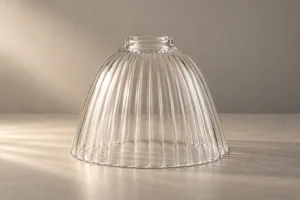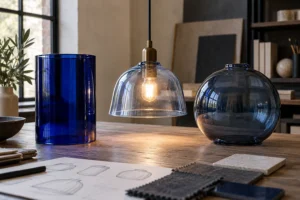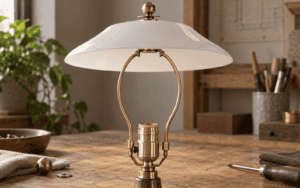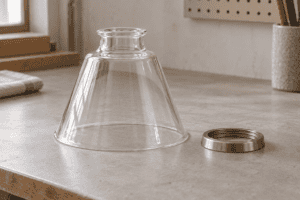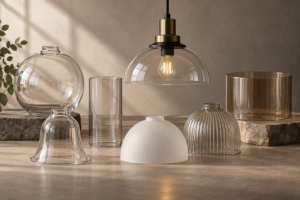
芝生灯のガラスシェードを選ぶ際は、まずフィッター径(標準2¼インチ、4インチ、6インチ)を合わせ、その後気候に応じてガラスの種類を選びます(凍結・融解地域にはホウケイ酸ガラス)、最後にグローブのサイズと不透明度を器具のデザインや通路照明の目的に合わせて調整します。.
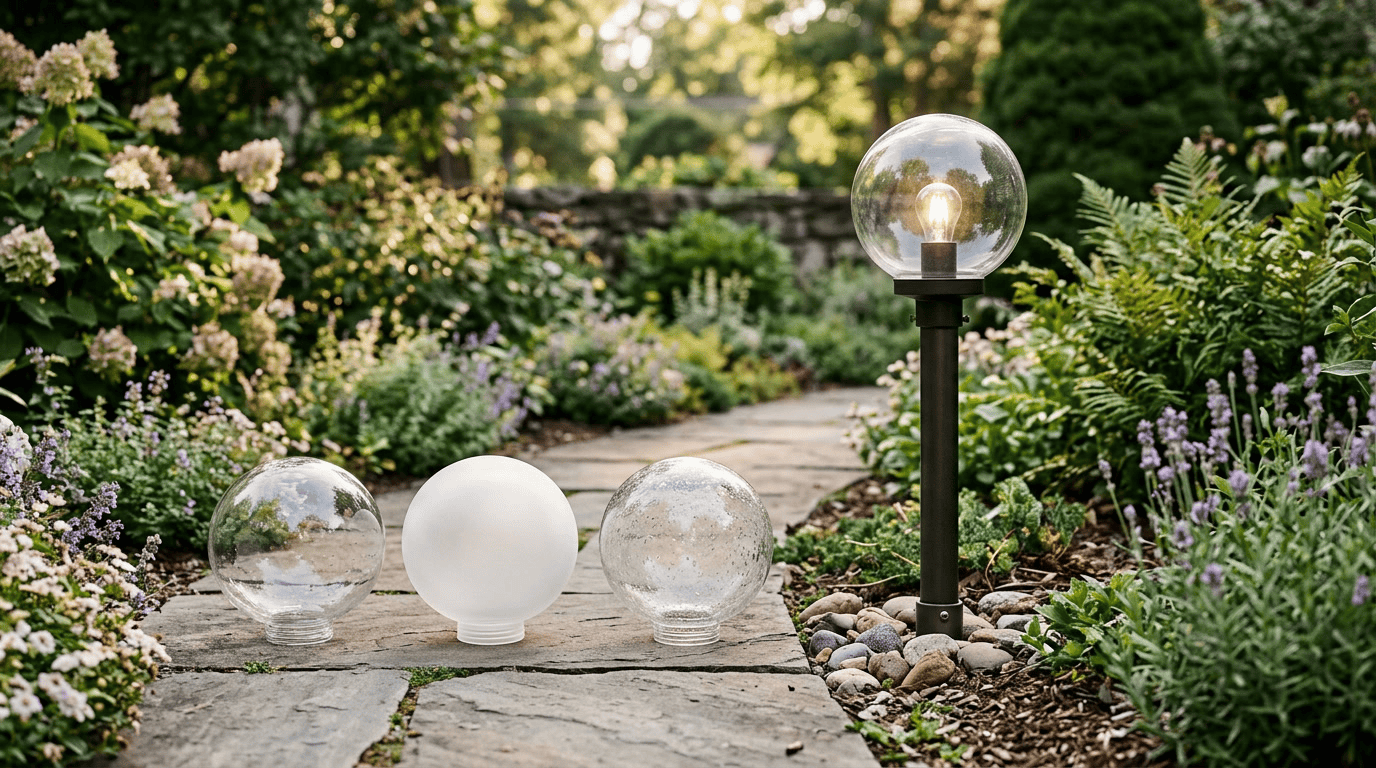
芝生灯用ガラスシェードの購入で最も多い失敗は、最初のステップです。スタイルの選択ミスではなく、フィッターサイズの選択ミスです。シェードが届いてもホルダーリングに合わず、返品や待ち時間、再度の推測が必要になります。.
選択プロセスは 芝生用照明のガラスランプシェードの選び方 明確な順序があります:まずフィット、次に耐久性、最後に美観です。この順序を飛ばしたり逆にしたりすると、シェードを返品するか、春までに割れるのを見守ることになります。このガイドでは、具体的な寸法、素材仕様、デザイン調整の原則を順番に解説し、6つ並んだ通路灯が意図的に設置されたように見える方法を紹介します。.
芝生灯用ガラスシェードの選択が他の屋外器具と異なる理由
芝生灯用ガラスシェード の選択には、壁付け照明やポーチペンダント、天井器具にはない独自の制約があります。.
ポストトップやボラード器具は全方向から露出しています。. 壁付け器具は建物が背後にあり、ある程度の熱や天候の緩衝材となります。ポストトップ芝生灯は単独で立ち、雨が全方向から直接ガラスに当たり、温度変化がグローブ全体に均一に影響し、紫外線も途切れなく当たります。シェードにはより高い耐久性が求められます。.
芝生灯はセットで設置されます。. 多くのランドスケープ施工では、車道や通路、庭の周囲に4~12台のポスト灯が並びます。1つのシェードが割れた場合、交換品はフィッターサイズだけでなく、グローブ径、高さ、ガラスの不透明度、そして経年変化の特性まで既存のものと一致させる必要があります。8台中3番目だけ少し違うシェードだとすぐに目立ちます。.
照度出力は安全に関わります。. 通路照明は機能的な役割を果たします。選ぶガラスシェードによって歩行面に届く光量が直接変わります。 照明工学会の屋外照明ガイドライン, によると、住宅の通路照明は安全な歩行のために地面で1~5フットキャンドルの照度が必要です。フロストグローブは電球出力の75%を透過する場合、クリアグローブ(90%透過)より明るいLEDが必要になることがあります。.
器具へのアクセスは繰り返し発生します。. シェードの掃除や交換のたびに踏み台に登ったり、地面にしゃがんだりします。フィッタータイプの取り付けやすさは、芝生灯の寿命を通じて壁付け器具よりも重要になります。.
芝生灯用ガラスシェードのフィッタータイプとサイズの理解
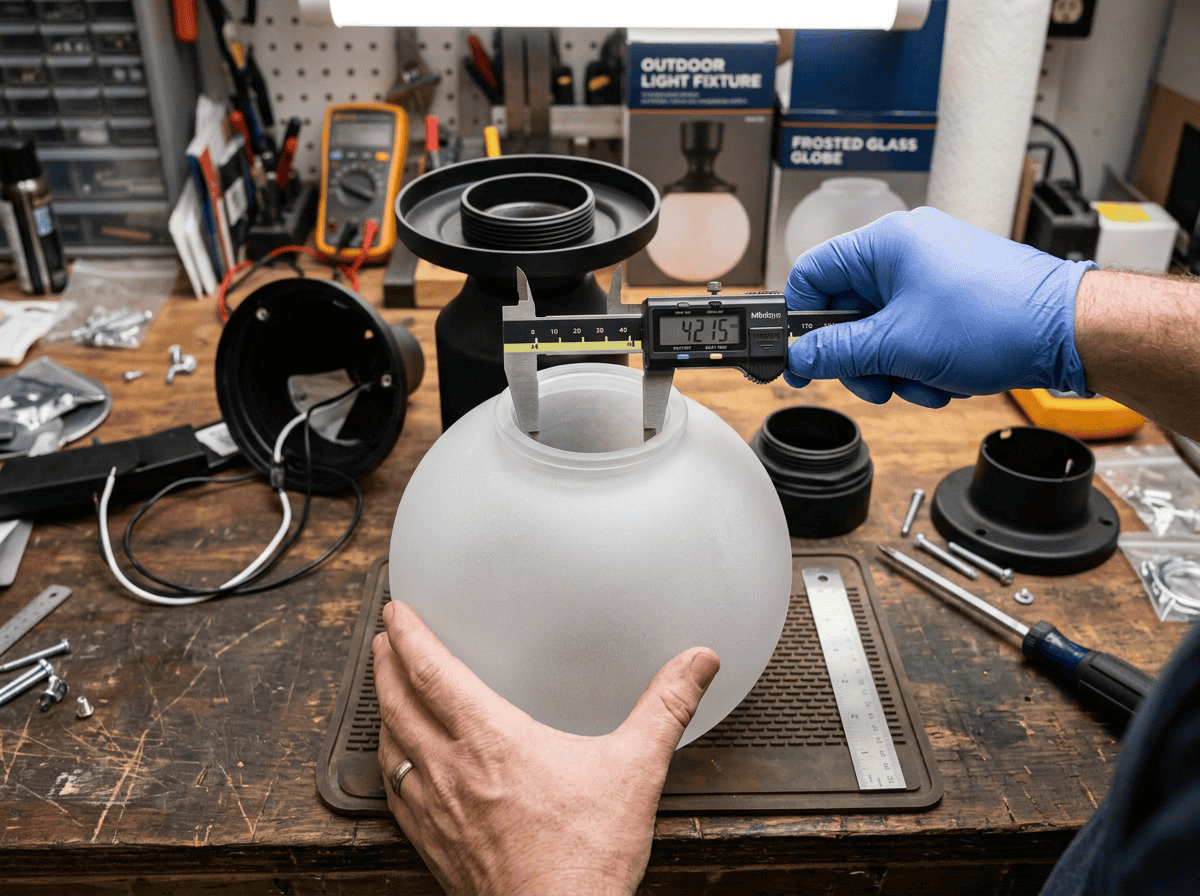
フィッターはシェード上部のガラスカラーで、器具のホルダーリングに座る円形の開口部です。フィッター径は 内側 この開口部のサイズは、芝生用ライトのガラスランプシェードを選ぶ際に最も重要な仕様です。.
標準フィッターサイズとそれぞれの器具での使用例
住宅用芝生ポストライトのほとんどをカバーする3つのフィッターサイズ:
| フィッターサイズ | 内径 | 一般的な器具の種類 |
|---|---|---|
| 5.7cm | 57ミリメートル | コンパクトポスト器具、ゼリージャー型通路シェード |
| 10cm | 102ミリメートル | 標準住宅用ポストトップグローブ(最も一般的) |
| 6インチ | 152ミリメートル | 大型グローブポストライト、商業用通路器具 |
4インチフィッターは住宅用芝生ライトで最も一般的です。標準的な8~10インチのグローブがポストトップ器具についている場合、ほぼ間違いなく4インチフィッターです。6インチフィッターは主に直径12インチ以上のグローブ器具に使用されます。.
フィッターサイズの確認方法
元のシェードが残っている場合は、デジタルノギスでガラスカラー開口部の内径を測定してください。柔らかいメジャーは使用しないでください。開口部に沿ってわずかに曲がるため、実際の直径よりも短い弦長を示します。シェードが壊れてなくなっている場合は、 器具本体のホルダーリングの内径 を測定してください。そのリングの内側の幅が必要なフィッターサイズです。.
重要なポイント: フィッターカラーの外径は仕様ではありません。2つのシェードがカラーの壁厚が異なり、外観が似ていてもフィッターサイズが異なる場合があります。必ず内側から内側を測定してください。.
フィッタータイプのバリエーション(直径以外)
直径以外にも、フィッターは器具への固定方法が異なります:
- 止めネジ式 — ホルダーリングの周囲に120度間隔で配置された3本の止めネジがガラスカラーを固定します。主にポールトップの庭園灯で一般的です。掃除の際に取り外しやすいのが特徴です。.
- バヨネットロック式 — シェードを差し込み、4分の1回転させてロックします。住宅用の庭園灯ではあまり見かけませんが、一部のボラード型照明に採用されています。.
- スプリングクリップ式 — バネでテンションをかけたリングがカラーを挟み込みます。一部のコンパクトな小道灯で見られます。.
交換品を注文する際は、ロック方式が現在ご使用のホルダーリングと一致していることを必ずご確認ください。止めネジ式のシェードは、フィッターの直径に関係なくバヨネット式ホルダーリングには適合しません。.
庭園灯ランプシェード用ガラスの種類:選択のためのフレームワーク
フィッターサイズが確認できたら、ガラス素材の選択が耐久性を左右します。ここで多くの購入者が見た目だけで注文し、実際にガラスが何でできているかを確認しないまま過小評価してしまいます。.
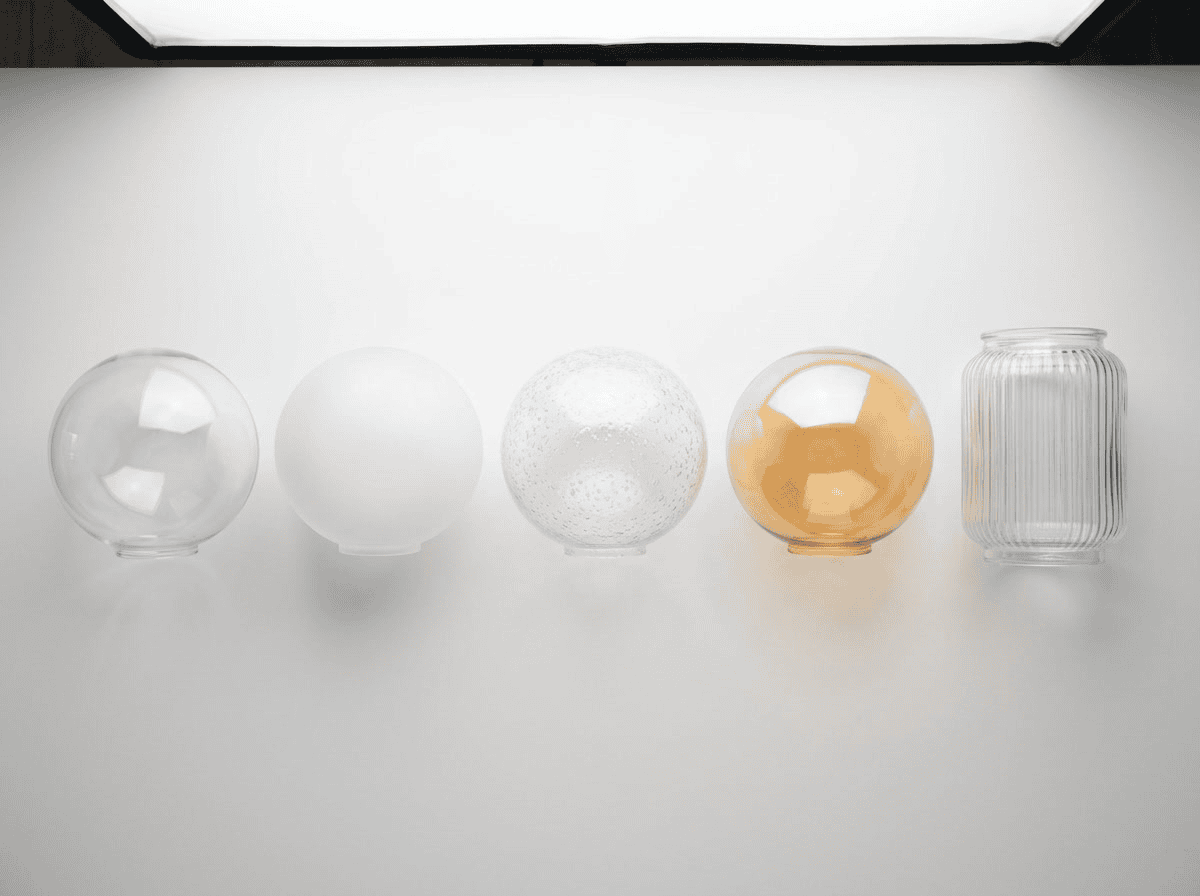
クリアガラス:最大光出力、最大グレア
クリアガラスは電球の出力の88~92%を透過し、電球を完全に見える状態にします。地面レベルの通路安全照明(車道や歩道など最大ルクスが重要な場所)では、クリアガラスが最高性能の選択肢です。ただし、クリアグローブ越しに露出したLEDチップが目の高さで見える場合、不快な点光源グレアが発生します。.
クリアガラスが適している場合:
– 器具の取り付け高さがグローブを目の高さより上(1.5メートル以上)にする場合
– 快適性よりも最大通路照明を優先する場合
– 器具が装飾用フィラメントLEDを使用し、電球自体が視覚デザインの一部となる場合
フロストガラス:住宅用芝生灯の標準
フロストガラス(酸エッチングまたはサンドブラスト加工)は表面で光を拡散し、電球の直接視認を排除します。出力は75~82%の透過率に下がり、ほとんどの住宅用LEDリプレイスでは通路照明目標が吸収できる控えめなルクス減少となります。.
実際には、フロストホワイトグローブは住宅用ポストトップ芝生灯の交換の大多数に適した選択です。ほとんどの中価格帯器具の工場装着シェードと一致し、セット内の残存ユニットと均一に経年し、歩行高さで快適な光を生み出します。セット内のシェードを1つ交換する場合、元がフロストならフロストで交換してください。.
シードガラス・テクスチャードガラス:スタイル重視の選択
シードガラス(ガラス内部に気泡が浮遊)、ハンマーガラス、レインパターンガラスはフロストガラスと同程度の拡散(65~78%透過率)を提供しつつ、視覚的なテクスチャーを加えます。これらは、グローブ自体が装飾要素となるクラフトマン、コテージ、コロニアル、アーティザンランドスケープスタイルに適した仕様です。.
フロストガラスと比べて光学的なペナルティは控えめです。メンテナンス面では、テクスチャードガラス表面は滑らかなガラスよりも汚れや花粉を多く捕捉するため、埃や花粉の多い環境ではより頻繁な清掃を予算に入れてください。.
アンバーガラス・色付きガラス:規制対応と雰囲気重視
アンバーガラスは青色スペクトル出力を減少させ、上方への光散乱を抑制します。これらはダークスカイ対応屋外照明を定義する2つの特性です。 国際ダークスカイ協会の器具認証基準 は、指定ダークスカイゾーンの物件に対し、3000K以下のアンバーシフト出力とフルカットオフ設計(上方への光なし)を要求しています。多くの日本自治体は2026年以降、住宅用屋外照明に同様の基準を採用しています。.
アンバーガラスは電球出力の50~65%を透過します。主通路安全照明としては適していませんが、ルクスよりも視覚的な暖かさが重要なアクセントや雰囲気用器具には最適です。.
ホウケイ酸ガラス vs. ソーダライムガラス:最も重要な耐久性の違い
この決定はほとんどの購入者が意図的に行うことはなく、ほとんどの商品説明には記載されていません。標準のソーダライムガラス(窓ガラスと同じ)は、温暖な気候での通常の屋外温度変化には問題なく対応します。夏に+35°C、冬に-20°C以下まで温度が変動する凍結融解気候では、ソーダライムガラスはストレス集中点(フィッターカラーやセットスクリュー接触部)で微細な亀裂が発生し、複数シーズンにわたり拡大してシェードが目に見えて割れます。.
ホウケイ酸ガラス はソーダライムガラスの約1/3の熱膨張係数を持ち、120°C以上の急激な温度変化にも割れることなく吸収できます。 熱処理ガラスのASTM C1048規格, 強化ガラスは、標準のアニールガラスの約2倍の耐熱性を提供し、さらにテンパードガラスは4倍の耐熱性を持っています。.
目安として、年間30回以上の凍結・融解サイクルがある場所や、ソケットに大きな熱を発生する白熱灯やハロゲン球を使用する場合は、ホウケイ酸ガラスまたは熱処理ガラスを指定してください。ソーダライムガラスよりも20~40%高価ですが、交換頻度は同じ条件下で3~5年ごとから10~15年ごとに減少します。.
ガラスランプシェードのサイズを庭用照明器具に合わせる方法
フィッターサイズとガラス素材の次に、グローブサイズが重要な決定事項です。これは見た目のバランスや光の分布に影響し、どちらも重要です。.
グローブ直径:バランスのルール
グローブ直径は、シェード本体の最も広い水平寸法です。ポストトップ器具の場合、器具本体上部の幅とほぼ同じ直径のグローブを選ぶとバランスが取れます。器具よりもかなり細いグローブは小さく見え、逆に大きく広がるグローブは上部が重く見えます。.
住宅用ポストトップ庭園灯の一般的なバランス関係:
| ポストトップ本体幅 | 推奨グローブ直径 | 標準フィッター |
|---|---|---|
| 6~7インチ | 8インチグローブ | 10cm |
| 7~9インチ | 10インチグローブ | 10cm |
| 9~11インチ | 12インチグローブ | 6インチ |
これらはバランスの目安であり、絶対的なルールではありません。元のシェードが特定の直径だった場合はそれに合わせてください。器具はそのグローブサイズを基準に設計されています。.
シェード高さ:密閉型と開放型器具
高さは、ソケットアームやシールカラーを含む本体内にシェードが収まる必要がある密閉型ポストトップ器具では特に重要です。注文前にホルダーリング座からランプソケット上部までの内部クリアランスを測定してください。シェードが10mm高すぎると器具が閉まりません。.
開放型フレーム器具(シェードが本体下に吊るされる、または本体より外側に伸びる場合)では、高さは見た目のバランスの判断となります。最もまとまりのある仕上がりにするには、元の高さに±10mm以内で合わせてください。.
一つだけ交換するか、全て交換するかの判断
これは競合Aが簡単に触れた質問であり、より具体的な説明が必要です。6個セットのうち1つのシェードが壊れた場合、選択肢は以下の通りです:
- 完全に同じものを注文する — 元のシェードがまだ入手可能で、完全に一致することを確認できる場合のみ有効です。照明器具のシリーズが廃番になったり、シェードのモデルが変更された場合、“完全”な交換品でも、微妙に異なる比率やガラスの色合い、表面の質感があり、点灯時に並べると違って見えることがあります。.
- 全てのシェードを交換する — 初期費用は高くなりますが、見た目の統一感が保証されます。全てのシェードが同じ時点から経年変化を始めるため、黄ばみや曇り、表面の微細な変化もほぼ同じペースで進み、長期間にわたり揃った外観を保つことができます。.
- 汎用交換用グローブで交換する — フィッターサイズや機能的なガラスタイプには合いますが、比率の不一致が生じる場合があります。後列や目立たない照明器具には許容できますが、正面からよく見える玄関先などではあまり適していません。.
全て交換する実用的な判断基準:残っているシェードが5年以上経過し、表面の曇りや黄ばみが見られる場合、寸法が完全に一致していても新しいシェードは古いセットの中で目立ってしまいます。その場合、全て交換することで新しいシェードへの投資がより一貫した効果を発揮します。.
ガラスシェードを庭園照明器具のスタイルと仕上げに合わせる
ガラスタイプとサイズの選択は、器具の金属仕上げと広範なランドスケープデザインと相互作用します。この相互作用を正しく捉えることが、統一感のある屋外照明計画と、個別の購入決定の集まりを分ける点です。.
仕上げの温度を合わせる
器具の仕上げは二つの温度帯に分類されます:
クール仕上げ — ポリッシュドニッケル、クローム、マットシルバー、ステンレススチール — は、クリアまたは淡いくもりの白いガラスと最も相性が良く、クールホワイトの光を発します。クール仕上げの器具にアンバーガラスを使用すると、金属と光の色の間に暖色とクール色の視覚的不協和音が生まれます。.
ウォーム仕上げ — アンティークブロンズ、オイルリブドブロンズ、マットブラック、エイジドブラス — は、すりガラスと暖白色LED(2700Kまたは3000K)と効果的に組み合わさります。ウォーム仕上げの器具にクリアガラスを使用する場合、電球が暖白色であれば良いです。ブロンズの器具にクールホワイトのLEDをクリアグローブで使用すると、産業的な外観になり、文脈次第では意図的にも無意図にもなり得ます。.
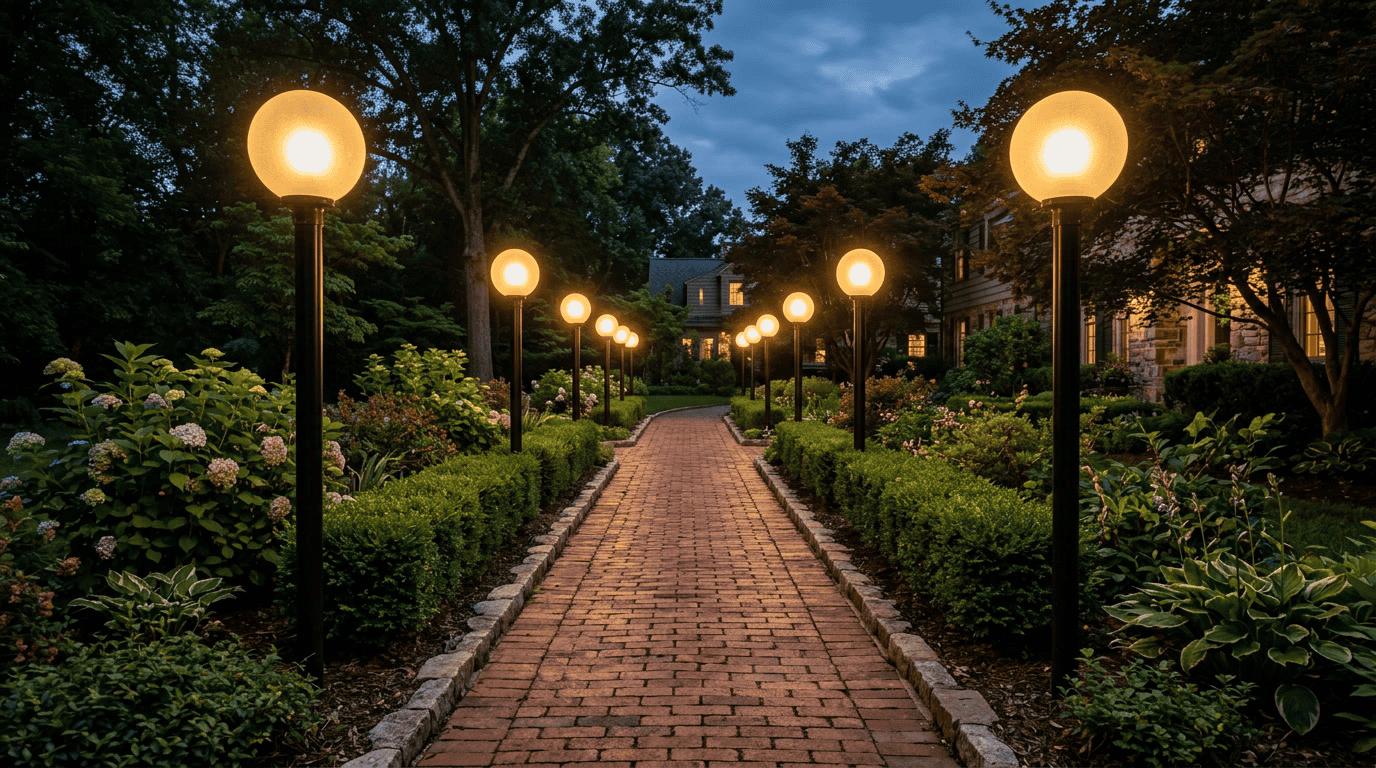
マットブラック 最も多用途な仕上げであり、すべてのランドスケーム素材(レンガ、石、木、コンクリート)に対して中立として認識され、淡白な白とすりガラスの両方と組み合わせられます。 HOAが管轄する住宅街のランドスケープ照明で支配的な仕上げの選択肢であるのは、この視覚的中立性のためです。.
ランドスケープ材料との調和
周囲のハードランドスケープ材料は、ガラスシェードの選択の有用な指針となります:
- レンガとテラコッタ — ハードスケープの暖かな赤やオレンジのトーンは、アンバーまたは暖色系のガラスとよく調和します。クリアガラスは対比を生み、すりガラスは差を分けます。.
- 天然石とスレート — 石のクールなグレーと青のトーンは、クリアまたはすりガラスと組み合わせると、中立からクールホワイトの光を生み出します。.
- コンクリートとモダンな舗装 — 中立からクールな風景は任意のガラス種を許容する; すりガラスの白は最も安全な普遍的な選択肢です。.
- 木製デッキとシーダー製のフェンス — 暖かい茶系のトーンはすりガラスと暖かいLED出力と良く合います。.
ダークスカイとHOAの要件
お宅の物件がダークスカイ規制のある自治体、または器具のタイプを指定するHOAに属している場合は、注文前に適合を確認してください。 Energy.govの住宅用屋外照明ガイダンス は、全開放式カットオフまたは半カットオフの器具 — すべての光を下方に向け、上方の散乱を一切許さないもの — が住宅照明コードでますます求められていることを指摘しています。.
ガラスのシェード選択は、主に 上方光の伝達を通じてダークスカイ適合性に影響します: 支柱トップの器具に取り付けられた透明な開放トップのグローブは上方光の散乱を許しますが、全開放カットオフの器具ハウジングに収まるグローブはそれを除去します。シェードガラスのタイプ自体は器具のカットオフジオメトリに対して二次的ですが、不透明トップや重いすりガラスのシェードは開放器具からの上方散乱を減らします。.
芝生用ライトのガラスシェードのIP等級と耐候性
ガラスシェードのIP(侵入防止)等級は — によって定義される IEC規格60529 — はシェードとその密封システムが水とほこりの侵入にどれだけ耐性があるかを示します。芝生用ライトは屋外に露出しているため、雨や散水スプレー、結露にさらされる点が重要です。.
Fixture のIP等級の読み取り
IP等級は2桁で表されます:
– 第1桁(0–6):固体粒子の保護
– 第2桁(0–8):液体の保護
芝生照明の場合:
– IP44 — あらゆる方向からの水の飛沫に対して保護。標準的な住宅用のポストトップ照明の最小要件。.
– IP54 — ほこり防止および飛沫防止。中程度の気候の多くの住宅用芝生灯の標準仕様。.
– IP65 — 完全に防塵で、水のジェットに対して保護。直接散水範囲または沿岸の塩分を含む大気環境の照明器具に必要。.
ガスケットの状態とシェード密封
組立式の照明器具のIP等級は、ガラスシェードのフィッターカラーとホルダーリングの間のガスケットの状態に依存します。ひび割れ、硬化、欠落したガスケットは、ガラスシェード自体の等級に関係なく、IP65等級の器具を実質的にIP44以下へ低下させます。.
交換用シェードを取り付ける場合は、必ずガスケットを点検してください:
– 柔らかく、しなやかで、コラー回り全体を均等に圧縮している → 使用可能
– 硬化、ひび割れ、または平らな部分を示す → 新しいガラスを取り付ける前に交換
標準の4インチフィッターガスケット(シリコーンまたはEPDM)は、ホームセンターで$2以下で入手可能。シェードと同時にガスケットを交換するとほとんど費用がかからず、器具の防水性を完全に保ちます。.
以下に従って NEMA屋外照明器具規格, 、ガスケット材料の劣化は、IP54以上が評価されたポストトップ屋外照明器具における水の侵入障害の主な原因です。ガラスシェード自体はIPシールをほとんど失敗させません — ガスケットです。.
Lawn Lights用ガラスシェード選択の動向(2026年以降)
2026年の住宅用芝生照明シェード市場は、LED光源の最適化、暗い空規制の拡大、持続可能な素材への需要拡大という3つの収束を反映している。.
LED最適化グローブ幾何学
ポストトップ灯具の初期LED改良球は白熱形状を再現しており、分布したフィラメントから光を放つA19またはグローブ球を使用していた。現在のフィラメントアレイと COB(チップ・オン・ボード)LEDモジュールは、グローブガラスと相互作用する光の分布を異なるものにする。具体的には:
- すりガラスのグローブは透明ガラスよりもLEDチップクラスターの角度的ホットスポットを隠す
- 小径のグローブはすりガラスを用いると、LED光源を備えた大型の透明グローブよりも地上での光 outputがより均一になる
- シード入りガラスはLEDのホットスポット拡散を優れており、視覚的な質感を加える
結果として、すりガラスおよびシード入りガラスの規格は、透明ガラスの仕様が住宅用芝生照明の置換品として機能していた場合でも、需要が増えている。.
| ガラスの種類 | 典型的透過率 | LED対応 | 2026年の動向 |
|---|---|---|---|
| クリア | 88~92% | 良好 — ホットスポットが見える | 安定(商業/タスク) |
| すりガラス状(ライト) | 75~82% | 優れた | 成長中(住宅) |
| シード入り/テクスチャー加工 | 65~78% | 優れた | 成長中(大工職人/コテージ) |
| アンバー色付き | 50~65% | 良好 | 成長中(暗い空域ゾーン) |
| ボロ silica ガラス構造 | — | あらゆるタイプ | 成長中(耐久性需要) |
自治体のダークスカイコード採用
2026年時点で、米国大都市圏の新しい住宅用景観照明設置の推定18%が地域のダークスカイまたはライト浸入条例の対象となっている。これは、より多くの自治体が国際ダークスカイ協会のモデル規定を採用するにつれ拡大している。ガラスシェードの選択に対する実際的な影響:
- 沿岸部・山岳部・全国指定のダークスカイ共同体で、アンバー着色ガラスの仕様が成長中
- 新規建設時に規制区域の外にもデフォルトとなる全面遮光器具設計(陰影を包み、すべての光を下方へ向ける)
- 暖色系LED電球(2700K–3000K)を推奨、ガラス種別に関係なく青スペクトルの散乱を最小限に抑える
ソーダライムを置換するブローシリケート(ボロシリケートガラス)を主流の住宅用外部ガラスシェードへ
歴史的に、ボロシリケートガラスは研究所や専門用途のプレミアム仕様でした。熱サイクルの故障モードを認識し、製造元へ材料仕様を求める品質志向の購入者が増えるにつれて、住宅用外部ガラスシェードの標準仕様となりつつあります。ボロシリケートまたは耐熱処理構造を示せるメーカーは、交換用ガラス分野で市場シェアを獲得しています。.
よくある質問
芝生ライトに適したガラス製ランプシェードのサイズはどうやって知ればよいですか?
既存のシェードのフィッターコラーの内径をデジタルノギスで測定してください(シェードが欠品の場合は取付リングの内幅を測定)。住宅用芝生ポストライトの三つの標準サイズは2¼インチ、4インチ、6インチです。4インチのフィッターは、直径8–10インチのグローブを持つ住宅用ポストトップの大半を覆います。この測定値を正確に合わせてください — 3 mm小さすぎるシェードは取付リング内でガタつき、サイズが大きすぎるシェードは適合しません。.
寒冷地で芝生ライトのシェードに最適なガラス種別は何ですか?
ブローシリケートガラスは、年間30回を超える凍結融解サイクルや温度が-15°C以下になるような気候には正しい仕様です。標準のソーダライムガラスは、凍結融解サイクルを繰り返すとフィッターコラーのストレスポイントで微小亀裂が生じ、通常は5–8年以内に可視的な割れを示します。同条件下でのブローシリケートガラスは10–15年以上持続します。コスト上乗せ(ソーダライムに対して20–40%)は、最初の交換サイクルを回避することで十分に回収されます。.
壊れたシェードを1つだけ交換すべきですか、それとも芝生ライトセットのすべてのシェードを交換すべきですか?
生存しているシェードが3年未満で黄変やくすみが見られない場合、完全一致の交換で十分適合します。生存しているシェードが5年以上経過している場合や、表面の劣化が見られる場合は、すべてのシェードを同時に交換するのがより良い投資です — 新しいシェードが古いものの隣にあると、規格が完全に一致していても視覚的に不一致として見えることがあります。セット全体で均一な劣化を維持することが、設置の統一感を保ちます。.
すりガラスと透明ガラスの芝用ランプシェードの違いは何ですか?
透明ガラスは電球の光 Outputの88–92%を透過させ、ボールを完全に見える状態にします — 勾配値は高くなる一方、視界の高さで点光源の眩しさを生み出します。すりガラスは光を75–82%の透過率で均一に拡散し、眩しさを抑えつつわずかなルクス値の減少をもたらします。歩行者が照明機の高さで歩く住宅用通路ライトの場合は、すりガラスがより快適な光を提供します。目の高さより上の高架ポスト灯や最大限のルクスが重要となる駐車場エリアでは、透明ガラスがより適しています。.
廃盤となったフィクチャーモデルに合わせて交換用ガラスシェードをどう選べばよいですか?
3つの測定値を取ります:フィッター内径、グローブ最大幅、シェードの高さ。フィッター径を正確に合わせてください(適合の決定要素です)。グローブ幅と高さについては、視覚的な比率を合わせるには±5 mmが一般的に許容されます。標準フィッターサイズを提供し、ガラス種別を確認できるメーカーから注文してください — そして、 matchedセットのいずれか1個を交換する場合は、他の生存ユニットと視覚的適合を評価してから全数量を注文してください。.
屋内用の Lampshade を屋外の芝生灯具に使用できますか?
いいえ。屋内用のランプシェードは直接的な天候 exposure に耐えるようには設計されていません。ガラス、シーリング、フィッターの構造は雨、温度変化、UV曝露に対して設計されていません。芝用ポストトップ灯具に屋内用シェードを使用すると、ガラスの早期劣化、水の侵入、電気的危険の可能性が生じます。常に耐候性のシェード(IP44 以上)をボロシリケートガラスまたは耐熱ガラスを用いて選択してください。芝生用灯具の全般的な用途にはこれが推奨されます。.
ガラスシェードの不透明度は芝生灯のダークスカイ適合性に影響しますか?
部分的にはそうですが、装置の形状がより重要です。主要なダークスカイ要件は、すべての光を下方に向け、上方の漏れを排除するフルカットオフ設計です。ガラスシェードの不透明度は上部の球体を通過する光の量に影響しますが、開放トップの設備で透明な球体よりも、フルカットオフの筐体での透明な球体の方が上方への漏れを抑えます。設置でダークスカイ適合性が重要な場合は、まず筐体設計を確認し、次に青色スペクトルの散乱を減らすためにアンバーまたは暖色系のガラスを使用してください。.
結論
選択の順序は 芝生用照明のガラスランプシェードの選び方 です:フィッター直径を優先(内径を内側から測定し、ロックタイプを確認)、ガラス材料を次に(凍結融解の気候にはボロシリケート、穏やかな気候の屋内-facing 用途にはソーダライム)、視覚的コーディネーションを三番目(グローブのサイズ、不透明度、仕上げをセット内の生存ユニットと広範な景観パレットに合わせる)です。.
長さ10〜15年の点灯寿命を通じて常に最高の結果を生み出す決定は、 climate に関係なくボロシリケートまたは耐熱ガラスを指定し、セット内のどのユニットでも外観の表面 aging が見られた時には全てのシェードを同時に交換することです。どちらの選択も初期費用は高くなりますが、長期的には交換サイクル、作業費、視覚的不整合を大幅に節約できます。.
ガラス製シェードの製造仕様、標準フィッターサイズ、および住宅用・商業用の芝生用灯具向けのカスタムポストトップグローブオプションに関して、, jxlampshade.comのガラスランプシェード製品ライン は、標準フィッター直径の全範囲におけるボロシリケート構造をカバーします。.