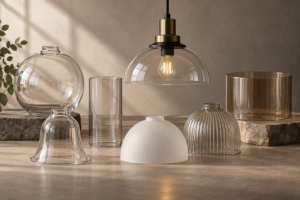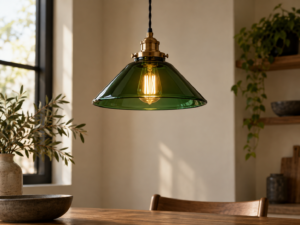
エンジニアリングガラスランプシェードは、工場や作業場のペンダント照明用に元々設計された、深いドーム型、プリズマティック型、またはオパールガラス製のシェードです。幅広の金属リング、耐熱ガラス、そして器具の真下の作業面に集中的に光を照射する下向きの配光が特徴です。.
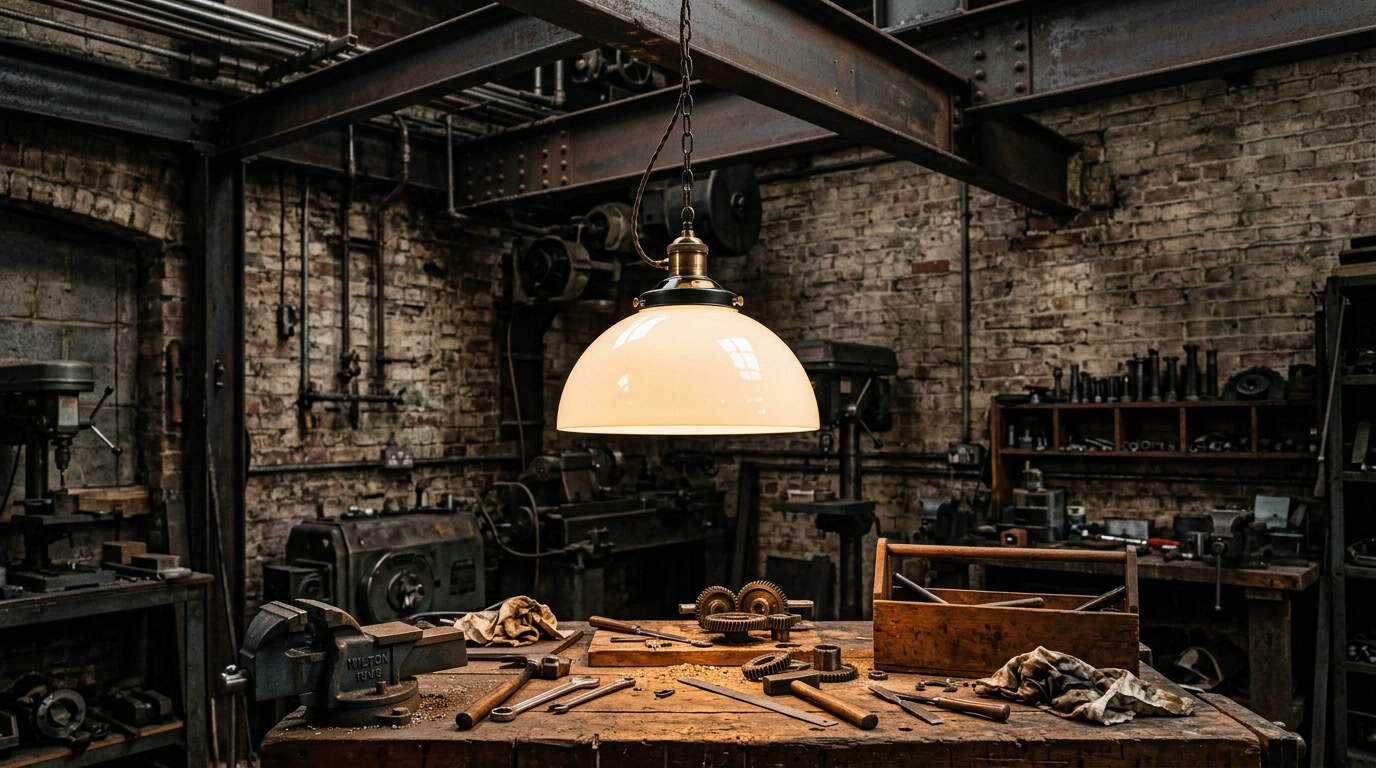
その外観は一目でわかります。調整可能な金属コンジットから吊り下げられた深いガラスドームが、下の作業台に温かみのある集中的な光を投げかけます。ビクトリア時代の機械工場や戦時中の工場、そして今ではこだわりのインダストリアルレストランやロフトアパートメントでも見かけます。 工学用ガラスランプシェード — IESリフレクターシェード、RLMシェード、またはベンジャミンスタイルペンダントとも呼ばれ、美観ではなく機能のために設計されました。白熱フィラメント1ワットあたりの最大下向き光出力を実現し、天井への無駄な上方漏れ光をゼロに抑えています。.
この機能的なDNAこそが、現代のインテリアで非常によく機能する理由です。適切に選ばれたエンジニアリングガラスランプシェードは、指向性がありグレアのないタスクライトを提供しつつ、素材の誠実さと目的志向のデザインについて視覚的な主張をします。本ガイドでは、エンジニアリングガラスシェードが装飾的な代替品と異なる点、使用される特定のガラスタイプ、主なスタイルバリエーション、そして適切なシェードを調達または依頼するために必要な仕様について解説します。.
エンジニアリングガラスランプシェードとは?
エンジニアリングガラスランプシェードは、19世紀後半から20世紀初頭にかけて、工場、作業場、製図室、商業インテリアなど、高品質なタスク照明が不可欠な用途向けに開発された機能的な産業用照明部品です。.
日本の 照明学会(IES) — 1906年設立 — は、産業用照明器具の初期性能基準を確立し、「IESスタイル」リフレクターシェードは、その光学性能によって標準化された製品カテゴリとなりました。深いドーム型または幅広の形状で、光を下方および前方に導き、天井を無駄に照らす上方漏れを最小限に抑えます。 照明器具分類のためのIES配光基準, によれば、産業用タスクリフレクターの決定的な特徴は、水平面下に90%以上の出力を供給する光分布であり、この要件がガラスシェードの形状のあらゆる側面を決定づけました。.
エンジニアリングランプシェードのガラス
初期のエンジニアリングガラスランプシェードには、各々特定の光学的または機械的機能を持つ複数のガラスタイプが使用されていました:
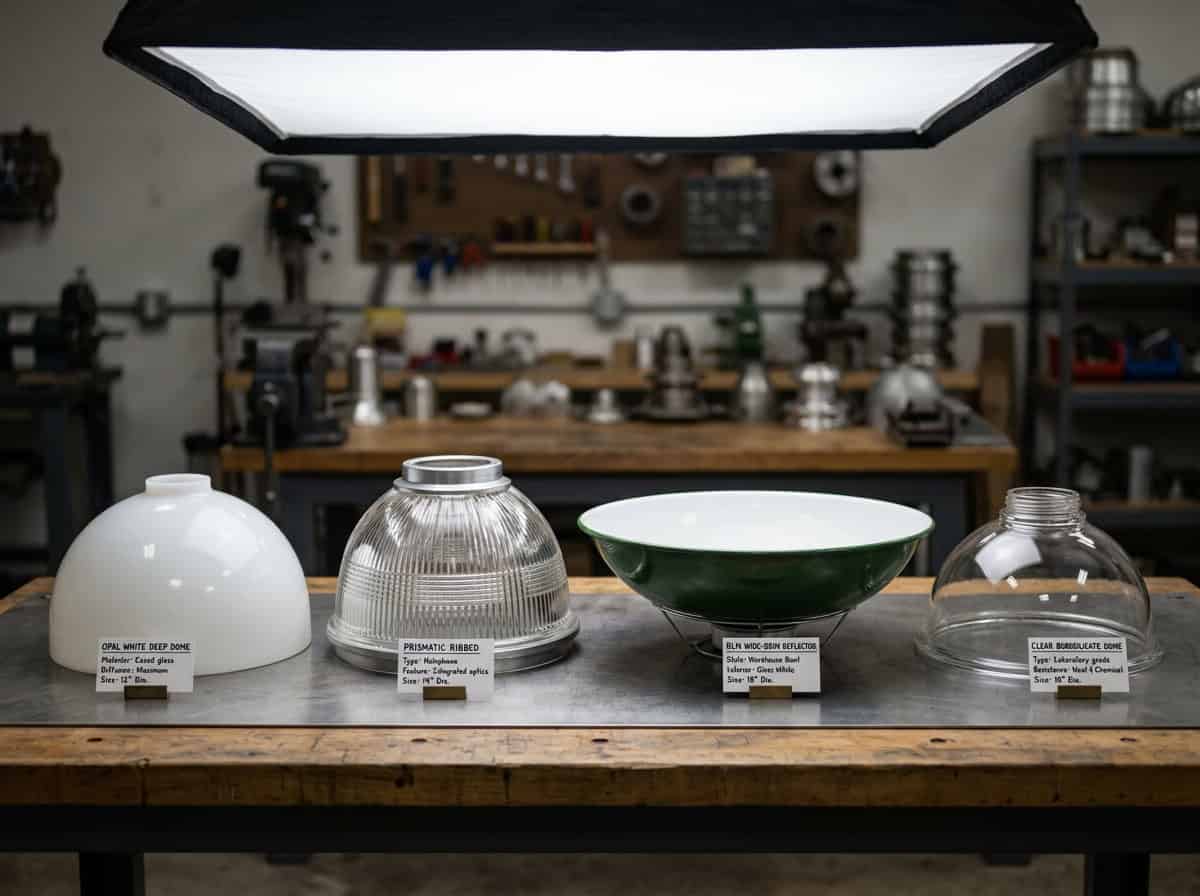
- オパールガラス (白色乳白ガラス):一般的な作業場照明の主流の選択肢。ガラスマトリックス内にカルシウムやスズ化合物を分散させることで、均一な白色半透明の外観を生み出し、裸電球の光を拡散しビームエッジを柔らかくします。オパールガラスシェードはドーム全体が均一に発光し、下方に柔らかな影を作ります。これは、硬い影が眼精疲労を引き起こす製図や精密組立作業に最適です。.
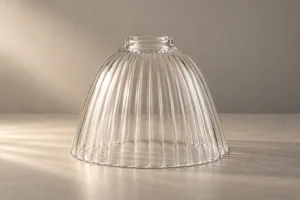
- プリズマティックガラス (ホロフェーンスタイル):内面や外面に規則的なピラミッド型またはくさび型プリズムパターンを施したガラス。プリズムが光を幾何学的に屈折・再配向し、ビームの広がりを制御し、シェード直下のホットスポットを排除します。プリズマティックエンジニアリングガラスシェードは、均一な照度が求められる工場フロア、梱包ホール、検査エリアなどで指定されました。 ホロフェーン社, は1898年に設立され、プリズマティックガラス照明器具の先駆者であり、「ホロフェーン」という名称は今でもプリズムリブ付きガラスランプシェードの総称として使われています。.
- クリアガラスドーム:拡散よりもワットあたりの最大光出力が重視される場合に使用されます。クリアガラス越しに裸フィラメントが見えますが、ドーム形状により大部分の光は下方に向けられます。ユーティリティや収納用途で一般的です。.
- 耐熱ホウケイ酸ガラス:高出力フィラメントランプの近くで使用されるシェードに指定されています。これらのランプは大量の放射熱を発生させます。ホウケイ酸ガラスの低い熱膨張係数により、ソーダ石灰ガラスシェードが長時間高温で使用された際に発生する熱衝撃による破損を防ぐことができました。.
「エンジニアリング」ランプシェードという用語の理由
この文脈での「エンジニアリング」という用語には二つの由来があります。第一に、設置される環境を指しています—エンジニアリングワークショップ、機械工場、または工場の現場です。第二に、設計された光学性能を指しています:主に外観を重視した装飾用シェードとは異なり、エンジニアリングガラスランプシェードは、作業面の特定の照明目標を達成するために光度原理から開発されました。.
現代の購入者は、この用語を緩く使い、光度精度に関係なく工業的ワークショップの美学を持つシェード全般を指します。メーカーとの調達の会話では、「エンジニアリングガラスランプシェード」は通常、深いドームまたは広いブリム形状、機能的なガラス(オパール、プリズマティック、またはクリアホウケイ酸)、金属ギャラリーリング、標準コンジットやスワッグシステムに対応したペンダント取付を意味します。.
エンジニアリングガラスランプシェードの種類
エンジニアリングガラスランプシェードのカテゴリには、いくつかの異なるスタイルバリエーションがあります。それぞれ異なる光学特性を持ち、設置環境に応じて適しています。.
オパールドーム(ミルクガラス)エンジニアリングシェード
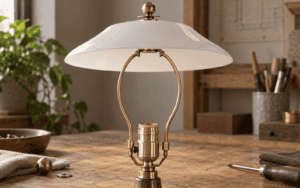
オパールドームは最も広く認識されているエンジニアリングガラスランプシェードの形です。深い半球状または切頭円錐状のガラスドームで、オパールホワイトガラスで鋳造され、巻き上げまたはフランジ付きの上部開口部が金属ギャラリーリングに収まります。.
オリジナルのオパールドームエンジニアリングシェードのクラシック寸法:
– ドーム直径:10~16インチ(254~406mm)—最も一般的なエンジニアリングサイズ
– ドーム深さ:通常ドーム直径の60~70%(「深い」ドームは浅いボウルよりも下方向への配光をより制御します)
– フィッター開口部:ペンダント取付用に2¼インチ、4インチ、または6インチ
オパールドームは、器具の下に柔らかく均一な光のプールを作り、明確な円形の境界を持ちます。内部の白いガラス面は二次反射板として機能し、一部の光を前方や外側に反射させてからシェードの開口部から出るため、純粋な下方向配光よりもわずかに広いビームスプレッドを生み出します。.
プリズマティック(ホロフェーンスタイル)エンジニアリングシェード
プリズマティックエンジニアリングガラスシェードは、外側がリブやファセットで構成され、幾何学的なプリズム面を通して光を屈折させます。プリズマティックパターンは以下の通りです:
– 垂直リブ:横方向の光拡散を生み出し、長いベンチや作業台に適しています
– 水平リブ:垂直方向のビームを狭め、高天井用途に適しています
– ダイヤモンドまたはピラミッド型ファセット:最も均一な床照明を実現する複雑な多方向屈折を生み出します。
プリズムガラスは、滑らかなオパールガラスよりも製造が大幅に難しいです。プリズムの形状は正確でなければならず、品質生産ではプリズム角度の許容差±0.1mmが標準です。また、プリズム面間のガラスは常に透明でなければならず、散乱ではなく屈折を可能にします。 平板ガラスのASTM C1048規格, プリズム用途の光学品質ガラスには、標準装飾ガラス仕様を超える厳格な気泡および混入物の管理が求められます。.
プリズム工学ガラスシェードは、工具の複雑さやガラス品質の要求が高いため、同等のオパールガラスシェードよりも通常15~30%高価です。.
RLM(リフレクター・ラージ・ミッドセクション)工学シェード
RLMシェードは、非常に広く平らな縁が比較的狭い上部から外側に広がる形状が特徴の、典型的な「工場ペンダント」形です。RLMの形状は、1920年代~1940年代の日本工業照明規格から生まれ、何十年もの間、工場床ペンダント照明の主流となっていました。.
本物のRLMシェードは、ガラスがシェードの内側のボウルを形成し、別の金属製の縁(または「ソーサー」)が光遮断と配光の形状を拡張します。RLMペンダントのガラス部品は、通常、深いドームではなく、比較的浅いオパールまたはクリアガラスのリフレクターボウルです。.
現代の「RLMスタイル」工学ガラスランプシェードは、この形状を様々な方法で解釈しており、1930年代の工場ペンダントの忠実な再現から、スリムなプロファイルの現代的な再解釈まで幅広く存在します。.
ベンジャミンスタイルおよび工業用ペンダントシェード
ベンジャミンのペンダント — 20世紀初頭の工業用照明の重要な生産者であったベンジャミン電機製造会社にちなんで名付けられたのは、通常、キャストアイアンまたは鋼の打ち抜き製の取付ギャラリー、コードグリップ付きソケット、調整可能な高さの導管接続を備えた深いドーム状オパールシェードを指します。 “ベンジャミン様式”は現在、これらの取り付け特徴を備えた任意の深いドーム型産業用ペンダントを説明する際に総称として用いられています。.
ベンジャミン様式のペンダントに使われるガラスシェードは通常、直径10–14インチのオパールドームです。決定的な取り付けディテールは、 ギャラリーリング — ガラスシェードのフランジ状の上部リムを挟み込み、ペンダントコードまたは導管から組立ユニットを宙づりにする3つ以上の締め付けねじを備えた金属リングです。.
| スタイル | ガラスの種類 | ドーム直径の範囲 | 典型的な適用例 |
|---|---|---|---|
| オパールドーム | オパールホワイトガラス | 10–16インチ | 工房、レストラン、ロフト |
| プリズマティック・ホロファン | プリズマティック/リブ付き透明ガラス | 8–14インチ | 工場の床、ハイベイ |
| RLMスタイル | オパールまたは透明ガラスのボウル | 12–20インチ | 高天井の産業空間 |
| ベンジャミン・ペンダント | オパール白ガラスの深いドーム | 25〜36cm | 作業照明、ドラフトルーム |
| クリアガラスドーム | クリアボロシリケート | 8–14インチ | 実用・収納・アクセント |
歴史的背景: 産業におけるエンジニアリングガラスシェード
元のエンジニアリング文脈を理解すると、現代の購買者にとって仕様と認証が容易になる— period reproduce を調達する場合でも、カスタムシェードを依頼する場合でも。.
エンジニアリングガラスランプシェードの開発は、1880年代から1930年代の間に工業施設の電化と並行して加速した。初期の電気工場照明は、まぶしさと床面の照度の均一性を生むことのない生の炭素・タングステンフィラメント球を使用していた。ペンダントガラスドームシェードは、どちらの問題も解決した:熱いフィラメントの直接視界を遮り(眩しさを排除)、追加の光を下方へ反射させ、作業面に集中的な作業照明のプールを作り出した。.
日本の 照明学会の創設ミッションを明るくする 具体的にこの産業照明の課題に対処し、ペンダント照明アレイからの床の照度レベルを予測・検証するための光度測定基準と測定方法を開発した。IES分類のシェードは配光パターンで光度試験・カタログ化され、工場の床で特定のルクス仕様を満たすために必要なペンダント数と間隔を計算できるようにした。.
1920年代には、ベンジャミンエレクトリック、クローズ・ヒンズ、ホロフェインなどの主要メーカーが、光度特性が文書化された標準化エンジニアリングガラスランプシェードの製品群を開発していた。これらの基準は現在も、正真正銘のレプリカの参照としての標準となっている。.
20世紀中頃の蛍光灯管照明への移行は、主流の産業用ガラスペンダントシェードを大部分から姿を消させた。蛍光照明は瓦数あたりのルーメンを増やし、広い床面積に対する設置コストを下げたためである。一方、よく設計されたペンダントガラスシェードからの作業照明の品質は、個々の作業ステーションにおいてはなお優れていると考えられる。 directedで眩光を抑えた照明品質が費用を正当化した drafting室、機械工場、微細組立エリアでは、ガラスペンダントシェードは生き残った。.
エンジニアリングガラスランプシェードの現代的用途
エンジニアリングガラスのランプシェードは、産業インテリア運動を通じて21世紀初頭に主流デザインへ再登場した。現在、その用途は、忠実な時代の復元から現代的なホスピタリティデザインに至るまで広範囲に及ぶ。.
レストランとホスピタリティ照明
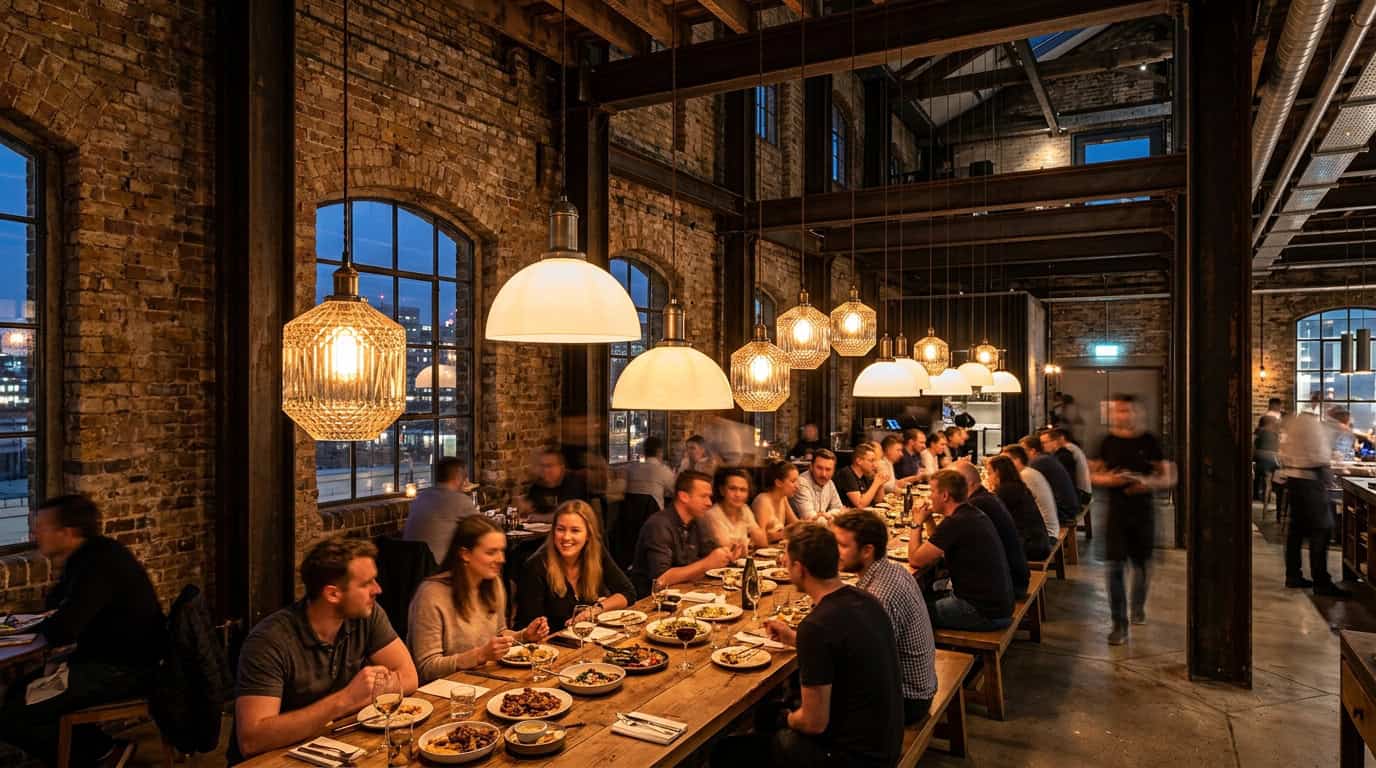
バーの天板、共同テーブル、オープンキッチンカウンターの上にある深いドーム型オパールおよびプリズマティックなエンジニアリングガラスシェードは、現代の最も一般的な用途の一つである。局所的な下向きの照明は視覚的階層を作り出す — テーブル表面が明るく照らされ、周囲の空間は暗めになる — これが食事環境に親密さと特別感を高める。.
レストラン用途では、エンジニアリングガラスのランプシェードは適切な吊下げ高さで指定すべきである: dining にはテーブル表面から30–36インチ、バー カウンターには18–24インチ。これらの高さで、12–14インチのドームは、LED源を100ルーメン/ワットとした場合、直径約24–30インチのテーブル覆域を生み出し、ペンダント間の周辺暗部を作らず、快適な食事照明を提供する。.
住宅用ロフトと産業系インテリアの改装
住宅用ロフト空間への倉庫・工場の改装は、エンジニアリングガラスランプシェードの自然な生息地である。改装中に建物から回収された元の時代のシェード、あるいは美的本物性を重視して指定された再現シェードは、その空間の産業遺産を強調する。.
住宅用途では、オパールガラスのドームシェードがプリズマティックなシェードより好まれる — 工場床で価値あるとされたプリズマティック光学の精密さは住宅環境の周辺照明には不要であり、オパールガラスは居住空間において暖かくより快適な光質を生み出す。.
作業場とスタジオの照明
元々の目的へエンジニアリングガラスランプシェードを戻す — 作業台、 makersベンチ、またはアートスタジオのテーブル上のタスク照明 — は現代でも非常に効果的な用途である。適切に位置づけられたペンダントからの焦点を絞った眩光のない照明は、天井取付のダウンライトやストリップライトに比べて、近接の細部作業において大幅に優れている。.
以下に従って エネルギー省のタスク照明効率の指針, 作業面より24–36インチ上のペンダントタスク照明は、同じワット数の天井設備と比較して3–4倍の照度を提供する。投射距離が短縮されることで、利用可能なルーメンが集約されるためである。作業台の上に30インチの高さに置かれたエンジニアリングガラスのランプシェードで、15ワットのLED球を使用すれば、ベンチレベルで約500フットキャンドルを生み出す — これははるかに高いワット数の天井システムに相当する。.
遺産と時代復元
ビクトリア朝、エドワン朝、中期の産業・商業ビルの period restorations では、照明設計の一部として authentic engineering glass lamp shades を指定することが多い。 authentic period shades は専門ディーラーから調達可能だが、品質と在庫は一貫性がない。 専門ガラスメーカーによる受注生産のレプリカは、文書化されたガラス仕様とともに供給の信頼性が高い。.
エンジニアリングガラス製ランプシェードの仕様設定と調達方法
エンジニアリングガラス製ランプシェードの仕様課題は、カテゴリが多くのスタイル変種、ガラス種類、取り付け構成を跨ぐため、標準的な交換用シェードの調達よりも複雑である。.
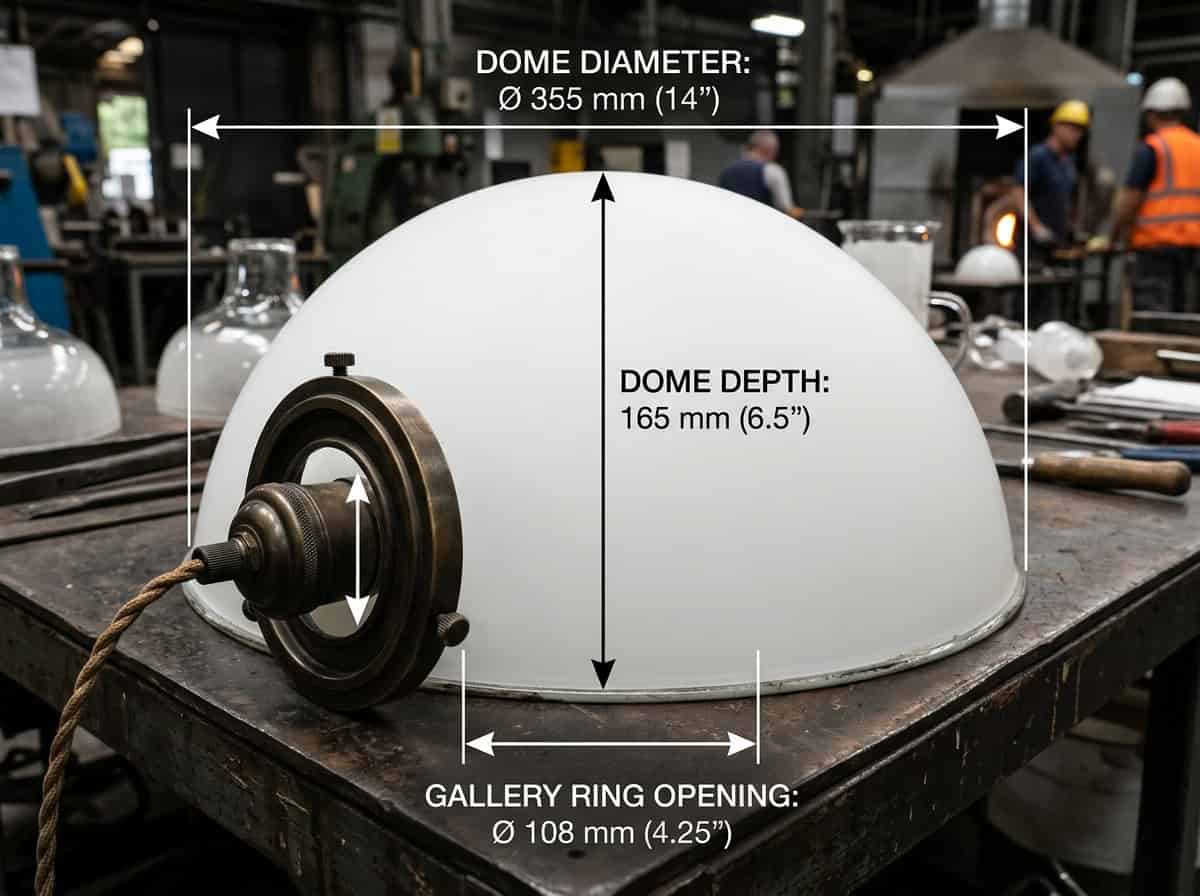
主な寸法
ドーム直径: ガラスシェード本体の外径の最大値。標準的なエンジニアリングシェードは8〜20インチの範囲。住宅用・レストラン用で最も一般的なサイズは10、12、14インチである。.
ドーム深さ: ギャラリーリングの座面からドーム内部の最も低い点までの距離。 “深い”ドームの深さ:直径比は0.6–0.7、“浅い”または皿形のシェードの比は0.3–0.4。深さはビームコントロールに大きく影響する—深いドームほど指向性が高い。.
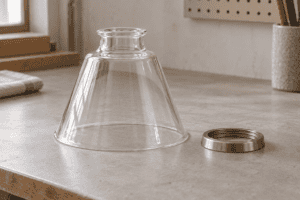
フィッターまたはギャラリー開口部: ガラリの上部開口部の内径は、ギャラリリングに座ります。標準サイズは、さまざまなペンダントシステム向けに2¼インチ、3¼インチ、4インチ、6インチです。標準交換シェードとは異なり、多くのエンジニアリングペンダントシェードは、単純なフィッターカラーではなく、セットスクリュー付きの完全な金属リングを含むフルギャラリリングを使用します。.
ギャラリリングの直径とデザイン: 取り付け金具はスタイルごとに大きく異なります。設置が次のいずれを必要とするかを指定してください:
– 標準フィッター式取り付け(ガラスカラーがセットスクリュー付きのリングに座る)
– ギャラリリング取り付け(ガラスフランジがフランジ付き金属リング内に固定される)
– 陶器または鋳鉄ギャラリー(時代に忠実な再現器具向け)
ガラス種別の仕様
現代生産エンジニアリングガラス製ランプシェードについては、ガラス種別を明示的に指定してください:
- オパールガラス、ボロシリケート基盤: プレミアム仕様 — 一貫したオパール外観、耐熱衝撃性、高出力LED源および残存高出力白熱灯のリプレース対応。すべての用途に推奨。.
- オパールガラス、ソーダライム基盤: 標準生産仕様。冷却性の高いLED源には適しています。ハロゲン灯や高出力白熱灯には適していません。.
- プリズマティック(ホロファン風)、クリアボロシリケート: ワークショップや産業用途における authentic なフォトメトリック性能のために。.
以下に従って 産業用灯具取付用エンクロージャーのNEMA規格, 、産業環境で使用されるエンジニアリングペンダントシェードは、メーカーが文書化した最低温度評価を満たす必要がある — 高ワット源の使用や周囲温度が高い環境での施設に関連する。.
Authentic vs. Reproduction: 見るべき点
period restoration(時期復元)とハイエンドなホスピタリティデザインでは、買い手はしばしば authentic vintage のエンジニアリングガラスのシェードと現代のレプリカを区別する必要がある。主な差別化要因:
authentic vintage の指標:
– 金型継ぎ目ライン(二枚組のプレス金型はガラス表面に明確な継ぎ目を残す)
– 少しの寸法差(手仕上げによって生産ユニット間で1–3 mmの差異が生じる)
– オパールガラスの元来の外観:純白ではなくやや温かいクリーム色のトーン(初期のオパールガラス組成はリン酸カルシウム混和剤を使用しており、現代の酸化ティンタや合成オパール組成より暖かいトーンを生む)
– 時代相応のフィッターサイズ(元の米国のエンジニアリングシェードはしばしば3¼インチのフィッターを使用 — 現代生産では少ない)
品質のレプリカ指標:
– 証明されたボロシリケートガラス構造( authentic vintage のシェードはすべてボロシリケートとは限らず、ソーダ石灰ガラスも多かった;良質なレプリカは長寿命のためにボロシリケートを使用)
– 一貫したオパール密度(よく作られたレプリカはドーム表面全体で光透過が均一で、ヴィンテージのシェードはバッチ間でオパール密度が異なることがある)
– 証明されたフィッター寸法(信頼できるレプリカサプライヤーはキャリパーで検証されたフィッター寸法を提供)
2026年以降のエンジニアリングガラス製ランプシェードのトレンド
2026年に形づくる3つの収束するトレンドが、エンジニアリングガラスのランプシェード市場を形成しています:
LEDリトレート適合性。. 元々のエンジニアリングガラス製ランプシェードは白熱フィラメント光源向けに設計されていました。現代のフィラメントスタイルのLEDランプ—可視LEDフィラメント配列を備えたエジソン型電球—は、クリアまたはオパルドームで見えるフィラメント美学を再現するため、これらのシェードへの関心を再興させました。しかし、フィラメントLEDランプは真の白熱フィラメントとは光の分布が異なり、オパルガラスはクリアガラスよりLEDのホットスポットの拡散を良くします。.
ダークスカイ適合型のダウンライティング。. エンジニアリングガラスのペンダントシェードは本質的にダークスカイ照明に優れており—その深いドーム形状は出力のほぼ全量を水平面以下へ向けます、これはまさに 国際ダークスカイ協会の器具認証基準 要件です。この特性が、ダークスカイ適合が求められるまたは望まれる屋外カバー付きスペース(ベランダ、テラス、パーゴラなど)でエンジニアリングスタイルのペンダントシェードの採用を促進しています。.
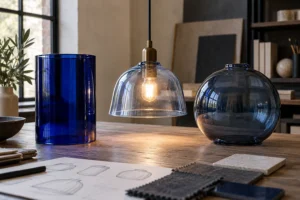
カスタムカラーと仕上げの拡張。. 従来の opal白とクリアガラスの支配は、エンジニアリングガラス製ランプシェードにおけるより広いカラーパレットへと道を開いています—スモークガラスドーム、翡翠緑(ヴィンテージの薬局ランプ美学を参照)、小さめのアクセントサイズでコバルトブルー。これらは従来のエンジニアリング仕様ではありませんが、現代的なカラー表現を伴う工業的フォルムへの消費者需要を反映しています。.
| トレンド | 市場反応 | 2026年の採用 |
|---|---|---|
| LEDフィラメントリトレート適合性 | LED拡散にはオパルガラスがクリアより好まれる | 新しいペンダント取付の約65% |
| ダークスカイ屋外カバー付きスペース | 屋外ペンダント照明としての深いドーム設計シェード | ~20%の屋外プロジェクト |
| カスタムカラーガラス | スモーク、緑、コバルトのドームシェード | ~12%のデザイン主導プロジェクト |
| 標準仕様としてのホウケイ酸ガラス | 仕様者が要求する文書化ガラス種別 | ~40%の商業プロジェクト |
よくある質問
工学用ガラスのランプシェードとは何ですか?
工学用ガラスのランプシェードは、19世紀後半から20世紀初頭にかけて工場や作業場のペンダント照明用に最初に設計された深いドーム型、プリズム型、またはオパールガラスのシェードです。ギャラリーリング取り付けシステム、耐熱性ガラス(オパール、プリズム、またはホウケイ酸ガラス)、および作業照明のために光を下向きに導く幾何学的形状が特徴です。現在では、工業インテリアデザイン、レストラン照明、作業場用途で広く使用されています。.
ホロフェインシェードと工学用ガラスシェードの違いは何ですか?
ホロフェインは、プリズムガラスシェードの特定のブランドおよびスタイルです — ガラス表面に規則的なプリズムパターンがあり、幾何学的な精度で光を屈折させて高い均一性の床面照明を実現します。これは、より広い工学用ガラスシェードカテゴリーの一種です。他の工学用ガラスシェードには、オパールドーム、クリアガラスの深いドーム、RLMスタイルがあります。すべてのホロフェインシェードは工学用ガラスシェードですが、すべての工学用ガラスシェードがホロフェインというわけではありません。.
どのサイズの工学用ガラスランプシェードが必要ですか?
ダイニングテーブル用ペンダントには、直径12〜14インチのドームをテーブル表面から30〜36インチ上に吊るすのが標準仕様です。バーのカウンターには、直径10〜12インチのドームをカウンターから18〜24インチ上に設置すると良いでしょう。作業場のタスク照明には、直径12〜16インチのドームを作業面から24〜36インチ上に配置すると優れた作業照明が得られます。長い作業台やテーブルには、3〜4フィート間隔で複数のペンダントを並べると効果的です。.
工学用ガラスのランプシェードは屋外で使用できますか?
はい、カバーされた屋外スペース — カバー付きポーチ、パーゴラ、ベランダ、屋外キッチンエリアで使用可能です。ガラスシェードは湿気の多い場所での使用に適した規格(ペンダントのハウジングとソケットも含む)でなければなりません。温度変化に耐えるために、ホウケイ酸ガラス製の構造がおすすめです。深いドームの形状により、工学用ガラスのペンダントは本質的に優れたダークスカイ照明器具となり、ほぼすべての光が下向きに向けられ、上方への漏れがありません。.
工学用ガラスのランプシェードのフィッターサイズをどうやって識別しますか?
工学用ガラスのランプシェードは、多くの場合、シンプルなフィッターカラーではなくギャラリー式の取り付けを使用しています。標準的なギャラリーの直径は、ほとんどの住宅やレストランのペンダント用に4インチ(102 mm)、大型の工業用ドームシェードには6インチ(152 mm)です。正しいサイズを識別するには、ペンダント器具のギャラリーリングの内径を測定してください — この測定値はガラスシェードの上部フランジの外径と一致します。一部のスタイルでは、3¼インチ(82 mm)のフィッターを使用しており、特に本物のヴィンテージシェードに見られます。.
オリジナルの工学用ガラスランプシェードに使用されているガラスの種類は何ですか?
1900年代から1950年代のオリジナルの工学用ガラスランプシェードは、用途に応じていくつかのガラスタイプで製造されました。一般的な作業場用にはカルシウムまたはスズリン酸リン酸不透明ガラス(オパールホワイトガラス)、ホロフェインタイプの高精度光学用にはプリズムクリアガラス、高出力白熱電球用途には耐熱性ホウケイ酸ガラスです。ほとんどのヴィンテージシェードはソーダライムオパールガラスであり、ホウケイ酸ガラスではありません。高品質な現代のレプリカは、熱衝撃に対する耐性を向上させるためにホウケイ酸オパールガラスを使用しています。.
工学用ガラスのランプシェードをどのように掃除しますか?
セットスクリューを緩めてギャラリーリングからシェードを取り外します。オパールガラスのシェードの場合は、温かい水に少量の食器用洗剤を入れて洗います — 10〜15分間浸すことで煙やほこりの蓄積の大部分が溶解します。プリズムガラスのシェードの場合は、柔らかいブラシを使ってプリズムリブの間のほこりを掃除します。どちらのタイプも研磨性のパッドは避けてください — ガラス表面に傷がつき、光学性能が低下します。再取り付け前に十分に乾かしてください。レストラン環境の厨房排気付近のオパールガラスシェードは、2〜3ヶ月ごとに掃除し、作業場のシェードは6ヶ月ごとに掃除します。.
結論
日本の 工学用ガラスランプシェード これらのシェードは、設計された100年前と同じくらい今日でも優れた性能を発揮し、見た目も良くなっています。深いドームの形状、オパールまたはプリズムガラス、ギャラリーリング取り付けは、これらのシェードを工業用タスク照明の主役にし、現代の作業場、キッチン、レストラン空間において本当に優れた作業灯としています。.
工学用ガラスのランプシェードを正しく仕様設定するには、スタイルのバリアント(オパールドーム、プリズム、RLM、またはベンジャミンスタイル)を特定し、ギャラリーリングの直径と取り付けシステムを確認し、ガラスの種類を指定します — 熱耐性にはホウケイ酸ガラス、柔らかい拡散光にはオパール、最大の光学精度にはプリズムを選びます。LED光源を使用する現代的な用途では、オパールガラスはクリアガラスよりもLEDのホットスポットの拡散性に優れています。.
オパール、プリズム、ホウケイ酸ガラス構造の工学用ガラスランプシェードの製造に関して — 標準およびカスタムドーム直径で — jxlampshade.comのガラスランプシェード製品ライン 商業および住宅プロジェクト向けのレプリカ仕様とカスタムデザインプログラムの両方をカバーします。.