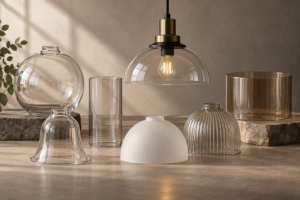
フロアランプのシェードは、ランプベースの高さの3分の1の高さで、ベースの幅と同じかやや大きい直径を持ち、ランプの金具に適合するフィッタータイプ(スパイダー、ウノ、またはユーロ)を使用する必要があります。.
理想的なフロアランプのベースを見つけたのに、付属のシェードがしっくりこない。小さすぎたり、光が強すぎたり、部屋に合わなくなったり。フロアランプ用の交換シェード選びは見た目だけではありません。サイズやフィッタータイプを間違えると、そもそも取り付けられません。このガイドでは、どんなフロアランプにも合う理想的なシェードの測り方、選び方、取り付け方を解説します。.
フロアランプ用シェードとは?
フロアランプのシェードは、立ち型ランプの光を拡散し、明るさや光の方向、雰囲気を調整しながらインテリアデザインを引き立てる布、紙、または金属のカバーです。.
多くの人はランプシェードを単なる装飾と考えていますが、それは半分正解です。フロアランプ用の適切なシェードを選ぶことで、読書コーナーが十分な明るさになるか、天井に強い影が出るか、ゲストの目が電球のまぶしさで涙ぐむかが決まります。シェードの素材、形、サイズが組み合わさって、必要な場所に光を拡散・柔らかく・集中的に届けます。.
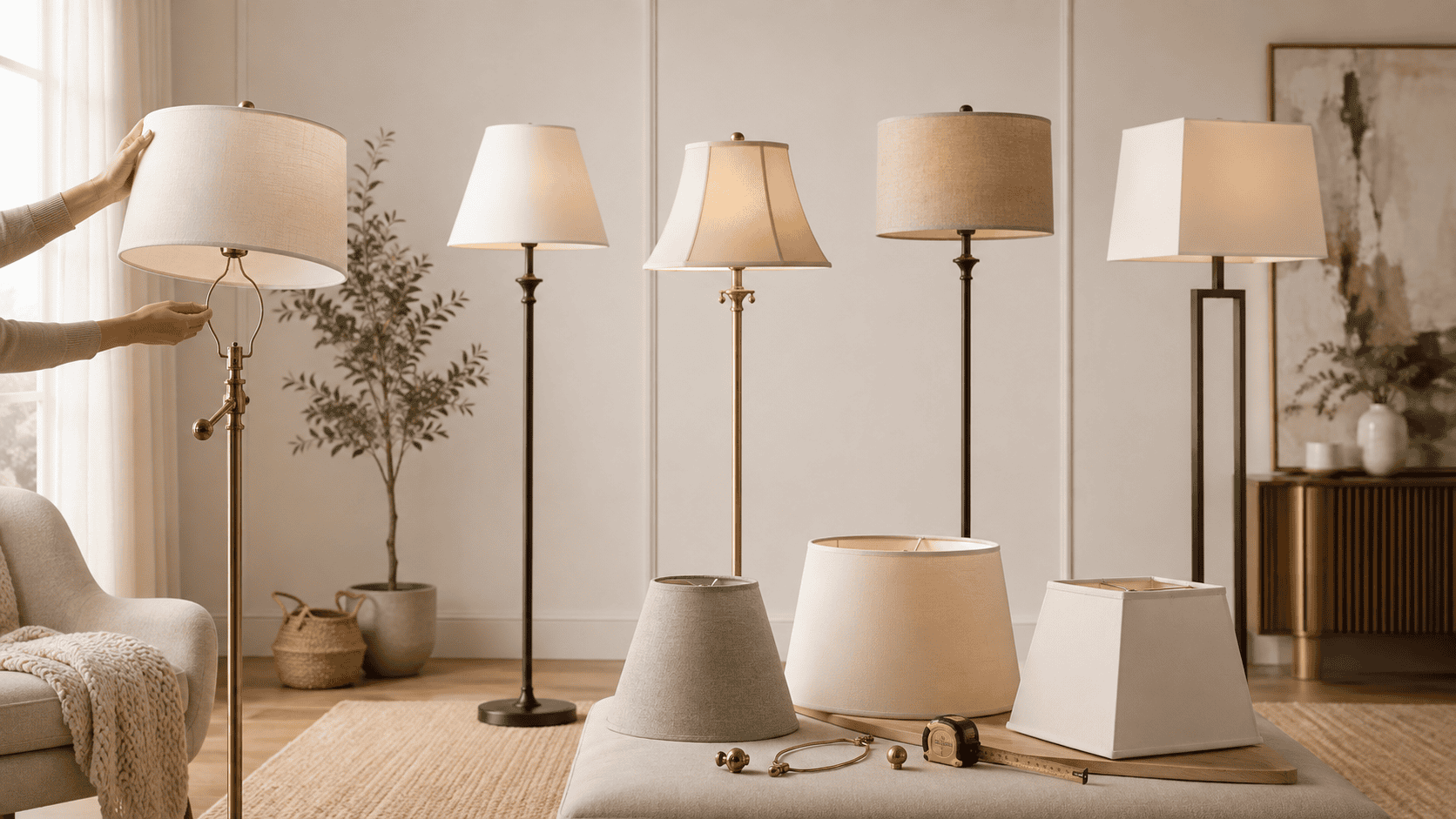
フロアランプシェードシステムの構成要素
フロアランプ用シェードの取り付けには、シェード本体(布、紙、または金属)、フィッター(金属製の取り付け金具)、場合によってはハープ(スパイダーフィッターシェードを支えるU字型ワイヤー)の3つの部品が必要です。フィッターが交換時の失敗ポイントです。フィッタータイプが合わないシェードを買うと、見た目が良くても物理的に取り付けできません。.
シェード本体が光の調整を担います。目の詰まったリネンは光の60〜70%を遮り、温かみのある光を作ります。薄い紙は80%の光を通し、部屋全体を明るくします。上部が開いた金属シェードは上下に光を放ち、側面は暗くなります。書斎の間接照明には最適ですが、デスクの作業用照明には不向きです。.
フロアランプ用シェードとテーブルランプ用シェードの違い
フロアランプは高さが約127〜183cm、テーブルランプは約76cmが上限です。この高さの違いがシェード選びに大きく影響します。テーブルランプにバランスよく見える25cmのシェードも、フロアランプでは指ぬきのように小さく見えます。部屋の向こうから見ると、バランスが極端に悪くなります。.
| 特徴 | フロアランプ用シェード | テーブルランプ用シェード |
|---|---|---|
| 標準直径 | 約36〜56cm | 約20〜41cm |
| 高さの範囲 | 約25〜46cm | 約15〜30cm |
| フィッタータイプ | スパイダー、ウノ、ユーロ | スパイダー、クリップオン、ウノ |
| ベースの比率 | 1:3 ランプの高さ | 1:2 ベースの高さ |
| 光の方向 | 下向き+周囲照明 | 上向きまたは下向き |
| 一般的な電球のワット数 | 75~150W(LED 10~20W相当) | 40~100W(LED 5~15W) |
フロアランプのシェードは、より多くの熱にも耐えます。テーブルランプで100ワットの白熱電球を使うと温かくなりますが、同じ電球をフロアランプのタイトなシェードで使うと、数か月で布地が焦げたり紙が黄ばんだりすることがあります。そのため、フロアランプのシェード素材は繊細なシルクよりもリネンやコットン混紡が多くなります。シェードが1.5メートルの高さにあり、毎日簡単にチェックできないため、耐久性が重要です。.
ランプシェードフィッターの種類(取り付け方法)
フィッターはシェードをランプに取り付ける金属フレームです。間違ったタイプを選ぶと、シェードが取り付けられません。.
照明店に行くと、主に3種類のフィッター(スパイダー、ウノ、ユーロ)が見つかります。それぞれランプの異なる部分に取り付けます。スパイダーフィッターはハープに引っ掛けます。ウノフィッターはソケット自体にねじ込みます。ユーロフィッターは電球に直接クリップします。これらを変換するアダプターはありません。ランプにハープがあればスパイダーシェードが必要です。なければウノかユーロを選びます。.
スパイダーフィッター(最も一般的)
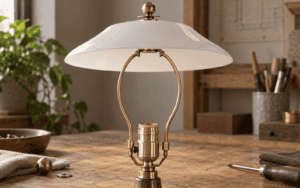
スパイダーフィッターは日本の伝統的なフロアランプの70~80%に使われています。フィッターには3本または4本の金属アーム(「スパイダーの脚」)があり、中央のリングで合流します。そのリングがハープの上に乗り、フィニアル(装飾用のネジ)がリングを通して下にねじ込まれ、すべてを固定します。.
利点は、ハープを交換することでシェードの高さを調整できることです。ハープは6インチから12インチまで1インチ刻みであります。スイッチを避けるためにシェードを高くしたい場合は、数百円で高いハープを購入できます。欠点は、スパイダーフィッターが見た目にごちゃごちゃすることです。金属アームが薄いシェードから透けて見え、フィニアルもデザインの一部になります。.
スパイダーフィッター付きのフロアランプ用シェードを購入する際は、スパイダーリングの内径を確認してください。ほとんどは標準フィニアルに合う1.5~2インチですが、大きな装飾用フィニアルは小さいリングを通りません。太いフィニアルを1.5インチのリングに無理やり通して、シェードの取り付け部分を割ってしまうお客様も見かけます。高くつく失敗です。.
ウノフィッター(ねじ込み式ソケットマウント)
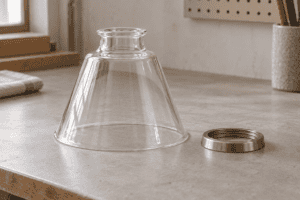
ウノフィッターはハープを使いません。シェードにはねじ込み式のリング(通常2~3インチ径)があり、ランプのソケットに直接ねじ込みます。電球を外し、シェードをねじ込み、再び電球をシェードのリングを通して取り付けます。電球がシェードを固定します。.
初めて使うと不安定に感じますが、実際は違います。電球のネジ山はシェードの重さ(通常0.5~1.5kg)に耐えられる設計です。ウノフィッターは、ハープが見えるとデザインを損なうミニマルなランプに適しています。多くのアーク型フロアランプやモダンな三脚デザインは、シェードがソケットにぴったり取り付けられ、金具が見えないためウノフィッターを採用しています。.
注意点は、高さを調整できないことです。シェードはソケットの位置にそのまま付きます。後で高さを変えたくなった場合は、配線をやり直す必要があります。また、ウノシェードは電球が通るだけの中央穴が必要です。放熱フィン付きのLED電球は、細い白熱電球用に設計されたヴィンテージのウノリングを通らないことがあります。.
ユーロフィッター(電球用クリップオンリング)
ユーロフィッターは、「ヨーロピアンクリップオン」や「バルブクリップ」とも呼ばれ、バネ付きの金属クリップで電球自体を挟みます。金属製のリングに3本または4本のアームが付いており、電球のガラス部分をつまむイメージです。シェードはこのリングから吊り下げられるため、電球の位置がシェードの位置を決めます。.
このフィッターは、ハープが標準でないペンダント型フロアランプやヨーロッパ輸入品に適しています。クリップはさまざまな電球径(A19、A21、G25グローブ)に対応しますが、外部ドライバーや冷却フィン付きの大型LED電球には適合しません。もう一つの注意点は熱です。クリップは電球表面から数ミリの位置にあります。ユーロフィッター付きの紙製シェードは、100W相当のLEDを使用すると焦げる可能性があるため、60W相当以下の使用をおすすめします。.
| フィッタータイプ | 取り付け先 | 最適用途 | 外観識別 | 高さ調整可能? |
|---|---|---|---|---|
| スパイダー | ハープ+フィニアル | 高さ調整可能なランプ、伝統的なスタイル | 上部中央に収束する金属製の腕 | はい(ハープを交換) |
| ウノ | 電球ソケットのねじ | 高さ固定のミニマリスト照明、現代的アーク | ねじ込み式のリング、ソケットにねじ込む | No |
| ユーロ(クリップオン) | 電球そのもの | ヨーロッパ風の照明、ペンダント、電球重視のデザイン | 電球を挟むスプリングクリップ | No |
| クリップオン | 電球の縁 | 小さなアクセントランプ、シャンデリア球 | 直接電球の縁を挟むクリップ | No |
床用ランプシェードの測定とサイズの方法
適切な比率を保つと、ランプが均衡に見え、機能も適切になる――大きすぎるとベースが圧倒され、小さすぎると不格好で過熱しやすい。.
インテリアデザイナーはそれを“三分の一の法則”と呼ぶが、ほとんどの住宅所有者は新しいフロアランプのシェードがオンラインのサムネイルでは美しく見えても、実物で奇妙に見えるまでそれを無視している。その法則は、シェードの高さはベースからシェードの頂点までの総ランプ高のおおよそ三分の一程度であるべき、というものだ。60インチのフロアランプには18〜20インチのシェードが必要。12インチのシェードを選ぶと安っぽく見える。24インチのシェードを選ぶと視覚的な重さがトップに偏ってしまう。目はベースが大きくなるべきだと感じ、そんなに多くのシェードの質量を支えることを期待している。.
シェードの高さの三分の一の法則
床ランプを床からシェードを設置する場所(ハープの頂上またはソケットの頂上、シェードが座る場所)まで測り、0.3〜0.35を掛ける — これが目標のシェード高さだ。例えば54インチのランプなら、54 × 0.33 = 18インチのシェード。これは恣意的な美学ではなく、安定性を私たちが知覚する仕組みを反映している。トップヘビーなランプは、上部棚の重い容量と同じ不安感を視覚的に引き起こす。.
ここからニュアンスが出てくる。三分の一の法則は、実体のある不透明なベースを前提とする。床ランプが薄い脚のミニマリストな三脚である場合、ベースの「軽さ」を補うためにシェードをやや高くする(0.35〜0.37程度がよい)。逆にかっちりした陶磁器製または大理石ベースは、0.28〜0.30に近い短いシェードでも見苦しくならない。.
Houzzによる2026年のインテリアデザイン調査の1つのデータポイント:三分の一の法則を15%以上違反した部屋は、視聴者から「おかしい」とマークされる割合が68%の時点であることが示された。理由を言語化できなくても、脳はただそう感じる。.
直径のベースへの比率
シェードの直径は、通常ベースの最も広い部分(通常は下部のプラットフォーム)と一致するか、わずかにそれを上回るべきである。ベースが10インチなら、12〜14インチの直径のシェードが適合する。より小さくしすぎるとシェードが.
ドラムシェード(床ランプで最も一般的な形状)では、シェードの底部直径を測る。エンパイアシェード(上部が細く、下部が広い)は両方の寸法を示すが、この比較には底の寸法を使用する。ベースが12インチ幅なら、14–16インチのシェード(底径)が適用可能。ベースが重い視覚的な質感(彫刻木材、打ち込み金属など)で実際の面積より広く「読まれる」場合は、18インチまで広くする設計者もいる。.
実用的な限界もある。直径が20インチを超えるシェードは出入り口のドア、掃除機のホース、通る肩幅に引っかかる。8フィート幅のリビングルームでこれを検証したところ、22インチのシェードはランプの周りを意識して移動する必要があった。床ランプが人の往来の多いゾーンにある場合は、ベース幅にかかわらず直径を18インチにするのが無難だ。.
既存のハープとシェードリングを測る
蜘蛛型フィットのランプにシェードを交換する場合は、買い物を始める前にハープを測る。ハープの標準高さは6″、7″、8″、9″、10″、12″。ハープの高さはシェードが電球の上に座る高さを決定する。短すぎるとシェードのトップ生地が焦げ、長すぎると横から電球の眩しさが見える。.
サドルからハープを引き抜く(通常は優しく力を加えると上方へ滑り出る)、底部のU形からフィニアルがねじ込まれるトップまでを測る。これがハープの高さだ。ほとんどの床ランプは8″または9″のハープで出荷される。より高いシェードを取り付ける場合は、クリアランスを保つために10″または12″のハープが必要になることがある。電球とシェードの内側上部の間には2〜3インチの間隔を取ることを目指す。.
また現在のシェードの 斜辺の長さ (底縁から上縁までの対角測定、シェードの傾斜した側面に沿って) を、実店舗で買い物する場合に測っておく。オンライン小売業者はシェードの高さを垂直として表示するが、実店舗では斜面に沿ってテープを当てると視覚的な一致を早くつかめる。.
ランプシェードの形と、それぞれをいつ使うべきか
異なるシェード形状は異なる光のパターンを生み出し、部屋のスタイルにも合う—形状を誤るとランプが場違いに感じられることがある。.
形状は単なる装飾ではない。光学だ。平行したサイドを持つドラムシェードは上下に均等に光を拡散し、天井と床を均一な明るさで覆う。書斎や寝室の環境照明に理想的。上部が狭く下部が広いエンパイアシェードは、円錐状に多くの光を下向きに集中させ、椅子の横での読書や作業照明に最適。ベルシェードとクーリ―シェードは中間的な効果を出すが、装飾性が強く、機能的照明よりも視覚的な興味のために用いられることが多い。.
ドラムシェード(現代的で均一な光の分布)
ドラムシェードは縦直線のサイドを持つ、円柱のような形状。上下で直径が同じ。この形は現代的・コンテンポラリーなフロアランプで支配的で、見た目が清潔で目立たず、布の平方インチあたり最も使える光を生み出す。.
平行するサイドは、上部と下部の開口部から光が等しく逃げることを意味する。100W相当のLEDと組み合わせると、天井を明るく照らす光のシャワーが得られ(低い天井を高く感じさせるのに有用)、床には座るエリアを定義する光のプールが生まれる。サイドは薄く、薄い色の布を使わない限り暗めになる。白やクリーム色のリネンのドラムシェードは360度の輝きを提供。オープンプランのリビングに最適。暗めまたは厚手のドラムシェードはムード照明を作り、上向きと下向きのビームが強く、側面は暗い。.
ドラムシェードはランプがグループの一部として配置される空間に適している。複数のドラムシェード付きのフロアランプは形状が中立的でまとまりを感じさせる。ドラムとエンパイアを混在させると、不一致が偶然性として読まれ、意図的な折衷主義には読まれにくくなる。.
エンパイアシェード(伝統的、下向き照明に焦点)
エンパイアシェードは上部が狭く、下部が広がる円錐形の切り詰められた筒状。上部開口は8インチ、下部は16インチ程度になることが多い。この形は長年にわたり伝統的・トランジション系インテリアのデフォルトであり、「ランプシェード」というと頭に浮かぶものだ。“
狭い上部は上方の光を制限する。大半の光量は下部の広い開口部から外へ出て、ランプ下に明確な光のプールを作る。インテリアデザイナーはエンパイアシェードのフロアランプを読書用の椅子の脇、ベッドサイド、ソファの横など、眩しさのない作業照明を欲する場所に配置する。下向きの照射は天井の影を最小限に抑え、装飾的な天井低浮上(コファード天井やトレイ天井)の場合、上方の照明がテクスチャを不自然に強調するのを避けられる。.
フロアランプ用のエンパイアシェードは、同じ直径でもドラムシェードより通常高くなるため、より正式で縦長のプロファイルを持つ。直径16インチのエンパイアは高さがおおよそ14インチ程度になる一方、同直径のドラムは高さ10~12インチである。同じ直径でもこの追加の高さは、縦方向の強調をすでる回転木製ベースや真鍮ベースを持つ伝統的なフロアランプに向く。.
ベルシェードとクーリ―シェード(装飾的、環境光)
ベルシェードはベルのように外側へ広がり、穏やかなフレアを描く(予想通り)。クーリ―シェード(“中国帽”シェードとも呼ばれる)は、頂部が小さく下部が広がる急な傾斜で、アジアの円錐帽に似ている。どちらもドラムやエンパイアよりフロアランプでの使用は一般的ではないが、エクレクティックなインテリアやビンテージリストアで見かける。.
ベルシェードは狭い上部と広い下部の移行を和らげ、環境光を少し強めに、作業光よりも ambiance に重きを置いた光の分割を生み出す。ベース自体が装飾的で、シェードが競合しないような陶器製またはガラス製の床ランプのベースに見られる。ベルの形状は幾何学的というより有機的に感じられる。.
クーリー・シェーズはほとんどの光を下方へ投下する。帝国のようだが、急角度はより広く、焦点の合わない光のスポットを作る。劇的には見えるが機能性を制限する。80% Decorationのコーナー用フロアランプには適しているが、読書には不向き。サイズ選びも難しく、急な傾斜は実際より高く見せるため、高さは控えめにするか、ランプがスレンダーに見えることになる。.
材料と光の質
シェードの材料は、どれだけの光が通るか、色温度、耐久性に劇的な影響を与える。.
白リネンのドラムシェードと同じドラムをブロンズ金属で作ると、部屋の印象は全く異なる。リネンは光を柔らかく拡散し、全方向にルーメンを跳ね返して、12×12の部屋全体の周囲の明るさを30〜40 lux引き上げる。金属製のシェードは横からの光を完全に遮断し、上方と下方に焦点を絞ったビームを投げる。周囲の明るさはほとんど動かないが、天井と床には鋭い光の池を作る。床用ランプのシェードを選ぶ際は、材料を光を弱める装置、フィルター、そしてデザイン性の主張として理解することが重要である。.
ファブリック系シェード(リネン、シルク、コットン)
ファブリックの床ランプ用シェードは、 aestheticsと機能性のバランスのため住宅用途で優勢である。自然なまたはアイボリーホワイト系のリネンシェードは、側面を通過させる光を50–60%に保ちながら、暖かな光を保つ。厳しい影や眩しさはなし。織りがより緻密な(コットン・ダックキャンバスのような)場合は透過が30–40%に低下し、床ランプがテレビの近くにあり、画面のグレアを避けたい場合に有用である。.
シルクのシェードは上品で光を美しくフィルターするが、壊れやすい。電球からのUVで3〜5年でシルクが黄変し、繊維にはほこりが付きやすい。シルクは低頻度の装飾用の床ランプ、正式なリビングルームの読み椅子の横には避けるべきである。熱と取り扱いにより生地が早く劣化する。綿混紡(綿ポリエステル)は、シルクの見た目を800%程度の光量で、耐久性を3倍確保する。.
リネンは最も耐久性が高い。熱に強く、黄変が早く起きにくく、掃除機のブラシアタッチメントで清掃可能である。床ランプ用の高品質なリネンのシェードは、通常使用(1日あたり3〜4時間)で7〜10年程度持つ。代償として、リネンは質感を示すため、カジュアルに見える。現代的またはファームハウス系インテリアと組み合わせ、フォーマルな伝統様式とは合わせない。.
紙と parchment のシェード
紙製のシェード(和紙、パーチメント、ベラムを含む)は光を70–85%通すため、最も明るい選択肢です。柔らかく均一な輝きを生み、影を最小限に抑えます。単一の光源から最大の周囲光を得たい空間に理想的です。.
難点: 紙製シェードは消耗品です。熱で2–3年で黄変します。湿度で歪みます。家具を動かす際にぶつけると破れることがあります。子供やペットがいる家庭では、紙製シェードを18–24ヶ月ごとに交換することを見込んでください。とはいえ、価格は手頃で(16インチのドラムなら$20–$40程度)、交換コストは低く抑えられます。.
和紙(アジアン風のフロアランプでよく見られる)は特に繊細ですが、美しい拡散光を生み出します。パーチメントはより堅く、少し透け感のある革状の質感です。熱に強く、黄変を4–6年抑えることができます。寝室や人の通らない居間など、柔らかな周囲光を求め、時折の交換を気にしない場合には、紙製シェードが最もコストパフォーマンスの高いルミン量を提供します。.
金属とガラスのシェード
金属製のシェード(真鍮、鉄、銅、塗装仕上げ)は側面からの光を完全に遮断し、上部と下部の開口部を通して100%のルーメンを放出します。その結果、ドラマチックな上下のビーム、低い周囲光、力強い影が生まれます。産業風、ミッドセンチュリーモダン、スチームパンクのスタイルはこの高対比の外観に金属シェードを強く頼ります。.
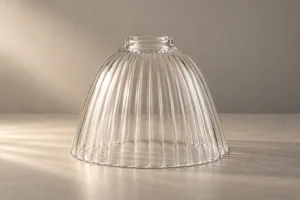
ガラスのシェード(すりガラス、ブリックガラス、透明ガラス)は生地と金属の中間に位置します。すりガラスは生地のように光を拡散しますが、黄変したり摩耗したりすることはありません。ブリックまたはテクスチャーのあるガラスは光を壁や天井に興味深いパターンとして拡散させ、単調な部屋に視覚的な質感を加えます。透明ガラスは拡散を一切行いません。純粋なバルブの眩しさです。装飾的なフィラメント球と組み合わせて、眩しさを意図的に演出する場合を除き、単独では眩しさが強いです。.
耐久性の点では、金属とガラスのシェードは数十年にわたり使用できます。1970年の打ち出し銅のシェードでも、取り付け部が腐食していなければ今日でも問題なく機能します。欠点は重量です。金属とガラスのシェードは3–6ポンドで、取り付け具のストレスが大きく、蜘蛛座金具には頑丈なハープが必要です。大型の金属シェードで軽量の三脚フロアランプが転倒するのを見たことがあります。設置前にベースの安定性を確認してください。.
| 素材 | 光の拡散 | 耐久性 | スタイルの適合 | メンテナンス |
|---|---|---|---|---|
| リネン | 柔らかな、暖かい輝き;透過量50–60% | 高い(5–10年) | 海岸風の現代的ファームハウス、トランジショナル | ほこりは掃除機のブラシで月次清掃 |
| シルク | 優雅でさりげない; 透過量55–65% | 中くらい(3–7年) | 伝統的、豪華、正式 | 部分洗いのみ、水不可 |
| 紙 | 明るく均一; 70–85% 伝送 | 低い(1–3年) | アジア風、予算重視、ミニマリスト | 黄ばみが出たら交換 |
| 金属 | 焦点ビーム; 0% 側、100% 上/下 | 非常に高い(10年以上) | 工業風、中世期風、スチームパンク | 湿った布で拭く |
| 綿混紡 | 暖かく用途が広い; 40–55% 伝送 | 高い(6–9年) | 現代的、多様性、カジュアル | 機械洗い可能(フィッターを外す) |
| フロストガラス | 拡散; 60–75% 伝送 | 非常に高い(15年以上) | アールデコ、モダン、浴室適合 | ガラスクリーナー、傷なし |
室内デザインに合わせた色味のスタイル
色が合わないシェードは完璧な部屋を台無しにする—人気のデザインスタイルに合わせてシェードを組み合わせる方法.
部屋に入ると、通常5秒以内にフロアスタンドのシェードが適切か、ランダムに選ばれたものかを判断できる。ランプ自体は技術的には“機能する”(サイズが適切、フィッターが適切)かもしれないが、シェードのスタイルが部屋のデザイン言語と衝突すると、場当たり的に見える。朗報:いくつかの簡単な組み合わせのルールで住宅スタイルの90%の大半をカバーできる。.
現代的でミニマルな空間
現代のインテリアは、クリーンなライン、ニュートラルなパレット、乱雑さのない表面を重視します。フロアランプのシェードは、この美学に溶け込むべきで、対抗してはなりません。白、クリーム、グレー、または黒リネンのドラムシェードは普遍的に合います。柄、フリンジ、または scalloped edge は避けてください。いずれも視覚的なノイズになります。.
素材は形と同じくらい重要です。リネンとコットン混紡は暖かみのあるモダンさを感じさせます。紙のシェードはスカンジナビア風や日本のミニマリズムに傾く傾向があります。明るい木の床と低めの家具と組み合わせてください。フロアランプのベースが金属(ブ brushed ニッケル、マットブラック、ブラス)なら、シェードの金具仕上げをベースと合わせて統一感を出しましょう。黒金属のランプに白いドラムシェードと黒いスパイダー・フィッターを組み合わせると、現代のリビングルーム、ベッドルーム、ホームオフィスには安全でおすすめです。.
2026年のトレンドの一つ:スレンダートライポッドベースに oversizedなドラムシェード(直径20–22インチ)。伝統的な規則からはやや外れる比率ですが、スケール感が存在感を生み出します。非常に“ブルックリン風ロフト”や“カリフォルニアモダン”の雰囲気です。9フィート以上の天井がある部屋でのみ機能します。標準的な8フィートの部屋ではスペースを圧迫します。.
伝統的でクラシックなインテリア
伝統的なデザインは対称性、装飾、歴史的な要素に基づきます(ジョージアン、ヴィクトリア、コロニアル)。エンパイア・シェードが支配的で、形が古典的な壺や柱を反響させます。アイボリー、シャンパン、トープ、または柔らかなゴールド系の絹またはシルク風(実際にはポリシルク混紡で見た目は同じだが耐久性が長い)のシェードを探してください。.
プリーツ付きシェード(縦プリーツまたはボックプリーツ)は、伝統的な部屋が期待する質感を加えます。滑らかなシェードは硬すぎると感じられます。 scallopedの底辺、装飾トリム、またはコントラストのパイピングは公式な雰囲気を強化します。フロアランプのベースが木製の回し木、陶器、またはアンティークブラスの場合、シェードは暖かいトーンにするべきです。クールな白やグレーはモダンと読み取られ、美学を壊します。.
伝統的なフロアランプを伝統的なランプハープとフィニアルと組み合わせます。クリスタルやファセットガラスのフィニアルはデザインの一部になります。ハープはブラスプレート仕上げまたはアンティーク仕上げの金属製で、クロームではないこと。これらのディテールは小さなものですが、積み重なると影響します。3つ間違えると、ランプは厳選された感よりも混乱した印象になります。.
インダストリアルとミッドセンチュリーモダン
インダストリアルスタイルは露出した金属、エジソン球、コンクリート、リサイクル材の木材といった未加工素材を称賛します。床ランプのシェードはこの荒さを取り入れる(金属製シェード、ワイヤーケージ)か、温かい対比を提供する(天然リネン、麻布)かのいずれかにするべきです。黒またはガンメタルのドラムシェードに見えるリベットや縫い目が露出するものが良いです。焦点を絞った光を放つ円錐形の金属シェードも同様です。工場の作業ランプを拡大したような感じを想像してください。.
ミッドセンチュリーモダン(MCM)はインダストリアルと重なる部分がありますが、色と曲線を加えています。MCMの床ランプはしばし teakベース、アーク形、1950年代から70年代の大胆なシルエットを特徴とすることが多いです。 burnt orange、マスタード、オリーブ、ティールのドラムシェードは当時の雰囲気を持ち、2026年には新鮮さを感じさせます。ベースが主役の場合は白またはクリームのドラムシェードが合います。エンパイアシェードは避けてください。MCMのカジュアルな洗練さには正式すぎるためです。.
両方のスタイルは露出球または最小限のシェードを好むため、工業系またはMCMの床ランプのシェードを交換する場合、そもそもシェードが必要かどうかを検討してください。露出したフィラメントを持つ裸のエジソン球が最も正直な選択かもしれません。シェードを追加する場合は、シンプルにしてください:プリーツ、柄、スカラップは不可。.
ステップ・バイ・ステップの取り付けガイド
床ランプのシェードを正しく取り付けるとぐらつきを防ぎ、安全性を確保し、光の出力を最大化します。.
多くの人は説明書を省略し、シェードを見た目通りに強引に取り付けます。これはうまくいくこともありますが、うまくいかなくなるときもあります。シェードは歪んで座り、フィニアルはねじ山を傷つけ、誰かがランプにぶつかると全体の組み立てが倒れてしまいます。正しい取り付けには3分かかり、これらの問題をすべて解消します。.
必要な道具
蜘蛛フィッター用のシェードには特別なものは必要なし。古いハープを外す必要がある場合は小さなドライバーくらい。UnoおよびEuroフィッター用には、電球を扱う際の汚れを避けるためのきれいな布と、前回のシェードでUnoリングが過度にねじ込まれている場合にはニードルノーズプライヤーが必要になることがあります。.
ランプを始める前に、タオルや柔らかな表面の上に置いてください—もしシェードを落としても硬い床材ではなくフリースの上に着地させたいからです。これは、犬が設置中に吠えたために$90のガラスシェードを粉砕した経験があるなら、卑屈すぎる話ではありません。.
蜘蛛フィッターシェードの取り付け(ハープ付き)
ハープのトップからフィニアルをねじって外します。古いシェードがある場合は、それをハープから持ち上げて外します。蜘蛛シェードはハープの上に置くだけで、クリップされていたりロックされていたりはしません。ハープを点検します。曲がっている場合は交換してください。曲がったハープはシェードを傾けてしまい、弱点を作ることなく曲がりを直すことはできません。.
蜘蛛リング(蜘蛛のアームが交差する中心の金属リング)を持って新しいシェードを持ち、ハープの上に下ろします。ハープのトップロッドは蜘蛛リングの中心穴を通過するはずです。シェードを水平になるように安定させ、必要に応じて安定した位置を見つけるために少し回転させます。いくつかのシェードには“前面”があり(縫い目や内部のタグで示されます)、部屋の主な視線からそれを向けるようにします。.
フィニアルをハープのトップロッドに再びねじ込みます。手で締め付けます(きつすぎず、 torqueをかけすぎない程度に)。過度の締め付けはハープを曲げたり、プラスチックコーティングの蜘蛛リングを割ることがあります。シェードは安定しているべきですが、軽い力で回転させられる状態を保ちます。ぐらつく場合は、ハープが少し曲がっているか蜘蛛リングが均等に座っていない可能性があります。シェードを持ち上げて、ハープアームの対称性を確認し、再度座らせてください。.
UnoおよびEuroフィッター用シェードの取り付け
のため Unoフィッター:ランプの電源を切り、最近点灯していた場合はバルブを冷ましてから外します。古い電球を外します。既存のUnoシェードがある場合は、ソケットのねじリングを外してください。新しいシェードをUnoリングで掴んでソケットのねじに時計回りにねじ込みます。きつく締めすぎず、シェードが自由に回転しない程度に締めますが、ソケットのねじ山をねじ切らないようにしてください(真鍮ソケットは力を加えるとねじ山が欠けることがあります)。.
今度はシェードの中心開口部を通して電球を再度ねじ込みます。電球の基部ねじはシェードを通してソケットにねじ込まれます。電球をしっかり固定するまで締めます。電球が事実上シェードを固定します。ランプを点灯させ、シェードが水平になっているか確認してください。傾斜している場合、Unoリングが均等にねじ込まれていない可能性があります—電球を外して、シェードを再び座らせ、もう一度試してください。.
のため Euroフィッター:古い電球を取り外します。シェードの金属クリップが見えるはず—通常は中心リングの周りに3つか4つのスプリングアームです。新しいシェードのリングを電球の上に滑らせます(初めから始める場合は、まず電球をソケットにねじ込み、それからEuroシェードをそれに滑らせます)。シェードを水平になるように位置させ、次にクリップを優しく電球の最も広い部分(ねじ山の少し上)に合わせて閉じます。クリップはガラスを挟み込みます。.
シェードのリムを軽くタッピングして安定性を確認します。しっかりと保持されるはずです。もしシェードが電球の下に滑り落ちる場合は、クリップが十分に締まっていません。いくつかのEuroフィッターにはクリップの張力を調整する小さなねじが付いています。これらは扱いが難しいため、強いバネを持つEuroシェードを購入する方がうまくいくことがあります。.
よくある問題と対処法
正しい色合いでも取り付けの問題が発生します—最も多い苦情のトラブルシューティング方法を紹介します。.
手順を実行しました。色合いがまだ正しく見えない、または不安定に感じます。照明店で最も頻繁に返品される実情に基づく、現場で実際に起きる不具合の要点リストを用意しました。.
Shade Wobbles or Sits Crooked日よけがぐらつく・傾いている
クモ取り式の日よけがぐらつくと、時間の90%のうちハープが曲がる。ハープは細いワイヤーでできている。ランプの前に真空を近づけたり、ソファを動かしてぶつけたり、ガラス細部を締めすぎたりすると、ハープは歪む。ランプを目の高さに持ち、ハープを眼視して観察する。片方のアームが上方に水平でない、または外向きに反っている場合はハープを取り替えるべきだ。ハードウェアストアでは$3~6の価格で入手できる。.
他の10%: 傘の内側にあるクモリングが損傷しているか、クモの腕が均等に間隔を保っていません。 安価なシェードは接着剤で貼り付けられたクモを使用しており、数年で外れることがあります。 傘の内側でクモが動いているのが見える場合、そのシェードは使い物になりません。 フィニアルの圧力の下で再接着してもほとんど耐えません。.
UnoとEuroの取り付け金具には、歪んだシェードはフィッターが均等にねじ込まれたりクリップされていなかったことを意味します。緩めて、再度装着し、再び締め直します。依然として歪んでいる場合は、ソケット自体が曲がっていないか、ランプの垂直ロッドが傾いていないかを確認してください。傾いたランプは、すべてのシェードを不自然に見せます。.
日よけが小さすぎるまたは大きすぎる(購入後の対処法)
測定したが、シェードの落ち着きがまだ不十分に感じられる場合があります。サイズが小さすぎる(短く窄まって見える)場合、シェードを伸ばすことはできませんが、電球を変えることで視覚的な重さを作ることができます。暖かく明るい電球(3000K、100W相当)を使うとシェードがより発光し、見た目の大きさを増して見せます。夜の光では目の錯覚を誘いますが、日中はそうとはいえません。.
日よけが大きすぎてランプを圧倒している場合、選択肢は限られます。シェードを小さくすることはできません。あなたは できる 日除け(シェード)を高くするためにハープを高いものと取り替えると、日除けを基盤より高く持ち上げ、視覚的な支配感を減らすことができます。追加の高さにより視線の焦点を上へ引き上げ、基盤を比較的によりずっしりと感じさせます。日除けが10〜15%の oversized の場合にのみこの効果が働きます。それを超える場合は日除けを戻すか、より大きなランプへ移してください。.
トップまたはボトムからの光漏れ
シェードの上部または下部からの光漏れは、意図的な場合(ドラムシェードは設計上このようになっています)か、シェードとランプの間に隙間があるサインです。スパイダーフィッターの場合、シェードはハープのサドルの上に平坦に resting する必要があります(ハープがランプベースに取り付けられる小さな金属ブラケット)。隙間がある場合、ハープが短すぎます。より高いものと交換してください。.
Unoフィッターには、影窓の中心開口部が電球に対して大きすぎると、明るさのリングが見える隙間が生じることがあります。いくつかのUnoシェードには、隙間を埋める金属製ワッシャーやアダプターリングが含まれています。もし自分のものに入っていなかった場合は、開口部を覆い漏れを防ぐ「シェードリダクター」として販売されている貼り付け式フェルトリングを購入して敷くと良いです。これは5分程度でできる修正で、シェードをわざとらしくなく、意図的に見せることができます。.
もし光 leakage が発生したら through シェード生地(電球の輪郭が見える)、使用している電球のワット数には生地が薄すぎます。より低ワットのLEDに変更するか、ディフューザーを追加してください(電球の上に取り付けるクリップ式の小さなすりガラス風カバー)。ディフューザーは$8–12で、過度な眩光の不満を80%解決します。.
高品質フロアランプシェードの購入先(2026年トレンド)
フロアランプのシェード市場は、モジュール式で持続可能な素材とスマートホーム対応へと移行しています。.
大型量販店(ターゲット、ウォルマート、イケア)は、標準サイズの一般的なドラム型およびエンパイア型シェードを在庫しています。予算 lamp の破損したシェードの交換には最適ですが、フィッターの選択肢とスタイルには制限があります。専門の照明小売店(Shades of Light、Lamps Plus、Restoration Hardware)は、より広いフィッター在庫と高品質素材を取り扱います。珍しいサイズやビンテージ lamp の復元には、Etsy の職人や地元のランプシェード店がご依頼に合わせてシェードを特注で作成できます。.
オンライン専門小売業者対大型店舗
光の陰影 中級小売業者も同様に、詳細な取り付け部品の説明が付いた50〜100種のフロアランプシェードSKUを提供しています。ユーロフィッター、オーバサイズのドラム(20–22インチ)、ベージュリネン以外のファブリックオプションも見つかります。シェード1つあたりの規格は$60〜$150を見込んでください。出荷は通常安全です。シェードは十分なクッション材を詰めた専用箱で到着します。取り付け部品が合わない場合は返品は簡単です。.
大型店の箱売りシェードは$40までで、主に14~16インチ径のクモ脚フット付きドラムを扱っています。品揃えは薄いですが、ランプに一般的なクモ脚+ハープの組み合わせを使い、白リネンまたはクリーム色のコットンを望む場合には十分です。店舗の返品ポリシーを確認してください。IKEAとTargetは、取り付け済みでも、損傷がなければ90日以内のシェードの返品を受け付けます。.
AmazonとWayfairが中間に位置します。圧倒的な品揃えと大きく異なる品質。レビューをよく読み、「uno フィッター」または「euro フィッター」でフィルターすると良い場合があります。製品タイトルはフィッタータイプを誤表記することが多いです。100件以上のレビューで平均4スター以上のシェードを探してください。ストック写真のみの無名ブランドは避けてください。彼らはQCを行わない工場からのドロップシップであることが多く、寸法が合わないことがあります。私たちは「16インチ」のシェードが14.5インチで届くのを見たことがあります。.
カスタムシェードメーカーとアーティサンオプション
アンティークのフロアランプを修復している場合や、独特のフィッタータイプ(ブリッジアームのランプでカスタムブラケットを使用している等)、または大手小売業者では取り扱われない特定の生地を求めている場合には、カスタムシェード製作が道になります。地元のスタンドシェード店(近くのシェードショップを「lampshade shop near me」と検索してください。大半の都心部には今も存在します)は、ランプを測定し、フィッターに適合させ、1~2週間でシェードを製作してくれます。$120~$300は、サイズと材料によって変動します。.
Etsyには、レトロなパターン(ミッドセンチュリーの幾何学模様、花柄チンツ、アールデコのプリント)と持続可能な素材(オーガニックコットン、ヘンプ、手染めリネン)を専門とする小ロットの作り手が多数います。仕上がりは通常3〜4週間、色ごとにオーダーメイドで作られるためです。正確な寸法(フィッタータイプ、トップ直径、底直径、斜辺長)を提供する必要があります。ほとんどのEtsy出品者はリスティングに寸法ガイドを含めています。.
カスタムシェードは既製品価格の2〜3倍高くなりますが、誰も作らなくなった11インチのユーロフィッターを持つ1960年代のチークのフロアランプを相続した場合、完璧なフィットのカスタムシェードを$250で作れば、$600のヴィンテージランプを廃棄するよりも得です。.
| トレンド | 説明 | 在庫状況(2026年) |
|---|---|---|
| モジュラーフィッター | 取り外し可能なフィッターリング付きのシェード(1つのシェードを購入し、必要に応じてスパイダー/ウノ/ユーロリングを交換) | 成長中(ブランド数10以上、主に専門小売店) |
| エコフレンドリーメリアル | リサイクル生地、竹、ヘンプ、低VOC顔料 | メインストリーム(West Elm、CB2、Etsyで入手可能) |
| スマートディマー対応 | 統合カラー調整機能を備えたLEDスマート電球用デザインのシェード | プレミアム層($150+、Philips Hueなどのブランドパートナー) |
| 太字のパターン | 最大主義的プリント、植物モチーフ、抽象的ジオメトリック | 高級小売店(Anthropologie、Lulu & Georgia) |
| オーバーサイズドラム型(20–22インチ) | 高天井の空間向けの存在感のあるシェード | 専門店、IKEA/Targetでの限定在庫 |
| テクスチャー感のある織物 | ラタン、編み込みセグラス、マクラメ | コースタル/ボヘミアン系ブランド(Serena & Lily、Urban Outfitters) |
よくある質問
Q: フロアランプにはどんなシェードを選べばいいですか?
直径14″–20″のスパイダーまたはウノフィッターを備えたドラムまたはエンパイアシェードを選択します。フィッターをランプのハードウェアに合わせてください。モダンな部屋にはドラム、伝統的にはエンパイアが適しています。ファブリックシェードは柔らかな光を、金属は焦点を絞った光を提供します。ランプの総高さを測定し、その高さの三分の一のシェードを選んでバランスの取れたプロポーションにします。.
Q: フロアランプにはどんなシェードも取り付けられますか?
いいえ。シェードのフィッタータイプはランプの取り付け金具と一致している必要があります。スパイダー・フィッターにはハープとフィニアルが必要です。ウノ・フィッターはソケットねじ部にシェードのリングをねじ込み、再びソケットを通して電球をねじ込む必要があります。ユーロ・フィッターはシェードのスプリングアームを直接電球のガラス体にクリップします。フィッタータイプは配線をやり直さない限り互換性がありません。また、バランスにも注意してください。シェードは総ランプ高さの三分の一でなければ、不格好に見えるでしょう。.
Q: フロアランプにシェードを取り付けるにはどうしますか?
スパイダー・フィッターの場合:シェードをハープの上に滑らせ、上部のフィニアルを締めます。ウノ・フィッターの場合:古いシェードを外し、ソケットねじ部に新しいシェードのリングをねじ込み、再びシェードを通して電球をねじ込みます。ユーロ・フィッターの場合:シェードのスプリングアームを電球のガラス本体に直接クリップします。.
Q: 交換用シェードはどこで買えますか?
Shades of LightやLamps Plusのような専門照明小売店は、最も幅広いフィッターとサイズを取り扱っています(50–100 SKU、シェードあたり$60–$150)。IKEAとTargetは予算を抑えた標準的なスパイダー・フィッターに適しています($20–$40)。カスタムサイズやビンテージランプの場合は、Etsyの職人や地元のランプシェード店を利用してください。目安として$120–$300、納期は1–4週間です。.
Q: 60インチのフロアランプにはどのサイズのシェードが必要ですか?
高さ60″のランプの場合、シェードの高さは約18″–20″が目安です(三分の一のルール:60 × 0.33 = 19.8″)。直径はベースの最も広い部分と同等、またはやや大きめで標準的なフロアランプは16″–20″程度です。床からハープの上部までを測り、それを0.3–0.35倍してシェードの目標高さを求めます。.
Q: テーブルランプ用のシェードをフロアランプに使えますか?
フィッターのタイプとサイズが一致する場合に限り可能ですが、テーブルランプ用のシェードは通常は小さすぎ(直径8″–14″)、フロアランプには不均衡に見えます。フロアランプには高さをバランスさせるため、14″–20″以上の大きめのシェードが必要です。60インチのフロアランプに10インチのテーブルランプ用シェードを装着すると、親指くらいの大きさに見えて視覚的に不安定で不格好になります。.
Q: フロアランプのシェードにはフィッターが付属していますか、それとも別途購入しますか?
ほとんどの交換用シェードにはフィッターが最初から取り付けられています(シェードのフレームにスパイダー、ウノ、またはユーロの金具が組み込まれています)。裸のシェードフレームやカスタムメイドのシェードを購入する場合は、フィッターが含まれているかどうかを確認してください。別売のフィッターは$5–$15の範囲で、ランプの取り付けシステムに正確に合わせる必要があります。.
Q: 私のフロアランプはハープフィッターかダイレクトソケットフィッターかどうかはどうやってわかりますか?
机の上のランプの上部を見てください。ベースから立ち上がるU字型の金属ワイヤー(ハープ)があり、その上部にフィニアル(装飾ねじ)がある場合はスパイダーフィッターが必要です。シェードがソケットや電球に直接ねじ込まれ、見えるハープがない場合は uno(ソケットねじ)または euro(電球クリップ)です。ハープが手がかりです。ハープがない場合はスパイダーフィッターはありません。.
床用ランプシェードの適合を見つける
床置きランプの設置に適したシェードを決める三つの要素は、フィッターのタイプ(スパイダー、UNO、またはEURO)、比率(高さは三分の一の法則、直径は一致または超過)、素材(拡散には布、ドラマには金属、明るさには紙)です。これら三つが正しく決まれば、シェードはきれいに取り付けられ、バランス良く見え、部屋が必要とする光の質を届けます。.
まずランプのフィッターを特定します。これだけで利用可能なシェードの3分の2を即座に除外でき、合わないものを買うのを防げます。ランプの高さとベース幅を測り、三分の一の計算を行えば、サイズ目標が決まります。そこから、素材と形は部屋のデザイン言語と照明の目標に合わせることになります。モダンな空間には均一な拡散光のドラムシェード。伝統的な部屋には読書用のフォーカス光に適したエンパイアシェード。金属は工業的な美学、リネンは温かみ、紙は最大の明るさ。.
ほとんどのミスは、測定の手順を省略するか、フィッタータイプが普遍的でないことを理解していないために起こります。注文する前にハープの高さやソケットタイプを確認するために5分を取り、単純な交換を引きずる返品ループを避けてください。最初から合って、バランスが取れ、スタイルに合わせたシェードは、三つの誤りを犯すより常に安価です。.