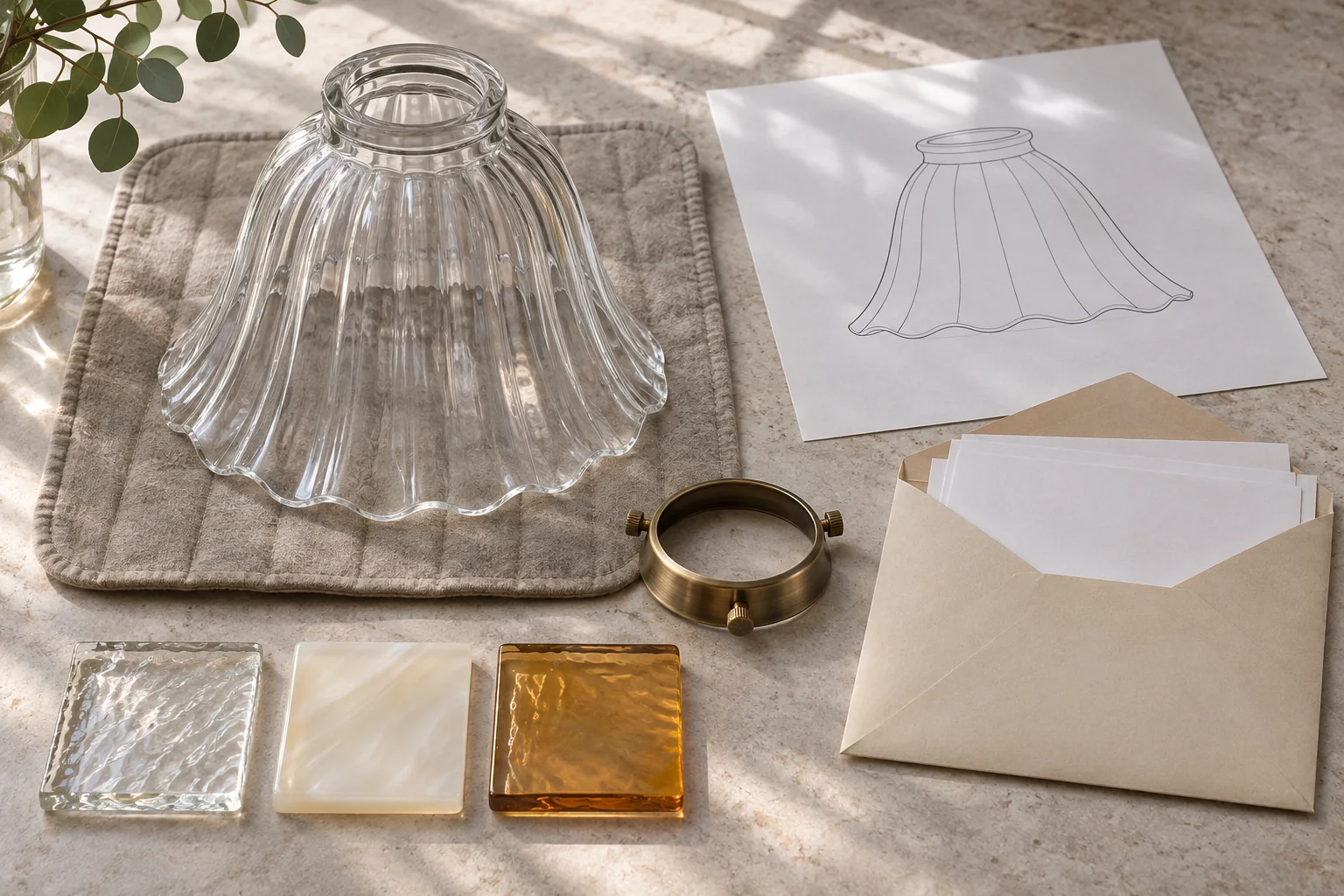
Small batch custom glass lamp shades are practical when the collection is planned around quantities per shape and finish, a defined fixture interface, and a sample that can become a production reference. A small total order alone does not establish feasibility: twelve variants of twenty pieces create a different manufacturing brief from three variants of eighty pieces. Ask for a review of each variant before committing the collection to a launch date.
A boutique hotel or independent lighting brand may need only a few variants, but each one has to justify its place in the collection. The collection needs a recognizable character, enough variation for different spaces, and a buying plan that does not leave most of the budget tied up in development. This guide explains how to reduce those conflicts without asking handmade glass to behave like an identical molded component.
The images in this guide are original AI-generated illustrations. They show procurement concepts, not actual JX products, factory operations, approved assemblies, or completed client projects.
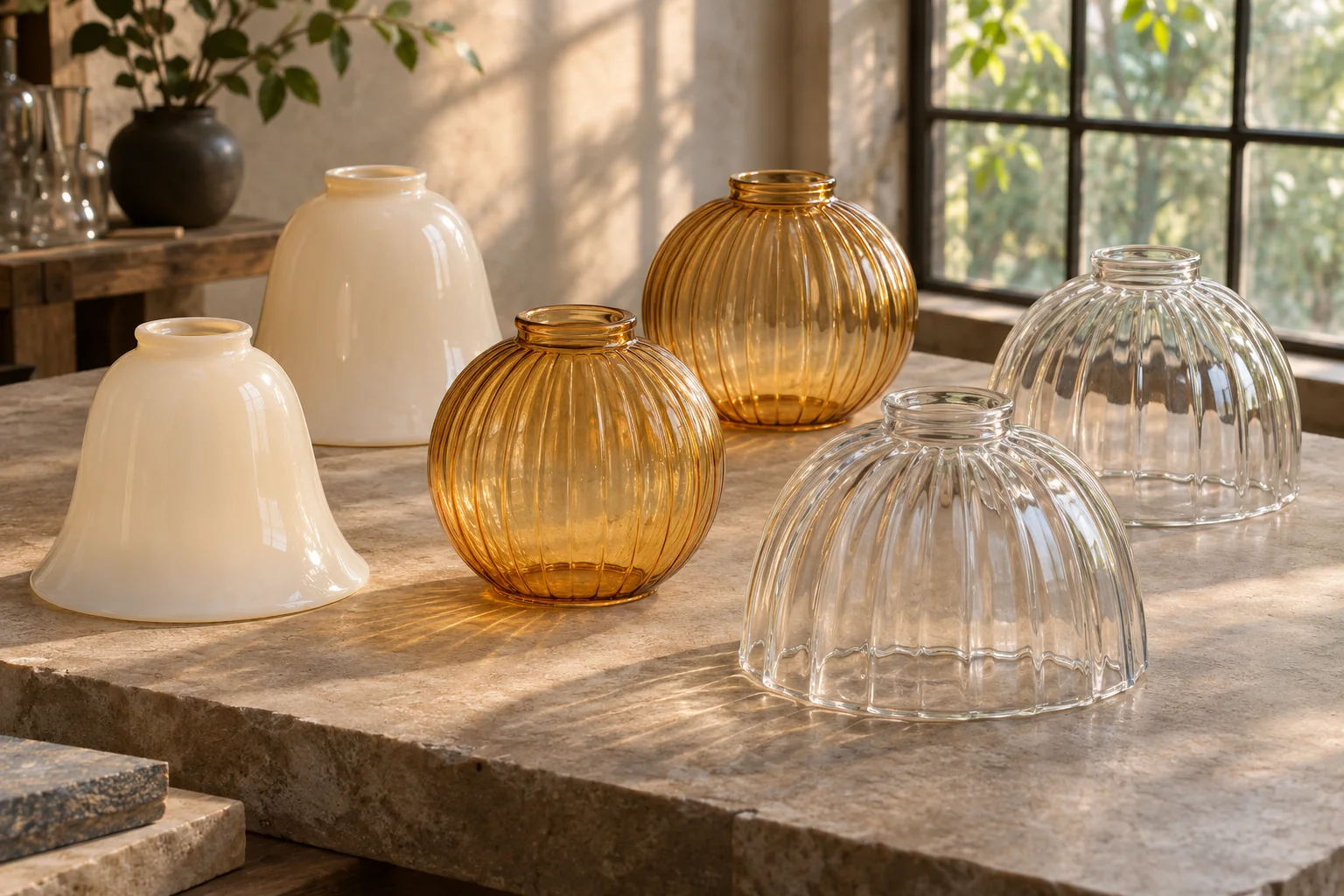
Define the collection before asking for a minimum order
“We need 240 glass shades” is incomplete. The supplier also needs the number of body shapes, sizes, finishes, mounting interfaces, and delivery releases. Any of these can divide the order into smaller production groups.
Start with a variant schedule. Give each combination a temporary reference, even if retail product codes have not been assigned. Record the intended fixture, quantity, glass appearance, and whether it belongs in a matched set. Separate samples, photography pieces, installation quantities, and replacement stock rather than hiding them inside one number.
| Collection input | Question to settle |
|---|---|
| Body geometry | How many genuinely different shapes and sizes are required? |
| Finish variants | Which colors, textures, or treatments need separate approval? |
| Interface | Can the variants use the same holder and seating arrangement? |
| Quantity per variant | How many usable pieces are needed for each reference? |
| Release plan | Is the order delivered together or in separately approved phases? |
At this stage, distinguish the decorative glass component from the complete luminaire. A glass component quotation should state what it includes. The fixture, electrical components, installation method, and destination-market documentation may belong to other parties.

Reduce variant count where buyers will not lose design value
Start by keeping the dimensions that control assembly fixed, then decide which surfaces should vary across the collection. That might mean one approved bell profile in several finishes, rather than a new body and fitter for every room type.
Shared geometry can simplify the review, but it does not make different finishes interchangeable. Colored glass, an applied coating, and a frosted surface can involve different production steps and appearance targets. Ask the supplier which operations remain shared and which restart for each variant.
For a first collection, identify the distinctive feature customers will actually notice. If it is the amber color and vertical ribbing, a second barely different diameter may add development work without adding a clear buying reason. If silhouette is the main feature, reducing colors may be the better compromise.
Keep a second shape when it solves a real fixture or application problem. A bedside wall light and a lobby pendant may need different proportions, interfaces, and visual output. A shared design language is useful; forcing them into one unsuitable component is not.
The existing glass-shade program for lighting brands provides a commercial starting point once the variant schedule is clear.
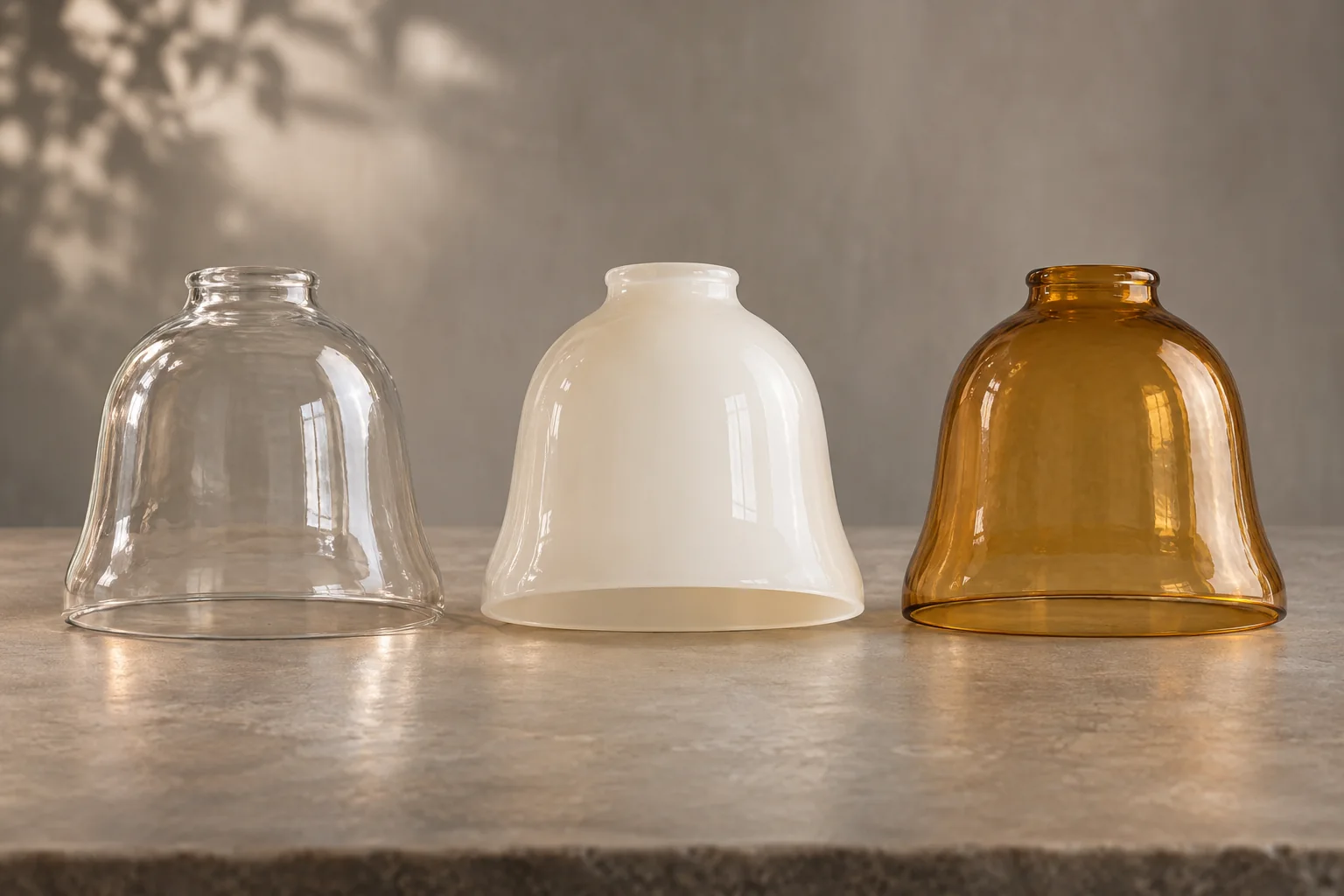
Buy the sample you need to approve the next decision
Choose samples according to the questions still open. A finish coupon may help narrow a color direction. A full glass sample can show the relationship between color, thickness, profile, and transmitted light. A sample assembled with the intended holder can answer interface questions that neither a coupon nor a rendering resolves.
Write the purpose of the sample order before paying for it. For example: “Approve the body profile and holder fit; color remains provisional.” That is a useful milestone. “Sample approved” is too broad when some features are still open.
Agree what the development charge includes: the number of sample references, revisions, shipping, and any tooling or finishing work. Also ask which sample remains with the supplier as a production reference. Photographing a sample helps communication, but a photograph cannot establish every dimension or visual limit.
For a hotel collection, name the person who can approve the design and the person who can approve the fixture interface. Those may be different people. Record both decisions before releasing a batch.
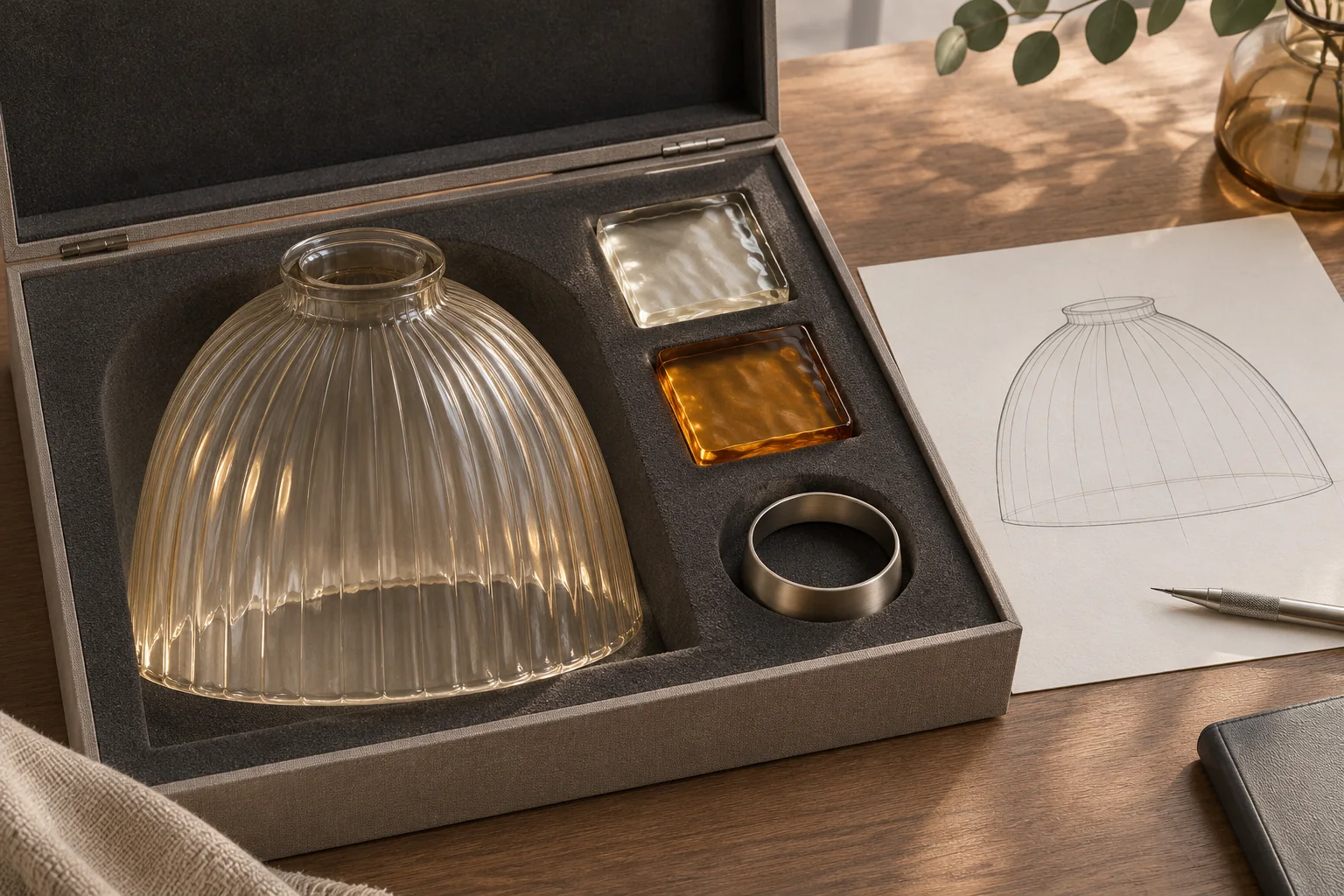
Freeze the mounting interface before multiplying finishes
The fitter opening, rim, neck, seating surface, and retaining method determine how the glass meets the fixture. Changing one of these after finish approval can create another sample round across the collection.
Use one interface reference for each compatible family. Identify the drawing revision, mating holder, critical dimensions, and the method used to verify fit. A nominal opening size should not replace the actual interface drawing. The site’s glass-shade fitting specification guide explains those inputs in more detail.
Treat appearance approval and fixture compliance as separate decisions. UL’s lighting testing and certification services address lighting-product evaluation; a decorative glass sample alone does not establish that the finished fixture satisfies its applicable requirements. Ask the responsible fixture supplier which changes require further assessment.

Test the development budget against quantities per variant
When fewer pieces share the development bill, each piece carries more of it. The U.S. Small Business Administration’s startup-cost guidance separates one-time and ongoing expenses. Apply that distinction to the collection brief: separate development and setup from the recurring cost of each usable shade.
Consider this deliberately simplified example. It is a planning exercise, not a JX price, MOQ, or quotation. Assume 240 pieces, a hypothetical $350 development charge per body shape, a $60 setup charge per shape-and-finish combination, and an $18 recurring cost per piece.
| Hypothetical plan | Calculated cost |
|---|---|
| Four shapes, three finishes each: 12 variants of 20 pieces | $6,440 total; $26.83 per piece |
| One shape, three finishes: 3 variants of 80 pieces | $4,850 total; $20.21 per piece |
The first plan has $2,120 of assumed development and setup costs: (4 × $350) + (12 × $60). The second has $530: (1 × $350) + (3 × $60). Both have $4,320 of assumed recurring costs. The difference is $1,590 before freight, packaging, duties, tax, rejected pieces, or commercial margin.
Real quotations may allocate these costs differently. A finish setup may cover several sizes, or a particular treatment may cost more per piece. Use the calculation to identify the assumptions that need a supplier’s answer. It does not predict a supplier’s pricing.
Compare the alternatives using the same delivery quantity and approval scope. For the broader commercial checks, use the supplier quote comparison guide.

Specify an appearance range instead of asking for identical handmade pieces
“Artisan” describes a production or design character; it does not settle an acceptance dispute. Define which differences are intentional and which would prevent the shade from serving the collection.
For seeded glass, decide how bubble appearance will be judged. The Corning Museum of Glass explains that bubbles can arise during making or be introduced deliberately. Their presence alone therefore cannot tell a buyer whether a particular shade matches the brief.
Review the approved reference beside samples showing the proposed limits. Identify the viewing distance, lighting, visible area, and whether shades must match within one fixture or across a room. Agree what happens when a piece falls outside the range. Do not invent a universal bubble count, color tolerance, or wall-thickness allowance for all handmade glass.
Keep the appearance record separate from critical fit dimensions. An acceptable decorative variation does not excuse a mounting feature that fails the agreed fit check. Detailed inspection methods belong in the existing glass-shade inspection checklist.

Review the collection with the intended light source
A shade chosen from an unlit sample may look different when illuminated. Compare the proposed variants with the intended lamp or light source, surrounding finishes, and viewing positions. Keep the comparison conditions consistent so a change in illumination is not mistaken for a change in the glass.
For a boutique hotel, a small mock-up can answer a practical question: do the bedside, corridor, and feature-light variants still look related in their actual settings? The answer may favor fewer finishes or a different opacity rather than another body shape.
Record the approved lighting conditions with the sample reference. Where a precise color direction matters, use the glass color-matching guide to distinguish a design reference from the appearance that can be evaluated on glass. Screen images should support that review, not replace it.

Give the pilot batch a written release decision
A pilot is useful when it tests something that remains uncertain. It might test whether the supplier can repeat the approved appearance across several pieces, whether the customer can inspect the collection consistently, or whether the chosen packing arrangement suits the shade family.
Specify which production features the pilot represents. Ask what will remain the same in the repeat order and what will change with volume. A prototype made through a different route can help assess shape while leaving production repeatability unresolved.
At release, keep four records together: the current drawing, sample reference, acceptance rules, and disposition of open issues. Use an explicit decision such as “released for this variant and quantity” or “revise and resubmit.” If a provisional finish remains unapproved, do not allow its status to disappear inside a collection-wide sign-off.
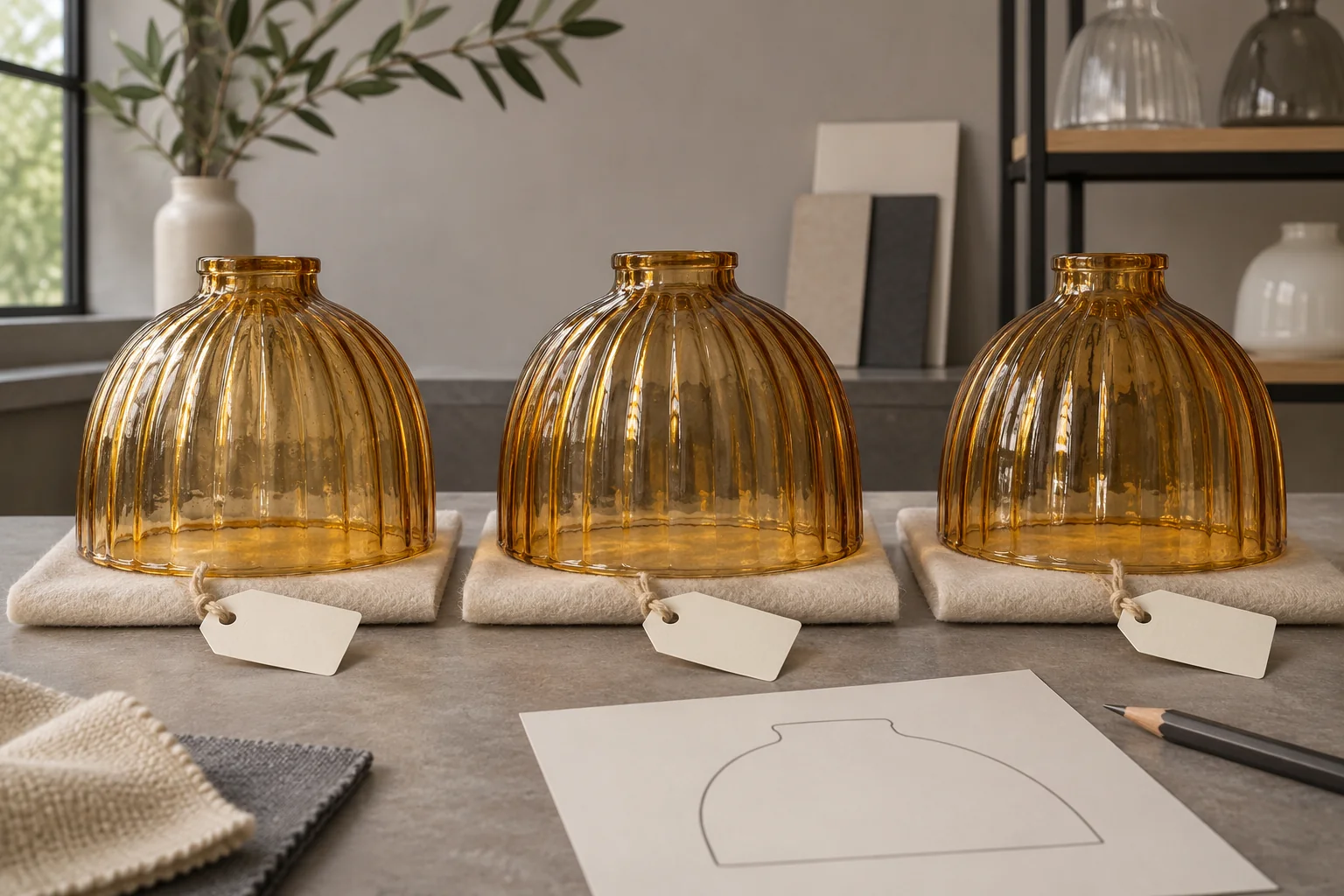
Separate usable quantity, matched sets, and spare stock
Order planning should begin with the number of usable shades needed at installation. Then decide separately how to handle inspection samples, matched sets, and spares.
Suppose a hypothetical project needs 72 installed shades and chooses to hold six spares. It needs 78 accepted pieces available for those purposes. That arithmetic does not establish how many pieces the supplier must produce or what reject rate to assume. Ask whether the quotation is for an accepted delivered quantity and how shortages or out-of-range pieces are resolved.
For multi-shade fixtures, identify the set size and permitted variation within each set. A spare with the correct opening may still look visibly different beside the installed group. Retain enough information to discuss future matching, while recognizing that a later batch may require a fresh appearance approval.

Include packing in the pilot, not after the collection is finished
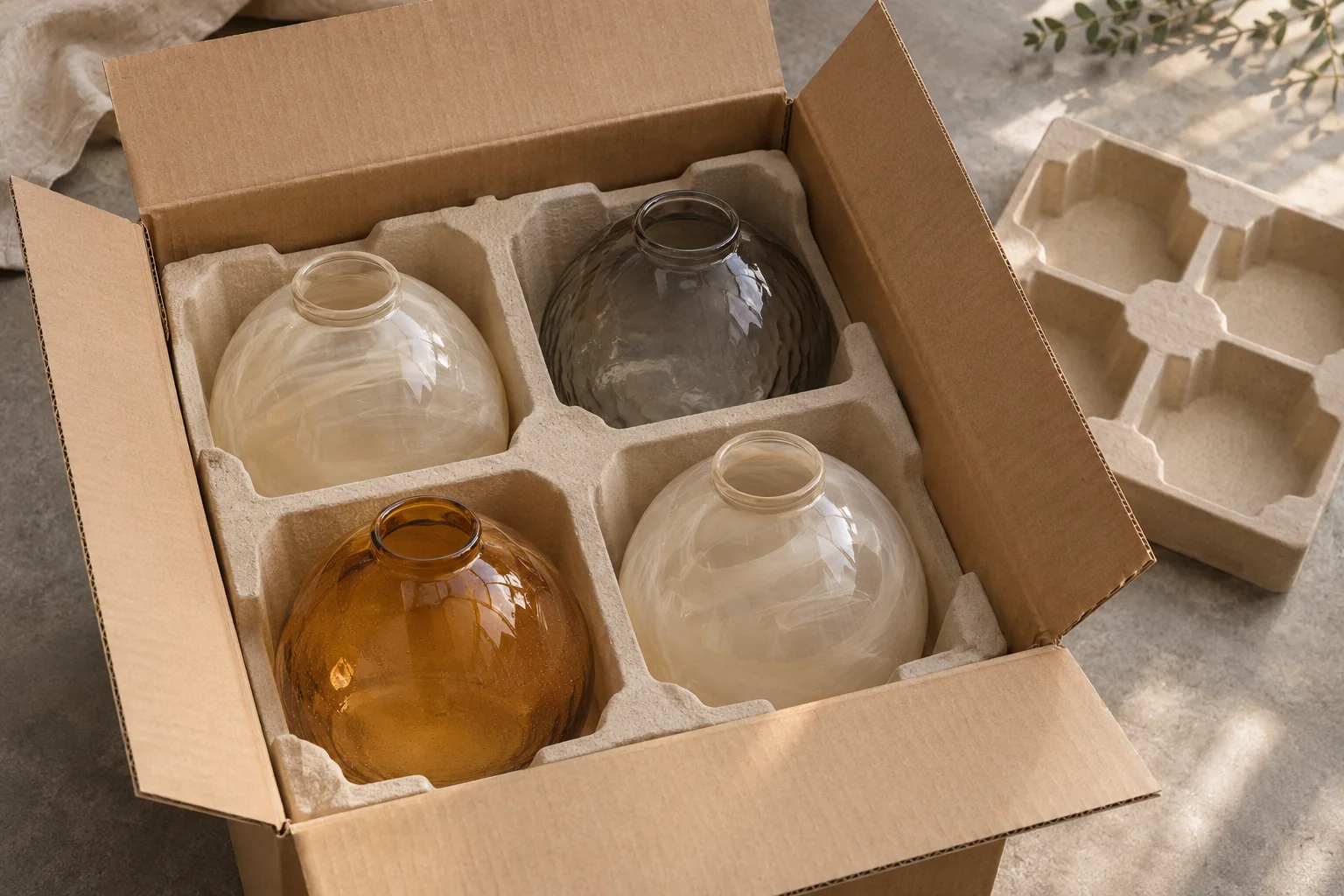
The packing brief should identify each shade variant, vulnerable features, quantity per carton, set grouping, and the planned distribution route. A common body shape may support a shared packing approach, but different dimensions or projecting details can require a separate review.
ISTA’s packaging design and testing guidance links test selection to product vulnerabilities and distribution hazards. Ask a packaging specialist or test provider which evaluation fits the actual shipment. A carton photograph or an unverified “export packing” statement does not establish tested performance.
Decide whether the pilot packing is suitable to retain as the reference for the next order. Keep the insert arrangement, carton specification, sample identity, and any agreed test evidence together. Reassess changes that affect protection rather than assuming a previous result applies to every variant.
Plan the launch around approval milestones
Ask for a schedule that separates development review, sample preparation, customer approval, pilot production, inspection, packing, and transport. A single lead-time number leaves the buyer’s approval deadlines unclear.
Use the required arrival date as an input, then ask the supplier to identify the latest dates for the buyer’s decisions. If a collection depends on several finishes, ask whether one late approval holds the whole shipment or whether separately released variants can move ahead. Confirm the commercial and packing effects of split deliveries.
Do not advertise an installation or launch date from an unconfirmed sample schedule. The collection owner should keep one revision record showing which variants are approved and which dates are still provisional. JX MOQ, production timing, and shipping arrangements need confirmation for the specific brief.

Questions buyers ask before a small-batch order
What quantity counts as a small batch of custom glass shades?
There is no universal quantity. Feasibility depends on the forming route, body geometry, finish, existing tooling, and pieces required per variant. Ask for the minimum and pricing basis for each reference rather than applying one number to the whole collection.
Can several colors share the same minimum order?
Sometimes a supplier can combine parts of the production plan, but the total should not be assumed to satisfy every color or treatment minimum. Request a written breakdown of quantities and setup requirements by finish.
Is reusing an existing shape always cheaper?
It can remove some development work if the shape, tooling access, interface, and process are suitable. Confirm those conditions first. A profile that needs substantial modification may not offer the expected saving.
Can a finish coupon approve the final shade?
A coupon can narrow the design direction. It cannot by itself approve the complete shade’s geometry, holder fit, or illuminated appearance. State which decisions the coupon resolves and which require a full sample.
Should handmade variation be accepted automatically?
No. Agree the visual range and critical dimensions for the project. Intended texture or bubbles may be acceptable, while chips, unsuitable fit, or an appearance outside the signed reference still require a disposition.
Can a boutique collection use the same shade in several fixtures?
Possibly, if the interface, geometry, weight, light-source clearance, and application requirements suit each fixture. Each intended assembly still needs review by the responsible fixture team.
What should be kept for a later repeat order?
Keep the variant schedule, drawing revision, approved sample identity, appearance limits, packing reference, and accepted delivered quantity. Ask the supplier to confirm which tooling and production references remain available before promising a future match.
Send a collection brief that can be quoted by variant
For a small-batch review, send the proposed body shapes, quantities per finish, holder information, appearance references, intended fixtures, destination, and required arrival window. Mark the decisions that remain open. Ask the supplier to identify shared operations, variant-specific development, sample scope, and the proposed release sequence.
JX’s glass-shade pages cover custom lighting components and handmade options. The next step is a project review of your actual collection, including whether an existing profile is suitable. Any quoted MOQ, material, tolerance, tooling arrangement, test scope, or delivery commitment must be confirmed for that project.
Request a Small-Batch Collection Review
Include a quantity schedule so the reply can address each variant instead of quoting only the collection total.