Direct answer: Stained glass lamp shades are multi-piece constructions of individual colored glass pieces joined by copper foil or lead came, enabling complex patterns. Colored glass lamp shades are single-piece glass (blown, pressed, or spun) tinted with metal oxides during production. The key differences: complexity (stained glass supports any pattern; colored glass is limited to a single color or simple effects), construction, and price.
This is one of the most commonly confused distinctions in the decorative lamp shade market — and the confusion is partly justified, because the category labels are genuinely inconsistent. A lamp shade can be described as “stained glass” in a listing when it’s actually a single-piece amber glass shade with no stained glass construction at all. Understanding the real distinction helps you buy the right thing and pay the right price.
The Fundamental Construction Difference
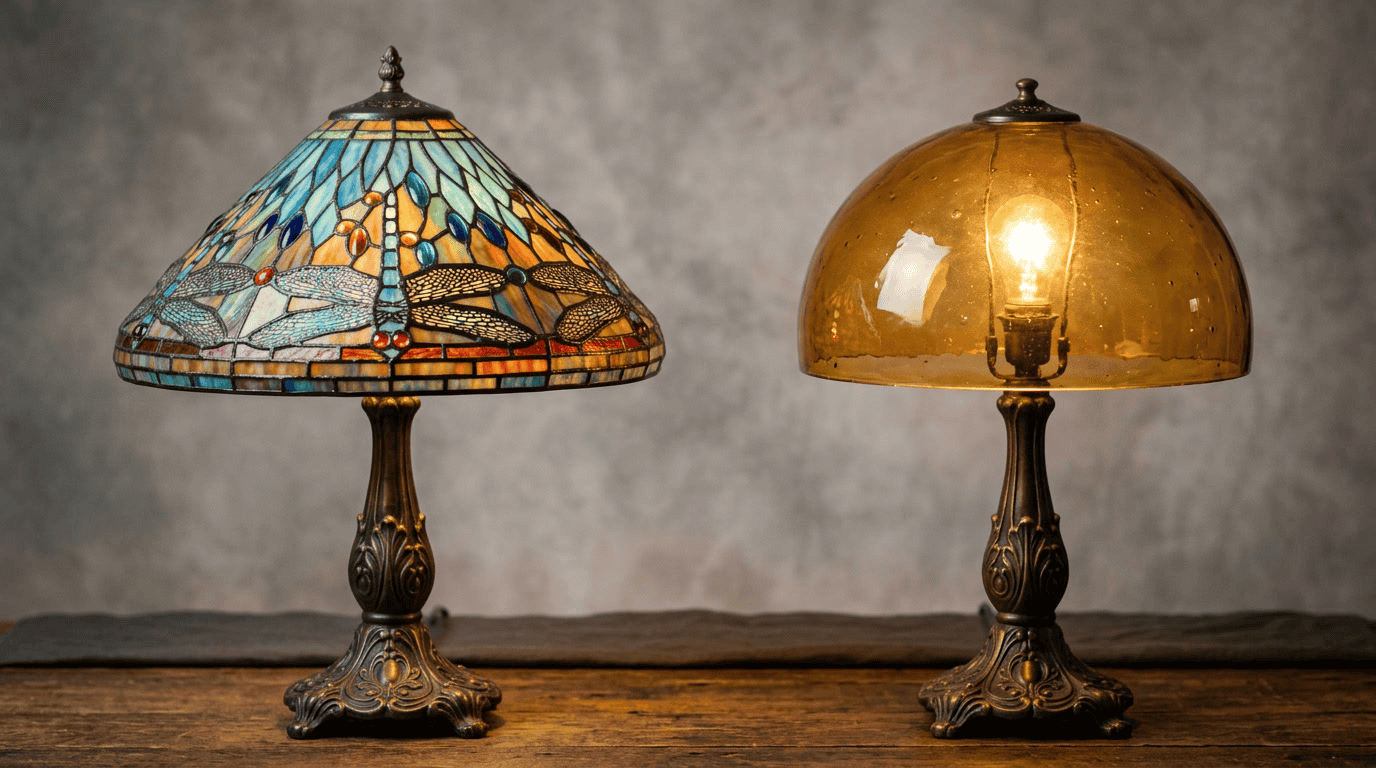
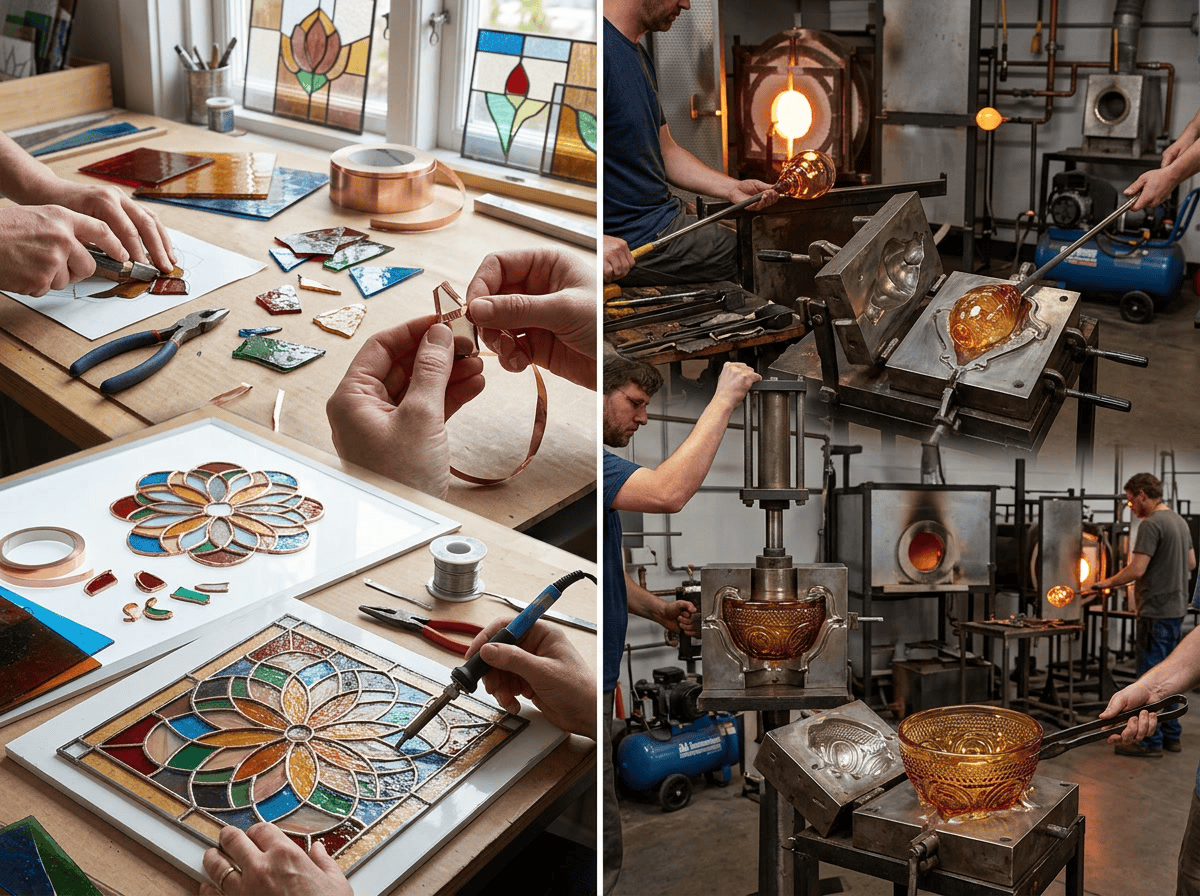
Stained glass lamp shade (multi-piece):
- Assembled from multiple individual glass pieces, each cut to a specific shape
- Individual pieces joined by copper foil tape + solder (Tiffany technique) or lead came strips
- The pattern is formed by the arrangement of the individual pieces
- Solder or came lines are visible as physical metal elements
- Any pattern is possible — floral, geometric, pictorial, abstract
- Minimum practical cost: ~$150 for simple handmade; $2000+ for complex artisan work
- Construction time: 10–100+ hours per shade
Colored glass lamp shade (single-piece):
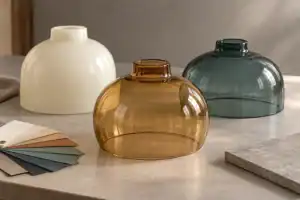
- Formed as a single piece of glass in one operation (blown, pressed, or spun)
- Color comes from metal oxides added to the glass batch during melting
- Limited to a single color or simple two-color techniques (cased glass, opalescent)
- No metal joining lines — the glass surface is continuous
- Pattern limited to what can be formed in a single mold or blowing operation
- Cost range: $20–200 for quality production; $5–20 for mass-market imports
- Production time: minutes per piece at industrial scale
The key practical implication: If you want a specific floral or pictorial pattern — a dragonfly, a wisteria cluster, a heraldic motif — you need stained glass (multi-piece) construction. If you want a warm amber glow or a milky white diffusion, a single-piece colored glass shade is perfectly appropriate and dramatically less expensive.
The Technical Definition of “Stained Glass”
Historically, “staining” glass meant applying certain metallic compounds to the glass surface and firing them to permanently alter the glass color at that location. The silver stain that produces yellow-orange tones in medieval windows is an example of true staining.
In modern decorative use, “stained glass” refers more broadly to any colored glass used in multi-piece architectural or decorative glass work — including glass that is colored through its full thickness (cathedral glass) rather than surface-stained. The construction technique (copper foil or lead came joining of multiple pieces) is the defining characteristic, not the specific coloring method.
This means:
For a visual sense of how copper foil construction differs from a single-piece blown shade, the stained glass lampshade construction walkthrough shows the multi-piece assembly process.
- A shade made with copper foil technique using commercially colored cathedral glass: stained glass
- A single-piece blown amber glass shade: colored glass (not stained glass, even if very decorative)
- A shade with a printed pattern simulating stained glass appearance: neither — it’s decorated glass
According to Wikipedia’s article on stained glass, the term “stained glass” has been used broadly since the medieval period to describe colored glass used in windows, with the coloring technology evolving from surface application to full-batch coloring over centuries.
Visual Comparison: What Each Looks Like When Lit
For more on how multi-piece glass is assembled and lit, the V&A introduction to stained glass covers the historical techniques behind this effect.
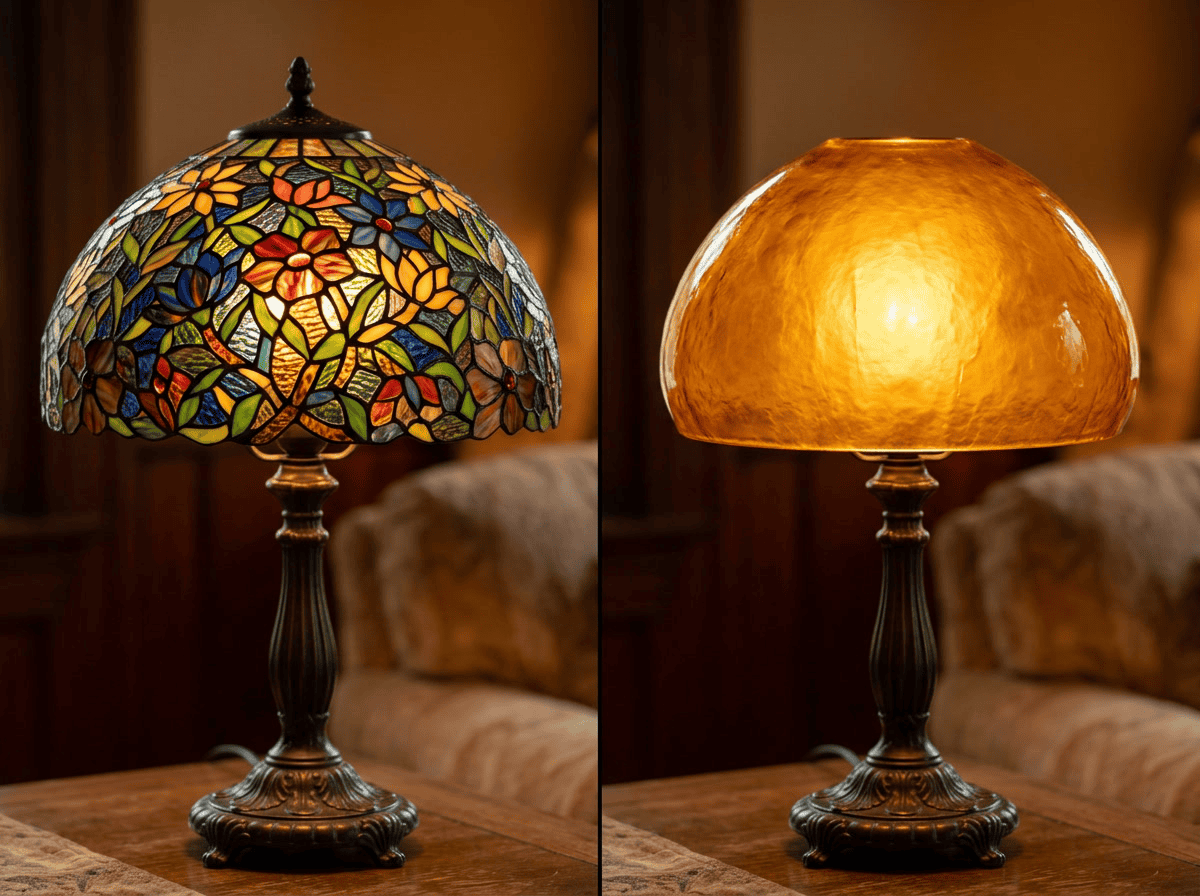
Stained glass when lit:
- Individual glass pieces illuminate in their specific colors — a dragonfly shade shows green wings, amber bodies, blue sky background
- Metal solder or came lines visible as dark outlines (similar to the leading in a church window)
- The pattern is the light — the colored glass pieces are the primary visual element
- Complex pattern creates complex colored shadows on surrounding surfaces
- Color variation is inherent — each piece is slightly different, giving organic character
Single-piece colored glass when lit:
- Uniform color throughout — an amber shade glows amber, a green shade glows green
- No visible metal lines — the glass surface is continuous
- Simple, even colored ambient light
- Frosted or opal colored glass creates a pure, undifferentiated glow
- The shade itself glows; complex pattern is not possible
Both are beautiful and both are appropriate — for different aesthetic goals and different price points.
Choosing Between Stained Glass and Colored Glass
The decision framework:
| Question | If yes → |
| Do you want a specific pictorial or complex pattern (florals, animals, landscapes)? | Stained glass (multi-piece) required |
| Do you want a simple color effect (warm amber glow, soft green, pure white)? | Colored glass is perfect |
| Budget under $100 per shade? | Colored glass (quality stained glass starts at $150+) |
| Need 10+ matching units? | Colored glass (consistent factory production); stained glass at this quantity requires significant production cost |
| Period Arts & Crafts or Tiffany aesthetic is the priority? | Stained glass preferred |
| Warm amber or soft white period aesthetic? | Colored glass is appropriate and more durable |
| The shade is for a reading lamp where light output matters? | Colored glass (predictable output); stained glass absorbs more unevenly |
How JX Lampshade’s Products Fit This Distinction
For the broader category overview, see our stained glass lamp shades hub. If you are trying to determine which type a shade you already own is, our guide to identifying stained glass lamp shades walks through the physical tests.
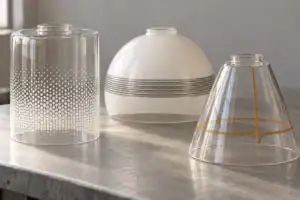
JX Lampshade’s production catalog consists of single-piece colored glass lamp shades — blown, pressed, or spun in solid colors, two-color cased glass, opalescent glass, and decorative finishes. These are not multi-piece stained glass construction.
This means:
- Warm amber glass, vintage green, ruby red, opalescent shades from the catalog are colored glass shades — appropriate as stained-glass adjacent decorative alternatives
- Multi-piece copper foil stained glass (genuine Tiffany-style construction) is a custom development pathway, not standard catalog production
For buyers who want the warm colored light quality of “stained glass style” at a practical price point: the colored glass lamp shades in our vintage collection deliver the warmth and period aesthetic without the multi-piece complexity and cost.
For buyers who specifically need genuine multi-piece stained glass for a design project: this requires custom artisan or factory production with appropriate lead times and costs.
Price Comparison
| Type | Price range | Best for |
| Single-piece colored glass (quality) | $25–120 | Warm ambient, period aesthetic, replacement |
| Resin “stained glass look” | $20–80 | Budget decorative, visual approximation of stained glass pattern |
| Genuine copper foil (artisan) | $150–1500+ | True stained glass pattern, collector quality |
| Genuine copper foil (factory) | $60–200 at volume | Hospitality, commercial, consistent multi-unit |
| Feature | Stained Glass (Multi-Piece) | Colored Glass (Single-Piece) | Resin “Stained Glass Look” |
| Pattern lines | 3D solder/came, metallic | None | Flat, molded, even |
| Color | Per-piece, varies by panel | Uniform throughout | Uniform, printed/molded |
| Weight | Heavy | Medium-heavy | Light |
| Typical price | $150-1500+ | $25-200 | $20-80 |
Common Misconceptions
“Stained glass shades are always more beautiful.” Not true. A perfectly executed single-piece amber cased glass shade is arguably more beautiful in certain contexts (sofa side lamp, bedroom reading lamp) than a busy multi-piece pattern. Context determines what’s appropriate.
“Single-piece colored glass is inferior.” Not true. High-quality single-piece colored glass — hand-blown, well-diffused, in the right color — represents centuries of craft refinement. Fenton’s hobnail milk glass, Victorian opalescent glass, mid-century cased amber glass — these are all single-piece colored glass and are genuinely excellent.
“If it has metal lines, it’s stained glass.” Applied metal leading strips (sold for craft decoration) can be applied to the exterior of a plain glass shade to simulate stained glass appearance. This is neither stained glass construction nor colored glass. The lines are appliqué, not structural.
Making the Right Choice for Your Lamp
For most residential lamp shade needs, single-piece colored glass is the appropriate and economically sensible choice. It provides warm colored light, period aesthetic, and durability at a fraction of the cost of genuine stained glass construction.
Choose genuine stained glass (multi-piece copper foil) when:
- The specific pattern is the point — you need a dragonfly, a wisteria, a specific motif
- The lamp is a focal collector piece and quality is paramount
- The interior context specifically calls for Arts & Crafts or Tiffany authenticity
If your decision leans toward genuine multi-piece stained glass, see our format guides for table lamp and pendant shades, or our custom stained glass OEM production guide for bespoke orders.
Choose colored glass when:
- Warm ambient color is the goal — amber, green, ruby, opal
- Budget requires practicality
- You need matching units (easier to source consistently)
- The lamp serves primarily as a reading or task light with decorative character
Frequently Asked Questions
Is amber glass the same as stained glass?
No. Amber glass is single-piece glass with amber coloring through the glass batch. Stained glass refers to multi-piece construction using copper foil or lead came. Amber glass provides warm colored ambient light; stained glass provides complex colored pattern. Both are legitimate glass lamp shade types.
Can a colored glass shade be mistaken for stained glass?
Yes, in photographs and marketplace listings. The test: examine the pattern lines. Genuine stained glass has three-dimensional solder or lead lines. Single-piece colored glass has no visible metal lines. Applied metal strips on a plain glass shade are flat and applied, not structural.
Why do some colored glass lamp shades cost as much as stained glass?
High-quality hand-blown colored glass — particularly cased glass or opalescent glass with complex color effects — involves significant artisan labor and expensive glass formulas. The cost is for the glass quality and production technique, not the pattern complexity.
Is “Tiffany-style colored glass” accurate terminology?
Tiffany Studios primarily used multi-piece opalescent glass construction — not single-piece colored glass. “Tiffany-style colored glass” is marketing language that conflates two distinct things. If a shade is single-piece (not multi-piece copper foil), calling it “Tiffany-style” is inaccurate regardless of color or pattern.
For a Victorian lamp, should I use stained glass or colored glass?
Depends on the lamp type. If the lamp is a Tiffany-adjacent bronze-based artistic lamp: stained glass is period-appropriate. If the lamp is a converted oil lamp or standard Victorian-era table lamp: opalescent or milk glass (colored glass) is correct for the period. Victorian decorative glass was primarily single-piece blown glass; stained glass was primarily architectural (windows) in that period.
Can I replace a stained glass shade with a colored glass shade on the same base?
Yes, if the fitter dimensions match. The visual character will change — from complex pattern to simple color ambient — but the lamp will function correctly. Many period lamp bases work well with either type.
What’s the light output difference between stained glass and colored glass?
Both absorb significant amounts of incident light. Stained glass absorption varies by pattern (darker areas absorb more; transparent areas absorb less) — overall 40–60% absorption is typical. Dense single-piece colored glass absorbs 30–70% depending on density and color. For equivalent lumen delivery, use higher-output LEDs behind either type.
Is colored glass more durable than stained glass for daily use?
Yes. Single-piece glass has no solder joints or lead came to crack, shift, or weaken. A copper foil stained glass shade has dozens or hundreds of solder joints — each is a potential failure point under repeated handling, temperature cycling, and cleaning. For frequently handled or actively used lamps, colored glass is the more durable choice.
Related Reading
- Stained Glass Lamp Shades: Full Buying Guide
- How to Identify Stained Glass Lamp Shades
- Stained Glass Table Lamp Shades: Tiffany Style, Custom & Decorative Options
- Custom Stained Glass Lamp Shades: OEM Production Guide
Conclusion
The stained glass vs. colored glass distinction is simple once the construction difference is understood: multi-piece copper foil or lead came (stained glass) versus single-piece batch-colored or surface-treated glass (colored glass). One enables complex patterns; the other provides warm color. Both are legitimate, beautiful, and appropriate for different applications and budgets.
For most buyers reading this article, the conclusion is probably: colored glass is what they actually need, and stained glass is what they’re romanticizing. Both are fine choices. Just buy the right one for your actual need.