Direct answer: Stained glass pendant lamp shades are hanging ceiling fixtures using multi-piece colored glass construction or colored glass that creates warm decorative light patterns. They range from small Tiffany-style cone pendants (8–12″) to large mission-style geometric pendants (14–20″), and attach via chain-suspended ring or cord-through fitter.
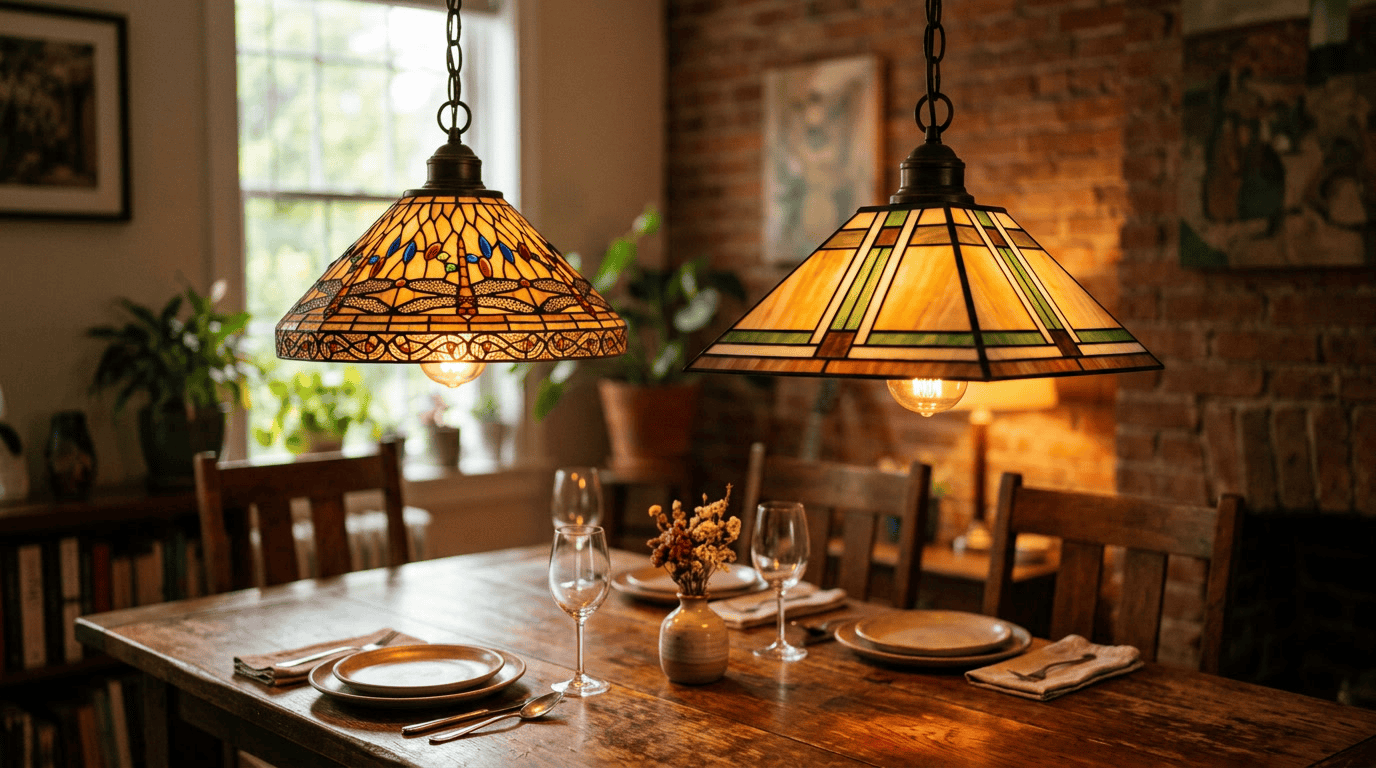
Stained glass pendant shades are among the most dramatic decorative lighting elements available for residential or commercial interiors. In a dining room, a single large mission-style geometric pendant or a small cluster of Tiffany-cone pendants over a table creates colored light pools on the table surface and colored light wash on surrounding walls — an effect that no LED panel or globe pendant can replicate.
This guide covers the practical aspects of selecting, sizing, and installing stained glass pendant shades.
Pendant-Specific Characteristics of Stained Glass
360° colored light projection: Pendant shades transmit light through the glass in all directions (outward through the side glass, downward through any open or lighter-glass bottom). In a stained glass pendant, this means the table surface below receives a warm wash of the dominant glass colors, and the surrounding walls receive a colored ambient glow.
Above-eye viewing: The overhead position means viewers look up at the shade from below, seeing the internal illumination through the colored glass. The pattern and color are most vivid when the shade is lit and the surrounding room is dim — the contrast reveals the glass’s translucency.
Pattern visibility at height: Choose patterns that are legible at ceiling-pendant distance. The V&A’s short film on how a stained glass window is made illustrates how pattern density affects readability at a distance. Fine-detail patterns (photographic complexity) require close proximity to read. Geometric or bold floral patterns read clearly from normal ceiling-to-floor distance.
Classic Stained Glass Pendant Shade Forms
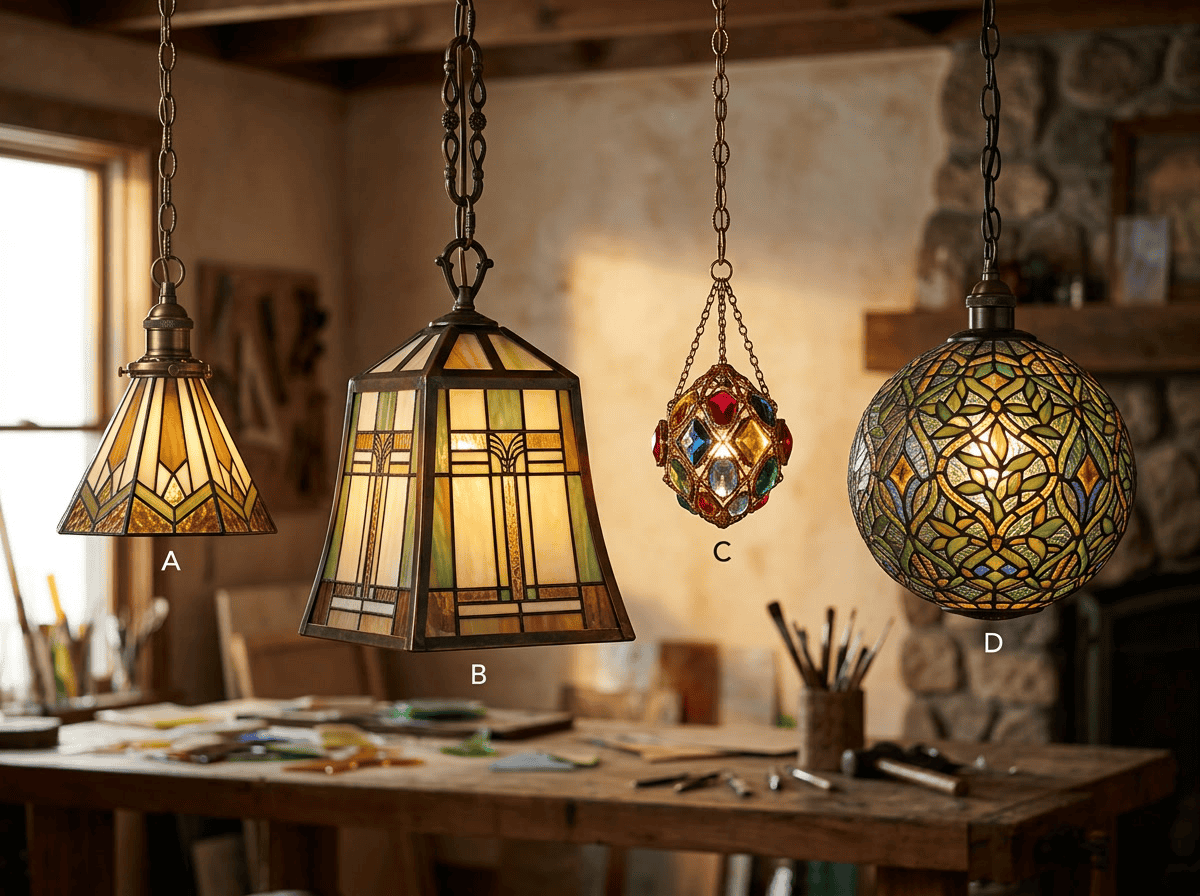
Tiffany-style cone pendant (8–12″ outer diameter): Downward-pointing cone shape inspired by Tiffany Studios originals, often in floral or dragonfly pattern. Used in clusters of 3–5 over a dining or kitchen table. Each pendant hangs independently. Simple geometric Tiffany cones are the most available form at mid-range price points.
Mission-style geometric bell (12–18″ outer diameter): Angular bell form with repeating geometric pattern — Greek key, diamond, or angular floral motifs. Strongly associated with the Arts & Crafts movement. Single pendant over a table or dining area. The geometric pattern is more legible at distance than complex florals.
Arts & Crafts lantern (rectangular or hexagonal): Six-sided or four-sided hanging lantern with stained glass panels in metal frame. Very appropriate for Craftsman-style homes and bungalows. Provides more directional, architectural light than a cone or bell form.
Jewel-drop globe (6–8″ diameter): Small globe pendant with densely colored “jewel” glass pieces — deep greens, ambers, ruby reds. Often used in clusters. Creates brilliant colored light at close range.
| Form | Typical Diameter | Pattern Style | Best Application |
| Tiffany-style cone | 8-12″ | Floral, dragonfly | Clusters over dining/kitchen tables |
| Mission-style geometric bell | 12-18″ | Greek key, diamond, angular floral | Single statement over dining area |
| Arts & Crafts lantern | Varies (rect/hex) | Panel-framed geometric | Craftsman-style entries, hallways |
| Jewel-drop globe | 6-8″ | Dense jewel-tone glass | Close-range clusters, bars |
Sizing Stained Glass Pendant Shades
| Surface below | Recommended shade outer diameter | Configuration |
| Dining table up to 1.2m | 14–18″ single pendant OR 8–10″ cluster of 3 | Center of table |
| Dining table 1.2–1.8m | 16–20″ single OR 10–12″ cluster of 3–5 | Center of table |
| Kitchen island 0.9–1.2m wide | 8–12″ cluster of 2–3 | Evenly spaced |
| Small seating area | 12–16″ single pendant | 700–900mm above table surface |
| Entry foyer (single) | 14–20″ depending on ceiling height | Allow proportional drop |
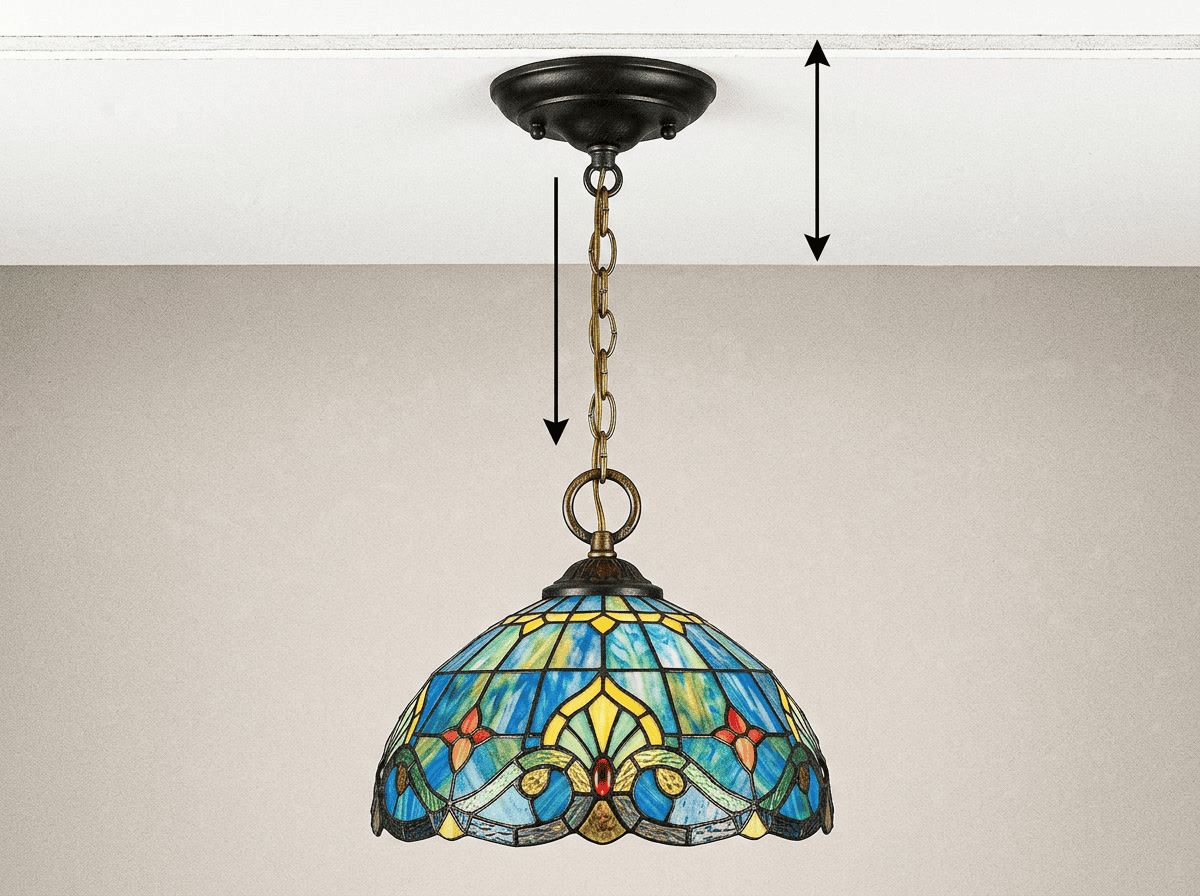
Hanging height: bottom of pendant shade at 700–900mm above table or counter surface.
Fitter Types for Pendant Stained Glass Shades
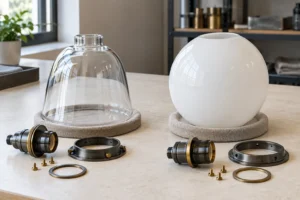
Most stained glass pendant shades — whether built with copper foil or traditional lead came construction — use one of three mounting systems:
Chain suspension with ring fitter: The shade has a metal ring at the top; a chain attaches to this ring and suspends the shade from the ceiling canopy. The ring diameter varies — measure the top ring opening before purchasing a replacement or additional shade.
Cord-through fitter: The electrical cord threads through the center of the shade. The shade is supported by a knot or ferrule on the cord inside the shade. Common in drop-pendant globe forms.
Ceiling canopy with pendant socket: A ceiling canopy houses the electrical connection; a pendant socket drops down on a cord or chain, and the shade attaches to the pendant socket via a gallery ring or slip collar.
| Fitter Type | How It Attaches | What to Measure |
| Chain suspension / ring fitter | Chain hooks through a metal ring at the shade’s top | Top ring inner/outer diameter |
| Cord-through fitter | Electrical cord passes through the shade, secured by a knot or ferrule | Center hole diameter |
| Ceiling canopy / pendant socket | Shade attaches to a drop socket via gallery ring or slip collar | Gallery ring diameter |
For replacement matching: remove the existing shade and photograph the attachment point, then measure the ring diameter or socket opening.
Interior Applications
Dining rooms: The primary residential application. Stained glass pendants over a dining table create the most intimate, flattering dining environment in residential lighting. The colored light wash on the table surface flatters food presentation; the ambient colored glow from the glass creates the quality of light associated with wine bars and fine dining environments.
Restaurant and hospitality: Mission-style geometric and Arts & Crafts lantern pendants are extensively used in restaurant design for exactly this reason. The warmth and colored ambience cannot be replicated by direct lighting alternatives.
Kitchen islands: Tiffany-style cone pendants in clusters over kitchen islands are appropriate for kitchen-dining hybrid spaces. If a pendant in your cluster ever cracks, our Tiffany-style replacement guide covers fitter matching so the new shade hangs at the same height as the rest where the island serves as both work surface and informal dining. For purely task kitchens, the colored light may interfere with food color accuracy — consider this tradeoff.
According to Wikipedia’s article on stained glass, the technique of using colored glass for decorative light has been in continuous use since the 10th century — making it one of the longest-lasting decorative arts techniques. The residential lamp shade application is a modern adaptation of a medieval architectural tradition.
For our range of colored glass pendant options, our glass lamp shades collection shows available forms. If you are weighing a pendant against a table lamp for the same room, our stained glass table lamp shades guide covers the table-format equivalents, and bulk/hospitality buyers can review our custom stained glass OEM production guide.
Frequently Asked Questions
What size stained glass pendant shade fits over a standard 6-person dining table?
A 16–18″ single pendant, or three 10–12″ pendants spaced evenly, suits a standard 1.2–1.5m dining table for 6 people. The larger single pendant creates a more formal, focused statement; the three-pendant cluster creates a more casual, distributed effect.
Can I use a stained glass pendant shade in a contemporary interior?
Yes, in limited quantity and with considered placement. One Mission-style geometric pendant or one Arts & Crafts lantern as the single pendant fixture in an otherwise contemporary room works as a deliberate material statement. Multiple stained glass pendants in a contemporary room requires complete commitment to a period-inspired aesthetic.
How do I replace a broken stained glass pendant shade in a cluster?
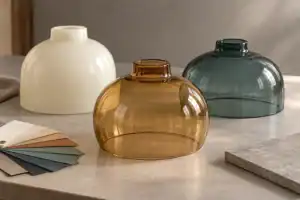
Ideally, replace all pendants in the cluster simultaneously from the same supplier batch to ensure color consistency. If replacing only one, source from the same manufacturer/supplier and request a sample viewing before committing to confirm glass color match.
Are stained glass pendant shades appropriate for low-ceiling rooms?
For rooms with standard 2.4m (8′) ceilings, choose shades that allow the shade bottom to sit at 2.0–2.1m from the floor (or 700–900mm above any table surface). This may limit pendant drop length rather than shade size. Cone and dome forms with less vertical dimension work better in low-ceiling applications.
What maintenance do stained glass pendant shades require?
Monthly exterior wiping with a damp microfiber cloth. Quarterly cleaning of the upper surface (where dust accumulates around the mounting ring). For copper foil construction, inspect solder joints annually for any cracks or separations — particularly near the fitter ring where weight stress concentrates.
Can I dim stained glass pendant shades?
Yes — and strongly recommended. Dimming transforms the character of stained glass pendant light. At full brightness, the colors are brilliant; dimmed to 30–50%, the ambient warmth deepens. Use a dimmer rated for LED if using LED bulbs.
Related Reading
- Stained Glass Lamp Shades: Full Buying Guide
- Stained Glass Table Lamp Shades: Tiffany Style, Custom & Decorative Options
- Tiffany Style Lamp Shade Replacement Guide
- Custom Stained Glass Lamp Shades: OEM Production Guide
Conclusion
Stained glass pendant shades are at their best over horizontal surfaces — dining tables, kitchen islands, coffee tables — where the colored light pools on the surface directly below and the ambient glow fills the room above. The colored light quality is genuinely unlike any alternative, making stained glass pendants worth the higher initial investment in rooms where lighting atmosphere is a priority.
Size for the surface below, hang at the correct height, and let the glass do the work.