Direct answer: Stained glass table lamp shades are decorative multi-piece colored glass lamp covers assembled from individual glass pieces joined by metal (copper foil or lead came) to form patterns — floral, geometric, or pictorial. True stained glass table lamp shades are handmade and relatively expensive; most budget “stained glass” options are single-piece colored or painted glass.
The table lamp shade in a stained glass pattern is one of the most evocative objects in decorative lighting. When lit, the colored glass transforms the lamp from a functional object into something closer to a lantern — radiating pools of colored light that change the quality of the entire room. The original Tiffany Studios creations defined an aesthetic that remains compelling more than a century later.
The market for stained glass table lamp shades spans from authentic multi-piece copper foil construction to single-piece painted glass that approximates the look at a fraction of the cost. Understanding the difference is essential for buying at the right quality level for your purpose.
True Stained Glass vs. Decorative Colored Glass: The Critical Distinction
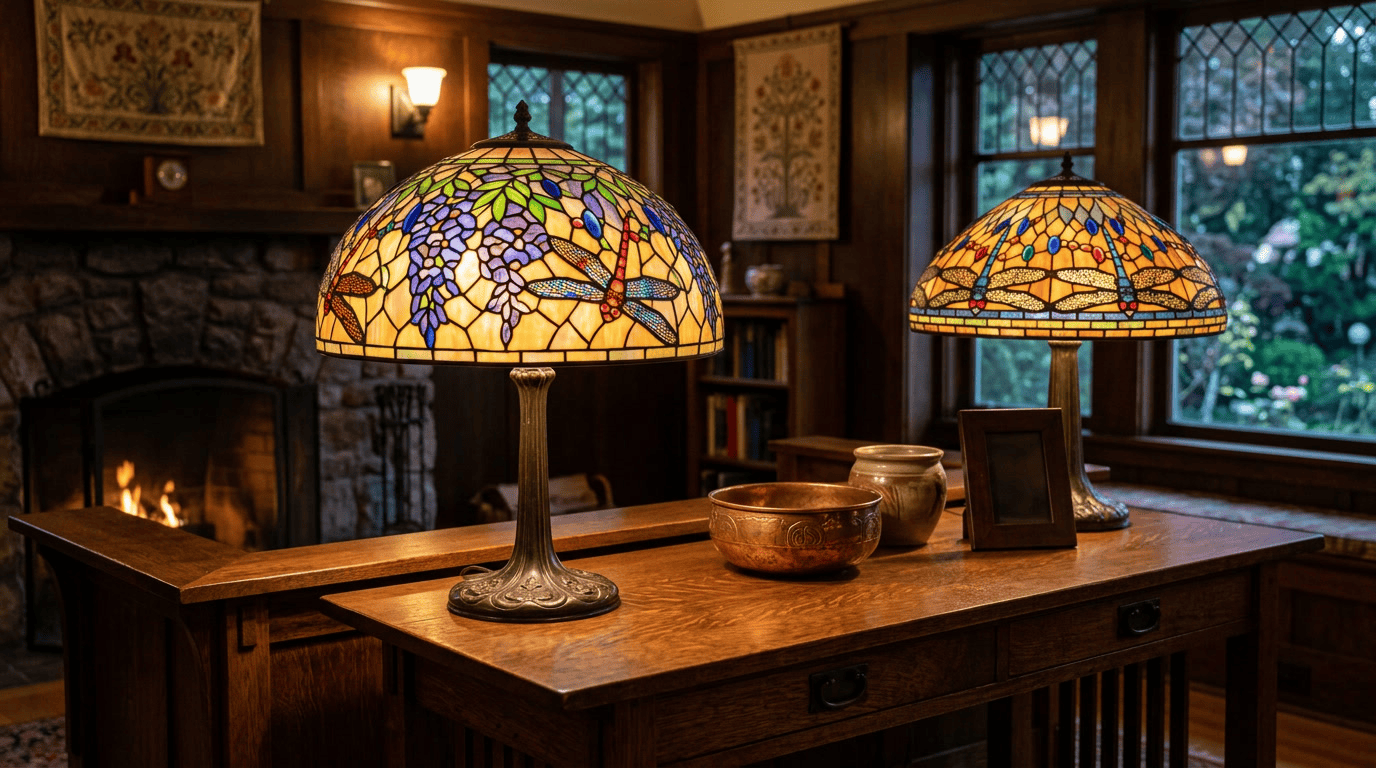
True stained glass lamp shades are multi-piece constructions, an application of the broader stained glass craft tradition: individual pieces of colored glass cut to specific shapes, joined by either copper foil (Tiffany technique) or lead came strips, and soldered at all joints. The color is in the glass itself — made by adding metal oxides during the glass melting process. The individual pieces can be any shape, enabling complex pictorial or floral patterns.
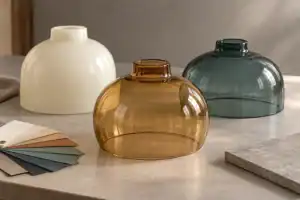
Single-piece colored glass shades are formed as a single piece of glass (blown, pressed, or spun) that is tinted, painted, or decorated to approximate the look of stained glass. The color is either in the glass batch (blown amber, green, pink) or applied to the surface (paint, enamel, UV-resistant ink). These look decorative; they cannot replicate the complex multi-color patterns of true stained glass.
Reverse-painted glass shades are clear or translucent glass shades with painted decoration on the inside surface. The paint shows as colored when lit. This is a different technique from stained glass and from painted exterior surfaces.
For most buyers at the $50–200 price point for “stained glass table lamp shades,” what they receive is a single-piece colored glass shade with a leaded pattern printed or applied to the surface — not true multi-piece construction. This is a legitimate decorative product; it’s just not stained glass in the construction sense.
Tiffany-Style vs. True Tiffany
“Tiffany” is a trademark of Tiffany & Co. and Tiffany Studios (now defunct). No current manufacturer can legally sell “Tiffany” table lamp shades.
“Tiffany-style” is a description, not a trademark. It refers to table lamp shades made using the copper foil technique developed by Louis Comfort Tiffany and his design team at Tiffany Studios (active 1893–1933). The technique: each glass piece is wrapped in copper foil tape, assembled in pattern, and soldered at all joints. The result is a rigid stained glass structure that holds its shape without a supporting frame.
Authentic current production Tiffany-style shades (using real copper foil construction with genuine colored glass) start at approximately $150–300 for simple geometric patterns and rise to $500–2000+ for complex floral designs from skilled artisans.
Lower-priced “Tiffany-style” shades in the $50–150 range are typically single-piece resin or glass with a pattern applied to suggest the leaded glass look. These are not copper foil construction.
According to Wikipedia’s article on Tiffany Studios, the studio produced approximately 5,000 documented lamp shade designs between 1893 and 1933 — making genuine Tiffany Studios pieces extremely valuable collector’s items with auction prices ranging from thousands to millions of dollars. No current manufacturer produces “genuine Tiffany” items.
The Five Main Categories of Stained Glass Table Lamp Shades
For a broader overview of how table shades fit alongside pendant, floor lamp, and ceiling fixtures in this category, see our stained glass lamp shades hub.
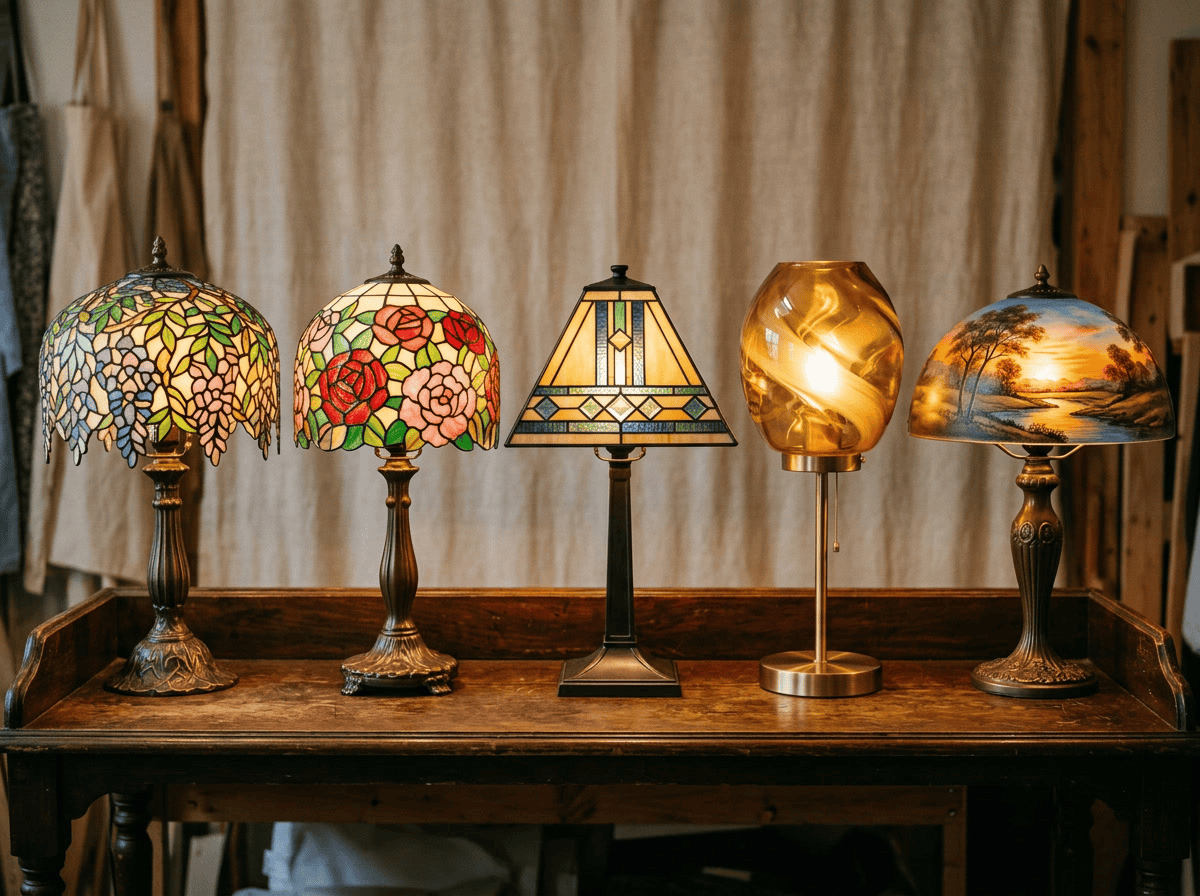
1. Copper foil handmade (Tiffany-style): Each glass piece wrapped in copper foil, assembled, soldered. Complex patterns possible. Price: $150–2000+. Lead time: 4–12 weeks if custom. Visual quality: highest.
2. Lead came handmade: Similar to copper foil but uses H-profile lead came strips between glass pieces. Slightly different visual character (wider leading lines). More traditional European stained glass technique. Available from custom stained glass studios.
3. Quality single-piece colored glass: Hand-blown or pressed colored glass in patterns (amber, green, multi-color) that reads as decorative from a distance. Not stained glass construction, but high-quality colored glass. Price: $40–150. Available readily.
4. Reverse-painted glass: Interior painted shade on clear or opal glass. Pattern visible when lit. Can achieve photographic complexity of design. Price: $80–200.
5. Resin or polymer “stained glass”: Molded resin with colored sections that simulate stained glass appearance. Lightest, cheapest option. Price: $20–60. Most accurate description: stained glass inspired decoration, not glass.
Construction Method Comparison
| Construction | Typical Price | Lead Time | Best For |
| Copper foil (Tiffany-style) | $150-2000+ | 4-12 weeks (custom) | Focal-point lamps, complex patterns |
| Lead came | $150-1500 | 4-10 weeks (custom) | Traditional/European-style geometric panels |
| Single-piece colored glass | $40-150 | 2-4 weeks (stock/bulk) | Budget-conscious decorative lighting |
| Reverse-painted glass | $80-200 | 3-6 weeks | Pictorial designs on a budget |
| Resin/polymer | $20-60 | 1-2 weeks | Lightweight, low-cost accents |
What to Look for When Buying
For genuine copper foil or lead came construction:
- Look for solder lines that are 3D — raised above the glass surface level
- Solder at each joint should be smooth but visible as a metal seam
- Viewing from a sharp angle, individual glass pieces should show slight height variation (each piece has slightly different thickness)
- Turn the shade inside out and look at the inside — you should see the full reverse of the solder pattern and the cut glass edges
For a closer look at how artisans assemble these pieces by hand, the stained glass lampshade construction walkthrough shows the copper-foil process step by step. The V&A introduction to stained glass is also a good primer on how the craft developed historically.
For quality single-piece colored glass:
- Look for color that has depth — color visible through the glass body, not painted on
- Hold to light — color should transmit evenly without hot spots
- Weight consistent with glass (heavier than resin)
For resin products:
- Lightweight compared to glass
- Pattern may be slightly raised on the surface like a relief
- Seams, if visible, are molded rather than soldered
For our range of colored and decorative glass lamp shades that provide stained glass visual effects, our glass lamp shades collection shows available options with honest descriptions of construction.
Sizing Stained Glass Table Lamp Shades
Stained glass shades follow the same proportion rules as other table lamp shades — outer diameter ≈ lamp base height — with one additional consideration: heavier handmade stained glass shades (particularly larger copper foil constructions) are significantly heavier than single-piece glass, affecting lamp base stability.
| Lamp base height | Stained glass shade outer diameter | Weight consideration |
| 10–14″ | 12–16″ | Copper foil 16″ shade: ~1.5–2 kg |
| 14–18″ | 16–20″ | Copper foil 20″ shade: ~2.5–3.5 kg |
| 18–24″ | 18–24″ | Large shades require weighted bases |
Fitter types for stained glass shades: most use a metal ring fitter (typically 2¼” or 3¼”) or a spider fitter. Confirm fitter type before purchasing.
Using Stained Glass Table Lamp Shades in Modern Interiors
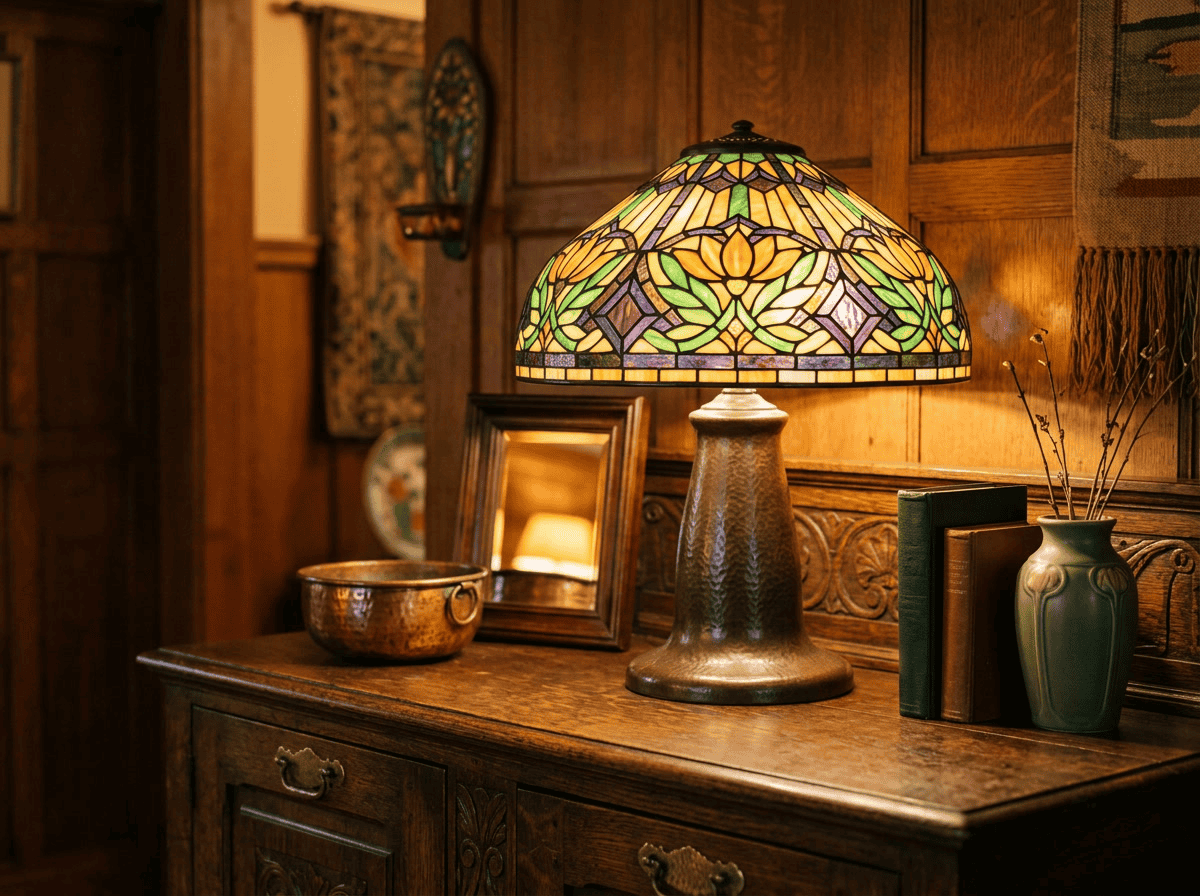
Stained glass table lamp shades are most at home in rooms with traditional, Arts & Crafts, or Victorian styling. The colored glass introduces complexity that needs material context to look intentional rather than misplaced.
Correct contexts:
- Arts & Crafts interiors with hammered metal, wooden furniture, earth tones
- Victorian and Edwardian rooms with rich patterned textiles
- Craftsman-style homes with dark wood, tile, and handmade material emphasis
- Maximalist rooms where material richness is the design intention
Challenging contexts:
- Minimalist and contemporary interiors — the color complexity of stained glass conflicts with restrained palettes
- Cool-toned modern rooms — stained glass’s warm color range looks anachronistic against grey/white/chrome
The one-shade rule: In most contemporary or transitional interiors, one stained glass shade as a deliberate accent is more effective than stained glass throughout. The single lamp becomes a visual focal point; multiple stained glass lamps become thematic in a way that requires complete commitment to the period aesthetic.
If you are unsure whether what you have is true stained glass or a colored-glass alternative, our guide on how to identify stained glass lamp shades walks through the construction and age clues. And if you need a replacement for a damaged Tiffany-style table lamp, see finding a Tiffany-style replacement shade.
Care and Cleaning by Construction Type
| Construction | Cleaning Method | Avoid |
| Copper foil / lead came | Soft dry brush or microfiber cloth; damp cloth only if needed, dried immediately | Glass cleaners with ammonia (tarnishes solder), soaking |
| Single-piece colored glass | Standard glass cleaner and soft cloth | Abrasive pads on painted/etched surfaces |
| Reverse-painted glass | Dust exterior only with dry cloth; never clean the painted interior | Any liquid on the painted (interior) surface |
| Resin/polymer | Damp cloth with mild soap | Solvents, high heat near the shade |
Frequently Asked Questions
What is the difference between a Tiffany-style lamp shade and a genuine Tiffany lamp shade?
A genuine Tiffany lamp shade was made by Tiffany Studios (closed 1933). These are valuable collector’s items worth thousands to millions of dollars. A “Tiffany-style” shade is any shade using the copper foil construction technique Tiffany developed, made by any manufacturer. The term “Tiffany style” describes technique and aesthetic, not manufacturer.
How do I tell if a “stained glass” shade is genuinely multi-piece construction?
Look for solder lines: genuine copper foil or lead came construction has three-dimensional solder lines that are raised above the glass surface. Printed or applied “leaded” patterns are flat. Hold the shade at a sharp angle to see the surface relief clearly.
Are stained glass table lamp shades safe for LED bulbs?
Yes. LEDs produce far less heat than incandescent bulbs — beneficial for stained glass shades because reduced heat means reduced stress on the solder joints and less thermal cycling of the glass. Use warm-white LED (2700K) to complement the warm color range of stained glass.
What wattage LED is appropriate for a stained glass shade?
600–800 lumens (60W equivalent) is typical. Colored glass absorbs light — the effective room illumination will be lower than the bulb specification, often 40–60% of lumen output depending on glass density and pattern area. For decorative ambient use, this is correct. For task lighting, consider a lamp with an additional task light.
How much do quality copper foil stained glass table lamp shades cost?
Simple geometric patterns from established artisans: $150–400. Medium complexity floral patterns: $300–600. Complex pictorial patterns (equivalent to Tiffany dragonfly, wisteria, etc.): $500–2000+. Custom one-off commissions from skilled artisans: $800–5000+. Mass-produced copper foil equivalents from Asian manufacturers: $80–200 (quality varies significantly).
Can I commission a custom stained glass table lamp shade?
Yes, from stained glass studios and artisans. Provide: outer diameter, height, fitter type, pattern description or reference image, and color palette. Expect 6–12 weeks production time for handmade copper foil work.
Are there decorative glass lamp shades that look like stained glass without being handmade?
Yes. Quality single-piece colored glass (hand-blown or pressed in multiple colors), reverse-painted glass shades, and high-quality resin shades all approximate the stained glass aesthetic at lower cost. They’re honest alternatives rather than counterfeits — just be clear about what you’re buying. See our vintage glass lamp shades collection for decorative colored glass options.
Related Reading
- Stained Glass Lamp Shades: Full Buying Guide
- Stained Glass vs Colored Glass Lamp Shades: Key Differences
- Stained Glass Pendant Lamp Shades: Styles, Sizing & Installation
- Custom Stained Glass Lamp Shades: OEM Production Guide
Conclusion
Stained glass table lamp shades span a wide range — from genuine multi-piece copper foil construction at $150–2000+ to single-piece colored glass that delivers the visual warmth of stained glass at $40–150. The right choice depends on budget, visual priority, and how central the lamp is to the room’s character.
For genuine copper foil construction: invest in an artisan piece for the lamp that is the room’s focal point. For ambient decorative use: quality colored glass achieves 80% of the stained glass visual effect at a fraction of the cost. Either way, the warm colored light through glass creates an intimate quality that no LED strip or flat fixture can replicate.