Direct answer: Mosaic glass lamp shades are decorative glass covers made from small pieces of colored glass or glass tiles set in grout or metal framework, creating geometric or pictorial mosaic patterns. They range from traditional Mediterranean tile mosaic to Tiffany-influenced copper foil mosaic construction, and produce richly patterned warm colored light.
Mosaic glass lamp shades occupy a specific aesthetic niche — between the architectural tradition of mosaic tile work and the decorative glass tradition of stained glass. The defining characteristic is the use of small, relatively uniform glass tiles or pieces (tesserae) arranged in a pattern, as opposed to the larger, pattern-cut pieces of traditional stained glass. The result is a more textural, more uniform visual surface that creates a distinctive all-over colored glow rather than the pattern-defined light of Tiffany-style shades.
What “Mosaic Glass” Means in Lamp Shades
For the broader stained and decorative glass lamp shade category, see our stained glass lamp shades hub.
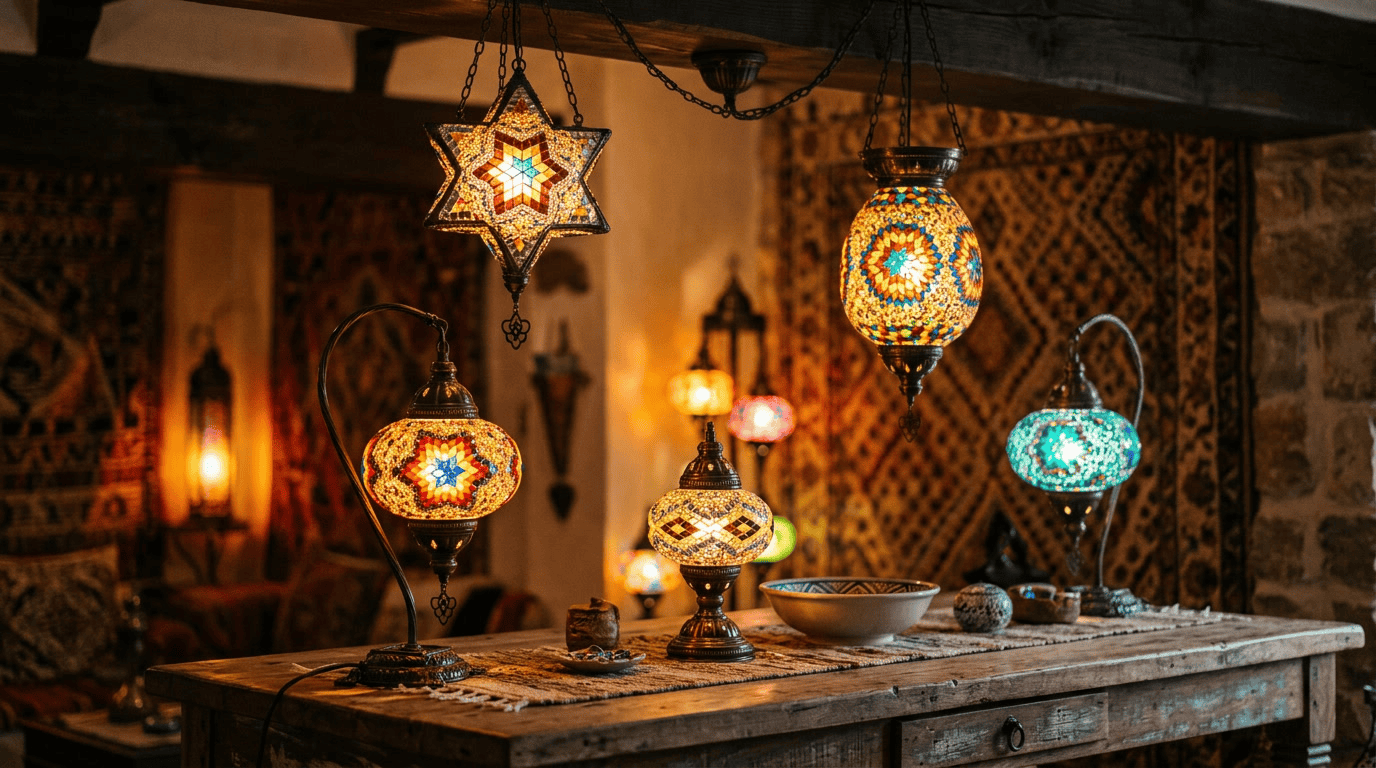
The term “mosaic glass lamp shade” is used for several related but distinct construction types:
True glass tile mosaic: Small glass tesserae (tiles) set in a tile adhesive and grout on a metal frame or rigid substrate forming the shade structure. Each tile is individual, set by hand, creating genuine mosaic texture. The grout lines show on the exterior and create the characteristic mosaic grid appearance. Light transmits through the glass tiles and is blocked at the grout lines.
Copper foil micro-mosaic: Very small glass pieces joined by copper foil or lead came technique — similar to stained glass construction but using small, more uniform pieces creating a mosaic-like texture. The “leading” lines are visible but finer than tile grout lines.
Smalti-inspired glass work: Using traditional mosaic smalti (opaque or semi-opaque colored glass tiles typically used in Byzantine and Italian architectural mosaic) in lamp shade construction. Produces a richly saturated, jewel-like appearance when lit.
Faux mosaic on single-piece glass: A single-piece glass shade with a printed, applied, or painted mosaic grid pattern on the surface. Produces a mosaic visual effect without genuine tile construction. Less expensive; less authentic.
Five Classic Mosaic Glass Shade Styles
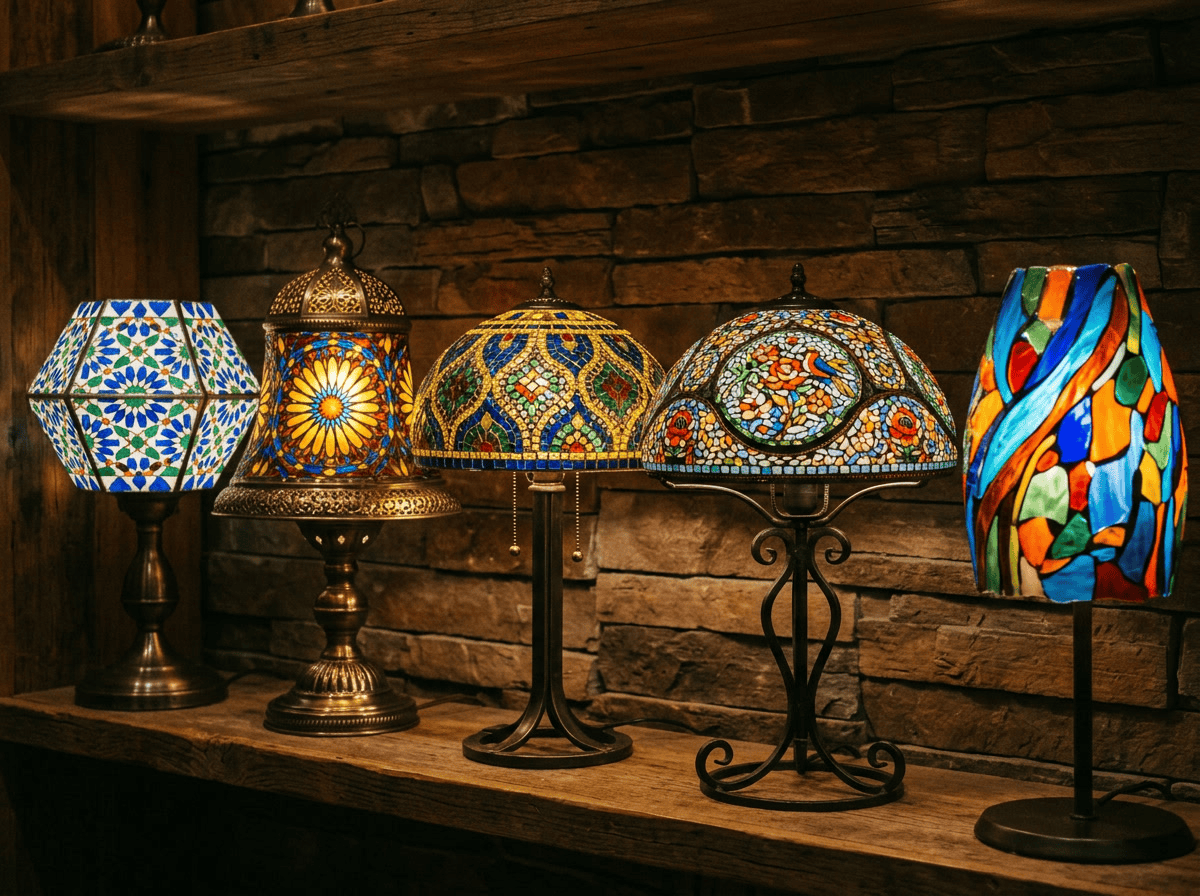
Mediterranean geometric: Regular geometric tile pattern in blues, greens, whites, and terracotta. The most approachable mosaic style for contemporary interiors. Small to medium tesserae (10–20mm) in a simple grid or diagonal pattern. Works well in both traditional and transitional rooms.
Moroccan star and geometric: Complex interlocking star or geometric patterns in deep jewel tones — cobalt blue, emerald green, ruby red, gold. Strongly associated with North African decorative arts. The intricate pattern creates complex colored shadows on surrounding surfaces.
Byzantine smalti jewel: Dense, highly saturated opaque glass smalti in deep colors — gold, blue, green, ruby. The opacity means the shade doesn’t transmit light through the tiles but glows between them, creating a jewel-box effect. Formal and richly textured.
Copper foil micro-mosaic: Fine-scale Tiffany Studios-influenced copper foil construction using small uniform glass pieces creating a mosaic texture with visible fine leading lines. Produces the warmest light transmission of the mosaic styles.
Contemporary abstract mosaic: Free-form irregular tesserae arrangement in curated color palette. Less structural, more painterly. Modern equivalent of artistic mosaic work applied to lamp shade form.
| Style | Tesserae Size | Color Palette | Best Application |
| Mediterranean geometric | 10-20mm | Blues, greens, whites, terracotta | Contemporary and transitional rooms |
| Moroccan star/geometric | Small, intricate | Cobalt, emerald, ruby, gold | North African / eclectic interiors |
| Byzantine smalti | Dense, opaque | Gold, blue, green, ruby | Formal, jewel-box accent |
| Copper foil micro-mosaic | Very fine | Standard cathedral/opalescent range | Warmest light, focal pieces |
| Contemporary abstract | Irregular | Curated palette | Modern, painterly interiors |
Construction Method Affects Light Quality
The construction method of a mosaic shade directly affects how it handles light:
| Construction | Light transmission | Pattern visibility when lit |
| Tile mosaic (grout lines) | Through tiles only; grout blocks light | Dark grid against glowing tile panels |
| Copper foil micro-mosaic | Through all glass; thin foil lines | Fine dark grid against glowing glass |
| Smalti (opaque tiles) | Around edges of tiles only | Deep glow with edge lighting only |
| Faux printed mosaic | Through full shade surface | Pattern remains visible at lower contrast |
The stained glass lampshade construction walkthrough shows the foil-and-solder process used in copper foil micro-mosaic work. For ambient residential lighting, the tile mosaic and copper foil micro-mosaic constructions produce the most useful and attractive light. Smalti construction creates a striking display effect but lower ambient output — better as accent than primary lamp.
Sizing and Fitter Types for Mosaic Glass Shades
Mosaic glass shades are typically heavier than equivalent single-piece or copper foil stained glass shades because of the tile adhesive, grout, and metal frame substrate. Weight must be confirmed against the lamp base or fixture capacity.
Typical fitter types:
- Gallery ring (2¼” to 4″ inner diameter): Most common for table lamp and floor lamp mosaic shades
- Pendant ring suspension: For hanging pendants — a metal ring at the top of the shade assembly attaches to a chain or cord
- Custom metal frame: Some mosaic shades are built on a custom lamp frame that integrates the shade and base
Sizing follows the standard proportion rules: shade outer diameter ≈ lamp base height for table lamps; pendant diameter scaled to the surface below.
For sizing guidance: how to measure a replacement glass lamp shade.
Interior Applications for Mosaic Glass Lamp Shades
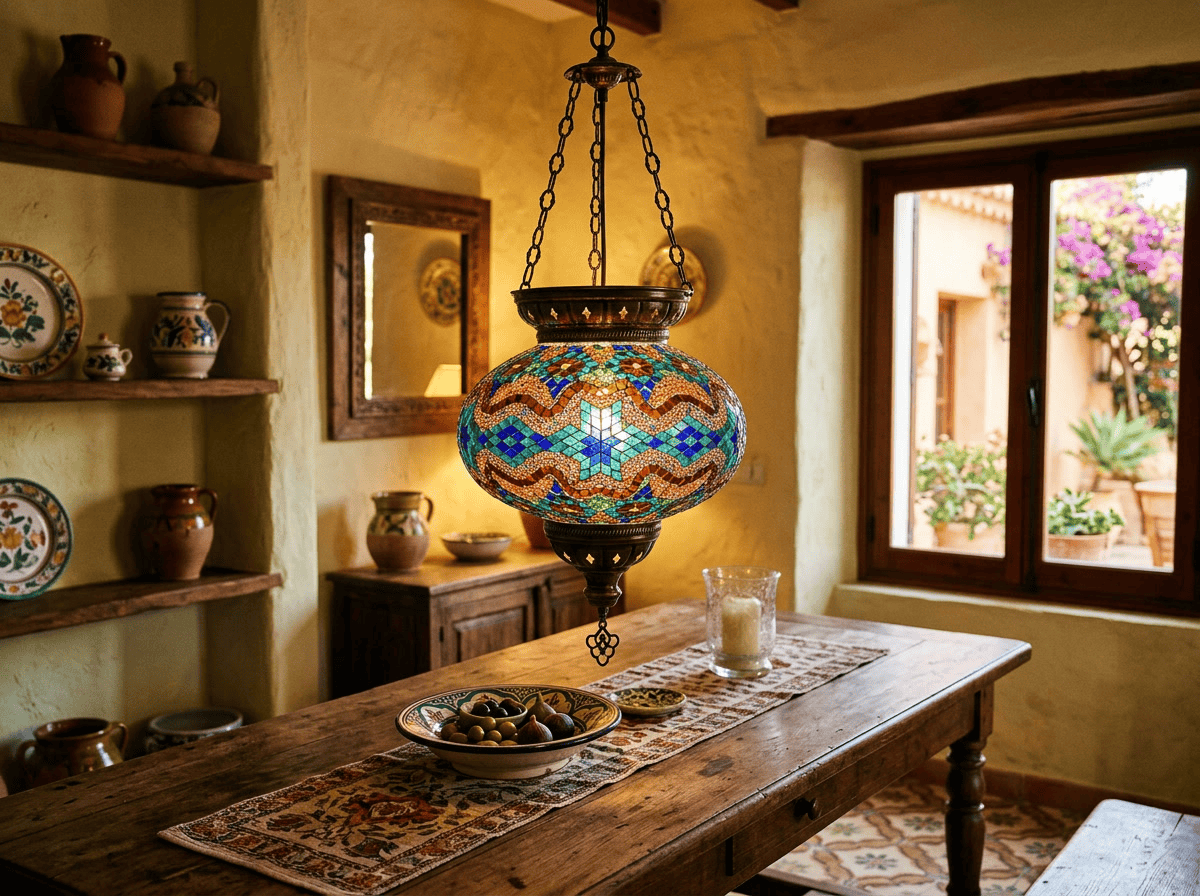
Mediterranean and Moroccan-inspired interiors: The primary natural application. A mosaic glass pendant over a Moroccan-tiled table, or a mosaic table lamp on a terracotta-and-plaster console, is culturally consistent and visually coherent.
Eclectic and maximalist rooms: Mosaic glass shades reward rooms with visual density — patterned textiles, mixed materials, collected objects. In a minimal room, mosaic can feel incongruous.
Hotels and restaurants with Mediterranean or Middle Eastern themes: Commercially, mosaic glass pendants and table lamps are extensively used in themed hospitality environments. The visual richness and durability of glass tile construction suit commercial use.
Arts & Crafts and craftsman interiors: The handmade quality of true tile mosaic construction aligns with Arts & Crafts material values. Earth-toned geometric mosaic in greens, ambers, and browns integrates well with Craftsman interior materials.
What to avoid: Mosaic glass in very minimalist, Scandinavian, industrial, or clean contemporary rooms. The visual complexity of mosaic conflicts with these aesthetics at every scale.
According to Wikipedia’s article on mosaic, mosaic is one of the oldest decorative art forms, with evidence from the third millennium BC — a tradition that gives mosaic glass lamp shades deep historical resonance beyond their purely decorative function. The V&A introduction to stained glass covers the related leaded-glass tradition that copper foil micro-mosaic construction draws on.
For decorative colored glass options with mosaic-adjacent visual effects, our glass lamp shades collection shows available multi-color and textured glass forms. If copper foil micro-mosaic appeals to you, our guides to stained glass table lamp shades and stained glass pendant lamp shades cover the same construction technique at larger scale, and our custom stained glass OEM production guide covers bespoke mosaic-pattern orders. If you are unsure whether a shade you own is genuine glass mosaic or a faux print, our guide to identifying stained glass lamp shades covers the physical tests.
Cleaning and Maintaining Mosaic Glass Lamp Shades
The cleaning requirements for mosaic shades are slightly different from smooth or cut glass:
Grout lines: If the shade uses a grout-set tile construction, the grout lines collect dust and grime. Use a soft brush to clean grout lines — the same brush used for cut glass pattern recesses. Grout can be gently scrubbed with a mild soap solution on a soft toothbrush.
Avoid soaking: Tile adhesive and grout are water-resistant but not waterproof. Prolonged soaking can weaken grout and cause tile lifting. Spot-clean rather than submerge.
Glass tile surfaces: Standard glass cleaning — damp microfiber cloth with mild soap, along the tile surfaces, then rinse and air dry.
Metal framework: If the shade has an exposed metal frame, wipe with a dry cloth to prevent corrosion. Avoid acidic or alkaline cleaners near metal.
| Construction | Price Range |
| True tile mosaic | $60-300+ |
| Copper foil micro-mosaic | $150-600+ |
| Quality faux mosaic (single-piece glass) | $30-100 |
| Mass-market imports (applied pattern) | $20-60 |
Frequently Asked Questions
Are mosaic glass lamp shades safe to use outdoors?
Most grout-set mosaic shades are not suitable for outdoor use — moisture can penetrate grout lines and freeze, causing tile loss. True copper foil mosaic construction is more moisture-resistant but still requires protection from direct rain. Covered outdoor installations (covered porches, pergolas) may be acceptable; fully exposed outdoor use is not.
How much do mosaic glass lamp shades cost?
True tile mosaic construction: $60–300+ depending on size and complexity. Copper foil micro-mosaic: $150–600+. Quality faux mosaic on single-piece glass: $30–100. Mass-market imports with applied pattern: $20–60.
Can I get custom mosaic glass shades in a specific color palette?
Yes, for tile mosaic and copper foil constructions. Tile mosaic allows the widest color customization — glass tile is available in hundreds of colors and can be mixed to any palette. Copper foil micro-mosaic uses standard colored cathedral or opalescent glass, which also covers a wide color range. For hospitality quantities (50+ units), custom color specifications are standard.
Are mosaic glass lamp shades appropriate for children’s rooms?
For young children’s rooms: no. The complexity of tile construction and potential for tile damage make mosaic glass shades inappropriate where physical contact with the shade is likely. For older children’s rooms, mosaic shades can be appropriate if the lamp is positioned out of reach.
What type of LED bulb works best with mosaic glass shades?
For tile mosaic: an omnidirectional A19 LED (800–1000 lm, 2700K) to illuminate all tile panels evenly. Point-source LEDs create uneven illumination between tiles facing the bulb and those angled away. For copper foil micro-mosaic: same as copper foil stained glass — omnidirectional or filament LED.
How do I mount a large mosaic glass pendant shade safely?
Confirm the ceiling fixture’s weight rating — tile mosaic pendants can be substantially heavier than glass pendants of the same diameter. Use a fan-rated ceiling box for any pendant over 50 lbs (22 kg) total fixture weight. Confirm the chain or cord is rated for the specific weight. Have an electrician verify the installation if there is any doubt.
Can mosaic glass shades be repaired if tiles fall off?
Yes. Individual fallen tiles can be re-set with appropriate glass tile adhesive and re-grouted. For copper foil micro-mosaic, individual broken pieces can be replaced by a stained glass artist. Both repairs are fully reversible and restore the shade to original appearance.
Related Reading
- Stained Glass Lamp Shades: Full Buying Guide
- Stained Glass Table Lamp Shades: Tiffany Style, Custom & Decorative Options
- How to Identify Stained Glass Lamp Shades
- Custom Stained Glass Lamp Shades: OEM Production Guide
Conclusion
Mosaic glass lamp shades deliver a visual richness and handcraft quality that is difficult to replicate with any other lamp shade type. The tile-by-tile construction creates genuine texture and material presence. The light quality — particularly from copper foil micro-mosaic construction — is among the warmest and most complex of any glass shade type.
The application is specific: rooms that can accommodate visual density and welcome the Mediterranean, Moroccan, Byzantine, or Arts & Crafts aesthetic associations that mosaic brings with it. In the right room, a well-made mosaic glass shade is one of the most memorable objects in residential lighting.