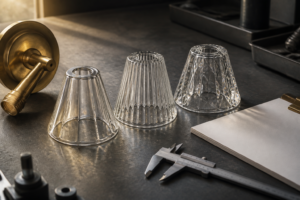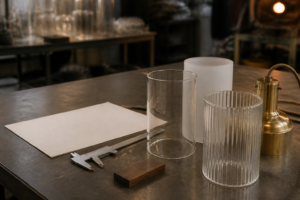
Lamp shades for vintage lamps must match the lamp’s era style, fitter type (spider, UNO, clip-on, or chimney), and base proportions — get all three right and the shade will look period-accurate and fit securely.
If you’ve inherited a 1920s Art Deco table lamp or found a beautiful Victorian floor lamp at an estate sale, you already know the problem: the original shade is gone, damaged, or so faded it undermines the whole piece. Finding a replacement is not as simple as picking something that “looks old.” The wrong shade — even a handsome one — can make a $400 antique lamp look like a garage sale find.
This guide covers every decision point: identifying the right shade style for your lamp’s era, measuring for a precise fit, comparing materials (silk, mica, glass, linen), understanding fitter types, and sourcing from specialty retailers or custom artisan makers. By the end, you’ll have a clear purchase path for lamp shades for vintage lamps that suits your specific piece — and a short list of mistakes to avoid.
What Are Vintage Lamp Shades?
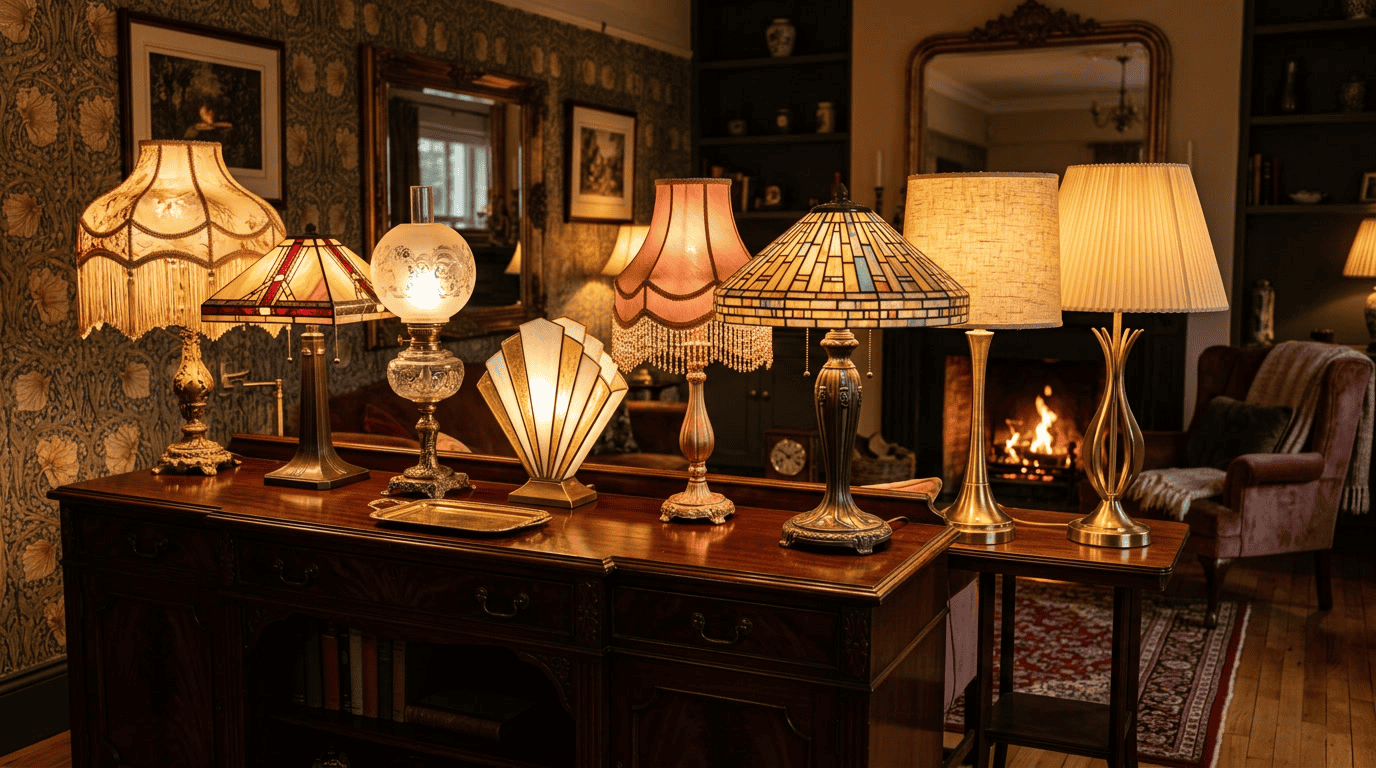
Vintage lamp shades are shades designed in — or faithfully reproducing — the aesthetic conventions of a specific historical period. The term covers Victorian (1837–1901), Edwardian (1901–1910), Art Nouveau (1890–1910), Arts & Crafts (1900–1920), Art Deco (1920s–1930s), and Mid-Century Modern (1940s–1960s). They differ from contemporary shades in three meaningful ways: silhouette, material, and hardware.
Modern drum shades are clean cylinders optimized for mass production. Vintage lamp shades for vintage lamps, by contrast, follow the decorative grammar of their era — empire bells, pagoda shapes, pleated silk panels, mica segments, hand-painted glass globes. The difference isn’t merely decorative preference; it’s structural. A Victorian lamp’s harp and spider fitting was engineered around a specific shade weight and bottom-diameter range. Swap in a modern drum shade and you get both an aesthetic clash and a mechanical instability.
How Vintage Shades Differ from Modern Shades
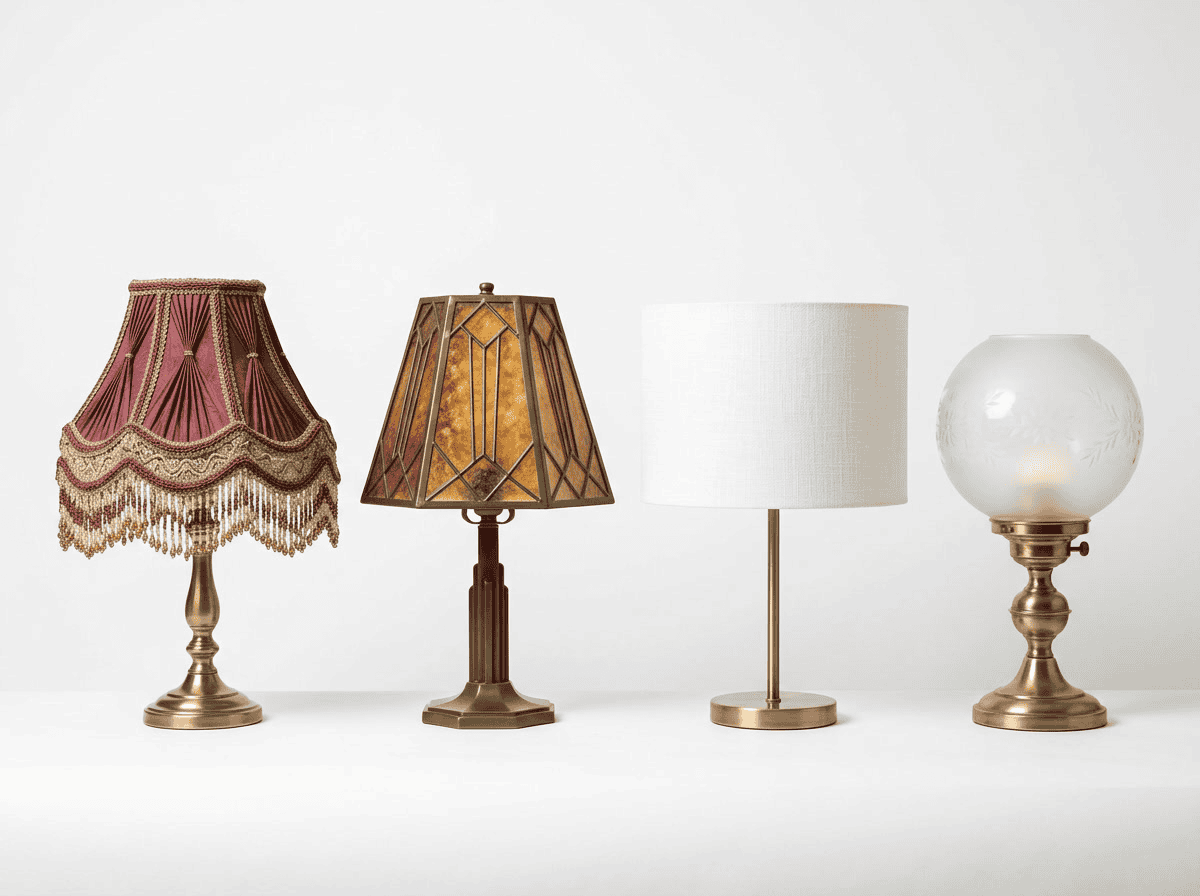
The most visible difference is the silhouette. Victorian shades typically flare dramatically at the bottom — the “bell” or “empire” shape — often trimmed with fringe or bead-work. Art Deco shades run geometric: stepped angles, opaque panels, streamlined cones. Mid-Century shades tend toward the drum: simple textile-covered cylinders that balance the clean lines of Danish Modern and Scandinavian bases.
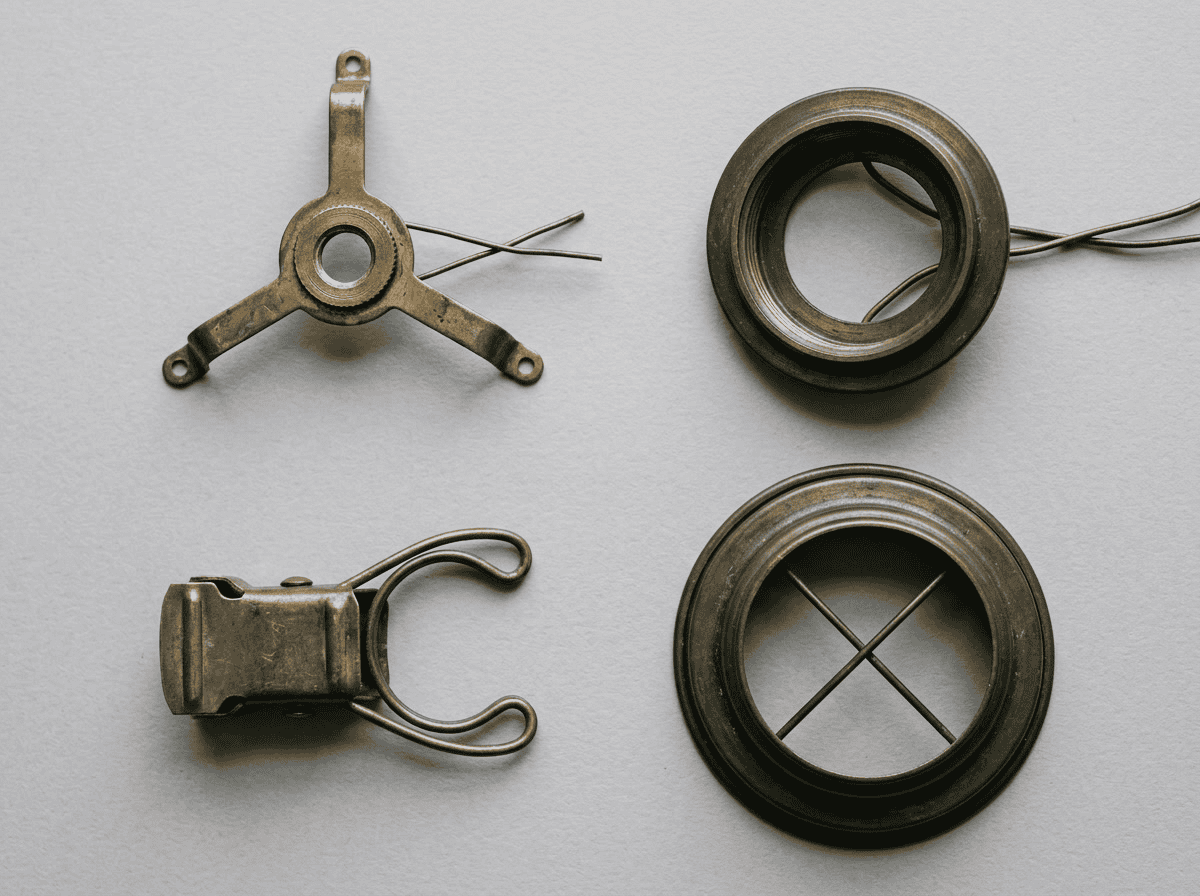
Hardware matters just as much as shape. Older lamps frequently use a chimney fitter (designed for glass shades that slip over a kerosene burner chimney), a clip-on fitter (for candelabra bulbs), or a UNO fitter (a threaded ring that screws onto the socket shell). Modern shades almost exclusively use the spider fitter — a cross-bar frame that rests on a harp. If your vintage lamp lacks a harp, a standard spider-fitter shade won’t work without an adapter.
Why Era Accuracy Matters for Vintage Lamp Shades
Beyond aesthetics, era accuracy affects function. Mica shades from the Arts & Crafts period were designed for incandescent bulbs running at 60–100W — they tolerate heat extremely well. Thin silk Victorian shades, by contrast, require low-wattage sources; modern LED equivalents (9–12W replacing a 60W incandescent) have largely solved the heat problem, but it’s worth verifying before leaving a lamp unattended.
Proportionally, vintage lamp bases tend to be heavier and more vertical than modern equivalents. A shade 2 inches too narrow at the bottom makes the base look squat; 2 inches too wide and the whole assembly looks top-heavy. The rule of thumb for lamp shades for vintage lamps: the shade’s bottom diameter should be roughly equal to the lamp base’s height (excluding the shade itself). Exact measurement comes in the next section.
| Feature | Vintage Lamp Shades | Modern Lamp Shades |
|---|---|---|
| Silhouette | Era-specific (empire, bell, pagoda, cone, drum) | Predominantly drum or tapered cylinder |
| Material | Silk, mica, hand-blown glass, pleated linen | Polyester, cotton, linen (machine-made) |
| Fitter type | Chimney, clip-on, UNO, spider (era-dependent) | Almost exclusively spider |
| Weight | Heavier (glass, mica) to very light (silk) | Uniformly light (synthetic textiles) |
| Light quality | Warm, diffused, often directional | Even, flat, diffused |
| Replaceability | Specialty market, custom makers | Mass-market commodity |
Vintage Lamp Shade Styles by Era
Different eras produced radically different lampshade styles — and mixing them up is the most common mistake buyers make when sourcing lamp shades for vintage lamps. Understanding the visual grammar of each period makes the right choice obvious.
Victorian (1837–1901): Fringe, Silk, and Drama
Victorian lampshades were designed to announce wealth and craftsmanship in equal measure. The dominant shapes are the empire (a wide bell flaring from a narrow top) and the parlor globe (a rounded glass shade over an oil or early electric base). Materials lean heavily toward silk, velvet, and hand-embroidered textiles, often finished with beaded or silk fringe — a design detail that served a function. The fringe swayed slightly in drafts, creating ambient movement that softened the harshness of early electric light.
Victorian glass shades — used on bracket lamps, banquet lamps, and electrified gas lamps — often feature hand-painted floral motifs on frosted or milk-glass bases. Colors include cranberry, amber, soft green, and white. If your lamp has a brass collar with a 4-inch chimney opening, it almost certainly requires a Victorian-style glass globe or chimney shade. Fitter diameter is critical here: these openings run 3.25″, 3.5″, 4″, or 6″ — measure before ordering.
Art Nouveau and Art Deco (1890–1940): Mica and Geometry
Art Nouveau shades (roughly 1890–1910) favor organic forms: mushroom shapes, dragonfly motifs in the Tiffany style, flowing water-lily panels. These are the most recognizable vintage shades and often the most expensive to replace authentically. Mica — a naturally transparent mineral that splits into thin, warm-amber sheets — became the signature material of Arts & Crafts and early Art Deco shades. According to Wikipedia’s entry on mica, the mineral’s perfect basal cleavage into thin flexible sheets made it indispensable for both electrical insulation and decorative lampshade applications throughout the early 20th century.
Art Deco (1920s–1930s) pivoted toward geometry, as documented in the Wikipedia overview of Art Deco. Shade silhouettes became angular: stepped octagonal drums, fluted cones, tiered empire forms. Chrome and black lacquer base hardware called for shades in contrasting ivory, black, or geometric printed fabric. Glass remained popular, but now as etched frosted panels or slag glass (opaque, irregularly colored) set in leaded came.
In practice, mica shades age well but are brittle at the edges — chips along the frame are common. A shade with cracked mica panels can be restored by a skilled lampshade maker for $80–$180, far cheaper than a museum-quality replacement piece.
Mid-Century Modern (1940s–1960s): Clean Lines and Drum Shades
Mid-Century lamps embraced functional design: teak bases, brass tripods, ceramic sculptural forms. Lamp shades for vintage lamps from this era follow suit — simple drum shades in natural linen, burlap, or textured cotton, sometimes with a slight taper (wider at the bottom than the top). Colors lean to natural off-whites, warm grays, and muted earth tones. Fringe, beading, and hand-painting disappear entirely.
One characteristic to watch: Mid-Century lamps often use a notched saddle fitter instead of a standard harp, or a UNO fitter that screws directly to the socket. Drum shades from this period are the easiest to source today, but fitter compatibility remains the key variable even for seemingly simple replacements.
| Style Era | Shape | Material | Fitter | Signature Detail |
|---|---|---|---|---|
| Victorian (1837–1901) | Empire bell, globe | Silk, velvet, hand-painted glass | Chimney, clip-on | Fringe trim, floral glass motifs |
| Art Nouveau (1890–1910) | Mushroom, dome | Mica, Tiffany stained glass | Spider (on harp) | Organic forms, dragonfly/lily motifs |
| Art Deco (1920s–1930s) | Tiered cone, stepped drum | Mica, frosted glass, printed fabric | Spider, UNO | Geometric patterns, chrome accents |
| Mid-Century Modern (1940–1965) | Drum, slight taper | Linen, burlap, textured cotton | Spider, UNO, saddle | Clean, unadorned, natural tones |
How to Measure Your Vintage Lamp for a Replacement Shade
Most failed shade purchases come down to measurement. The buyer sized the base and guessed at the shade. Sourcing lamp shades for vintage lamps requires four precise numbers.
The four dimensions you need:
1. Top diameter — measured inside the frame at the top opening (where the fitter sits)
2. Bottom diameter — measured at the widest point of the shade’s lower edge
3. Slant height — measured diagonally along the shade’s side panel, not straight down
4. Fitter opening — the diameter of the hardware fitting at the top, not the outer frame
Shade listings use the format Top × Bottom × Slant in inches. A listing that reads “6 × 18 × 12” means a 6-inch top, 18-inch bottom, 12-inch slant height — a standard medium empire. That’s the notation to look for.
Proportional guideline: Bottom diameter ≈ lamp base height from foot to harp saddle. A 16-inch base needs roughly a 16–18-inch bottom diameter shade.
The Four Key Dimensions in Practice
Measure the top diameter at the shade’s interior rim where it contacts the harp or fitter — not the outer frame. For glass chimney shades, measure the fitter collar itself (the glass ring that slips into the lamp’s chimney opening), not the globe’s widest point. These two measurements can differ by 2–3 inches on a Victorian globe, and ordering on the wrong one means the shade won’t seat.
Slant height matters for fabric shades because the panel must be cut and sewn to a precise angle. An empire shade labeled “12 inches tall” may mean 12 vertical inches or 12 slant inches — they are different measurements. Always confirm with the seller which convention they use. Most American shade makers use slant height; some European listings use vertical height. When in doubt, ask explicitly.
Fitter Types Explained for Vintage Lamps
Understanding fitter types is non-negotiable when sourcing lamp shades for vintage lamps. The four types you’ll encounter on period lamps:
Spider fitter: A cross-bar frame with a central washer, designed to rest on a harp (U-shaped wire attached to the lamp socket). Standard on most post-1950 American lamps and many Art Deco pieces. If your lamp has a harp, it takes a spider shade.
UNO fitter: A circular ring with a center hole that screws directly onto the lamp socket shell, replacing the socket ring. No harp needed. Common on Mid-Century Modern table lamps, swing-arm designs, and some Art Deco pieces. UNO shades are not interchangeable with spider shades without an adapter — confirm before ordering.
Clip-on fitter: A spring-loaded ring that clips directly over a candelabra or standard bulb. Used on wall sconces, chandelier arms, and small accent lamps. Works only with the correct bulb diameter — most vintage clip-on fittings are calibrated for a specific bulb size.
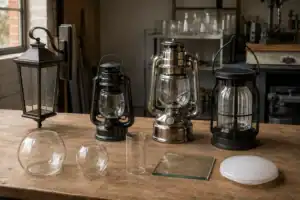
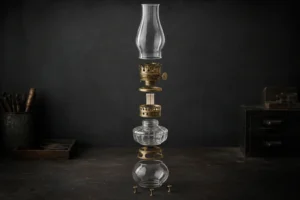
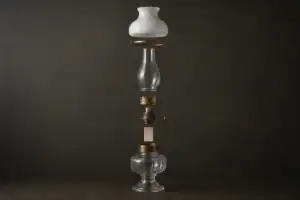
Chimney fitter: A glass collar that sits inside the lamp’s chimney ring. Specific to oil lamp conversions, early electric table lamps, and bracket lamp designs from the Victorian and Edwardian eras. Sized in ¼-inch increments; the most common are 3.25″, 4″, and 6″.
Materials for Vintage-Style Lamp Shades
Once you’ve confirmed the style era and fitter type, material selection determines light quality and long-term durability. Each material has a distinct character.
Fabric Shades: Silk, Linen, and Burlap
Silk is the period-accurate choice for Victorian and Edwardian lamp shades for vintage lamps. It transmits warm, slightly golden light that softens a room dramatically. Trade-offs: real silk is expensive ($150–$400+ for a custom shade), degrades under UV light faster than synthetics, and attracts dust. For lamps near windows, silk dupioni or a silk/polyester blend performs better long-term without visible quality loss.
Linen and cotton are the right materials for Mid-Century drum shades. Heavyweight linen produces a warm, slightly diffused glow with excellent durability. A drum shade in Belgian linen for a 1950s teak base will outlast most synthetic alternatives and hold its shape for decades.
Burlap was common in 1960s–1970s folk and rustic lamp styles. It produces textured, warm light but sheds fiber over time. A lined burlap shade — cotton or styrene liner behind the burlap — solves the shedding problem and is the standard construction at reputable makers.
Mica Shades: The Arts & Crafts Standard
Mica shades are functionally irreplaceable for authentic Arts & Crafts (1900–1920) and early Art Deco lamps. The material — thin sheets of natural mica mineral assembled into a frame — produces an orange-amber glow that no fabric or colored glass quite matches. According to the Smithsonian American Art Museum’s collection resources, Arts & Crafts lighting design specifically used mica to replicate the quality of candlelight rather than the harsher blue-white cast of early incandescent bulbs, making material authenticity central to the period aesthetic.
Modern mica shades use either natural mica (authentic period look, higher cost) or synthetic mica (fiberglass-reinforced, more uniform appearance, lower cost). For a genuinely period piece — a Handel lamp reproduction, a Dirk Van Erp style, a Stickley-adjacent base — natural mica with a correct frame profile is the appropriate choice.
Glass Shades: Frosted, Amber, and Hand-Painted
Glass lamp shades are the specialty of artisan manufacturers and a durable favorite for period-accurate restoration. The Smithsonian’s history of American decorative arts notes that glass lampshade production in the United States peaked between 1890 and 1930, a period that produced the iconic Victorian hand-painted globes and Tiffany-style leaded glass that still define the category.
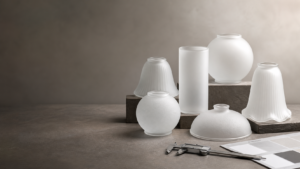
Frosted glass shades diffuse light evenly across the globe’s surface, producing a soft, glare-free glow. Used extensively on Victorian bracket lamps, Art Deco desk lamps, and industrial pendants. Frosted glass holds up indefinitely under normal use — unlike silk or burlap, it doesn’t yellow, fade, or degrade from heat.
Amber and colored glass shades — cranberry, cobalt, and green being the most historically common — were status symbols in Victorian and Edwardian homes. The colored glass filtered incandescent light into warm, dramatic hues. Today, amber and cranberry glass shades are produced by glassworks in Eastern Europe, the United States, and specialist manufacturers in China (including producers in Jiangxi and Zhejiang provinces), making authentic-looking replacements more accessible than at any point in the past several decades.
Hand-painted glass shades — floral motifs on milk glass, landscape scenes on frosted globes — are the most decorative and the most difficult to replace authentically. Original hand-painted Victorian globes are generally collected rather than used as functional replacements. Reproduction quality has improved considerably since 2020, but brush-work detail and enamel adhesion still vary widely between manufacturers. Always request a photo of the actual shade (not a product render) before ordering a hand-painted glass replacement. As the Wikipedia article on decorative arts notes, hand-applied decoration on glass has been continuously produced since the Roman period — today’s artisan glassworkers work within a tradition that has refined its techniques over two millennia.
| Material | Light Quality | Durability | Typical Cost (USD) | Best Era Match |
|---|---|---|---|---|
| Pure silk | Warm, golden, elegant | Low (UV, dust) | $150–$400 | Victorian, Edwardian |
| Silk blend | Same as silk, improved durability | Medium | $80–$200 | Victorian, Edwardian, Art Deco |
| Linen | Warm, textured, slight haze | High | $60–$150 | Mid-Century Modern |
| Mica (natural) | Orange-amber, very warm | High if undamaged | $200–$500 | Arts & Crafts, early Art Deco |
| Frosted glass | Even, soft, glare-free | Very high | $40–$180 | Victorian, Art Deco, industrial |
| Colored/painted glass | Dramatic, tinted glow | Very high | $60–$300 | Victorian, Art Nouveau |
Where to Find Lamp Shades for Vintage Lamps
Finding the right lamp shades for vintage lamps means choosing between four source types with significant differences in price, lead time, and authenticity guarantee.
Specialty Retailers and What to Look For
Specialty lamp shade retailers — both online and physical — stock period-style shades in standardized sizes. The advantage is immediate availability, dimensional accuracy from established QA processes, and customer service that understands vintage fitting questions. The disadvantage: standardized sizing may not accommodate unusual vintage bases, and truly period materials (natural mica, hand-blown colored glass) are premium-priced.
Look for retailers that publish detailed dimension charts using Top × Bottom × Slant notation and explicitly state fitter type. A listing that only provides “height” is almost certainly giving vertical height, not slant — a persistent source of returned orders in the vintage lamp market. For high-value lamps, call before ordering and confirm fitter compatibility directly.
Antique markets, estate sales, and online platforms — eBay, Etsy, and 1stDibs are the three most active — are the most reliable source for genuine period lamp shades for vintage lamps. Prices range from $15 for a Victorian silk empire in poor condition to $800+ for a pristine mica shade from a named Arts & Crafts maker.
When buying at antique markets, bring your four dimensions and the fitter type written down. If the seller permits, measure the fitter opening on-site. Check for: frame warping (common on fabric shades), fading or yellowing (silk degrades unevenly), mica crack patterns (minor edge chips are repairable; through-panel cracks are structural), and glass chips at the fitter collar (a chipped collar won’t seat securely or safely).
Custom and Handmade Shade Options
For unusual vintage bases — non-standard dimensions, damaged or missing hardware, or a specific period look — a custom-made shade is often the best resolution. Custom makers work from dimensions, from photos of the original, or from a period reference image.
Custom fabric shades typically run $200–$800 depending on size, material, and trim complexity. Custom glass shades from artisan glassworks vary more widely: a simple replacement frosted globe might cost $80–$150; a hand-painted milk-glass shade for a specific Victorian banquet lamp can reach $400–$900. Lead times for custom orders run 4–12 weeks at established makers.
Etsy-based artisan lampshade makers who specialize in period reproductions have grown in number and quality since 2023. The best post genuine process photos, offer custom sizing with reasonable minimums, and communicate clearly about fitter compatibility. When evaluating an Etsy maker for lamp shades for vintage lamps, read reviews specifically from buyers of similar era and material shades — generic “beautiful item” feedback tells you little about dimensional accuracy or fitter fit.
| Source Type | Price Range | Lead Time | Best For |
|---|---|---|---|
| Specialty retailers | $40–$350 | 2–7 days | Standard sizes, confirmed fitter compatibility |
| Antique markets / estate sales | $15–$800+ | Immediate | Genuine period pieces, unusual variants |
| Custom fabric shade makers | $200–$800 | 4–10 weeks | Non-standard dimensions, period-accurate trim |
| Artisan glass shade makers | $80–$900 | 6–12 weeks | Glass replacements, hand-painted reproductions |
| Etsy artisan makers | $60–$400 | 2–6 weeks | Mid-range custom, period reproductions |
Common Mistakes When Replacing Vintage Lamp Shades
After working with vintage lighting, the same sourcing errors appear repeatedly. Three account for the majority of disappointing purchases.
Wrong Fitter Type
The single most common mistake when sourcing lamp shades for vintage lamps is ordering a spider-fitter shade for a UNO or chimney-fitter lamp. Spider shades need a harp — the small U-shaped wire that rises from the socket housing. If your lamp doesn’t have one, a spider shade will either balance precariously or tip over.
Before ordering any shade for a vintage lamp, identify the fitter type first. If you’re unsure, post a clear photo showing the socket area to a vintage lamp trade forum or email the retailer. A good retailer will ask about your fitter before recommending a shade; one that doesn’t is a yellow flag.
Practical fix: Harp hardware is sold separately. If your vintage lamp uses a UNO socket and you’ve found the perfect spider-fitter shade, a saddle-mount harp adapter that threads onto the UNO socket ring is available from most lamp hardware suppliers for $8–$15. It’s not always period-accurate hardware, but it’s a clean functional bridge that most viewers won’t notice.
Era Mismatch
Pairing a Mid-Century drum shade with a Victorian base is the decorating equivalent of wearing running shoes with formal dress. Both are good objects; the combination undermines each one.
The subtler version of this mistake: pairing a shade from the right broad era but the wrong regional tradition. American Arts & Crafts shades (Stickley, Limbert, Roycroft aesthetic) are heavier and more geometric than their English Arts & Crafts counterparts (Morris & Co. aesthetic, which runs more organic and floral). A shade from the wrong tradition may fit the era label but not the specific lamp’s visual language.
When in doubt, look at the base’s decorative details. Is the casting geometric or organic? Does it favor horizontal banding (Art Deco) or vertical ribbing and nature-derived forms (Arts & Crafts)? The shade should echo the dominant decorative grammar of the base — not just the era’s date range.
Ignoring Heat and Wattage
Modern LED bulbs have reduced but not eliminated heat concerns with vintage lamp shades for vintage lamps. Natural silk and velvet shades are still at risk from anything above a 9W LED (roughly 60W incandescent equivalent) placed too close to the shade’s top opening. If the top opening is 4 inches or less and a standard A19 LED fits inside, the shade top can reach temperatures that slowly yellow and dry the silk over months.
Use candelabra-base LEDs (E12 socket) in smaller fabric shades — they run cooler and sit further from the shade fabric. For mica shades, heat is rarely a concern since mica tolerates temperatures well above any domestic bulb, but check that the mica frame’s solder joints are intact before running at full wattage.
For glass shades, heat is not a material concern, but thermal shock from sudden temperature change can crack older glass. Never clean a recently-lit glass shade with cold water.
Future Trends: Vintage Lamp Shades in 2026
The vintage lamp shade market as of 2026 reflects two distinct forces pulling in opposite directions. Collector demand for authentic period materials — hand-blown glass, natural mica, real silk — has pushed prices for genuine pieces to their highest point in decades. Meanwhile, improved manufacturing in artisan glassworks and textile workshops has made high-quality reproductions more accessible, closing the gap between authentic and reproduction in ways that matter for everyday use rather than museum display.
Three trends are worth tracking for anyone sourcing lamp shades for vintage lamps this year:
Glass shade revival. Artisan glassworks in the United States, Czech Republic, and China are producing Victorian-style frosted, amber, and hand-painted glass globes at lower price points than 5 years ago, driven by both improved production techniques and reduced shipping costs. The quality variance is still significant, but the ceiling has risen noticeably.
Custom short-run fabric shades. Small-batch lampshade makers using social platforms to market their work have made period-accurate silk and linen shades in custom dimensions accessible to buyers who previously had no option but large custom workshops with $500 minimums and 12-week waits.
Sustainable materials push. Reclaimed silk from vintage garments and responsibly harvested natural mica are becoming selling points among specialist shade makers, appealing to buyers who want period materials without the provenance complications of vintage originals.
FAQ — Lamp Shades for Vintage Lamps
What size lamp shade fits a vintage floor lamp?
Vintage floor lamps typically need shades with a bottom diameter of 16–22 inches. Measure the lamp base height from foot to harp saddle (not including the bulb or shade), then select a bottom diameter within 2–3 inches of that height. A 20-inch base calls for an 18–22-inch bottom diameter shade in most period styles.
How do I know what fitter type my vintage lamp needs?
Check for a harp — a U-shaped wire rising from the socket. If present, you need a spider fitter. If the socket has a threaded ring where the shade screws on, you need a UNO fitter. If the lamp has a chimney tube at the top, you need a chimney-type glass shade sized to that tube’s outer diameter. If none of those are present and the socket is exposed, it likely takes a clip-on fitter that mounts directly on the bulb.
Are vintage lamp shades safe with modern LED bulbs?
Yes, for most materials. LEDs run 80–90% cooler than incandescent bulbs of equivalent lumen output, making them safe for silk, mica, and glass shades. Use bulbs rated at 9–12W (60–75W equivalent) or lower, A-shape profile. Avoid directional LED spotlights in enclosed glass shades — they concentrate heat more than standard A-shape bulbs even at the same wattage.
What is a mica lamp shade and why does it cost so much?
Mica is a naturally occurring mineral that cleaves into thin, heat-resistant, translucent sheets with a distinctive amber color. Natural mica must be harvested, graded, cut, and hand-assembled into a shade frame — the process is entirely manual. A quality mica shade involves 6–10 hours of skilled labor. Prices of $200–$500 reflect that labor cost, not material markup. Synthetic mica (fiberglass-reinforced) costs significantly less and works well for non-collector purposes.
Can I put a modern drum shade on a Victorian lamp?
Mechanically yes, if the fitter matches. Visually, it usually fails — the proportional and stylistic mismatch is difficult to ignore. If budget is the constraint, a tapered empire shade in neutral cream linen or off-white cotton is a closer period approximation than a cylinder drum and can be found for $60–$120 at most specialty retailers.
Where can I buy replacement glass shades for vintage lamps?
Specialty lamp hardware suppliers, antique lamp dealers, and glassworks producing Victorian and Art Deco reproductions are the best sources. Online marketplaces (eBay, Etsy) list genuine vintage glass shades regularly — filter by fitter size and era. For chimney-type glass shades, measure the fitter collar diameter precisely before ordering: 3.25″ and 4″ are the most common, but 3.5″ and 6″ variants exist on specific lamp models and they are not interchangeable.
How do I clean vintage fabric lamp shades without damaging them?
Dust regularly with a soft bristle brush or low-suction vacuum (upholstery attachment). For stains on silk: spot-clean with a barely damp cloth — press and lift, never rub. Never immerse a fabric shade in water; the adhesive bonding fabric to the frame will fail. For pleated shades, work along the pleat direction. The Library of Congress preservation guidelines for textiles recommend storing vintage textile objects away from direct light and in stable humidity — the same applies to silk and linen lamp shades kept in storage between uses.
Conclusion
Finding the right lamp shades for vintage lamps is part measurement, part materials knowledge, and part historical literacy. The variables — fitter type, era style, proportions, and material — interact with each other, which is why a single wrong choice can undermine an otherwise excellent lamp.
Start with the fitter. Everything else follows. Once you know whether you’re working with a spider, UNO, clip-on, or chimney fitting, half the sourcing decisions are already made. Layer in the era style, get your four dimensions right (Top × Bottom × Slant × fitter opening), and choose a material that matches both the era and your light-quality preference — warm silk or natural mica for Victorian and Arts & Crafts pieces, frosted or colored glass for Art Deco, clean linen for Mid-Century Modern.
For glass shade replacements specifically — the most durable and era-accurate option for many Victorian and Art Deco lamps — today’s artisan glassworks produce quality that rivals original manufacturers. Whether you’re matching a Victorian milk-glass globe or an Art Deco frosted cylinder, the right glass shade will outlast every other shade material in the room and require almost no maintenance beyond occasional dusting.