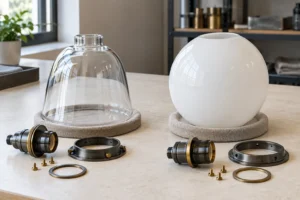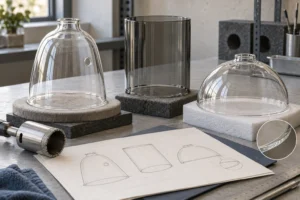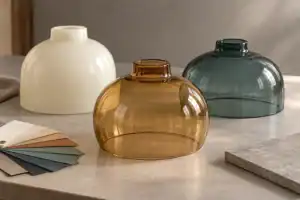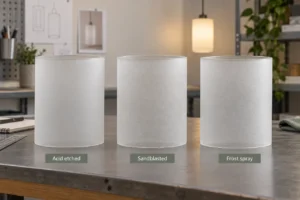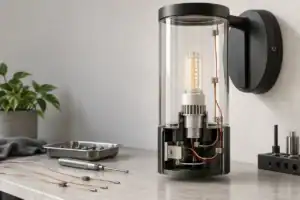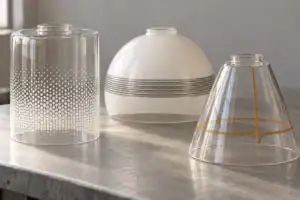
An outdoor lamp shade is a weather-resistant cover fitted over an exterior light bulb to diffuse glare, shield the bulb from rain and UV exposure, and add decorative character to patios, porches, and garden spaces.
Walk through any well-designed outdoor space at dusk — a wraparound porch with warm amber glow, a pergola strung with pendant shades, a post lamp standing guard at the front gate — and you’re looking at outdoor lamp shades doing exactly what they’re built to do. They’re not decorative afterthoughts. They’re engineered components that balance weatherproofing, light quality, and aesthetics in one package.
This guide covers what outdoor lamp shades actually are, the materials that make them work, the styles available, and how to pick the right one for your space and climate. By the end, you’ll know exactly what to look for — and what to avoid.
What Is an Outdoor Lamp Shade?
An outdoor lamp shade is a protective, light-diffusing enclosure designed specifically for use in exterior environments where it will face rain, wind, temperature swings, and prolonged UV exposure.
That distinction from an indoor shade matters more than most buyers realize. A standard indoor fabric shade — linen, cotton, even treated polyester — will degrade outdoors within a single season. The seams warp, colors fade to chalky pastels, and moisture seeps in, creating fire hazards around a hot bulb. Outdoor lamp shades solve this by using purpose-built materials rated for exterior conditions.
At their core, outdoor lamp shades serve three functions simultaneously:
- Light diffusion — softening harsh bulb glare into ambient, livable illumination
- Bulb protection — shielding the bulb from precipitation, insects, and debris
- Visual design — completing the aesthetic of the fixture and the space around it
How They Differ from Indoor Shades
The engineering gap between indoor and outdoor shades comes down to material science and construction details. Where indoor shades prioritize translucency and texture, outdoor shades prioritize durability — UV stabilizers in the polymer, sealed seams, rust-resistant hardware, and sometimes gasket-lined rims that form a weather seal against the fixture base.
| Feature | Indoor Lamp Shade | Outdoor Lamp Shade |
|---|---|---|
| Primary material | Linen, cotton, silk | Polycarbonate, acrylic, metal, Sunbrella fabric |
| UV resistance | None | UV stabilizers built in |
| Moisture handling | None | Water-repellent or waterproof construction |
| Temperature range | 50–90°F typical | -20°F to 130°F+ depending on material |
| IP rating | Not applicable | IP44 minimum (splash-proof), IP65 for fully weatherproof |
| Lifespan outdoors | Weeks to months | 5–15+ years (material dependent) |
The Role of IP Ratings
One spec that indoor lamp buyers never need to think about — IP (Ingress Protection) ratings — becomes critical outdoors. The IP rating tells you how well the shade and fixture resist dust and water.
- IP44: Protected against splashing water from any direction — suitable for covered patios and porches
- IP55: Protected against water jets — suitable for partially exposed areas
- IP65: Fully dust-tight, protected against water jets — suitable for open garden and poolside use
- IP67/IP68: Submersion-rated — used in underwater or ground-level installations
According to the International Electrotechnical Commission’s IP Code standard, an IP44-rated shade is the practical minimum for any outdoor fixture that might see rain. If your shade doesn’t have an IP rating at all, assume it’s not weatherproof.
Materials Used in Outdoor Lamp Shades
Outdoor lamp shades are made from polycarbonate, acrylic, metal alloys, Sunbrella-type fabric, or glass — each offering a different trade-off between durability, weight, and light quality.
Material choice is the single biggest factor in how long your outdoor lamp shade lasts and how it performs visually. Here’s what each option actually delivers in practice.
Polycarbonate
Polycarbonate (PC) is the workhorse of outdoor lighting. It’s impact-resistant (roughly 250 times stronger than glass by impact strength), lightweight, and takes UV stabilizer additives well. A quality UV-stabilized polycarbonate shade can hold its color and clarity for 10+ years under direct sun exposure.
The trade-off: cheaper polycarbonate without UV stabilizers yellows and hazes within 2–3 years. When evaluating a polycarbonate shade, ask for the UV stabilizer spec or look for “UV-resistant polycarbonate” explicitly in the product description. Clear polycarbonate that ships with a slight blue or green tint is often a sign of a UV inhibitor package — that’s good.
Acrylic (PMMA)
Acrylic is optically clearer than polycarbonate and offers better color fidelity — light through an acrylic shade looks truer to the bulb’s actual color temperature. It’s also more scratch-resistant on the surface.
The downside: acrylic is more brittle. A falling branch or hail impact that polycarbonate would shrug off can crack acrylic. For sheltered applications — covered porches, enclosed pergolas — acrylic delivers a premium look at manageable risk. For exposed garden posts or poolside pendants, polycarbonate is the safer call.
Metal (Aluminum, Galvanized Steel, Copper)
Metal outdoor lamp shades offer the highest longevity and a distinctive aesthetic — think industrial warehouse pendants on a covered patio or copper lantern shades on gate posts. They don’t transmit light; instead, they direct it downward through open bottoms or perforated patterns.
Aluminum is the practical standard: rust-resistant, lightweight, takes powder-coat finishes well. Galvanized steel is heavier but highly durable and suits industrial or farmhouse aesthetics. Copper is premium — it develops a patina over time and has natural antimicrobial properties, but costs significantly more.
The Aluminum Association’s technical data on alloy 6061 confirms that properly anodized or powder-coated aluminum holds up to coastal salt air environments for 15–20 years — something that matters a lot if you’re within a few miles of the ocean.
Sunbrella and Solution-Dyed Acrylic Fabric
For patio lampshades that need to match outdoor furniture fabric, solution-dyed acrylic fabric (Sunbrella being the best-known brand) is the textile option that actually survives outdoors. “Solution-dyed” means the color is baked into the fiber before it’s spun, not applied as a surface dye — so UV exposure doesn’t bleach the shade because there’s no surface dye to fade.
Sunbrella fabric shades are water-repellent but not waterproof — standing water will eventually wick through the seams. They’re ideal for covered outdoor spaces where they face weather exposure but not direct sustained rain.
Glass
Glass outdoor shades — typically seeded, ribbed, or frosted borosilicate — are used primarily in enclosed lantern-style fixtures. Borosilicate glass handles thermal shock (hot bulb + cold rain) without cracking, unlike standard soda-lime glass. They’re heavy, premium, and require fully sealed fixture enclosures to protect the bulb itself. Used correctly, they’re essentially permanent — glass doesn’t UV-degrade, fade, or warp.
Types of Outdoor Lamp Shades by Style
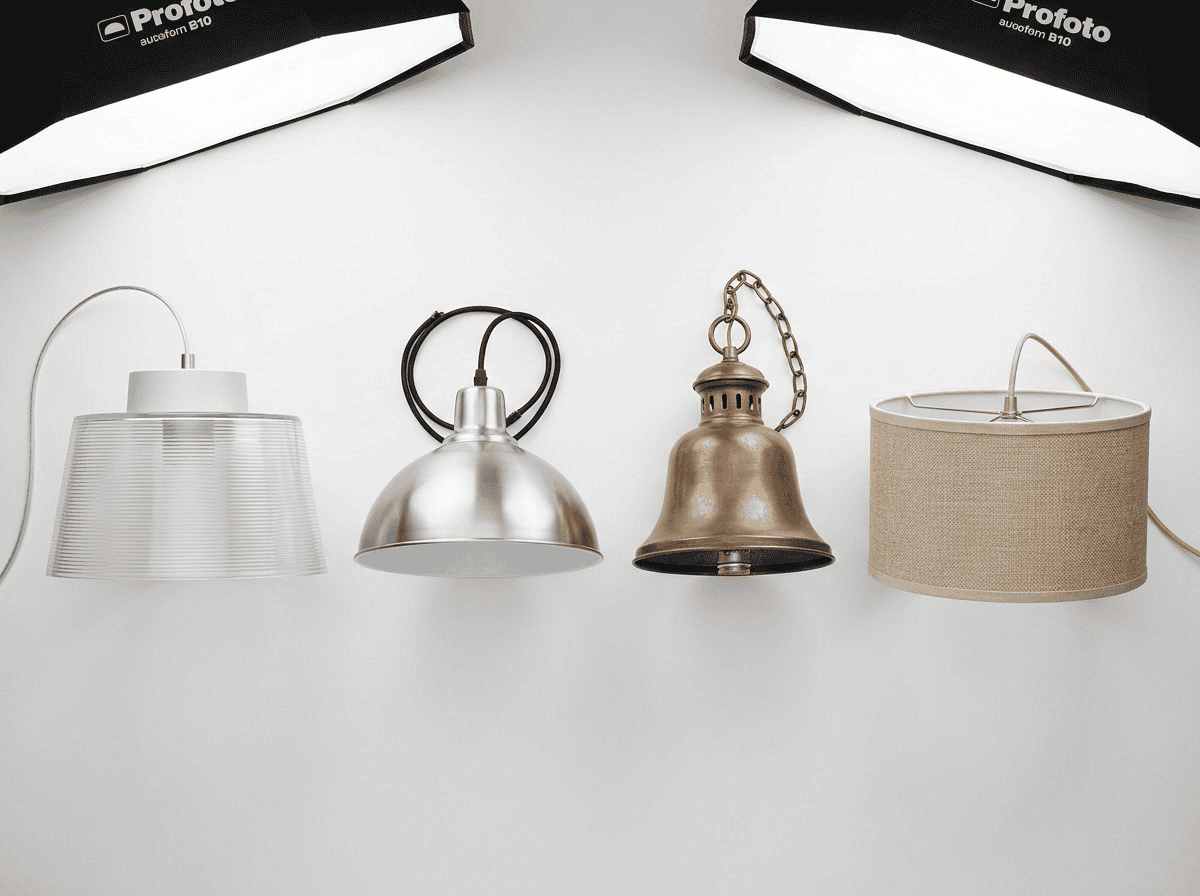
Outdoor lamp shades fall into six main style categories: drum, cone/empire, bell, lantern, industrial dome, and pendant — each suited to different fixture types and spatial scales.
Knowing the style vocabulary helps you match the shade to both the fixture base and the architectural context of the space.
Drum Shades
Drum shades are cylindrical — equal diameter top and bottom. They read as modern and clean, work well on large post lamps and oversized pendant fixtures, and distribute light evenly in a 360-degree pattern when made from translucent materials. In opaque metal, they create a defined downlight with ambient side wash through perforations.
Best for: Contemporary and transitional outdoor spaces, covered patios, pergola pendant arrays.
Cone and Empire Shades
The classic tapered silhouette — wider at the bottom than the top. Cone shades focus more light downward, which makes them practical for task-adjacent outdoor zones like grill areas, outdoor bar tops, or reading nooks. Empire shades have a slight outward flare at the bottom bell.
Best for: Traditional and farmhouse aesthetics, post lamps, table lamps on covered porches.
Bell Shades
Bell shades curve outward significantly at the bottom, creating a scalloped silhouette that reads as elegant or cottage-style depending on material. They’re common on pendant lanterns and Victorian-style post fixtures.
Best for: Traditional homes, garden path lighting, Victorian or craftsman architecture.
Enclosed Lantern Shades
Lantern-style shades are fully enclosed frames — typically metal with glass panels — that house the bulb completely. They offer the highest weather protection of any style since the bulb sits inside a sealed or near-sealed enclosure. The “shade” in this context is the glass panel itself.
Best for: Entryway posts, fence caps, coastal environments, any application needing IP65+ protection.
Industrial Dome Shades
Dome shades are a hemisphere directing all light downward with no upward scatter. Common in commercial and industrial applications, they’ve crossed into residential outdoor use for covered patios, outdoor kitchens, and workshop spaces attached to homes.
Best for: Covered outdoor workspaces, garages, industrial or modern farmhouse aesthetics.
Open-Bottom Pendant Shades
Open-bottom pendants are the most common shade type in outdoor dining and entertainment spaces — a shade body (drum, cone, or dome) with an open bottom that allows direct downward light while the shade body blocks rain from reaching the bulb from above. They require a partially covered installation location since the open bottom leaves the bulb exposed to rain driven at an angle.
| Shade Style | Light Direction | Best Environment | Aesthetic |
|---|---|---|---|
| Drum | 360° ambient | Covered patio, pergola | Modern, transitional |
| Cone/Empire | Downward focus | Porch post, bar area | Traditional, farmhouse |
| Bell | Downward + spread | Garden path, Victorian porch | Cottage, traditional |
| Lantern | Enclosed, 360° | Entryway, coastal, exposed | Classic, formal |
| Industrial dome | Downward only | Covered workspace | Industrial, modern farmhouse |
| Open-bottom pendant | Downward primary | Semi-covered dining | Contemporary |
Where Outdoor Lamp Shades Are Used
Outdoor lamp shades are used on front-entry post lamps, porch ceiling pendants, patio string-light pendants, garden path fixtures, wall sconces, and poolside lighting — each application demanding specific weatherproofing and light-output characteristics.
The location matters not just aesthetically but structurally. A shade that works beautifully on a sheltered back porch fails within two seasons when mounted on an exposed front-gate post facing prevailing winds and rain.
Front Entry and Gate Posts
Post lamp shades at entry points face the harshest exposure — they’re unsheltered, face all weather directions, and need to last years without replacement. Lantern-style enclosed shades in powder-coated aluminum or galvanized steel with sealed glass panels are the standard choice here. Expect 10–15 years of service from a quality fixture.
Covered Porch and Patio Ceilings
Under a covered porch or pergola with a roof, the shade gets protection from direct rain but still faces humidity, temperature cycling, and bug pressure. This is where acrylic drum shades, fabric drum shades (Sunbrella), and metal dome pendants all work well. The reduced weather stress means you can prioritize aesthetics over pure weatherproofing.
Open Garden and Landscape Lighting
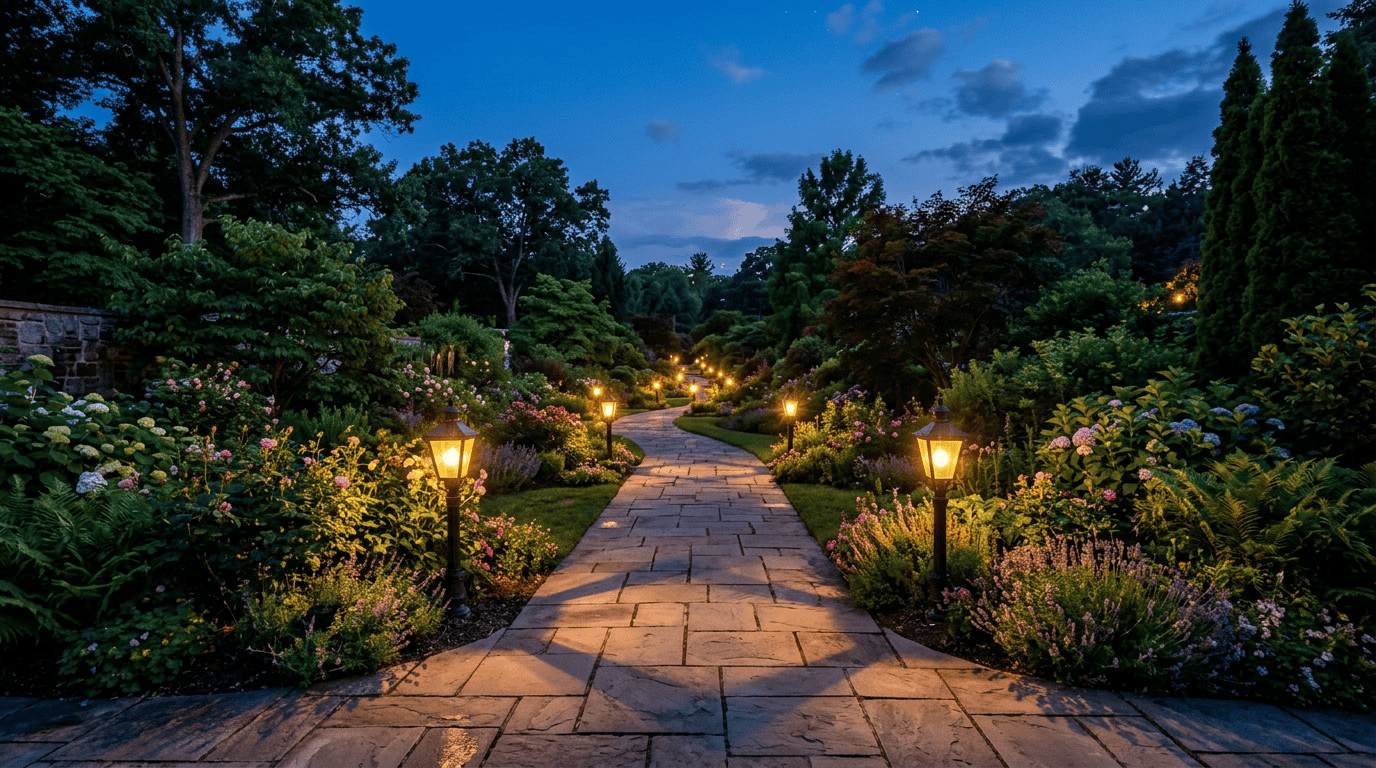
Path lights and garden post lamps are fully exposed and typically low-profile. Most use compact lantern-style or dome shades with IP65+ ratings. Polycarbonate is the dominant material here for the combination of UV resistance, impact resistance, and low weight.
Poolside and Coastal Environments
Poolside fixtures face a unique combination of UV, humidity, chlorine vapor, and — in coastal locations — salt air. This is where material selection matters most. Anodized aluminum or marine-grade 316 stainless steel hardware with UV-stabilized polycarbonate shades is the recommended combination. Standard powder-coat finishes will pit and peel within 3–5 years in salt environments.
According to ASTM International’s standards for exterior coatings (ASTM D1654), salt-spray testing to 1,000+ hours is the minimum threshold for coatings in coastal applications — check that your shade’s finish meets this if you’re within 5 miles of the ocean.
How to Choose the Right Outdoor Lamp Shade
Choose an outdoor lamp shade by matching four criteria: IP rating to exposure level, material to climate, size to fixture fitter diameter, and style to architectural context.
This is where most buyers go wrong — they start with style and then discover the shade they love isn’t rated for their climate or doesn’t fit their fixture. Work through these criteria in order.
Step 1: Assess Your Exposure Level
Before looking at any shades, categorize your installation location:
- Fully sheltered (under a solid roof, no wind exposure): IP44 minimum, most materials work
- Partially sheltered (pergola, open-sided overhang): IP44–IP55, avoid untreated fabric
- Fully exposed (open garden, roofline mount, gate post): IP65 minimum, UV-stabilized polycarbonate or sealed metal
- Coastal or poolside (salt air, chlorine): IP65+, marine-grade materials only
Step 2: Match Material to Climate
| Climate Condition | Recommended Material | Avoid |
|---|---|---|
| High UV / desert / sunny coastal | UV-stabilized polycarbonate | Standard acrylic (yellows), fabric |
| High humidity / tropical | Powder-coated aluminum, PC | Standard steel (rusts), fabric |
| Freeze-thaw cycles | Polycarbonate, aluminum | Glass (thermal shock risk) |
| Salt air / coastal | Anodized aluminum, 316 SS, PC | Galvanized steel, standard powder coat |
| Mild, sheltered | Any — prioritize aesthetics | Nothing specific to avoid |
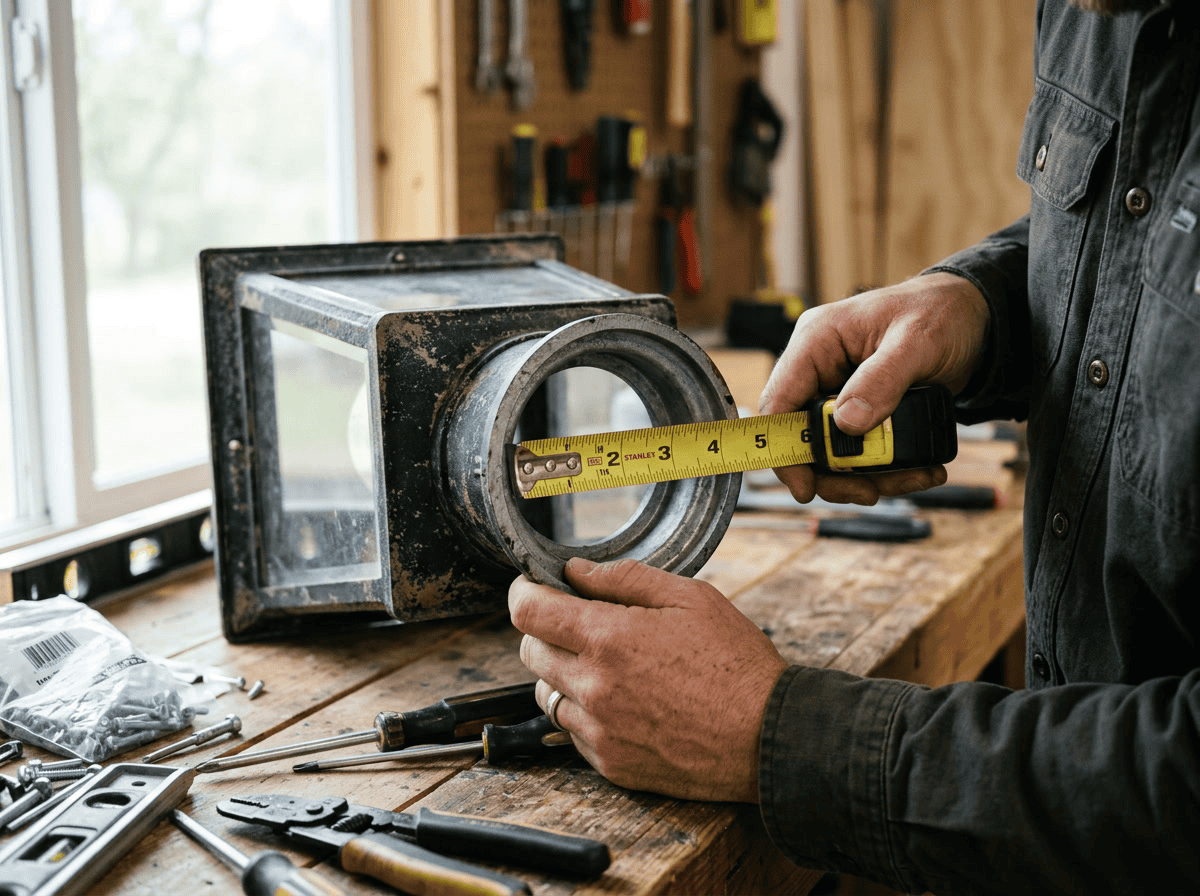
Step 3: Measure the Fitter Size
The fitter is the opening where the shade attaches to the fixture. Outdoor shades come in standard fitter sizes — 1⅝”, 2¼”, and 4″ are the most common for residential fixtures. Measure the outer diameter of the shade holder ring on your existing fixture before ordering. A shade with the wrong fitter simply won’t mount, regardless of how good it looks in photos.
Step 4: Match Scale to Space
Shade diameter relative to the space matters for both aesthetics and light output:
– Porch post lamp: shade diameter typically 10″–18″, matched to pole height
– Pendant over dining table: shade diameter 12″–20″, hung so bottom of shade is 30″–36″ above table surface
– Path light: shade diameter 6″–10″, low-profile to avoid visual clutter
Step 5: Consider the Bulb Type
LED bulbs run cool, which opens up material options — even some fabric shades designed for LED-only use can be closer to the bulb than older shade designs. Incandescent and halogen bulbs run hot and require minimum clearances; check the shade manufacturer’s specifications. A shade rated “LED only” on an incandescent fixture is a fire risk.
Maintenance and Longevity
Most outdoor lamp shades need only annual cleaning and occasional hardware inspection to last their full rated lifespan — but skipping those basics can cut 5–8 years off service life.
In practice, we’ve found that the most common causes of premature outdoor lamp shade failure are:
- Wrong IP rating for the installation — a splashing rain event overwhelms an IP44 shade mounted in an IP65 environment, and moisture ingress corrodes the socket
- Neglected hardware — the shade itself survives but mounting screws corrode, and the shade eventually drops
- Wrong bulb wattage — overdriving the fixture creates heat that warps polycarbonate or scorches fabric
Cleaning by Material
Polycarbonate and acrylic: Mild soap and water, soft cloth. Never use ammonia-based cleaners (Windex, most glass cleaners) — ammonia causes stress cracking in polycarbonate over time. Rinse thoroughly.
Metal (powder-coated aluminum): Soap and water, soft brush for crevices. Inspect the coating annually for chips or bubbles — touch up immediately with exterior spray paint to prevent corrosion from spreading.
Sunbrella and solution-dyed fabric: Machine wash on gentle in cold water, air dry completely before reinstalling. The fabric itself lasts well; seam thread can degrade faster — inspect seams annually.
Glass: Standard glass cleaner works fine. Inspect the gasket seal where glass meets the frame; a degraded gasket lets water in around the bulb.
When to Replace
Replace your outdoor lamp shade when:
– Polycarbonate or acrylic has hazed or yellowed significantly (light output drops 30–50%)
– Fabric has visible mold through the weave that doesn’t wash out
– Metal has active rust spots (not just surface patina) — structural integrity is compromised
– The shade has cracked from impact or thermal stress
– Mounting hardware is corroded to the point where the shade doesn’t seat securely
A quality replacement shade is significantly cheaper than a new fixture. Most standard fitter sizes are interchangeable across brands.
Outdoor Lamp Shade Trends (2026 & Beyond)
The two dominant trends in outdoor lamp shades for 2026 are the move toward integrated smart-home compatibility and the rise of sustainable materials — particularly recycled polycarbonate and biopolymer composites.
Smart-Compatible Shade Design
As smart outdoor lighting systems — Philips Hue Outdoor, Lutron Caseta, and similar — become mainstream, shade design is evolving to accommodate tunable light output. Shades designed for smart bulbs are calibrated for a specific color temperature range (typically 2700K–6500K), and some include QR-coded specs that pair with smart home apps to optimize the shade’s light diffusion profile.
According to Statista’s smart home market report, the global smart home market is projected to surpass $170 billion by 2027, with outdoor lighting among the fastest-growing segments. Shade manufacturers are responding — expect more products designed around smart bulb form factors in 2026.
| Trend | 2024 Status | 2026 Direction |
|---|---|---|
| Smart-compatible shade design | Early adopter | Mainstream product category |
| Recycled polycarbonate materials | Niche / premium | Broader availability, cost-competitive |
| Biopolymer composites | R&D stage | First consumer products appearing |
| Dark-sky compliant shading | Regulatory push | Standard feature in many markets |
| Solar-integrated shade bases | Novelty | Functional performance products |
Sustainable Materials
Recycled polycarbonate (post-consumer PC from electronics and optical media) now performs on par with virgin PC in outdoor shade applications, with the same UV stabilizer packages available. Several manufacturers — particularly in European markets — have moved to 30–50% recycled PC content without performance penalties.
Dark-sky compliance is also reshaping shade design. Municipalities in the US, UK, and EU are increasingly mandating full-cutoff or partial-cutoff fixtures in residential zones to reduce light pollution. Dark-sky compliant outdoor lamp shades are designed to direct all light downward with zero upward scatter — look for the Dark Sky Association’s certification mark if you’re in a regulated area. The International Dark-Sky Association maintains a database of approved fixtures.
FAQ
What is an outdoor lamp shade made of?
Outdoor lamp shades are made from UV-stabilized polycarbonate, acrylic, aluminum, galvanized steel, copper, Sunbrella-type solution-dyed acrylic fabric, or borosilicate glass. Polycarbonate is the most common residential material for its balance of durability, UV resistance, and cost. Each material has different trade-offs for climate, aesthetic, and longevity.
Can you use an indoor lamp shade outside?
No. Standard indoor lamp shades — linen, cotton, untreated polyester — will degrade within one outdoor season. They have no UV protection, no moisture resistance, and the heat from outdoor temperature swings degrades the shade material and can compromise fire safety. Always use shades rated for outdoor use.
What does IP44 mean on an outdoor lamp shade?
IP44 means the shade is protected against solid objects larger than 1mm (first digit: 4) and against water splashing from any direction (second digit: 4). It’s the minimum practical rating for any outdoor shade that might see rain. For fully exposed installations, IP65 (dust-tight, water jet resistant) is the appropriate minimum.
How do I know what size outdoor lamp shade to buy?
Measure the fitter diameter — the opening where the shade attaches to the fixture. Standard residential fitter sizes are 1⅝”, 2¼”, and 4″. Then determine the shade diameter appropriate for the space: for porch posts, 10″–18″ is typical; for pendants over outdoor dining tables, 12″–20″; for path lights, 6″–10″.
How long do outdoor lamp shades last?
Quality outdoor lamp shades last 5–15+ years depending on material and exposure. UV-stabilized polycarbonate in moderate climates lasts 10–15 years. Metal shades in protected environments are essentially permanent with proper maintenance. Fabric shades in full sun exposure typically run 5–8 years before fading noticeably, even with UV-rated materials like Sunbrella.
Are outdoor lamp shades waterproof?
Most outdoor lamp shades are water-resistant rather than fully waterproof. IP44 shades handle splashing rain; IP65 shades handle water jets and are appropriate for fully exposed locations. Only IP67/IP68 rated shades handle temporary or sustained submersion. Match the IP rating to your exposure level — over-buying on IP rating costs money but doesn’t hurt; under-buying shortens lifespan and risks electrical failure.
Can outdoor lamp shades be used with LED bulbs?
Yes — and LED bulbs are the preferred choice for outdoor fixtures. LEDs run significantly cooler than incandescent or halogen bulbs, reducing thermal stress on the shade material. Some fabric or polycarbonate shades are rated “LED only” specifically because they’re designed for the lower heat output of LED sources. Never install a higher-wattage incandescent in a shade rated for lower wattage; the heat can warp or discolor the shade and create a fire hazard.
Conclusion
An outdoor lamp shade is more than a decorative accessory — it’s a functional weatherproofing and light-management component that determines how long your outdoor fixture lasts and how well your outdoor space actually looks after dark. The key variables are material (UV-stabilized polycarbonate for most applications, sealed metal for the harshest exposures), IP rating matched to your installation’s actual exposure level, fitter size that physically fits your fixture, and scale appropriate to the space.
The good news: once you understand those four variables, the right shade is straightforward to identify. Start with exposure level, narrow by material, confirm the fitter size, then choose the style that works for your space. A correctly specified outdoor lamp shade installed today should still be doing its job a decade from now — which is exactly what good outdoor lighting components are supposed to do.
For outdoor spaces that need both performance and aesthetic precision, explore our full range of outdoor lamp shades designed for residential and commercial exterior lighting applications.