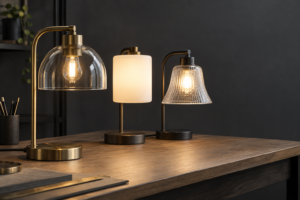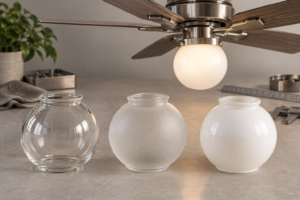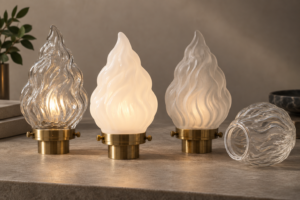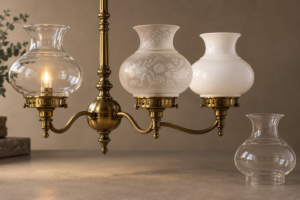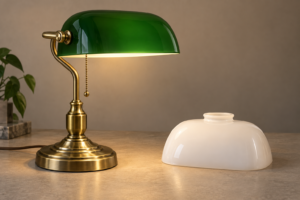
The right glass desk lamp shade is selected from the fixture interface first, then from the shade profile, height, outside diameter, glass finish and light output. A product photo is only a style reference. The shade can still fail if its fitter, retaining method or clearance does not match the lamp.
If you are replacing a broken cover, developing a new desk lamp, or sourcing a repeatable shade for a lighting collection, use this guide as a practical specification sheet. It explains what to measure, what to photograph, which glass options change the light, and what a manufacturer needs before quoting.
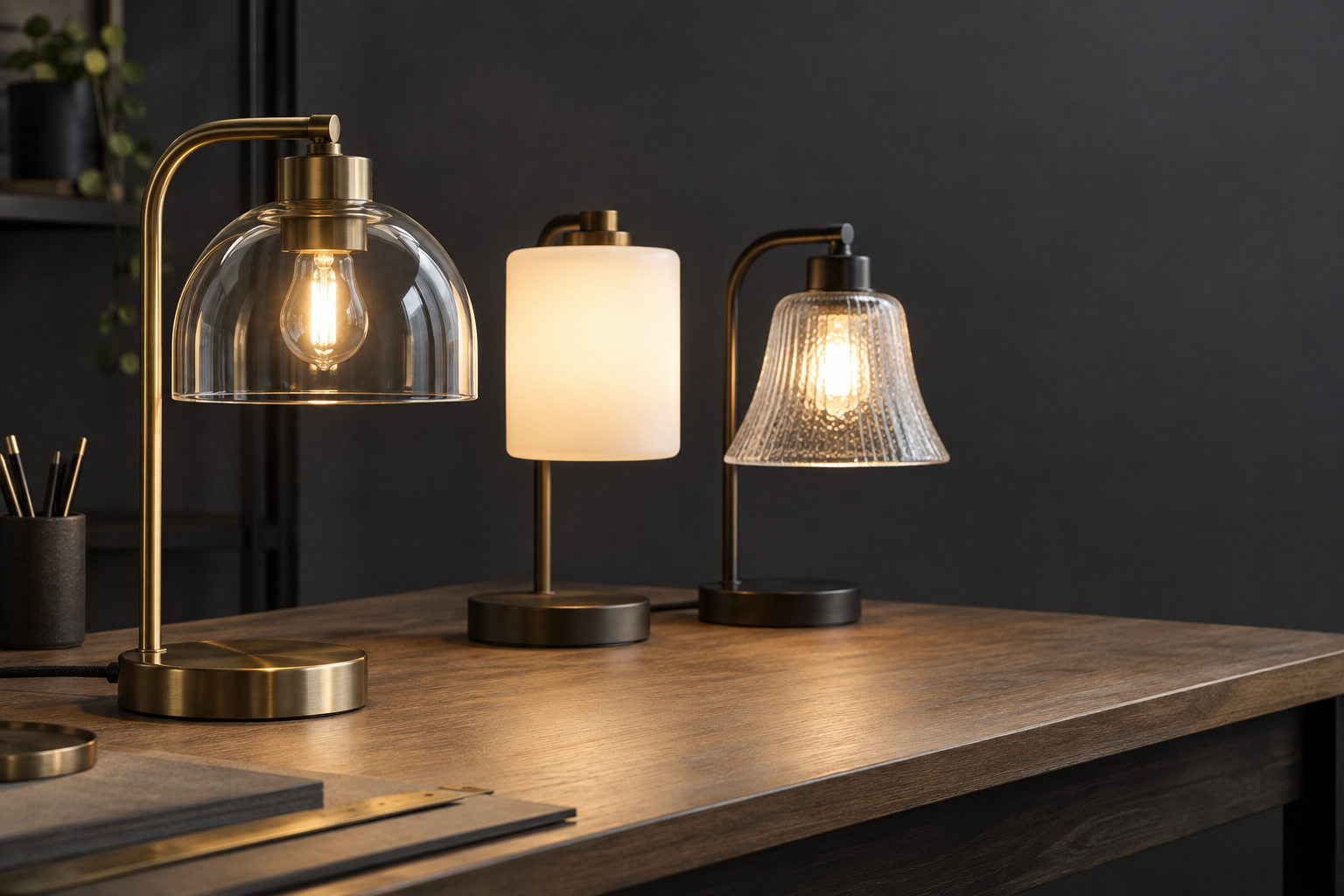
Quick answer for a glass desk lamp shade buyer
Start with the lamp, not the replacement shade listing. Remove power according to the fixture maker's instructions, allow the lamp to cool, and record the shade support method. A desk lamp may use a fitter neck, a retaining ring, a shoulder seat, a threaded holder, or a custom metal frame. These interfaces are not interchangeable just because the visible outside diameter is similar.
For a replacement, send a clear photo of the lamp with the shade removed, a photo of the old shade or broken edge, and the measurements in the table below. For a new OEM shade, send a drawing or a marked sample. State the lamp orientation, the bulb or LED module, the intended light direction, the glass finish, the quantity and the destination market. A manufacturer can then separate a standard sample from a new mold or tooling request.
| Buyer decision | What to confirm | Why it matters |
|---|---|---|
| Interface | Fitter opening, support lip, retaining ring or holder type | The interface carries the shade and controls compatibility |
| Envelope | Maximum outside diameter, height and depth clearance | A shade can fit the holder but collide with an arm, switch or wall |
| Light effect | Clear, opal, frosted, seeded, ribbed or colored glass | Surface and color change glare, brightness and the visible bulb |
| Replacement status | Existing sample, photo, broken part or drawing | A sample reduces the risk of copying the wrong proportion |
| Supply plan | Sample quantity, production quantity, packaging and destination | The quote route changes for a one-off replacement and a repeat OEM program |
This desk-lamp guide is narrower than a general table-lamp size chart. If the fixture has a fabric drum or a conventional harp, use the glass shade for table lamp guide for the broader table-lamp boundary, then return here for glass-specific fit and manufacturing details.
Why desk lamp glass shades need a fixture-specific check
Desk lamps are compact. The shade often sits close to the socket, arm, switch, base or a rear wall. On a reading lamp, the shade also controls where the light lands on a page and how much brightness is visible from the user's seated position. That makes the same profile behave differently on a small task lamp, a banker-style lamp, a bedside lamp or a decorative accent lamp.
The phrase "glass desk lamp shade" can describe a complete lamp, a replacement globe, a shade-only part, or a custom component for a lighting brand. Clarify which one you need before comparing suppliers. A complete lamp uses the shade as one part of an electrical product. A shade-only project must instead match the existing hardware and arrive protected for assembly or resale.
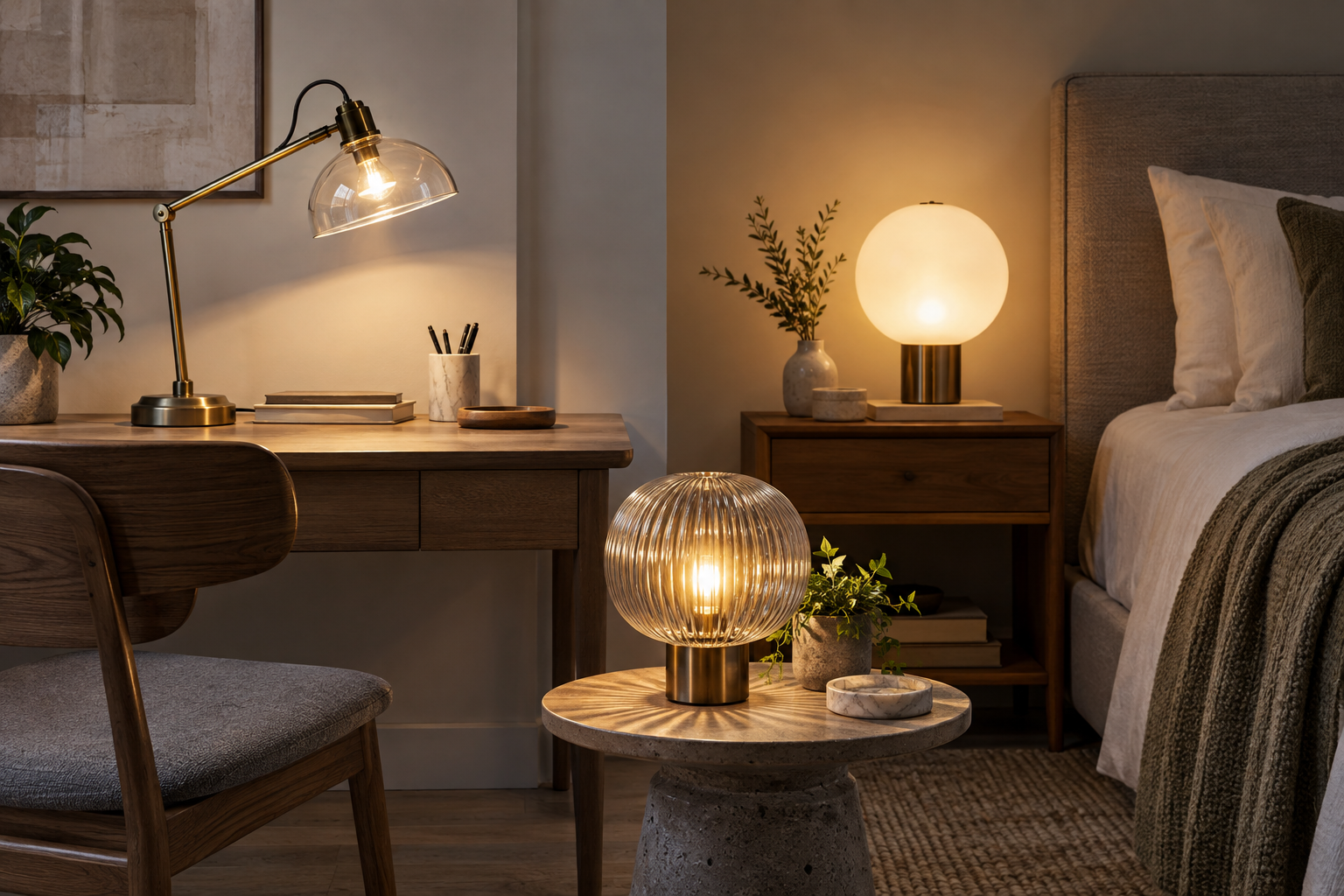
Four fit questions to answer before selecting a profile
- Does the glass rest on a seat, pass through a holder, or lock under a retaining ring?
- Is the opening measured at the glass edge, the metal holder, or the clear passage after the ring is installed?
- What is the largest safe envelope around the bulb, LED board, switch, arm and wall?
- Should the shade send light downward for a task, outward for ambient light, or both?
The safest workflow is to keep these four answers together. A catalog photo is useful for style, but it does not prove fit. The lamp shade fitter types reference can help identify the interface vocabulary before you prepare a supplier message.
Fitter, holder and shade interface
In a glass shade, the fitter is the interface that meets the lamp hardware. On some desk lamps it is a short neck. On others it is a broad rim or an opening that is captured by a ring. The glass may be supported from below, from above, or around the perimeter. Write down the direction of insertion and the direction of load, because the measurement names alone do not show how the part is installed.
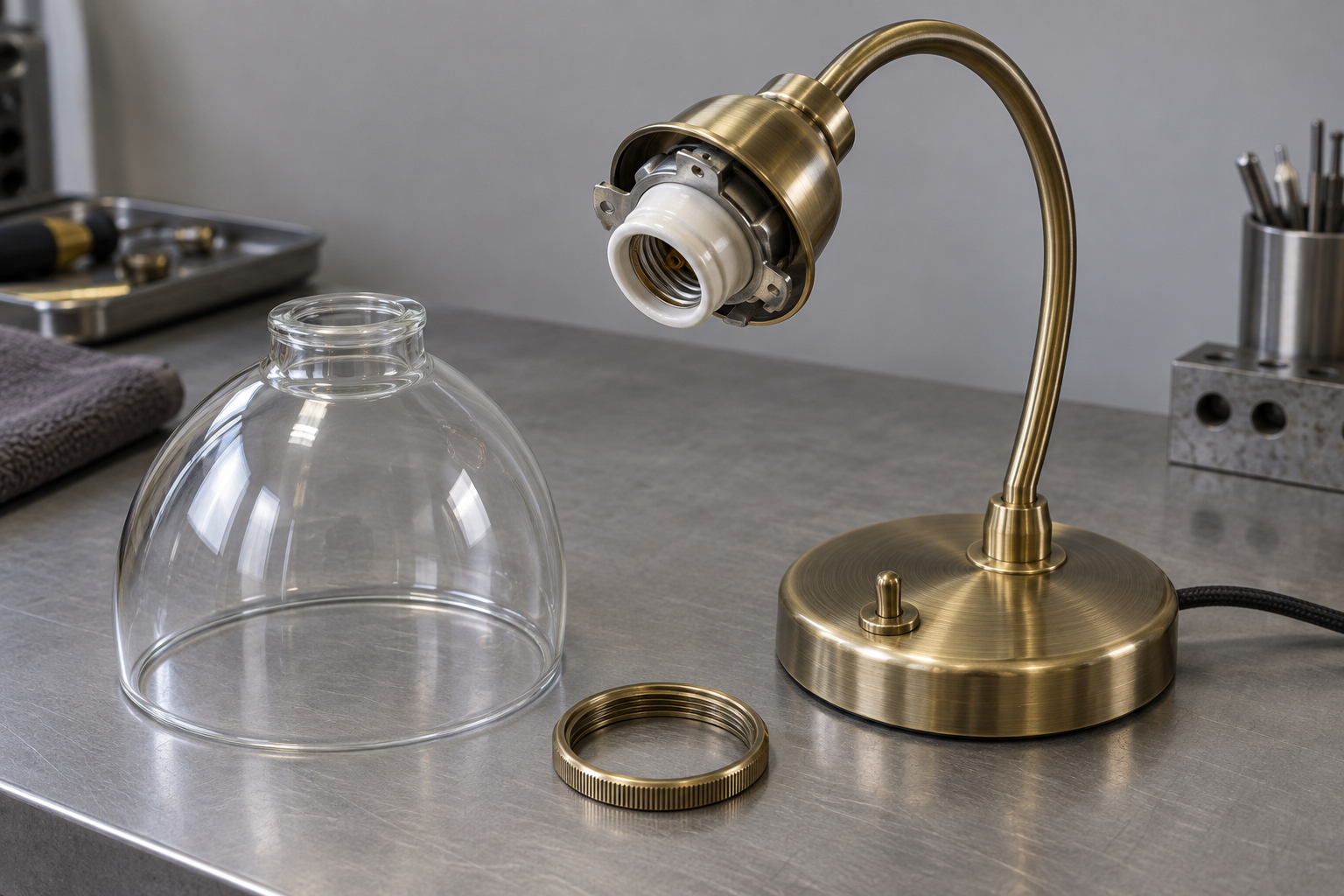
| Interface detail | Buyer measurement or evidence | Common mistake |
|---|---|---|
| Glass opening | Inside diameter at the actual glass edge | Measuring the outside of the metal collar instead |
| Support surface | Seat diameter, shoulder width and contact line | Assuming the rim can carry load on a narrow point |
| Retainer | Ring thread, clips, screws or spring pressure | Ordering a shade that has no place for the retainer |
| Insertion direction | Top-down, bottom-up or side capture | Forgetting an arm or switch blocks installation |
| Bulb envelope | Bulb diameter, LED board size and heat clearance required by the fixture | Treating the glass as the only clearance limit |
| Rotation | Any key, notch, seam orientation or visual front | Receiving a round shade that still needs a keyed position |
Common desk-lamp shade profiles
Profile names help with communication, but they are not a substitute for a drawing. A dome can have a narrow neck or a wide neck. A cylinder can have a flat rim or a rolled edge. A bell can open more at the bottom than at the top. Ask a supplier to confirm the critical dimensions on the drawing or sample.
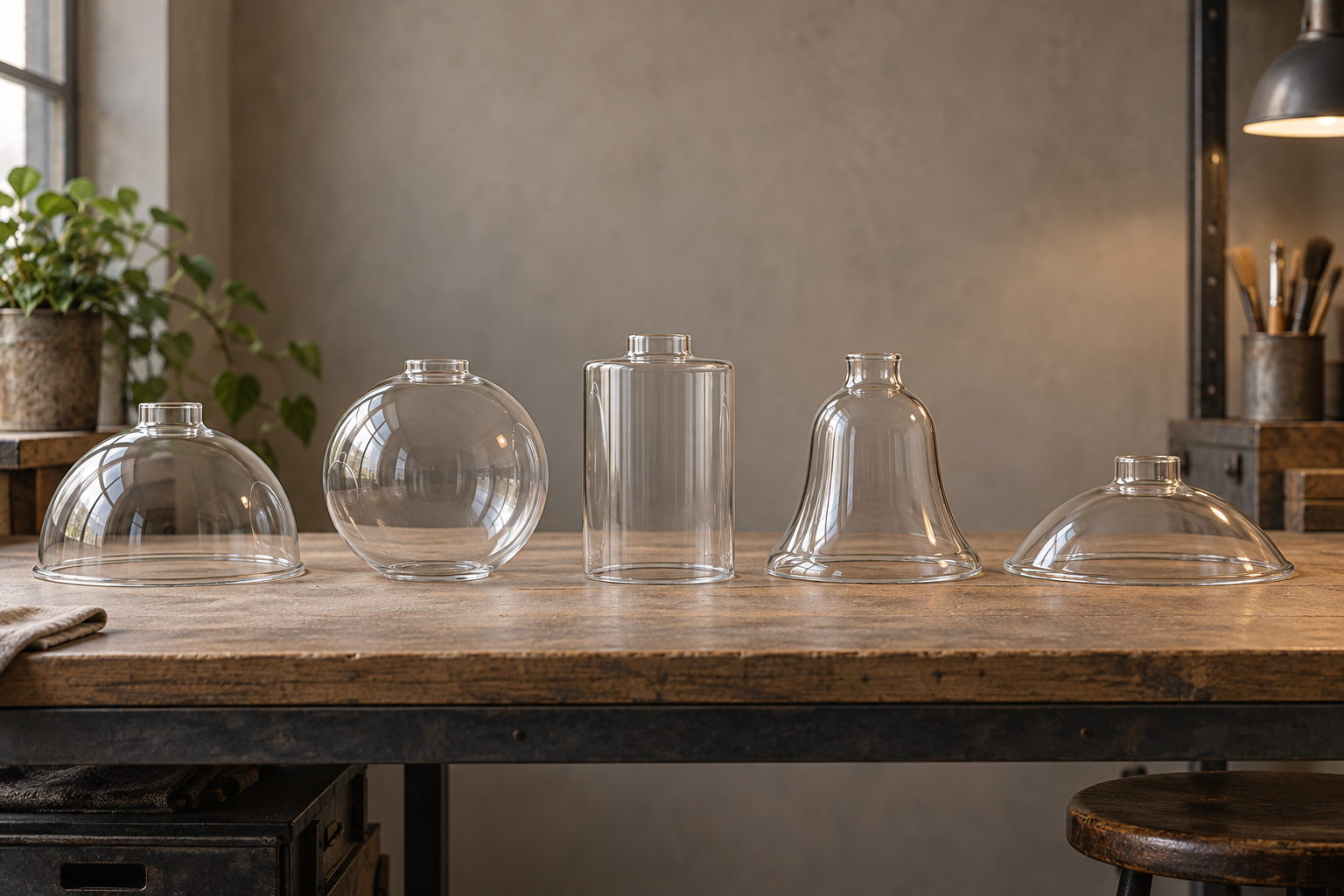
| Profile | Typical visual behavior | Desk-lamp use to consider | Questions for the drawing |
|---|---|---|---|
| Dome or globe | Soft transition and broad light spread | Decorative or bedside lamps where the bulb should be visually softened | Where is the widest diameter and how does the neck seat? |
| Cylinder | Straight wall and predictable envelope | Compact task lamps or repeat collections with a controlled footprint | Are the top and bottom openings equal, and is the edge finished? |
| Bell | Narrower top with a widening lower body | Reading lights that need a lower light spread without a large top | What is the lower diameter, and does it clear the base or arm? |
| Shallow bowl | Wide opening and low height | Low-profile desk lamps and visible bulb compositions | Is the bowl supported at the rim or through a central fitter? |
| Fluted or ribbed form | Texture changes reflection and visual weight | Decorative desk lamps where surface detail is part of the collection | Does the texture change the nominal opening or contact line? |
Glass desk lamp shade sizes and replacement measurements
There is no universal desk-lamp shade size. The correct size is the one that matches the interface and remains inside the fixture's clearance envelope. A replacement shade should be measured from the actual part, not from a product title that rounds the dimensions.
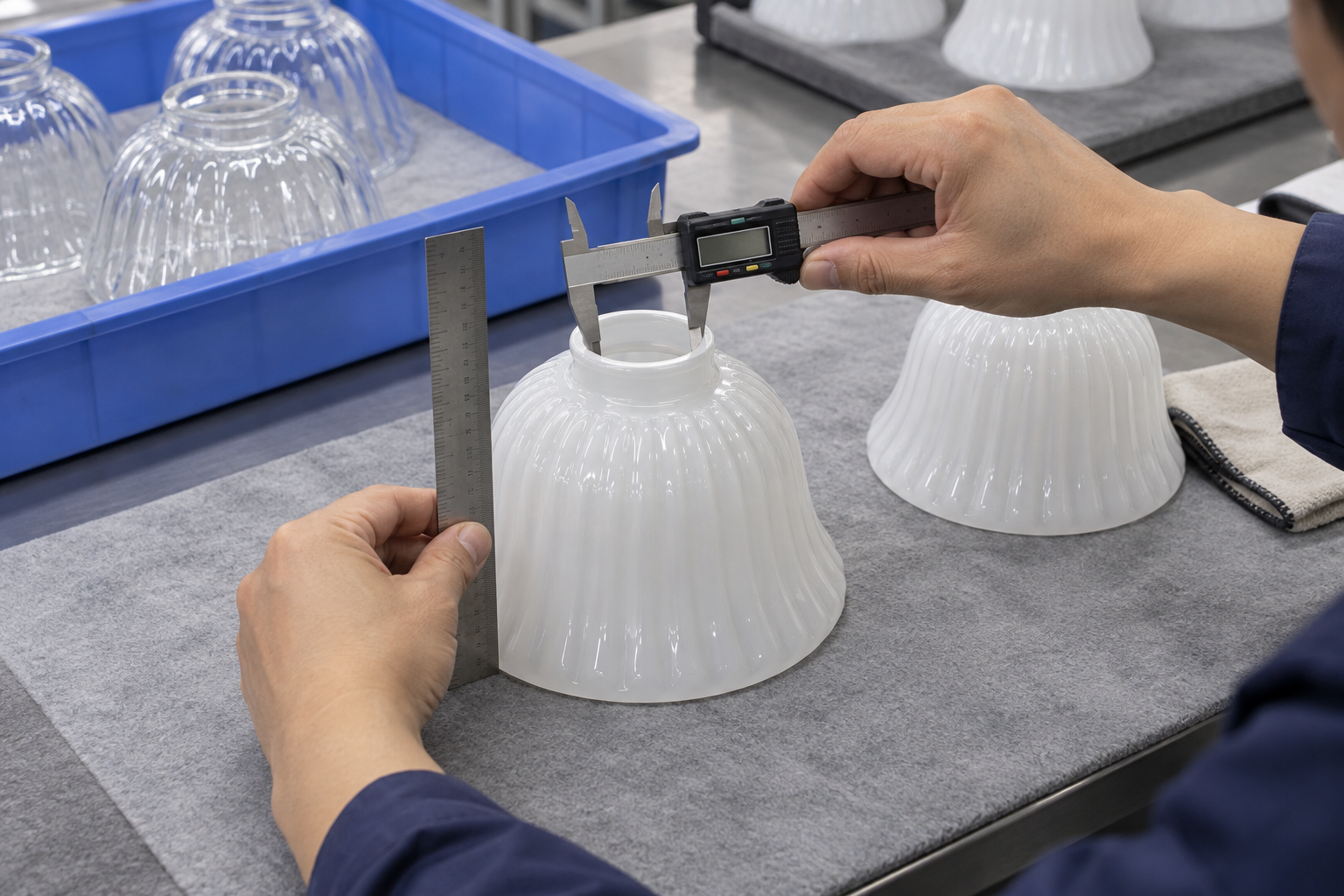
Measure the following with the old shade removed:
- Fitter opening inside diameter at the seating edge.
- Outside diameter at the widest point of the body.
- Overall height from the bottom contact edge to the highest point.
- Rim thickness and any rolled, ground or fire-polished edge.
- Distance from the shade support to the bulb, socket, arm and nearby wall.
- Retaining ring or holder dimensions, including thread or clip positions when visible.
- Weight of the original part when the fixture support is sensitive to load.
- Orientation marks, seam position, notch, hole or cutout if the part is not rotationally symmetric.
Use millimeters or inches consistently. If the replacement is for a product line, provide both the nominal target and the acceptable tolerance for each critical feature. The manufacturer can then separate cosmetic variation from a fit failure.
| Dimension | How to record it | Send a photo? | Critical for |
|---|---|---|---|
| Opening inside diameter | Measure across the glass edge at several points | Yes, with the caliper visible | Holder or retaining ring fit |
| Outside diameter | Record the maximum body diameter and its height from the seat | Yes, side view | Arm, wall and base clearance |
| Overall height | Measure from the supported edge to the highest point | Yes, profile view | Bulb coverage and visual proportion |
| Neck or shoulder | Record transition diameter and vertical position | Yes, close-up | Reproducing a molded or blown profile |
| Edge condition | Note ground, polished, rolled, seamed or protected edge | Yes, macro view | Handling, assembly and appearance |
| Finish | Name the target appearance and show a reference sample | Yes, lit and unlit | Light transmission and color consistency |

When a replacement glass shade does not fit
If the opening is close but the shade will not seat, stop forcing it. Check whether the old part used a shoulder, gasket or ring that remained on the fixture. Confirm that the new measurement is an inside diameter rather than an outside diameter. Also check that a curved glass rim is not being compared with a straight chord measurement.
If the shade fits the holder but touches the bulb, arm or wall, the issue is the envelope, not the fitter. A shorter profile, a smaller maximum diameter or a different neck transition may solve it. Do not remove a retainer or change the electrical assembly as a workaround unless the fixture maker or a qualified technician approves the change.
Glass finishes and light diffusion for desk lamps
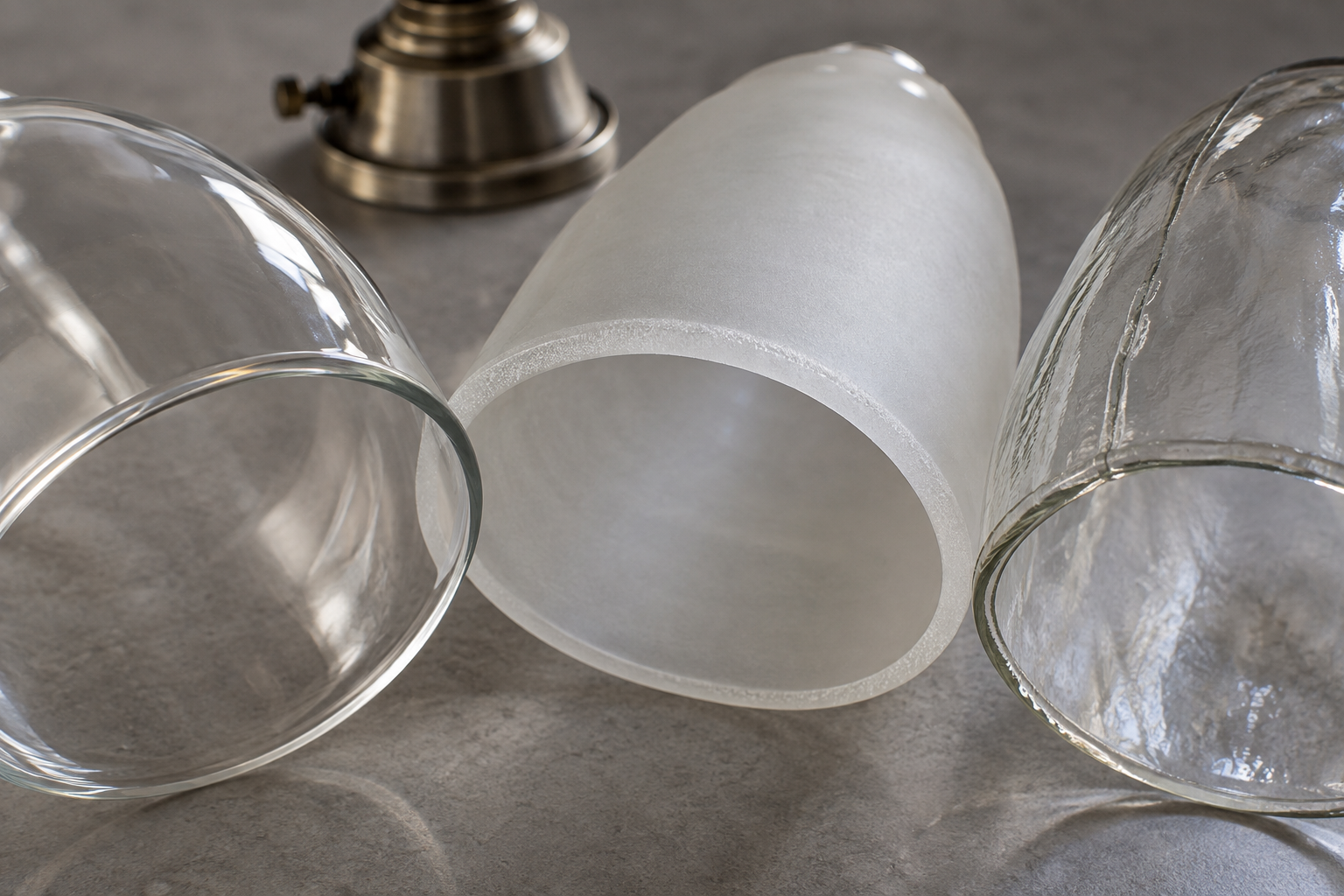
The finish changes both the look of the shade and the way a user experiences the lamp. Clear glass shows the bulb and gives a crisp highlight. Opal or milk glass softens the source and spreads light. Frosted glass reduces direct sparkle while still showing some form. Seeded or textured glass adds visual movement and can soften the view of the bulb, but it may not produce a uniform reading surface.
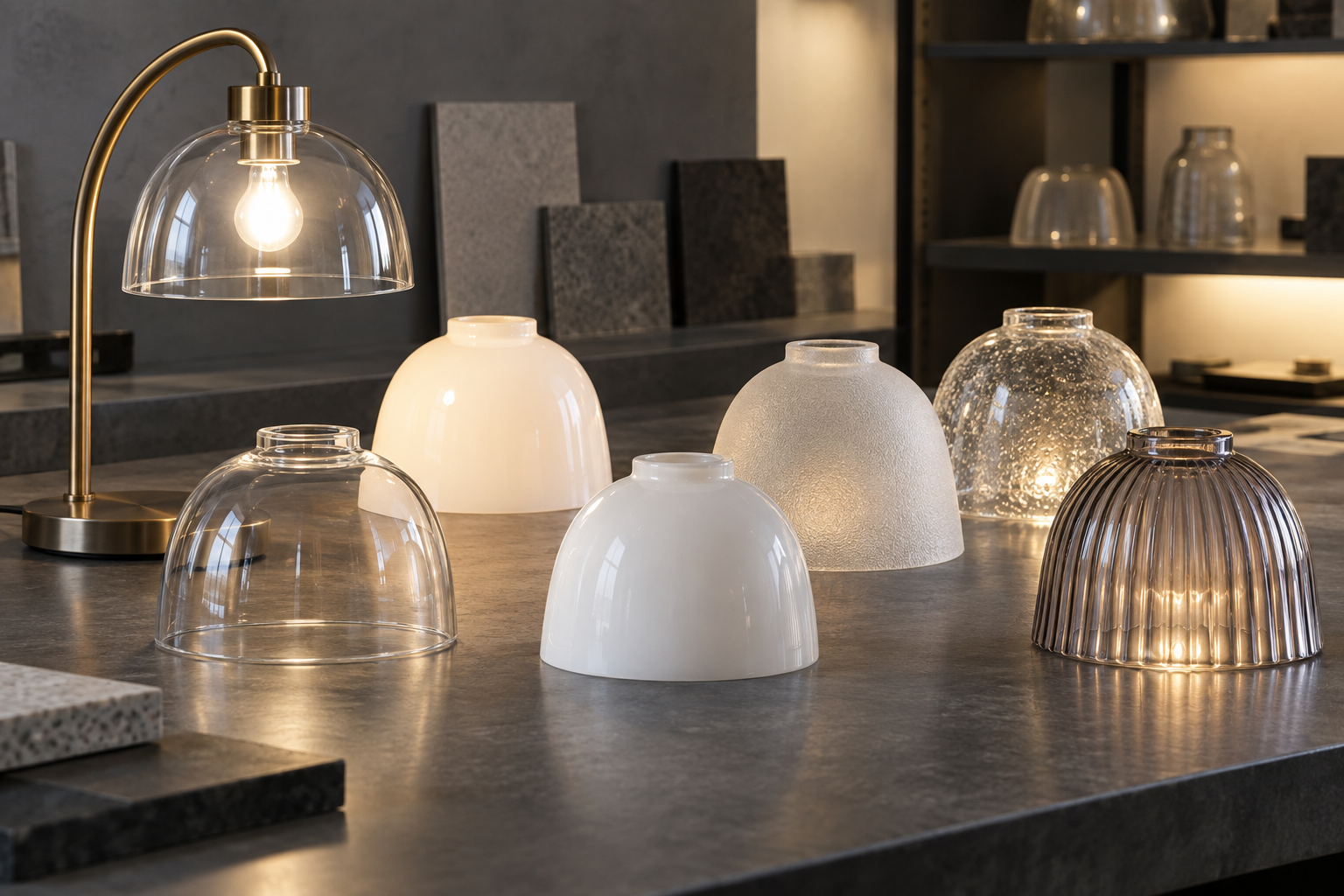
| Finish direction | Visual result | Good question to ask |
|---|---|---|
| Clear | Highest visibility of the bulb and hardware | Is the bulb shape part of the design, and is glare acceptable? |
| Opal or milk | Broad, quiet glow with less visible source detail | Is the target opacity consistent across the body and neck? |
| Frosted | Lower sparkle and a softer surface appearance | Is the frosting on the inside, outside or both surfaces? |
| Seeded or textured | Patterned highlights and more visual character | Will the texture vary between pieces, and is that acceptable? |
| Ribbed or fluted | Directional reflection and a stronger silhouette | Does the rib change the fitter, edge or cleaning requirement? |
| Colored or cased | Decorative color with possible reduction in transmitted light | Is the color in the glass body, a coating or a surface treatment? |
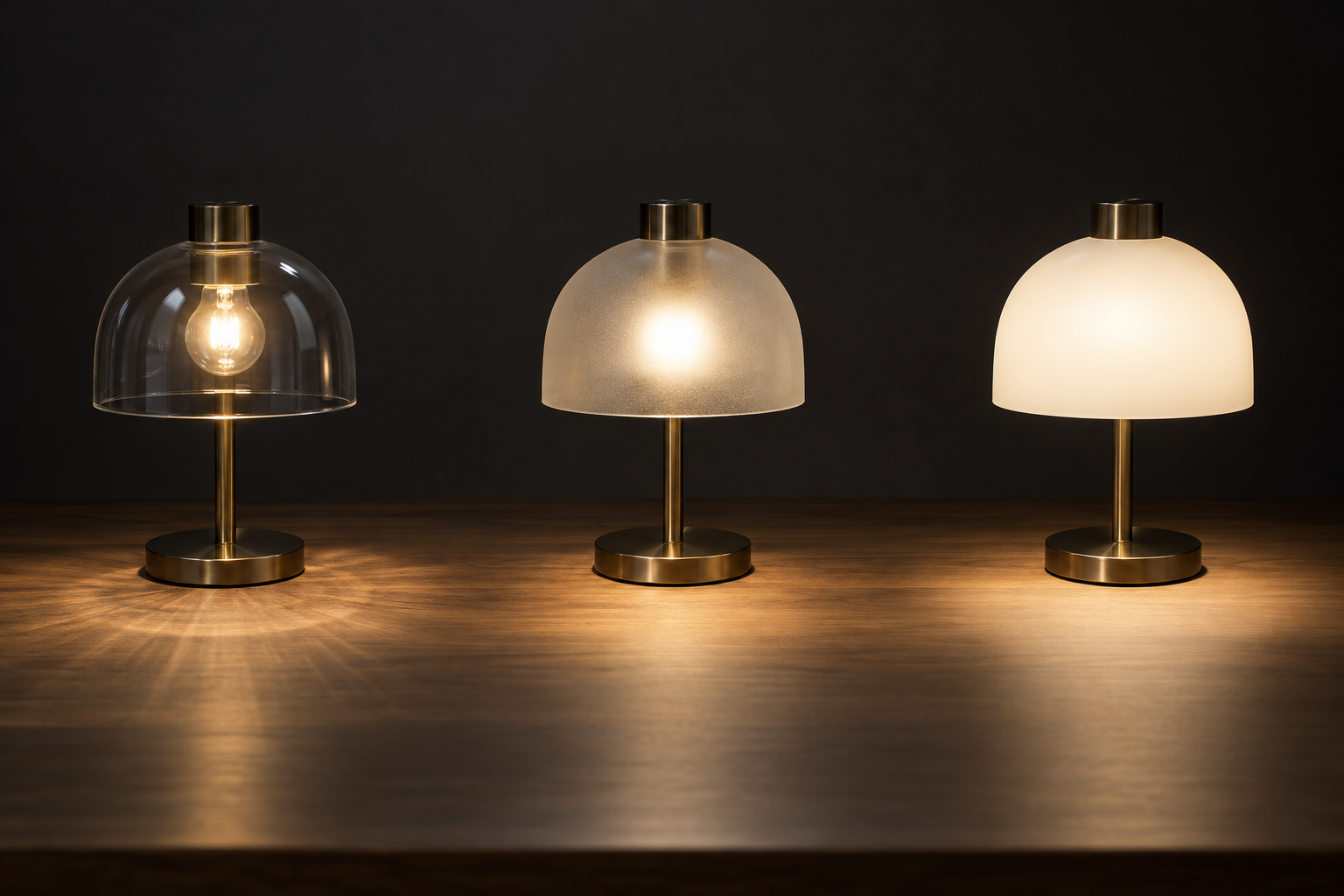
For a reading or task lamp, ask where light must go. A fully opaque shade may hide the bulb but reduce useful downward output. A fully clear shade may preserve brightness but create a visible hot spot. A controlled opal or frosted finish can be a better compromise, subject to the lamp's light source, diffuser geometry and required output.
Color should be approved from a physical sample when it affects a product collection. A screen image is not a reliable color standard. If the project needs a green glass desk lamp shade, specify whether the target is transparent green, cased white with a green exterior, or an opaque green appearance. These are different glass routes and should not share one sample code.
Production routes for OEM glass desk lamp shades
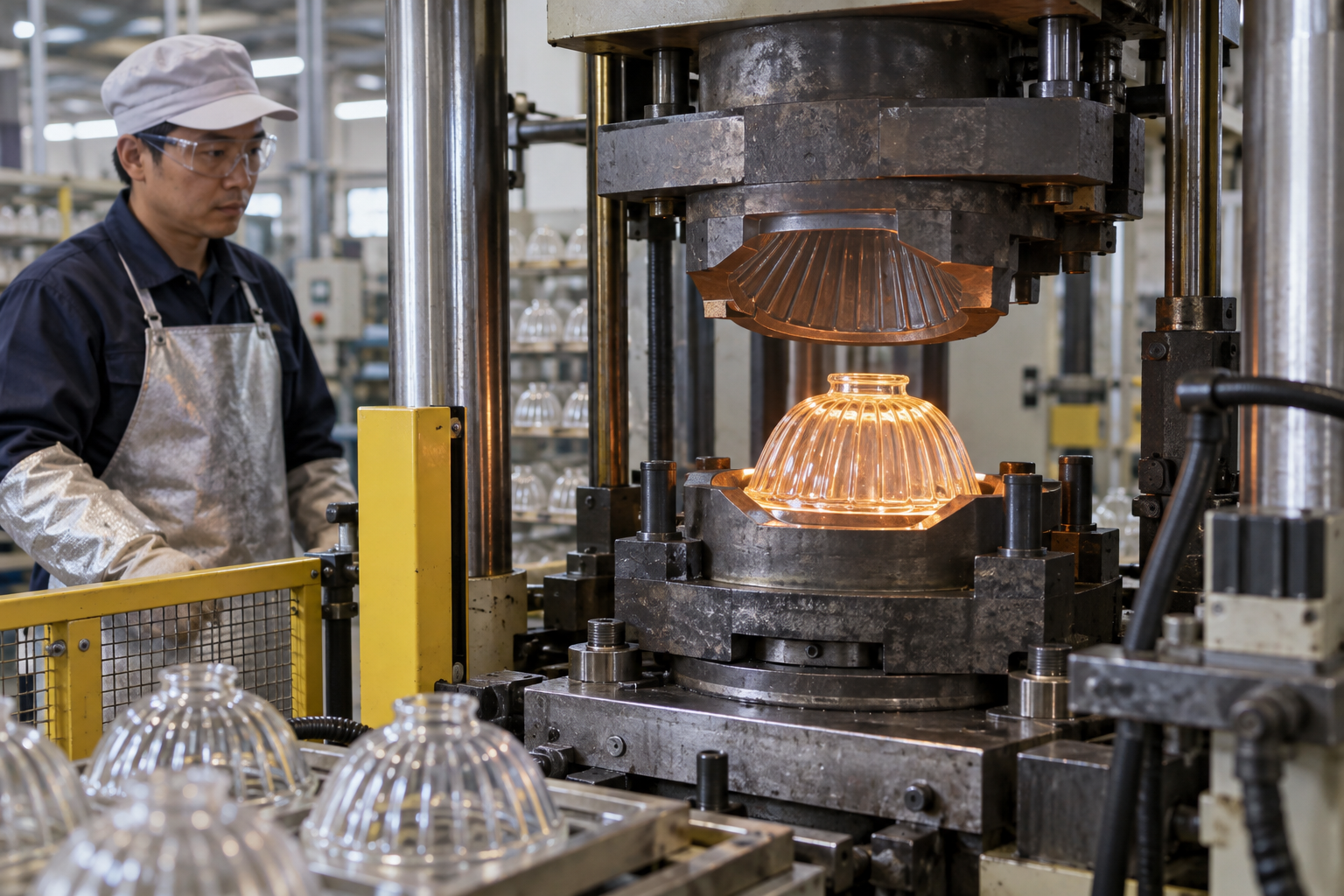
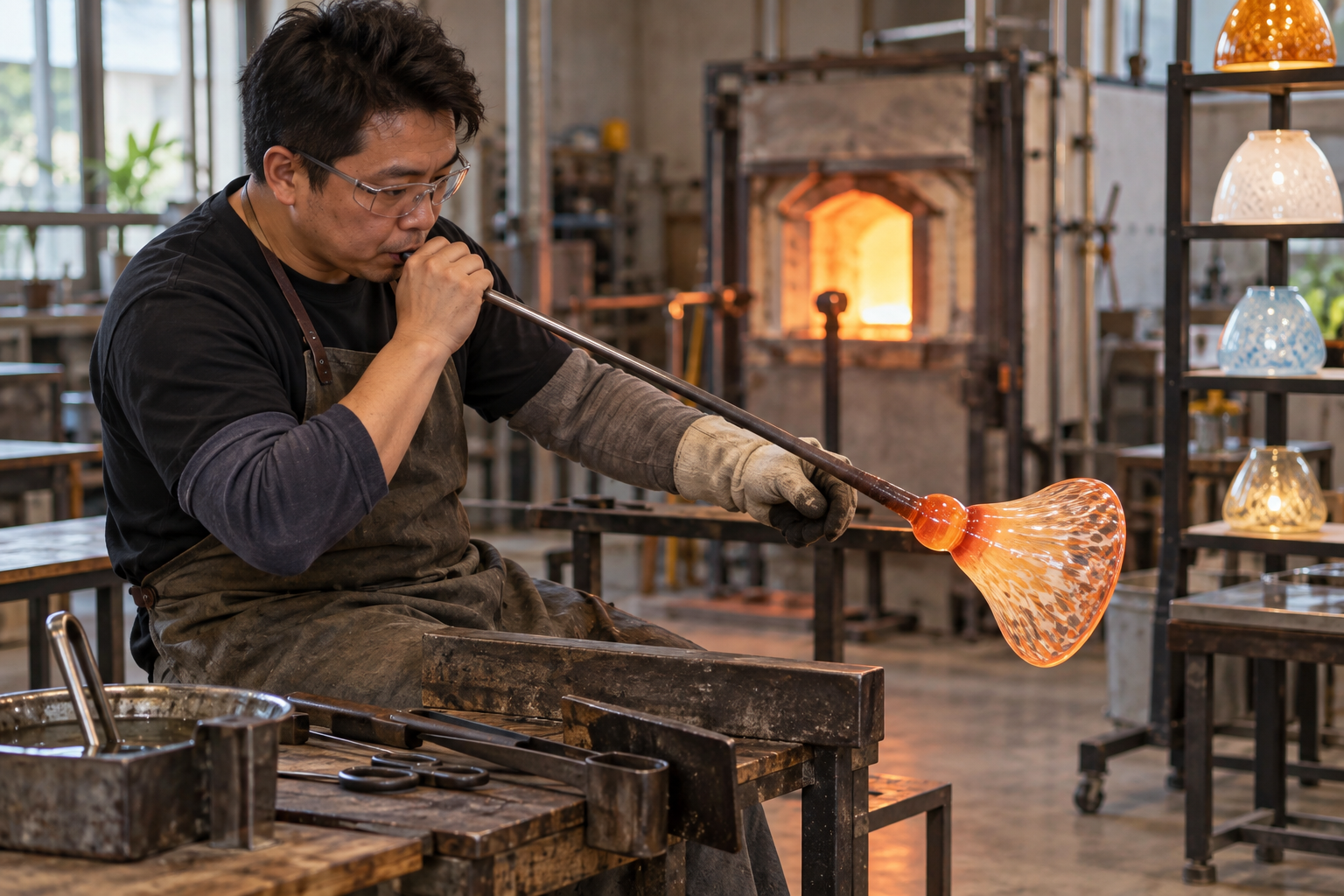
The production method should follow the quantity, profile complexity, surface requirement and repeatability target. A sample that looks correct may still need a different route for a production order. Ask the supplier to explain the proposed process before accepting the sample as proof of mass-production readiness.
| Route | Strength | Tradeoff to discuss | Best next evidence |
|---|---|---|---|
| Pressed glass | Repeatable molded profile and efficient repeat production | Mold cost, parting line and edge finishing need control | Mold drawing, first-off sample and dimensional report |
| Mouth-blown glass | Flexible development for organic or distinctive shapes | Wall, height and opening variation may require a clear tolerance plan | Approved master sample and measured inspection points |
| Centrifuge or spun form | Useful for some round open profiles and surface effects | Profile and wall control depend on the tool and process | Section drawing plus sample comparison |
| Molded and hand-finished | Combines a repeatable body with controlled finishing | Extra finishing step can affect cycle time and cost | Edge sample, finish sample and process note |
| Existing standard plus modification | Shorter route when a close profile already exists | The standard part may still miss the customer's interface | Marked sample with all changed dimensions |
Tooling and sample approval
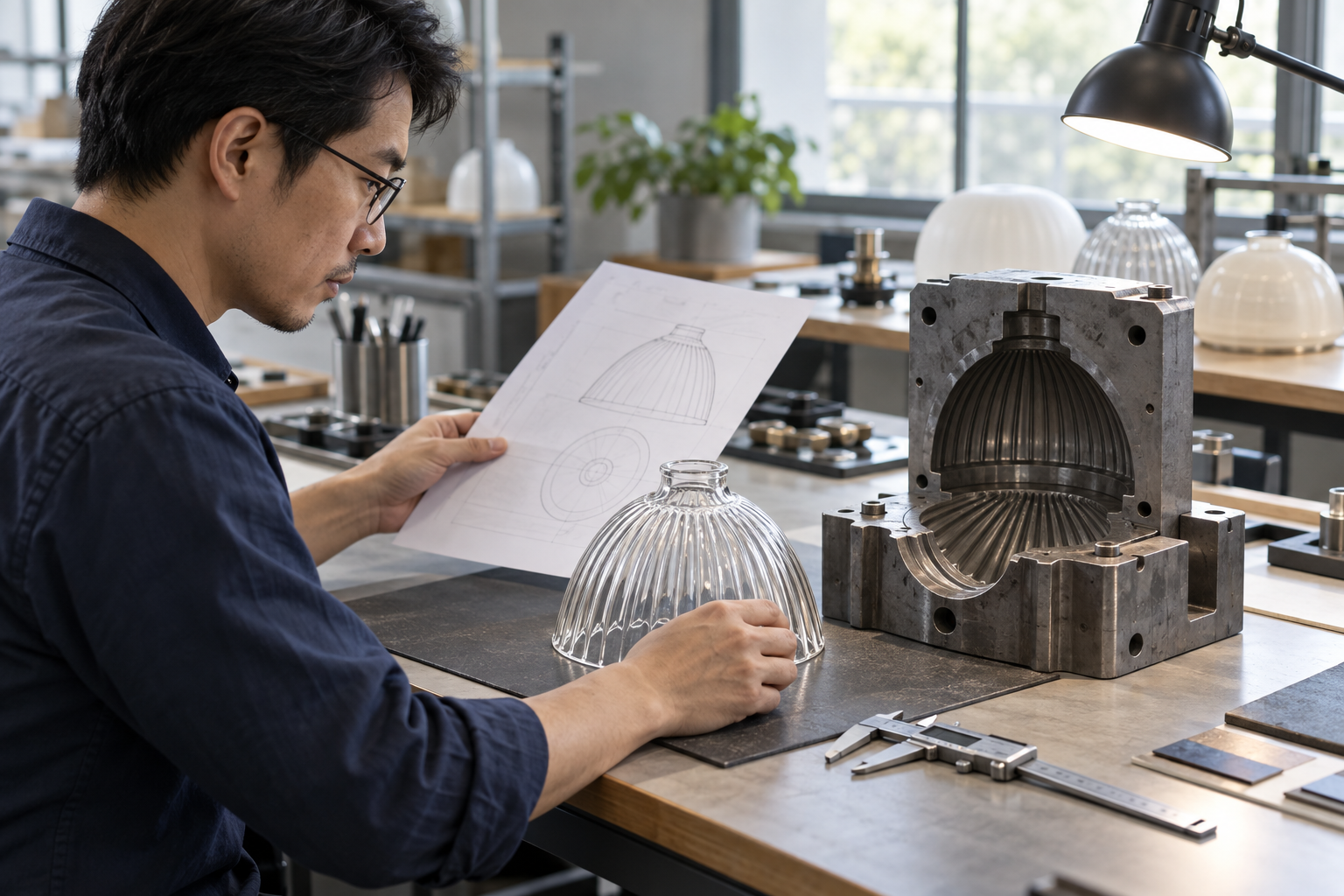
Ask whether a new mold, insert or finishing fixture is required. The answer affects the quote, the development sequence and future repeat orders. A drawing should identify the fitter, overall height, maximum diameter, wall or weight target where relevant, edge treatment and any non-round orientation.
Approve the sample against a controlled checklist. Record the sample revision, glass finish, dimensions, visible surface points and installation result. If a shade is approved only by appearance, the next production batch may drift in a dimension that was never stated. If it is approved only by dimensions, a finish or texture mismatch may be missed.
Inspection points for a replacement or OEM order
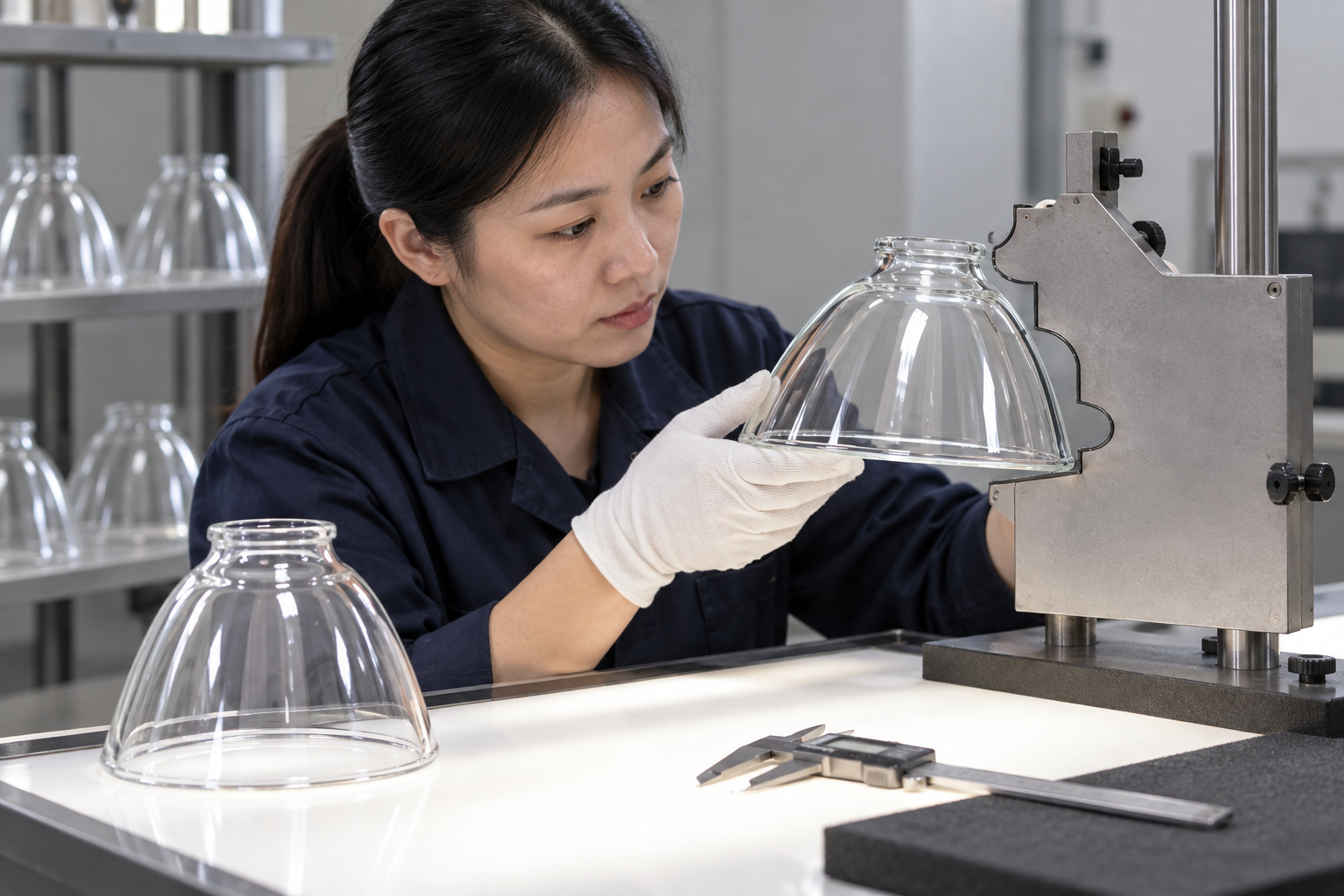
Inspection should follow the buyer's risk. For a shade-only replacement, fit and safe handling are usually more important than a decorative feature that is not visible after installation. For a lighting collection, appearance, repeatability and packing damage may matter just as much as the opening.
| Inspection item | Example check | Buyer record |
|---|---|---|
| Fitter fit | Seat the shade on the approved holder or gauge without force | Pass, fail and measurement |
| Profile | Compare height, maximum diameter and transition points with the drawing | Actual values and tolerance |
| Edge | Check chips, sharp points, seam visibility and finish consistency | Defect photo and disposition |
| Surface | Check bubbles, stones, scratches, mold marks and texture continuity | Lighting condition and defect location |
| Color or opacity | Compare lit and unlit samples under an agreed light source | Sample code or reference photo |
| Assembly clearance | Install on the intended desk lamp or fixture mockup | Contact points and orientation |
| Quantity traceability | Keep sample, batch and carton references together | Batch or lot record |
Do not use a generic statement such as "high quality" as the inspection specification. Name the feature, the inspection method and the acceptable result. If the buyer needs a formal inspection standard, include it in the purchase order or quality agreement rather than leaving it implied.
Packaging for glass desk lamp shade replacements
Packaging is part of the product route. A shade can pass factory inspection and still arrive with a chipped edge if the carton allows movement or the fitter is not protected. Tell the supplier whether the parts will be sold individually, installed into a lamp, or consolidated into a master carton for distribution.
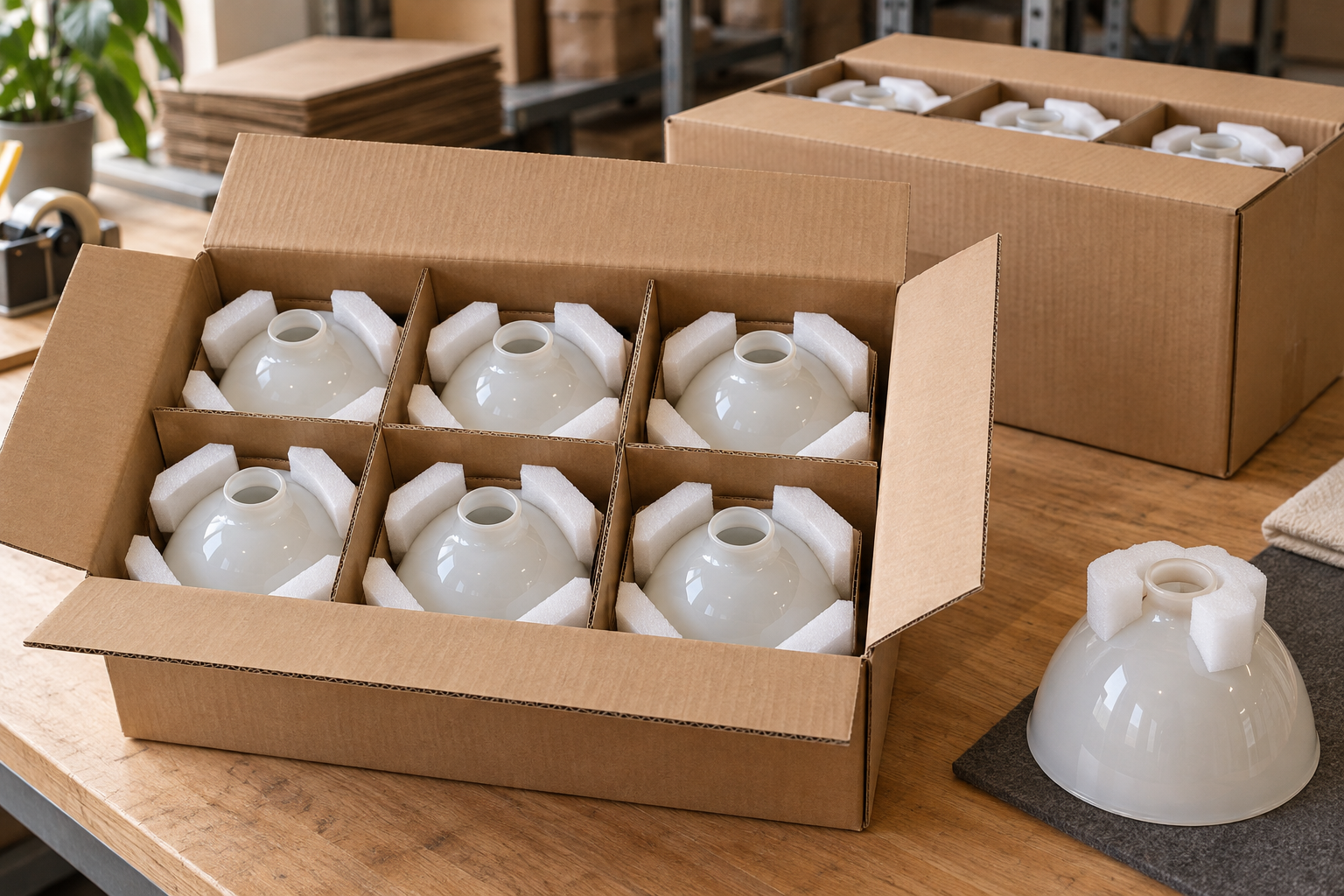
Useful packaging questions include:
- Is each shade separated from the next part by a fixed divider?
- Is the fitter protected from point impact and rubbing?
- Can the carton survive normal handling without the glass carrying compression from the top panel?
- Is the part orientation marked for the packer?
- Will the master carton fit the buyer's warehouse or parcel workflow?
- Can the supplier provide a packing photo before the first shipment?
For a replacement program, ask for one packed sample and one unpacked sample. The packed sample shows how the part is protected. The unpacked sample shows whether the protection material leaves marks or pressure on the finished glass.
What to send for a glass desk lamp shade quote
A short RFQ is not necessarily an efficient RFQ. A useful request gives the manufacturer enough information to choose a route and identify missing decisions. Send a drawing when possible. If there is no drawing, combine photos with a handwritten or marked measurement sheet.
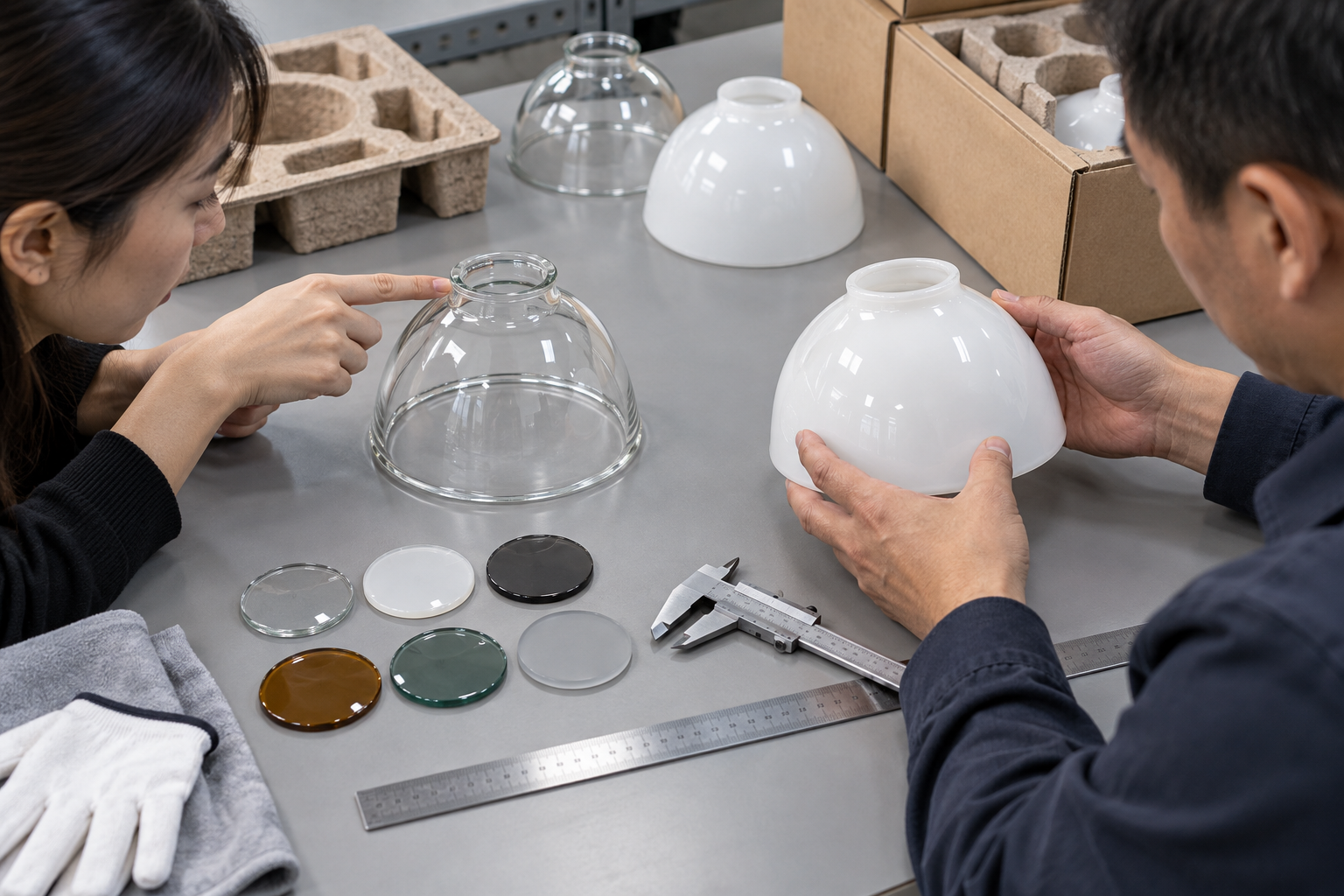
| RFQ field | Minimum information |
|---|---|
| Part identity | Shade-only replacement, complete lamp component or new OEM design |
| Interface | Fitter opening, support type, retainer and insertion direction |
| Geometry | Opening, maximum diameter, height, neck, rim and clearance |
| Glass | Clear, opal, frosted, textured, colored or cased target |
| Finish | Edge treatment, surface texture and acceptable visual variation |
| Quantity | Prototype, sample approval quantity and expected repeat quantity |
| Tooling | Existing sample, supplier standard, new mold or insert question |
| Quality | Critical dimensions, appearance checks and installation test |
| Packaging | Individual protection, carton plan, label and destination |
| Commercial | Incoterm, delivery destination, target schedule and quote currency |
Use the glass lamp shade technical drawing checklist to fill gaps before sending the request. If the part is intended for a coordinated green lamp collection, the green table lampshades guide can also help separate styling language from the actual glass specification.
A practical sample and quotation sequence
- Share the photos, dimensions, drawing or old part and state the intended desk-lamp application.
- Confirm the proposed fitter, profile, glass route, finish and packaging assumptions.
- Review the sample against the fit, clearance, appearance and measurement checklist.
- Approve a controlled sample revision and record any changes before production.
- Confirm inspection points, packing method, quantity and destination on the purchase order.
For an OEM project, this sequence is more useful than asking only for a unit price. It gives the buyer a clear decision point before tooling and a clear acceptance point before repeat production.
Buyer questions
What glass shade fits a desk lamp?
The shade that fits is the one whose fitter, support surface, retainer and insertion direction match the lamp. Confirm the opening at the glass edge, the maximum body diameter, height and surrounding clearance. A similar outside diameter alone does not prove compatibility. Send a photo of the lamp with the shade removed when the interface is uncertain.
What size glass shade do I need for a desk lamp?
There is no single universal size. Measure the fitter opening, widest body diameter, overall height, rim or neck, bulb envelope and nearby arm or wall clearance. Record the dimensions from the actual replacement part or fixture. A manufacturer can then recommend a profile or reproduce a sample without guessing from a rounded product name.
How do I replace a desk lamp glass shade?
Follow the fixture maker's instructions, isolate the lamp from power and allow it to cool. Remove the retainer only if the fixture design allows it, support the glass with both hands, and do not force a part that binds. Before ordering a replacement, photograph the holder and measure the old shade. If wiring, heat damage or a damaged holder is involved, use a qualified professional for the fixture repair.
Is a glass desk lamp shade better than a fabric shade?
It depends on the lamp objective. Glass can provide a cleanable, shaped optical surface and a defined relationship with the bulb and holder. Fabric can give a different diffusion and visual softness. For a glass replacement, the fitter and weight support must be confirmed. For a task lamp, compare the installed light distribution rather than choosing only by material.
Should I choose clear, frosted or opal glass?
Choose clear when the bulb and crisp highlights are part of the design. Choose frosted when you want less sparkle and a softer surface. Choose opal or milk glass when the goal is a broader, quieter glow. The final choice depends on the bulb, LED module, shade geometry and desired light direction, so approve a physical sample when light quality is important.
What is a fitter on a glass lamp shade?
A fitter is the glass interface that meets the lamp hardware. It may be a neck, rim, opening or supported shoulder captured by a ring or holder. The term does not identify one universal dimension. Confirm where the shade rests, how it is retained and which diameter is being measured before selecting a replacement.
Can a manufacturer make a custom glass desk lamp shade?
Yes, a custom route can be evaluated from a drawing, sample or marked photographs. The supplier still needs the fitter, profile, dimensions, finish, quantity, tooling expectation, inspection requirements and packaging plan. A new mold or finishing fixture may be required. Approve a sample before repeat production when the shade is a branded or safety-critical component.
How should glass desk lamp shades be packed for shipment?
Each shade should be immobilized, separated from neighboring parts, and protected at the fitter and widest body areas. Ask for a packing photo and a packed sample when breakage risk matters. The final method should match whether the part ships individually, in a lamp assembly or inside a distribution master carton.
What should I include in an OEM glass shade inquiry?
Include the part use, photos, drawing or sample, opening, diameter, height, clearance, glass finish, edge treatment, quantity, tooling expectation, inspection points, packing method, delivery destination and desired quote basis. If you need a custom glass desk lamp shade, send these details through the custom glass lamp shades manufacturer route or the JX contact page.