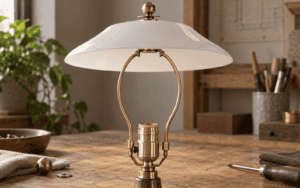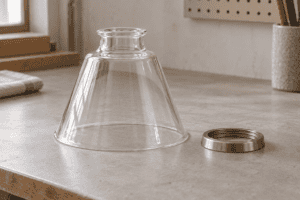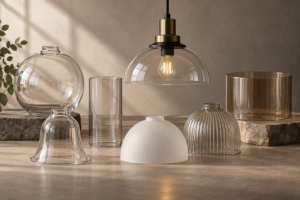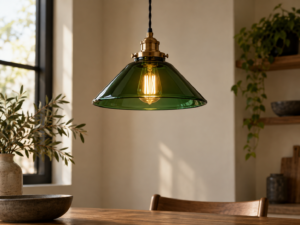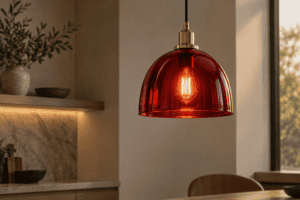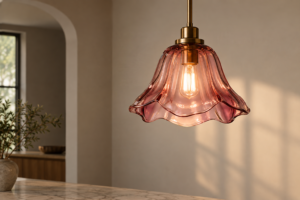
Green table lampshades range from soft sage to deep emerald and forest green, in linen, silk, cotton, or glass. The green tone and the material together decide how the lamp reads when off and how warm the light glows when on.
Green is having a long moment in interiors, and the table lamp is one of the easiest places to use it. But a green shade is trickier than a neutral one. Pick the wrong tone and the lamp looks murky when lit; pick the wrong material and the green that looked rich in the shop goes flat in your room. The retail pages that rank for green table lampshades show you photos and a price, but none explain which green to choose, how the light will actually read, or what base to put it on. This guide does: the green tone spectrum, how different materials transmit green light, and how to pair and style green table lampshades so they look intentional.
What are green table lampshades?
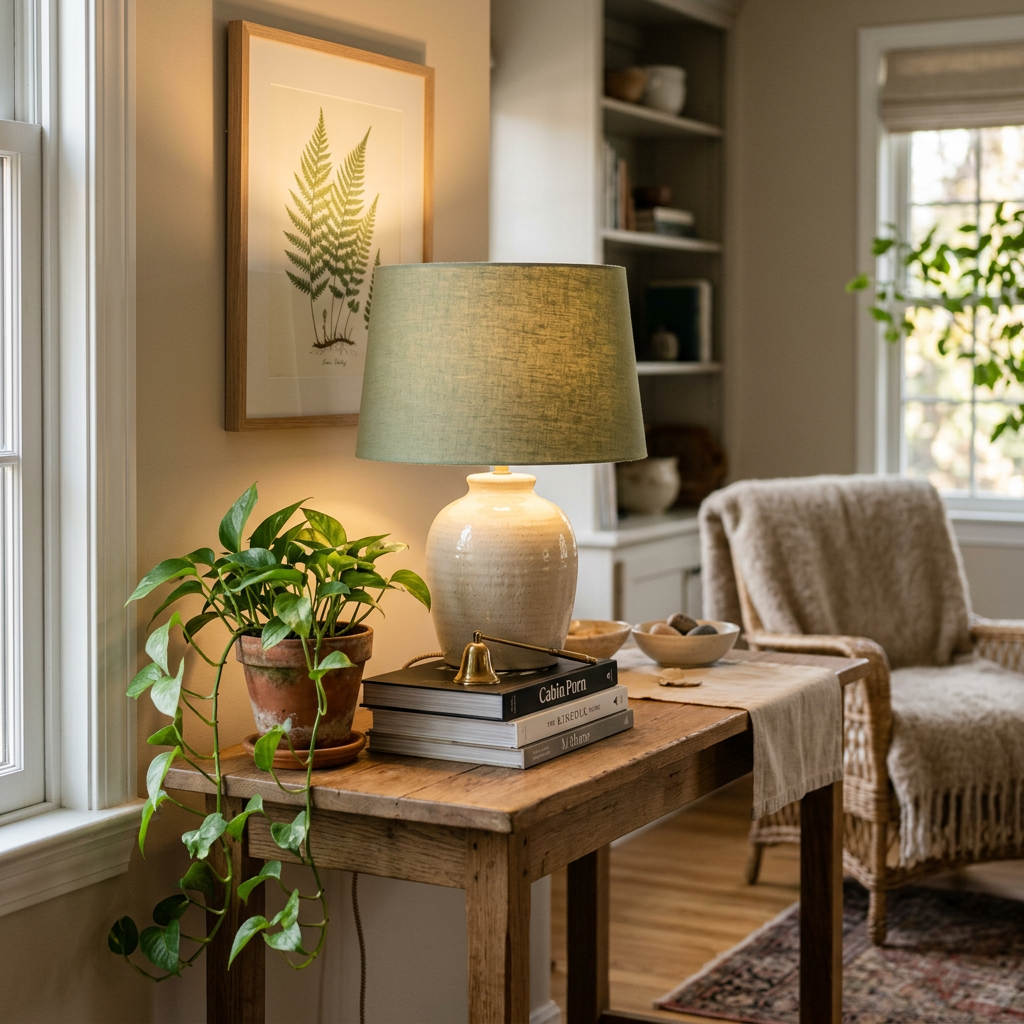
Green table lampshades are shades for table lamps in any green tone, made from fabric (linen, cotton, silk) or green-tinted glass. They span a wide range of shades, from barely-there sage to saturated emerald, and the choice affects both the room’s daytime look and the color of the light at night.
Why a green shade reads differently lit and unlit
This is the thing most people miss. A green table lampshade has two completely different appearances:
- Unlit (daytime): you see the shade’s true surface color and the fabric’s texture. A sage shade reads as a soft neutral-green accent; an emerald shade reads as a saturated jewel tone.
- Lit (evening): light passes through the fabric and the green tints the glow. A pale green casts a warm, barely-tinted light; a dark, saturated green blocks most light from passing through the fabric and instead throws light up and down, with only the rim glowing green.
This dual nature is why green is harder than white. With a white shade, lit and unlit look broadly similar. With green table lampshades, you’re choosing two looks at once, and they can pull in different directions. A deep forest shade that looks gorgeous in daylight can read almost black when lit, with light escaping only at the top and bottom.
Warm greens vs cool greens
Greens divide into warm (yellow-leaning: olive, moss, sage) and cool (blue-leaning: emerald, teal-green, bottle green). This matters for two reasons. Warm greens flatter warm-toned rooms (wood, brass, cream) and produce a cozier lit glow. Cool greens suit cooler palettes (grey, black, chrome) and read crisper and more formal. As documented in the range of shades of green, the same “green” label covers tones that behave very differently in a room.
| Aspect | Pale/warm green (sage, olive) | Deep/cool green (emerald, forest) |
|---|---|---|
| Unlit look | Soft, neutral-leaning accent | Saturated, statement jewel tone |
| Lit glow | Warm, lightly tinted, bright | Dark body, green rim glow, dimmer |
| Best room palette | Wood, brass, cream, warm tones | Grey, black, chrome, cool tones |
| Visual weight | Light, recedes | Heavy, draws the eye |
The green tone spectrum: sage to emerald
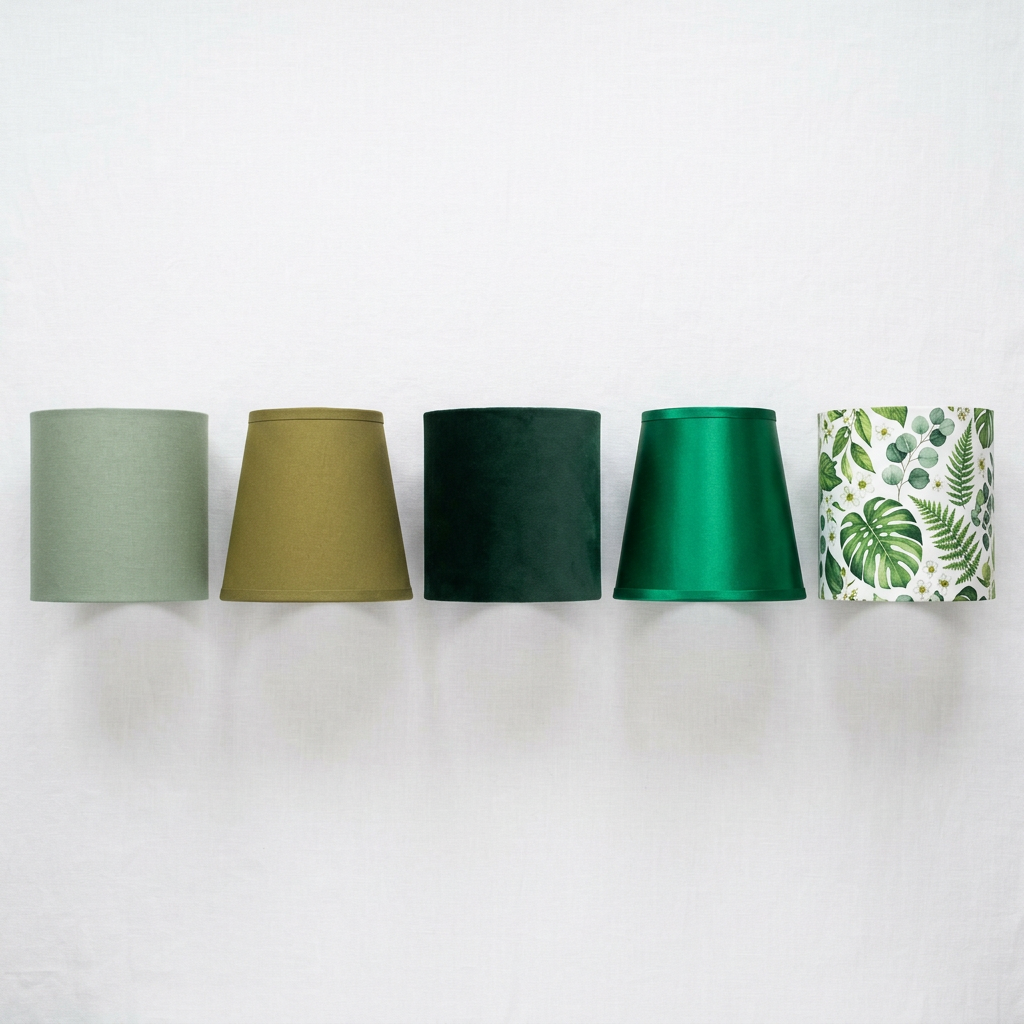
Green table lampshades cover a spectrum from muted, neutral-leaning sage to saturated emerald. Knowing where a tone sits on that spectrum tells you how bold the lamp will read and how much light it will pass.
Sage and olive: muted and neutral-leaning
Sage is the gateway green. It’s a soft, grey-green that behaves almost like a neutral, which is why it’s the most popular and most forgiving choice. A sage green table lampshade adds color without committing the room to a bold statement, and it passes plenty of light when lit, glowing a warm, lightly-tinted white.
Olive sits next to sage but warmer and more yellow. It reads earthier and more vintage, pairing naturally with mid-century and traditional interiors. Both sage and olive are “quiet” greens — they work in rooms that already have a lot going on, because they don’t fight for attention.
If you’re nervous about green and want it to look considered rather than loud, start with sage or olive. They’re the safe entry to green table lampshades.
Forest and dark green: moody and rich
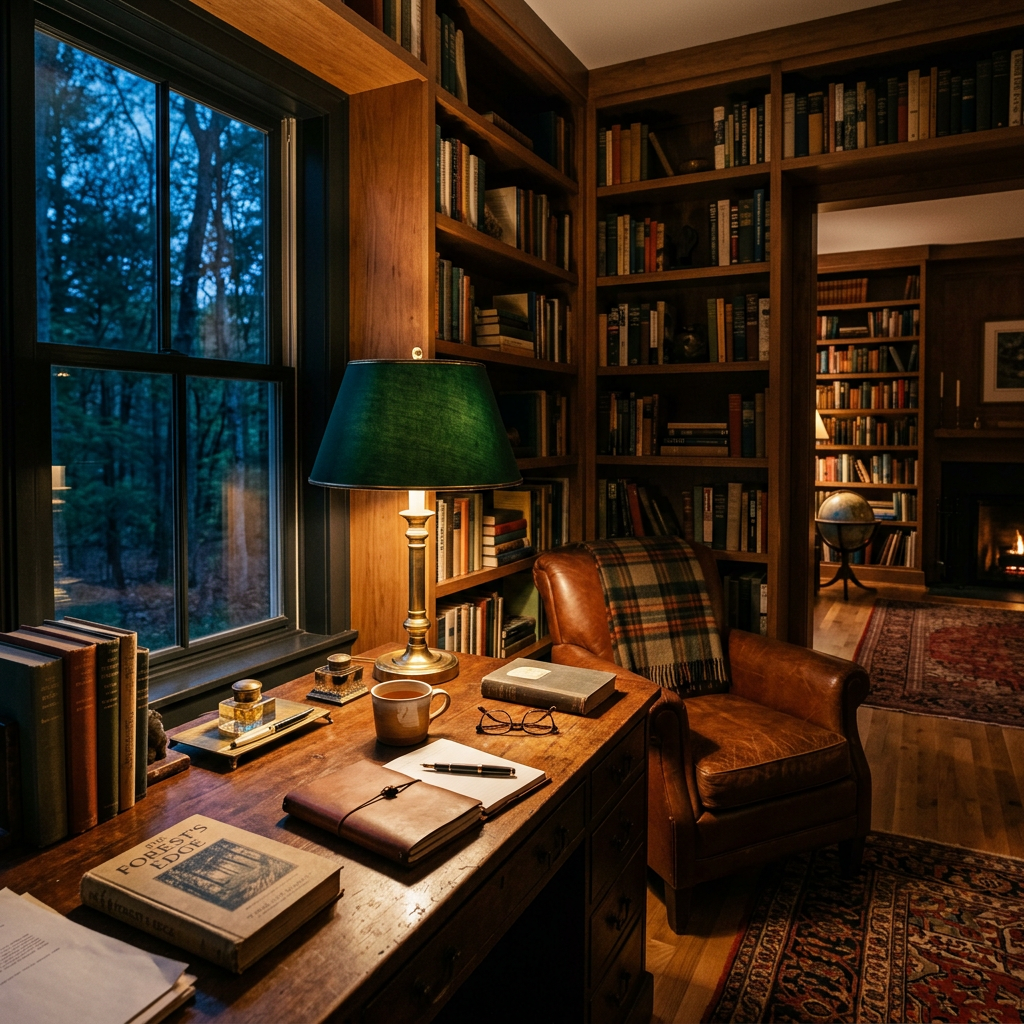
Forest, hunter, and dark green are the moody end. These deep, saturated greens make a table lamp a focal point and suit libraries, studies, and dramatic, layered rooms. They read rich and expensive in daylight.
The caution: dark green table lampshades block most light through the fabric body. When lit, the shade body stays dark and the light escapes up and down, with a green rim glow. This is a deliberate, atmospheric effect, not a flaw, but it means a dark green shade is poor task lighting. Don’t put one on the lamp you read by; put it where mood matters more than brightness.
Emerald and bottle green: jewel-tone statement
Emerald and bottle green are the jewel tones: vivid, cool, and confident. An emerald green table lampshade is a statement piece, often in silk or a sheen fabric that plays up the saturation. These suit glamorous, eclectic, and maximalist interiors where the lamp is meant to be noticed.
Patterned and floral greens deserve a mention here too. A green floral or botanical-print shade reads softer than a solid emerald while still bringing the color, and patterns hide the uneven light a dark solid would show. For a green that’s bold but not severe, a green patterned shade is often the smarter pick.
| Green tone | Saturation | Lit behavior | Best for |
|---|---|---|---|
| Sage | Low, grey-green | Bright, warm-tinted | Forgiving everyday accent |
| Olive | Low–medium, warm | Warm, earthy glow | Mid-century, traditional, vintage |
| Forest / hunter | High, deep | Dark body, rim glow | Libraries, studies, mood lighting |
| Emerald / bottle | High, cool | Dark body, jewel rim | Glamorous, statement lamps |
| Green patterned/floral | Varies | Softer, even, pattern-cast | Bold-but-soft, busy rooms |
Materials: how green fabric and glass transmit light
The material of green table lampshades determines how the green light reads and how the shade looks lit. The same emerald color behaves very differently in linen, silk, or glass.
Linen and cotton
Linen and cotton are the workhorse fabrics for green table lampshades. They have a natural texture and a slightly open weave that diffuses light softly. A green linen shade reads casual and organic; the texture breaks up the color so even a deeper green looks relaxed rather than severe.
The light through green linen is warm and evenly diffused. Linen’s slight translucency means more light passes through than with a tightly-woven or lined fabric, so a green linen shade glows more brightly and shows more of its green tint when lit. For sage and olive especially, linen is the natural pairing — casual color, warm glow.
Cotton behaves similarly with a smoother surface and slightly crisper color. Both are forgiving, widely available, and the right starting point for most rooms.
Silk
Silk takes green in a more formal, luxurious direction. The sheen of silk amplifies saturation, which is why emerald and bottle-green shades are so often silk — the fabric makes the jewel tone sing. Silk diffuses light into a warm, directional glow and gives a green table lampshade a dressier, more traditional character.
The trade-offs are the usual silk caveats: genuine silk fades in direct sun over a few years, and it costs more. Faux silk (polyester with a silk finish) holds the saturation and the sheen without the fading, and at modern LED color temperatures the difference in light quality is negligible. For a deep green statement shade, faux silk is usually the practical choice.
Green glass shades: a different effect entirely
Green glass shades produce a fundamentally different result from fabric. Where green fabric diffuses and warms the light, green glass transmits it more directly and shows the color as a clear, luminous tint — think of the classic green glass banker’s lamp. Glass also reads as an object in daylight: its green color and any pattern are visible whether the lamp is on or off, unlike fabric which largely disappears unlit.
Green glass is the choice when you want the color to be a permanent visual feature and the light to be a clear, jewel-like tint rather than a soft diffused glow. For lamps where a glass shade suits the base and style better than fabric, our cut glass lamp shades collection covers glass shade options across standard fitter sizes, and vintage glass lamp shades is the place to look for period green glass in the banker’s-lamp tradition.
Pairing green table lampshades with bases and metals
A green table lampshade has to work with the lamp base beneath it, and the pairing makes or breaks the look. Match the green’s temperature to the base material, and size the shade to the base.
Pairing with base color and metal
The reliable pairings:
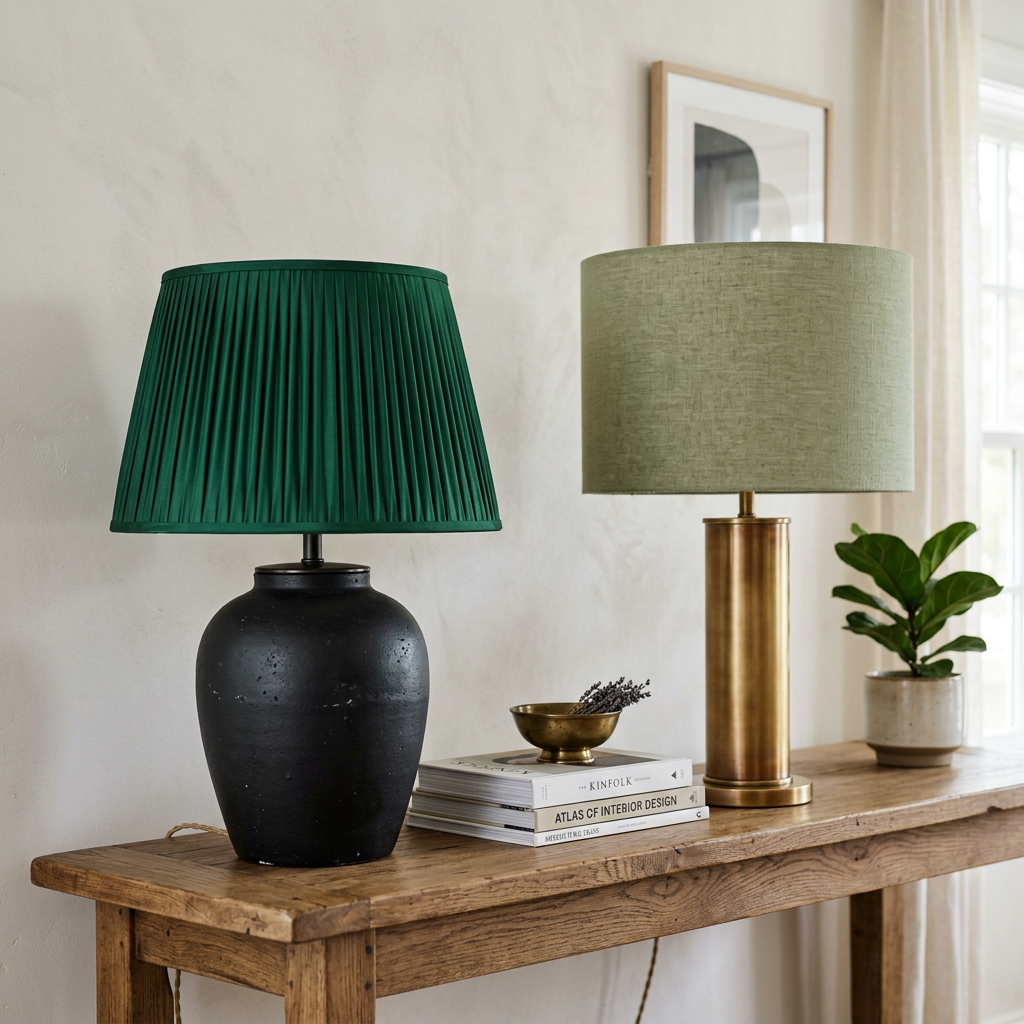
- Brass and gold bases: pair beautifully with warm greens (sage, olive, forest). The warm metal and warm green reinforce each other for a classic, rich look. Brass + forest green is a timeless library combination.
- Black and dark bases: handle cool, saturated greens (emerald, bottle) confidently. The contrast is crisp and modern. Black + emerald reads glamorous.
- Ceramic and painted bases: flexible. A white or cream ceramic base lets any green shade lead; a colored ceramic base should either match or deliberately contrast the green’s temperature.
- Wood bases: lean warm. Sage, olive, and moss greens sit naturally on wood for an organic, casual feel.
The pairing to avoid: a cool emerald shade on a warm brass base, or a warm olive shade on a cold chrome base. Mismatched temperatures make both the green and the metal look slightly off, in a way that’s hard to name but easy to feel.
Sizing and proportion
Color choice doesn’t change the sizing rules. The shade’s bottom diameter should be at least 2″ wider than the widest point of the base, and the shade height should be roughly one-third of the total lamp height. A green table lampshade that’s the perfect tone but the wrong size still looks wrong.
One color-specific note: a dark green shade reads visually heavier than a pale one, so on a slender base a deep emerald or forest shade can look top-heavy where a sage shade of the same dimensions looks balanced. With darker greens, err slightly smaller or choose a base with enough visual weight to carry the color. For the full sizing method and frame considerations, our lampshade frames guide covers shape and proportion in detail.
Styling green table lampshades room by room
Green table lampshades suit almost every room, but the right tone and material shift by space and by how the lamp’s light is used. Match the green to the room’s job.
Living rooms and studies
In a living room, a green table lampshade adds a layer of color that’s easy to live with. Sage and olive work as quiet accents on console tables and side tables, picking up greenery and natural materials elsewhere in the room. For a study or reading nook where you want atmosphere, a forest or emerald shade on a brass or black base makes the lamp a focal point — just remember the darker greens give mood, not task brightness, so pair them with a separate reading light.
Layering matters here. A single green shade in a neutral room is an accent; a pair of matching green table lampshades flanking a sofa or console reads as a deliberate design decision and anchors the space.
Bedrooms and entryways
In bedrooms, green table lampshades on bedside tables bring calm color, and sage in particular is restful. Matching shades on both nightstands give symmetry. The lit glow matters more in a bedroom than almost anywhere, so favor lighter greens in linen for a soft, warm bedside light rather than a dark shade that throws most of its light at the ceiling.
Entryways and hallways are a place to be bolder. A console lamp with an emerald or patterned green shade sets a confident tone the moment someone walks in, and because the entry isn’t a task-lighting space, you can prioritize the statement over brightness. Whatever the tone, switching to a warm-white LED bulb keeps the green reading true; as the U.S. Department of Energy notes, LEDs run cool and last for years, which also protects the fabric of a green shade from the fading that heat and UV accelerate. A daylight-temperature bulb, by contrast, can push warm greens toward a flat, grey cast.
FAQ
Does a green lampshade make the light look green?
It depends on the tone and material. A pale green shade (sage, olive) lightly tints the light warm-green but still reads as usable warm light. A dark, saturated green (forest, emerald) blocks most light through the fabric and throws it up and down, so the room light stays fairly neutral while the shade body glows dark with a green rim. Lighter greens tint the light noticeably; darker greens tint the shade more than the room.
What is the difference between sage and olive green lampshades?
Sage is a soft, grey-green that reads almost neutral and is the most forgiving green for a table lamp. Olive is warmer and more yellow, reading earthier and more vintage. Sage suits a wider range of rooms because it’s quieter; olive has more character and pairs especially well with mid-century, traditional, and wood-heavy interiors. Both are warm greens that glow warmly when lit.
What base color goes with a green table lampshade?
Match the green’s temperature to the base. Warm greens (sage, olive, forest) pair beautifully with brass, gold, and wood bases. Cool greens (emerald, bottle) suit black, dark, and chrome bases for crisp contrast. White and cream ceramic bases are flexible with any green. Avoid pairing a cool emerald shade with warm brass, or a warm olive shade with cold chrome — mismatched temperatures make both look slightly off.
Are dark green lampshades good for reading lamps?
No, dark green shades make poor reading lamps. A forest or emerald shade blocks most light through the fabric body, throwing it up and down with little usable side light, so it produces atmosphere rather than task brightness. For a reading lamp, choose a pale green (sage) in linen, which passes plenty of warm light, or reserve the dark green shade for a lamp where mood matters more than brightness.
Where can I find vintage green table lampshades?
For vintage fabric shades, antique dealers and specialist lampshade makers carry period greens, often in silk. For the classic vintage green glass look — the banker’s-lamp style — green glass shades are the route, and they read as a luminous jewel tone rather than a soft fabric glow. Our vintage glass lamp shades guide covers period green glass and how to match it to antique lamp hardware by fitter size.
Should I choose a green fabric or green glass table lampshade?
Choose fabric for a soft, diffused warm glow where the shade disappears when unlit; choose green glass for a clear, luminous color that’s visible day and night. Fabric (linen for casual, silk for formal) suits most table lamps and most rooms. Green glass suits lamps where you want the color as a permanent feature and a crisp jewel-tone light, and it pairs especially well with antique and traditional bases.
Conclusion
Green table lampshades are one of the easiest ways to bring color into a room, but they reward a little thought. The two decisions that matter most are the tone (sage and olive for quiet, forgiving color; forest and emerald for moody statement) and the material (linen for casual warm diffusion, silk for formal saturation, glass for a clear jewel tint). Get the green’s temperature matched to the base and the room, size it correctly, and use a warm-white LED, and the lamp will look considered rather than loud.
Start with where the lamp lives. A bedside or reading lamp wants a lighter green in linen for a warm, bright glow; a console or study lamp can take a deep forest or emerald for atmosphere. And if the lamp’s base and style call for glass rather than fabric, the green glass route gives a luminous, day-and-night color — our cut glass lamp shades collection is the place to start for glass options in standard fitter sizes.