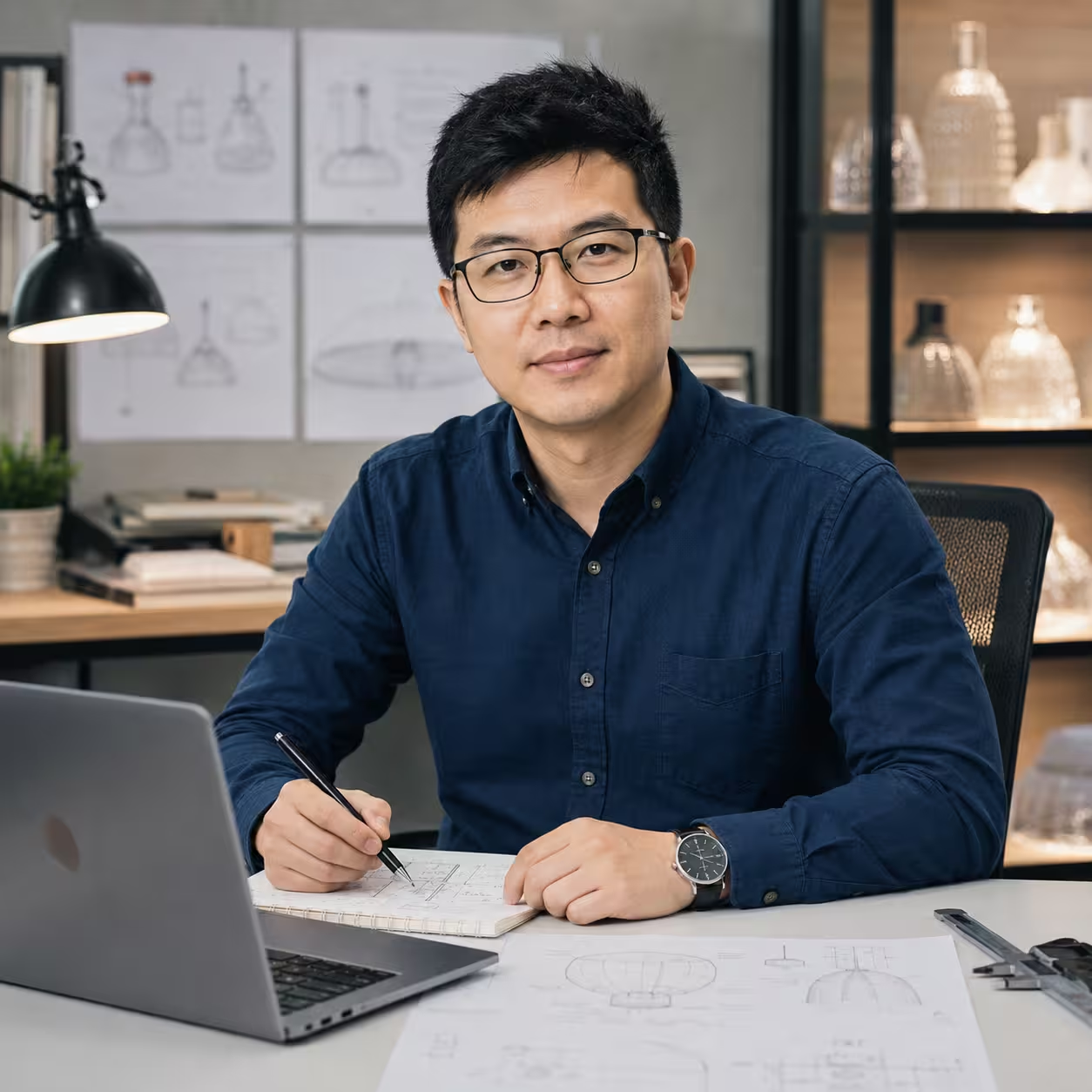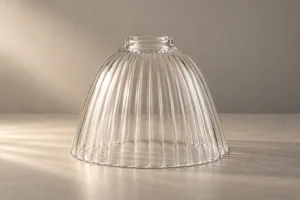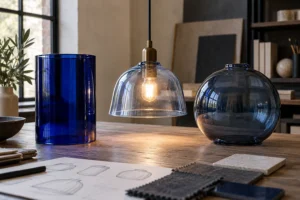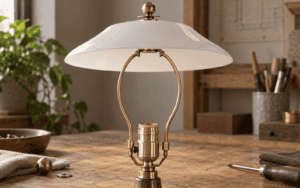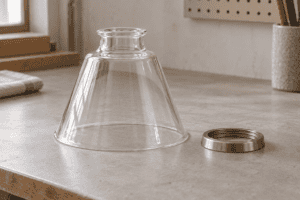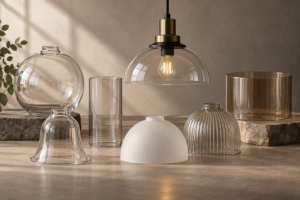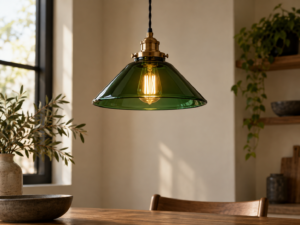
ガラスシェードの照明は、電球の周りに透明または半透明のガラス製のカバーを使用し、光の出方を形作り、拡散させ、スタイリッシュに演出します。装飾的な魅力と耐久性、熱管理された照明をあらゆる部屋で組み合わせています。.
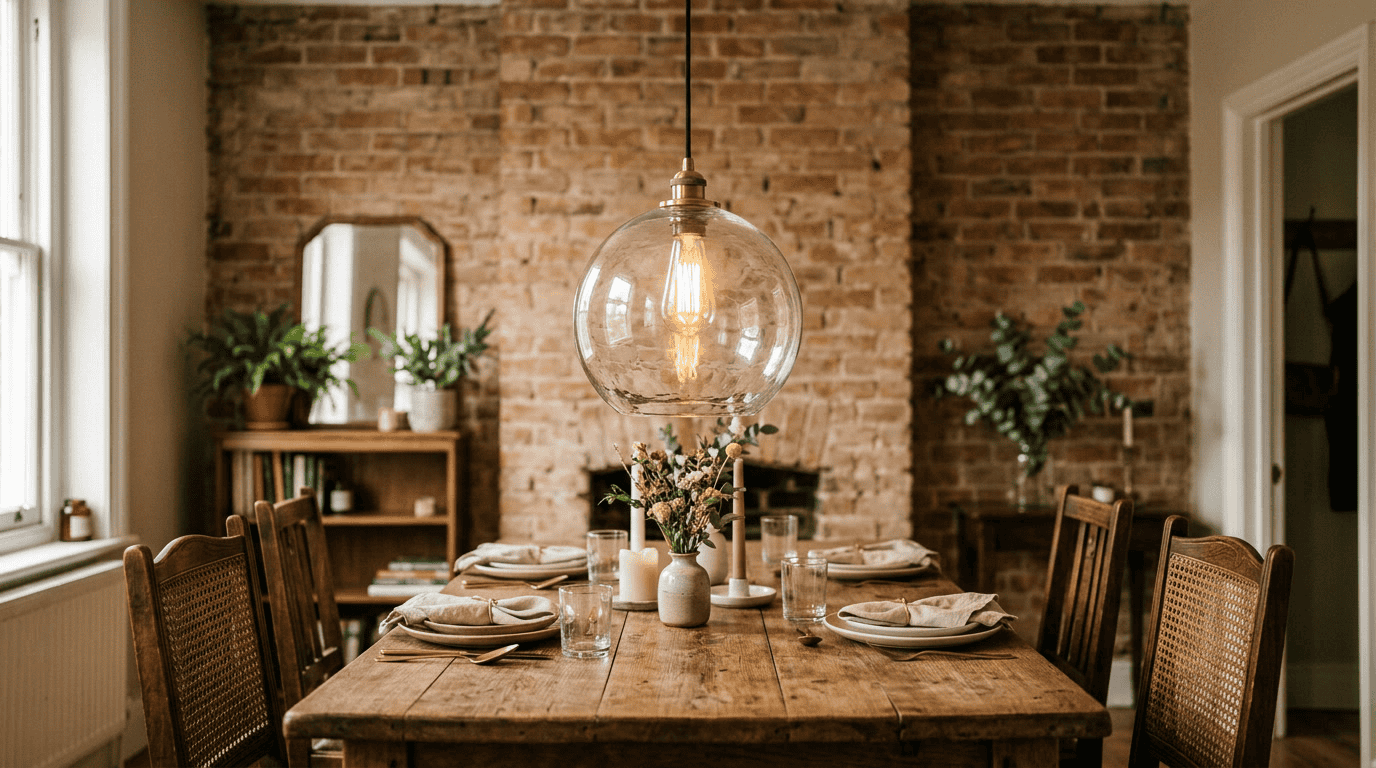
お気に入りの照明器具を見つけました。プロポーションも良く、仕上げも金具と合っていますが、シェードが気に入らない。あるいは割れているのかもしれません。あるいは、ゼロから始めようとしているのに、ガラスシェードの選択肢の多さに、始める前よりも混乱しているかもしれません。クリアかフロストか?グローブかベルか?ホウケイ酸ガラスか普通のガラスか?そもそも「フィッターサイズ」とは何でしょうか?
このガイドですべてを解決します。最後まで読めば、お使いの照明器具に合うガラスシェードの種類、熱に強い素材、そして部屋に必要な光の質に合ったLED電球との組み合わせ方が正確にわかるようになります。.
ガラスシェードの照明とは?
ガラスシェードの照明とは、ランプや照明器具で、シェードの主な素材として布、プラスチック、金属ではなくガラスを使用しているものです。ガラスは、クリア、フロスト、カラー、吹きガラス、テクスチャ加工などがあり、グローブ、ベル、シリンダー、ドラム、またはカスタム形状に成形できます。.
日本の ウィキペディアのランプシェードの記事, 、ランプシェードは広く分類されます 形状 (ドラム、エンパイア、ベル、クーリー)、 素材 (布、ガラス、ステンドグラス、パーチメント、紙、プラスチック)、 フィッタータイプ, 、そして 機能. によって。ガラスシェードは素材カテゴリにきれいに収まりますが、そのカテゴリ内でも、製造方法、ガラス組成、仕上げによって選択肢はすぐに分岐します。.
主要用語:シェード、グローブ、フィッターの説明
シェード は、あらゆる照明カバーの一般的な用語です。シェードがガラス製で、球状で電球を完全に囲んでいる場合、通常は グローブ. と呼ばれます。用語 ガラス製ライトシェード および ガラス製ランプシェード 業界では互換性があります。.
日本の フィッター これは多くの購入者が見落としがちな重要な寸法です:ガラスシェードの上部(または下部)の開口部で、ソケットやランプアームにかぶせる部分です。日本での標準的なフィッターサイズは以下の通りです:
- 2-1/4インチ — 最も一般的で、ペンダントライトや天井器具に使用されます
- 3-1/4インチ — 中型器具、フラッシュマウント、一部のセミフラッシュに使用されます
- 10cm — 大型フラッシュマウント天井器具や一部のシャンデリアに使用されます
- スリップフィッター/スパイダーフィッター — シェードがハープの上に乗るフロアランプやテーブルランプに使用されます
フィッターを間違えると、見た目が近くてもシェードが正しく取り付けられません。交換用を注文する前に、必ず既存のシェードのフィッター開口部を測定してください。.
ガラスシェードとファブリックシェードの違い
| 特徴 | ガラスシェード | ファブリックシェード |
|---|---|---|
| 光の拡散 | 仕上げによっては硬くシャープな輪郭や滑らかな光を放つ | 暖かく柔らかく均一 |
| 耐熱性 | 高い(特にホウケイ酸ガラス) | 低い — 60W白熱灯以上で焦げるリスクあり |
| 耐久性 | 落とすと割れるが、黄ばみや色あせはなし | 色あせ、汚れ、繊維にホコリがたまりやすい |
| スタイルの幅 | モダン、インダストリアル、ヴィンテージ、アートガラス | 伝統的、住宅用、クラシック |
| メンテナンス | 30秒で拭き取り可能 | 優しく洗うかドライクリーニングが必要です |
| 交換 | 個別の部品として広く入手可能 | 多くは器具専用で、入手が難しい |
人通りの多い場所やキッチン、屋外に隣接するスペースでは、耐久性の面でガラスが優れています。寝室やリビングルームでは、実用性よりも温かみや質感が重視されるため、ファブリックが適しています。.
照明用ガラスシェードの7種類
ガラスシェード市場は圧倒されるほど多様に見えますが、7つの明確なカテゴリーに分けることで理解しやすくなります。それぞれに異なる美観、光の特性、部屋への適合性があります。.
1. クリアガラスシェード
クリアガラスは最大限の光を透過し、何も遮らず散乱もしません。電球自体がデザイン要素となります。これがまさにクリアガラスが 美しい電球を必要とする理由です:エジソンスタイルのカーボンフィラメントやヴィンテージタングステン電球は、クリアシェードの中で見事に映えます。裸のLEDスパイラルはあまりおすすめできません。.
おすすめ用途: キッチンアイランド、インダストリアルロフト空間、玄関、バーペンダントなど、フィラメント電球が美観の一部となる場所に最適です。.
欠点: 指紋、水滴、ほこりがすべて目立ちます。配線やソケットの金具も完全に露出します。器具の内部が美しくない場合、クリアガラスはそれを隠しません。.
2. フロストガラスシェード
フロストガラスは、 酸エッチングまたはサンドブラスト加工 によってガラス表面を処理して作られます。どちらの工程も、光を均一に散乱させる微細な表面の凹凸を生み出します。その結果、強い直射光ではなく、柔らかくまぶしさのない光が広がります。.
光の出力の違い: フロストシェードは、同じ電球をクリアシェードに使用した場合と比べて、実際のルーメンが10〜20%減少することがありますが、その光の質はリビング空間にとって劇的に向上します。なぜなら、電球直下の「ホットスポット」を解消するからです。.
おすすめ用途: バスルーム、ベッドルーム、ダイニングルーム、眩しさのない間接照明が欲しいあらゆる空間に。.
3. ミルクガラス(オパールガラス)シェード
ミルクガラスは完全に不透明で、電球を直接見ることができません。製造時にフルオライトや酸化スズを溶融ガラスに加えることで作られ、表面全体が均一に発光し、中心だけが明るくなることはありません。その効果は清潔感があり、クラシックで、暮らしやすい雰囲気を演出します。.
実際、ミルクガラスは最も扱いやすいシェードタイプの一つです。変色した電球の根元や形の異なる電球、ソケットの金具も隠してくれます。また、 指紋が目立ちにくい クリアガラスほど手入れが必要なく、本当にメンテナンスが簡単な選択肢です。.
おすすめ用途: ファームハウス風キッチン、ヴィンテージ風バスルーム、ランドリールーム、清潔感と時代を超えた雰囲気がドラマチックさよりも重視される空間に。.
4. 手吹きガラスシェード
手吹きガラスは、ガラス職人が息と重力を使って溶けたガラスを成形して作られます。同じものは二つとありません。微妙な波紋や厚みの違い、時折見られる気泡は欠点ではなく特徴であり、それぞれが周囲の壁に独自の光の模様を生み出します。.
製造工程はゆっくりで手間がかかるため、価格にも反映されます。大量生産のプレスガラスシェードが$8〜$30であるのに対し、手吹きガラスシェードは$40〜$150以上になることが一般的です。.
おすすめ用途: ダイニングテーブル上のステートメントペンダント、ブティック小売店、シェード自体が目立つことを意図した職人風キッチンなどに。.
5. シードガラス・テクスチャードガラスシェード
シードガラスは、意図的にガラス内部に小さな気泡を閉じ込めています。その効果はヴィンテージ感があり、少し風化した印象で、とても魅力的です。気泡が光を自然に散乱させ、人工的ではない有機的な雰囲気を生み出します。.
テクスチャードガラス(リブ、ハンマード、フルーテッド)は、内部構造ではなく表面のパターンで同様の視覚的効果を実現します。特にリブガラスは2026年のインテリアデザインで人気が高まり、現代的な空間やトランジショナルな空間の両方で見られます。.
おすすめ用途: コースタル、ファームハウス、トランジショナル、スカンジナビア風インテリアに。.
6. ステンドグラス・ティファニーガラスシェード
ステンドグラスは、色ガラス片を鉛ケームや銅箔でつなぎ合わせてモザイク模様を作ります。ティファニー風シェードはこの技法を用い、19世紀後半にルイス・コンフォート・ティファニーによって広められたアイコニックな花柄や幾何学模様を生み出します。.
点灯時、ステンドグラスシェードは壁や天井に色付きの光を投影します。他のシェードタイプでは再現できない、没入感のある効果です。その代償として、色付きガラスは光を多く吸収するため、全体の光量は減少します。ENERGY STARの照明器具テストでは、シェードの色だけで実際に配光ルーメンが大きく低下することが示されています。 青いシェードは同じ電球で白いシェードの165.0ルーメンに対し、129.9ルーメンと測定されました。 同一の電球から。.
おすすめ用途: リビングルームのアクセントランプ、図書館の読書用ランプ、伝統的なインテリア、装飾的なステートメントピース。.
7. カラーガラスおよびスモークガラスシェード
カラーガラス(アンバー、コバルトブルー、グリーン、ルビーレッド)は、すべての透過光に色合いを加えます。スモークガラスはニュートラルなグレーからブラックの色合いで、光の出力を抑えつつ、洗練されたモダンな美観を保ちます。.
アンバーガラスは特に夜間照明に適しており、その暖かい色調は色温度をキャンドルライトの1800〜2200Kの範囲にシフトさせます。近年の研究では、これが入眠を促進し、就寝前のブルーライト曝露を減少させることと関連付けられています。.
おすすめ用途: 寝室のベッドサイドランプ、バーの照明、ホスピタリティ空間のアクセント照明器具。.
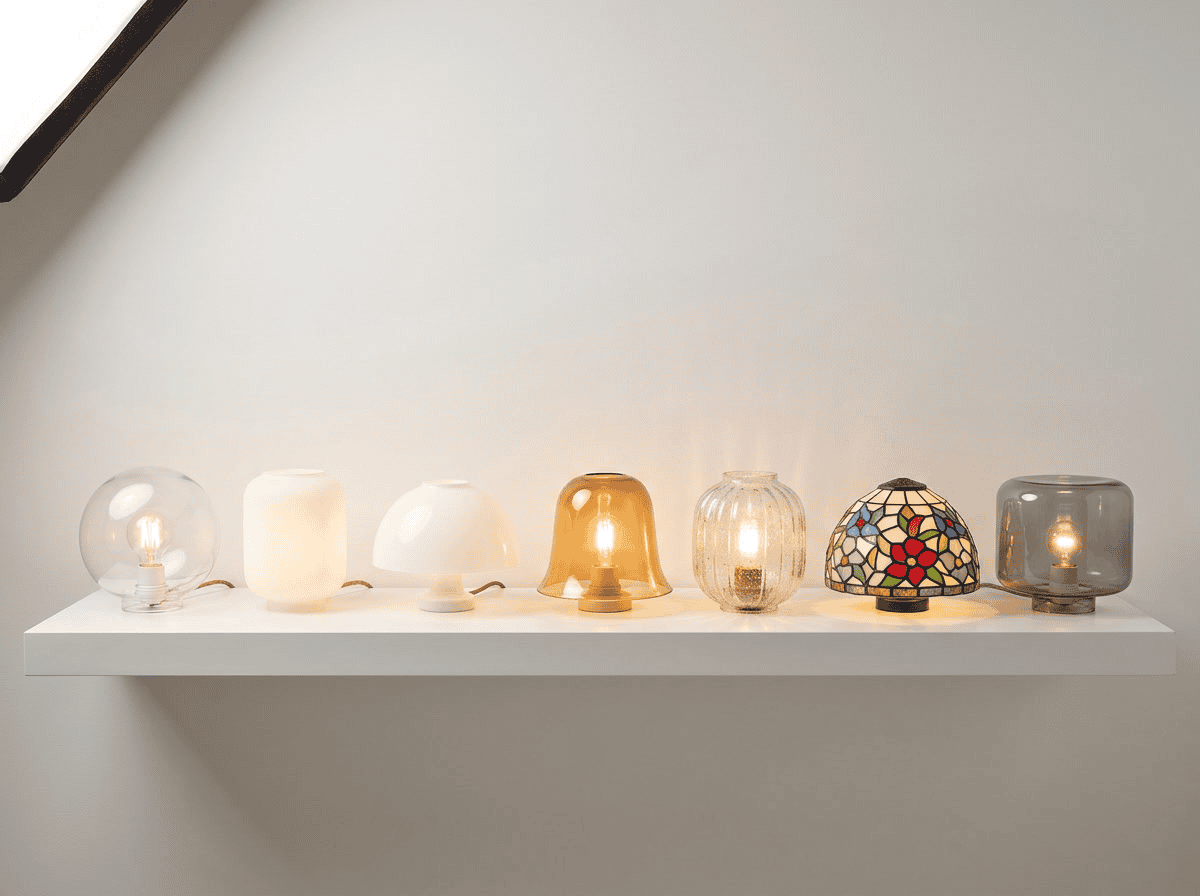
ガラスシェードタイプ比較表:
| ガラスの種類 | 光の質 | スタイル適合 | メンテナンス | 価格帯 |
|---|---|---|---|---|
| クリア | 明るく、指向性がある | インダストリアル、モダン | 高い(汚れが目立つ) | $ |
| フロスト | ソフト、拡散 | ユニバーサル | 中級 | $ |
| ミルク(オパール) | 均等で輝く | ファームハウス・ヴィンテージ | 低い | $ |
| 手吹き | 独特の模様 | 職人技・存在感 | 中級 | $$$ |
| 種入り/テクスチャー | 暖かく、散らばった | 海岸風・トランジショナル | 低中 | $$ |
| ステンド/ティファニー | カラーリング・ドラマティック | 伝統的・エレクティック | 高い(鉛ジョイント) | $$$ |
| カラー/スモーク | トーンが濃くて憂鬱な | 現代的なバー | 低い | $$ |
ガラス材料科学:ホウケイ酸ガラス vs ソーダライムガラス
ほとんどの購入者は見た目だけでガラスシェードを選ぶ。これは間違いだ―― ガラス組成 熱による挙動、取り付け時のクラックの有無、寿命を決定する。.
照明市場を支配する二つのガラスタイプ:
ホウケイ酸ガラス — 照明の安全な選択肢
ホウケイ酸ガラスは概ね 80% ケイ素酸化物、13% ホウ酸化物、4% ナトリウム/カリウム酸化物、そして 2–3% アルミニウム酸化物. 。ホウ酸化物が鍵であり:熱膨張係数(CTE)を劇的に下げ、温度変化に対してガラスをはるかに安定させる。.
日本の Wikipedia のホウケイ酸ガラスの項目, 、ホウケイ酸ガラスはおおよそ 330°F (166°C) の温度差に耐え、破損しない. 平易な英語で言えば、器具が熱くなってエアコンが突然作動した場合、ボロシリケートガラスはひび割れません。.
照明用途では、これは三つの特定の状況で重要になります:
- 高ワット数の状況 — 75Wの白熱灯を60Wと表示された器具に取り付けた場合でも、ボロシリケートガラスは過熱をひび割れさせずに対処します
- 屋外器具 — 日夜の温度変化、または夏と冬の間の温度差が大きくなることがあります
- 浴室用器具 — シャワーからの蒸気が湿度の急上昇を引き起こし、ガラスシールをストレスにさらします
識別のヒント: 大手のプレミアム器具メーカーは、製品説明にボロシリケートを明記していることが多いです。ガラスシェードが「オーブン対応」や「実験室用グレード」と marketed されている場合、それはほぼ確実にボロシリケートです。.
ソーダライムガラス — 予算に優しいが熱には弱い
ソーダライムガラスは地球上で最も一般的なガラスであり、窓、ボトル、安価なガラスシェードの大半に用いられています。p Wikipedia のソーダライムガラスの記事, 、それは 高い熱膨張係数があり、約100°F(40°C)の温度差しか耐えられません 破損リスクが急激に上昇します。.
ボロシリケートガラスの330°Fと大きく差がある点です。LED電球を用いるほとんどの住宅用途(白熱球よりもはるかに低温で動作します)の場合、ソーダライムガラスで十分です。リスクのプロファイルは次の場合に変わります:
- 高出力の白熱電球またはハロゲン電球が 使用されると
- 器具が密閉されている (ガラス球タイプはオープンペンダントより熱を閉じこめやすい)
- 屋外での使用 意図されたもの
実際には、ソーダ石灰系の影が取り付け時に最もひび割れしやすいことが分かっています。冷たいガラスを暖かいランプの近くに急速に近づけた場合、または配置中にガラスがソケットの金具に一瞬触れたときです。.
ライトフィクスチャーにとって材料が重要な理由
| 特性 | ホウケイ酸ガラス | ソーダ石灰 |
|---|---|---|
| 耐熱衝撃性 | 330°Fの差 | ~100°Fの差 |
| 典型的な使用法 | プレミアム機器、屋外、密封グローブ | 標準の室内機器 |
| 時間をかけての透明性 | 透明性を維持 | 熱 exposureでわずかに黄変することがあります |
| 料金 | 20–40% はより高価 | 基本価格 |
| 重量 | 厚さ1mmあたりやや軽量 | より重い |
結論: もしあなたの照明装置がLED電球を定格ワット数で室内の標準環境で使用している場合、ソーダライムガラスで十分です。屋外用の器具、インクリネセントまたはハロゲン電球を使用する密閉グローブ、または高湿度環境のいかなる器具には、ホウケイ酸ガラスへアップグレードしてください。.
照明器具に合うガラスシェードの選び方
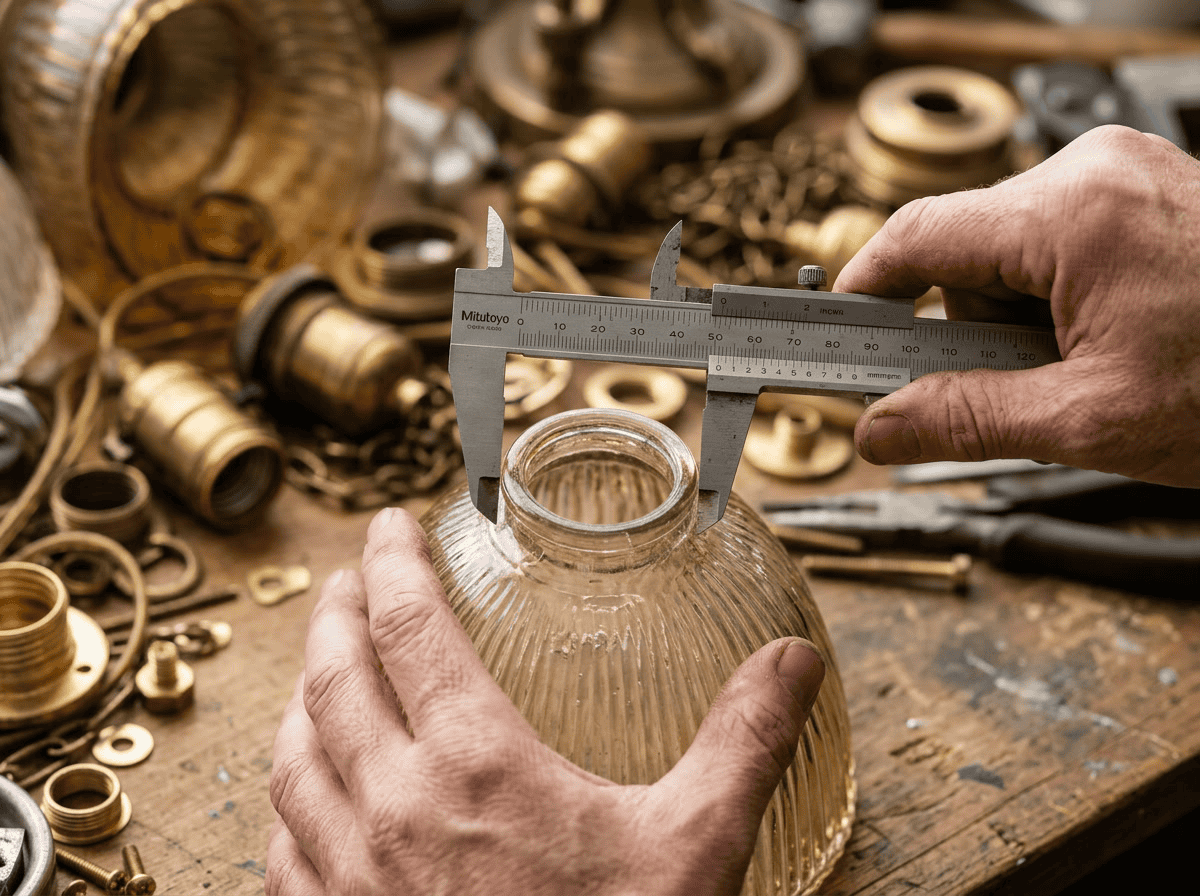
ガラスシェード付きの適切な照明を選ぶには、順番に3つの決定を下すことになります。手順1を間違えると、手順2と3は意味をなさなくなります。.
Step 1 — フィッターサイズを測る
最初に行うべきことは、既存のシェードの開口部(または照明器具のソケット)を測ることです。フィッターサイズは開口部の直径で、最も広い点でインチ単位で測定します。.
標準的なUSフィッターサイズ:
– 2-1/4インチ — ペンダントコードやほとんどの天井用器具で一般的
– 3-1/4″ — 中サイズのフラッシュマウント、いくつかの壁付け燈
– 4″ — 大型フラッシュマウント器具
– スリップ/スパイダー — ハープ組み立ての床灯および卓上灯
間違ったフィッターのシェードは正しく座りません。いくつかのシェード販売業者は「調整可能」なシェードを宣伝します——これらはゴム製ガスケットやセットスクリューを使用して範囲を調整しますが、通常±1/4″です。確実なフィット感を得るには、正確なフィッター一致が常に望ましいです。.
プロのコツ: 壊れたシェードを交換している場合は、古いシェードの破片を照明店へ持参し、直系ネック部分の健全な部分からフィッター開口を測定してもらいます。ひび割れたシェードでもフィッターの形状は保持されます。.
ステップ2 — ガラスタイプを部屋の機能に合わせる
部屋ごとに異なる照明の役割があります。実践的なマトリクスはこちらです:
| 部屋 | 主なニーズ | 推奨ガラス種別 |
|---|---|---|
| キッチン(アイランド/作業) | 明るく、焦点を当てた作業照明 | クリアまたは薄くすりガラス |
| ダイニングルーム | 暖かく、見栄えの良い雰囲気 | アンバー、手吹き、または種子入り |
| リビングルーム(アクセント) | 柔らかい補助光 | すりガラスまたはミルクガラス |
| バスルーム(洗面台) | 均一で陰影のない光 | フロストガラスまたはオパール/ミルクガラス |
| ベッドルーム(ベッドサイド) | 暖かく、調光可能で眠りに適した | アンバーまたは暖色系のガラス |
| 玄関/ホール | 主張的な照明、適度な光量 | filamentまたは染色ガラスの透明 |
| 在宅オフィス | フォーカスされているが、厳しすぎない | 結晶化した、淡く拡散 |
| 屋外(ポーチ) | 耐候性、安全 | ボロシリケート透明または乳白 |
ステップ3 — 適切なLED電球とガラスシェードをペアリング
選ぶガラスシェードは、LED電球の色温度の知覚を変えます。 エネルギー省のルーメンガイド, によると、電球を買うべきなのは ルーメン(明るさ)であってワット数(消費電力)ではありません。 良いルール:
- 450ルーメン ≈40Wの白熱電球を置換
- 800ルーメン ≈ 60W白熱灯を置換します
- 1100ルーメン ≈ 75W白熱灯を置換します
ガラスとの色温度の組み合わせ:
- クリアガラス → 2200–2700Kのヴィンテージ風LEDまたはフィラメント電球を使用します。高色温度(4000K以上)はクリアなガラスを通して鋭く科的に見えます。.
- フロストガラス → 2700–3000Kのソフトホワイト。拡散が3000Kのやや青みを抑え、クリアな影より暖かく感じさせます。.
- ミルク/オパルガラス → 2700K暖白。不透明度がすべてを柔らかくします;クールな色温度は不透明ガラスを通して生命力を失って見えます。.
- アンバーまたは着色ガラス → 2700K minimum。ガラス自体が色温度を暖かくずらします;中立色またはクールな電球から始めると不思議な色かぶりになります。.
- スモークガラス → 3000–4000K。ニュートラルな灰色の色合いがいくらか暖かさを吸収します;やや涼しい電球が補正します。.
ガラス製ランプシェードは安全か? 熱、破損、ワット数ガイド
ガラスシェードは適切に器具と電球に合わせれば安全です。ガラスシェードの故障(亀裂、破損)のほとんどは三つの避けられる間違いに起因します。.
ワット数制限と発熱
すべてのガラスシェード器具には最大ワット数定格があり、通常はソケット内のラベルに印刷されています。 この定格を決して超えないでください。 この評価が存在するのは、シェードの形状が熱をどれだけ逃がすかを決定するためです。
- オープンボトムペンダントシェード (コーン、ベル、シリンダー) 熱が上昇し、上部の開口部から出ることができます。熱の蓄積が少なく、境界線のワット数に対する耐性が高くなります。
- 閉じたグローブシェード (球、完全に密閉された形状) はガラス シェル内に熱を閉じ込めます。より高い熱集中と、より厳格なワット数の規律が必要です。
LED 電球では、白熱電球に比べてこの問題ははるかに少なくなります。標準の 10W LED は、60W 白熱灯とほぼ同じ光出力を生成しますが、発生する熱ははるかに少なくなります。実際には、通常の使用で危険な温度に達する LED を備えたガラスシェード器具はほとんどありません。
例外: 密閉定格器具に LED 電球を後付けします。 一部のLED電球は完全に密閉された設置器具向けに評価されておらず、過熱して寿命が縮み、最悪の場合はガラスを圧迫する形で電球が故障することがあります。.
LED パッケージで「定格密閉型器具」を探してください。 ガラスシェードが球体または完全に密閉された形状の場合。
破損リスクと配置
ガラスは衝撃を受けると割れることがある――それは当然だ。あまり明らかではないのは、ガラスも設置中に割れ目が入ることがあるということだ。 熱衝撃 設置中に起こる失敗の最も一般的な原因は、ガラスシェードを金属ソケットに直接当てたまま、ガラスが室温に達する前に暖かいまたは冷たい状態で設置することです。.
緩和手順:
1. 寒いガレージや屋根裏で保管していた場合は、設置前にガラスシェードを室温に戻してください。.
2. ソケットにシェードをねじ込む際は、ガラスの首部と金属部品の接触を避ける-ほとんどの品質の器具にはゴムまたはフェルトのガスケットが付属しています。.
3. 手で締め付けられるリングのみを締め付けてください――過度の締め付けはフィッター開口部に応力を集中させます。.
子供とペットの安全
目の高さ以下に取り付けられたガラスシェード(卓上ランプ、フロアランプ、低垂下のペンダントなど)は、子供やペットによりぶつけられることがあります。こうした状況では:
- 選択する より厚いガラス (通常3mm以上)最も薄い予算向けの選択肢よりも
- シードまたはテクスチャーガラス 薄吹きの種類よりもやや厚みがある傾向があります
- 検討してください ケージ付きペンダントデザイン ガラス球を直接接触から保護します
- 幼い子供のいる家庭では、天井器具の完全密閉型ミルクガラスやすりガラス球(手の届かない場所に設置)により、リスクを完全に排除します
ガラスシェード照明の今後のトレンド(2026年以降)
ガラス器具とのスマート照明統合
ガラスシェードとスマートLED電球の組み合わせにより、ガラスシェードの選択に対する考え方が変わりました。2026年現在、アプリや音声操作で1800Kから6500Kに調整できる調色可能なホワイトスマート電球は、購入者を ニュートラルなガラスタイプ (クリア、軽くすりガラス)で、光を事前に色付けしないものに向かわせています。.
すりガラスやクリアガラスのシェードに調色可能なスマートLEDを組み合わせると、朝のエネルギー充電用の光(5000K)から夜のリラックス用の光(1800K)まで、物理的な器具を変えることなくすべてを調整できる一体型の照明になります。この「一つのシェード、すべてのムード」アプローチは、住宅環境において色付きガラスよりもニュートラルガラスの需要を著しく高めています。.
対照的に、アンバー、コバルト、グリーンの色付きガラスシェードは、 ホスピタリティや商業施設 の設定でますます人気が高まっており、固定されたムードがデザインの意図であり、スマート照明が優先されていません。.
サステナビリティ:リサイクルおよび低炭素ガラスシェード
ガラス製造はエネルギー集約型ですが、ガラスという素材は 無限にリサイクル可能 品質劣化なし。現在、ますます多くのメーカーが、使用済みリサイクルガラスを30~70%使用してガラスシェードを製造しており、これにより原材料を溶かすのに必要なエネルギーが削減されます。.
購入者はこれらの製品を次のように見分けることができます。
– 製品説明の「リサイクルガラス含有量」
– サステナビリティプログラムからの第三者認証
– サプライチェーン開示で炭素削減目標を明記しているメーカー
手吹きガラスシェードは、射出成形機械やエネルギー集約型のプレス装置を使用しないため、大量生産されたプレスガラスよりも本質的に炭素排出量が少なくなります。人間の息と技術によって形作られたランプシェードは、何世紀も変わらない製造プロセスを持っています。.
よくある質問
ガラス製のライトカバーは何と呼ばれますか?
ガラス製のライトカバーは、 ガラスシェード or ガラスグローブ と呼ばれます。形状によって異なります。完全に球形のカバーはグローブ、開口部がある、または形状のあるカバーはシェードです。器具に取り付ける開口部は フィッター. と呼ばれます。貿易カタログでは、「ガラスランプシェード」、「フィクスチャシェード」、「交換用ガラスグローブ」という用語が互換的に使用されているのを目にするでしょう。.
ガラスランプシェードは良いですか?
はい、適切な用途であれば。ガラスシェードは 布製よりも耐久性がある (焦げ付き、色あせがなく、拭き取り可能)、クリスタルクリアから完全不透明まで幅広い光拡散オプションを提供し、安価な交換部品として入手可能です。欠点は衝撃による破損しやすさです。ほとんどのキッチン、バスルーム、オープンリビングスペースでは、ガラスが最も実用的な選択肢です。.
色付きガラスランプは何と呼ばれますか?
色付きガラスランプは、一般的に アートガラスランプ or ステンドグラスランプ. ルイ・ティファニーが普及させた銅箔モザイク技法を使用する場合、それらは ティファニーランプ. 単色ガラスシェード(アンバー、コバルト、ルビー)を持つランプは一般的に カラフルガラスペンダントライト またはガラスの色(例:『アンバーガラスペンダント』)で識別される。.
ガラス製のランプシェードは安全ですか?
ガラス製のランプシェードは、器具の定格ワット数以下で使用し、付属のガスケットで正しく取り付け、器具タイプに適したLED電球と組み合わせれば安全です。破損のリスクが主な安全上の懸念事項です — グローブスタイルのシェードは子供の手の届かない場所に置き、閉じた器具用のLEDを使用し、設置時の急激な温度変化を避けてください。.
器具に適したガラスシェードのサイズは何ですか?
ベースの フィッター開口部 既存のシェードや器具ソケットに合わせて選びます。最も一般的なサイズは2-1/4インチ、3-1/4インチ、4インチです。フィッターの開口部は器具のソケットコラーの直径に合う必要があります。壊れたシェードを交換する場合、そのサイズは通常、器具のソケットハウジングに記載されています。.
ガラスのグローブシェードにどのLED電球を使用できますか?
もう少しです。ために 囲い込みされたグローブシェード (電球の周りが完全に密閉されたもの)、特に囲い込み用に評価されたLED電球が必要です — これらはパッケージに「囲い込み用フィクスチャー評価済み」と印刷されています。囲い込みされた器具内の標準的なLED電球は過熱しやすく、寿命を大幅に縮める可能性があります。オープンボトムのペンダントシェードには、器具のワット数制限内の任意のLED電球が適しています。.
ガラス製のランプシェードをストリークなく清掃するにはどうすれば良いですか?
シェードを取り外す前に電源を切り、完全に冷えるまで待ちます。次のもので拭き取ります: 白酢と水を50/50の割合で混ぜたものを含ませたマイクロファイバークロス — これによりミネラルの沈着物が溶解し、残留物が残りません。紙タオル(糸くずが出る)やアンモニアを含む市販のガラスクリーナーは避けてください(時間とともにすりガラス仕上げを曇らせる可能性があります)。すぐにもう一つの乾いたマイクロファイバークロスで乾拭きします。.
結論
ガラスシェードの照明は、最も多用途な照明の選択肢の一つです — しかし、それはあなたの部屋に適したタイプのガラス、フィクスチャーに合ったフィッター、そしてガラスに適したLEDを選ぶ場合に限ります。クリアガラスは美しい電球を必要とします。すりガラスはほとんどすべての電球を許容し、ほとんどすべての部屋に似合います。ホウケイ酸ガラスは、熱や屋外用途でソーダライムよりも長持ちします。どのスタイルを選んでも、適切なフィッターのサイズは絶対に妥協できない出発点です。.
三つのステップは簡単です: まずフィッターを測定し、次にガラスの種類を部屋の照明目的に合わせて選び、最後に適切な色温度範囲のLED電球とペアリングします。. これら三つを正しく選べば、あとのスタイル、素材、仕上げは推測ではなく個人の好みの問題となります。次の全範囲の ガラスシェードライト を閲覧して、あなたのスペースにぴったりのシェードと器具を見つけてください。.