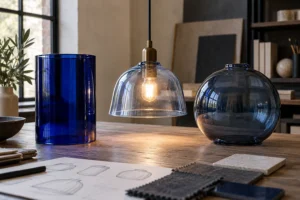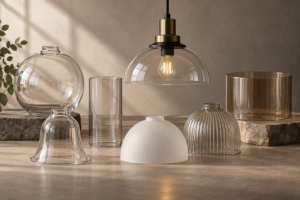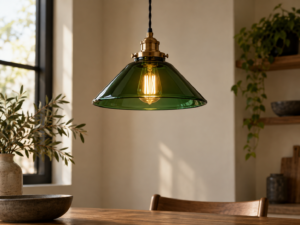
コーヒーショップの装飾ガラスシェードはブランドの美学に合わせるべきです。スペシャルティコーヒーには種入りガラスや手吹きガラス(職人品質のシグナル)、工業的ヴィンテージコンセプトにはフィラメントLED付きクリアガラス、現代的ミニマリストカフェにはフロスト加工のリブやフルートガラス、カフェバーの夜営業にはアンバーガラスがおすすめです。ガラスシェードは単なる照明器具ではなく、ブランド要素です。.
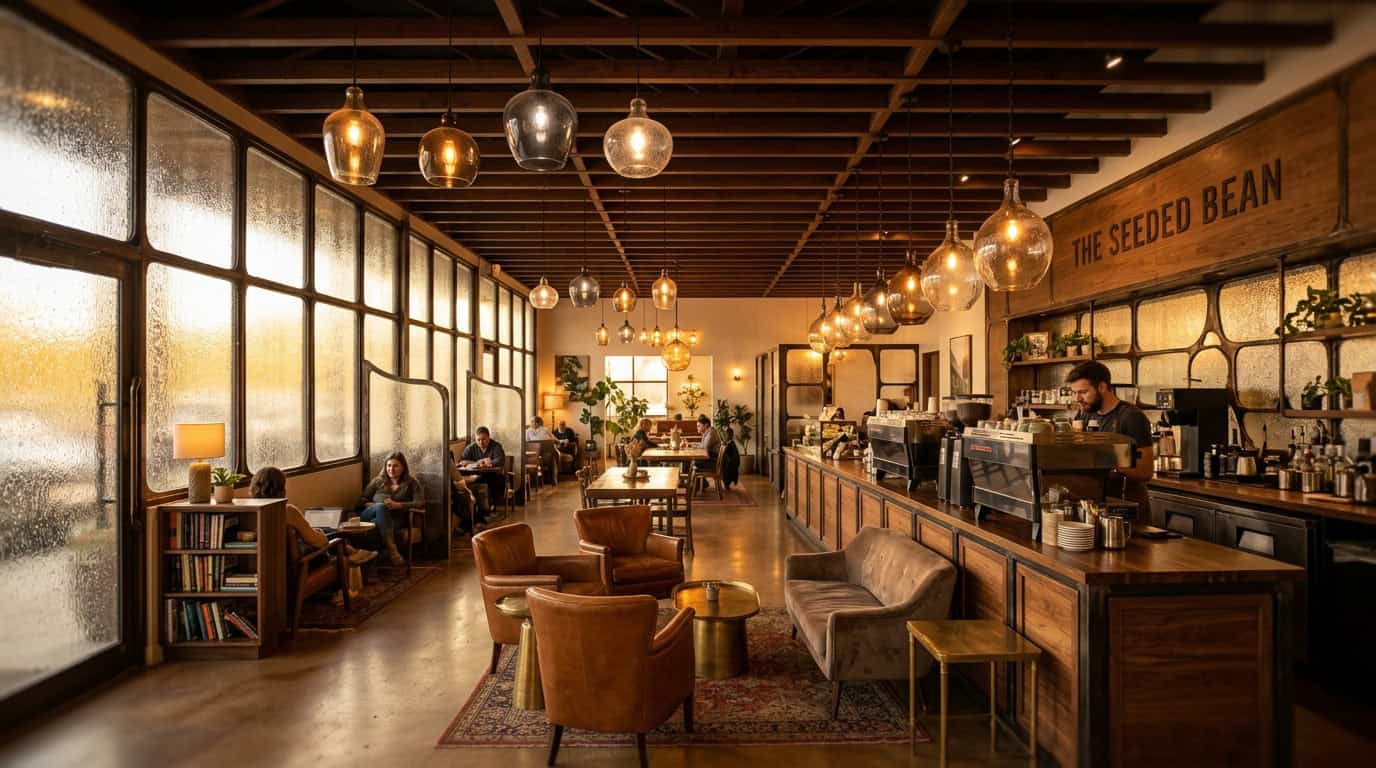
コーヒーショップのガラスシェードはすべての写真に写っています。ラテアートの写真、メニューのフラットレイ、SNSの「コーヒーショップで仕事中」投稿など、背景には必ずペンダントシェードがぼやけて暖かく存在しています。ガラスシェードは商業空間で最も撮影される照明要素であり、目の高さにあり、内部から照らされ、ほぼすべての人の高さで撮影された写真の背景に現れます。.
その普遍性が コーヒーショップ用の装飾ガラスシェード 照明だけでなくブランドの決定となります。このガイドでは、各コーヒーショップの美学を定義するガラスシェードのスタイル、なぜそれが効果的なのか、正しく指定する方法を解説します。.
なぜガラスシェードがコーヒーショップのアイデンティティを定義するのか
コーヒーショップの照明は、ブランドアイデンティティ、顧客体験、運用機能が交差する、他の商業照明にはない独特の存在です。.
インスタグラム要素。. コーヒーはSNSで最も撮影される食品カテゴリーです。 フード&ビバレッジのSNSコンテンツに関するSprout Socialインデックス は、コーヒーショップがインスタグラムで最もエンゲージメントの高いホスピタリティ施設の一つであると常に示しています。主に、商品(コーヒー)と環境(カフェ空間)がどちらも劇的に撮影されるためです。ガラスシェードは常に写真に登場し、その質と個性がコーヒーショップのビジュアルブランドに影響を与えます。.
滞在時間の要素。. コーヒーショップの顧客が30分以上滞在すると、装飾ガラスシェードを長時間目にします。これは一瞬見るだけでなく、じっくり観察する対象です。気泡が見える種入りガラスシェード、色の微妙な変化がある手吹きグローブ、光のパターンが面白いリブやフルートガラスシェードは、訪問体験に美的喜びをもたらします。一般的なフロスト加工の白いグローブは機能的ですが印象には残りません。.
ブランド一貫性の要素。. シングルオリジン豆を仕入れ、プアオーバーバーを使用し、陶器カップでコーヒーを提供するスペシャルティコーヒーショップは、品質とクラフトを軸にブランドストーリーを確立しています。ガラスシェードもそのストーリーと一貫性が必要です。安価なクリアガラスグローブと汎用ペンダントコードは、ブランドが伝えたいことと矛盾します。.
コーヒーショップコンセプト別装飾ガラスシェードスタイル
スペシャルティコーヒー&サードウェーブコーヒーバー
サードウェーブスペシャルティコーヒーは、コーヒーをワインや職人食品と同じようにクラフト製品として位置付け、物語性を重視します。デザイン環境もそれを強調し、自然素材、最小限の装飾、クラフトオブジェクト、プロセスの可視化が特徴です。.
おすすめの装飾ガラスシェード:種入りガラスまたは手吹きアートガラス
シードガラス(気泡が含まれている)は、スペシャルティコーヒーショップに最適なシェード素材です。ガラスの手作り感—気泡やわずかな不規則さ—は、職人の物語と一致します。点灯時、シードガラスは柔らかく生き生きとした光質を生み出し、気泡が光を屈折・拡散させ、通常のガラスでは再現できない微妙なパターンを作り出します。.
手吹きガラスは、このおすすめの中でもプレミアムなバージョンです。手吹きのグローブは、ガラスの成分による自然なアンバーや淡いセージ色の色味、吹きガラス工程による厚みの違い、最小限の有機的な非対称性が、気取らないクラフトマンシップを示します。バリスタの技術が見え、豆の産地がメニューに記載されているスペシャルティコーヒーバーでは、手吹きガラスのシェードは陶器のカップと同じく、「意図を持って作られた」ことを物語る素材選びです。“
色温度のおすすめ:2700Kの電球色LED。シードガラスや手吹きガラスは、滑らかなフロストガラスよりもやや透過率が低い(65〜78%)ため、2700Kの光源がテクスチャーのあるガラスを通して暖かく心地よい光を生み出し、高ワット数のLEDを必要としません。.
インダストリアルおよび倉庫リノベーション系コーヒーショップ
むき出しのレンガやコンクリート、黒皮鉄の器具、露出したダクト、リクレイムドウッド—インダストリアルなコーヒーショップの美学は、過去15年間にわたり日本の独立系都市型コーヒーショップを定義してきました。.
最適な装飾用ガラスシェード:クリアボロシリケイトガラスのグローブ+フィラメントLED
エジソンスタイルのフィラメントLEDが見えるクリアガラスのグローブは、インダストリアル系コーヒーショップの定番ペンダントです。2200〜2400Kのフィラメントの暖かいオレンジ色の輝きがクリアガラスのドームに包まれ、これは最も多く写真に撮られているカフェ照明要素であり、すべての「コーヒーショップの美学」ムードボードに登場し、本格的で独立したコーヒーカルチャーの視覚的な象徴となっています。.
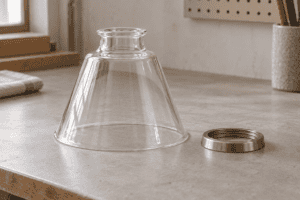
実用的な仕様:クリアボロシリケイトガラス(ソーダ石灰ガラスではなく、密閉されたコーヒーショップ環境で冷たい外気と電球付近の暖かい空気の温度差により2〜3年で微細な亀裂が発生するため)、4インチギャラリーリングフィッター、8〜10インチのグローブ直径、2200KのフィラメントスタイルLED。.
高さ:カウンターやバーカウンターの表面から約66〜76cm。フィラメントが着席時の目線より上にありつつ、カウンターで暖かい光が主役になる距離です。.
日本の 照明学会の装飾用照明器具の美学に関する資料, クリアガラスシェード内のフィラメントLEDは、約8,000〜15,000cd/m²の視覚的な明るさ(輝度)を生み出します。これは側方視での不快グレア閾値(通常30,000cd/m²以上)を大きく下回るため、クリアガラス内のフィラメントLEDは快適に使用できます。 カフェ カウンターの高さでは、標準的なLEDチップだとグレアが発生しますが、フィラメントLEDなら快適です。.
コンテンポラリーミニマリスト系コーヒーショップ
ミニマリスト系コーヒーショップ—白い壁、コンクリート床、北欧デザインの影響、コーヒーとその儀式への集中—では、視覚的に静かでありながら素材感のあるガラスシェードが使われます。.
最適な装飾用ガラスシェード:リブ入りまたはフルート加工のフロストガラス、またはオパールホワイトガラス
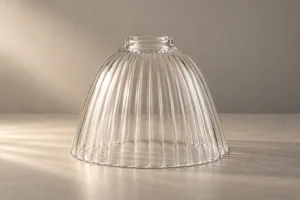
リブ入りガラス(ガラス表面に平行な縦溝が入っている)は独特の光質を生み出します。リブが微妙な縦の影を作り、ペンダントの発光面に視覚的なテクスチャーを与え、リブ間のフロスト加工が光源を拡散します。その結果、シンプルなフロストガラスよりも視覚的に面白く、シードガラスの民芸的な雰囲気はありません。.
オパールホワイトガラスを使ったクリーンな幾何学形状(完全な球体や正確な円筒)は、素材感を保ちながら視覚的な抑制を実現します。オパールガラスの密度が高く輝く白は、視覚的な複雑さを加えずに高級感を演出します。.
色温度:コンテンポラリーミニマリスト系コーヒーショップには3000Kが最適で、ノートパソコン作業客の生産性と、温かみのある雰囲気の両立が可能です。.
ヴィンテージおよびレトロテーマのコーヒーショップ
ヴィンテージ風のカフェ—1940年代から1960年代の日本のダイナーやヨーロッパのカフェ文化、またはヴィクトリア朝のティールームにインスパイアされた店舗—では、装飾用ガラスシェードが当時の雰囲気を忠実に再現するアイテムとして使われます。.
おすすめの装飾用ガラスシェード:時代に合った金具を組み合わせたオパールミルクガラスのドーム型またはベル型シェード
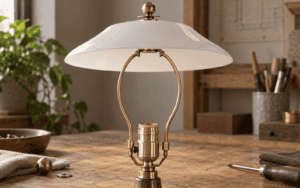
時代を忠実に再現したオパールガラスのドーム(真っ白ではなくクリーム色のオパール、成形時の継ぎ目や厚みのムラが見えるもの)は、ヴィンテージやレトロなカフェの美学に最適なガラスシェードです。時代物のオパールガラスの温かみのあるクリーム色は、現代のスズ酸化物オパールガラスの冷たい白色とは異なり、独特のヴィンテージ感のある光を生み出します。.
ヴィクトリア朝やエドワード朝のカフェをイメージしたテーマには、装飾的な真鍮ギャラリーリングに取り付けたオパールまたは淡いアンバーガラスのフルーテッドベルシェードが本格的な時代要素となります。.
カフェバーおよびオールデイレストランのコンセプト
カフェバーのコンセプトは、朝はコーヒーと朝食、昼から午後はランチ、夜はカクテルやワインを提供します。ガラスシェードはこの3つのモードすべてに対応する必要があるか、またはカフェゾーンとバーゾーンで異なるガラスシェード仕様を設ける必要があります。.
おすすめの装飾用ガラスシェード:フロストホワイト(昼間のカフェ)+アンバー(夜のバーエリア)
カフェとバーのゾーンが物理的に分かれている場合は、カフェ席エリアにはフロストホワイトガラス、バーカウンターやバー向きの席にはアンバーガラスを指定します。2つのゾーンで色温度が変わることで、バーが空間の別モードであることを自然に視覚的に伝えます。.
空間全体が両方のモードで運用される場合は、調光回路付きのフロストホワイトガラスを使用し、昼間は3000Kの全光量、夜は実質2400Kで40%出力に切り替えることで両モードに対応します。調光による変化は、ガラスシェードの変更よりも空間全体に一斉に効果が及ぶため、モードの切り替えとしてより効果的です。.
素材別のガラスシェード装飾効果
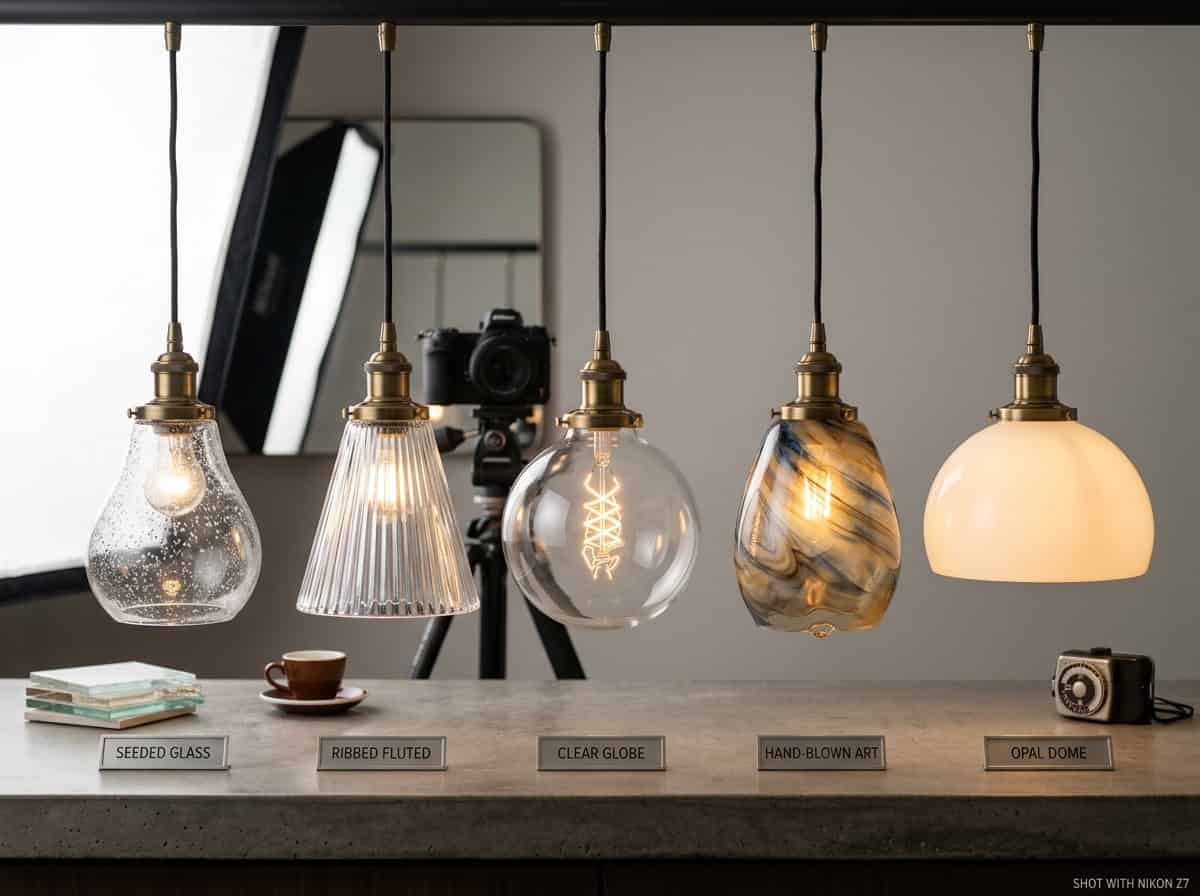
異なる装飾用ガラスシェード材料は、コーヒーショップの雰囲気に寄与する視覚的・照明効果を生み出します:
種入りガラス: 穏やかな光の変化 — 気泡が微妙な屈折を生み出し、照らされたシェードに生き生きとした有機的な質感をもたらします。未点灯時の外観は乳白で興味深いガラスで、内部の質感が見える状態です。.
リブ/フルーテッドガラス: 影のパターン — リブが隣接する面に微妙な縦の影と光のラインを描きます。効果は建築的で意図的な印象を与え、現代的でミニマリストな美学に適しています。.
手吹きアートガラス: 有機的な個性 — わずかな色のばらつき、厚みの不規則性、表面特性があり、同じ作品を正確に二つと共有しません。各シェードはわずかに異なり、特徴(職人の個性)であったり、大規模なフィットアウトでの生産ロットの不一致という課題にもなり得ます。.
クリアガラス(フィラメントLED): ドラマ性 — 見えるフィラメントが暖かいオレンジ色の光の点を作り、ペンダントの視覚的焦点となります。クリアガラスは視覚的には消え、発光するフィラメントとその周囲の暖かい光輪だけが残ります。.
オパール/ミルクガラス: プレミアムな輝き — 密度の高いクリーミーな白色のオパールガラスが均一かつ完全に発光し、光源や質感は見えません。ペンダントは光を放つように見え、光を内包しているようには見えません。.
アンバーガラス: 温かさと奥行き — ガラス自体が内側から照らされた暖かな輝く objek となります。アンバー色は未点灯時にも見え、点灯時には周囲の雰囲気を定義する暖かなオレンジ-アンバーの輝きを放ちます。.
コーヒーショップのフィットアウト用装飾ガラスシェードの仕様
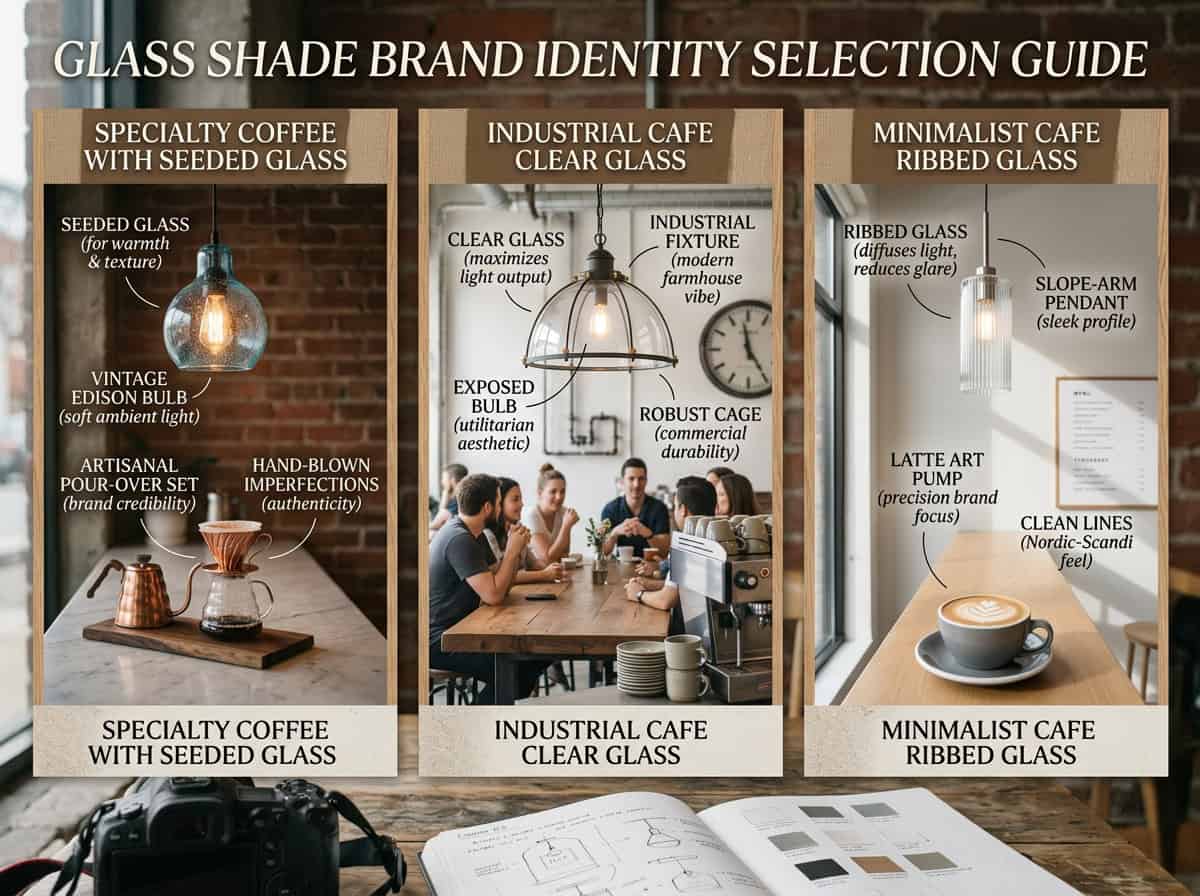
ステップ1: ブランドストーリーを1文で定義する。. このコーヒーショップはクラフトと起源についてですか? コミュニティと温かさ? デザインとミニマルな美学? ガラスシェードは、ブランドストーリーが構築されるいずれかを強化するべきです。.
ステップ2: ブランドストーリーに合わせてガラス材料を選ぶ:
– クラフトと職人技 → 芽だしガラスまたは手吹き
– コミュニティと温かさ → 曇りガラスまたはツヤのあるオパール、2700K
– デザインとミニマル → 糸目/フルート状の曇りガラスまたは純粋なオパール
– 工業的で本格的 → 透明ガラス + フィラメントLED
– プレミアムで洗練された → オパールまたはアンバーと高品質ハードウェア
ステップ3: 主写真ゾーンのペンダント位置を指定する。. ゲストの写真撮影が集中する場所を特定します — エスプレッソバー、最適な自然光のテーブル、特徴的なシーティングエリア。これらの位置には装飾用ガラスシェードをまず指定します;事務的なエリア(カウンター席、テイクアウトゾーン)は、よりシンプルな曇りガラスを使用できます。.
ステップ4: バッチの一貫性要件を確認する。. 芽だしガラスと手吹きガラスは、色の間にいくらかのばらつきが本質的にあります — ばらつきを最小化するために「マッチドバッチ」を指定しますが、手作り生産のシェードは同一ではないことを受け入れてください。曇りガラスと糸目ガラスについては、バッチの一貫性のために厳密な寸法と透過率の公差を指定します。.
あたり Energy.gov 商業用照明プログラム(中小企業向け), 、美観と効率の両方を慎重に指定した装飾的なペンダント照明を備えた商業空間は、未計画の照明設計と比較して30–40%の同等の照度を、エネルギーコストを抑えて達成できます — 公共料金が運用費用として重要な要素となる小さなコーヒーショップに該当します。.
2026年のデコラティブなコーヒーショップ用ガラスシェードのトレンド
リブ付きガラスの瞬間。. リブ付きでフルート状のガラス美学は、以前はヴィンテージ風呂場の器具と関連付けられていたが、現代のホスピタリティデザインでは装飾用ペンダント要素として採用されている。リブ付きガラスのペンダントは、無地のすりガラス球の代替として、ハイエンドのカフェやコーヒー-barで現れている。.
着色ガラスの復活。. 淡いセージグリーン、淡いピンク系、淡いアンバーのガラスシェード—クリアや白ではなくカラーで—がスペシャルティコーヒーショップのデザインに登場している。色は控えめ(ほぼ白い光をわずかに tint する程度)だが、 lit されたときもされていないときも材質の選択として目に見える。.
大型の特徴的ペンダント。. 同じサイズのペンダントを一直線に並べる代わりに、いくつかの現代的なコーヒーショップは、視覚的なアンカーとして一つまたは二つの大径ペンダント(18–24インチの球体)を指定し、空間の他の場所には小型の機能的ペンダントを配置して対比を作っている。.
| トレンド | ガラスシェードのスタイル | コーヒーショップの文脈 |
|---|---|---|
| リブ/フルートガラス | 現代的でミニマリスト | 都会的、デザイン志向 |
| 着色ガラス(セージ、 blush) | 淡い色調のアートグラス | スペシャリティ、ライフスタイル |
| オーバサイズの特徴ペンダント | 大口径の種子付きまたはオパール | 目的地 カフェ |
| 手吹きの職人ガラス | 有機的な形、わずかな色合い | サードウェーブ、クラフト |
| 産業用クリアグラスの安定化 | クリア+フィラメントLED | 確立された美学 |
よくある質問
specialty coffee shop で最も適している装飾ガラスシェードはどれですか?
seeded glass または hand-blown art glass は specialty coffee ブランドの物語を最もよく支えます — ガラス素材の目に見える職人品質がコーヒー自体が伝えるクラフトの物語と一致します。わずかな有機的変動、吊り下げられた気泡、手作りガラスの特徴は、specialty coffee が調達と技術を通じて伝える同じ意図的な職人技を示します。.
同じコーヒーショップで異なる装飾ガラスシェードスタイルを混ぜてもよいですか?
はい、意図的に — ただし一貫したデザインロジックとともに。一般的で効果的なアプローチの例: 主なエスプレッソバーと特徴的な seating エリアには1つの装飾ガラスシェードスタイルを用い(例: アーティザンの物語のための seeded glass)、カウンターや作業テーブルの seating には機能的な光がより重要なため、よりシンプルな フロスト glass を使う。ロジックなしの混用は視覚的一貫性を欠く。.
コーヒーショップのエスプレッソバーの上にどのガラスシェードを使うべきですか?
エスプレッソバーの上には、産業系コンセプトには filament LED を用いた透明ガラス、スペシャリティ/職人系コンセプトには 2700K LED を用いた seeded glass が最も効果的です。エスプレッソバーはコーヒーショップの視覚的中心であり、その上のペンダントシェードは写真のすべてに写り込みます — この位置でブランドを最もよく表すガラスシェードを指定してください。.
装飾ガラスシェードはコーヒーショップの写真撮影にどのような影響を与えますか?
大きな影響があります。 filament LED を使った透明ガラスは背景写真に暖色系のボケを作り出し — 「コーヒーショップの美学」サインとなります。 seeded glass は背景に質感のある暖かな光を生み出します。 Opal glass は背景の光をよりきれいで柔らかなものにします。 Amber glass は写真の暖色系の対象物(コーヒー、ペストリー、木製表面)をより豊かに輝かせます。 フロスト white は最も中性的な写真背景です。.
屋外のコーヒーショップ用シーティングに適した装飾ガラスシェードはありますか?
はい — 屋外対応のコーヒーショップ席エリアには IP44 あるいは IP65 等級の borosilicate ガラスシェードを使用します。 屋外の覆われたカフェテラスには seeded borosilicate ガラスが適しています; 屋外の産業スタイルの seating には filament LED を用いたクリア borosilicate が適切です。 シェードの IP 等級が屋外の場所と一致するようにし、商用の湿潤/湿気対応ペンダント本体金具を使用してください。.
二人掛けのテーブル上の装飾ガラスシェードの適切なサイズは?
2席テーブルには直径10–12インチのグローブを用い、テーブル面から28–32インチ吊るします。エスプレッソバーには直径8–10インチをバー面から26–30インチの高さで。4席テーブルや共有テーブルのアンカー用の特徴的な位置には直径14–16インチのグローブを高さ30–34インチで、より大きな規模の視覚的重さを作ります。.
コーヒーショップの装飾ガラスシェードをどう清掃しますか?
シェードは月に1回取り外します(蒸気機器の近くでは週に1回)。 seeded および hand-blown glass には、ぬるま湯と食器用洗剤を浸して10–15分置き、柔らかい布で拭きます。 表面を傷つける研磨パッドの使用は避けてください。 ribbed glass は溝の間に残留物がたまる部分を柔らかいブラシで清掃します。 clear glass はぬるま湯で洗い流し、柔らかい布で拭いてすぐに乾燥させ、水滴の跡を防ぎます。どのタイプも再取り付け前に完全に乾燥させてください。.
結論
コーヒーショップの装飾用ガラスシェード は照明判断に偽装されたブランド判断である。すべての来客写真に現れるガラスシェードは、すべてのコーヒー注ぎショットの背景を定義し、空間で30分を過ごすすべての顧客によって検討されており、意図的であれそうでなれそうであれ、ブランドについて何かを伝えています。.
正しいアプローチは、正しいブランドストーリーを語るガラスシェードを選ぶことです。クラフトと職人の物語には種子吹きガラスやハンドブローガラス、産業的信頼性にはフィラメントLED付きクリアガラス、現代的なミニマリズムにはリブ付きまたはフルテッドすりガラス、暖かいコミュニティ拠点と夕方バーの文脈にはアンバーガラスを選びます。.
種子吹き、ハンドブロー、リブ付き、すりガラス、オパール、アンバー、クリアガラスの装飾用ガラスシェードは、専門的なホスピタリティブランドを支える素材特性を持つ商業用級ボロシリケート構造で— jxlampshade.comのガラスランプシェード製品ライン 専門的なコーヒーとホスピタリティの仕様を網羅します。.