壁用ライトシェード:完全購入ガイド(2026年)
ウォールライトシェードは、壁付け照明器具の装飾用カバーで、光を拡散し、まぶしさを軽減し、どんな部屋にも洗練されたスタイルを加えます。.
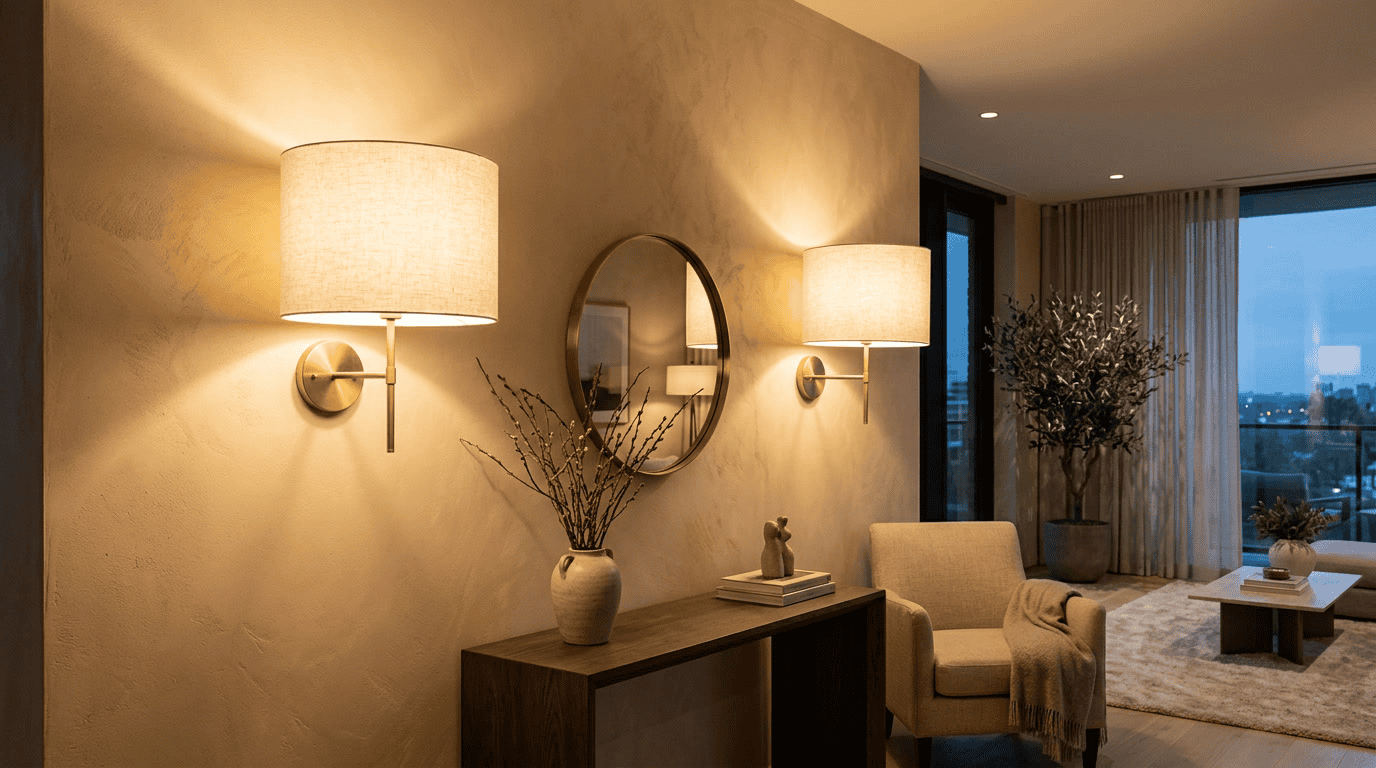
ついに古いウォールブラケットを交換したものの、むき出しの電球が以前よりも悪く見えることに気づきました。または、スイングアーム式のウォールライトが付いた家を受け継いだものの、元のシェードが黄ばんでいたり、ひび割れていたり、部屋に合わなかったりする場合もあります。いずれにせよ、 壁用のライトシェード 照明器具の購入は一見簡単そうに思えますが、実際にはフィッターリングより2インチも幅が広いシェードを手にして照明売り場に立つと、そうではないことに気づきます。.
このガイドがその問題を解決します。読み終える頃には、ご自身のブラケットに合うシェードのスタイル、完璧な交換のための測り方、バスルームとベッドルームで耐久性のある素材、2026年に急成長するウォールシェードのトレンドで注意すべき点が正確に分かるようになります。もう迷うことも返品もありません。.
ウォール用ライトシェードとは?
ウォール用照明器具のライトシェードは、壁付けランプベース、ブラケット、またはスイングアームに取り付けるために設計された専用のシェードです。 ― そして、天井やテーブルランプ用のシェードとは、フィット感や機能面で重要な違いがあります。.
天井ペンダントシェードは下向きに吊り下げられ、コードからぶら下がります。テーブルランプのシェードは重りのあるベースの上のハープに乗っています。 ウォールシェード, は、対照的に、次の条件を満たす必要があります:
- 垂直な壁面にぴったり、または一定の角度で取り付けること
- ウォールブラケットのアームを避けて、壁自体に触れないこと
- 光を部屋の外側ややや下方向に向けること ― 天井ファンに向けて上に照らさないこと
その結果、ウォールシェードは奥行きが浅く、高さと幅の比率が低く、取り付け金具(フィッター)に合わせて特別に設計されています。 フィッター.
ウォールライトシェードと天井シェードの違い
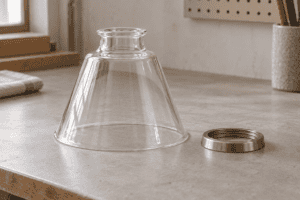
最も重要な構造上の違いは、 フィッター開口部 です。これはシェードの上部(または下部)にある、器具に固定するための穴です。天井器具は中央の金属リング付きスパイダーフィッターをよく使用します。ウォールブラケットでは主に次の3つのシステムが使われます:
- UNOフィッター:シェードをねじ込み式ランプソケットに直接取り付けます。日本のスイングアーム式ウォールランプでよく見られます。シェードはソケット自体から吊り下げられます。.
- クリップオンフィッター:スプリングクリップで電球を挟みます。古いブラケットやヨーロッパ風のウォール器具で使われます。特定の電球形状でのみ使用可能です ― A19電球はクリップに対応しますが、シャンデリアベースは通常対応しません。.
- ユーロ/デュプレックスフィッター:シェードが器具のカラーにかぶせる2リングシステム。日本の壁付け照明によく使われており、北欧風デザインでも増えています。.
フィッタータイプを確認せずにシェードを購入するのは最もよくある失敗です。UNOシェードは電球にクリップできませんし、クリップオンシェードはUNOソケットにねじ込めません。.
壁付け照明シェードの構造
| 部位 | 説明 | なぜ重要か |
|---|---|---|
| 上部開口部(フィッター) | UNOねじ、クリップ、またはユーロリング | 必ずブラケット金具と完全に一致させる必要があります |
| 下部開口部 | シェードの開口部 | 下方向にどれだけ光が広がるかを決める |
| 高さ | 上縁から下縁までの垂直寸法 | 壁に対する見た目のバランスを決める |
| 幅(下部直径) | シェードの最も広い部分 | ブラケットアームを避ける必要があり、照明範囲を決定する |
| 傾斜/テーパー | 側面がどれだけ急角度で内側に傾いているか | 光の広がり角度に影響する |
| ライニング | 内面色(白、金、黒) | 白はニュートラルな光を反射し、金は暖かみを、黒はドラマチックな雰囲気を演出します |
壁用照明シェードの種類
壁用照明器具の主なシェードの種類は、ドラム、エンパイア、クーリー、スクエア、ハーフシェードの5つです。 — それぞれが独自の光のパターンと視覚的な重みを生み出します。.
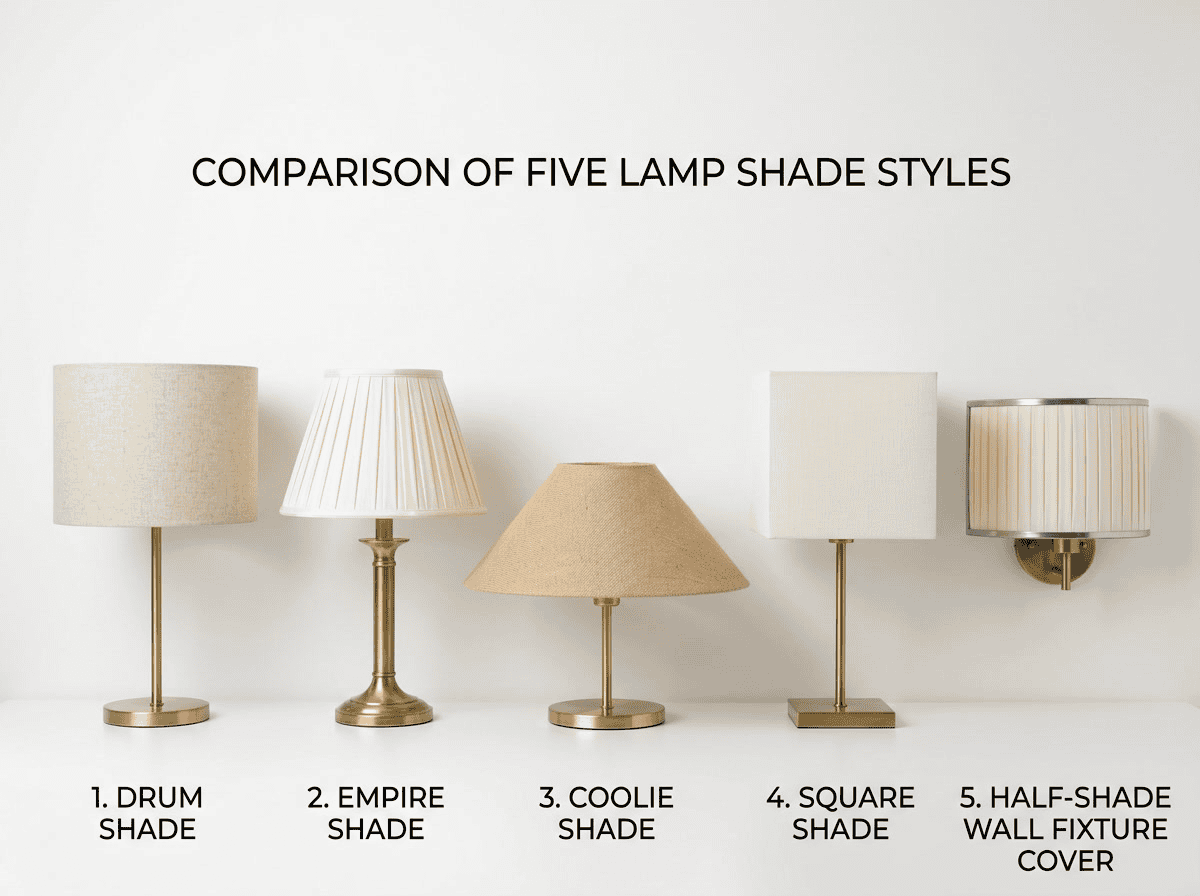
ドラムシェード
ドラムシェードは円筒形で、上下の直径が同じで側面がまっすぐです。最もニュートラルなスタイルであり、現代的、トランジショナル、インダストリアルなインテリアにも調和します。シェードの上下から光が放たれ、器具の周囲に柔らかな間接光と、下部に直接的な光のプールを作り出します。.
確認すべき主な仕様: ドラムシェードは奥行き(前後)が大きいため、ブラケットアームが壁から十分に突き出ていないと、シェードの背面が壁面に押し付けられてしまいます。注文前にアームの壁からのクリアランスを測定してください。.
人気のある生地の選択肢:リネン、コットン、フェイクシルク。2024年の日本照明協会の調査によると、 リネンドラムシェードは住宅用壁シェード販売のおよそ38%を占めています — 2020年以降、“静かなラグジュアリー”インテリアトレンドの影響で、そのシェアは毎年増加しています。.
エンパイア型・ベル型シェード
エンパイアシェードは上部が狭く、下部が広い形状で、クラシックなランプシェードのシルエットです。ベルシェードは、側面が直線的に広がるのではなく、外側に曲線を描く柔らかなバリエーションです。どちらのスタイルも光を主に下方向に集めるため、読書用のブラケットライトやベッドサイドの壁付け照明、廊下の照明など、拡散光よりも集中的な照明が必要な場所に最適です。.
エンパイアシェードは、伝統的、トランジショナル、ハリウッドリージェンシーのインテリアと自然に調和します。ブリッシュやシャンパン色のプリーツエンパイアシェードは、シンプルなスイングアーム照明をカスタムメイドのような雰囲気に格上げします。.
クーリーシェードとコーンシェード
クーリーシェードは幅広で平らな円錐形で、下部直径に対して高さが低く、急な傾斜があります。光を下方向と外側に強く広げ、座席エリア全体やアクセントウォールを照らす広い光のプールを作ります。浅いプロファイルのため、クーリーシェードは壁のクリアランスを妨げることがほとんどありません。.
コーンシェードは似ていますが、上部がより高く円筒状で、そこから傾斜に移行します。バフェランプシェードとしてよく使われ、コンソールテーブルやサイドボード、ダイニングルームのバフェを挟む壁付け照明に適しています。.
スクエアシェードと長方形シェード
スクエアシェードは、上下ともに四辺が同じ幅で、幾何学的な建築が強い部屋の壁付け照明に適しています。現代的なキッチンやモダンな廊下、商業ロビーなどです。住宅用のブラケットライトではあまり一般的ではありませんが、ホテル風の寝室デザインで人気が高まっています。.
長方形シェードは幅より高さがあり、垂直の強調を生み出し、天井の高さを視覚的に伸ばします。標準的な8フィート天井の部屋で高さの錯覚を与えたい場合に便利です。.
ハーフシェード(背面フラットシェード)
ハーフシェードは背面が平らにカットされており、シェードが壁にぴったりと設置され、ブラケットアームが不要です。照明器具は直接壁に取り付けられ、シェードが表面に密着します。これは最も古い壁付けシェードスタイルで、ジョージアンやエドワーディアンのインテリアで一般的でしたが、2020年代には「ヴィンテージマキシマリズム」トレンドの一環として再び人気が高まっています。.
ハーフシェードは、突き出たブラケットが危険となる狭い廊下や通路に最適です。.
| シェードタイプ | 光の方向 | 最適な部屋用途 | フィッター互換性 |
|---|---|---|---|
| ドラム型 | 上+下+側面 | リビングルーム、寝室 | UNO、ユーロデュプレックス |
| エンパイア/ベル | 主に下方向 | ベッドサイド、廊下 | UNO、クリップオン |
| クーリー / コーン | 強く下向き | ダイニング、ビュッフェランプ | クリップオン、UNO |
| 正方形 | 下+側面 | コンテンポラリースペース | UNO、スパイダー |
| ハーフシェード | 前方+下向き | 廊下、玄関 | 壁付けダイレクト |
業界での用途:壁用ライトシェードが本当に活躍する場所
壁用ライトシェードは、部屋によって明確な機能的・装飾的役割を果たします — 用途に合わないシェードスタイルを選ぶことが、リフォーム後に照明が「うまくいかない」と感じる主な理由です。.
寝室 ベッドサイドブラケットライト
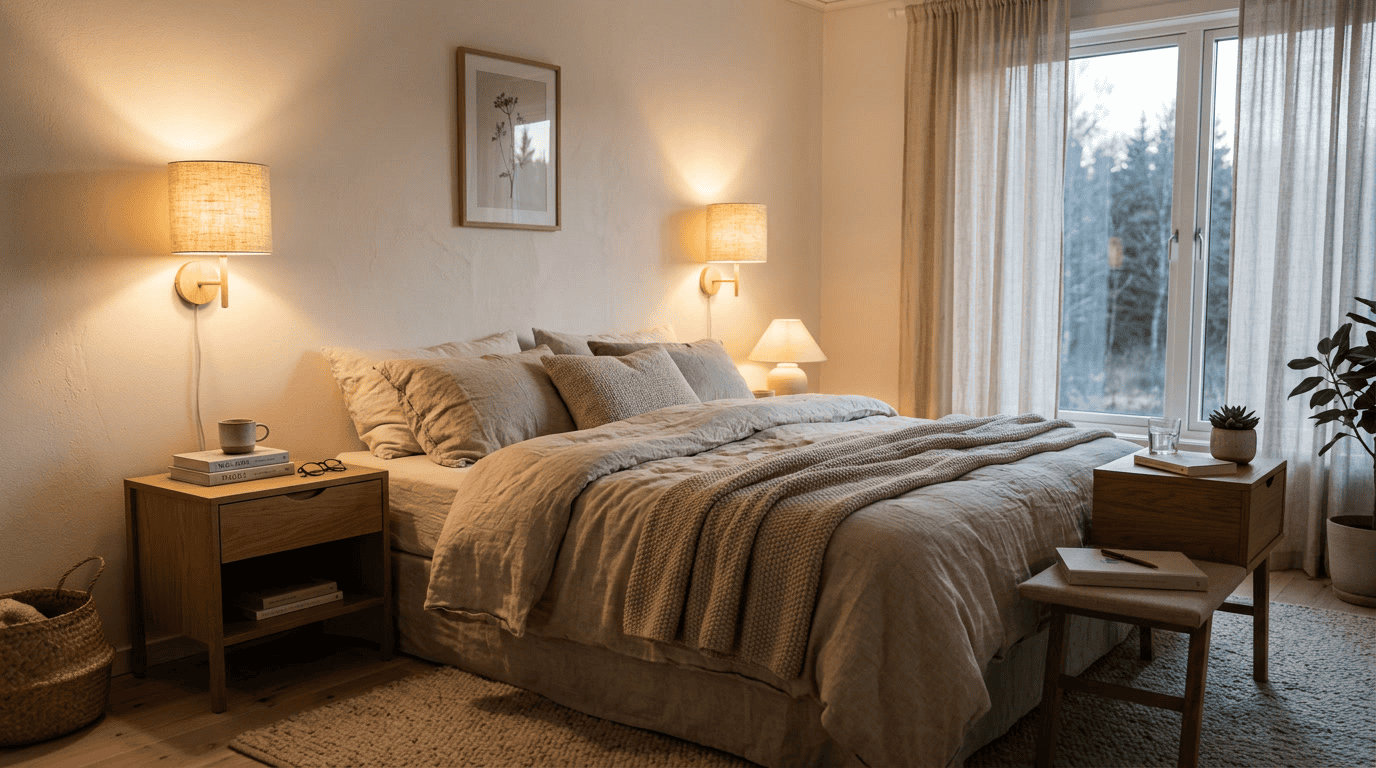
ベッドサイドの壁付けブラケットライトは、ナイトテーブルのスペースを空け、読書灯をちょうど良い高さ(マットレス上部から約76cm)に配置します。この用途には、, リネンやコットンのエンパイア型またはドラム型シェードが標準の選択肢です:部屋全体を照らさず、読書に快適な柔らかく暖かみのある下向きの光を生み出します。.
サイズ選びの重要なガイドライン:シェードの下端は、ベッドに座ったときに目の高さにくるべきです(標準的なマットレスの高さの場合、床から約122〜132cm)。シェードが高すぎると天井を照らしすぎ、低すぎると裸電球が目に入ります。.
クリーム色やオフホワイトの裏地を使いましょう(真っ白は避けてください)。冷たい光でクリニックのような雰囲気になるのを防げます。実際、ナチュラルリネンのドラムシェード越しの3000K LED電球は、2700Kの昔の白熱灯と同じくらい暖かく感じられます。.
リビングルームのアクセントウォール
暖炉やアート作品、コンソールテーブルの両側に壁付け照明を配置することは、プロのデザイナーが高額で提供する「レイヤードライティング」効果を生み出す最も効果的な方法の一つです。シェードは天井照明と一致させる必要はありません。むしろ、意図的に異なる素材(ラタンやセラミックの照明本体にベルベットのシェードなど)を組み合わせることで、完璧に揃ったセットよりも視覚的な興味を引き立てます。.
リビングルームのアクセントウォールには、, バフェシェードやクーリースタイルが最も広い範囲に柔らかな光を拡散します. シェードの中心を床から約150cm(立ったときの平均的な目の高さ)に配置し、光のコーンが壁の特徴を際立たせつつ、強い影を作らないようにしましょう。.
バスルームの洗面台照明
鏡の両側に設置する洗面台用ブラケット照明は、作業用照明のゴールドスタンダードです。天井照明が作るあご下の影をなくし、顔全体を均一に照らします。. バスルームには、防湿仕様のシェードを選びましょう または、バスルーム専用に設計されたものを選んでください。ファブリックシェードは、しっかり密閉されていて水しぶきがかからない場所に設置しない限り、一般的には適していません。.
フロストガラスのミニドラムシェードや白い磁器のハーフシェードは、洗面台用ブラケット照明に最も安全な素材の選択肢です。顔全体に均一で拡散した光を提供し、簡単に拭き取って清掃できます。.
浴室の壁面シェードも電気コードの要件に従う必要があります。シャワーまたは浴槽の縁から3フィート以内の器具は濡れ場所用として定格でなければなりません。開口部のある布製シェードは適合しません。.
壁のライトシェードを選ぶ正しい方法
壁面照明用の適切なシェードを選ぶには、フィッターの適合性、サイズの比率、部屋との材質のマッチの3つの連続したチェックが要点です — その順序で。.
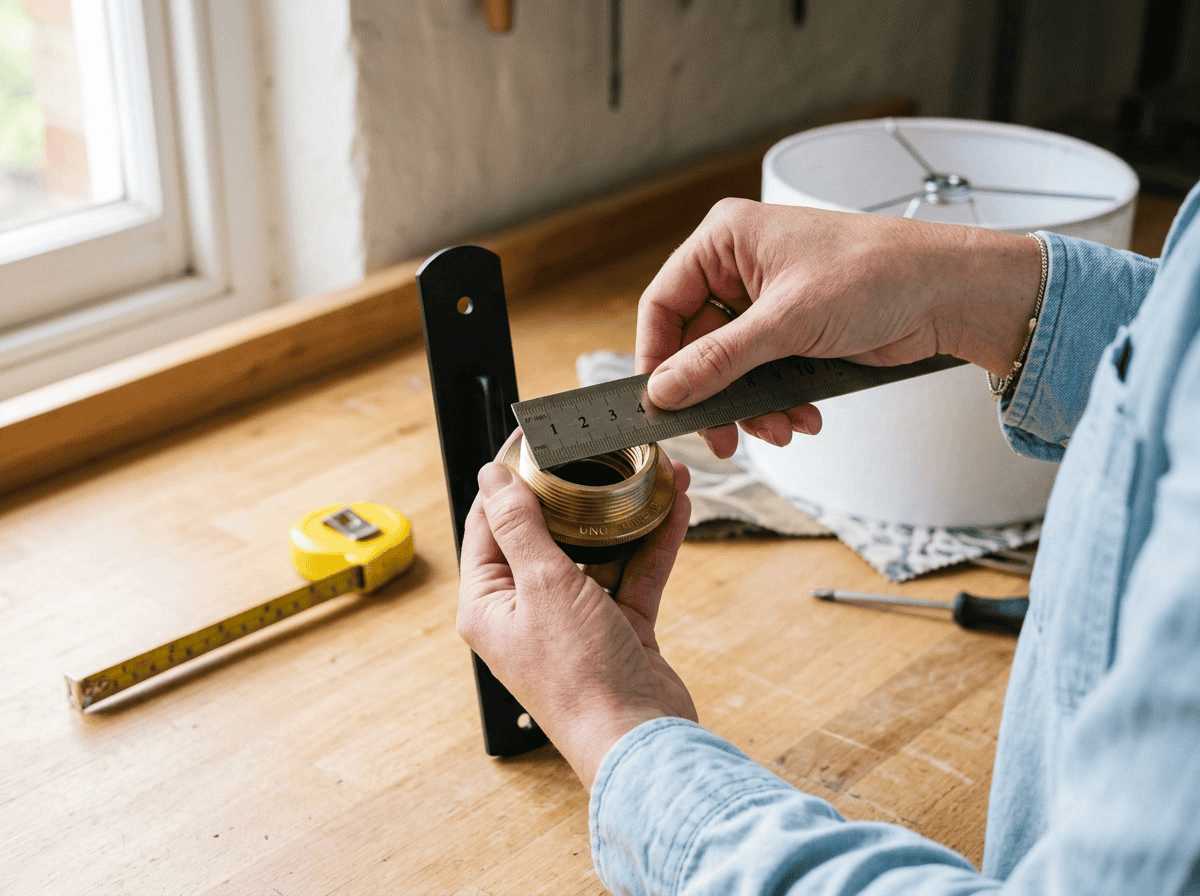
完璧なフィット感のための測定
シェードではなく器具から始めてください。以下が測定の順序です:
ステップ1 — フィッタータイプを特定します。. 既存のシェードをねじ切る(ある場合)か、露出しているソケットを見ます。UNOソケットにはねじ山が見えます;クリップオンソケットにはねじ山がなく、スプリングクリップを受け付けます;ユーロ二重ソケットにはカラーリングがあります。.
ステップ2 — フィッター開口部を測定します。. UNOシェードの場合、標準のフィッター開口は1⅝インチ(41mm)です。これがソケットのねじ径と一致することを確認してください。クリップオンの場合、クリップの直径を bulbタイプに合わせます。標準のA19電球は1⅝インチのクリップを受け付けます。.
ステップ3 — 壁面間隔を測定します。. 壁の表面からソケットの中心まで定規を測ります。これがクリアランス距離です。シェードの深さ(前後)はこれを超えてはなりません。少なくとも½インチの余裕を取ってください。.
ステップ4 — シェードの高さと幅を決定します。. 一般的な比率のルール:シェードの高さは、器具ベースの高さ(アームの長さを含む)の約2分の1程度にします。下径は高さとほぼ同じになるべきです。アーム長12インチのスイングアーム器具の場合、下部が10–12インチで高さが10–12インチのシェードが良い開始点です。.
ステップ5 — 底部のクリアランスを確認します。. シェードの底の縁は、器具の下の表面(テーブル天板、コンソール)から少なくとも2インチ上にあるべきです。.
部屋のスタイルに合わせた素材
シェード素材は光の質を決定づける主な要因です――電球のワット数よりも、器具の仕上げよりも。ここに素材ごとに提供される光の特性を示します:
リネンとコットン: 柔らかく温かな拡散。天然繊維の不規則性が光をわずかに散乱させ、鋭い束ではなく穏やかな輝きを生み出します。寝室、リビングルーム、ダイニングエリアに最適。自然色、アイボリー、クリーム、チャコール、セージ、ブラスのカラーで、2022年以降のすべての現代的インテリアの流行に対応します。.
フェイクシルクとサンタンガ: リネンよりやや高い光透過率で、視覚的な質感が豊か。光源を拾い、光が消えていても装飾的な要素を加えます。 Hollywood Regency、グラム、またはトランジショナルなインテリアに適しています。.
紙と和紙: 光の拡散が優れており、電球周囲のホットスポットが最小限。軽量で、重いシェードを支持できないクリップオン型に重要。湿気の多い環境には適していません。日本風の影響を受けたミニマリストなインテリアで人気。.
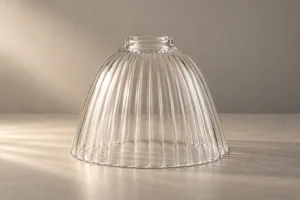
フロストガラス: 最高の耐久性オプション。拭き取りが容易で湿度に耐え、熱によるダメージを受けずに高ワットの電球にも対応。光量は布地よりもクールで均一。浴室の化粧台、キッチン、玄関に最適。.
金属 / 穴あき金属: 光をパターン状に投影し、シェード自体が点灯時には装飾的な要素になります。作業用ライトとしてよりもアクセントとして最適。開口のデザインは周囲の壁に葉、幾何学、または抽象的な模様を投影できます。.
| 素材 | 光の質 | 耐久性 | 湿度耐性 | スタイル適合型 |
|---|---|---|---|---|
| リネン/コットン | 暖かく、拡散した | 中級 | 低い | オーガニック、現代風、ファームハウス |
| フェイクシルク | 暖かい、やや光沢感がある | 中級 | 低い | グラム、トランジショナル、伝統的 |
| 和紙 / 和紙風 | 非常に柔らかい、均一 | 低い | 非常に低い | ミニマリスト、日本風の |
| フロストガラス | クール、均一 | 高い | 高い | モダン、バスルーム、産業系 |
| パンチングメタル | 模様入りの投影 | 非常に高い | 高い | ボヘミアン、産業系、アクセント |
避けるべき一般的なミス
ミス1:見た目だけで買うこと. 机の上のランプが美しく写真写りする影は、壁面のブラケットでは全く異なって見えることがある。壁面取付角度が光の出方を変える。必ず、 shade を視線の高さで垂直面上に想像してください — 面の上に置かれているだけではなく。.
ミス2: 内側の色を無視すること。. 外側の生地は濃いネイビーや森の緑色になり得るが、内張りが明るい白だと、光が点灯するたびに生地越しに白い光環が見えてしまう。内張りのトーンを意図した雰囲気に合わせる:ニュートラルでクールなら白、暖かさならオフホワイトまたはゴールド、ドラマ性を求めるなら黒。.
ミス3: スケールを合わさないこと。. ハット部分の長さが10インチのアームに対して幅6インチのシェードは、棒の先の点のように見える。原則として、シェードの底の直径はアームの長さの少なくとも80%であるべきだ。.
ミス4: 電球を忘れること。. シェードの最小クリアランス等級(ほとんどのファブリックシェードの内側に印刷されている)を、電球の熱出力と照らして確認する必要がある。ヴィンテージのエジソン様式のフィラメント球は、定格ワット数よりも熱を発することがある — 60W相当のLEDは問題ないが、½インチのクリアランスでドラムシェード内の実際の60W白熱球を使用すると生地が焦げる。.
壁掛け用シェードの将来の傾向(2026年以降)
2026年の支配的なトレンドは、技術的な新規性よりも感覚的な暖かさを重視した手作りの触感素材である。 — 2020年代初頭のスマートホーム急増を支配した極めて滑らかな仕上げへの直接の反応。.
持続可能で自然な素材
竹、藺草、籐、再生 cotton は、合成繊維に取って代わる速度が著しい。Statistaの2024年の全球照明市場レポートによれば、 Statista’s 2024 global lighting market report, 持続可能な家庭用照明セグメントは2023年に前年同月比22%の成長を記録し、2028年まで従来の照明器具を上回る見込みである。.
のため 壁用のライトシェード, これを受けて、織り草のシェード、竹のリブ付き円筒、未染色のコットンシェードなどが登場しており、いずれも合成素材より暖かく、質感のある光を生み出す。.
環境的な側面は現実的だ:天然繊維シェードは生分解性があり、しばしば合成着色料を使用せずに生産され、その重量はクリップオンや軽量UNOフィッターの使用を可能にし、金属部品の必要性を低減する。.
OEKO-TEX Standard 100 認証を受けたランプシェード生地を製造しているメーカーは、 Textiles が有害物質を含まないことを検証しているが、需要が供給を上回るため納期が伸びている。特定の天然繊維シェードを希望する場合、6〜8週間前の注文が標準となりつつある。
スマート照明対応シェード.
トゥーニブル LED 電球 — 2700Kの暖白色から6500Kの昼光へスケジュールまたはアプリ経由で切り替わる場合、色温度の変化を知覚できる十分な光透過性を持つシェードが必要だ。密度の高い生地(重いリネン、ベルベット)は、色温度の変化をシェード越しに意味のあるものとするには光出力を過度に吸収してしまう。 スマート対応壁面シェードの新しい標準は 布地重量80–120 g/m² — 色温度全域を通過させるには軽く、ホットスポットとして電球が見えるのを防ぐには十分重い、という条件だ。米国エネルギー省の LED 照明効率データによれば、, 2023年時点での米国の家庭用LEDの採用率は47%を超えており — スマートシェード対応はもはやニッチではない。.
統合型調光対応 関連するトレンドは、カーテンやシェードが内蔵光調整スイッチを備えた照明器具と一緒に指定されることが増えており、壁面調光器の設置が不要になります。シェード素材は知覚された調光品質に直接影響します — 薄い紙と薄い綿は非常に低い調光レベルでフィラメントのホットスポットを示します。一方、くもりガラスと密度の高いリネンは5%出力時に均一な輝きを保ちます。.
| トレンド | 素材/特長 | 2026年の関連性 | 最適な用途 |
|---|---|---|---|
| 天然ファイバー | 竹、アマノリ、リネン | ⭐⭐⭐⭐⭐ | 全ての部屋 |
| プリーツファブリック復活 | 絹、ポリシルクのプリーツ | ⭐⭐⭐⭐ | ベッドルーム、ダイニング |
| スマート対応重量 | 80–120 g/m² ファブリック | ⭐⭐⭐⭐ | リビングルーム |
| 半影の再興 | 壁面取り付け | ⭐⭐⭐ | 廊下、玄関 |
| パンチングメタル | 鋼鉄、真鍮 | ⭐⭐⭐ | アクセント、産業風 |
壁用ライトシェードに関するよくある質問
壁付けブラケットにはどのサイズのシェードが必要ですか?
まずアームの長さから始めます。シェードの底直径は、アームの壁からソケットまでの距離とほぼ同じ、あるいはやや小さいのが通常です。標準の8インチのスイングアーム・ブラケットの場合、底径7–10インチのシェードが一般的に適しています。シェードの深さ(前後の長さ)がブラケットの壁清掃を超えないかを必ず確認してください。.
通常のランプシェードを壁付けブラケットに使えますか?
fittingのタイプが一致する場合のみです。多くの卓上ランプ用シェードはハープの上に座るためのスパイダーフィッターを使用しますが、壁付けブラケットは通常UNOまたはクリップオンフィッターを使用します。スパイダーシェードはアダプターリングなしではUNOソケットに取り付けられません(ほとんどのホームセンターで入手可能です)。壁面になるべく適したシェードを購入する前にフィッターを確認してください。.
UNOシェードとクリップオンシェードの違いは何ですか?
UNOシェードはソケットに直接ねじ込むネジ付き開口部を持ちます。クリップオンシェードはバルブそのものを挟むスプリングクリップを備えています。UNOはより安全な取り付け、クリップオンは電球交換時に取り外しが容易です。ソケットの周りにねじの輪が見える場合はUNO、滑らかなソケットで電球がむき出しの場合はクリップオンです。.
ファブリックの壁用シェードはLED電球の近くで安全ですか?
はい — LED電球は白熱電球やハロゲン電球に比べて発熱が非常に少ないため、現代の照明ではファブリックシェードははるかに安全です。主な注意点は、シェードの最小クリアランス要件を確認すること(通常シェード内側に表示されています)。60W以下のLED相当はリネン、コットン、紙製のシェードでも安全温度範囲内に収まります。.
既存の日よけのフィッター開口部をどのように測定しますか?
日よけを裏返して、上部の開口部の内径を測定します。標準のUNOフィッターは約41mm(1⅝インチ)です。測定値がこれに近く、ねじ山が見える場合はUNO日よけです。開口部が大きく、金属リングがある場合はおそらくユーロデュプレックスです。.
壁面日よけは屋外で使用できますか?
標準のファブリック壁日よけは屋外使用の評価を受けていません。外部のブラケット照明には、「ダンプ耐性あり」(覆われたポーチ、保護された入口)または「ウェット耐性あり」(完全に露出)と明記された日よけを選んでください。通常はガラス、密封樹脂、または屋外用ファブリックで作られています。室内用ファブリックの日よけを屋外で使用すると、UV曝露と湿気で急速に劣化します。.
小さな部屋に最適な日よけの色は?
白またはオフホワイトのリネン日よけが標準的な回答ですが、ニュアンスは重要です。明るい白のライニングは、居心地の良い空間で事務的に感じられることがあります。小さな部屋には、自然繊維の外観にクリーム色または暖かいアイボリーのライニングを使用すると良いでしょう。暖色系の拡散光が空間を広く、より招待的に感じさせ、クール系の明るい白よりも効果的です。.
結論
壁面器具の日よけは高い影響力のディテールです — 表面積は小さくとも、効果は巨大です。適切な日よけは、ブラケットにねじ込まれた裸電球を考慮されたデザイン決定へと変えます。誤った日よけ、誤ったフィッター、部屋に適さない深さ、素材は、完璧に良いスコーンをただのそこにあるものへと変えてしまいます。.
フレームワークはシンプルです:最初にフィッタータイプを確認し、次に壁のクリアランスを測定し、3番目にシェードの比率をアームに合わせて調整し、最後に部屋の機能と既存のパレットに基づいて素材を選びます。寝室のシェードを交換する場合は、天然繊維と温かみのある裏地を選びましょう。バスルームの洗面台用?すりガラスや密封された陶器がおすすめです。リビングルームのアクセントウォールには、リネンのクーリーやドラム型を選び、最大限の空間カバーを実現します。.
カスタムおよび卸売数量の両方での高品質な壁用シェード — OEM生地選択やカスタムフィッター設定を含む — jxlampshade.jp ドラム、エンパイア、クーリー、ハーフシェードのプロファイルに対して工場直送の調達を提供し、天然および合成生地のオプションもあります。.
まずフィッタータイプから始めましょう。そこからすべてが始まります。.