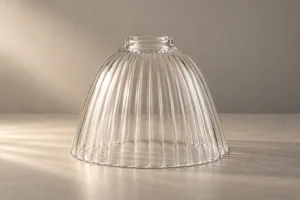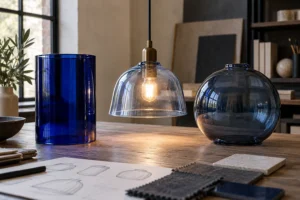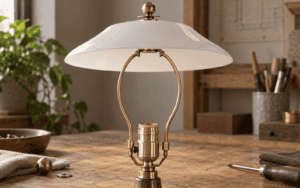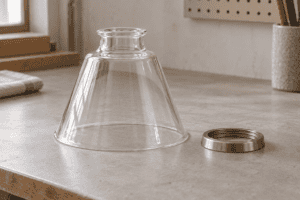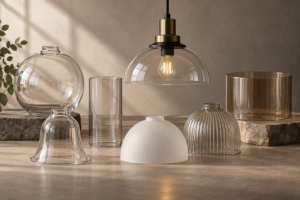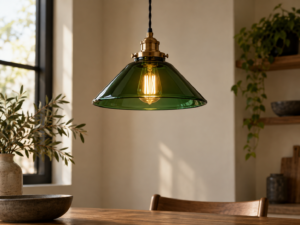
家庭の装飾用ガラスランプシェードを選ぶ際は、まず器具の種類と取り付け方法(スパイダー、ウノ、ギャラリーリング)を選び、次にガラスの不透明度(拡散された暖かさにはフロスト、フィラメントLEDの表示にはクリア、均一な輝きにはオパール)、そしてシェードの形状と色をインテリアスタイルに合わせてコーディネートします。.
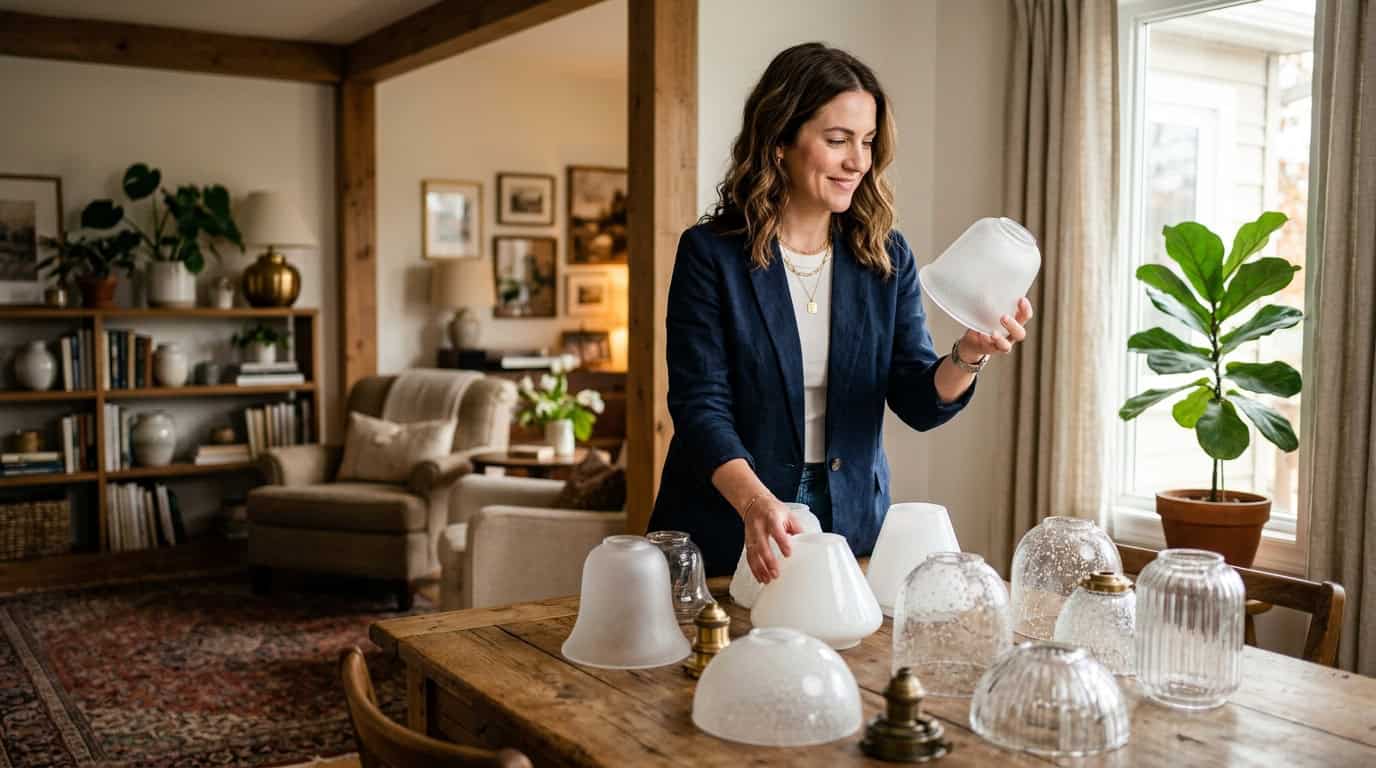
多くの人が最初に尋ねる質問は「どれが一番見た目が良いか?」ですが、実際にはそれは4番目の質問です。美観の前に、シェードが物理的にランプに合うかどうか、部屋が光に何を求めているか、どのガラスの不透明度がその照明品質を提供するかを知る必要があります。最初の3つを正しく選べば、4つ目のスタイルコーディネートは選択肢がずっと短くなります。.
このガイドは、意思決定の全ての流れを提供します。 家庭用インテリアのためのガラスランプシェードの選び方 — フィッティングタイプが適合を決定し、ガラスタイプが光の質を決定し、スタイルと色の考慮が部屋でシェードを機能させるまで。.
装飾用ランプシェードにガラスが最適な素材である理由
主流のランプシェード市場はファブリックです。リネン、コットン、シルクのドラムシェード、エンパイアシェード、ベルシェードが最も一般的な家庭用ランプシェードとして販売されています。ガラスシェードは市場の小さいながらも成長している分野を占めており、特定の用途ではガラスが明確に優れた選択肢となります。.
ガラスはファブリックよりも優れている場合:
– ランプが装飾用フィラメントLED電球を使用している場合:ファブリックシェードはフィラメントの美しさを隠してしまいますが、クリアガラスはそれを見せます。
– ランプがダイニングテーブルやキッチンアイランドの上に吊るされている場合:ガラスは清掃可能で、飛沫に強く、外観を数十年維持できます。ファブリックシェードは食品の近くでは蒸気や空中の油で劣化します。
– インテリアスタイルがインダストリアル、コンテンポラリー、またはヴィンテージ/時代に忠実な場合:ファブリックシェードは「伝統的な住宅」として認識されますが、ガラスはそうではありません。
– ランプが浴室や湿度の高い環境にある場合:ガラスは耐湿性があります。ファブリックシェードは高湿度空間でカビが発生することがあります。
ファブリックがガラスよりも優れている場合:
– 広い範囲に暖かく拡散した間接光を求める場合:大きなエンパイア型ファブリックシェードは、同等のガラスよりも広く柔らかい光の円錐を作ります。
– ランプがアクセントとして、シェードの質感やパターンが装飾要素となる場合
– 予算が主な制約の場合:高品質なガラスシェードは、同サイズのファブリックシェードよりも高価です。
日本の 照明学会の住宅照明ガイドライン, によると、装飾用照明器具のガラスエンクロージャーは長期的な光学安定性に優れています。ガラスは、ファブリックシェードが5~10年の使用で発生する表面の黄ばみ、粒子の吸収、構造の劣化を起こしません。.
ステップ1:取り付けタイプを特定する
フィッティングタイプは、どのガラスシェードがランプに物理的に適合するかを決定します。これは美的な選択ではなく、機械的な互換性の確認です。.
スパイダーフィッティング(ハープとサドル)
スパイダーフィッティングは、テーブルランプやフロアランプで最も一般的です。ワイヤースパイダー(中央のリングから伸びる3本のアーム)がランプのハープ(ソケット上部の金属アーチ)に乗り、シェードのクラウンの穴を通してフィニアルで上部から固定されます。.
ガラス製のスパイダーフィッティングシェードは、布製のスパイダーフィッティングシェードよりも一般的ではありません。これは、ガラスがより頑丈な取り付けシステムを必要とするためです(ガラスは重く、布のように曲がることができません)。テーブルランプでガラス製スパイダーフィッティングシェードが使用される場合、シェードグローブは通常、ガラスを保持し、スパイダーアームを介してハープに取り付けるワイヤーケージまたはリングに取り付けられます。.
ウノフィッティング
ウノフィッティングは、シェードのリングがねじ付きランプソケットカラーに直接ねじ込まれるタイプです。ハープは不要です。ウノフィッティングは、調剤ランプ、アクセントランプ、および一部の現代的なテーブルランプデザインで一般的です。これらの器具タイプにはウノフィッティング付きのガラスシェードもあり、ウノリングはガラスカラーまたはガラスシェード本体を保持する金属アダプターに組み込まれています。.
ギャラリーリング(フィッター)フィッティング
ギャラリーリングは、ペンダント器具、シーリングファン、およびガラス専用ソケットを持つ一部のテーブルランプデザインにおけるガラスグローブやドームシェードの標準的な取り付け方法です。ガラスシェードの上部には滑らかなカラー(フィッター)があり、ギャラリーリングがこのカラーをセットスクリューで固定します。フィッターサイズは標準化されており、2¼インチ、4インチ、6インチがほとんどの住宅用途をカバーします。.
これはシャンデリアカップや一部のヴィンテージテーブルランプアダプターの取り付けシステムでもあります。ガラスシェードがフィッターサイズ(「4インチフィッターグローブ」など)で説明されている場合、ギャラリーリング取り付けを使用しています。.
| フィッティングタイプ | 使用場所 | ガラスの取り付け方法 |
|---|---|---|
| スパイダー/ハープ | テーブルランプ、フロアランプ | スパイダーアーム上のワイヤーケージまたはリング |
| ウノ | 調剤ランプ、アクセントランプ | ガラス本体のウノカラーリング |
| ギャラリーリング | ペンダント、シーリングファン、ヴィンテージランプ | セットスクリューリング内のガラスフィッターカラー |
| バヨネット | 一部のシーリングファンキット | カラーのクォータターンロック |
ステップ2:適切なガラスの不透明度を選ぶ
フィッティングの互換性が確認できたら、ガラスの不透明度の選択が部屋の照明の質を決定します。これはほとんどの購入者が見た目の印象だけで決める選択ですが、多くの場合その印象は正しく、点灯したガラスシェードの見た目が、その照明がどのような光を生み出すかをほぼ教えてくれます。.
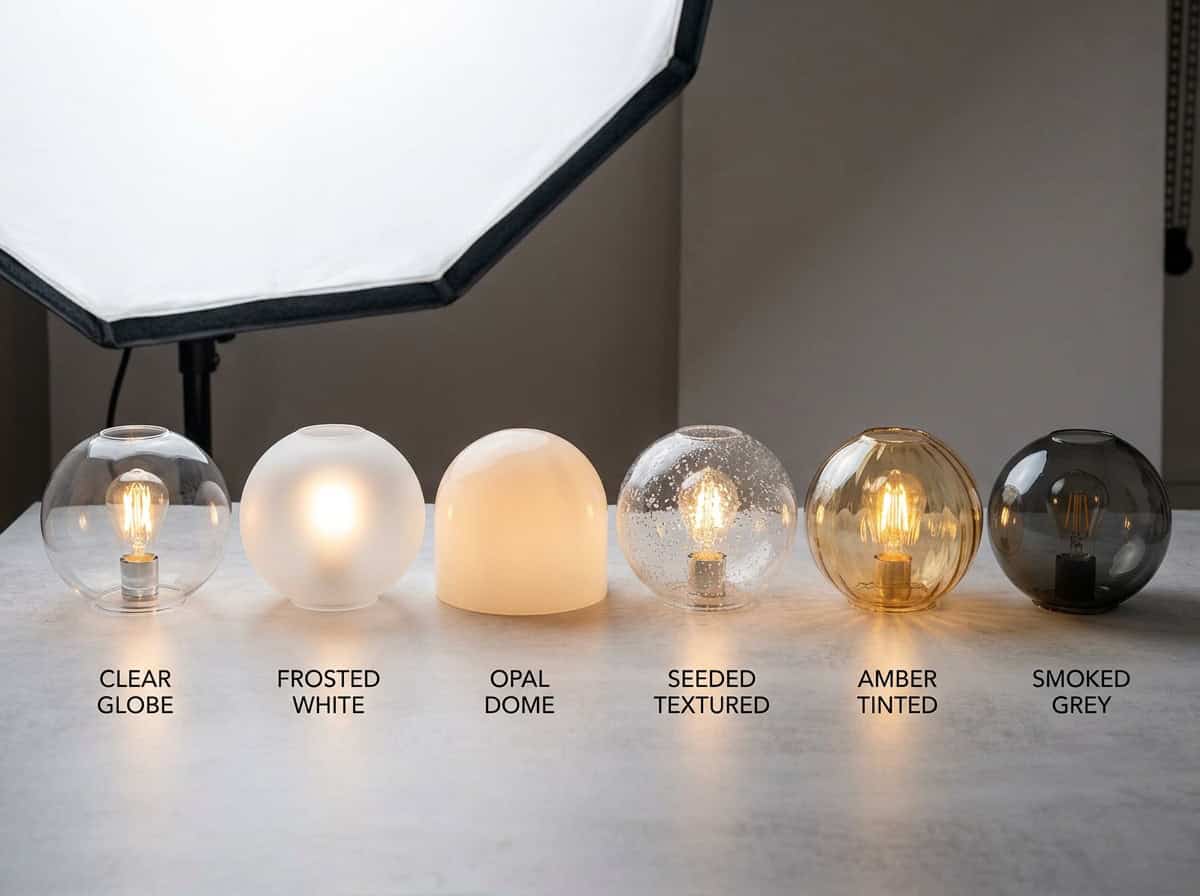
クリアガラス:最大ルクス、電球が見える
クリアガラスは電球の出力の88〜92%を透過します。ランプの光源が完全に見えます。これは以下の場合に最適な選択です:
– 装飾用フィラメントLED電球を使用し、発光するフィラメントが視覚的なポイントとなる場合
– 一定のワット数で最大の光出力が優先される場合(タスク照明、ワット数制限のあるアクセント照明)
– 照明器具は頭上に十分高く吊るされており、目の高さの電球が眩しくなる問題はありません
透明ガラスは、ランプが座った状態の目の高さにあるとき直接的に眩しく見える電球があると不利になります — 標準のLEDおよび CFL の光源は近接距離で透明ガラスを通して厳しく見えます.
すりガラス: 暖かい拡散、眩しさなし
すりガラス(酸エッチングまたはサンドブラスト加工の表面)は 75–82% を透過し、直接的な電球の視認性を排除します。シェードは均一に発光します。これは家庭用装飾ガラスランプシェードの中で最も一般的で、最も用途が広い選択肢です:
- 取り付け高さを問わず使用可能
- どのLED光源にも対応(光源の特性は隠されます)
- 写真写りが良く、実際にも温かみのある均一な光を生み出します
- どのガラスタイプを選べばよいか分からない場合の最もニュートラルな出発点
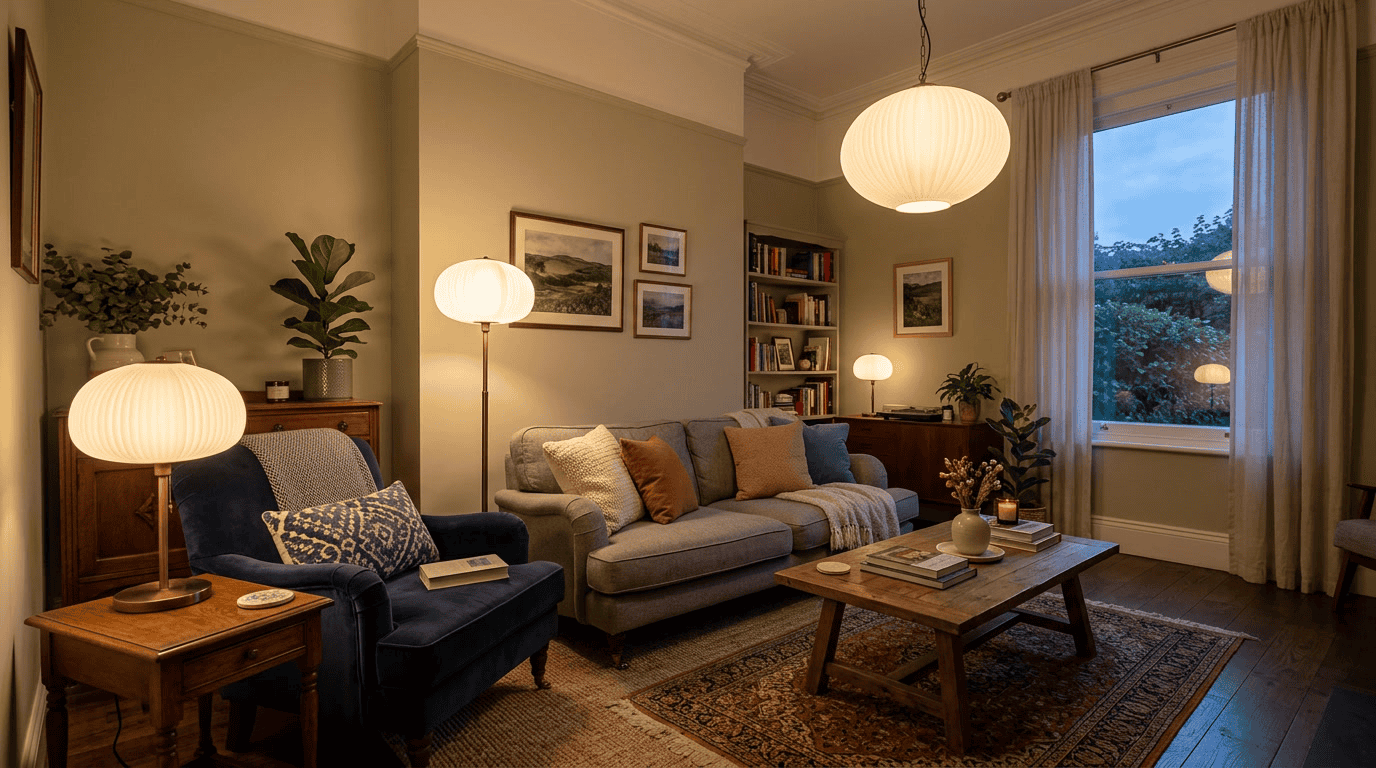
オパール(ミルク)ガラス: 緻密な白い輝き、上質な外観
オパールガラスは 60–75% を透過し、点灯時も未点灯時も緻密で不透明な白い外観を持ちます。光の質はどのガラスタイプよりも柔らかく均一です。オパールガラスのシェードは特に以下に適しています:
- 間接天井照明を目標とするトーチエアのボウルとして
- オパールガラスが歴史的に正統な素材であるヴィクトリア朝、エドワード朝、または時代復元インテリアにおいて
- シェードが点灯していなくても実質的で上質に見える必要がある場合 — オパールガラスはすりガラスにはない視覚的存在感を与えます
トレードオフ: 同じワット数でオパールガラスはすりガラスよりもはるかに光を透過しません。すりガラスで明るく感じたランプでも、同じLEDワット数でオパールに切替えると暗く感じることがあります。すりガラスからオパールへ切替える際はLEDを1段階アップしてください。.
種子入り、質感、色付きガラス
種子入りガラス(ガラス本体に浮かぶ気泡を含む)、打ち出しガラス、リブ入りガラス、着色ガラスはすべて装飾効果を生み出しつつ適度な拡散を提供します。ガラスシェード自体がビジュアルの焦点となる場合—シェードを装飾的なオブジェとして目立たせたい場合、単なる光源としてではなく—にはこれらが適切な選択です。.
以下に従って 住宅用照明のエネルギー効率データ(エネルギー省), 、透過率が70%未満の装飾ガラスシェードは、作業面の適切な照度を維持するために高ワット LED 光源を必要とする場合があります—色付きガラスの読書用灯やキッチンペンダントのLEDワット数を算出する際に関連します。.
ステップ3:シェード形状とフィクチャの比率を合わせる
ガラスシェードは複数の形状ファミリーがあり、それぞれ異なるフィクチャタイプと室内文脈に適しています。.
グローブシェードとボールシェード
球状またはほぼ球状のガラスグローブは、住宅用ペンダント照明と天井ファンの支配的な形状です。グローブの直径は設置金具(天井のプレート)との視覚的比率を決定します—ペンダントコードに比べて小さすぎるグローブは後付け感のある電球のように見え、大きすぎると空間を支配します。.
ペンダント照明の場合、標準のサイズ原則:グローブの直径がフィクチャのキャノピー(天井側のプレート)と同じか、やや広い程度でバランスの良い比率が生まれます。.
ドームシェードとベルシェード
ドームとベル型のガラスシェードは、広さより深さがあり、直径は上部に向かって細くなります。テーブルランプで用いられ(ドーム形状が光を下方へ向ける)、いくつかのヴィンテージペンダントデザインにも用いられます。住宅内装ではガラスドームシェードは布製ベルシェードほど一般的ではありませんが、より良い熱耐性と長寿命を提供します。.
シリンダーとチューブシェード
円筒形シェードは、上部と下部の直径が等しく、グローブやドームとは異なる視覚的特徴を生み出します。現代的なペンダント照明、いくつかの壁付け燭台、モダンなテーブルランプデザインに用いられます。LE D(LED)電球が見える透明な円筒ガラスシェードは、ミニマリスト的およびインダストリアルな内装様式の象徴です。.
フルート形およびチューリップ型シェード
フルート状およびチューリップ形のガラスシェードは、上部開口部が狭く、下方へ広がってから内側へ戻る—いわゆる“花”の形をしています。これらは歴史的にはアールヌーボーやアーツ・アンド・クラフツのデザインと結びつけられています。現代版はボヘミアンやマキシマリスト系の内装に現れます。.
ステップ4:内部スタイルと調和させる
最終決定はスタイルのコーディネーションです — ガラスシェードの色、質感、形を部屋のパレットとデザイン方針に調和させること。これはほとんどのランプシェードガイドがすべての時間を費やす点ですが、私たちは実際には最も制約が少ないステップであるため最後に扱っています。.
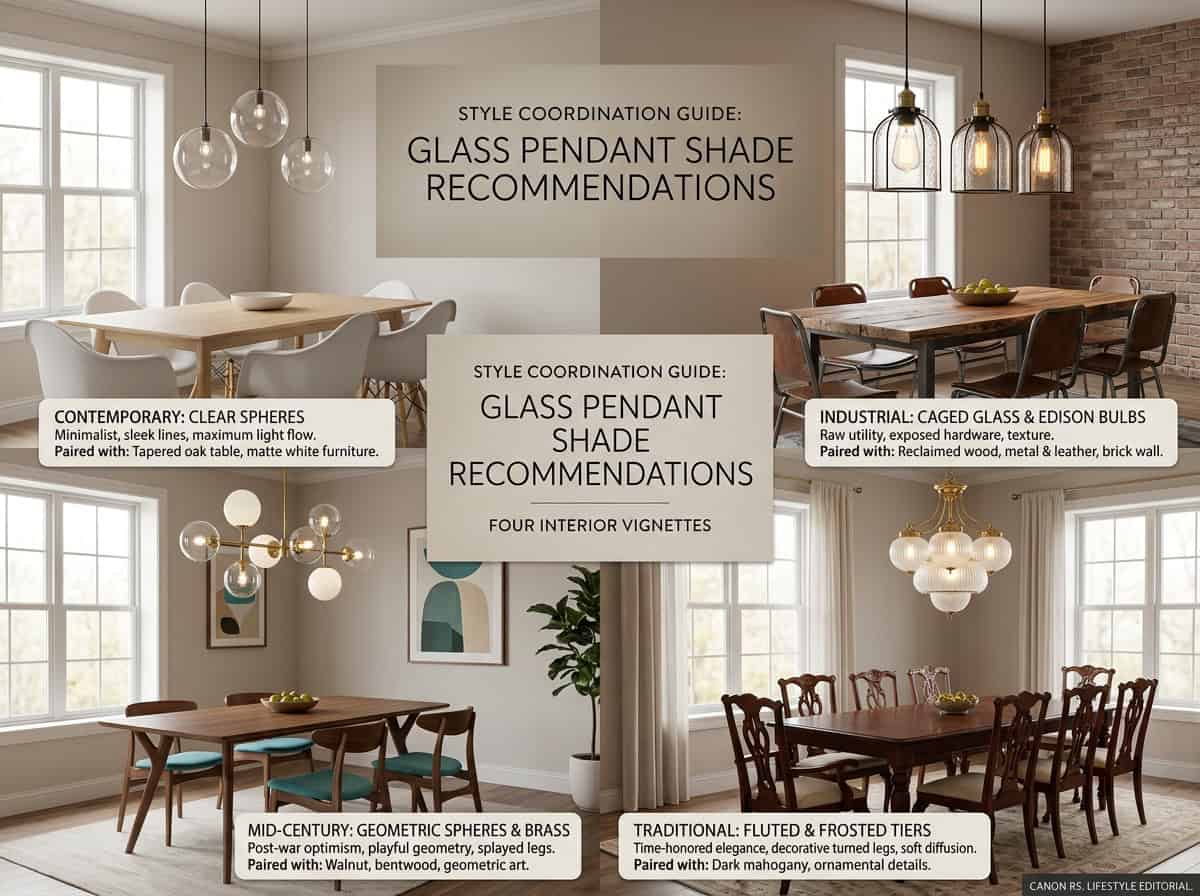
現代的でミニマルなインテリア
清潔なライン、ニュートラルなパレット、最低限の装飾。適合するガラスシェードの選択:
– マットブラックまたはブラスのブリュッシュフィッティングを備えたクリアなシリンダーまたはグローブシェード
– コンテンポラリーフィクスチャーハードウェアのシンプルなすりガラス白グローブ
– ダイニングやキッチンアイランドのペンダントライトにはスモークグレーのガラス
避けるべき: 極めてテクスチャード、カラー付き、または装飾の多いガラスシェードはミニマルな部屋のパレットと視覚的に対立する.
工業的で都市的なロフトインテリア
露出したレンガ、コンクリート、金属、そして無垢材。適合するガラスシェードの選択:
– キッチンアイランドやダイニングテーブルの上にフィラメントLED球を備えたクリアガラスグローブ
– 金属導管上のオパールドームペンダント(エンジニアリングランプの美学)
– 真鍮または黒鉄のフィッティングを備えたアンバー染のガラス
日本の ヴィクトリア朝社会が工業デザイン遺産を文書化した記録 オパールガラスのペンダントシェードと鋳鉄ギャラリーリングが late 19th century の工業・作業空間に本物であるとされることは、歴史的に正確なロフトインテリアのスタイリングに有用な参考資料です。.
伝統的でクラシックなインテリア
温かみのある色彩パレット、装飾用トリム、時代家具。機能的なガラスシェードの組み合わせ:
– オパールホワイトのガラスと装飾的な真鍮のギャラリーロ rings
– 琥珀系の色味を帯びたセディッドグラス
– マントルピースやサイドテーブルのランプに使われるクランベリーまたはルビー色のガラスアクセントシェード
– シャンデリア用のプリズマティックカットクリスタルガラス
ミッドセンチュリーモダンのインテリア
有機的な形状、暖かい木材トーン、アースカラーのパレット。機能的なガラスシェードの組み合わせ:
– 琥珀、オリーブグリーン、またはコニャック色の吹きガラス
– ウォールナットまたは真鍮の取り付け部を持つオパールホワイトのグローブペンダント
– 簡単な幾何学的形状で種をまいたガラス
海岸風でリラックスしたインテリア
海のガラスの色調、自然な質感、カジュアルなレイヤリング。機能に合うガラスシェードの選択肢:
– 淡いアクア、セージグリーン、または柔らかい白のすりガラス
– 自然なアンバー系の種をまいたガラス
小さなガラス球の挿入物と組み合わせた編み込みのラタンまたはロープ
どのタイプのランプシェードが必要かを判断する方法
これはPAAの質問であり、直接的な回答に値します:ランプの取り付けシステムと一致するシェードタイプ、次に照明目標に合わせた不透明度、最後に部屋のスタイルに合うものを選ぶ、その順序で。.
家庭の装飾用のガラス製ランプシェードを選ぶ際の3つの最も一般的な間違い:
間違い1:取り付け部を確認せずにシェードの直径を選ぶこと。. 商品写真で見た球体は、ペンダントの取付器具が2 1/4インチの取り付け具を必要とする場合、4インチのギャラリーロックリング式を使用していることがあります。注文前に取り付けサイズを確認してください。.
間違い2:外観だけでガラスの種類を選ぶこと。. クリアガラスは商品写真では美しく見えます。座った目の高さでのクリアガラスは標準のLED電球と組み合わさると不快な眩しさを生みます。すりガラスは写真では地味に見えますが、部屋の照明をより良くします。.
間違い3:LED電球のタイプを考慮せずにシェードを選ぶこと。. フィラメントLEDを表示するために選ばれたシェードは、標準のLEDと一緒に見ると違和感が生じます(電球の上部のホットスポットが透過ガラス越しに見え、無作法に見えることがあります)。標準のLED用に選ばれたシェードは正しく見えるかもしれませんが、フィラメントLEDの美学を際立たせることには失敗します。まず電球を決め、次にガラスを選びます。.
2026年の家庭用装飾用ガラスランプシェードのトレンド
アンバー色および温かい色味のガラスの成長. 2020年代初頭のウェルネスと睡眠衛生デザイン運動は、暖色系の部屋照明に対する需要を持続的に生み出し続けました — アンバーガラスは青色スペクトルの出力を自然にフィルタリングし、アンバー过滤LEDの色再現ペナルティを伴いません。アンバーガラスの卓上灯とペンダントシェードは高級住宅セグメントで成長しています。.
手作りガラスは価値を示す信号. 機械生産のガラスが中級市場を支配しています。高級住宅およびデザイン専門家セグメントでは、手吹き・手押し成形のガラスシェードが品質と職人技の印としてますます指定されています。手作りによるわずかな寸法のばらつきと表面の特性は欠陥ではなく特徴です。.
よりドラマティックな効果のための暗いガラス. スモークドグレー、ダークアンバー、ほぼ不透明な黒のガラスシェードは、デザイン志向の住宅セグメントで成長しています — これらのシェードは、 フロスト(すりガラス)やクリアの代替品とは顕著に異なる光質を生み出します(暗めで、より雰囲気があり、照度は少なめ)。主に雰囲気づくりのために選ばれます。.
| トレンド | ガラスの選択 | インテリア用途 |
|---|---|---|
| 暖色系の睡眠衛生 | アンバー色のガラス | 寝室、リビングルーム |
| 手作りの品質信号 | 口吹きのシードガラス | 高級住宅用 |
| 暗くドラマチック | スモークドグレー、ブラック | デザイン志向のインテリア |
| フィラメントLEDの美学 | 透明なグローブ | キッチンアイランド、ダイニング、スタジオ |
| ヴィンテージリバイバル | オパールとクランベリーガラス | 伝統、時代再現 |
よくある質問
どのタイプのランプシェードが必要かをどうやって見分けますか?
最初にランプのフィッティングを特定します — 多くのテーブルランプはスパイダー/ハープ、薬局用ランプは uno、ペンダントおよび天井ファンはギャラリーロール。次に照明の目的に応じてガラスの不透明度を選択します:最大の光と見える filament LED の美学にはクリア、眩しさのない暖かい拡散光にはフォースト、プレミアムな柔らかな光にはオパール。スタイルと色は最終決定事項です。適合タイプを正しく選ぶことだけは購入後に変更できません。.
テーブルランプに適切なサイズのガラス製シェードをどう選ぶのですか?
ガラスシェードの直径は、ランプベースの高さの約2/3から3/4程度であるべきです。一般的に24インチのテーブルランプベースには16–18インチのシェード直径が適しています。シェードはランプのハードウェアとハープを完全に覆い、ランプベースより下には伸びてはいけません。テーブルランプ用のガラス球形シェードの場合、中サイズのテーブルランプには直径10–14インチが適しています。.
ガラス製シェードは布製シェードよりも優れているのですか?
ガラスは耐久性、清掃の容易さ、光の質と視覚的特徴をデザイン意図とする用途で布より優れています(ガラスは黄変せず、粒子を吸着せず、時間とともに劣化しません)。布は広範囲のソフトな周囲照明や同等の品質レベルでのコスト、シェードの模様や質感が装飾の焦点である場合に優れています。.
どのランプにもガラスのシェードを付けられますか?
シェードのフィッティングタイプがランプのソケット構成と一致する場合のみです。ギャラリーロウ フィッター のシェードにはランプまたはソケットアダプターにホルダーリングが必要で、単にハープの上に置くだけでは使用できません。逆に、ワイヤーケージのスパイダーアーム付きのシェードにはハープが必要ですが、多くのランプにはハープがありません。既存のランプにガラスシェードを購入する前に、必ず適合性を確認してください。.
伝統的なインテリアに合うガラス製シェードのスタイルは?
オパール白ガラスに装飾的真鍮のギャラリーロール、暖かみのある琥珀色のシードガラス、シャンデリアアーム用のカットクリスタルガラスは、伝統的な英国・米国インテリアに最も時代性を表す選択肢です。特に後期ヴィクトリア時代には、金属のギャラリーロールにオパールガラスのドームシェードと装飾ベース(オイルランプ風)が歴史的に正確です。色付きガラスのアクセント(クランベリー、コバルト、アンバー)は伝統的なダイニングルームやリビングルームの文脈で良く合います。.
ガラス製シェードは部屋の光の色にどのような影響を与えますか?
清澄ですりガラスはLED光源の色を本質的に変えず伝える — 2700Kの暖白色LEDをすりガラスを通して使用すると部屋全体を暖白色で照明します。オパールガラスは色再現をやや柔らかく均一に傾けます。着色ガラスは光の色を劇的に変えます — アンバーガラスは全光量のごく一部でろうそくの灯りのように暖かい光を生み出し;スモークグレーガラスは明るさを抑えやや冷たいトーンを生み出します;ルビーおよびコバルトガラスは非常に低照度で強い色効果を生み出します。.
寝室に最適なガラスランプシェードはどれですか?
すりガラスまたはオパール白のガラスに暖白色LED源(2700K以下)を組み合わせたものが、最も安定して効果的な寝室用ランプシェードの選択です — 低ワット数でも睡眠開始を妨げず、心地よくグレアを抑えた光を生み出します。特にベッドサイドのランプには、小さめのグローブ(直径8–10インチ、約20–25cm)が近距離で拡散を抑え、ベッドからでもパートナーを乱さずに消灯しやすいです。アンバーガラスは、睡眠衛生に配慮する購入者の間で、夜間の青色スペクトラム光を最小限に抑えたいというニーズに合う成長している選択肢です。.
結論
家庭の装飾用のガラス製ランプシェードを選ぶ際には、ほとんどの購入者が逆順に進めてしまう傾向があります:スタイルを先に選んでから適合が合わないことに気づく、または不透明度を見た目の印象で決めて部屋の光質が合わないことに気づく。正しい順序は、取り付けタイプ、透明度/ガラス種別、比率、次にスタイルで、意思決定の余地を急速に絞り込み、部屋とランプの両方に実際に適した短いリストを作り出します。.
ガラス製ランプシェードは布製よりも経年劣化が少なく、清掃も容易で、布製には再現できない視覚的な重量感と光の質を提供します。そのトレードオフはコスト(同等品質のガラシェードは高価)と適合部品の範囲が限られることです(すべてのランプがアダプターなしにガラスシェード対応とは限りません)。.
のため 家庭用ランプシェード すりガラス、オパール、クリア、シード付き、着色ガラスを、フィッターサイズとシェード形状の全範囲で, jxlampshade.comのガラスランプシェード製品ライン 居住用の装飾および交換用途に対応するガラス製構造の実績を持つ。.