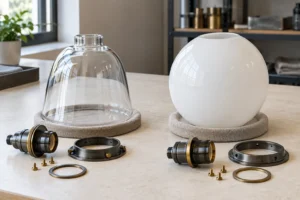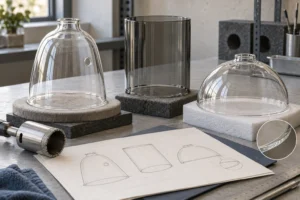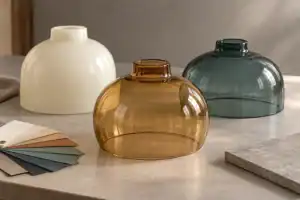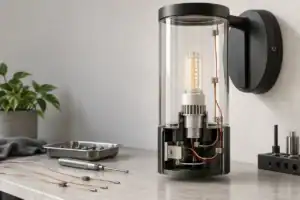
A black lampshade absorbs ambient bounce and channels light downward, creating focused, moody illumination. The key variables are exterior finish (matte, satin, or gloss), interior lining color, shape, and material. Each one changes how much light reaches the room and what the lamp looks like when it’s switched off.
Black lampshades split decorators into two camps. The first group bought one, loved it, and now owns several, scattered across the floor lamp in the corner, the pair of bedside tables, and a pendant drop above the kitchen island. The second group tried a black shade on a 40-watt bulb in a north-facing room, got something resembling a cave, and swore them off permanently.
Both reactions make sense. Both come from the same mistake: treating a black lampshade as just a color choice rather than a light-engineering decision. Get the finish, lining, shape, and bulb wattage right, and that shade turns an ordinary lamp into the visual anchor of the room. Get it wrong, and you’re reading by phone light.
Types, materials, sizing, room-by-room styling, current trends, and the questions that trip most buyers up: all of it is covered below.
What is a black lampshade?
A black lampshade is a shade with a black exterior finish, whether matte fabric, gloss glass, or perforated metal, mounted over a light source to control light direction, reduce glare, and shape the character of the illumination. The exterior color absorbs rather than reflects, which is exactly the point.
Exterior finish vs. interior lining: why both matter
Most buyers focus on the outside. The inside of a black lampshade does at least as much work.
A black shade with a white interior lining reflects light downward and outward cleanly. The output is crisp, even slightly cool. The same black shade with a gold or champagne lining warms every photon before it exits, producing that amber glow that looks expensive in interior photographs and even better in person. A black-on-black liner absorbs almost everything: a tight pool of light below, near-darkness above, essentially zero ambient fill.
Each version is technically a black lampshade. They perform completely differently.
The exterior finish shapes aesthetics and durability. Matte black hides fingerprints, ages well, and reads as modern or industrial depending on the base. Satin black adds a low sheen that catches light at angles, slightly warmer-looking in person than in photos. Gloss black, most common in ceramic-coated glass shades, reflects the room faintly, adding visual depth and a lacquered quality that reads as deliberately luxurious.
| Finish | Light diffusion | Visual character | Best lamp base pairing |
|---|---|---|---|
| Matte black | Soft-edged, warm | Modern, Scandi, industrial | Concrete, raw wood, matte ceramic |
| Satin black | Moderate, slightly luminous | Transitional, art deco | Brushed brass, aged bronze |
| Gloss black | Crisp, high-contrast | Contemporary, maximalist | Polished chrome, lacquered ceramic |
How black shades change the feel of a room
A lampshade has two functional jobs: protecting eyes from bare-bulb glare, and shaping the light spill pattern. A black lampshade does both while adding a third thing: visual grounding. Dark objects read as settled, anchored, deliberate. In a room full of light walls and pale furniture, a black shade signals the lamp was placed there on purpose.
As Wikipedia’s overview of lampshade function and design explains, the primary role of any shade is controlling light intensity and direction. A black exterior extends that control further than most colors allow, with less ambient spill, more focused output, and a stronger presence when the light is off.
Types of black lampshades
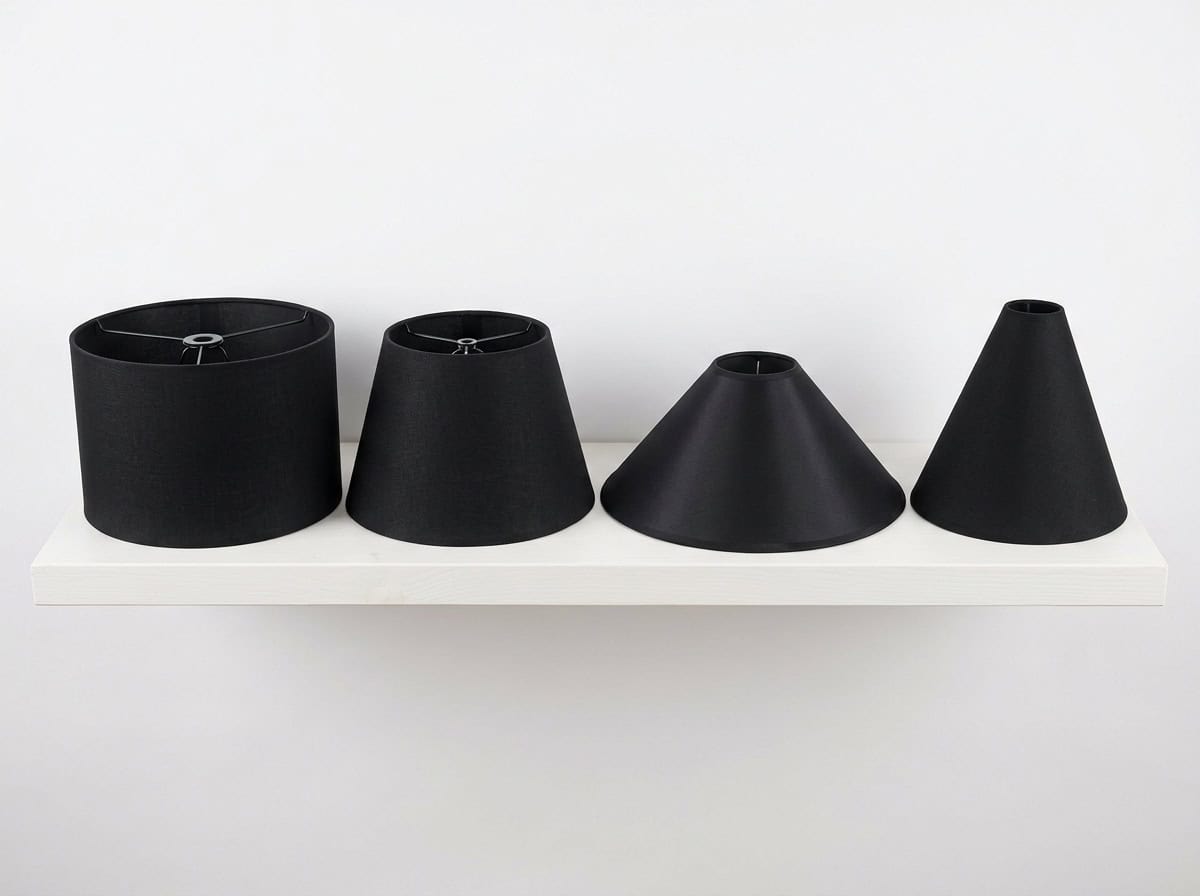
The shape of a black lampshade determines where light goes almost as much as the material does. Drum shades spread light evenly. Coolie shades funnel it downward. Empire shapes split the difference. Choosing the wrong shape for your lamp type and room is how buyers end up with a beautiful shade that doesn’t actually illuminate anything useful.
Drum black lampshade: the modern workhorse
The drum is the most-purchased black lampshade shape right now, and the reasons are straightforward. Equal top and bottom diameter, straight vertical sides, a silhouette that works with almost any lamp base or fixture: table lamps, pendant drops, floor torchieres, repurposed pipe-fitting bases. The drum adapts to all of them.
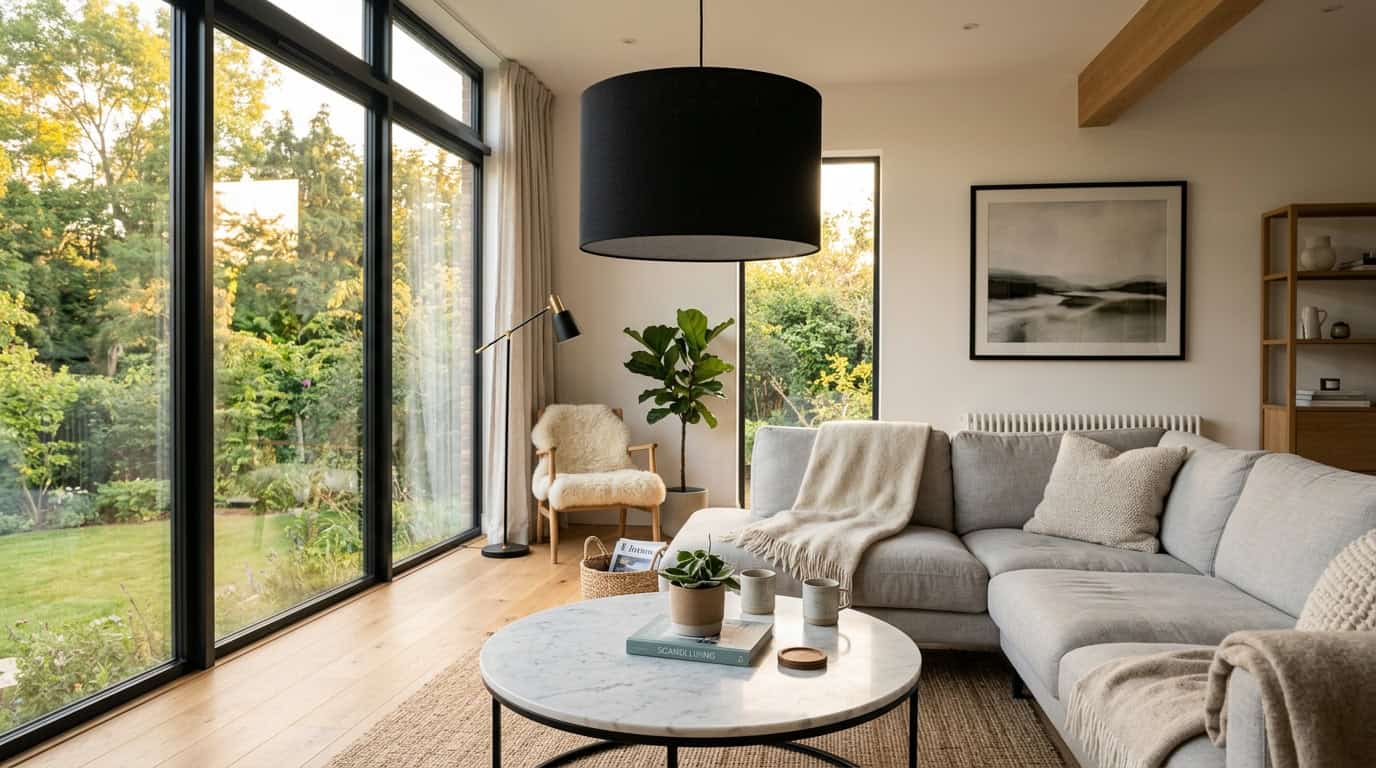
A drum black lampshade in linen or cotton fabric softens the starkness of the color while keeping the silhouette architectural. On a pendant cord, it creates the “floating disk” effect that has become shorthand for Scandinavian dining room design. In our glass shade production, the most consistently requested drum proportion is a 30–35 cm diameter with a 22–25 cm height, a range that works from bedside tables to kitchen island pendants.
Empire and coolie styles
The empire shade, wider at the bottom with gently sloping sides, is the classic table lamp silhouette. In black, it reads very differently than in white or cream. A white empire shade tends to disappear against a light wall. A black empire lampshade commands attention. It works particularly well on turned wooden or brass candlestick bases, where the contrast between warm base and dark shade creates deliberate tension.
The coolie shade takes the empire concept to an extreme: a wide, flat cone that throws light dramatically sideways and downward. In black, this creates a sharp spotlight on the surface below while leaving everything above the shade near-unlit. Great for accent lighting over a side table or reading chair. Less ideal as the sole light source for a room where you need to see corners.
Pendant and ceiling shades
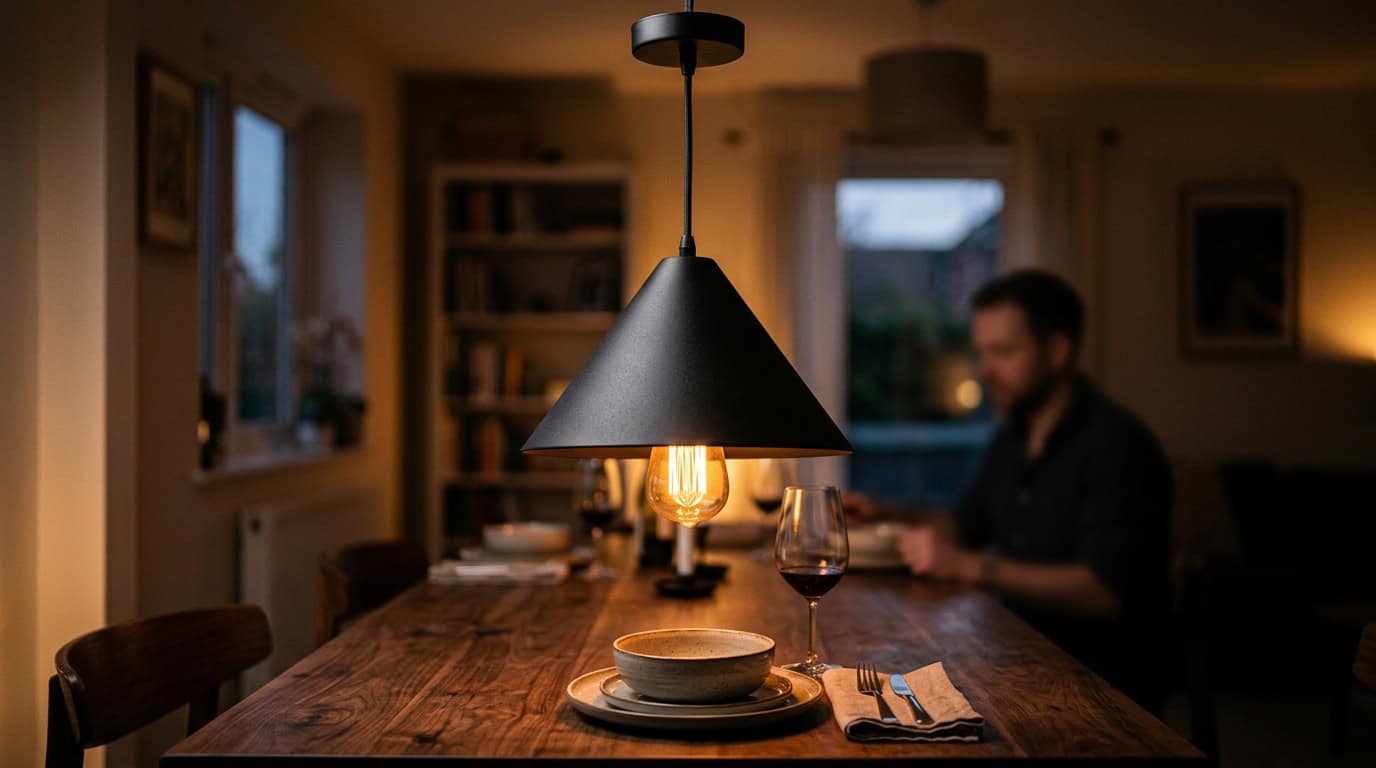
Black pendant lampshades deserve separate mention because they behave differently from table lamp shades. Hung at eye level or above a working surface, a black pendant lampshade reads against a ceiling backdrop rather than a wall. A matte black pendant above a pale marble kitchen island creates graphic contrast that registers immediately from across the room.
Cone-shaped and half-sphere pendant shades in black glass are strong in commercial settings. Restaurant tables, hotel bar counters, retail display areas, anywhere that a defined light pool creates atmosphere as much as it provides illumination. Our glass lampshade solutions include custom pendant specifications across glass types, fitter configurations, and coating finishes.
| Shape | Best lamp type | Light spread | Best room application |
|---|---|---|---|
| Drum | Table, pendant, floor | Even up and down | Living rooms, kitchens, offices |
| Empire | Table, buffet | Downward-focused | Bedrooms, entryways, traditional spaces |
| Coolie | Table, accent | Wide, downward | Reading chairs, side tables |
| Pendant cone | Ceiling drop | Directional spot | Dining tables, kitchen islands, bars |
| Bell | Table, torchiere | Soft, diffused | Formal living rooms, dining rooms |
Black lampshade materials
The material of a black lampshade determines light transmission, how much light passes through the shade walls versus exiting only through open top and bottom, along with texture, durability, and maintenance. A black shade in velvet and a black shade in opal glass both look dark from outside. Their light output and upkeep are entirely different.
Fabric shades: linen, cotton, velvet
Fabric is the most common material for black lampshades, for practical reasons: lightweight, widely available, forgiving in shipping and installation. Within fabric, weave density is the variable that matters most for light behavior.
Linen and cotton black shades, typically with a white poly lining, allow moderate light transmission through the fabric walls, producing a warm glow around the shade’s midsection when lit. This softens the overall effect and prevents the room from going dark at the shade’s sides. Linen-cotton blends are the practical choice for a primary light source in living rooms and bedrooms.
Velvet absorbs almost everything through the walls. The effect is dramatic, but velvet black lampshades work best as accent or mood lighting rather than primary illumination. They hold dust, are delicate to clean, and in humid climates can develop odors over time. Worth knowing before committing in a coastal or bathroom-adjacent setting.
Linen blends remain the sweet spot: textured, premium-looking, transmit a pleasing amount of light, and clean with a dry brush without drama.
Glass black lampshades
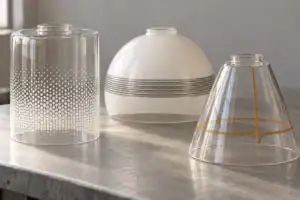
A glass black lampshade behaves differently from any fabric equivalent. Whether the glass is opaque, frosted, or translucent black changes the light character entirely.
Opaque black glass, ceramic-coated or painted, passes zero light through the walls. All output exits from open top or bottom openings. The result is the hardest, most theatrical effect a lampshade can produce: a defined circle of illumination below, a warm upward glow on the ceiling if the top is open, and a visually solid object when the light is off. These are most common in pendant and ceiling fixture applications.
Frosted or smoke-tinted glass, dark-tinted rather than fully coated, allows a diffused glow through the walls. The output is moodier and less harsh than opaque. In smoke-glass shades, the nighttime effect is particularly compelling: the shade glows as a soft dark form rather than a hard, flat object.
Glass shades outlast fabric over any significant time span and clean far more easily. The trade-offs are weight and fragility in transit. At jxlampshade.com, our black glass lampshades are produced in borosilicate and soda-lime glass with ceramic coating; standard wall thickness runs 3–5 mm for pendant shades. For a detailed breakdown of how glass shade geometry affects light output, our lampshade shapes guide covers twelve glass shade types with visual examples.
Silk, faux-silk, and perforated metal
Silk black lampshades occupy the luxury tier. Real silk transmits light with a luminosity synthetic fabrics can’t quite replicate. The catch: real silk fades and becomes brittle with heat exposure. Most “silk” shades on the market use faux-silk polyester. Fine for most applications and far more durable, just not identical when backlit.
Perforated metal black lampshades occupy a niche but make a strong statement. The perforations cast patterned light, geometric shapes, floral motifs, lattice patterns, onto surrounding walls and ceilings. The black base color makes these projections crisp and dramatic. They work best as a decorative feature as much as a light source.
| Material | Light through walls | Durability | Maintenance | Best for |
|---|---|---|---|---|
| Linen/cotton | Medium (warm glow) | High | Dry brush | Primary lighting, bedrooms, living rooms |
| Velvet | Very low | Medium | Delicate brush | Accent lighting, formal spaces |
| Opaque glass | None (top/bottom only) | Very high | Wipe clean | Pendants, commercial, architectural |
| Frosted glass | Low-diffuse | Very high | Wipe clean | Mood lighting, bar, hotel |
| Faux-silk | Medium-high | Medium | Dry cloth | Traditional lamp styles, formal living |
| Perforated metal | Through holes only | Very high | Occasional dust | Decorative accent, feature lighting |
How to size a black lampshade for your lamp
This is where most buyers go wrong, not on color or material, but on dimensions. A shade too wide looks like a hat. Too narrow, and the lamp base looks strangled. Too tall, and the proportional relationship between shade and body collapses entirely.
The three measurements that actually matter
Bottom diameter is the number most buyers focus on first, and it matters. A useful baseline: the bottom diameter of the shade should roughly match the height of the lamp base, measured from the table surface to where the shade attaches, not to the shade’s top. For a 35 cm lamp base, a bottom diameter of 35–40 cm is the proportionally safe range.
Height determines whether hardware is visible and whether the shade reads as balanced. The shade should cover the harp and socket components while leaving 1.5–2 cm of the lamp base neck visible below the shade’s lower edge. A shade taller than the base makes the whole lamp look bottom-heavy.
Top diameter (for empire and bell profiles) affects how much light exits upward. A top opening of 10–15 cm is typical for table lamp shades; wider means more ceiling wash, which matters if the lamp is the primary room light source.
According to U.S. Department of Energy guidance on residential lighting, lampshade size directly affects illumination efficiency. An oversized shade disperses light unnecessarily; an undersized one concentrates heat around the bulb. Both affect real-world performance.
The full measurement process, with a step-by-step tape measure walkthrough, is covered in our how to size a lampshade guide.
Fitter types and compatibility
The spider fitter is the most common for table lamps, a metal crossbar over the harp secured by a finial. Most black lampshades sold online use spider fitters. Confirm before ordering.
The uno fitter screws directly onto a socket adapter with no harp required. Common in floor lamps and some table lamp styles.
The clip-on fitter clips directly to the bulb. Only appropriate with lower-wattage LED bulbs since the shade sits very close to the light source. Useful for candelabra fixtures without a harp.

If replacing an existing shade, bringing the fitter ring or the full shade to a lighting supplier is the most reliable approach. Fitter type mismatch is an unstable safety issue, not just an aesthetic miss. It’s also the most common return reason in shade purchases.
Styling black lampshades room by room
The “will this work in my room?” question is more straightforward than most style guides make it. Black lampshades don’t need a dark room to work. They need contrast, and that contrast can come from the lamp base, the surface the lamp sits on, or the wall behind it. One black shade in a mostly white room reads as intentional. Six reads as oppressive.
Living room: visual anchor and contrast
In a living room, a black lampshade works hardest as an anchor element. If the rest of the space runs neutral, white walls, oatmeal sofa, light wood floors, one or two black shades on table or floor lamps provide the visual weight that stops the room from feeling unresolved. They don’t darken the space; they define it.
The most common living room mistake is going too small. A 30 cm drum shade on a 65 cm floor lamp disappears. Scale up. A 45–50 cm drum shade in matte black on a brass or natural stone base reads from across the room and does the anchoring work it should.
For pendant drops above a coffee table or within a seating cluster, a black pendant lampshade at 40–50 cm diameter in a conical or drum shape creates the low-slung, intimate effect common in European residential interiors, essentially applying dining room pendant logic to a living space.
Bedroom: intimate, directional light
The bedroom is where black lampshades earn their strongest reputation. A black bedside shade with a white or gold interior lining delivers light where you need it, down onto a bedside surface or across a book page, without splashing brightness across the ceiling and disturbing a sleeping partner.
Black empire lampshades on brass candlestick bases are the most consistently successful bedroom pairing. The combination reads as calm, considered, slightly luxurious without effort. Keep the shade scaled correctly: for a typical bedside lamp of 55–65 cm total height, a shade with a 25–30 cm bottom diameter and 18–22 cm height is usually right.
As Better Homes and Gardens notes in their bedroom lighting coverage, bedside lamps are most effective when they direct light at reading level without glare. That’s a job black lampshades with reflective interiors handle better than open white shades. For rooms relying on bedside lamps as the primary light source, pair black shades with at least 800-lumen bulbs; the dark interior absorbs some reflected output.
Home office and reading nooks
In a home office, a black lampshade on a desk or floor lamp creates defined task lighting with minimal ambient wash. That’s an asset for video calls, less background glare behind you, and for focus work where you want the desk lit and the room’s edges to recede.
Black shades pair particularly well with articulating lamp styles in reading nooks: swing-arm wall sconces, pharmacy floor lamps, adjustable desk lamps. Adjustability gets the light pool exactly over the page; the black shade keeps that pool tight rather than washing the whole alcove in flat brightness.
Black lampshade trends (2026 and beyond)
The design trajectory for black lampshades in 2026 is moving in two distinct directions at once: toward extreme texture on one side, and toward high-contrast metallic combination on the other. Both reflect a broader shift in residential interiors away from flat minimalist restraint and toward materials with observable character.
Textured and pleated matte black
The most visible shift over the past two years has been the rise of textured matte black: shades with surface relief in linen weaves, pleated fabric, or ribbed glass that catch light and create interest beyond what a flat matte surface offers.
Our pleated lampshade guide covers this style in detail, but the specific appeal in black is that pleating adds warmth and handcraft quality that flat matte fabric can’t match. Each pleat catches light slightly differently as ambient conditions change through the day. The shade looks different at 9am than at 9pm. That’s a quality photographs can’t quite capture, but that lives extremely well in a room.
Ribbed and fluted black glass pendant shades follow the same trajectory. Vertical ridges in the glass scatter downward light in fine lines, with an effect quite different from a smooth glass cone: more individual, more interesting when lit, while maintaining the same footprint and fitter compatibility.
Black shades with gold and brass linings
The black-exterior, gold-interior combination has climbed steadily and shows no sign of peaking. From outside, the lamp is a dark, graphic object. Switch it on, and the light that comes through is warm amber. The black exterior makes the gold look richer, not poorer.
According to Elle Decor’s 2026 residential design coverage, warm metal accents like burnished brass and antique gold have become structural to residential interiors rather than trend-dependent, particularly in bedrooms and dining rooms. The black lampshade with gold lining sits at the intersection of that shift and the ongoing appetite for dark accent elements.
| Trend | Why it’s rising | Best paired with |
|---|---|---|
| Textured/pleated matte black | Reaction against flat minimalism; adds visible craft quality | Natural wood bases, woven rattan, raw ceramics |
| Ribbed/fluted black glass | More individual than a smooth cone; reads as custom | Industrial metal, polished concrete, marble |
| Black + gold interior lining | Dramatic outside, warm inside; works across room styles | Brass candlestick bases, marble side tables |
| Oversized drum pendants | Statement lighting replacing overhead fixtures | Open-plan dining areas, kitchen islands |
| Black shade + colored lamp base | High-contrast pairing rather than all-neutral | Terracotta, cobalt, deep green ceramic bases |
FAQ
Can I paint a lampshade black?
Yes, with the right materials. Fabric lampshades accept fabric spray paint or brush-applied fabric paint thinned with water. Avoid regular acrylic: it cracks and flakes when the shade flexes with heat. Apply multiple thin coats, and test on the inside bottom edge first. A realistic caveat: hand-painted black lampshades rarely achieve the evenness of a manufactured finish, and the paint layer changes light transmission in ways that are hard to predict before switching the lamp on. For glass shades, cold enamel or specialty glass paint bonds durably and applies more evenly. For most situations, replacing the shade outright is faster and gives a cleaner result.
Are black lampshades in style in 2026?
Yes, firmly. Black lampshades moved past trend status years ago. They appear across Scandinavian minimalism, mid-century revival, maximalist rooms, and industrial loft spaces alike. The interesting question in 2026 is not whether to use a black shade but which version: textured matte, ribbed glass, black with gold lining. The base color is settled; the material and finish are where current energy is focused.
Do black lampshades make a room darker?
They change light distribution more than total output. A black lampshade with a white interior lining on a 10W LED (roughly 800 lumens) still provides plenty of light. It directs that light downward and outward rather than bouncing it off the ceiling. The room can feel darker because ceiling wash is reduced, but surfaces below the lamp are well-lit. If ambient fill lighting matters, supplement with an overhead fixture or second lamp rather than avoiding black shades.
What wattage bulb should I use with a black lampshade?
Step up roughly one tier from what you’d use in a white or cream shade. In a white shade, 6W LED (about 450 lumens) might suffice for bedside ambient light. In a black-interior shade, use 8–10W LED (600–800 lumens) for the same result. For task lighting, reading or desk work, 10–14W LED through a black lampshade is appropriate. Always verify the maximum wattage rating on the shade; glass shades in particular have heat thresholds that older halogen bulbs can exceed. The U.S. Department of Energy’s lighting resource has practical wattage-to-lumen equivalency tables by room type.
What is the difference between a black shade with white vs. gold lining?
White interior: clean, neutral-temperature light output. From outside, still a black lampshade; from the room’s perspective, the light is cool to neutral white. Gold interior: warm amber-tinted output. From outside, still black; inside the room, the light reads like candlelight. Gold linings suit bedrooms, dining rooms, and living rooms where warmth is the goal. White linings work better for offices and task-focused areas where color accuracy matters.
Can I use a black lampshade outdoors?
Fabric black lampshades are not weather-rated and degrade quickly with rain, humidity, and UV. Some glass and metal shades carry outdoor ratings. Check the IP (Ingress Protection) rating: IP23 covers protected outdoor positions, IP44 suits semi-exposed spots, and IP65 handles full outdoor exposure. Most black glass pendants used in commercial outdoor dining carry IP44 or IP65 ratings. Fabric shades should stay indoors regardless of how sheltered the overhang appears.
What size black lampshade fits a standard table lamp?
A 25–35 cm bottom diameter drum or empire shade fits most residential table lamps with bases between 45–60 cm tall. For precision: measure the lamp base height and match the shade’s bottom diameter to within 2–5 cm of that number. The spider fitter is the near-universal default for table lamps. Confirm before ordering, since fitter mismatch is the most common shade return reason. The full process is in our lampshade sizing guide.
The right black lampshade for your space
Every black lampshade decision comes down to four variables in order: shape (where does the light need to go?), material (how much light through the walls?), lining (warm or neutral output?), and size (does it fit the lamp and the room’s proportions?).
For most buyers, a drum shape in matte black linen with a white or gold lining handles 80% of applications. It’s forgiving across lamp styles, holds up well, and reads appropriately across contemporary, transitional, and traditional rooms. The cases where you step outside that template are specific: glass shades for architectural and commercial contexts where cleanability and durability are non-negotiable; velvet for formal rooms where the shade functions as a luxury object; perforated metal where projected pattern light is the intent rather than a side effect.
One practical note: black exteriors show dust and fingerprints noticeably more than white or cream shades. A weekly dry brush or soft cloth wipe keeps a black lampshade looking as sharp as the day it arrived. Let two months of a high-traffic room accumulate on it, and even a beautiful shade starts looking dull rather than dramatic.
For custom specifications, glass type, coating color, lining material, fitter configuration, or volume pricing, our team handles both small trade orders and large commercial sourcing through jxlampshade.com. The black table lampshades guide is also worth reading if you’re matching a shade to a specific table lamp base. It covers pairing logic in more depth than this overview allows.