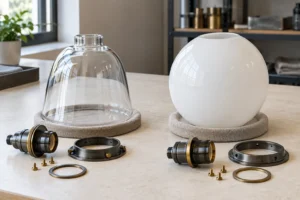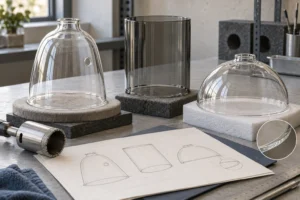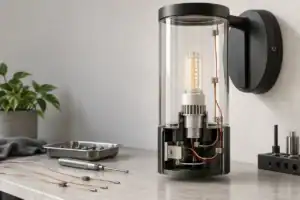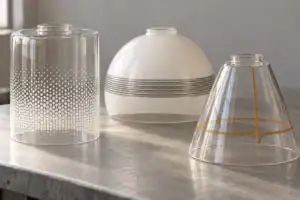
Direct answer: Vintage glass lamp shades for table lamps are decorative glass shades in period styles — milk glass, amber cased glass, hand-blown opalescent, ribbed, or etched — fitted to the table lamp’s fitter type (uno, spider, or clip-on). Selecting the right one requires matching the fitter diameter, shade diameter-to-base proportions, and glass finish to both the lamp era and interior style.
Walk into any antique market and you’ll find table lamps that have been stripped of their original shades — brass-bodied kerosene-converted lamps with nothing on top, Depression-era ceramic bases sitting naked under fluorescent shop lights, Victorian parlor lamps whose milk-glass globes disappeared decades ago. The lamp survives; the shade rarely does.
Replacing or sourcing a vintage glass shade for a table lamp is genuinely harder than it looks because the original shade didn’t just have one purpose. It filtered light, it communicated period style, it set a scale relationship between the base and the room, and it created a specific quality of warmth at night that modern shades rarely replicate. Getting all four right simultaneously takes more than a scroll through a marketplace listing.
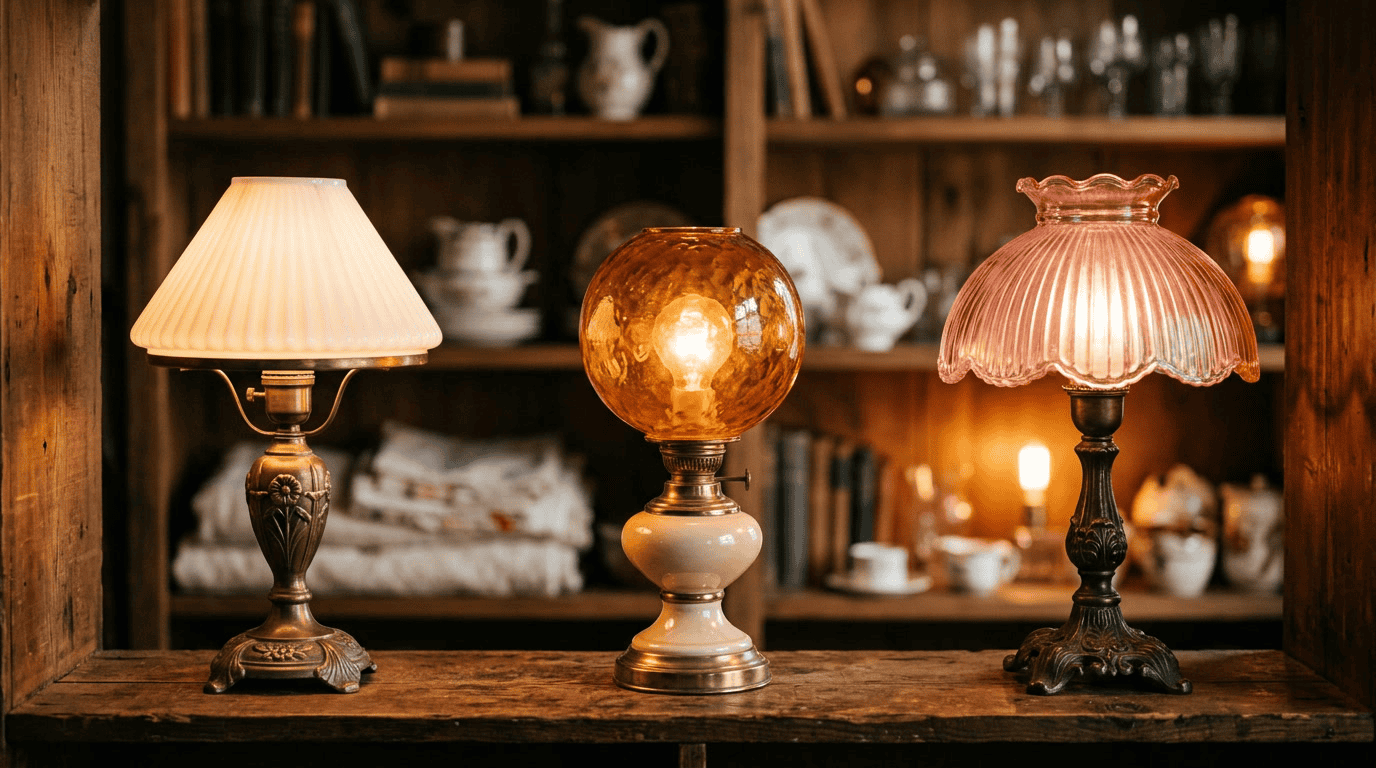
For the broader vintage glass lamp shade category, see our vintage glass lamp shades hub.
What “Vintage” Means in Glass Lamp Shade Terms
In the context of table lamp shades, “vintage” covers roughly a 100-year span — from the gas-lamp-to-electric conversions of the 1890s through the teak-and-ceramic mid-century modern era of the 1960s. Within that span, five distinct manufacturing periods each produced glass shades with recognizable visual signatures.
Victorian and Edwardian (1880–1910): Hand-blown opalescent glass in ruffled or crimped forms. Thick walls, irregular surface texture, frequently painted or decorated with floral transfers. Fitter diameters were non-standard; many shades were held by three-arm spider supports or simply rested on rings.
Arts & Crafts and Art Nouveau (1900–1920): Leaded glass panels, organic forms, amber and green tonal palettes. Tiffany Studios defined the high end; dozens of smaller glasshouses produced commercial versions. Most table lamp shades in this style use a 2¼” or 3¼” fitter ring.
Depression Glass era (1920–1940): Mass-produced machine-pressed glass in pink, green, amber, and clear. Simpler geometric forms — ribbed globes, pleated cones, beehive shapes. Fitters were increasingly standardized. Shades from this era are the most available vintage originals today.
Mid-century Modern (1945–1970): Opal white glass in clean cone and drum shapes. Scandinavian influence pushed glass toward pure geometry. Some shades are actually painted milk glass; others are cased two-layer glass. Uno and spider fitters dominate.
Hollywood Regency and late MCM (1955–1975): Smoked glass, amber glass, clear crystal-cut patterns. Often paired with brass and gold bases. Shades tend toward globe or bell shapes.
Understanding which era your lamp comes from — even approximately — is the fastest way to narrow your shade search from “everything vintage-looking” to “three or four specific glass types.”
The Five Core Vintage Glass Shade Types for Table Lamps
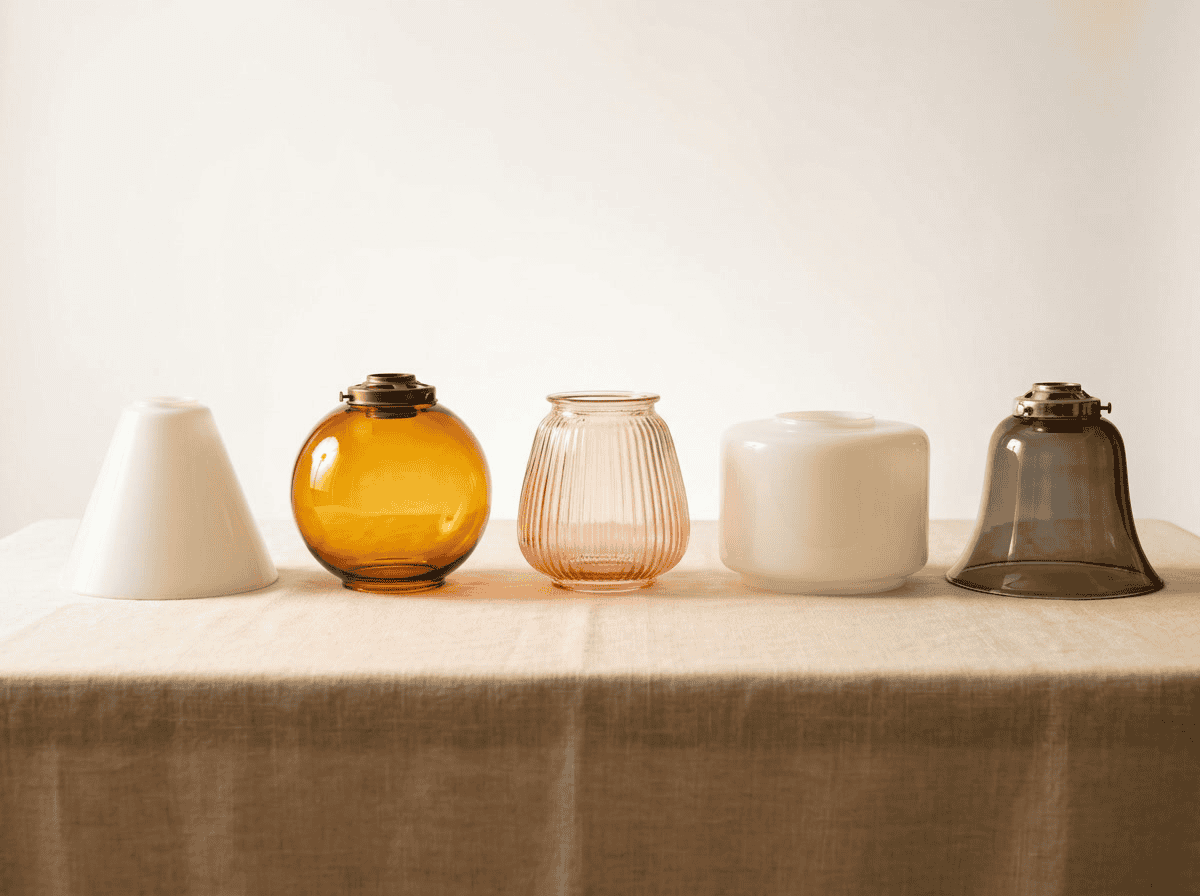
Milk Glass Shades
Milk glass — an opaque or semi-opaque white glass — is the single most commonly available vintage shade type on the secondary market and from current reproduction manufacturers. The opacity is created by fluoride compounds or bone ash added to the melt, giving the glass a warm white that transmits soft, diffuse light with no visible bulb.
Original milk glass shades were produced in enormous quantities through the 1950s–1970s for both table and floor lamps. They’re durable, they diffuse light beautifully, and they pair with almost any lamp base finish. For buyers replacing a missing shade on a mid-century table lamp, a milk glass shade in the right diameter is usually the fastest solution.
Reproductions are widely available and entirely serviceable. The distinction between original and reproduction milk glass comes down to surface texture (originals often have visible mold seams or slight surface irregularity), wall thickness distribution (machine-pressed originals are thinner at the top, thicker at the bottom), and the specific warmth of the glass color (originals tend toward slightly warm white; some reproductions are colder).
For current production milk glass shades with authentic visual weight, our vintage glass lamp shades collection shows the range of available forms and fitter options. For a deeper look at milk glass specifically — production periods, identifying originals, and cleaning — see our vintage milk glass lamp shades guide.
Amber Cased Glass Shades
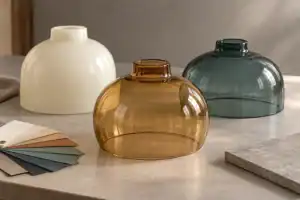
Amber glass shades are either single-layer tinted glass (less expensive, lighter color) or two-layer “cased” glass with an amber inner gather surrounded by a clear outer layer. Cased amber glass has a richer, more saturated color and holds it consistently from any viewing angle. It was the dominant decorative shade color for table lamps throughout the 1960s–1970s.
At night, amber shades create the warmest possible light quality — shifting even a 2700K LED bulb to something approaching firelight. This makes them particularly effective for bedroom reading lamps and living room side tables where warmth is more important than task-lighting output.
One important note: amber shades reduce light output significantly — a typical amber shade transmits roughly 40–55% of incident light, meaning a 60W-equivalent LED (800 lumens) behind amber glass delivers only about 350–440 lumens into the room. Compensate by selecting a higher-lumen bulb. For the full range of amber forms and hardware pairings, see our vintage amber glass lamp shades guide.
Depression Glass Ribbed Shades
The machine-pressed ribbed glass shades of the 1920s–1940s are the most affordable vintage glass currently available. The ribbing is a functional feature as much as a decorative one — vertical fluting diffuses the bulb image into discrete vertical highlights without absorbing much light, keeping transmission above 80%.
Depression glass shades were produced in pink, green, amber, and clear. Pink and green are the most recognizable period colors; clear ribbed is the most versatile with modern lamp bases. These shades are typically lightweight (2–3mm wall thickness) and carry a direct visual reference to the interwar era.
Key practical note: Depression-era shades were produced to the fitter standards of their time, which were not always the modern 2¼”/1 5/8″ sizes. Many original ribbed shades have slightly non-standard fitter diameters. When sourcing replacements, verify the actual inner fitter diameter rather than assuming it fits modern lamp hardware.
Opal and Cased Glass MCM Shades
Mid-century modern table lamp shades in opal or cased glass are the cleanest-looking of the vintage types — simple geometry, pure white or near-white glass, total diffusion. They’re also the most reproduced, because their simplicity makes them easy to manufacture at any quality level.
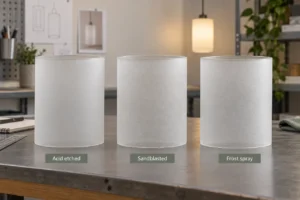
When evaluating mid-century style opal shades, look at the light behavior. A two-layer or three-layer cased shade lit from inside should show zero bulb image from any angle — the entire glass surface glows uniformly. A cheaper single-layer frosted shade will show a bright hotspot behind the bulb. For authentic mid-century diffusion quality, specify cased construction.
Smoked and Crystal-Cut Shades
Smoked glass became a dominant table lamp shade material in the late 1960s and 1970s, paired with heavy brushed brass or chrome bases in the Hollywood Regency style. Smoked shades have a grey-to-brown tint that reduces total light output substantially (30–50% transmission) but creates a distinctive moody quality.
Crystal-cut glass shades — with faceted or geometrically cut exterior surfaces, sometimes finished with the same iridescent treatments used on carnival glass — were also prominent in this era. The cuts catch and refract light from adjacent sources, creating a prismatic sparkle on surrounding walls. These are not truly “cut crystal” (which is lead crystal), but pressed or mold-blown glass with cut patterns ground into the exterior after forming.
Sizing a Vintage Shade to a Table Lamp Base
Most buying errors on vintage table lamp shades come from sizing — either the fitter doesn’t physically fit, or the shade is correctly attached but looks wrong in proportion.
Step 1: Identify the fitter type
Three fitter types cover the vast majority of vintage table lamps:
| Fitter type | Identification | Common on |
| Uno (7/8″ / 22mm thread) | Threads directly onto the bulb socket body | Most mass-market table lamps 1940–present |
| Spider (1 5/8″ / 41mm saddle) | Wire harp with a finial nut | Mid-range to premium table lamps, floor lamps |
| Clip-on | Metal spring clips grip the bulb shape | Small accent lamps, candelabra-socket lamps |
| Ring-rest (no fitter) | Shade rests in a three-arm ring stand | Pre-1920 converted gas lamps, some Victorian |
Measure the inner diameter of your existing shade’s opening — or the outer diameter of your lamp’s socket/harp saddle — before ordering any replacement.
For detailed fitter size matching, our glass lamp shade fitting standards guide covers every fitter type with measurement diagrams.
Step 2: Calculate proportional diameter
The classic proportion rule for table lamps is: shade outer diameter ≈ lamp base height. A 14″ tall base wants a 14″ wide shade. This isn’t absolute — some base forms (very slender column bases, very wide urn bases) want different ratios — but it’s the right starting point.
Vintage lamp bases tend to be shorter and heavier than modern ones. A Depression-era ceramic base that stands 10″ to the socket typically wants a shade in the 10–12″ outer diameter range, which means a relatively wide, lower shade — a shape that looks odd to modern eyes but is period-correct.
| Lamp base height | Target shade outer diameter | Appropriate shade shape |
| 8–10″ | 10–12″ | Wide bell or shallow cone |
| 11–14″ | 12–16″ | Standard bell or drum |
| 15–18″ | 14–18″ | Taller bell or empire |
| 19″+ | 16–20″ | Full empire or drum |
Step 3: Set shade height
Shade height should place the bottom of the shade at or slightly above the lamp’s shoulder (the widest point of the base). A shade that sits too high exposes bare socket hardware; one that hangs too low buries the base detail. For most vintage table lamps, shade height runs between 7″ and 10″.
The complete measurement process — bottom diameter, top fitter diameter, slant height, and overall height — is documented in how to measure a replacement glass lamp shade.
How to Match Vintage Shade Style to Lamp Era
The fastest matching guide for non-specialists:
Victorian / Edwardian lamp base (ornate cast metal, elaborate floral or gothic detail, converted oil or kerosene lamp):
→ Hand-blown opalescent globe with crimped or ruffled rim. Amber, pink, or white. Non-standard fitter likely — may need a custom ring support.
Arts & Crafts lamp base (hammered copper, wrought iron, simple geometric form):
→ Leaded glass panel shade (reproduction) or amber/green single-color glass. Organic or geometric pattern. 2¼” fitter.
Depression-era lamp base (pressed glass base in pink/green/clear, ceramic figural, simple chrome):
→ Matching pressed glass ribbed shade in the same color as the base, or clear ribbed for versatility.
Mid-century modern lamp base (teak or walnut stem, ceramic with abstract glaze, simple cylindrical brass):
→ White cased opal cone or drum in clean geometry. Spider fitter with walnut or brass finial. No decoration.
Hollywood Regency / late MCM base (heavy brushed brass or chrome, geometric urn form):
→ Smoked glass bell, amber globe, or clear crystal-cut shade. Generous diameter (16–20″).
Where you have doubt, photograph the base with the lampshade opening visible and send it to your glass shade supplier before ordering. Reputable manufacturers will confirm the fit and advise on period-appropriate styles.
New Production vs. True Vintage: Which to Buy?
This is the question most buyers hedge around, and it deserves a direct answer.
True vintage originals have provenance, tactile character, and the specific color and surface quality that comes from period glass formulas that are no longer commercially viable. A genuine 1950s pink Depression glass ribbed shade has a color that modern pink glass rarely replicates exactly. If period accuracy matters — for a dedicated antique lamp restoration, a museum-quality interior, or simply because you want the real thing — originals are worth finding and paying for.
Current production vintage-style shades have tolerances and fitter standardization that originals often lack. They’re available in consistent batches. You can specify exact fitter diameter, exact shade height, and glass finish. The visual result in a typical interior is essentially indistinguishable from a genuine period shade. For every practical household purpose — replacement, decoration, a vintage aesthetic without antique hunting — current production is the rational choice.
The grey zone is “vintage-inspired” marketplace listings that are neither genuine antiques nor quality reproductions — they’re mass-produced imports with no attention to period accuracy or glass quality. The tell is usually weight (too light), color (slightly off), and surface texture (too perfect or too crude). Request a photo of the actual shade lit from inside — a quality shade shows characteristic diffusion. A cheap one shows a harsh hotspot.
According to Wikipedia’s overview of Depression glass, the original manufacturing period ran 1929–1939, giving you a useful historical baseline when evaluating “Depression glass” claims on marketplace listings.
Bulb Compatibility for Vintage Table Lamp Shades
Original vintage table lamp shades were designed around incandescent bulbs running at 40W–60W. The heat those bulbs produced was real and relevant to shade selection. Modern LED equivalents are safe to use in any glass shade designed for incandescent use — LEDs produce 70–90% less heat at the same lumen output.
The practical consideration isn’t heat — it’s light quality. Vintage glass shades were designed to work with warm incandescent light (roughly 2700K). Pair them with:
| Shade type | Bulb recommendation | Why |
| Milk glass | A19 LED, 800 lm, 2700K, high CRI | Diffusion hides bulb; warm tone complements white glass |
| Amber cased | A19 LED, 1000–1100 lm, 2700K | Amber absorbs 45–60% of output; need higher lumens |
| Depression ribbed | Decorative filament LED, 400–600 lm | Ribbing scatters filament into highlights |
| Opal MCM | A19 LED, 800–1000 lm, 2700K | Opal absorbs ~50%; match lumens accordingly |
| Smoked glass | A19 LED, 1100 lm, dimmable, 2700K | Smoked absorbs heavily; use dimmer for range |
According to the U.S. Department of Energy’s lamp efficiency guidance, LED lamps now deliver over 100 lumens per watt, making it entirely practical to run higher-lumen LEDs in vintage shades to compensate for glass absorption — something impossible with old incandescent technology without overheating.
Avoid “daylight” (5000K–6500K) bulbs behind any vintage glass shade. The blue-white output looks technically wrong against warm period glass and ruins the aesthetic the shade was designed to create.
Cleaning and Preserving Vintage Glass Shades
Glass is durable but not indestructible, and period glass shades often have surface decorations — painted enamel, decal transfers, gilded trim — that require gentle handling.
For plain milk glass, amber, or clear ribbed shades:
- Remove from lamp and clean over a padded surface (folded towel)
- Warm water with a drop of dish soap on a soft microfiber cloth
- Never submerge antique shades — the fitter hardware can rust
- Air dry fully before replacing
For painted or decorated period shades:
- Dry microfiber dusting only — no water near painted surfaces
- If cleaning is necessary, barely damp (wrung-out) cloth, then immediate dry wipe
- Never use glass cleaner (ammonia-based) near painted surfaces — ammonia attacks enamel
For opalescent or cased glass shades:
- Wipe inside and outside with a barely damp cloth
- The internal surface of pendant-style shades collects more dust than the exterior; clean both
- Opalescent glass can develop hairline cracks from thermal cycling; inspect near the fitter ring annually
The Smithsonian’s guide to glass object care provides professional-level guidance for true antiques. For reproductions and recent production shades, standard glass cleaning practices are sufficient.
Where to Source Vintage Glass Shades for Table Lamps
Antique markets and estate sales: Best for genuine period originals, worst for consistent availability and standard fitter sizes. Expect to measure carefully before buying.
Online marketplaces (Etsy, eBay, Chairish): Wide selection, but “vintage” labeling is inconsistent. Always ask the seller for exact fitter inner diameter, shade outer diameter, and a photo of the shade lit from inside.
Lighting restoration specialists: Carry curated original and reproduction stock. Prices higher, knowledge level higher, return policy usually better.
Direct from glass shade manufacturers: Best option for consistent quality, standardized fitters, and custom dimensions. The Corning Museum of Glass collection database is a useful reference for comparing forms and finishes against documented period pieces before placing a custom order. Minimum orders typically 10–50 units, making this the route for trade buyers, designers specifying multiple pieces, or anyone replacing shades across a complete lamp collection.
For B2B buyers sourcing vintage-style shades for hospitality projects, residential design, or wholesale, our cut glass and vintage collection shows current production vintage-style options with standard and custom fitter specifications. If you’re sourcing for floor lamps or pendants rather than table lamps, our vintage floor lamp glass shades guide and vintage glass pendant light shades guide cover those fitter types and proportions, and if you’re not yet sure what era or glass type you’re working with, our guide to identifying vintage glass lamp shades walks through the diagnostic steps.
Specifying Custom Vintage Shades: What Manufacturers Need to Know
When requesting a custom vintage-style shade from a manufacturer, five specifications determine whether the result matches your vision:
- Fitter type and inner diameter — e.g., “Uno, 7/8″ threaded opening” or “Spider, 1 5/8″ saddle”
- Outer diameter — widest point of the shade exterior
- Height — from fitter top to shade bottom
- Glass type and finish — e.g., “milk glass (opaque white), two-layer cased” or “amber tinted, single layer, smooth exterior”
- Period reference — e.g., “1950s mid-century modern, cone form, no surface decoration” or “1960s Hollywood Regency, bell form, vertical ribbing”
With those five points specified, a competent glass shade manufacturer can produce a sample for your approval before batch production. For residential replacement quantities (1–10 shades), most manufacturers offer sample orders at slightly higher per-unit cost.
Future Directions: Vintage Aesthetics in 2026
The current interior design context in 2026 is strongly favorable to vintage glass lamp shades. Three specific movements are active:
Maximalist/Grandmillennial revival: Dense, layered interiors with pattern, color, and period antiques. Glass shades in milk white, amber, and Depression pink are being specified new for rooms that are deliberately building an aged aesthetic from scratch.
Sustainable sourcing interest: Interior designers increasingly specify vintage or vintage-reproduction items as a lower-embodied-carbon choice versus new fixture production. Glass lamp shade reproduction has very low production complexity compared to full new fixture design.
Warm-light premium: High-CRI warm LED technology has enabled homes to be lit at 2700K throughout, which looks significantly better behind amber and opal glass than it did behind incandescent. The glass is finally getting the light quality it was designed for — just with a more efficient source.
| Trend | Impact on vintage shade demand |
| Grandmillennial interior style | Drives demand for milk glass, amber, Depression-era forms |
| Sustainable specification | Increases reproduction quality expectations |
| Warm LED mainstream | Makes amber and opal glass perform better than ever |
Frequently Asked Questions
What is the most commonly available vintage glass table lamp shade type?
Milk glass in bell or cone form. It was produced in enormous quantities through the 1950s–1970s and reproduced continuously since. Standard fitter diameters (uno and spider) are available in milk glass from most lamp shade suppliers.
How do I find the fitter size for my vintage table lamp?
Look at the bulb socket collar. Uno fitters thread directly onto the socket — measure the outer diameter of the socket thread (typically 7/8″). Spider fitters sit on a wire harp; measure the outer diameter of the saddle opening (typically 1 5/8″). If in doubt, measure both and contact the supplier with both numbers.
Are reproduction vintage glass shades as good as originals?
For practical use, yes. Current production vintage-style shades offer consistent fitter sizing, predictable glass quality, and exact color matching across multiples — things original antiques rarely provide. For museum-quality restoration or collector authenticity, originals are still preferred.
Can I use an LED bulb in a vintage glass shade?
Yes, and it’s the correct choice. LEDs produce dramatically less heat than the incandescent bulbs vintage shades were originally designed around, eliminating any thermal stress concern. Choose a warm-white LED (2700K) to maintain the period light quality. Compensate for glass absorption by selecting a slightly higher lumen output than the shade’s original watt rating would suggest.
Why does my vintage milk glass shade look yellowed?
Older milk glass formulas used fluoride or bone ash opacifiers that could yellow over decades, especially with heat exposure from incandescent bulbs. LED use going forward will stop further yellowing. The patina is period-authentic; whether to embrace or address it is a preference decision. For severe yellowing, a diluted hydrogen peroxide soak (3%, room temperature, 30 minutes) can lighten it.
What outer diameter shade fits a 12″ table lamp base?
The classic proportion rule puts the shade outer diameter equal to the lamp base height. A 12″ base typically wants a 12–14″ shade outer diameter. The exact right size also depends on the shade’s silhouette — a wide bell at 12″ outer feels smaller than a narrow drum at 12″ outer because of how much of the base it covers.
Can a glass shade manufacturer make a custom vintage style shade to match an original?
Yes. Provide the manufacturer with the original shade’s measurements (fitter type and inner diameter, outer diameter, height, wall thickness) plus a clear photo in daylight showing the glass color and surface texture. A competent glass manufacturer can produce a sample that matches within 1–2mm on dimensions and visually matches the glass finish.
Related Reading
- Vintage Glass Lamp Shades: Full Buying Guide
- Vintage Floor Lamp Glass Shades: Styles, Sizes & Replacement Guide
- Vintage Amber Glass Lamp Shades: Warm Light, Period Styles & Buying Guide
- Vintage Milk Glass Lamp Shades: History, Styles & Buying Guide
Conclusion
Finding the right vintage glass shade for a table lamp is a matching exercise in three dimensions at once: mechanical fit, visual proportion, and period accuracy. Most failures happen because buyers prioritize the aesthetic without verifying the fitter first, or because the “vintage” listing they ordered from had no engineering at all behind it.
The solution is to start with the fitter type and diameter — that’s a mechanical absolute — then work outward to diameter and height proportions, then apply the period-style filter. With those three decisions made correctly, the lamp will work before you ever see it lit.
If you’re sourcing more than a handful of shades or need consistent quality across a project, contact a manufacturer directly. The pricing, customization, and measurement accuracy available through a direct manufacturing relationship significantly outperform the antique-market or marketplace route for practical household use.