# How to Clean Glass Lamp Shades (Without Cracking Them): 2026 Guide
To clean glass lamp shades safely, turn off and unplug the lamp, let bulbs cool completely, remove the shade if possible, dust with a microfiber cloth, then wipe with a microfiber cloth dampened in distilled water mixed with white vinegar (2:1 ratio). Never spray cleaner directly onto warm glass.
Cleaning a glass lamp shade is the kind of task most people improvise badly. They grab a paper towel and Windex, spray the shade while it’s still warm from the bulb, scrub a little too hard, and end up with cleaner streaks, micro-scratches, or – in the worst case – a cracked shade and a trip to the hardware store. The procedure isn’t hard, but it has counterintuitive details that matter.
This guide covers exactly how to clean each type of glass shade, what cleaners are safe (and which damage specific finishes), the safety hazards to avoid, and the dust prevention strategies that cut cleaning frequency in half.
Before You Start: Safety First
Three safety steps that prevent the most common cleaning accidents:
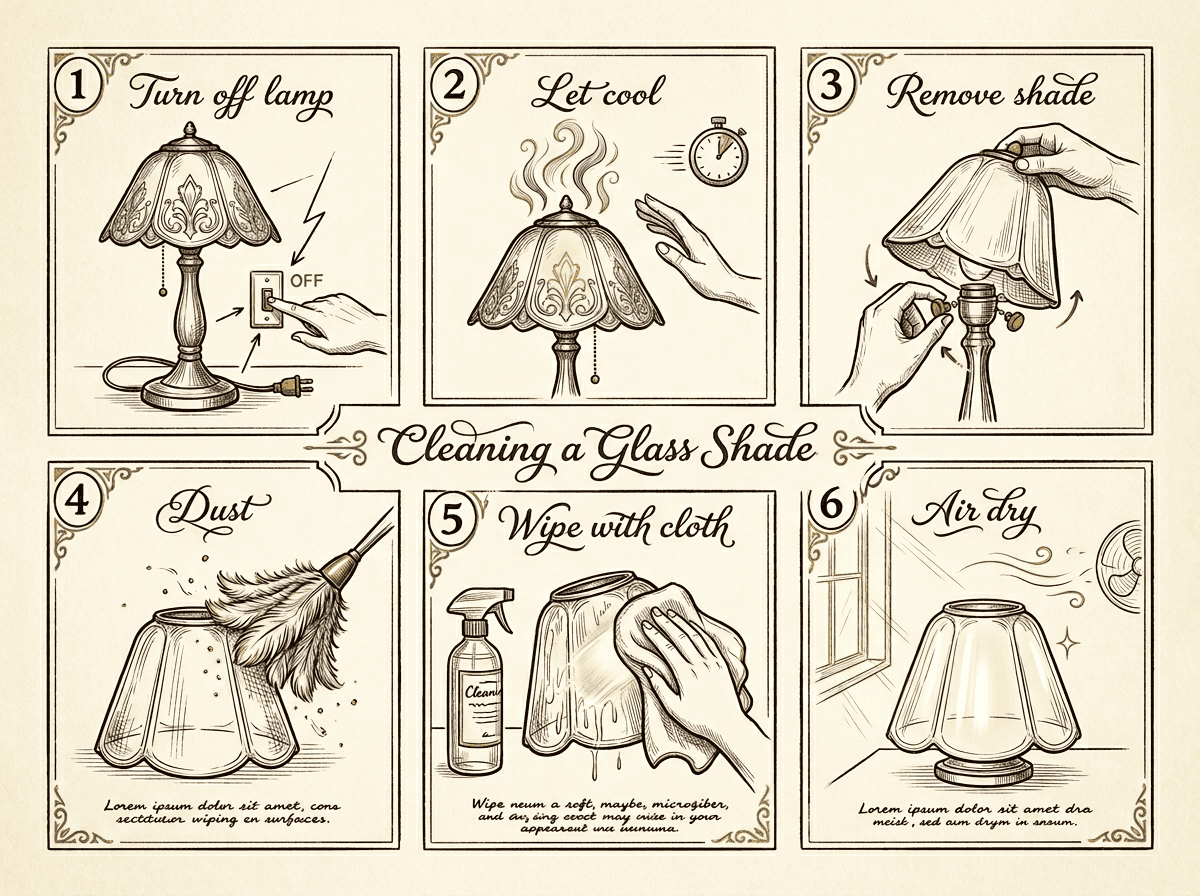
1. Turn off the lamp at the wall switch
Not just the lamp’s own switch – the wall switch (if available). Some lamp switches have a fault state where they appear off but the socket is still live. Touching a wet rag to a live socket creates an electrical hazard.
For ceiling fixtures, also turn off the breaker if you’re going to be removing the shade or working close to the wiring. The minor inconvenience is worth the safety margin.
2. Let the bulb fully cool
A bulb that’s been on for hours can heat the glass shade to 50-80°C (incandescent or older halogen) or 40-50°C (LED). Spraying cold cleaner onto a warm glass shade creates thermal stress that can crack the shade – particularly older soda-lime glass with residual stress from imperfect annealing. The Wikipedia article on thermal shock covers the physics of why temperature differential matters.
Wait 15 minutes after switching off LED lamps. Wait 30 minutes for incandescent or halogen.
3. Inspect for cracks before cleaning
Look at the shade in daylight. Any visible crack, chip, or stress fracture means: do not clean. Cracked glass under cleaning stress can suddenly fracture, creating sharp shards. Replace the shade instead.
Step-by-Step Cleaning Procedure
The reliable basic procedure for any glass lamp shade:
Step 1: Remove the shade (if possible)
Cleaning is much easier with the shade off the lamp. Most shades come off in 30 seconds:
- Spider-fitter shades: unscrew the finial nut counterclockwise, lift shade up off the harp
- Uno-fitter shades: unscrew counterclockwise from the bulb socket (some unscrew separately, others lift off if held by a stopper ring)
- Clip-on shades: unscrew the bulb (with the shade attached), then carefully unclip the shade from the bulb
- Neckless-fitter shades: loosen the 3 thumb screws on the lamp bracket, lower the shade carefully
For lamps where the shade can’t easily be removed (some pendants, some chandeliers), clean in place but use a damp (not wet) cloth.
Step 2: Dry-dust first
Use a clean microfiber cloth to wipe away loose dust before any wet cleaning. This step matters because skipping it turns the loose dust into mud streaks when you add water.
For glass shades with intricate textures (ribbed, fluted, hammered, seeded), use a soft-bristle brush (a clean makeup brush or paint brush works) to dust the texture details before wiping.
For really dusty shades that haven’t been cleaned in months, vacuuming gently with a soft-brush attachment removes the surface layer before any wet cleaning.
Step 3: Prepare the cleaning solution
The all-purpose safe formula:
2 parts distilled water + 1 part white vinegar
Why distilled water: tap water leaves mineral deposits as it dries, especially in hard-water regions. Distilled water dries cleanly.
Why white vinegar: cuts through grease and fingerprints without damaging glass or most coatings. Mildly acidic but not aggressive.
For heavily soiled shades (kitchen grease, smoke residue):
- Substitute distilled water with rubbing alcohol (isopropyl, 70%) for stronger cleaning. Don’t use on cased opal or hand-painted glass.
For lightly soiled shades:
- Plain distilled water on a microfiber cloth is fine.
Step 4: Apply cleaner to the cloth, not the shade
Critical rule: dampen the microfiber cloth with cleaning solution. Don’t spray cleaner directly onto the shade.
Why: spray bottles aim cleaner widely. Some of that cleaner ends up on the lamp’s bulb socket, wiring, or other components – which is an electrical safety risk. Some ends up dripping down inside the shade where it can pool and leave water marks. Some ends up on adjacent surfaces (wall, table) where it stains or marks. Applying to the cloth keeps all the cleaner contained.
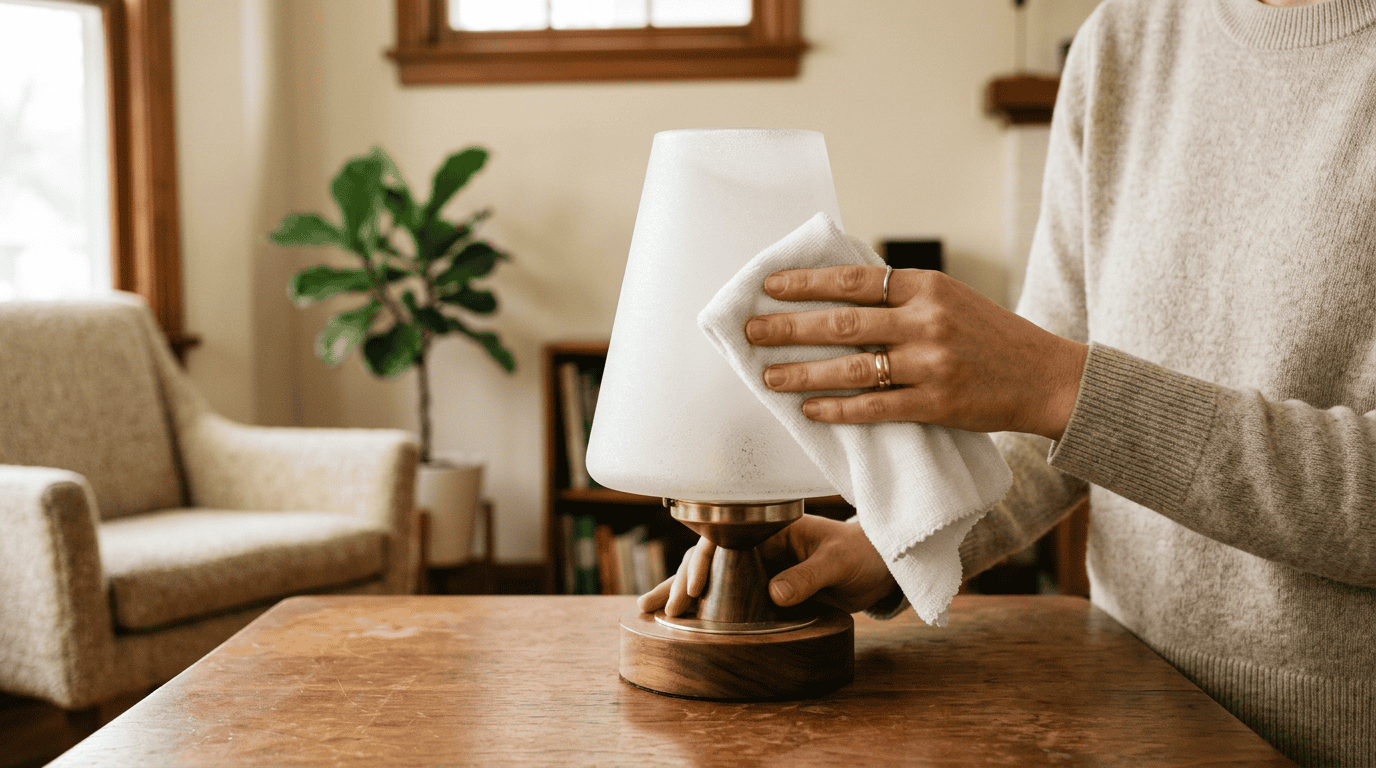
Step 5: Wipe gently in circular motions
Use light pressure. Glass is softer than diamond dust but pressing too hard with abrasive particles trapped in the cloth can scratch the surface (especially on frosted glass and cased opal).
Work from top to bottom, inside and outside if removable. Re-fold the cloth to a clean section after every few wipes – dirt accumulates on the cloth and re-streaks the glass otherwise.
For decorative textures (ribbed, fluted), follow the texture grain rather than wiping perpendicular to it.
Step 6: Air dry before reinstalling
Set the shade on a clean dry towel and let it air dry completely – 10-20 minutes typical, longer in humid conditions. Reinstalling a damp shade can:
- Trap moisture against the bulb (water marks when reheated)
- Drip water into the socket (electrical hazard)
- Create water spots that dry to permanent mineral marks
A dry shade installs cleanly with no residue.
Cleaning Procedures by Glass Type
Different glass finishes need slightly different approaches.
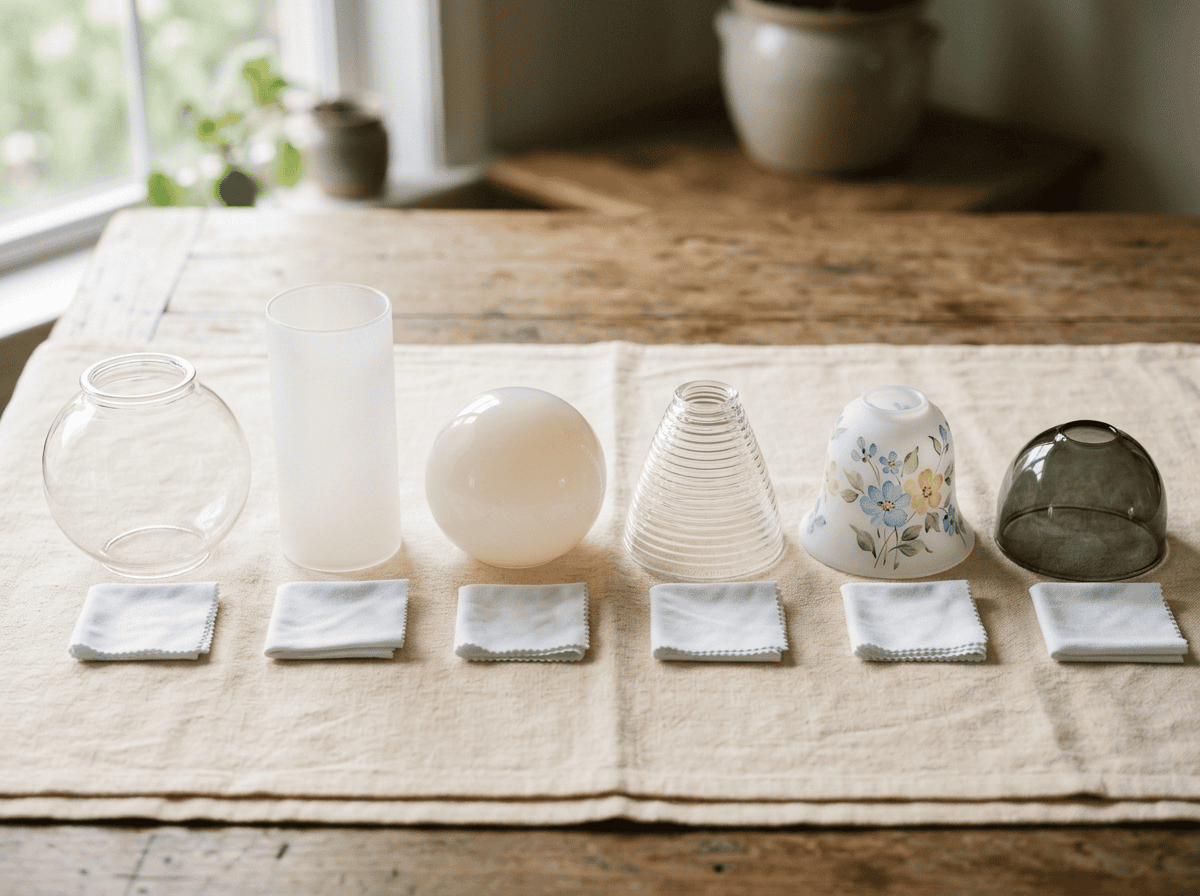
Clear glass shades
The easiest to clean and the easiest to streak. Use 2:1 distilled water + white vinegar on microfiber cloth. After wiping, polish dry with a separate clean dry microfiber cloth to prevent streaks.
For stubborn fingerprints or oily residue (common on clear glass at hand-touching height), substitute the vinegar solution with rubbing alcohol (70% isopropyl). Cuts oil immediately. Dry-polish after wiping.
Avoid: paper towels (leave fiber residue on clear glass), abrasive sponges (scratch the surface visibly).
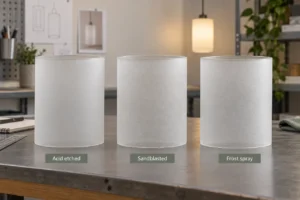
Frosted glass shades
The acid-etched (or sandblasted) surface texture traps dust in microscopic pores. Frosted glass needs slightly more aggressive wet cleaning than clear glass.
Use 2:1 distilled water + white vinegar on microfiber. Work in small circles. For heavily soiled frosted shades, increase vinegar concentration to 1:1.
Critical: inside-frosted vs outside-frosted shades clean differently. Inside-frost shades have a smooth outer surface that cleans like clear glass; the frosting on the inside doesn’t need cleaning (the bulb’s heat keeps it relatively clean). Outside-frost shades trap dust on the outside texture and need frequent cleaning.
For broader diffusion-vs-cleaning context: glass light diffusion explained: clear vs frosted vs opal glass for lighting.
Opal (milk) glass shades
The smooth outer surface of cased opal cleans like clear glass. The inside surface accumulates dust the same way as any other glass interior.
Use 2:1 distilled water + white vinegar. Apply to cloth, wipe gently. Opal glass is more delicate than clear or frosted – the multi-layer casing can develop micro-fractures from aggressive scrubbing. Light pressure only.
Avoid: ammonia-based cleaners (like generic Windex) on cased opal. The ammonia can react with the opal layer over years of repeated cleaning, gradually clouding the appearance. Vinegar and water is safer long-term.
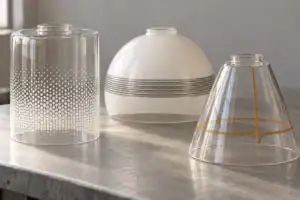
Ribbed, fluted, hammered, or seeded glass
Decorative texture traps dust along the texture lines. Use a soft brush first (clean makeup brush works) to remove loose dust from the textured surface, then wipe with damp microfiber cloth following the texture grain.
For deep texture (hammered or heavily ribbed glass), a soft-bristled toothbrush dipped in cleaner solution gets into the recesses. Brush gently along the texture grain.
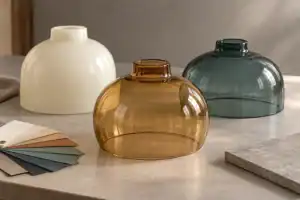
Smoked, amber, or tinted glass
The tint is in the glass body itself (not a coating), so it doesn’t degrade from cleaning. Use the standard 2:1 vinegar solution. Avoid abrasive cleaners – they don’t damage the tint but can scratch the surface.
Hand-painted or coated glass
Some shades have hand-painted decoration, gold leaf, or applied finishes (like lacquer or enamel). These require special care:
- No alcohol: dissolves paint and lacquer
- No vinegar on gold leaf: vinegar slowly attacks gold leaf
- Plain distilled water only: dampen cloth, wipe gently, dry immediately
- If unsure of the finish: do nothing, or contact the manufacturer for specific cleaning guidance
If the painted decoration is fragile, sometimes it’s better to leave dust alone rather than risk damaging the finish.
What NOT to Use
Common household cleaners that damage glass lamp shades:
| Cleaner | Why it’s a problem |
|---|---|
| Ammonia-based (Windex, etc.) | Dulls cased opal over time; damages painted finishes |
| Acetone | Dissolves any paint, lacquer, or applied finish |
| Bleach | Damages most coatings and stains some textured glass |
| Abrasive scouring powder | Scratches all glass surfaces, especially frosted and opal |
| Steel wool / scouring pads | Scratches glass severely; embeds steel particles |
| Hot water (with cold glass) | Thermal shock risk; can crack the shade |
| Boiling water | Maximum thermal shock risk |
| Strong acids | Will etch any glass surface |
| Furniture polish | Leaves oily residue that attracts dust |
When in doubt, use plain distilled water on a microfiber cloth. It’s safe for any glass finish.
Cleaning Schedules
How often you need to clean varies by glass type and room environment.
| Glass type | Living room frequency | Kitchen frequency | Bathroom frequency |
|---|---|---|---|
| Clear | Monthly | Every 2 weeks | Monthly |
| Frosted | Monthly | Every 2 weeks | Monthly |
| Opal (cased) | Every 6 weeks | Monthly | Every 6 weeks |
| Ribbed/textured | Monthly | Weekly | Monthly |
| Hand-painted | Monthly (dust only) | Monthly (dust only) | Monthly (dust only) |
Kitchen fixtures need more frequent cleaning because cooking aerosolizes grease that condenses on cool surfaces – including lamp shades. Bathroom fixtures collect aerosolized hair products and shower steam minerals.
For high-touch fixtures (table lamps near armchairs where hands rest), clean more frequently regardless of room.
Dust Prevention Strategies
The cleaning frequency above assumes typical dust load. You can cut cleaning frequency in half with three preventative measures:
1. Keep adjacent surfaces clean
Lamp shades collect dust mostly from convective air currents that carry dust from nearby surfaces. A coffee table covered in dust transfers that dust to the lamp shade above it every time the lamp warms. Wiping the table reduces shade dust accumulation.
2. Use LED bulbs
LEDs generate 70-90% less heat than incandescent or halogen. Less heat = weaker convective air column = less dust deposited on the shade. The shift to LED has roughly doubled the cleaning interval for the typical residential lamp.
3. Run an air purifier or improve filtration
Properties with HEPA filtration or good HVAC filters have measurably cleaner lamp shades. This isn’t lamp-shade-specific advice; it’s whole-home air quality. The U.S. EPA’s indoor air quality guidance covers filtration recommendations in detail.
Handling Damage During Cleaning
Despite best practices, occasional damage happens.
Hairline cracks discovered during cleaning
Stop cleaning immediately. Don’t reinstall on the lamp – thermal stress from the bulb can propagate the crack into a fracture. Replace the shade.
Loose fitter or rim chips
Small chips around the rim don’t necessarily mean the shade needs replacement. If the chip is small (<2 mm) and doesn’t affect how the shade seats on the fitter, you can continue using it. If the chip is large enough to compromise the fit, replace the shade.
Cleaner residue or streaks that won’t come off
Re-clean with a stronger solvent: rubbing alcohol on microfiber. Most stubborn residue is hard water minerals (from cleaning with tap water previously). Alcohol dissolves these.
If alcohol doesn’t work, the residue may be permanently bonded to the glass surface (rare). In that case, replacement is the only option.
For replacement-shade sourcing: glass lamp shade fitting standards: the complete technical guide covers fitter matching.
Discoloration in old shades
Some older glass shades develop a yellowish or brownish discoloration over decades of use, particularly on the inside surface near the bulb. This is from accumulated thermal cycling and microscopic surface degradation. It can sometimes be mitigated with strong vinegar solution and patient cleaning, but in most cases it indicates the shade is near end-of-life.
Hospitality and Commercial Cleaning Protocols
Hospitality properties clean their glass shades at scale, with formalized procedures. Common protocol:
- Daily: Spot-check all lamp shades in guest rooms during housekeeping. Wipe visible fingerprints with damp microfiber.
- Weekly: Full clean all lamp shades in high-use spaces (restaurants, bars, lobby seating).
- Monthly: Deep clean all lamp shades in guest rooms, including disassembly and inside surface cleaning.
- Quarterly: Visual inspection for cracks, chips, finish degradation. Replace any compromised shade.
Property maintenance teams typically use 2:1 distilled water + white vinegar in pre-mixed batches, applied to microfiber cloths from a central laundry rotation. The mineral-free distilled water and lack of artificial scent keeps the lighting visually clean without interfering with guest experience.
For full hospitality context: hotel glass lamp shades.
DIY Cleaning Solution Recipes
Three reliable recipes you can mix at home:
All-purpose glass cleaner
- 2 cups distilled water
- 1 cup white vinegar
- (Optional) 1 tsp cornstarch (adds slight cleaning power, reduces streaking)
Shake gently before use. Apply to microfiber cloth, not directly to shade. Use within 30 days of mixing.
Heavy-duty grease cutter
- 1 cup distilled water
- 1 cup rubbing alcohol (70% isopropyl)
- 1 tsp castile soap
For kitchen lamp shades and other grease-prone fixtures. Use sparingly – alcohol can dull hand-painted finishes.
Streak-free polish
- 1 cup distilled water
- 1 tbsp white vinegar
- 1 tbsp rubbing alcohol
For final polish on clear glass shades after the main wet cleaning. Microfiber cloth, light pressure, polish to dry.
According to the US Centers for Disease Control’s cleaning guidance, distilled water + diluted alcohol is also adequate for general disinfection – relevant if a lamp shade has been in proximity to a sick household member.
Frequently Asked Questions
Can I use Windex on glass lamp shades?
Generally not recommended for opal glass or any painted/coated shades – the ammonia can damage these finishes over time. Windex is acceptable on clear glass with no coatings, but a 2:1 distilled water + white vinegar mix works equally well and is safer for all shade types.
How do I clean inside the shade without removing it?
For non-removable shades, use a long-handled microfiber duster to reach inside. For wet cleaning, dampen a microfiber cloth (not soaking) and wrap it around a long stick or chopstick. Reach inside and wipe gently. Don’t use spray cleaners – liquid can drip into the socket.
What if my shade has stuck-on grease or grime that won’t come off?
Try rubbing alcohol (70%) on microfiber. Most kitchen grease responds to alcohol. For very stubborn residue, a small amount of degreasing dish soap (like Dawn) in water can work – rinse with distilled water afterward to remove soap residue.
How do I clean ribbed or fluted glass without breaking the texture detail?
Use a soft brush (clean makeup brush or soft toothbrush) to dust the texture first. Then wipe gently with a damp microfiber following the texture grain. Don’t scrub perpendicular to the texture – this can wear the texture down over time.
Can I put glass lamp shades in the dishwasher?
No. Dishwasher temperatures (~70-80°C) and aggressive detergents damage most glass finishes and can crack the shade through thermal cycling. Hand-cleaning is always safer for lamp shades.
How long should I wait after the bulb is off before cleaning?
15 minutes for LED bulbs. 30 minutes for incandescent or halogen. The shade should be cool to a hand touch before any wet cleaning. Cleaning warm glass with cool cleaner risks thermal shock cracks.
How do I prevent fingerprints on clear glass shades?
Avoid touching the shade directly. When you must remove or install the shade, hold it by the rim or fitter edge rather than the body. After cleaning, polish with a clean dry microfiber cloth to remove any handling marks.
The Bottom Line on Cleaning Glass Lamp Shades
A few minutes of correct cleaning, done monthly, keeps glass lamp shades looking pristine for decades. The key principles: turn off and cool the lamp first, apply cleaner to the cloth (not the shade), use distilled water + white vinegar for almost everything, work gently with microfiber, and air dry completely before reinstalling.
For any shade with unusual finish or coating, plain distilled water on microfiber is the universally safe option. When in doubt, dust dry and skip the wet clean.
If your shade is cracked, chipped, or worn beyond cleaning’s reach, replace it. A direct-from-manufacturer custom replacement at jxlampshade.com gives you exact-match dimensions, finish, and fitter – dramatically better than chasing a “close enough” replacement through retail channels.
Next step: identify which lamp in your home has the longest cleaning gap, walk through the procedure above, and bring it back to luminous. You’ll be surprised how much brighter the room becomes from one cleaned shade.