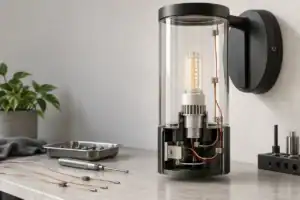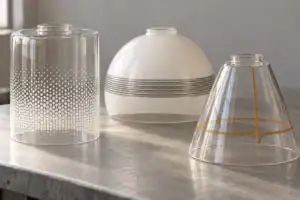
Direct answer: Clean cut glass lamp shades by dusting weekly with a soft natural-bristle brush, then spot-cleaning monthly with lukewarm water and a drop of pH-neutral dish soap on a microfiber cloth. For deep cleaning, remove the shade, hand-wash gently, rinse with distilled water, and air dry upside-down on a towel. Never soak, never use abrasive cleaners, never put cut glass in a dishwasher.
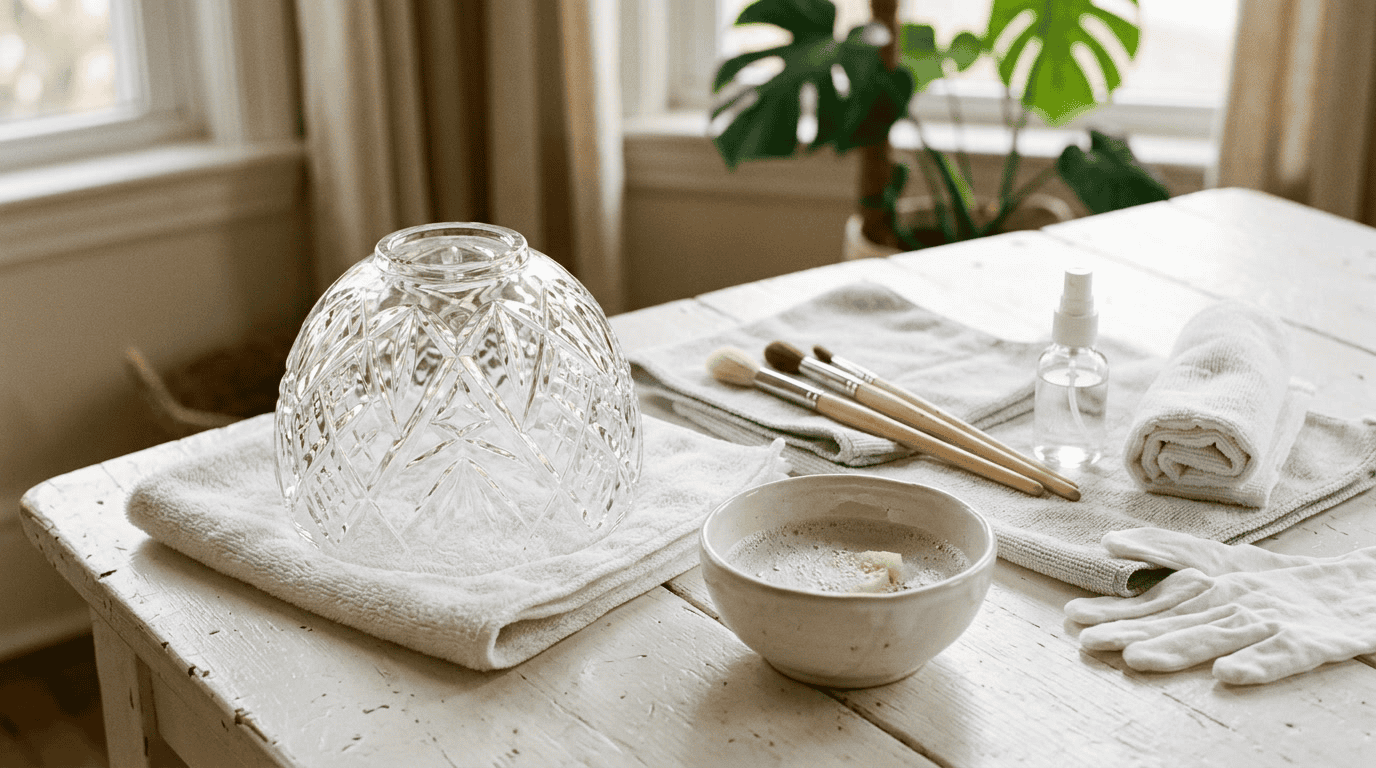
Cut glass lamp shades reward proper care with decades of brilliant prismatic light. The faceted surfaces that give them their visual quality — catching and splitting light into spectral patterns across the room — are also dust traps. Neglect accumulates in the recesses between facets: dust, cooking grease, airborne particles from candles and fireplaces. When the facets fill, light output drops 30–40% and the signature sparkle disappears entirely.
The good news: restoring full brilliance to a dusty cut glass shade usually takes under ten minutes. The cleaning process is straightforward, but it requires the right technique — faceted glass, polished fitter rims, and metal hardware each have different requirements.
Why Regular Cleaning Matters for Cut Glass
The physics of cut glass lighting depend on optically clean facet surfaces. A geometric facet cut into glass acts as a prism: incident light entering the glass refracts at the polished surface, disperses into spectral colors, and projects prismatic patterns onto surrounding walls and ceiling. When that surface is coated with a layer of dust or grease, the coating disrupts refraction — the prismatic effect diminishes, the warm sparkle weakens, and the shade looks dull and flat.
In a living room setting, visible dust accumulation takes two to four weeks. In a kitchen or dining room with cooking activity nearby, one week is enough to produce a visible haze on the facets. Near a fireplace, smoke and soot deposit on the glass even faster.
Lead crystal requires extra care. Lead crystal glass — used in high-quality cut glass shades — has a refractive index of 1.56–1.61, which produces superior brilliance compared to standard glass (1.52). But lead crystal is softer: approximately 5–5.5 on the Mohs hardness scale versus 5.5–6 for soda-lime glass, according to the Corning Museum of Glass. This means lead crystal scratches more easily. Abrasive cleaners, rough cloths, or hard water mineral deposits can permanently damage the polished facets of a lead crystal shade. Gentle technique is not optional for crystal — it is required.
Cleaning Supplies: What to Use and What to Avoid
| Recommended | Purpose | What NOT to use |
|---|---|---|
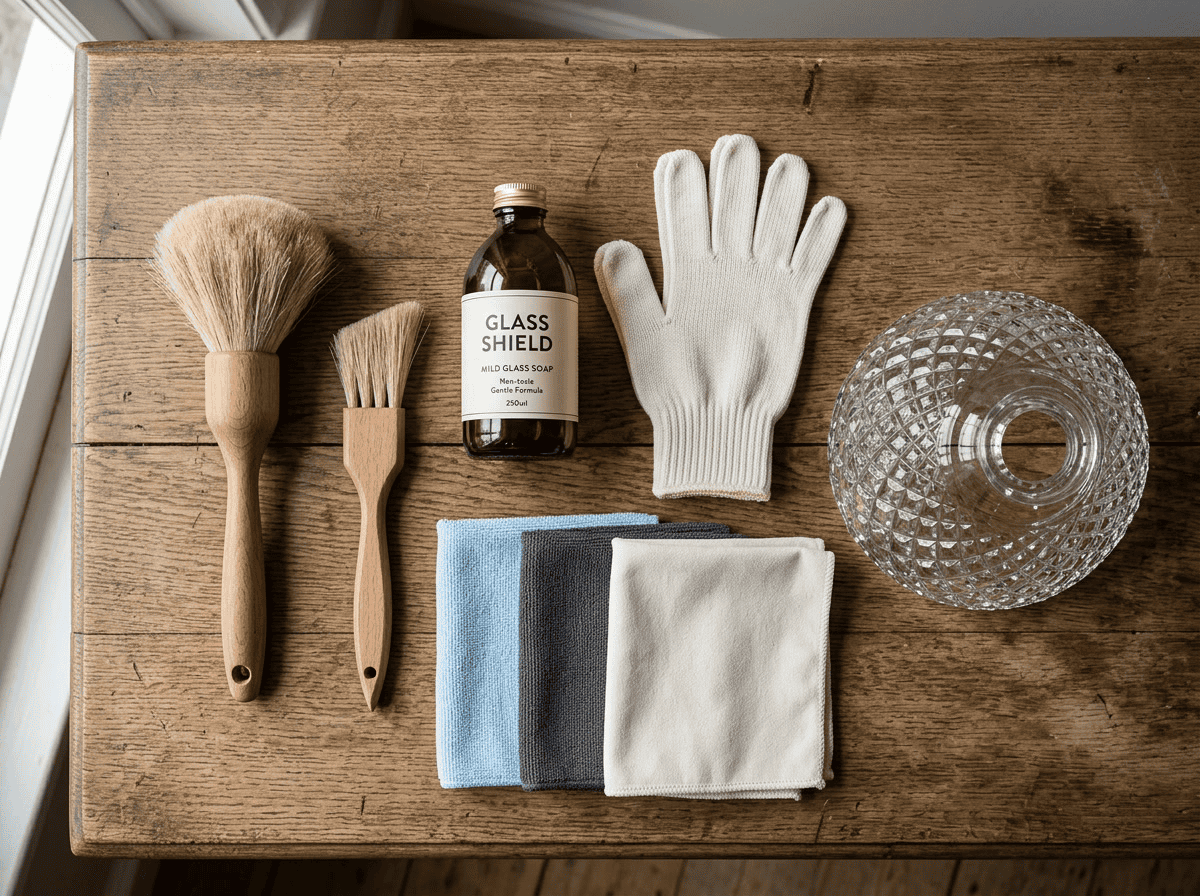
| Soft natural-bristle brush (1–2″ wide) | Dry dusting facets and recesses | Synthetic bristle (can scratch) |
| Lint-free microfiber cloths × 3 | Wash, rinse, dry | Terry cloth, paper towels (abrasive) |
| pH-neutral dish soap (2–3 drops) | Cutting grease from glass surface | Bleach, ammonia-based cleaners, vinegar |
| Distilled or filtered water (final rinse) | Eliminates mineral water spots | Hard tap water (leaves white residue) |
| Rubber mat or folded bath towel | Safe work surface | Hard countertop directly |
| White cotton gloves (optional) | Fingerprint-free handling | Powdered gloves (contaminate surface) |
Never use: Windex and similar ammonia-based glass sprays, vinegar or citrus-acid cleaners on metal fittings, abrasive pastes, baking soda, commercial bathroom tile cleaners. Several of these are safe for window glass in different applications but wrong for cut glass lamp shades with delicate metal hardware and polished facet surfaces.
Three Cleaning Methods: Choosing the Right One
| Method | Time | When to use | What it removes |
|---|---|---|---|
| Dry dusting | 2–5 min | Weekly maintenance, light dust | Loose dust and particles |
| Damp spot-clean | 5–10 min | Fingerprints, light grease, moderate dust | Surface film and smudges |
| Full hand wash | 20–30 min | Heavy soiling, grease buildup, seasonal deep clean | All deposits including embedded grime |
| Ultrasonic cleaning | Professional | Extremely delicate antique pieces | Everything, but risk of stress fractures |
Use the lightest method that achieves a clean result. Weekly dry dusting prevents the buildup that makes deeper methods necessary.
Method 1: Dry Dusting (Weekly)
Dry dusting is the single most effective maintenance habit for cut glass — done consistently, it prevents the heavy buildup that requires wet cleaning.
Step 1 — Cool the shade completely. Turn off the lamp and wait at least 15 minutes. Never dust a warm or hot shade: thermal expansion makes glass slightly more vulnerable, and heat can cause dust to set more firmly into the facet surfaces.
Step 2 — Remove if possible. If the shade removes easily from the lamp hardware, take it off and set it on a folded towel on a flat surface. Working with the shade in your hands gives far better control and coverage than trying to dust it in place.
Step 3 — Work top to bottom, following the cuts. Using the soft natural-bristle brush, work methodically from the fitter rim down to the base. Move the brush strokes along the direction of the cut pattern (along the diamond diagonals, along the flutes, along the hobstar ridges) — not perpendicular to them. Brushing across the cut edges pushes debris into the recesses instead of out.
Step 4 — Pay attention to the recesses. The V-shaped recesses between facets accumulate the most dust. On deep-cut vintage shades, these recesses can hold significant deposits invisible from a normal viewing angle. Work the brush tip into each recess line.
Step 5 — Interior surface. Use the same top-to-bottom technique on the interior. On most cut glass table and floor lamp shades, the interior is smooth-polished glass — easier to dust than the exterior. On some heavily cut patterns, the cut extends through the full glass thickness and the interior is also faceted.
Step 6 — Final pass with microfiber. A very light, barely-contacting pass with a dry microfiber cloth picks up displaced particles. Don’t rub — one light pass is enough.
Method 2: Damp Spot-Cleaning (Monthly)
For fingerprints, light grease, and moderate dust that dry brushing doesn’t fully remove.
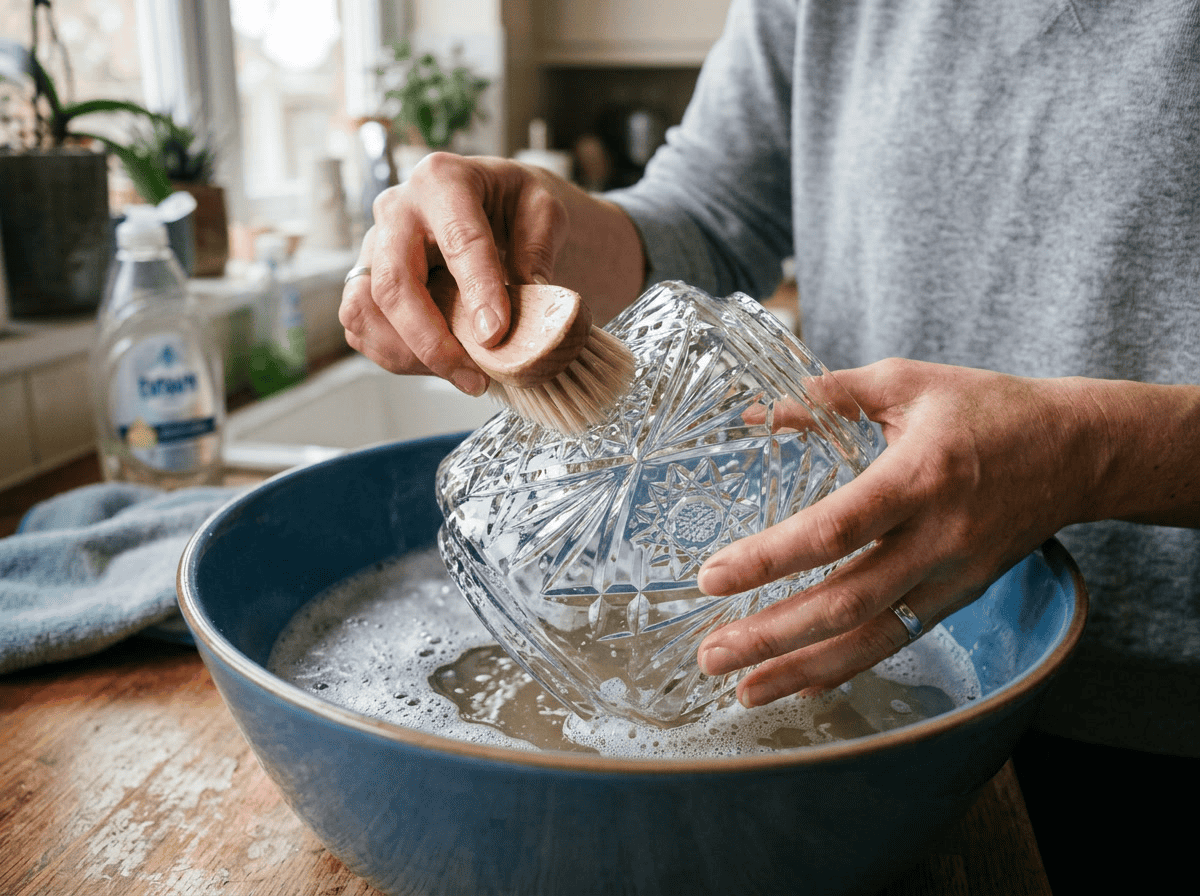
Prepare the solution: Mix two to three drops of pH-neutral dish soap into a bowl of lukewarm water. Lukewarm — not hot (thermal shock) and not cold (less effective on grease). Stir gently; the water should barely suds.
Work in sections: Dampen a microfiber cloth in the solution and wring it out well — the cloth should be damp, not wet. Wipe each section of the shade surface with the cloth moving in the direction of the cut pattern. Follow immediately with a second cloth dampened with plain distilled water, to rinse the soap residue. Then dry with a third dry microfiber cloth.
The fitter rim: Wipe the fitter rim and the first centimeter inside the fitter opening with the damp cloth. Dry immediately and thoroughly — residual moisture at the fitter-to-hardware interface causes corrosion.
After cleaning: Allow the shade to air dry in a well-ventilated spot for 15–20 minutes before reinstalling.
Method 3: Full Hand Wash (Seasonal)
For shades with accumulated cooking grease, smoke residue, or that haven’t been cleaned in years.
Prepare the workspace: Line a clean sink or large basin with a rubber mat or folded towel. Fill with lukewarm water and a modest amount of pH-neutral dish soap — enough to produce a light lather when you move your hand through the water.
Handle gently throughout: Lower the shade into the water. Do not submerge if the shade has any metal trim, solder joints (indicating multi-piece stained-glass construction), or applied decorative elements. For solid single-piece cut glass, submersion is fine.
Wash: Using clean fingers or a very soft natural-bristle brush, work the soapy water into all the facets and recesses. Be systematic — work around the shade in sections. Apply gentle pressure and let the soap do the work. For very dirty shades, a 2–3 minute soak before scrubbing allows the soap to soften grease deposits.
Rinse: Rinse under a gentle flow of lukewarm water, working the stream across all facets. Final rinse with distilled or filtered water eliminates mineral deposits from tap water.
Dry safely: Set the shade upside-down on a clean dry towel — never shake to remove water. Pat gently with a dry microfiber cloth to absorb surface water, then allow to air dry completely (1–2 hours) before reinstalling. The fitter area must be fully dry before the shade goes back on the lamp.
According to The Spruce’s lamp care guide, the most frequent mistake with faceted glass washing is excessive water pressure during rinsing, which can force water behind metal trim and cause internal corrosion. A gentle stream always.
Cleaning Different Cut Glass Pattern Types
| Pattern type | Cleaning challenge | Specific technique |
|---|---|---|
| Diamond crosshatch | Dust accumulates in cross-points | Brush diagonally both ways across the grid |
| Hobstar | Complex multi-facet star centers trap debris | Use brush tip to work into star center facets |
| Fluted / vertical | Vertical channels fill with dust | Brush vertically, top to bottom, in each channel |
| Fan / shell cut | Curved recesses hold grime | Follow the curve of each fan with brush strokes |
| Pressed diamond (mass-market) | Shallower recesses, easier to clean | Standard technique; less aggressive brushing needed |
| Lead crystal (any pattern) | More scratch-sensitive | Extra-soft brush, distilled water only for rinse |
Restoring Cloudy or Hazy Cut Glass
A shade that has been neglected for years — or removed from storage — may have persistent cloudiness that standard cleaning doesn’t remove. The cause determines the treatment:
Hard water mineral deposits (white or grey haze): Apply a solution of one part white vinegar to three parts distilled water to the exterior glass surface only — a cloth dampened with the solution, not poured on. Allow to sit 30–60 seconds, then wipe off and rinse thoroughly with distilled water. The mild acidity dissolves calcium carbonate deposits. Do not use on lead crystal, and keep away from all metal parts.
Polymerized grease film (sticky amber or brown film): Increase soap concentration and allow soapy water to sit on the surface for 3–5 minutes before scrubbing. A single drop of orange oil-based cleaner in the wash water helps with severe buildup on standard glass.
Smoke and nicotine film (yellow-brown overall tint): Requires multiple wash sessions. The polymerized film is layered and comes off in stages. Commercial ammonia-free glass cleaners can supplement the mild-soap method for this specific problem.
Devitrification (grey-white milky haze that doesn’t wipe off): This is a chemical change to the glass structure — partial crystallization caused by extreme heat or chemical exposure. It is not reversible by cleaning. A haze that does not respond at all to wet cleaning is likely devitrification.
For severe restoration cases where cleaning cannot recover the original appearance, cut glass lamp shade replacement covers options for finding matching originals or specifying reproductions. For information on which cut glass types require the most careful maintenance, crystal cut glass lamp shades explains the distinctions between lead crystal, lead-free crystal, and standard pressed glass. For the full cut glass category overview, see cut glass lamp shades.
According to This Old House’s home maintenance guide, mineral haze on glass is best addressed with mild acidity before the deposits harden further — regular cleaning prevents this problem from developing.
For how to choose the right replacement glass shade when a shade is beyond restoration, the fitter types guide covers all standard attachment dimensions.
Frequently Asked Questions
Can I use Windex or spray glass cleaner on cut glass lamp shades?
Avoid standard Windex and most spray glass cleaners on cut glass shades. Most contain ammonia, which can damage metal hardware at the fitter and harm any lead crystal glass. For standard glass cleaning, pH-neutral dish soap in lukewarm water is safer and equally effective. If you prefer a spray cleaner, choose an ammonia-free formula and apply it to a cloth first — never spray directly onto the shade.
How do I clean cut glass lamp shades without removing them?
Turn off the lamp and allow it to cool completely. Use a dry soft brush for dusting, working top to bottom. For spot-cleaning, use a barely-damp microfiber cloth — wrung out so thoroughly that no drips fall. Never spray liquid directly onto a mounted shade. Keep all moisture away from the bulb socket area.
My cut glass shade has white spots that won’t wipe off. What are they?
Persistent white spots on glass are almost always hard water mineral deposits (calcium carbonate). Apply a cloth dampened with a mild solution of white vinegar and distilled water to the exterior glass surface only. Let it sit 30 seconds, wipe gently, then rinse thoroughly with distilled water. Do not use this on lead crystal shades, and keep the solution away from metal parts and solder joints.
Is it safe to put cut glass lamp shades in a dishwasher?
No. Dishwashers damage cut glass shades in three ways: high-pressure jets stress the glass at the fitter rim; dishwasher detergent is highly alkaline and etches both standard and crystal glass over time; and the heat cycle causes thermal stress. Hand-washing in lukewarm water is the only appropriate method.
How do I prevent water spots after washing?
Water spots come from minerals in tap water depositing on the glass as water evaporates. Do a final rinse with distilled or filtered water — negligible mineral content means no residue left behind. Then pat dry with a lint-free microfiber cloth rather than air-drying, which allows remaining minerals to deposit during evaporation.
How long should I wait after cleaning before turning the lamp back on?
Wait at least 30 minutes after damp cleaning, 1–2 hours after a full hand wash. The fitter area must be completely dry — moisture at the fitter-to-hardware interface combined with the heat of the lamp causes slow corrosion. When in doubt, wait longer.
Can I use rubbing alcohol on cut glass?
Isopropyl alcohol (70–91%) can be used for fingerprint removal on the exterior glass surface of standard pressed and cut glass shades — applied to a cloth, not directly to the shade. Avoid on lead crystal. Avoid on painted or coated hardware. Alcohol evaporates quickly and leaves no residue, making it effective for streak-free fingerprint removal.
How do I clean the interior of a narrow-necked cut glass shade?
For shades with small openings, use a long-handled natural-bristle brush (a baby bottle brush or flexible cleaning brush). Work from the fitter opening downward, with the shade inverted so debris falls out rather than deeper in. For heavily soiled interior surfaces, the full hand-wash method is the only reliable approach — interior spot-cleaning cannot reach the full interior surface effectively.
Related Articles in This Series
Conclusion
Cleaning cut glass lamp shades is a simple discipline with a significant impact on performance and longevity. Weekly dry dusting prevents the heavy buildup that requires deeper intervention. Monthly damp cleaning maintains full facet brilliance. Seasonal hand washing restores complete light transmission and prevents long-term surface damage from accumulated deposits.
The consistent rules: softest effective method, pH-neutral soap, distilled-water final rinse, complete drying before reinstallation. A cut glass shade properly maintained will perform as brilliantly in twenty years as it does today — the facets never lose their optical properties as long as the polished surfaces are protected.