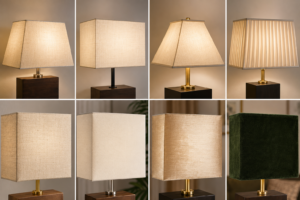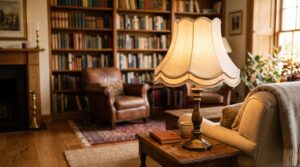
Direct answer: Vintage floor lamp glass shades are period-appropriate glass covers for floor lamp fixtures — from Victorian torchiere globes and Depression-era ribbed cones to mid-century opal drums. They attach via gallery fitter (3¼” or 4″ ring), spider fitter (harp and finial), or mogul socket fitter, and come in glass types ranging from milk glass and amber to clear ribbed and smoked.
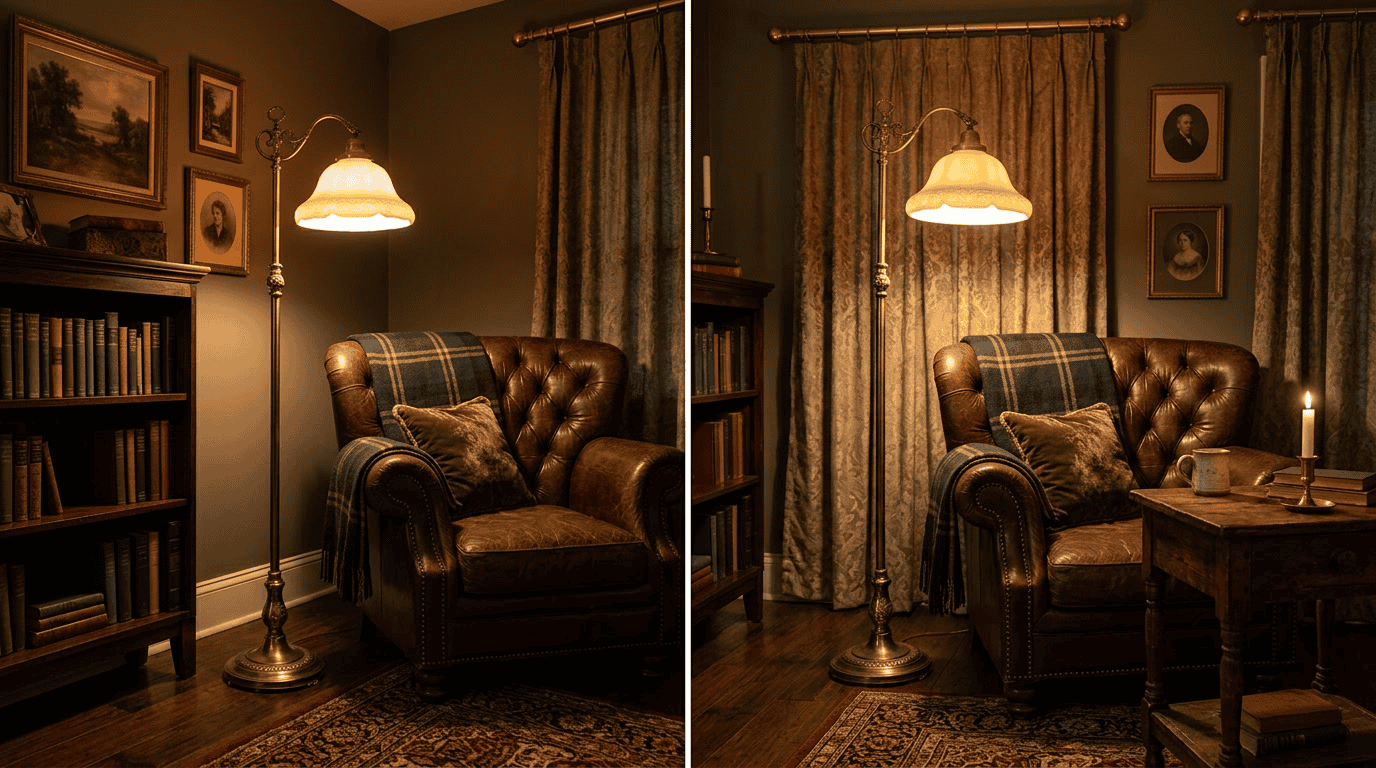
Floor lamps occupy a specific lighting position in a room — they stand at human height, often beside seating, and put the shade at or near eye level for anyone seated. That makes the glass shade’s glare characteristics more important on a floor lamp than on a table lamp or ceiling fixture, where the shade is either below or above the typical seated eye line.
The practical consequence: floor lamps almost always look better with diffuse glass (frosted, opal, or milk glass) than clear glass. The vintage market understood this — most period floor lamp shades default to opacity. This guide covers the forms, fitter types, and selection logic for vintage floor lamp glass shades.
For the broader vintage glass lamp shade category, see our vintage glass lamp shades hub.
Floor Lamp Types and Their Shade Geometry
Floor lamp glass shades follow the lamp’s light direction:
Torchiere floor lamps: Light directed upward. A bowl-shaped or trumpet-shaped shade sits at the top of the column, facing upward. The shade acts as a reflector/diffuser for uplighting. Shades are typically 10–14″ diameter bowl or globe forms with 4″ or 5″ gallery fitter openings. Glass type: white opal or milk glass is most common; clear or ribbed torchiere bowls appear in Art Deco designs.
Downlight/reading floor lamps: Light directed downward through a shade. The shade hangs from a harp or gallery ring pointing down. Glass type: milk glass, frosted, or opal for diffusion. Fitter: spider (1 5/8″) or gallery ring (3¼” or 4″). These are the most common vintage floor lamps and the type most people are replacing shades for.
Arc and boom floor lamps: Swing-arm lamps that position the shade anywhere from beside to above the seated person. Shade geometry is typically smaller (10–14″ outer diameter) because the lamp is close to the user. Fitter: most often spider.
Three-arm and multi-head floor lamps (1950s–1970s): Multiple smaller shades on individual arms. Each arm typically uses a clip-on or small gallery fitter with a 6–10″ shade.
Five Period Styles for Vintage Floor Lamp Glass Shades
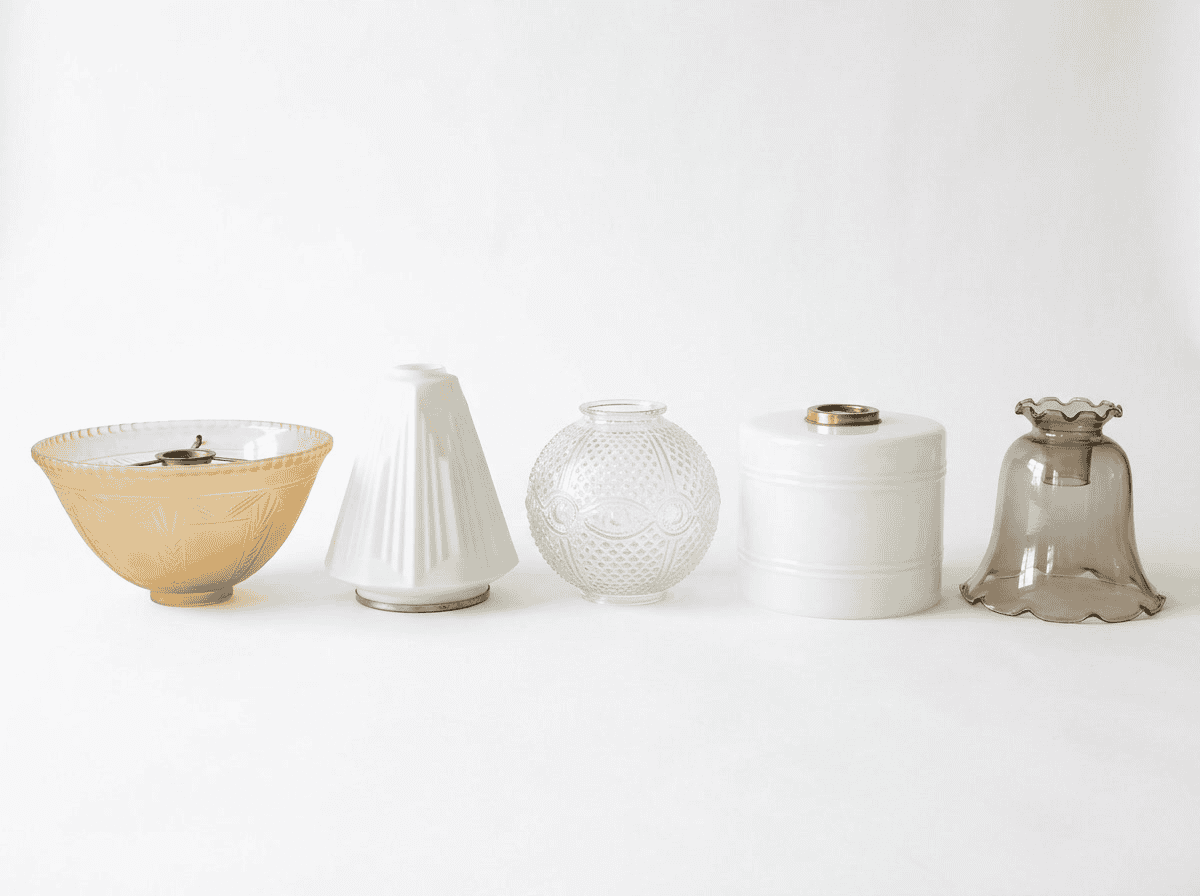
Victorian/Edwardian torchiere bowl (1890–1920): Wide, shallow bowl in opalescent or milk glass, sitting atop a tall ornate column, typically hand-blown. Diameter 10–16″. Gallery fitter 4–5″. Glass is typically hand-blown with slight color and texture variation.
Art Deco ribbed/paneled downshade (1920–1940): Geometric pressed glass in vertical ribs or honeycomb panels. Often in amber, clear, or light-tinted glass. Gallery fitter 2¼” to 4″. These shades appeared on the tall standard lamps (floor lamps) of the interwar period.
Depression-era glass globe (1930s–1940s): Pressed glass globe or near-globe in pink, green, amber, or clear — some iridescent finishes overlapping with carnival glass production of the same period. Used on both ceiling fixtures and floor lamps. Fitter: gallery ring or mogul base. Light and relatively thin; the most fragile of the vintage floor lamp shade types.
Mid-century modern opal cone/drum (1950s–1970s): Clean white opal glass in cone or drum form, spider fitter on wire harp, walnut or brass finial. The most common vintage floor lamp shade form by sheer production volume. Available widely as both originals and reproductions.
Hollywood Regency smoked bell (1965–1980): A late descendant of Streamline Moderne design language, this heavy smoked grey or amber glass in a wide bell or globe form, often with a gold or chrome gallery ring. Deep, moody light quality. Diameter 16–20″. Heavy — ensure the lamp’s harp is rated for the weight.
Fitter Types for Floor Lamps: Critical Differences from Table Lamps
Floor lamps use the same fitter types as table lamps in principle, but floor lamp versions often run larger:
| Fitter type | Floor lamp size range | Table lamp equivalent |
| Gallery ring | 3¼”, 4″, 5″ inner diameter | 2¼” gallery (less common) |
| Spider/harp | Same 1 5/8″ saddle, but harp heights vary | Same 1 5/8″ |
| Mogul socket | 1½” threaded opening (large socket) | N/A — uncommon on table lamps |
| Clip-on | Same clip sizes | Same |
The gallery ring difference is the most common source of floor lamp shade replacement failures. A table-lamp-sized 2¼” gallery shade will not work in a floor lamp with a 4″ ring. Always measure the ring’s inner diameter directly.
Full fitter measurement guidance: glass lamp shade fitting standards: the complete technical guide and how to measure a replacement glass lamp shade.
Sizing: Diameter and Height for Floor Lamp Shades
Floor lamp shades run larger than their table lamp counterparts because the lamp column is taller and the relationship between shade and person is different:
| Floor lamp column height | Recommended shade outer diameter | Shade form |
| 48–54″ (standard) | 14–18″ | Standard bell, cone, or drum |
| 55–60″ | 16–20″ | Larger bell or empire |
| Torchiere (65–72″) | 10–14″ bowl | Torchiere bowl or trumpet |
The bottom edge of the shade on a downlight floor lamp should sit at roughly 48–52″ from the floor — this keeps the shade above the seated eye line (≈42–44″) while placing it comfortably within reach for bulb changes.
Selecting Glass Type for Floor Lamp Use
Because floor lamps typically sit at seated eye height, the glare rule is strict:
Frosted glass, opal, or milk glass is the correct default. Any clear glass shade on a floor lamp at 48–52″ fitter height puts the visible bulb directly in the seated user’s line of sight. This is the most common floor lamp shade mistake — a visually attractive clear glass shade that produces glare for everyone seated in the room.
Amber glass works well on floor lamps used primarily for ambient mood rather than task reading — the warm wash at floor-lamp height is very effective in living rooms. For reading floor lamps where light output matters, amber’s absorption (40–60%) may require a higher-lumen bulb.
Smoked glass is acceptable on very tall floor lamps (60″+) where the shade is comfortably above the seated eye line, or on arc lamps where the shade approaches from above. At standard 48–52″ height, smoked glass still creates a visible hotspot if the glass isn’t thick enough.
Clear ribbed glass works on floor lamps only when the shade is elevated above eye level (typically on decorative torchere configurations, not reading lamps).
Our glass light diffusion explained guide covers the diffusion physics in detail. According to Wikipedia’s article on light diffusion, surface-based scattering distributes incoming light in multiple directions — the mechanism that makes frosted and opal glass eliminate hotspots without blocking total output as severely as fully opaque materials.
How to Replace a Vintage Floor Lamp Glass Shade
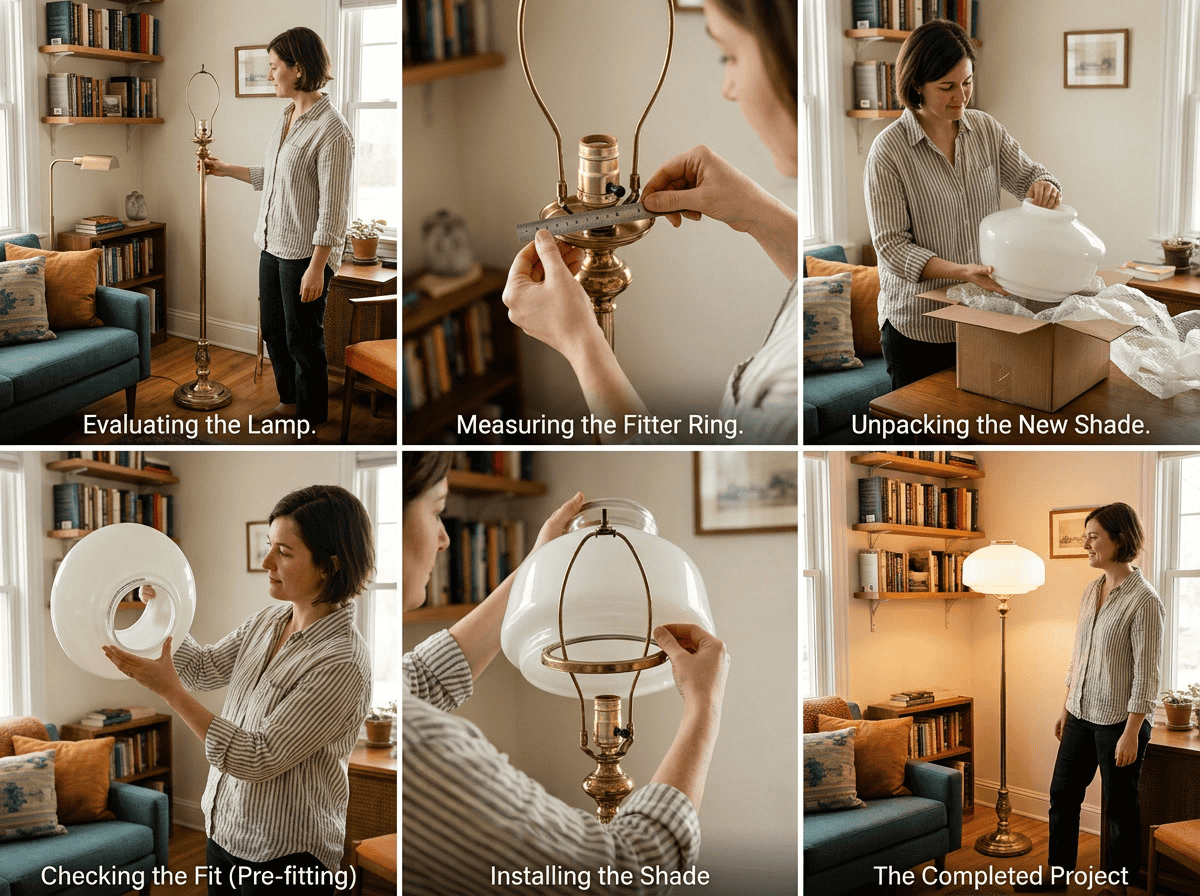
Step 1: Identify fitter type. Is your floor lamp a gallery-ring type (shade sits in a ring), harp-and-spider (shade sits on a harp), or torchiere bowl (shade sits in an upward-facing bowl support)?
Step 2: Measure.
- Gallery ring: measure inner diameter of the ring (typically 3¼”, 4″, or 5″)
- Harp: measure harp height and note the finial thread size (standard 1/4″-27 in the US)
- Torchiere bowl: measure inner diameter of the bowl support rim
Step 3: Determine proportional outer diameter. For a standard 48–54″ floor lamp, 14–18″ outer diameter is correct. Measure from the floor to the fitter to confirm shade will sit above seated eye level (>44″ from floor to shade bottom edge).
Step 4: Choose glass type. Default to opal or milk glass for any lamp where the shade sits near seated eye height. Amber or smoked if the lamp is a mood/ambient piece, not a task lamp.
Step 5: Order and test. If ordering online, confirm fitter inner diameter in writing before purchasing. Request a lit photo of the shade in operation — critical for evaluating diffusion quality vs. the product photo.
Vintage Floor Lamp Shades in Modern Interiors
Period floor lamp shades are experiencing a surge in specification by interior designers in 2026, driven by three trends: the maximalist/grandmillennial interior revival, the preference for warm 2700K LED throughout residential spaces, and the practical recognition that a vintage floor lamp with a correct period glass shade looks substantially more considered than the same lamp with a modern fabric shade.
Specific context where vintage glass floor lamp shades outperform fabric alternatives:
- Rooms with hard surfaces (concrete, stone, polished wood) where fabric shades read as soft and incongruous
- Mid-century modern furniture sets where glass is period-correct and fabric is an anachronism — the Corning Museum of Glass documents many of these period forms in its collection
- Hospitality settings where cleanability and durability are required (glass is infinitely easier to clean than fabric)
For B2B buyers specifying glass floor lamp shades for hospitality projects, our hotel glass lamp shades guide covers specification, MOQ, and lead times. If you’re unsure of your shade’s era or glass type before ordering a replacement, see our guide to identifying vintage glass lamp shades, and for table or pendant fixtures rather than floor lamps, our vintage glass lamp shades for table lamps guide and vintage glass pendant light shades guide cover those formats.
Frequently Asked Questions
What is the most common fitter size for vintage floor lamp shades?
Gallery ring at 4″ inner diameter is the most common for mid-20th century American floor lamps. Spider fitter (1 5/8″) on a wire harp is common on better-quality lamps. Always measure your specific lamp’s hardware — there is more size variation in floor lamps than table lamps.
Can I use a table lamp glass shade on a floor lamp?
Only if the fitter dimensions match. Table lamp shades typically use 2¼” gallery or 7/8″ uno fitters; floor lamps use 3¼”–5″ gallery rings or the same spider fitter. If both use spider/harp, the shade can transfer; if the gallery ring sizes differ, they won’t fit.
Why does my vintage floor lamp shade look yellow or brownish?
This is typically heat yellowing from decades of incandescent use — incandescent bulbs run at ~150–250°C at the socket, and the heat column above the bulb affects any glass at close range. LED use going forward will stop further yellowing. The yellowing is most pronounced in milk glass and light-colored opalescent glass. The Smithsonian’s glass care guidance notes that gentle cleaning rarely reverses heat yellowing, since it results from changes within the glass itself rather than surface residue.
What outer diameter shade fits a standard floor lamp?
For a typical 48–54″ floor lamp column height with the shade at 48–52″ above floor level, a 14–16″ outer diameter shade is proportionally correct. For taller lamps (55–60″), go up to 18–20″ outer diameter.
Are vintage torchiere glass bowls still available?
Yes. Standard 10″, 12″, and 14″ diameter torchiere glass bowls in opal or milk glass are in current production. Custom sizes and colored glass (amber, green) are available from specialist manufacturers with minimum order quantities typically starting at 10 units.
Do glass floor lamp shades work with LED bulbs?
Yes, and they work better than with the original incandescent bulbs — less heat stress on the glass, same or better light diffusion. Use 2700K warm-white LEDs, per the U.S. Department of Energy’s LED lighting guidance. For gallery-ring and torchiere bowls that direct light upward, choose omnidirectional LED bulbs (not directional spots) for consistent upward light distribution.
What is the most versatile vintage floor lamp shade for a modern interior?
White opal milk glass bell or cone in 14–16″ outer diameter on a spider fitter. This form works with mid-century brass, modern matte black, and traditional hardware, diffuses perfectly, and looks appropriate from the Depression era through today.
Related Reading
- Vintage Glass Lamp Shades: Full Buying Guide
- Vintage Glass Lamp Shades for Table Lamps
- Vintage Glass Pendant Light Shades
- How to Identify Vintage Glass Lamp Shades
Conclusion
Vintage floor lamp glass shades require one additional consideration beyond table lamp shade selection: the seated-eye-level glare check. A beautiful clear glass shade that works perfectly as a pendant lights up the room differently than it does at 50″ height directly beside the sofa. The practical default — opal, milk glass, or frosted — is correct for the vast majority of floor lamp applications.
Start with fitter type and measurement, choose diameter and height for proportion, then apply the glass-type filter. For vintage floor lamps used daily, quality current production opal or milk glass shades are the most practical solution. For display or collector pieces, the hunt for period originals is rewarding but requires more careful measurement work.