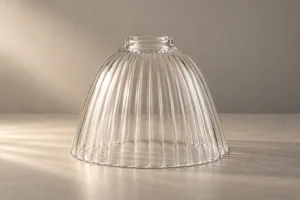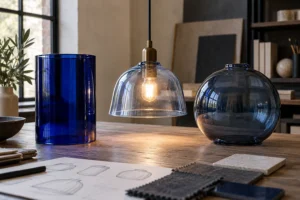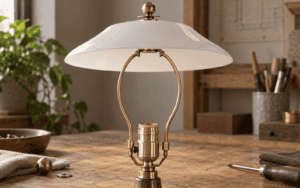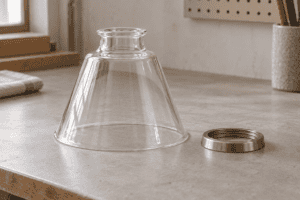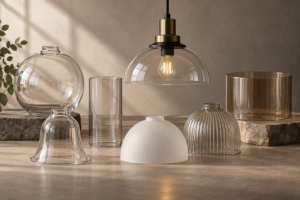
ガラスは主に二酸化ケイ素(シリカ砂)、ソーダ灰、石灰石から作られます。これらを1,700°C以上で溶かし、急速に冷却することで、硬く透明な非結晶性固体となります。.
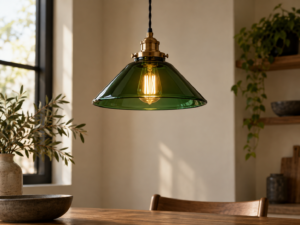
美しいペンダントランプやエレガントなテーブルランプがある家庭に入ると、人類最古かつ最も多用途な素材の一つであるガラスを見ることができます。ガラスは3,500年以上にわたり容器や窓、装飾品として使われてきましたが、多くの人はその原材料や、金属やプラスチックと異なる性質についてほとんど知りません。ガラスのランプシェードが持つ透明感や重さ、暖かい光を均等に拡散する能力の理由を知りたいなら、その答えは分子レベル、つまり炉に投入される原材料から始まります。.
このガイドでは、ガラスの原材料、製造方法、用途ごとの組成の違い、そして購入者やデザイナーにとって重要な、ガラスの組成がランプシェードや装飾ガラス製品の外観、耐久性、光の質にどのように影響するかについて詳しく解説します。.
ガラスとは何か?基本的な定義
ガラスは非結晶性固体です。結晶でも液体でもなく、特定の材料を溶かして急速に冷却することで、分子が秩序ある結晶構造を形成する暇がない状態で作られます。.
この定義は重要です。氷(真の結晶)や水(液体)とは異なり、ガラスは奇妙な中間状態にあります。原子は固定されていますが、ランダムに配置されているため、曲がるのではなく割れやすく、光を非常にきれいに透過します。.
ガラスの基本化学式
標準的な窓ガラスや容器ガラスは、 ソーダ石灰ガラス おおよそ次の通りです:
- 70~74% 二酸化ケイ素(SiO₂) — 主なガラス形成酸化物で、シリカ砂から得られる
- 12~16% 酸化ナトリウム(Na₂O) — ソーダ灰由来;純粋なシリカの融点を下げる
- 10~15% 酸化カルシウム(CaO) — 石灰石由来;化学的耐久性と加工性を向上させる
- 1~5% その他の酸化物 — マグネシウム、アルミニウム、カリウム、鉄(用途によって異なる)
純粋なシリカガラス(溶融石英)も使用できますが、2,000°C以上で溶けます。ソーダ灰と石灰石を加えることで、作業しやすい約1,400~1,700°Cに融点を下げ、現代の炉で経済的に処理できるようになります。.
ガラスと他の素材:ガラスが独特な理由
ほとんどの固体材料は結晶性(金属、塩、氷)か高分子性(プラスチック、ゴム)ですが、ガラスはどちらでもありません。その非結晶構造が次の特徴を与えています:
- 光学的透明度 — 無作為に配置された原子は光をほとんど散乱しない
- 化学的な不活性 — 酸、湿気、および一般的な化学物質に耐性がある
- 硬度と脆さ — 多くのプラスチックより硬いが、衝撃を吸収する延性はない
- 熱膨張 — 温度によって膨張・収縮する;組成によってその程度が制御される
この最後の特性はランプシェードにとって非常に重要です。熱い電球の近くにあるガラスシェードは熱ストレスを受けます。組成によって生き残るか割れるかが決まり、これがホウケイ酸ガラスが存在する理由です。.
ガラスを作る原材料
標準的なガラスのための4つの必須原材料は、シリカ砂、ソーダ灰、石灰石、カレット(リサイクルガラス)です。.
各成分は特定の化学的役割を果たします。それらを理解することで、異なる原料から作られたガラスがなぜ見た目や性能が異なるのか、そして安価なガラスのランプシェードが時に黄ばみや曇り、早期破損する理由が説明できます。.
シリカ砂 — 主成分
シリカ砂は、海岸で見つかる砂とは異なります。ガラスメーカーは 高純度の石英砂 シリカ(二酸化ケイ素)含有率が95%以上、時には99%以上のものを使用します。海岸の砂には鉄分、粘土、有機物が含まれており、最終的なガラスを変色させたり弱くしたりします。.
石英中のSiO₂は基本的なガラスネットワークを形成します。ケイ素原子はそれぞれ4つの酸素原子と結合し、三次元の網目構造を作ります。これを溶かして冷却すると、この網目は結晶化せず、非晶質のガラス構造として凍結します。.
日本の Wikipediaのガラスに関する包括的な概要, 黒曜石やフルグライト(雷で融合した砂)のような天然ガラスの形成は、シリカだけでも適切な条件下でガラスを形成できることを示しています。工業生産はこれをより精密に、大規模に、作業性を向上させる添加剤とともに行っています。.
ソーダ灰(炭酸ナトリウム)
純粋な溶融シリカは約2,300°Cで溶けますが、これは商業生産には非現実的です。ソーダ灰(Na₂CO₃)は フラックスであり、SiO₂ネットワークを破壊することでシリカ原料の融点を約1,400~1,500°Cに下げます。.
その代償として、ナトリウムはガラスの化学的耐性をやや低下させ、長期間で水に対する溶解性を高めます。これがソーダ石灰ガラスが医薬品容器や高温環境に理想的でない理由です。他のガラスタイプがこの問題を解決します。.
石灰石と酸化カルシウム
石灰石(CaCO₃)は炉内で分解し、酸化カルシウム(CaO)とCO₂になります。酸化カルシウムはガラスネットワークを安定化させます。これがないと、ソーダ石灰ガラスは水に対して非常に溶けやすくなり、時間とともに曇ってしまいます。.
カルシウムはまた、硬度や機械的強度も向上させます。ドロマイト(CaMg(CO₃)₂)が使われることもあり、同時に酸化マグネシウムを導入します。.
カレット:生産におけるリサイクルガラス
カレット は粉砕されたリサイクルガラスで、原料バッチに再投入されます。通常のガラス溶融物の20~70%を占めます。カレットは新しい原材料よりも早く、低温で溶けるため、エネルギー消費とCO₂排出量を大幅に削減します。.
| 原材料 | ソース | ガラスにおける役割 | 重量比の一般的な割合 |
|---|---|---|---|
| 珪砂(SiO₂) | 石英の採掘 | ガラスのネットワーク構造を形成する | 70~74% |
| ソーダ灰(Na₂CO₃) | 合成(ソルベー法)/天然トロナ | フラックス — 融点を下げる | 12~16% |
| 石灰石(CaCO₃) | 採石された石灰石/ドロマイト | 安定剤 — 耐久性を向上させる | 8~12% |
| カレット(リサイクルガラス) | 消費後/産業用スクラップ | 省エネルギー、かさ増し材 | 溶融物の20~70% |
| 微量添加剤 | 各種 | 色、透明度、強度の調整剤 | 1~5% |
ガラスの種類とその独自の組成
さまざまなガラスタイプは、基本の珪砂-ソーダ-石灰式を修正し、熱膨張率、屈折率、または耐薬品性を変える酸化物を置換または追加することで、異なる特性を実現します。.
ソーダ石灰ガラス(最も一般的なタイプ)
ソーダ石灰ガラスは、世界で生産されるガラスの約90%を占めています。窓、ボトル、グラス、ほとんどのエントリーレベルのランプシェードはソーダ石灰ガラスです。製造コストが安く、吹きガラスやプレス、フロート加工が容易で、多くの用途に十分な透明度があります。.
熱膨張係数(約9 × 10⁻⁶/°C)のため、急激な温度変化で熱衝撃が発生することがあります。低ワットLED電球の場合はほとんど問題になりませんが、ハロゲンや白熱灯器具の場合は重要な考慮事項です。.
ホウケイ酸ガラス(耐熱ガラス)
一部の酸化ナトリウムを酸化ホウ素(B₂O₃)—通常12~15%—に置き換えることで、ホウケイ酸ガラスが得られます。熱膨張係数は約3~4 × 10⁻⁶/°Cに低下し、ソーダ石灰ガラスの1/3以下になります。.
ホウケイ酸ガラスのランプシェードやグローブは、割れることなく熱サイクルに耐えます。実験用ガラス器具(パイレックスは元々ホウケイ酸ガラス)、高級コーヒーメーカー、品質の高いペンダントランプシェードなどがこの理由でホウケイ酸ガラスを使用しています。ホウケイ酸装飾ガラスは、ソーダ石灰ガラスよりも20~40%高価になることが多いです。.
鉛クリスタルガラス(伝統的な装飾ガラス)
鉛クリスタルは、酸化カルシウムを酸化鉛(PbO)—通常24~36%—に置き換えます。これにより、 屈折率 ソーダ石灰ガラスの約1.52からクリスタルの1.56~1.61へと大幅に上昇し、シャンデリアやカットクリスタル製品で重宝される鮮やかなプリズムの輝きを生み出します。.
鉛クリスタルは柔らかく重いため、カットや彫刻が容易です。一部のメーカーは、 無鉛クリスタル 酸化鉛の代わりに酸化バリウムや酸化亜鉛を使用したクリスタルを開発しています。.
強化ガラスと合わせガラス(安全ガラス)
強化ガラスは、標準的なソーダ石灰ガラスやホウケイ酸ガラスを 熱処理約620°Cまで加熱し、急速に空冷することで製造されます。その結果、アニールガラスの4~5倍の強度を持ち、割れた際には鋭利な破片ではなく小さな鈍い破片になります。.
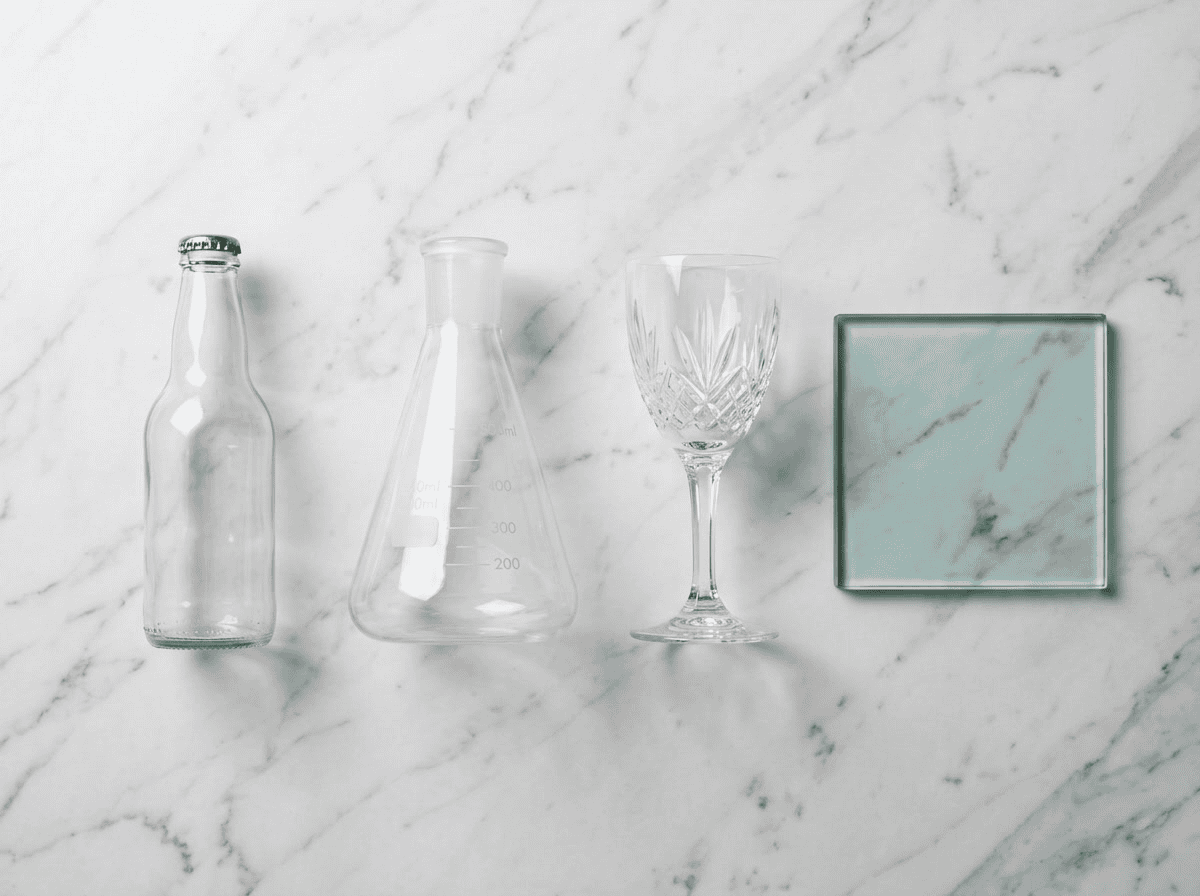
| ガラスの種類 | 主要添加剤 | 熱膨張 | 最適用途 | 相対的なコスト |
|---|---|---|---|---|
| ソーダ石灰 | Na₂O + CaO | 約9 × 10⁻⁶/°C | ボトル、窓、基本的なランプシェード | 低い |
| ホウケイ酸ガラス | B₂O₃(12~15%) | 約3~4 × 10⁻⁶/°C | 耐熱シェード、実験器具 | 中高 |
| 鉛クリスタル | PbO(24~36%) | 約9 × 10⁻⁶/°C | シャンデリア、カットクリスタル装飾品 | 高い |
| 強化(安全) | なし(工程) | 基地と同じ | フロアランプ、構造パネル | 中級 |
| 融合石英 | 純粋なSiO₂ | ~0.5 × 10⁻⁶/°C | UVランプ、極端な熱 | 非常に高い |
ガラスの作り方: 製造過程
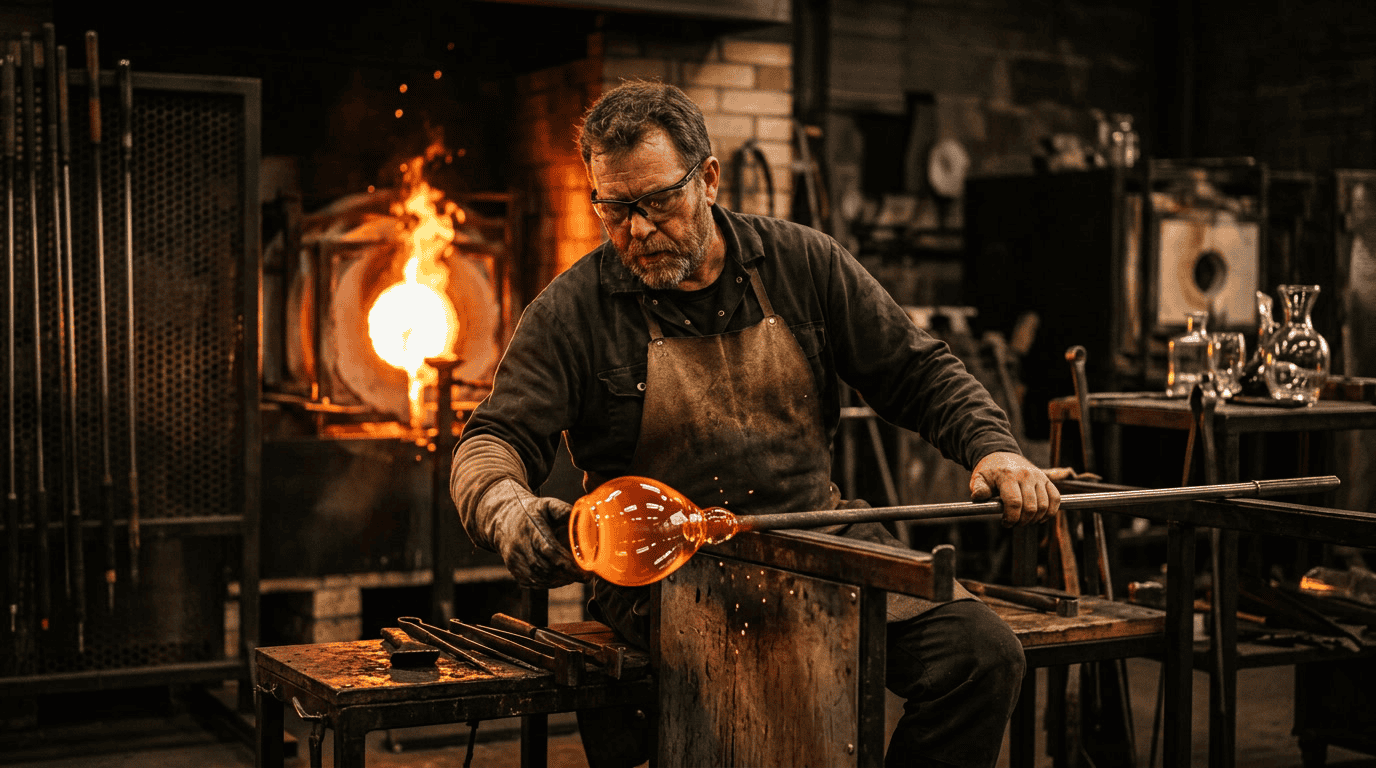
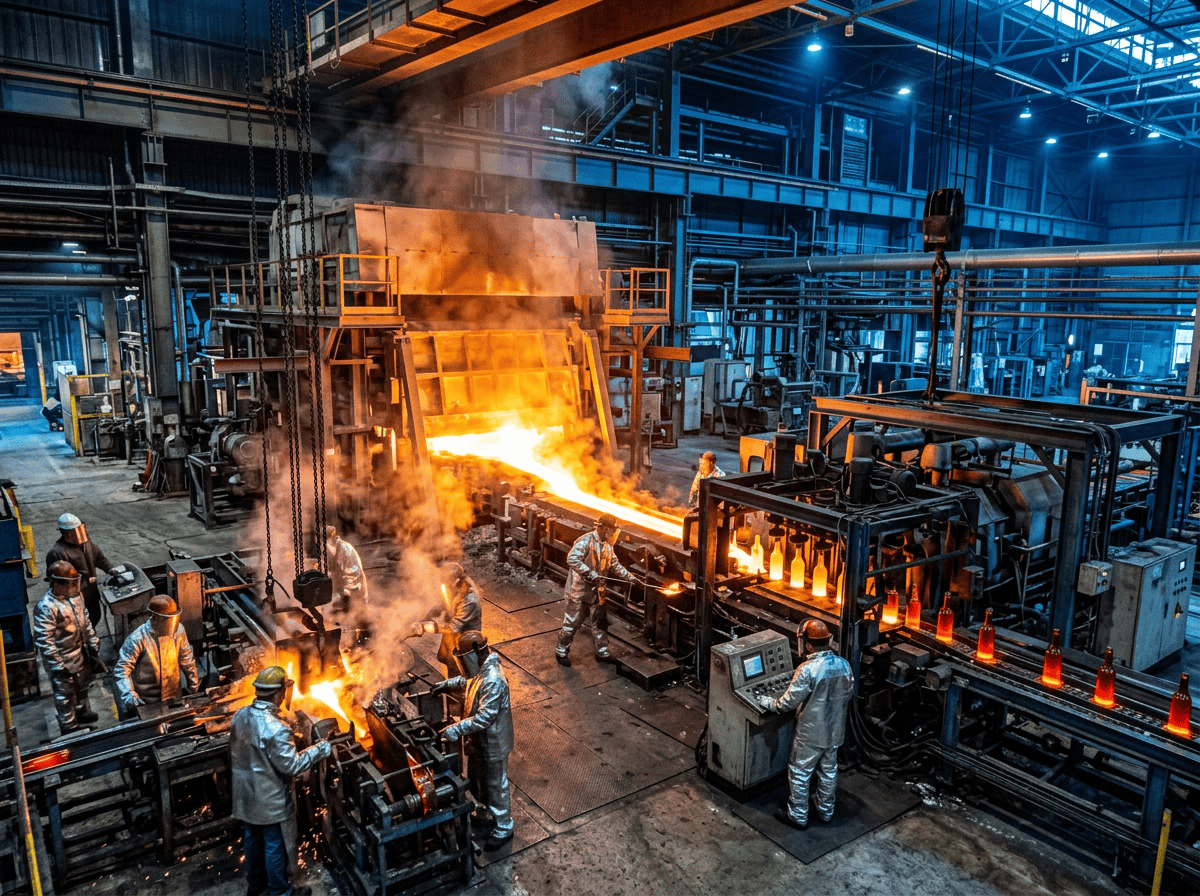
ガラス製造には4つの段階があり、バッチング、溶解、成形、アニーリングで、組成と光学品質を安定させるためにそれぞれ厳密に制御されている。.
ステップ1 — 原料の計量と混合
原料は炉に入る前に正確な割合で計量・混合される。現代のガラス工場では、各成分を百分率の分数以下で測定するコンピュータ制御のバッチハウスを使用している。 cullet比率の10%の増加につき、炉温を10°C低下させることが可能である。.
ステップ2 — 炉での溶解
バッチは再生炉に入り、温度は1,400–1,700°Cに維持される。ソーダ-石灰ガラスは約1,400–1,500°Cで溶け、ホウケイ酸ガラスは1,550–1,700°Cを要する。適切な清澄処理(ガス泡の除去)がないと、仕上がりのガラスには泡が閉じ込められ、安価なガラス製品に見える欠陥となる。.
ステップ3 — 成形と成形
溶融したガラスは900–1,200°Cで作業され、吹き抜き(ボトル、球体、装飾容器)、押出し(厚いランプベース、模様のあるシェード)、フローティング(平板窓ガラス)、描画/ローリング(管、模様入り板)によって成形される。.
ステップ4 — アニール処理と冷却
新しく成形されたガラスには内部応力が含まれている。. アニーリング(徐冷) これを解消するには:ガラスは温度管理されたオーブン(アニール炉)を通過し、約550°Cから室温まで20〜60分かけてゆっくり温度を下げる。適切なアニール処理は、ランプ取り付け具で何年も耐えるガラスと、設置後数か月で割れるガラスの違いである。.
ランプシェードと装飾用ガラス器具のガラス組成と品質
シェードの場合、組成は光透過性、耐熱性、耐久性、視覚的鮮明さを決定するため、材料仕様の中で最も重要な点となる。.
なぜ組成が透明度と光透過に影響するのか
不純度の高いシリカに含まれる鉄酸化物汚染は、夜間に白い壁に対してガラスに緑がかった色調を与える。未精製の溶融物から生じるシード気泡は薄壁のガラス球体で光を散乱させる。 Britannicaの材料科学分野の解説によると, わずか0.1%程度の微量鉄分でも厚いガラス部位に distinctly green tint(はっきりとした緑色)が生じ得る。高品質のランプシェードは鉄含有量0.02%以下の珪砂を使用する。.
ランプシェード用のボロシリケイトガラス vs ソーダライム
現代の大半のLED照明(表面温度50–80°C程度)では、ソーダライムガラスは十分な性能を発揮する。ボロシリケートは高出力ハロゲンのリプレース、雨の中にさらされる屋外ペンダント、1日12時間以上稼働する商業用器具、そして蒸気接触が現実的なキッチン用ペンダントに対して高価値を発揮する。.
高品質なガラス製ランプシェードの材料
最高品質の装飾用ランプシェードには、以下の3つの配合のいずれかを使用する:
- 高透明度のソーダ石灰ガラス — 超低鉄分含有量(<0.01% Fe₂O₃)、機械吹き成形、慎重なアニール処理。北欧風および日本風のミニマルなペンダントシェードに使用。.
- ホウケイ酸ガラス — ハロゲンまたは高出力LEDフィラメント電球、または屋外使用向け。より熱的に頑健で、最高級のソーダライムガラスよりわずかに透明度が低い。.
- 鉛クリスタル — シャンデリアのアーム、プリズムペンダント、カットグラスの装飾品向け。比類なき光学的きらめきを提供します。.
日本の コーニングガラス美術館, 、それは世界で最も包括的なガラスコレクションの1つを維持し、装飾的・機能的要件が異なる材料特性を要求したため、ガラス組成が世紀を超えてどのように進化したかを記録します—現代の買い手が直面するトレードオフと同じです。.
| 特性 | 高純度ソーダライム | ホウケイ酸ガラス | :乳白色の外観と制御された光拡散が特徴で、オパールガラスは柔らかくグレアのない照明を生み出します。半オパール(部分的な光透過と光源の遮蔽)から完全不透明(光源の完全遮蔽と拡散出力)まで、不透明度を調整できます。 |
|---|---|---|---|
| 光の透過率 | 91~92% | 90~92% | 89~91% |
| 屈折率 | 1.52 | 1.47 | 1.56~1.61 |
| 耐熱衝撃性 | 中程度 | 優れた | 中程度 |
| 最大安全温度(連続使用) | 〜250°C | 〜500°C | 〜250°C |
| 照明での最適用途 | LEDペンダント、テーブルランプ | ハロゲン/屋外用器具 | シャンデリア、装飾的アクセント |
ガラス材料の将来動向(2026年以降)
次世代のガラス材料は、受動的な透明性を超え、アクティブな光学性能と持続可能な生産へと移行します。.
スマートガラスと電気クラウン技術
電気的電流により透明性が変化する電気着色ガラスは、商業建築から住宅照明へと移行しています。これらのガラスは標準のソーダ石灰基板上に薄い酸化物コーティングを使用します。2024年の報告書によると、 国際エネルギー機関 は商業施設でのスマートガラスの採用が年間18%のペースで増加しており、住宅用途は3〜5年遅れて追随すると指摘しました。.
生物由来かつ持続可能なガラス生産
従来のガラス生産は1キログラムのガラスにつき約0.5kgのCO₂を排出します。再生可能エネルギーで動く電気炉は、すでに欧州の複数のメーカーで1kgあたりの排出量を40–60%削減しています。工業廃棄物流(飛灰、スラグ)を二酸化ケイ素源として用いるジオポリマーガラスルートは、2023年にドイツと日本のパイロット施設で機能的な製品を実証しました。.
よくある質問
ガラスは実際には何でできているのか?
ガラスは主に二酸化ケイ素(約70–74%)とソーダ灰、石灰石を組み合わせたものです。二酸化ケイ素はガラス網目を形成し、ソーダ灰は融点を下げ、石灰石は耐久性を付与します。微量添加剤は色、透明度、耐熱性を制御します。.
砂からガラスはどのように作られるのですか?
シリカ砂は炭酸ナトリウムと石灰石と混ぜられ、1400°Cを超えて均質な液体へと溶かされ、熱いうちに形作られ、その後アニーリング炉でゆっくりと冷却されます。原材料から完成品までの全作業工程は24〜72時間かかります。.
ガラス製の物体は五つは何ですか?
窓、グラス、電球、鏡、ランプシェードはすべてガラスで作られており、それぞれの機能要件に合わせた特定の組成を使用しています。.
ガラスは自然物ですか、それとも人造物ですか?
どちらもです。自然ガラス(黒曜石、フルゲライト)は、シリカを多く含む物質が火山活動や稲妻によって急激に加熱されて冷却されると形成されます。 RedditのScienceのガラス形成に関するディスカッション は、両者が同じ基本的な非晶質構造を共有していることを示しています。.
化学におけるガラスとは何ですか?
化学的には、原子が結晶格子ではなくランダムに配置された非晶質固体です。ケイ素酸塩ガラスはSiO₄四面体の網を形成し、酸素原子で結合し、修飾カチオン(Na⁺、Ca²⁺)が間隙位を埋めます。.
ガラスはどう作るのが簡単ですか?
砂を炭酸ナトリウムと石灰石とともに溶かし、熱いうちに液体を成形し、次にゆっくり冷却します。古代エジプト時代からの基本的な手順は同じで、現代の工場ではより高い精度と量で行われています。.
ホウ酸結晶ガラスが熱用途に向いている理由は?
ホウ硼ガラスは酸化ホウ素を12–15%含み、熱膨張をソーダ石灰ガラスの約3分の1程度に抑えます。これにより不均一な加熱による内部応力が大幅に減り、ランプシェードで見られる熱 shock の失敗の原因となる機構を抑えます。.
結論
ガラスは見かけよりもずっと単純だ――二酸化ケイ素の砂、ソーダ灰、石灰石、そして熱――だがその組み合わせは、プラスチックや金属では再現できない光学的・機械的・化学的特性を持つ材料を生み出す。その特定の成分が、屋外の夏の雨に耐えるランプシェードか、シャンデリアのペンダントが求めるスペクトルのきらめきを放つかをすべて決定する。.
ガラスのランプシェードや装飾用ガラス製品を選ぶ買い手向け:LEDのみの住宅用照明設備は品質の高いソーダライムガラスとよく合う。高温・屋外・商業用途にはホウケイ酸ガラスのプレミアムを正当化する。光学的な輝きが最も重要な場合、鉛クリスタルが標準のままである。どのタイプであっても、品質管理を文書化したメーカーの良好な焼戻し済みガラスは、同じ価格帯の他の代替品より長持ちする。ガラスが何でできているかを理解することは、購入前に正しい質問をするのに役立ち、品質を見分ける手助けになる。.