ガラス製品の破損:原因、種類、防止方法
ガラス製品の破損は、物理的または熱的ストレスがガラスの引張強度を超えたときに発生します。最も一般的な原因は、熱衝撃、機械的衝撃、または既存の表面亀裂が成長して突然ガラスが破損することです。.
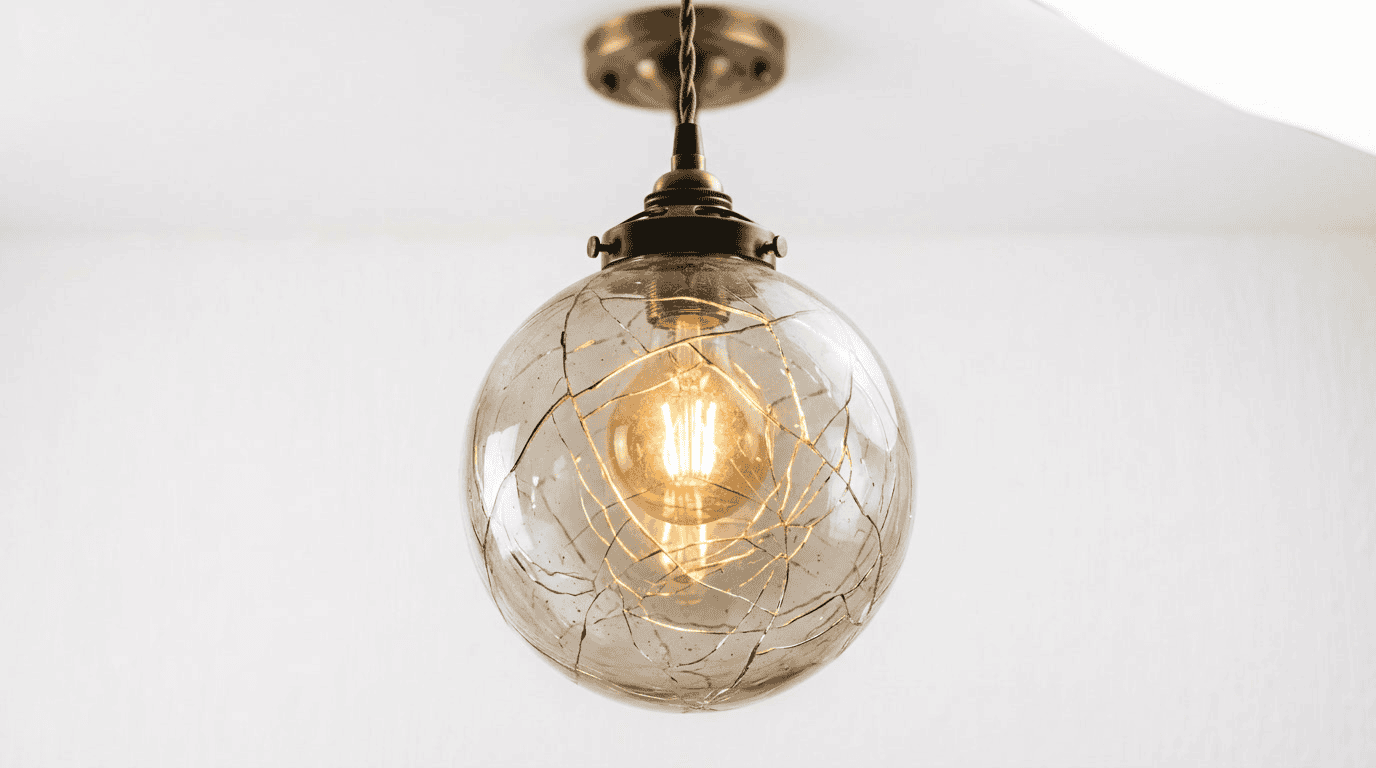
美しいガラスのランプシェードを取り付け、器具に完璧に設置したのに、3週間後には何の理由もなく縁にひびが入ってしまう。あるいは、長年毎日使っていたグラスセットが、ある普通の火曜日に食器洗い機の中で突然割れてしまう。もしこれに心当たりがあれば、あなただけではありません。ガラス製品の破損は、家庭や商業施設で最も一般的かつ厄介な問題の一つであり、年間数十億円もの交換費用、安全事故、運用停止による損失をもたらしています。なぜガラスが割れるのか、そしてそれを防ぐ方法を理解するには、まずガラスが物理的にどのように破損するのかを知ることが重要です。.
ガラス製品の破損とは?
ガラス製品の破損は、ガラス物体に加えられた機械的または熱的ストレスがその引張強度を超え、材料が破断することで発生します。金属とは異なり、ガラスは破損前に曲がったり塑性変形したりせず、突然かつ完全に破壊されます。この挙動は 脆性破壊. と呼ばれます。これにより、ガラスは優雅でありながら容赦のない素材となります。警告となるたわみや徐々に変形することはありません。持つか、持たないかのどちらかです。.
ガラスが割れる物理的理由
分子レベルで見ると、ガラスはアモルファス固体です。その原子は、金属やセラミックで見られる規則正しい結晶格子ではなく、無秩序なネットワーク状に配置されています。この構造がガラスに透明性や滑らかな表面、特有の性質を与えていますが、一度亀裂が進行し始めると、それを止める仕組みがほとんどないことも意味します。.
日本の 日本の大学によるガラス破壊力学の研究, によれば、ほとんどのガラス製品は理論的な強度を超える力に遭遇したために割れるのではありません。割れる原因は、 微小な表面欠陥 — 肉眼では見えない小さな傷や欠け、微細な亀裂 — であり、これが応力集中部となります。欠陥付近では、局所的な応力が物体全体の平均応力の100倍から1000倍にもなります。新品のガラス表面では安全な力でも、傷の先端では致命的となります。.
そのため、縁に欠けがあるグラスは、同じ形状で無傷のものよりもはるかに破損しやすくなります。欠陥はすべてのエネルギーを小さな亀裂先端に集中させ、ガラス中の音速(約1,500m/s)に近い速度で亀裂を進行させます。.
ガラスの強度と日常的なストレス
理論的には、ガラスは非常に強い素材です。管理された実験室環境で新たに引き出されたガラス繊維は、14,000MPaに迫る引張応力に耐えることができます。これは多くの鋼合金よりも強い値です。しかし実際には、日常の取り扱いによる表面損傷により、家庭用ガラス製品の実効強度は35~100MPa程度にまで低下します。傷がつくたび、他の硬い表面と接触するたび、食器洗い機のサイクルごとに、その余裕はさらに減少します。.
実際の結果として、1~2年日常的に使用されたガラス製品は、新品時と比べて明らかに弱くなっています。これはガラス自体の性質が変化したのではなく、表面損傷が蓄積したためです。.
| 応力の種類 | 一般的な原因 | ガラス製品に対する相対的リスク |
|---|---|---|
| 熱衝撃 | 冷たいガラスに熱い液体を注ぐ、熱いガラスに冷水をかける、急速なオーブン移動 | 非常に高い |
| 機械的衝撃 | 落下、硬い表面への衝突、洗浄中の衝突 | 高い |
| 残留製造応力 | 不十分なアニール処理、生産時の不均一な冷却 | 中~高 |
| 遅い亀裂成長 | 破損閾値以下での繰り返し応力サイクル | 中級 |
| 化学的攻撃 | 食器洗い機用洗剤、酸性飲料、長時間の湿気接触 | 低〜中 |
どの応力タイプがあなたの状況で支配的かを理解することが、ガラス製品の破損を防ぐ最も直接的な方法です。.
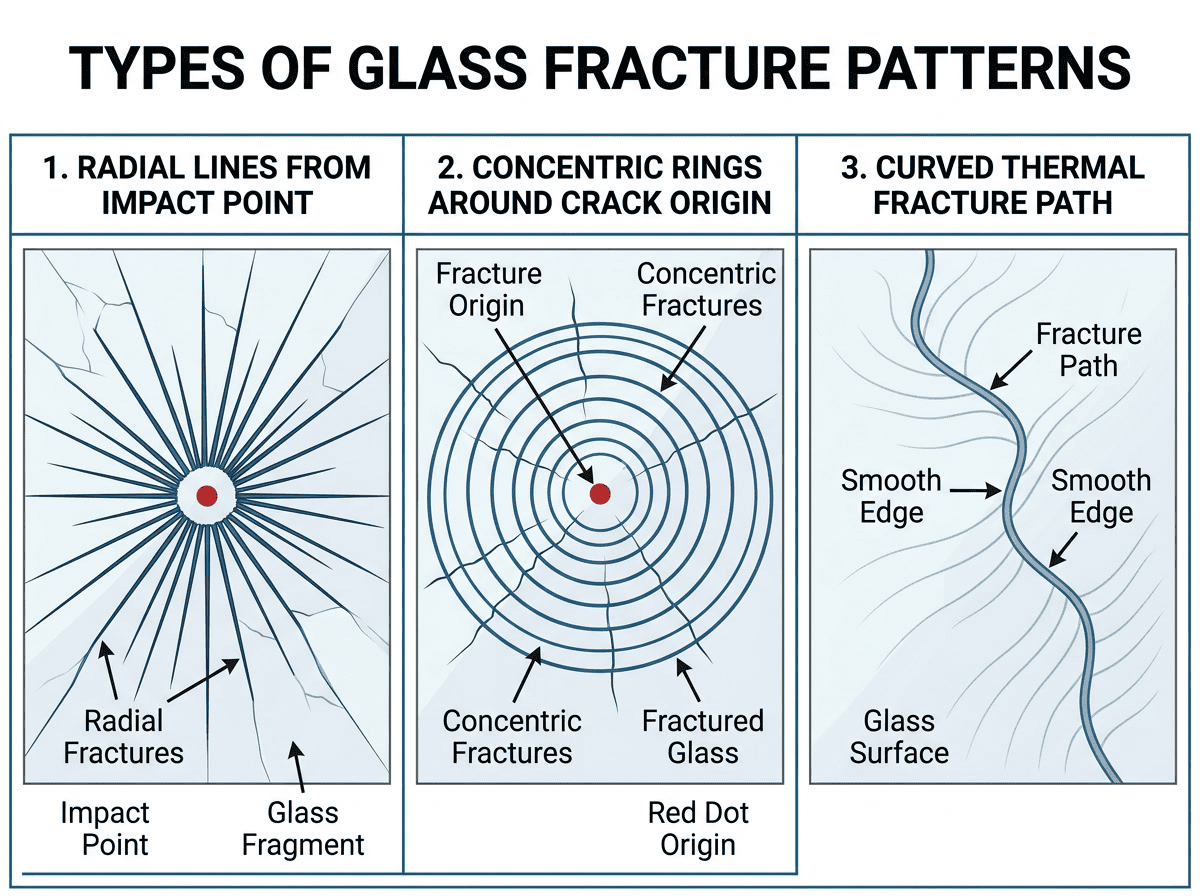
ガラス破壊パターンの主な3種類
すべてのガラス製品の破損が同じように見えるわけではありません。法科学的なガラス分析者や、壊れたガラスを注意深く観察する人は、破損の原因を示す独特な破壊パターンを認識します。 NISTのセラミックスおよびガラスの破壊解析リファレンスガイドによると, ガラスの破壊パターンは再現性があり診断的です。同じ原因は常に同じパターンを生み出します。パターンを読むことで、何が問題だったかが分かります。.
放射状破壊
放射状破壊は、起点から車輪のスポークのように外側へ広がります。これは典型的な機械的衝撃のサインであり、ガラスが落下したり、硬い物体で強く打たれたときに見られます。破壊線が収束(またはほぼ収束)する点が破損の始まりを示します。ガラス製ランプシェードでは、放射状破壊はしばしば取り付け部や金具と接触する縁部分から始まります。必ずしも破損が始まると思われる場所とは限りません。.
放射状破壊の重要な診断特徴は方向性です。破壊の起点から破壊線に沿って(壊れていない部分で慎重に)指を滑らせると、破壊面がわずかに曲がっていて、力が加わった側から反対方向に湾曲しているのが感じられます。これを「ハックル」パターンと呼び、衝撃点を示します。.
同心円(ヘルツ型)破壊
同心円破壊は、衝撃点を中心に円や弧を形成します。放射状破壊と組み合わさることで、車のフロントガラスやひび割れた画面でよく見られる「ブルズアイ」パターンが生まれます。同心円は、最初の衝撃後に応力波がガラス内を反射し、起点から特定の距離で二次的な張力ゾーンを作ることで形成されます。.
家庭用の薄いガラス製品(タンブラー、ワイングラス、ランプシェード用ガラス)では、純粋な同心円破壊はあまり見られません。ガラスが薄すぎて完全なヘルツ円錐形状を維持できないためです。部分的なブルズアイと放射状線が組み合わさって現れることが多いです。真に発達した同心円破壊は、より厚い装飾用ガラスや板ガラス、建築用ガラスで最もよく見られます。.
熱割れ
熱割れは最も誤解されやすい種類であり、ガラス製ランプシェードの所有者にとって最も重要なものと言えるでしょう。これらはガラス表面をゆるやかな曲線や方向転換を伴いながら横切る、なめらかで曲がったひび割れとして現れます。時には「怠惰な」割れ目と表現されることもあり、衝撃割れのような鋭い方向性がないのが特徴です。.
日本の ウィキペディアによるガラスの熱割れに関する技術的な解説, 熱割れにおけるひび割れの進行経路は、破損時の温度勾配によって生じる最大の引張応力の経路に沿って進みます。ガラス製品の片側がもう一方よりも速く加熱または冷却されると、両側は異なる速度でサイズを変えようとします。その結果生じる引張と圧縮の不一致は、引張応力が最も高い箇所で破壊が発生し、その箇所は温度勾配の変化に伴って移動するため、ひび割れの経路もさまよいます。.
熱割れの重要な特徴の一つは、割れ面がしばしばなめらかで平坦であり、衝撃割れに見られるハックルマーク(ざらつき)がないことです。これにより、後からでも機械的損傷と区別しやすくなります。.
| 割れの種類 | 見た目のパターン | 主な原因 | 最もよく見られる場所 |
|---|---|---|---|
| 放射状 | Lines radiating outward from a point | Impact, collision, drop | Tumblers, lampshades, windows |
| Concentric | Circular/arc rings around impact point | Hard blunt-force contact | Thick glass, auto glass, plate glass |
| Thermal | Smooth, curving, wandering crack | Rapid temperature differential | Lampshades, ovenware, cookware |
| Spontaneous | Random with no visible origin point | NiS inclusions in tempered glass | Tempered glass, architectural glass |
| Fatigue | Fine cracks at stress concentrators | Repeated sub-failure cycling | Frequently handled glassware |

Top Causes of Glassware Breakage
Understanding fracture types tells you how glass breaks. These four causes account for the overwhelming majority of glassware breakage incidents in homes, restaurants, and commercial settings.
Thermal Shock — The Number One Culprit
Thermal shock is the sudden, non-uniform temperature change that creates differential expansion within a single piece of glass. Glass expands when heated and contracts when cooled — but it does so at a fixed, predictable rate (the thermal expansion coefficient). If one part of a glass object changes temperature faster than another, one part tries to expand while the adjacent part resists. The resulting internal stress tears the glass apart.
Classic thermal shock scenarios that cause glassware breakage:
- Pouring boiling water into a glass that hasn’t been pre-warmed
- Running cold water over a hot glass fresh from the dishwasher
- Moving glassware from a refrigerator directly into a microwave
- Setting a hot glass down directly on a cold granite or metal countertop
- Switching on a lamp with a cold glass lampshade in a cold room (the lamp side heats instantly; the outer surface takes longer)
The critical variable is the temperature differential across the glass, not the absolute temperature. A glass sitting uniformly at 150°C is under no particular stress. Pour cold water on it and it can fail within seconds.
Most ordinary soda-lime glass — the type used in the majority of household drinking glasses, decorative vases, and lamp globes — has a thermal shock resistance of roughly 40–70°C differential. Borosilicate glass (recognized by brand names like Pyrex and Duran) withstands differentials above 150°C. The difference is the coefficient of thermal expansion: borosilicate expands approximately three times less than soda-lime glass for the same temperature change, so the differential stress is proportionally smaller.
実用的なヒント: If you must wash glassware in very hot water, allow it to cool gradually on a cloth rather than plunging it under cold running water. Pre-warming a glass with warm (not hot) water before adding a hot beverage takes 15 seconds and meaningfully reduces thermal shock risk.
Mechanical Impact and Drop Damage
Impact is the most intuitive cause of glassware breakage. What’s less intuitive is that glassware often does 同じではありません fail at the moment of impact — it fails afterward, sometimes hours or days later, when invisible micro-cracks created by the impact slowly propagate under the ordinary stress of daily use.
This explains why a glass that apparently “survived” a drop sometimes breaks mysteriously later during normal handling. The impact created sub-critical cracks — too small to cause immediate failure but large enough to grow. Each use cycle puts a small amount of stress into those cracks until they reach the critical length at which they propagate catastrophically.
Drop height matters less than you might expect. Surface hardness at the point of impact matters far more. A glass dropped 30 cm onto a granite countertop is significantly more likely to break than the same glass dropped 60 cm onto a hardwood floor. The granite transfers impact energy efficiently into the glass; the wood absorbs and dissipates it.
Research from Cornell University’s materials science program on glass failure demonstrated that crack propagation speed in glass is bounded by the acoustic wave speed in the material — meaning that below a certain impact velocity, glass may actually create multiple small cracks rather than a single catastrophic fracture. This principle underlies laminated safety glass design, where multiple layers slow crack propagation and prevent complete disintegration on impact.
Manufacturing Defects and Hidden Cracks
Not all glassware starts at equal strength. Poor manufacturing practice introduces defects that dramatically reduce service life:
Improper annealing is perhaps the most common and consequential defect. After glass is formed — whether blown, pressed, or cast — it must be cooled slowly and uniformly through the annealing range (roughly 450–550°C for soda-lime glass). This allows internal stresses created during forming to relax. Rushed or uneven annealing locks residual stress into the glass. Poorly annealed glass can fail spontaneously under its own internal stress or fail at a fraction of its rated strength under external loads.
Inclusions — air bubbles, refractory particles, or foreign material trapped in the glass — create internal stress concentrators. In decorative glass and lampshade glass, bubbles are sometimes considered an aesthetic feature. They are not structurally neutral: each bubble is a stress concentrator and a site of reduced wall thickness.
Mold lines and seam marks — common in pressed glass lampshade globes — represent locations where the glass was joined during forming. At these seams, the glass microstructure is slightly different and residual stress is higher. Radial fractures in pressed-glass lampshades often originate at mold lines, not at impact sites.
Non-uniform wall thickness is a subtler defect. When the wall thickness varies across a lampshade or glass vessel, thinner sections heat and cool faster than thicker sections, creating thermal gradients even under mild temperature changes. This is why higher-quality glassware has more uniform wall thickness — it’s not just aesthetic.
Before installing a glass lampshade or purchasing decorative glassware, hold the piece up to a bright light source and inspect it: look for bubbles, visible seam lines, and thickness variation (which appears as lighter and darker bands). A piece with multiple visible defects has reduced service life before you install it.
Spontaneous Glassware Breakage Explained
Few things are more alarming than a glass object — a lampshade, a shower door, an oven panel — that shatters without being touched. This is called spontaneous breakage, and in thermally tempered glass, it has a specific, well-documented cause: nickel sulfide (NiS) inclusions.
During glass manufacturing, nickel from steel equipment components and sulfur from fuel sources can combine inside molten glass to form nickel sulfide particles. In un-tempered glass, these particles are mechanically harmless. But during the tempering process — where glass is heated to approximately 620°C and then rapidly air-quenched — NiS particles become “locked” in a high-energy metastable phase. Over months or years at room temperature, these particles slowly undergo a phase transformation and expand by approximately 4%. That expansion, occurring inside fully tempered glass under high compressive surface stress, eventually triggers the stored stress to release — catastrophically and suddenly, with the glass shattering into the small, dice-like fragments characteristic of tempered glass failure.
Spontaneous breakage from NiS inclusions can occur days to years after installation with no warning and no external trigger. It affects thermally tempered glass used in shower enclosures, glass doors, oven panels, and architectural glass. Heat-soak testing (holding tempered glass at approximately 290°C for two hours) can trigger most susceptible units in controlled conditions — but it is not universally applied in the industry, and it is not 100% effective.
For non-tempered decorative glassware and lampshades, apparent “spontaneous” breakage is almost always delayed mechanical failure — a sub-critical crack from an earlier impact that finally grew to the critical size.
Glassware Breakage in Glass Lampshades — What’s Different
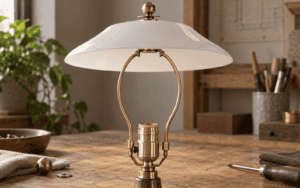
Glass lampshades occupy a unique intersection of nearly all the failure mechanisms described above. They are decorative glass (which may have manufacturing variation and surface defects), they are exposed to sustained heat from the light source, they make contact with metal hardware that expands and contracts at different rates, and they are periodically cleaned and reinstalled in ways that can introduce thermal shock. Understanding lampshade-specific breakage risk is essential for anyone who owns, installs, or specifies glass lighting.
Why Lampshade Glass Is Particularly Vulnerable
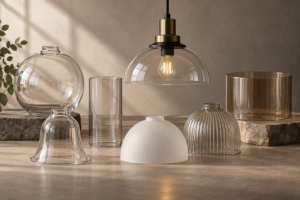
Most glass lampshades use blown or pressed soda-lime glass. Blown glass tends to have more uniform thickness but hand-blown pieces often have slight wall thickness variation. Pressed glass (used widely in pendant globes, schoolhouse-style shades, and drum pendants) is more dimensionally consistent but may retain residual mold-line stress.
The wall thickness of typical lampshade glass runs 2–4 mm — thin enough to be lightweight and translucent, but also thin enough that temperature gradients across the wall are relatively small even with modest external temperature differentials. This means the margin between “safe operating temperature gradient” and “failure temperature gradient” is narrower than for thicker glass objects.
Heat Sources and Thermal Cycling Risk
The most significant risk factor for glass lampshade breakage is thermal cycling — the repeated heating and cooling that occurs every time the lamp is switched on and off. Each cycle stresses the glass slightly. Over thousands of cycles, micro-cracks grow. This is why a glass lampshade that performed flawlessly for two years might crack unexpectedly during what seems like a completely routine use day — the cumulative fatigue finally drove a pre-existing flaw to critical size.
The type of light source matters enormously. A traditional 60-watt incandescent bulb reaches 200°C or more at the glass surface. A 10-watt LED equivalent generating the same light output stays well below 50°C. The thermal cycling stress from an incandescent bulb is roughly 10–15 times greater per cycle than from a comparable LED. Switching to LED bulbs is among the most effective single steps you can take to extend glass lampshade life.
Equally important: lamp wattage relative to the shade’s rated maximum. Exceeding the rated wattage concentrates heat at the glass neck — the mounting point where the shade contacts the fixture hardware — exactly where contact stresses from the metal fitting are already highest. This combination of thermal and mechanical stress at the same location is a reliable recipe for premature breakage.
Common Installation Mistakes That Cause Glassware Breakage
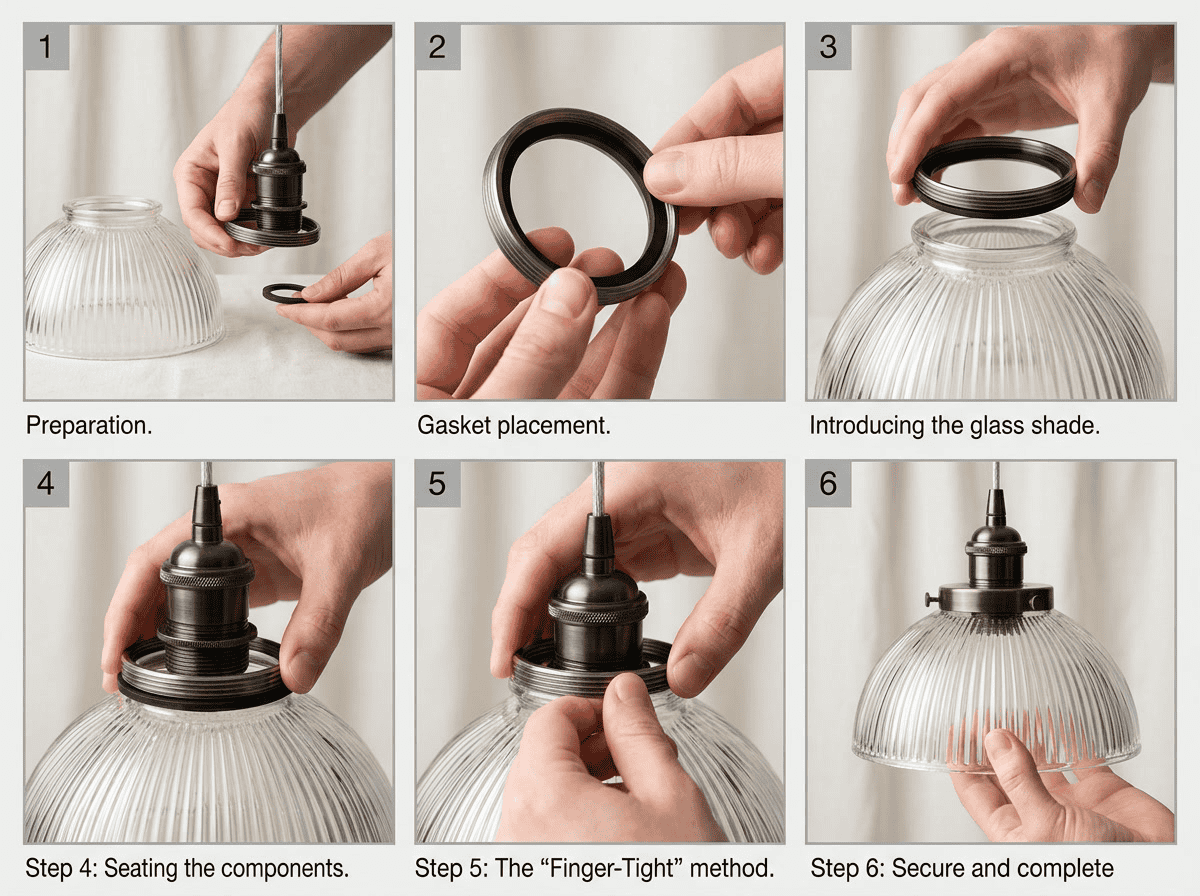
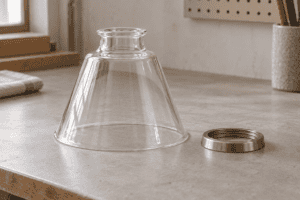
- Over-tightening the mounting ring. The metal ring compresses the glass at the contact point. When the lamp heats up, the metal expands outward while the glass wants to expand in all directions. If the ring is too tight, it restrains the glass’s natural expansion, creating localized stress at the contact rim. Over time, this produces radial fractures originating at the mounting contact.
- No gasket between glass and metal. Metal expands more than glass at equivalent temperatures (higher coefficient of thermal expansion). Without a rubber, silicone, or felt gasket between the metal fitting and the glass rim, repeated heating and cooling cycles force the glass to accommodate the metal’s movement — and the glass loses that negotiation.
- Installing cold glass on a warm fixture. Even room-temperature lamp fixtures can be 20–30°C warmer than glass brought in from an unheated garage or outdoor storage. Installing chilled glass directly onto a warm fitting creates an immediate thermal gradient at the contact point.
- Ignoring hairline cracks. A hairline crack in a glass lampshade is not a cosmetic defect — it is a structural failure in progress. Glass lampshades with hairline cracks should be replaced immediately, not used until “it actually breaks.”

How to Prevent Glassware Breakage
Thermal shock prevention, mechanical protection, and informed purchasing are the three pillars of glassware breakage prevention. None requires expensive equipment — just consistent habits and a basic understanding of the failure mechanisms above.
Storage and Handling Best Practices
For drinking glasses and decorative glassware:
- Store glasses upright, never nested rim-to-rim (rim stacking transfers point loads onto the most damage-prone edge)
- Leave at least 1 cm of clearance between stored glasses in cabinets — vibration and contact cause micro-damage that accumulates over time
- Use cabinet rack inserts or felt dividers in any storage environment with frequent vibration (near HVAC equipment, on floors above foot traffic areas)
- Inspect glassware every few months — hold each piece to a light source and look for chips, scratches, or hairline cracks along the rim and base
For glass lampshades specifically:
- Always use a rubber or silicone gasket between the glass and any metal mounting hardware — this single precaution prevents the most common lampshade breakage cause
- Tighten mounting rings to finger-tight, then no more than a quarter-turn — never wrench-tighten glass shade hardware
- Allow new lampshades to acclimate to room temperature (at least 30 minutes from cold storage or outdoor transit) before installing on a lit fixture
- When cleaning, avoid thermal extremes: room-temperature or lukewarm water only, supported from below rather than gripped at the rim
Temperature Management Tips
Most thermal-shock glassware breakage is preventable with straightforward temperature management:
- Pre-warm glasses before adding hot liquids — warm tap water run over the outside for 15–20 seconds reduces the thermal gradient when the hot liquid is poured in
- Let hot glassware cool on a folded cloth or silicone mat — not directly on cold stone, metal, or ceramic tile
- Use borosilicate glass for any regular high-temperature application — hot beverages, oven use, or high-wattage lamp fixtures. The thermal shock resistance advantage (150°C+ vs. 40–70°C for soda-lime) is real and significant
- Never microwave very cold glass — the heat concentrates inside the liquid while the glass wall stays cooler, creating an inside-out thermal shock
- Switch to LED bulbs in all glass lampshade fixtures — the temperature reduction is dramatic and directly extends lampshade service life
Choosing Breakage-Resistant Glass
The glass composition you choose at purchase time determines the ceiling on breakage resistance. No amount of careful handling fully compensates for glass with poor thermal properties in a demanding application.
| ガラスの種類 | 熱衝撃耐性 | 耐衝撃性 | 最適な用途 |
|---|---|---|---|
| ソーダライムガラス | ~40–70°C differential | 中程度 | Cold beverages, decorative objects, low-wattage lampshades |
| ホウケイ酸ガラス | ~150–200°C differential | 中程度 | Hot beverages, oven use, higher-wattage lampshades |
| Tempered (toughened) glass | ~200°C+ differential | 4–5× stronger than annealed | Outdoor lampshades, architectural glass, high-traffic areas |
| Aluminosilicate glass | ~200°C+ differential | 高い | Specialty high-temperature applications, high-end cookware |
| Laminated glass | 中程度 | Very high — retains fracture | Safety glazing, sloped glazing, glass floors |
For standard indoor glass lampshades used with LED bulbs, quality soda-lime glass is entirely appropriate — provided it is properly installed and maintained. For outdoor lampshades exposed to rain and temperature extremes, thermally tempered glass is the correct specification. For high-wattage halogen or specialty incandescent applications, borosilicate offers meaningful protection.
When evaluating a glass lampshade for purchase, look for:
- Uniform wall thickness — visible as even translucency when held to a light source
- Absence of bubbles or inclusions — visible as dark spots or distortions against a bright background
- Smooth, fire-polished edges on globes and pendant shades — machine-cut edges have micro-serrations that serve as crack initiation sites
- A stated wattage rating — any quality lampshade should carry a maximum wattage specification
Future Trends in Breakage-Resistant Glassware (2026+)
The glass industry is actively working on next-generation glassware that breaks less — driven by consumer safety demands, sustainability pressure to reduce glass waste, and the economic cost of breakage in commercial settings.
Next-Generation Glass Compositions and Surface Treatments
Ion exchange strengthening — already widely used in smartphone screens under brand names like Corning Gorilla Glass and AGC Dragontrail — is increasingly being adapted for tableware and decorative glass. The process immerses formed glass in a molten potassium salt bath, replacing smaller sodium ions at the glass surface with larger potassium ions. The size mismatch creates a compressive stress layer in the outer 40–80 microns of the glass, which must be overcome before any surface crack can propagate. The result is 3–5× improvement in drop and scratch resistance with no change in optical properties.
Early commercial products applying ion exchange treatment to tableware have appeared in the market, and the technology is migrating toward decorative glass and lampshade applications as manufacturing cost continues to fall.
Surface treatments using protective sol-gel coatings are another avenue. These thin coatings (typically under 1 micron thick) fill surface micro-scratches and reduce the stress concentration factor at existing flaws. They are already used on some laboratory glassware and are being evaluated for consumer applications.
As highlighted in Notre Dame’s research on shattering in glass cookware, failure in most glass objects occurs not because the material lacks theoretical strength but because surface damage accumulated over time enables low-stress crack propagation. This insight points directly toward surface treatment as the most practical near-term path to extending glassware service life.
Smart Monitoring and Predictive Breakage Detection
Acoustic emission monitoring — technology long used in industrial pipeline and pressure vessel inspection — is being miniaturized for building and consumer applications. These systems detect the acoustic signatures of sub-critical crack propagation in glass before the cracks reach failure length, providing warning before catastrophic failure.
For high-value architectural glass (glass bridges, glass floors, structural glass balustrades), such monitoring systems are already commercially available. For decorative glass and consumer lampshades, cost-effective deployment is likely 5–10 years away — but the trajectory is clear.
More near-term: machine-vision quality inspection systems used by glass manufacturers can now detect surface defects, inclusions, thickness variation, and annealing irregularities that escaped human quality control inspection. Glassware manufactured with these systems will have meaningfully lower defect rates — which translates directly to longer average service life before glassware breakage occurs.
| 発展 | Timeline | Expected Impact on Glassware Breakage |
|---|---|---|
| Ion exchange treatment for decorative glass | Now–2027 | 3–5× drop resistance improvement |
| Sol-gel protective surface coatings | Now–2026 | Extended scratch resistance, slower flaw growth |
| AI optical quality inspection at factory | Now (premium manufacturers) | Lower defect rates, fewer hidden flaws |
| Acoustic emission crack monitoring | 2028–2032 for consumer applications | Early warning before failure |
| Self-healing glass coatings | 2030+ | Potential to arrest surface crack growth |
FAQ: Glassware Breakage
How do I stop breaking glassware so frequently?
Start by auditing your temperature practices — the most common fix is eliminating thermal shock by pre-warming glasses before adding hot liquids and letting hot glass cool gradually before rinsing. Then check your storage: rim-to-rim stacking damages the most vulnerable edge on every use. If breakage continues after those changes, switch to a tougher glass type (borosilicate for hot-use applications) or inspect whether your dishwasher’s water temperature and cycle settings are too aggressive for your glassware.
Why do my drinking glasses keep breaking?
Repetitive breakage most commonly comes from dishwasher use, rim damage from stacking, or hidden impact damage accumulating over time. Dishwashers combine three glass stressors simultaneously: hot water, aggressive detergent chemistry, and rapid temperature changes at cycle end. Washing glassware by hand in lukewarm water significantly extends service life. Also examine whether glasses are chipping first at the rim — a chipped rim concentrates stress and accelerates failure.
At what weight does glass break?
Glass doesn’t fail at a weight threshold — it fails at a stress level, which depends on how load is distributed across the contact area. A very sharp, concentrated force (a knife edge, a stone point) can break glass at just a few newtons. The same glass may support hundreds of newtons from a wide, padded contact. Geometry of loading matters as much as load magnitude — which is why rubber gaskets on lampshade fittings dramatically reduce breakage risk even though they don’t reduce the clamping force.
Why does glass break spontaneously without being touched?
In thermally tempered glass, spontaneous breakage is caused by nickel sulfide inclusions that undergo slow phase transformation after tempering, expanding by approximately 4% and triggering the glass’s stored compressive stress to release suddenly. In non-tempered glass, apparent spontaneous breakage is almost always delayed failure from earlier impact damage — sub-critical cracks that grew to failure length over time without any additional external trigger.
Can I continue using a glass lampshade that has a hairline crack?
No. A hairline crack in a glass lampshade is active structural damage, not a cosmetic defect. The crack will grow under thermal cycling from the lamp. Failure will occur — the question is only when. Continued use with a cracked lampshade creates a risk of sudden glass failure and injury. Replace it promptly.
Is borosilicate glass worth the price premium for lampshades?
For lampshades used with incandescent or halogen bulbs at or near their rated wattage, yes — borosilicate’s substantially higher thermal shock resistance (150°C+ vs. 40–70°C for soda-lime) meaningfully reduces failure risk from heat cycling. For lampshades used with modern LED bulbs, which run far cooler, quality soda-lime glass is perfectly adequate when properly installed with correct gaskets and mounting torque.
How should I safely dispose of broken glassware?
Wrap broken glass in multiple layers of newspaper or place it in a rigid cardboard box before disposing. Never place loose broken glass directly in a plastic bag — it will puncture the bag and create a cut hazard for waste handlers. As documented in University of Iowa Environmental Health and Safety guidelines on sharps and broken glass disposal, glass placed in soft containers is one of the leading causes of cut injuries among waste management personnel.
What is the best way to clean glass lampshades without risking breakage?
Use lukewarm water — not hot, not cold. Support the shade from below rather than gripping the rim. Use a soft, lint-free cloth. Allow the shade to air-dry completely before reinstalling it on a warm fixture. Avoid harsh ammonia-based cleaners on borosilicate glass; ammonia at high concentrations can attack the glass surface over repeated exposure.

結論
Glassware breakage is not random. Almost every broken piece has a traceable cause — thermal shock, accumulated micro-damage from handling and dishwasher use, a manufacturing defect that reduced strength before the glass ever reached your home, or installation stress that cycled the glass to failure. Understanding these mechanisms transforms breakage from an unavoidable frustration into a largely preventable problem.
For glass lampshades specifically, the combination of thermal cycling from the light source, differential expansion between glass and metal hardware, and decorative glass composition creates risks that straightforward precautions can substantially reduce: proper installation with rubber gaskets, matched bulb wattage, gradual temperature transitions during cleaning and installation, and regular inspection for early crack signs. Switching to LED bulbs alone reduces the thermal cycling stress on glass lampshade by an order of magnitude — it is the highest-leverage single change most users can make.
The next time you choose a glass lampshade or piece of decorative glassware, you’ll know what to look for — uniform wall thickness, clean bubble-free glass, smooth fire-polished edges, and a clearly stated wattage rating. That knowledge, applied consistently, is the most effective glassware breakage prevention tool available.