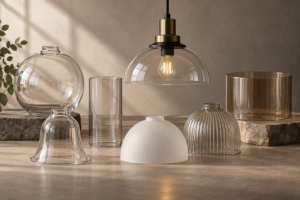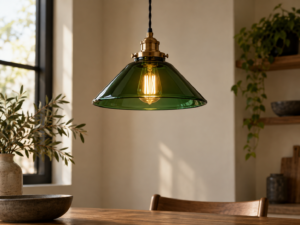
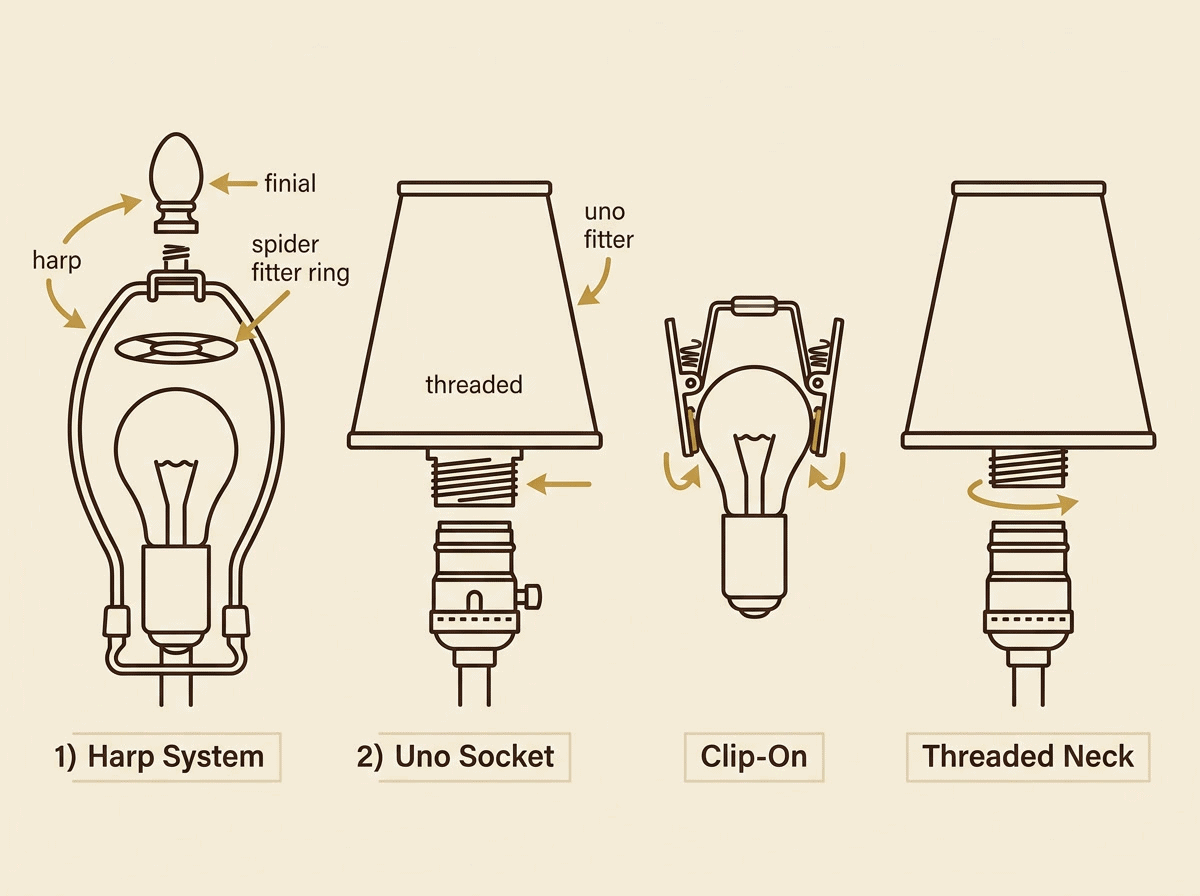
ランプのシェードを支える部分 と呼ばれています ハープ U字型の金属ブラケットは、ランプソケットに取り付けられたハープサドルに差し込まれ、上部はフィニアルと呼ばれる装飾ネジで固定されます。ハープを使用しないランプでは、シェードは次の三つの方法のいずれかで保持されます:シェードを直接ねじ込むウノソケットリング、電球を挟むクリップオンフィッター、またはシェード本体のねじ付きネックフィッターです。.
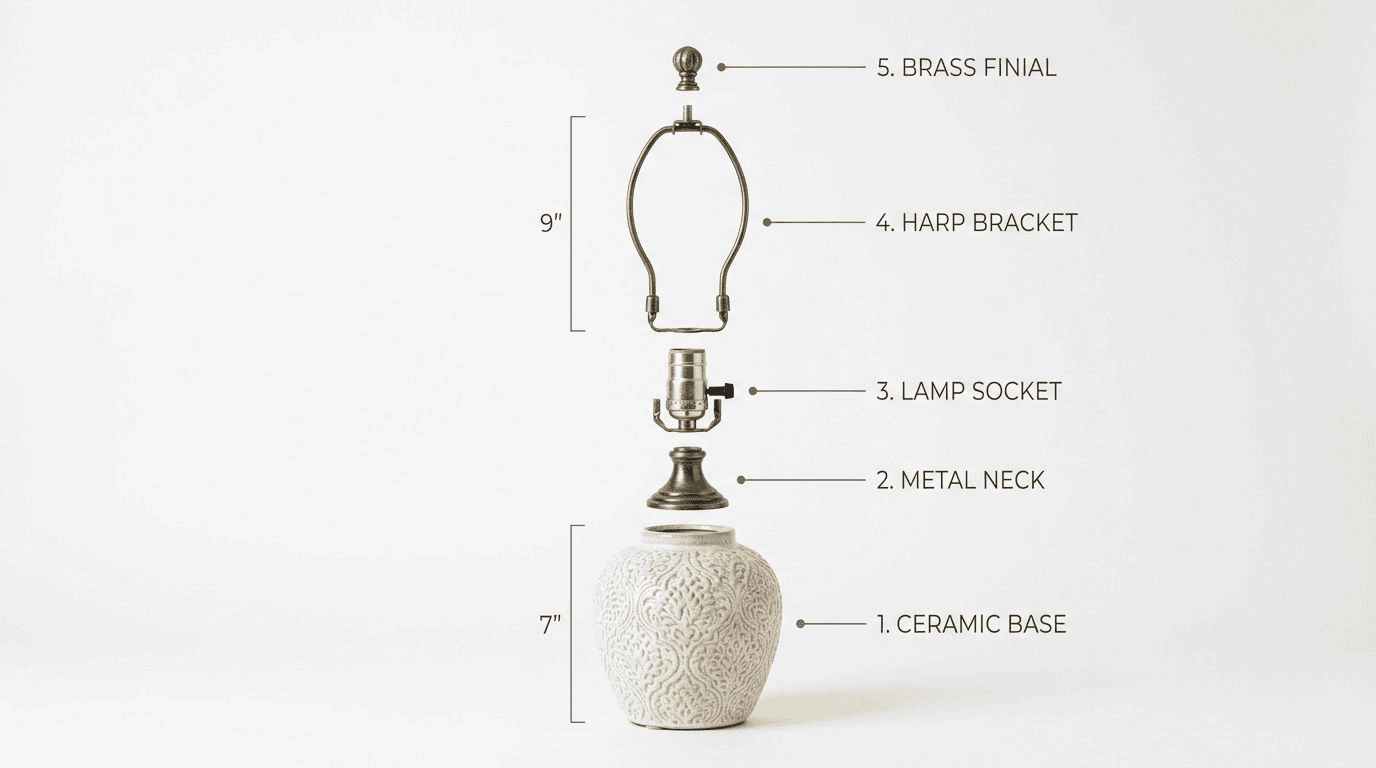
箱には明確な名前がありません。曲がったり、なくなったりすると、シェードが傾いたり、ぐらついたり、完全に外れてしまいます。交換しようとしても、「ランプブラケット」「シェードホルダー」「金属のU字のもの」など、どの言葉で探せばよいかわかりません。シェードを支えるランプの部品は「ハープ」と呼ばれ、ハープは四つの部品からなるシステムの一部にすぎません。このガイドでは、すべての部品の名称、それぞれの役割、そしてどの部品がなくなったり壊れたり、または使いたいシェードに合わない場合にどうすればよいかを説明します。.
ハープ — シェードを支えるランプの主要部分
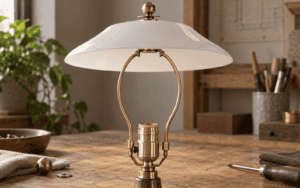
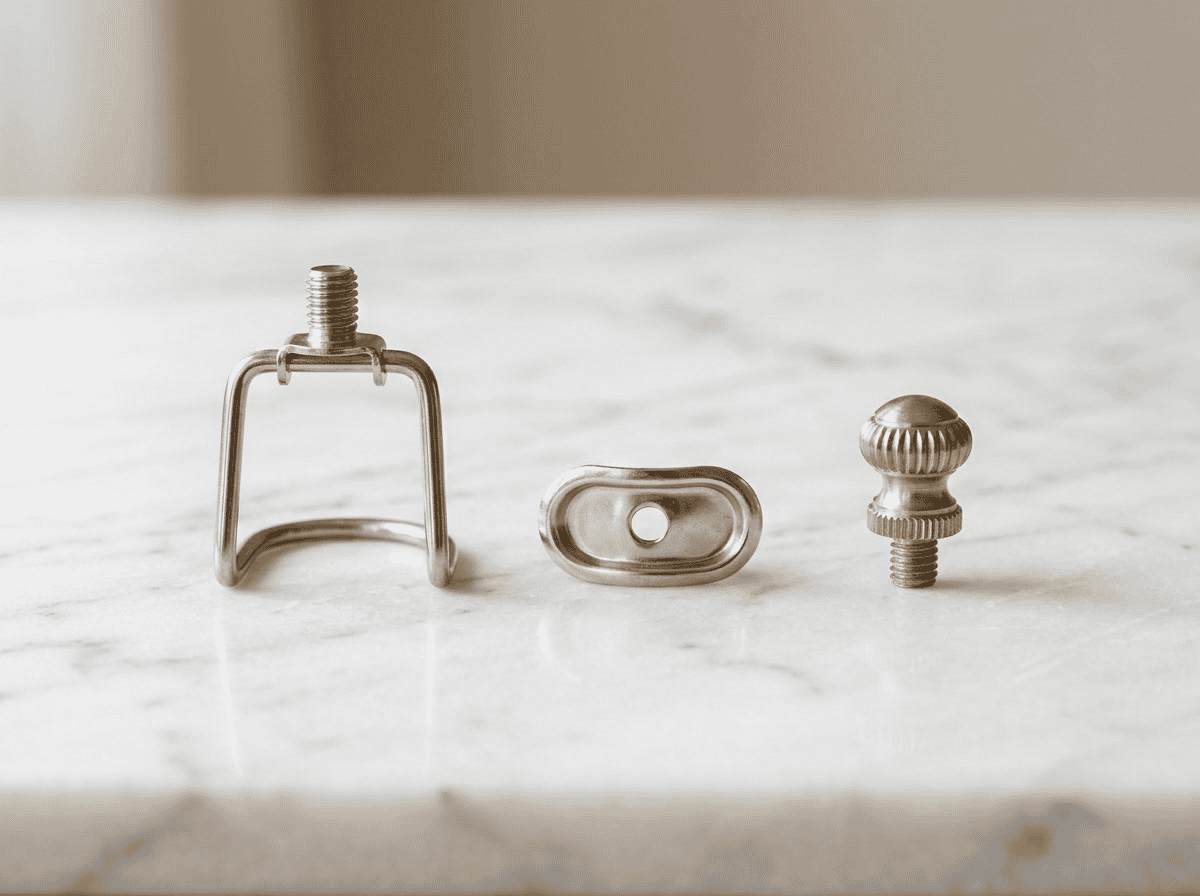
ハープは「ランプのシェードを支える部分は何か?」という問いの中心的な答えです。ハープはU字型の金属ワイヤーブラケットで、通常はスチール製、時には真鍮メッキされています。電球ソケットをまたいで、電球の両側にアーチ状に伸びています。下部では、2本の突起がハープサドルと呼ばれる別の金具にクリップで固定されます。上部では、U字の両側が1つのループで合わさります。シェードのスパイダーフィッターリングはこのループの上に乗り、フィニアルと呼ばれる装飾的なネジがシェードのフィッターリングを通してハープのループにねじ込まれ、すべてを固定します。.
この三つの部品、ハープサドル、ハープ、フィニアルは、日本で販売されているテーブルランプの標準的なシェード保持機構です。 ランプシェードの構造に関するWikipediaの概要, ハープシステムは、20世紀中頃に日本の住宅用照明で主流となり、この市場のテーブルランプでは現在も標準となっていますが、ヨーロッパでは標準にはならず、ウノソケットやダイレクトマウントシステムが主流です。.
ハープの見た目とその仕組み
標準的なテーブルランプを手に取り、ソケットのすぐ上、シェードが乗る部分の下を見てください。もし電球の両側を囲むようにU字型の金属製ブラケットがアーチ状になっているのが見えたら、それがハープです。U字の2本の脚は平行でまっすぐです。それぞれの脚の下端は内側に曲がった小さな突起になっています。その突起は、別の楕円形の金属製金具 ― ハープサドル ― に差し込まれます。ハープサドルはソケット本体に組み込まれている場合もあれば、別途クリップで取り付けられている場合もあります。.
ハープは高さによって販売されています。「7インチハープ」は、サドルスロットの底からトップループまでが7インチ(18cm)です。この高さが、シェードがランプベースの上にどれだけ高く位置するかを決定します。高いハープはシェードを上げ、低いハープはシェードを下げます。適切なハープの高さは、シェードのプロポーションとランプ本体との関係によって決まります。.
シェードを取り外す必要がある場合は、ハープの脚の下部付近を両側から押し合わせ、ハープサドルの切り込みからスライドさせて取り外します。ハープ全体が自由に持ち上がります。シェードとハープは一体となって外れます。トップループからフィニアルをねじって外すと、シェードのスパイダーフィッターリングがハープから解放されます。.
ハープサドル — ハープが差し込まれるソケットクリップ
ハープサドルは、ソケットシェルのすぐ下でランプソケット本体を囲む小さな楕円形の金属部品です。両側にひとつずつ、ハープの下部の爪がはまるための切り込みがあります。サドルがなければハープを固定するものがなく、ハープがなければサドルは使われません。これらは単品でも、「ハープとサドルセット」としても販売されています。“
一部のランプソケットは、サドルがソケット本体の一部として一体化されており、厚みのあるソケットシェルに成形されたノッチがあります。その他のタイプは、ソケットカラーにクリップで取り付ける独立したサドルを使用します。サドルが欠損していて交換する場合は、ソケットを確認してください。成形されたノッチがある場合は、そのノッチにクリップで取り付けるタイプの交換用サドルが必要です。ソケットに滑らかなカラーがある場合は、ソケット本体にクランプで固定する独立したサドルが必要です。.
サドルのノッチの深さと幅はメーカーによって完全には標準化されていません。ほとんどの標準的なサドルはほとんどの標準的なハープに対応していますが、安価なハープや古いサドルではわずかに合わない場合があり、ハープが緩く感じることがあります。どちらかの部品を交換する際は、シェードを取り付ける前にフィット感を確認してください。.
フィニアル — すべてを固定する装飾用ネジ
フィニアルは、ハープのループにねじ込み、シェードのスパイダーフィッターリングを通してシェードを固定する装飾的なトップ部品です。これは、機械的保持(シェードがハープから持ち上がるのを防ぐ)と装飾的仕上げ(ハープのトップループをスタイルされたキャップで覆う)という2つの機能を同時に果たします。.
フィニアル ランプの文脈では、フィニアルはほぼすべてが¼-27規格(直径¼インチ、1インチあたり27山のねじ規格)にねじ切られています。これは日本のランプ業界全体で標準化されている仕様です。つまり、どの標準的な交換用フィニアルも、ブランドに関係なく、どの標準的なハープループにも適合します。フィニアルは真鍮、ニッケル、クローム、ブロンズ、クリスタル、セラミック、そして数十種類の装飾的なデザインがあり、フィニアルを交換することは、他の部分に触れることなくランプの雰囲気を変える最も簡単な方法の一つです。.
フィニアルがない場合でも、シェードはハープの上に乗せることができますが、固定されません。何かに触れるとすぐに外れてしまいます。フィニアルの欠品は、シェードを固定するランプ部品の中で最も簡単に交換できる部分です。「ランプ フィニアル ¼-27」で検索すれば、数百種類の選択肢が見つかります。.
| 部品 | 機能 | 位置 | 欠品時の影響 |
|---|---|---|---|
| ハープ | シェードを支える主な構造ブラケット | サドルにクリップし、ソケットの上にアーチ状に配置 | シェードを支えるものがなくなる |
| ハープサドル | ソケット上でハープを固定するためのアンカーポイント | ソケットシェルの下でソケット本体を囲む | ハープをランプに取り付けられない |
| フィニアル | シェードのスパイダーフィッターリングをハープに固定する | フィッターリングを通してハープの上部ループにねじ込む | シェードはハープの上に乗るが、何かに触れるとすぐ外れる |
| スパイダーフィッター | ハープに乗せるシェード側フレーム | シェード上部内部、放射状の金属アーム+リング | ハープがシェードに取り付けられない |
スパイダーフィッター — システムのシェード側部品
ハープは単独では機能しません。シェードを支えるランプの部品には、シェード側にも対応する部品が必要です。それがスパイダーフィッターです。これはシェード上部に組み込まれた金属製の車輪スポークフレームで、通常は三本または四本の放射状アームが中央のリングに接続されています。ハープはこの中央リングを通り、フィニアルが上からリングを通してハープループに固定します。.
スパイダーフィッター付きのシェードは、ハープ付きのランプでのみ使用できます。スパイダーフィッターのないシェード(ウノ、クリップオン、ネジ付きネック取付用に設計されたもの)は、ハープランプには正しく設置できません。ハープが通る部分やフィニアルが固定する部分がないためです。.
スパイダーフィッターがハープに接続する方法
構造を理解すれば取り付けは簡単です。シェードをランプの上に持ち、ハープの上部ループをスパイダーフィッターの中央リングに通します。シェードを下ろしてリングをハープループに乗せます。フィニアルを上からリングに通して、時計回りにハープループにねじ込みます。通常、2~3回転で十分です。フィニアルはしっかり締める必要がありますが、締めすぎるとガラスシェードのフィッターリングが歪む恐れがあります。.
スパイダーフィッターリングは、シェードがまっすぐ吊るされるようにハープループに水平に座る必要があります。取り付け後にシェードが一方向に傾く場合、スパイダーフィッターのアームが少し曲がっているか不均一なことがあります。これは安価な布製シェードによく見られる問題です。アームを優しく水平に戻すことで、ほとんどの場合問題は解決します。.
シェードが傾いたり落ちたりする場合に確認すべきこと
ほとんどすべての shade が harp ランプの支えを動かさない原因となるのは、3 つの故障モードです。第一: ファイナルが欠けているか十分に締まっていない — シェードはハープ上に乗りますが、保持されません。第二: ハープの槍状ピンがサドル凹部に完全に座っていない — ハープは安定しているように見えますが、荷重下で動いてしまいます。第三: スパイダーフィッターリングの直径がハープループに対して小さすぎるか大きすぎるため、ファイナルが通り抜けられないか、数本のネジ山しか引っかかりません。新しい部品を購入する前に、3点すべてをチェックしてください。.
ハープなし — シェードを支える他の部品
ハープは北米で支え機構として主流ですが、すべてのランプがハープを使用しているわけではありません。シェードを支える別の3つのシステムがあり、それぞれランプのどの部位がシェードを支えるかが異なります。どのシステムを使用しているかを特定することは、交換用シェードを購入する前に不可欠です。1つのシステム用に設計されたシェードは別のシステムでは機能しません。.
日本の 照明工学協会 シェード マウント システムは世界的に標準化されていなかったことに注意してください。そのため、外見上シェードのジオメトリが似ていても、ヨーロッパ式とアメリカ式のランプは互換性がないことが多いです。ランプが使用するシステムは、国の起源と設計時代によって、スタイルというよりも決定されます。.
Uno ソケット — Shade がソケットカラーへ直接ねじ込まれる
Uno-ソケットのランプにはハープがありません。シェードには一本のねじ付き輪(Uno フィッター)があり、それがランプソケット本体のねじ付きカラーへ直接ねじ込まれます。ソケット自体がシェードを保持する部分です — 具体的にはシェード輪がかみ合うねじ付きカラーです。.
識別方法: ランプのソケットを見てください。ソケットシェルに外部ねじが見える場合 — 持ち手無しの滑らかなソケットシェルと別のサドルがある場合ではなく — それが Uno ソケットです。Uno ソケットは欧州規格で、輸入ランプ、薬局スタイルのランプ、そして多くのミッドセンチュリーモダンデザインに現れます。 Edison 螺旋規格 Uno フィッターがかみにくいように設計されたねじの寸法を定義します:アメリカで E26(26 mm)、ヨーロッパで E27(27 mm) — ほとんどの住宅用途では機能的には同じです。.
Uno ランプのシェードを交換するには、Uno フィッター(単一ねじ付き輪)を持つシェードが必要です。US住宅用として販売されるシェードは通常、スパイダー フィッター版で提供されます — 購入前に必ずフィッターのタイプを確認してください。.
クリップオン フィッター — シェードが直接電球にクリップします
クリップオン フィッターのランプでは、ソケットもハープもシェードを保持しません — それは電球自体です。シェードには上部開口部の内部にスプリングクリップがあり、電球の本体を挟みます。このシステムはシャンデリア、ウォールランプ、そしてソケットが小さすぎるかハープ/ Uno システムでの位置が困難な小型の装飾テーブルランプで一般的です。.
ここでシェードを保持するランプの部位は技術的には電球ソケットですが(クリップが挟むのは電球自体だから)、実際の保持力はシェード内のクリップスプリング由来です。これには2つの意味があります: シェードは軽量でなければならず(重いガラス製のシェードはクリップオンには適していません)、クリップが握れる標準形状の電球が必要です(A19 または キャンデラブラ型ボール、PAR および BR 電球は機能しません)。.
ねじ付きネック フィッター — シェード ネックが固定器リングにねじ込まれる
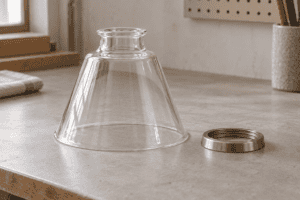
ねじ込み式ネック フィッター は uno ソケットの逆です。ソケットにねじがあるのではなく、シェードのトップから突き出したねじ込み式ネックがあるのです。このネックはランプや天井器具の滑らかなリングまたはカラーにねじ込まれます。天井用ペンダント、壁面ブラケット、浴室の洗面台用具、そして一部のトーチェアで一般的です。テーブルランプではやや少ないです。.
ここでシェードを保持しているランプの部分は、フィクスチャーの取り付けリングまたはカラーです。シェードを取り替えるには、シェードのネックねじの外径を測定します。標準サイズは 2¼” (57 mm)、3¼” (83 mm)、および 4″ (102 mm) です。交換用シェードのネックねじは、フィクスチャーリングの内径と一致しなければなりません。.
| システム | シェードを保持するランプの一部 | それに噛み合うシェードの部品 | 一般的な設置場所 |
|---|---|---|---|
| ハープ + スパイダー | ハープ(サドル + ファイニアルで固定) | スパイダーフィッターリング | USA/カナダのテーブルランプ |
| Uno ソケット | ソケットのねじ付きカラー | Uno フィッター(ねじ付きリング) | 欧州輸入品、薬局用ランプ |
| クリップオン | 電球(クリップは電球を掴む) | シェードの上部内側にスプリングクリップ | シャンデリア、壁灯、小さな装飾品 |
| ネジ付きネック | 照明器具取付リング/カラー | シェードの一体型ねじ山付きネック | ペンダント、アームスタンド、浴室器具 |
卓上ランプの全解剖 — 各部名称
卓上ランプの全解剖を理解することは、部品が欠品、破損、または供給先へ説明する必要がある場合に役立ちます。 完全な卓上ランプには、フットからフィニアルまでの10〜12の明確な名称部品があり、それぞれ特定の機能を持っています。.
ベース、フット、ネック/コラム — 構造部品
日本の ベース ランプの本体部分であり、ランプに視覚的特徴を与え、転倒を防ぐ構造重量を提供するセラミック、ガラス、金属、木材の形状です フット (またはベースプレート) はランプが置かれる平らな底面で、家具表面を保護するフェルトパッドが装着されていることが多い。.
日本の ネック or カラム ベース本体とソケットアセンブリを結ぶ垂直シャフトです。単純なカラムランプではネックとベースは一体の連続形状ですが、(壺型ベース、ジンジャージャー、像のランプ)といったより複雑なデザインでは、ネックが別の接続部品であることがあります。その ハープパイプ は、ソケットとサドルアセンブリを取り付けるためのネックの上部にある短いねじ付きパイプです。.
ソケット、ソケットサドル、ハープサドル — 機能的コア
日本の ソケット は、ランプの上部にある electrified bulb holder(電球取付部)です。これは次の部分から成り立っています: ソケットシェル (外部金属筒)その外側の部分 ソケット内部 (絶縁されたホルダーと接触部)および ソケットキャップ (ソケットをハープパイプに取り付けるねじ付きベース)。ここが電球がねじ込まれる部分です。.
日本の ソケットサドル (ハープサドルとも呼ばれる)は、ソケット本体をソケットシェルの下部に囲む楕円形のクリップで、ハーププリングがクリップする側の二つの溝を提供します。一部のランプではこれがソケットに一体ですが、他には別体のクリップ式部品です。.
日本の チェックリング or ソケットキャップ ハープパイプにねじ込んでソケットアセンブリを固定し、パイプねじを覆う小さなリングです。シェードを保持する機能はなく、初回のランプ修復時にハープサドルと混同されることが多いです。.
コード、スイッチ、プラグ — 電気部品
日本の ランプコード ソケット内部から下に向かって首部と底部を通り、 スイッチ (コード上の直列型またはソケットシェルに組み込み)へと続き プラグ. 。 ストレインリリーフ コードがランプ本体のソケット取り付け部から外れないようにするゴムまたはプラスチック製のブッシュで、コードがソケット配線を直接引っ張らないようにします。.
これらの電気部品はシェードを支えるランプ本体の部分には直接関与しませんが、ソケット組立はハープサドルと共有しているため、その部分の作業時には全体のソケット領域を理解して混乱を避けることが重要です。.
| 部品名 | 位置 | 機能 | 共通材料 |
|---|---|---|---|
| 口金 | 主ランプ本体 | 外観形状、構造重量 | 陶器、ガラス、金属、木材 |
| 脚/ベースプレート | ランプの底部 | 安定した立ち姿勢の面 | 鋳造金属、成形陶器 |
| ネック/柱 | 垂直軸 | 基部をソケットに接続 | 基部と同じ、または分離したパイプ |
| ハープパイプ | 首の上部 | ソケットとサドル用ねじ付きポスト | 鋼製パイプ、⅛ IPねじ |
| ソケットキャップ | ソケットの底部 | ソケットをハープパイプに固定 | 真鍮、鋼 |
| ソケットシェル | ソケットの外筒 | ソケット内部を収容し、サドルを支持する | 真鍮、鋼 |
| ハープサドル | ソケット本体を取り囲む | ハープのアンカーポイント | 鋼材、真鍮メッキ |
| ハープ | ソケットの上部にU字ブラケット | ボールをランプの上に影を保持する | 鋼線、真鍮メッキ |
| フィニアル | ハープループの先端部 | 影 fitterリングをハープにロックする | 真鍮、ニッケル、クリスタル、陶磁器 |
| ランプコード | ネックの内側、ベースの出口 | ソケットに電力を供給する | PVC絶縁された銅線 |
ハープのサイズと適切な交換用を選ぶ方法
ハープは高さで販売されます—鞍槽の爪の底部からフィニアルがねじ込まれる上部ループまでの距離です。標準的なハープの高さは4インチ(10 cm)から12インチ(30 cm)までで、通常は1インチ刻みです。正しいハープの高さはシェードの下端をランプベースに対して適切な位置に保ちます。.
ハープのサイズの一般的な規定: シェードの下端はランプベースの最も広い点とほぼ同じ高さになるように、2–3 cm程度の余裕を持って配置します。高すぎるシェードはソケットとハープを露出させ、低すぎるシェードはランプを低く見せ、下縁がテーブル表面に近づきすぎる場合があります。ハープの高さがこの位置決めを制御します。.
交換用ハープの測り方
既存のハープがまだランプに付いている場合(曲がっていても構いません)、交換用を注文する前に測定します。鞍の切り欠きに入る爪の底部からループの上部までを測定します。これが名乗りのハープの高さです。同じ高さを注文するか、必要に応じてシェードの再配置のために1–2インチ調整します。.
ハープが完全に欠品している場合は、フットからソケットの頂部までのランプ全体の高さを測定します。シェードは下端がランプベースの視覚的な中点とほぼ一致するように座らせます。その位置でどの高さのシェードを望むかを計算し、そこから逆算します: ハープの高さ = 希望するシェード下端の高さ − ソケットの高さ。20–30 cmのベースを持つ標準的な住宅用テーブルランプの場合、7インチまたは8インチ(18–20 cm)のハープが適切な出発点です。.
調整可能なハープとハープエクステンダー
調整可能なハープは滑り式カラーを持ち、ハープ脚に沿って再配置でき、ハープを交換せずに有効高を2–4インチ変えることができます。正確なハープの高さが不明な場合や、若干標準外のシェード高さが必要な場合に有効です。.
ハープエクステンダー(ハープライザーとも呼ばれる)は、ハープ鞍とソケットキャップの間にねじ込む短いねじ管で、ランプ上部全体の鞍−ハープ組み立てを高く持ち上げます。通常はシェードが低すぎる場合に使用され、長いハープが利用できない場合に使用されます。.
シェードを支える部品が不足している場合や壊れている場合のランプの修理方法
シェードを支える部品の名称を知るだけで、ほとんどの修理問題はすぐに解決します。“ハープ(harp)”、“ハープ・サドル(harp saddle)”、“フィニアル(finial)”が必要だとわかれば、ホームセンターでの5分程度の検索やオンライン注文で部品を手に入れることができます。以下は各一般的な故障シナリオへの修理法です。.
欠品のハープとサドルの交換
ハープ・サドルのセット(ハープ、サドル、フィニアルが一式で販売されているもの)は、店舗やオンラインで$3–$12の価格で販売されています。なぜならサドルなしでハープだけを交換すると適合しないことが多く、サドルはハープと同時に紛失しやすい小さな部品だからです。.
取り付け方法: ソケット本体のソケットシェル下面にサドルをクリップで固定します — ソケットカラーを挟み込むように絞り、成形された刻み目やクランプ点にはめてクリックします。次にハープの底部の爪を合わせてサドルの刻み目に合わせ、離します — 爪が刻み目に outward に跳ね上がってロックされます。座位後にハープが横滑りする場合は、ソケットに対してサドルが適合サイズではありません。.
商業施設やホテル等のガラス製ランプシェードでは、ハープが頻繁に交換され、適正サイズの標準化が必要となるため、正しいハープ・サドル一式の在庫を少量維持することで遅延を解消できます。私たちは置換部品の在庫管理の広いトピックを以下のホテル用シェード交換ガイドで扱います ホテル用ランプシェード交換ガイド.
曲がったまたは壊れたフィニアルの交換
ねじ山が緩んだ、破損した、あるいは単にスタイルが間違っているフィニアルは交換が最も簡単です。1/4-27のねじ規格により、ブランドや小売ソースを問わず、任意のフィニアルは標準のハープ・ループに適合します。古いフィニアルを反時計回りに外し、新しいものを時計回りに締まるまでねじ込む、それが全手順です。.
フィニアルが外れない場合(腐食や過度の締め付け)、ねじ継ぎ目に浸透性オイルを少量塗布し、再挑戦する前に30分間浸透させます。まだ動かない場合は、ニードルノーズプライヤーでハープ・ループを握り、反対方向のトルクを加えます。ただし、ハープ・ループは薄い金属で過度の力で変形する可能性があるため、慎重に行ってください。.
ハープ式ランプを Uno フィッターへ変換(ハープシステムの取り外し)
ハープとスパイダー用に設定されたランプで Uno フィッターのシェードを使用したい場合、変換は簡単です。ハープとサドルを完全に取り外します。標準ソケットを Uno ソケット(外部ねじ付きカラーを持つソケット)に交換します。Uno-フィッターのシェードはその直ぐに Uno ソケットのねじ付きカラーに直接ねじ込まれ、ハープは不要になります。.
変換 Uno ソケットの価格は $5–$15 で、標準ソケットと同じ方法で取り付けます — ハープパイプのソケットキャップを外し、ソケットを引き出し、配線を切り離し、新しい Uno ソケットの配線を接続し、ソケットキャップを元に戻してねじ止めします。これはハープ部品を永久に排除する一度限りの改造です。.
FAQ — シェードを支えるランプの部品
シェードを支えるランプの部品は何と呼ばれますか?
シェードを保持する灯具の部分は『寄木』と呼ばれます ハープ — シェードをクリップで挟み、ソケットのハープサドルに固定するU字型の金属製ブラケットで、シェードのスパイダー・フィッター・リングを固定するフィニアルねじが topped に装着されています。ハープがない灯具の場合、シェードは uno ソケット(シェードはソケットにねじ込まれる)、クリップオンサ フィッター(シェードが電球に clips される)、またはねじ付きネック フィッター(シェードのネックが器具のリングへねじ込まれる)のいずれかで保持されます。ハープ・システムは米国/カナダの卓上灯で標準ですが、それ以外の選択肢は欧州の灯具や天井器具でより一般的です。.
ランプのハープとは何ですか?
ランプのハープは、ほとんどの卓上ランプでシェードを保持するU字型の金属ワイヤーのブラケットです。底部には2つの突起があり、それがソケットのハープサドルにクリップで固定され、電球の両側には2本のアーチ状の脚が立ち上がり、トップには1つのループがあり、フィニアルがねじ込まれてシェードのスパイダー・フィッター・リングをロックします。ハープは高さ別に販売され(4″–12″)、交換可能です — 金具店、ランプ部品の供給業者、オンラインで$3–$12の完全なハープとサドルのセットとして入手できます。.
ランプのハープサドルとは何ですか?
ハープサドルは、ソケット本体をソケットシェルの下部で囲む小さな楕円形の金属クリップで、ハープの底部の突起がはまり込む2つの側部ノッチを提供します。サドルがないとハープは固定する場所を持ちません。サドルは別売りで、ハープとサドルのセットとしても販売されています。いくつかのソケットにはサドルがソケット本体に組み込まれているものもあり、別途クリップオンのサドルが必要なものもあります。サドルの幅はほとんどのソケットカラーに適合するよう標準化されていますが、適合の品質はメーカーにより異なります。.
ランプのフィニアルとは何ですか?
フィニアルとは、ハープの上部ループにねじ込まれ、シェードのスパイダー・フィッター・リングを通してシェードを固定する小さな装飾ねじです。機械的機能(シェードの保持)と装飾機能(ランプの上部を仕上げる)の両方の役割を果たします。ランプのフィニアルは標準化された¼-27のねじ規格を使用しており、どのブランドのハープループにも合う交換用フィニアルが利用できます。真鍮、ニッケル、クロム、クリスタル、陶磁器など多様な仕上げとスタイルがあり、フィニアルを交換するだけでランプの見た目を最も手軽にリフレッシュできます。.
どのサイズのハープが必要かどうやって分かりますか?
現在のハープの底部の突起の下端からループのトップまでを測ります — それが規定のハープの高さで、交換品はそれに合わせます。ハープが欠品している場合は、総灯の高さを測定し、シェードの底部が灯の視覚的な中点と水平になるように目標を設定します。基礎が20–30 cmの標準的な住宅用卓上灯では、7インチまたは8インチのハープが適切な出発点です。サイズが正確でない場合には、2–4インチの高さ範囲を許容する調整可能なハープもあります。ほとんどの供給業者での標準的なハープの高さは4″~12″で、1インチ刻みです。.
ハープなしの灯具には何がシェードを保持しますか?
ハープのない灯具には、シェードを保持する3つの代替システムがあります。A uno ソケット は、シェードのunoフィッターリングが直接ねじ込まれるねじ込み collar を持ち、ソケットはシェードを保持する灯具の一部です。A クリップオンフィッター シェードのトップ内部に春クリップがあり、電球を直接挟み込む — ソケット金具は関与せず、電球だけ。A ねじ付きネックフィッター シェードにはリングまたはカラーにねじ込むインテグラルネックがあり、フィクチャー上のネックリングにねじ込まれます。欧州のランプとほとんどの天井フィクチャーは、北米で一般的なハープとスパイダーの組み合わせよりもこれらのシステムを使用します。.
ランプにハープを追加することはできますか?
はい — ランプがハープサドルを受け入れるソケットカラー付きの標準ソケットを持っている場合は可能です。適切な高さのハープ&サドルセットを購入してください。サドルをソケットカラーにクリップで固定し、ハープの爪をサドルのノッチにはめ込み、以前はなかったハープを追加します。シェードはハープと作動するにはスパイダー・フィッターを持っていなければなりません。ランプが標準ソケットの代わりに Uno ソケットを使用している場合は、サドルとハープを追加する前にソケットを標準ソケットに交換する必要があります。.
シェードのスパイダーフィッターとは何ですか?
スパイダーフィッターは、ランプシェードの上部に組み込まれている金属製の車輪状フレームで、ハープに取り付けるためのものです。中央のリングに結びつく三つまたは四つの放射状の金属アームから成り、ハープはこの中央リングを通過し、フィニアルは上方からリングをねじってハープループに締め付けます。スパイダーフィッターがないと、シェードはハープ式ランプに取り付けられません。米国/カナダ市場向けに販売されているシェードは、標準の取り付けオプションとしてほぼ常にスパイダーフィッターが付属します。.

結論
シェードを保持するランプの部分には名前があり — ハープ — で、三点セットの一部として機能します:ハープサドル(ソケットアンカー)、ハープ(U字ブラケット)、フィニアル(ロックネジ)。ハープがないランプでは、シェードは Uno ソケット、クリップオンフィッター、またはねじ付きネックによって固定され、それぞれが独立したシステムです。.
Knowing these names turns a frustrating replacement search into a five-minute parts order. Harp and saddle sets, replacement finials, and alternative socket types are all standard lamp hardware available at hardware stores and specialist lamp parts suppliers. Measure the existing harp height before ordering a replacement, check the fitter type on the shade before buying a new one, and the system goes back together in minutes.
For more on selecting and measuring lamp shades for the right fit, see our complete guide to 新しいランプシェードのためのランプの測り方.
For hotel and hospitality properties replacing glass shades across hundreds of fixtures, the harp-and-spider specification matters at scale. custom glass lampshades built to hotel lamp specifications are produced to the exact fitter diameter and spider-ring dimensions of your fixtures, ensuring consistent fit and finish across every room without on-site adjustment.