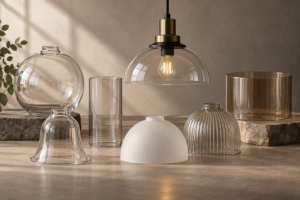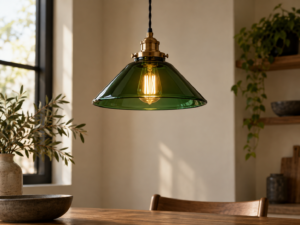
リビングルーム用ガラスランプシェード:2026年スタイル&調達ガイド
リビングルーム用のガラスランプシェードは、テーブルランプ、フロアランプ、ペンダント、シーリングライトに取り付けられる装飾用または交換用のガラスカバーで、光を拡散し、雰囲気を演出し、インテリアデザインに合わせます。最適な選択は、電球の種類、フィッターサイズ、部屋のカラーパレット、光の拡散度合いによって異なります。.
リビングルームは、家の中で唯一、照明が2回評価される部屋です。誰も使っていない昼間と、みんなが集まる夜です。ガラスランプシェードは、その両方の検査に耐えなければなりません。昼間は意図的なデザインに見え、夜は純粋な光に溶け込む必要があります。.
ほとんどの購入者は、小売ページの1枚の写真だけでシェードを選びます。そのため、リビングルームには「写真では良さそうだった」ランプが置かれ、次の5年間、暗かったり、まぶしかったり、何か少し違和感があったりします。このガイドは、実用的かつ製造者の視点から、実際のリビングルームで本当に機能するもの、理由、そして最初に正しく選ぶ方法を解説します。.
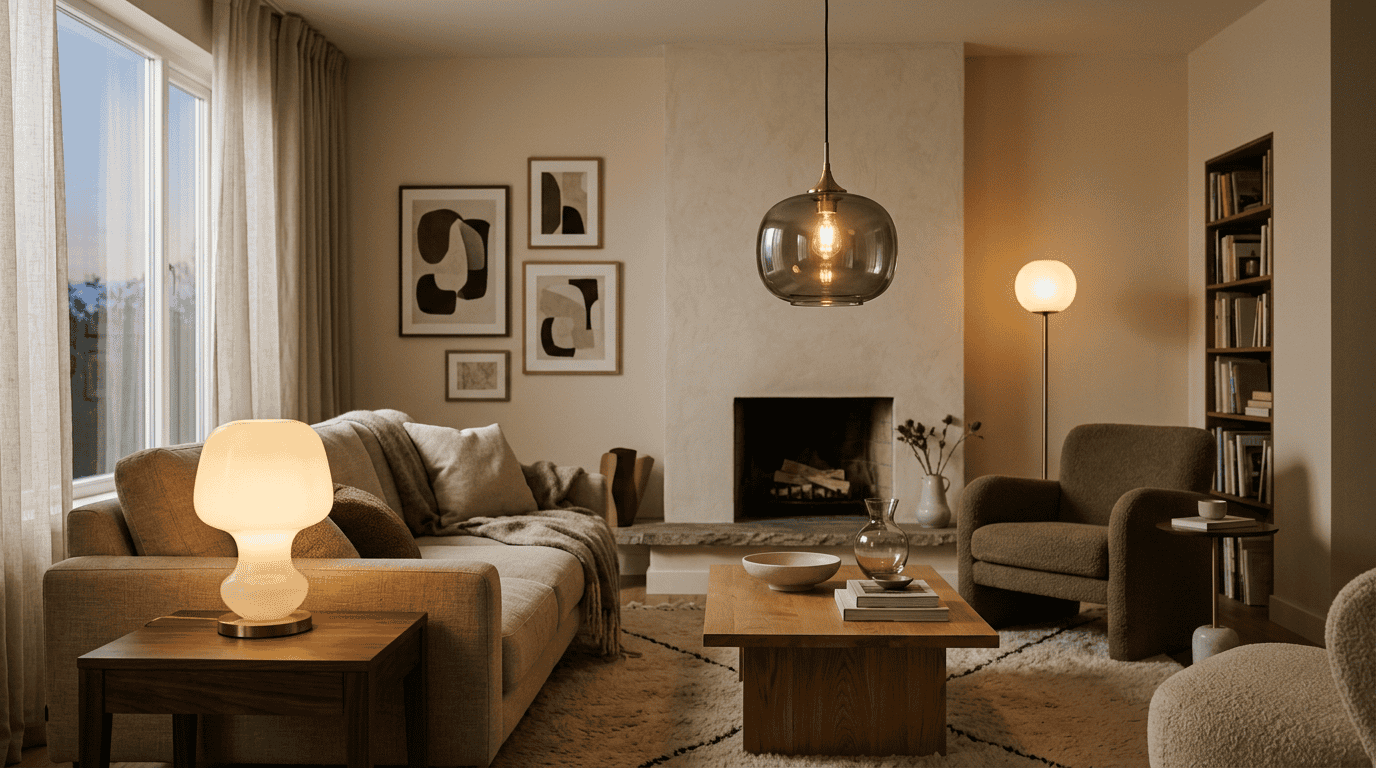
リビングルーム用ガラスランプシェードとは
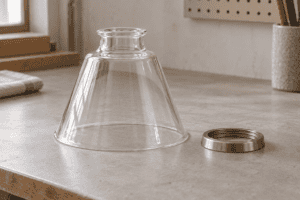
A ガラスランプシェード は、ランプや照明器具の光源を囲む硬質ガラス部品です。リビングルームでは、主に5つの照明器具タイプで見かけます: テーブルランプ, フロアランプ, ペンダントライト, フラッシュマウントまたはセミフラッシュのシーリングライト, 、および ウォールブラケット. 。それぞれに、少しずつ異なるシェード形状、ガラスの厚み、そして フィッター (シェードをランプの金具に取り付ける機械的な接合部).
があります。リビングルーム用シェードがキッチンやバスルーム用シェードと異なる点は、 拡散性と暖かみの基準. です。リビングルームは夕方に使うことが多い部屋です。光は、電球自体がそうでなくても、柔らかく、まぶしさが少なく、やや暖かみがあるように見える必要があります。そのため、ガラスの選択(クリア、フロスト、オパール、リブ、スモーク、アンバー)は、実用性や掃除のしやすさが重視されるユーティリティルームよりもはるかに重要です。.
「一般的な」ガラスシェードの購入と異なる点
多くの一般的なシェードガイドが無視している、リビングルーム特有の3つのポイント:
- 層状照明 — リビングルームは一つの照明器具だけで照らされることはほとんどありません。天井のアンビエント、テーブルやフロアのタスク、壁のアクセント(ウォールスコンスやピクチャーライト)を重ねて使います。それぞれのガラスシェードは、隣の照明がオン・オフどちらの場合でも適切に機能する必要があります。.
- ソファの高さのグレアライン — ソファに座った時、目の高さは床から約1100mmです。クリアガラスシェードでは、その角度で裸電球が見えてしまいます。フロストやオパールガラスなら、部屋を暗くせずにこれを解決できます。.
- 異なる仕上げの許容性 — リビングルームでは、真鍮、オイルラブドブロンズ、ブラッシュドニッケル、マットブラックなどの金具がほぼ必ず組み合わされます。ガラスシェードは、それらと競合しない「中立」層として機能する必要があります。そのため、オパール、スモーク、アンバーが編集用リビングルーム写真で主流となっています。.
拡散物理の広い文脈については、当社の ガラスの光拡散解説:照明用クリア・フロスト・オパールガラスの違い で基礎となる材料科学を扱っています。.
リビングルームで実際に使われる6種類のガラスシェード
メーカーのカタログには多数のガラスシェードカテゴリがありますが、住宅のリビングルームで定期的に登場するのは6種類のみです。マーケティングラベルではなく、物理的な特性ごとに解説します。.
| シェードタイプ | 光の質 | リビングルームでの最適な用途 | 一般的なフィッター | 電球の互換性 |
|---|---|---|---|---|
| クリアガラス(スムース) | 最大出力、最も強いグレア | コーヒーテーブル上のミッドセンチュリーアクセントペンダント | 各種 | 装飾用フィラメントLEDのみ |
| フロストガラス | やわらかく均一で、約70%の透過率 | 座席の横にあるテーブルランプ | ウノ/スパイダー/クリップ | 標準A19 LED、最大60W相当. |
| オパール(乳白)ガラス | 拡散、約50%の透過率、ホットスポットなし | フロアランプ、主なテーブルランプ | ウノ/ネックレス | どの電球形状でも可 ― 拡散で隠れる |
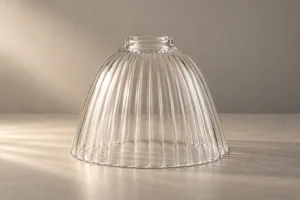
| リブ入り/フルートガラス | 彫刻のようなハイライト、約80%透過率 | 印象的なペンダント、ブラケット照明 | 各種 | フィラメントLED推奨 |
| スモークガラス | ムーディー、約30〜50%透過率 | 寝室/テレビの近くのランプ | ウノ/スパイダー | 高ルーメンLEDで補う |
| アンバーガラス | 暖かい光、約40〜60%透過率 | 読書灯、ソファ横のテーブル | ウノ/クリップ | 統一感のために2700K LED |
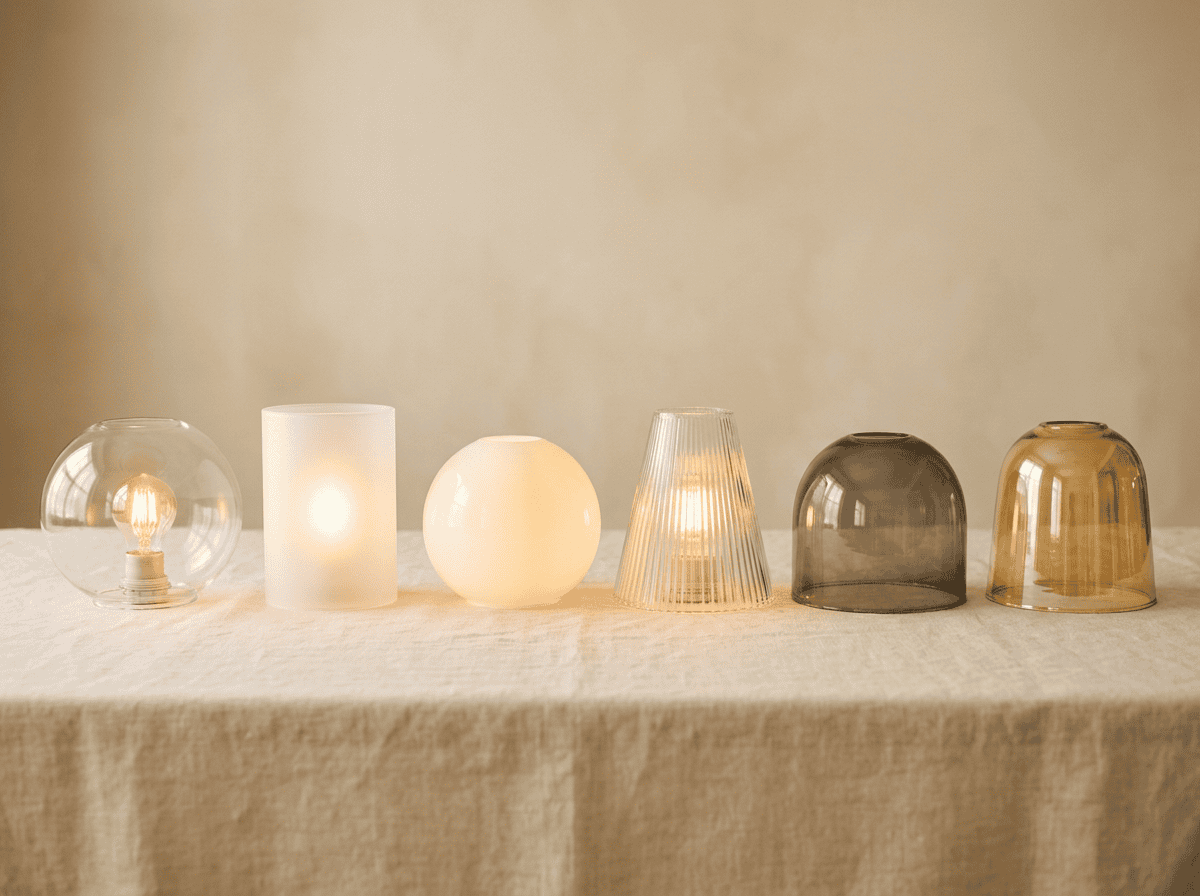
クリアガラスシェード
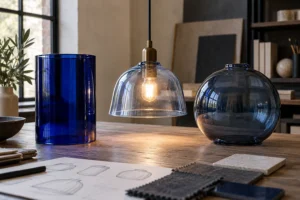
クリアシェードは電球を見せるためのものです。それが本来の目的です。使い方を誤ると、どの席からも見える直接的なグレアポイントを生み出します。上手く使えば— 装飾用フィラメントLED 600ルーメン以下で使用すれば、部屋で最も「デザインされた」オブジェになります。ミッドセンチュリーリバイバルの影響で、コーヒーテーブルの上にクリアグローブペンダントを吊るすのが、編集写真ではほぼ定番となっています。.
実用的な注意点:厚みが重要です。3mmのプレスガラスグローブは安っぽく感じます。5mmの手吹きや厚いホウケイ酸ガラスグローブは存在感があります。仕入れレベルでのコスト差は4倍にもなり、持ち上げたときのランプの重心でそれを感じます。.
フロストガラスシェード
フロストガラスは内側の表面が酸エッチングされています(外側ではありません。外側をエッチングしたシェードは埃がたまり、掃除が困難になります)。エッチングは入射光を散乱させますが、ほとんど吸収しないため、電球の出力の約70%を保ちつつ、ホットスポットをなくします。.
これはリビングルームの定番シェードです。標準的なA19やA21 LEDに対応し、安価な電球も隠し、どんな金具仕上げにも合います。住宅向けでは他のどのカテゴリよりも多く販売しています。.
オパール(乳白)ガラスシェード
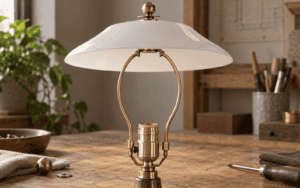
オパールは「ガラス自体が光源」というゴールドスタンダードです。二層または三層の被せガラス—外側のクリアまたは色付きシェルの内側に乳白色の層—は、どの角度から見ても電球の像が見えない真の360°拡散を実現します。その代償として透過率が下がり、重いオパールシェードは電球出力の50%を吸収することがあるため、高ルーメンの電球で補います。.
オパール物理学の専門的な解説については、, ランプシェードにおけるオパールガラスの光拡散効果 ケースドグラス技法を紹介します。 ウィキペディアのオパールガラスの記事によると、, 乳白色の外観は、微細な粒子による内部の光散乱によって生じます。これが、どの角度から見ても表面が柔らかく輝いて見える理由です。.
リブ加工やフルート加工のガラスシェード
リブ加工のシェードは、ガラス表面に縦方向のフルート(溝)をプレスや吹き込みで作ることで、クリアガラスの彫刻的なハイライトを得られますが、最も強い眩しさを抑えます。写真映えが良いため、ホテルやショールームの照明で多く使われています。リビングでは、ペンダントや壁付け照明など、シェードが目線より上にある場合に最適です。リブ模様が光を受け止め、電球の像が直接目に入るのを防ぎます。.
スモークやアンバー色のシェード
スモークグレーガラスとアンバーガラスは、どちらも全体の光量を減らします。スモークはクールな色調、アンバーは暖かい色調です。特にアンバーは、LED電球の見た目の色温度を約200~400Kほど暖かく変化させるため、部屋全体で2700Kの電球を使っても、電球を交換せずに色の違いを楽しめます。.
私たちの アンバー、クリア、スモークガラスシェードの比較 比較では、これら三つの選択肢についてさらに詳しく解説しています。.
ガラスシェードの選択がリビングのレイアウトとどう関係するか
ほとんどのリビングは三つの照明ゾーンに分かれており、それぞれに適したガラスシェードが異なります。.
ゾーン1:座席エリア(ソファ、アームチェア、コーヒーテーブル). ここでの目線は床から約1100mmです。クリアガラスを使った高さ1700mm未満の照明は、座った時に電球のホットスポットが見えてしまいます。基本的には、 フロスト加工やオパール をこのゾーンで使いましょう。サイドテーブルのテーブルランプやソファの後ろのフロアランプなどです。.
ゾーン2:天井面. コーヒーテーブル上のペンダントライトは床から約1500~1800mm(テーブル面から約600~900mm)に設置されます。目線より上なので、 クリア、リブ加工、スモーク を使っても眩しさはありません。ここが部屋の「デザインステートメント」になる場所です。.
ゾーン3:壁面. ブラケットライト、ピクチャーライト、アクセントウォールペンダントは通常約1800mm以上の高さに設置され、上向きまたは横向きに照射されます。. リブ加工、オパール、またはアンバー このゾーンに適しています。ウォールブラケットライトに純粋なクリアガラスは避けてください ― 部屋を歩く人にとってソファの目の高さになりがちです。.
実例:4×5mのリビングルーム
一般的な都市部のリビングルームには以下があります:
- 天井にペンダントまたはセミフラッシュの照明器具が1つ
- ダイニングテーブルまたはコーヒーテーブルの上にペンダントまたはシャンデリアが1つ(オープンプランの場合)
- ソファの両側のサイドテーブルにテーブルランプが2つ
- 椅子の後ろに読書用フロアランプが1つ
- オプション:テレビまたは暖炉の両側にウォールブラケットライトが2つ
それは5〜7個の照明器具です。もしすべてがクリアガラスのシェードを使用していれば、部屋はハードウェアのショールームのように見えすぎる—電球のホットスポットが多すぎ、きらめきすぎ、柔らかな中間がない。作業パターンは、天井面の主役アイテムにはクリアまたはリブ付き、座席エリアの全てをデフォルトでオパールまたはフロストにすること。部屋には一つの“注目して見て”照明ピースと四つの“ただ柔らかく光る”ピースが配置される。目には設計されたように読まれる。.
この論理はどんな長方形のリビングルームにも適用される—アパートメント、ロフト、または5000平方フィートの estate。可変要素は照明器具の数であり、レイヤリングのルールではない。.
ガラスシェードを適切にサイズ設定する
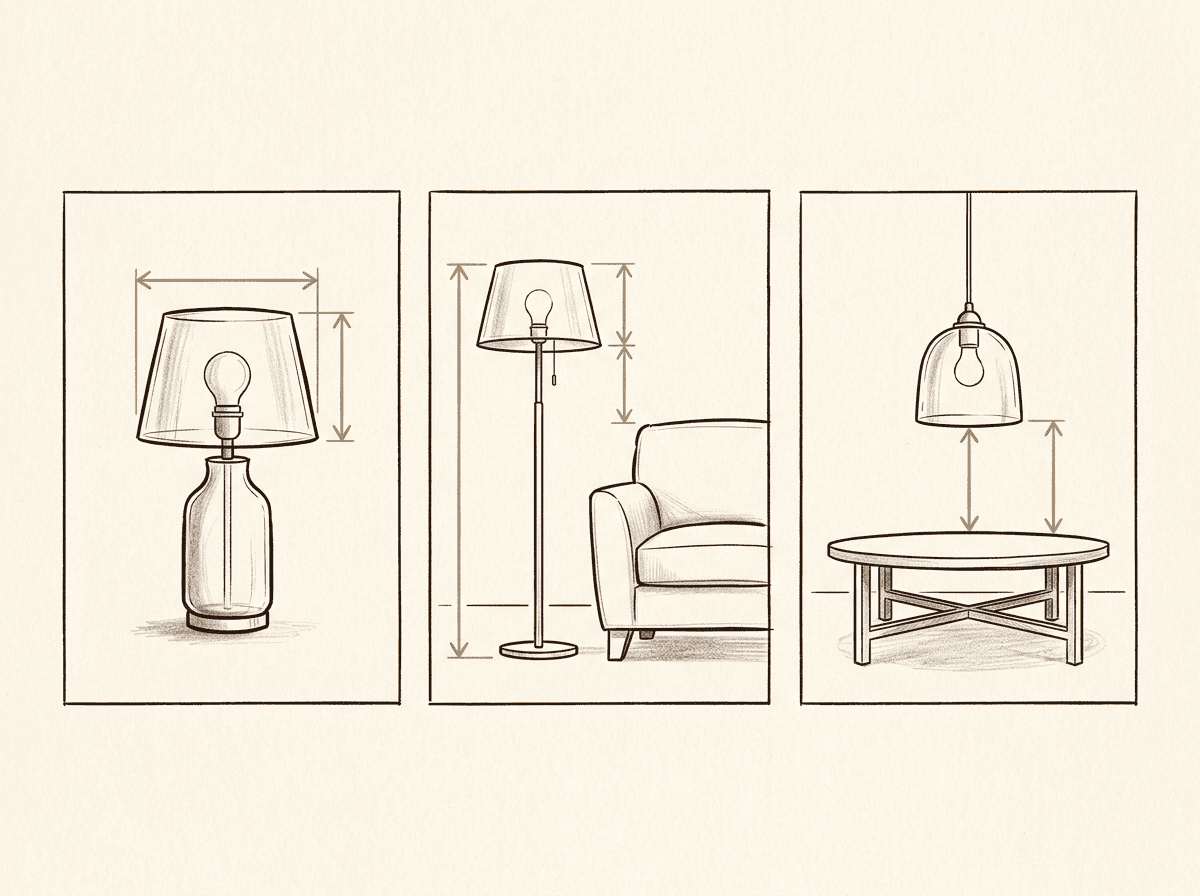
最も美しいガラスシェードでも、比例が崩れると見栄えが悪くなる。重要な三つの数字: フィッター直径, シェード外径, 、および シェード高さ.
フィッター径—交渉不可、機械的
フィッターは機械的な開口部。ランプのハードウェアと一致しない場合、シェードは物理的に取り付けられない。米英で一般的なサイズは次のとおり:
| フィッターの種類 | 一般的な内径 | 入手場所 |
|---|---|---|
| Unoフィッター | 7/8″(22mm) | 卓上ランプと多くのフロアランプ—電球ソケット自体にねじ込む |
| スパイダーフィッター | 1 5/8″(41mm) | ハープとフィニアルを備えたフロアランプ—多くの高級卓上ランプにも使用 |
| クリップオンフィッター | 電球形状によって異なる | キャンドルボール球用のバルブ取り付けシェード |
| ネックレス | リムなし — 3本の親指ねじで固定 | 天井吊り下げ灯、特定の壁付けブラケット |
| 2 1/4″ / 3 1/4″ / 4″ | 実測の内径 | 標準化されたペンダントおよびブラケット用フィッター受け |
既存のシェードを交換する場合は、必ず二度測定してください。失敗した交換購入の多くはフィッターの不一致によるもので、明確な測定指示はここにあります 交換用ガラスランプシェードの測り方, 、およびより広い仕様文脈は私たちの ガラスランプシェードのフィッティング規格:完全な技術ガイド.
外径 — 見た目上重要だが、規則によって定められます
卓上ランプの場合、クラシックな規則は次のとおりです: シェードの外幅はランプベースの高さと同じまたはほぼ同じであるべきです (または±20%の範囲内)。高さ16″のランプベースには、概ね16″の幅のシェードを推奨します。ベースより広く、テーブルより狭いようにしてください。.
床置きランプの場合、シェードの外幅は隣接する椅子やコーヒーテーブルよりも25%を超えて大きくしてはなりません。視覚的には座席グループに“属している”べきで、支配的であってはいけません。.
ペンダントの場合、シェードの直径は下のテーブルサイズに従います:概ね テーブル幅の1/3から1/2. 1.2 mのコーヒーテーブルは、直径400–600 mmのペンダントを欲します。.
シェードの高さ
テーブルランプの場合、シェードの高さ = ランプベースの高さ ÷ 2 〜 ÷ 1.5。低すぎると電球が下から覗き、高すぎるとランプが頭上に偏って見えます。.
ペンダントの場合、高さは主にクリアランスのために重要です――シェードの下端はコーヒーテーブルの上で700–900 mm、ダイニングテーブルの上で760–900 mmの位置にあるべきです。.
選び方:30分のセレクションプロセス
真っ新な部屋から始める場合、最速で信頼できるセレクション順序は次のとおりです:
- まず最初の照明器具を決める(ステートメントピース)。. 通常、コーヒーテーブルまたはダイニングエリアの上のペンダントです。これはあなたの「クリアガラスの瞬間」または「リブドガラスの瞬間」です。1つを選んでください。.
- 色温度の目標を決める。. 2700K(暖色)は居住用リビングルームの95%に適しています。モダン/ミニマリストなパレットには3000Kが許容されます。3000Kを超えると夕方の使用で冷たく見えます。.
- デフォルトのサブシェードタイプを選ぶ。. これをすべてのテーブルランプ、フロアランプ、そしてステートメントピース以外のブラケットに適用します。デフォルトは オパール 部屋が小さめで、混在した散らかりが多い場合は、, フロスト加工 出力を少し増やしたい場合や電球の選択が信頼性の高い高品質LEDである場合は。.
- ひとつのアクセントを選ぶ。. オレンジがかった1色(ソファのそばのリーディングフロアランプがよくある)だけで、5灯の部屋が統一感よりも層になっているように感じられる。.
- 既存の hardware に対して適合サイズを確認する。. 選んだカラーに合うハードウェアを購入する――旧型のランプの色を合わせるより容易です。.
それで完了です。多くの人は小売の絞り込みが「決める」よりも「 browse」させてしまうため、選択を過剰に考えすぎます。“
返送された注文でよく見られる一般的な間違い
住宅およびホスピタリティ向けの供給を10年間行った後、同じ5つの間違いが「写真ではよく見えるが、実物は使えない」という返送の80%を占めています:
- ソファの高さの灯具にクリアガラスを購入すること。. どの席からでも眩しさを感じる。ほぼ常に1週間以内に返送される。.
- 同じ部屋で2700Kと4000Kの電球を混在させること。. シェードは吸収し発光しますが、電球の色の不一致を修正することはできません。目は数秒のうちに「黄色い電球/青い電球」と読み取ります。.
- 部屋に光沢のある床があるときに、光沢のあるガラスを選ぶ。. 反射への反射。代わりにマット仕上げのオパールまたはサンドブラスト加工のガラスを選んでください。.
- 1.2m以上のコーヒーテーブルの上でペンダントを小さくしすぎる。. 1400mmのコーヒーテーブルの上に200mmのペンダントを掛けると、大きな面に美しいほくろのように見える。拡大して。.
- 電球アクセスの忘却。. いくつかのオパールカラーには非常に小さなフィッターリングがあり、電球を取り替えるために手を中に入れられません。注文前に確認してください。.
リビングルーム用ガラスシェードの素材選択
ガラスのシェードは形だけではない。それは、照明の明るさ、耐久性、感触に影響を与える測定可能な特性を持つ、成形ガラスの一片である。.
ソーダ石灰ガラス vs ホウケイ酸ガラス
ほとんどの装飾用住宅用シェードは、プレス加工または手吹きで作られています。 ソーダ石灰ガラス. 安く、色と霜取りを容易に受け入れ、予測可能に壊れます。高温仕様の器具(白熱灯や古いハロゲン電球)には、一部のメーカーが仕様を示しています。 ホウケイ酸, 、熱膨張係数がはるかに低い――すなわち許容する 熱衝撃 cracking なしで。全LEDのリビングルームでは、ソーダライムは問題ありません。熱を発する電球をお持ちの場合は、供給業者に確認してください。.
手吹きガラス vs 機械押し
手吹きガラスには壁厚のばらつきが目に見え、時には小さな気泡があり、わずかに非対称なフォルムです。これらは欠陥ではなく、工程の証拠です。機械押しガラスは数学的に均一で、はっきりと「完璧」です。伝統的または職人技主導のインテリアでは、手吹きは高級な選択として読み取られます。ミニマリストまたはモダニストのインテリアでは、機械押しはより定清潔な選択として読み取られます。どちらも文脈上で正しいです。.
壁の厚さ
装飾用シェードの多くは3–4mm。プレミアムシェードは5–6mm。視覚的な差は微妙ですが確実です:厚いガラスは電球の熱をよりよく保持します(LEDでは関係ありません)、手に重さを感じさせ、叩くと響き方が変わります。シェードが高い位置にあり触れられない高いフロアスタンド用は3mmで十分です。テーブル上のシェードでぶつかったり動かしたりする場合は、4–5mmを選んでください。.
電球の組み合わせ: シェードの中に入るもの
シェードの選択は電球の選択と切り離せません。シェードは照明の半分、電球はもう半分です。.
| シェード | 推奨電球 | なぜ |
|---|---|---|
| クリアガラス | デコラティブ・フィラメントLED、400–600 lm、2700K | 電球は視覚的な特徴そのものです。フィラメントパターンの品質が重要です。. |
| フロスト | A19 LED、800 lm、2700K、高いCRI(90+) | フロステッドは欠陥のあるように見える電球を隠しつつ、出力を保ちます。. |
| オパール | A19 LED、1000〜1100 lm、2700K | オパールはより多くを吸収します — 明るさを補償するためにルーメンを上げてください。. |
| リブ / フルーテッド | 装飾用フィラメントLED、400〜600 lm | 雕刻されたハイライトには、見える光源が必要です。. |
| 燻製 | A19 LED、1100+ lm、2700K、調光可能 | 燻製は約50%を吸収します;補償してください。. |
| アンバー | A19 LED、800 lm、2700K、調光可能 | アンバーは見かけの暖かさを変化させます;ディマーと組み合わせてください。. |
高いCRI(カラー・レンダリング・インデックスが90以上)は他の部屋より居間で重要です — 人の顔、布地の質感、コーヒーテーブルの食べ物が見える場所です。200 USDのガラスシェードの後ろに5 USDの低CRI電球を置くのは戦術的な誤りです。 エネルギー省の照明選択に関するページ 居住用のCRIと色温度を平易な言葉で解説しています。.
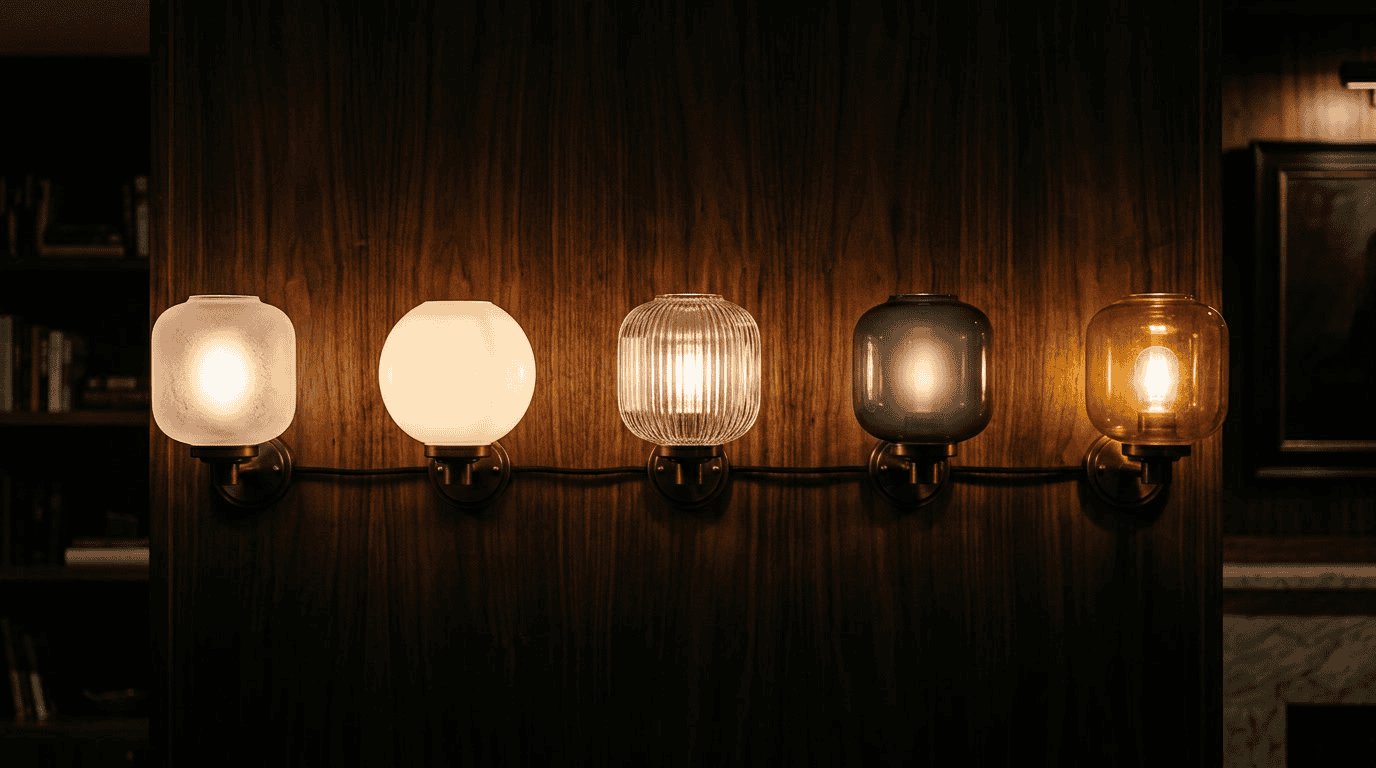
夜間のシェードの見え方を可視化する
一般的な購入者の失敗モード:日中の明るいショールームで、ガラスが外から照らされている光景を想像します。夜は内側から光が当たるため、ガラスの挙動は全く異なります。.
夜間の見え方の経験則:
- 夜間の透明ガラス = 見える電球。. シェードは本質的に消え、フィラメントが見えます。デザイン用ペンダントには適した特徴ですが、ソファサイドの卓上灯には欠陥です。.
- 夜間のすりガラスは明るく、均一な光を放つ。. ほとんど球体の画像が見えない。温かな光の球体または円柱として読み取れる。.
- 夜のオパール = 純粋に輝く物体。. 光る磁器の一片のように見える。どの角度から見ても電球は見えない。.
- 夜のリブは垂直の光の筋を生む。. フルート状の模様が電球の像を離散的な明るい柱に分け、非常に彫刻的。.
- 夜にスモークされた状態 = 控えめなライトの効果。. 点灯しているときも“切れているが発光している”ように読まれる。.
- 夜のアンバー = 暖かい熾火のような輝き。. ガラスに少しだけ溶けかけた蜂蜜が入っているように見えます。.
ランプが作動しているのが見えない場合は、供給業者に“点灯写真”を依頼してください。信頼できる供給業者は日常的に求められるためこれらをファイルとして保有しています。あなたに写真を送れない人は実際にはメーカーではなく、ストック画像を使用している再販業者です。.
リビングルームでのガラス製ランプシェードの手入れ
ガラスシェードは他のランプ部品よりもほこりが付きやすいです。なぜなら、電球によってわずかに熱せられる(LED電球でも周囲より5–10°C高くなることがあります)ため、温度差が空気中のほこりをガラス表面に引き寄せるからです。.
基本的な月次メンテナンス:
- ランプを消して冷ます (LEDの場合は15分程度で問題ありません)。.
- 取り外せる場合はシェードを外す。. ほとんどの Uno および蜘蛛形の取り付け金具は数秒で外れます;ネックレス型とペンダント型は通常、ドライバーが必要です。.
- まずマイクロファイバー布でほこりを拭き取る。. 決して紙タオルは使わないでください — 紙タオルはボロシリケートを傷つけ、すりガラスには繊維残留物を残します。.
- 内側の汚れには, 白酢1部と温水2部を混ぜます。直接ガラスに吹きかけず、マイクロファイバー布に吹き付けて(布が対象です)。優しく拭きます。.
- 自然乾燥させる — 濡れたまま再取り付けはしないでください。. 温かい電球に対して閉じ込められた湿気は水滴を残すことがあります。.
カシェド・オパール(ケース入りオパル)や手塗りガラスにはアンモニア系洗剤を避けてください — アンモニアは表面を鈍らせるか、着色層を損傷させる可能性があります。ラミネートまたはコーティングされたシェードの場合は、メーカーの取り扱いガイドを確認してください。.
のため 傷害耐性 参考: soda‑lime ガラスはモース硬度で約5.5–6程度に位置します — ダイヤモンドの粉末より柔らかいが、一般的な家庭ごみよりは硬いです。要点は、ガラスシェードは慎重に清掃すべきですが、思っているより耐久性があるということです。.
調達の理由: メーカーが再販業者より優れている理由
オンラインで販売される多くのリビングルーム用シェードは、メーカーではなく再販業者のカタログから供給されています。支払う価格は二つのマークアップ(工場 → 輸入業者 → 小売業者)と、8ヶ月前に誰かが下した在庫決定を反映しています。だから実際に存在する範囲ではなく、4サイズと3色しか表示されないのです。.
直接のメーカー関係は次を提供します:
- カスタム寸法 — 直径と高さ、フィッターの指定をカタログから選ぶのではなく、あなたが指定します。.
- カスタム仕上げ — 霜のレベル、オパール層、アンバーの強さ、リブパターンを指定できます。.
- 卸売価格 — 同一実物製品で小売価格より30–60%低く購入可能。.
- サンプル単位 大量生産前に1つを注文できる.
- 適合性の検証 — フィッター寸法を既存のランプベースやハードウェアと照合してメーカーが確認できます。.
米国、日本、EUの住宅デザイナーが10台を超える数量を注文する場合、直接ガラス製のランプシェードのメーカーに発注するのが最も分かりやすい選択肢です。大量購入の閾値は通常、供給元によって20–50台から始まります。.
ガラスシェードデザインの今後のトレンド(2026年以降)
2026年初頭時点で、3つの動きがガラスシェードデザインを明確に形づくっています。.
彫刻的な手吹きガラスがハイエンドへ復権しています。. 2026年の編集写真は、ポスト産業クラフト風の照明が支配的です——壁の厚みの変化が見える、意図的な不規則性、煙色またはセピア染のガラス。2018–2022年の純粋な機械圧製のミニマリズムは影を潜めています。.
スマートガラスのシェードはゆっくりと現れてきています。. 電気色変化ガラス(エレクトロクロミック)またはPDLC(ポリマー分散型液晶)ガラスは、必要に応じてクリアとフロストの間で切り替え可能で、いくつかの高級照明に登場しています。コストは通常のシェードの5–10倍ですが、2027–2028年には中堅市場向けの版が見込まれます。.
持続可能なガラスは新しい仕様書の一行です。. 再生材を含むソーダ石灰ガラス、鉛フリーのホウケイ酸ガラス、低エネルギー溶融プロセスが、製品ページで明記されるようになっています。建設業界で重視されるエンボディドカーボン(内包炭素)の考え方は、住宅用照明部品にも広がっています。ホスピタリティ施設向けに100個以上を発注する購入者は、2026年には再生材の含有率を確認するとよいでしょう。
| トレンド | それが変化すること | 2026年の購買者への影響 |
|---|---|---|
| 彫刻的な手吹き復活 | 美意識の好みは精度より職人技へ移行 | このスタイルで部屋ごとに1–2点のステートメントピースを在庫として持つ |
| スマート切替え可能ガラス | 単一の陰影がさまざまな気分を演出できる | 2027年の中堅市場の発売に注目 |
| サステナブル/リサイクルガラス | 仕様書の差別化要素 | サプライヤーに材料組成データを求める |
よくある質問
リビングルームのソファ・テーブルランプに最適なガラス製ランプシェードのタイプはどれですか?
2700KのLED電球を使用したオパールまたはすりガラス。オパールは電球を完全に隠し、純粋な光るオーブのような外観を与える。すりガラスは少し明るく、同様に柔らかな見た目。どちらもソファ席の視線位置でクリアガラスが生む glare 問題を解消する。.
ガラス製のランプシェードはLED電球の使用に安全ですか?
はい、古い白熱電球よりも安全です。 LED は同じルーメン出力で発生する熱が 70 ~ 90% 少ないため、シェードへの熱ストレスは最小限に抑えられます。標準のソーダ石灰ガラスは、通常の住宅用ワット数の LED に対して完全に定格されています。
同じリビングルームに異なる種類のガラスシェードを混在させることはできますか?
はい、そうすべきです。動作パターンは、ステートメント シェード 1 つ (コーヒー テーブルの上の透明またはリブ付きペンダント) + デフォルトのセカンダリ シェード (座席ゾーン ランプのオパールまたはつや消し) + アクセント 1 つ (読書灯のアンバー) です。最大3種類のシェードで部屋が雑然とした印象になりません。
ランプが使用しているフィッターのサイズを知るにはどうすればよいですか?
古いシェードが取り付けられていたランプ本体を見てください。 Uno フィッターは電球ソケットに直接ねじ込みます (ねじ山が見えます)。スパイダーフィッターはワイヤーハープに座り、最終ナットでロックします。ネックレスフィッターにはリムがなく、円形の開口部の周囲に 3 本のネジで固定されています。疑問がある場合は、既存のシェードの開口部の内径を測定し、その数値をサプライヤーに送信してください。
手吹きガラスのシェードには追加料金を払う価値がありますか?
はい、ストatement piecesにはそう。視認できる壁厚の変化、微かな気泡、少しずれた軸方向のプロファイルは、目には本物の手工芸として映る。日常的な二次ランプには機械压製で問題ない — 遠くから見ても差は分かりにくく、コストを50–70%節約できる。.
リビングルームのガラスランプシェードはどのくらいの頻度で掃除すればよいですか?
アクティブなリビングルームには月に 1 回が適切な頻度です。ほこりが蓄積すると、1 か月間で光出力が 5 ~ 15% 低下し、電球の光の下でオパールや曇りガラスに対してそれが目立ちます。マイクロファイバーの簡単なダスティングには、シェードごとに 2 分かかります。
リビングルームのガラスシェードに最適な色温度はどれくらいですか?
ほぼすべての住宅のリビングルームに 2700K。白熱灯の温かみのある色調とマッチし、目には「心地よい夜の光」として映ります。インテリアが非常にモダンでミニマリストである場合、またはクールなトーンの素材 (白い大理石、磨かれたクロム、クールなグレー) が特徴の場合にのみ、3000K に移行してください。
リビングルーム用ガラスランプシェードの結論
リビングルームの照明は、夜間、評価するのではなく、リラックスしている人によって判断されます。これが基準を設定します。ガラスシェードは、オンのときは純粋な光の中に消え、オフのときは日中に意図的に見える必要があります。オパールとすりガラスがほとんどの役割を果たします。透明なガラスとリブ付きガラスは、ステートメント 製品の 1 つまたは 2 つとしての役割を果たします。アンバーとスモークガラスがアクセントになっています。
まず適合するサイズを選び、次に仕上がりスタイル、最後に色温度を決めてください。そうすれば電球に火を灯す前に、ランプは部屋で機能します。シェードを10点以上調達する場合は、直接メーカーに問い合わせてください。価格設定・カスタマイズ・寸法管理は小売再販経路よりも著しく優れており、部屋でのランプの存在感もその差を反映します。.
次のステップ: 部屋全体の床柱となる声明の備品を特定します。その決定を確定させると、残りのシェードの選択は20分で決まります。.