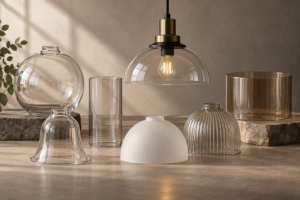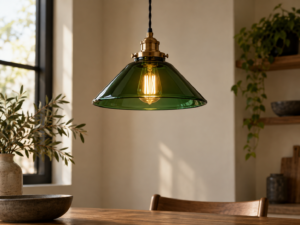
直接的な回答: ヴィンテージのフロアランプ用ガラスシェードは、フロアランプ器具に適した時代のガラスカバーです。ビクトリア朝のトーチエールグローブや大恐慌時代のリブ付きコーン、ミッドセンチュリーのオパールドラムなどがあります。取り付け方法はギャラリーフィッター(3¼インチまたは4インチリング)、スパイダーフィッター(ハープとフィニアル)、またはモーグルソケットフィッターで、ミルクガラスやアンバー、クリアリブ、スモークなど様々なガラスタイプがあります。.
フロアランプは部屋の中で特定の照明位置を占めます。人の高さに立ち、しばしば座席の横に置かれ、シェードが座っている人の目の高さまたはその近くに配置されます。そのため、フロアランプではガラスシェードのグレア(眩しさ)特性が、テーブルランプや天井器具よりも重要になります。テーブルランプや天井器具では、シェードが通常座った目線より下または上にあるためです。.
実用的な結果として、フロアランプはほとんどの場合、クリアガラスよりも拡散性のあるガラス(フロスト、オパール、ミルクガラス)の方が見栄えが良くなります。ヴィンテージ市場もこれを理解しており、多くの時代のフロアランプシェードは不透明が標準です。本ガイドでは、ヴィンテージフロアランプ用ガラスシェードの形状、フィッタータイプ、選択ロジックについて解説します。.
より広いヴィンテージガラスランプシェードのカテゴリーについては、こちらをご覧ください ヴィンテージガラスランプシェードのハブ.
フロアランプの種類とシェードの形状
フロアランプ用ガラスシェードは、ランプの光の方向に従います:
トーチエールフロアランプ: 上向きの光。ボウル型またはトランペット型のシェードがコラムの上部に上向きに設置されます。シェードはアップライト用の反射板/拡散板として機能します。シェードは通常、直径10〜14インチのボウルまたはグローブ型で、4インチまたは5インチのギャラリーフィッター開口部があります。ガラスタイプ:ホワイトオパールやミルクガラスが最も一般的で、クリアやリブ付きのトーチエールボウルはアールデコデザインに見られます。.
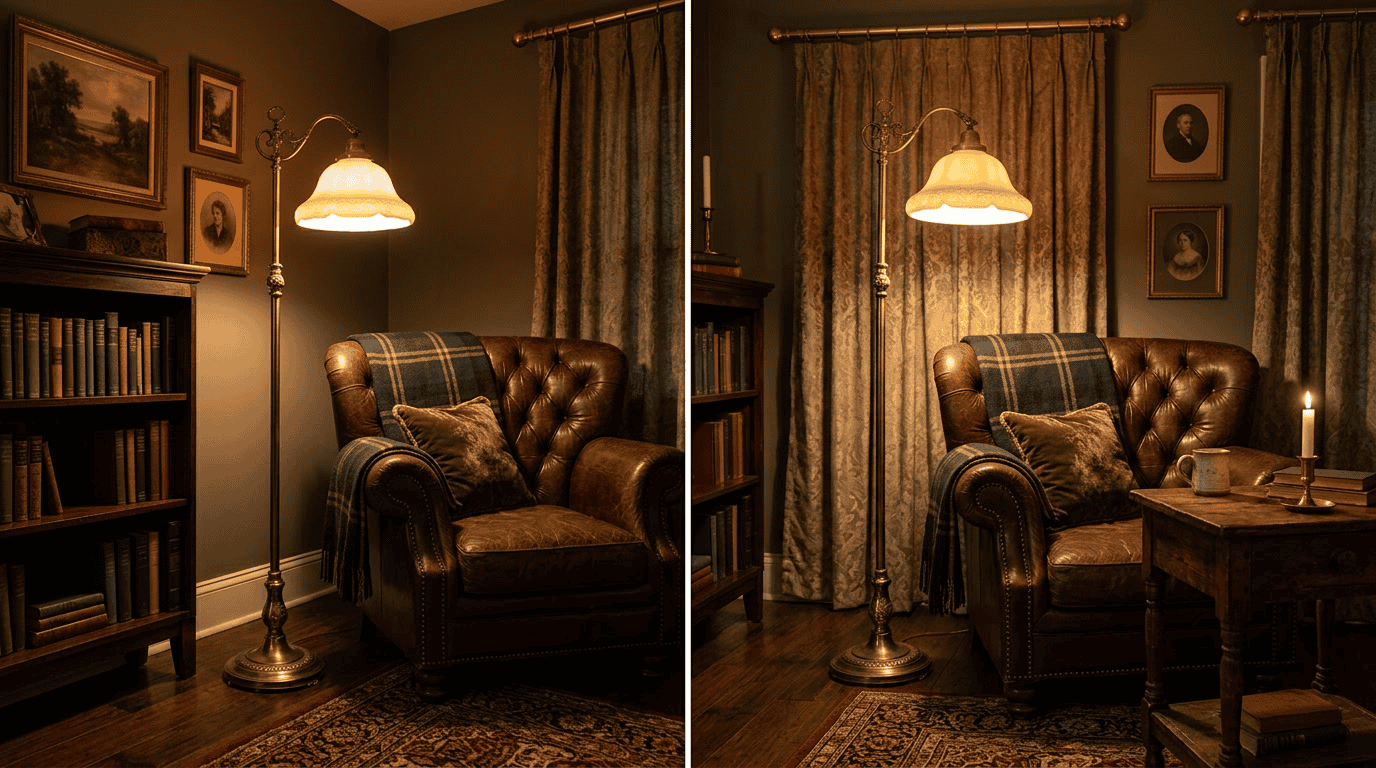
ダウンライト/読書用フロアランプ: 光がシェードを通して下向きに照射されます。シェードはハープまたはギャラリーリングから下向きに吊り下げられます。ガラスタイプ:拡散用にミルクガラス、フロスト、オパール。フィッター:スパイダー(1 5/8インチ)またはギャラリーリング(3¼インチまたは4インチ)。これらは最も一般的なヴィンテージフロアランプで、多くの人がシェードを交換するタイプです。.
アーク&ブームフロアランプ: シェードを座っている人の横から上まで自由に配置できるスイングアームランプ。シェードの形状は通常小さめ(外径10〜14インチ)で、ランプがユーザーに近い位置にあります。フィッターはほとんどがスパイダーです。.
三本アームおよびマルチヘッドフロアランプ(1950年代〜1970年代): 複数の小さなシェードが個別のアームに取り付けられています。各アームは通常、クリップオンまたは小型ギャラリーフィッター(6〜10インチシェード)を使用します。.
ヴィンテージフロアランプ用ガラスシェードの5つの時代スタイル
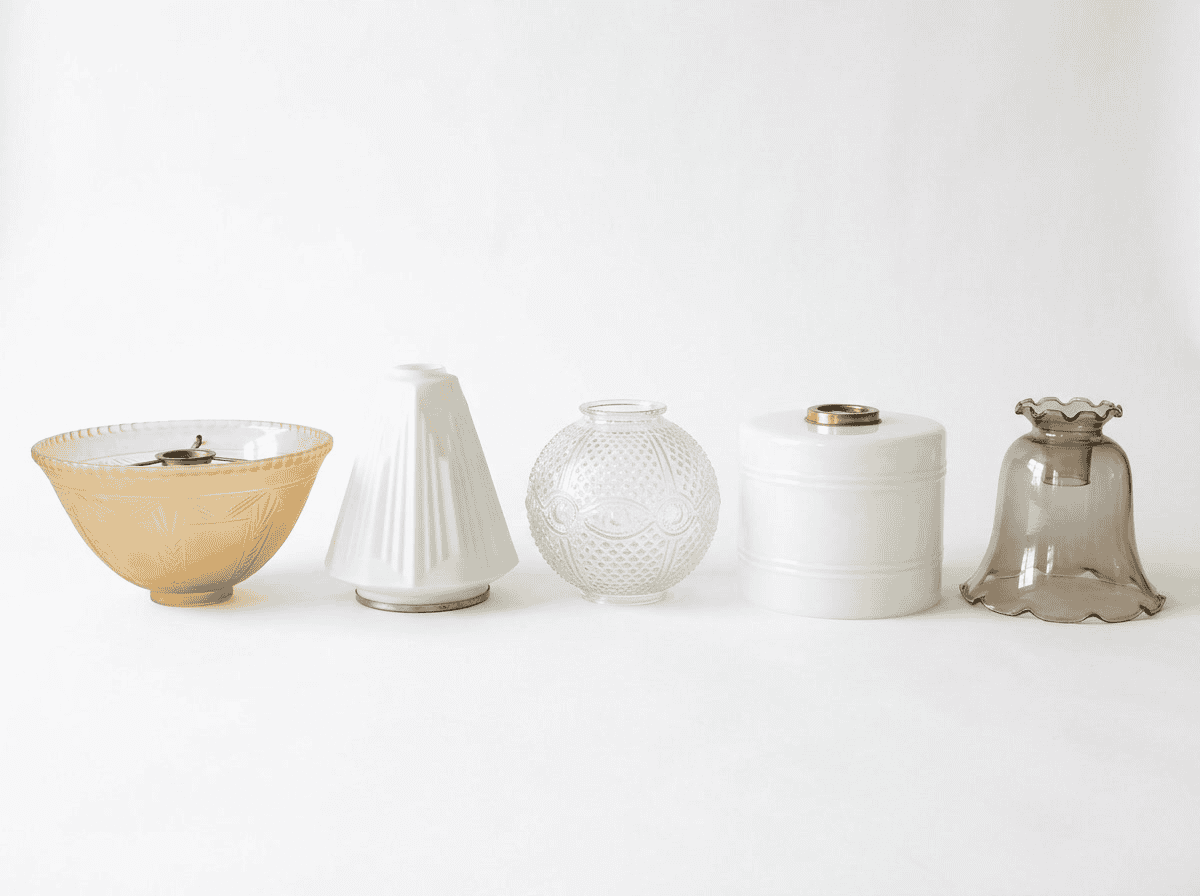
ビクトリアン/エドワーディアン トーチエールボウル(1890〜1920): オパレッセントまたは ミルクガラス, の幅広で浅いボウルが、高く装飾的なコラムの上に載っています。通常は 手吹き. です。直径10〜16インチ。ギャラリーフィッター4〜5インチ。ガラスは通常、手吹きでわずかな色や質感の違いがあります。.
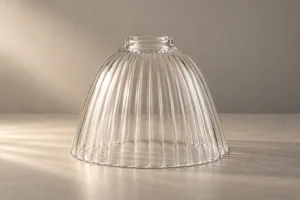
アールデコ リブ付き/パネル型ダウンシェード(1920〜1940): 幾何学的 プレスガラス 縦リブまたはハニカムパネルで構成されています。多くは琥珀色、クリア、または淡い色付きガラスです。ギャラリーフィッターは2¼インチから4インチ。このシェードは戦間期の背の高いスタンドランプ(フロアランプ)に見られました。.
デプレッション時代のガラスグローブ(1930年代〜1940年代): ピンク、グリーン、琥珀色、またはクリアのプレスガラスグローブまたはほぼグローブ型 — 一部は虹色仕上げで、 カーニバルガラス 同時期の生産品と重複しています。天井器具とフロアランプの両方で使用されました。フィッター:ギャラリーリングまたはモーグルベース。軽量で比較的薄く、ヴィンテージフロアランプシェードの中で最も壊れやすいタイプです。.
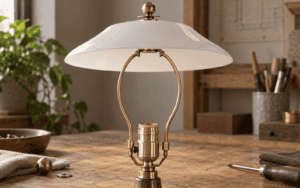
ミッドセンチュリーモダンのオパールコーン/ドラム(1950年代〜1970年代): 円錐形またはドラム型のクリーンな白色オパールガラス、ワイヤーハープにスパイダーフィッター、ウォールナットまたは真鍮のフィニアル。生産量で最も一般的なヴィンテージフロアランプシェードの形です。オリジナルと復刻版の両方が広く流通しています。.
ハリウッドリージェンシーのスモークベル(1965年〜1980年): の後期の子孫です ストリームライン・モダン デザイン言語、この重厚なスモークグレーまたは琥珀色のガラスは、幅広いベル型またはグローブ型で、しばしば金色またはクロームのギャラリーリングが付いています。深みのあるムーディーな光質。直径16〜20インチ。重いので、ランプのハープが重量に対応していることを確認してください。.
フロアランプのフィッタータイプ:テーブルランプとの重要な違い
フロアランプは原則としてテーブルランプと同じフィッタータイプを使用しますが、フロアランプ用はしばしばサイズが大きくなります:
| フィッターの種類 | フロアランプのサイズ範囲 | テーブルランプの相当品 |
| ギャラリーリング | 内径3¼インチ、4インチ、5インチ | 2¼インチギャラリー(あまり一般的ではない) |
| スパイダー/ハープ | 同じ1 5/8インチサドルですが、ハープの高さは異なります | 同じ1 5/8インチ |
| モーグルソケット | 1½インチねじ込み口(大型ソケット) | 該当なし — テーブルランプでは珍しい |
| クリップオン | 同じクリップサイズ | 同じ |
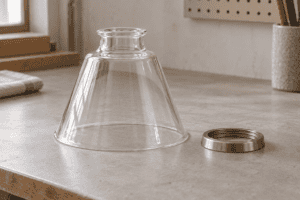
ギャラリーリングの違いは、フロアランプシェード交換の失敗で最も一般的な原因です。テーブルランプ用の2¼インチギャラリーシェードは、4インチリングのフロアランプには適合しません。必ずリングの内径を直接測定してください。.
フィッターの測定ガイド: ガラスランプシェードのフィッティング規格:完全な技術ガイド および 交換用ガラスランプシェードの測り方.
サイズ:フロアランプシェードの直径と高さ
フロアランプのシェードは、ランプの支柱が高く、シェードと人との関係が異なるため、テーブルランプ用よりも大きめです:
| フロアランプ支柱の高さ | 推奨シェード外径 | シェード形状 |
| 48~54インチ(標準) | 14~18インチ | 標準ベル型、コーン型、またはドラム型 |
| 55〜60インチ | 16〜20インチ | 大型ベル型またはエンパイア型 |
| トーチエール(65〜72インチ) | 10〜14インチのボウル | トーチエールボウルまたはトランペット型 |
ダウンライトフロアランプのシェードの下端は床から約48〜52インチの高さに設置するのが理想です。これにより、座ったときの目線(約42〜44インチ)より上にシェードが位置し、電球交換も手が届きやすくなります。.
フロアランプ用のガラス種類の選び方
フロアランプは通常、座ったときの目線の高さにあるため、グレア(眩しさ)対策が重要です:
フロストガラス, オパールガラスやミルクガラスが正しい標準です。. フロアランプで48〜52インチのフィッター高さにクリアガラスシェードを使用すると、座っている人の視線に電球が直接入ります。これは最もよくあるフロアランプのシェードの失敗例で、見た目は魅力的でも部屋にいる全員に眩しさを与えてしまいます。.
アンバーガラス 主に雰囲気づくりのために使うフロアランプにはよく合います。フロアランプの高さで暖かい光が広がり、リビングルームに効果的です。読書用フロアランプで光量が必要な場合は、アンバーガラスの吸収率(40〜60%)により高ルーメンの電球が必要になることがあります。.
スモークガラス 非常に背の高いフロアランプ(60インチ以上)でシェードが座った目線より十分高い場合や、アークランプでシェードが上から近づく場合には許容されます。標準の48〜52インチ高さでは、スモークガラスが十分厚くない場合は依然としてホットスポットが発生します。.
クリアリブガラス フロアランプでは、シェードが目線より高く設置されている場合(主に装飾用トーチエール型で、読書用ランプではない場合)にのみ使用できます。.
私たちの ガラスによる光拡散の解説ガイド 拡散の物理について詳細に説明しています。 ウィキペディアの光拡散に関する記事によると, 表面による散乱は入射光を複数方向に分散させます。これがフロストガラスやオパールガラスがホットスポットを解消し、完全に不透明な素材ほど光量を遮らない仕組みです。.
ヴィンテージフロアランプのガラスシェードの交換方法
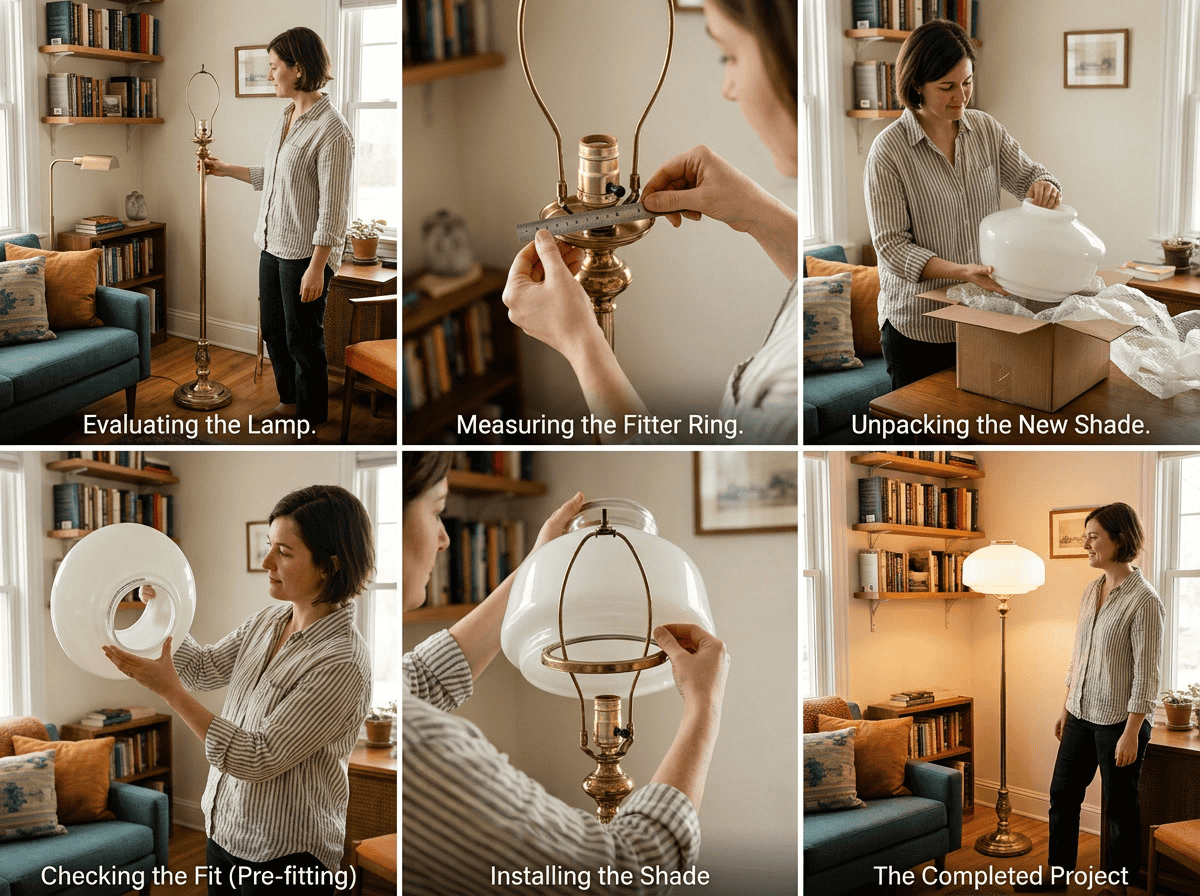
ステップ1:フィッターの種類を特定する。. あなたのフロアランプはギャラリーリングタイプ(シェードがリングに乗る)、ハープ&スパイダータイプ(シェードがハープに乗る)、またはトーチエールボウルタイプ(シェードが上向きのボウルサポートに乗る)のどれですか?
ステップ2:測定する。.
- ギャラリーリング:リングの内径を測定する(通常は3¼インチ、4インチ、または5インチ)
- ハープ:ハープの高さを測定し、フィニアルのネジサイズ(日本では標準1/4インチ-27)を確認する
- トーチエールボウル:ボウルサポートリムの内径を測定する
ステップ3:適切な外径を決定する。. 標準的な48~54インチのフロアランプには、14~18インチの外径が適切です。床からフィッターまでの高さを測定し、シェードが座ったときの目線より上にくることを確認してください(床からシェード下端まで44インチ以上)。.
ステップ4:ガラスタイプを選ぶ。. シェードが座ったときの目線付近にくるランプには、基本的にオパールガラスまたはミルクガラスを選びます。ムードや間接照明用のランプにはアンバーやスモークガラスを選びます(作業用ランプでない場合)。.
ステップ5:注文してテストする。. オンラインで注文する場合は、購入前にフィッターの内径を必ず書面で確認してください。シェード点灯時の写真を依頼しましょう—拡散性の評価には製品写真よりも重要です。.
現代インテリアにおけるヴィンテージフロアランプシェード
2026年、インテリアデザイナーによるヴィンテージフロアランプシェードの指定が急増しています。その理由は、マキシマリスト/グランミレニアルなインテリアの復活、住宅全体での暖かい2700K LEDの好み、そして正しい時代のガラスシェードを備えたヴィンテージフロアランプの方が、現代的なファブリックシェードよりもはるかに洗練されて見えるという実用的な認識です。.
ヴィンテージガラスフロアランプシェードがファブリック製の代替品より優れる具体的なシーン:
- 硬い表面の部屋 (コンクリート、石、磨かれた木材)で、ファブリックシェードが柔らかく不調和に見える場合
- ミッドセンチュリーモダンの家具セット ガラスが時代に合っていて、ファブリックが時代錯誤となる場合— コーニングガラス美術館 これらの時代の多くのデザインをコレクションで記録しています
- ホスピタリティ環境 清掃性と耐久性が求められる場所(ガラスは布よりもはるかに掃除が簡単です)
ホスピタリティプロジェクト向けにガラス製フロアランプシェードを指定するB2Bバイヤーのために、, 当社のホテル用ガラスランプシェードガイド は仕様、最小注文数量、リードタイムを網羅しています。交換用シェードを注文する前に時代やガラスタイプが不明な場合は、当社の ヴィンテージガラスランプシェードの識別ガイド, 、またフロアランプではなくテーブルやペンダント照明器具の場合は、当社の テーブルランプ用ヴィンテージガラスシェードガイド および ヴィンテージガラスペンダントライトシェードガイド がそれらの形式をカバーしています。.
よくある質問
ヴィンテージフロアランプシェードで最も一般的なフィッターサイズは何ですか?
内径4インチのギャラリーリングが、20世紀中頃の日本のフロアランプで最も一般的です。ワイヤーハープに取り付けるスパイダーフィッター(1 5/8インチ)は、より高品質なランプによく見られます。必ずご自身のランプの金具を測定してください—フロアランプはテーブルランプよりもサイズのバリエーションが多いです。.
フロアランプにテーブルランプのガラスシェードを使えますか?
フィッターの寸法が一致する場合のみ。テーブルランプのシェードは通常、2¼インチのギャラリーまたは7/8インチのユーノフィッターを使用します。フロアランプは3¼インチから5インチのギャラリーリング、または同じスパイダー・フィッターを使用します。両方がスパイダー/ハープを使用している場合、シェードは転用できますが、ギャラリーリングのサイズが異なる場合は取り付けできません。.
なぜ私のヴィンテージのフロアランプのシェードが黄色や茶色っぽく見えるのですか?
これは通常、何十年もの白熱灯の使用による熱による黄変です。白熱電球はソケットで約150–250°Cで作動し、電球の上方の熱柱が近くのガラスに影響を与えます。今後はLEDの使用により黄変の進行を止めることができます。黄変はミルクグラスと淡色のオパールガラスで最も顕著です。その スミソニアンのガラスケアガイド 柔らかな清掃では熱変色はほとんど元に戻らないことに注意してください。これは表面の残留物ではなく、ガラス内部の変化によって生じるためです。.
標準の床置きランプにはどの外径のシェードが適合しますか?
一般的な床置きスタンドの柱の高さが48–54インチで、シェードを床面から48–52インチの位置に設定する場合、外径14–16インチのシェードが比率的に適切です。より高いランプ(55–60インチ)の場合は、外径18–20インチまで大きくします。.
アンティークのトーチエアグラスボウルはまだ入手可能ですか?
はい。標準の直径10インチ、12インチ、14インチのトーチエアグラスボウルは、オパールまたはミルクグラスで現在生産中です。カスタムサイズと色付きガラス(アンバー、グリーン)は、最小発注数量が通常10個からの専門メーカーから入手可能です。.
ガラスの床置きランプシェードはLED電球と相性がありますか?
はい、元の白熱電球よりも効果的です。ガラスへの熱ストレスが少なく、光の拡散は同等またはより良いです。2700Kの温白色LEDを使用してください、の続きをお願いします。 日本のエネルギー省によるLED照明ガイドライン. 光を上向きに directingするギャラリーリングとトーチエールボウルには、上方の光を一様に分布させるため、指向性のスポットではなく全方向LED電球を選択してください。.
モダンなインテリアに最も多用途なヴィンテージ風フロアランプシェードは何ですか?
蜘蛛フット付きで、外径14〜16インチの白オパールミルクガラスのベルまたはコーン。この形は、ミッドセンチュリーブラス、モダンマットブラック、伝統的な金具と相性が良く、完全に拡散し、大恐慌時代から現在までふさわしく見えます。.
関連書籍
結論
ヴィンテージのフロアランプ用ガラスシェードは、テーブルランプシェード選択に加えてもうひとつ考慮すべき点があります。それが座って目の高さの眩しさのチェックです。ソファの横、50インチの高さの場所で見たときと、別の場所で灯りが部屋を照らす様子が異なることがあります。実用的なデフォルトであるオパール、ミルクガラス、すりガラスは、圧倒的に大多数のフロアランプの適用に正解です。.
フィッタータイプと寸法から始め、比率に合わせて直径と高さを選択し、次にガラスタイプのフィルターを適用します。日常的に使用されるヴィンテージのフロアランプには、品質の高い現行生産のオパールまたはミルクガラスシェードが最も実用的な解決策です。ディスプレイ用やコレクターズアイテムには、時代のオリジナルを探すのはやりがいがありますが、より慎重な測定作業が必要です。.