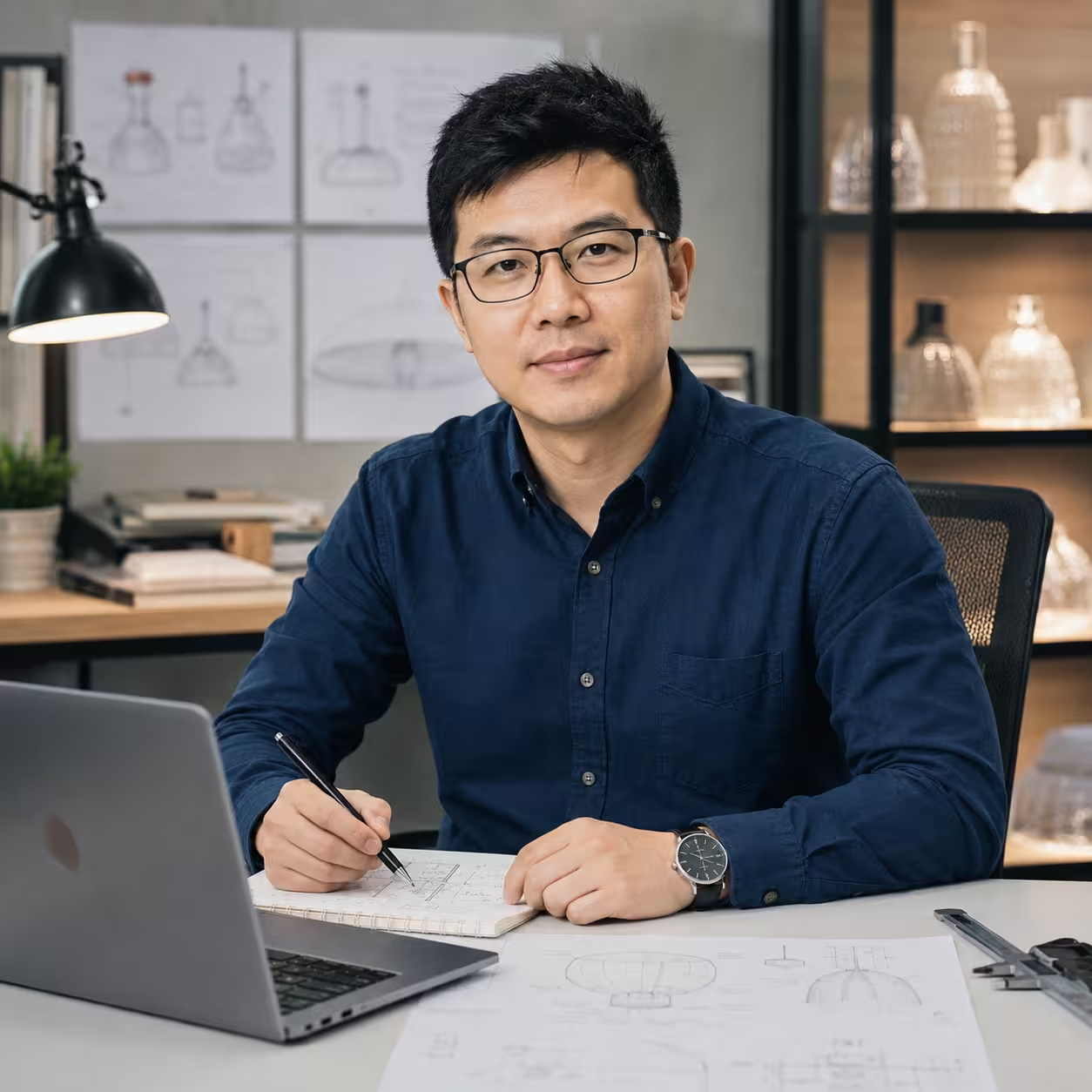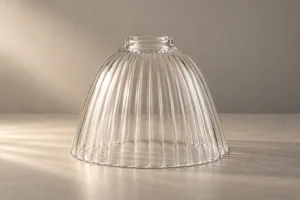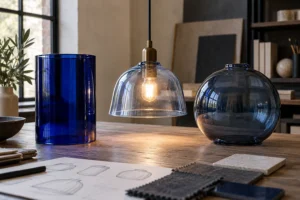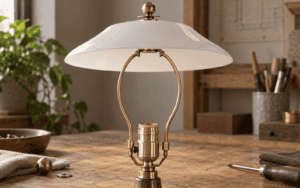
吊り下げランプ用のランプシェードには、対応するフィッタータイプ(スパイダー、UNO、またはリング)、器具の落下高さのおおよそ半分のシェード直径、部屋の照明ニーズに合った素材(布、ガラス、またはラタン)が必要です。.
ペンダントランプを吊るしました。中心に設置され、動作も問題ありません。しかし、少し離れて見ると、むき出しの電球が違和感を与えます。光が強すぎて、露出しすぎています。そこでシェードを注文します。届いたものの、フィッターリングがソケットにねじ込めません。今や返品に1週間かかり、スレッド径が3ミリほど合わなかったため、$90シェードが箱に入ったままになっています。.
このキーワードのGoogle上位3件は商品カテゴリーページです。Creative Cables、Color Cord Company、IKEA。どれもサイズや取り付けに関する質問には一切答えていません。在庫を表示しているだけです。このガイドでは「吊り下げランプ用のランプシェードが必要」から「正しいものが設置された」までのすべての判断ポイントを解説します。“
吊り下げランプ用のランプシェードとは?
A 吊り下げランプ用ランプシェード, は、ペンダントシェードや天井照明シェードとも呼ばれ、吊り下げ器具の電球の周りに取り付けるカバーです。光を拡散し、まぶしさを抑え、部屋への照明の落ち方を調整します。.
それは簡単そうに聞こえますが、実際にはペンダントシェードはテーブルランプやフロアランプのシェードと、購入時に重要な3つの点で異なります:フィッタータイプ、耐荷重、光の方向です。どれか一つでも間違えると、取り付けられないシェードや、垂れ下がるシェード、または必要な場所ではなく目の高さに直接強い光を放つシェードになってしまいます。.
ペンダントシェードとテーブル・フロアランプシェードの違い
テーブルランプやフロアランプのシェードは、ソケット下のサドルに乗るハープというワイヤーフレームの上に設置されます。その重さは下から支えられます。 吊り下げランプ用ランプシェード は、天井から吊り下げられたペンダントソケットに取り付けるため、シェードは上から接続するか、ソケット自体を直接包み込みます。.
フィッターハードウェアは全く異なり、多くの購入者はシェードが届いて初めてクリップできないことに気づきます。2つ目の違いは光の方向です。テーブルランプのシェードはほぼ360度、上方向と外側に光を放ちます。ペンダントシェードは下方向に光を向けるため、オープンボトムのドラム型やボウル型がペンダント市場で主流であり、上方向に光を放つエンパイア型のシェードは吊り下げ器具では珍しいです。.
フィットを決める3つのパーツ:本体、フィッター、ディフューザー
すべての 吊り下げランプ用ランプシェード には3つの機能的なパーツがあります:
- 本体(布、ガラス、金属、ラタン)は見た目と光の透過量を左右します
- フィッターは、ハードウェアのリングやフレームで、シェードをペンダントソケットに接続します
- ディフューザーは、内部パネルまたは本体素材自体で、光を柔らかく拡散します
本体の形状を正しく選ぶことで、ランプの見た目が整います。フィッタータイプを正しく選ぶことで、実際に取り付けられます。どちらかを間違えると返品することになります。.
| 特徴 | ペンダント/吊り下げランプ | テーブルランプ | フロアランプ |
|---|---|---|---|
| フィッターの種類 | スパイダー、UNOリング、またはリングアダプター | ハープにスパイダー、クリップオン | ハープにスパイダー |
| 重量制限 | 約2~5ポンド(ソケット取り付け) | 約5~10ポンド(ハープ支持) | 約10ポンド以上(ベース支持) |
| 主な光の方向 | 下向き/間接光 | 上+外側360° | 上+外側360° |
| 取り付け方法 | ペンダントソケットにクリップまたはねじ込み | ハープサドルに置く | ハープサドルに置く |
| 一般的な形状 | ドラム、グローブ、ベル、コーン | エンパイア、ドラム、ベル | ドラム、エンパイア、トーチエール |
吊り下げランプ用シェードの種類
最適な 吊り下げランプ用ランプシェード 形状、素材、フィッタータイプの3つの変数によって決まります。ほとんどの購入者は最初のものしか考えません。美しいグローブシェードを間違ったフィッターサイズで注文した時点で、その教訓を支払うことになります。.
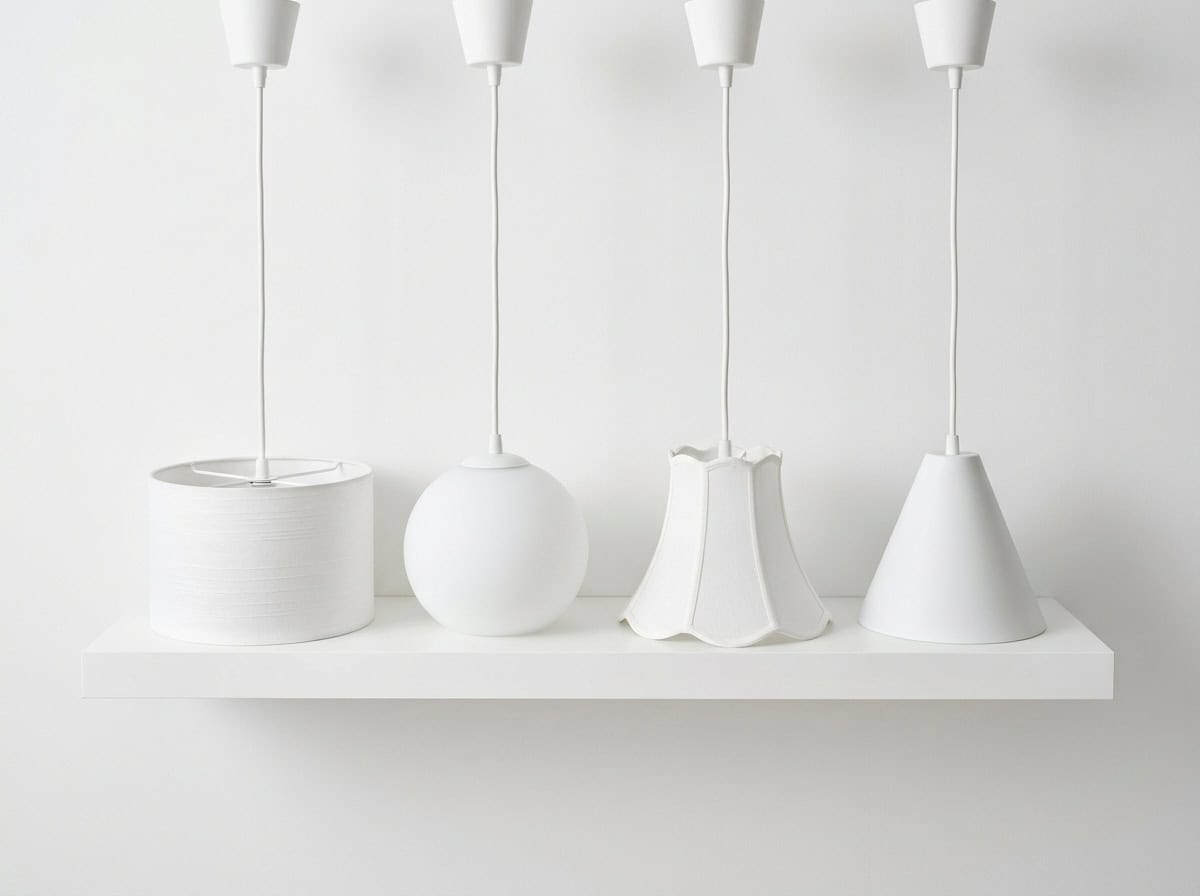
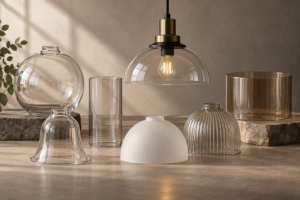
形状別:ドラム、エンパイア、ベル、グローブ、コーン、テーパー
ドラムシェード は最も広く使用されている選択肢です。 吊り下げランプ用ランプシェード 2026年に。上下の幅が同じで、光を下方向とやや外側に広げ、ほぼすべてのインテリアスタイルに適合し、あらゆる素材で提供されています。ペンダントシェードが初めてでどの形を選ぶか迷っている場合、ドラム型が最も安全な選択です。.
グローブシェード 電球を球体またはほぼ球体で包みます。ガラス製グローブペンダントはミッドセンチュリーやスカンジナビアデザインを象徴します。光を全方向に均等に拡散するため、キッチンアイランドや読書スペースなど、柔らかく広がる照明が欲しい場所に最適です。.
ベルシェード 上部が広く、下部の開口部が狭くなる形状です。クラシックなヴィクトリア朝のサロンの形です。ドラムやグローブよりも光をより直接的に下方向へ集中させるため、天井を照らすよりもテーブルの表面に光を集中させたいダイニングテーブルの上に最適です。.
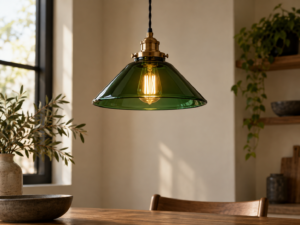
コーンシェード は機能的なワークホースです。上部は平らなディスク、下部は鋭く広がる開口部。工業的な環境やカフェ、作業場でよく見られます。コーン型は下に狭く定義された円形に光を送るため、雰囲気作りには向きませんが、作業用照明には効果的です。.
テーパードシリンダーシェード ドラム型とコーン型の中間です。下部がやや狭くなっており、視覚的なアクセントを加えつつ、ほぼ全方向に光を広げます。シンプルなドラム型では物足りないミニマルなインテリアによく選ばれます。.
エンパイアシェード (背が高く急な角度の)ものは、テーブルランプ特有の形状です。これらは下方向よりも上方向に光を押し上げるため、雰囲気作りには役立ちますが、一般的な用途としては珍しいです。 吊り下げランプ用ランプシェード なぜなら、テーブルの高さで有用な照明よりも天井へのグレア(眩しさ)を生み出しやすいからです。.
素材別:ガラス、ファブリック、ラタン、金属、アクリル
素材によって、ランプシェードがどのように 吊り下げランプ用ランプシェード 光を扱うかが決まります。どれだけ光を通すか、どれだけ吸収するか、シェードが暖かく光るか、強く反射するか。また、耐熱性も決まり、これは多くの人が思う以上に重要です。.
| 素材 | 光透過率 | 耐熱性 | 理想的な部屋 | メンテナンス |
|---|---|---|---|---|
| クリアガラス | 90%+ 直射 | 高い、白熱電球でも安全 | キッチン、インダストリアルロフト | 湿った布で拭く |
| フロスト/オパールガラス | 60-75% 拡散 | 高い、白熱電球でも安全 | 寝室、ダイニングルーム | 湿った布で拭く |
| リネン/コットンファブリック | 20-40% 拡散 | 低い、LEDのみ(最大40W相当) | リビングルーム、寝室 | リントブラシ、部分洗い |
| ラタン/ウィッカー | オープンウィーブ、模様のある影 | ミディアム、最大40W相当. | ボヘミアン、屋外カバー付き | 定期的にほこりを払う |
| 金属(塗装/粉体塗装) | 0%、完全不透明 | 非常に高い | インダストリアル、キッチン | 拭き取り;生鉄部分のサビを確認 |
| アクリル | 50-80% 拡散 | 低出力、LED専用 | オフィス、モダン | マイクロファイバークロスのみ使用 |
ペンダント照明においてはガラスに特に注意が必要です。 日本のエネルギー省によるLED照明ガイドライン, によると、白熱電球はエネルギーの約10%を可視光に変換し、残りは熱になります。密閉型やタイトなシェード内では、その熱が蓄積されます。ガラスは 吊り下げランプ用ランプシェード これを安全に処理しますが、布製シェードと古い白熱電球の組み合わせはそうではありません。.
フィッターの種類:スパイダー、UNO、リングアダプター、クリップオン
ここで多くの購入ミスが発生します。フィッターはほとんどの商品写真では見えませんが、新しいシェードが実際に取り付けられるかどうかを決める唯一の要素です。.
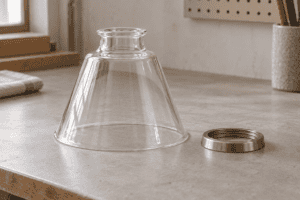
A スパイダーフィッター は、シェードフレーム中央のワイヤーが交差したもので、ランプハープの上に乗ります。テーブルランプでは標準的ですが、ペンダント専用シェードではあまり一般的ではありません。ただし、テーブルランプ用シェードを吊り下げ器具に流用する場合に遭遇します。その場合はリングからスパイダーへのアダプターが必要です。.
A UNOフィッター は、ペンダントランプソケットに直接ねじ込むねじ式リングです。多くのペンダント専用シェードはUNOフィッターを使用しており、ねじ込み式の接続は空中に吊るされたシェードに安定性をもたらします。標準的なねじ径は2種類あり、1⅝インチと2⅜インチです。見た目は似ていますが互換性はありません。.
A リングアダプター 互換性のないフィッターをソケットに接続します。異なるフィッタータイプ用に作られたシェードを取り付けたい場合、リングアダプターは通常1,000円未満で購入でき、この問題を解決します。.
A クリップオンフィッター 電球に直接グリップします。軽量の装飾用シェードには素早く便利ですが、約450g以上のものには信頼性がありません。振動で徐々にグリップが緩み、重いガラスシェードをクリップオンで使うのは危険です。.
ペンダントランプに合うランプシェードの正しいサイズの測り方
最もよくあるサイズミス:商品写真ではバランスよく見えるシェードが、実際に床から2メートル以上の高さに吊るすと全くスケールが合わないことがあります。必ず事前に測定しましょう。.
幅のルール:ペンダントランプのためのバランスの取れたサイズ選び
標準的なガイドラインは、 吊り下げランプ用ランプシェード シェードの直径はペンダントの吊り下げ高さのおおよそ半分が目安です。天井キャノピーから50cm下がるペンダントには、約25cmのシェード直径が適しています。これはあくまで出発点であり、厳密な公式ではありません。ダイニングテーブルやキッチンカウンター、デスクなど作業面の上では、幅広のシェードが下のエリアに光をより効果的に広げます。雰囲気重視の装飾用ペンダントなら、細身のシェードが器具を主張しすぎず彫刻的に見せます。.
私たちの ガラスランプシェードサイズガイド 最も一般的なペンダントシェードの形状について、上部直径、下部直径、傾斜高さ、ドロップなど全ての寸法を解説します。.
ドロップの高さ、天井クリアランス、アイレベル規則
日本の 照明工学協会 ダイニングテーブルのペンダントライトは床面からシェードの底部まで60–66インチ、またはテーブル表面から上方向で30–36インチを推奨します。カウンター席のないキッチンアイランドの場合、床面から66–72インチが標準仕様です。.
実用的なチェックはより簡単です:ペンダントの最も近い椅子に座ってください。視線がシェードの下端より下方に落ちるようにして、直接電球を見ていない状態にします。座ったときにシェード下部が視線の高さにある場合、照明は低すぎます。.
フィッターリング直径:購入者が見逃しがちな測定
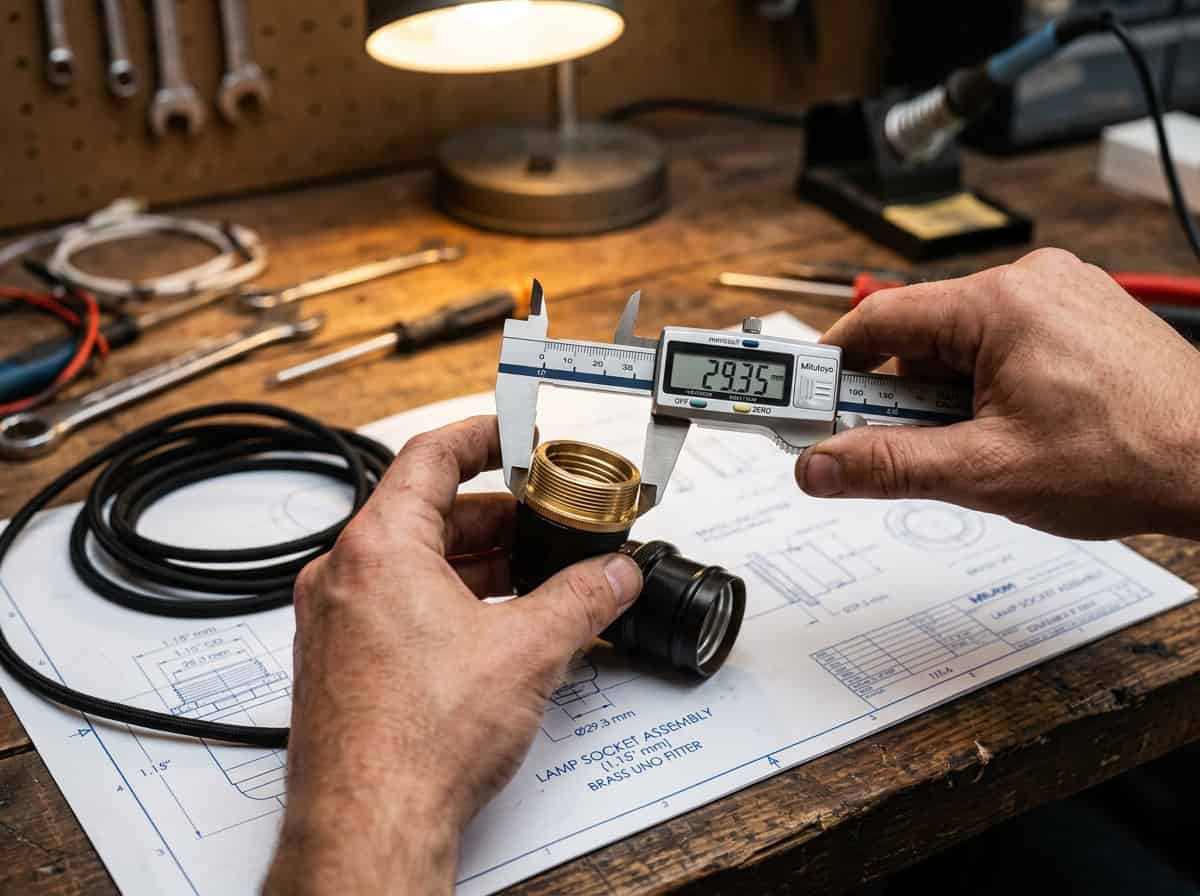
注文前に 吊り下げランプ用ランプシェード, 、ソケットの外ねじ直径をノギスまたは柔軟テープで測定してください。UNOの2サイズ、1 5/8インチと2 3/8インチは似たように聞こえますが、互換性がありません。この測定を確認するのに30秒を費やすだけで、最も一般的なペンダントシェードの返品を防げます。.
| 部屋タイプ | 推奨シェード直径 | シェードの底部の取付高 |
|---|---|---|
| ダイニングルーム/テーブルの上 | 12-18インチ | テーブル表面から30–36″ |
| キッチンアイランド(ペンダントごと) | 8–12インチ | 床面から66–72″ |
| ベッドルーム(ベッドサイドペンダント) | 6–10″ | マットレスの上部18–24インチ |
| リビングルーム(ア ambient) | 14〜20インチ | 床から60–66インチ |
| 玄関/ホール | 天井高までスケールして12–18インチ | 床から少なくとも84インチ/7フィート |
吊り下げランプに合うシェードを選ぶ
適切なサイズのもの 吊り下げランプ用ランプシェード ただしスタイル、素材、または光の質が部屋に合わないと見た目が間違って見えることがある.
部屋別: キッチン、ダイニング、ベッドルーム、リビング、屋外
キッチン 作業灯は下方に明るく作業面を集中照射することを優先します。透明ガラスのグローブ型ペンダントや金属の円錐シェードがよく合います。ルーメン出力を大きく消費する重く拡散するシェードは、まな板の上では選択として不適切です。.
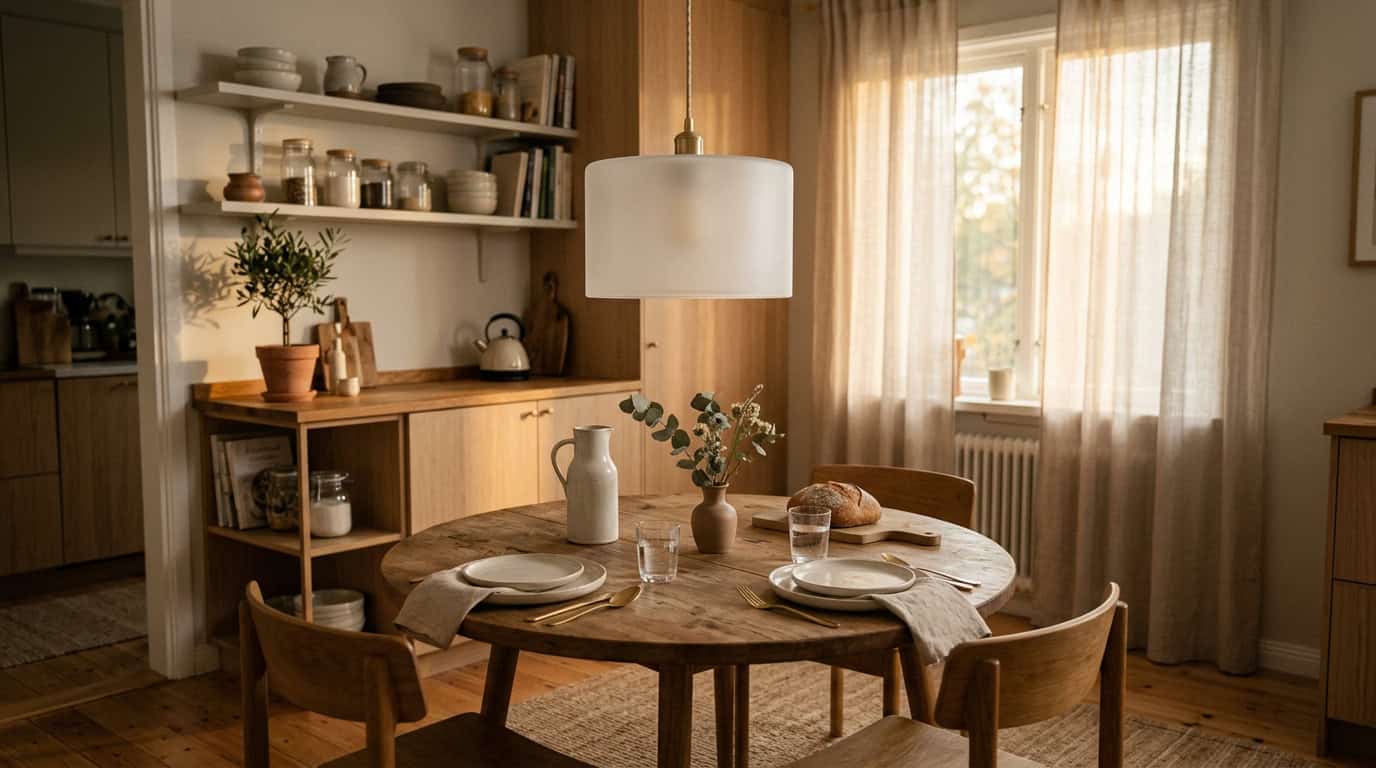
の中で ダイニングルーム, 、暖かさと雰囲気は生のルーメン出力より重要です。ファブリックドラムシェードやすりガラスのベルシェードは、食べ物とテーブルを囲む人々のどちらにも似合う柔らかな光のプールを作り出します。暖白色LED電球(2700K)が効果を強化します。私たちの レストラン級のガラスの lamp shades 商業用のダイニング環境に適用された同じ論理を反映します。.
A 吊り下げランプ用ランプシェード 寝室では、横になる姿勢から直接の眩光を生じさせないようにするべきです。低眩光で拡散性のある素材(オパールガラス、リネン、ラタン)と幅広いドラム形またはグローブ形が最適です。光を集約する円錐形のシェードは避けてください(光を集中させます)または天井高での直接眩光リスクが高いクリアガラスも避けてください。.
日本の リビングルーム 最も柔軟な空間です。大きなドラム、 oversized globe、または彫刻的な職人ガラスの形状などのステートメントペンダントシェードは部屋の視覚的なアンカーになり得ます。ここでは照明の出力と同じくらい、外観が重要です。.
のため 屋外の覆われたスペース, 材料の耐久性が最優先です。オパールとボロシリケートガラスは耐湿性があります。ラタンやほとんどの布製シェードはそうではありません。取り付け前にシェードのIP評価と電球の屋外認証の両方を確認してください 吊り下げランプ用ランプシェード ポーチ、パーゴラ、または覆われたテラスで。.
インテリアのスタイル別:ミニマリスト、工業風、ボヘミアン、伝統的、中期
ミニマリストのインテリアには、白または淡いグレーのドラムシェードをマットオパールガラスやリネンで用い、通常はフラッシュフィットの hardware で、電球が見えない設計が最適です。工業的な空間には、マットブラック、ガンメタル、または亜鉛メッキ仕上げの金属円錐形または倉庫用シェードを使用し、エジソンのフィラメントが見えるのが特徴です。ボヘミアンな部屋にはラタン、ジュート、または手織り布を irregular な有機形状で、暖かい amber ガラスと組み合わせることが多いです。伝統的なインテリアには落ち着いたトーンの布製のエンパイアまたはベルシェード、 pleated のディテールと金またはブラッシュドブラスのハードウェアが似合います。ミッドセンチュリーモダンの空間には、紡績金属またはガラス繊維のコーンシェード、チーク材またはクルミ材の照明アーム、暖かいアンバー色またはオリーブ色のカラーバリエーションがよく合います。.
ガラスに特化して言えば、私たちの ランプシェード形状ガイド は、ドーム、ベル、シリンダー、グローブなど、ガラスシェードの形状が各スタイル文脈で光の方向と質をどのように変えるかを示しています。.
光の機能別:アンビエント、タスク、アクセント
アンビエント照明には、広い底部開口部と薄透過性の素材が必要で、光を部屋全体に拡げます。布製またはすりガラスのドラム、グローブ、ベル形シェードはこの用途に適しています。タスク照明には逆の要件が必要で、狭い底部開口部と外装が不透明で、光を一点に向ける必要があり、金属製のコーン、ボウル、リフレクターシェードが適しています。アクセント照明では、シェード自体が視覚的な対象です。着色ガラス、テクスチャ付きラタン、手吹き成形の形状は、材料が光 output ではなくポイントであるため効果的です。.
吊り下げ式ランプシェードの交換方法
あなたは変更できます 吊り下げランプ用ランプシェード ほとんどの器具で電気工事士なしで十分钟以内に.
ステップバイステップのシェード交換(電気工事士不要)
- ライトを消してください。. 電球を少なくとも15分間冷ましてください。ガラスと金属は予想以上に熱を保持します。.
- 既存の取り付けタイプを特定します。. 現在のシェードはソケットにねじ込まれていますか(UNO)、ワイヤースパイダーフレームの上に乗っていますか、それとも電球にクリップで留められていますか?
- フィッターリングの直径を測定します。. ソケットの外ねじの周りにノギスを当てます。1 5/8インチか2 3/8インチかを確認します。.
- 古いシェードを取り外します。. UNOフィッターは反時計回りにねじを外します。スパイダー・フィッターはハープから真っ直ぐ上に持ち上がります。クリップオン・フィッターは絞って引き抜きます。.
- 新しいシェードを取り付けます。. UNOフィッターは締まるまで時計回りにねじを進めます。特にガラスには締めすぎないでください。クリップオンは電球の中心を合わせ、グリップが座るまで押します。.
- バランスを確認します。. ガラスや重量級のシェードの場合、シェードが水平に sits していることとフィッターリングが完全に座っていることを確認してから手を離します。.
- 電気を点けます。. 下部開口部から直接の眩しさがないことを確認します。必要に応じて吊り下げ高さを調整します。.
canopy、ペンダントコードの長さ、またはソケット配線を変更する場合のみ電気工を呼ぶ必要があります。シェード自体の変更ではありません。.
交換 vs. 修理:新しい照明器具の方が適切な場合
| 症状 | 推奨アクション | 推定コスト |
|---|---|---|
| 日焼けした/黄変した布地のシェード | シェードのみを交換 | $15-$80 |
| ガラスシェードにひび割れ | シェードのみを交換 | $20-$120 |
| フィッタリングリングが曲がっている、またはねじ山が切れている | フィッターアダプターまたはシェード全体を交換 | $8-$80 |
| シェードは古く見えるが、金具はまだ機能する | シェードのみを交換 | $20-$200 |
| ペンダントコードがほつれている、ソケットがスパークしている | 照明器具を交換(電気工事士) | $80-$250 含む作業費 |
| 天井 canopy に亀裂、または緩んでいる | 照明器具を交換(DIY または電気工事士) | $30-$150 |
2026年以降のペンダントランプシェードのトレンド
日本の 吊り下げランプ用ランプシェード 今年のインテリアデザイン誌でより活発に取り上げられる要素のひとつとなった。近年リノベーションを行った人々は、コモディティの照明器具を検討されたものに置き換え、より完成度の高い雰囲気を感じさせるアイテムへアップデートしている。2026年のペンダントシェード市場を動かす二つの変化がある。.
オーガニックな形状と職人吹きガラス
クリーンな幾何学的ドラムは新しい建設でもなお主流ですが、カスタムおよび職人吹きガラスのペンダントが成長分野です。口吹きガラスは機械製のガラスでは再現できない不規則な形状、微妙な表面の気泡、色のばらつきを生み出します。According to Architectural Digestの照明デザイン特集, 、手作業の照明は、特に吹きガラスのペンダントシェードを含む製品群は、住宅リノベーションの支出で最も成長しているカテゴリのひとつです。.
口吹きの 吊り下げランプ用ランプシェード は文字通り唯一無二です。すべての作品は前のものとわずかに異なる仕上がりとなり、マスマーケットのサプライヤーとは反対の性質であり、おそらくこのカテゴリが成長し続ける理由です。.
私たちの 口吹きガラスランプシェード 型を使わず、伝統的な手吹き技法で製造するグローブ、ベル形、カスタム形状など、幅広い形状に対応します。
自然繊維と持続可能な材料選択
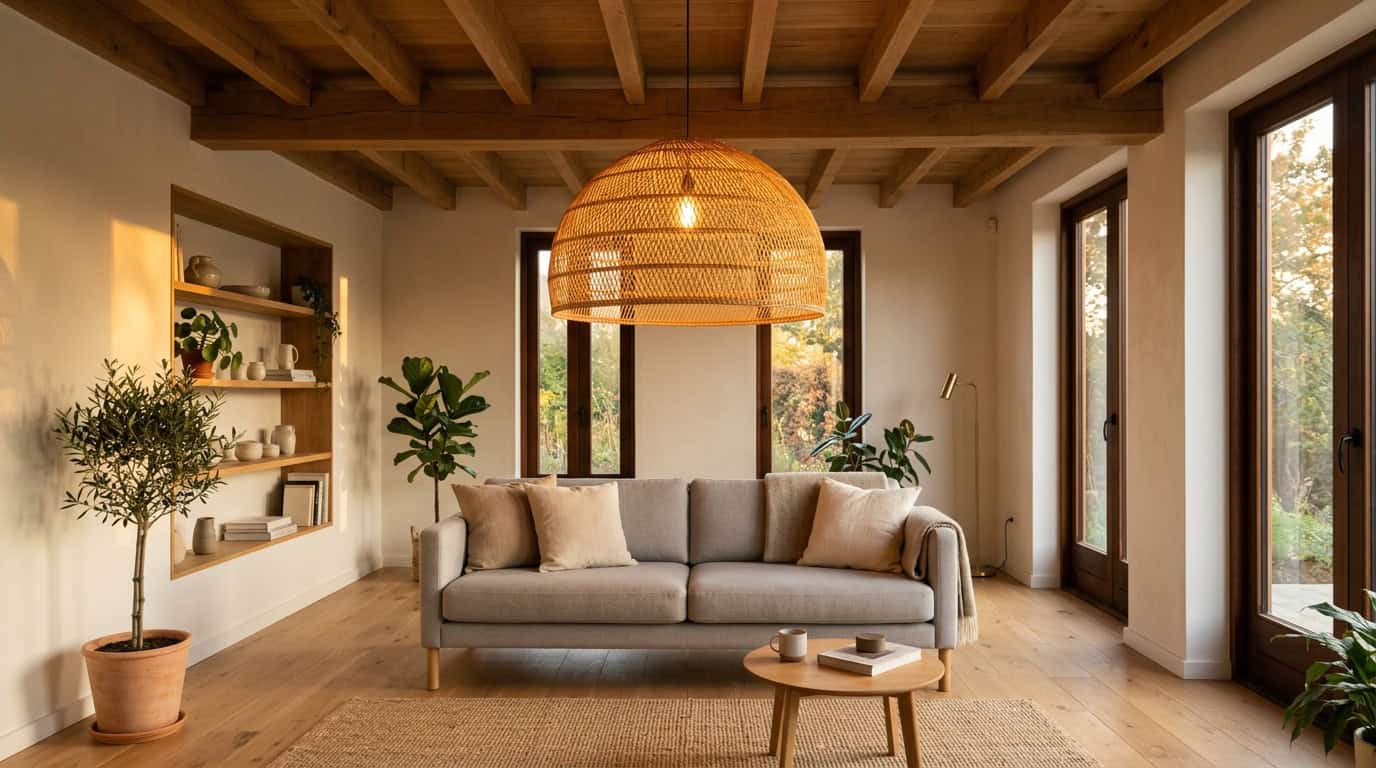
籐、竹、黄麻、アシが、家具や繊維製品を移動させた同じサステナビリティの動きに推進され、ランプシェードの材料として普及しています。籐の開編み構造は壁面や天井に斑模様の影を作り出し、それは機能的で装飾的な副作用です。.
籐は周囲の温かみを引き寄せ、ボヘミアンとコースタルな美学、屋外覆いの用途にも適しています。欠点としては、作業照明には適さない(散乱が多い)、湿度の高い環境で時間とともに反る、フォーマルまたは伝統的な内装には浮く感じがある、などです。米国での“rattan pendant shade”の検索は、2026年前半まで約40%年比で増加し、自然素材の家庭用品の回復と並行して推移しています。.
| トレンド | 主材料 | スタイル適合 | 成長している理由 |
|---|---|---|---|
| 職人吹きガラス | 手吹きボロシリケートガラスまたはソーダライムガラス | 中期世代の、エクレクティックでマキシマリスト | 独自性プレミアム;マスマーケット疲労 |
| 天然繊維のペンダント | ラタン、ジュート、竹、籐編み | ボヘミアン、コースタル、ビオフィリック | サステナビリティの価値観+暖かい質感 |
| マットブラックの金属 | 粉体塗装された鉄鋼またはアルミニウム | 工業的でミニマリスト、モダンなファームハウス | マット仕上げの照明器具と一致させる |
| 着色オパールガラス | セージ、アンバー、ブラッシュのオパールガラス | 最大主義的、レトロ、アーツィ | 中立的で彩度の高いインテリアへ色を戻す |
| 大型のインパクトあるシェード | あらゆる素材、直径18インチ以上 | 現代的で開放的な大空間 | 大きな部屋には視覚的なアンカーが必要 |
よくある質問
吊りランプのシェードを変更できますか?
ほとんどの場合、はい。次の部品を交換できます 吊り下げランプ用ランプシェード 道具を使わず10分未満で。 電球を切り、冷ます。取付器のタイプを見分け、取り替える。 電気技師が必要になる唯一のケースはソケット配線、コードの長さ、天井 canopy の変更時であり、シェード自体ではない。 交換を注文する前に取付タイプ(UNO対スパイダー対クリップオン)だけを確認すれば良い。.
ペンダントライトに必要なシェードのサイズは?
シェード径はペンダントの吊り下がりの高さのおおよそ半分から始めます。20インチの垂れ下がりは10インチのシェードを示唆します。ダイニングテーブルの上では、下部が 吊り下げランプ用ランプシェード テーブル表面から30〜36インチ上に座るべきです according to the 照明学会の 標準的な推奨事項。天井の高さと部屋の比率に基づいて上下に調整します。私たちの ランプシェードのサイズガイド 完全な寸法の内訳をカバーします。
ペンダントシェードと通常のランプシェードの違いは何ですか?
主な違いはフィッターのタイプと向き方です。ペンダントシェード、a 吊り下げランプ用ランプシェード, 、上部から垂直に取り付けられた吊りソケットにねじ込む UNO リングまたはリングアダプターを使用します。通常のテーブルランプシェードは、下部から支えられたハープの上にのせます。ペンダントシェードは光を下方へ向け、テーブルランプシェードは光を上方および外側へ散らします。リングアダプターを使えば一方をもう一方に適応させることができますが、固定具のタイプに設計されたシェードを購入するのがほとんどの場合、よりきれいに収まります。.
どのフィッタータイプが必要かどうやって判断しますか?
ソケットの現在の取り付け方法を特定します。ねじ付きソケットリング(UNO)、ワイヤーハープ、または電球を挟むクリップのいずれですか。UNOソケットの場合は外ねじ径を測定します。2つの標準サイズは1 5/8インチと2 3/8インチです。新しいものを注文する際には 吊り下げランプ用ランプシェード, 陰影の公称適合直径をソケットの測定値に合わせてください。$10リングアダプターが大半の不一致をカバーします。.
ガラス製のランプシェードはペンダントライトに適していますか?
ガラスは、選択肢の中で最も強力な材料のひとつです 吊り下げランプ用ランプシェード。耐熱性があり、焦げたり変形したりすることなく白熱灯やハロゲンを扱うことができ、掃除が簡単で、独特の光の質を生成します。透明なガラスは明るい指向性出力を実現し、曇りガラスやオパールガラスは周囲の暖かさを拡散させます。として ウィキペディアのランプシェード概要 メモによると、19 世紀後半以来、家庭用および商業用のペンダント シェードの主な素材はガラスでした。その代償として、取り付け中は壊れやすくなります。両手でハンドルを操作し、UNO リングを締めすぎないようにしてください。
ファブリックのペンダントシェードの中に入れて安全なワット数の電球はどれですか?
大多数の布製シェードはため 吊り下げランプ用ランプシェード 白熱電球を使用して最大40-60ワットの評価です。LED電球は同等の白熱電球より約75%だけ熱出力が低く、10WのLED電球(60Wの白熱電球に相当)はほとんどの40W評価の布製シェードの内部でも安全です。. ULのランプ器具安全試験 これらのワット数の表示を支える根拠があるため、電球を選ぶ前にシェードのラベルを読む価値があります。迷ったときはLEDを使ってください。.
吊り下げランプにドラムシェードを使用できますか?
ドラムシェードは、最も広く使用されている形状です。 吊り下げランプ用ランプシェード, そういうわけで、彼らはよく機能します。上端と下端の直径が同じで、ほとんどのインテリアスタイルに合い、下方と周囲光のバランスの取れた混合を生み出します。リネンからオパールガラス、編み金属メッシュまで、あらゆる素材で利用可能です。ペンダント用には、シャドーがUNOフィッターを備えているか、クモの harp ではなくリングアダプターが付属していることを確認してください。スパイダーハープは、卓上ランプの金具用に設計されています。.
シェード付きのペンダントライトはどのくらい低く垂らすべきですか?
シェードの下端は、座っている目の高さを超える位置になるようにします。リビングやダイニングの空間では床から通常60〜66インチ(約152〜168センチ)程度が目安です。テーブルやアイランドの上では、テーブル表面からシェードの下端まで30〜36インチ(約76〜91センチ)が標準です。ベッドサイドのペンダント照明の場合は、マットレスのトップから18〜24インチ(約46〜61センチ)程度が実用的な範囲です。もしあなたが 吊り下げランプ用ランプシェード 直径が unusually large(18インチ以上)ので、少し高く上げてください。低い高さの特大シェードは部屋を視覚的に圧迫し、下に座っている人には眩しさを生みます。.
吊り下げランプに最適なランプシェードの選択
最適な 吊り下げランプ用ランプシェード 結局は4つの数字に集約される:シェード直径、フィッターリング直径、吊り下げ高さ、部屋の天井高の余裕。光の機能に基づく1つの材質決定。それ以外はすべて好みの問題。.
ガラス製シェードは布や籐より熱に強く、清掃も容易で、他の素材では再現しにくい拡散光の品質を生み出します。ペンダントランプ用のガラスシェードを調達する場合、単一のシェードを交換する場合でも、新しい空間を整える場合でも、私たちの ガラス製ランプシェードコレクション 全形状と拡散レベルのラインナップの中から探すか、または カスタムガラス製ランプシェード 特定の器具に合わせてサイズを調整することについてお問い合わせください。.