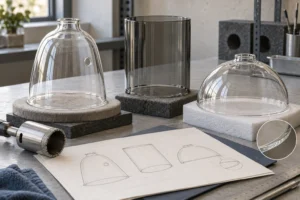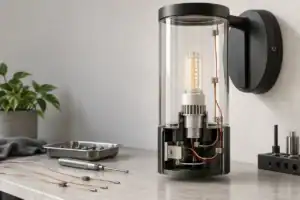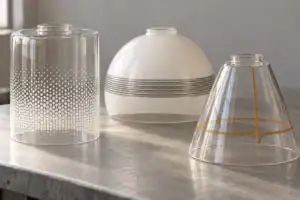
Glass lampshades are decorative light diffusers made from blown, pressed, or cast glass — available in pendant, globe, dome, and specialty shapes to suit any fixture and decor style.
Walk into any home with character and you’ll notice the lighting before you notice the furniture. The right lampshades glass can turn a bare bulb into a conversation piece — and the wrong choice makes even a beautiful lamp look cheap. Whether you’re replacing a broken pendant shade, sourcing glass for a vintage restoration, or outfitting a new build, this guide covers everything you need to know: the major styles, how glass types affect the light quality, how to measure for a correct fit, and the care routines that keep glass looking crisp for decades.
The market for lampshades glass has never been wider, which makes it harder to shop. We’ll cut through the noise.
What Are Glass Lampshades?
Glass lampshades are translucent or opaque enclosures fitted over a light source to diffuse, direct, or decorate the emitted light. Unlike fabric or paper alternatives, glass shades are rigid, heat-tolerant, and able to hold shape and color permanently — no fading, no sagging, no fire risk from a too-close bulb.
As the Wikipedia entry on lampshades notes, shades are classified by shape (drum, empire, bell, coolie) and by fitter type — the mechanical connection between shade and lamp. Glass lampshades exist in all four base shape categories, plus dozens of specialty forms: ruffled edges, swirled bodies, etched surfaces, and hand-painted motifs.
How Glass Lampshades Work
Light passing through a glass shade does three things: it scatters (diffusion), it filters (color/tint), and it reflects (if the interior is textured or frosted). A clear glass shade throws nearly 100% of lumens into the room. A dense white frosted shade might transmit 60–70%, creating a softer, more even glow. Amber or colored glass lampshades absorb some wavelengths and re-emit the rest — which is why a cobalt blue globe makes white LEDs read as cooler and more dramatic.
In practice: frosted lampshades glass hides the filament and eliminates glare; clear glass lets you showcase a decorative Edison or globe bulb; and patterned glass creates moving light effects on walls and ceilings.
Glass vs. Fabric vs. Plastic Lampshades
Each material fills a different role. Glass is the premium choice where permanence and aesthetics matter most; fabric is warmer and quieter acoustically; plastic is impact-resistant but ages badly under heat.
| Feature | Glass Lampshades | Fabric Lampshades | Plastic Lampshades |
|---|---|---|---|
| Heat tolerance | Excellent — rated to 250°C+ | Moderate — fire risk >75W incandescent | Poor — deforms above 60°C |
| Color fastness | Permanent — glass pigment doesn’t fade | Fades with UV exposure (2–5 years) | Yellows under heat (1–3 years) |
| Light diffusion | Excellent — tunable by glass type | Good — warm, soft | Fair — often uneven |
| Cleaning | Soap and water, dishwasher-safe (plain) | Spot clean only, delicate | Wipe down, scratches easily |
| Lifespan | Decades if unbroken | 5–10 years | 2–5 years |
| Price range | $15–$500+ | $10–$200 | $5–$50 |
For any fixture that will see heavy daily use — a kitchen pendant, bathroom vanity ring, or restaurant table lamp — glass lampshades glass is the obvious call. Fabric is better suited for soft bedroom lighting where the warm texture matters more than durability.
Types of Glass Lampshades
The shape, finish, and glass composition of a shade determine how it behaves with light and how it fits your fixture. There are roughly five families of lampshades glass worth knowing.
Pendant and Dome Shades
Dome shades are the workhorse of the lampshades glass category. A dome shade hangs from a ceiling fixture or pendant cord with the opening facing downward, directing most of the light onto a surface below — ideal for kitchen islands, dining tables, and task lighting. The interior of a dome shade is usually smooth and reflective; the exterior can be frosted, clear, or colored.
Dome diameters typically run from 8 inches (bedside or accent) to 18 inches (kitchen island main pendant). Anything larger than 18 inches usually becomes a bowl shade — a shallower variant designed for flush-mount ceiling fixtures.
Globe and Ball Shades
Globe shades — spherical or near-spherical lampshades glass — emit light in all directions, making them the most versatile option for general ambient lighting. They’re commonly used in bathroom vanity strips, art-deco floor lamps, and mid-century modern table lamps. The classic globe is available in clear, frosted, white milk glass, and seeded or textured variants.
Ball shades differ from true globes in that they’re slightly smaller (3–6 inch diameter) and often used as replacement glass for flush-mount hallway fixtures. Seeded glass globe shades — glass deliberately riddled with tiny air bubbles — scatter light in a way that’s impossible to replicate with fabric or plastic.
Frosted, Clear, and Specialty Glass Finishes
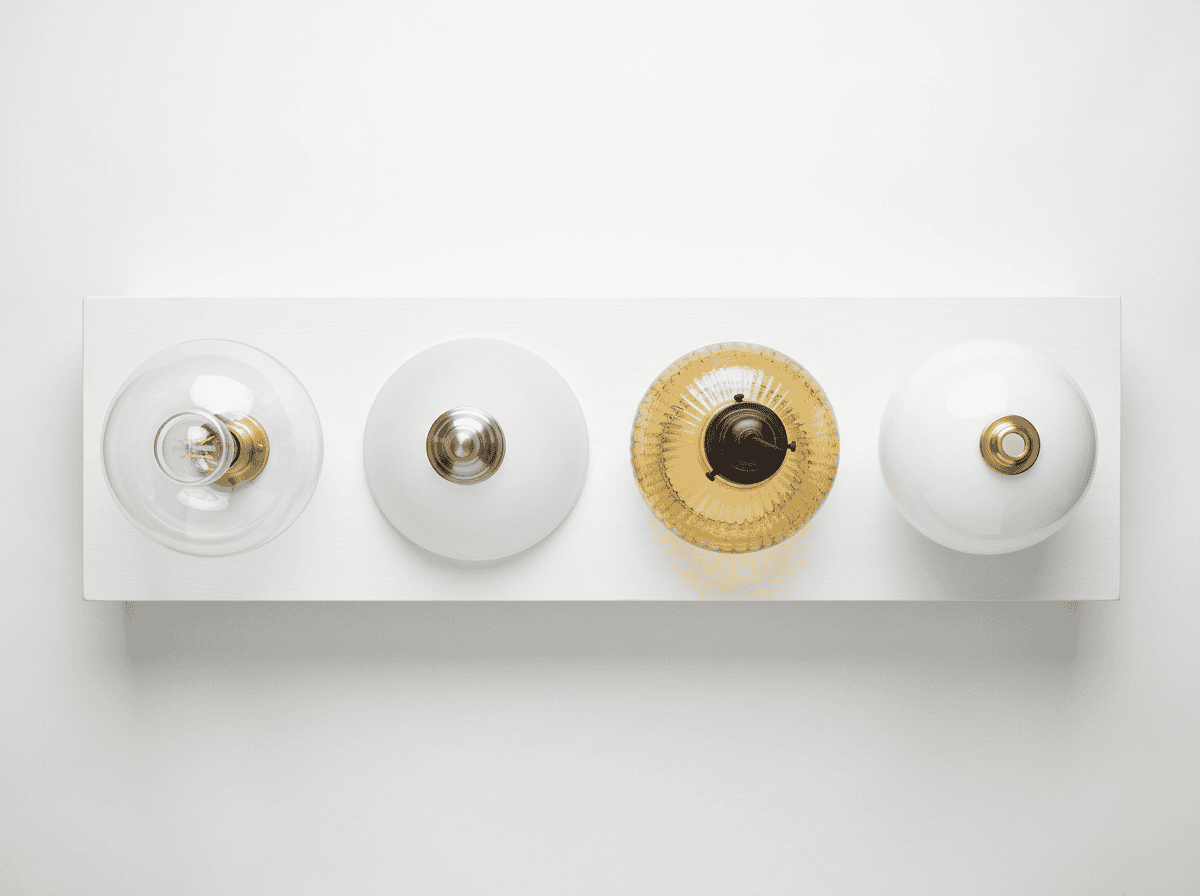
The surface treatment of lampshades glass changes everything about the quality of light:
- Clear glass: Maximum light transmission, shows every detail of the bulb. Best used with decorative filament or globe bulbs you want to showcase.
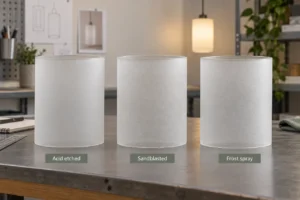
- Frosted glass: Sand-blasted or acid-etched surface scatters light evenly. Hides the bulb completely. The standard choice for bathroom and vanity fixtures where glare is a problem.
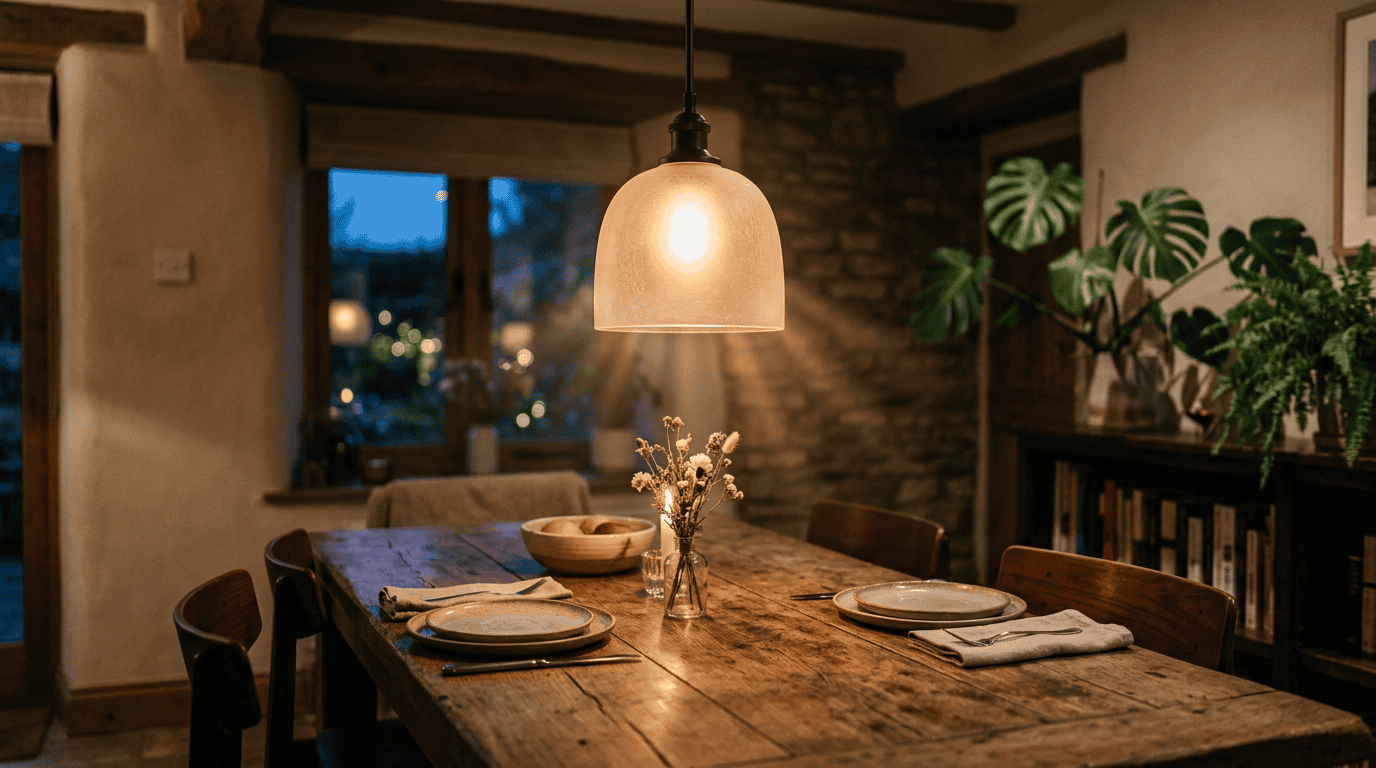
- White milk glass: An opaque pressed glass — historically made with bone ash or tin oxide — that produces a very soft, even glow. Milk glass pendant shades are a staple of farmhouse and cottage-style interiors.
- Seeded glass: Contains deliberately trapped air bubbles. Creates a warm, handmade appearance. Popular in rustic and craftsman-style fixtures.
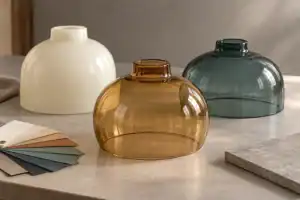
- Colored glass: Tinted in production. Amber, cobalt, green, and smoke are the most common in lampshades glass. Amber warms the color temperature; cobalt cools it; green was the standard for banker’s and library lamps in the early 20th century.
- Art glass / Tiffany-style: Leaded or fused colored glass panels assembled into elaborate patterns. The original Tiffany lamp shades, produced by Tiffany Studios between 1893 and the 1920s, command prices from thousands to millions of dollars at auction. Quality reproduction Tiffany-style glass lampshades range from $80 to several hundred dollars.
| Style | Best room | Typical diameter | Light character |
|---|---|---|---|
| Clear pendant dome | Kitchen, dining | 10–16 in | Bright, directional downlight |
| Frosted globe | Bathroom, hallway | 4–8 in | Soft, even, glare-free |
| Milk glass ball | Kitchen, cottage | 3–6 in | Warm, diffuse ambient |
| Seeded glass | Farmhouse, rustic | 6–14 in | Warm with subtle texture |
| Tiffany-style | Accent, traditional living | 12–22 in | Colorful, patterned |
| Colored dome | Bar, restaurant | 8–14 in | Mood-specific, directional |
Specialty and Vintage Glass Lampshades
Vintage and antique lampshades glass is a category in itself. Student oil lamp shades, Lincoln drape shades, and Gone with the Wind globe shades are actively collected and reproduced. These typically connect via a “slip fitter” — the shade slides over a metal ring and is held by set screws — rather than a modern spider fitter. Replacement glass for antique fixtures is available from specialty suppliers, though matching a 100-year-old acid-etched finish precisely requires custom work.
Carnival glass — iridescent pressed glass known historically as “poor man’s Tiffany” — was mass-produced from 1907 through the 1920s and is still reproduced today. It makes distinctive lampshades glass for collectors who want art-glass character without the Tiffany price.
Industry Applications and Interior Design Uses
Glass lampshades are not just a residential product. They show up in commercial, hospitality, and institutional contexts where durability and aesthetics both matter.
Residential Lighting: Dining, Kitchen, and Bedroom
In residential settings, lampshades glass earns its place in the spaces where people spend the most intentional time: dining rooms, kitchen islands, and bedrooms. According to the Smithsonian’s history of glass, glass has been prized as a premium material for over 3,500 years — the same properties that made it valuable to pharaohs (clarity, permanence, translucency) make it the first choice for lighting applications today.
For dining rooms: a cluster of three pendant glass shades over a table, spaced 30 inches apart, delivers both ambient and task light while becoming a focal design element. Matte black hardware with clear glass shades suits modern interiors; antique brass with seeded glass fits craftsman or farmhouse rooms.
For kitchen islands: dome-shaped lampshades glass at 14–16 inch diameter, hung so the bottom of the shade sits 30–36 inches above the counter surface, hits the sweet spot between adequate task lighting and avoiding glare into seated guests.
For bedrooms: globe or bell-shaped glass shades on bedside table lamps reduce the harshness of reading light without the color shift that amber glass introduces. Frosted white glass is the neutral, versatile choice.
You can browse our full range of pendant glass lampshades to find the right size and style for your space.
Commercial and Hospitality Settings
Restaurants and bars have driven significant demand for colored and specialty lampshades glass since the 2010s industrial design revival. Exposed Edison bulbs under clear dome shades, green enamel banker’s lamps on bar surfaces, amber glass pendants over booth seating — these are the visual signature of the “industrial farmhouse” restaurant aesthetic that still dominates new openings in 2026.
Commercial glass shades need to withstand daily cleaning with commercial detergents and the thermal cycling of constant on/off. Borosilicate glass lampshades hold up far better in these conditions than standard soda-lime glass. Borosilicate has a coefficient of thermal expansion roughly one-third that of soda-lime glass, meaning it doesn’t crack when exposed to sudden temperature changes — a critical property for fixtures cleaned daily with cold water directly after hours of use.
Hotels and event spaces use glass lampshades in sconces, table fixtures, and ceiling pendants to signal a level of finish that plastic or fabric cannot achieve. The weight and light refraction of glass reads as premium in a way that cheaper materials simply don’t.
Vintage and Antique Glass Lampshades: Restoration and Collecting
The antique lampshade glass market is active and growing. According to the Timeline of lighting technology, gas and oil lamp fixtures from the 1850s–1900s were designed around glass shades as structural components — removing or replacing the shade was not optional. Many 19th-century fixtures survive in good condition, and their owners face the challenge of finding period-correct replacement glass.
Authentic Victorian lamp shades used hand-blown glass with slight irregularities in thickness, which is part of what makes them optically interesting. Modern reproduction glass is much more uniform — a perceptible difference when both old and new glass are in the same room. Specialty glass studios still produce mouth-blown lampshades glass using period techniques; expect to pay $150–$400 per shade for authentic reproduction work.
For collectors: condition matters far more than age. A lamp shade with chips, cracks, or clouding from mineral deposit etching is worth a fraction of a pristine example, even if older. The iridescent surface on genuine Carnival glass can be distinguished from modern reproductions by the depth and complexity of the shimmer under directional light — authentic early 20th-century Carnival glass was sprayed with metallic salt solutions, producing a more complex optical effect than modern spray coatings.
How to Choose the Right Glass Lampshade
Choosing lampshades glass comes down to four variables: fitter type, diameter, glass finish, and bulb compatibility. Get any one of these wrong and you’ll have a shade that won’t mount, proportions that look off, lighting too harsh or too dim, or a heat risk.
Matching the Fitter Size and Socket Type
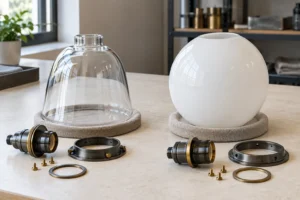
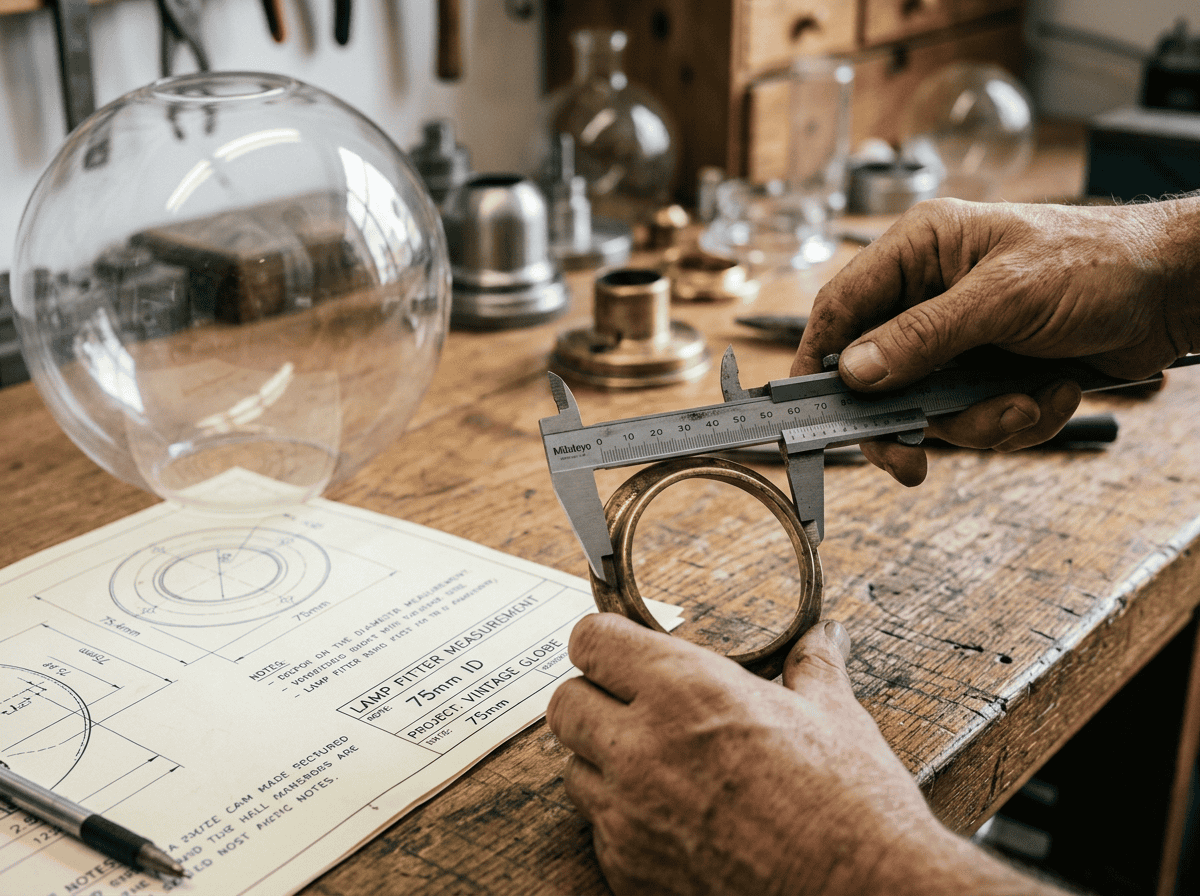
The “fitter” is the connection point between the shade and the lamp hardware. This is the single most important measurement to get right. The wrong fitter size means the shade won’t physically attach.
The four most common fitter types for glass lampshades:
- Spider fitter: A metal spider with three or four legs sits on top of the lamp harp. The shade’s spider ring rests on the harp and is secured by a finial. The most common fitter for table and floor lamps. Works with any lamp that has a harp.
- Uno fitter: A ring inside the shade that screws directly onto the bulb’s socket ring — no harp needed. Common on torchiere lamps and some table lamp bases. If your lamp base has a threaded socket shell instead of a harp, you need an Uno fitter shade.
- Clip-on fitter: Spring clips grip the bulb directly. Used for small accent shades and candelabra-socket fixtures. Works only with incandescent or halogen bulbs — CFL and LED bulbs stay too cool for the clips to grip reliably, and some run hot enough to heat the shade unevenly.
- Slip fitter: The shade opening slides over a metal fitting ring and is secured by set screws. Standard for antique oil lamp hardware and some outdoor post fixtures. The opening diameter (typically 6 or 12 inches) must match the fixture’s mounting ring exactly.
Measuring: for a spider fitter shade, measure the shade’s inner ring diameter (the hole in the spider). Standard sizes are 2.25 inches and 3.25 inches — match this to your harp width. For a slip fitter, measure the inner diameter of the shade’s opening at the fitter point, not the widest part.
Sizing Glass Lampshades for Your Lamp Base
Proportion is what most buyers get wrong. A shade that’s too small looks like a hat jammed on wrong; too large and the lamp base disappears.
The rule of thumb: shade diameter ≈ 2× the base height and shade height ≈ shade diameter ÷ 1.5. So a lamp base that’s 12 inches tall should have a shade roughly 18–24 inches in diameter. The bottom edge of the shade should sit at or slightly below the socket level, hiding the bulb from seated sight lines.
For pendant and ceiling fixtures, height matters more than diameter. A pendant glass shade hung over a dining table should sit 30–36 inches above the table surface — low enough for focused light, high enough not to interrupt sight lines across the table.
Common Mistakes Buyers Make
Not measuring the fitter before buying. A customer will purchase a beautiful glass lampshade online, then discover their lamp has a Uno socket and the shade has a spider fitter. These are not interchangeable.
Choosing too large or too small a wattage rating. Glass shades conduct heat into the air rather than absorbing it, but there are still limits. Most glass pendant shades are rated for bulbs up to 60W incandescent or equivalent. In a fully enclosed globe shade, LED equivalent wattage (typically 8–10W for 60W equivalent) matters because some LEDs generate their heat through the base rather than the bulb surface — check the shade’s ventilation.
Assuming frosted means soft. Frosted glass diffuses light evenly, but it does not reduce total lumen output significantly. If your fixture produces too much light, frosting the shade won’t fix it — use a lower-lumen bulb.
Ignoring color temperature. A glass shade that’s warm amber will shift a 4000K “cool white” LED toward 3000K visually. If you want the full color spectrum of a daylight bulb, use a clear glass shade. If you want to warm up an LED you already own, an amber glass shade is a legitimate tool.
Caring for Glass Lampshades
Glass lampshades require less maintenance than fabric, but they do show dust, fingerprints, and mineral deposits more visibly — especially clear and lightly frosted varieties. A monthly dust and a biannual deep clean keeps them looking new.
Weekly: Wipe with a dry microfibre cloth while the lamp is off and cool. Takes 30 seconds; prevents dust from building up into a film that requires soaking later.
Deep cleaning (every 3–6 months): Remove the shade from the fixture. For plain glass lampshades without paint or metallic decoration, submerge in warm water with a small amount of pH-neutral dish soap. Let soak 10–15 minutes, wipe with a soft cloth, rinse under clean water, and dry with a lint-free cloth. Do not use glass cleaner — it often leaves a residue that films clear glass.
For decorated or hand-painted lampshades glass: spot-clean only with a damp cloth wrung out almost dry. Never submerge decorated glass; the heat and soap will lift painted or gilded decoration over time.
For mineral deposit etching (common on clear glass in hard-water areas): a mixture of equal parts white vinegar and water, applied with a soft cloth and allowed to sit for 5 minutes before rinsing, dissolves most calcium deposits without abrading the glass surface. The Homes & Gardens cleaning guide recommends this approach specifically for glass fixtures, noting that commercial glass cleaners often leave more residue than they remove.
Future Trends in Glass Lampshades (2026 & Beyond)
Glass lampshades are having a moment — not despite modern lighting technology, but because of it. The shift to LED and smart bulbs removed heat as a constraint, opening up smaller, enclosed glass shades that would have been impractical with 75W incandescent sources. And as smart home systems mature, glass shades are being designed around the experience of changing light rather than setting it once.
Smart Lighting and Glass Lampshades
The pairing of tunable-white and RGBW LED bulbs with glass shades changes the design calculus significantly. A clear glass pendant shade over a smart bulb lets the homeowner shift from warm candlelight (2700K) to task-bright daylight (5000K) without touching the shade. A tinted or colored glass shade now has a secondary design tool: the bulb’s own color temperature.
Seeded and textured glass is gaining ground in smart home contexts for this reason — the irregular surface creates complex light patterns that shift as the bulb’s color changes, making the shade participatory in the lighting experience rather than a passive filter.
Sustainable Glass Manufacturing
The glassblowing and pressed-glass industries are under real pressure to reduce their carbon footprint. Traditional glass furnaces operate continuously at 1400–1500°C — difficult to decarbonize without process-level changes. In 2026, several European glass manufacturers (including suppliers to the lampshades glass market) have piloted hydrogen-fueled furnaces that produce no direct CO₂ emissions. Early results show comparable glass quality with energy costs 15–20% higher than natural gas, a premium the premium-lighting segment can absorb.
Recycled glass content in pressed glass shades has also risen. Clear recycled-glass shades now routinely contain 50–80% post-consumer cullet without visible impact on transparency — a meaningful shift from the near-zero recycled content standard of a decade ago.
| Trend | 2022 status | 2026 status | Trajectory |
|---|---|---|---|
| Smart-bulb-compatible designs | Niche (< 10% of new SKUs) | Mainstream (35%+ of pendant lines) | Accelerating |
| Recycled glass content | < 15% average | 50–80% in pressed glass | Established standard |
| Hydrogen-fired production | R&D phase | Pilot production (2–3 EU manufacturers) | Emerging |
| Borosilicate in commercial use | Specialty only | Growing in hospitality segment | Expanding |
| Tiffany-style revival | Stable collector market | Rising mainstream interest | Upward |
The broader trajectory: glass lampshades are moving up-market. As fabric and plastic shades handle the commodity end of the lighting market, glass is increasingly positioned as the premium, permanent option — the choice for buyers who want to buy once and keep it for 20 years. For manufacturers, that means investing in craftsmanship (hand-blown, mouth-blown, art glass), sustainability credentials (recycled content, clean energy), and design specificity (shapes and finishes that can’t be replicated cheaply in injection-molded plastic).
FAQ
What are glass lampshades made of?
Most lampshades glass is soda-lime glass — the same base composition as window glass, modified with colorants, opacifiers (for milk glass), or surface treatments (frosting, iridescence). Borosilicate glass is used for commercial and kitchen applications that require thermal shock resistance. Art glass and Tiffany-style shades use lead crystal or hand-colored specialty glass sheets.
How do I know what size glass lampshade I need?
Measure the lamp base height in inches. The shade diameter should be roughly 1.5–2× the base height. For pendant ceiling fixtures, the shade bottom should hang 30–36 inches above the surface being lit. Always measure the fitter opening (the connection point) separately — it’s not related to overall shade diameter.
Can glass lampshades be used with LED bulbs?
Yes — glass lampshades are fully compatible with LED bulbs. LEDs run cooler than incandescent bulbs, so enclosed glass shades are actually safer with LEDs than with their incandescent equivalents. Check that the shade is rated for the socket type (Edison E26, candelabra E12, etc.) rather than wattage, since wattage ratings on glass shades were set for incandescent heat loads that LEDs don’t produce.
What’s the difference between frosted and clear glass lampshades?
Frosted glass lampshades have a sand-blasted or acid-etched surface that scatters light evenly and hides the bulb filament completely. Clear glass transmits light directly, showing the bulb. Frosted shades are better for glare-sensitive spaces (bathrooms, home offices); clear shades are better when you want to showcase a decorative bulb or maximize visible lumen output.
How do I clean a glass lampshade without streaks?
Remove the shade and let it cool completely. Wash in warm water with a small amount of pH-neutral dish soap — avoid commercial glass cleaners, which leave a residue film on glass lampshades. Rinse with clean cool water and dry with a lint-free microfibre cloth. For mineral deposits (cloudy spots), a 50/50 vinegar-water solution breaks them down without scratching. Buff dry immediately to prevent new water spots.
Are antique glass lampshades worth restoring?
It depends on the condition and the fixture value. Chips and cracks on antique lampshades glass typically reduce value significantly and are difficult to reverse — professional glass restoration (resin fill, edge polishing) is available but expensive. Mineral etching (internal clouding from hard water deposits) is often recoverable with professional buffing. If the shade is intact but dirty, restoration is absolutely worth it; original glass has optical qualities that no reproduction matches.
What is a slip fitter on a glass lampshade?
A slip fitter is a connection method where the shade’s open base slides over a metal collar on the fixture and is secured with thumbscrews. It was the standard fitter for oil and gas lamp hardware in the 19th century and is still used on antique reproduction fixtures. The critical measurement is the fitter opening diameter — standard sizes are 6-inch and 12-inch, but vintage hardware may require custom sizing. Never force a slip-fitter shade onto an undersized collar; the glass will crack.
Conclusion
Glass lampshades occupy a unique position in interior lighting: permanent, heat-tolerant, optically rich, and available across a price range from commodity replacement globes to museum-quality art glass. Whether you’re navigating a practical replacement purchase or sourcing shades for a renovation, the variables that matter most are fitter type (get this wrong and nothing else matters), diameter-to-base proportion, and glass finish — which controls the character of your light far more than the bulb does.
The category is also evolving in meaningful ways. Smart-bulb compatibility and sustainable manufacturing practices are raising the baseline expectations for lampshades glass in 2026, while the renewed mainstream interest in vintage and art-glass styles signals that buyers want permanence and craft over disposable convenience. A quality glass lampshade, properly cared for, outlives the lamp, the fixture, and frequently the house it was installed in. That’s the argument for glass over everything else.