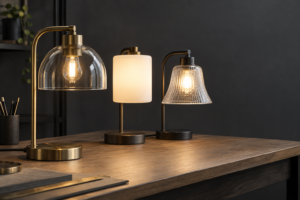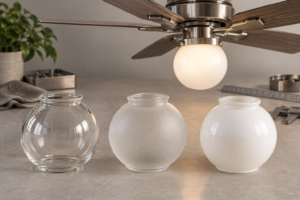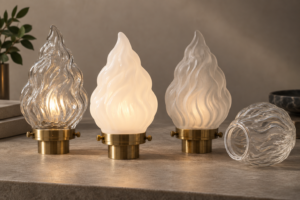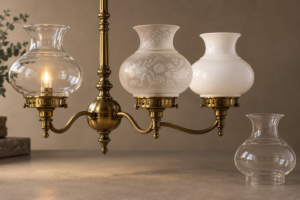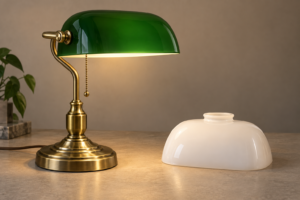
Quick answer: Vaseline glass lamp shades are usually transparent yellow to yellow-green glass identified by its body color and, in many examples, a green fluorescence under ultraviolet light. The name is a collector and market term, not a complete manufacturing specification. For a replacement or OEM project, record the shade profile, fitter opening, outside diameter, height, rim finish, light transmission, UV response requirement and destination market. A supplier can then assess whether the reference can be reproduced and what compliance review applies.
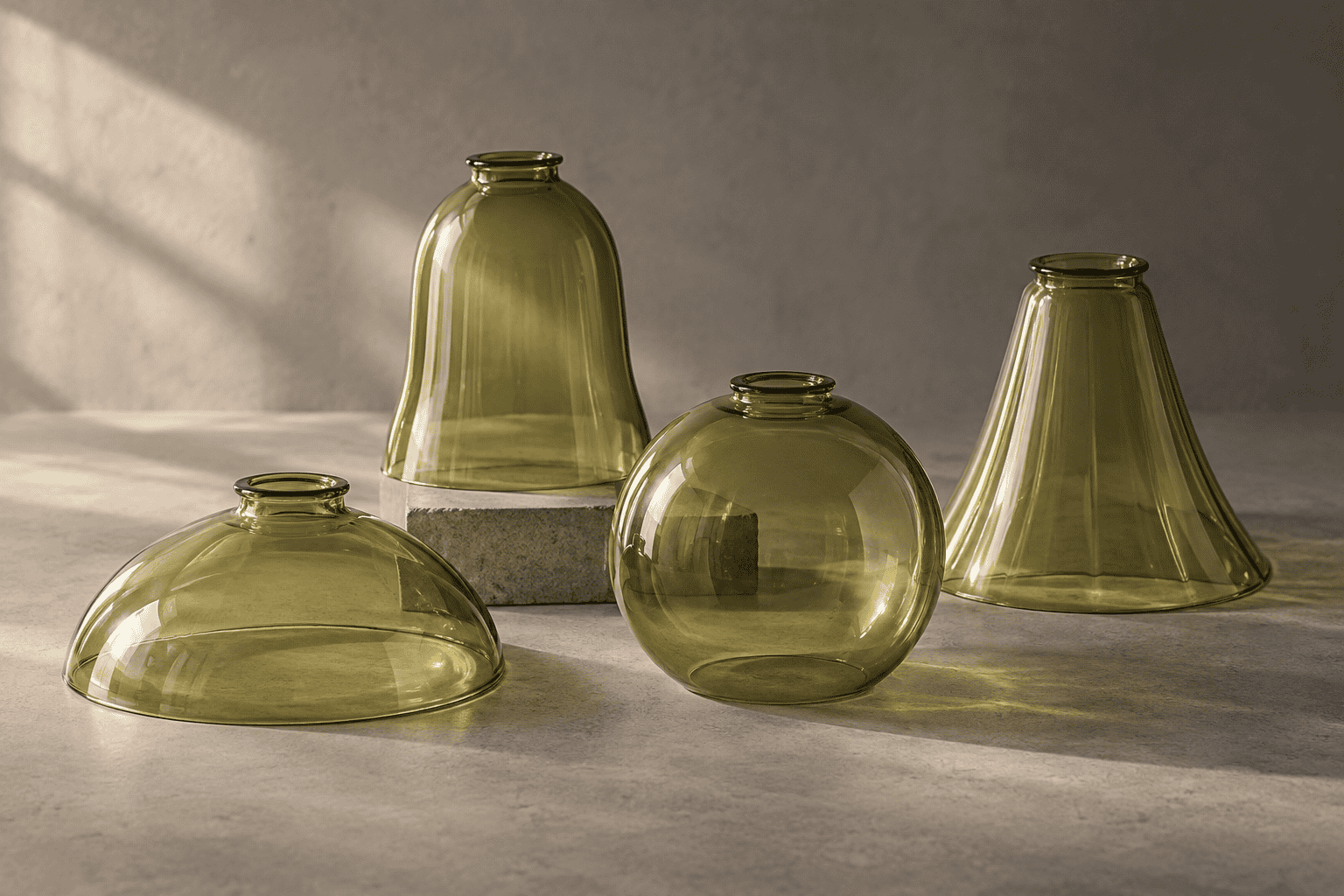
What are Vaseline glass lamp shades?
Vaseline glass is a name used for a recognizable family of transparent yellow or yellow-green glass. The term often points to glass associated with uranium coloration, but the words Vaseline glass and uranium glass are not interchangeable in every collecting community or market. Oak Ridge Associated Universities describes the color family and also notes that other materials can produce a similar appearance. That is why a shade should not be specified from a color name alone.
In lighting, the phrase can describe a bell, dome, tulip, globe, flared, ribbed or ruffled shade. The visual color is only one part of the job. The fitter, retaining method, maximum diameter, overall height and lamp temperature also affect whether the shade works on a fixture.
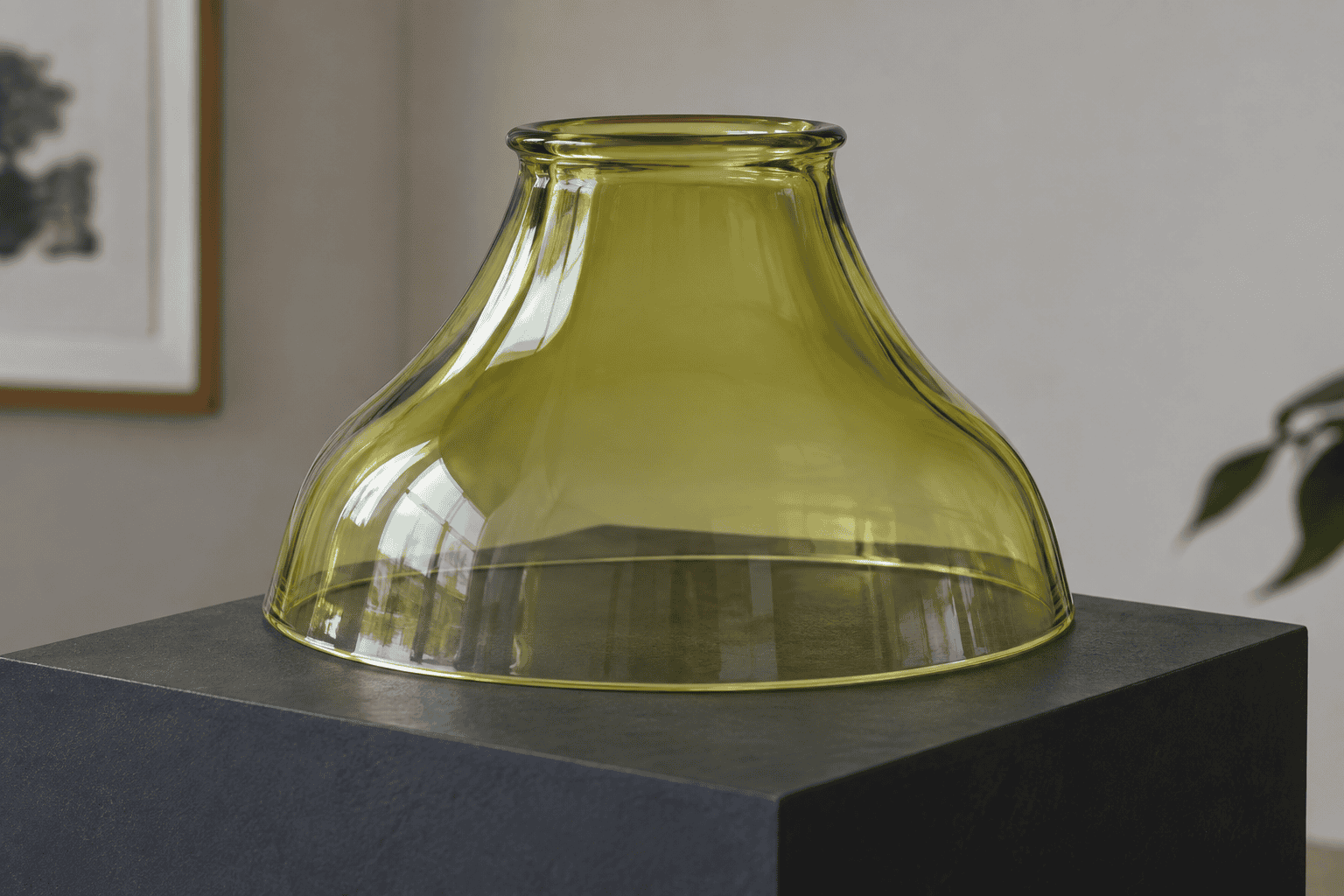
Vaseline glass, uranium glass and similar color terms
Search results and antique listings often mix several descriptions. A procurement brief should separate the words used to find a reference from the properties that need to be made.
| Term a buyer may see | What it usually communicates | What the drawing or RFQ still needs |
|---|---|---|
| Vaseline glass | A transparent yellow to yellow-green appearance and a collector or vintage design reference. | Color target, transparency, shape, fitter, dimensions and whether UV behavior is required. |
| Uranium glass | A broader material description that may include several colors and forms outside the usual Vaseline color family. | Material declaration, destination market, intended use and any required regulatory documents. |
| Canary or yellow-green glass | A visual color description that does not, by itself, identify the glass composition. | Color sample, lighting conditions for approval and a clear statement about UV response. |
| Custard or opaque yellow glass | A more opaque appearance that may be confused with a translucent vintage reference in a listing. | Opacity, surface finish, light transmission and whether the shade is intended to glow when lit. |
| Opal or milk glass | A diffuse white or colored glass body used to soften the lamp image. | Transmission level, finish, wall appearance and relationship to the metal fitter. |
Vaseline Glass Collectors Inc. terminology notes show why regional language matters. Use the familiar term for discoverability, then define the physical properties in measurable language.
How to identify a Vaseline glass shade before ordering
Identification is a screening process, not a substitute for a material declaration. Use the same steps for a vintage reference, a supplier sample or a new production approval.
- View the shade in ordinary light. Record whether the body is transparent, translucent or opaque. Photograph the color next to a neutral background, and note whether the glass looks more yellow, olive, lime or green under the light used for approval.
- Check the profile. Photograph the shade from the side and from above. A small difference in shoulder angle or rim diameter can change the way a shade sits on a fitter.
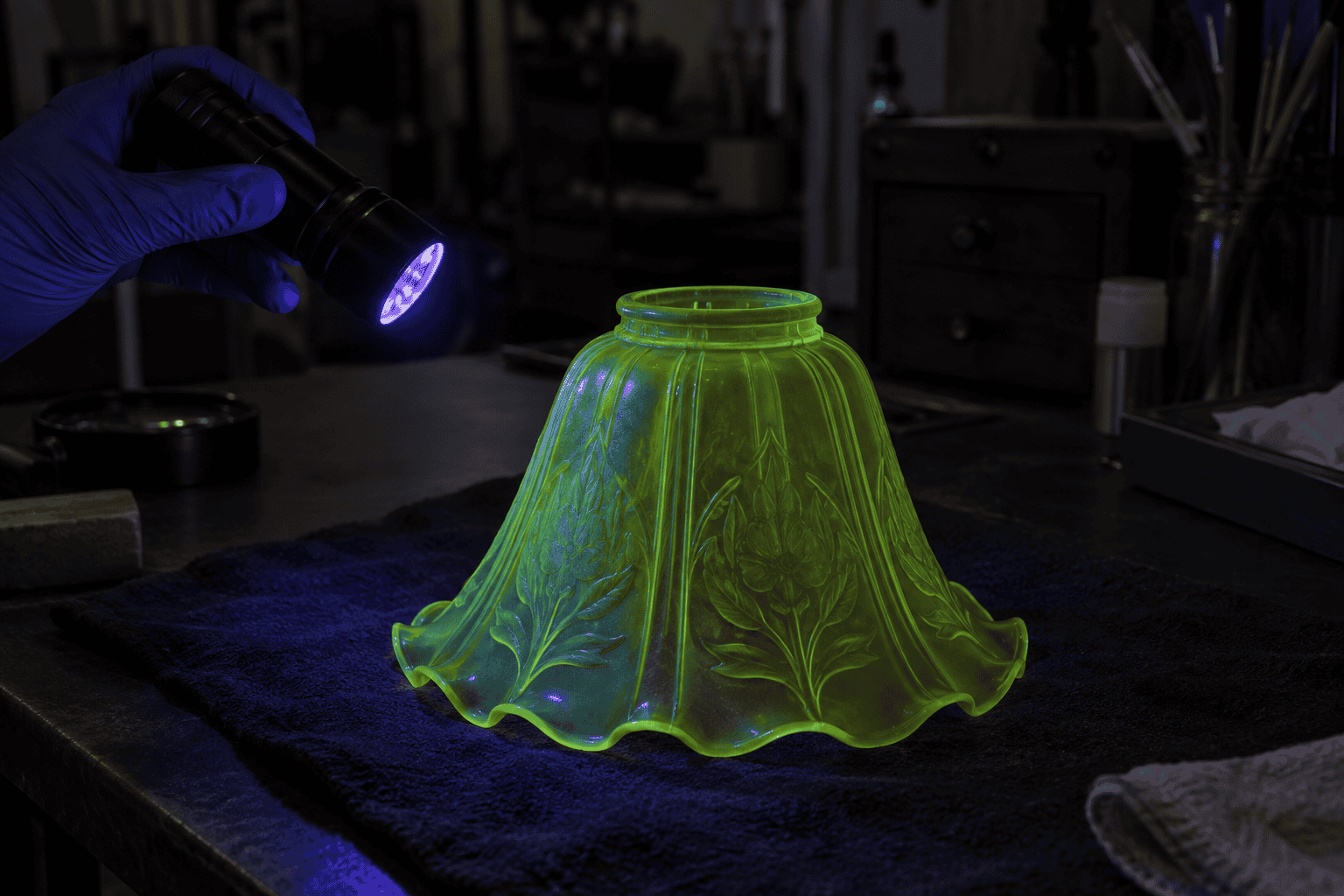
- Screen under UV in a controlled setting. A green fluorescence can support identification, but not every uranium-bearing glass fluoresces in the same way and not every yellow-green shade is uranium glass. The ORAU museum reference on Vaseline and uranium glass is a useful background source for this limitation.
- Record the light source and viewing conditions. A phone photograph under a warm bulb cannot serve as a color standard. Note the bulb type, camera setting if known, UV lamp type if used, and whether the shade was empty or installed.
- Measure the fitting surfaces. Measure the opening, the outside diameter at the rim, the neck or lip height, and the overall shade height. Do not rely on a marketplace title such as 4 inch or 6 inch fitter without measuring the actual part.
- Keep composition questions separate. If the end product requires uranium-bearing glass, ask for a material and compliance review. A visible glow is not a universal safety or legal conclusion.
Shade shapes, fitters and common lighting applications
Vaseline glass lamp shades are usually purchased as fixture components. A restoration supplier may need a table-lamp match, while a lighting brand or distributor may need several diameters on one fitter or a replacement for an existing retaining ring.
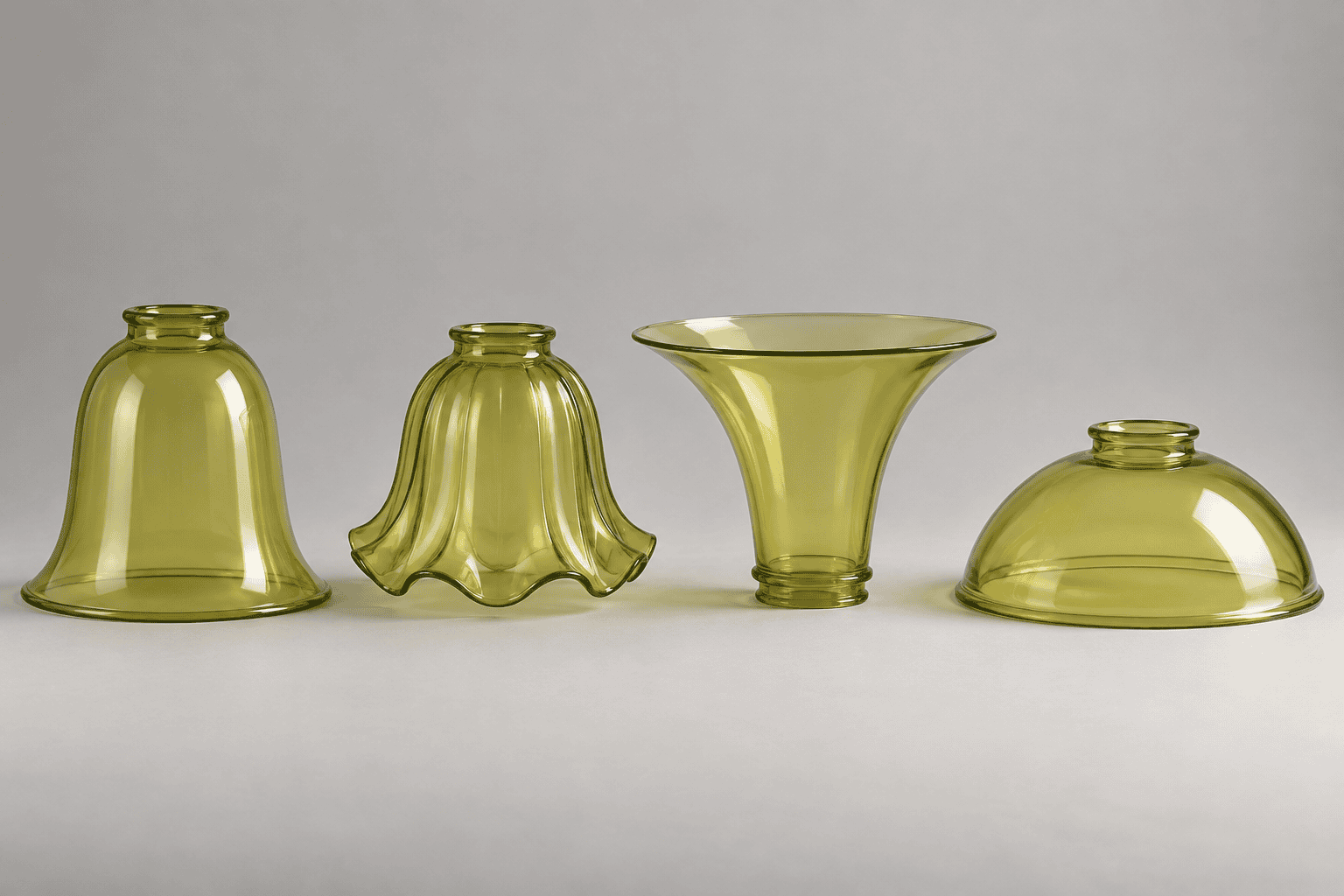
Common profiles include bell, tulip, globe, dome, trumpet and flared forms. Ribs, scallops, pressed patterns and a plain surface affect both appearance and reflected highlights.
| Specification field | Why it matters | Useful evidence to send |
|---|---|---|
| Shade profile | Controls visual match, clearance and the position of the light source. | Side photograph, outline sketch or section drawing. |
| Fitter opening | Determines how the shade locates on the fixture and whether a ring, gallery or threaded holder is required. | Opening diameter, lip detail and a photo of the existing holder. |
| Overall diameter | Controls fixture proportion, shipping volume and clearance from nearby parts. | Maximum outside diameter and where that diameter occurs. |
| Overall height | Changes the apparent scale of the shade and the distance from the bulb. | Vertical height from the fitting reference plane to the lowest edge. |
| Application | A table lamp, pendant, ceiling fixture or wall fitting may need different retaining details and thermal review. | Fixture photo, socket information and intended installation market. |
Use the existing glass lamp shade fitter types guide to separate a lip fitter, neck opening and hardware-supported connection before requesting a quote.
How to measure a replacement shade
When a vintage shade is broken or missing, measure the fixture before searching for a replacement glass shade. Protect the rim, photograph the holder from several angles and record the parts that touch the glass.
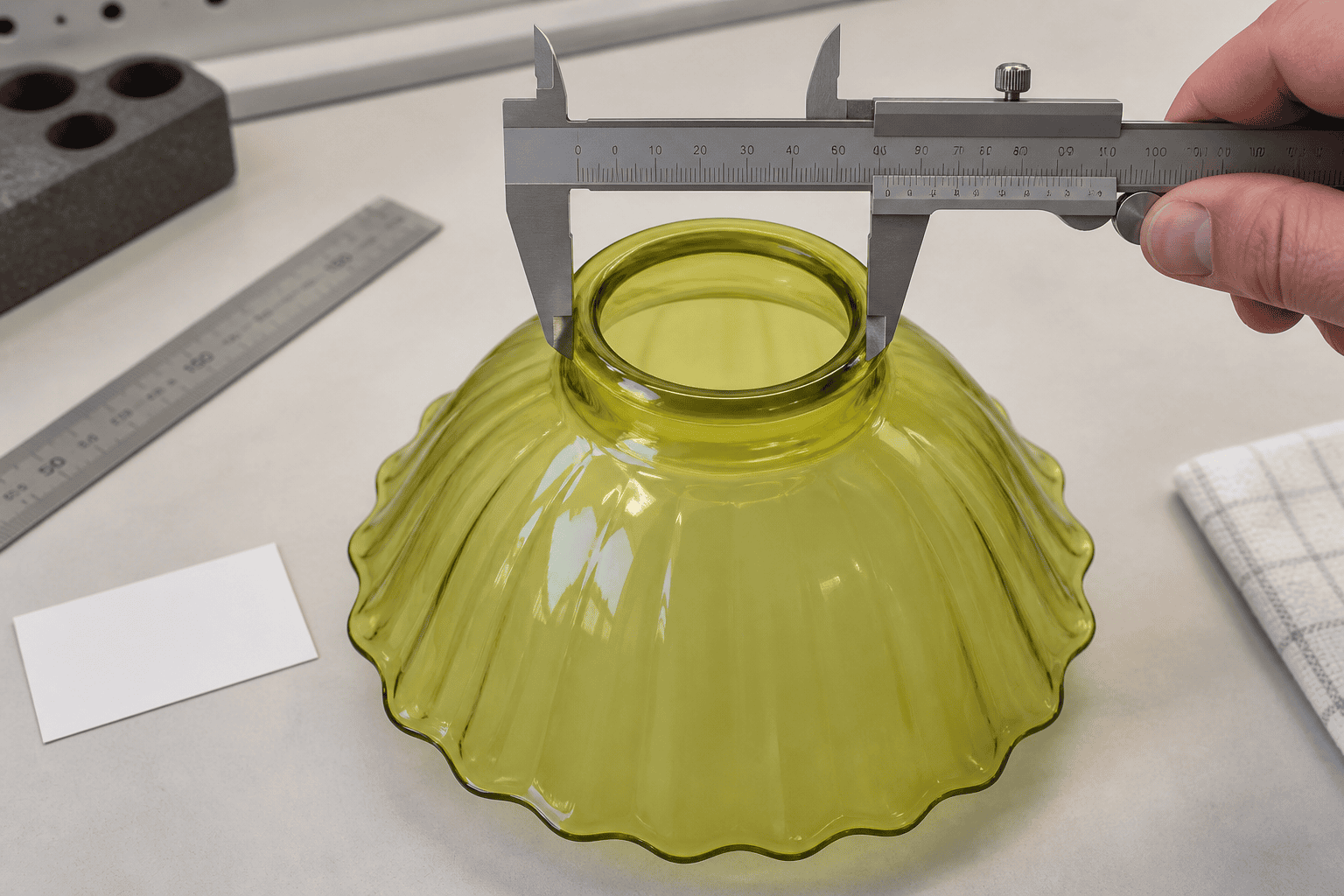
- Measure the fitter opening. Measure the inside diameter where the glass sits rather than the outside diameter of a metal ring. Take two readings at right angles because old hardware may not be perfectly round.
- Measure the seating depth. Note how far the lip or neck enters the gallery, ring or socket assembly. A correct diameter can still fail if the glass cannot seat to the required depth.
- Measure maximum diameter. Measure across the widest point of the shade. Record the height at which that point occurs if the fixture has a narrow clearance area.
- Measure height and rim position. Measure from the fitter reference plane to the bottom edge. For a scalloped or ruffled shade, record whether the low point or high point controls the clearance.
- Record the retaining method. Identify whether the shade is held by a screw, a ring, a gallery, a threaded neck or gravity on a support. Do not force a replacement shade onto hardware that was designed for a different opening.
- Send photographs with a scale. A ruler in the same plane as the opening is more useful than a hand-held photograph. Add a simple sketch if the holder has a shoulder or stepped seat.
Replacement project versus a new OEM project
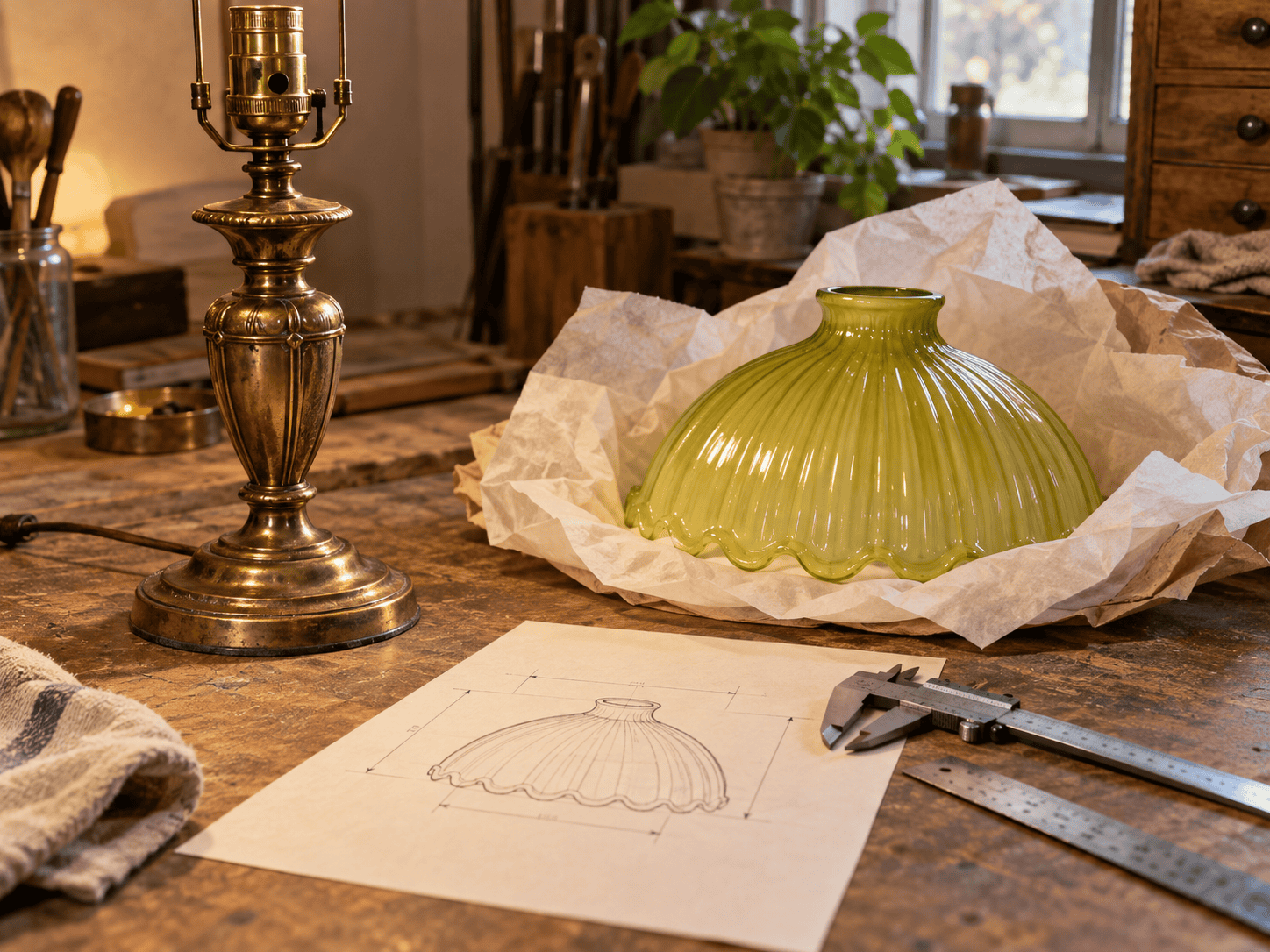
The sourcing process changes when a buyer matches one discontinued part instead of developing a new lighting range. Both projects benefit from a drawing, but the drawing answers different questions.
| Project type | Primary risk | Information needed first | Supplier output to request |
|---|---|---|---|
| Replacement for a vintage fixture | A visually similar shade does not fit the old holder or match the original silhouette. | Original shade or fixture, fitter measurements, photographs, maximum diameter and height. | Fit review, sample or drawing comparison, finish check and packing recommendation. |
| Replacement for an existing product line | A small dimensional or color change creates complaints across a large installed base. | Approved sample, current drawing, fit standard, inspection points and batch history. | Controlled sample, production drawing, inspection plan and lot consistency review. |
| New OEM or ODM design | The visual idea is not yet defined well enough to build a repeatable mold or quote. | Target profile, dimensions, fitter, glass appearance, light behavior, annual demand estimate and destination market. | Technical review, sample route, mold proposal where needed and quotation assumptions. |
Fitter sizes and dimensional control
Buyers may search for 2 1/4 inch, 2 1/2 inch, 3 1/4 inch, 4 inch or 6 inch fitter glass shades. These phrases help locate candidates, but sellers may measure the opening, lip, neck or supporting ring differently.
Write the dimension in millimeters and inches if both units are used. State the method, reference plane and whether the value is nominal, minimum or maximum. If the drawing has no acceptable range, the manufacturer should not invent one. Confirm with our engineering team based on the drawing, glass type and production method.
Glass appearance, finish and light diffusion
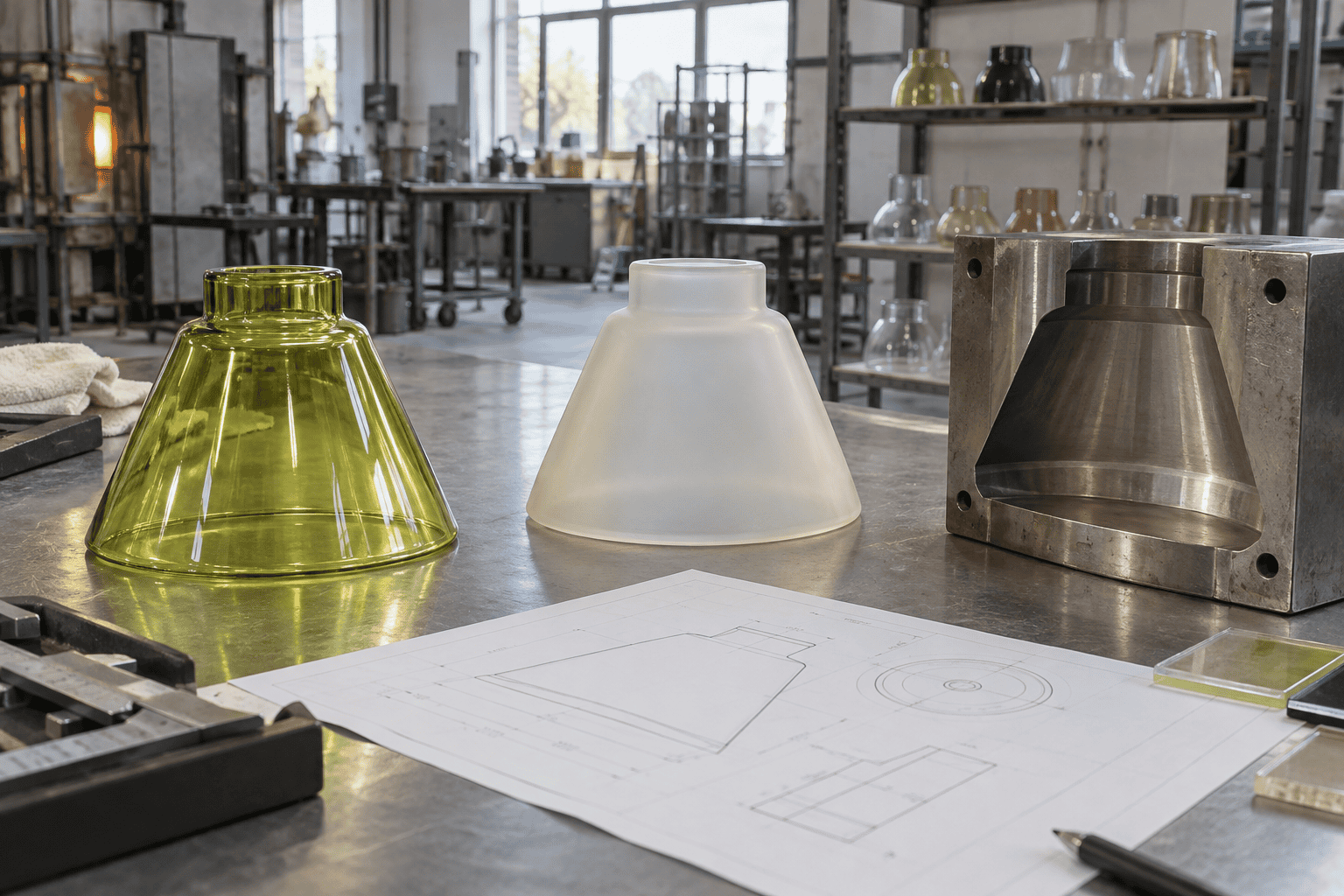
Vaseline glass is often chosen because its transparent body shows color in daylight and a colored glow when lit. Opal or milk glass hides the source and spreads light more evenly. Satin etched glass softens reflections and can reduce bulb visibility while retaining some color.
| Glass appearance | Visual effect when unlit | Typical light behavior | Approval point |
|---|---|---|---|
| Clear yellow-green | Strong body color with visible edges, ribs and fitter. | More direct transmission and stronger colored shadows. | Color under the agreed light source, edge thickness and surface clarity. |
| Satin etched | Softened reflections with a less mirror-like surface. | More even glow and less sharp view of the bulb. | Uniformity of the satin area and whether the fitter remains clear. |
| Opal or milk glass | White or softly colored body that hides internal hardware. | Diffuse output with lower visual contrast. | Opacity, tint, glow level and any visible transition at the rim. |
| Seeded or textured glass | Visible texture or inclusions that change the surface character. | Scattered highlights and a less uniform projection. | Texture density, inclusion size and acceptable natural variation. |
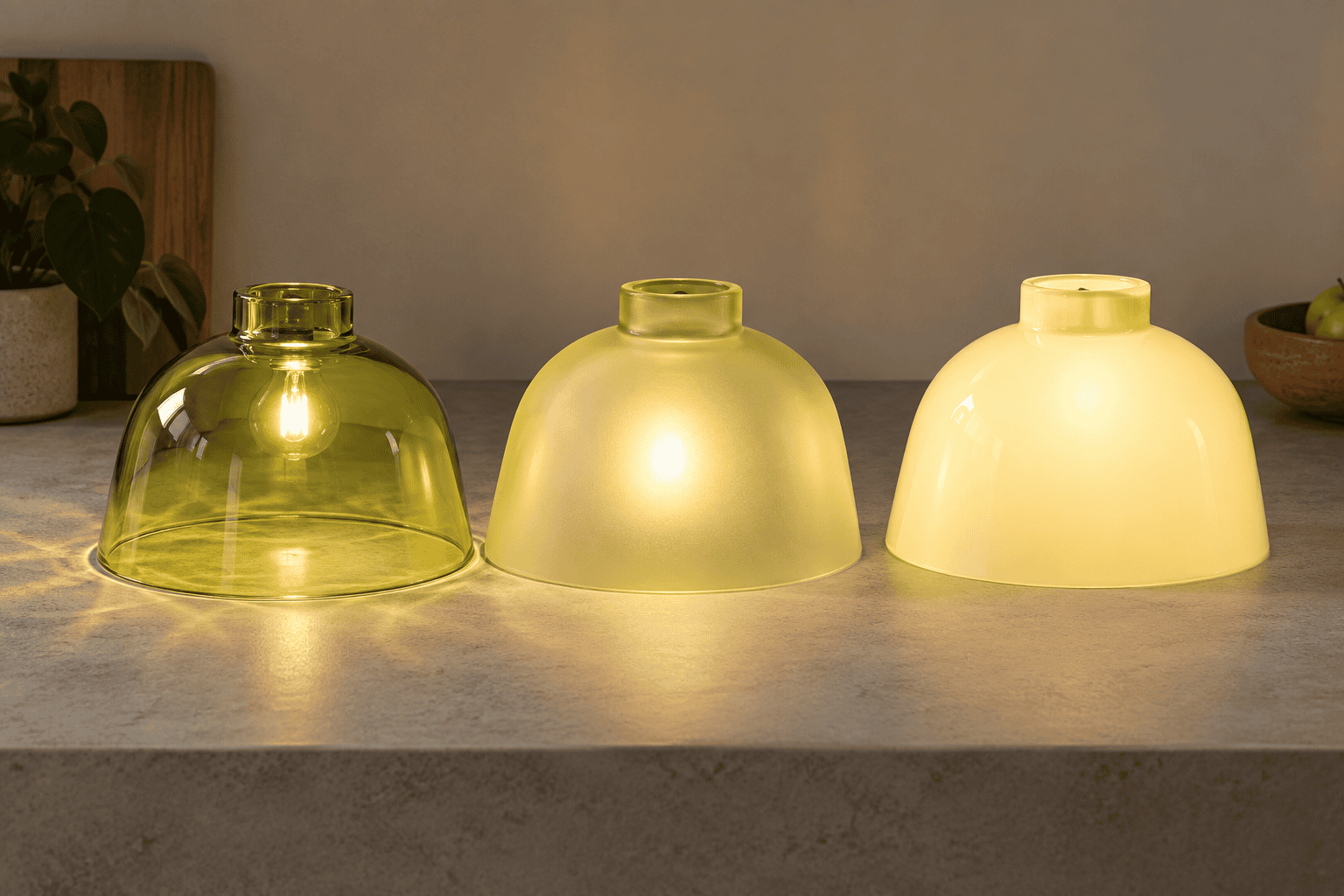
For a defined optical result, state the bulb type, light source position and viewing direction. A non-fluorescent colored or opal formulation may achieve the desired effect more easily. Review that option with engineering rather than substituting it without approval.
UV fluorescence and destination-market compliance
UV fluorescence helps collectors recognize some uranium-associated glass, but it is not a complete product specification. A screen does not define material documents, destination-market treatment or lamp-application requirements.
The U.S. Nuclear Regulatory Commission consumer-products guidance explains that products containing source material can fall under exemptions, licensing rules and transfer conditions. These rules depend on the product, material and jurisdiction. Review the formulation and destination market before placing a production order.
For a quotation, separate these questions:
- Is the target only a yellow-green appearance, or must the glass contain a specified material?
- Is a visible response under a stated UV setup part of the acceptance criteria?
- Which country or countries will receive the shades?
- Does the buyer require a material declaration, test report or other document before import or sale?
- Will the shade be sold as a replacement component, a decorative object or part of a complete luminaire?
JX can review a reference, drawing, target hue, fitter and intended market. Whether a uranium-bearing or fluorescent formulation is feasible must be confirmed with our engineering team and the destination-market compliance path. Do not treat this article as a safety certification or legal opinion.
Mouth-blown and machine-pressed manufacturing routes
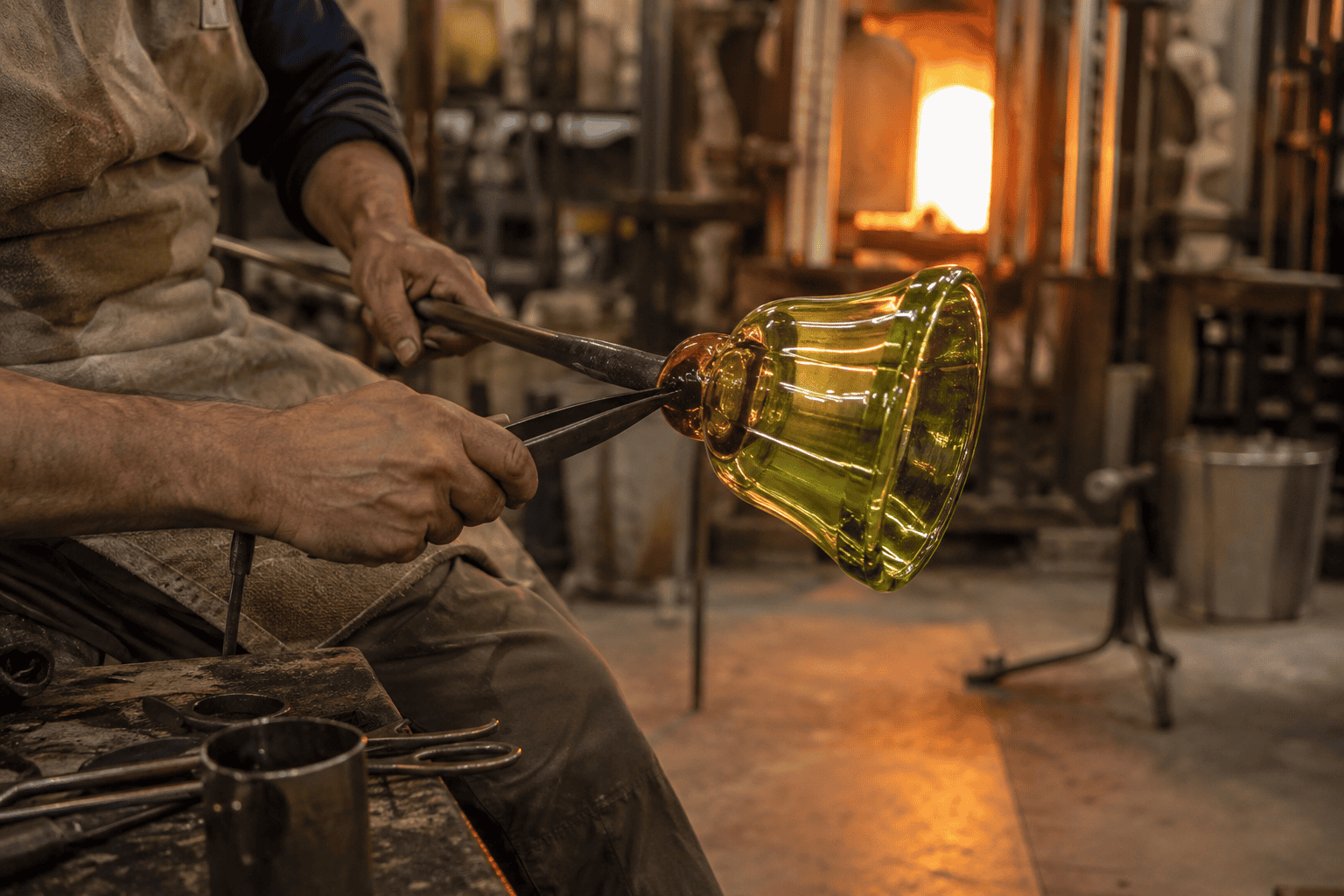
The manufacturing route affects repeatability and the work required before mass production. Mouth-blown glass can suit a small run, shaped prototype or form that depends on hand finishing. It can also introduce more variation in wall distribution, rim shape and surface character, so the approved sample and inspection method need to be clear.
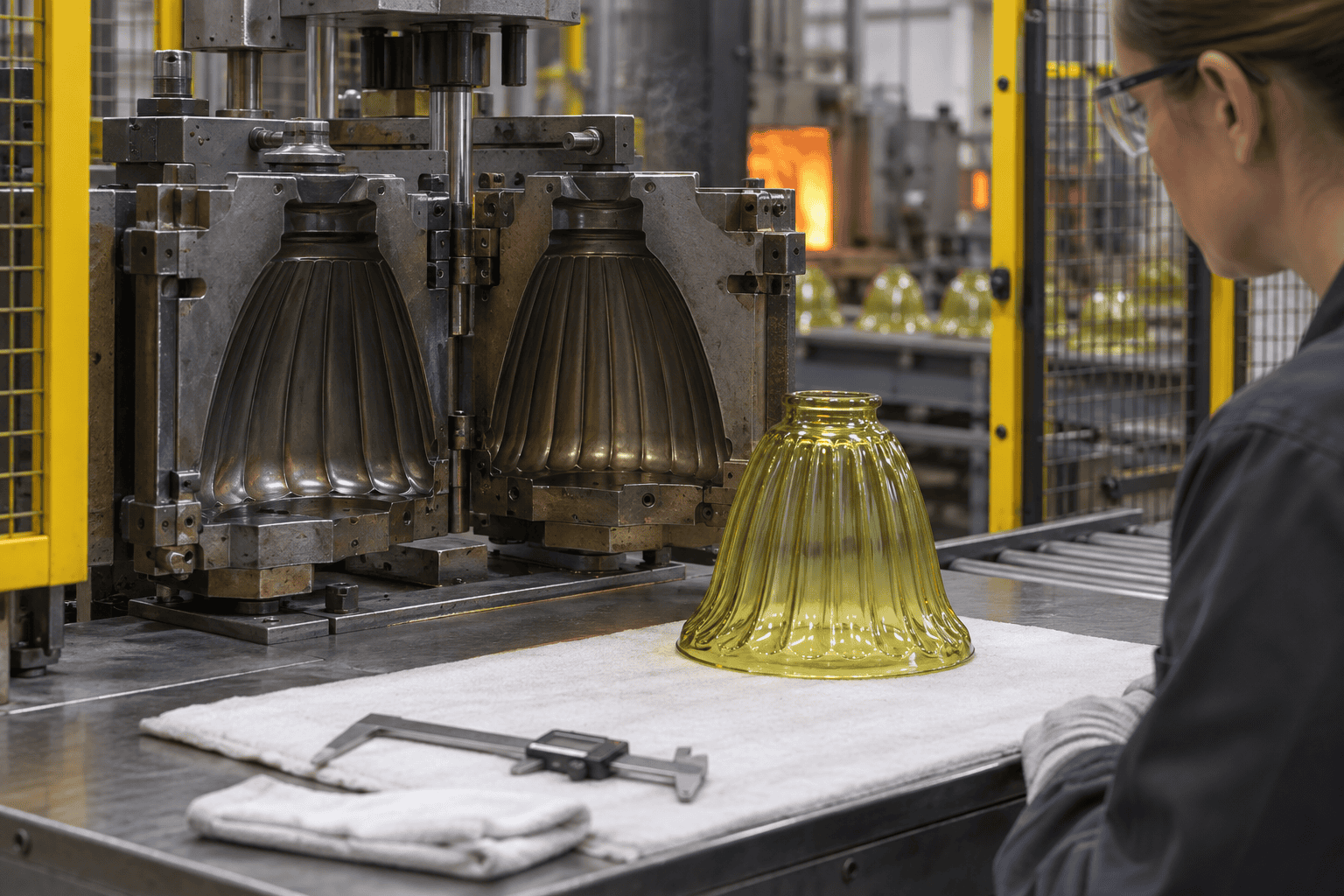
Machine pressing uses a mold to form the body. It can suit a lighting brand that needs consistent geometry across repeat orders, especially for a defined profile or related sizes. Pressed glass still needs review of mold wear, cooling, trimming, edge finishing and color consistency.
Choose the route from the shape, quantity, appearance, tooling budget, allowable variation and schedule. A supplier should explain which features the route controls and which need secondary finishing. JX provides glass manufacturing information; project-specific selection remains subject to engineering confirmation.
Custom mold development for a new shade
A custom mold must account for glass distribution, the opening, rim, release, cooling and handling after forming. A clear development sequence reduces the chance of approving a sample that cannot hold its dimensions in production.
- Review the master sample, drawing, application and critical fit dimensions.
- Separate appearance dimensions from functional dimensions. For example, a rib may be visual while the fitter opening is functional.
- Choose a process route and identify which areas may need trimming, grinding, fire polishing or another edge treatment.
- Develop a sample and compare the profile, color, finish, opening and installed position.
- Record the approved sample and inspection points before the production tool is released.
- Confirm whether a change to the glass color or finish requires a new approval sample.
Do not ask a supplier to quote a mold from a single front photograph. Send a side view, top view, section view or physical reference whenever possible. The glass lamp shade technical drawing checklist gives buyers a useful format for organizing those details.
Dimensional tolerances, glass thickness and edge finishing
There is no universal tolerance for every Vaseline glass shade. The range depends on shape, size, glass type, forming route, cooling and the way the fixture locates the part.
| Control item | Define in the project drawing | Why the buyer should approve it |
|---|---|---|
| Fitter opening | Nominal size, reference plane, acceptable range and seating depth. | It determines fit and can affect the whole installation. |
| Body diameter and height | Maximum diameter, height, key section points and measurement method. | It controls proportion, clearance and interchangeability. |
| Glass thickness | Target or minimum by area where the design requires it, subject to process review. | It affects weight, appearance, strength and light transmission. |
| Rim and edge | Cut, ground, fire-polished, rolled or other required finish, plus visual acceptance. | The edge contacts hardware and is a common handling risk. |
| Color and UV response | Reference sample, viewing light, UV setup and acceptance method. | It prevents a color name from becoming an ambiguous pass or fail decision. |
When a project requires a numeric tolerance or thickness, use this wording in the RFQ: Confirm with our engineering team based on the drawing, glass type and production method. That keeps the quote honest until the supplier has reviewed the actual design.
Quality inspection for repeat orders
Inspection should cover the parts a customer sees and the surfaces that make the shade fit. For a Vaseline glass shade, color consistency is important, but a consistent color cannot compensate for a distorted fitter or an unfinished rim.
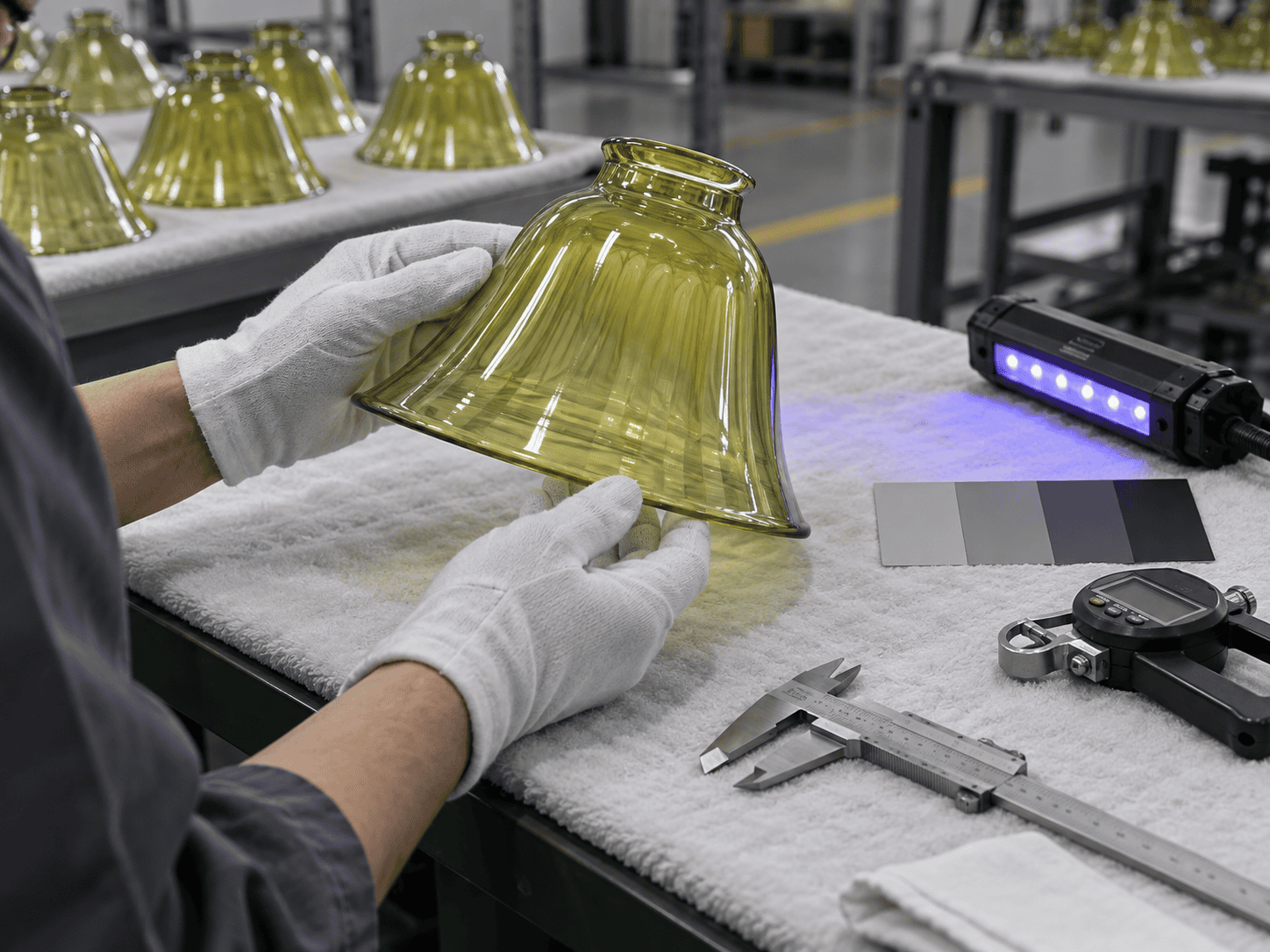
- Color and transmission: Compare samples under the agreed daylight and lamp conditions. Keep an approved reference available for lot comparison.
- UV response: If required, use the stated lamp, distance, darkening condition and observation method. Record the result as a project acceptance point, not as a broad material claim.
- Fitter and profile: Check opening, seating surface, body diameter, height and symmetry against the drawing.
- Glass body: Inspect for cracks, sharp edges, unacceptable bubbles, cords, stones, heavy inclusions or other defects defined by the project standard.
- Finish: Check satin, etching, ribs, scallops, color coverage and transitions at the rim.
- Lot consistency: Compare first-off samples and production samples against the approved master. Ask how mixed batches will be separated and identified.
Use the existing glass lamp shade quality inspection checklist when preparing a supplier discussion. The final acceptance plan should be agreed for the specific design rather than copied from a different shade.
Packaging and international shipping
Glass packaging should protect the fitter and the widest body area separately. A carton that prevents contact may still allow rim movement if the partitions are loose. The pack should match the shade profile, carton quantity, shipping route and handling method.
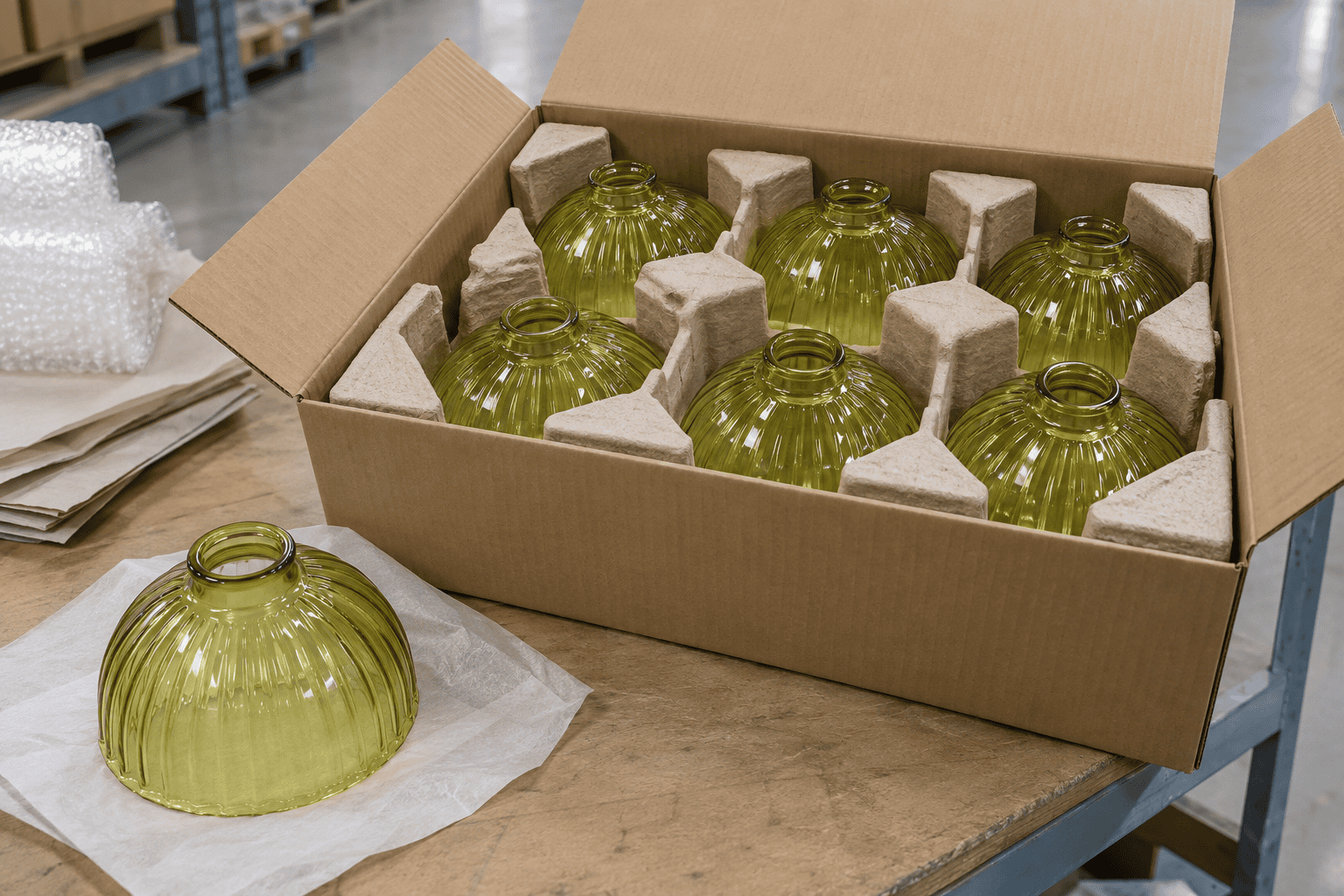
| Packaging question | What to confirm with the supplier |
|---|---|
| Rim protection | How the fitter and edge are isolated from hard contact during handling. |
| Internal separation | Whether each shade has a dedicated cell, sleeve or molded partition. |
| Movement control | How empty space is restrained without placing pressure on the glass body. |
| Carton quantity | How pack count changes the weight, dimensions and handling method. |
| Shipment approval | Whether a packing sample or carton photo will be approved before the bulk order is packed. |
Do not publish a drop-test result or a universal breakage rate unless the project has a documented test and the result applies to the exact pack. Ask the supplier for a packaging recommendation based on the shade geometry and destination route.
Buyer RFQ checklist for Vaseline glass lamp shades
A useful RFQ tells the manufacturer whether the job is a replacement, a catalog variation or a new OEM development. It also makes missing assumptions visible before price comparison.
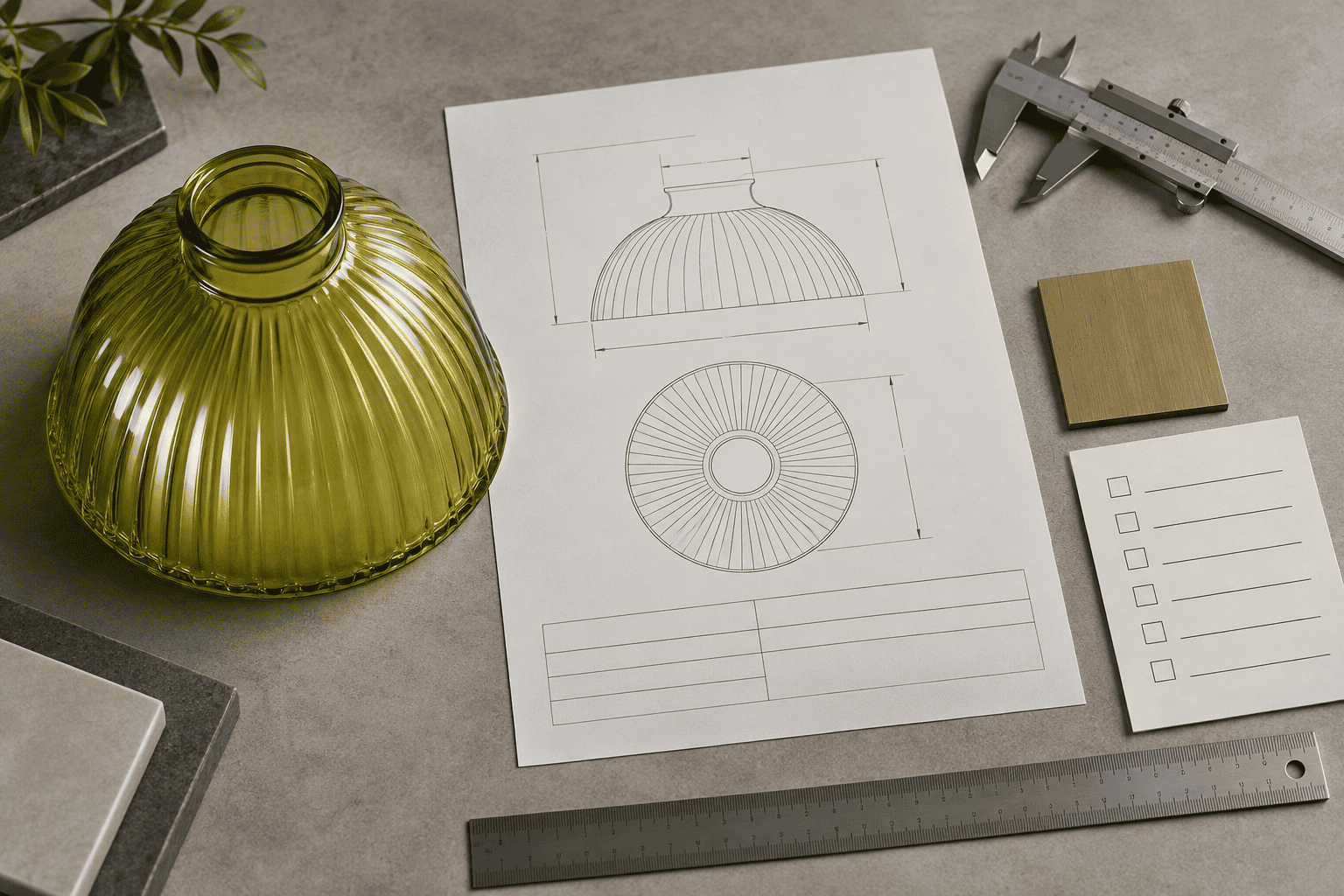
| RFQ item | What to provide |
|---|---|
| Reference | Original shade, fixture photographs, product link or clear side and top views. |
| Dimensions | Fitter opening, seating depth, maximum diameter, overall height, rim shape and critical clearances. |
| Glass appearance | Yellow-green color target, transparency or opacity, finish, texture and approved sample conditions. |
| UV requirement | Whether UV response is required, how it will be viewed and whether it is a screen or a formal specification. |
| Material and compliance | Requested glass type, intended use, destination countries and documents required by the buyer’s compliance team. |
| Production route | Replacement, catalog customization, mouth-blown development, pressed glass or open process recommendation. |
| Quantity | Sample quantity, first order estimate, repeat order pattern and packaging quantity per carton. |
| Commercial terms | Target sample date, requested delivery window, trade terms and whether mold cost should be separated. |
If a drawing is not available, send a physical reference and ask the supplier to identify the missing dimensions before quoting. For a new range, ask for sample approval checkpoints, mold ownership terms and the inspection points that will remain fixed during repeat orders.
Buyer questions
What is Vaseline glass?
It is a market and collector term for transparent yellow to yellow-green glass, often associated with uranium coloration. The term alone does not prove composition. State color, transparency, UV requirement and compliance needs separately.
Is Vaseline glass the same as uranium glass?
They overlap, but usage varies. Uranium glass is often the broader material term, while Vaseline glass usually describes a transparent yellow-green appearance. Confirm the intended material rather than relying on the name.
How can I tell if a glass lamp shade is Vaseline glass?
Check unlit color and transparency, then screen under UV in a controlled setting and compare the result with the reference. A green response can support identification, but it does not replace material documentation or market review.
Does every uranium glass shade glow under UV?
No. Fluorescence varies, and some uranium-associated glass does not show the same response. Define the lamp, viewing conditions and acceptance method before sampling.
Are Vaseline glass lamp shades safe to use?
Do not infer universal safety from a collector name or UV photograph. The answer depends on material, product design, intended use and destination-market rules. Review the actual formulation and application with the supplier and compliance team.
Which fitter sizes are common for glass lamp shades?
Buyers encounter 2 1/4 inch, 2 1/2 inch, 3 1/4 inch, 4 inch and 6 inch descriptions. These are listing terms, not proof of compatibility. Measure the opening, seating depth and retaining hardware.
Can a manufacturer reproduce a discontinued Vaseline glass shade?
Possibly, if the reference and fit requirements are clear and the formulation is feasible. The manufacturer may need a sample, process review and new or adapted tooling. Confirm feasibility before promising a schedule.
Can you make a custom fluorescent yellow-green glass shade?
JX can review a reference, target hue, fitter and application. A uranium-bearing or fluorescent formulation depends on engineering, the glass route and the destination-market compliance path. Treat it as a project question, not a catalog promise.
What should I send for a quotation?
Send reference or fixture photos, a drawing if available, fitter opening, seating depth, maximum diameter, height, glass appearance, finish, UV requirement, destination market, quantity and packaging expectations. Mark unknown dimensions instead of guessing.
Turn a reference into a production-ready shade brief
For teams sourcing Vaseline glass lamp shades, the fastest path to a useful quotation is a complete shade brief. Add the fitter, dimensions, appearance, light behavior, UV requirement, destination market and order plan to the reference image or sample.
JX Lampshade can review a replacement glass shade, new product family or OEM/ODM sample route. Do not treat a vintage color name as a glass formula. Send the drawing or reference through the JX contact page and ask engineering to confirm the glass type, production method, compliance path, sample route and commercial terms.
| Glass lamp shades | Vintage glass lamp shades | Glass lamp shade fitter types |
| Technical drawing checklist | Quality inspection checklist | Glass manufacturing |