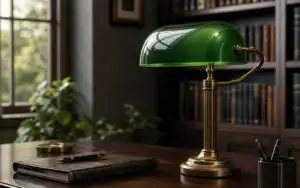
A banker’s lamp shade is the glass or glass-like cover used on a traditional desk lamp, usually a shallow rectangular or curved profile with side openings or a fixture-specific support. For a replacement, match the shade’s profile, hole spacing, fitter or support method, bulb clearance and glass finish rather than ordering from the colour alone.
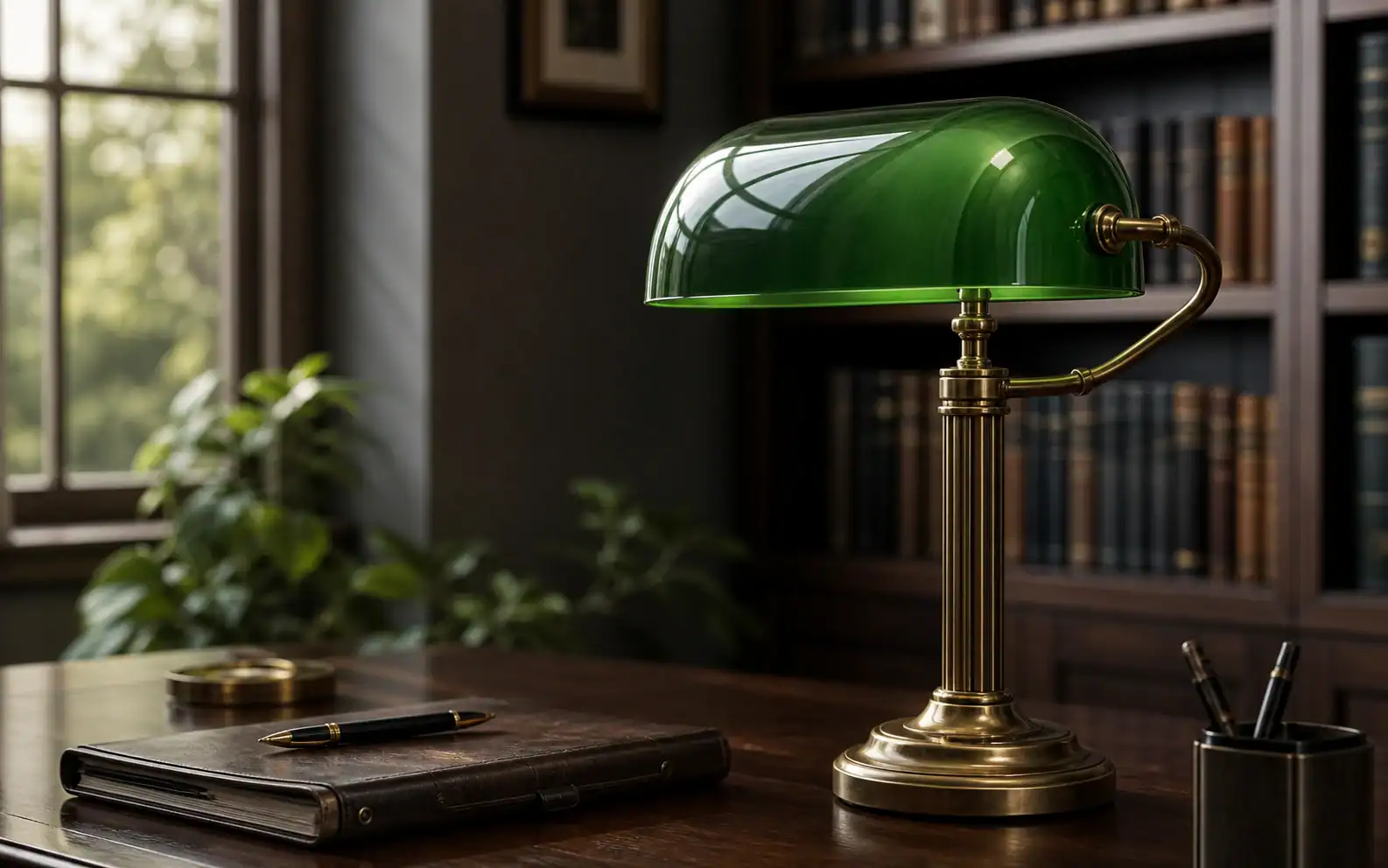
The green glass shade is the part most people remember. The fit is the part that decides whether a replacement works.
Banker’s lamps are sold in antique-style, modern replica and custom forms. They can look almost identical in a photograph while using different side holes, retaining hardware, glass profiles or support channels. That is why a colour match alone is risky. A replacement has to fit the lamp, protect the glass and leave enough room around the bulb.
This guide covers the styles buyers commonly ask for, the measurements worth taking before an order, the role of grommets and retainers, and the information a manufacturer needs to review a replacement or custom request.
What is a banker’s lamp shade?
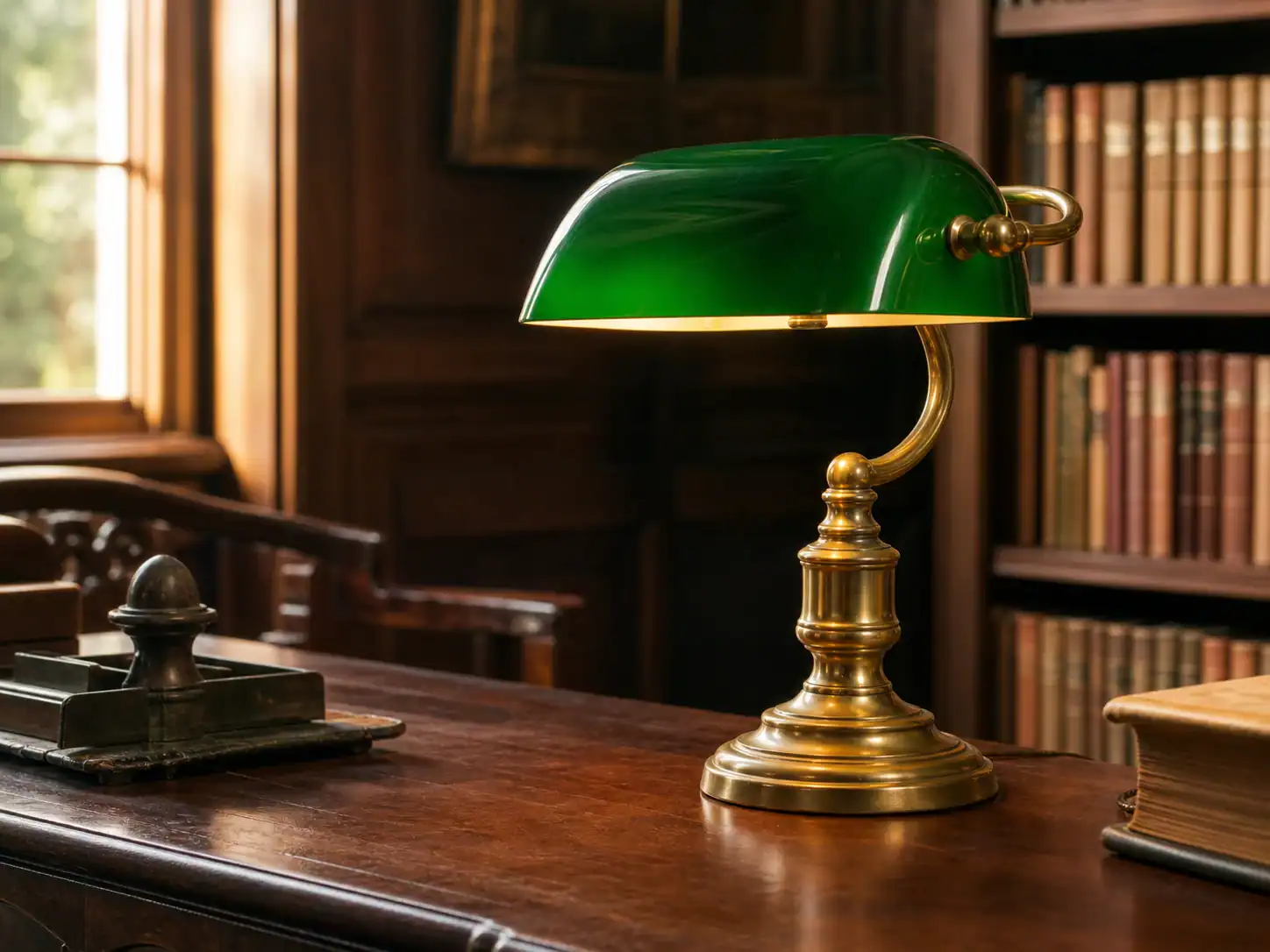
A banker’s lamp shade is the cover used on a traditional desk or table lamp with a low, broad glass shade. Many examples have a green exterior, a lighter interior and a metal or brass support structure. The shade may rest in a channel, attach through side holes, or connect to a socket and frame made for that particular lamp.
The phrase describes a lamp family and a familiar visual style. It does not describe one universal drawing. Dimensions vary between antique lamps, modern replicas, small reading lamps, piano lamps and custom fixtures.
It helps to separate the assembly into four parts:
- Glass body: the length, width, height, profile, rim and surface finish.
- Support interface: the side holes, fitter opening, channel, neck, socket or retaining surface.
- Protection parts: rubber grommets, sleeves, washers or other pieces that keep metal from pressing directly on glass.
- Fixture: the base, socket, bulb, wiring, orientation and clearances around the shade.
The JX Lampshade visual glossary is useful when you are comparing broader vintage and antique-style glass categories. This article stays focused on the banker’s lamp shade as a replacement and specification problem.
Antique-style, modern replica and custom shade
An antique-style shade may need to preserve a distinctive green tone, curve, edge treatment or mounting detail. A modern replica may use a different socket or a more standardized support. A custom shade may begin with a drawing, a broken fragment, an original sample or a photograph of the lamp.
These routes should not be mixed together at the quotation stage. A replacement for a current lamp can prioritize compatibility and safe installation. A restoration project may prioritize visual accuracy. A lighting brand may need a repeatable glass and hardware specification that can be checked from one production run to the next.
Why are banker’s lamp shades usually green?
Green glass became the familiar visual reference for banker’s lamps, especially the deep green shades associated with traditional desk lamps. Some historical references connect the style with early Emeralite lamps and their use in offices, libraries and other reading environments. The name is now used more broadly for green glass desk lamps and modern interpretations.
The green colour is a design choice, not a guarantee of a particular optical or health benefit. The actual light seen on a desk depends on the glass transmission, whether the shade has an opal lining, the bulb, the socket position, the shade angle and the room around it. A darker glass can create a stronger silhouette while allowing less direct light through the shade.
For a replacement, compare the shade while it is both unlit and lit. A colour that looks correct in daylight may appear much darker, bluer or warmer when a bulb is behind it. If the lamp will be produced in quantity, approve a physical sample under the intended bulb or a defined test light.
Colour matching also depends on the viewing angle. A curved shade can look lighter at the centre and darker near the edge, while a cased or lined shade may show a different tone on its inner surface. Send photographs with a neutral reference beside the glass, and state whether the reference was taken in daylight, warm LED light or another controlled condition. This does not replace a sample, but it gives the supplier a clearer starting point.
Banker’s lamp shade styles and finish options
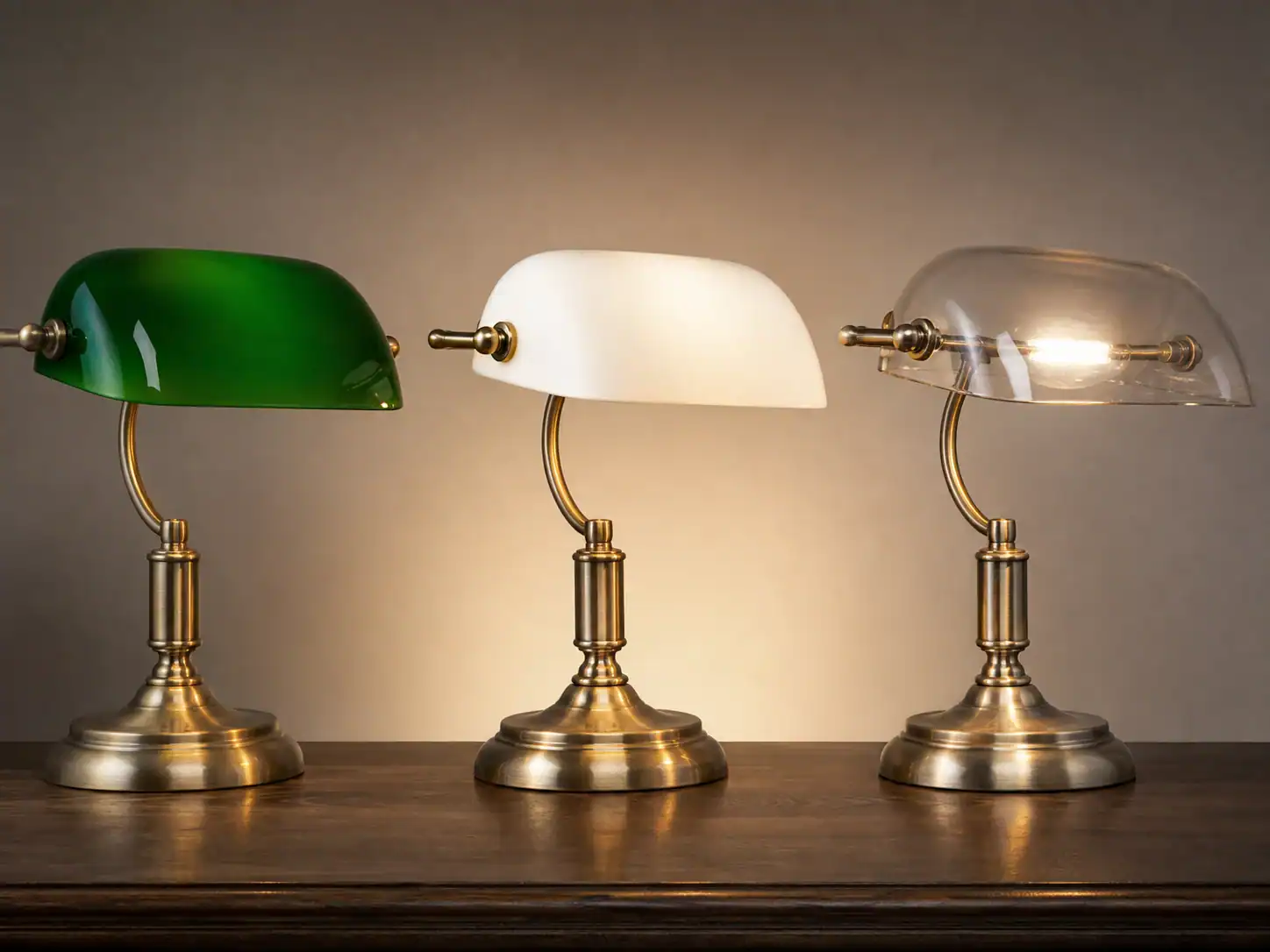
The classic green shade is only one direction. The right choice depends on the lamp’s period, the room, the required light effect and the available manufacturing route.
Deep green cased glass
Deep green cased glass gives the strongest traditional reference. It works well for study lamps, library desks, restoration projects and lighting collections that need a recognizable banker-style silhouette. Confirm how the colour appears through the glass, not just on the outside surface. The tone may change significantly when the lamp is switched on.
Green glass with a white opal lining
An opal-lined interior creates a lighter field behind the green outer layer. It can soften the view of the bulb and make the shade read more evenly when lit. Ask whether the opal effect is part of the glass construction, a coating or a separate lining, because the care and appearance can differ.
Clear glass for a lighter modern version
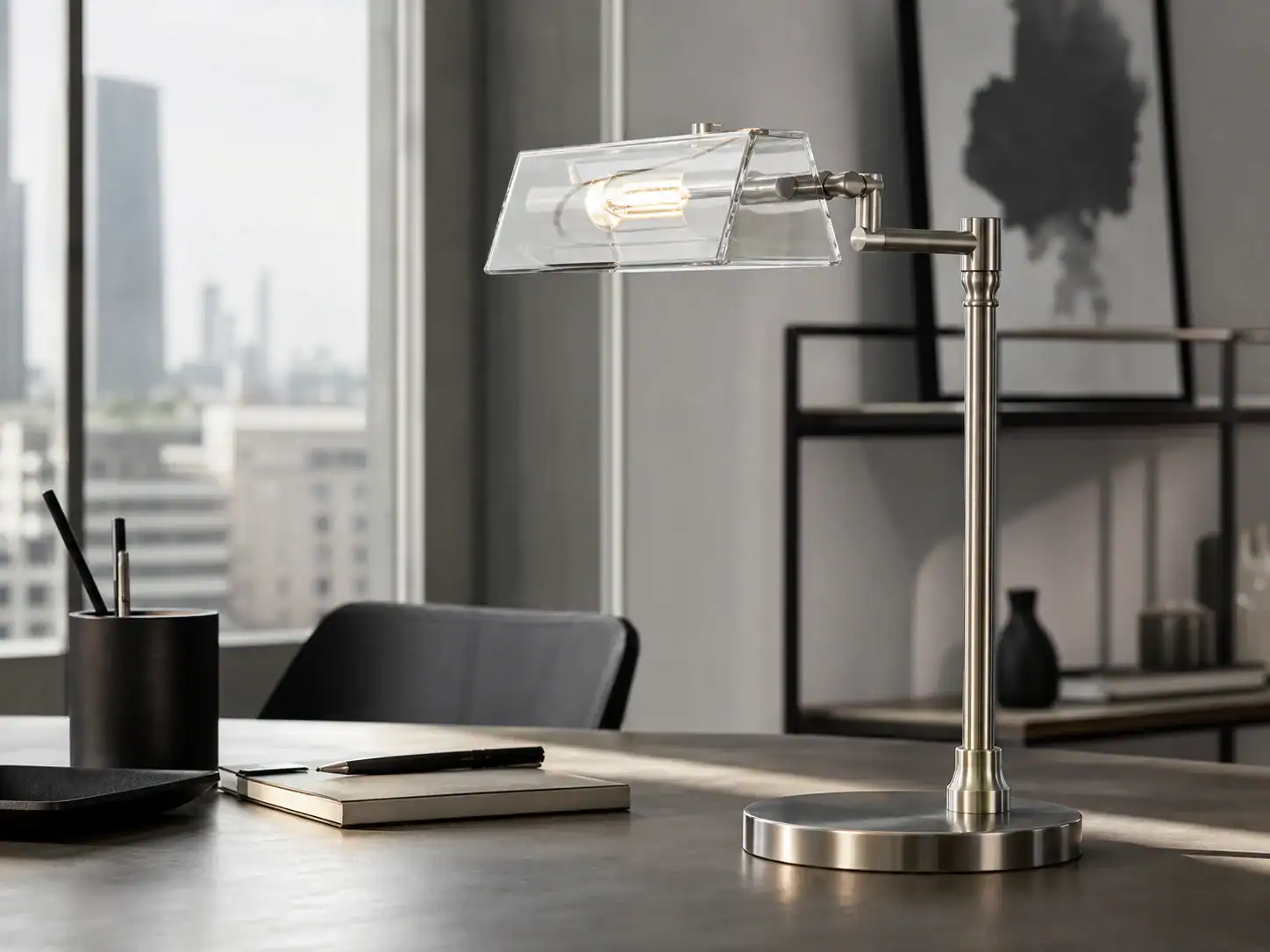
Clear glass shows more of the bulb and internal hardware. It suits a modern desk, a display lamp or a design that uses the banker silhouette without the traditional dark green colour. With clear glass, edge quality and the appearance of the support holes become more visible, so the rim and opening need careful review.
Amber or warm-toned glass
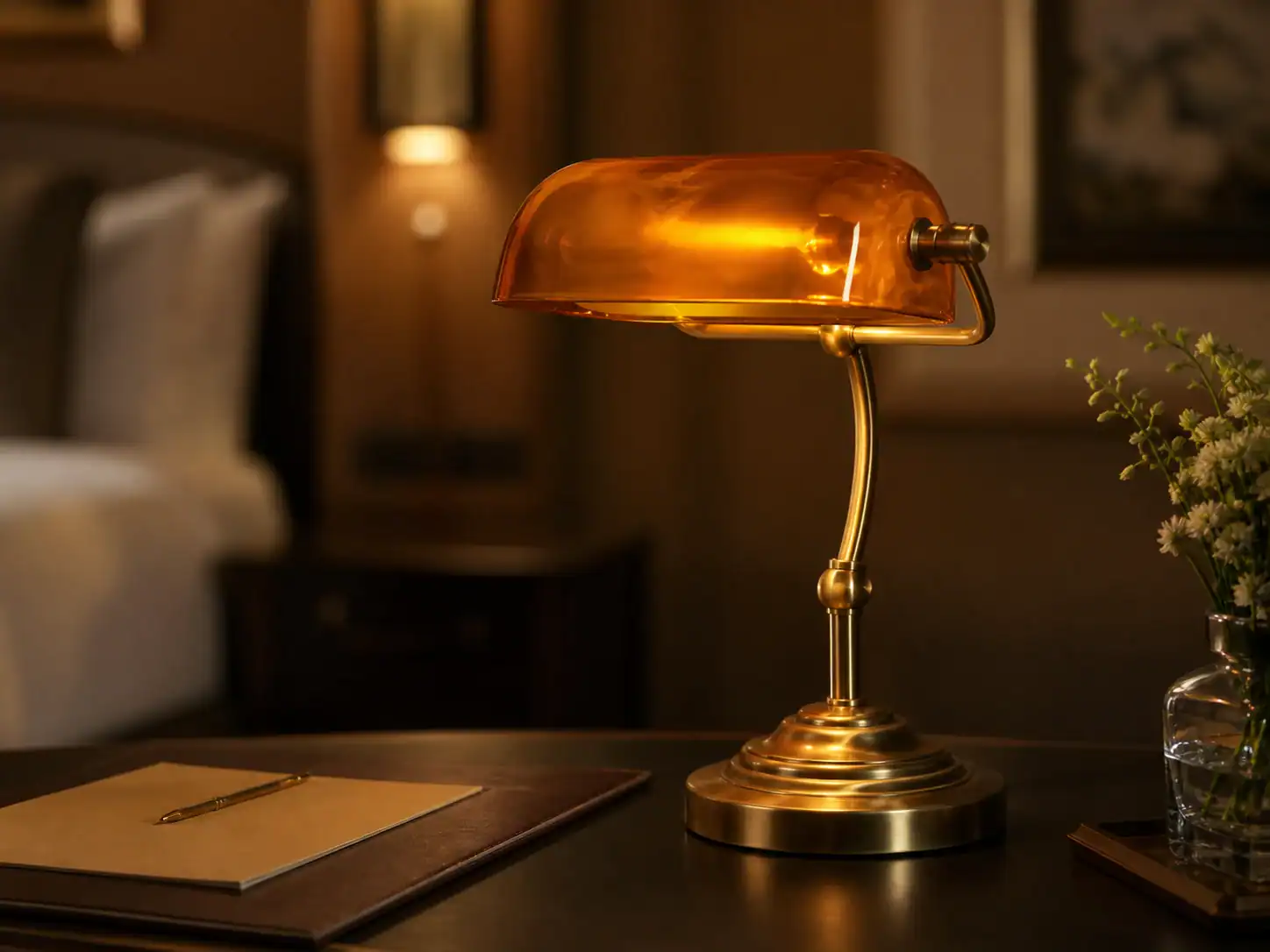
Amber glass adds warmth before the lamp is switched on and can work in hospitality, residential and vintage interiors. Bead or metal colours should be judged together with the glass. A warm shade can look muddy when paired with a dark bronze frame, but a pale metal or clear hardware can create useful contrast.
Opal or frosted glass
Opal and frosted finishes give the shade a quieter appearance and can reduce the visibility of the bulb. The terms are not interchangeable in every supplier’s catalogue, so ask for a finish sample and a description of how the surface is made. A light satin frost and a dense opaque white can produce very different results.
Smoke or dark neutral glass
Smoke glass gives the banker profile a contemporary direction. It can work on a darker desk or in a hotel room where the lamp is part of the interior rather than the main focal point. Check the installed brightness before choosing a dark colour and a dense wall thickness together.
Ribbed or lightly textured glass
Ribs, shallow flutes or another controlled surface texture can change the highlights across the shade without changing its overall outline. Texture also changes how a colour is read from different angles. The production drawing should identify the direction, pitch and end treatment of the texture if the pattern must repeat.
A restoration-matched finish
For an older lamp, the best result may be a match to the surviving shade rather than a new colour chosen from a standard list. Keep the original piece clean and protected. Photograph it under daylight and with the lamp lit, and note any lining, paint, edge detail or hardware that must remain visible.
Replacement, restoration or custom development?
The correct sourcing route depends on what you are trying to preserve.
| Situation | First priority | Information to collect |
|---|---|---|
| Broken stock or replacement shade | Physical compatibility | Overall dimensions, hole spacing, support method and photos |
| Antique-style restoration | Original character | Existing shade profile, colour, edge detail and hardware |
| New design sample | Appearance and fit together | Drawing, finish, opening, bulb clearance and sample feedback |
| Repeat OEM order | Repeatable specification | Approved sample, revision, inspection points and packing |
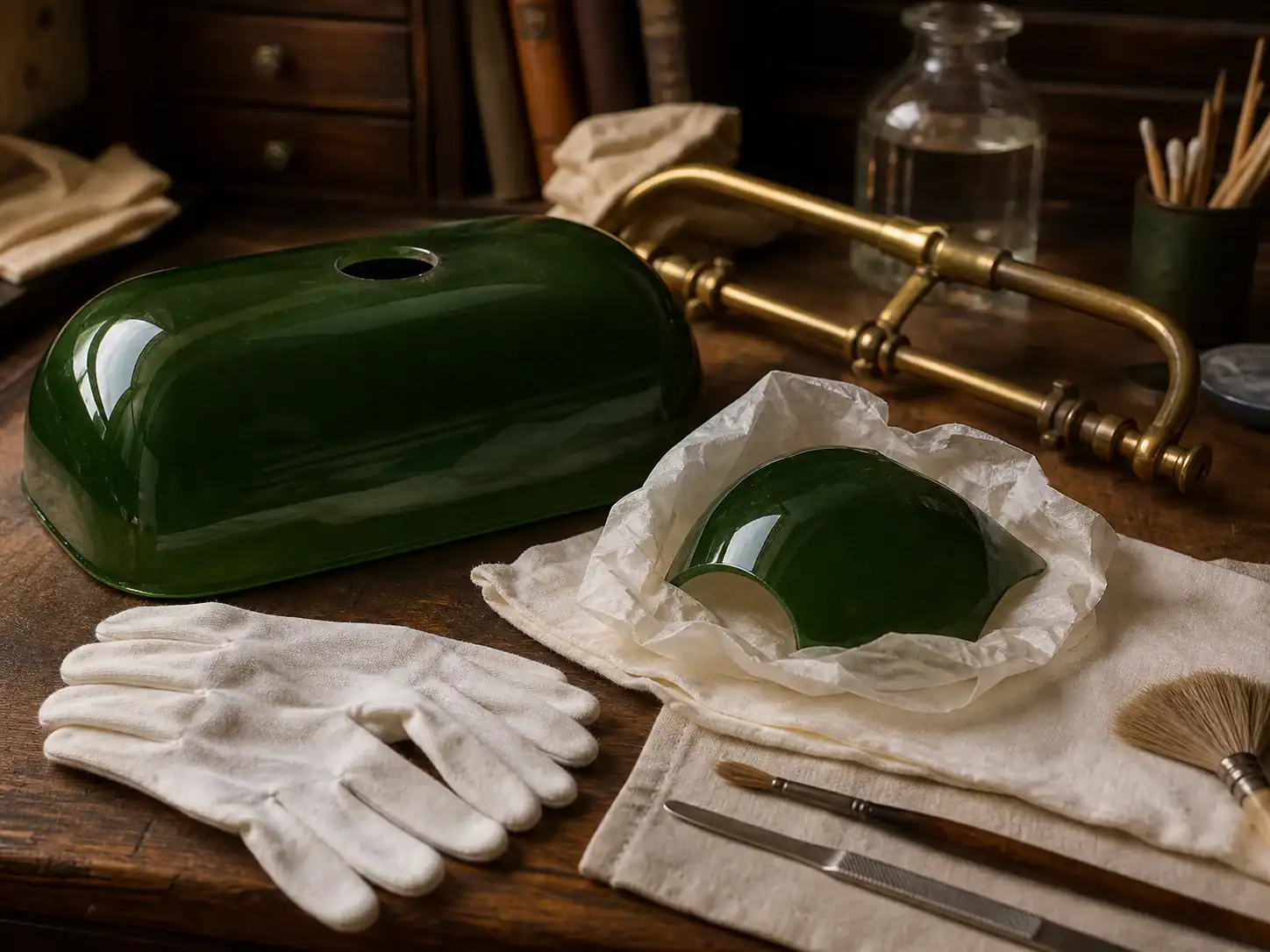
If the original shade is still available, do not throw it away before measuring it. A broken shade can still reveal the hole positions, curve, glass thickness and edge treatment. Wrap fragments separately and photograph the assembly before removing any hardware.
For a direct replacement request, use the JX glass lamp shade replacement finder as a starting point. If the lamp has an unusual profile or no matching stock option, a drawing and physical sample give a manufacturer more to work with than a product name alone.
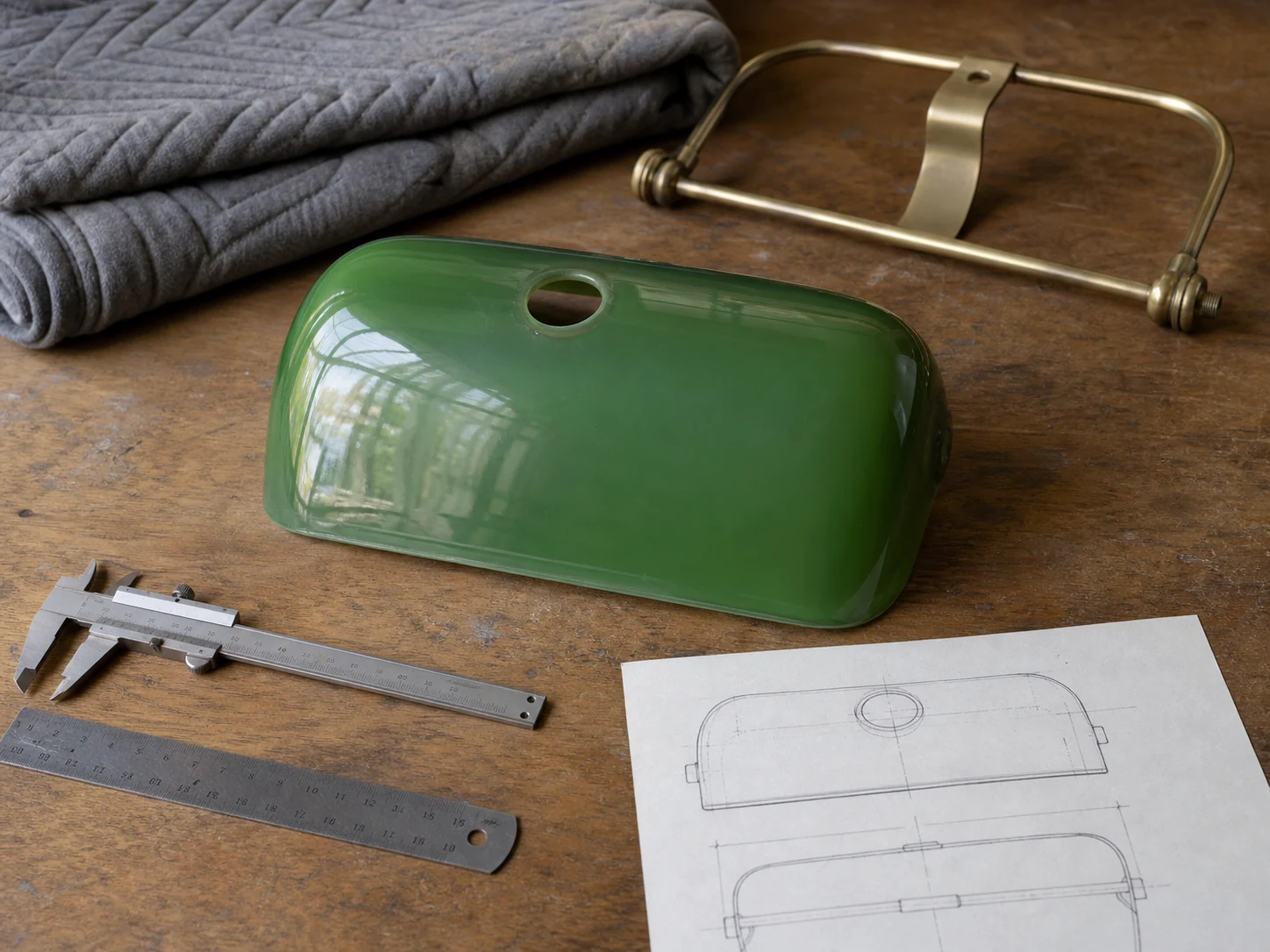
How to measure a banker’s lamp shade before ordering
Take measurements with the shade removed and resting on a padded, stable surface. Use the same reference points every time. A useful set of measurements includes:
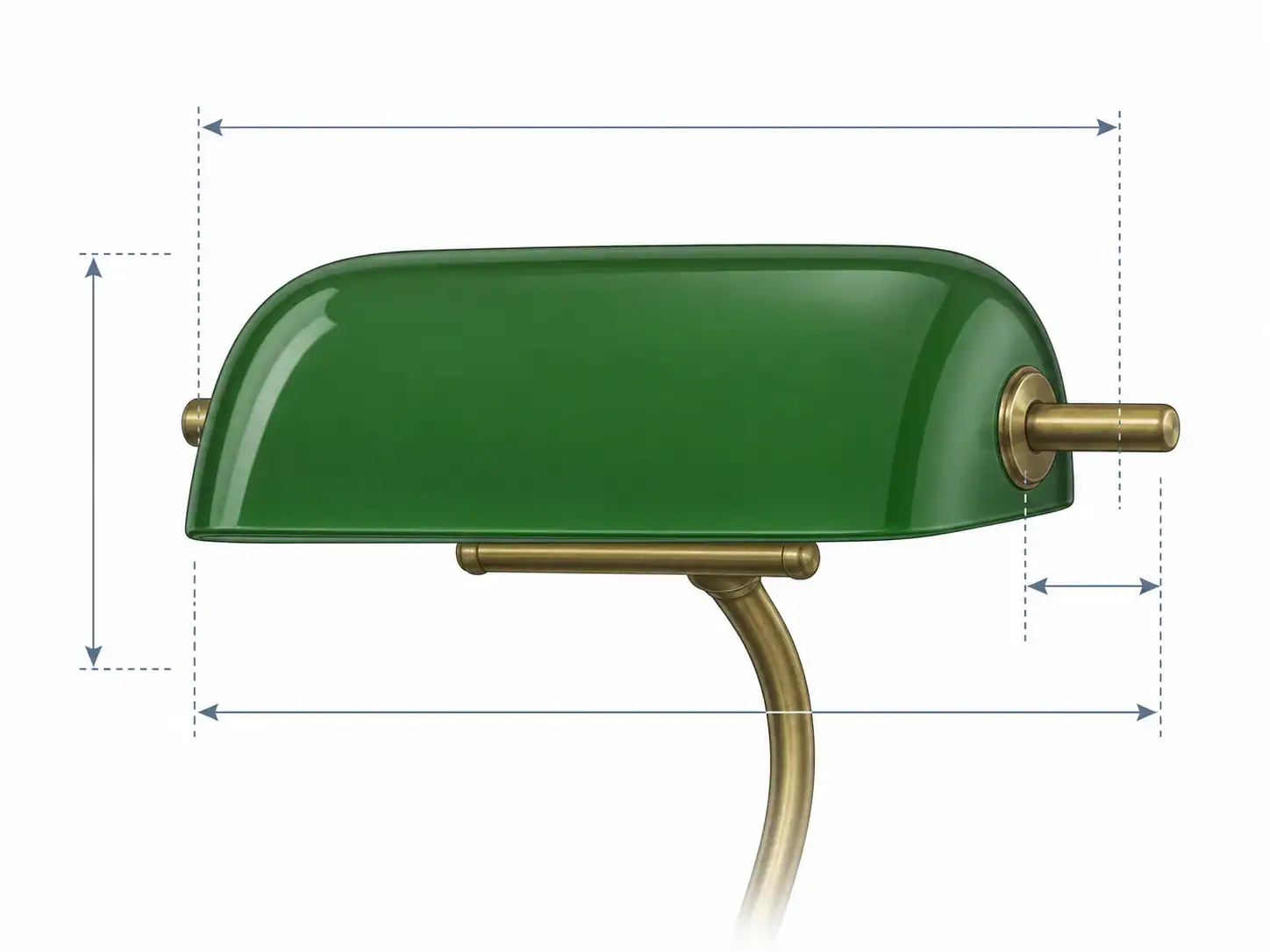
- Overall length: measure from one end of the glass body to the other.
- Maximum width or depth: measure the widest front-to-back dimension.
- Overall height: measure from the lower edge to the highest point of the shade.
- Hole spacing: measure the distance between the two side holes using consistent outside reference points.
- Hole diameter: measure each opening and record whether a grommet or sleeve is fitted.
- Rim or channel dimensions: note any edge that sits in a metal channel or frame.
- Clearance: record the space between the bulb and glass, and between the shade and the desk or wall.
- Support direction: photograph the socket, retaining nut, hinge, arms and any part that enters the shade.
| Measurement | What to record | Why it matters |
|---|---|---|
| Length | End-to-end glass dimension | Controls whether the shade reaches both supports |
| Width/depth | Widest body dimension | Prevents interference with the frame or socket |
| Height | Lower edge to top edge | Affects the visual proportion and bulb coverage |
| Hole spacing | Same reference point on both holes | Determines whether the shade can sit on the existing arms |
| Hole diameter | Opening plus grommet or sleeve details | Determines the hardware that can pass through safely |
| Bulb clearance | Space around the actual bulb | Helps avoid contact, heat concentration and installation problems |
If the original glass is missing, measure the support arms and take photographs from the front, side and underside. That information can help, but it is less direct than measuring the original shade. Leave room for the thickness of grommets, sleeves and retainers when comparing the support spacing with a proposed glass drawing.
Write the measurements on one sheet and label each photograph with the same reference name. For example, identify the left and right sides as viewed from the front, then keep that orientation in the drawing. This simple step prevents a common mistake: a supplier receives a correct hole spacing but cannot tell which edge is the front, which surface is the top, or whether a dimension was measured to the glass or to the hardware. If the shade is curved, include a side view and a close-up of both ends.
The broader JX lamp shade size guide covers general shade measurement. For a banker’s lamp, hole spacing and support geometry deserve extra attention because the shade often attaches at both sides rather than sitting on a single central fitter.
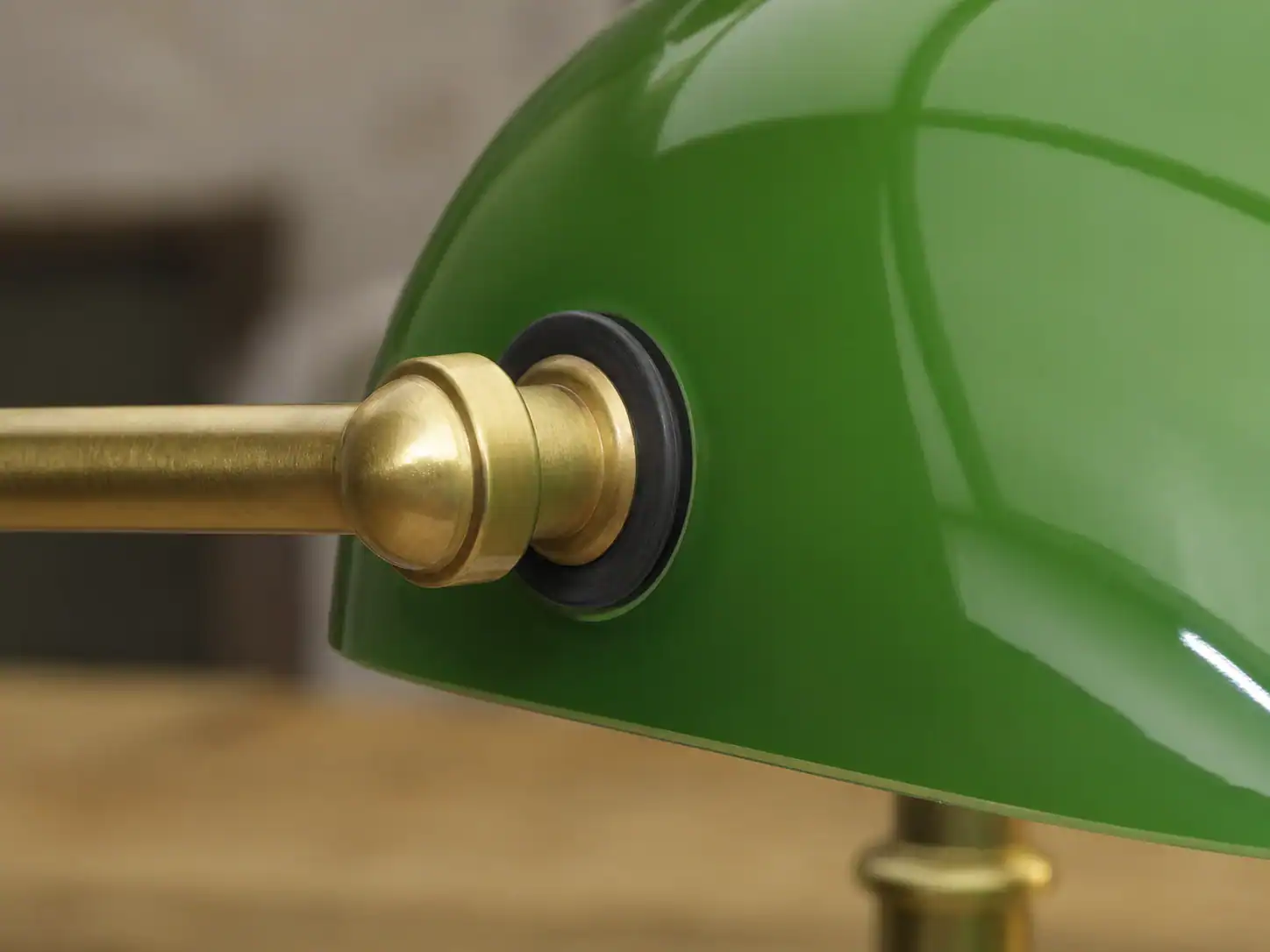
Fitter holes, grommets and support hardware
Two shades can share the same green colour and still be incompatible. The side hole diameter, the distance between holes, the direction of the socket and the shape of the support arms all matter.
A grommet or soft sleeve can protect the glass from direct contact with a metal arm or screw. It also changes the effective fit. If the replacement shade arrives without the old grommets, record their inner and outer dimensions and ask whether the existing parts can be reused. Do not assume that a generic rubber part will fit every opening.
The hole diameter is not the same measurement as hole-to-hole spacing. Measure both. Also note whether the hole is round, elongated, countersunk or surrounded by a thicker rim. A small difference at the edge can change how the retainer sits against the glass.
During installation, the shade should settle into the support without force. Never tighten a nut until the glass is under visible pressure. If the socket is stuck, the wiring is damaged or the frame needs substantial bending, stop and use a qualified repair professional. The shade can be replaced without turning a glass repair into an electrical repair.
The JX lamp shade fitter compatibility checker explains broader fitter terminology. Use it to identify the interface, then provide banker-specific measurements in the quote request.
What a custom banker’s lamp shade specification should include
For a custom or OEM request, send enough information for the supplier to understand both the visible design and the mechanical fit. A short, complete brief is more useful than a long description built around colour names.
Include the following where available:
- front, side, top and underside photographs;
- a drawing with dimensions and clear reference points;
- an original shade, broken fragment or physical sample;
- glass profile, edge treatment and approximate wall thickness;
- colour, transparency and finish preference;
- hole position, hole diameter and edge condition;
- grommet, sleeve, retainer or channel assumptions;
- bulb type, wattage range and clearance envelope;
- fixture orientation and intended use;
- sample quantity, production quantity and destination;
- packaging, labelling and inspection requirements.
If the project is for a lighting brand or distributor, identify which dimensions are fixed and which can change. For example, a designer may want to preserve the outer silhouette but allow the neck or support opening to be adjusted for a new socket. That distinction helps the supplier suggest a workable drawing instead of treating every dimension as equally rigid.
For a restoration project, send the original sample before selecting a finish from a catalogue. Old glass can have small differences in edge thickness, tint and curvature that are difficult to describe in words. For a new product, a reference image may be enough to start a conversation, but a production drawing should replace the image before tooling or repeat production. Mark the revision on the drawing and keep the approved sample with the project record so later orders do not drift toward a similar but incompatible version.
The JX custom glass lamp shade page for lighting brands is the relevant next step for a branded collection, repeat program or OEM discussion.
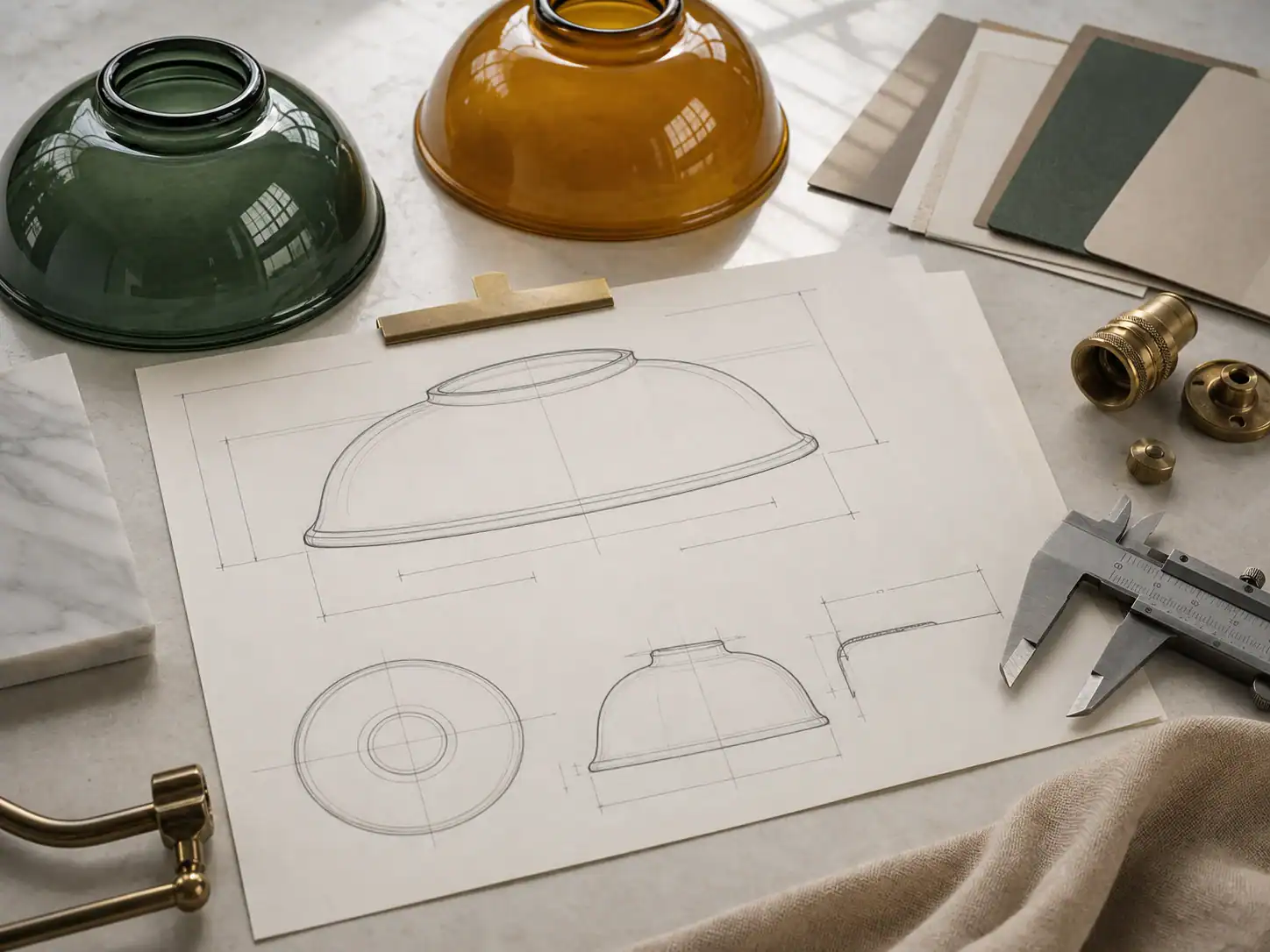
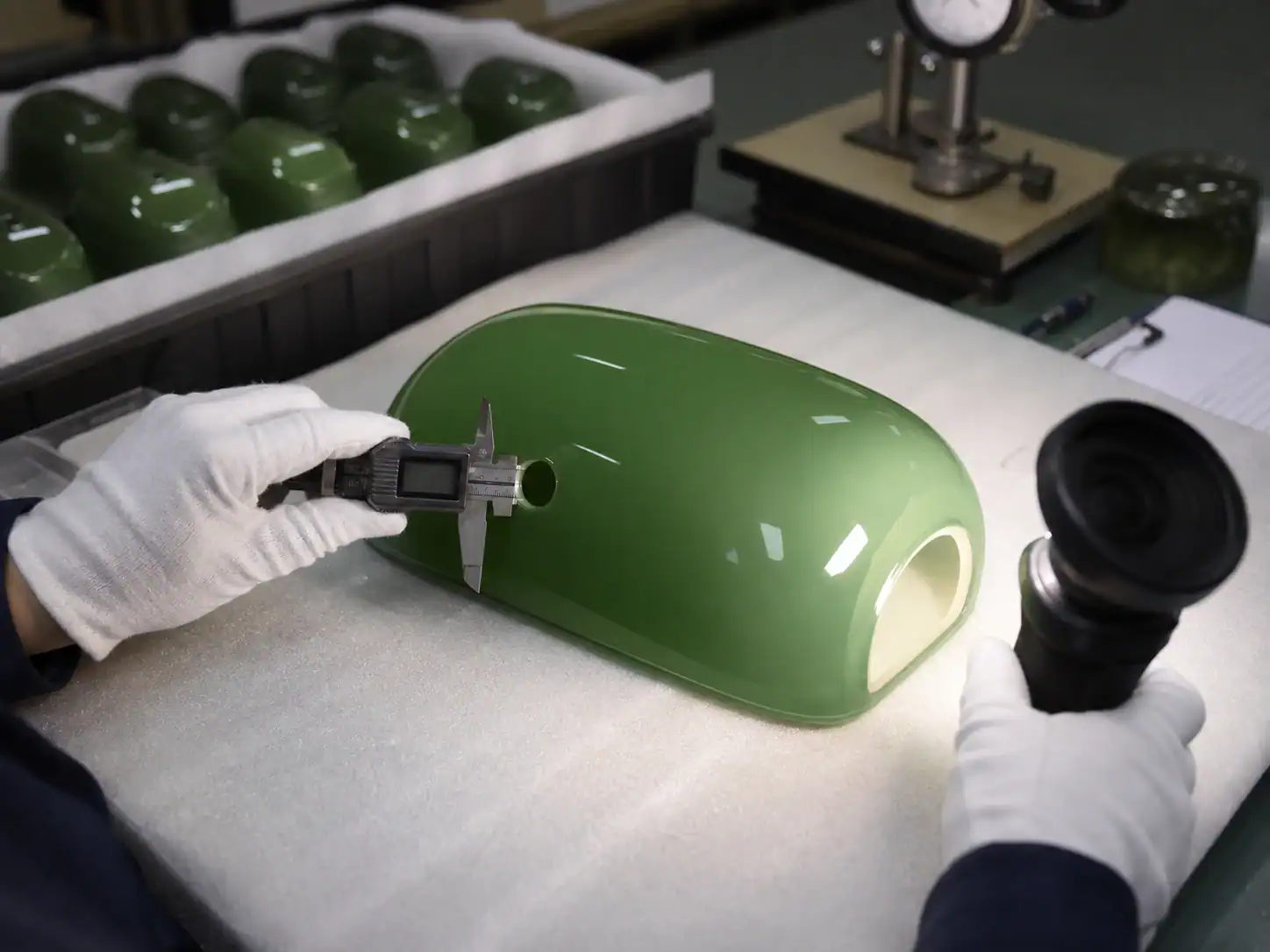
Sample approval and inspection points
Before a repeat order, compare the sample with the approved drawing and the intended fixture. The following checks are practical items to record in an approval note:
- overall length, width and height;
- shade profile and symmetry from the front and side;
- hole position, diameter and edge condition;
- visible scratches, chips, cracks, bubbles or uneven finish according to the agreed quality standard;
- colour and light transmission under the intended bulb or defined test light;
- grommet fit and support alignment;
- movement, pressure and clearance after installation;
- individual protection, separators and carton identification.
These are requested inspection points, not automatic claims about a certification or a factory quality system. If a project requires a formal standard, test report or material declaration, name it in the inquiry and confirm it before production.
Glass needs protection at several stages. A shade can pass a visual check at the bench and still be damaged by movement inside a carton. Ask how the part will be separated from metal hardware and from other glass pieces, and how the package will identify the model or revision.
Care, installation and safe handling
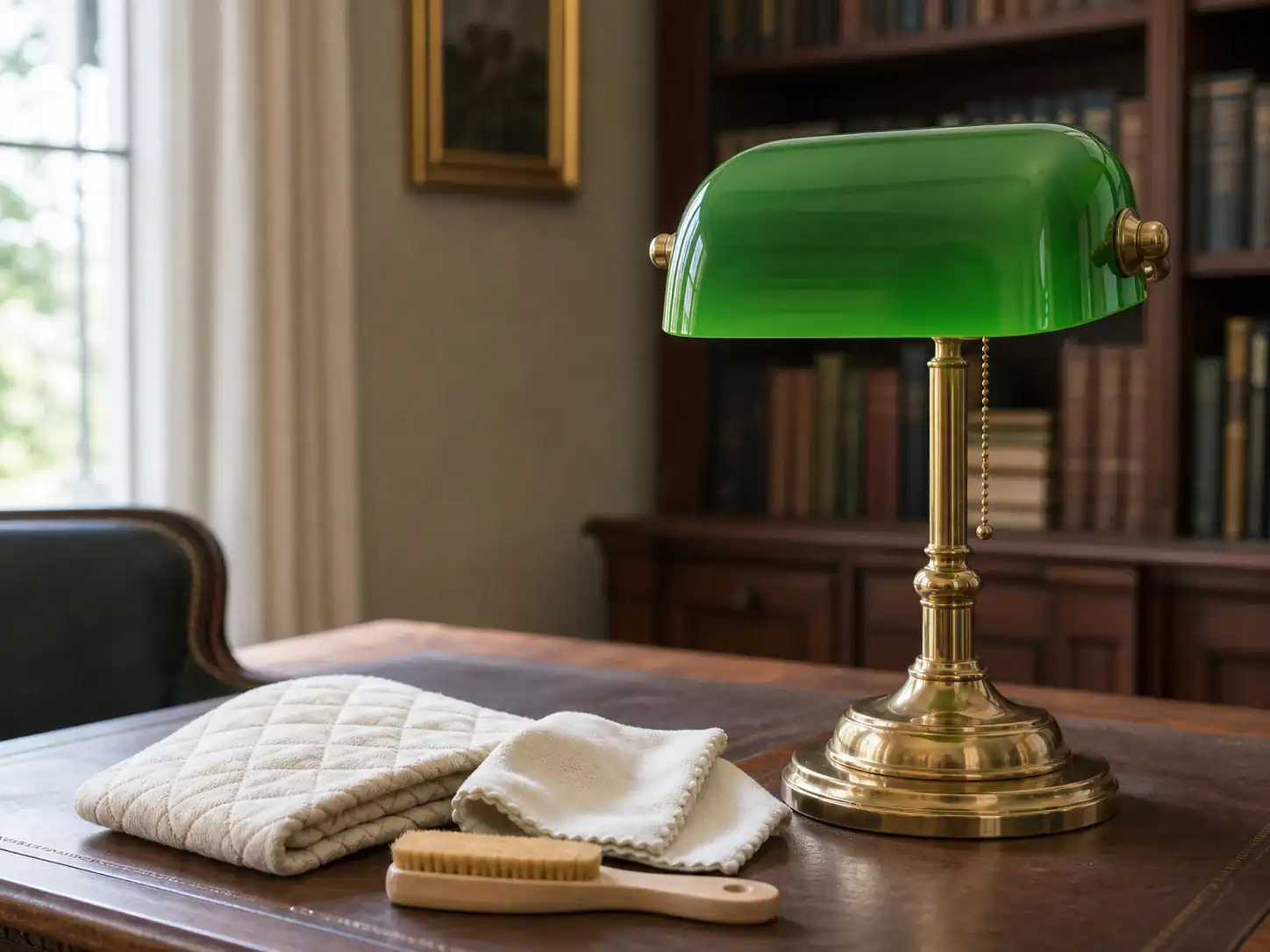
Disconnect power before removing, installing or cleaning the shade. Work on a padded surface and use both hands when lifting a large or awkward glass piece.
For routine dust, use a soft dry brush or lint-free cloth. If the shade has a decorative lining, painted finish, attached trim or unknown adhesive, do not soak it before checking the supplier’s care instructions. Keep liquid away from the socket and wiring.
Check that metal retainers are snug but not forcing the glass. A shade that rocks, touches the bulb or presses against the frame needs attention before the lamp is used. If you see a chip, crack, damaged wire or loose socket, stop using the lamp and ask a qualified repair professional to assess it.
Banker’s lamp shade FAQs
What is a banker’s lamp shade?
A banker’s lamp shade is the glass cover used on a traditional low-profile desk or table lamp. It is often green and may have a lighter or opal-lined interior, but colour alone does not define the product. The profile, support method and intended fixture also matter.
Are all banker’s lamp shades the same size?
No. Antique lamps, modern replicas, small desk lamps, piano lamps and custom fixtures can use different lengths, widths, heights, hole spacing and support hardware. Measure the original shade and the interface before ordering.
Why are banker’s lamp shades usually green?
Green became the familiar visual reference for traditional banker-style desk lamps. It creates a distinctive appearance and can change the way the lamp is seen when lit. It does not mean that every green shade uses the same glass construction or that green alone provides a particular eye or concentration benefit.
How do I measure a replacement banker’s lamp shade?
Measure the overall length, maximum width, height, hole spacing and hole diameter. Also record the grommet, retainer, channel, socket direction and bulb clearance. Take photographs from several angles and do not rely on a colour name or a product photograph as the only identification.
What are the holes on a banker’s lamp shade for?
Many banker’s lamp shades use side holes so support arms, sleeves or retainers can hold the glass in place. The exact hardware varies. Hole diameter and hole-to-hole spacing should both be measured because one can match while the other does not.
Do I need rubber grommets for a glass replacement shade?
Often, a soft grommet or sleeve helps keep metal hardware from pressing directly on the glass. The correct part depends on the hole and support dimensions. Check the original parts or include close-up photographs in the inquiry rather than guessing from a generic size.
Can a banker’s lamp shade be made in clear, opal, amber or smoke glass?
Possibly, depending on the profile, forming method, finish and required quantity. A supplier should confirm the option from a drawing or sample. Approve the glass under the intended light because a colour can look different when it is backlit.
Can a manufacturer make a custom banker’s lamp shade from a sample or drawing?
Yes. A physical sample, broken fragment, drawing or clear set of photographs can help a manufacturer review the profile and support interface. Include the intended quantity, finish, bulb clearance, installation direction and any inspection or packing requirements so the quotation addresses the complete part.
Send your banker’s lamp shade measurements
For a replacement or custom review, send photographs of the lamp and shade, overall dimensions, side-hole diameter and spacing, support details, preferred glass finish, bulb information, quantity and destination. If the original glass is broken, keep the fragments safely separated and include photos of the pieces and the frame.
The JX custom glass lamp shade services team can review a drawing, sample or replacement brief and confirm which details are needed for the next step.