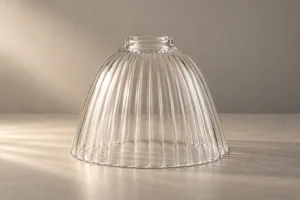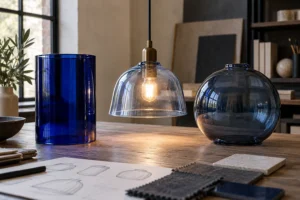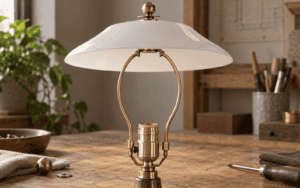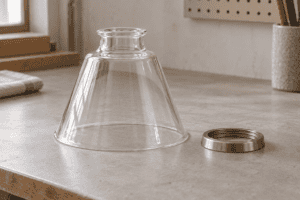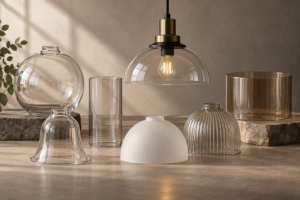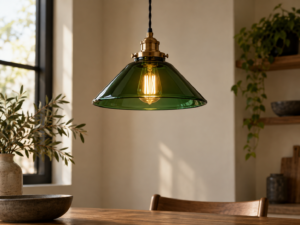
Intact glass lamp shades can become cloches, vase sleeves, cachepots, organizers, display bowls, seasonal decor or low-voltage light displays. Inspect the rim and fitter first. Do not reuse cracked glass, assume the shade is candle-safe or food-safe, or improvise mains wiring.
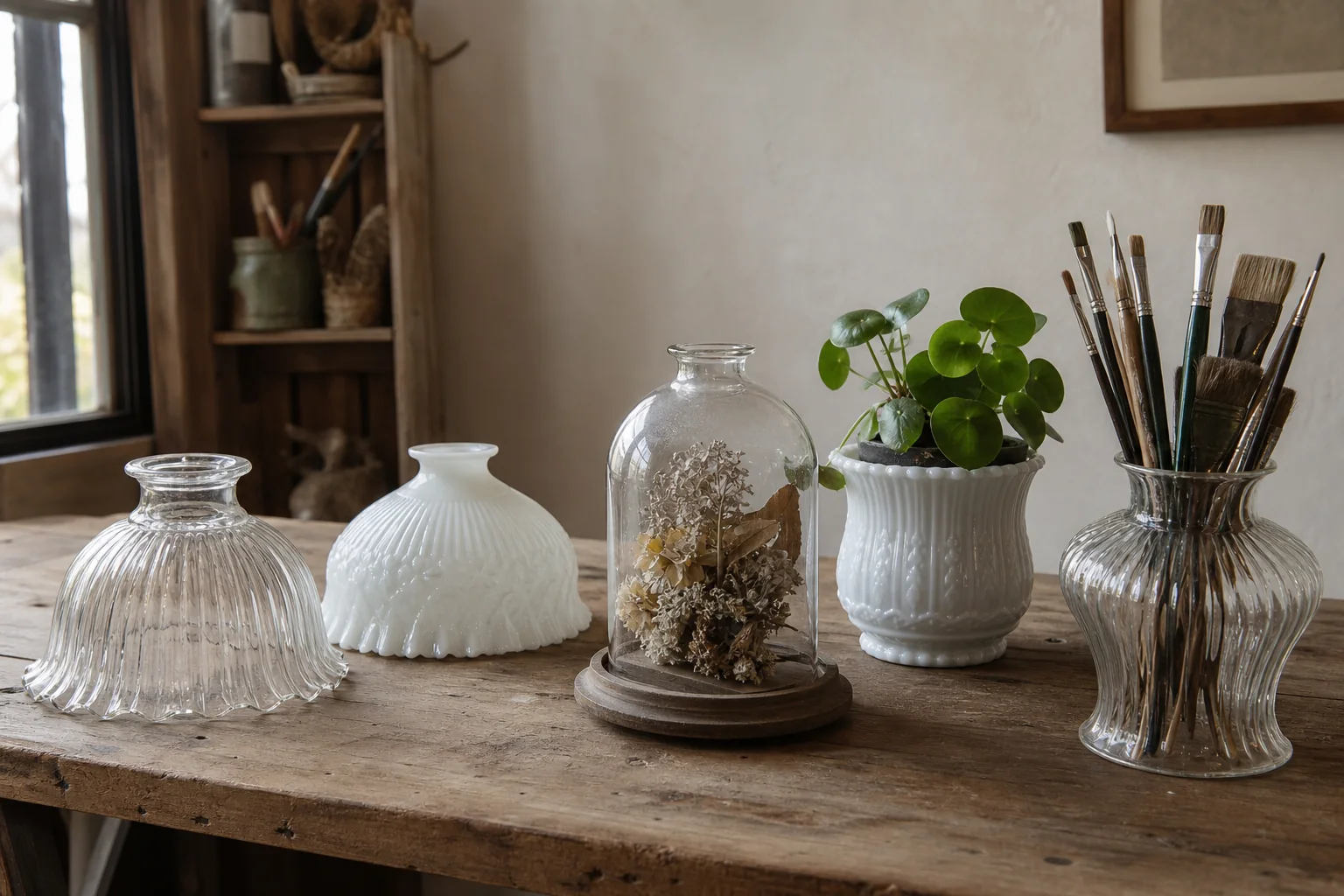
An old shade is not automatically waste. A clear globe may make a good display dome. A deep opal bowl may work as an outer planter. A fluted shade may be useful to a restoration shop because its fitter matches a discontinued fixture.
Still, not every good-looking idea is a good idea. A hairline crack can spread under heat or pressure. An unknown coating may not tolerate soaking or paint. A rounded shade that looks attractive on a shelf may tip as soon as it is filled.
Start with the condition and construction of the shade. Choose the project afterward.
Decide whether to reuse, donate, recycle or replace
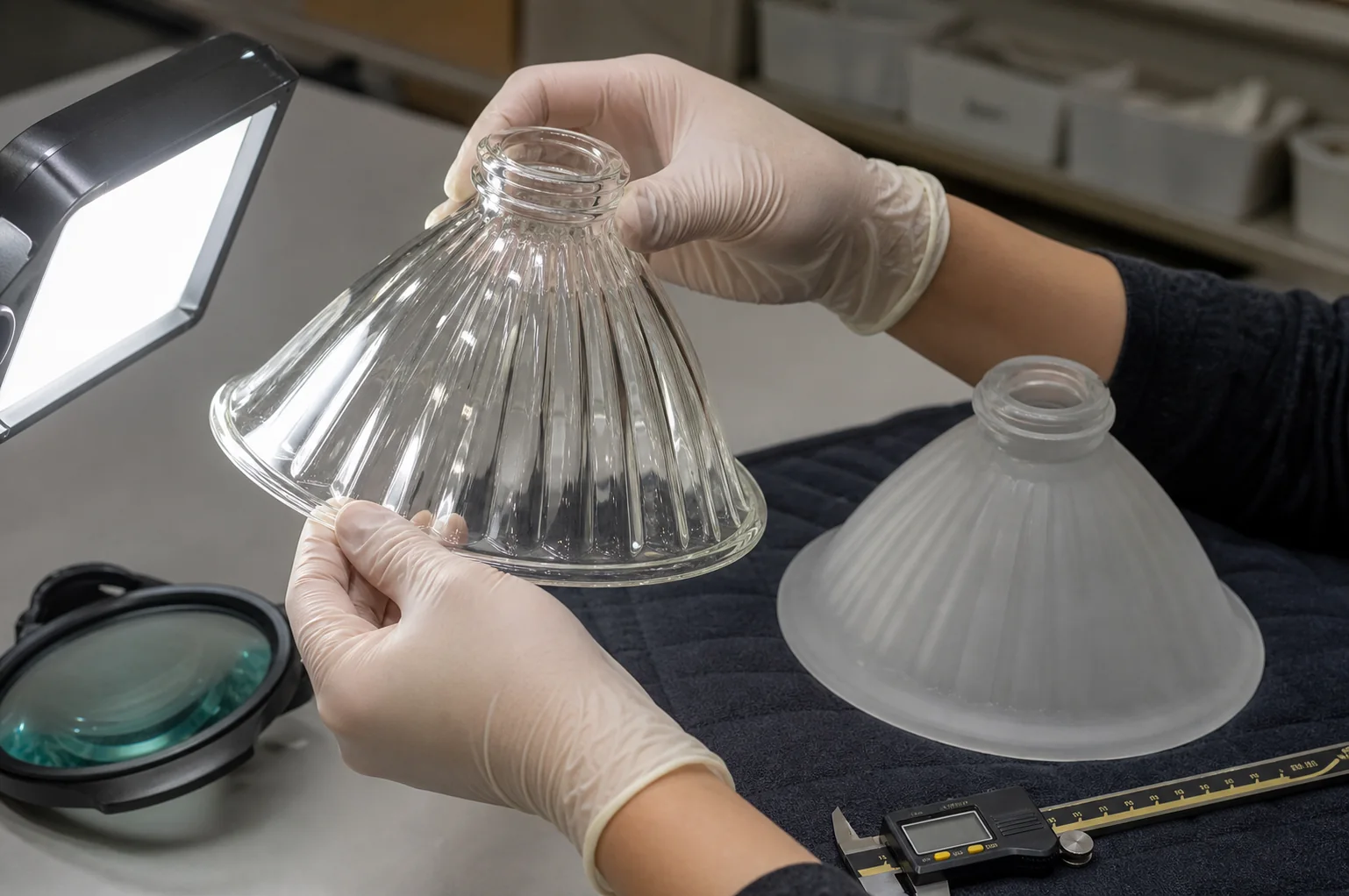
Put the shade on a padded towel in bright side light. Look around the rim, fitter opening, neck, molded seams and any drilled holes. Run a cotton swab around the edges rather than a bare finger. Fibers that snag can reveal a sharp chip that is hard to see.
| Condition | Best route | Why |
|---|---|---|
| Intact, stable and easy to identify | Reuse, donate or sell | It can serve a non-electrical purpose or remain available as a replacement part |
| Intact but with an unknown painted, mirrored or iridescent finish | Display use or specialist review | Water, solvents, adhesives and heat may change the finish |
| Small edge chip outside a load-bearing area | Specialist assessment or disposal | A decorative project can still put pressure on the damaged edge |
| Crack, star fracture or loose leaded joint | Do not reuse as a container, planter, light or hanging object | The defect can grow or release sharp pieces |
| Complete matching set from a discontinued fixture | Photograph, measure and offer as a set | Replacement value may be higher than craft value |
| Fixture still needs a shade | Measure for replacement before modifying the original | Paint, drilling or glued hardware can destroy the only usable reference |
Do not put broken glass loose in a household recycling bin. The U.S. EPA’s recycling guidance says broken glass can injure workers and damage sorting equipment. Specialty lighting glass also may not follow the same collection rules as bottles and jars. Ask the local program whether it accepts non-container glass and how it wants damaged pieces packaged.
If the shade is intact but no longer useful to you, donation or resale is often the least destructive choice. A fitter size that seems odd in one home may be exactly what a lamp repair shop, vintage dealer or homeowner needs.
Identify the shade before you change it
Take five minutes to record the shade before painting, gluing or giving it away. That small record preserves its value as a part and helps you choose a stable project.
Photograph these views:
- the full profile from the side;
- the top and bottom openings;
- the fitter, neck, screw holes or retaining lip;
- any maker’s mark, etched number or label;
- the glass surface in both reflected and transmitted light.
Then note the fitter opening, overall height, widest diameter and rim diameter. The lamp shade size guide explains the broader measuring sequence, while the fitter compatibility checker helps distinguish ring-held, set-screw, neckless and other mounting arrangements.
Shape matters too. A globe has no broad foot unless it sits in a ring. A bowl can be stable when inverted, but unstable when upright. A bell may stand on its flared rim, provided the rim is flat and undamaged. Use the glass shade shape glossary if the profile name is unclear.
Keep the screws, rings and holders in a labeled bag. Do not glue them to the glass for storage. Original hardware can help a future owner identify the fixture or order a compatible replacement.
Twelve useful ways to repurpose an intact glass shade
Most of these projects leave the shade uncut and undrilled. That matters because it can still return to lighting use later.
1. Make a tabletop cloche
A clear globe, schoolhouse shade or dome can cover dried botanicals, a small model or a keepsake. Seat it on a wood or cork base with a shallow locating ring so it cannot slide sideways.
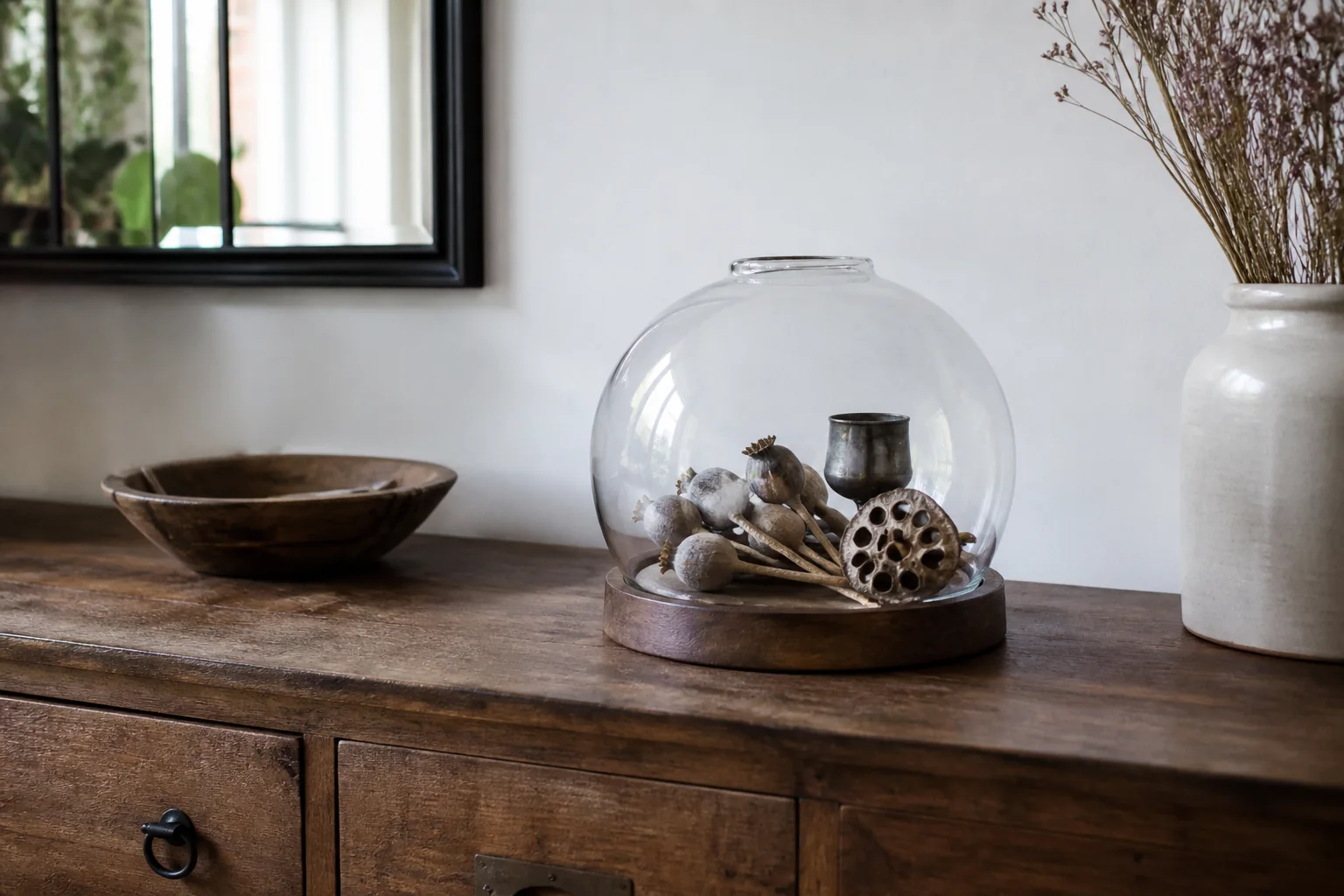
Choose objects that do not need airflow. Do not seal damp plants under a shade that has no ventilation, and do not use the shade as a food cover unless its material, coating and cleanliness are known to be suitable for food contact.
2. Use it as a vase sleeve
A shade with openings at both ends is usually a poor vase by itself. It can still hide a plain watertight jar. Put the jar inside the shade and let the jar hold the water. This keeps moisture away from painted finishes, metal trim and old adhesives.
The inner container should sit on the table, not hang from the fitter. If the shade has a rounded bottom, add a fitted support that carries its weight without point pressure.
3. Build a cachepot around a nursery pot
A deep bowl or opal dome can act as an outer cachepot. Use a lightweight nursery pot and a separate saucer inside the shade. Remove the inner pot for watering.
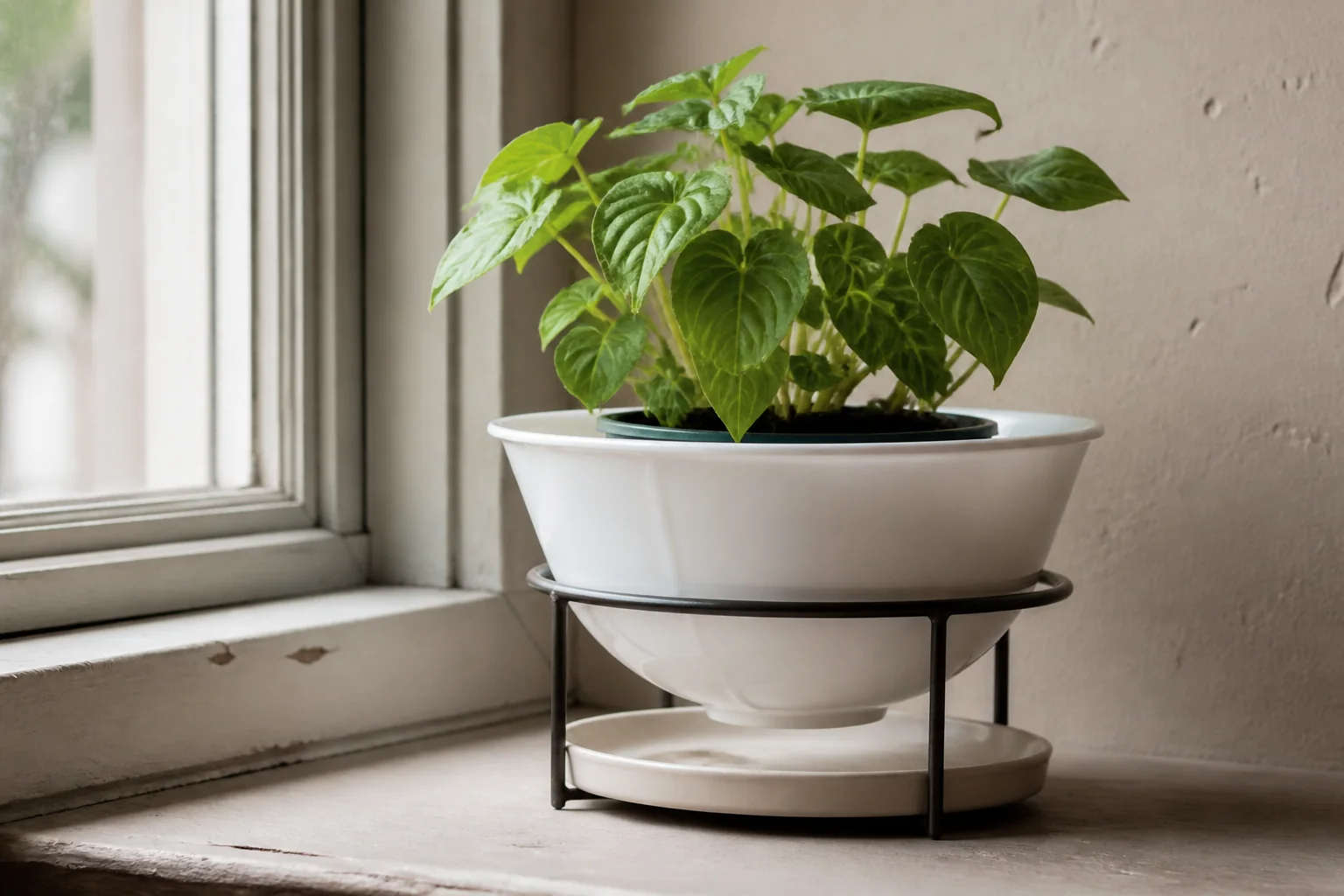
Do not put wet soil directly against an unknown coating or leaded decorative joint. Keep the total weight within what the support can carry. Glass can also heat up in strong sun, so a clear shade beside a hot window is not automatically a good home for live roots.
4. Create a dry or faux terrarium
A clear shade makes a useful dust cover for air plants, preserved moss, mineral specimens or an artificial arrangement. Keep the display dry and lift the shade from a solid part of its base, not from a thin decorative edge.
For a living closed terrarium, condensation, drainage and airflow become real design requirements. Use a purpose-made inner vessel rather than treating every lighting shade as horticultural glass.
5. Turn a fluted shade into a desk organizer
Small fluted, tulip and bell shades can hold brushes, rulers, ribbon or rolled paper if they sit in a fitted base. Cork, unfinished wood or a padded metal ring can prevent sliding and concentrate less stress than a hard point contact.

Keep heavy tools low. A tall bundle of scissors can make a narrow shade top-heavy. This is a storage project, not a cup for food utensils.
6. Display jewelry or ornaments
Invert a shallow bowl on a stable stand and use the existing fitter opening for a removable display rod. The rod can hold lightweight necklaces, holiday ornaments or tags while the glass bowl catches small pieces below.
Avoid drilling new holes. A local glass shop can assess whether a specific piece can be drilled, but many old shades contain stress, unknown heat treatment or decorative layers that make DIY drilling a poor gamble.
7. Assemble a seasonal centerpiece
Use a wide shade as a dry display bowl for pine cones, paper ornaments, shells or fabric decorations. Add a battery-powered LED puck outside the glass or beneath a ventilated base if you want a glow.
Skip an open candle. A lamp shade was designed around a particular fixture and heat path, not necessarily direct flame. Glass composition, thickness, annealing and coating cannot be confirmed by appearance.
8. Make a battery-LED display
A frosted or opal shade can soften light from a low-voltage, battery-powered LED module. Keep the module removable, follow its product instructions and leave space around it for heat to escape.
LED does not mean heat-free. ENERGY STAR’s LED guidance explains that LED products still need thermal management. Do not wrap a light module in insulation or seal it inside a shade unless the module is designed for that enclosure.
9. Use it as a sheltered garden ornament
An intact textured globe can catch daylight on a covered porch or in a sheltered garden display. Support it in a ring that fits the body, not on a single screw or wire through the fitter.
Move it indoors before freezing weather, storms or high winds unless the glass and mounting system were made for exterior exposure. A former indoor shade has no automatic weather rating.
10. Keep it as a photography or styling prop
Clear, seeded, opal and ribbed shades create useful reflections and silhouettes in product photography. Designers can also use them to compare how a form changes when viewed in daylight, backlight and warm artificial light.
Place the shade on a padded surface and keep hot lamps away. The point is to use the glass as an optical prop, not to recreate an untested fixture.
11. Build a labeled shade library
Lighting studios, repair shops and hospitality maintenance teams can keep representative shades as a physical reference library. Label each one with the opening, height, widest diameter, profile, finish and attachment method.
This is less decorative than a planter, but often more valuable. A labeled reference can prevent the wrong replacement from being ordered across dozens of fixtures. It can also show whether a new supplier’s sample matches the existing profile and diffusion.
12. Return it to lighting use through a qualified repair route
An intact shade can become part of a new lamp or pendant when the holder, fitter, socket rating, clearance, wiring, strain relief and mounting method are reviewed as one system. That is a lighting project, not a glass-only craft.
The U.S. Consumer Product Safety Commission has documented fires, shocks and other incidents involving bulbs, cords, fixtures, sockets, switches and shades in portable lighting. Its lighting product hazard report is a useful reminder that each part affects the whole fixture. Use listed components and have a qualified repair shop or electrician handle mains-voltage changes.
Match the shade shape to the project
The easiest project usually follows the shade’s stable orientation. Do not force a rounded profile to stand on a small neck.
| Shade profile | Stable orientation | Suitable projects | Main caution |
|---|---|---|---|
| Clear globe or schoolhouse | In a fitted ring or on a broad opening | Cloche, dry display, photography prop | Rounded bodies roll or tip without support |
| Bowl or dome | Inverted on a flat rim or held in a ring | Display bowl, cachepot, centerpiece | Confirm the rim is flat and chip-free |
| Bell or tulip | On a broad flared rim with padding | Organizer, vase sleeve, seasonal display | Narrow necks are not load-bearing handles |
| Cylinder | On a flat rim with a locating base | Vase sleeve, organizer, LED display | Tall cylinders become top-heavy easily |
| Ribbed or patterned shade | Supported from the body | Light catcher, dry display, photo prop | Old surface treatments may react to cleaners |
| Leaded stained-glass shade | Original support or specialist stand | Display, donation, restoration reference | Joints may contain lead and should stay away from soil, food and frequent handling |
If the shape still belongs on a working fixture, preserve it as a reference until the replacement is confirmed. A one-off vintage profile is hard to reconstruct after it has been painted or bonded to a base.
Clean and inspect without damaging the finish
Disconnect the lamp and let the shade cool before removal. Support it with both hands. Do not twist against the socket or use the rim as a lever.
For plain, uncoated glass, begin with a dry microfiber cloth. If more cleaning is needed, use lukewarm water and a small amount of mild dish soap, then rinse and dry with a lint-free cloth. Avoid sudden temperature changes.
Use a dry method first for painted, mirrored, iridescent, flashed, gilded or unknown finishes. Test any cleaner on a hidden area. Do not soak old leaded joints, glued trim or paper labels.
After cleaning, inspect again under side light. Dirt can hide a crack, and a wet surface can make a hairline difficult to see. If a cotton swab catches on an edge, stop and reassess the project.
If it will still be a light, treat it as a lighting component
The shade’s opening diameter is only one part of compatibility. A safe assembly also depends on how the fitter is retained, the socket and bulb rating, the distance from the light source, ventilation, fixture orientation and the weight carried by the holder.
UL’s lighting standards overview identifies standards such as UL 1598 for luminaires and IEC 60598. A handmade assembly does not gain a safety listing because it uses one listed cord set or socket. For a permanent or mains-powered fixture, ask a qualified professional to review the complete assembly and the requirements that apply where it will be used.
Do not:
- clamp set screws directly onto a thin area that was not designed as a fitter;
- hang a heavy shade from decorative wire or an adhesive-only joint;
- exceed the lamp or fixture’s marked bulb rating;
- cover ventilation openings;
- use damaged glass above a bed, walkway, dining table or other occupied area.
For a commercial, hospitality or public project, document the approved shade, fitter and hardware as a set. Field substitutions should be reviewed, not improvised room by room.
How to recycle or dispose of an unusable shade
Recycling rules are local. The EPA’s standardized municipal recycling terms recognize glass from furniture and appliances as a possible municipal recycling category, but the agency still tells residents to confirm what their curbside or drop-off program accepts.
Before visiting a facility, ask:
- Do you accept non-container glass from lighting fixtures?
- Must metal fitters, screws, leaded joints or coatings be removed?
- Do you accept intact shades, broken shades, or neither?
- How should sharp pieces be contained and labeled?
If the program refuses the shade, follow its disposal instructions. Do not break an intact shade just to make it fit a bin. Keep fragments in a rigid, puncture-resistant container until the local authority tells you where they belong.
When a measured replacement is the better answer
Repurposing makes sense when the shade is surplus and the new use suits its condition. Replacement is the better route when the fixture is still needed, a matching set must stay consistent, or the old shade is the only reliable pattern for a discontinued part.
Measure before altering the reference shade:
- fitter or neck opening;
- overall height;
- widest diameter;
- rim diameter;
- attachment method;
- clear, opal, frosted, colored or textured finish;
- number of matching pieces required.
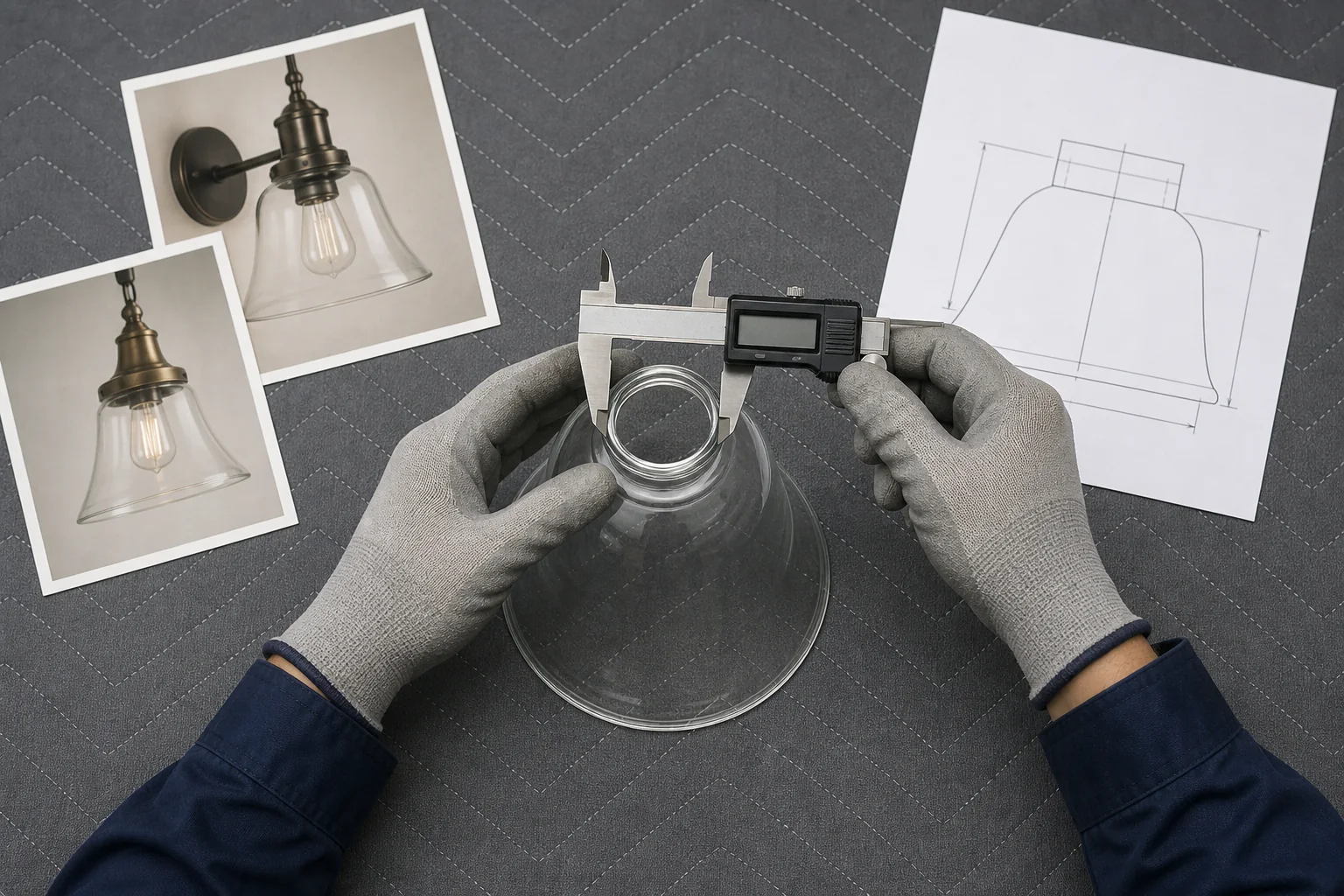
The glass lamp shade replacement finder is the right next step when the old fixture needs to work again. Send clear photos of the shade and holder with the dimensions above. If the profile is custom or the order covers multiple fixtures, use the custom lampshade RFQ builder to organize the drawing, finish, quantity and packaging requirements.
Do not discard the original until a replacement fits the real hardware.
Frequently asked questions
Can every old glass lamp shade be repurposed?
No. Repurpose only a shade that is intact and stable for the intended use. Cracks, sharp chips, loose leaded joints, unknown heat damage or an unstable shape can rule out a project. Donation, specialist repair or locally approved disposal may be safer.
Can I use a glass lamp shade as a planter?
Use it as an outer cachepot with a removable inner pot and saucer. This keeps soil and standing water away from unknown coatings or joints. Put the shade in a stable support, and do not assume thin or leaded glass can carry a heavy wet planting.
Is an old glass shade safe as a candle holder?
Do not assume so. A shade made for a light fixture may not be designed for direct flame, hot wax or concentrated candle heat. Use a removable battery LED for a similar visual effect unless the glass item was specifically made and rated for candle use.
Can I paint a glass lamp shade and use it on a lamp again?
Only after checking the paint manufacturer’s temperature, adhesion and intended-use instructions and confirming the complete fixture remains suitable. Paint changes light transmission and may affect heat. Test on scrap glass first, and keep paint away from fitter contact surfaces and labels.
Can glass lamp shades go in curbside recycling?
Rules vary. Many programs focus on glass bottles and jars, while specialty lighting glass may need a transfer station or drop-off route. Ask the local provider. The EPA says broken glass should not be placed loose in a recycling bin.
Can I fit an old shade to a new lamp?
Sometimes, but a similar opening is not enough. Confirm the fitter type, retention method, socket and bulb rating, clearances, shade weight and fixture orientation. Use a qualified lamp repair shop or electrician for mains-voltage work.
Should I donate or sell an intact shade before crafting with it?
Check whether it is part of a matching set, has a maker’s mark, uses an uncommon fitter or belongs to a discontinued fixture. Those details can make it useful as a replacement part. Record the measurements and offer the original hardware with it.
What measurements are needed for a replacement?
Record the fitter opening, overall height, widest diameter, rim diameter and attachment method. Add photos of the shade from the side, top and bottom, plus the empty holder on the fixture. Quantity and finish matter for matching sets.
Save the shape data before you let the shade go
An old glass shade can become useful decor, but the best outcome may be less decorative: donation to someone who needs the fitter, a labeled reference in a repair shop, or a measured pattern for a replacement.
Inspect first. Keep changes reversible. If the fixture still needs a shade, send the photos and dimensions for review before you paint, drill, glue or discard the original.