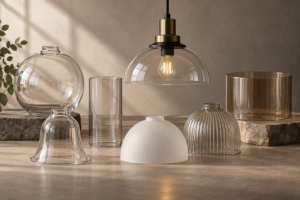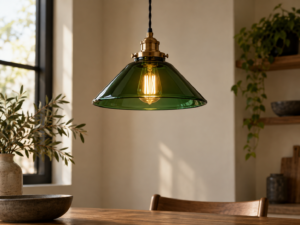
アンティーク真鍮ランプシェードは、経年変化した真鍮で作られている、または仕上げられているシェードで、透かし金属シェード、真鍮縁付きガラスシェード、真鍮製シェードフレームなどがあります。価値は年代、真鍮が無垢かメッキか、製造者、状態によって異なります。.
誰かがあなたに古い真鍮のランプを手渡します。台座は重く、金属はくぼみに深い琥珀色の茶色に変色しており、シェードは欠けているか壊れているか、明らかにオリジナルではありません。さて、どうしますか?それは無垢の真鍮ですか、それともメッキですか?価値はありますか?本来どんなシェードが合うのでしょうか?アンティーク真鍮ランプシェードについて上位表示される多くのページは、これらの疑問に答えていない商品リストばかりです。このガイドでは、本物のアンティーク真鍮の見分け方、シェードの種類、価値の評価方法、壊さずに掃除する方法、アンティーク真鍮の台座に合う正しいシェードの選び方を解説します。.
アンティーク真鍮ランプシェードとは?
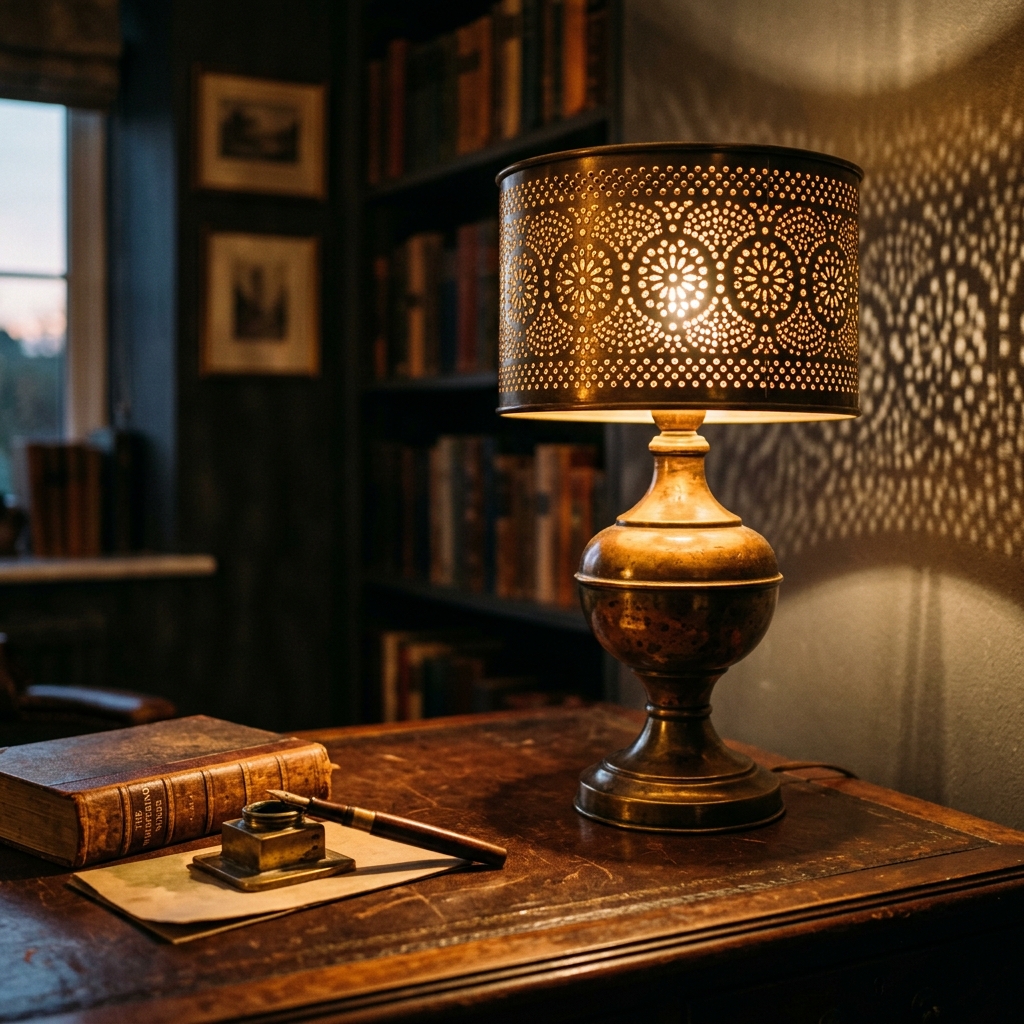
アンティーク真鍮ランプシェードとは、真鍮で作られている、または経年変化した真鍮のように仕上げられているランプシェードで、一般的にアンティーク(通常100年以上前)またはヴィンテージ(約30~100年前)と見なされるランプに使われます。この用語は、無垢真鍮の透かしシェード、真鍮縁付きガラスシェード、布シェード用の真鍮ワイヤーフレームなど、いくつかの異なるものを指します。.
無垢真鍮 vs 真鍮メッキ vs 真鍮仕上げ
アンティーク真鍮ランプシェードを評価する際に最も重要な違いは、実際に真鍮が何であるかです:
無垢真鍮:シェードや金具が全体的に真鍮合金で作られています。. 真鍮 は銅と亜鉛の合金で、無垢真鍮製品は重く、磁石に反応せず、数十年かけて本物の古色が生まれます。無垢真鍮のアンティークは価値があり、希望すれば明るい金色に磨き直すこともできます。.
真鍮メッキ:安価なベースメタル(通常は鉄や亜鉛)の上に薄い真鍮層を電気メッキしたもの。メッキ品は同じ大きさでも軽く、ベースが鉄の場合は磁石に反応しやすく、接触が多い部分からメッキが剥がれて下地金属が見えることがあります。真鍮メッキのランプは一般的に新しく、無垢真鍮よりも価値が大幅に低いです。.
真鍮仕上げ:どんなベース素材にも真鍮色の塗装やラッカー仕上げを施したもので、実際の真鍮は含まれていません。これは「アンティーク真鍮」として販売される現代のレプリカによく見られます。たとえば、ワールドマーケットの透かしドラムシェードが「アンティーク真鍮仕上げ」として販売されている場合、それは仕上げであり、無垢真鍮ではありません。価値は最も低く、見た目のみが評価されます。.
「アンティーク」の本当の意味
「アンティーク」という言葉はランプのリストで広く使われています。厳密には、アンティークとは100年以上前の物を指します。実際には、アンティーク照明市場ではより広く適用されています:
- 本物のアンティーク (1925年以前):ガスから電気への転換期以前で、無垢真鍮が多く、刻印やメーカー印があることが多いです。.
- ヴィンテージ (1925~1995年):アールデコ真鍮、ミッドセンチュリー真鍮、後期レプリカなど幅広く含みます。品質は非常に幅があります。.
- 復刻品/アンティーク加工:意図的に古びた仕上げの新製品。説明に関わらず、まったくアンティークではありません。.
| カテゴリ | 年代 | 真鍮の種類(一般的) | 価値の要因 |
|---|---|---|---|
| 本物のアンティーク | 1925年以前 | 無垢の真鍮、しばしば刻印あり | 年代、製造者、希少性、状態 |
| ヴィンテージ | 1925–1995 | 無垢またはメッキ | スタイル時代、製造者、無垢かメッキか |
| 復刻品 | 最近 | 真鍮仕上げまたはメッキ | 外観のみ |
アンティーク真鍮ランプシェードの種類
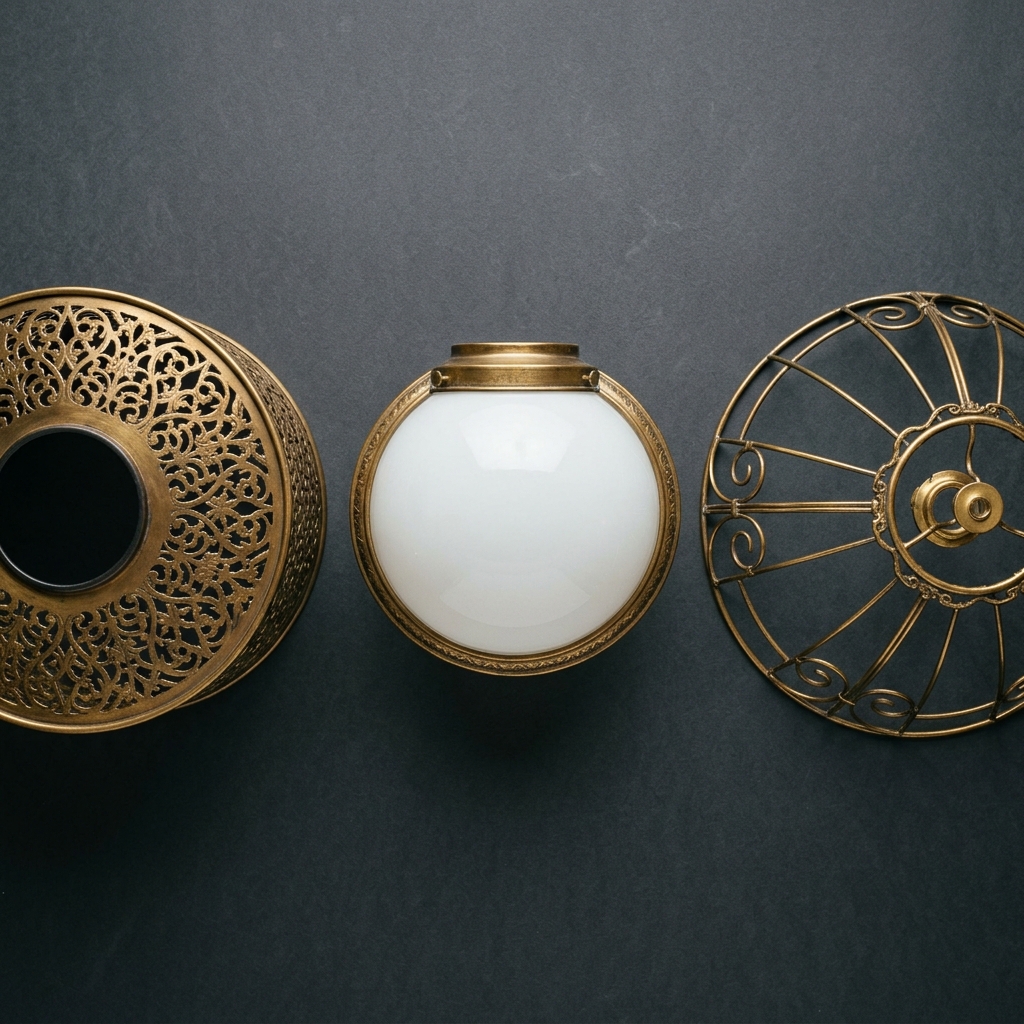
アンティーク真鍮ランプシェードは、三つの構造タイプに分類されます:穴あきの金属シェード、真鍮縁のガラスシェード、布用の真鍮ワイヤーフレーム。それぞれ点灯時と消灯時で見た目が異なり、異なるランプや部屋に適しています。.
穴あき・穿孔金属シェード
穴あき真鍮シェードは、装飾的な切り抜きや穿孔模様が施された無垢の金属シェードです。ランプが消えている時は、模様の穴がある不透明な真鍮のコーンやドラムが見えます。点灯すると、光は穴からのみ漏れ、天井や壁に模様を映し出します。シェード本体は暗いままで、模様が輝きます。.
穴あき金属シェードは、伝統的、コロニアル、モロッコ風のインテリアに関連しています。布やガラスの柔らかな全体的な光とは異なり、劇的で指向性のある光を生み出します。穴あき模様は、単純な打ち抜きから複雑なスクロールワークまで幅広くあります。これらのシェードは最も「真鍮らしさ」が際立つ選択肢で、真鍮そのものが目立つ特徴です。.
実用的な欠点:穴あき金属シェードは光のほとんどを上下に向けて放ち、側面への光はほとんどありません。そのため、アクセントやムード照明としては機能しますが、読書灯としては適していません。.
真鍮縁付きガラスシェード
多くのアンティーク真鍮ランプは、元々真鍮の金具で支えられたガラスシェードを使用していました。真鍮のシェードリング、真鍮のギャラリー、またはガラスのグローブやドームを固定する真鍮のホルダーなどです。真鍮とガラスは一体となるよう設計されており、温かみのある金属の色合いがガラスを引き立て、真鍮の金具が構造的な取り付けを担っています。.
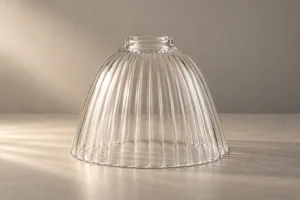
この構成は、ほとんどのアンティーク真鍮テーブルランプやオイルランプの改造品で使われていました。ガラスシェードが光を拡散し、真鍮が時代に合った金具と視覚的な枠組みを提供します。シェードが欠けているアンティーク真鍮ランプの所有者には、 ヴィンテージガラスランプシェード 適切なフィッターサイズのものが、最も時代に合った交換品となります。なぜなら、元々はほぼ確実に真鍮の金具で支えられたガラス製であり、無垢の真鍮シェードではなかったからです。.
布用真鍮シェードフレーム
三つ目のタイプは、布で覆われた真鍮または真鍮仕上げのワイヤーフレームです。ここでの真鍮は装飾ではなく構造的な役割を果たし、骨組みを形成し、布が表面を提供します。真鍮仕上げのワイヤーフレームは、ビクトリア朝やエドワード朝の布製シェードによく見られ、上部や下部の縁に複雑なスクロールワークが施されていることが多いです。.
本物のアンティーク真鍮フレームは希少です。なぜなら、ワイヤーが通常腐食したり、布のカバーが何十年にもわたり何度も新しいフレームに張り替えられたりしたためです。現在市場に出回っている「アンティーク真鍮」ワイヤーフレームのほとんどは、アンティーク調仕上げの復刻品です。.
| シェードタイプ | 真鍮の役割 | 光の振る舞い | 最も適した |
|---|---|---|---|
| 穴あき金属 | シェード自体 | パターンキャスト、指向性 | アクセント、伝統的、モロッコ風 |
| 真鍮縁取りガラス | 金具/フレーム | 柔らかく拡散(ガラス越し) | アンティークテーブルランプ、時代風の部屋 |
| 真鍮ワイヤーフレーム | 構造的骨格 | 柔らかく拡散(布越し) | ビクトリア朝、エドワード朝の布製シェード |
本物のアンティーク真鍮の識別と価値評価
アンティーク真鍮ランプシェードとそのランプがソリッドブラスか、メッキか、あるいは単に仕上げられているかを見極めることが、価値を評価する鍵となります。テストは簡単で、数分で完了します。.
ソリッドブラス対メッキ:実用的なテスト
信頼性の順に3つのテスト:
- 磁石テスト:金属に磁石を当ててみてください。真鍮無垢は磁性がなく、磁石はくっつきません。磁石がくっつく場合は、スチール製のベースメタルに真鍮メッキが施されているもので、無垢ではありません。これは最も迅速な判別方法ですが、無垢の真鍮と真鍮メッキの亜鉛(亜鉛も非磁性)を区別することはできません。.
- 重さのテスト:無垢の真鍮は密度が高く、サイズの割に重く感じます。無垢の真鍮製シェードや金具はしっかりとした重みがあり、メッキや仕上げ品は明らかに軽く感じます。これはある程度の経験が必要ですが、両方を扱ったことがあれば信頼できる方法です。.
- 摩耗のテスト:よく触れる縁や裏側、傷の部分を観察します。メッキ品の場合、摩耗部分から異なる色のベースメタル(銀色のスチールや灰色の亜鉛)が真鍮層の下から現れます。無垢の真鍮の場合、傷がついても中まで同じ金色の真鍮が現れます。.
専門家のアドバイス:フィッターの内側やシェードの裏側など、研磨が届かない部分を確認しましょう。無垢の真鍮はこれらの保護された部分でも色が均一で、本物の経年変化による風合いが見られます。メッキ品はベースメタルが見えたり、不自然に均一な仕上げになっていることが多いです。.
刻印、メーカー、価値の決め手
アンティーク真鍮ランプに関する関連検索には「古い真鍮ランプに価値はあるのか」といったものがあります。これはもっともな疑問ですが、正直な答えは「真鍮が無垢かどうか、そして誰が作ったかによって大きく異なります」。.
価値を左右する要素(おおよその順序):
- 無垢かメッキか:他の条件が同じなら、無垢の真鍮はメッキ品の数倍の価値があります。.
- メーカー/刻印:有名メーカー(高級照明ならティファニー、ハンデル、ペアポイント、日本の老舗メーカー、オイルランプならブラッドリー&ハバードやアラジンなど)の刻印があると価値が大きく上がります。ベースの裏側、ソケット、シェードフィッターなどに刻印がないか探しましょう。.
- 年代と希少性:1925年以前の本物で、オリジナル部品が揃っているものは、後年のヴィンテージ品より価値があります。.
- コンディション:オリジナルの風合いが残っていて、へこみがなく、配線がオリジナル(または専門業者によるリワイヤー)、シェードもオリジナルであれば高評価です。.
- 完全性:オリジナルのシェードが揃ったランプは、ベースだけや組み合わせが合っていないものよりもはるかに価値があります。.
仕様書にはあまり書かれていませんが、オリジナリティは輝きよりも重要です。過度に磨かれて風合いを失ったアンティーク真鍮ランプは、経年変化が残る同じランプより価値が下がることが多いです。コレクターは正直な経年変化に価値を見出し、磨き上げられた仕上げにはあまり価値を感じません。.
古い真鍮のパティナ、変色、そしてクリーニング
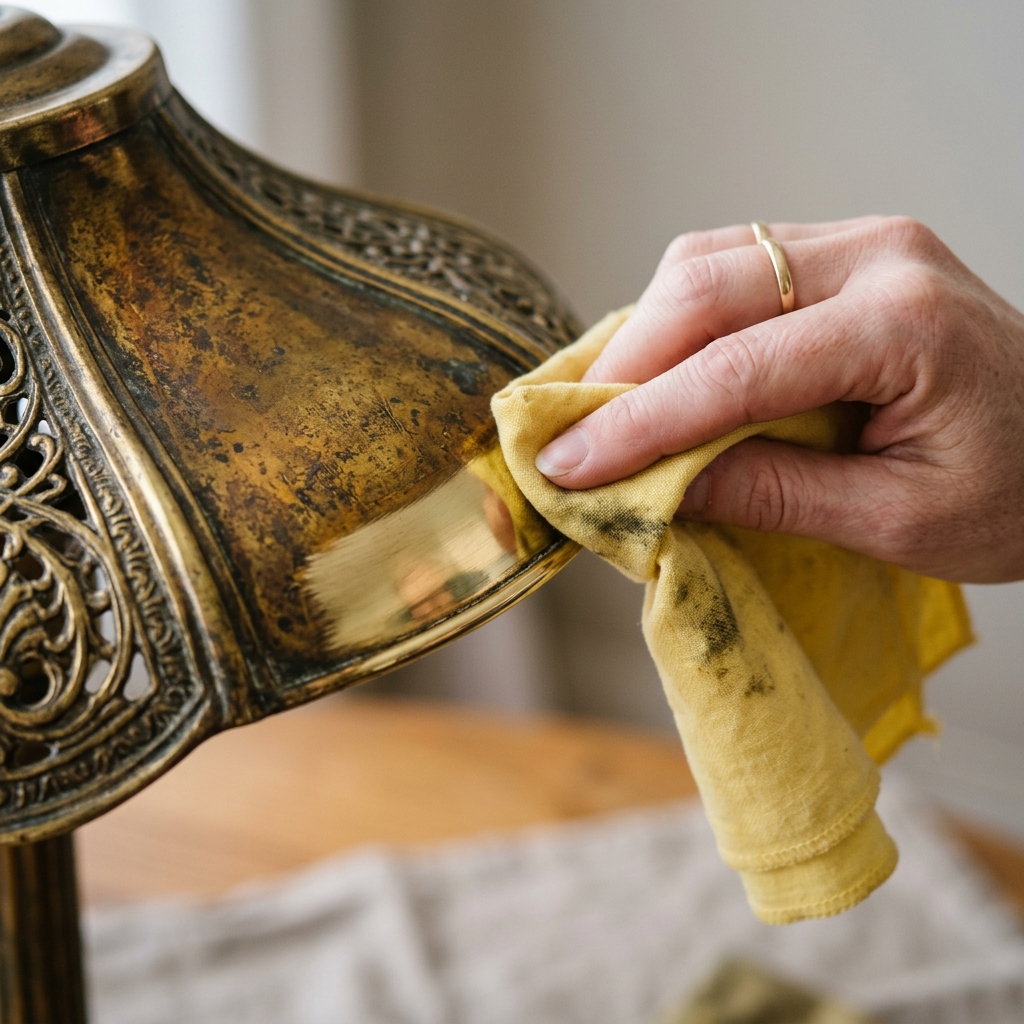
パティナと変色は同じものではなく、その違いを知ることでアンティークの真鍮製ランプシェードを掃除すべきかどうかが決まります。パティナは価値を高めますが、過度なクリーニングはそれを損ないます。.
パティナと変色:そのままにしておくべき時
パティナ は、真鍮の表面に何十年もかけて形成される安定した経年変化の層です。深く、均一に暗くなり、くぼみには温かみのある琥珀色や茶色のトーンが現れ、盛り上がった部分には柔らかな光沢が生まれます。パティナは望ましいものです。本物の経年の証であり、アンティークの場合は基本的に保存すべきで、取り除くべきではありません。.
一方、変色は表面の活発な酸化です。くすんでいたり、まだらだったり、緑がかっていたり、時には隙間に緑青(緑色の腐食生成物)が見られることもあります。軽い変色は掃除できますが、重度の緑青は金属を積極的に腐食させるため対処が必要です。.
判断のポイント:表面が均一で温かみのある経年の茶色なら、そのままにしておきましょう。くすんでいたり、まだらだったり、緑色の腐食が見られる場合は、優しく掃除するのが適切です。価値のある可能性がある場合は、迷ったら何もせず専門家に相談しましょう。後から掃除はできますが、パティナは元に戻せません。.
ラッカー仕上げの真鍮と未仕上げの真鍮のクリーニング
掃除を始める前にまず確認すべきなのは、真鍮がラッカー仕上げかどうかです。多くの真鍮製品は変色を防ぐために透明なラッカーでコーティングされています。ラッカー仕上げの真鍮は光沢があり、ムラなく変色しません。未仕上げの真鍮は自由に変色し、パティナが形成されます。.
- ラッカー仕上げの真鍮:柔らかい布と中性洗剤を使ってのみお手入れしてください。真鍮用の研磨剤や磨き粉は絶対に使用しないでください—ラッカーに傷がつき、曇りの原因となります。ラッカーが剥がれていたり、黄ばんでいる場合は、下の真鍮を磨いたり再ラッカーする前に完全に剥がす必要があります。.
- 無塗装の真鍮:光沢のある仕上げにしたい場合は、適切な真鍮用ポリッシュで磨くことができますが、磨くべきかどうか(上記のパティーナの注意を参照)を考慮してください。パティーナを保ちつつ優しく掃除したい場合は、柔らかい布と中性洗剤だけで十分です。.
| 真鍮の状態 | 処置方法 | 避けてください |
|---|---|---|
| 均一な経年変化のパティーナ(価値あるアンティーク) | そのままにして、ほこりを払うだけ | いかなる研磨剤や磨き粉も不可 |
| 軽いくすみ、無塗装 | 柔らかい布、中性洗剤;必要に応じて真鍮用ポリッシュ | スチールウール、強い研磨剤 |
| ラッカー仕上げ、無傷 | 柔らかい布、石鹸水 | 真鍮用ポリッシュ、溶剤 |
| 緑青/緑色の腐食 | 優しく掃除する;価値がある場合は専門家に依頼 | 放置する(腐食が広がる) |
これらのランプを扱う際の実用的な注意:アンティークの真鍮製ランプシェードには、スチールウールや研磨パッドを絶対に使用しないでください。細かい傷が永久に残り、光を反射してすぐに扱いが悪かったことが分かってしまいます。穴あき金属シェードの場合、研磨剤が穴に詰まり、ほとんど取り除くことができません。.
シェードをアンティーク真鍮ランプの台座に合わせる方法
アンティーク真鍮ランプにシェードがない場合、交換用を選ぶには、適切なシェードの種類、正しいフィッターサイズ、台座に合ったバランスの取れた寸法を選ぶ必要があります。まずシェードの種類を正しく選び、その後に寸法を決めてください。.
真鍮製の台座に、透かし金属、ガラス、または布製のシェードですか?
最初の判断は、そのランプがどのようなシェード用に設計されているかです:
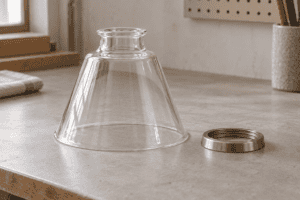
- ランプに シェードホルダーリングまたはギャラリー がソケットの上部についていれば、それは ガラスシェード. 用に設計されています。これはアンティーク真鍮テーブルランプで最も一般的な構成です。適切なフィッターサイズのガラスグローブやドームが、時代に合った選択肢です。.
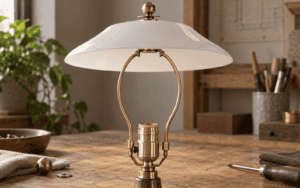
- ランプに ハープ, 場合は、 布製シェード (スパイダーフィッター付き)用に設計されています。1920年代以降の真鍮テーブルランプでは、ハープがよく使われました。.
- A 透かし金属シェード は、特にドラマチックな模様の光を演出したい場合や、ランプの取り付けがそれに対応している場合に適しています。これはスタイルの選択であり、通常は元の構成ではありません。.
温かみのある色調を合わせることが重要です。真鍮のランプベースには、金属と調和するシェードが最適です:クリーム色、アイボリー、暖かい白の布、アンバー、オパール、またはクリアガラス、または真鍮色の透かし金属シェード。真っ白や寒色系のシェードは、温かみのある真鍮と合いません。.
フィッターのサイズとバランス
フィッターは絶対に守るべき寸法です。アンティーク真鍮ランプのガラスシェードの場合、シェードのフィッター直径は真鍮ホルダーリングと正確に一致する必要があります。標準的なアンティークフィッターサイズは2¼インチ、3¼インチ、4インチです。当社の カットガラスランプシェードの測り方ガイド では、ホルダーリングの測定方法と正しいフィッターサイズの注文方法を解説しており、この方法はどのアンティーク真鍮ランプにも適用できます。.
バランスについては、どのランプにも共通するルールが適用されます:シェードの下部直径は、真鍮ベースの最も広い部分より少なくとも2インチ広く、シェードの高さはランプ全体の高さのおよそ3分の1が目安です。アンティーク真鍮ベースは細長く背が高い(キャンドルスティック型やコラム型)ことが多いため、3分の1ルールよりやや高めのシェードが必要な場合もあり、棒の上にキャップが乗ったような見た目を避けられます。.
自分のガラスシェードがどの時代・種類か正確に知りたい方には、当社の ヴィンテージガラスランプシェードの識別ガイド メーカー刻印、ガラスタイプ、フィッターの規格など、シェードの年代を特定するポイントを解説しています。.
アンティーク真鍮のランプシェードがインテリアに合う場所
アンティーク真鍮のランプシェードは、すでに温かみや伝統的な雰囲気を持つインテリアにぴったりですが、現代的でエクレクティックな部屋でも意図的なアクセントとして機能します。重要なのは、温かみのある金属の色調を受け入れることであり、それに逆らわないことです。.
伝統的・ヴィンテージの部屋
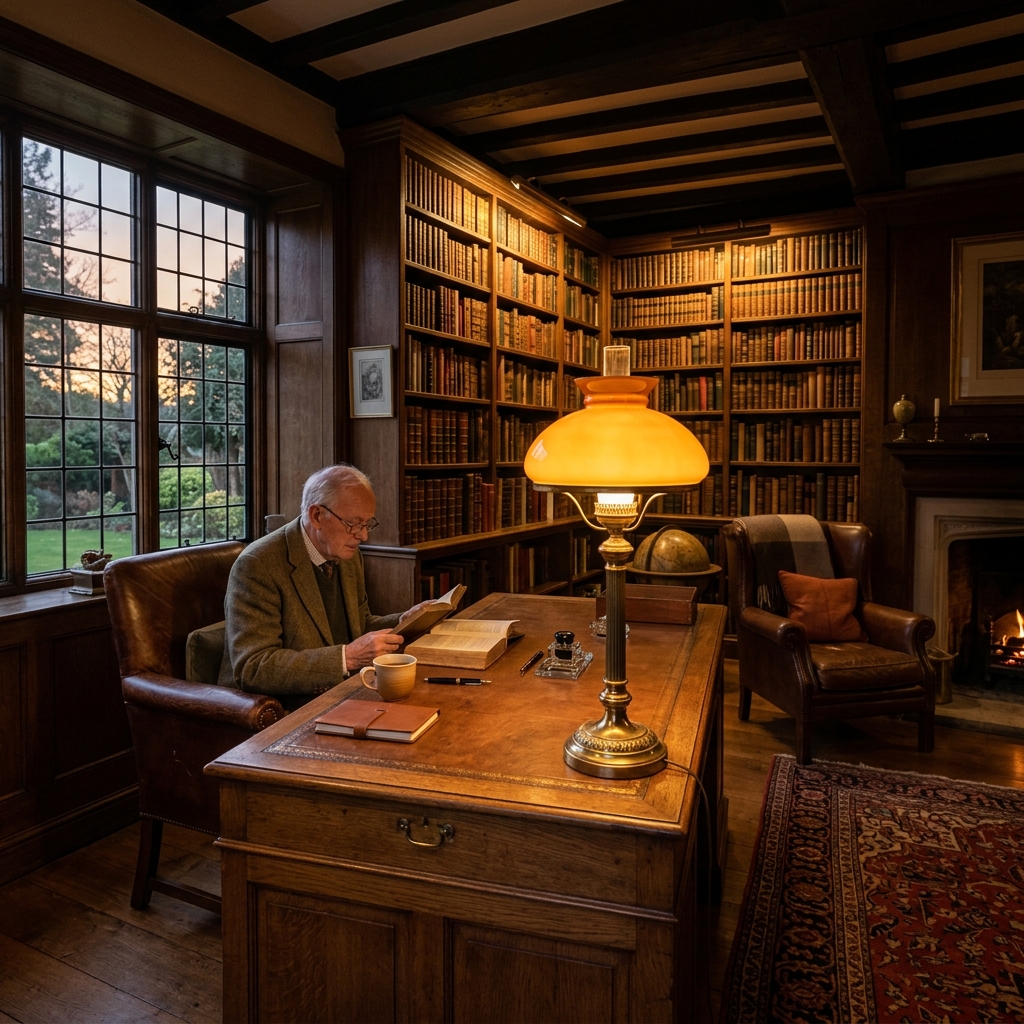
伝統的、ヴィクトリアン、コロニアル、ファームハウス風のインテリアでは、アンティーク真鍮のランプシェードは装飾的な主張というより自然な存在として映ります。木製のライティングデスクにオパールガラスのシェード付き真鍮テーブルランプ、スタディルームで模様の光を投げかける透かし真鍮シェード、マントルピースに真鍮フレームのファブリックシェードなど、どれも木製家具や温かみのあるテキスタイル、経年仕上げのある部屋にしっくり馴染みます。.
真鍮は他の温かみのある素材と特に相性が良いです:ウォルナットやマホガニーの木材、レザー、経年のブロンズ金具、温かみのある色調のテキスタイル。金属は温かい光を拾い、反射することで部屋の雰囲気を強調します。.
モダンエクレクティックな組み合わせ
現代的な部屋では、アンティーク真鍮のランプシェードは意図的なヴィンテージアクセントとして機能します。クリーンな現代的な表面に対して、ひとつの温かみと経年感のある要素となります。ミニマルなコンソールや棚にアンティーク真鍮のランプをひとつ置くだけで、部屋全体を時代風にすることなく、年季と温かみを加えられます。.
効果的な組み合わせ:真鍮のアイテムは本物の経年変化(リアルなパティナ)を持たせ、現代的な空間とコントラストさせること。磨かれて明るい真鍮ランプは新しく見え、違和感が出ることがありますが、正直なパティナがあるアイテムは収集されたアンティークとして映り、現代エクレクティックな部屋が求める効果を生みます。すべてのランプシェードと同様、暖色系のLED電球に切り替えることで、 日本のエネルギー省によると 白熱灯よりもはるかに低温で動作し、長期的にシェードや周囲の仕上げを熱から守ります。.
よくある質問
古い真鍮のランプは価値があるのでしょうか?
真鍮が実子で、誰が作ったかによります。既知のメーカー(ティファニー、ハンデル、ブラッドリー&ハバード、アラジン)の実子真鍮のアンティークランプは数百ドルから千ドル以上の価値があることがあります。メッキまたは真鍮仕上げのランプは価値がかなり低く、装飾的な魅力が主に評価され、アンティークとしての価値は低くなります。磁石で確認(実子真鍮は非磁性)、重量を評価し、ベース・ソケット・フィッターにメーカーの刻印がないかを確認します。独自性と未酸化の patina は価値を上げ、過度の研磨は価値を下げます。.
私の真鍮のランプシェードが実子真鍮か板打ちかをどう見分けますか?
磁石を使います。実子真鍮は非磁性なので磁石がくっつく場合は鉄の上にメッキされていることになります。実子真鍮もサイズの割には重く感じ、実子真鍮の傷はより多くの真鍮が露出し(全体が同じ金色)、板打ちの真鍮の傷は下の基礎金属が異なる色で露出します。劣化を避けるには、裏側やフィッター内部の保護された部分を確認し、摩耗や基底金属の露出を見つけやすい場所をチェックします。.
アンティークの真鍮ランプシェードを磨くべきですか、それとも patina のままにしておくべきですか?
一般に、均一で温かな aging patina をそのままにしておくのが良いです — 価値を高め、コレクターが求めるものです。表面が鈍っている、まだらで、または酸化が進んでいる場合にのみ磨くべきで、その場合も柔らかい布と優しい真鍮のポリッシュを使用し、鉄たわしや研磨剤は絶対に使わないでください。 genuine antique を過度に磨くと価値が著しく下がることがあります。価値のある品かもしれない場合は、保守的に清掃するか、まず専門家に相談してください。.
アンティークの真鍮ランプにはどんなシェードが合いますか?
ランプの取付金具により異なります。シェードホルダーのリングやギャラリーがある場合はガラス製のシェード向けに設計されており、通常は時代相応の選択です。ハープ( harp )がある場合は蜘蛛式のファブリックシェードを使用します。暖色系を合わせると良く、クリーム色またはアイボリーファブリック、アンバーやオパールガラス、真鍮調の透かし金属シェードなどが合います。シェードのフィッターのサイズはランプの金具と正確に一致する必要があります。.
真鍮の patina と tarnish の違いは何ですか?
Patina は何十年もかけて安定して均一に濃くなる aged の暗化で、アンティークでは望ましいものです。Tarnish は活発な表面酸化で、鈍く、まだらで、隙間に緑青が生じることがあり、腐食を示します。Patina は保存するべきで、Tarnish は優しく清掃できます。緑青は金属を実際に腐食させるため対処すべきです。違いは重要で、Patina を取り除くと価値が失われますが、Tarnish を除去して金属を保護することは有用です。.
アンティークの真鍮のランプにガラスのシェードを付けられますか?
はい、しばしば最も時代に合った選択です。ほとんどのアンティークの真鍮テーブルランプは、元々ガラスのシェードを真鍮のホルダーリングまたはギャラリーで支えるよう設計されています。ホルダーリングの内径を測定してフィッターサイズを確認し(一般的には 2¼”、3¼”、または 4″)、それに合うガラスシェードを注文します。アンバー、オパール、クリアガラスは真鍮の温かいトーンと相性が良いです。.
結論
アンティークの真鍮のランプシェードは、製品リストが示すよりもずっと広範囲をカバーします。孔あき金属シェード、真鍮縁のガラスシェード、真鍮ワイヤーフレームなど、1925 年以前の genuine antique から aged finish の最近のレプリカまで様々です。最も重要な2つの質問は、真鍮が実子か板打ちか、表面が genuine patina なのか removable tarnish なのかです。これらを正しく判断すれば、作品を正しく識別・評価・ケアできます。.
シェードを欠いたアンティークの真鍮ランプには、ほとんどの場合、適切なフィッターサイズのガラシェードが最も時代に合った交換品となります。これは多くのアンティークの真鍮ランプが元々使用していた形式だからです。私たちより ヴィンテージガラスランプシェードガイド アンティーク真鍮ベースに適したガラスタイプとフィッターサイズをカバーし、 カットガラスランプシェードのコレクション period- correct の交換品を探す出発点となる。.