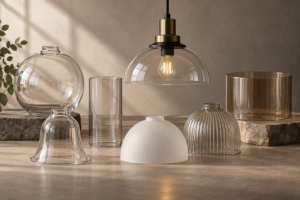
直接的な回答: アール・デコのガラスランプシェード(1920〜1940年)は、段状パネル、サンバースト模様、角ばったリブ、またはスタイライズされた扇形を特徴とする幾何学的で左右対称のガラスカバーです。一般的な素材は、フロスト加工されたアンバー、グリーン、クリア、または乳白色のプレスガラスで、2¼インチから3¼インチのギャラリーフィッターが付いています。オリジナルの当時物と高品質な復刻品の両方が入手可能です。.
アール・デコは、産業時代の楽観主義を幾何学的な装飾に翻訳したデザイン運動であり、機械プレスと伝統的な 手吹きガラス 形態の両方に応用されました。ヴィクトリア時代が有機的な花模様で職人技を表現したのに対し、アール・デコは左右対称性、角ばり、機械的美学によって近代性を表現しました。ガラスランプシェードでは、段状パネル、サンバーストリブ、扇形、幾何学的なカットワークという独特の語彙が生まれ、すぐに識別でき、今なお視覚的に魅力的です。.
アール・デコのガラスシェード(1920〜1940年)は、最も活発に収集されているヴィンテージランプシェードのひとつです。また、その幾何学的な論理性が現代の製造にも適しているため、最も広く復刻されています。本ガイドでは、本物のアール・デコシェードの語彙、当時物の見分け方、2026年のインテリアでアール・デコガラスを効果的に使う方法を解説します。.
アール・デコガラスデザインの語彙
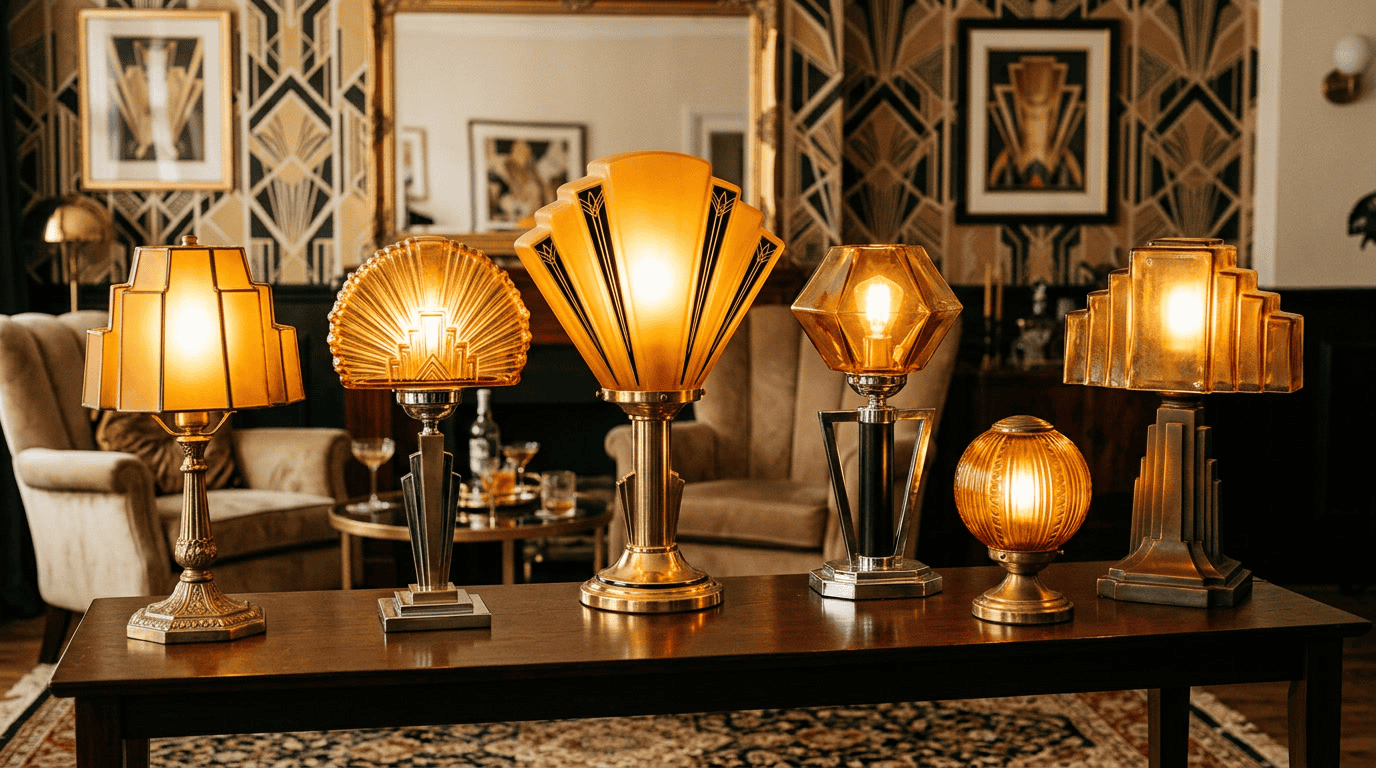
ガラスランプシェードに適用されたアール・デコは単一のスタイルではなく、約6つの繰り返し現れる幾何学的モチーフの語彙です:
段状または階段状パネル: シェード本体が上から下へと外側に段階的に広がる水平バンドに分割されており、ジッグラット形状を参照しています。多くの場合、フロストまたはクリアガラスで、各段の縁に磨かれたバンドが施されています。.
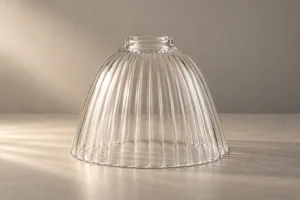
サンバースト/扇形リブ: フィッター開口部から下方に放射状に広がるリブで、昇る太陽の光線のようです。リブは盛り上がりと凹みが交互になっており、点灯時に強い光と影のパターンを生み出します。これは最も象徴的なアール・デコガラスのモチーフです。.
幾何学的プレスパネル: ダイヤモンド形、六角形、または長方形のパネルがガラス表面にプレスされています。磨かれた盛り上がった部分とフロスト加工された凹んだ部分のコントラストが際立っています。.
段状/角ばったプロファイル: シェード自体は滑らかなベル型やコーン型ではなく、段状で角ばった形状です。連続した曲線ではなく、平面が連なる形で下部が広くなっています。1920〜1930年代の建築照明(ロビーのペンダント、公共建築のウォールランプ)によく見られます。.
幾何学的フレーム内のスタイライズされた花/自然モチーフ: 後期アール・デコ(アール・モダンとも呼ばれることがあります)では、スタイライズされた葉、鳥、または自然の形が取り入れられましたが、必ず幾何学的構造の中に収められています。花は扇形、鳥はV字形として表現されます。.
金属フレーム内の色ガラスパネル: リードガラスの手法をアール・デコの幾何学に応用したものです。アンバー、グリーン、クリアの幾何学的な色ガラスパネルが金属枠内に収められています。大量生産品では稀ですが、当時の高級照明器具に見られます。.
五つのクラシックなアール・デコシェードの形
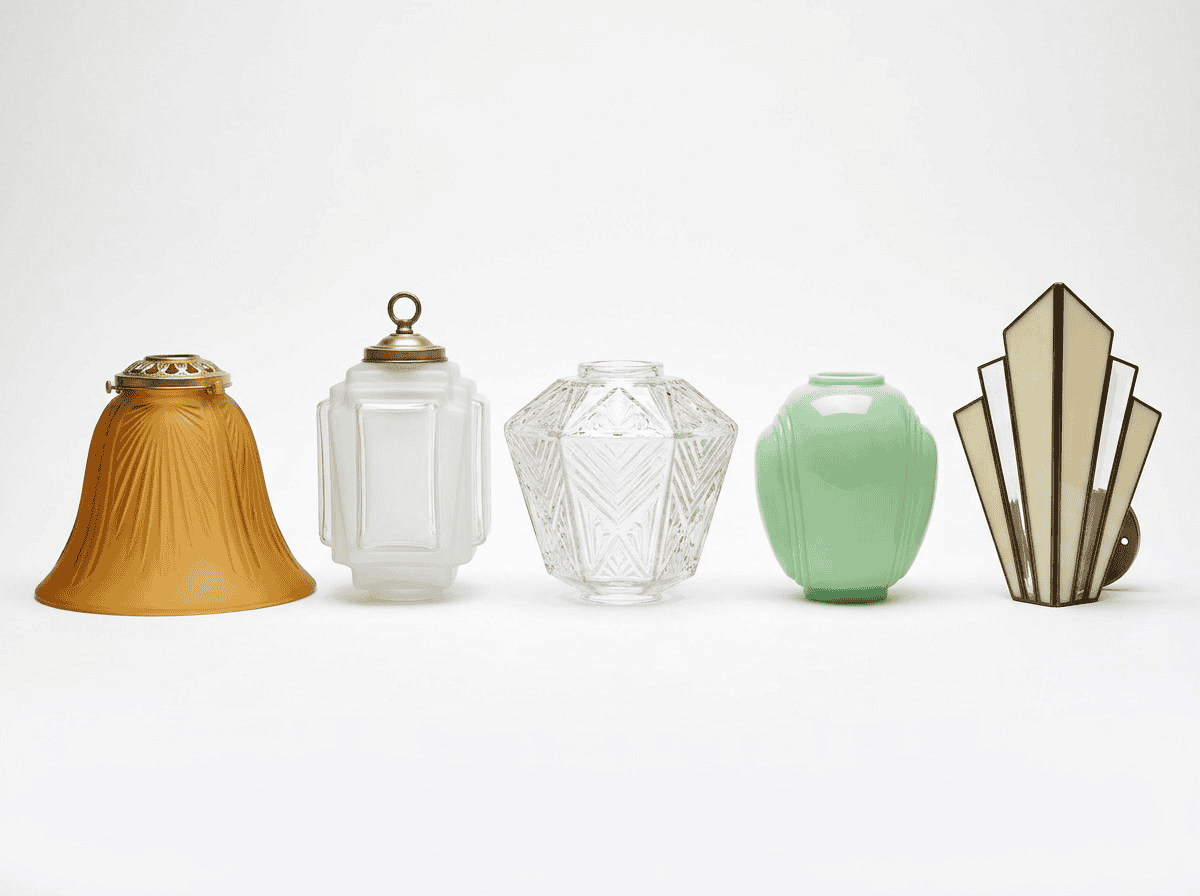
フロストアンバーのサンバーストリブ付きベル型(最も一般的): 典型的なアールデコ様式のテーブルランプシェード。放射状のリブが入ったプレス加工のアンバーガラスまたはフロストガラス、ベル型シルエット、2¼インチまたは3¼インチのギャラリーフィッター。この形状は大量生産されていました。 デプレッションガラス 1920年代から1940年代初頭の食器。オリジナルや復刻版が広く入手可能です。.
段付きパネルペンダントシェード 円筒形またはわずかにテーパーのかかった形状で、段状の水平パネルが特徴の幾何学的プレスガラス。ホテルのロビー、劇場のホワイエ、銀行の内装など公共施設で広く使用されています。現在、リノベーションされた商業空間のヴィンテージ照明器具用交換シェードとして入手可能です。.
クリアでフロスト加工された幾何学的インセット 一部のアールデコのシェードは、透明ガラスパネルと組み合わせていました フロスト加工 または酸エッチングされた幾何学的インサート — すりガラス部分は光を拡散し、透明パネルは光を指向性に伝達します。単純なプレス模様よりも光学的に高度です。.
グリーンスラグまたはジェダイトプレスシェード 一部のアールデコのシェードにはスラグガラス(マーブル模様の緑/白)が使用されていました。これは虹色ガラスの親戚です。 カーニバルガラス 同じ時代に人気があった、またはジャディート風の不透明な緑色プレスガラス。時代性が強く、アンバータイプよりも再生産が少ない。.
幾何学的なウォールランプシェード 壁用ブラケットのために設計された浅くて角ばったガラスパネル。多くの場合、台形または半円形で幾何学的な表面パターンが施されている。鏡、ドア、または暖炉の両側に対で使用される。.
本物のアールデコガラスシェードの見分け方
すべてのヴィンテージガラスシェードタイプ(アールデコに限らず)を網羅するより広範なフレームワークについては、こちらをご覧ください。 ヴィンテージガラスランプシェードの識別ガイド.
アールデコのガラスシェードは1950年代以降、盛んに復刻されています。オリジナルの時代物を見分けるには、ガラスとフィッターをよく観察する必要があります。
1920年から1940年のオリジナル品におけるガラス品質指標
- 機械プレスガラス 成形線が見えるが、成形線の仕上げは現代の製造よりもきれいではない。
- 特有の温かみのあるハニートーンを持つアンバーガラス — 多くの復刻品はやや赤みがかったり、よりオレンジ色のアンバーを使用しています
- 壁の厚さは2〜3mmと比較的薄く、現代の高品質な復刻品よりも軽く感じられます。
- 酸エッチングによるフロスト加工はプレス後に行われるため、プレス面とエッチング面のわずかな質感の違いを感じることが多いです。
- フィッターリムの直径は標準サイズから1〜3mmほどずれている場合があります。
製造時代の手がかり:
- 2¼インチのギャラリーフィッターは1940年以前の製造でより一般的です。
- スパイダー/ハープフィッターは1945年以降により一般的になりました。
- クリアなアンダーカットがあるプレス幾何学模様(リブが深くカットされている)は当時の製造を示唆し、浅いリブは安価な現代製造を示します。
日本の ウィキペディアのアール・デコに関する記事, この運動の主な商業期間は1920〜1940年であり、 1925年パリ国際博覧会 このスタイルが国際的に認知される決定的な瞬間として機能しています。この日付以前に製造されたシェードはよりアール・ヌーヴォーの影響を受けており、1940年以降のものは一般的にアール・モダンまたは ストリームライン・モダン クラシックなアール・デコではなく。.
2026年のインテリアにおけるアール・デコガラスの活用
アール・デコのガラスランプシェードは、現在、インテリアデザインにおける幾何学的パターンと大胆な素材表現の復活、そして2026年に成熟期を迎えるヴィンテージ/マキシマリストの広範なムーブメントという二つのトレンドが重なり、強いデザイン関心を集めています。.
直接的な時代部屋: アール・デコの家具、テキスタイル、金具が記録されている、またはキュレーションされたインテリアには、時代に忠実なガラスシェードが明らかな仕様となります。真鍮ベースにフロストアンバーのサンバーストリブシェード、商業空間やダイニングスペースの幾何学的ペンダントシェードなど。.
現代的な空間に時代アクセント: 現代的な部屋にアール・デコのガラスシェードを一つか二つ加えることで、意図的な素材の緊張感が生まれます。ミニマルな空間に流線型の真鍮コラムと幾何学的なアンバーガラスシェードを組み合わせると、意図的な演出として認識されます—対比こそがポイントです。.
ホスピタリティや商業空間: アール・デコの幾何学はホスピタリティ環境に非常に適しています。ホテルロビー、カクテルバー、レストランのダイニングルーム、高級小売空間では、1980年代のスタイル復活以来、アール・デコのガラスシェードが一貫して指定されており、現在も続いています。.
避けるべきこと: 多くの時代を混ぜすぎること。アール・デコのリブシェードとアーツ&クラフツのランプベースを組み合わせると、対比ではなく混乱を生みます。アール・デコの語彙は現代的な金具(ブラッシュドブラス、マットブラック、ポリッシュクローム)と組み合わせても十分自信がありますが、ヴィクトリアンの装飾的な形状とは相性が悪いです。.
アール・デコガラスランプシェードの調達
アール・デコランプがテーブルランプではなくフロアランプの場合、当社の ヴィンテージフロアランプ用ガラスシェードガイド これらの器具に典型的な大きなフィッターサイズをカバーしています。.
オリジナル時代品: アンティークディーラー、専門照明修復業者、オンラインヴィンテージマーケットで入手可能です。 コーニングガラス美術館 比較の参考となるパターンや形状のコレクションを維持しており、記録された時代品と照合するのに役立ちます。価格は$25(一般的な大量生産リブベル)から数百ドル(珍しい形状、記録された由来、著名なスタジオのサイン入り作品)まで幅広いです。オンライン購入前にフィッター寸法を確認してください。.
高品質な復刻品: サンバーストリブアンバーのベル型は、市場で最も復刻されているガラスシェードの一つです。品質は非常に幅があります。高品質復刻品の指標:
- 直径と形状に適したガラスの重さ(プレスアール・デコの場合2~3mmが正しい;薄いものは安っぽく感じます)
- オレンジや赤ではなく、温かい蜂蜜色に見えるアンバー色
- 実際の影の浮き彫りを生み出すプレス模様の深さ — 浅い模様は照明時に平坦に見える
- 粗くカットされていない、磨かれたまたは火仕上げされたフィッターリム
カスタム復刻: 特殊な形状や大型シェード(15インチ以上)、特定のフィッター寸法の場合、ガラスメーカーはカスタムアールデコスタイルのシェードを製作できます。必要な仕様は5つ:フィッターの種類と内径、外径、高さ、ガラスの種類(フロストアンバー、クリア、グリーン)、模様の説明または参考写真。.
私たちの ヴィンテージガラスランプシェードコレクション 現在生産されているアールデコスタイルのリブや幾何学模様を含み、標準およびカスタムフィッターオプションがあります。特にテーブルランプ用途については、当社の テーブルランプ用ヴィンテージガラスシェードガイド, 、および段付きパネルペンダント形状については、当社の ヴィンテージガラスペンダントライトシェードガイド サイズとフィッターの種類について説明しています。.
アールデコガラスの電球ペアリング
アールデコガラスは白熱電球を前提に設計されていますが、現代のLEDでも優れた性能を発揮します — LEDは熱が低いため、ガラスへの熱ストレスやアンバーガラスの経年による熱黄変がありません。.
| アールデコシェードタイプ | 推奨LED | なぜ |
| フロストアンバーリブベル | 800lm、2700K、A19 | アンバーは約45%吸収;800lmで十分な環境光を提供 |
| クリアプレス幾何学模様 | 600lm、2700K、装飾フィラメント | クリアガラスは電球が見える — 魅力的なものを選ぶ |
| 段付きパネルペンダント | 1000lm、2700K、全方向型 | ペンダントは全方向に一貫した光を出す必要があります |
| グリーンスラグまたはジャディット | 800ルーメン、2700K | グリーンは光を吸収し、暖色系の白色光はグリーンの色調を引き立てます |
アールデコのシェードと2700KのLEDは特に相性が良く、暖かい光が時代の美学を強調します。アールデコガラスの後ろにより冷たいLED(3000K以上)を使用すると、正しいですが雰囲気が薄れます。 日本エネルギー省のLEDガイダンス 標準的な住宅用ベースサイズで利用可能なLEDの色温度オプションの全範囲を記録しています。.
アールデコガラスランプシェードのスタイリング方法
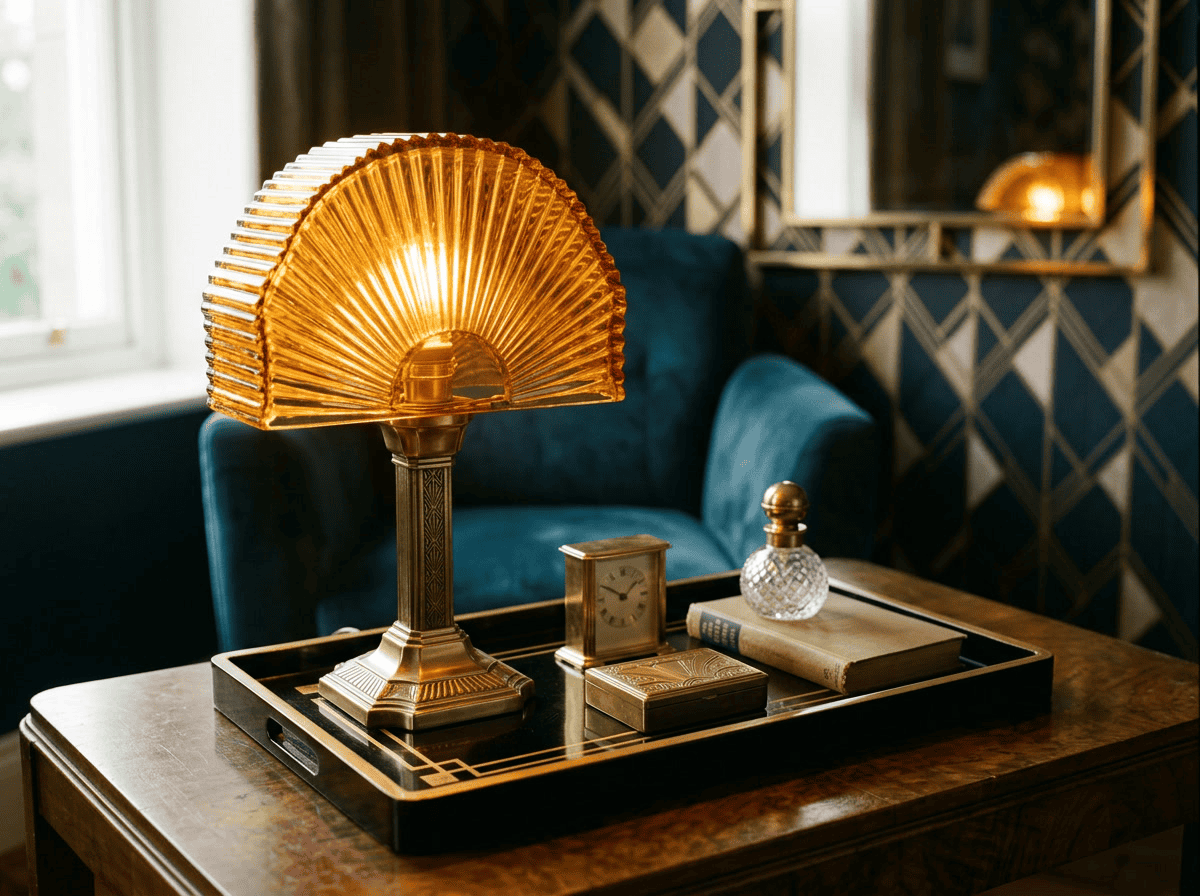
完全なアールデコランプ: ブラッシュドまたはポリッシュドブラスの柱型ベース(八角形や段付き柱型が最も時代に忠実)、フロスト加工のアンバーサンバーストリブシェード、800〜1000ルーメン2700KのLED電球。ラッカー仕上げや鏡面仕上げのトレイ、ラッカー仕上げのサイドテーブルなどの上に置くことで、時代感を強調します。.
現代的な統合: 現代のマット真鍮のシンプルな円柱ベースにアールデコのガラス。周囲の装飾は抑えめに — シェードが主役です。.
対を成す・複数で使う: アールデコのシェードは対称的な組み合わせで特に美しく機能します — 暖炉や鏡の両側、または同じベッドサイドランプとして。 period の幾何学的正確さは両対称性で自信を持って読み取れます。.
アールデコのガラスシェードと合わせないもの:
- 工業的なエジソン球の照明器具 — 露出したフィラメントの美学はアールデコの磨かれた幾何学と対立します
- 布張りドラムシェード — 同じ部屋の隣接するランプで混ぜないでください
- 重厚なヴィクトリア時代の華美なベース — 時代の衝突は未解決のように読まれます
よくある質問
アールデコのガラスシェードが時代のオリジナルか複製品かをどうやって見分けますか?
ガラスの重量を調べる(時代のオリジナルは直径に対して適切に重く感じられ、薄くない)、琥珀色のトーン(暖かい蜂蜜色でオレンジ色ではない)、型押し継ぎ目の特徴(時代の型は継ぎ目が存在するがわずかに不均一;現代の複製はより清潔またはよりはっきりした継ぎ目を持つ場合がある)、そしてフィッターリムの仕上がり(時代のリムは磨かれているが少し不完全であることが多い)を調べ、UV検査が役立ちます。アンバーの Depression-era ガラスにはマンガンが蛍光を発することがあり得ますが、複製品は一般的にそうではありません。.
卓上ランプに最も一般的なアールデコのガラスシェードとは何ですか?
おおよそ直径10–14インチの外径で、2¼インチのギャラリーフィッターを持つすりガラスの琥珀色サンバースト・リブドベルシェードです。この形状は1920年代初頭から1940年代初頭にかけて、数十のアメリカとヨーロッパのガラス工房で大量生産されました。最も認識されやすいアールデコのシェード形状で、オリジナルと複製の両方で最も入手しやすい形です。.
アールデコのガラスシェードは現代的なミニマリストのインテリアに使えますか?
はい、意図的なアクセントとして。流線形の真鍮製テーブルランプに1つのアールデコのリブド琥珀色シェードを置いたミニマリストな部屋は、素材選択として自信を持って読まれます。ミニマリストなインテリアに複数のアールデコのシェードを使うと、テーマ性を帯びて感じられるようになり、1つまたは2つは句読点のように機能します。.
アールデコのガラスシェード standard のフィッターサイズはどれが標準ですか?
2¼”ギャラリーフィッター(内径)は1920年代〜1940年代の製造で最も一般的です。3¼”ギャラリは大きめのフォルムや一部のペンダントシェードに使用されます。スパイダー/ハープフィッターは1940年以降のアール・モダン製作でより一般的になりました。あなたのランプにスパイダーフィッターがある場合、多くのアールデコ風シェードも標準ハードウェアへの配慮としてスパイダーフィッターで入手可能です。.
アールデコのガラスシェードはキッチンやダイニングルームのペンダントに適していますか?
はい。段階的パネルのペンダント形状は、アールデコ時代の商業・公共建築の照明で広く用いられました。アールデコの金具を備えた period kitchen またはダイニングルームには、時代を表すまたは再現の Art Deco プレスガラスペンダントが歴史的に適切な仕様です。.
アールデコのランプシェードで最も一般的なガラスの色は何ですか?
アンバー/ハニーが最も一般的な単一色でした。すりガラス仕上げの透明(酸エッチング)が次に多く、ジャダイトまたはセージグリーンはやや珍しくコレクターに人気です。ブラックやダークスモークガラスは高級器具で使用されました。純白のミルクガラスはアールデコ型で現れましたが、後期のモダン・クラシック(MCM)時代に多く見られます。.
大規模な商業プロジェクト向けのカスタムアールデコガラスシェードの復刻はどこで入手できますか?
カスタムオーダーを受け付けるガラスシェードメーカーは、指定の直径、フィッタータイプ、ガラス仕上げでアールデコの幾何学的形状を製作できます。最小発注数は通常、形状の複雑さにより10~25ユニットから開始します。原形の参照写真、必要なフィッター寸法、シェード外径と高さ、ガラスタイプを提供してください。お問い合わせ JX Lampshade のカスタムガラスチーム により、アールデコプロジェクトの仕様を。.
関連書籍
- ヴィンテージガラスランプシェード:完全購入ガイド
- テーブルランプ用ヴィンテージガラスランプシェード
- ヴィンテージのフロアランプ用ガラスシェード:スタイル、サイズ、交換ガイド
- ヴィンテージガラスランプシェードの見分け方
結論
アールデコのガラスランプシェードは、20世紀で最も成功した産業生産と意図的デザインの交差点の一つを表しています。太陽光放射のリブ付きアンバーのベル形、階段状パネルペンダント、幾何学的プレス筒形 — これらの形状は当時の家庭や公共空間で視覚的に機能したため大量生産されました。現代のインテリアでも、幾何学が周囲のスタイルに対抗して自立できる自信を持っているため機能し続けています。.
期間の部屋には、オリジナルの時代ものまたは品質の再現品が等しく有効です。現代的な統合を図るには、よく選ばれた一つのアールデコガラスシェードの方が、部屋中に山ほど置くより強い印象を与えます。フィッター寸法から始め、ランプと部屋の文脈に合う形を選び、幾何学が役割を果たすようにします。.