ホテルのランプシェード交換 損傷や劣化したシェードを特定し、既存のユニットからフィッターの種類と直径を測定し、在庫やOEM生産から色が一致する交換品を調達し、同じ部屋や廊下で目立つ不一致がないよう、同日交換が可能なバッファ在庫を館内に維持します。.
ナイトスタンドのランプのガラスシェードにひびが入り、火曜日の朝の客室清掃点検で報告されます。チェックインは午後3時です。その部屋は見た目が整っている必要があります。交換用シェードは棚に置かれており、部屋の他の三つのランプと完全に一致しているか、部屋が使用不可になるか、完全には一致しない代替シェードが取り付けられ、一貫性を求めて支払ったゲストが期待以下のものを受け取ることになります。.
ホテルのランプシェード交換は、購買の問題に見せかけた運用の問題です。購買の決定は設置時に行われました。運用の問題は、シェードが壊れたり、黄ばんだり、廃盤になったりするたびに表面化します。このガイドでは両方を扱います:どのシェードがいつ交換が必要かの特定方法、正確な測定と一致方法、緊急または大量調達の方法、そして交換プロセスの混乱を完全に排除する交換プログラムの構築方法です。.
ホテルのランプシェードが実際に交換が必要になる時
ホテルのランプシェードは、物理的な損傷や素材の劣化が許容範囲を超えた場合、または部屋や廊下内で目に見える不一致が生じてゲストの印象に影響を与える場合に交換が必要です。. 交換の緊急度は、どのカテゴリに該当するかによって異なります。.
すべての不完全なシェードが即時交換を必要とするわけではなく、すべての目に見える問題がOEM調達プロセスを必要とするわけでもありません。緊急交換、計画的交換、化粧許容範囲の違いを理解することで、時間と予算の両方を節約できます。.
目に見える損傷 — ひび、欠け、構造的故障
ひびや欠けのあるガラスランプシェードは即時交換が必要です。. ひびの入ったガラスホテルランプシェードには安全な修理方法はありません — 構造的なひびは熱サイクル(ランプ使用時の加熱と冷却)で広がり、月曜日の朝には無傷だったシェードが水曜日には粉々になることがあります。安全面だけでなく、目に見えるひびのあるシェードは、ゲストが気付いた場合、物件の管理不足の即時的な品質信号となります。.
ガラスシェードの縁の欠け — 清掃カートの接触やランプ付近のマットレスパッド洗濯機器によるものが一般的 — はやや微妙です。シェードを持ち上げない限り見えない裏側の縁の欠けは、次回の交換サイクルまで許容できます。シェードの上部や側面の目に見える欠けは、部屋を在庫に戻す前に交換が必要です。.
フィッター金具の構造的故障 — ひび割れたスパイダーアーム、ねじ山の摩耗したウノスレッド、壊れたクリップオンスプリング — はシェードの即時交換とランプベースソケットの点検が必要です。フィッターの故障は、以前のシェード取り付け時の過度な締め付けが原因であることが多く、交換用シェードを取り付ける前にランプソケット金具を点検し、再発を防ぐ必要があります。.
素材の劣化 — 黄ばみ、色あせ、表面摩耗
布製ホテルランプシェードは、日常的なホテル使用下で予測可能なタイムラインで劣化します。. 客室の位置にあるハードバック布製シェードは、標準的なホテル清掃プロトコル下で設置から2〜4年以内に目に見える黄ばみや表面のくすみが現れます。劣化は、清掃用化学薬品の布裏地への吸収、ランプ自体からの紫外線、空気中の調理や空調の粒子の蓄積によって引き起こされます。.
ホテル業界がガラス製ホテルランプシェードへ移行している理由 — 商業照明設計文献で広く取り上げられているように — は主にこの劣化問題によるものです。ガラスシェードは黄ばみません。毎日清掃されたフロストやオパールガラスシェードは、8年間経っても設置時と同じ見た目を保ちます。ガラスのホテルランプシェード交換頻度は素材の劣化ではなく破損によって決まり、交換プログラムの運用複雑性を大幅に軽減します。.
まだ布製シェードを使用している物件の場合:客室のベッドサイドやデスク位置の交換点検を18ヶ月ごとにスケジュールしてください。24〜30ヶ月目には、清掃頻度の高い環境のハードバック布製シェードのほとんどがゲストが認識できる劣化を示します。完全な視覚的故障を待って交換品を注文しないでください — 劣化が極端になる頃には、数ヶ月間部屋の品質を低下させていたシェードを交換することになります。.
フロストガラスシェードの表面摩耗は、光の拡散特性に微妙な変化として現れ、主に研磨性のある清掃によって引き起こされます。通常、標準的なハウスキーピングの使用で5〜8年かけて発生します。これは通常、緊急の単体交換ではなく、全体交換サイクルのきっかけとなります。同じ設置バッチのすべてのシェードが同様の摩耗時期を示すためです。.
デザインの陳腐化 — 交換がリノベーション判断となる場合
デザインの陳腐化は、シェードのスタイルが廃番になった場合や、施設がリブランドやリノベーションを行った場合、または施設のグレードにおけるゲストの期待が現行のシェード仕様を超えた場合に発生します。. このカテゴリのホテル用ランプシェード交換は、メンテナンス判断ではなく、資本的な判断です。.
廃番となったシェードスタイルは、交換プログラムにおいて最も調達が困難です。2018年のホテルリノベーションで指定されたシェードが、2026年には元の仕様で製造されていない場合があります。特に特注やセミカスタムのファブリックスタイルの場合はその傾向が強いです。対応策は以下の通りです:
- 全館交換 今後も安定して調達可能な新しいシェード仕様での交換
- OEM再現 — マスターサンプルから元のスタイルを工場に再現依頼する方法で、ガラスシェードや元の構造をリバースエンジニアリングできるファブリックシェードに有効です
- マネージドミスマッチ — 交換用シェードが元のものと完全には一致しないことを受け入れ、個別ではなく部屋単位で全てのシェードを交換することで見た目の不一致を管理する方法
マネージドミスマッチ方式は、シェードごとではなく部屋ごと(1部屋の4つ全てのシェードを同時に交換)に実施した場合のみ有効です。2018年バッチのシェードが3つ、2026年の近似マッチバッチが1つという部屋では、廊下側や同室内で見た目の不一致が目立ちます。.
| 損傷・劣化の種類 | 緊急度 | 交換方法 | 待てるか? |
|---|---|---|---|
| ガラスシェードのひび割れ | 即時 — 当日中 | 予備在庫による交換 | No |
| 縁の欠け(目立つ表面) | 48時間以内 | 予備在庫による交換 | 最大1シフト |
| リムの欠け(裏側、見えない部分) | 次回予定サイクル | バッチ交換 | はい — スケジューリング用にフラグ |
| 生地の黄ばみ/変色 | 30日以内 | 計画的バッチ交換 | Yes — affects quality score |
| Frosted glass surface wear | 次回予定サイクル | Full batch replacement | はい |
| Fitter hardware failure | 即納 | 予備在庫による交換 | No |
| Discontinued style | Capital planning timeline | OEM reproduction or full spec change | Yes — plan within 90 days |
Measuring for a Replacement Hotel Lamp Shade
Accurate measurement is the step most hotel lamp shade replacement orders fail on. A replacement shade ordered from nominal size descriptions rather than direct measurement arrives with fitter clearance problems, diameter mismatches, or finish inconsistencies that require a second order and delay the repair.
The correct process is to measure directly from the existing shade — either from an undamaged shade in the same room or from the damaged shade itself — before placing any order.
The Four Dimensions That Must Match
Every hotel lamp shade replacement order requires four confirmed measurements:
- 上部直径 — the width of the shade opening at the top, measured across the center with a flexible tape measure or rigid ruler. For drum shades, this equals the bottom diameter. For empire, bell, and cone shades, the top opening is significantly smaller than the base.
- 下部直径 — the width of the shade opening at the base. This is the most visible shade dimension and the one that most affects the shade’s proportional relationship to the lamp base. A 2 cm error in bottom diameter is immediately visible on a bedside table lamp.
- Height (slant or vertical) — for drum and cylinder shades, height is vertical (straight down). For empire, bell, and cone shades, specifiers sometimes use slant height (the diagonal measurement from top rim to bottom rim across the shade surface) and sometimes vertical height. Confirm which measurement system the manufacturer uses before ordering.
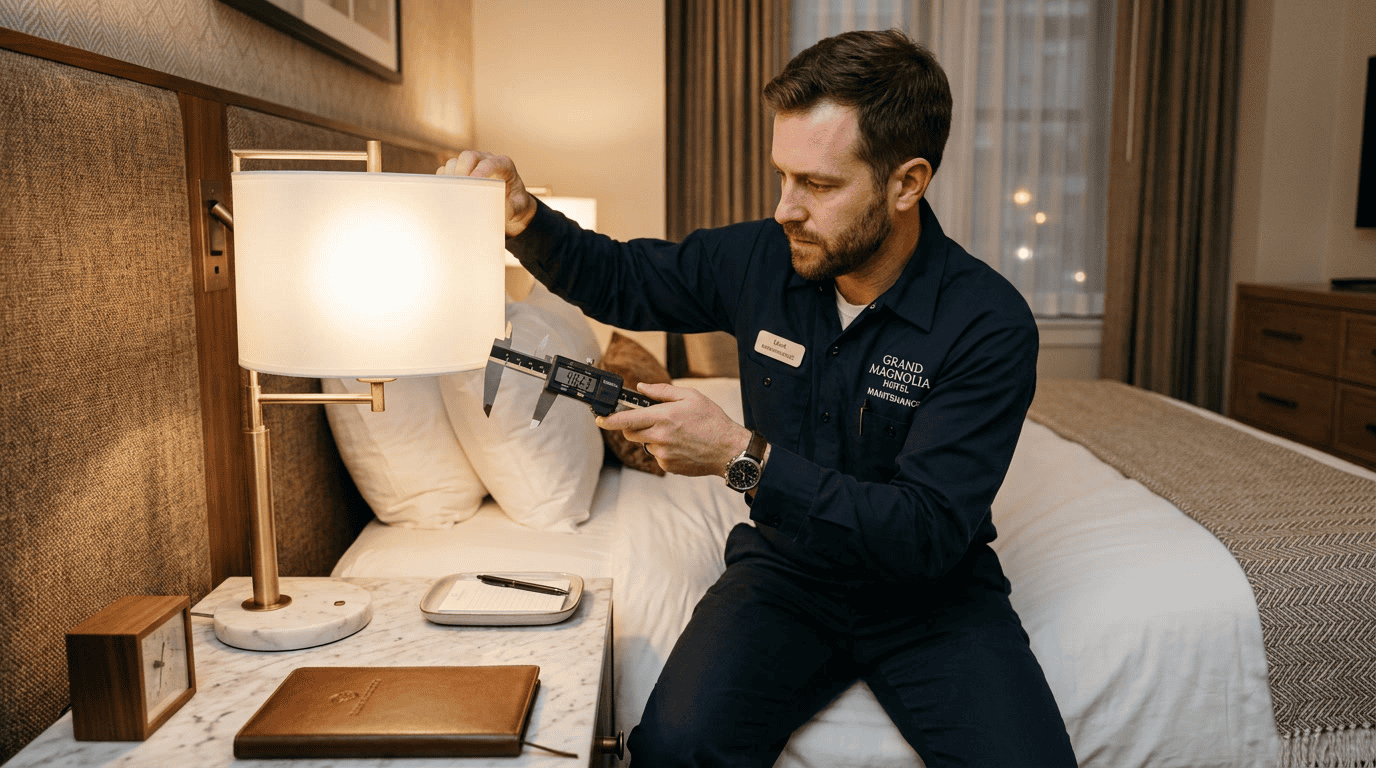
- Fitter opening — measured with a caliper at the shade’s top or neck opening where it attaches to the lamp hardware. This is the measurement most commonly omitted and most commonly responsible for fit failures. A 3 mm fitter diameter error makes the shade incompatible with the lamp base even if every other dimension is correct.
Caliper rule: Always measure fitter openings with a digital caliper to the nearest 0.1 mm. Tape measures and visual estimation introduce errors at this scale that cause procurement failures. A USD 15 digital caliper prevents a USD 200 reorder.
Fitter Type Identification — Spider, Uno, Clip-on, Threaded Neck
Fitter type is determined by the lamp base hardware, not by the shade shape. The four types common in hotel lamp shade applications:
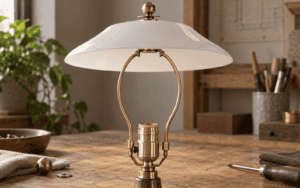
- スパイダーフィッター: A central washer ring with radiating arms (typically 3 or 4) that rest on a lamp harp. The shade is secured by a harp finial that threads through the center of the spider ring. Common on North American hotel table lamps. Replacement shade must have a spider fitter with a center hole diameter compatible with the existing harp finial thread.
- Uno fitter: A single threaded ring that screws directly onto the lamp socket. No harp required. The uno thread diameter is standardized at approximately 38 mm (1.5 inches) for most European and some Asian lamp hardware, but variances exist — measure the socket thread with calipers before ordering.
- クリップオンフィッター: A spring clip that snaps over the light bulb directly. Used on small decorative shades, candelabra sconces, and accent lamps. Weight limit is critical: clip-on fitters safely support glass shades up to approximately 180–220 g. Heavier glass replacement shades require a fitter type change.
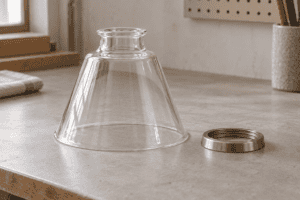
- Threaded neck fitter: The shade has an integral glass neck with external thread that screws into the fixture housing. Standard on bathroom vanity globes and pendant fixtures. Neck thread diameter must match the fixture’s internal thread exactly — measure with calipers from the existing shade neck.
As the foundational literature on lampshade design and construction notes, fitter standardization across manufacturers is imperfect even within nominally compatible systems — always verify with a physical measurement rather than relying on nominal size designations from different manufacturers.
Glass Finish and Color Matching — Why ΔE Matters
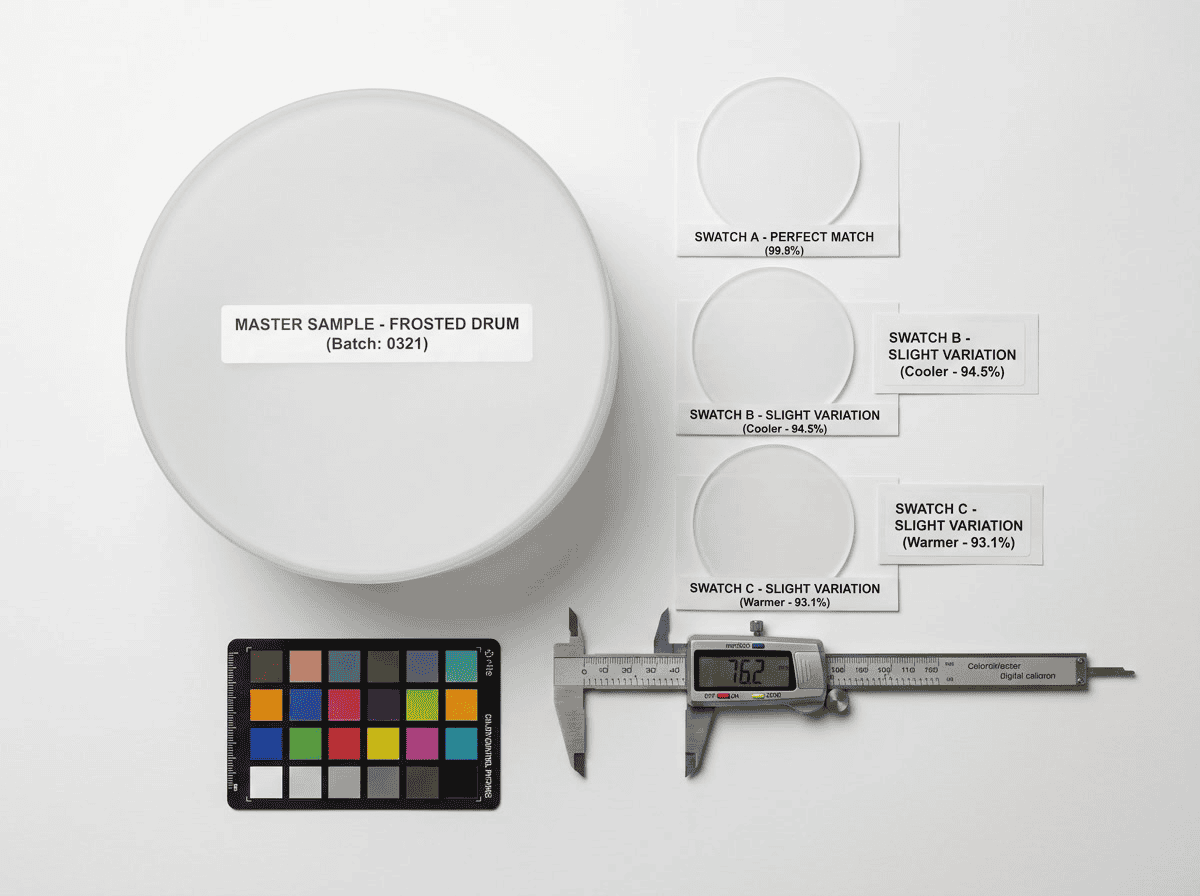
Color matching for glass hotel lamp shade replacement is quantifiable. The standard measurement is ΔE (Delta E), the numerical difference between two colors in a perceptually uniform color space. A ΔE value of 0 means identical color. A ΔE of 1.0 is imperceptible to most human observers. A ΔE of 3.0 is visible in side-by-side comparison under identical lighting.
For hotel lamp shade replacement, the acceptable ΔE tolerance depends on the context:
- Same-room replacement (one shade replaced among three or four in the same room): ΔE ≤ 2.0. Anything above 2.0 will be visible when the lamps are lit simultaneously.
- Corridor replacement (one sconce shade among twenty in a corridor): ΔE ≤ 1.5. The perspective alignment of corridor sconces makes color variation between adjacent units especially visible.
- Different-room replacement (replacing all shades in a single room as a batch): ΔE ≤ 3.0 is acceptable because there is no same-installation-batch reference in the room itself.
To specify ΔE tolerance to a manufacturer: provide a master sample from the original installation batch (ideally a shade from a stored buffer stock) and state the target ΔE tolerance in writing. The manufacturer measures the sample with a spectrophotometer and produces the replacement batch against the documented baseline. Glass’s compositional manufacturing consistency — the fact that the same raw material ratios produce the same optical output — makes ΔE-documented glass shade replacement reliably achievable; fabric shade color matching to the same tolerance is significantly harder.

Sourcing a Matching Hotel Lamp Shade Replacement
The sourcing channel for hotel lamp shade replacement depends on two variables: how many shades you need, and whether your shade is still manufactured in the original specification. The combination of these two factors determines whether you buy from stock, order OEM, or pursue reproduction.
Using the Original Shade as a Master Sample
The most reliable hotel lamp shade replacement process begins with a master sample from the original batch. If your property maintained buffer stock from the original installation order — even a single undamaged shade stored in a maintenance room — that sample is worth its weight in procurement efficiency.
The process with a master sample:
- Send the sample to the target manufacturer (or to a glass specialist supplier who can characterize and reproduce it).
- Request spectrophotometric measurement of the sample’s glass finish against the target ΔE tolerance.
- Request a pre-production sample — a single shade from the new batch — before committing to the full replacement quantity.
- Compare the pre-production sample to the original master under the same lighting conditions as the hotel room environment (warm LED at 2700K, not fluorescent overhead comparison lighting, which will misrepresent the color relationship).
- Approve and order the full quantity only after the pre-production sample passes visual and ΔE verification.
This process adds 7–14 days to the timeline compared to buying from stock, but it eliminates the visible-mismatch problem that makes rushed hotel lamp shade replacement worse than waiting.
For properties without stored master samples: pull a shade from a guestroom that has had minimal use (a room that was recently out of service for renovation, a suite with low occupancy, a storage room), and use that as the sample. Even an in-use shade from the original batch is a far better matching baseline than a verbal or photographic description.
Wholesale Stock vs. OEM Reproduction — When Each Makes Sense
Wholesale stock replacement is correct when your shade specification matches a standard catalogue item currently in production. This applies to:
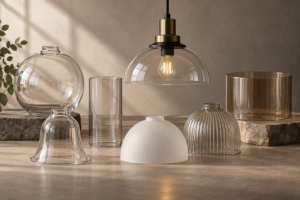
- Common drum shade diameters (25, 28, 30, 35 cm) in frosted or opal glass
- Standard globe shades in common bathroom vanity dimensions (14, 16, 18 cm)
- Empire shades in standard hospitality proportions
Wholesale replacement is the right channel for single-unit emergency replacement, for small properties with quantities below 100 units, and for situations where exact color matching is less critical than speed (full room replacement where no original-batch reference remains in the room).
OEM再現 is correct when:
- The shade is no longer in standard catalogue production
- The required quantity exceeds 300–500 units (the OEM minimum that justifies factory-direct pricing)
- The shade has custom dimensions, a custom finish specification, or a proprietary shape that no stock item matches
- Exact ΔE color matching against a master sample is required
OEM lead times for hotel lamp shade replacement from glass manufacturers: 25–35 days production plus 15–20 days sea freight from Asia. Plan accordingly — emergency OEM orders do not exist. OEM is a planned procurement channel.
Handling Discontinued or Heritage Shade Styles
Discontinued shade replacement is the hardest hotel lamp shade replacement scenario. The shade is no longer manufactured, original specifications may not exist, and visual matching from a degraded original sample introduces compounding error.
The practical approach for discontinued glass shade replacement:
- Reverse-engineer the specification from one or more original shades. Measure all four dimensions with calipers. Document the glass composition by working with a glass specialist supplier who can identify soda-lime vs. borosilicate construction. ホウケイ酸ガラス is identifiable by its thermal behavior and its slightly blue-tinted hue in bulk; soda-lime glass is more neutral. Identify the surface finish process (acid etching vs. sandblasting for frosted; mineral additive type for opal).
- Commission a glass mold if the shade shape is non-standard. Custom glass mold development for hotel lamp shade reproduction typically costs USD 800–2,000 and requires 20–30 days for mold fabrication and first-article approval. The mold cost amortizes over subsequent reorder runs, which use the existing mold with no additional development charge.
- Order a pre-production sample before committing to full quantity. This is non-negotiable for discontinued shade reproduction — there is no manufacturer catalogue to revert to if the production run misses the specification.
- Document the reproduction specification in writing and store it with the property’s maintenance records. This documentation makes the next replacement cycle straightforward, even if the current manufacturer is no longer available.
For glass shade replacements specifically, a supplier that holds mold archives and production records — such as a dedicated OEM glass lampshade supplier for hotel replacement orders — can reproduce a discontinued specification from a single master sample, making glass the most reliable material for long-term hotel replacement programs.
Emergency vs. Planned Hotel Lamp Shade Replacement
Hotel lamp shade replacement falls into two operationally distinct categories with different protocols, sourcing channels, cost structures, and acceptable quality thresholds. Conflating the two leads to either over-spending on emergency procurement that could have been planned, or under-delivering on quality by using emergency protocols for situations that warranted a more careful match.
Emergency Replacement — Same-Day Protocol
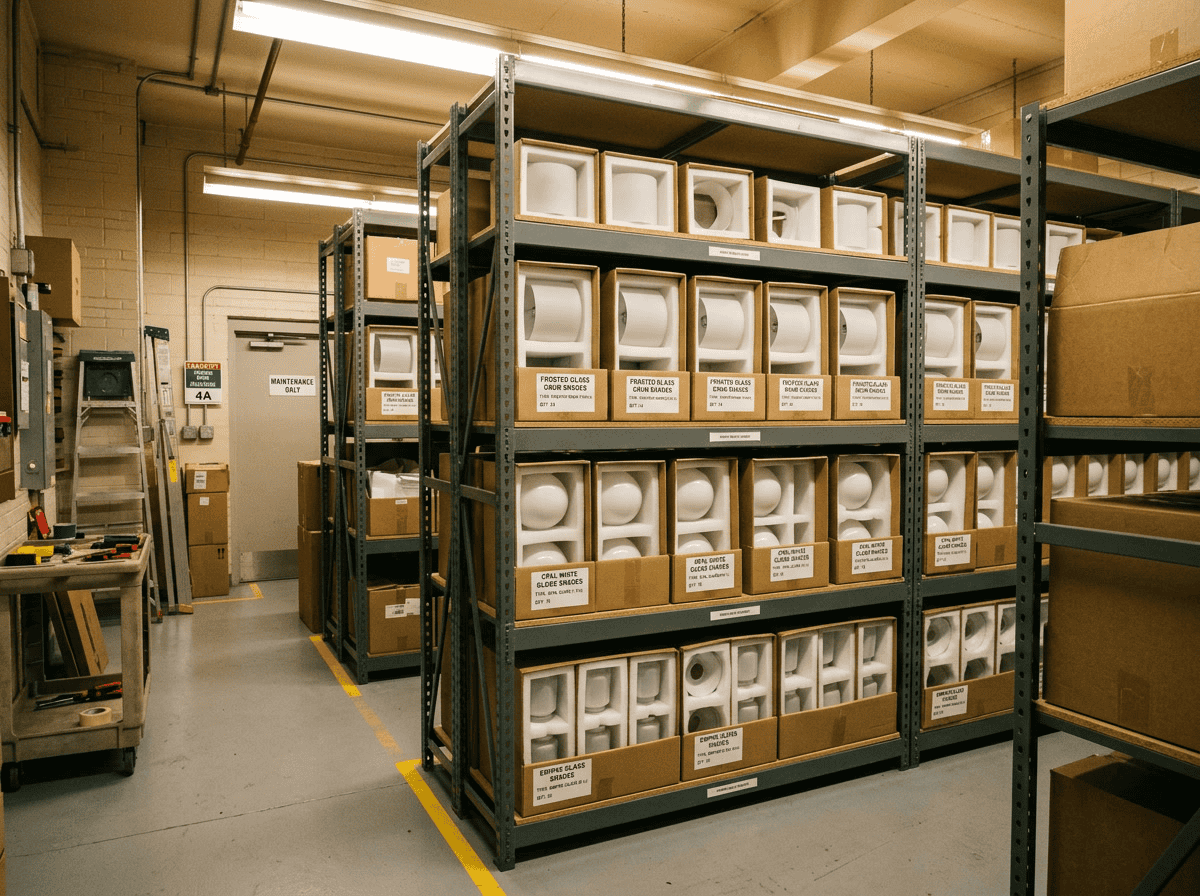
Emergency hotel lamp shade replacement — a shade broken or damaged within hours of a room’s check-in time — requires on-property buffer stock. There is no alternative that maintains both room quality and room availability simultaneously.
The same-day protocol:
- Housekeeping reports the damage to the facilities desk, specifying the lamp position and room number.
- Facilities pulls a buffer stock shade from the on-property store room — pre-identified, pre-labelled by shade type (bedroom A-type, bathroom globe B-type, etc.).
- Technician installs the replacement shade and confirms fitter engagement before the room is re-serviced.
- Inventory is noted — the buffer stock count decrements by one. A replacement order is triggered if buffer stock falls below the minimum threshold.
The acceptable quality threshold for emergency replacement: exact match from the same production batch (if buffer stock is from the original installation), or same-nominal-specification from wholesale stock if buffer stock is unavailable. A same-nominal-specification emergency replacement that introduces a slight color difference is acceptable for same-day service recovery; it is not acceptable as a permanent installation. Flag the shade for replacement at the next batch cycle.
Planned Replacement — Batch Scheduling and Cost Efficiency
Planned hotel lamp shade replacement — addressing degradation, planned renovation, or style update — should be scheduled as a batch cycle, not room-by-room as individual shades fail.
Batch replacement economics are significantly better than unit-by-unit replacement:
- OEM factory-direct pricing starts at 300–500 units, typically 30–45% below wholesale per-unit price
- Shipping cost amortizes across the full order quantity
- Color consistency is guaranteed within a single production batch — shades from the same batch will have ΔE < 0.5 between units, far better than the ΔE variation between shades from different stock purchases
The optimal batch cycle trigger: when degradation inspection reveals that more than 15–20% of a shade specification are showing replacement-worthy deterioration. At this proportion, the remaining 80–85% will reach the same condition within 12–18 months. Replacing all units simultaneously at the 15–20% threshold — rather than waiting for 80% failure — reduces total long-run replacement cost because it eliminates multiple procurement cycles and maintains visual consistency across the property throughout.
Partial vs. Full Property Replacement
When budget constraints require phased hotel lamp shade replacement rather than a full property batch, phase by wing, floor, or corridor — never by individual room.
Phasing by floor or wing ensures that all shades visible in a single guest’s sightline — their guestroom, the corridor to breakfast, the lift lobby — are from the same replacement batch. A guest who sees five different shade generations in one corridor walk experiences the property as poorly maintained, regardless of the quality level of any individual shade.
Phasing by individual room (replacing only the rooms with the worst shade condition) creates the visible patchwork problem. Two rooms in the same corridor with clearly different shade vintages signal that the property makes its maintenance decisions reactively rather than proactively — which is a confidence signal guests use to calibrate their expectations for other maintenance standards throughout their stay.

Building a Hotel Lamp Shade Replacement Program
A hotel lamp shade replacement program is a documented system for buffer stock sizing, specification record-keeping, scheduled inspection, and procurement planning — not an ad-hoc response to individual breakage events.
Properties that build this system once, correctly, run for years without emergency procurement scrambles. Properties that operate reactively pay a premium on every replacement: higher per-unit costs from urgent wholesale orders, visible mismatches from imperfect emergency sourcing, and lost room revenue when the buffer stock is empty and a damaged room can’t turn.
Buffer Stock Sizing — How Much to Keep On-Property
Buffer stock is the insurance policy of hotel lamp shade replacement. The correct buffer stock size depends on the property’s room count, the breakage rate for glass shades in its specific housekeeping environment, and the lead time for restocking from the primary supplier.
The industry baseline breakage rate for glass hotel lamp shades in standard guestroom use is 3–7% per year — driven primarily by housekeeping incidents (cart contact, vacuum cleaner proximity, linen snap-back during bed-making). For a 200-room hotel with two bedside glass shades and one bathroom globe per room (600 shades total), the expected annual breakage is 18–42 shades.
The correct buffer stock formula: (Annual breakage rate × Supplier lead time in weeks / 52) + Safety stock.
For the example above:
- Annual breakage: 30 shades (midpoint estimate)
- Supplier lead time: 3 weeks (from wholesale stock)
- Lead time consumption: 30 × (3/52) = 1.7 shades
- Safety stock (2× lead time consumption for variability): 3.5 shades per shade type
- Minimum buffer stock: 4–5 shades per specification, rounded up to the nearest pack size
In practice, most properties find 8–10% of total shade count as a workable buffer stock level — rounding the example to 50–60 shades across all specifications. This covers worst-case breakage periods (high-occupancy seasons, intensive housekeeping rotations) without requiring excessive storage space.
Documentation and Specification Records
Specification records are what prevent the hotel lamp shade replacement program from failing at year three. Without documentation, each replacement cycle starts from scratch — measuring shades that may have degraded, contacting suppliers who may no longer carry the original style, and hoping the replacement matches well enough.
The minimum required documentation for each shade specification:
- Shade type identifier (e.g., “BR-A” for Bedroom Type A, “BT-G” for Bathroom Globe)
- 寸法: top diameter, bottom diameter, height, fitter opening diameter (all in mm from caliper measurement)
- フィッターの種類: spider / uno / clip-on / threaded neck, with thread size if applicable
- Glass specification: soda-lime or borosilicate, frosted / opal / clear / ribbed, etch depth or opacity level
- Color reference: ΔE baseline from master sample (or spectrophotometric measurement if no master sample exists)
- Original supplier and order reference number
- Installation date and expected replacement cycle date
- Master sample storage location: which shelf, which room number
Store this documentation in the property management system and as a physical laminated card on the buffer stock storage shelf. The physical card is the fail-safe — when the facilities manager who built the system leaves, the physical card outlasts their memory.
Replacement Cost Planning by Property Size
Hotel lamp shade replacement costs vary significantly by property size, shade type, and sourcing channel. The ranges below use wholesale pricing for single-unit replacement and OEM pricing for batch replacement at scale.
As hospitality procurement best practices indicate, lifecycle cost rather than unit cost is the correct framework for hotel lamp shade replacement budgeting. A glass shade that costs 2.5× a fabric shade at purchase but lasts 4× as long has a lower lifecycle cost even before accounting for the reduced operational complexity of lower replacement frequency.
| Property size | Total shades (est.) | Annual breakage (5%) | Buffer stock cost (glass, wholesale) | Batch replacement cycle | Batch replacement cost (OEM) |
|---|---|---|---|---|---|
| 50-room boutique | 250 | 12–13 shades | USD 150–300 | Every 8–10 years | USD 6,000–12,000 |
| 150-room mid-scale | 750 | 37–38 shades | USD 450–900 | Every 8–10 years | USD 18,000–35,000 |
| 300-room full-service | 1,500 | 75 shades | USD 900–1,800 | Every 8–10 years | USD 36,000–70,000 |
| 500-room large hotel | 2,500 | 125 shades | USD 1,500–3,000 | Every 8–10 years | USD 60,000–115,000 |
Note: OEM batch replacement costs assume glass shades; fabric shade batch costs run 40–60% of glass equivalent per unit but require replacement every 3–4 years rather than 8–10, making total lifecycle cost comparable or higher.
Hotel Lamp Shade Replacement Trends (2026+)
Two overlapping trends are reshaping how hotels approach lamp shade replacement in 2026: the systematic shift from fabric to glass to reduce replacement frequency, and the adoption of standardized shade specifications as a deliberate property management strategy.
Moving from Fabric to Glass to Cut Replacement Frequency
The operational case for glass hotel lamp shades over fabric is now predominantly a maintenance argument rather than an aesthetic one. Fabric shade replacement at the 2–4 year cycle creates a recurring operational load — procurement cycles, installation labor, temporary room outages — that glass’s 8–12 year cycle eliminates for the property’s operational decade.
Properties converting from fabric to glass during renovation or partial replacement programs typically recover the higher per-unit glass cost within the first replacement cycle. A fabric shade requiring replacement at year three, at a wholesale unit cost, costs approximately the same or more per room-decade as a glass shade requiring replacement at year nine at OEM pricing. The maintenance labor saving is additional: fewer procurement events, fewer installation hours, fewer temporary room outages for shade swap operations.
For properties mid-lifecycle on a fabric shade specification, the conversion decision point is the first batch replacement cycle — when degradation triggers a full replacement, specify glass for the replacement batch rather than continuing the fabric specification.
Standardization as a Replacement Strategy
Specification standardization — selecting a small number of shade types (ideally 3–5 across the full property) and sourcing all of them from a single manufacturer relationship — is the most effective long-term hotel lamp shade replacement strategy available to multi-property operators or large single properties.
Standardization allows:
- A single supplier relationship with documented specification records for all shade types
- Pre-negotiated replacement pricing locked over a multi-year contract
- Pre-positioned buffer stock at the manufacturer level — the manufacturer maintains 30-day buffer stock of your specification, reducing lead time from 35 days to 3–5 days for restocking
The trade-off is design flexibility. Standardized shade specifications limit the property’s ability to refresh the guestroom aesthetic without a full specification change. Most properties operating at scale find this trade-off favorable — design consistency and operational efficiency outweigh the value of shade variety for the vast majority of their guestroom inventory.
| トレンド | Adoption status in 2026 | Replacement program implication |
|---|---|---|
| Fabric-to-glass conversion | Mainstream at 4-star-and-above | Eliminates 2–4 year replacement cycle; extends to 8–12 years |
| Specification standardization | Established practice at chain properties | Single supplier relationship; pre-negotiated pricing; 3–5 day restocking |
| OEM factory-direct procurement | Growing at 100+ room properties | 30–45% cost reduction vs. wholesale for batch quantities |
| Pre-positioned buffer stock (manufacturer-held) | Emerging at multi-property operators | Reduces effective lead time from 35 days to 3–5 days |
| Digital specification records in PMS | Growing adoption | Eliminates re-measurement at each replacement cycle |
よくある質問
How do I find a replacement lamp shade for a discontinued hotel model? Start with a physical sample — pull an undamaged shade from a low-use room and use it as a master sample. Send the sample to a glass lampshade specialist supplier with a request for spectrophotometric measurement and an OEM reproduction quote. For glass shades, full dimensional measurement plus glass composition identification enables accurate reproduction even when the original manufacturer no longer produces the style. Custom glass mold development for non-standard shapes adds 20–30 days to the first order but enables indefinite future reordering.
What is ΔE and why does it matter for hotel lamp shade replacement? ΔE (Delta E) is the numerical measurement of color difference between two objects. A ΔE of 0 means identical; a ΔE of 3.0 is visible in side-by-side comparison under matching light. For hotel lamp shade replacement in the same room or corridor, specify ΔE ≤ 2.0 against a master sample from the original batch. Request spectrophotometric certification from the manufacturer confirming that the replacement batch meets the specified tolerance before approving the full order.
How much buffer stock of replacement lamp shades should a hotel keep? A practical rule is 8–10% of total installed shade count per shade specification type, stored on-property. For a 200-room hotel with 600 total glass shades across three types, this means approximately 16–20 shades per type in buffer stock. This level covers worst-case seasonal breakage rates and provides time to reorder from wholesale (3-week lead time) without running out. Adjust upward if the property’s housekeeping environment produces above-average breakage rates.
How long does a hotel lamp shade replacement order take? From wholesale stock: 3–7 business days for standard specifications. From OEM factory-direct production: 25–35 days production plus 15–20 days sea freight from Asia. Custom or discontinued shade reproduction: add 20–30 days for mold development and pre-production sample approval on the first order. Plan all OEM and reproduction replacement orders at least 60 days before the shades are needed on-property.
Can I replace a fabric hotel lamp shade with glass? Yes — glass shade replacement for a fabric original is operationally straightforward provided the fitter type is compatible. The fitter opening dimensions must match. The glass shade’s weight must be within the fitter’s rated capacity (clip-on fitters have the tightest weight limits — typically 180–220g). If the lamp harp length does not position the glass shade at the correct height, the harp can be swapped independently of the shade replacement. The result is a glass shade with longer service life and simpler cleaning protocol.
How do I tell a spider fitter from a uno fitter on my existing hotel lamp shades? Remove the shade from the lamp. A spider fitter has visible radiating arms (usually 3 or 4) connecting to a central ring — the shade rests on a harp and is held by a finial. A uno fitter has a single ring with a threaded interior that screws directly onto the lamp socket — there is no harp or finial. A clip-on fitter has spring clips that grip the bulb directly. A threaded neck fitter has an integral glass or metal neck with external thread on the shade itself. Identifying fitter type correctly before ordering is the single most important step in preventing hotel lamp shade replacement fit failures.
What causes hotel lamp shades to yellow and how can I slow the process? Yellowing is primarily a fabric shade degradation phenomenon. It is caused by chemical absorption from cleaning agents (particularly bleach and quaternary ammonium compounds) into the shade’s styrene backing, combined with UV emission from the lamp source and airborne particulate accumulation. Slowing yellowing: use pH-neutral cleaning solutions rather than bleach-based products near fabric shades, ensure adequate airflow through HVAC to reduce airborne particulate deposition, and use LED sources (which emit minimal UV) rather than halogen or incandescent sources. Switching to glass hotel lamp shades eliminates the yellowing problem entirely — glass does not absorb cleaning chemicals or undergo UV-driven color shift.
Is it cheaper to repair or replace a damaged hotel lamp shade? For glass hotel lamp shades: replace. Glass repair is not a viable hospitality option — adhesives used in glass repair do not withstand the temperature cycling of lamp use, the repair is always visible under lamp light, and the structural integrity of a repaired shade is unreliable. The unit cost of a replacement glass shade is low enough relative to the repair labor cost and quality risk that replacement is always the economically correct decision. For fabric shades: same conclusion. Fabric shade repair (re-covering, re-backing) costs more per unit than replacement and the result is rarely visually indistinguishable from the original under close inspection.

結論
Hotel lamp shade replacement is not a transaction — it is a system. The transaction is buying a shade. The system is knowing in advance which shade to buy, having it on-hand when the need arises, and maintaining the documentation that makes the next replacement cycle no harder than the current one.
The properties that manage this well share a few characteristics: they stock buffer inventory from the original installation batch rather than ordering reactively, they document their specifications while the original shades are still in good condition, and they treat the first degradation sign as the trigger for batch procurement rather than waiting for visible failure. The result is not just operational efficiency — it is a guest experience that stays consistent from year one to year ten, because the shade in room 214 still matches the shade in room 215.