直接的な回答: ステンドグラスランプシェードは、個々の色ガラス片を銅箔や鉛ケイムで接合して構成される多片構造であり、複雑な模様を可能にします。色ガラスランプシェードは、製造時に金属酸化物で着色された一体成型(吹きガラス、プレス、スピン)のガラスです。主な違いは、複雑さ(ステンドグラスはあらゆる模様に対応、色ガラスは単色または簡単な効果に限定)、構造、価格です。.
これは装飾用ランプシェード市場で最もよく混同される違いの一つです。混乱が一部正当化されるのは、カテゴリーのラベルが実際に一貫していないためです。実際には一体成型のアンバーガラスシェードでステンドグラス構造が全くない場合でも、商品説明で「ステンドグラス」と記載されることがあります。本当の違いを理解することで、正しい商品を適正な価格で購入できます。.
基本的な構造の違い
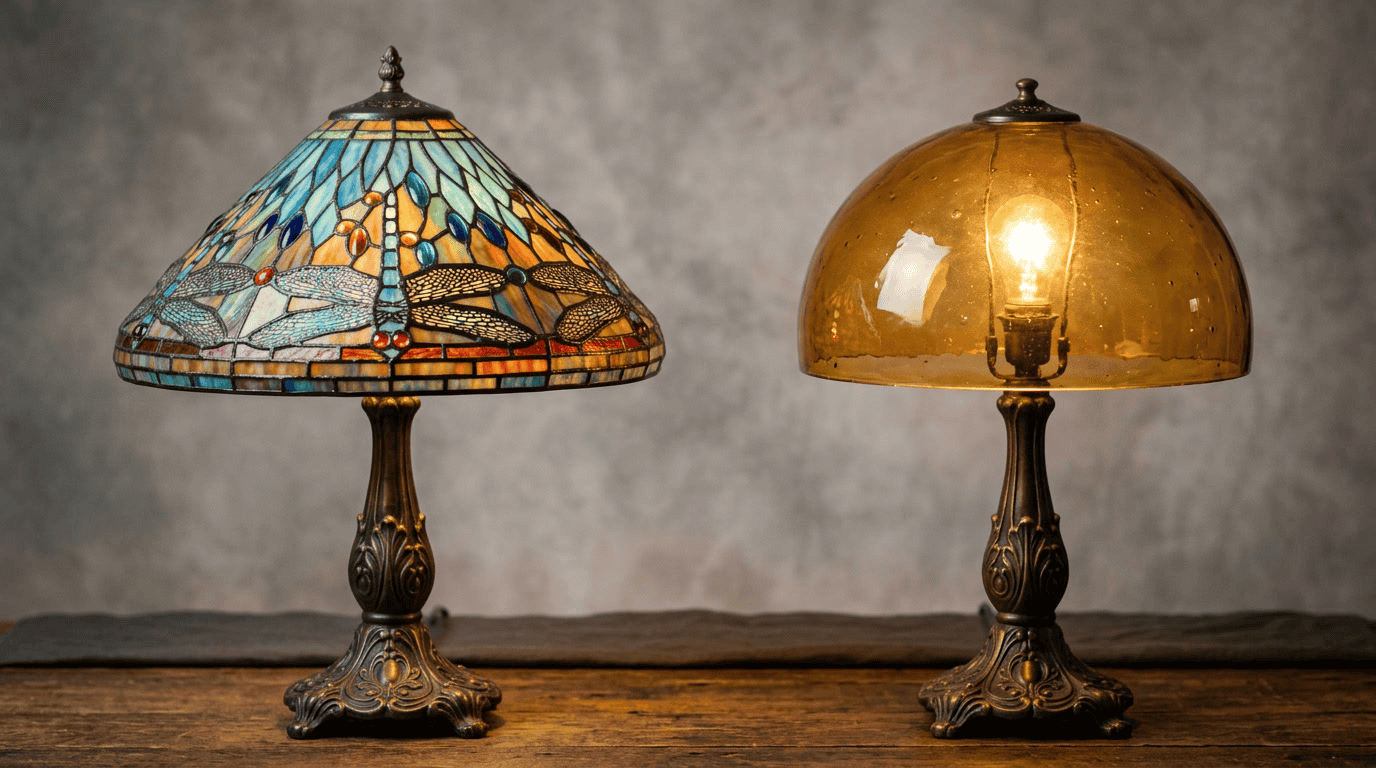
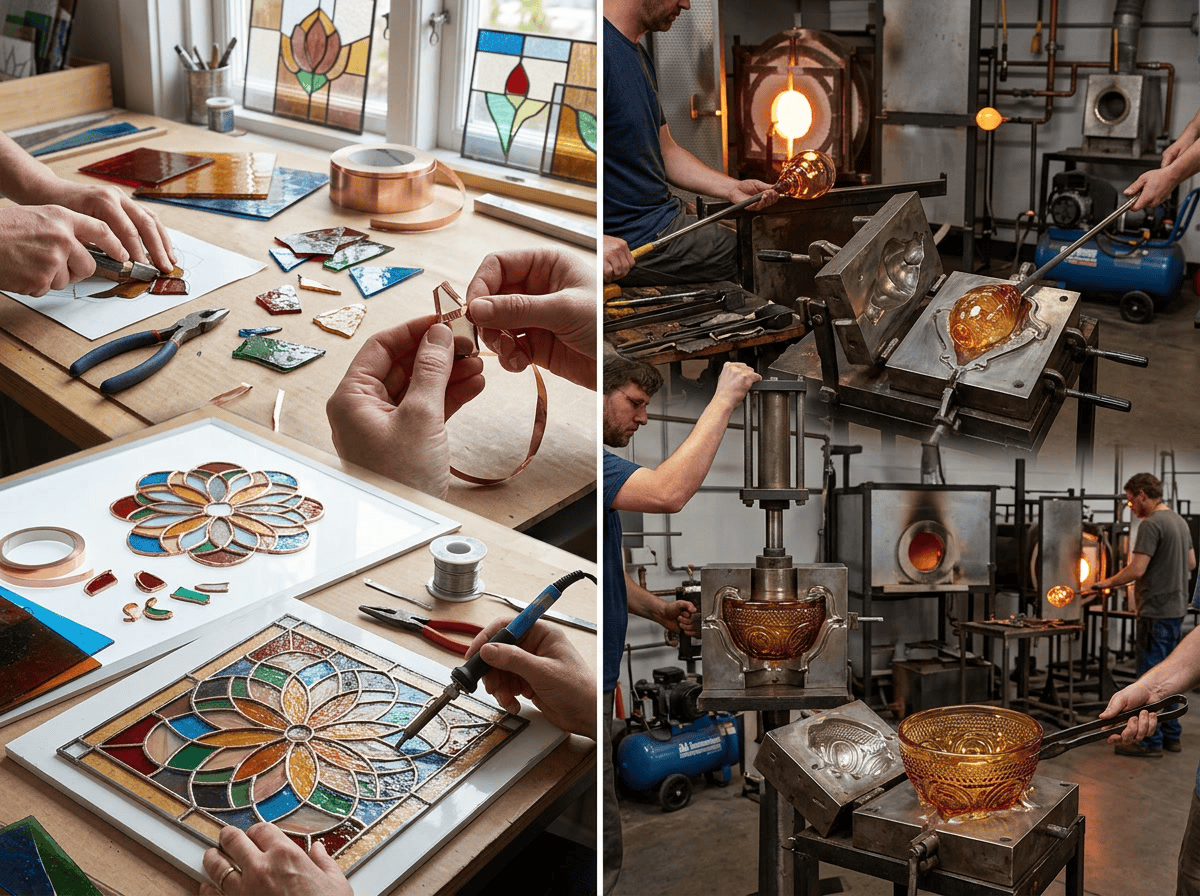
ステンドグラスランプシェード(多片構造):
- それぞれ特定の形にカットされた複数のガラス片から組み立てられる
- 個々のガラス片は銅箔テープ+はんだ付け(ティファニー技法)または 鉛ケイム ストリップ
- 個々のガラス片の配置によって模様が形成される
- はんだやケイムのラインが金属の物理的要素として見える
- どんな模様でも可能―花柄、幾何学模様、絵画的、抽象的
- 実用的な最低価格:約$150(シンプルな手作り)、複雑な職人作品は$2000以上
- 製作時間:1シェードあたり10~100時間以上
色ガラスランプシェード(一体成型):
- 一度の工程で一体成型されたガラス(吹きガラス、プレス、スピン)で作られる
- 色は溶融時にガラス原料に加えられた金属酸化物による
- 単色または簡単な二色技法(被せガラス、オパールセント)に限定される
- 金属の接合ラインがなく、ガラス表面は連続している
- 模様は一つの型や吹きガラス工程で形成できる範囲に限定される
- 価格帯:高品質品で$20~200、大量生産輸入品で$5~20
- 生産時間:工業規模での1個あたりの分数
主な実用的な意味: 特定の花柄や絵柄 ― トンボ、藤の房、紋章モチーフなど ― を求める場合は、ステンドグラス(複数ピース)構造が必要です。温かみのある琥珀色の輝きや乳白色の拡散を求める場合は、単一ピースの色付きガラスシェードが最適で、劇的に安価です。.
「ステンドグラス」の技術的定義“
歴史的に「ステイン(着色)」ガラスとは、特定の金属化合物をガラス表面に塗布し、焼成してその部分のガラスの色を永久的に変化させることを意味しました。中世の窓に見られる黄色~オレンジ色のトーンを生み出す銀ステインは、真のステインの例です。.
現代の装飾用途では、「ステンドグラス」はより広義に、複数ピースの建築用または装飾用ガラス作品に使われるあらゆる色付きガラスを指します ― 表面着色ではなく、ガラス全体に色がついた(カテドラルガラス)ものも含みます。構造技法(複数ピースを銅箔や鉛ケイムで接合すること)が特徴であり、着色方法自体は定義要素ではありません。.
つまり:
銅箔構造が単一ピースの吹きガラスシェードとどのように異なるかを視覚的に知るには、 ステンドグラスランプシェードの製作手順 で複数ピースの組み立て工程が示されています。.
- 市販の色付きカテドラルガラスを使い、銅箔技法で作られたシェード:ステンドグラス
- 単一ピースの吹き琥珀色ガラスシェード:色付きガラス(非常に装飾的でもステンドグラスではない)
- ステンドグラス風の模様が印刷されたシェード:どちらでもない ― 装飾ガラスです
日本の ウィキペディアのステンドグラスに関する記事, 「ステンドグラス」という用語は中世以来、窓に使われる色付きガラスを指して広く使われており、着色技術は表面着色から全体着色へと何世紀にもわたり進化してきました。.
視覚比較:点灯時の見た目
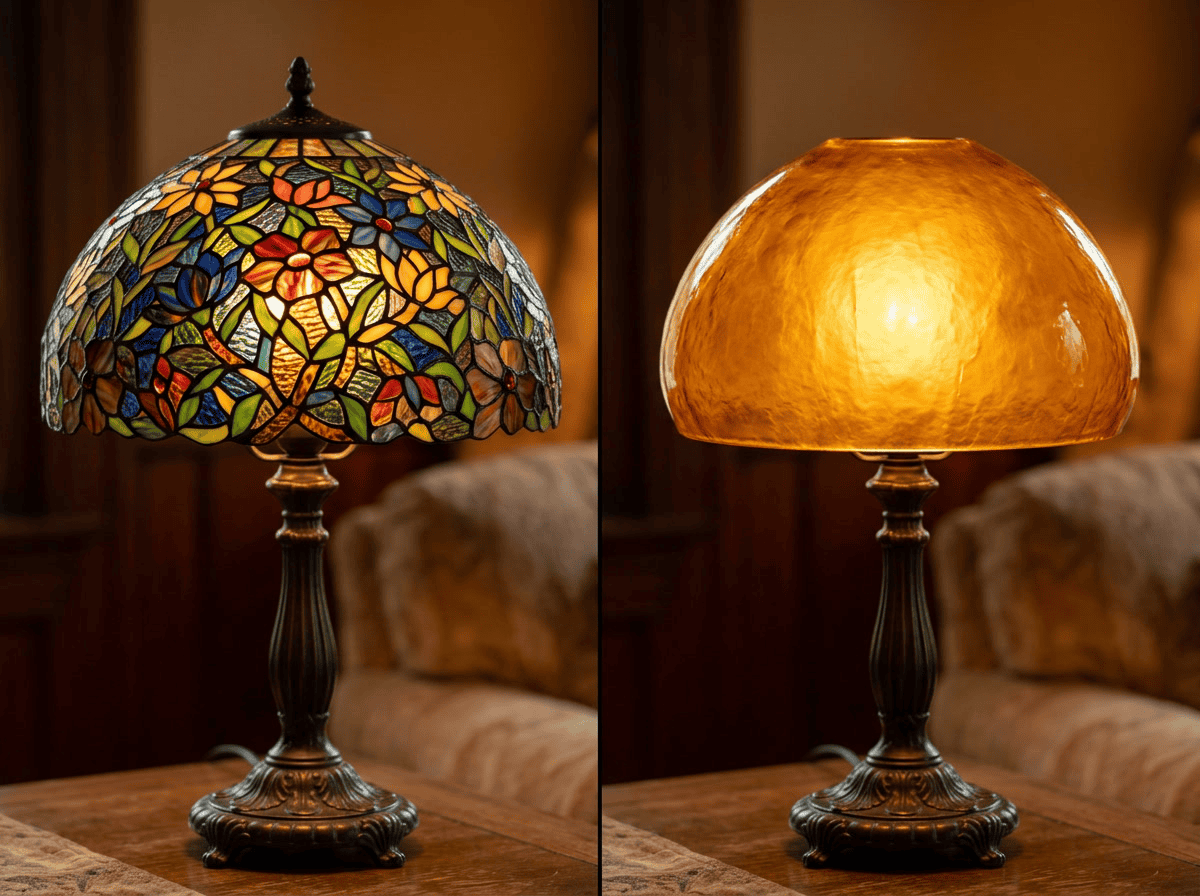
複数ピースのガラスがどのように組み立てられ、点灯されるかについては、 V&Aのステンドグラス入門 でこの効果の歴史的技法が解説されています。.
点灯時のステンドグラス:
- 個々のガラス片がそれぞれの色で輝きます ― トンボのシェードは緑の羽、琥珀色の胴体、青い空の背景を示します
- 金属のはんだ付けやケイムのラインが暗い輪郭として見えます(教会の窓のリーディングに似ています)
- パターン自体が光であり、色付きガラス片が主な視覚要素です
- 複雑なパターンは周囲の表面に複雑な色の影を作り出します
- 色のバリエーションは本質的なもので、各ピースがわずかに異なり、有機的な個性を与えます
一枚ガラスの色付きガラスが点灯した場合:
- 全体に均一な色 ― 琥珀色のシェードは琥珀色に、緑のシェードは緑色に輝きます
- 金属のラインは見えません ― ガラス表面は連続しています
- シンプルで均一な色の環境光
- フロスト加工やオパール色のガラスは純粋で区別のない輝きを生み出します
- 陰影自体が発光する;複雑な模様は不可能である
どちらも美しく、適切である――異なる美的目標と異なる価格帯のために。.
ステンドグラスと着色ガラスの選択
意思決定の枠組み:
| 質問 | はいの場合 → |
| 具体的な pictorial または 複雑な模様(花、動物、風景)を望みますか? | ステンドグラス(多片)必要 |
| シンプルな色の効果(暖かい琥珀色の輝き、柔らかな緑、純白)を望みますか? | 着色ガラスが最適 |
| Shade あたり$100以下の予算? | 着色ガラス(品質のステンドグラスは$150+から) |
| 10個以上の揃いのユニットが必要? | 着色ガラス(工場生産の一定性あり);この数量のステンドグラスは大幅な生産コストがかかる |
| 時代様式のアーツ・アンド・クラフツまたはティファニー調の美観を優先しますか? | ステンドグラスを優先 |
| 温かみのあるアンバーまたは柔らかな白の時代様式の美観ですか? | 色ガラスが適しており、耐久性も高い |
| 光量を重視する読書用ランプですか? | 色ガラス(出力が予測しやすい);ステンドグラスは光をより不均一に吸収 |
How JX Lampshade’s Products Fit This Distinction
幅広いカテゴリの概要については、当社の ステンドグラスランプシェードハブ。すでにお持ちのシェードの種類を判別するには、当社の ステンドグラスランプシェードの識別ガイド 物理的なテストを順に説明しています。
JX Lampshade’s production catalog consists of 一体型の色ガラス ランプシェード — 単色の手吹き・プレス・遠心成形、2色の被せガラス、オパールセントガラス、装飾仕上げ。複数ピースのステンドグラス構造ではありません。
つまり:
- 温かみのあるアンバーガラス、ヴィンテージグリーン、ルビーレッド、オパールセント カタログのシェードは着色ガラスのシェードであり、ステンドグラスの隣接装飾代替として適しています
- 複数部品の銅箔ステンドグラス (本物のティファニースタイルの構造) は標準カタログ生産ではなく、カスタム開発の道筋です
“ステンドグラス風”の暖かい色光品質を現実的な価格で求める購入者のために: 私たちのヴィンテージコレクションの着色ガラスのランプシェード 暖かさと時代の美学を、複数部品の複雑さとコストなしに提供します。.
設計プロジェクトのために本物の複数部品ステンドグラスが必要な購入者のためには、適切なリードタイムとコストを伴う職人または工場生産が必要です。.
価格比較
| 種類 | 価格帯 | おすすめ対象 |
| 単一部品の着色ガラス(品質) | $25–120 | 暖かな環境光、時代の美学、交換用 |
| 樹脂製「ステンドグラス風」“ | $20–80 | 予算的装飾、ステンドグラス模様の視覚的近似 |
| 本物の銅箔(職人仕上げ) | $150–1500+ | 本物のステンドグラス柄、コレクター品質 |
| 本物の銅箔(工場仕上げ) | $60–200(容量) | ホスピタリティ、商業施設、複数台での一貫性 |
| 特徴 | ステンドグラス(複数ピース) | 色ガラス(単一ピース) | レジン「ステンドグラス風」“ |
| パターンライン | 3Dはんだ/ケーシング、金属製 | なし | 平坦、成形済み、均一 |
| 色 | 一点ごと、パネルによって異なる | 全体を通じて均一 | 均一、印刷/成形 |
| 重量 | 重い | 中重 | 軽い |
| 標準価格 | $150-1500+ | $25-200 | $20-80 |
一般的な誤解
“「ステンドグラスの shades はいつも美しい」” そうとは限らない。完璧に仕上げられた単一片のアンバー製ガラスシェードは、文脈によっては(ソファ脇のランプ、ベッドルームの読書灯)多片のパターンがごちゃごちゃしている場合より美しいといえる。文脈が適切さを決定する。.
“「単一片の着色ガラスは劣る」” 真実ではありません。高品質の一枚物カラーガラスは、手吹き、適切に拡散され、適切な色で作られたもので、数世紀にわたる工芸の進化を象徴します。フエントンのホブネイルミルクグラス、ビクトリア朝のオパレセントグラス、20世紀中期のケースドアンバーグラスは、すべて一枚物のカラーガラスであり、実際に優秀です。.
“「金属の縁があるものは、ステンドグラスだ。」” 工芸装飾用として販売されている金属リーディングストリップは、ステンドグラスの外観を模するために、プレーンなガラスシェードの外側に適用することができます。これはステンドグラスの構造でもカラーグラスでもありません。線は縫い付けのもので、構造的ではありません。.
ランプを選ぶ際の正しい選択
大多数の住宅用ランプシェードのニーズには、単一枚物のカラーグラスが適切で経済的にも合理的な選択です。暖かな色の光を提供し、時代感のある美観と耐久性を、真のステンドグラス構造のコストのごく一部で得られます。.
本物のステンドグラス(多枚の銅箔貼り)を選ぶときは次の条件で:
- 特定の模様が重要で、トンボ、藤、特定のモチーフが必要な場合
- ランプがコレクターズピースとしての焦点となり、品質が最重要である場合
- 内部の文脈が Arts & Crafts または ティファニーの真贋を特に求める場合
本格的に多枚構造のステンドグラスを選ぶ決定である場合は、次のフォーマットガイドを参照してください テーブルランプ および ペンダント シェード、または当社の カスタムステンドグラスOEM生産ガイド オーダーメイド対応。.
着色ガラスを選ぶとき:
- 暖かい環境色が目標です — アンバー、グリーン、ルビー、オパール
- 予算は実用性を重視する
- 揃えたいユニットが必要です(安定して調達しやすい方が良い)
- ランプは主に読書用または作業灯として機能し、装飾的な特徴を持つ
よくある質問
アンバーガラスはステンドグラスと同じですか?
いいえ。アンバーガラスはガラスの全体にアンバー色を含む一枚ガラスです。ステンドグラスは銅箔またはリード・ケイムを用いた多枚構造を指します。アンバーガラスは暖色の環境光を提供し、ステンドグラスは複雑な色のパターンを提供します。どちらも正当なグラスランプシェードのタイプです。.
着色ガラスのシェードをステンドグラスと勘違いできることがありますか?
写真やマーケットプレイスのリストでよくあります。判断基準はパターンの線を見てください。本物のステンドグラスには三次元のはんだ線またはリードラインが見えます。単一枚の着色ガラスには金属の線は見えません。平らなガラスシェードに施された金属 stripsは平面的で、構造的ではありません。.
なぜ着色ガラスのシェードはステンドグラスと同じくらい高価になるのですか?
高品質の手吹き着色ガラス、特に複雑な色効果を持つケースドグラスやオパレセントグラスは、熟練職人の労力と高価なガラス配方を伴います。コストはガラスの品質と製法に対するものであり、パターンの複雑さではありません。.
「ティファニー風の着色ガラス」という用語は適切ですか?
ティファニー工房 主に多枚構造のオパレセントガラスの構造が用いられ、単一枚の着色ガラスではないことが多いです。「ティファニー風の着色ガラス」という表現は、二つの異なるものを混同するマーケティング用語です。シェードが単一枚(銅箔が多枚構造でない場合)であれば、色や模様に関わらず「ティファニー風」と呼ぶのは不正確です。.
ヴィクトリア朝のランプには、ステンドグラスを使うべきですか、それとも着色ガラスを使うべきですか?
ランプのタイプ次第です。ランプがティファニーボーンのブロンズを基にした芸術ランプであれば、ステンドグラスは時代に適合しています。ランプが改造された油灯または標準的なビクトリア朝時代のテーブルランプであれば、同時代に適したのはオパレセントまたはミルクガラス(着色ガラス)です。ビクトリア朝の装飾用ガラスは主に一枚吹きガラスであり、ステンドグラスは主に建築(窓)用でした。.
同じベースの上にステンドグラスのシェードを着色ガラスのシェードに取り替えられますか?
はい、フィッターの寸法が一致すれば可能です。見た目の性格は変わります—複雑な模様から単純な色の雰囲気へ—しかしランプは正しく機能します。多くの時代のランプベースはどちらのタイプともよく合います。.
ステンドグラスと着色ガラスの光出力の違いは?
どちらも入射光を大幅に吸収します。ステンドグラスの吸収は模様によって異なります(暗い部分はより吸収、透明な部分はより吸収が少ない)—全体として40–60%の吸収が一般的です。密度の高い一枚ガラスは密度と色により30–70%の吸収をします。等しいルーメン配送を得るには、どちらのタイプの後ろにも高出力のLEDを使用してください。.
日常的な使用において着色ガラスはステンドグラスより耐久性がありますか?
はい。単一ピースのガラスには半田接合部やリードケームがひび割れたりずれたり弱くなることはありません。銅箔を用いたステンドグラスのシェードには多数の半田接合部があり、反復的な取り扱い、温度変化、清掃の下で故障点になる可能性が高いです。頻繁に扱われ、活発に使用されるランプには、着色ガラスの方が耐久性の高い選択です。.
関連書籍
- ステンドグラスランプシェード:完全購入ガイド
- ステンドグラスランプシェードの見分け方
- ステンドグラステーブルランプシェード:ティファニー風、カスタム&装飾オプション
- カスタムステンドグラスランプシェード:OEM生産ガイド
結論
ステンドグラスと着色ガラスの区別は、構造の違いを理解すれば簡単です。多 pieceの銅箔やリードケーム(ステンドグラス)対一枚のバッチ着色または表面処理ガラス(着色ガラス)。前者は複雑な模様を可能にし、後者は暖かな色を提供します。どちらも正当で美しく、異なる用途と予算に適しています。.
この記事を読むほとんどの購入者にとって結論はおそらく:色付きガラスが実際に必要なものであり、ステンドグラスはロマンチックに思い描いているだけです。どちらも良い選択です。実際のニーズに合ったものを購入してください。.