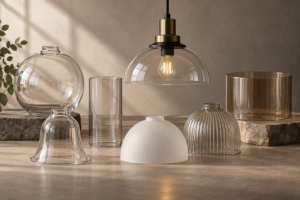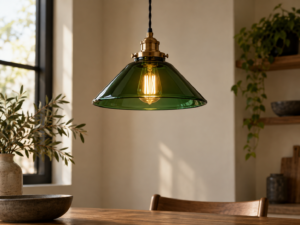
Lamp shades for small lamps usually fall into a practical mini or small range, but the label is not a universal standard. Start with the lamp base width, then record the shade top, bottom, height, and fitter or opening. For a compact glass shade, the attachment interface matters as much as the visible diameter.
This guide is written for homeowners, interior designers, lighting brands, distributors, hospitality buyers, and replacement purchasers. It explains how to choose a proportionate shade for a bedside lamp, desk lamp, accent lamp, or small project fixture, then turns the same information into a usable custom glass shade brief.
By the JX Lampshade manufacturing team · Updated August 2026
What counts as a small lamp shade?
Retailers use size labels to make browsing easier, but the boundaries differ. Lowe’s lists small lamp shades by a 3 to 6 inch bottom diameter, while Home Depot separates mini shades at 6 inches or less and small shades from 6 to 9 inches. Those two guides are useful starting points, but neither range should replace the fixture measurements.
The word small also depends on the lamp. A 6 inch shade may look balanced on a narrow bedside base, too small on a broad ceramic base, and completely wrong on a floor lamp. A supplier may also describe a shade as miniature because of its fitter, even when the outside profile is wider than a retail mini shade.
For a first screen, compare the shade bottom with the visible width of the base and the height of the base up to the socket. Then check whether the top opening leaves the bulb, socket, and holder properly covered. A small shade should look compact without exposing a bright bulb at normal eye level.
Lowe’s lamp shade measurement guide explains the retailer’s small, medium, large, and extra-large diameter labels. Home Depot’s measurement guide gives a separate mini and small range and confirms that the shade is measured by top, bottom, height, and slant.
What size shade should you buy for a small lamp?
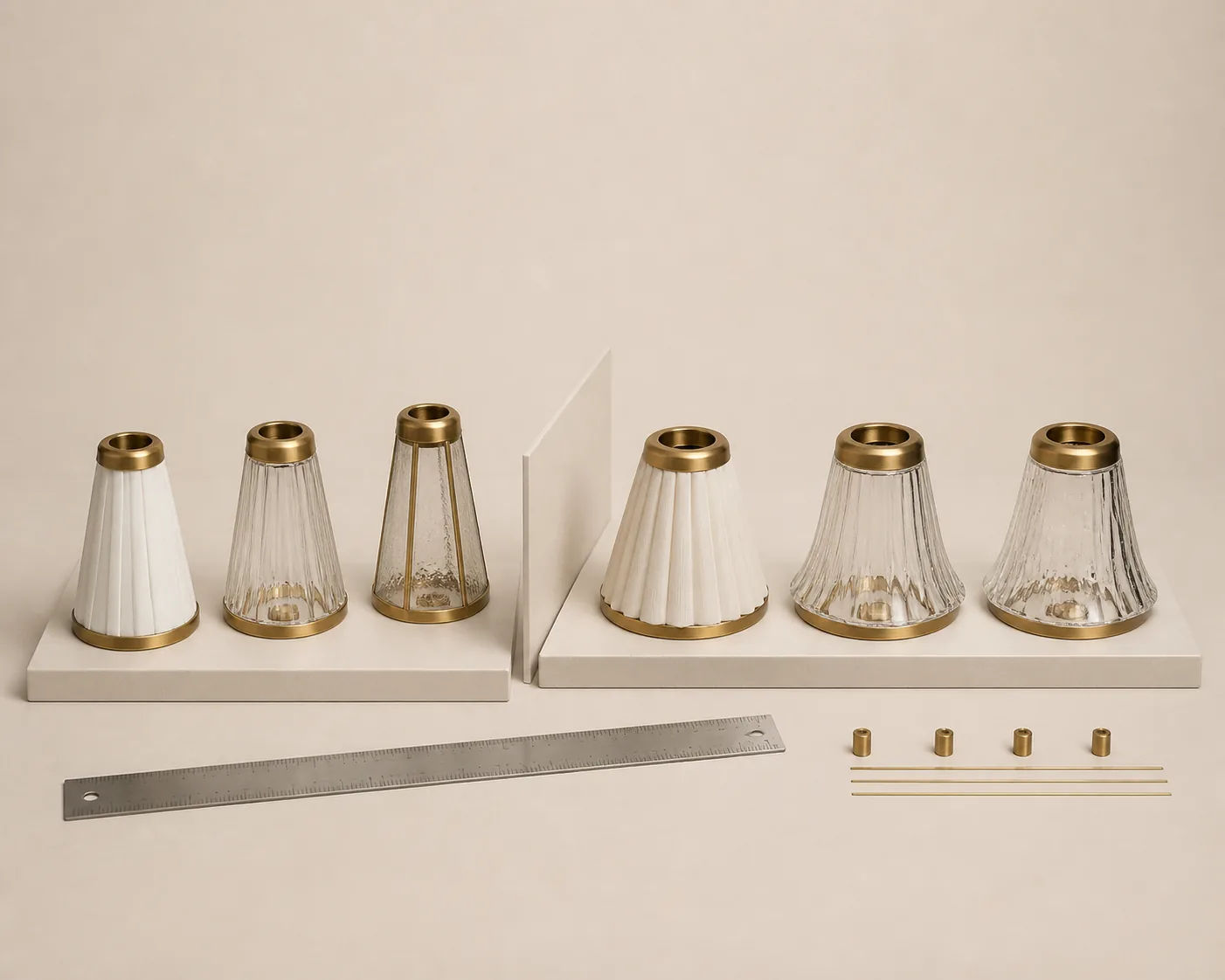
Choose a size by proportion first and by label second. Measure the lamp base from its widest point, measure the height from the surface to the top of the socket, and estimate how much of the bulb and socket the shade must conceal. A shade that is technically small can still be too wide for a narrow base or too short to control glare.
| Shopping label | Useful starting range | Common small-lamp use | What must still be checked |
|---|---|---|---|
| Mini | Bottom diameter or width up to about 6 inches | Small accent lamps, miniature table lamps, chandeliers, and sconces | Bulb clearance, fitter opening, and whether the holder is clip-on or socket-mounted |
| Small | About 6 to 9 inches at the bottom | Bedside tables, compact desk lamps, narrow consoles, and small hospitality lamps | Base width, shade height, top diameter, and the visual weight of the material |
| Small project shade | Any custom width that suits the fixture | OEM collections, replacement glass, and matched sets | Drawing or sample, opening geometry, finish, quantity, inspection, and packing requirements |
Do not force one ratio onto every small lamp. A classic table-lamp guide often starts with a shade height near two-thirds of the base height, while a very narrow bedside lamp may need a shorter profile to protect the walkway and keep the light source concealed. Use the ratio as a visual test, then adjust for the socket, bulb, room, and fixture hardware.
For a general dimension reference, use the JX lamp shade size chart and calculator. It covers the broader measurement system and fitter terminology. This new page narrows the decision to small lamps, where a one-inch change can affect the entire appearance.
How do you measure a small lamp before ordering a shade?
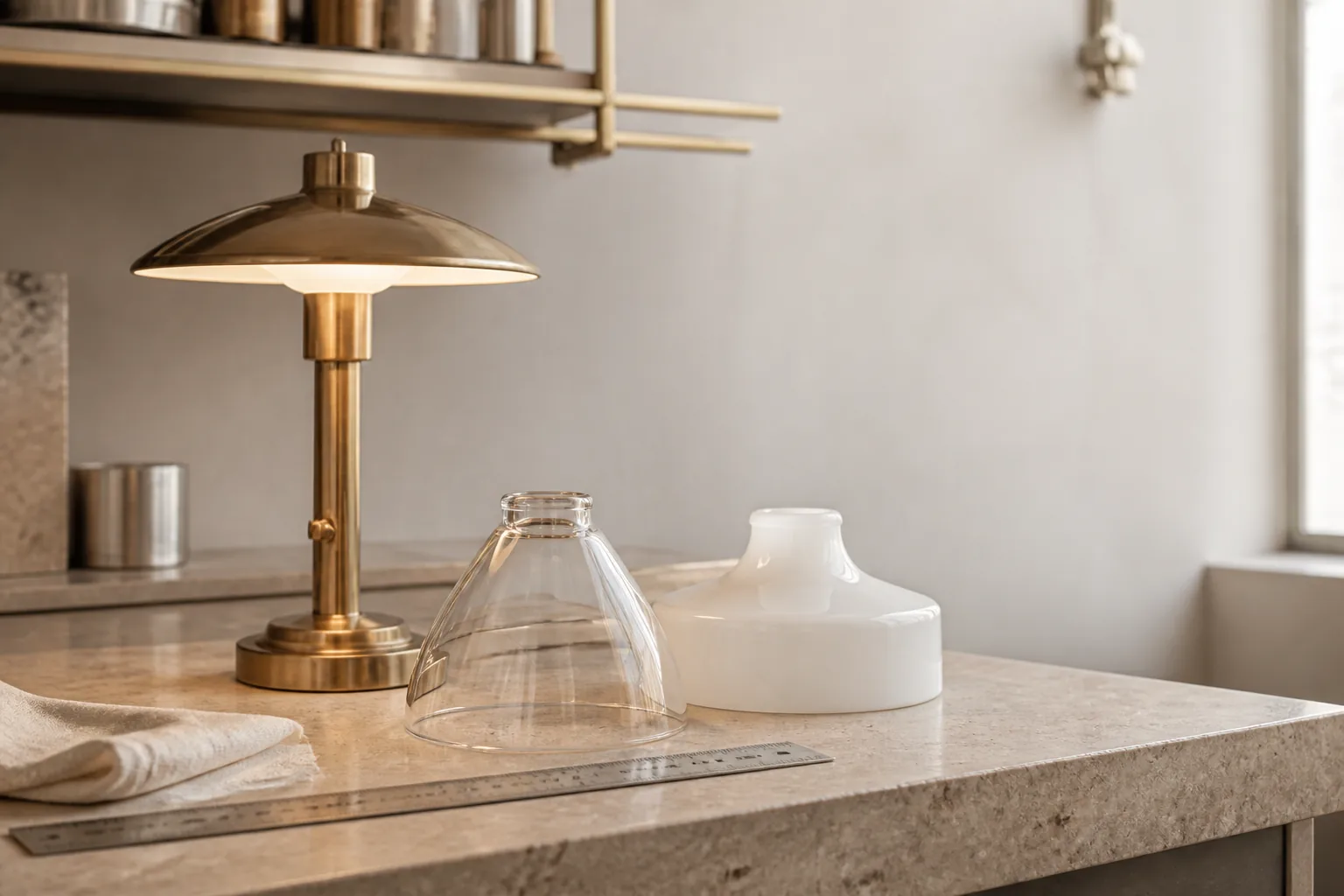
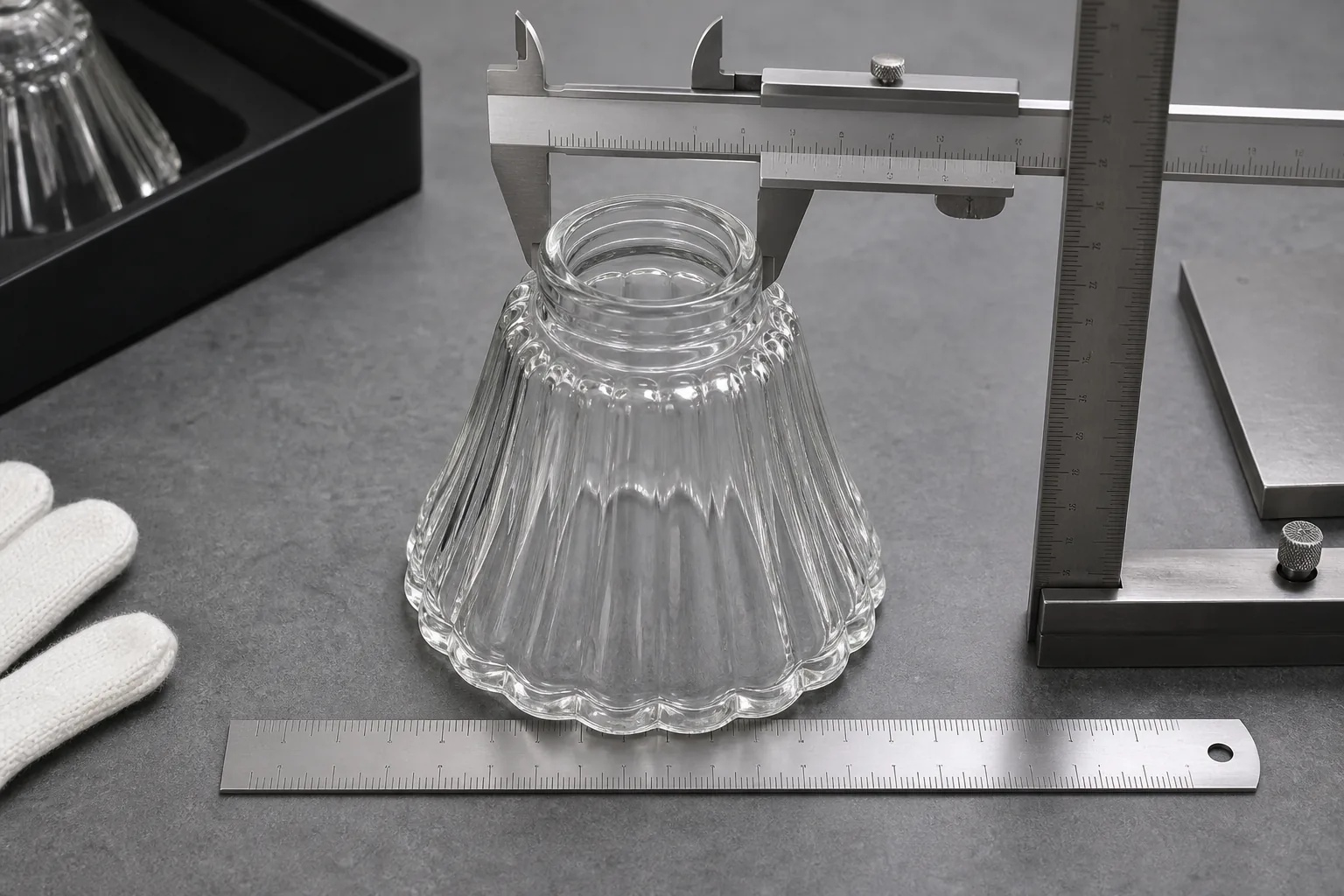
Measure the lamp and the shade separately. Write the dimensions in one consistent unit, then photograph the fixture with a ruler or caliper in the same view. For a replacement glass shade, measure the opening that actually seats on the holder, not just the outside diameter of the old glass.
- Measure the base width. Use the widest visible point of a round, square, or sculpted base.
- Measure the base height. Start at the table or shelf and finish at the top of the socket or fitting point.
- Measure the existing shade. Record top width, bottom width, vertical height, and slant height if the sides angle outward.
- Measure the fitter. Record the inner opening, outside collar, thread or retaining surface, and the way the shade is held.
- Check clearance. Confirm the bulb, socket, harp, ring, clips, and any decorative hardware have room to assemble without touching the glass.
- Photograph the interface. Include one full fixture image, one straight-on holder image, and one close-up of the opening or retaining hardware.
Home Depot notes that shade height is different from slant height when the sides are not vertical. That distinction matters on small empire, bell, and tapered shades because a short vertical height can still produce a longer slant measurement. For a custom glass profile, give both values when the drawing uses them.
Which small lamp shade shapes work best?
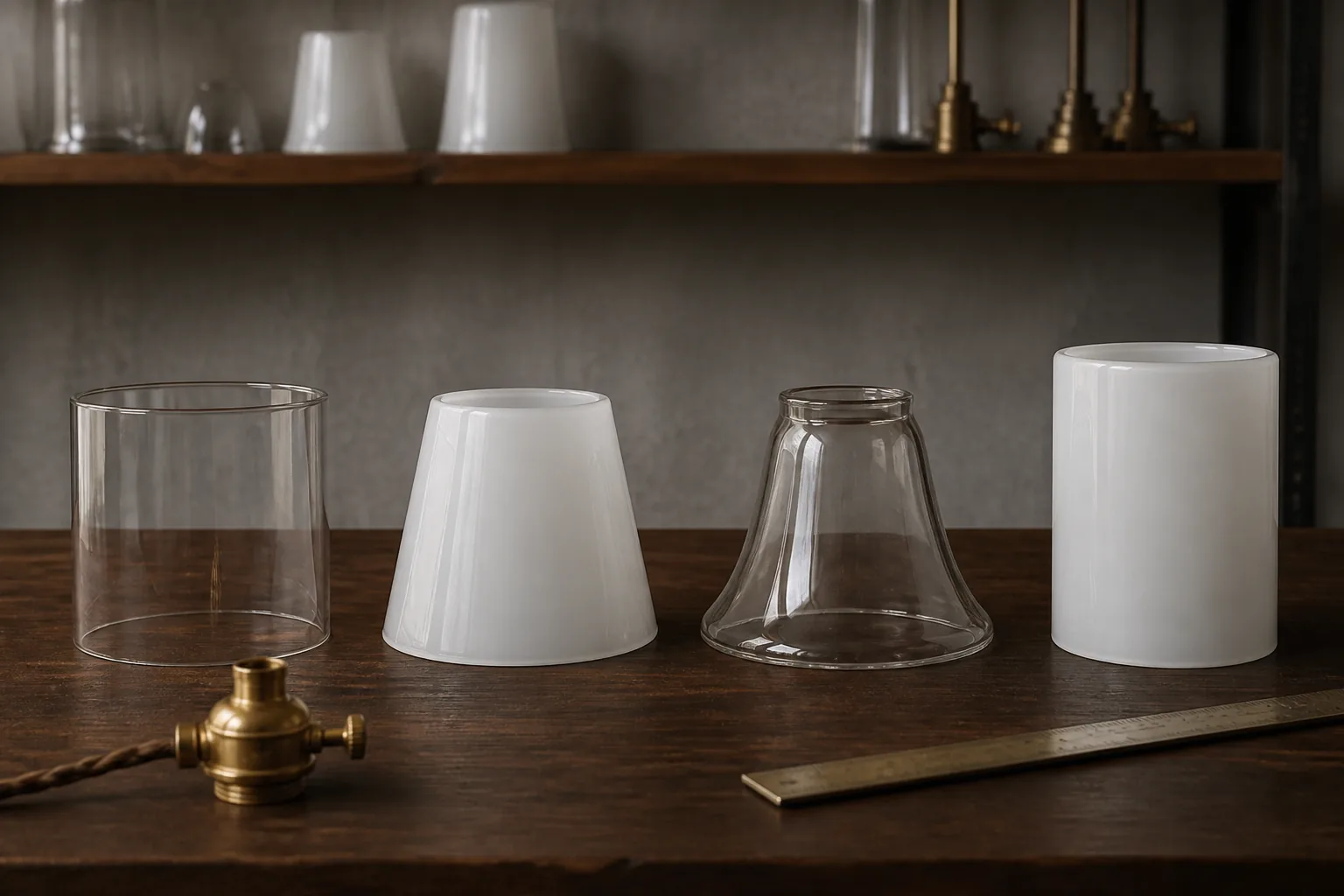
Choose a shape that echoes the base and controls the direction of light. A round base usually tolerates a round, globe, bell, or drum profile. A square or angular base normally looks more deliberate with a square, rectangular, or cut-corner shade. A narrow candlestick base can use a compact empire or bell shade when the fitter and center of gravity are stable.
| Shape | Why it works on a small lamp | Lighting effect | Watch for |
|---|---|---|---|
| Drum | Simple outline and equal top and bottom make it easy to proportion | Balanced light above and below, depending on opacity | A wide lower edge can overwhelm a narrow base |
| Empire | Narrow top keeps the socket area visually light while the lower flare adds coverage | More downward and outward spread | Confirm the top opening clears the bulb and holder |
| Bell | Curved sides soften a small decorative base | Gentle downward spread with a softer silhouette | Curved glass can be harder to match from a single diameter |
| Globe or cylinder | Compact profiles suit small pendants, accent lamps, and modern table lamps | Depends strongly on clear, frosted, opal, or ribbed glass | Check neck, opening, weight, and retaining method together |
| Square or oval | Useful when the base or surrounding furniture has a directional shape | Square shapes direct light differently across corners and sides | Measure both widths if the shade is not circular |
Use the Lampshade Shapes visual glossary when you need the correct profile name for a drawing, product brief, or replacement request. Naming the shape helps, but the measured opening and supporting hardware still control whether the shade can be used.
Small bedside lamp shades
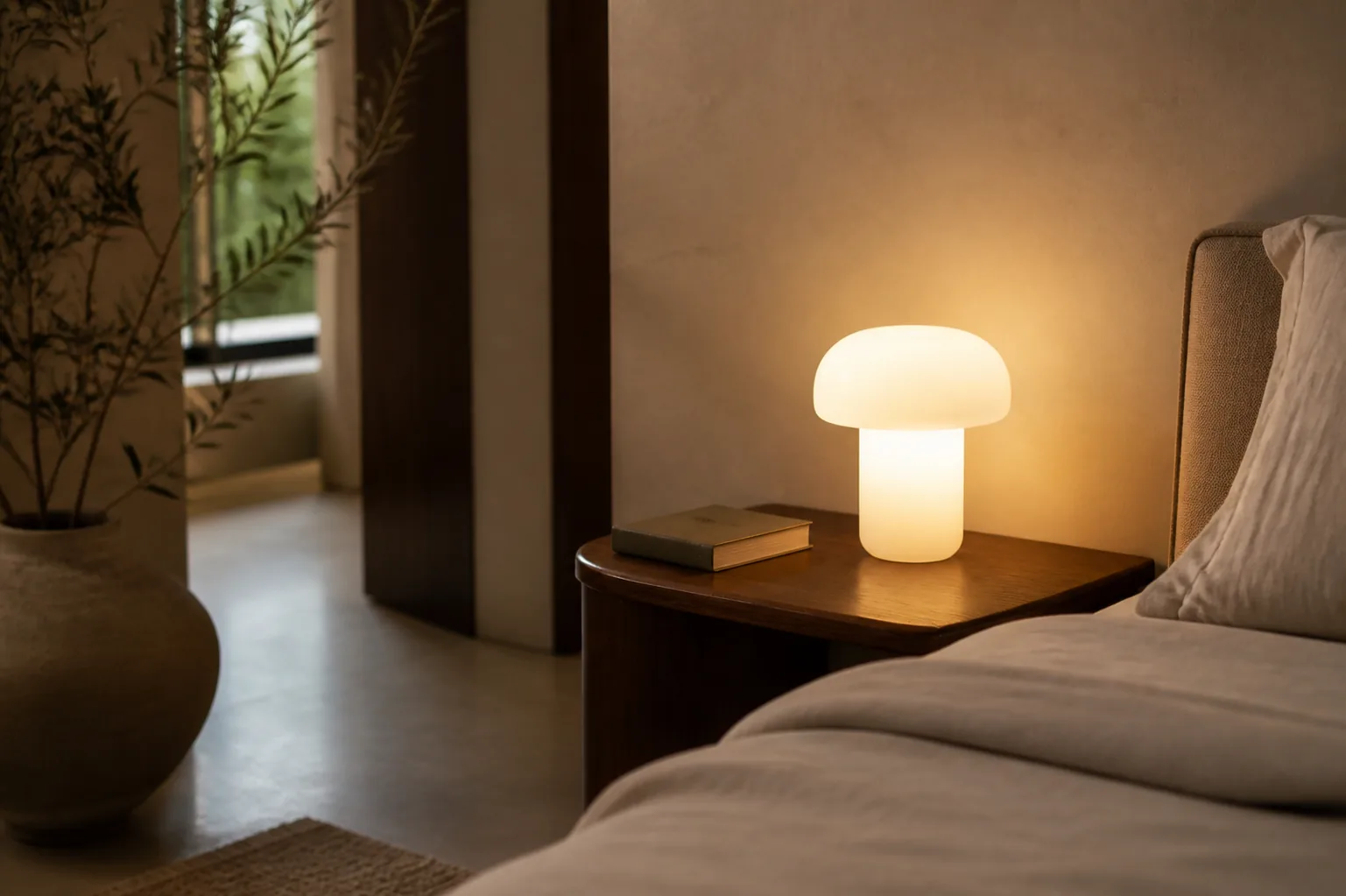
Bedside shades should conceal the bulb from a person sitting or lying nearby while leaving enough light for reading, charging, or orientation. A compact drum, short empire, or softly curved bell can work when the lower edge stays inside the table footprint. Avoid selecting by diameter alone if the nightstand is narrow or the socket sits high above the base.
Small desk lamp shades
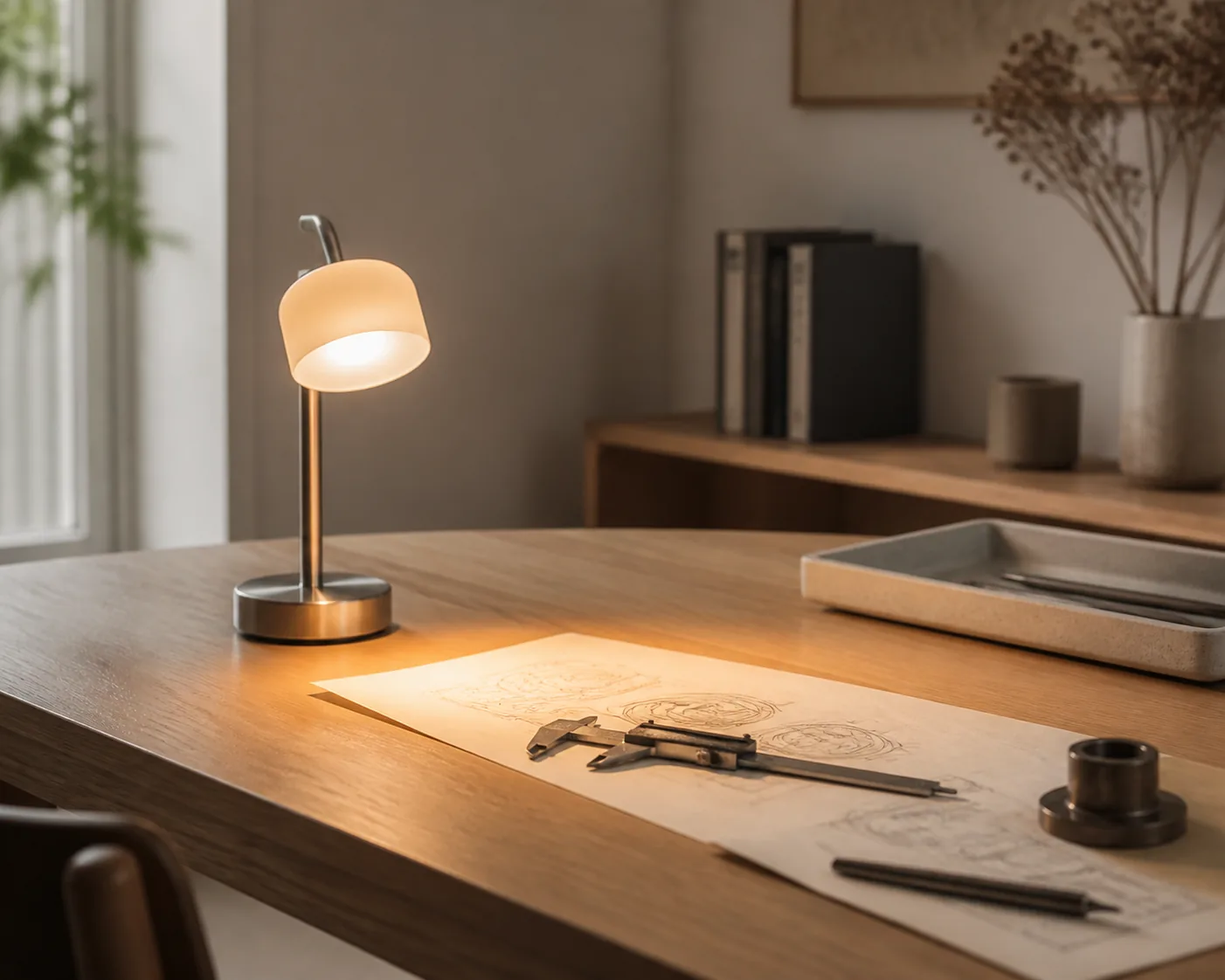
A desk shade has to leave space for the working area. A short drum or cylinder can keep the silhouette compact, while an opal or frosted finish can soften a visible light source. For a task lamp, confirm where the light is meant to travel before choosing a fully opaque finish. The goal is controlled light, not simply a smaller object.
Small accent and shelf lamps
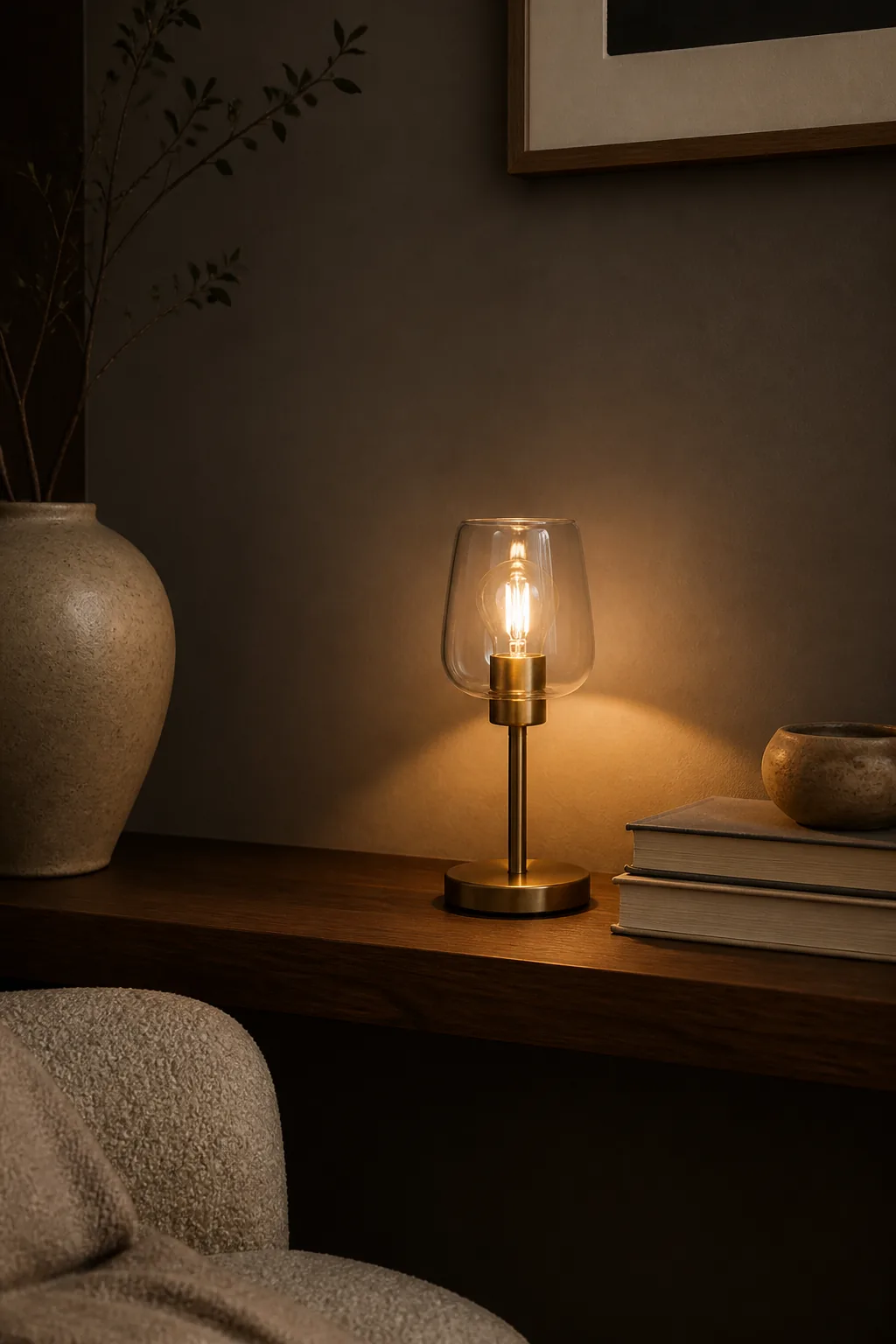
Accent lamps often use miniature shades, narrow globes, or clip-on formats. The shade may be seen from several sides, so the finish and edge quality are part of the visual result. Keep the base, shade, and shelf depth in proportion. If the lamp is part of a display or hotel room set, document the finished height and the exact orientation of the fitter.
What are the main small shade formats?
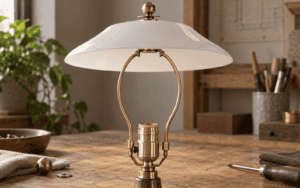
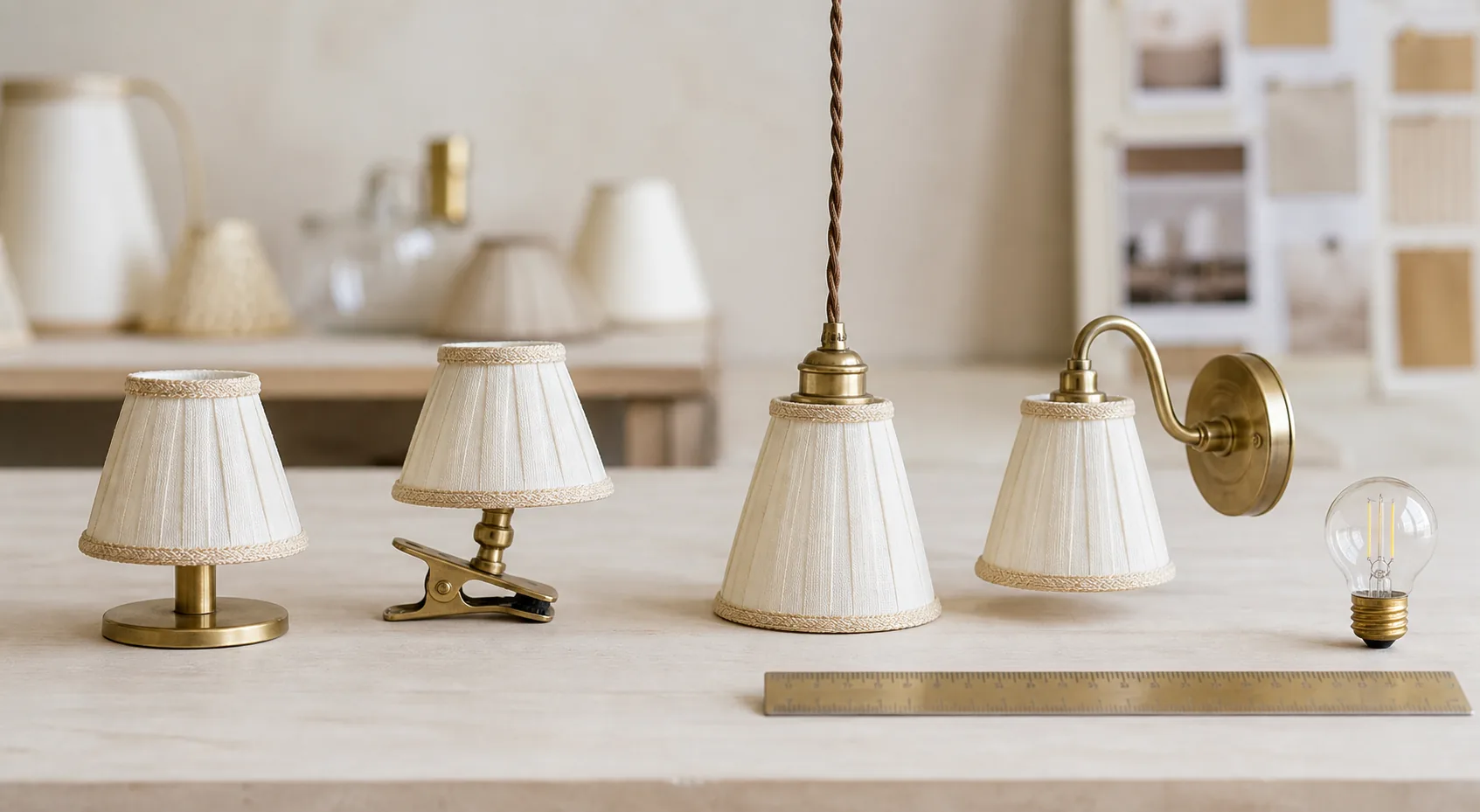
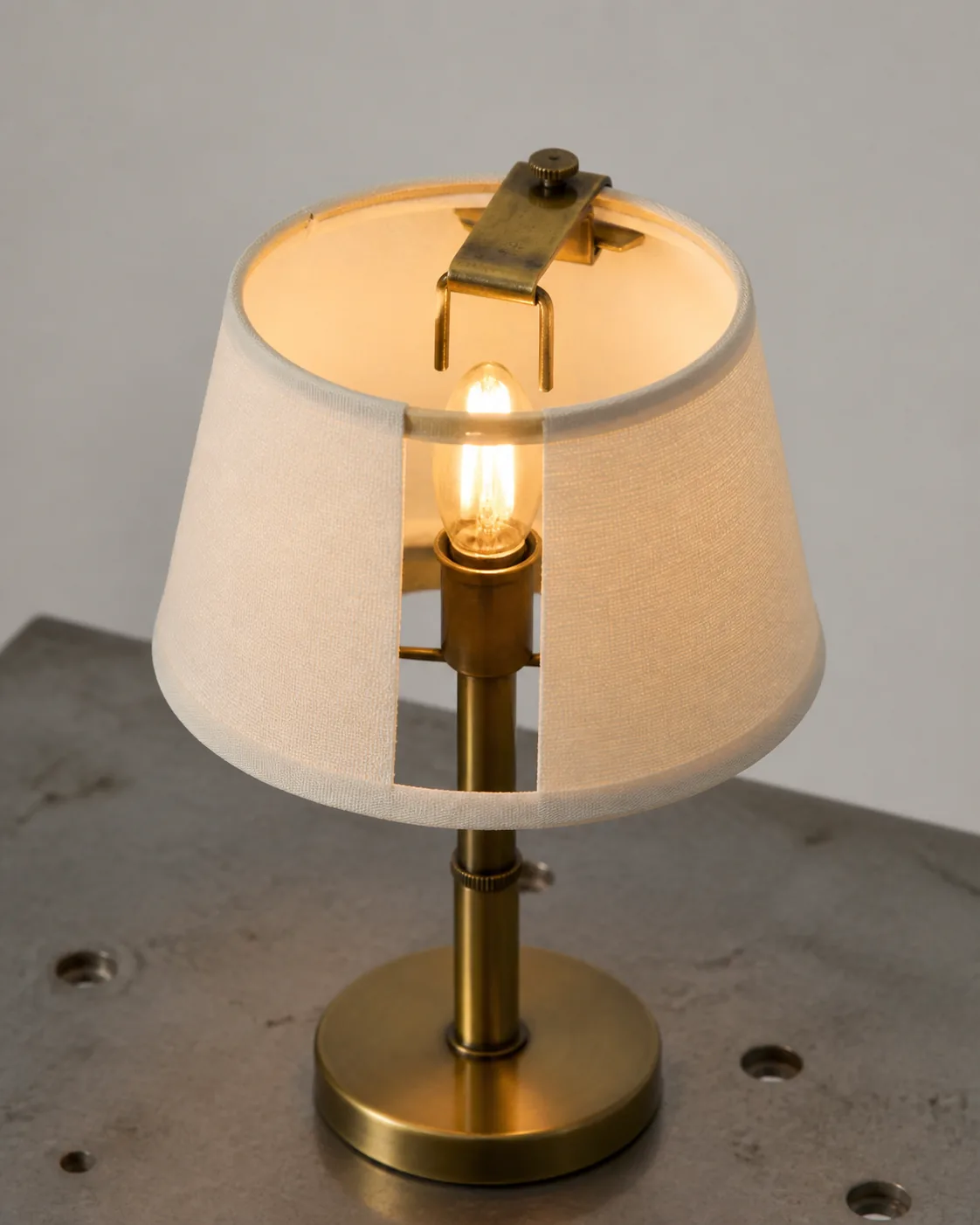
Small lamp shades are sold and specified in several formats. A fabric or glass table shade may sit on a harp with a spider fitter. A clip-on shade grips the bulb or lamp holder with a wire frame. A UNO shade uses a socket-mounted ring, while a threaded neck or gallery arrangement locates the glass directly at the fixture interface.
Miniature and small fitter-size glass shades are a real product category. The B&P Lamp Supply catalog shows examples such as 4 inch and 6 inch fitter glass shades and lists their height and bulge measurements. Those catalog values demonstrate how a small glass shade may be described, but they do not define a universal replacement size for another fixture.
B&P Lamp Supply’s glass catalog is useful for seeing the level of detail a glass shade listing can contain: fitter size, shade height, bulge or outside profile, color, cased construction, and production method.
Which fitter does a small lamp shade need?
The fitter is the mechanical interface between the shade and the lamp. It can determine whether the shade sits securely, whether the bulb is centered, and whether the shade can be removed for cleaning or replacement. A shade that has the right outside diameter can still be unusable if its opening, thread, collar, clip, or retaining surface is wrong.
| Fitter or attachment | Typical arrangement | Record before ordering | Common small-lamp risk |
|---|---|---|---|
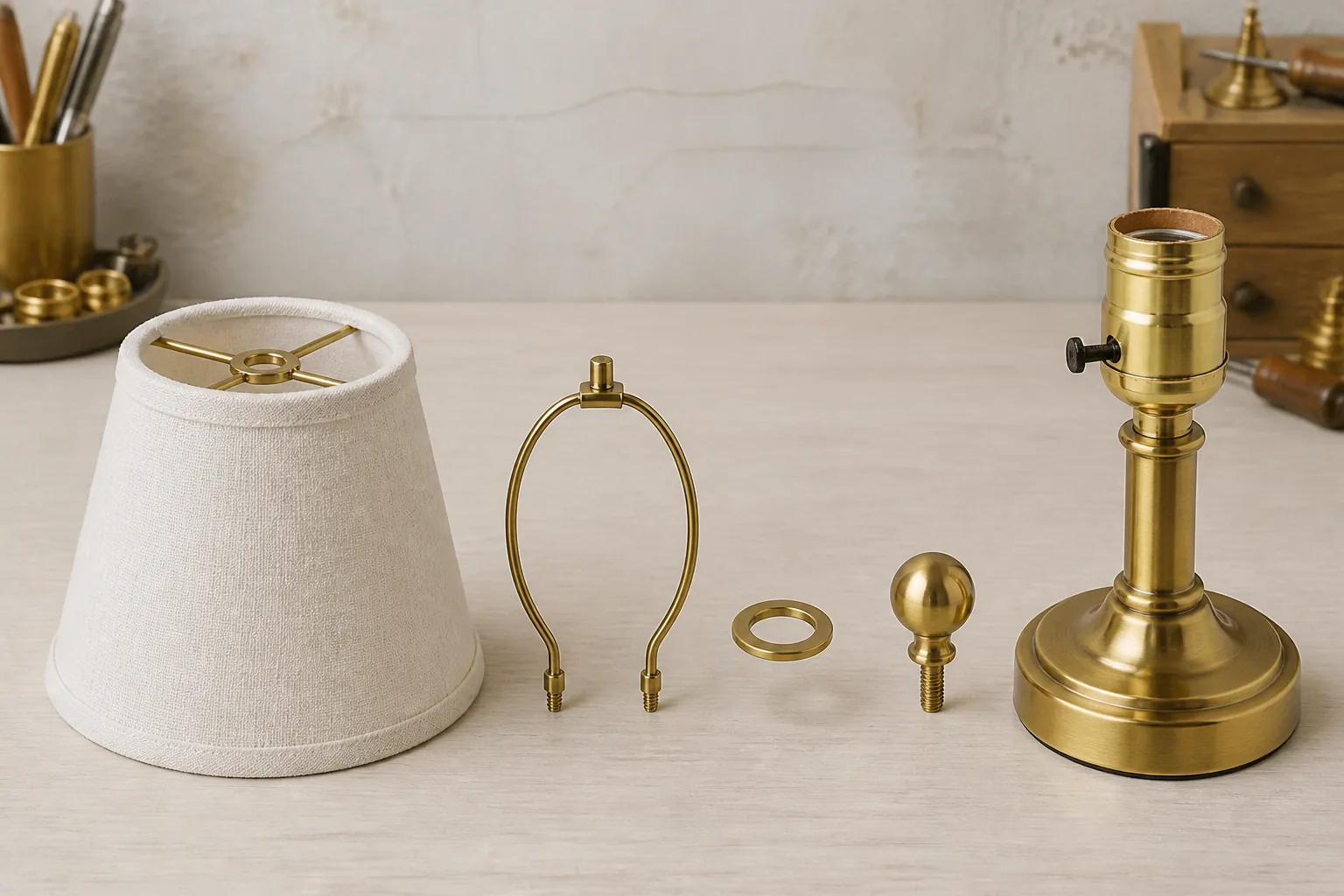
| Spider and harp | A center spider rests on a harp and is held by a washer and finial | Center opening, washer seat, harp height, and finial clearance | Shade sits too low, too high, or moves on the harp |
| UNO or socket-mounted | A ring locates around or under the socket | Ring inner diameter, thread or seat, socket type, and bulb access | Opening looks correct but cannot pass over the socket |
| Clip-on | Wire clips locate around the bulb or lamp holder | Clip span, bulb shape, heat clearance, and shade weight | Clip contact is uneven or the shade touches the bulb |
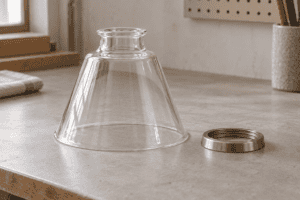
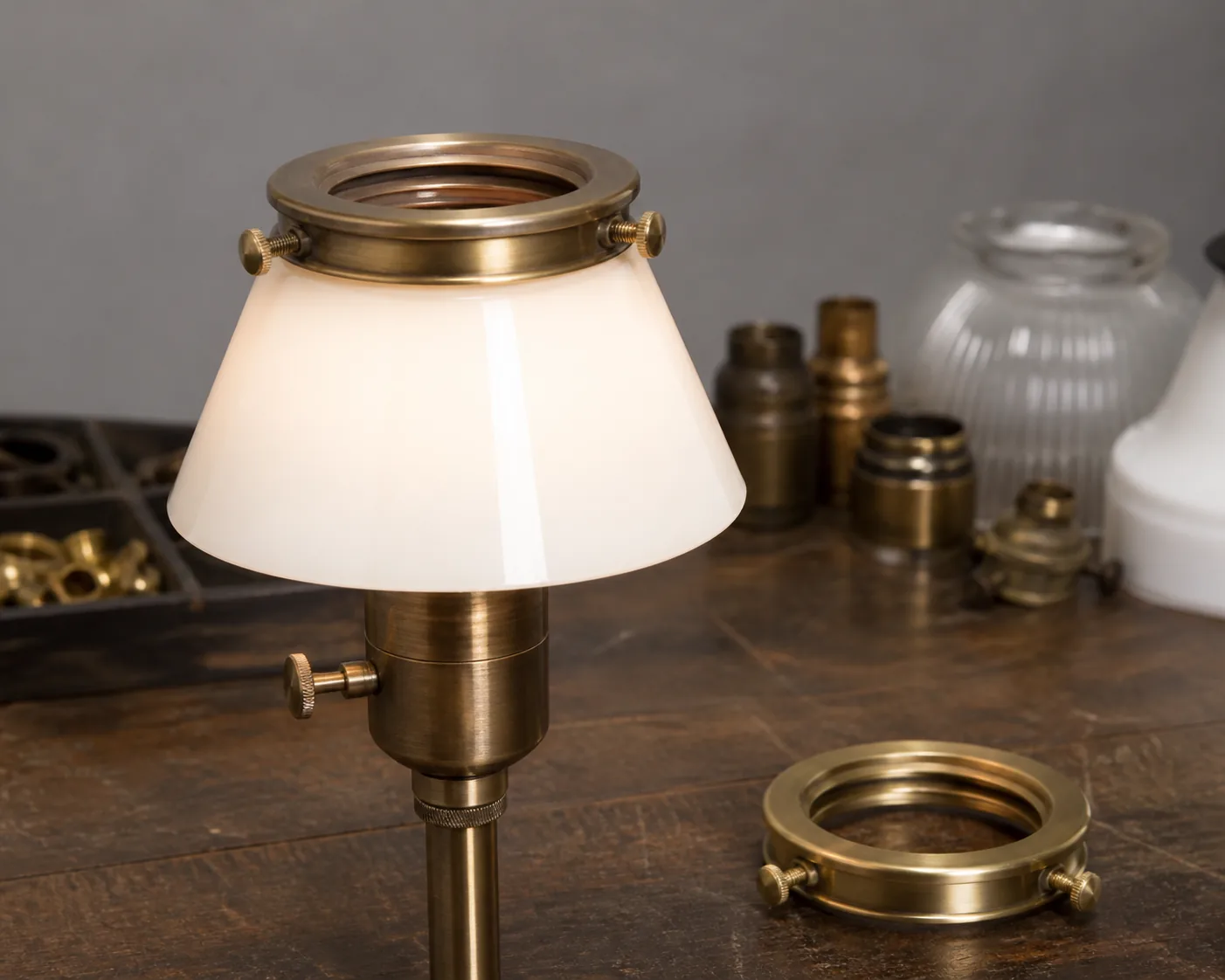
| Threaded neck or collar | A glass neck or metal ring engages a threaded holder | Thread specification, neck diameter, seating surface, and gasket | Cross-threading or uneven pressure at the glass neck |
| Gallery or project-specific holder | A ring, carrier, tabs, or concealed support locates the shade | Holder photo, opening, retaining method, axis, and service access | Generic shade dimensions do not describe the real interface |
Use the JX fitter compatibility checker to identify the broad system. For an OEM or replacement glass project, send the holder and shade photos together. Supplier names vary across markets, so the physical interface is more reliable than a label such as spider, UNO, or gallery.
Is glass a good material for small lamp shades?
Glass can be a strong choice when the fixture needs a clean silhouette, a durable wipeable surface, a replacementable diffuser, or a repeatable decorative finish. It also makes the relationship between material, thickness, profile, and weight important. A small glass shade is not automatically interchangeable with a small fabric shade because the holder, balance, edge condition, and attachment load can be different.
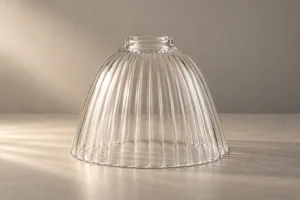
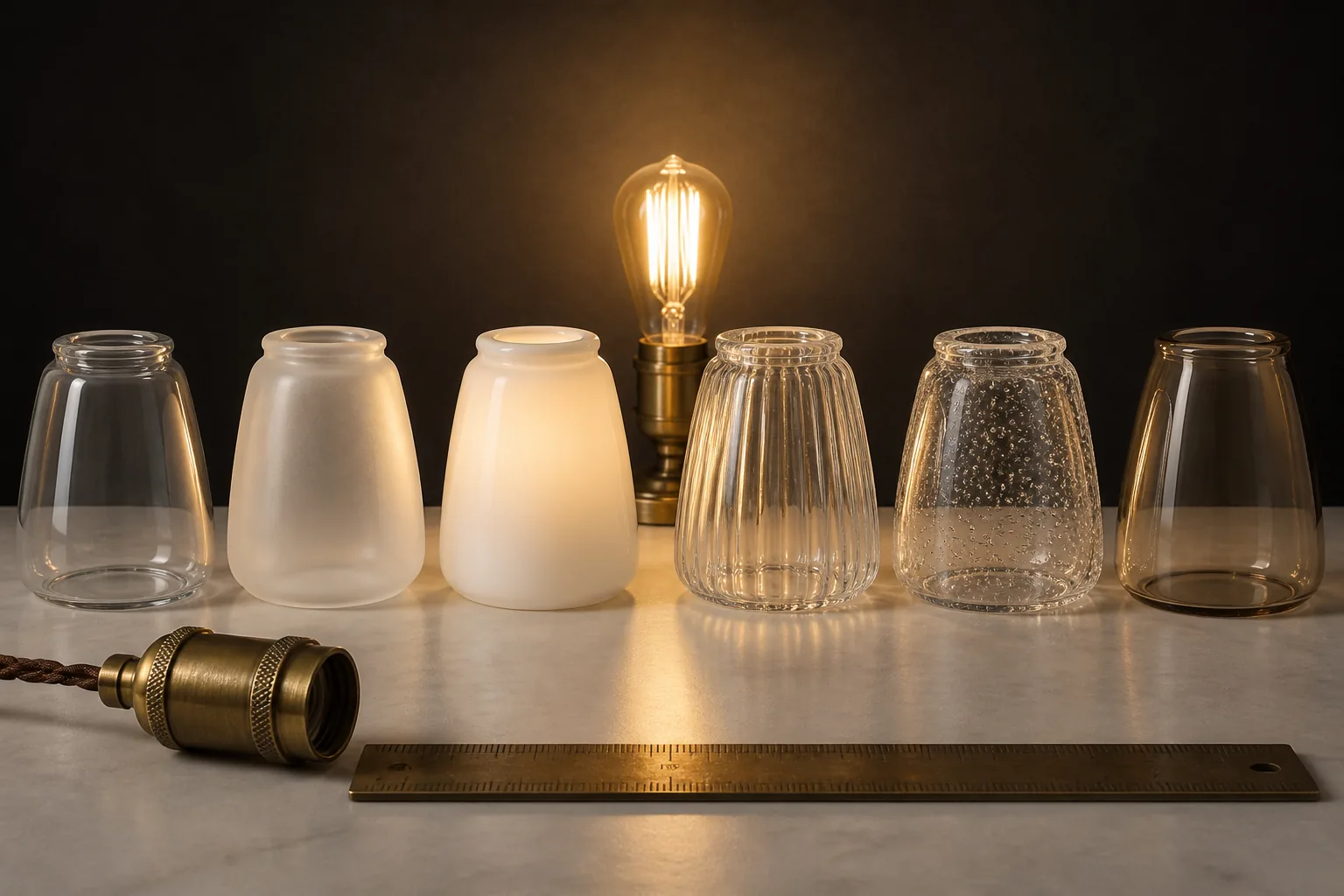
Clear glass keeps the bulb and filament visible. Frosted or opal glass spreads the light more evenly. Ribbed or seeded glass adds texture and changes how highlights move across the surface. Colored glass changes the appearance of the fixture both when switched off and when illuminated. The best option depends on the bulb, desired glare control, room, and whether the shade is a single piece or a matched set.
The general lampshade definition on Wikipedia describes a shade as a cover that redirects or softens emitted light and notes glass as one of the common materials. Treat that as a general description, not a performance specification. A project still needs its own fixture instructions and material review.
How should a buyer specify small glass lamp shades?
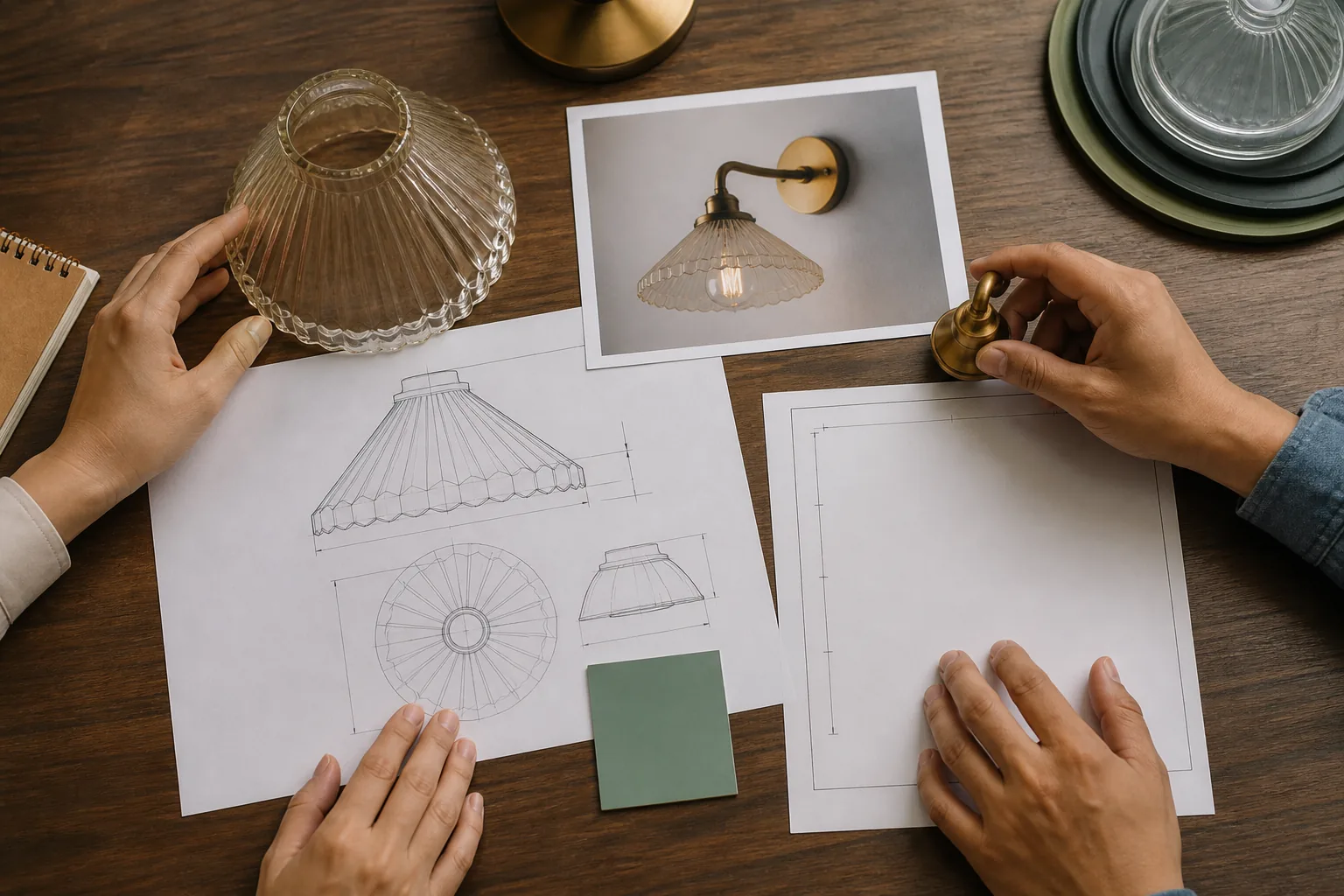
A buyer should describe the shade as a complete interface and appearance package. A product name such as small globe or mini glass shade is a starting point, not enough information for a repeatable quote. The supplier needs to know what the glass connects to, how the light should look, and how the order will be inspected and packed.
- Application: bedside, desk, accent, pendant, wall, chandelier, hospitality, or another fixture.
- Geometry: top opening, bottom width, maximum width, vertical height, slant height, neck, lip, and any side holes.
- Fitter: spider, UNO, clip-on, threaded neck, gallery, ring, carrier, or an unidentified system shown in photos.
- Glass appearance: clear, opal, frosted, ribbed, seeded, colored, painted, cased, or another approved sample.
- Manufacturing route: hand-blown, pressed, hot-bent, centrifuge, or a process to be recommended after drawing review.
- Quantity: sample quantity, pilot order, annual demand, set count, and whether matched color or texture is required.
- Quality: reference sample, acceptable variation, edge and seam expectations, inspection photos, and approval stages.
- Logistics: carton quantity, separators, drop or handling concerns, labeling needs, and destination requirements.
Use the custom lampshade RFQ builder to organize the request. If the project is a broader lighting collection, the OEM glass lamp shades page shows the type of application and development context that should accompany a small-shade inquiry.
What small-lamp mistakes cause returns?
Most avoidable problems happen when a buyer treats the shade as a stand-alone decorative object. The shade may look right online and still fail because the bottom diameter is measured instead of the opening, the bulb is larger than expected, or the holder uses a different thread or clip.
- Ordering by outside diameter only. The opening and retaining surface control physical fit.
- Assuming mini means one standard size. Retailer labels and supplier fitter sizes use different conventions.
- Ignoring the bulb. A clip-on shade needs safe clearance and a compatible bulb shape.
- Choosing a shape without checking the base. A wide flare can dominate a narrow base even when the number looks small.
- Changing glass to fabric without reviewing the holder. Weight, balance, and attachment loads may change.
- Requesting a replacement from one blurry photo. Add a straight-on opening photo, a side profile, dimensions, and the fixture model when available.
- Approving color without a controlled sample. Clear, opal, amber, smoke, and seeded effects can appear different under different light sources.
A good replacement brief preserves one original shade as a reference when possible. If the original is broken, photograph the remaining holder, gasket, ring, and fixture before disposal. That evidence can be more useful than the broken glass itself.
How should small glass shades be packed for shipment?
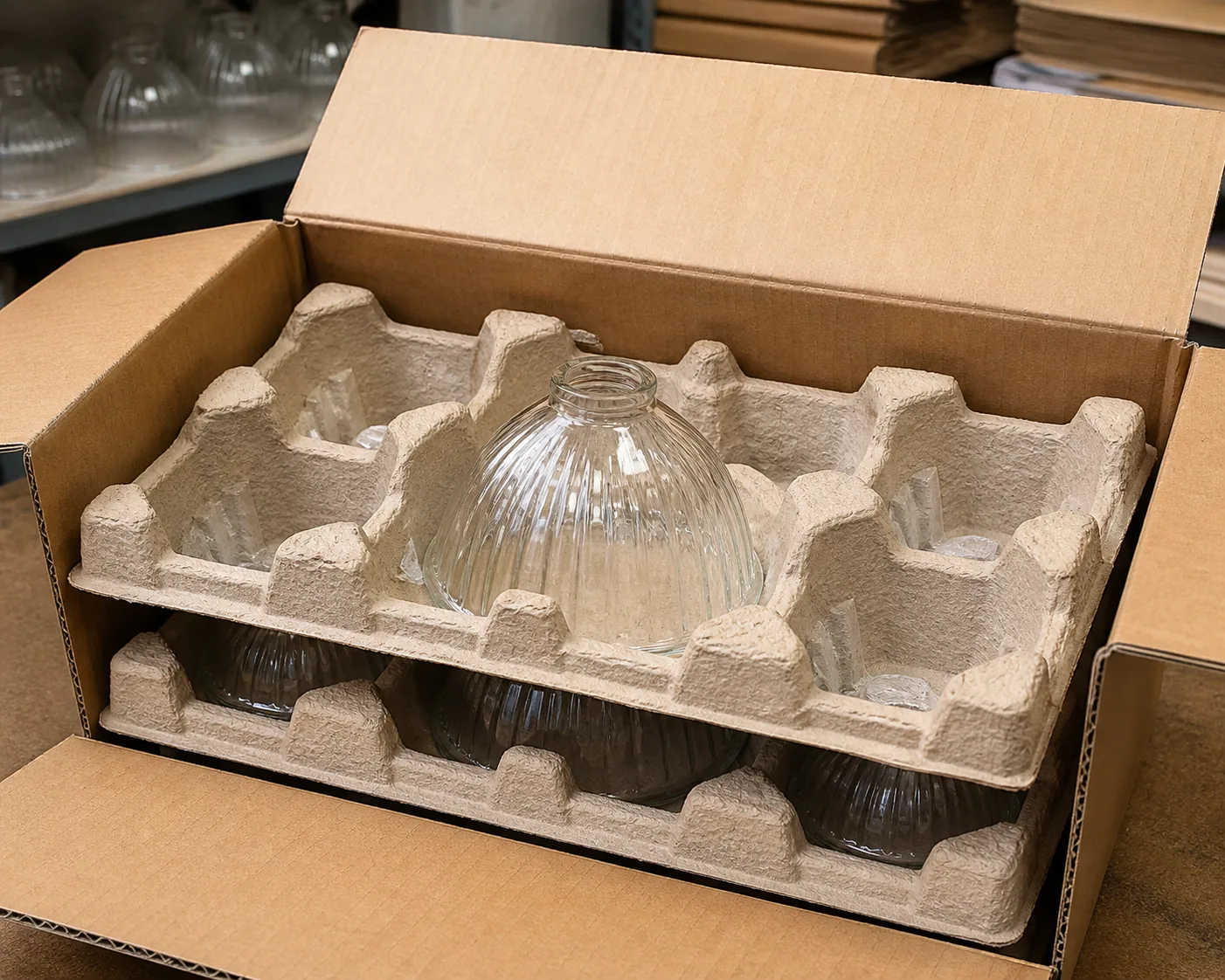
Small does not mean risk-free. A compact glass part can still chip at its edge, move inside a carton, or strike a neighboring shade during transport. Packaging should keep each shade separated, support the profile without point-loading the rim, and protect the fitter or neck from impact.
For a buyer, the packaging brief should state whether the shades ship individually, as matched pairs, or as complete fixture sets. Include the number of pieces per carton, separator material, orientation, outer carton limits, inspection photos, and what evidence is required if a carton arrives damaged. The correct packing arrangement depends on the profile and the actual order, so do not treat a generic insert as proof for every shape.
Small lamp shade selection checklist
Before you approve a small shade, run this short checklist:
- The shade bottom sits inside the visual footprint of the lamp base.
- The height hides the socket or bulb as required by the application.
- The top opening, fitter, thread, clip, or gallery matches the fixture.
- The bulb has the intended clearance from the shade and holder.
- The shape complements the base and the surrounding surface.
- The glass finish produces the desired glare and diffusion result.
- The sample, drawing, or old part is retained for future replacement orders.
- The packing and inspection plan is clear before bulk production.
For a standard retail replacement, these checks help prevent an obvious mismatch. For a lighting brand or hospitality project, add a controlled sample, a signed drawing, a set-matching plan, and a written approval record. Those documents make the next order easier to repeat.
Frequently asked questions
What size lamp shade is best for a small lamp?
Start with the lamp base width and height, then compare the shade bottom, top, and overall height. Retailer labels often place mini shades at about 6 inches or less and small shades below about 9 inches, but those are shopping ranges rather than a universal standard. The correct shade should cover the bulb and socket as needed, remain stable on the fitter, and stay proportionate to the base. A narrow bedside lamp may need a shorter or narrower shade than a compact lamp with a broad ceramic base. Measure the fixture before choosing a product label.
How do I measure a small lamp shade for replacement?
Record the shade top width, bottom width, vertical height, and slant height if the sides angle outward. Then measure the fitter opening or the surface that actually sits on the holder. Photograph the full lamp, the holder straight-on, and the opening close-up. For a glass replacement, also record the neck, lip, collar, gasket, thread, retaining ring, or clip arrangement. The outside diameter alone cannot confirm fit. Keep the same unit throughout the request and include a drawing or the old shade when possible.
Are glass lamp shades suitable for small table and bedside lamps?
Glass can suit small table, bedside, desk, and accent lamps when the fixture is designed to support the shade and the opening, weight, bulb clearance, and retaining method are compatible. Clear, frosted, opal, ribbed, seeded, and colored finishes produce different visual and light effects. A small glass shade should be reviewed as part of the complete fixture, not substituted by outside diameter for a fabric shade. For replacement or custom work, confirm the glass profile, fitter, edge, and support with a sample, drawing, or measured interface before ordering.
What is the difference between a mini shade and a small shade?
Mini and small are retail descriptions that usually refer to the bottom diameter or width. One common guide places mini shades at 6 inches or less and small shades at 6 to 9 inches, while another retailer uses a narrower small range. Supplier catalogs may instead group products by fitter size, such as a miniature or small glass fitter. Treat the label as a search and browsing aid. For an actual lamp, the important values are the shade dimensions, the opening, the bulb clearance, the attachment system, and the proportion of the base.
Which fitter is common on a small lamp shade?
Small lamps may use spider and harp, UNO or socket-mounted, clip-on, threaded-neck, gallery, or project-specific holders. There is no reliable way to choose among them from the shade silhouette alone. Look at the top opening and the hardware around the socket. Record the inner diameter, thread or seat, clip span, finial and washer arrangement, or the holder photo. If the name is uncertain, send a full fixture image and a close-up of the interface. A correct outside diameter with the wrong fitter will not produce a secure replacement.
Can a small glass lamp shade be custom-made?
A small glass shade can be reviewed for custom development when the buyer can provide the application, profile, opening, fitter, finish, quantity, and approval requirements. A drawing, old sample, fixture photo, or measured holder gives the supplier a starting point. The manufacturing process, glass formula, wall section, tolerance, color consistency, packing method, MOQ, and lead time must be confirmed for the specific project. Send the complete interface rather than only the phrase small lamp shade. A technical review can then separate a standard replacement from a new OEM shade request.
Need a small glass shade reviewed?
Send the fixture photo, shade profile, fitter or opening measurement, finish reference, quantity, and delivery market through the JX contact page. For a structured request, use the custom lampshade RFQ builder.
Related guides
General dimensions, proportions, and measuring steps.
Compare the main holder and compatibility systems.
Identify common profiles before preparing a drawing.
Review glass shade applications, finishes, and sourcing routes.
See compact bulb-cover and bulb-shaped glass diffuser examples.
Organize dimensions, finish, quantity, and project notes.