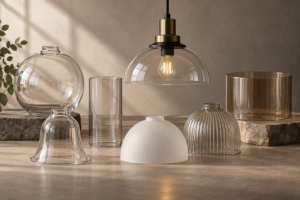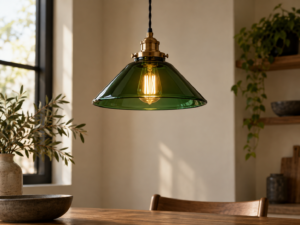
Direct answer: If you searched for “light shades brown,” you are usually looking for brown lamp shades or brown-colored light shades. Choose the shade by its material, shape, fitter, dimensions, and light behavior. Brown fabric softens a room visually, while brown or amber glass gives a wipeable colored diffuser that must be approved with the actual bulb and fixture.
This guide is for homeowners, interior designers, lighting brands, distributors, hospitality buyers, and replacement purchasers. It separates the color of the shade from the color temperature of the bulb, then turns the same decisions into a practical brief for a custom or repeat glass shade order.
By the JX Lampshade technical team · Updated August 2026
What are brown light shades?
Brown light shades are lamp or fixture shades with a brown, tobacco, cocoa, bronze, amber, or brown-toned finish. The phrase “light shades brown” is often a category-search wording rather than a technical specification. Retailers may group several materials and silhouettes under the same color filter, so the color name is only the first part of the selection.
For a table lamp, a brown shade usually means a textile, glass, paper, metal, or woven cover around the bulb. For a pendant, wall sconce, chandelier, or ceiling fixture, it can mean a decorative diffuser or a glass component that attaches to a holder. Those applications may share a color family but use different fitters, clearances, weights, and service requirements.
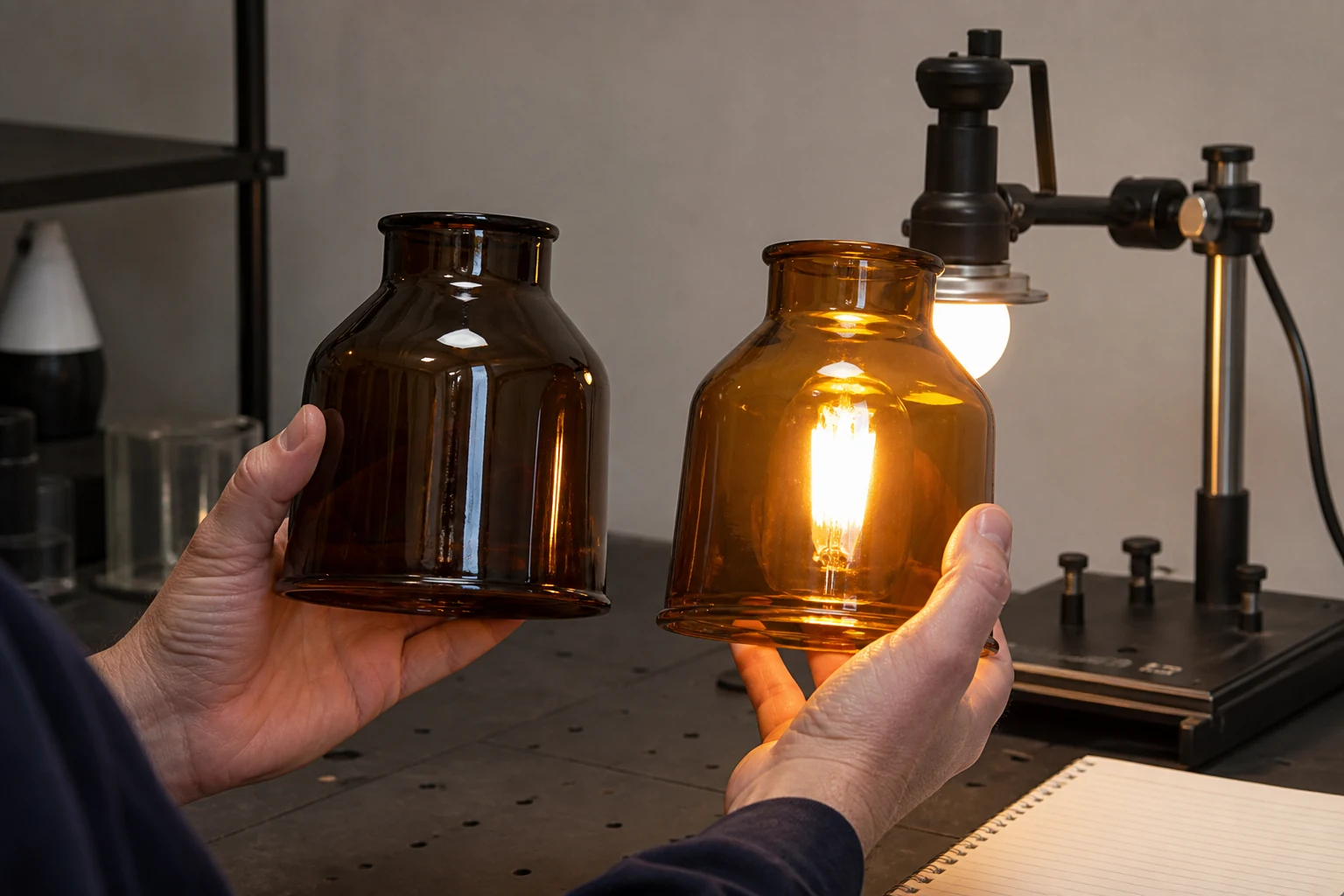
Brown also changes under illumination. A transparent amber glass shade may read honey-colored when lit and deeper brown when switched off. A lined fabric shade may show a darker outer surface while the inner liner controls how much light escapes upward, downward, or through the side. A supplier should therefore record both the unlit appearance and the lighted appearance.
LampsUSA’s buyer guide treats color, material, opacity, shape, and fitter as separate lampshade decisions. That is the useful approach here too: use brown to set the visual direction, then verify the engineering details.
How does a brown shade change the light?
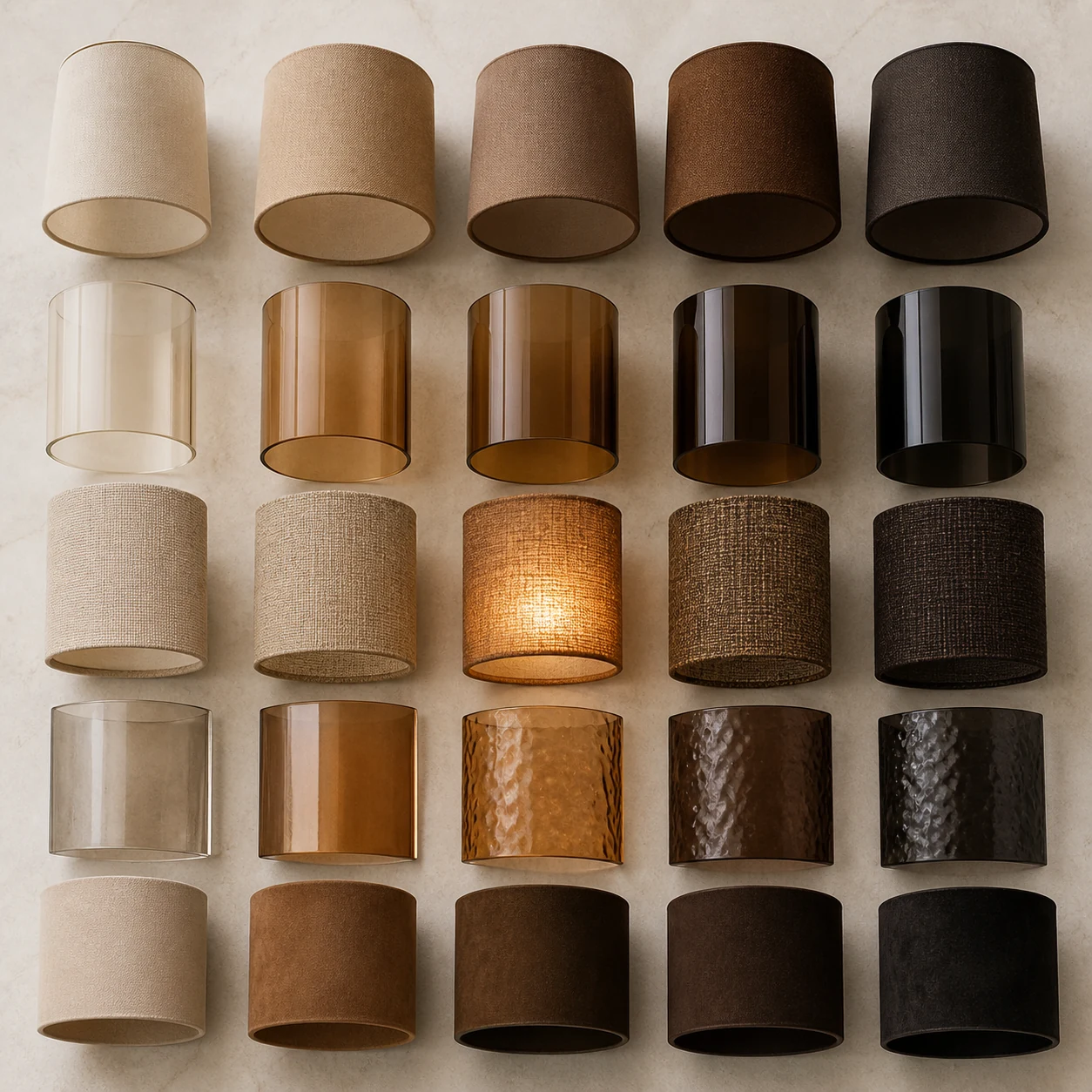
A brown shade does not create a fixed bulb color temperature. It filters, reflects, absorbs, or diffuses some of the light produced by the bulb. The result depends on whether the shade is translucent, opaque, lined, tinted, coated, textured, or open at the top and bottom.
The U.S. Department of Energy defines correlated color temperature, or CCT, as the appearance of light from the source, expressed in Kelvin. That is different from the brown color of the shade. A brown shade placed over a 2700 K bulb may look warmer than the same shade over a 4000 K bulb, but the shade itself is not a substitute for specifying the bulb’s CCT. The same DOE guidance also distinguishes CRI, which describes how accurately a light source renders object colors.
For a product or project review, record the bulb lumens, CCT, CRI, wattage or electrical input, dimming state, and shade finish. If the buyer only says “warm brown light,” the supplier cannot know whether the desired result comes from a tinted shade, a warm bulb, a dim-to-warm source, or a combination.
| Shade condition | Typical visual result | Useful application direction | Confirm before approval |
|---|---|---|---|
| Light brown fabric with pale liner | Warm textile surface with relatively open light from the top and bottom | Table lamps, bedside lamps, living rooms, and decorative hospitality areas | Liner color, side translucency, maximum bulb rating, and fitter position |
| Dark brown or lined fabric | More controlled side glow and stronger downward or upward emphasis | Accent lighting, lounge areas, and decorative bases that need visual weight | Light loss, heat clearance, liner reflectance, and cleaning method |
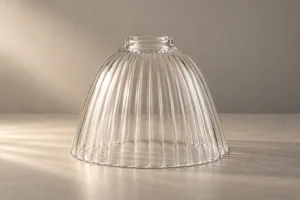
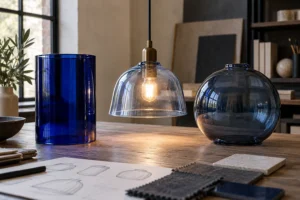
| Amber or brown transparent glass | Colored highlights with visible bulb or filament depending on the glass | Pendants, table lamps, sconces, and collections needing a wipeable colored diffuser | Glass thickness, opening, edge, tint consistency, weight, and lighted sample |
| Frosted brown-toned glass | Lower glare and a softer colored glow than clear tinted glass | Hospitality, residential feature lighting, and replacement glass | Frosting route, surface durability, transmittance target, and cleaning test |
| Brown metal or woven shade | More directional light or patterned shadow, with a stronger material texture | Industrial, rustic, outdoor-covered, and statement fixtures where appropriate | Ventilation, corrosion or moisture exposure, edge safety, and support hardware |
The table is a selection framework, not a performance guarantee. Glass terminology is useful here because transmission, reflection, and absorption are measurable properties. Pilkington’s glass guidance explains that glass modifies light through reflection and absorption and defines transmittance as the fraction directly transmitted. A custom shade should be tested against the buyer’s actual light source when output matters.
Which material is best for a brown lamp shade?
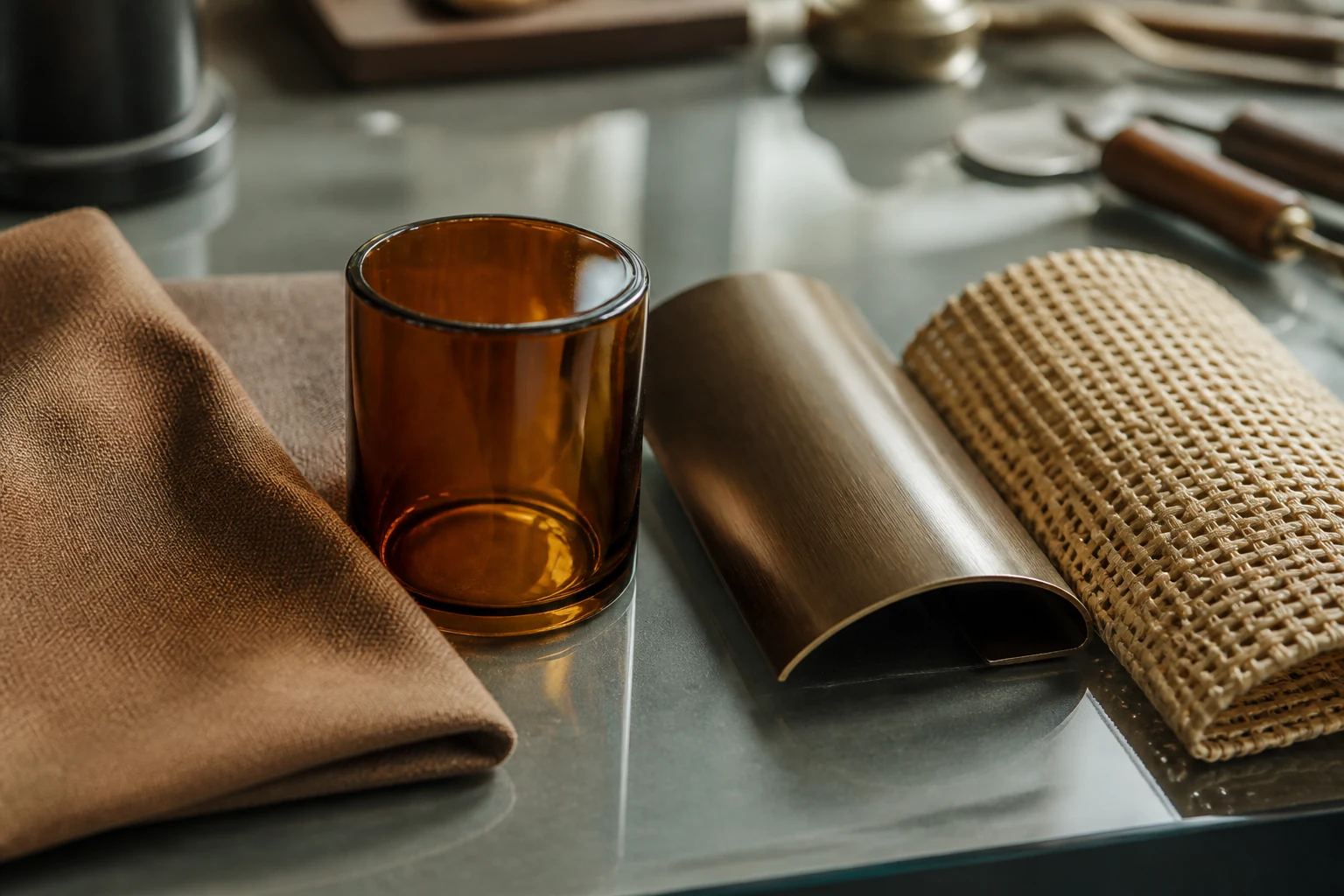
The best material depends on the buyer’s priority. Fabric gives a softer visual surface and many liner choices. Glass gives a hard, wipeable surface with clear control over profile and color effects. Metal directs light and can provide a more architectural appearance. Woven materials create texture but need a closer review of dust, moisture, and heat exposure.
For a replacement or OEM glass project, do not assume that a fabric shade can be swapped for glass just because the outside dimensions are similar. Glass changes the load on the fitter, the center of gravity, the edge condition, and sometimes the bulb clearance. The holder and the shade should be reviewed as one assembly.
Brown fabric shades
Brown fabric shades are a practical route when the design needs visible textile texture, a soft silhouette, or a liner that redirects light. Ask whether the outer fabric is cotton, linen, silk, paper-backed, or another construction, and whether the inner liner is white, gold, brown, or reflective. The same brown outer cloth can produce a very different lighted result with different liner choices.
Brown, amber, and bronze glass shades
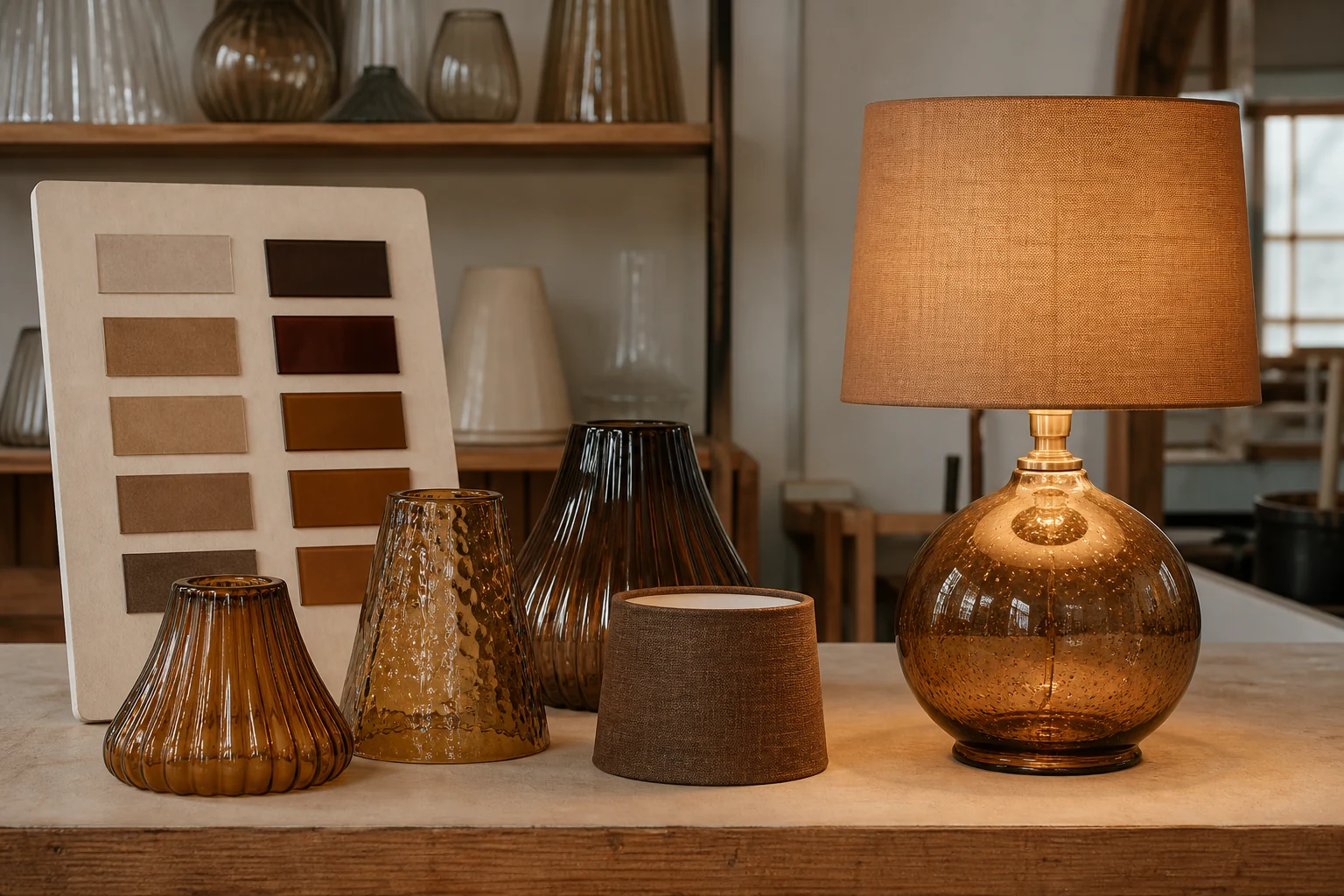
Brown glass is often described with adjacent names such as amber, smoke, bronze, tea, or tobacco. These labels are not interchangeable across suppliers. JX’s current amber electroplated product is one first-party example of a brown-toned glass direction, but it should be treated as a reference finish rather than proof that every brown request uses the same process or output. Request a sample or approved color chip for the specific profile.
Brown metal and woven shades
Metal shades can block or redirect more light than a translucent glass shade, while woven shades can cast a patterned shadow. Both can be appropriate in the right fixture, but a buyer should check ventilation, cleaning, moisture, coating durability, and electrical clearances. If the shade will be used in a commercial or public environment, include the fixture maker’s installation and temperature requirements in the review.
Which brown shade shape works for each fixture?
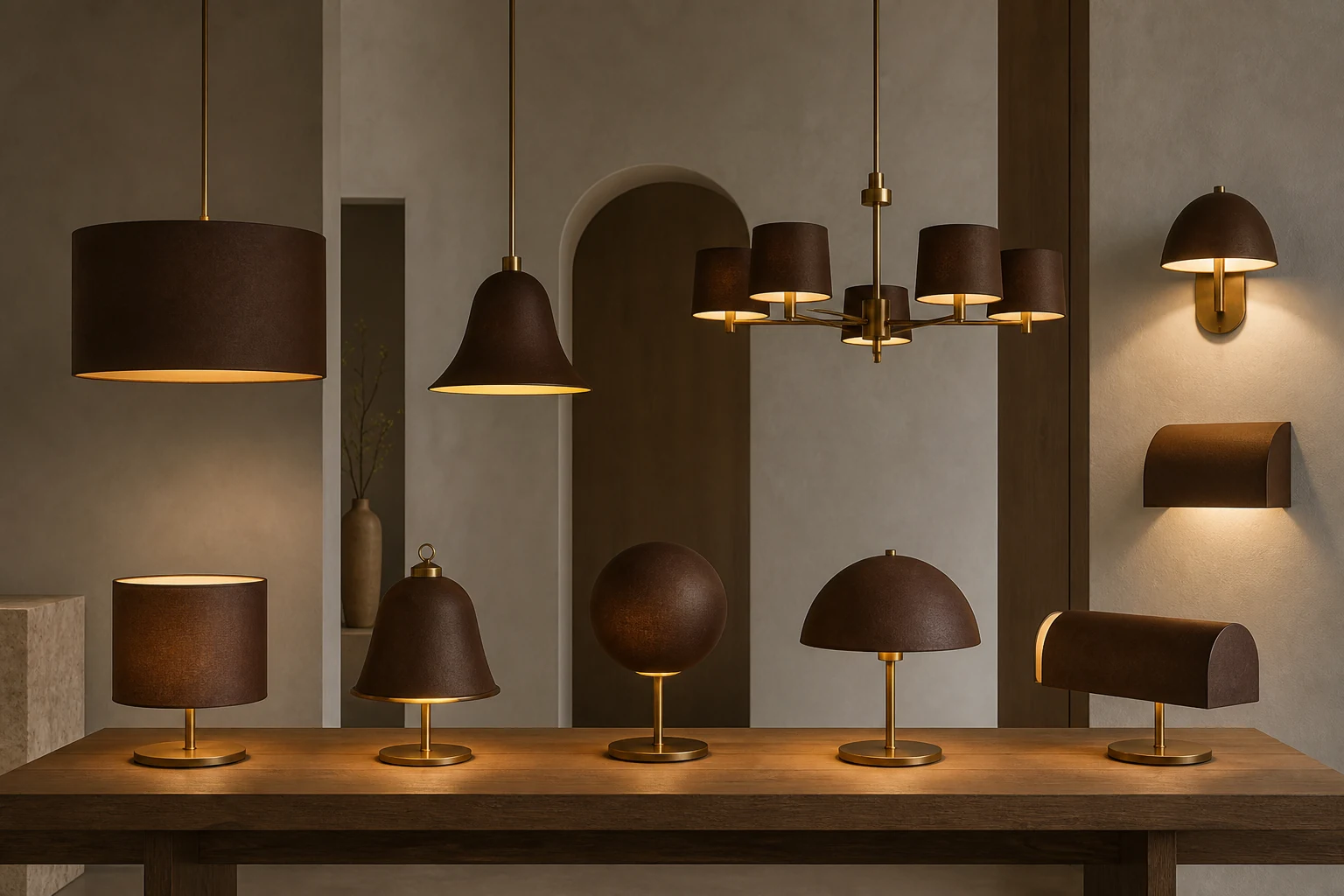
Choose the fixture and light direction before choosing the decorative silhouette. A brown drum shade can work across table and pendant applications, but the fitter and proportions are different. A bell or empire profile can send more light downward, while a globe or cylinder may read as a complete glass diffuser around the bulb.
| Fixture or application | Brown shade profiles to evaluate | Why the profile matters | Buyer checkpoint |
|---|---|---|---|
| Table lamp | Drum, empire, bell, globe, or compact cylinder | Balances the base while controlling eye-level glare | Base width, finished height, fitter, bulb concealment, and surface cleanability |
| Pendant light | Globe, drum, bell, dome, or custom open shade | Controls the cone of light and the visual weight below the canopy | Socket, neck or gallery, suspension load, ceiling height, and service access |
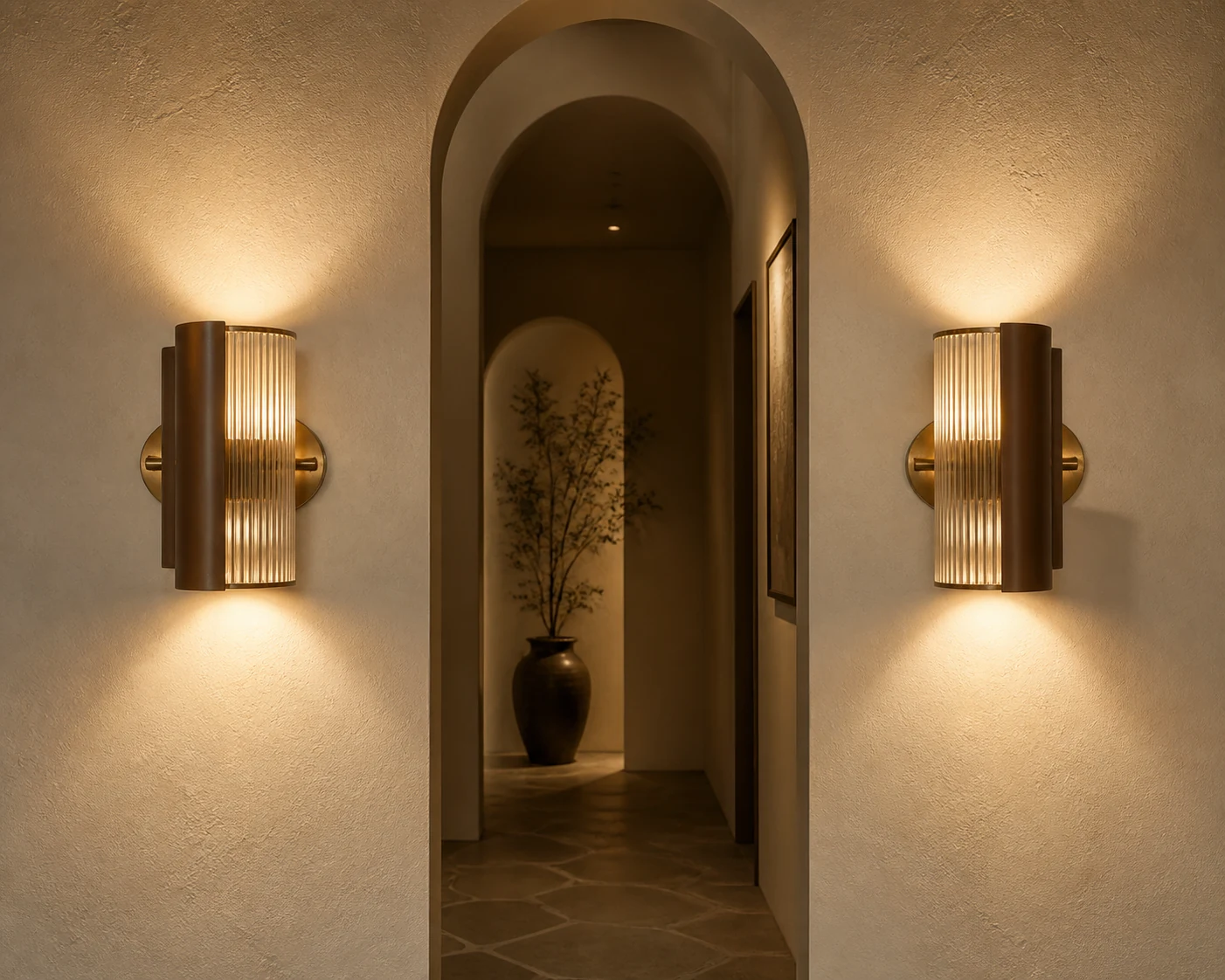
| Wall sconce | Half-cylinder, curved panel, bell, or small dome | Shapes light against the wall and determines side glare | Wall plate clearance, mounting direction, heat, opening, and shadow line |
| Chandelier or matched set | Small bell, cup, globe, petal, or project-specific repeated form | Consistency across multiple arms matters more than one attractive sample | Count, orientation, fitter tolerance, color matching, labeling, and spare quantity |
| Replacement or legacy fixture | Match the surviving shape before considering a color change | The existing opening and holder usually limit the usable alternatives | Old shade, fixture photo, opening, height, maximum width, and retaining method |
Brown is visually heavier than pale neutral finishes, so proportions deserve a second look. A deep brown shade may make a narrow base look top-heavy even when the diameter matches a standard chart. A sample on the actual base is more useful than a color swatch alone.
Brown shades for table lamps
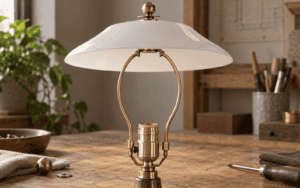
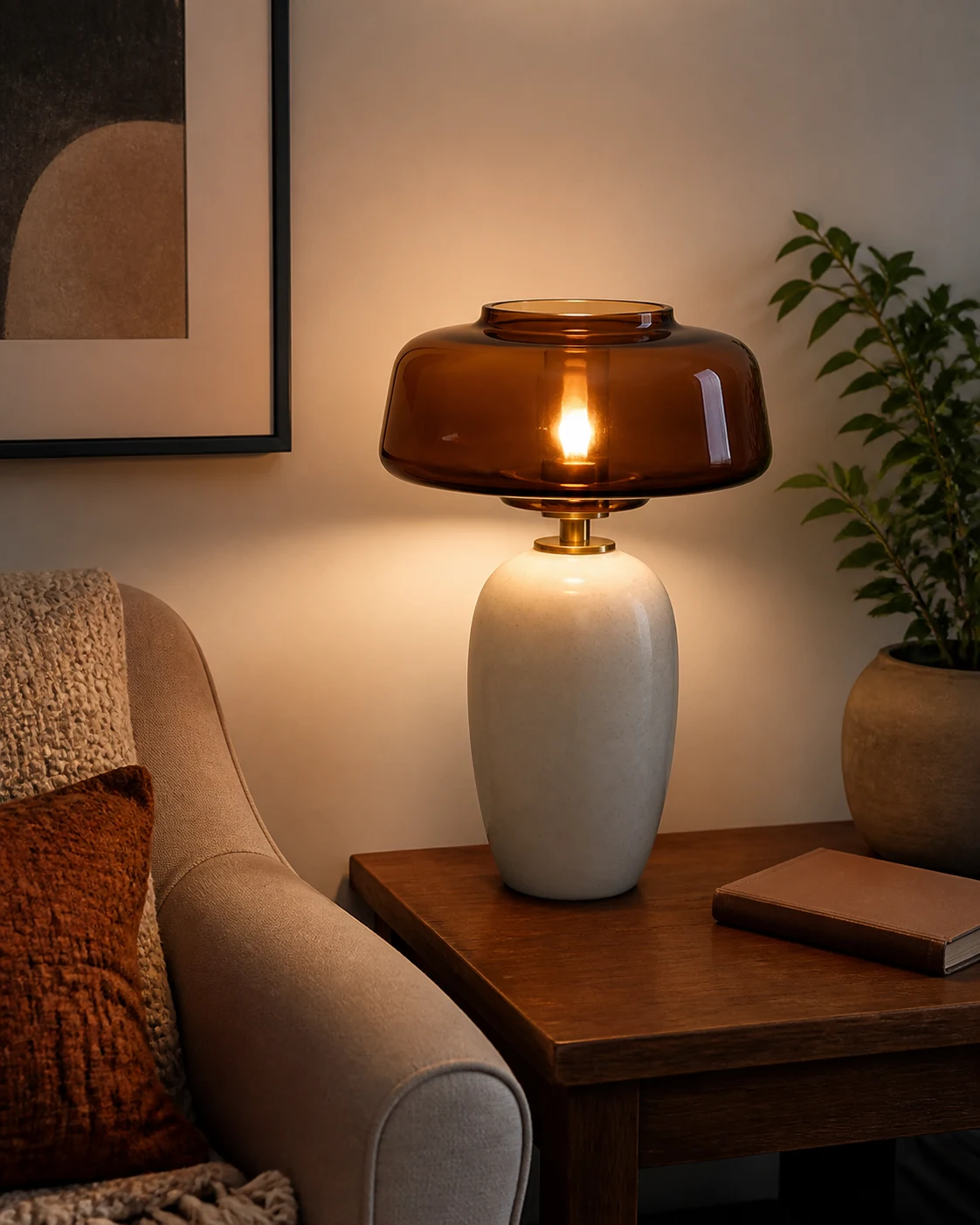
For a table lamp, start with the widest point of the base and the height from the table to the socket or fitter. The shade should cover the bright hardware from normal seated viewing angles without extending so far that it dominates the base. A brown fabric shade can add a quieter, opaque layer; a brown or amber glass shade can keep the base and bulb more visible.
Brown shades for pendants and chandeliers
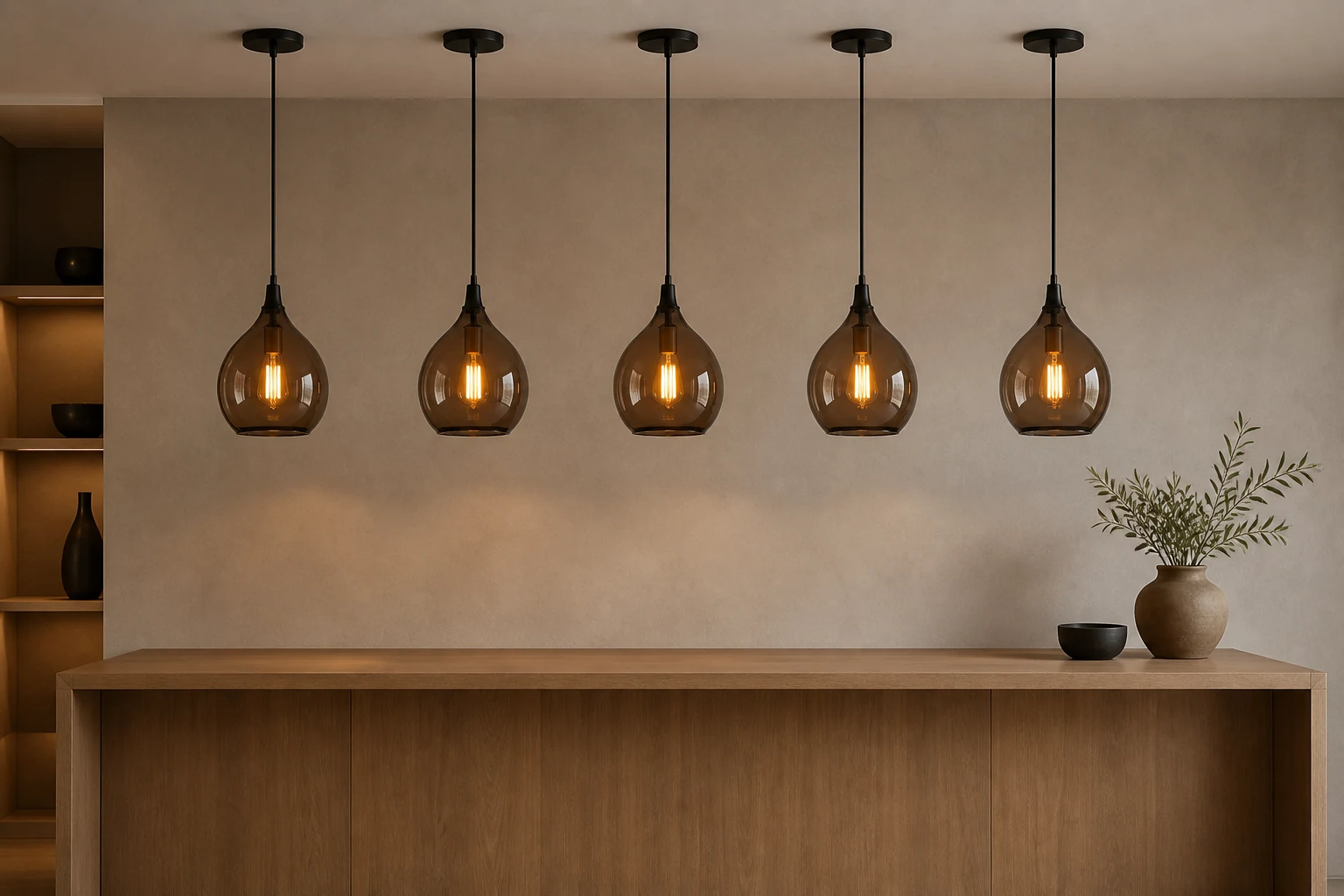
Pendant and chandelier shades should be specified by the suspension and holder, not only by the outside diameter. A brown glass shade may be supported by a threaded neck, a gallery, a slip cup, a carrier, or another fixture-specific interface. For a matched chandelier set, one approved lighted sample is not enough; the buyer should approve the color and profile variation across the full set.
How do you measure a brown shade before ordering?
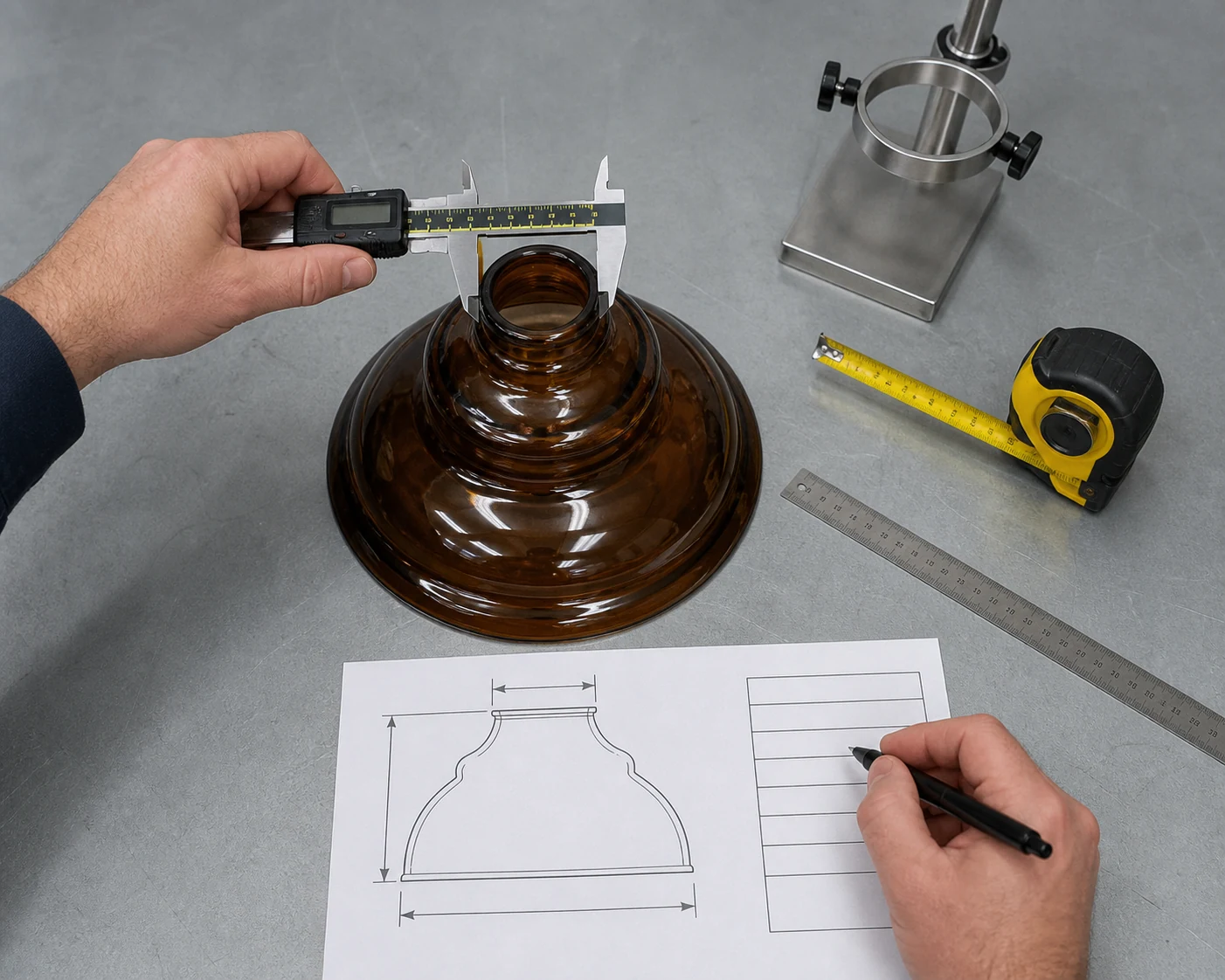
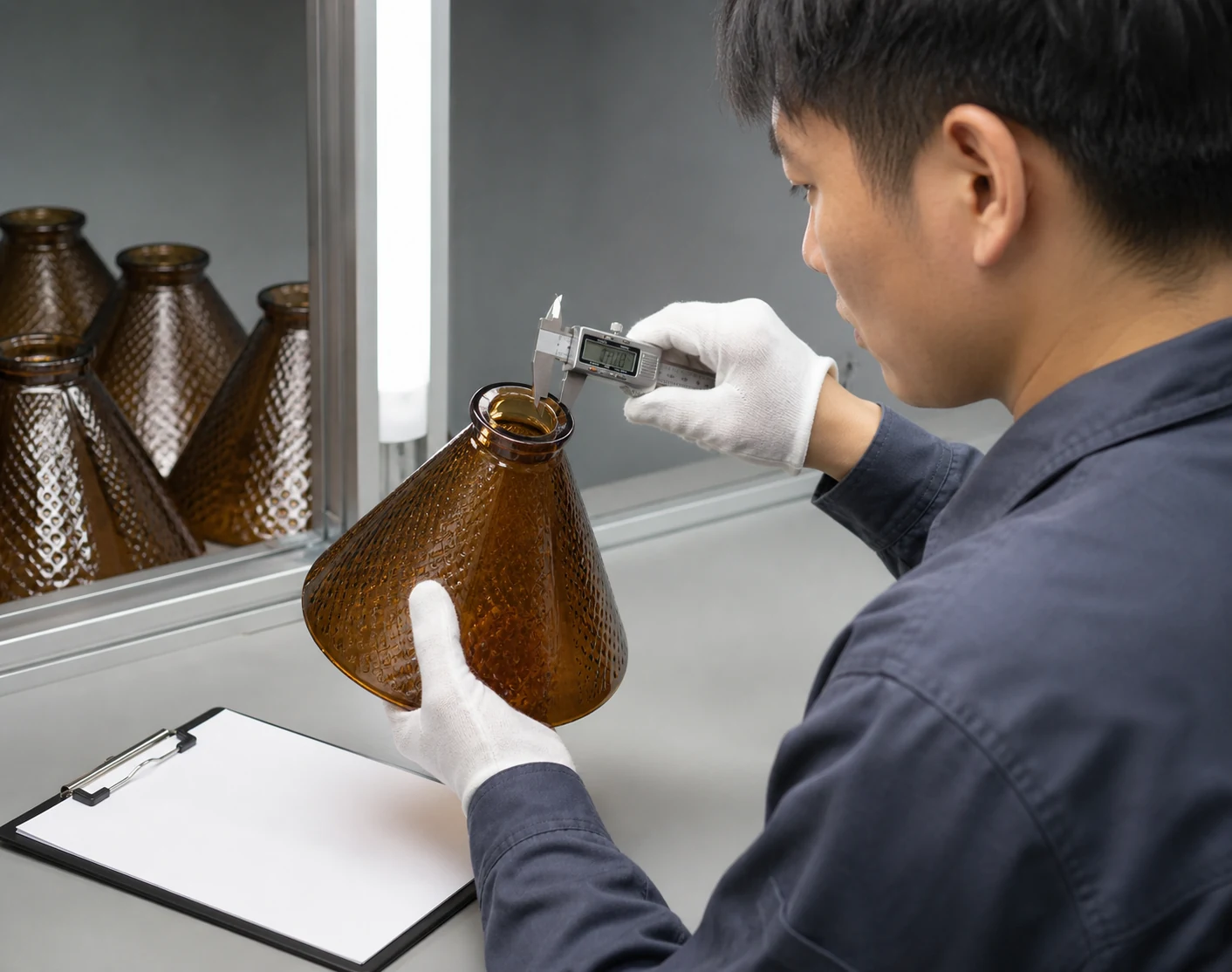
Measure the existing shade and the fixture separately. Use a tape measure for the overall profile and calipers for a critical opening. Record millimeters or inches consistently, and photograph the measurement with the fixture or old shade visible so the supplier can connect each number to the physical feature.
- Record the application. Note table lamp, pendant, sconce, chandelier, ceiling fixture, hospitality room, or replacement program.
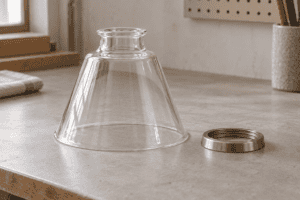
- Measure the fitter opening. Record the inner diameter, outer collar, neck, thread, ring, clip, carrier, or retaining surface that actually holds the shade.
- Record the profile. Measure top diameter or opening, bottom diameter, maximum diameter, vertical height, and slant height for tapered forms.
- Check the hardware. Photograph the socket, harp, finial, gallery, bracket, carrier, gasket, and any set screw or retaining ring.
- Check the bulb envelope. Measure bulb width and height, then confirm clearance from the shade wall, neck, rim, and any metal hardware.
- Record the finish reference. Add the brown sample, color code, reference shade, desired gloss, texture, transparency, and lighted comparison.
For a general measurement system, use the JX lamp shade size chart and calculator. For the attachment system, use the JX lampshade fitting standards guide. This brown-shade article keeps the color and light decision separate so those existing owners remain clear and useful.
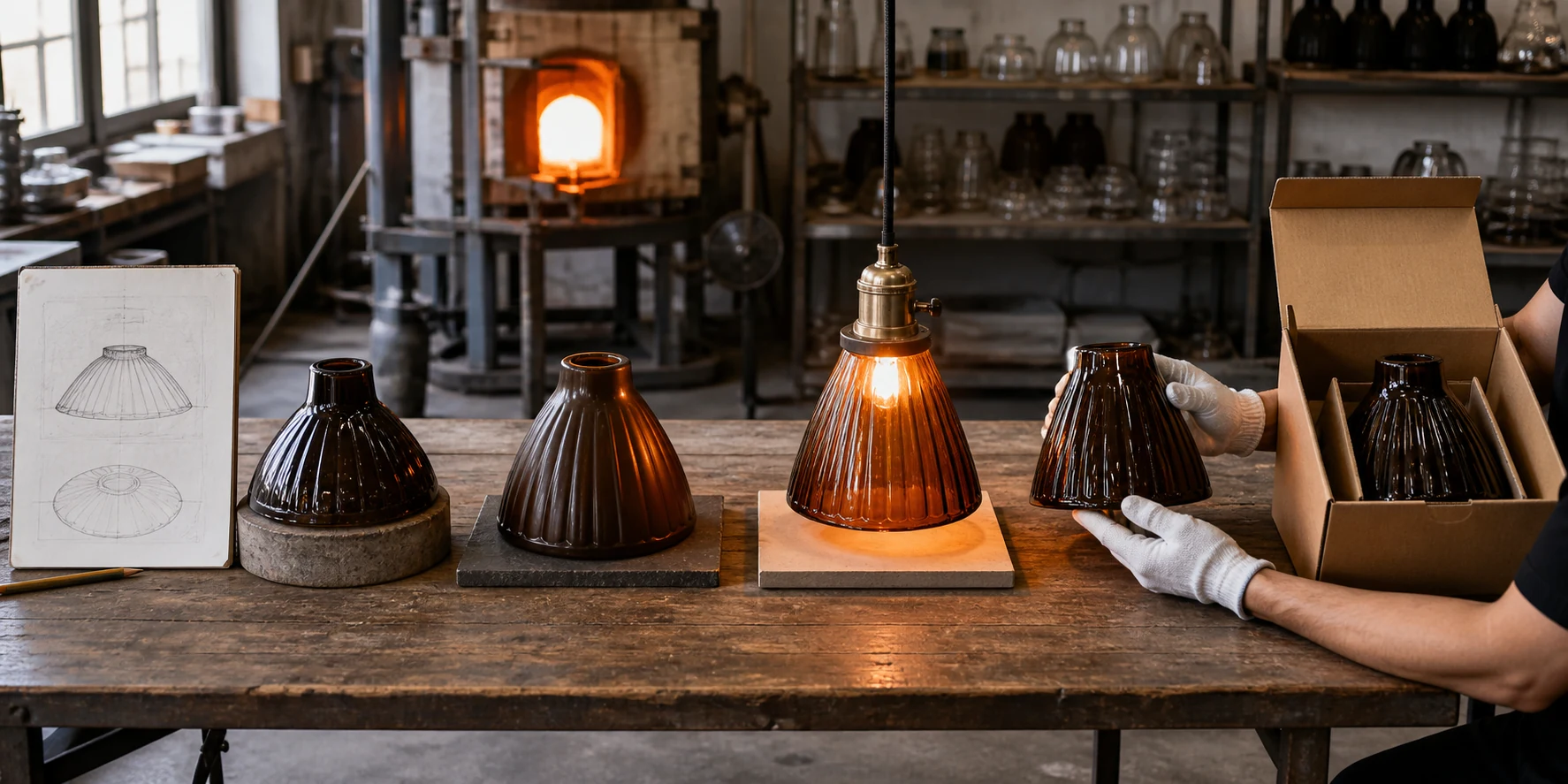
How should a buyer specify a custom brown glass shade?
A supplier-ready request describes the shade as a complete product interface and appearance package. “Brown glass lampshade” is a direction, not a production specification. The following fields reduce avoidable rework and make a repeat order easier to control.
| Specification block | Information to send | Approval evidence |
|---|---|---|
| Application and interface | Fixture type, holder photo, fitter or opening, bulb, assembly direction, and service method | Marked-up photo or drawing showing the seating surface and clearance |
| Geometry | Top, bottom, maximum width, height, neck, rim, wall thickness target, holes, notches, and tolerance | Dimensioned drawing plus one physical sample if the original is available |
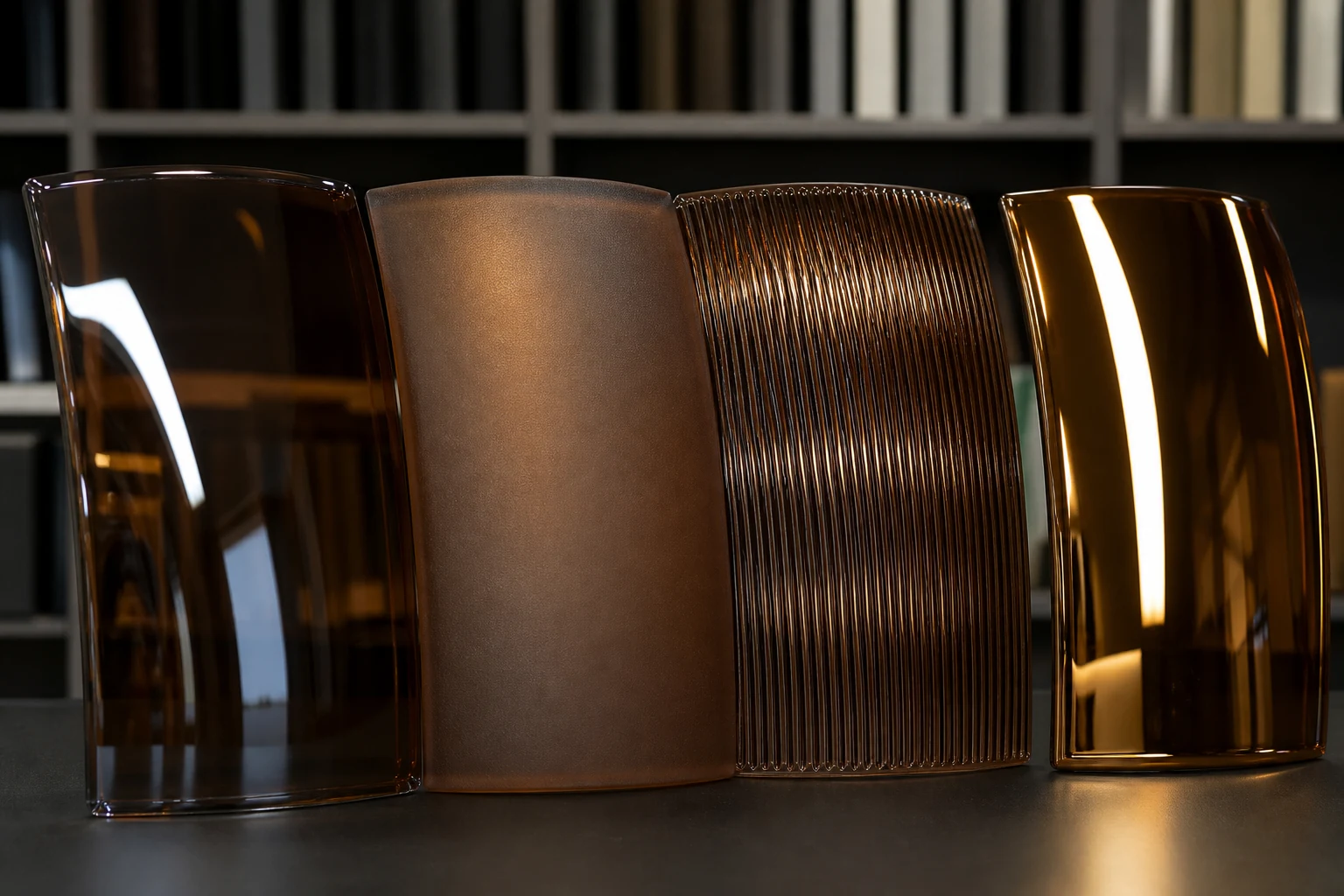
| Brown finish | Clear brown, amber, smoke, bronze, cased, frosted, coated, painted, ribbed, seeded, or another defined appearance | Unlit and lighted sample under the specified bulb and background |
| Process and quality | Hand-blown, pressed, centrifuge, hot-formed, electroplated, edge treatment, seam expectation, and inspection points | Approved sample, inspection photos, dimensional record, and agreed cosmetic limits |
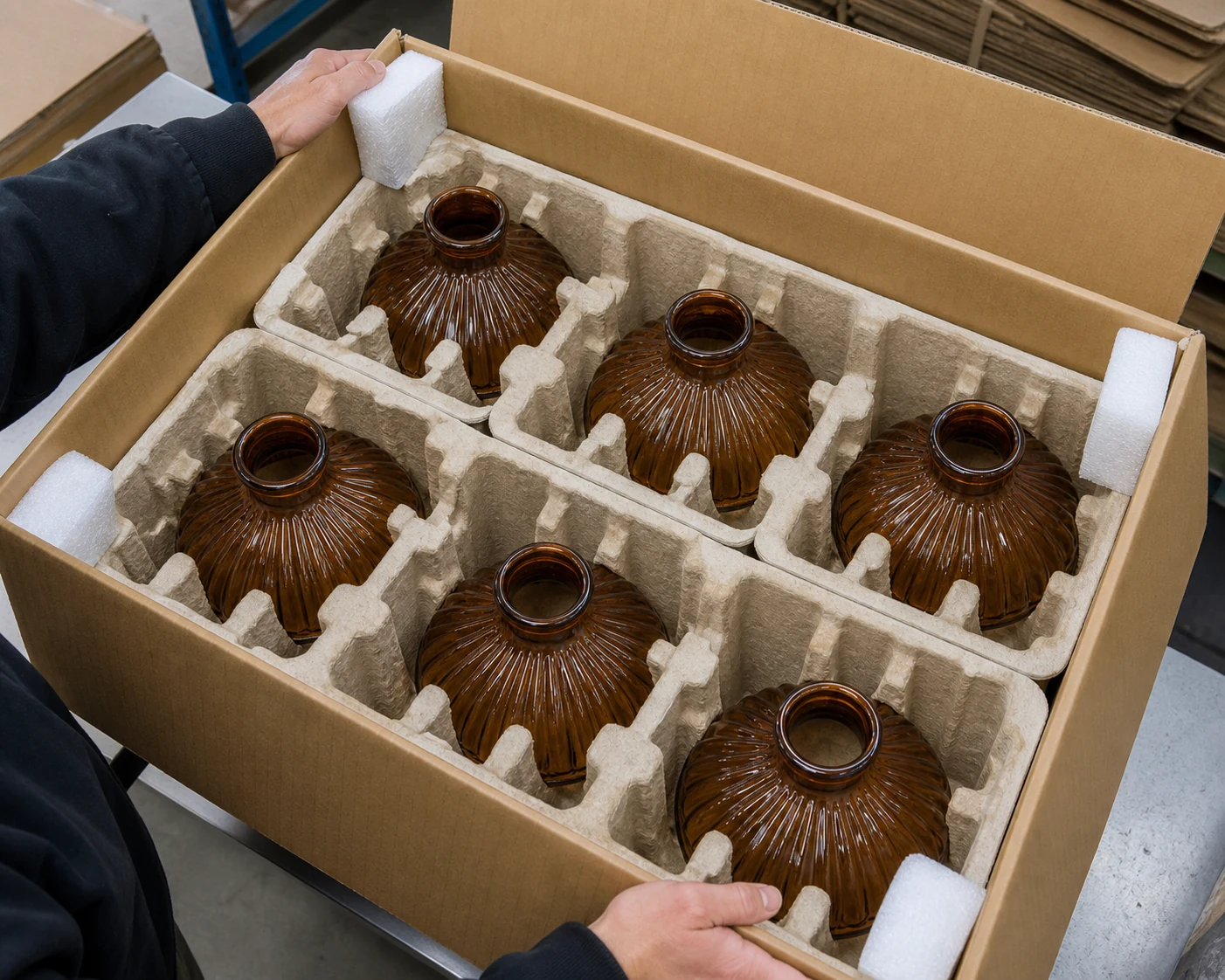
| Order and logistics | Sample quantity, pilot or bulk quantity, matched-set count, carton plan, separators, labels, destination, and delivery requirement | Pack-out sample, carton marking, and written order specification |
JX’s OEM glass lamp shades page is the right internal route when the request belongs to a lighting collection, replacement SKU, or recurring brand program. For a structured first inquiry, use the custom lampshade RFQ builder and attach the old shade or fixture photos.
How do you approve brown shade color and surface quality?
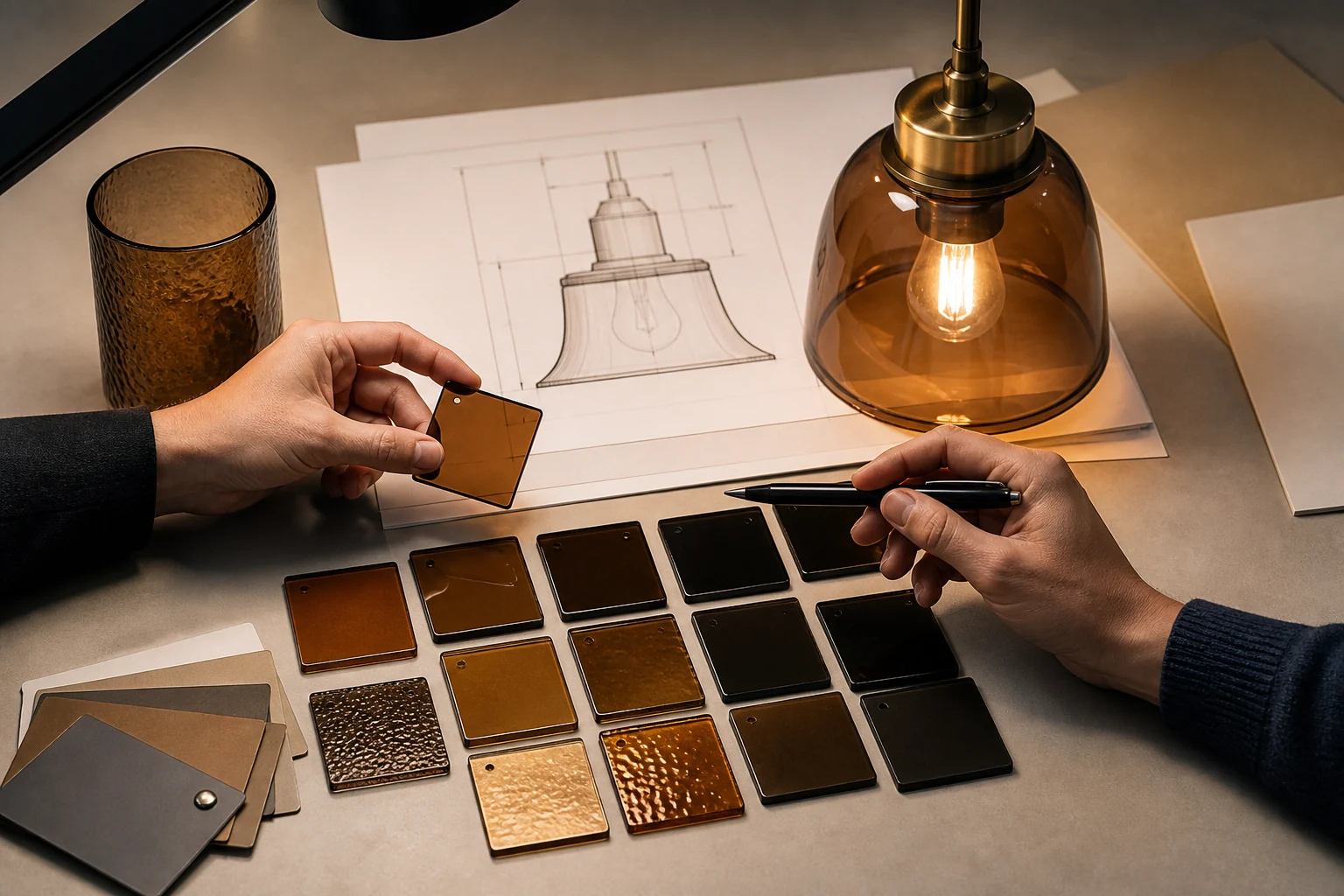
Approve color in the same context in which the shade will be used. A brown sample can appear different against a white wall, a wood base, a brass holder, or a dark background. The buyer should review the sample both switched off and illuminated, from the normal viewing distance and from the side angles that matter in the application.
Color screens are not production standards. Even glass swatch systems warn that displayed colors are reference interpretations and can vary by screen. Use a physical sample, an agreed color chip, or a controlled comparison photograph with the light source and background documented. If a matched set is required, review multiple pieces rather than approving one hero sample.
Color approval checks
- Compare the unlit shade against the approved reference under consistent neutral room light.
- Switch on the specified bulb and record CCT, CRI, lumen output, dimming state, and distance from the shade.
- Check the front, back, edge, fitter area, and any gradient or coating transition.
- Look for visible bubbles, stones, cracks, sharp edges, coating marks, uneven frosting, and unacceptable color drift.
- For a set, compare pieces side by side and define what variation is acceptable before mass production.
What maintenance and heat checks apply to brown shades?
Maintenance depends on the material and finish. A plain glass shade is usually easier to wipe and inspect than fabric, but a coated or electroplated glass surface may require gentler cleaning than uncoated glass. Brown fabric can show dust and edge wear differently from pale fabric. Woven materials may retain dust in the texture.
Before installation, follow the fixture maker’s instructions for bulb type, maximum wattage or electrical input, ventilation, and enclosed use. The DOE notes that fully enclosed fixtures can trap heat and raise the operating temperature of some LED products. A brown shade does not remove that requirement. For a custom glass design, check the bulb envelope, neck clearance, ventilation path, and fixture temperature with the responsible lighting engineer when the application is enclosed or high-use.
For routine care, turn off power, allow the shade and bulb to cool, remove the shade only if the fixture instructions allow it, and use a cleaning method compatible with the surface finish. Do not use a strong solvent on a coating just because the shade is glass. Ask for a cleaning recommendation when the brown effect is painted, plated, laminated, or otherwise surface-applied.
What mistakes cause brown shade returns?
Most avoidable returns are specification failures, not color preferences. The item may look brown in a product thumbnail but still be the wrong shape, fitter, opening, or light behavior for the fixture.
- Using brown as the whole specification. Add material, finish, dimensions, fitter, bulb, and application.
- Confusing shade color with bulb CCT. Specify both if the lighted result matters.
- Approving from a screen. A color swatch or rendered product image cannot define production color alone.
- Measuring the outside but not the opening. The fitter or retaining interface is often the dimension that decides compatibility.
- Changing fabric to glass without checking the holder. Weight, balance, edge, and heat clearance may change.
- Ignoring matched-set tolerance. One approved sample does not automatically define acceptable variation across a chandelier or hospitality order.
- Leaving packaging until the end. Brown glass shades still need separators, edge protection, carton strength, labels, and a pack-out review.
Frequently asked questions
Do brown lamp shades make a room darker?
They can reduce or redirect visible light, but the result depends on opacity, lining, glass transmission, shape, openings, and the bulb. A transparent amber shade may preserve more side glow than a dark lined fabric shade. Compare the lighted sample with the actual bulb instead of judging the unlit brown color alone.
Are brown light shades the same as amber glass shades?
Not necessarily. Retailers may group amber, bronze, tobacco, smoke, and brown under nearby color filters, while suppliers may use different formulas or coatings for each name. Treat amber as one possible brown-toned direction and request a physical sample or approved color reference for the exact shade.
Which material is easiest to clean in a brown lamp shade?
Plain glass is usually easier to wipe than fabric or open-weave material, but a coated or electroplated glass finish may need a specific cleaning method. Follow the fixture and finish instructions, cool the shade before handling it, and confirm solvent compatibility before using a cleaner on a surface-applied brown finish.
How do I measure a brown glass lamp shade for replacement?
Record the fitter or opening first, then the top opening, bottom diameter, maximum width, vertical height, slant height if tapered, bulb clearance, and retaining method. Photograph the old shade and holder beside a ruler or caliper. The outside color and diameter alone are not enough to match a replacement.
Can a manufacturer make a custom brown glass lamp shade?
A manufacturer can review a custom brown or amber glass direction when the request includes the fixture application, drawing or old sample, fitter, dimensions, finish reference, quantity, and lighted result. The process, color consistency, tolerance, MOQ, lead time, and packing must be confirmed for the specific project rather than assumed from a general color name.
What should a lighting brand send for a brown shade quote?
Send the fixture photo, shade or fitter sample, dimensioned drawing, bulb and electrical context, desired brown finish, unlit and lighted reference, quantity, matched-set requirement, inspection points, packaging expectations, destination, and target timing. If the design is not final, send the closest sample and identify which dimensions and visual properties are still open.
Need a brown or amber glass shade reviewed?
Send the old shade, fixture photo, fitter or opening measurement, profile dimensions, finish reference, quantity, and delivery market through the JX contact page. For a structured request, use the custom lampshade RFQ builder.
Related guides
Review glass shade applications, finishes, replacement routes, and custom supply.
Lamp Shade Sizes and Size Chart
Check the wider measurement system before finalizing a brown shade profile.
Identify the holder and attachment interface that controls compatibility.
OEM Glass Lamp Shades for Lighting Brands
Move from a color direction to a repeatable lighting collection or replacement SKU.
Organize dimensions, finish, quantity, and project notes for a first review.
Compare period-inspired color, texture, shape, and replacement considerations.