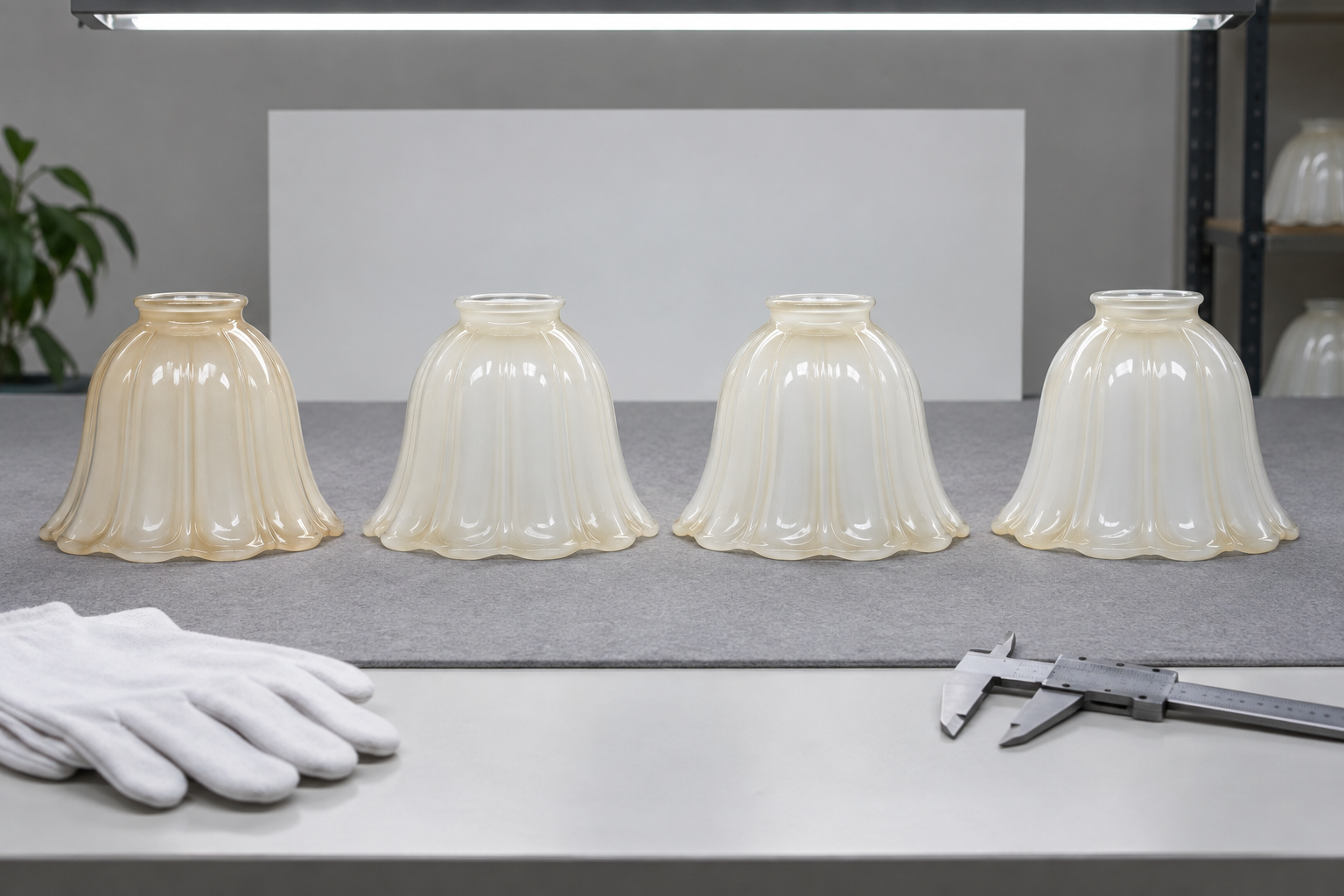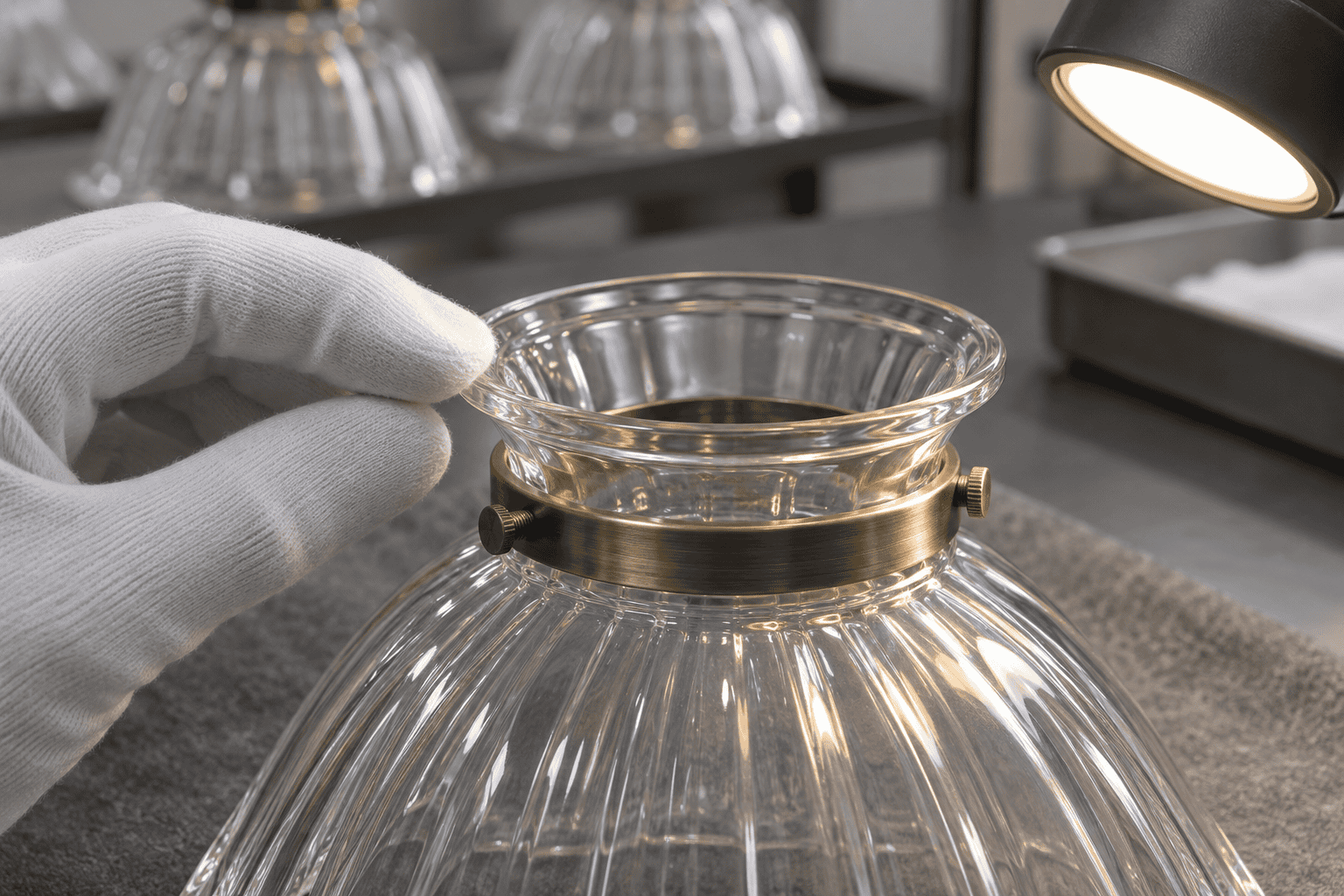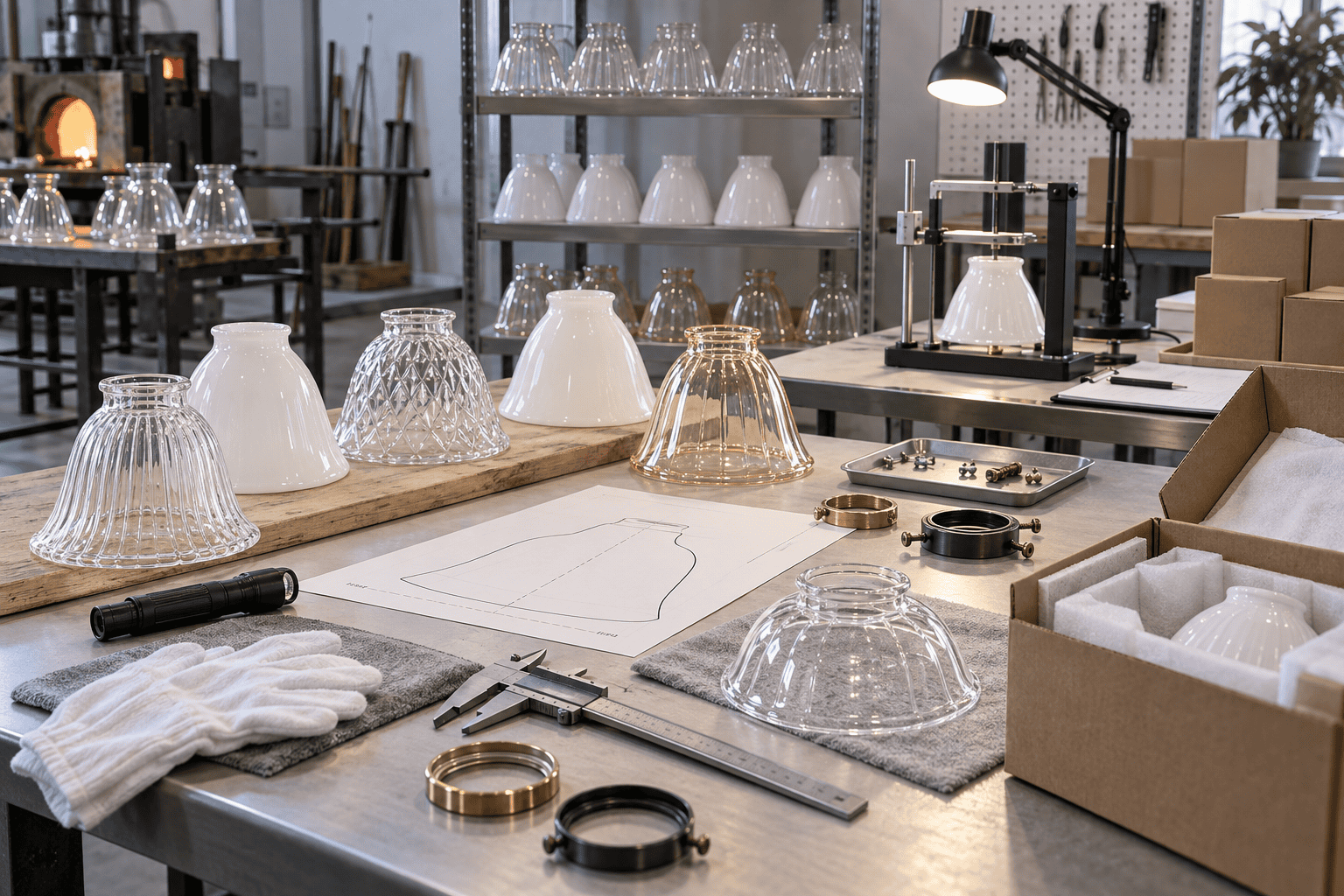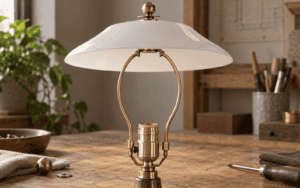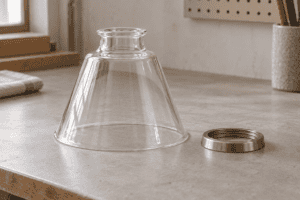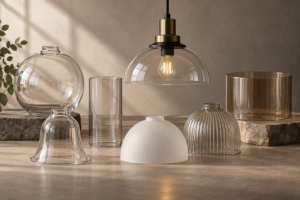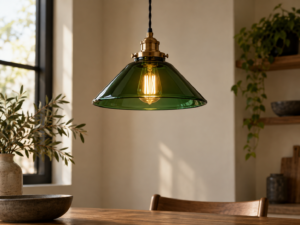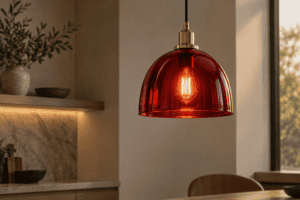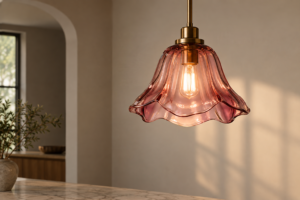
Lamp shade types are best classified on four axes: attachment or fitter, shape, material or construction, and application. For glass shades, add a fifth check: how the material changes transmission, glare and the visible profile when the fixture is lit.
What Are Lamp Shade Types?
The phrase lamp shade types can describe several different decisions at once. A retailer may be talking about a drum or empire shape. A lighting engineer may mean spider, uno or clip-on attachment. A buyer replacing a broken glass part may care most about the fitter opening and the way the shade sits on the fixture. All three are valid, but they are not the same classification.
The practical answer is to name a shade with a stack of descriptors rather than one label. For example, “opal glass, shallow dome, threaded neck, wall sconce shade” is more useful than “white lamp shade.” It tells a supplier what the part is made of, how it is shaped, how it attaches and where it will be used.
| Classification | What it describes | Why a buyer needs it |
|---|---|---|
| Fitter or attachment | The interface between shade and fixture | Prevents a part that looks right but cannot be mounted |
| Shape | The outside profile and opening relationship | Controls proportions, clearance and the visual spread of light |
| Material or construction | Glass, fabric, metal, ceramic, acrylic or a layered build | Changes weight, transmission, heat behavior and handling |
| Application | Table, desk, pendant, ceiling, wall or floor fixture | Sets viewing angle, support direction and clearance |
| Light behavior | Clear, diffused, colored, directional or glare-controlled output | Connects the shade to the actual job of the lamp |
Classify a Lamp Shade by Four Axes
Use the four primary axes in order. This sequence keeps a decorative preference from hiding a mechanical problem.
- Identify the attachment or fitter. Find the point that actually carries or retains the shade.
- Record the shape. Measure the widest area, height, openings and any taper or flare.
- Confirm material and construction. A clear blown glass globe, a pressed glass reflector and a fabric drum are different parts even when their diameters are similar.
- Define the application. The same shade can behave differently on a table lamp, pendant, wall sconce or floor lamp.
- Add the light job. Decide whether the fixture needs an open glow, soft diffusion, bulb concealment, directional control or a decorative color effect.
| Axis | Questions to ask | Example output |
|---|---|---|
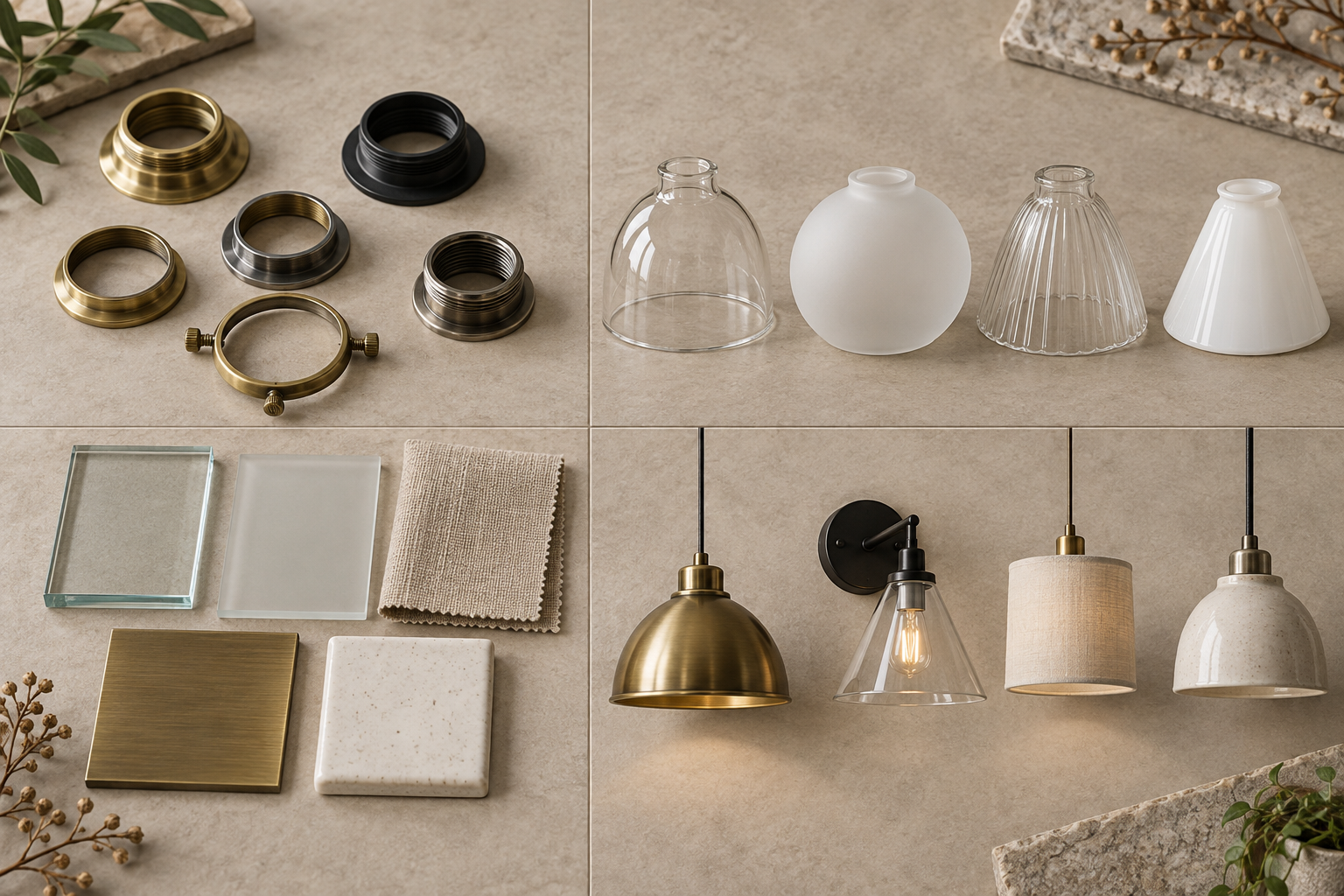
| Attachment | Does a ring, neck, gallery, clip, socket or screw hold the shade? | Spider fitter with a retaining ring |
| Shape | Is the profile drum, dome, globe, bell, cone, cylinder or reflector? | Shallow dome with a wide lower opening |
| Material | Is the body glass, fabric, metal, ceramic or polymer? | Pressed glass with a satin surface |
| Application | Where is the fixture installed and viewed from? | Pendant above a hospitality counter |
| Light job | Should the source be visible, softened or hidden? | Soft ambient glow with limited glare |
The lampshade shapes glossary is useful for naming profiles. The lamp shade fitter compatibility guide is the better starting point when the problem is attachment.
Attachment and Fitter Types
Fitter and attachment types
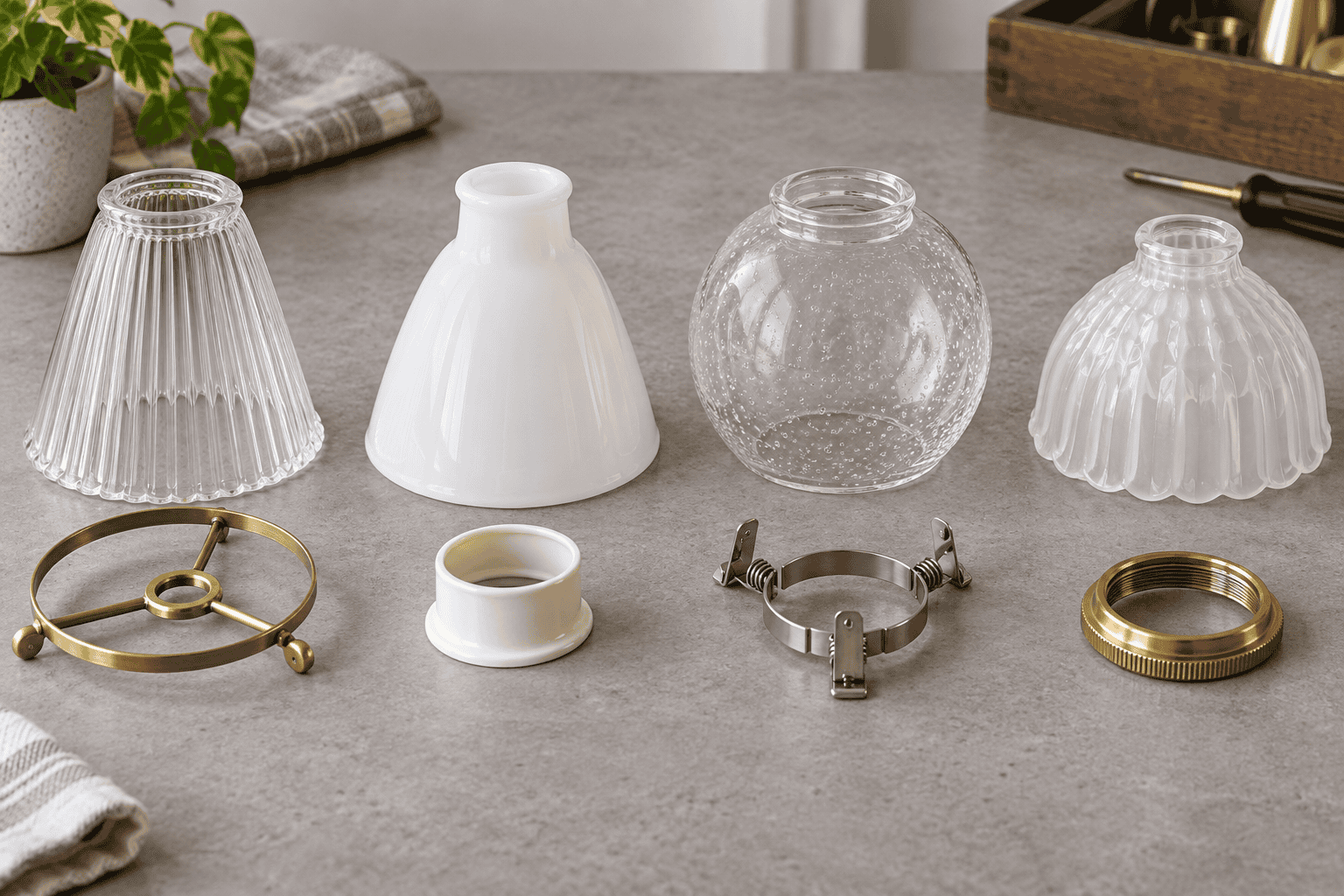
Fitter names describe how a shade meets the lamp hardware. A spider or gallery arrangement uses a support near the top of the shade and is often retained by a finial or ring. An uno arrangement uses a neck or socket relationship below or around the bulb. A clip-on shade uses spring clips at the bulb area. Specialty glass parts may use a threaded neck, a screw ring, a spring clip, a slot or a fixture-specific retaining frame.
| Attachment family | What to inspect | Common mistake |
|---|---|---|
| Spider or gallery | Seat diameter, ring position, support level and shade balance | Measuring the outside of the old ring instead of the seating opening |
| Uno or neck-mounted | Neck diameter, thread or shoulder, socket relationship and depth | Assuming every neck opening fits the same socket |
| Clip-on or spring retained | Clip span, bulb envelope, contact pressure and shade weight | Using a heavy glass part on hardware intended for a light fabric shade |
| Threaded or specialist | Thread pitch or ring, stop position, rotation and access for assembly | Sending only a front photograph without the rear or underside view |
Record the fitter separately from the outside profile. A bell shade and a globe shade can share a fitter, while two visually similar domes can use different support systems. If the part is for replacement, take a photograph looking directly at the opening and another showing the fixture hardware in place.
Shape Types
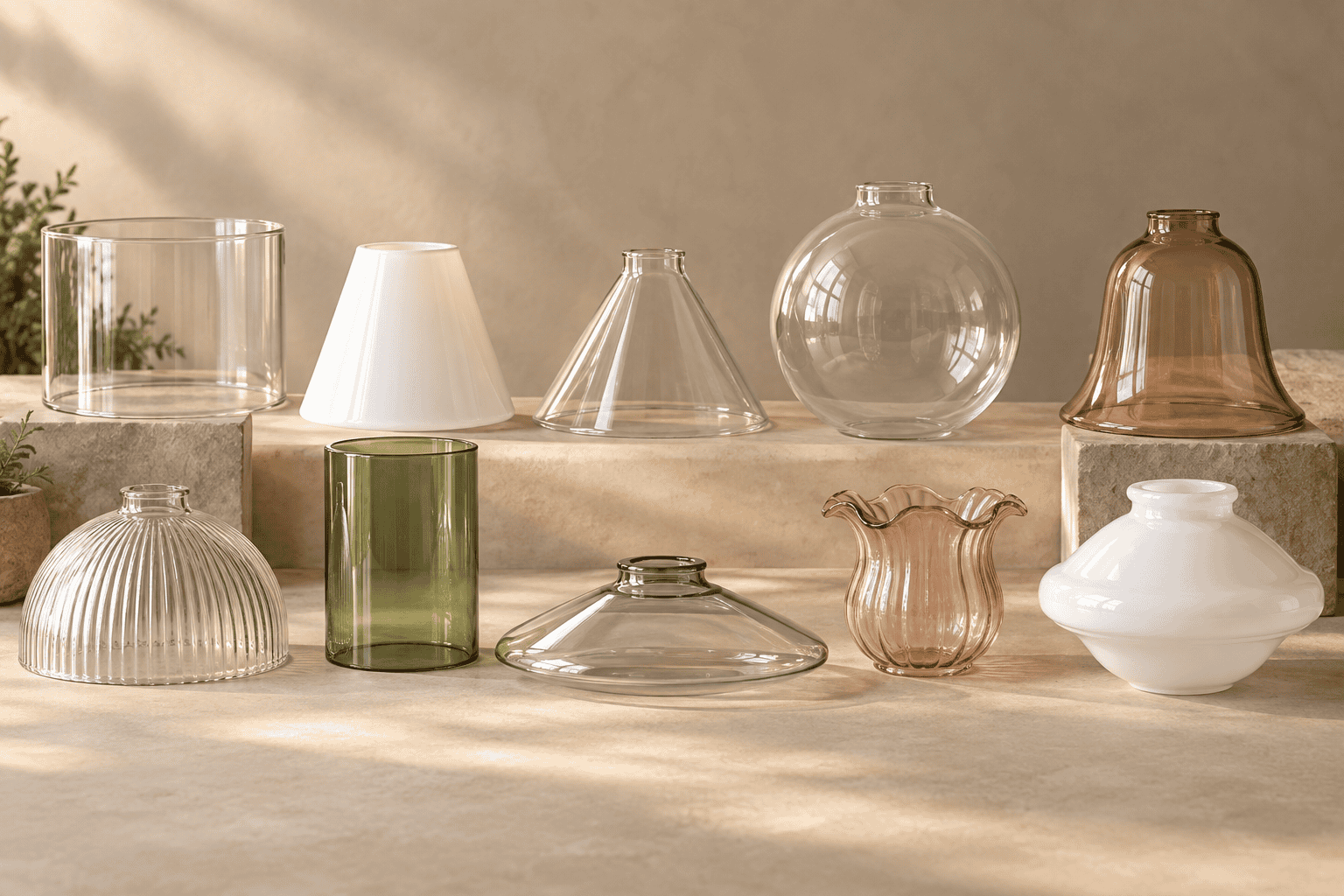
Shape is the most visible part of a lamp shade type, but it is not enough to identify a replacement. The profile controls how the shade spreads around the bulb, where the rim is seen and how much clearance the fixture needs.
| Shape family | Profile cue | Useful selection question |
|---|---|---|
| Drum | Sides stay close to vertical with similar top and bottom openings | Do you want an even cylindrical silhouette? |
| Empire | Lower opening is wider than the upper opening | Does the base need a traditional downward flare? |
| Cone or coolie | Strong taper with a broad lower edge | Should the shade push light down and keep the top visually light? |
| Globe | Rounded body with a continuous curved profile | Does the fixture need light distributed around the bulb? |
| Bell | Curved upper body with a flared lower edge | Will the lower rim sit clear of the table or hardware? |
| Dome | Compact curved cap with a broad lower opening | Is the upper opening or retaining ring the controlling dimension? |
| Cylinder | Long vertical walls and controlled openings | Does the fixture require a narrow, repeatable silhouette? |
| Dish or reflector | Shallow bowl or plate that directs light | Is glare control or downward throw more important than enclosure? |
| Tulip or flower | Curved or ruffled edge that changes the visible rim | Can the rim be protected during installation and transport? |
| Schoolhouse | Broad lower body with a neck or upper fitter | Does the fixture need a recognizable period profile and stable neck? |
The word “globe” does not specify the fitter, glass thickness or opening. The word “dome” does not specify whether the part is a ceiling diffuser, pendant cover or reflector. Use a side profile and a top or underside view when the shade must be reproduced.
Material and Construction Types
Material changes both the visual result and the practical requirements. Fabric may be light and easy to replace. Metal can direct or block light. Ceramic may carry a thick decorative body. Glass can be blown, pressed, slumped, cut, etched, frosted, cased, colored or combined with a surface treatment.
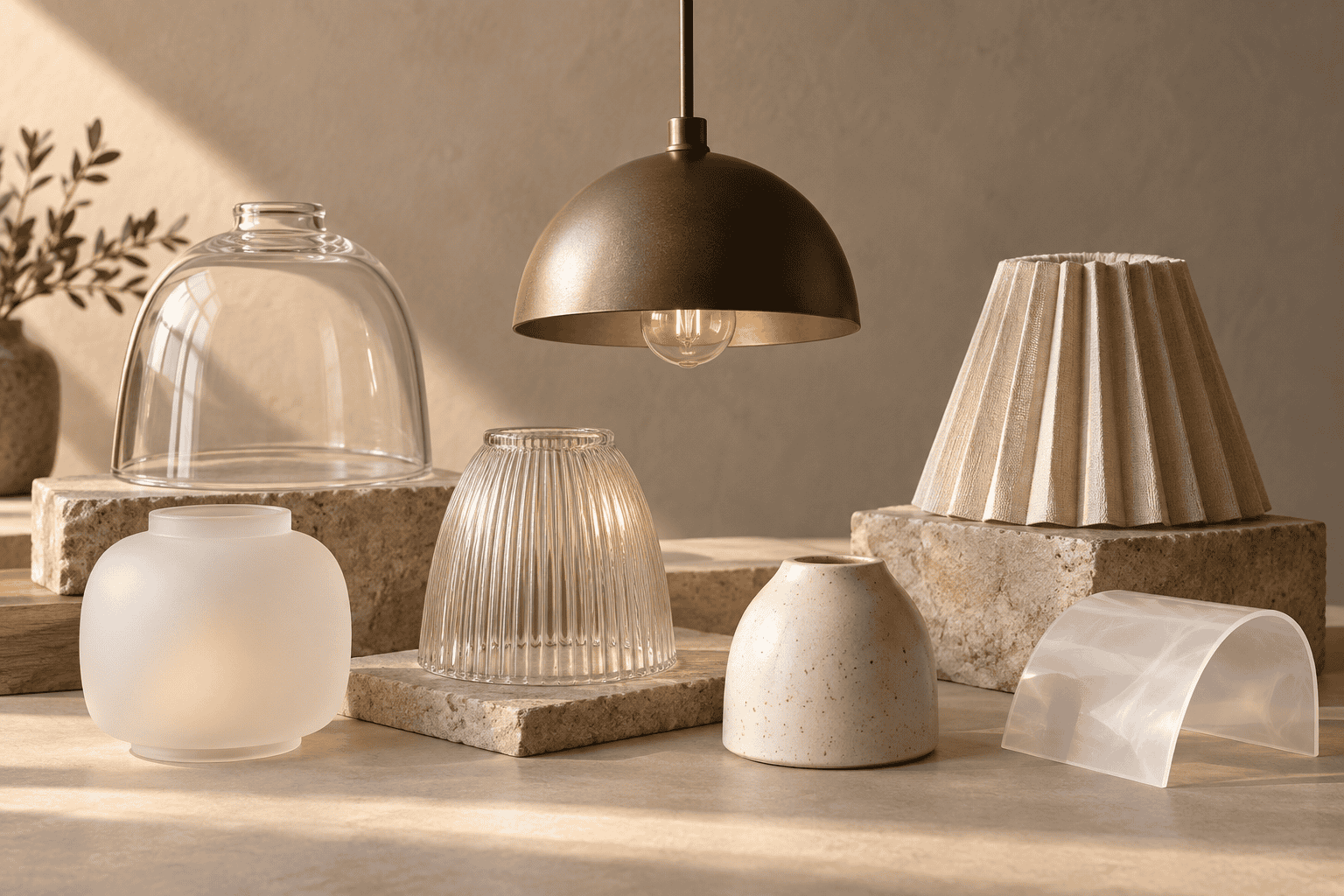
| Material or construction | Typical strength in a shade design | Buyer checks |
|---|---|---|
| Glass | Durable visual surface, optical effects and many forming routes | Fitter, rim condition, wall thickness, transmission and safe handling |
| Fabric or paper | Soft diffusion, low weight and easy style changes | Frame size, cleaning, heat clearance and replacement availability |
| Metal | Strong blocking or directional control and a crisp edge | Heat path, coating, grounding context and edge clearance |
| Ceramic or stoneware | Opaque body with a substantial decorative presence | Weight, support, heat exposure and opening geometry |
| Acrylic or polycarbonate | Low weight and impact-oriented design options | Temperature limits, yellowing, surface scratches and fire requirements |
| Layered or mixed build | Combines a structural frame with a diffuser or decorative skin | How each layer is retained, cleaned and replaced |
For a glass shade, “hand blown,” “pressed,” “frosted” or “opal” may describe different aspects of the same part. One shade can be pressed, opal and ribbed at the same time. State the forming route, body appearance and surface treatment as separate fields when the project is being quoted.
Application Types
Pendant and ceiling fixtures
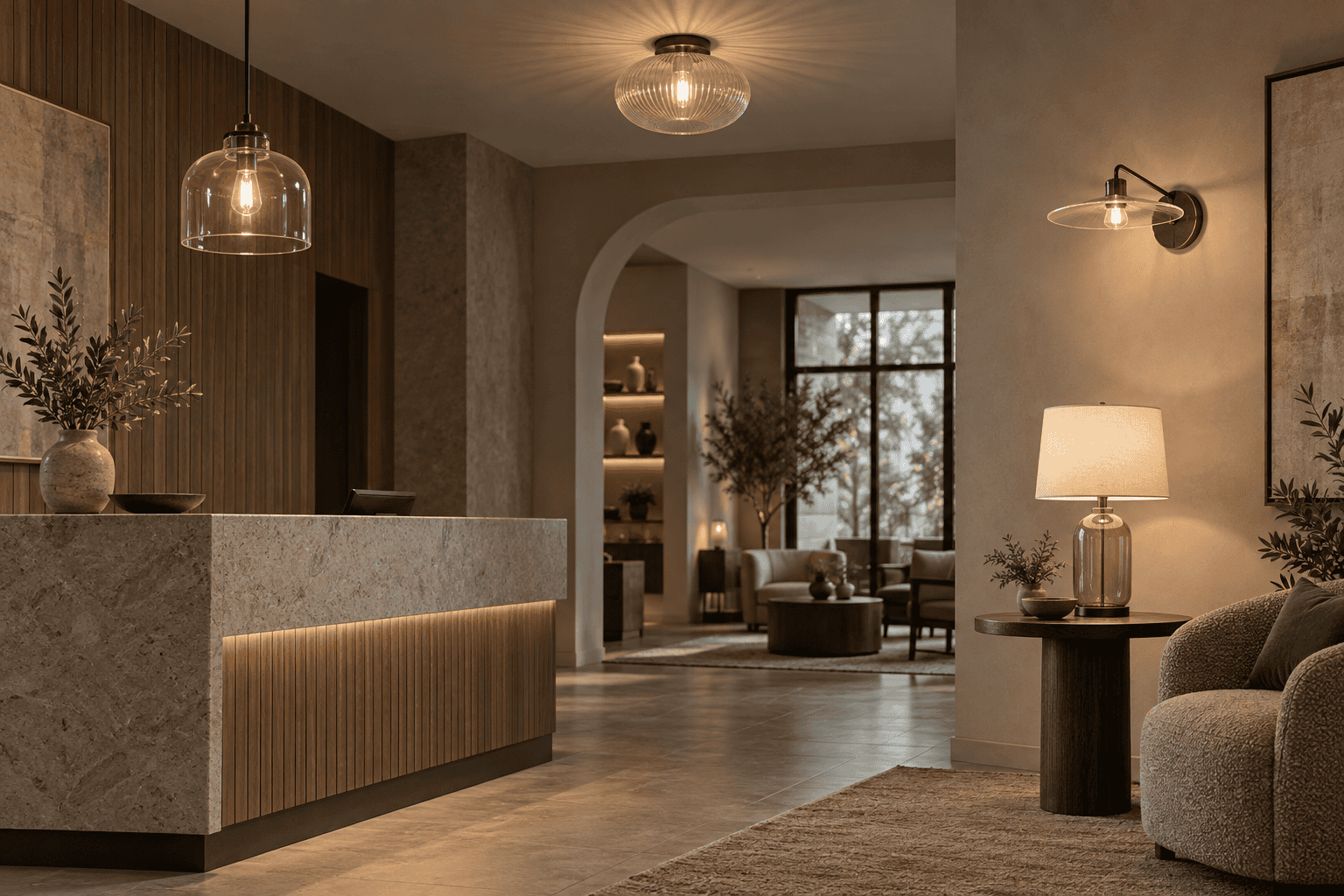
Pendant and ceiling shades are usually viewed from below and from the side. Record the hanging height, upper opening, retaining ring, bulb clearance and cleaning access. For a row of matching pendants, approve several pieces together because a small hue or profile difference is more visible when the shades are adjacent.
Table, desk, wall and floor fixtures
Table and desk lamps are seen at close range, so rim quality, tilt, glare and surface marks matter. Wall sconces often use shallow shades with a tight relationship to a backplate, while floor lamps need a stable support and a profile that remains balanced at standing height. A floor-lamp replacement should include the stem or harp relationship, not only the shade diameter.
| Application | Main decision | Useful evidence |
|---|---|---|
| Pendant | Lower opening, hanging height and repeated visual consistency | Side profile, underside view and installed mock-up |
| Ceiling light | Fitter, diffuser coverage and service access | Fixture drawing, opening measurement and lit test |
| Table or desk lamp | Base proportion, eye-level glare and stable seating | Front view, fitter close-up and reading-position test |
| Wall sconce | Backplate clearance, orientation and shallow depth | Rear hardware view and wall-distance measurement |
| Floor lamp | Stem or harp relationship, balance and viewing height | Full fixture photograph and shade-to-base proportion |
Glass Lamp Shade Types for B2B Buyers
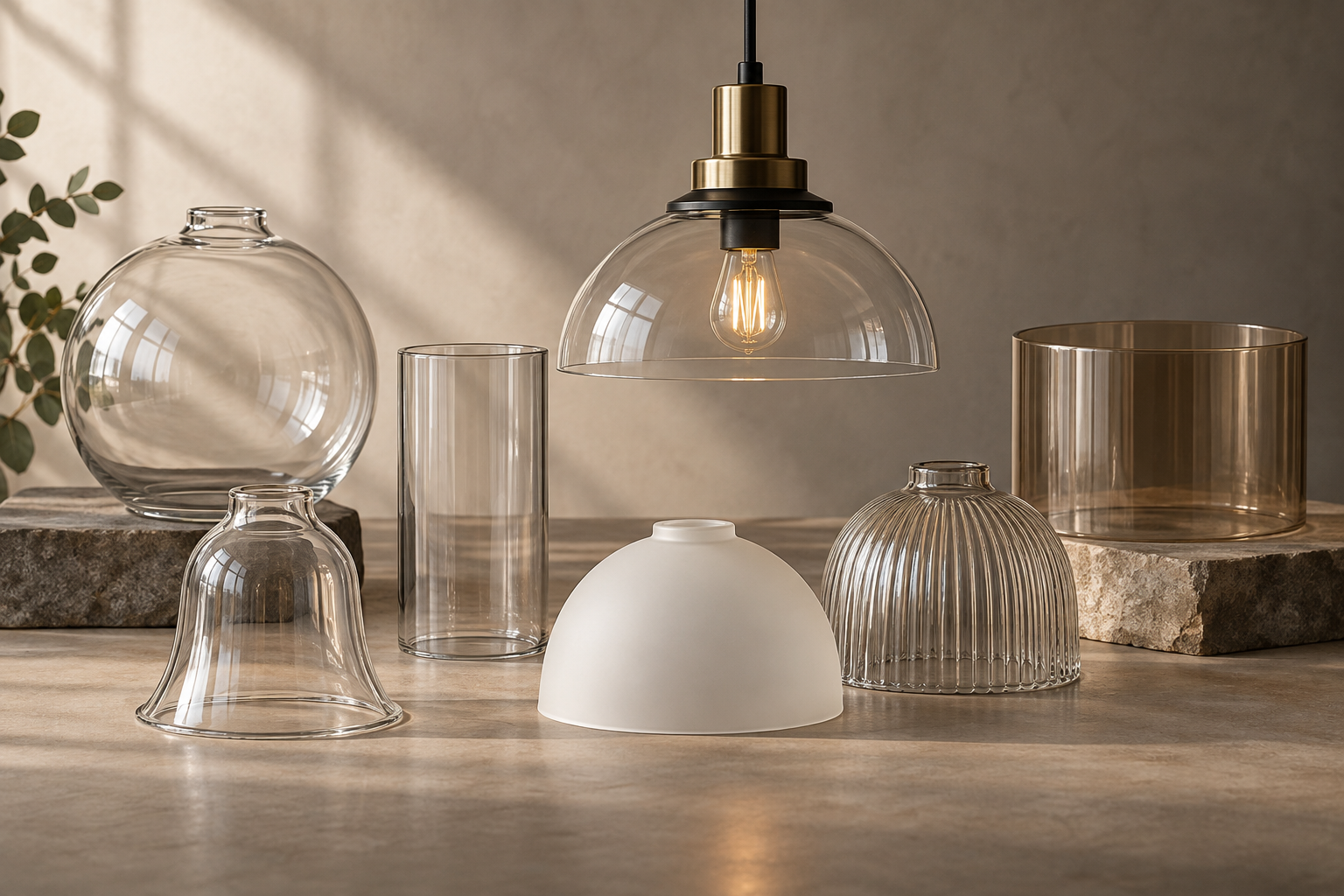
Glass shade types are often combinations rather than exclusive categories. A buyer might specify a clear blown globe, a pressed opal dome, a frosted ribbed cylinder or a colored cased bell. The useful description names the body, finish, profile and fitter together.
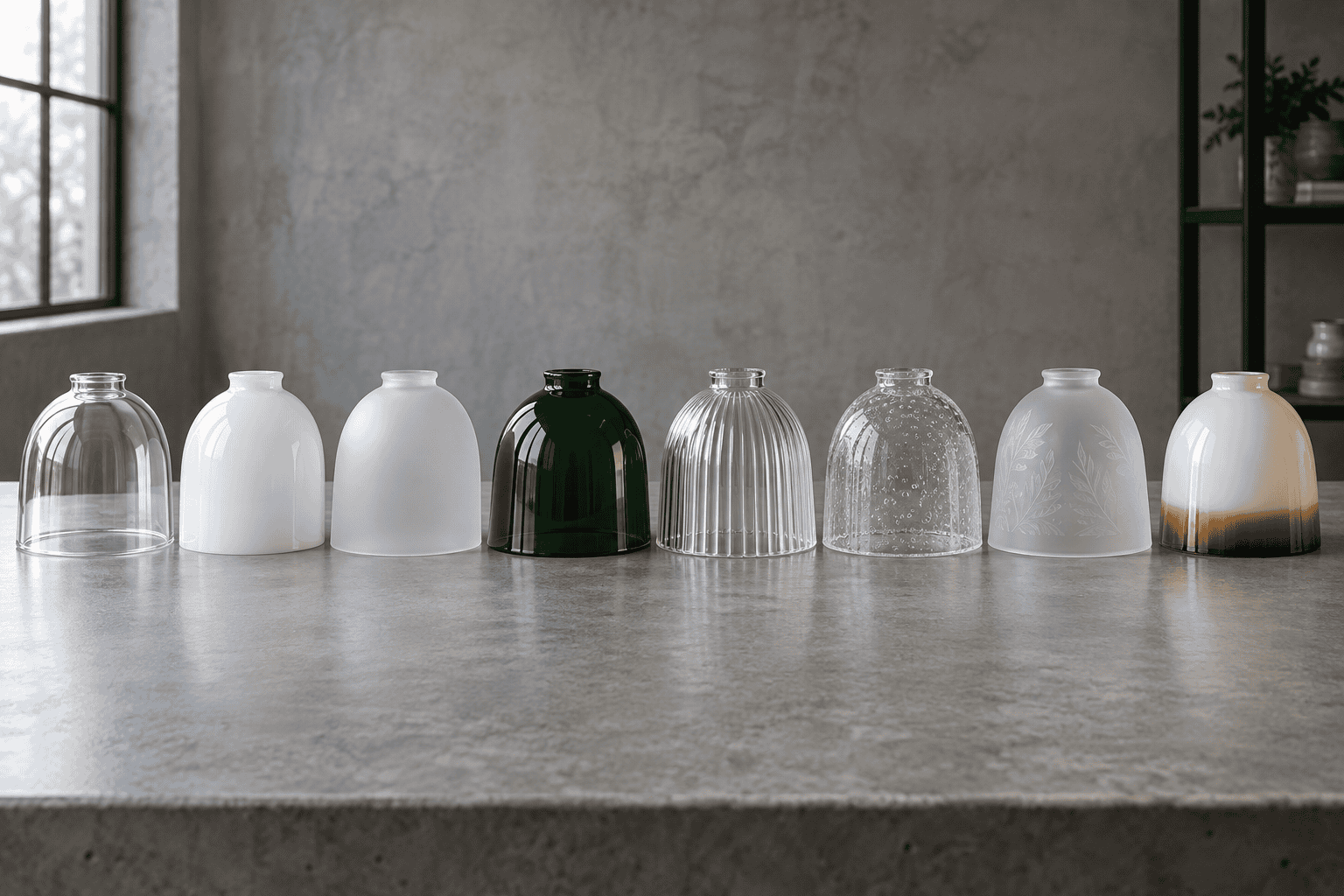
| Glass type or finish | What it changes visually | What to confirm before ordering |
|---|---|---|
| Clear glass | Shows the bulb and fixture hardware more directly | Glare, visible filament, rim polish and wall reflections |
| Opal or milk-white glass | Hides more of the source and creates a broad soft glow | Body opacity, surface route and lit brightness |
| Frosted or satin glass | Reduces direct reflection and softens the surface | Cleaning method, coating or acid treatment and transmission |
| Colored glass | Adds a hue to the shade and often to the transmitted light | Color reference, wall thickness, edge shift and sample condition |
| Ribbed or pressed glass | Creates repeated highlights, shadows or texture | Pattern registration, cleaning access and thickness consistency |
| Seeded or bubble glass | Adds local refraction and a handmade visual signal | Bubble distribution, acceptance limits and rim clarity |
| Etched or decorated glass | Adds a local pattern, mark or low-reflection area | Coverage, adhesion or surface durability and handling |
| Cased or layered glass | Builds depth or protects a colored layer inside clear glass | Layer alignment, rim transition and visible boundary |
Do not make a purchasing decision from the finish word alone. A frosted glass shade can be a surface-treated clear body, an opal body or a textured pressed part. Ask which property is structural and which is a finish, then approve an unlit and lit sample.
Choose a Type by the Light Job
The right lamp shade type depends on what the fixture must do. A decorative pendant may welcome a visible filament and a clear globe. A bedside lamp may need a softer surface and a lower glare angle. A hospitality fixture may require a repeatable profile and consistent transmission across a group.
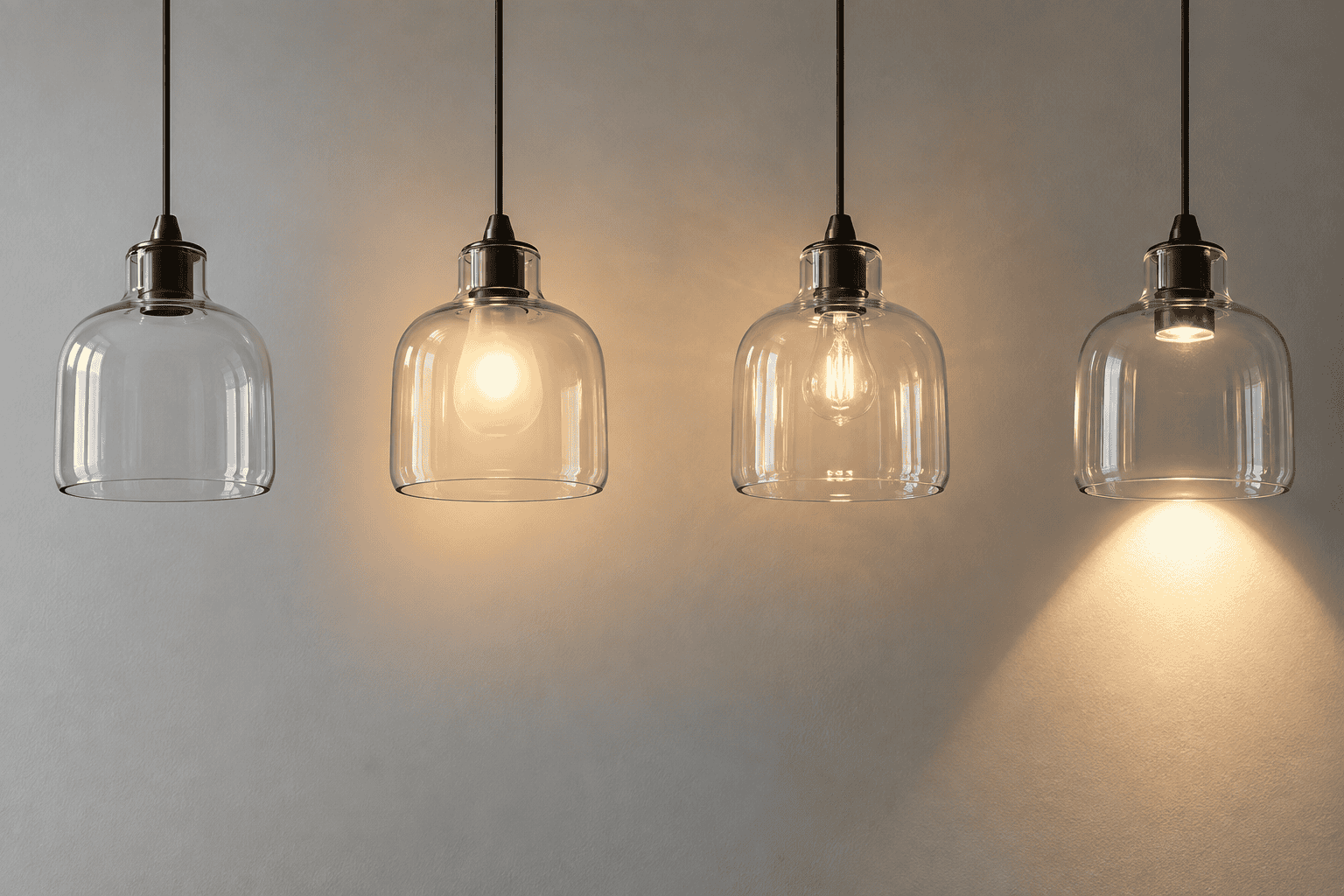
| Light job | Often useful starting types | Questions to settle |
|---|---|---|
| Ambient glow | Opal, frosted, satin or enclosed globe | Is the bulb hidden enough and is the room still bright enough? |
| Task or reading light | Clear, lightly diffused, reflector or open lower profile | Where should the light land and where should glare be blocked? |
| Decorative source | Clear, colored, seeded, ribbed or sculptural glass | Is the visual effect still useful when the fixture is switched off? |
| Glare control | Opal, frosted, deeper dome or shielded reflector | Does the shade control the view from the normal eye line? |
| Directional throw | Dish, cone, reflector or controlled lower opening | Is the intended beam shape compatible with the bulb and fixture? |
| Group consistency | Pressed or repeatable profiles with a retained sample | What variation is acceptable across the installed set? |
The glass lampshade light diffusion reference can support a more detailed optical review. It should complement, not replace, a test with the actual LED and fixture geometry.
Match the Type to Fixture Geometry and Replacement
Geometry is where many shade selections fail. The outside diameter may look correct while the fitter, seating depth, retaining ring or bulb clearance is wrong. Treat a replacement as a mechanical match with a visual and optical target attached.
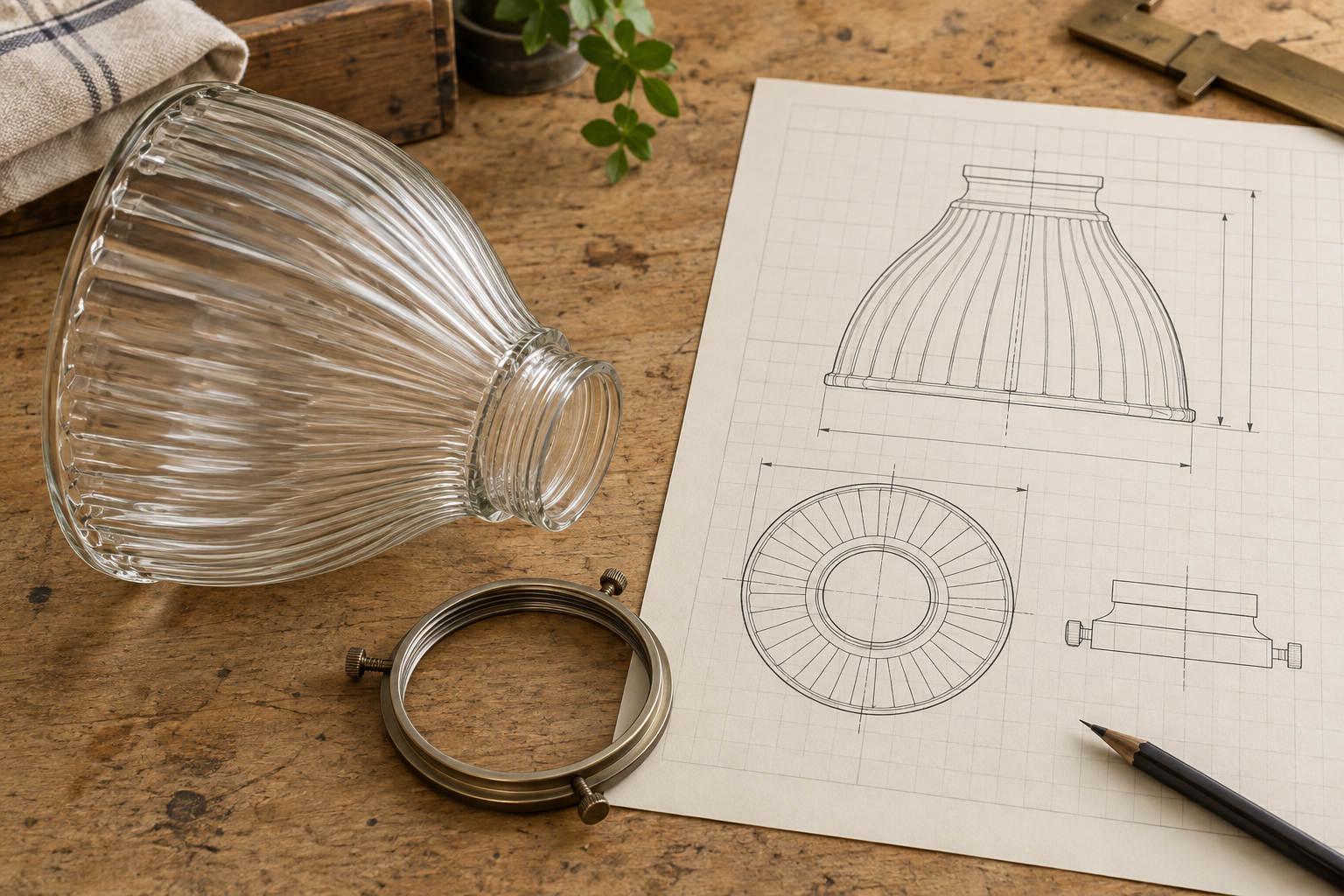
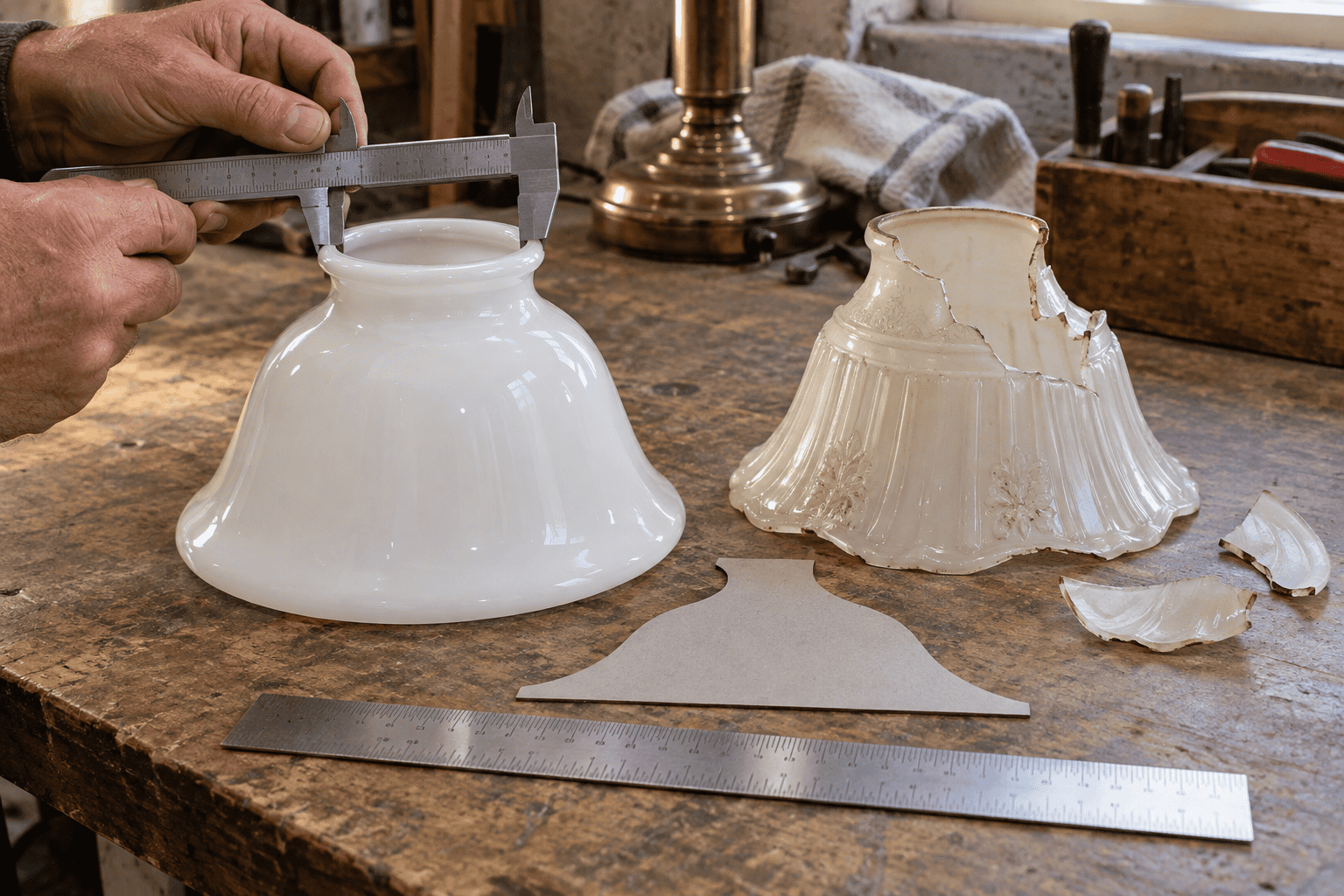
Use this sequence:
- Photograph the complete fixture and the shade from the side, top and underside.
- Identify the part that carries the shade: gallery, neck, ring, thread, clip or frame.
- Measure the inside diameter or profile at the actual seating point.
- Record overall height, maximum diameter, top opening, bottom opening and any flare.
- Check bulb clearance, retaining hardware, installation direction and rotation.
- Describe the visual target separately: clear, opal, frosted, colored, ribbed, etched or seeded.
- Compare the sample unlit and illuminated under the intended light source.
The replacement glass lamp shade measurement guide covers the measurement logic in more detail. If the original is broken, include a tracing or a dimensioned drawing because a damaged rim can make an outside measurement misleading.
What Should a Buyer Compare Before Ordering?
Use a comparison sheet that keeps visual, mechanical and commercial fields together. This prevents a supplier from quoting a shape that matches the catalogue photograph but misses the installed fixture.
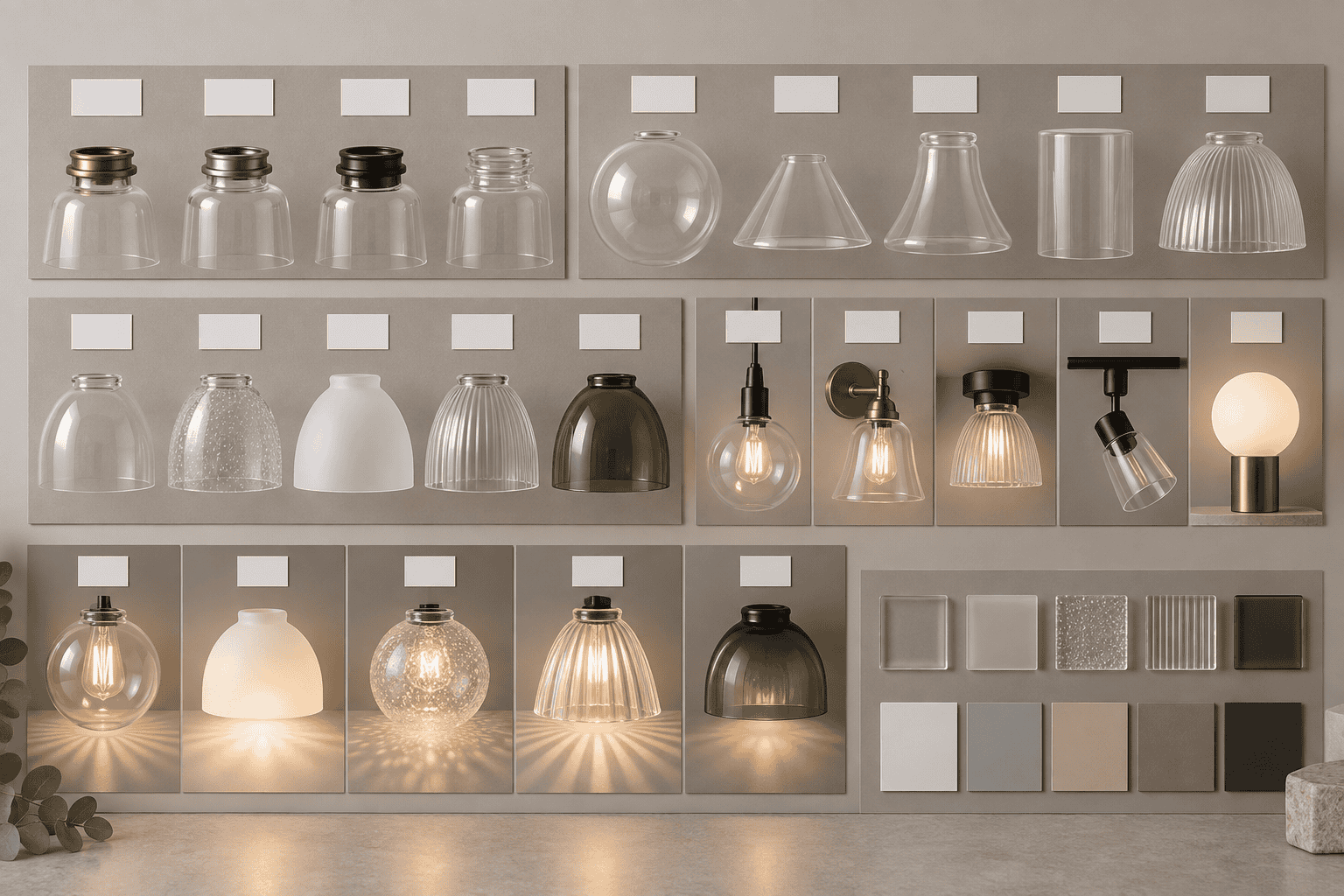
| Comparison field | Minimum record | Why it matters |
|---|---|---|
| Fitter | Opening, neck, ring, thread, clip or frame detail | Determines whether the part can be mounted |
| Profile | Side drawing with height, width and openings | Controls proportion, clearance and repeatability |
| Body and finish | Glass or other material plus forming and surface route | Sets appearance, weight, handling and cleaning questions |
| Light result | Bulb or LED, color temperature and intended position | Makes transmission and glare reviewable |
| Application | Pendant, ceiling, table, desk, wall or floor fixture | Changes support, viewing angle and service access |
| Quantity | Samples, pilot units and production quantity | Helps the quote reflect the actual order path |
| Inspection | Dimensional, rim, surface, color and lit checks | Turns a visual preference into an acceptance record |
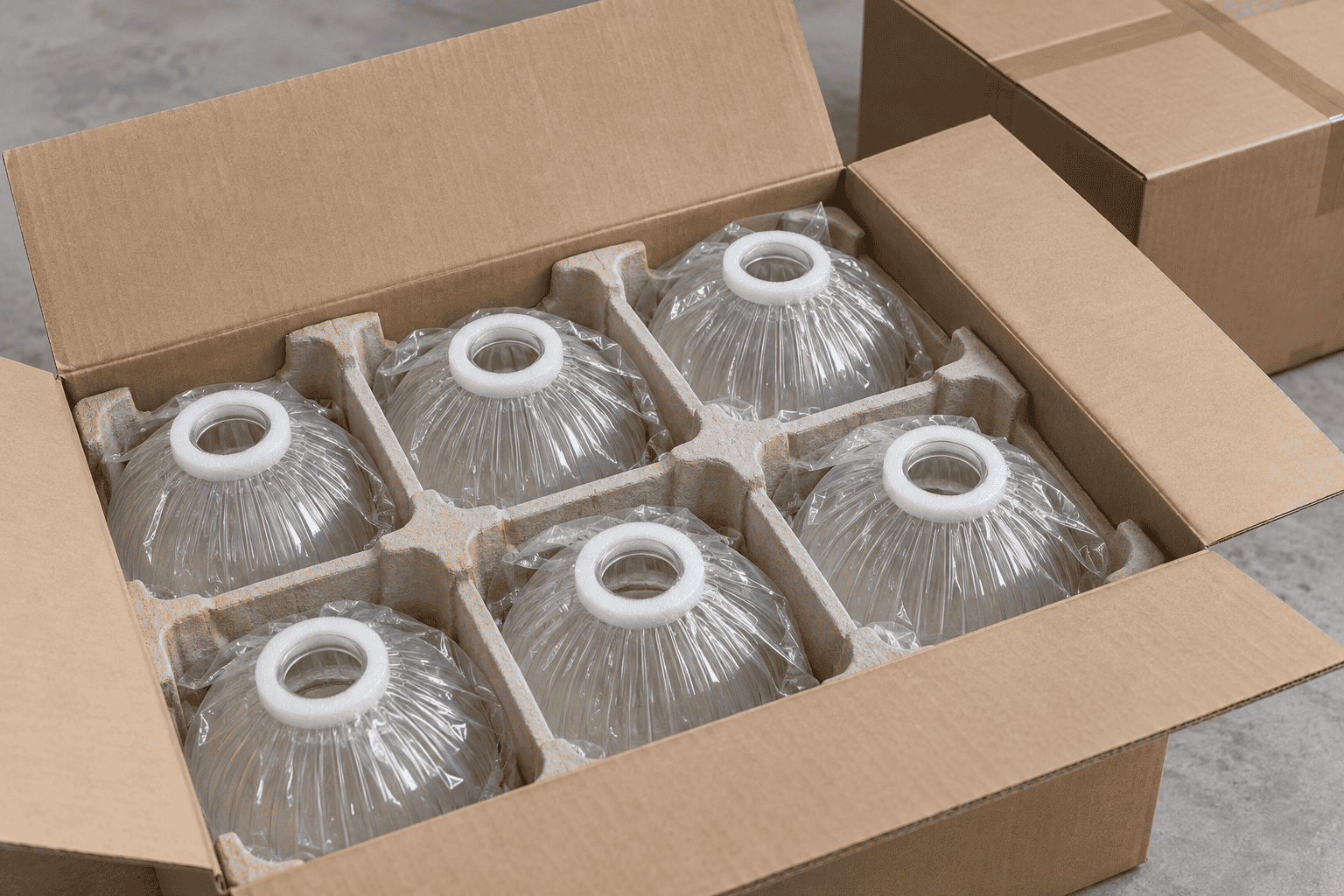
| Packing | Individual protection, dividers and carton orientation | Connects the part design to shipment risk |
For an existing fixture, add the lamp maker's installation notes or the original part number when available. For a new lighting collection, add the fixture drawing and the intended environment. A useful shade type description is specific enough for another person to select the same part from the record.
What Should an OEM RFQ Include?
An OEM request should describe a part, not only a style. Send the profile and fitter evidence first, then add the visual and commercial fields that control sampling.
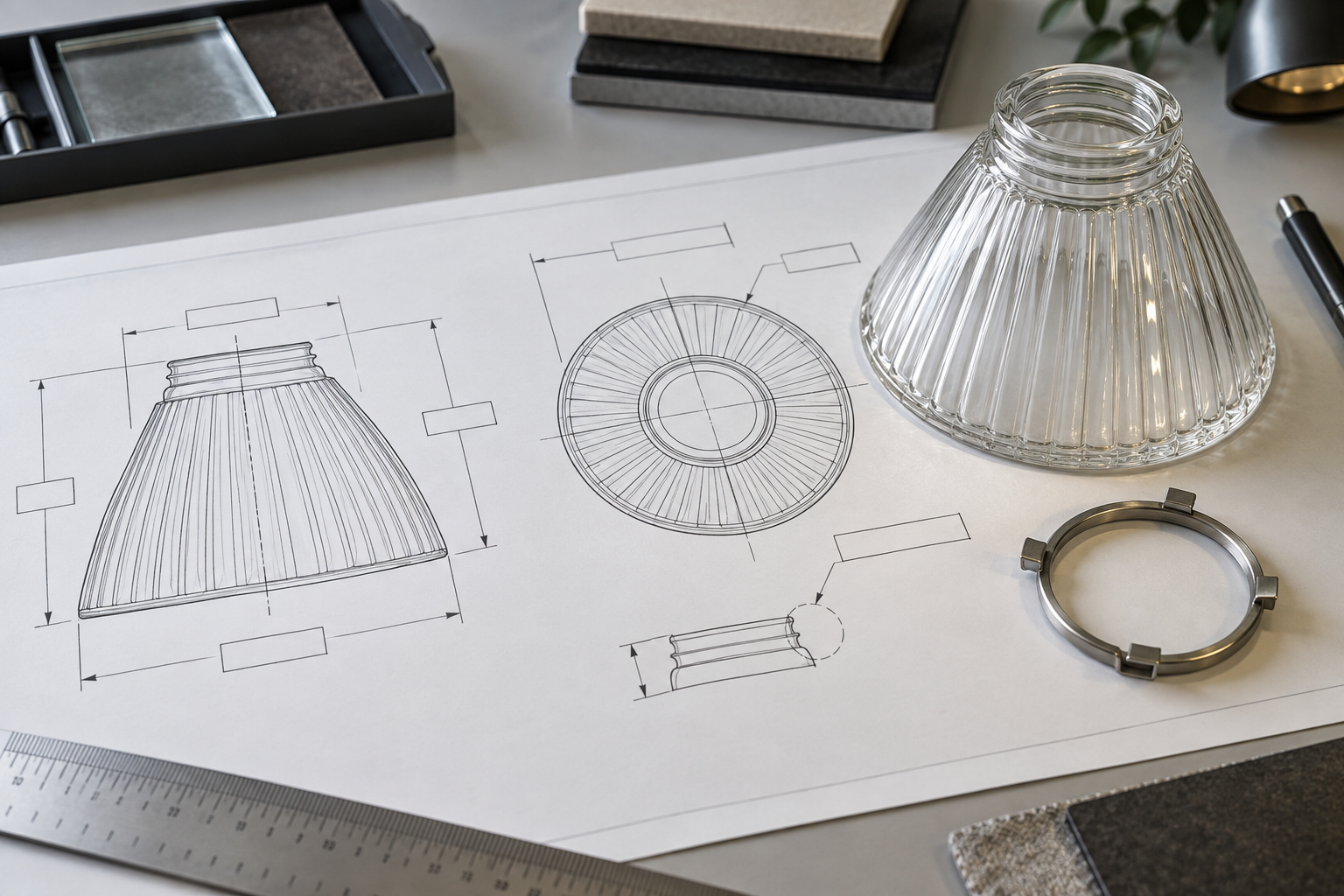
| RFQ section | Include | Avoid |
|---|---|---|
| Fixture interface | Fitter opening, retaining method, thread or ring and installation direction | “Standard size” without the actual seating measurement |
| Shape | Side view, top or underside view, overall height and widest diameter | A single front photograph with no scale |
| Glass result | Clear, opal, frosted, colored, ribbed, seeded or decorated target | A color adjective with no sample or viewing condition |
| Light condition | LED type, color temperature, bulb envelope and use position | Approving only from an unlit studio image |
| Quantity path | Sample count, pilot quantity and production quantity | Asking for a production price before the part is defined |
| Inspection | Dimensions, rim, surface, color, lit appearance and accepted variation | A general “quality good” instruction |
| Packaging | Rim protection, individual separation, carton layout and damage evidence | Treating packing as a carrier-only issue |
Use the technical drawing checklist to prepare the dimensional record. The custom lampshade RFQ builder is a useful next step when the project needs a structured brief rather than a loose email.
Buyer Questions
Are lamp shade types defined by shape or fitter?
Both, but they answer different questions. Shape describes the visible profile, while the fitter describes how the part attaches. State both when choosing a replacement or preparing a supplier request.
Which lamp shade type is easiest to replace?
The easiest replacement is the one with a clear seating interface, stable measurements and a readable profile. A common shape is not automatically easier if the fitter or retaining hardware is unusual.
Is a glass shade different from a glass lamp?
Yes. A glass shade is the cover or diffuser around the light source. The lamp or luminaire includes the fixture, socket, wiring, support and other components. A shade specification should not be treated as a complete electrical or fixture specification.
What type of shade is best for task lighting?
Start with a profile and finish that put light on the work area without exposing too much glare. Clear or lightly diffused glass, a reflector or a controlled lower opening may work, but the actual LED, height and viewing angle decide the result.
What is the difference between spider and uno fitters?
A spider or gallery arrangement is supported at the top or upper seating area and is commonly retained by a ring or finial. An uno arrangement uses a neck or socket relationship around the lamp hardware. Measure the actual interface instead of selecting by the name alone.
How do I choose a shade for a pendant?
Start with the upper opening, retaining method, hanging height, bulb clearance and the desired view from below. Then choose shape and glass finish based on whether the pendant needs open sparkle, soft diffusion, glare control or a color effect.
Can two shade shapes use the same fitter?
Yes. The fitter is the attachment interface, while the shape is the outer profile. Two shades can share an opening and still need different height, width, clearance or support checks.
What should I send for a custom glass shade?
Send a side photograph, an underside or fitter photograph, key dimensions, the fixture application, the light source, the desired glass result, sample quantity and production quantity. Add a drawing or tracing when the shape is unusual or the original is damaged.
Are transparent and frosted glass shade types interchangeable?
Not automatically. They can share a profile and fitter but produce different glare, brightness, reflections and visible bulb effects. Review both the mechanical fit and the lit appearance before treating one as a substitute for the other.
Turn a Type Into a Repeatable Part
Once the shade type is clear, the next step is a compact part record: fitter, profile, material, finish, application, light condition, quantity and inspection checkpoints. That record helps a lighting buyer compare samples without relying on a product name that different suppliers may interpret differently.
For a custom glass shade review, send the fixture photographs, the fitter measurement, a side profile or tracing, the intended LED, the glass appearance you want to evaluate and the sample or order quantity. The custom glass lamp shade manufacturer page provides the relevant inquiry path, and the custom lampshade RFQ builder can organize the inputs. Request a custom glass shade review with the part evidence attached.