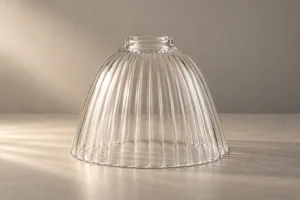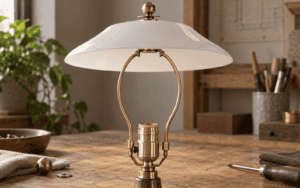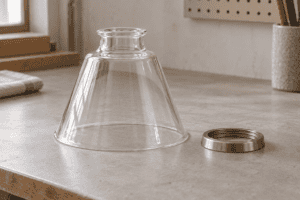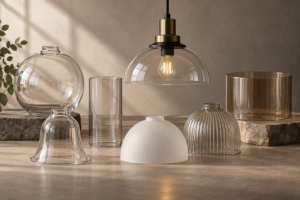
直接的な回答: ヴィンテージガラスランプシェードを特定するには、4つの要素を調べます:ガラスタイプと色の配合(時代を絞り込む)、表面処理(手吹きか機械プレスか)、フィッターの種類と直径(時代によって異なる)、そしてフィッターリムにあるメーカーの刻印や型番です。これら4つの指標を組み合わせることで、通常は10~20年の製造期間に絞り込むことができます。.
ほとんどのヴィンテージガラスランプシェードには書類が付属していません。遺品整理、相続したランプ、フリーマーケットでの発見――シェードにはラベルもレシートもストーリーもありません。正しく特定するには、探偵のような調査、材料科学の知識、そしてどの質問をすべきかを知ることが必要です。.
良いニュースとして、ガラスは非常に多くの情報を持っています。配合、製造方法、フィッターの寸法、表面処理など、すべてがシェードがいつどこで作られたかの情報を含んでいます。このガイドでは、それらの情報を体系的に読み取る方法を解説します。.
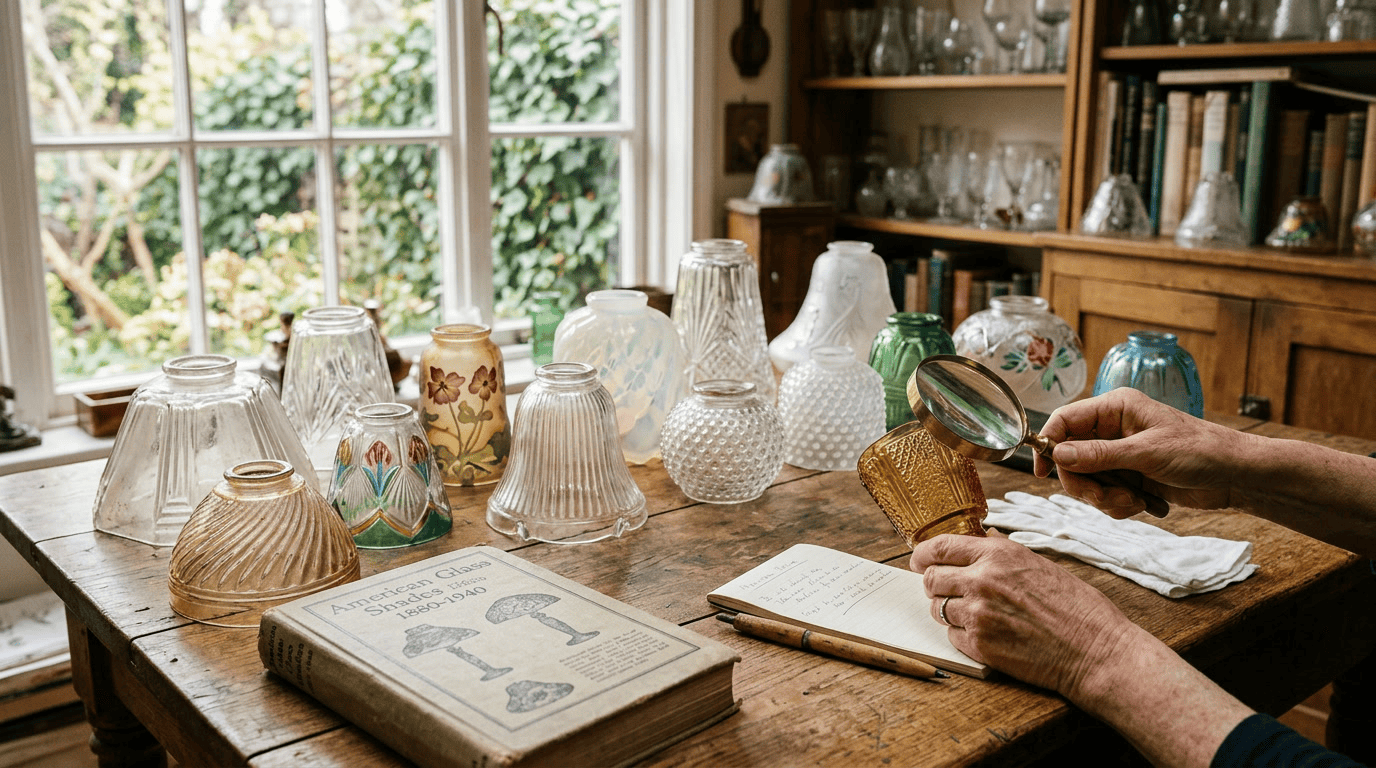
より広いヴィンテージガラスランプシェードのカテゴリーについては、こちらをご覧ください ヴィンテージガラスランプシェードのハブ.
4ステップ識別フレームワーク
ステップ1:ガラスタイプと色の配合
ヴィンテージガラスシェードの識別は、まずガラス自体から始まります――それが ミルクガラス, 被せアンバーやオパールセントであるかどうか。時代ごとに異なる配合が使われており、化学分析をしなくても見た目で判別できます。.
シェードを明るい光源(自然光が最適)にかざして観察します:
| 見えるもの | ガラスタイプ | 時代範囲 |
| 温かみのあるクリーム色/アイボリーの半透明、わずかな黄色味 | 骨灰オパールセント | 1920年以前、ヴィクトリア朝/エドワード朝 |
| 濃い白色、半透明性なし、わずかに青白い色調 | フッ化物ミルクガラス | 1920年代~1960年代 |
| 壁全体が均一に濃い白色、非常に一貫性がある | 二酸化チタンガラス(現代の復刻品) | 1970年以降 |
| 奥行きのあるアンバー、壁断面に2層がはっきり見える | 被せアンバーガラス | 1940年代〜1970年代 |
| 淡い琥珀色、壁全体で均一、彩度は薄め | 単層の着色琥珀ガラス | 1920年代〜1950年代 |
| わずかにサーモン色を帯びたピンク | セレン着色のデプレッショングラス | 1929–1939 |
| クロム/ウラン系の緑色調のグリーン | クロム着色またはウランデプレッショングラス | 1929–1939 |
| グレーからブラウンの中性色、均一 | スモークガラス | 1960年代〜1980年代 |
| わずかな不純物や気泡が見えるクリア | 初期の手吹きクリアガラス | 1940年以前 |
| クリアで完全に均一、気泡なし | 現代の機械吹きまたはプレスクリアガラス | 1940年以降 |
カセッド琥珀ガラス — 壁断面で2層がはっきり見えるのが特徴 被せガラス 技法 — そしてデプレッショングラスのセレンピンクやウラングリーンは特に識別しやすい — 特有の色調(サーモンピンクでバブルガム色ではない、クロムグリーンでエメラルドではない)は、後年の製品と混同しにくい。.
ステップ2:製造方法 — 手吹きと機械プレスの比較
手吹き ガラスの特徴:
- 目に見える壁の厚さの変化 — シェードの上部は薄く、下部は厚くなっています
- 光源に対して低い角度で見ると、表面にわずかな波状のうねりが見られます
- ガラス壁内に小さな気泡が存在する可能性があります
- 非対称性 — シェードの片側の形状が反対側とわずかに異なる場合があります
- シェードの上部にポンティルマーク(吹き竿が付いていた部分の粗いまたは磨かれた円形の跡)があります
- 装飾がある場合:塗装部分に筆跡が見えることがあります;エナメル面にわずかな質感の違いがあります
手吹きガラスは1920〜1930年頃まで標準的であり、大量機械化後も高級品では継続されました。手吹きの特徴が見られる場合、1940年以前の製造や1980年以降の職人による復刻品である可能性が高いです。.
機械式プレスガラス 特徴:
- 全体にわたって均一な壁の厚さ
- 型合わせ線 — 型の接合部に沿って垂直に走る目に見える線
- 滑らかで数学的に一貫した表面(波打ちなし)
- 気泡なし
- 表面模様(リブ、パネル、ホブネイル)のディテールがより鮮明 — プレス模様は吹きガラスよりもはっきりしている
機械プレスガラスは1920年代以降、日本の生産を支配しました。デプレッションガラスはほとんどが機械プレスです。.
ステップ3:フィッターの種類と寸法
フィッターは最も機械的に診断的な要素であり、フィッターの規格は時代とともに変化しました:
| フィッターの種類 | 内径 | 一般的な使用時代 |
| 非標準リングサポート | 3インチ〜5インチ(ランプに合わせてカスタム) | 1920年以前 |
| 2¼インチギャラリー | 2.25インチ | 1910年代~1940年代 |
| 3¼インチギャラリー | 3.25インチ | 1920年代〜1960年代、トーチエールおよび大型 |
| ウノ(ねじ込みソケット) | 7/8インチ(22mmねじ) | 1930年代〜現在 |
| スパイダー/ハープ | サドル幅 1 5/8インチ | 1940年代~現在 |
| クリップオン | 電球付き | 1950年代~現在 |
シェードのフィッター直径がこれらの一般的なサイズと一致しない場合、1920年以前のものか、カスタム品またはヨーロッパ製品である可能性があります。.
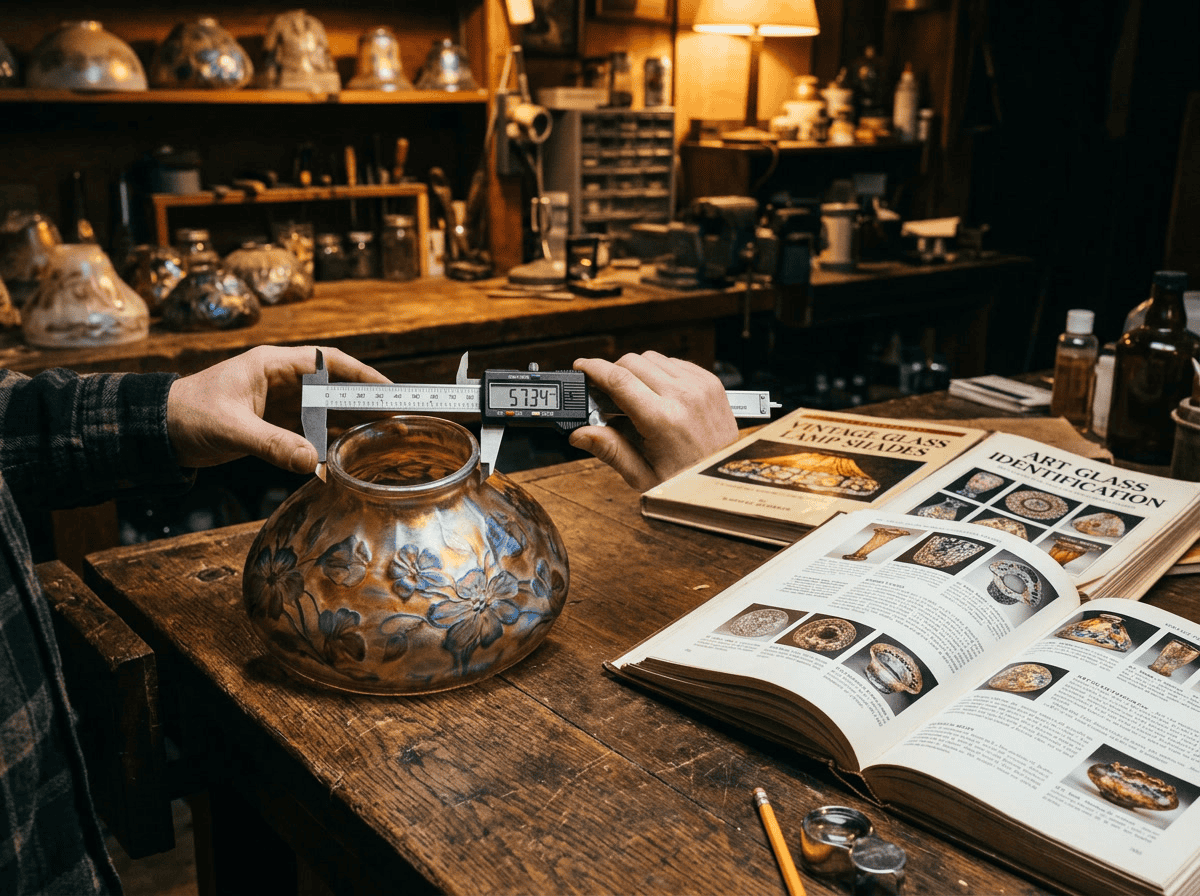
可能であればノギスでフィッター内径を測定し、または小さな定規を使用してください。フィッターの縁に顕著な手作業仕上げ(不均一な研磨やわずかな不規則性)が見られる場合は、初期の製造を示します。滑らかな火で磨かれたフィッター縁と均一な直径は大量生産を示します。.
ステップ4:メーカーの刻印と型番号
多くの日本のガラス工房は製品に刻印を付けています。フィッター縁の内側やフィッター付近の外側ガラス面を確認してください。一般的な刻印例:
- フェントンアートガラス: “筆記体の「フェントン」または楕円形のスタイリッシュな「F」。1970年以降使用。初期のフェントン作品は無刻印が多い。.
- ウェストモーランドガラス: “「WG」のモノグラム、または一部の作品には盾やキーストーンの刻印。.
- インディアナガラス: 刻印は少ない。主にパターンや色で識別される。.
- L.G.ライトガラス株式会社: 1930年代~1990年代の復刻品。一部の作品に「LGW」の刻印。.
- 型番号: プレスガラスには目立たない部分に数字や文字が型押しされていることが多いです。これは型を識別しますが、参考資料がないとメーカーを特定できない場合があります。.
無刻印の作品が大多数です。刻印に頼るのではなく、ガラスの種類、製造方法、フィッター寸法を使って年代を推定してください。.
日本の ウィキペディアの日本ガラスメーカーの記事, フェントンアートガラス株式会社は最も記録が多いメーカーの一つで、1970年から作品に刻印を始めました。これにより便利な二択ができます:刻印付きフェントン=1970年以降、フェントン特有のガラスで無刻印=おそらくそれ以前。.
時代別識別:ビジュアル早見表
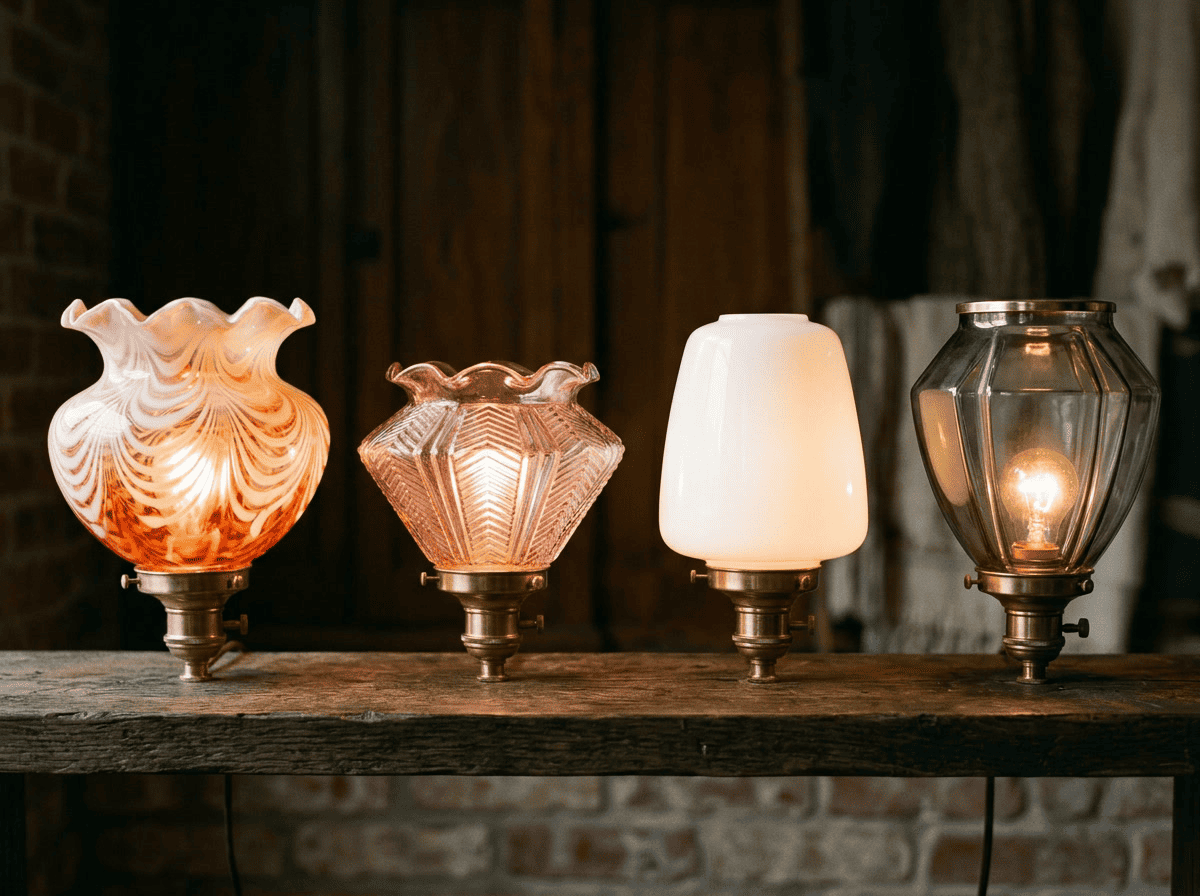
ヴィクトリア朝・エドワード朝(1880~1910年)
外観: 温かみのあるクリーム色/アイボリーホワイト、やや半透明、波状またはひだ状の縁がある場合あり、手描きの花柄や転写装飾が一般的。手吹きのため非対称が見られる。.
フィッター: 非標準のリングサポートまたは初期の2¼インチギャラリー。.
重さ: 同じ直径の後期プレスガラスより重い。.
点灯時の見え方: 半透明の本体を通して温かみのある黄金色の輝きが広がり、電球の輪郭がうっすら見える。.
アーツ&クラフツおよびアール・ヌーヴォー(1900~1920年)
外観: 鉛入りガラスパネル(本物のアーツ&クラフツ様式の場合)、または有機的な形状の単色アンバー/グリーン/ホワイトガラス。手吹き。.
フィッター: 2¼インチギャラリーまたは非標準リング。.
特徴的: 有機的な形状(非幾何学的)、型継ぎ目の不在、点灯時に奥行きを感じる色。.
デプレッション時代(1929~1939年)
外観: 機械プレスによる幾何学的形状(リブ、パネル、ハニカム)で、ピンク、グリーン、アンバー、またはクリア。薄い壁、型継ぎ目が見える、軽量。.
フィッター: 2¼インチギャラリーまたは初期の3¼インチ。.
特徴的: 特有のサーモンピンクやクロームグリーンの色は、後の時代には正確に再現されていません。.
点灯時の見え方: わずかに見えるリブと均一なアンバー/ピンク/グリーンの色合い。.
ミッドセンチュリーモダン(1945~1970)
外観: コーン型、ドラム型、ベル型のクリーンな白色オパールガラス。表面装飾は最小限またはなし。ハープ標準のスパイダーフィッター。.
フィッター: スパイダー/ハープまたは3¼インチギャラリー。.
特徴的: 非常にクリーンな幾何学形状;完全な対称性からの逸脱があれば手作業の可能性。.
点灯時の見え方: 純粋で均一な白い輝き、高品質オパールでは電球が全く見えません。.
ハリウッド・リージェンシーおよび後期 モダン (1960年代~1980年)
外観: スモークグレー/ブラウン、濃いアンバー、またはクリアのクリスタルカット。重厚な構造。直径が大きいことが多い。.
フィッター: スパイダー/ハープまたは4インチギャラリー。.
特徴的: ガラスの重さ―ハリウッド・リージェンシーのシェードは以前のスタイルより明らかに重い。.
よくある識別ミス
すべての白いガラスはミルクガラスであると仮定します。 ヴィクトリア時代のオパールセントガラスとミッドセンチュリーのミルクガラスは、日中はよく似ていますが、照明を当てると全く異なる反応を示します。シェードを強い単一の光にかざすと、オパールセントガラスはわずかに透けて暖かい輝きを放ちますが、密度の高いミルクガラスは光源を完全に遮断します。.
復刻品のデプレッションガラスをオリジナルと混同すること 1960年代から複製品が製造されています。見分け方としては、色調(複製品はオリジナルよりも彩度が高く、ニュアンスの少ない色が多い)、および特定の大恐慌時代の型パターン(オリジナルは特定のガラスタイプ用に作られたパターンを持ちますが、複製品は色をまたいでパターンを時代錯誤的に転用することがあります)があります。.
スタイルだけに基づくデート ピンクのリブ模様のシェードは、1930年代のオリジナルか1990年代の復刻品かもしれません。スタイルだけで年代を判断するのは信頼できません。フィッターの寸法、ガラスの配合、製造方法の証拠と組み合わせて判断してください。.
手吹き=ヴィクトリアンと仮定する 職人によるガラス製造は決して途絶えませんでした。手吹きガラスのシェードは20世紀を通じて少量生産され、現在も製造されています。1980年以降の職人復興作品は、一見するとヴィクトリア時代風に見えることがあります。ガラスの配合を確認してください。現代の職人ガラスは、骨灰やフッ化物不透明剤を使用することはほとんどありません。.
識別のための実用的なツール
UVライト(ブラックライト): 一部の時代のガラス配合はUV下で蛍光を発します。ウランガラス(大恐慌時代のグリーンで、しばしば虹色と関連付けられます) カーニバルガラス明るい黄緑色に蛍光します。マンガンで脱色されたクリアガラス(1940年以前)は淡いラベンダー色または青色に蛍光します。UV下で蛍光しない場合、クリアガラスやグリーンガラスは1940年以降の製造である可能性があります。基本的なUV懐中電灯($10–15)は、デプレッションガラスやヴィクトリアンガラスの識別に最も役立つツールの一つです。.
キャリパー 正確なフィッター寸法の測定に使用します。交換時の適合確認に不可欠であり、また日付特定にも役立ちます(規格外寸法の場合、1940年以前の可能性が高いです)。.
重量比較 比較のために2つのシェードがある場合、サイズに対する重さは参考になります。ヴィクトリア時代の手吹きガラスは、同じサイズの機械プレス製よりも重い傾向があります。ミッドセンチュリーのミルクガラスの中には、現代の復刻品よりも明らかに重いものもあります。.
取り扱いとお手入れ 日本の スミソニアンのガラス製品の取り扱いに関するガイドライン 識別作業にも同様に適用される安全な取り扱い方法について説明しており、調査中に壊れやすいヴィンテージ品へのリスクを最小限に抑えます。.
参考書: ジーン・フローレンスの コレクターズ百科事典 デプレッションガラス デプレッション時代のプレスガラスのパターン識別を解説しています。マーガレットとケン・ウィットマイヤーの フェントンアートガラス フェントン製品の記録をまとめています。一般的な日本のアートガラスについては、カール・ラッキーの 初期日本パターンガラス識別ガイド デプレッション以前の時代を解説しています。.
日本の コーニングガラス美術館 メーカーや時代の識別ができる日本およびヨーロッパのガラスのオンラインコレクションデータベースを幅広く管理しており、珍しい作品の照合に役立ちます。.
専門家に相談するタイミング
専門的評価が費用に見合う3つのシナリオ:
潜在的に署名済みまたは文書化された作品: 陰影に既知のデザイナーまたはスタジオと関連する mark が見える場合(初期 ティファニー工房, 、ステューボン、カーダー時代のガラス)、購入または売却前の専門評価が不可欠です。.
保険または遺産評価: 遺産目的のためには、ビンテージガラスの価値を文書化するにはオンライン調査ではなく専門評価が必要です。.
高価値のレプリカ購入の認証: 特定の製造元または時代と主張される作品に高額を支払う場合、資格ある鑑定士または関連コレクター団体の認証は投資を保護します。.
実用的な照明交換目的 ― 合うサイズで見た目が適切なシェードを見つける場合 ― 専門家の識別は必須ではありません。上記の4ステップの枠組みで十分です。.
ガラスの種類と時代を特定したら、私たちの形式別ガイドは テーブルランプ, フロアランプ, 、および ペンダント. のサイズ合わせとフィッター適合をカバーします。シェードがミルクガラスや琥珀色に見えた場合は、専用ガイドを参照してください。 ヴィンテージミルクガラスランプシェード および ヴィンテージアンバーガラスランプシェード. そして幾何学的な圧着形状が1920年代〜1940年代を指す場合は、私たちの アールデコガラスのランプシェードガイド.
よくある質問
ミルクガラスのシェードが本当に古いものかどうかをどう判断しますか?
以下を確認してください:わずかなクリーム色/アイボリー系の下地感(古いフルオリド乳白ガラス)対して明るい白色(現代の酸化チタン); ショウボウのシームがわずかに不規則に見える(時代物のプレスガラス)対して非常に清潔なシーム(現代の生産); 同じ直径でも重さ(若干重いほど古いガラス配合が多い); フィッターの縁仕上げ(手でわずかに不規則または磨かれている vs. 機械一貫性)を観察します。.
ヴィンテージのガラスは現代の複製品と違って発光しますか?
しばしばそうです。特にフルオリド乳白ガラスと Bone-ash オパレセントガラスなどの時代物のガラス配合は、現代の酸化チタンやジルコニウムガラスとは微妙に異なる光透過特性を生み出します。フルオリドガラスの温かなクリームの下地は、やや暖かい光の見え方を与えます。実物を並べて見ると大半の人が違いに気づきますが、写真では見分けにくいです。.
Depression ガラスの色を確実に識別できますか?
はい、一般的な色については可能です。 Depression ピンクには特徴的なサーモン系の下地、 Depression グリーンにはクロム-オリーブの質感、 Depression アンバーには暖かなハニー-アンバーがあります。課題は、1960年代以降、色材成分がわずかに異なる技術でレプリカが作られてきたため、正確なトーンが異なることです。UV検査は役立ちます:ウラン系着色を含む genuine Depression ガラス(いくつかのグリーンとイエロー)は蛍光が強く出ます;セレン着色のピンクは蛍光しません。.
pontil マークは私に年齢を教えてくれますか?
pontil マーク(シェードの上部の吹き竿からのざらつきのある円形マークまたは磨かれた円形マーク)は手吹き生産を確認します。手吹きガラスの生産は1920年頃まで装飾用シェードで標準で、その後も小ロットの高級生産で継続しました。pontil マークはヴィクトリア朝時代を証明するものではありませんが、大量機械プレス生産を除外します。.
メーカーのマークはヴィンテージガラスシェードの dating に信頼性がありますか?
部分的です。いくつかのメーカー(1970年以降のフェントン)はそのマークで確実に日付が分かります。その他は生産年を通じてマークを不統一に使用していました。無印の品はヴィンテージガラスの大半を占めます。マークは、ガラス種、フィッター寸法、製法と組み合わせて判断する証拠の一つです。.
ヴィンテージのガラスシェードがかなりの値打ちがあるかどうかを判断するにはどうしますか?
日常的な商業生産を示す赤旗(通常の$10–50の価値): 機械成形、 Depression時代の標準的な模様が一般色、標準のフィッター寸法。価値が高い可能性を示す緑の旗: 手吹き構造、メーカーの記載マーク、珍しい色や模様、特定のランプスタイルとの関連性。重大な価値があり得る場合は、適格な鑑定士に相談してください。.
UVライトを使ってヴィンテージガラスを検査しても安全ですか?
はい。ガラス識別用のUVフラッシュライトは、標準のブラックライト周波数で低レベルのUVを放出します。短時間の住宅内使用は安全です。蛍光検査に必要な露光は数秒程度です。UV光源を直視しないでください。そうでなければ通常の取扱い上の注意を適用します。.
関連書籍
- ヴィンテージガラスランプシェード:完全購入ガイド
- ヴィンテージミルクガラスランプシェード:歴史・スタイル・購入ガイド
- ヴィンテージ Amber Glass Lamp Shades: 温かな光、時代様式&購入ガイド
- アールデコ ガラス ランプシェード: 幾何学的スタイル、素材と調達ガイド
結論
ヴィンテージガラスのランプシェードを識別することは、推測ゲームではなく体系的なプロセスです。ガラスの組成は時代を絞り込みます;製造方法(手吹きかプレスか)がそれを確定します;フィッターの寸法は機械的日付を示します;作者の印(存在する場合)は特異性を加えます。実務上、四つのステップの枠組みは、シェードを生産年代へ自信を持って絞り込みます。.
交換用のマッチング—壊れたシェードの適切な交換部品を見つけること—識別の正確さは主にフィッターサイズとガラス種の一致に重要です。展示用の記録付きアンティークランプを完成させる場合には時代の正確さが重要ですが、日常使用の祖母のフロアランプのシェードを交換する場合は重要性が低くなります。いずれにせよ、識別プロセスは正しい最初の一歩です。.