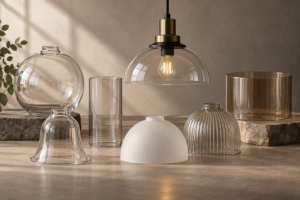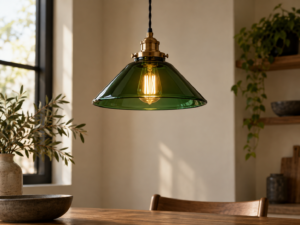
黒いランプシェードは周囲の反射光を吸収し、光を下方向に導くことで、集中したムーディーな照明を作り出します。主な変数は外側の仕上げ(マット、サテン、またはグロス)、内側のライニングの色、形状、素材です。それぞれが部屋に届く光の量や、ランプを消したときの見た目を変化させます。.
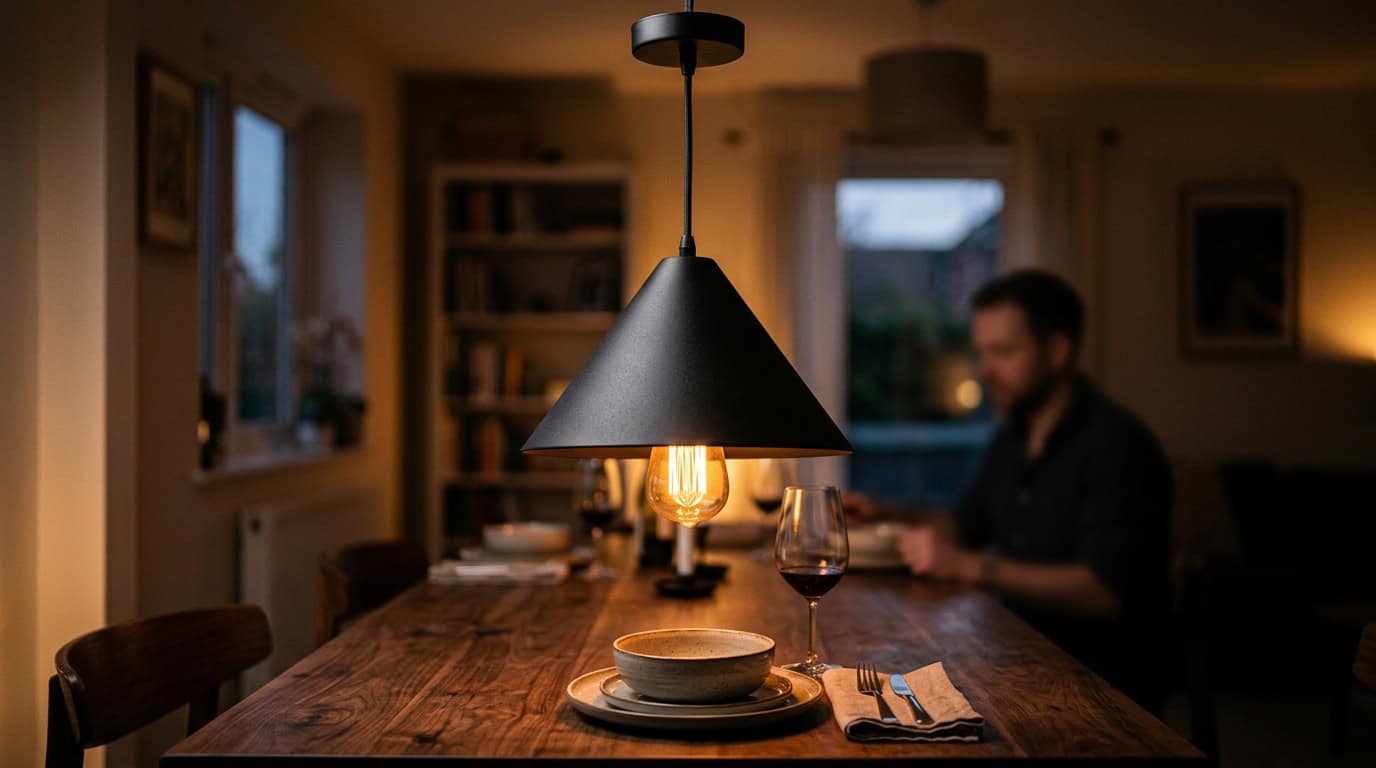
黒いランプシェードは、インテリアデコレーターを二つのグループに分けます。最初のグループは一つ購入し、気に入り、今ではいくつも所有しています。コーナーのフロアランプ、ベッドサイドテーブルのペア、キッチンアイランドの上のペンダントライトなどに散らばっています。二番目のグループは、北向きの部屋で40ワットの電球に黒いシェードを試し、洞窟のような雰囲気になり、永久に黒いシェードを避けることを誓いました。.
どちらの反応も理にかなっています。どちらも同じ間違いから生じています: 黒いランプシェード 単なる色の選択ではなく、光工学的な決定として考えてください。仕上げ、ライニング、形状、電球のワット数を正しく選べば、そのシェードは普通のランプを部屋の視覚的なアンカーに変えます。間違えると、携帯電話のライトで読書することになります。.
種類、素材、サイズ、部屋ごとのスタイリング、現在のトレンド、そして多くの購入者が悩む質問まで、すべて以下で解説しています。.
黒いランプシェードとは何ですか?
黒いランプシェードは、マットな布地、光沢のあるガラス、または穴あき金属などの黒い外装仕上げを持ち、光源の上に取り付けられて光の方向を制御し、まぶしさを軽減し、照明の特性を形作るシェードです。外側の色は反射するのではなく吸収するため、それがまさに目的です。.
外装仕上げと内装ライニング:なぜ両方が重要なのか
ほとんどの購入者は外側に注目します。内側の 黒いランプシェード 少なくとも同じくらいの作業を行います。.
黒いシェードと 白色の内側裏地 光を下方および外側にきれいに反射します。出力は鮮明で、ややクールな印象です。同じ黒いシェードで ゴールドまたはシャンパンの裏地 すべての光子が出る前に温められ、室内写真で高級感のある琥珀色の輝きを生み出し、実際に見るとさらに美しく感じられます。 ブラックオンブラックライナー ほとんどすべてを吸収します:下には狭い光のプール、上はほぼ暗闇、実質的にアンビエントの補填はゼロです。.
各バージョンは技術的に 黒いランプシェード. 彼らは全く異なる性能を発揮します。.
外装仕上げは美観と耐久性を形成します。. マットブラック 指紋が目立ちにくく、経年変化も美しく、ベースによってモダンまたはインダストリアルな印象を与えます。. サテンブラック 低い光沢があり、角度によって光を捉え、写真よりも実物の方がやや暖かみのある見た目です。. グロスブラック, は、セラミックコーティングされたガラスシェードで最も一般的で、部屋をほのかに映し出し、視覚的な奥行きと意図的なラグジュアリー感のある漆塗りのような質感を加えます。.
| 仕上げ | 光の拡散 | 視覚的な特徴 | 最適なランプベースの組み合わせ |
|---|---|---|---|
| マットブラック | 柔らかな輪郭、暖かみ | モダン、スカンジ、インダストリアル | コンクリート、無垢材、マットセラミック |
| サテンブラック | 適度でやや輝きのある | トランジショナル、アールデコ | ヘアライン仕上げの真鍮、エイジドブロンズ |
| グロスブラック | シャープで高コントラスト | コンテンポラリー、マキシマリスト | ポリッシュクローム、ラッカー仕上げのセラミック |
黒いシェードが部屋の雰囲気をどう変えるか
ランプシェードには、裸電球のまぶしさから目を守ることと、光の広がり方を形作るという2つの機能的な役割があります。 黒いランプシェード はその両方を果たしつつ、さらに視覚的な安定感を加えます。暗い色の物体は、落ち着きや安定感、意図的な配置を感じさせます。明るい壁や淡い家具が並ぶ部屋では、黒いシェードがランプが意図的に置かれていることを示します。.
As ウィキペディアのランプシェードの機能とデザインの概要 によると、どのシェードでも主な役割は光の強さと方向を制御することです。黒い外側は、ほとんどの色よりもその制御をさらに拡張し、周囲への光漏れを抑え、より集中的な出力を実現し、消灯時にも強い存在感を放ちます。.
黒いランプシェードの種類
シェードの形状は、 黒いランプシェード 光がどこに向かうかを素材と同じくらい左右します。ドラム型シェードは光を均等に広げます。クーリー型は下方向に集中的に照らします。エンパイア型はその中間です。ランプや部屋に合わない形を選ぶと、美しいシェードでも実用的な明かりにならないことがあります。.
ドラム型黒ランプシェード:現代の万能選手
現在、最も購入されている 黒いランプシェード 形状であり、その理由は明快です。上下の直径が等しく、側面が垂直で、ほぼすべてのランプベースや照明器具に合うシルエット:テーブルランプ、ペンダントライト、フロアトーチ、再利用したパイプベースなど。ドラム型はすべてに適応します。.
A ドラム型黒ランプシェード リネンやコットン生地を使うことで、色の強さを和らげつつ、建築的なシルエットを保ちます。ペンダントコードに吊るすと、北欧のダイニングルームデザインの象徴となった「浮かぶ円盤」効果を生み出します。ガラスシェードの製造では、最もよくリクエストされるドラム型の比率は直径30〜35cm、高さ22〜25cmで、ベッドサイドテーブルからキッチンアイランドのペンダントまで幅広く対応します。.
エンパイアとクーリーのスタイル
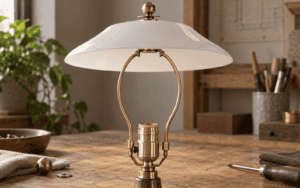
日本の エンパイアシェード, 下部が広く、側面が緩やかに傾斜している形は、クラシックなテーブルランプのシルエットです。黒の場合、白やクリームとは全く異なる印象になります。白いエンパイアシェードは、明るい壁の前では目立たなくなります。 黒いエンパイアランプシェード は注目を集めます。特に木製や真鍮製のキャンドルスティック型の台座に合わせると、温かみのある台座と暗いシェードのコントラストが意図的な緊張感を生み出します。.
日本の クーリーシェード はエンパイアのコンセプトを極端にしたものです。広くて平らな円錐形で、光を横方向と下方向に劇的に投げかけます。黒の場合、シェードの下の面に鋭いスポットライトを作り、シェードの上はほとんど照らされません。サイドテーブルや読書用の椅子のアクセント照明に最適です。部屋の隅まで見たい場合の唯一の光源としてはあまり理想的ではありません。.
ペンダントと天井シェード
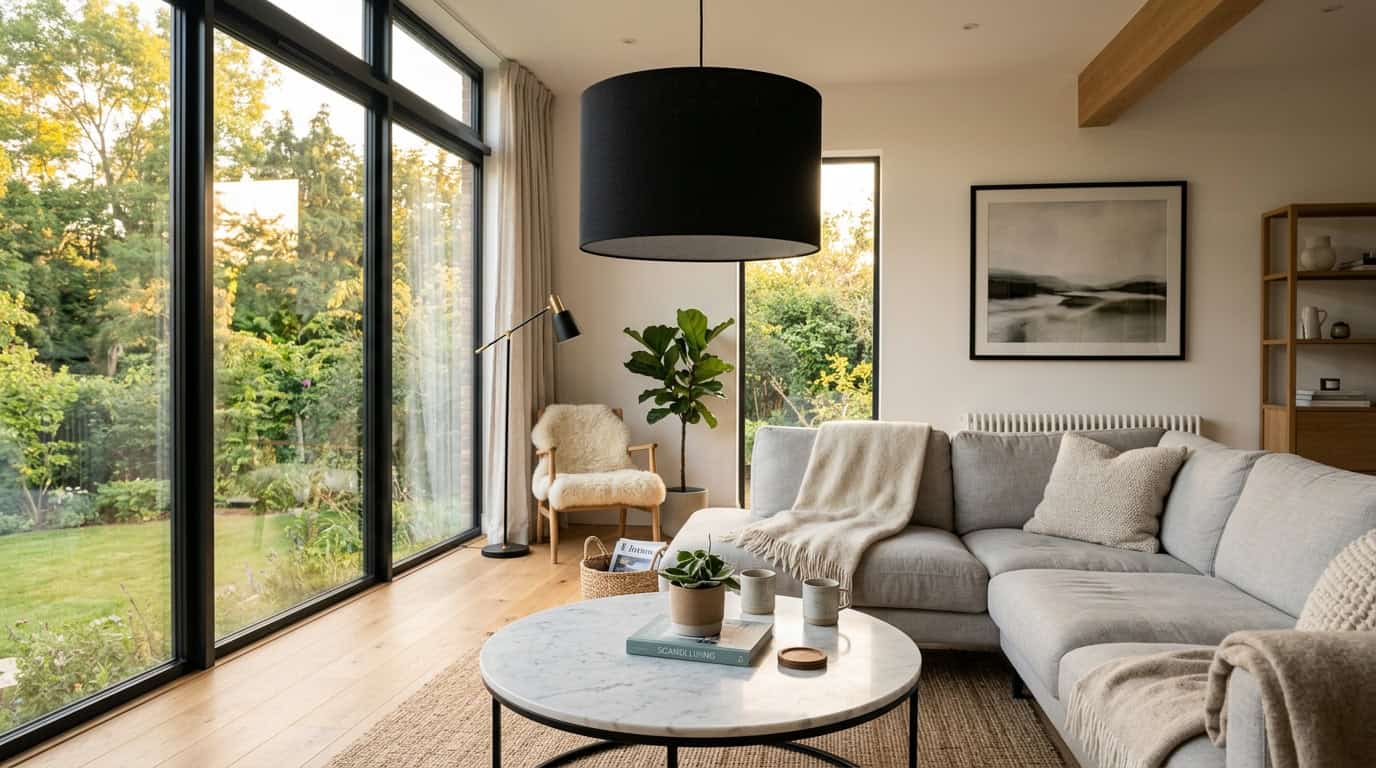
黒いペンダントランプシェードは、テーブルランプシェードとは異なる振る舞いをするため、特別に言及する価値があります。目の高さや作業面の上に吊るすと、 黒いペンダントランプシェード は壁ではなく天井を背景に映ります。マットブラックのペンダントが淡い大理石のキッチンアイランドの上にあると、部屋の向こう側からでもすぐに分かるグラフィックなコントラストを生み出します。.
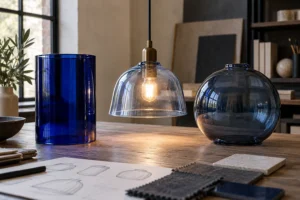
黒いガラスの円錐形や半球形のペンダントシェードは、商業空間で強い存在感を示します。レストランのテーブル、ホテルのバーカウンター、店舗のディスプレイエリアなど、明確な光のプールが雰囲気と照明を同時に作り出す場所に最適です。弊社の ガラスランプシェードのソリューション は、ガラスの種類、フィッターの構成、コーティング仕上げなど、カスタムペンダント仕様を含みます。.
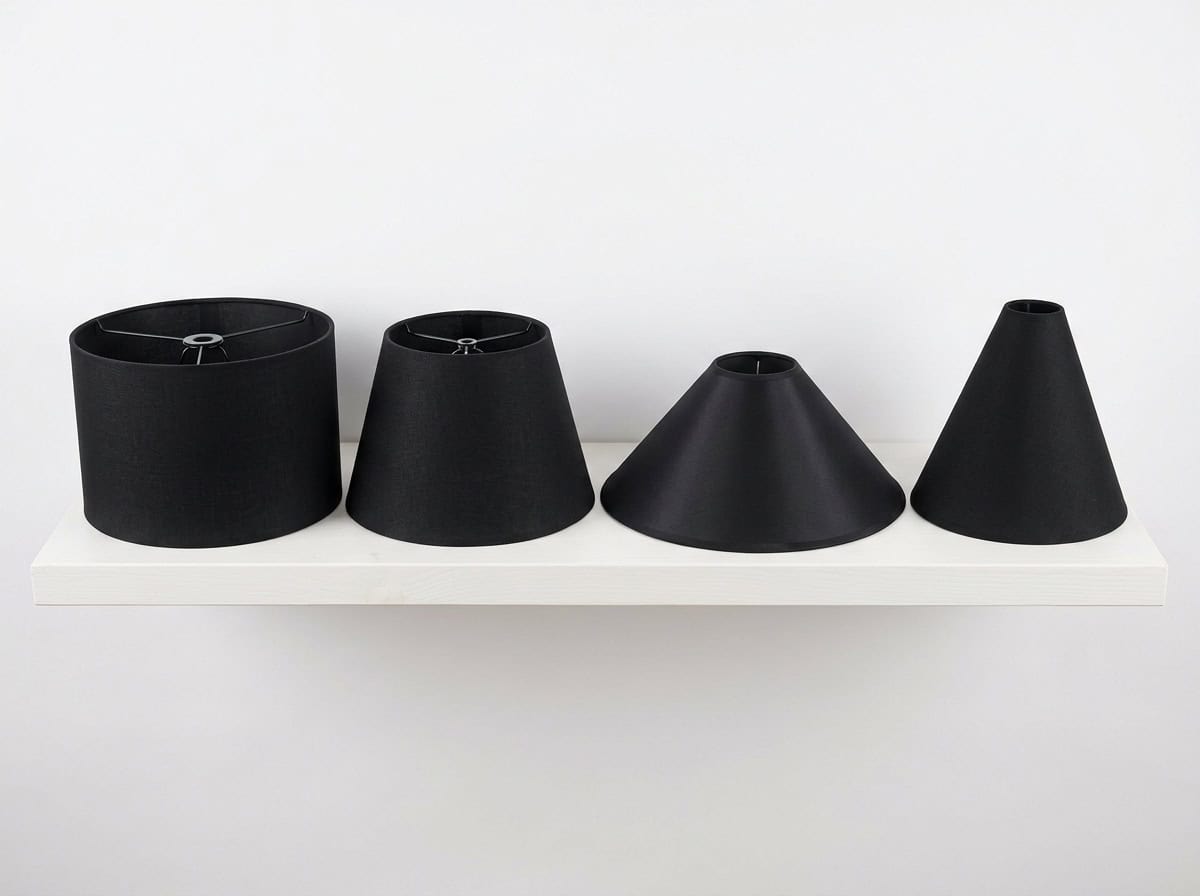
| 形状 | 最適なランプタイプ | 光の広がり | 最適な部屋の用途 |
|---|---|---|---|
| ドラム型 | テーブル、ペンダント、フロア | 上下均等 | リビングルーム、キッチン、オフィス |
| エンパイア型 | テーブル、ビュッフェ | 下方向集中 | 寝室、玄関、伝統的な空間 |
| クーリー | テーブル、アクセント | ワイド、下向き | 読書用チェア、サイドテーブル |
| ペンダントコーン | 天井ドロップ | 方向性スポット | ダイニングテーブル、キッチンアイランド、バー |
| ベル | テーブル、トーチエール | ソフト、拡散 | フォーマルなリビングルーム、ダイニングルーム |
黒いランプシェードの素材
の素材は、 黒いランプシェード 光の透過性、シェードの壁を通してどれだけ光が通るか、または上下の開口部からのみ光が出るか、さらに質感、耐久性、メンテナンス性を決定します。ベルベットの黒いシェードとオパールガラスの黒いシェードは、どちらも外から見ると暗く見えますが、光の出力やお手入れ方法はまったく異なります。.
ファブリックシェード:リネン、コットン、ベルベット
ファブリックは、 黒いランプシェード, の最も一般的な素材であり、実用的な理由からです。軽量で入手しやすく、配送や設置時にも扱いやすいです。ファブリックの中では、織りの密度が光の挙動に最も影響します。.
リネンとコットン 黒いシェードは、通常白いポリ裏地付きで、ファブリックの壁を通して適度な光を透過し、点灯時にシェードの中央部分に暖かい輝きを生み出します。これにより全体の印象が柔らかくなり、シェードの側面が暗くなるのを防ぎます。リネンコットン混紡は、リビングルームや寝室の主照明として実用的な選択肢です。.
ベルベット は壁を通してほとんどすべての光を吸収します。効果は劇的ですが、ベルベットは 黒いランプシェード 主照明よりもアクセントやムード照明として最適です。ホコリが付きやすく、掃除が繊細で、湿気の多い気候では時間とともに臭いが発生することもあります。海沿いや浴室近くで使用する前に知っておくと良いでしょう。.
リネン混紡 は今もなお理想的な選択肢です。質感があり高級感があり、心地よい光を通し、乾いたブラシで簡単に掃除できます。.
ガラス製ブラックランプシェード
ガラス製 黒いランプシェード は、どのような布製品とも異なる特性を持ちます。ガラスが不透明、フロスト加工、または半透明のブラックであるかによって、光の雰囲気がまったく変わります。.
不透明なブラックガラス, は、セラミックコーティングや塗装が施されている場合、壁を通して光を一切通しません。すべての光は上部または下部の開口部から出ます。その結果、ランプシェードが生み出せる中で最もシャープで演出的な効果が得られます。下にははっきりとした円形の照明、上部が開いていれば天井に暖かい光が広がり、消灯時は視覚的にしっかりとした存在感を持ちます。これらはペンダントや天井照明で最も一般的です。.
フロスト加工やスモーク色のガラス, は、完全にコーティングされているのではなく、暗い色合いが施されており、壁を通して拡散した光を放ちます。光は不透明なものよりもムーディーで柔らかくなります。スモークガラスのシェードでは、夜間の効果が特に魅力的で、シェード自体が硬く平坦な物体ではなく、柔らかな暗い形として輝きます。.
ガラス製シェードは、長期間にわたり布製よりも耐久性があり、掃除もはるかに簡単です。その代償として、重量と輸送時の壊れやすさがあります。jxlampshade.comでは、ブラックガラスランプシェードをホウケイ酸ガラスやソーダ石灰ガラスにセラミックコーティングを施して製造しています。ペンダントシェードの標準的な壁厚は3~5mmです。ガラスシェードの形状が光の出力にどのように影響するかの詳細な解説については、当社の ランプシェード形状ガイド 12種のガラスシェードタイプを視覚的な例とともにカバーします。.
絹、高級絹風、 perforated metal
シルク 黒いシェードはラグジュアリーレベルを占めます。本物の絹は、合成繊維が再現できない光の輝度を伝えます。欠点は:本物の絹は熱にさらされると退色し脆くなります。市場に出回っている“絹”風シェードの多くはフェイク絹ポリエステルです。ほとんどの用途には適しており、耐久性は高いですが、背面発光時には完全には同じではありません。.
パンチングメタル 黒いシェードはニッチですが強いインパクトを与えます。開孔部からは模様の光が投影され、幾何学模様、花模様、格子模様が周囲の壁や天井に映えます。黒い基調色が投影をくっきりと劇的に見せます。装飾的な要素として、また光源としての役割が最も良く機能します。.
| 素材 | 壁を通した光 | 耐久性 | メンテナンス | おすすめ対象 |
|---|---|---|---|---|
| リネン/コットン | 中程度(暖かい光の輝き) | 高い | ドライブラシ | 主照明、寝室、リビングルーム |
| ベルベット | 非常に低い | 中級 | 繊細なブラシ | アクセント照明、フォーマルな空間 |
| 不透明ガラス | なし(トップ/ボトムのみ) | 非常に高い | 拭き取り清掃 | ペンダント、商業用、建築用 |
| フロストガラス | 低拡散 | 非常に高い | 拭き取り清掃 | ムード照明、バー、ホテル |
| フェイクシルク | 中高 | 中級 | 乾燥布 | 伝統的なランプスタイル、フォーマルなリビング |
| パンチングメタル | 穴を通すだけ | 非常に高い | Occasional dust | 装飾的アクセント、特徴照明 |
ランプに適した黒いランプシェードのサイズの測り方
ここが多くの購入者が間違える点であり、色や素材ではなく寸法が問題になる。幅が広すぎると帽子のように見え、狭すぎるとランプベースが窒息したように見える。高さが高すぎるとシェードと本体の比率関係が完全に崩れる。.
実際に重要なのは3つの寸法
下部直径 は、ほとんどの購入者が最初に注目する数字であり、重要である。実用的な基準として: シェードの底部の直径は、テーブル面からシェードが取り付けられる位置まで測ったランプベースの高さとほぼ一致するべきで、シェードの上端までではない。35 cm のランプベースの場合、底部直径が35–40 cmが比率的に安全な範囲である。.
高さ は、ハードウェアが見えるかどうか、シェードがバランスよく見えるかを決定する。シェードはハープとソケットの部品を覆い、シェードの下端のネックがランプベースに残るように1.5–2 cmを露出させる。ベースよりも高いシェードは、全体のランプを下部に偏らせて見せる。.
上部直径 (エンパイアとベル型のプロファイルにおいて) 上方へどれだけ光が抜けるかに影響する。卓上ランプシェードの上部開口は通常10–15 cmで、より広いと天井全体を照らす光が増え、ランプが部屋の主照明となる場合には重要である。.
日本の 住宅用照明に関するエネルギー省(U.S. Department of Energy)のガイダンス, 、ランプシェードのサイズは直接的に照明効率に影響する。過大なシェードは光を不必要に拡散させ、過小なものはバルブ周りに熱を集中させる。どちらも実世界の性能に影響を与える。.
完全な測定プロセスと、ステップバイステップの巻尺の解説を含む作業手順は、私たちの ランプシェードのサイズの測り方ガイド.
フィッターの種類と互換性
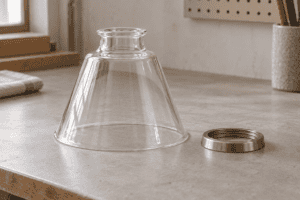
日本の スパイダーフィッター は、テーブルランプで最も一般的で、ハープ上部をファイニアルで固定する金属製のクロスバーです。ほとんど 黒いランプシェード はオンラインでスパイダーフィッターを使用して販売されています。注文前に確認してください。.
日本の ウノフィッター ハープを必要とせずソケットアダプターにネジで直接取り付けます。床用ランプや一部のテーブルランプのスタイルで一般的です。.
日本の クリップオンフィッター 電球に直接クリップします。光源に非常に近接しているため、低ワット LED 電球とだけ適切です。ハープなしのシャンデリア風器具に有用です。.
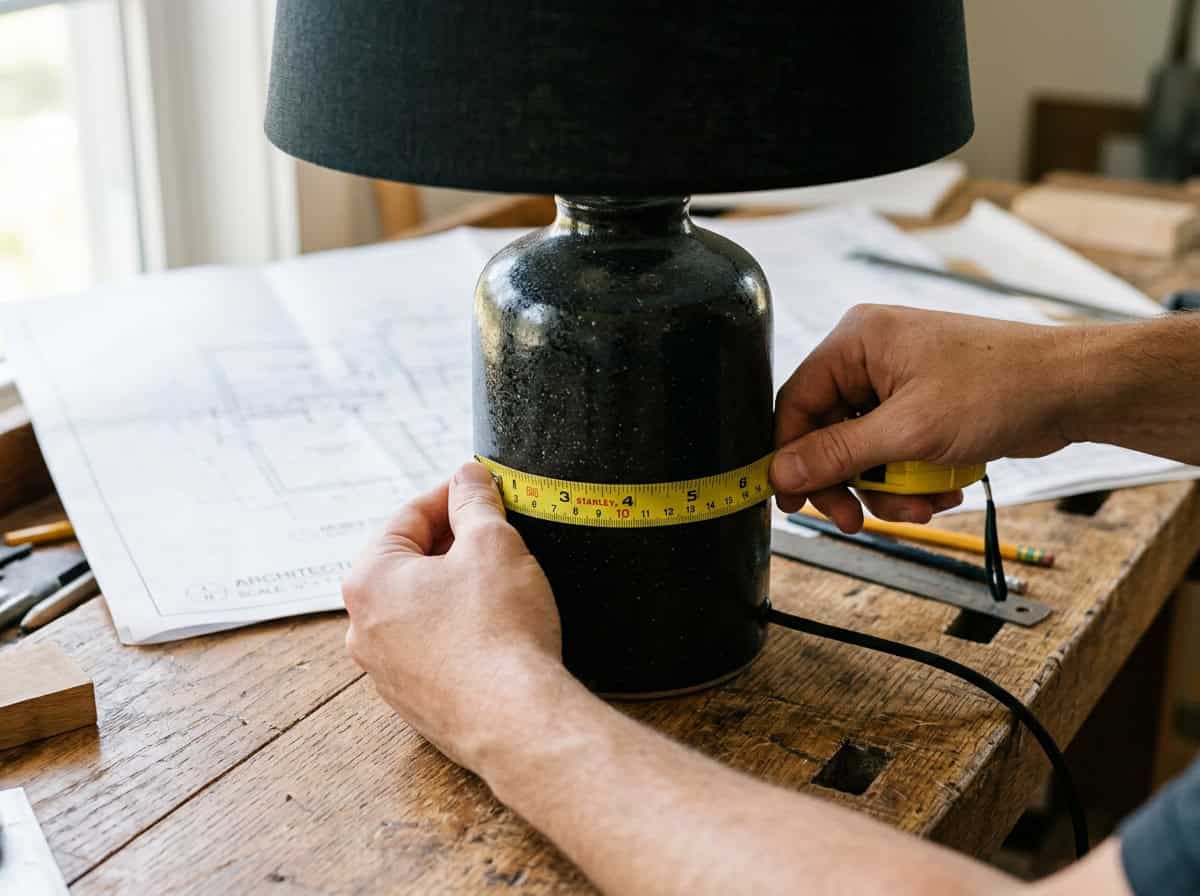
既存のシェードを交換する場合は、フィッターリングまたは全体のシェードを照明の専門店へ持参するのが最も信頼性の高い方法です。フィッタータイプの不一致は安全性に関わる不安定な問題で、単なる美観のミスではありません。シェード購入で最も一般的な返品理由でもあります。.
部屋ごとに分けて黒いシェードのスタイリング
“この部屋で使えるか”という質問は、ほとんどのスタイルガイドよりも直接的です。. 黒いシェード 暗い部屋を必要としません。対比を必要としますが、その対比はランプベース、ランプが置かれている表面、または背後の壁から来ることがあります。ほぼ白い部屋の中に一本の黒いシェードが意図的であると読まれます。六つ並ぶと圧政的に見えることがあります。.
リビングルーム:視覚的なアンカーと対比
リビングルームでは、 黒いランプシェード はアンカー要素として最も機能します。空間の残りがニュートラルである場合、白い壁、オートミール色のソファ、明るい木製の床に、一つか二つの黒いシェードをテーブルまたは床ランプに配置すると、部屋を未完のままにしない視覚的な重みを提供します。それらは空間を暗くするのではなく、定義づけます。.
最も一般的なリビングルームの過ちは、サイズを小さすぎることです。65cmのフロアランプに対して30cmのドラムシェードは見えなくなってしまいます。サイズを上げてください。ブラスまたは自然石の台座にマットブラックの45–50cmのドラムシェードは、部屋の向こう側からも存在感があり、本来のアンカー効果を果たします。.
コーヒーテーブルの上や座りエリア内のペンダント・ドロップには、 黒いペンダントランプシェード 40–50cmの直径で円錐形またはドラム形状が、低めの視覚と親密な雰囲気を生み出し、欧州の住宅インテリアに共通する効果を生み出します。つまり、ダイニングルームのペンダントの論理をリビングスペースに適用しています。.
ベッドルーム:親密で指向性のある光
ベッドルームは、 黒いランプシェード 最も強い評価を受ける場です。内部が白または金色の内装を持つ黒いベッドサイドシェードは、必要な場所へ光を届け、ベッドサイドの表面へ、あるいは本のページ上へと光を落とし、天井全体に明るさを飛ばして眠りを妨げることはありません。.
ブラックエンパイア型のランプシェード ブラスのキャンドルスティック台座上のものは、最も安定して成功するベッドルームの組み合わせです。この組み合わせは、落ち着いた、考え抜かれた、少しだけ贅沢に見え、努力なくにじみ出る印象を与えます。シェードのサイズは適切に保ってください。一般的なベッドサイドランプの総高が55–65cmの場合、底直径が25–30cm、シェードの高さが18–22cmが通常適切です。.
As Better Homes and Gardensは、寝室の照明特集で次のように指摘します。, ベッドサイドのランプは、反射光を遮らず読み実用レベルへ向けて光を導くときに最も効果的です。これは作業を得意とする 黒いランプシェード 反射した光の一部を吸収する暗い内装と、開放的な白いシェードよりも、反射内装には扱いやすいでしょう。ベッドサイドランプを主照明として使用する部屋では、黒いシェードと少なくとも800ルーメンの電球を組み合わせてください;暗い内装は反射光の一部を吸収します。.
ホームオフィスと読書コーナー
自宅オフィスでは、 黒いランプシェード デスク上のライトやフロアランプは、周囲の光を最小限に抑えつつ明確な作業照明を作り出します。それはビデオ通話時の背景の眩しさを減らし、机の照明を確保して部屋の端を後ろへ退ける集中作業には有用です。.
黒いシェードは、読み物コーナーのアクチュエーティングランプスタイル(スイングアームの壁付けブラケット、薬局型のフロアランプ、調整可能なデスクランプ)と特に相性がよいです。調整機能は光の集まりをページの上に正確に配置しますが、黒いシェードはその集まりを引き締め、アリーナ全体を平坦な明るさで洗い出すことを防ぎます。.
ブラックシェードのトレンド(2026年以降)
設計の方向性は、 黒いランプシェード 2026年には一度に二つの異なる方向へ動いています。片方は極端なテクスチャ、もう片方は高対比の金属組み合わせへ。どちらも、住宅インテリアが平坦なミニマリズムの抑制から、観察可能な特性を持つ素材へと移行していることを反映しています。.
テクスチャーとプリーツ加工のマットブラック
過去2年間で最も顕著な変化は、 テクスチャードなマットブラック:リネン織りの表面浮き彫り、プリーツ生地、またはリブ状のガラスのシェードが光を捉え、平滑なマット面以上の表現力を生み出すようになったことです。.
私たちの プリーツランプシェードガイド このスタイルを詳しく扱うが、黒色の特定の魅力は、プリーツが温かさと手工芸の質感を加え、平らな艶消し布地では到底追いつけない点にある。日中の環境が変わるにつれて、各プリーツが光をわずかに異なる角度で拾う。9時の光の色は9時の光とは異なる。その品質は写真では完全には捉えきれないが、部屋の中で非常に良く生きる。.
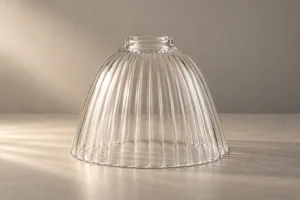
リブ編みとフルート状の黒いガラス製ペンダントシェードは同じ軌道をたどる。ガラスの垂直の隆起線は下方に光を細い線として散乱させ、滑らかなガラスの円錐とは異なる効果を生む:より個性的で、点灯時にはより興味深く、同じフットプリントとフィッター適合性を保つ。.
金と brass の内張りを持つ黒いシェード
黒い外部と金色の内装の組み合わせは着実に普及を続け、ピークの兆候を見せていない。外側から見れば、ランプは暗く、グラフィックな存在だ。点灯すると、内部を通る光は暖かい琥珀色になる。黒い外観は金をより豊かに見せ、貧しくは見せない。.
日本の Elle Decor の2026年の住宅デザイン特集, 、磨かれたブラスやアンティークゴールドのような暖かな金属アクセントが、特に寝室とダイニングルームで、流行依存的ではなく住宅インテリアの構造要素として定着してきた。 黒いランプシェード 金の内張りを持つものは、その転換点と、ダークなアクセント要素への継続的な嗜好の交差点に位置する。.
| トレンド | なぜ上昇しているのか | 最適な組み合わせ |
|---|---|---|
| テクスチャード/プリーツ仕上げのマットブラック | フラットなミニマリズムへの反動; 明らかな職人技の品質を加える | 天然木の台座、編み込みラタン、粗い陶器 |
| リブ編み/フルート状の黒いガラス | 滑らかな円錐形よりも個性的;カスタムとして読まれる | 工業的な金属、磨かれたコンクリート、大理石 |
| 黒+金の内装ライニング | 劇的な外観、内側は温かい。部屋のスタイルを越えて機能する | 真鍮のキャンドルスタンドの台、片側の大理石のテーブル |
| Oversized drum pendants | overhead fixturesの代わりに存在感のある照明 | オープンプランのダイニングエリア、キッチンアイランド |
| 黒いシェードと色付きのランプベース | 全てがニュートラルであるより高いコントラストの組み合わせ | テラコッタ、コバルト、深い緑の陶器ベース |
よくある質問
ランプシェードを黒く塗れますか?
はい、適切な材料があれば。ファブリックのランプシェードには布用スプレーペイントまたは水で薄めた布用ペイントを刷毛で塗布します。通常のアクリルは避けてください。熱でシェードが曲がるとひび割れやはがれが生じます。薄く多段階で塗り、まず内側の底辺で試してください。現実的な注意点として:手塗りになる 黒いランプシェード 手作業で塗装した仕上げは量産品の均一さには及ばず、塗膜が光の透過を予測しにくい変化をもたらします。ガラスシェードの場合はコールドエナメルまたは特殊ガラス塗料が堅牢に結合し、より均一に塗布されます。ほとんどの状況では、シェードを丸ごと交換する方が早く、仕上がりもすっきりします。.
2026年には黒いシェードは流行していますか?
はい、断然です。. 黒いシェード 何年前か前にトレンドの地位を超えました。北欧ミニマリズム、ミッドセンチュリーニュース、マキシマリストな部屋、産業系ロフト空間など、どこにでも現れます。2026年の興味深い問いは、黒いシェードを使うかどうかではなく、どのバージョンかです:質感マット、リブ付きガラス、金張りのライニングを組み合わせた黒。ベースカラーは決まり、現在注目すべきは素材と仕上げです。.
黒いランプシェードは部屋を暗くしますか?
彼らは総出力よりも光の分布を変えます。A 黒いランプシェード 内部が白い仕上げのLED10W(おおよそ800ルーメン)でも十分な光を提供します。それは光を天井に反射させるのではなく、下方と外側へ向けて放射します。天井の洗浄が減るため部屋は暗く感じることがありますが、ランプの下の表面は十分に明るく照らされます。周囲の補助照明が重要であれば、天井取り付けの照明器具や2つ目のランプを追加して、黒いシェードを避けるべきではありません。.
黒いランプシェードにはどのワット数の電球を使うべきですか?
白いシェードで使用するワット数の約1段階上げてください。白いシェードではベッドサイドの周囲光として6W LED(約450ルーメン)で足りるかもしれません。内部が黒いシェードの場合、同じ効果を得るには8〜10W LED(600〜800ルーメン)を使用します。読書や机仕事の作業照明には、10〜14W LEDが適しています。 黒いランプシェード は適切です。必ずシェードの最大ワット数の定格を確認してください。特にガラスシェードには、古いハロゲン電球を超える熱の閾値があります。The 米エネルギー省の照明リソース 部屋タイプ別の実用的なワット数とルーメンの同等表を提供しています。.
黒色のシェードと白い縁取り vs 金色の縁取りの違いは何ですか?
White interior: clean, neutral-temperature light output. From outside, still a 黒いランプシェード; from the room’s perspective, the light is cool to neutral white. Gold interior: warm amber-tinted output. From outside, still black; inside the room, the light reads like candlelight. Gold linings suit bedrooms, dining rooms, and living rooms where warmth is the goal. White linings work better for offices and task-focused areas where color accuracy matters.
屋外で黒いシェードを使用できますか?
生地 黒いランプシェード are not weather-rated and degrade quickly with rain, humidity, and UV. Some glass and metal shades carry outdoor ratings. Check the IP (Ingress Protection) rating: IP23 covers protected outdoor positions, IP44 suits semi-exposed spots, and IP65 handles full outdoor exposure. Most black glass pendants used in commercial outdoor dining carry IP44 or IP65 ratings. Fabric shades should stay indoors regardless of how sheltered the overhang appears.
標準のテーブルランプにはどのサイズの黒いシェードが適していますか?
底径25~35 cmのドラム型またはエンパイア型シェードは、高さ45~60 cmのベースを持つ多くの住宅用テーブルランプに適合します。正確に合わせるには、ランプベースの高さを測り、シェードの底径をその数値の±2~5 cm以内に合わせます。スパイダーフィッターはテーブルランプでほぼ共通の標準ですが、注文前に確認してください。フィッターの不一致は、シェード返品の最も一般的な理由です。詳しい手順は当社の ランプシェードサイズガイド.
The right black lampshade for your space
すべての 黒いランプシェード decision comes down to four variables in order: shape (where does the light need to go?), material (how much light through the walls?), lining (warm or neutral output?), and size (does it fit the lamp and the room’s proportions?).
For most buyers, a drum shape in matte black linen with a white or gold lining handles 80% of applications. It’s forgiving across lamp styles, holds up well, and reads appropriately across contemporary, transitional, and traditional rooms. The cases where you step outside that template are specific: glass shades for architectural and commercial contexts where cleanability and durability are non-negotiable; velvet for formal rooms where the shade functions as a luxury object; perforated metal where projected pattern light is the intent rather than a side effect.
One practical note: black exteriors show dust and fingerprints noticeably more than white or cream shades. A weekly dry brush or soft cloth wipe keeps a 黒いランプシェード looking as sharp as the day it arrived. Let two months of a high-traffic room accumulate on it, and even a beautiful shade starts looking dull rather than dramatic.
カスタム仕様、ガラスの種類、コーティング色、裏地材、フィッター構成、数量価格については、当社チームが小口の業務注文から大口の商業調達まで、 jxlampshade.jp. 。 黒い卓上ランプシェードのガイド 特定のテーブルランプのベースにシェードを合わせる場合にも読む価値があります。これはこの概要よりも詳しい組み合わせの論理を扱っています。.