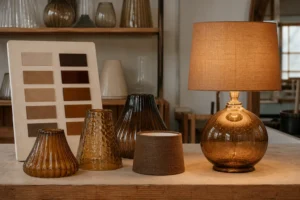
プリーツランプシェードは、布地をワイヤーフレームの周りに規則的な平行のひだに折りたたんで作られ、構造的な縦の質感を生み出します。プリーツの種類(ナイフプリーツ、ボックスプリーツ、カートリッジプリーツ)がシルエットを決め、生地と裏地が光の質や耐久性を左右します。.
プリーツシェードに絞り込んだ後、選択肢が一気に増えます。ナイフプリーツかボックスプリーツか?シルクかリネンか?ハードバックかソフト縫製か?ほとんどの商品ページにはスタイル名と写真が掲載されていますが、実際のランプや部屋でそれがどういう意味を持つのかの説明は省略されています。このガイドでは、プリーツの構造、生地の選び方、サイズ計算式、部屋別のスタイリング、DIYの基本、手入れ方法まで幅広く解説し、最初の選択で最適なプリーツランプシェードを選べるようにします。.
プリーツランプシェードとは?
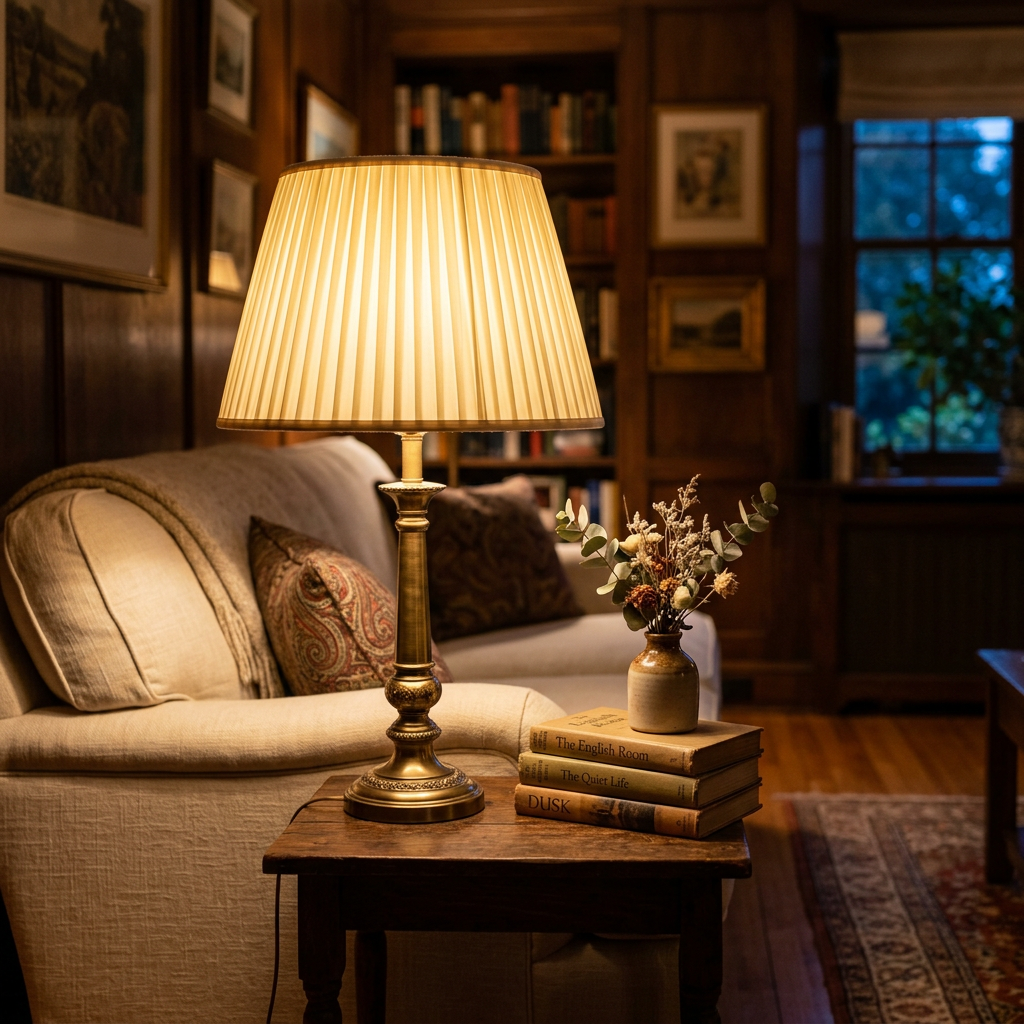
プリーツランプシェードとは、外側の布地をフレームに取り付ける前に規則的で繰り返しのある縦ひだに折りたたんだシェードのことです。このひだがシェードの周囲に構造的な縦の質感を生み出し、フラットな布のドラム型やクーリー型、プレーンエンパイア型のシェードとは異なります。.
プリーツとドラム型・エンパイア型シェードの違い
ドラム型シェードは、布地を円筒形のフレームに平らに張ります。クーリー型は幅広の円錐形で、こちらも布地は平らに張られます。プレーンエンパイア型はテーパーのある円錐形で、布地は滑らかです。いずれもひだはありません。.
プリーツランプシェードの特徴は、布地自体が動きを持つことです。布が折り重なり、ひだの幅や布の不透明度によって光の当たり方や反射が変わります。ドラム型シェードはすっきりと現代的な印象、プリーツシェードは構造的で仕立ての良い、より伝統的な印象を与えます。どちらが優れているということはなく、用途や部屋によって使い分ける道具です。.
あたり ウィキペディアのランプシェードに関する記述, プリーツ布シェードは、20世紀初頭に製造業者が量産用の均一なプリーツ間隔治具を開発したことで、日本のインテリアで標準的になりました。それ以前は、プリーツシェードは一つずつ手作りされ、ひだの幅にばらつきが見られました。.
下地のフレーム:プリーツシェードの形を作るもの
すべてのプリーツランプシェードはワイヤーフレームに取り付けられています。フレームが全体のシルエット(ドラム型、エンパイア型、ベル型、クーリー型)を決め、プリーツはその形に施される表面加工です。これには2つの理由があります。.
まず、シルエットとプリーツのスタイルは相互に影響します。テーパーのあるエンパイア型フレームのナイフプリーツは、ストレートなドラム型フレームのナイフプリーツとは異なって見えます。テーパーによってプリーツの間隔が上下で不均一になるためです。多くのメーカーは布地をセットする際にプリーツ幅を微調整してこれを補正します。次に、フレームがフィッターの種類やサイズ計算に必要な寸法を決定します。プリーツ自体は測定に必要な要素を追加しません。フィットに重要なのはフレームの形状だけです。.
| シェードのスタイル | 生地の加工 | シルエット | 主な使用場所 |
|---|---|---|---|
| プリーツドラム | 円筒フレームにプリーツ布地 | ストレートシリンダー | コンテンポラリー、トランジショナル |
| プリーツエンパイア | テーパードコーンにプリーツ生地 | 上部が細く、下部が広い | 伝統的、クラシック |
| プリーツベル | カーブしたテーパーフレームにプリーツ生地 | ベル型の広がり | ヴィクトリアン、アンティーク |
| ドラム(フラット) | 生地をシリンダーに平らに張る | ストレートシリンダー | モダン、ミニマル |
| クーリー | 幅広のつば付きコーンに平らな生地 | 幅広で平らなコーン | アジア風、モダン |
プリーツの種類:ナイフプリーツ、ボックスプリーツ、カートリッジプリーツなど
プリーツの種類によって、生地の折れ方や、点灯時・消灯時の表面の質感が決まります。異なるプリーツスタイルは、生地やランプのサイズ、部屋に合わせて選ばれます。.
ナイフプリーツ
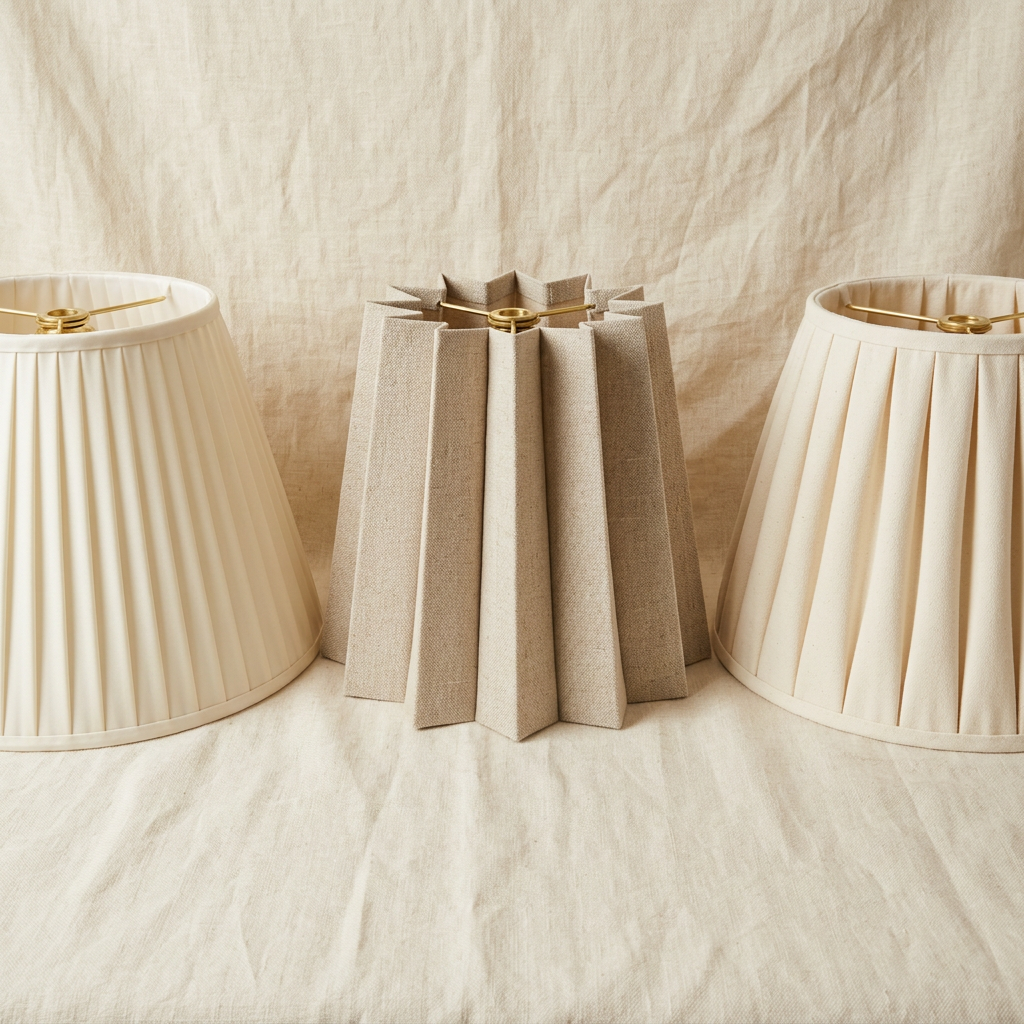
日本の プリーツ 最もシンプルなランプシェードの形では、すべての折り目が同じ方向に向き、本のページが重なるようになります。ナイフプリーツは、きっちりと規則的で方向性があります。横から見ると生地のパネルが重なって見え、正面からはきれいな縦線として見えます。.
ナイフプリーツは中厚手の生地(シルクデュピオニ、コットン、合成繊維混紡)に最適です。非常に薄い生地(シフォン、オーガンジー)は折り目の間で崩れやすく、非常に厚い生地(ベルベット、厚手ウール)は折り目部分がかさばります。市販のプリーツランプシェードの多くは、効率的な構造と幅広いインテリアスタイルに対応できるため、ナイフプリーツが使われています。.
ナイフプリーツシェードの折り幅は通常1インチから2インチです。より細い折り幅(0.5インチ〜1インチ)は「ピンプリーツ」と呼ばれ、小型のブドワールシェードに使われます。より広い折り幅(2インチ以上)は大型のフロアランプシェードに使われます。.
ボックスプリーツ
ボックスプリーツでは、交互に折り目が両側に外向きになり、各内向きの折り目の間に盛り上がった長方形のパネルが作られます。ナイフプリーツよりも立体的な仕上がりになります。周囲には柔らかな長方形のパネルが並び、折り目の端は各パネルの下に隠れています。.
ボックスプリーツは、ナイフプリーツの2倍に比べて、周囲1インチあたり約3倍の平らな生地幅を使用します。そのため、重くなり、製造コストも高くなります。また、硬めの生地にも適しており、各プリーツの構造がしっかりしているため、厚手のリネンやシルクタフタ、加工コットンでも形を保ちやすいです。.
ボックスプリーツのシェードは、ナイフプリーツよりも建築的で意図的な印象を与えます。デザイン性を重視した大型のテーブルランプやフロアランプに適しており、伝統的、フォーマル、エクレクティックなインテリアにも合います。.
カートリッジプリーツ
カートリッジプリーツ(「ロールドプリーツ」と呼ばれることもあります)は、生地を筒状にまとめて縫い付ける、柔らかく丸みのあるプリーツです。平らに折るのではなく、縫い付けることで、シェードの周囲に小さく均等に並んだ柔らかい円筒ができます。.
カートリッジプリーツは、ナイフプリーツやボックスプリーツよりも柔らかくカジュアルな印象です。特に薄手の生地(薄いコットン、ボイル、リネン)に適しています。このスタイルは日本のカントリーハウス風インテリアに関連しています。ナイフプリーツよりも手間がかかるため、同じサイズでもカートリッジプリーツのシェードは高価になりがちです。.
エンパイアプリーツシェード
これはプリーツの種類ではなく、よく検索されるため区別しておきたいフレーム形状です。エンパイアプリーツシェードは、テーパーのあるエンパイアフレームに、外側の生地でナイフプリーツやボックスプリーツを組み合わせたものです。テーパーによって下部の周囲が上部よりも大きくなり、クラシックなヴィクトリアンからミッドセンチュリーのシルエットを生み出します。プリーツによって、単なる円錐形に質感が加わります。.
市場にある「伝統的」なプリーツランプシェードのほとんどは、シルクやフェイクシルクのナイフプリーツを使ったエンパイアプリーツシェードです。.
| プリーツタイプ | 生地比率 | 最適な生地の重さ | フォーマルさ | 相対的なコスト |
|---|---|---|---|---|
| ナイフプリーツ | 生地2倍 | 軽量から中程度 | クラシックから現代的 | 低から中程度 |
| ボックスプリーツ | 生地3倍 | 中程度から重厚 | フォーマル、建築的 | 中から高 |
| カートリッジプリーツ | 生地2.5倍 | 軽量から中程度 | カジュアル、日本風 | 高い |
| エンパイアナイフプリーツ | 生地2倍 | 軽量から中程度 | 伝統的 | 低から中程度 |
| ピンプリーツ | 生地1.5倍 | 軽い | 繊細、寝室向け | 中級 |
生地ガイド:プリーツランプシェードの素材
生地の選択は3つの点に影響します:点灯していないときのシェードの見た目、点灯時の光の広がり方、そして色あせや劣化までの耐久性です。.
シルクとフェイクシルク
シルク シルクは、その光沢と透過する光の暖かさから、プリーツランプシェードの伝統的な選択肢です。本物のシルクデュピオニ(ダブルコクーン繊維による自然なスラブが特徴)は、布地の色を損なうことなく、光を暖かい金色の輝きに拡散します。ナイフプリーツやボックスプリーツのどちらでもきれいにプリーツが作れます。.
実用面での欠点:本物のシルクは直射日光下で2~3年以内に色あせし、合成繊維よりもかなり高価です。フェイクシルク(シルク織り仕上げのポリエステル)は、会話距離では本物のシルクと見分けがつかず、色あせもしません。ポリエステルを通した光はややクールですが、現代のLED色温度2700K~3000Kでは、ほとんどの部屋で違いはわずかです。.
販売業者が「シルク」シェードが本物か合成か明記していない場合、1万5千円未満であればほぼ間違いなくフェイクシルクです。.
リネンとコットン
リネン リネンはカジュアルやトランジショナルなプリーツシェードの定番生地です。自然な質感と重みのため、シルクほどシャープにはプリーツが入らず、カートリッジプリーツやワイドボックスプリーツにより適しています。ナチュラルリネンのシェードを通した光は、シルクよりも暖かく拡散され、午後の柔らかな光のような印象です。.
コットンもリネンと似た特性を持ち、やや柔らかい手触りと優れた色保持力があります。プリントコットンのランプシェード(ストライプ、小花柄、幾何学模様など)は、パターンが各プリーツのパネル面に均一に見えるよう、ほとんどがボックスプリーツで作られています。.
どちらの生地も、シルクよりも軽い水分に強く、部分的なクリーニングが必要な場合に役立ちます。.
ポリエステルと合成繊維混紡
手頃な価格のプリーツランプシェードには、ポリエステルやポリコットン混紡が使われます。メリットは低価格、色あせにくさ、色の均一性です。デメリットは、安価なポリエステルは点灯時に平坦でプラスチックのように見えやすく、特に淡色で顕著です。電球の真上に「ホットスポット」ができ、拡散光にならないのが特徴です。ネット購入の場合は、白背景の商品写真ではなく、点灯時の写真を確認しましょう。.
リネン調の表面プリントが施されたポリエステルシェードは、中価格帯でよく見られ、十分な性能を発揮します。光の質よりも耐久性が重視される子供部屋やサブスペースのシェードに適した選択肢です。.
裏地とライニング:内側の層が重要な理由
ほとんどのプリーツランプシェードは、外側の装飾生地と内側のライニング(通常は白またはクリーム)の2層構造です。ライニングは、外側の生地よりも光の質を大きく左右します。外側生地に接着された硬質プラスチック(スチレン)裏地は、シャープなプリーツを作りますが、光はより強く指向性が強くなります。コットンやシルクのソフトな縫製ライニングは、柔らかく拡散した光を生みますが、縫い目からの光漏れを防ぐために精密な仕立てが必要です。.
リビングなど目線の高さに置くプリーツシェードには、白やアイボリーのソフト縫製ライニングが最適です。実用的なランプ(読書灯やデスクランプ)には、ハードバックのスチレン構造が適しており、耐久性も高いです。.
ランプに合うプリーツランプシェードのサイズの選び方
どのランプシェードにも共通する3つの寸法の考え方は、プリーツシェードにも当てはまります。バランスの良いプロポーションを選ぶことは、フィッターサイズを合わせるのと同じくらい重要です。.
1/3ルールと高さの比率
シェードの高さは、ランプ全体の高さ(ベース+シェード)の約1/3が目安です。高さ76cmのフロアランプならシェードは約25cm、高さ46cmのテーブルランプなら約15cmです。これは絶対的なルールではありませんが、部屋に置いたときに安定感があり、上部が重くなりすぎたり小さすぎたりしないバランスです。.
シェードの底の直径は、ランプベースの最も広い部分より少なくとも2インチ広く、一般的には4〜6インチ以上広くならないようにしてください。ベースよりも狭いシェードは窮屈に見え、広すぎるものは上部が重く不格好に見えます。.
| ランプの種類 | 標準的なベースの高さ | 推奨されるシェードの高さ | 推奨底直径 |
|---|---|---|---|
| 小型テーブルランプ | 10〜14インチ | 6〜8インチ | ベース幅+2〜4インチ |
| 標準テーブルランプ | 15〜20インチ | 7〜10インチ | Base width + 3″–5″ |
| Large table lamp | 21″–28″ | 9″–12″ | Base width + 4″–6″ |
| フロアランプ | 48″–66″ | 10〜14インチ | 14″–18″ typical |
| Buffet/torchiere lamp | 28″–36″ | 10″–13″ | 14″–18″ typical |
For measuring the specific fitter diameter and the three dimensions any shade requires, our guide to measuring a cut glass lamp shade walks through the approach in detail — the method applies to any lampshade frame, not just glass.
Fitter types on pleated shades
Pleated lampshades use the same fitter standards as all other shade types.
A スパイダーフィッター (the most common type) is a metal cross or multi-arm assembly at the top of the shade that rests on a harp. Harp saddles are standard on most table lamp sockets. Spider fitter size must match the harp width.
A ウノフィッター is a ring that screws directly onto the bulb socket. Used on some torchiere and floor lamps without harps.
A クリップオンフィッター is a spring that clips directly onto the bulb. Used on small boudoir lamps and candelabra fixtures.
When ordering a replacement pleated lampshade, confirm the fitter type before anything else. A shade with the right diameter and height but the wrong fitter type won’t attach to the lamp.
Common sizing mistakes
Ordering by shade top width rather than bottom width is the most common error. On a tapered empire pleated shade, the top might be 6″ and the bottom 14″. The 14″ is the number that determines visual proportion; the top width is largely irrelevant to how the shade looks in the room.
The second common mistake is ordering a shade without checking the harp size. Spider-fitter shades require a harp, and harps come in 7″ to 12″ heights. If the lamp doesn’t have a harp or saddle, you either need to add one or choose an uno-fitter shade instead.
Styling pleated lampshades by room and interior style
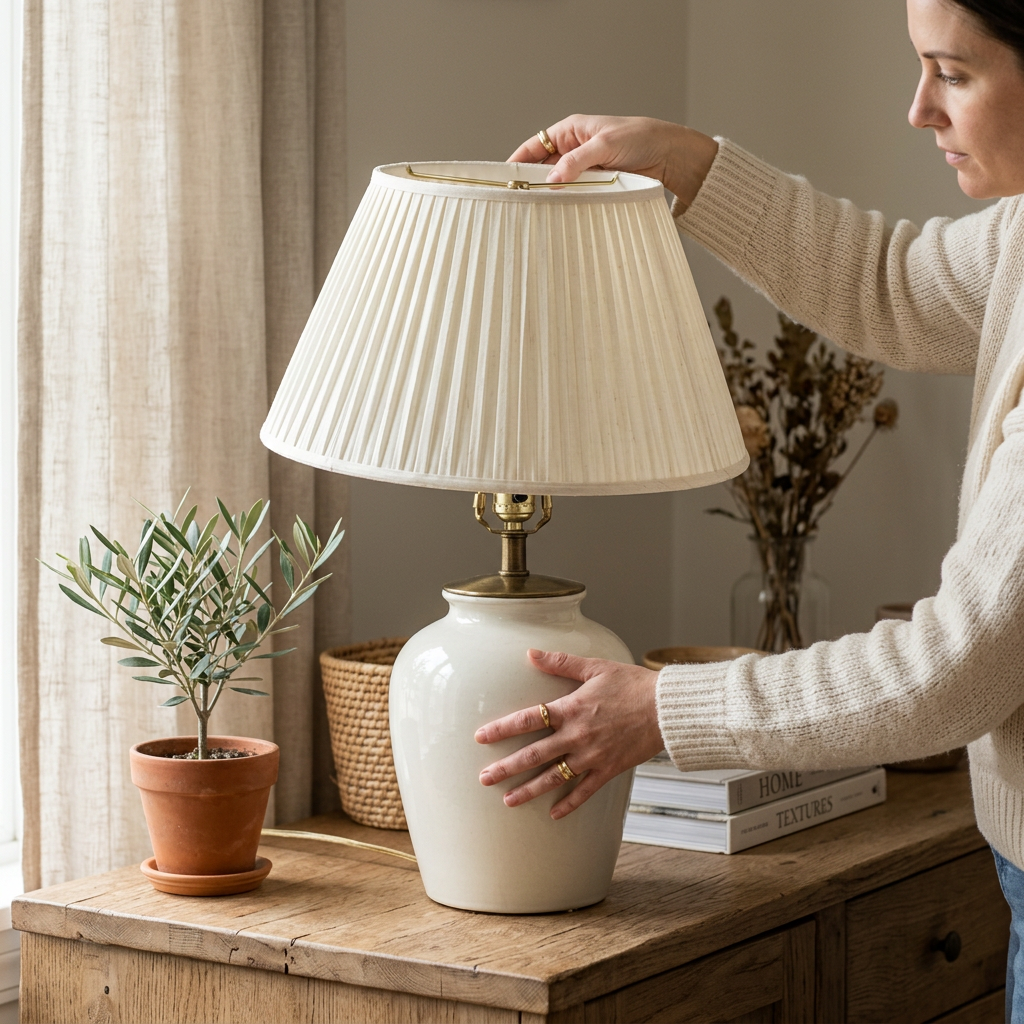
The pleat type and fabric you choose should match the room’s existing character. There are patterns that consistently work, and it’s worth knowing which combinations tend to look off.
Traditional and classic interiors
Knife-pleated or box-pleated empire shades in faux silk are the workhorses of traditional interiors. Cream, ivory, and warm white are the safe choices. Deep red, hunter green, and navy in silk add a library or study feel. A narrow trim at the bottom — cord, ribbon, or tassel — is common in this style and fits the vocabulary.
Traditional rooms often have ornate ceramic, brass, or crystal lamp bases. The pleated shade reinforces that formal character. For rooms that already have ヴィンテージガラスランプシェード on other fixtures, a pleated fabric shade can work as contrast: the two textures (glass and pleated fabric) read as distinct without competing.
Modern and transitional spaces
Most modern spaces lean toward drum shades, but a box-pleated shade in natural linen can hold its own in a transitional room. Keep the fabric in undyed natural tones — ecru, stone, warm gray — rather than the ivory and cream associated with formal traditional interiors. Skip the trim. A clean-cut bottom edge or very narrow self-welt is the right finish.
Very tight knife pleats in a stiff white faux silk can also work in a contemporary setting, particularly if the lamp base is sculptural and the shade is used as a counterpoint. It’s not the obvious choice, but it’s not wrong either.
Color and pattern selection guide
Neutral pleated lampshades (white, cream, linen, gray) work in virtually any room. They transmit light efficiently and read as background rather than feature. If the base is decorative, a neutral shade lets the base carry the weight.
Colored shades (green, pink, navy, rust) shift the lamp from background to focal point. This is a deliberate design move, not a mistake. It works when the lamp has enough prominence in the room to earn that attention. A colored pleated shade on a table lamp tucked in a corner tends to look like an afterthought.
Patterned pleated shades (stripes, small prints) are typically box-pleated so the pattern faces outward flat across each panel face. They work in eclectic, English country, and casual traditional rooms.
DIY pleated lampshade basics
Making a pleated lampshade at home is achievable for a patient beginner. The difficulty varies by pleat type, and most online tutorials underestimate the precision required for even spacing.
What you actually need (and what most tutorials skip)
Materials for a basic knife-pleated shade: fabric, a wire lampshade frame, bias tape or ribbon for trim at top and bottom, fabric glue or a sewing machine, a metal ruler, and an iron. What most tutorials skip:
The frame matters more than the fabric. A warped or uneven wire frame will make every pleat look crooked no matter how carefully you cut and fold. Buy a quality frame or straighten the wire yourself before starting. Checking the frame for level before you begin is two minutes well spent.
Pleat spacing must be calculated before you cut fabric. Measure the full circumference of the frame at the top and bottom, divide by your planned pleat width plus fold depth, and verify the result is a whole number of pleats. If it doesn’t divide evenly, adjust the pleat width slightly. A visible wide pleat or a narrow gap at the seam where the fabric joins ruins the finished shade — it’s the detail people notice first.
Knife pleat vs. box pleat for beginners
Knife pleats are simpler: fold, pin, and glue or stitch. Box pleats require marking the outward-facing center of each pleat and two fold lines on each side, which multiplies the number of marks and pins considerably.
For a no-sew version: iron-on adhesive tape (Heat’n Bond or equivalent) pressed and bonded at each pleat before attaching to the frame works acceptably for knife pleats in medium-weight fabric. For cartridge or box pleats in heavier fabric, machine stitching at the pleat base gives a cleaner result. The no-sew tutorials that use hot glue directly produce inconsistent results — the glue doesn’t bond cleanly to bias tape and tends to show through thin fabrics as hard ridges.
Cleaning and care
Fabric pleated lampshades need occasional cleaning. The approach depends on the fabric type and how the shade is constructed.
For knife-pleated or box-pleated shades with a styrene hard backing: dust with a soft dry brush or low-suction vacuum with a brush attachment. Work pleat by pleat, top to bottom. Don’t use water on styrene-backed shades — moisture can separate the fabric from the backing and leave water stains.
For soft-sewn silk or faux-silk shades: dry brushing first, then spot-clean with a barely damp cloth and mild detergent if needed. Blot rather than rub. The fabric is stitched rather than glued, so it tolerates light moisture better, but soaking will distort the pleats.
For linen or cotton shades where the fabric is attached to removable rings: check whether the cover detaches from the frame. If it does, hand washing in cool water with reshaping while damp is possible. More commonly, the fabric is stitched directly to the frame wire and full washing is not practical.
Never put a pleated lampshade in a washing machine. The wire frame rusts, the adhesive or stitching loosens, and the shape won’t recover.
Rotate the shade a half turn every few months to even out light exposure. This matters most on silk and faux-silk shades near windows, where UV fading is uneven on the sun-facing side.
よくある質問
What is the difference between a knife pleat and a box pleat lampshade?
Knife pleats fold all in one direction, like overlapping pages. Box pleats fold outward on both sides of a center panel, creating flat rectangular surfaces around the shade with hidden fold edges underneath. Knife pleats read as directional vertical texture. Box pleats read as a series of flat panels with a more architectural, three-dimensional structure. Box pleats use roughly 50% more fabric per shade and cost more to produce. For most table lamp settings, knife pleats are the practical choice. Box pleats suit larger, more prominent lamps where the shade itself is a design feature.
Are pleated lampshades out of style?
Tight knife-pleated empire shades in ivory silk are a period choice and should be treated as one — they suit traditional, classic, and historically-influenced interiors deliberately. Pleated shades in natural linen or box pleat in a muted modern color work in transitional and contemporary rooms. The answer depends on the specific pleat style, fabric, and room, not the category as a whole. The mistake isn’t choosing a pleated shade; it’s dropping one into a room whose character it doesn’t match.
What fabric is best for a pleated lampshade?
For traditional interiors: faux silk in cream or ivory. Good light quality, durable, and holds knife pleats cleanly. For casual or transitional rooms: natural linen — better diffusion, more texture, and it ages well. For high-use or practical settings: a polyester blend, which fades less than silk and tolerates more handling. For showpiece lamps in low-UV settings: genuine silk dupioni, which has a warmth of light that synthetic fabrics can’t fully replicate.
Can I use an LED bulb with a pleated lampshade?
Yes. The U.S. Department of Energy confirms that LED bulbs produce significantly less heat than equivalent incandescent or halogen bulbs. This is a practical benefit for fabric shades: the fabric and lining no longer face the heat stress that shortened the life of shades under incandescent bulbs. The main consideration is color temperature. Choose a warm white LED (2700K to 3000K) to maintain the warm glow expected from a pleated shade. Daylight LEDs at 5000K or higher will make the fabric look flat and cool.
How do I clean a pleated fabric lampshade?
For hard-back (styrene) shades: dry brush or low-suction vacuum only — water damages the adhesive bond. For soft-sewn shades: dry brushing first, then spot-clean with a barely damp cloth if needed. Never immerse, never machine wash. Rotate the shade regularly to even out UV fading on sun-facing sides.
Where can I buy a good pleated lampshade?
Standard sizes are widely available from home goods retailers and online marketplaces. For non-standard fitters, unusual dimensions, or a specific fabric combination, specialist lampshade manufacturers offer custom sizing. If you’re working with a lamp base that currently holds a glass shade rather than a fabric one, our カットガラスランプシェードコレクション covers hand-blown and pressed glass shades across standard fitter sizes as an alternative.
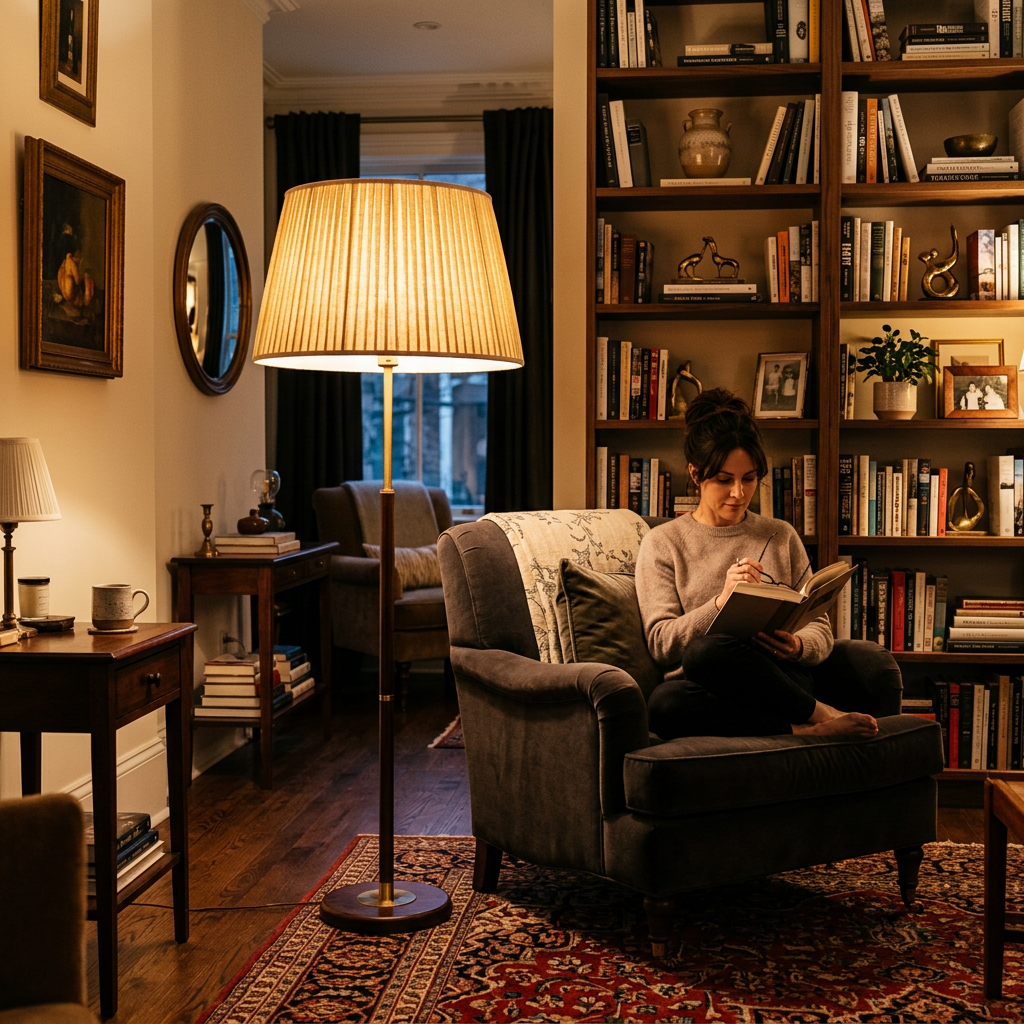
結論
A pleated lampshade isn’t a single product — it’s a category with real variation in construction, fabric, and appropriate setting. Knife pleats in faux silk belong in a traditional room. Box pleats in linen suit a transitional one. Getting the wrong combination looks off in a way that’s hard to articulate but obvious once you’ve seen the right combination.
The three questions to answer before buying: what pleat style fits the room, what fabric gives you the light quality you want, and what dimensions match the lamp. Most people only think about the third one, which is why so many replacement shades look slightly wrong even when they technically fit. If the lamp currently uses a glass shade and you’re considering a fabric alternative, or vice versa, our vintage glass lamp shades guide covers glass construction and fitter sizing across the same standard dimensions.