新しい器具用のバスルームガラスランプシェード:適合、仕上げ、湿気対策の要件

目次

For a new bathroom lighting fixture, choose the glass shade as part of the complete luminaire, not as an isolated decorative part. The shade needs a confirmed fitter, stable dimensions, a finish that works with the intended light source, and a cleaning plan. The fixture assembly, wiring, seals, and installation still carry the moisture and electrical safety responsibility.

That distinction prevents a common sourcing mistake: asking for a "waterproof glass lampshade" when the real requirement is a complete damp-location or wet-location fixture with a compatible glass diffuser. A factory can develop the shade to the fixture, but it should not assign an IP rating to bare glass or promise installation compliance without the complete assembly and the destination market's requirements.

This guide is for lighting brands, bathroom fixture manufacturers, hospitality contractors, and project buyers developing new bathroom wall, vanity, ceiling, or pendant fixtures. It focuses on what to specify before a supplier makes samples.

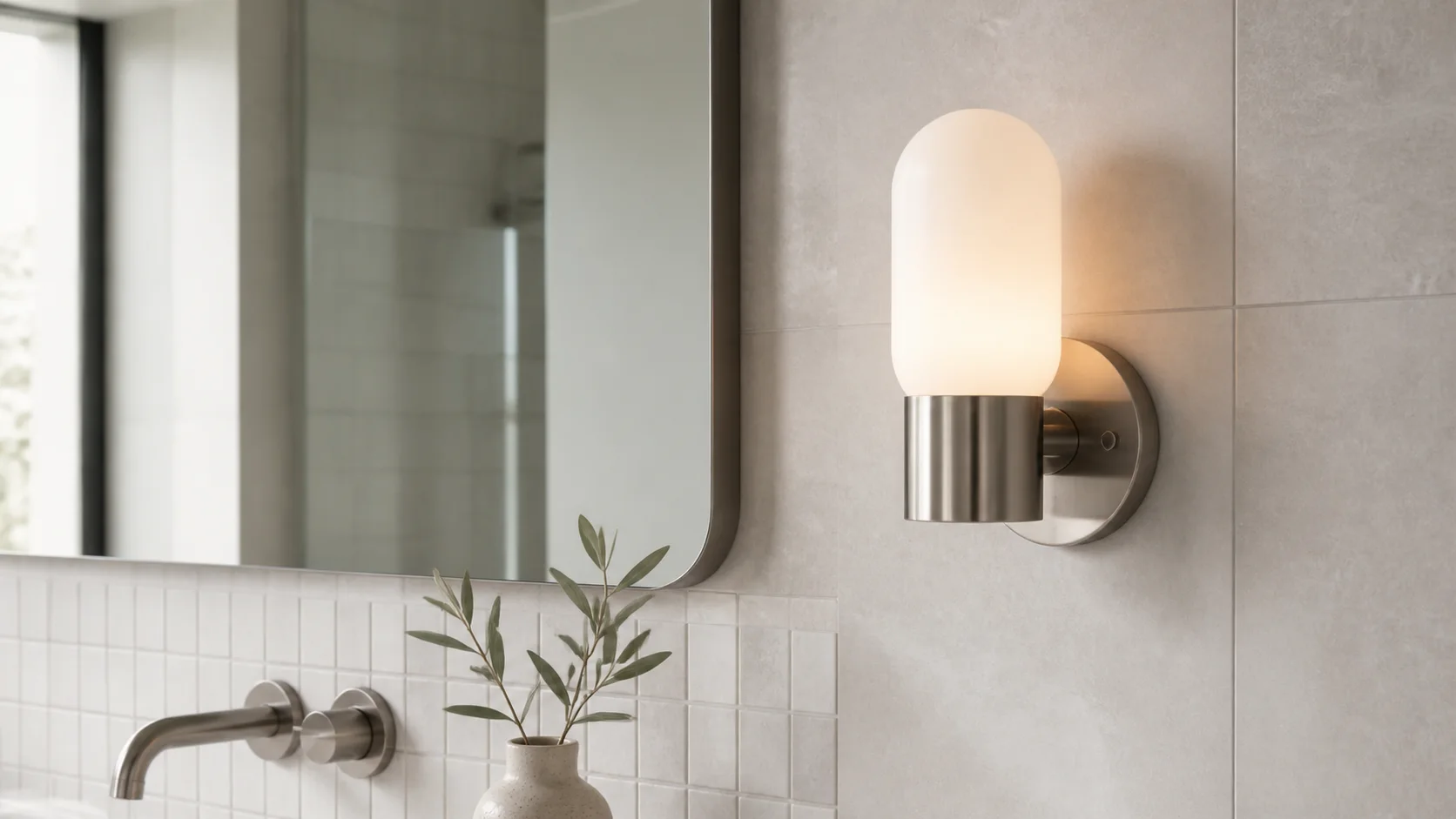
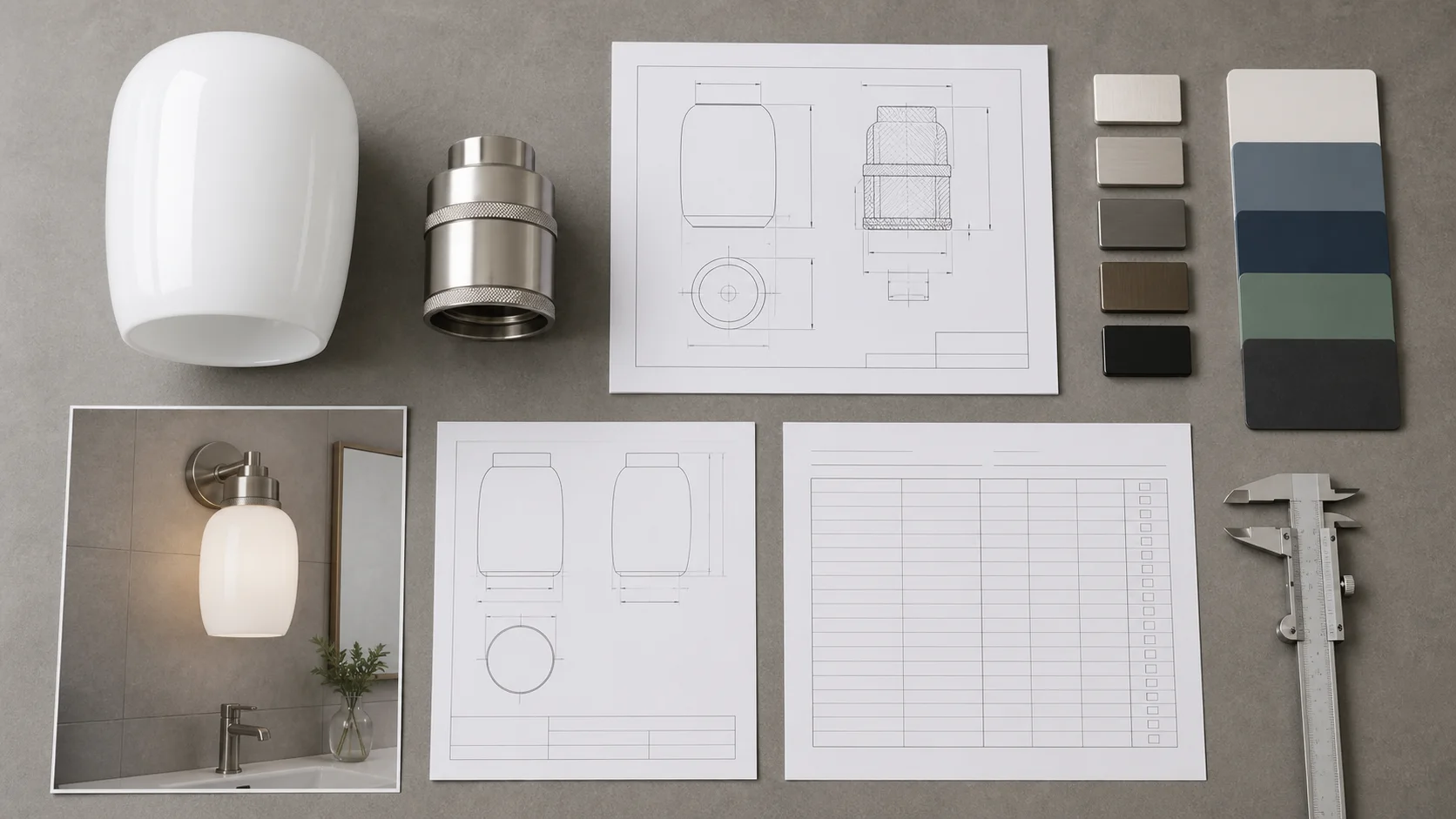
オパールガラスのランプシェードが新しいバスルームの壁面器具に組み込まれ、タイル張りの洗面台の横に設置されている

Why bathroom shade projects need a different brief

A bathroom is not one uniform exposure condition. A shade above a vanity may see humidity and occasional cleaning spray. A ceiling fixture near a shower can face a more demanding combination of condensation, splashing, and limited access for maintenance. A decorative pendant over a dry powder room may have a different risk profile from a luminaire installed inside a shower area.

The glass itself is only one part of that decision. The holder, gasket, socket, driver, cable entry, backplate, ventilation, and installation position determine how the completed fixture handles moisture. The buyer's brief should therefore identify the room position and the complete luminaire concept before choosing a glass profile.

This is different from an existing vanity replacement. For a replacement project, the old shade, holder, opening, and screw arrangement often control the quote. JX's bathroom vanity replacement shade page covers that separate use case. A new-fixture project has more freedom, but it also puts more responsibility on the buyer to define the interface before tooling.

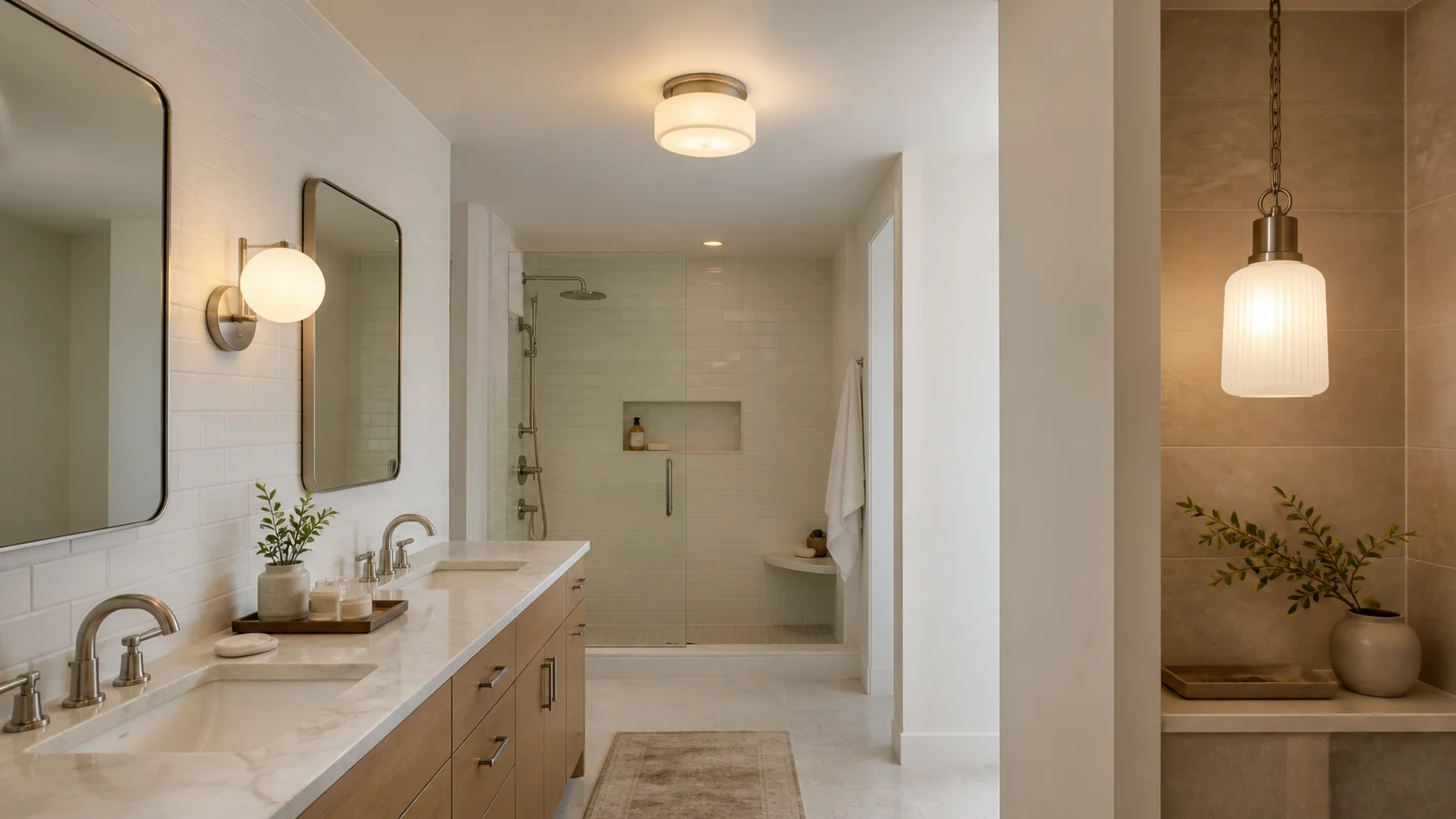
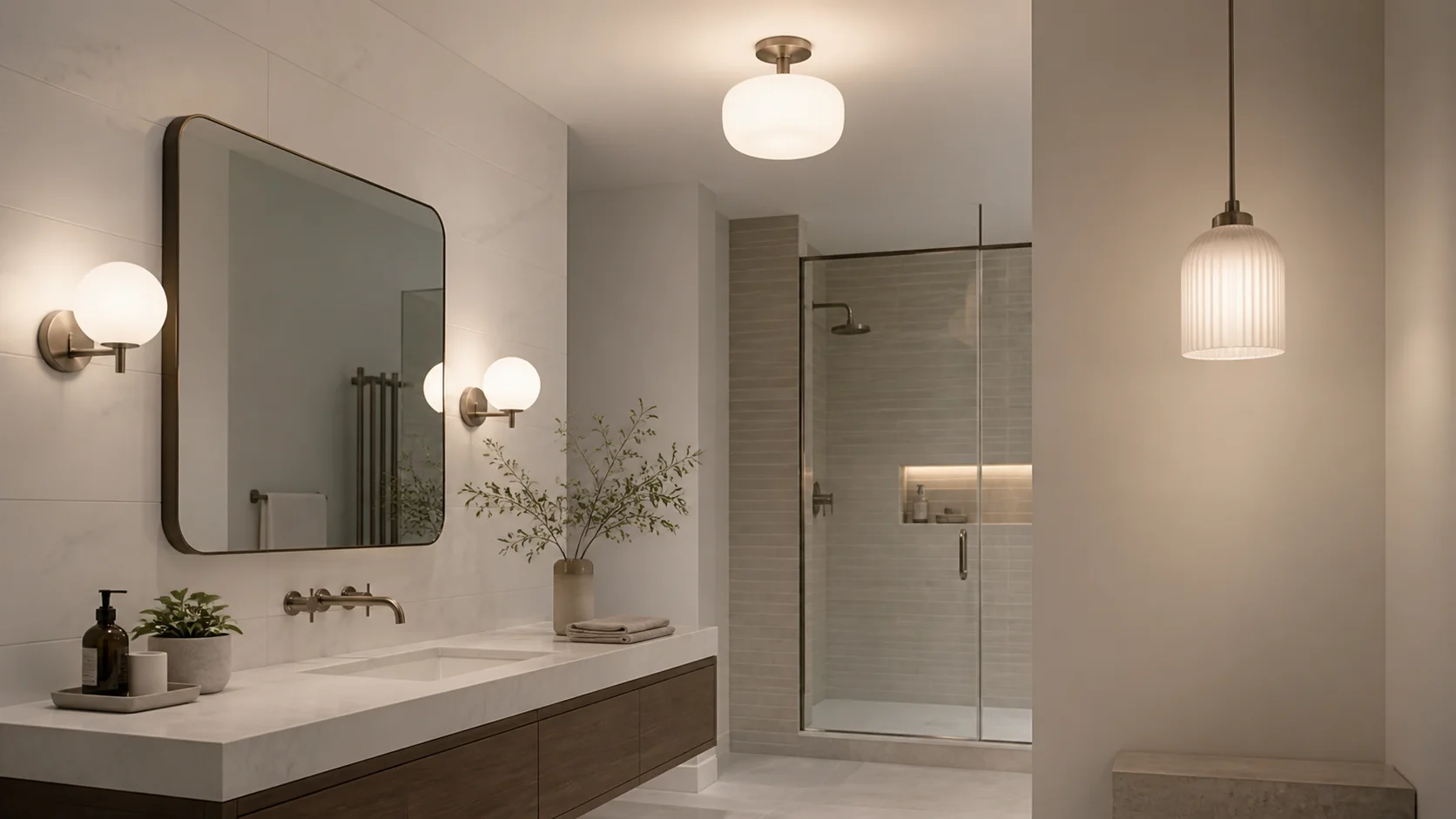
Bathroom lighting positions showing a vanity sconce, ceiling fixture, and pendant outside the shower area

Use the room position to start the conversation with the factory:

Fixture positionExposure questionShade decisionComplete fixture document to request
Vanity or mirror wall lightIs the glass exposed to steam, splash, or cleaning spray?Choose the optical finish, opening, and retention method togetherInstallation position, enclosure details, and location rating for the fixture
General bathroom ceiling lightCan condensation collect above or inside the shade?Check the seating surface, drain path, and service accessAssembly drawing, gasket arrangement, and electrical safety documentation
Light outside a shower or bath areaWhat is the distance from the water source and how is the fixture mounted?Match the shade to the planned holder and viewing angleLocal installation requirements and the luminaire rating
Shower or directly splashed locationCan water reach the complete fixture during use or cleaning?Treat the shade as one component of a sealed systemDestination-market approval, test evidence, and installation instructions

Do not use the word "bathroom" as a substitute for an exposure definition. Ask the fixture engineer or electrician to classify the actual installation, then give the shade supplier the dimensions and interface conditions that follow from that classification.

Keep the glass shade separate from the IP rating

日本の IEC 60529 IP Code classifies degrees of protection provided by enclosures for electrical equipment. That scope matters. A loose glass globe, dome, or diffuser is not the same thing as a tested luminaire enclosure.

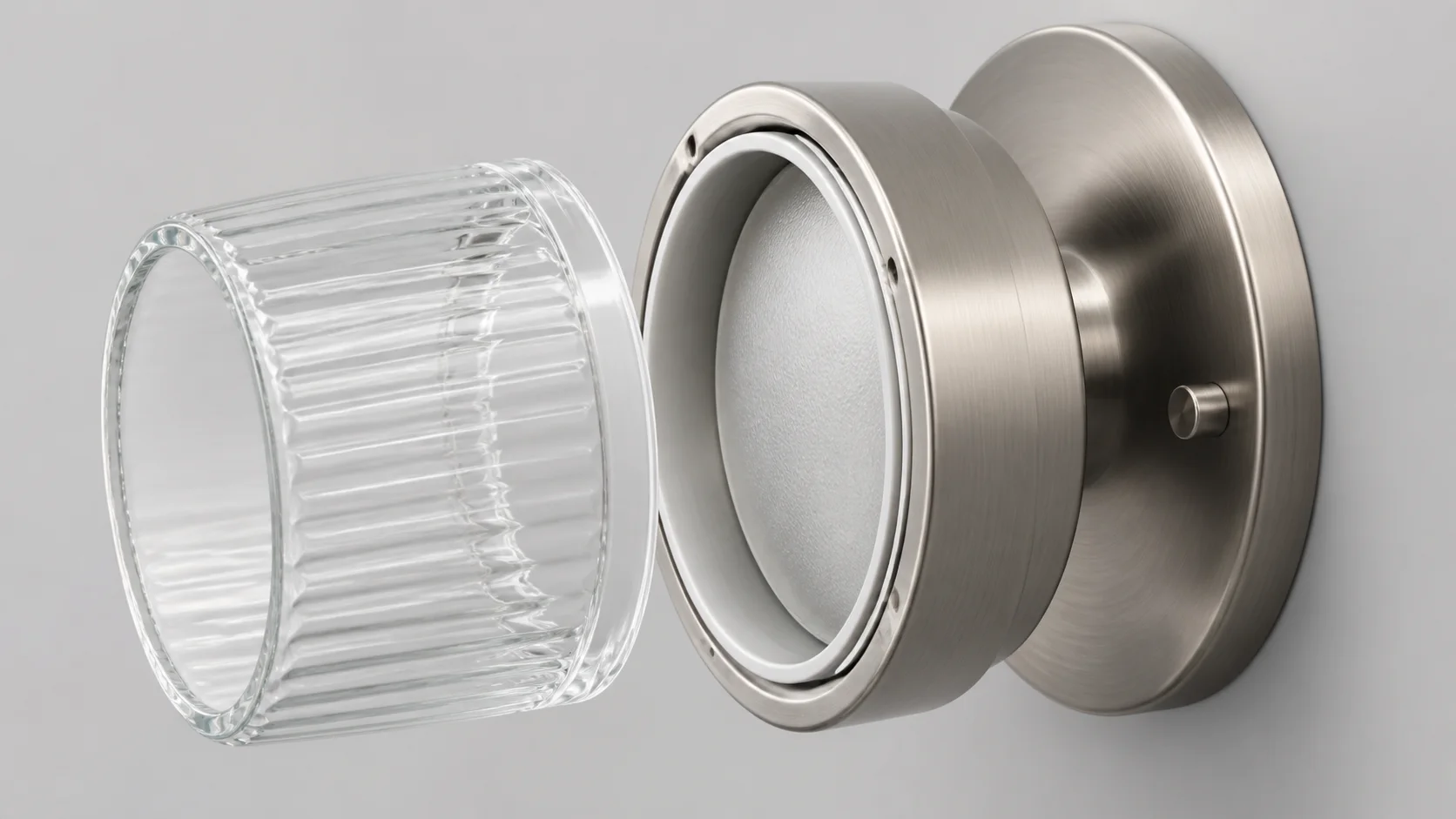
The shade can help the assembly manage splash, dust, light transmission, or cleaning access, but the glass part alone does not prove that the fixture meets an IP level. A seal may sit between the glass and a metal ring. The retaining screws may compress the gasket unevenly. The socket or cable entry may be the point where water reaches the electrical compartment. Those conditions cannot be judged from a shade photograph.

Bathroom electrical guidance also depends on installation. Electrical Safety First notes that wet skin increases the risk and severity of electric shock, and it recommends care with enclosed fixtures and the reach of exposed fittings in bathrooms. Its bathroom safety guidance is useful background for the project team, but it does not replace the rules used in the country where the luminaire will be installed.

For a buyer, the clean wording is:

Develop the glass shade for the specified complete luminaire. Confirm the shade geometry, retention interface, finish, and cleaning requirements. The fixture manufacturer remains responsible for the complete assembly rating and market-specific compliance.

That wording keeps the factory responsible for the glass deliverables without asking it to make a safety claim it cannot validate from a component alone.

Bathroom wall fixture with a glass diffuser, metal retaining ring, and visible gasket interface shown as a product study

Choose the finish by light output and cleaning routine

Bathroom buyers often start with color. The more useful first question is how the light should look on a face, a wall, a mirror, or a floor. A shade can soften a bright LED source, spread light across a vanity, or preserve a visible filament. The surface finish changes that result.

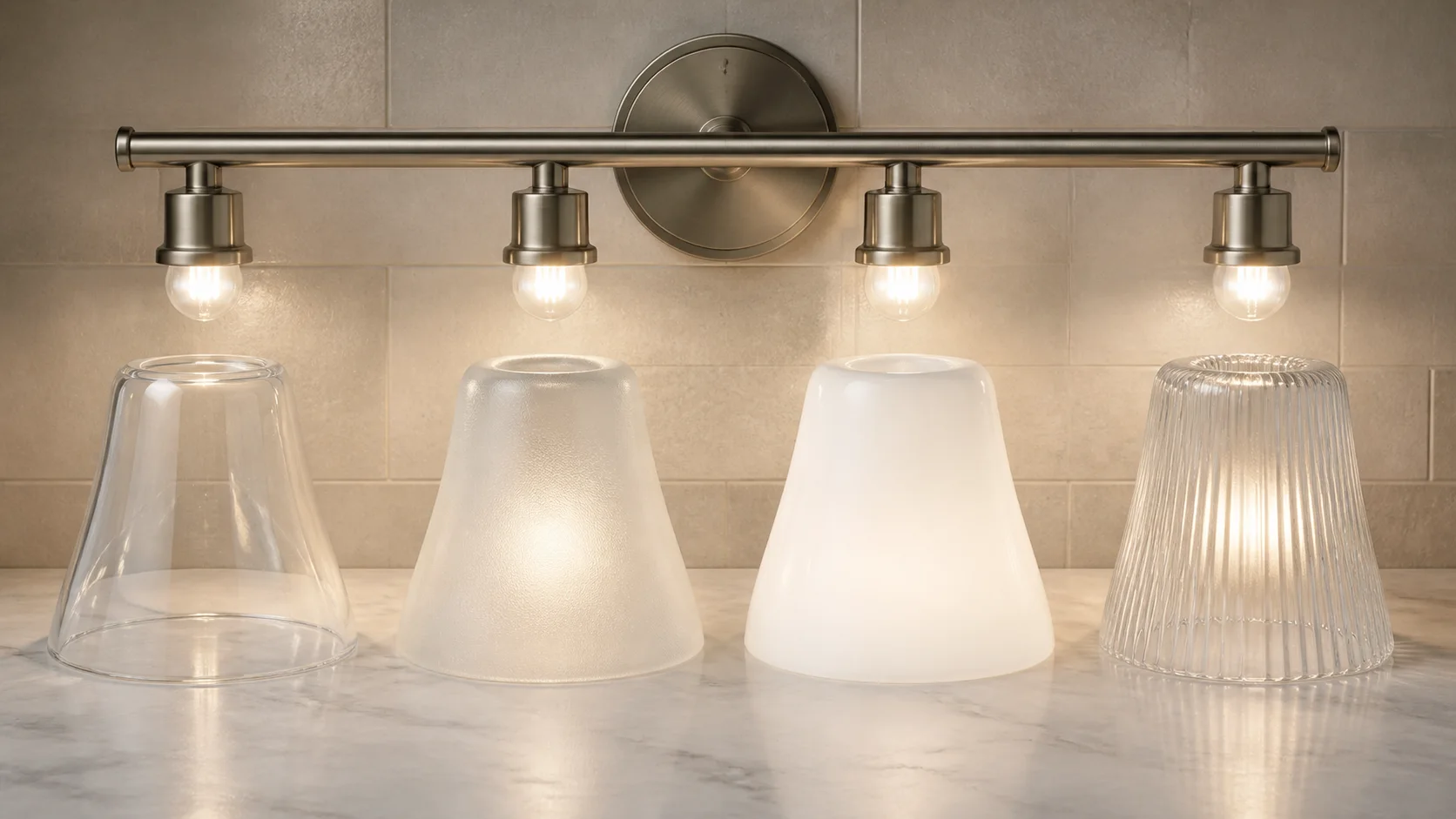
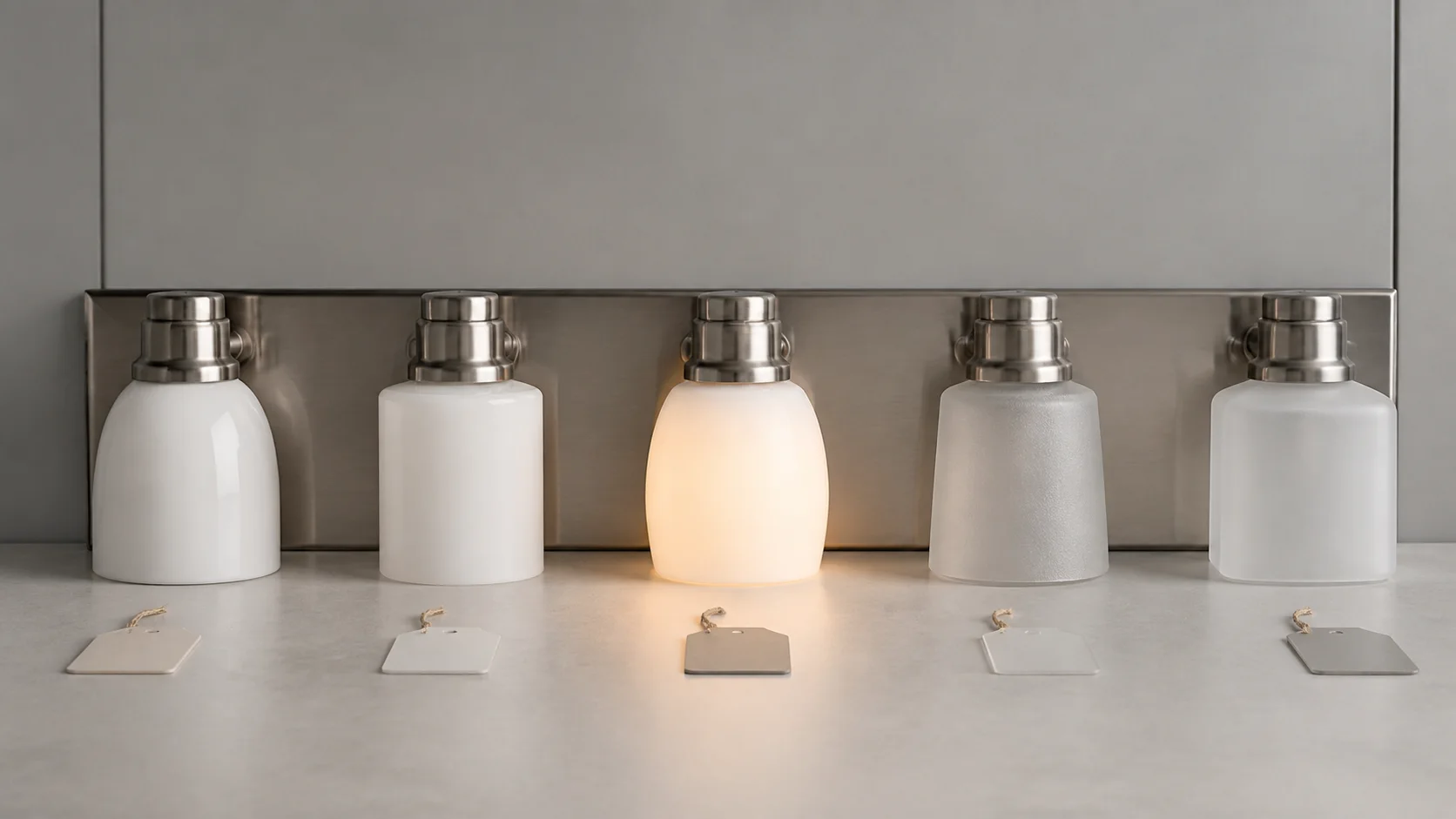
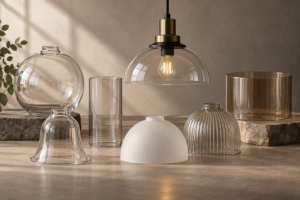
Clear glass keeps the bulb and internal geometry visible. It suits decorative fixtures where the light source is part of the design, but it can expose glare and bright points. Frosted glass scatters light and can make a vanity fixture easier to look at from the side. Opal or milk glass usually gives a more even luminous surface, which can work well when the fixture needs calm ambient light rather than a visible bulb.

Ribbed, fluted, and patterned glass add character and can break up a bright reflection. They also add grooves that collect dust or cleaning residue. That does not make them unsuitable for a bathroom. It means the buyer should approve the finish with the intended cleaning method and decide whether the ridges face the room, the wall, or the inside of the fixture.

One real fixture specification shows why a buyer should read the whole document: the Besa Lighting Bolla vanity specification identifies handcrafted glass shades, gives nominal dimensions, and labels the complete wall luminaire as suitable for damp locations. It also warns that handcrafted glass has dimensional tolerance. That is a useful example of a system-level specification, not a universal rule for every shade.

Clear, frosted, opal, and ribbed glass shade samples arranged under the same bathroom LED light

ガラス仕上げ光の振る舞いBathroom use to considerSample approval question
クリアShows the bulb, holder, and internal reflectionsDecorative vanity or pendant where the light source is intentionalIs the brightest point acceptable from the normal viewing angle?
フロストSoftens direct brightness and spreads lightVanity, corridor, and practical wall lightingDoes the surface stay even after wiping and repeated handling?
Opal or milkProduces a calmer glowing surface with less visible hardwareAmbient bathroom lighting and hospitality projectsDoes the shade remain uniform at the selected LED output and dim level?
Ribbed or flutedAdds directional texture and breaks up reflectionsDesign-led sconces and feature fixturesCan the ridges be cleaned, and does the pattern create unwanted bright bands?
Colored or smokeAdds tint and contrast to the fixtureBrand collections and decorative projectsDoes the color stay acceptable across the full shade and under the actual lamp?

Ask for the intended light source before the supplier samples the finish. A shade approved with a warm LED may look noticeably different with a cooler source, a high-output module, or a dimmed driver. The glass specification should name the lamp or LED condition used for approval.

Specify the fitter and geometry before tooling

Bathroom shade failures often begin at the interface, not in the visible body. A shade can look correct in a product photograph and still fail because the neck does not seat, the retaining ring bottoms out early, or the hole pattern does not align with the backplate.

JX's fitter types and compatibility page is a useful starting point for naming the attachment system. For a new fixture, the buyer should go one step further and send the actual holder drawing or a controlled interface sample.

At minimum, the supplier should receive:

  1. Maximum outside diameter and overall height.
  2. Opening inside diameter and opening outside diameter.
  3. Neck outside diameter, neck length, thread, groove, or retaining step where present.
  4. Contact face width and the surface that carries the glass.
  5. Screw, clip, ring, or gasket details, including the usable compression space.
  6. Bulb or LED clearance, cable path, and the intended up or down orientation.
  7. The unit system and the dimensions that control inspection.
  8. A clear reference for any asymmetrical detail, hole, logo, rib, or decorative alignment.

使用する glass lamp shade technical drawing checklist when preparing the drawing. Do not send only a nominal shade diameter. The factory needs to know which surface controls assembly and which dimensions are appearance references.

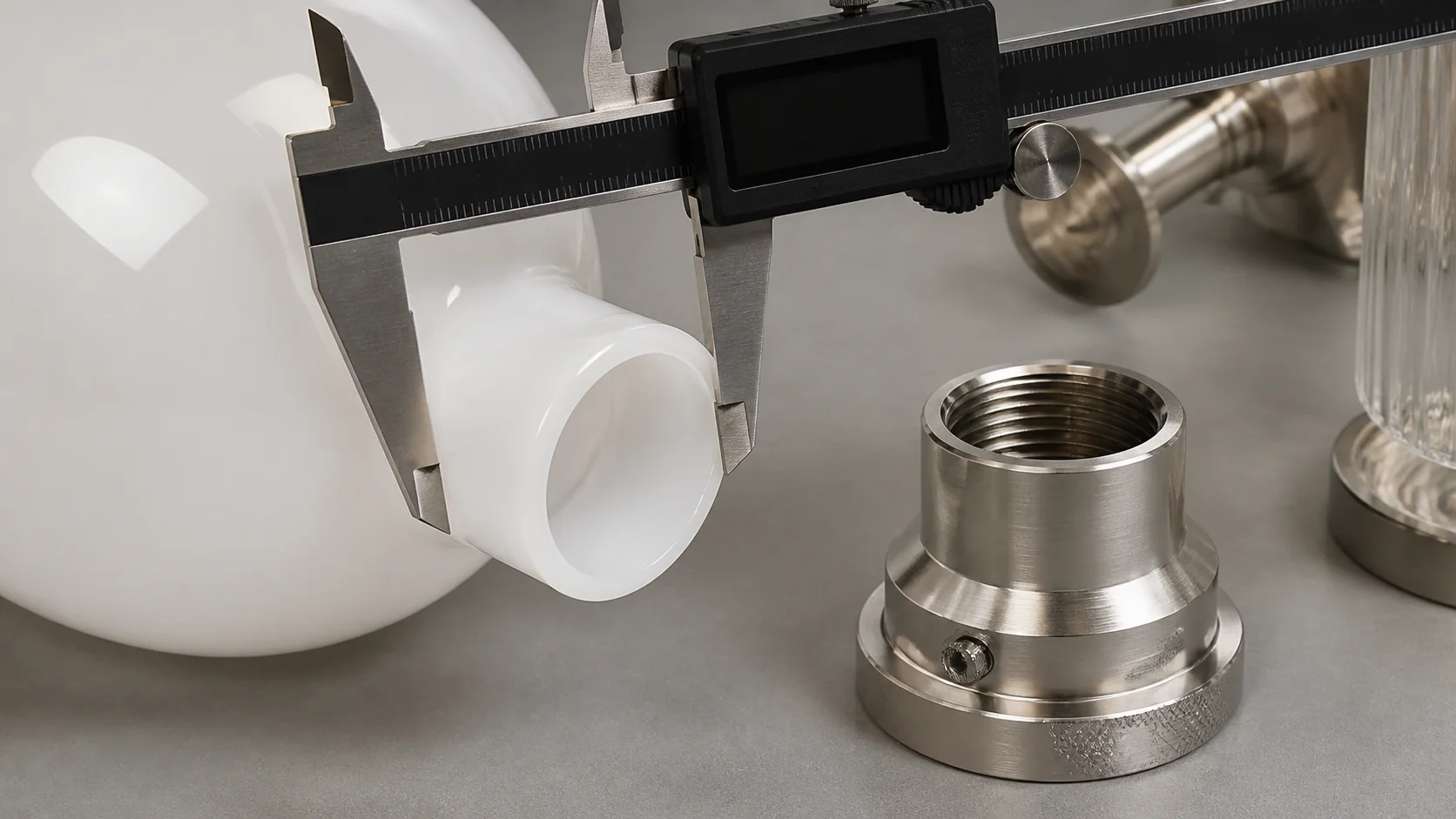
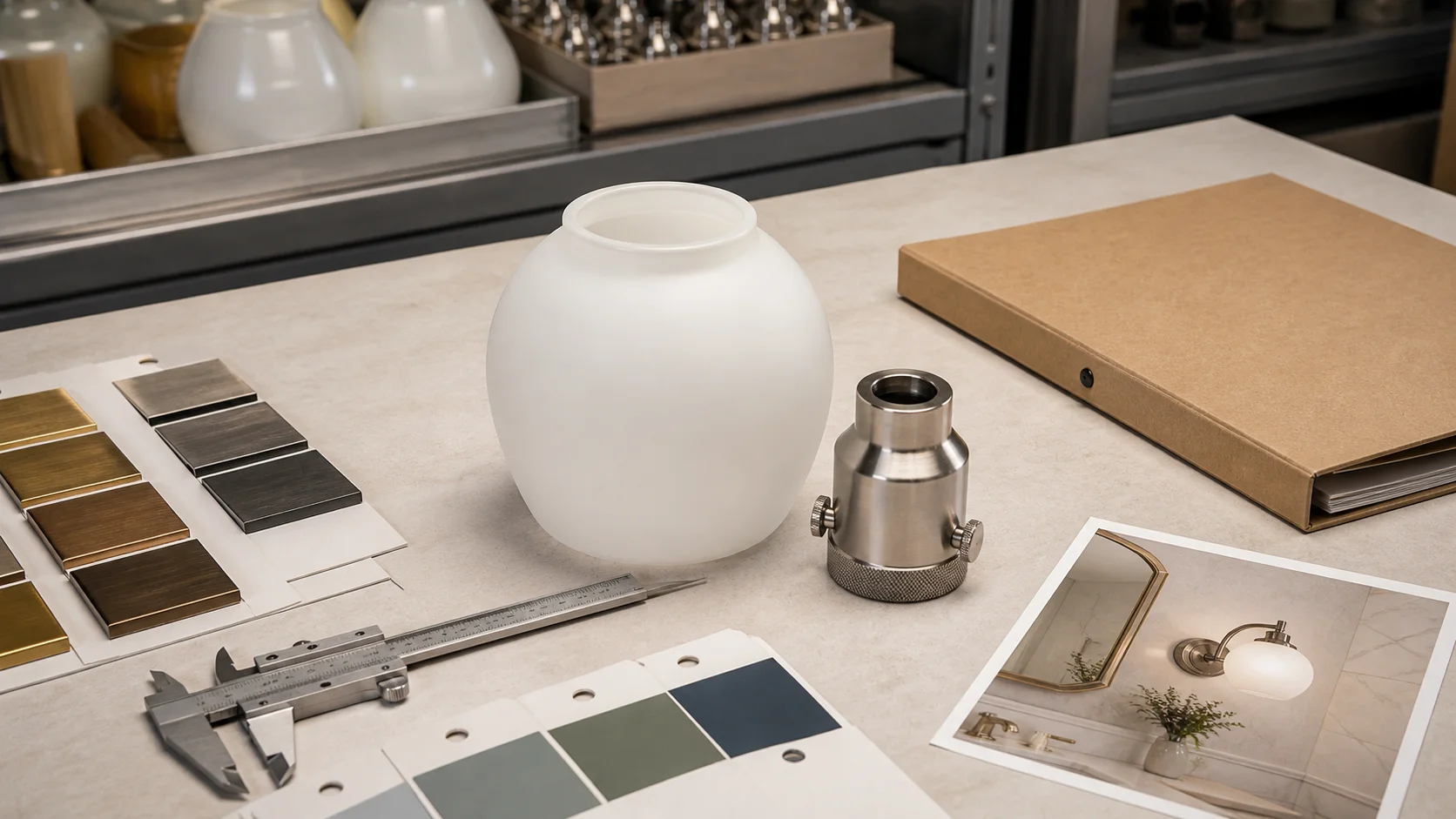
Digital caliper measuring the neck diameter of an opal glass lamp shade against a metal bathroom fixture holder

For a new tool, confirm whether the drawing describes the as-formed glass or the finished glass after grinding, polishing, coating, or frosting. If the opening is finished after forming, the inspection dimension may belong to the finished contact face rather than the mold cavity. That distinction should be written into the drawing and the sample record.

Design for cleaning, condensation, and service access

A bathroom shade is handled more often than a decorative glass part in a dry room. It may be wiped during installation, cleaned during room turnover, or removed to service the lamp. The glass and holder need enough access for that work without forcing a tool against a thin edge or a decorative coating.

Include these checks in the design review:

  • Can a cloth reach the inside and outside surfaces without removing the whole luminaire?
  • Does the holder leave a ledge where water or cleaning liquid can sit?
  • Does the finish have a direction that makes streaks or residue obvious?
  • Can the retaining hardware be serviced without twisting the shade?
  • Is the glass edge protected from a metal ring, set screw, or hard contact point?
  • Does the cleaning product used by the property or facility affect the finish?

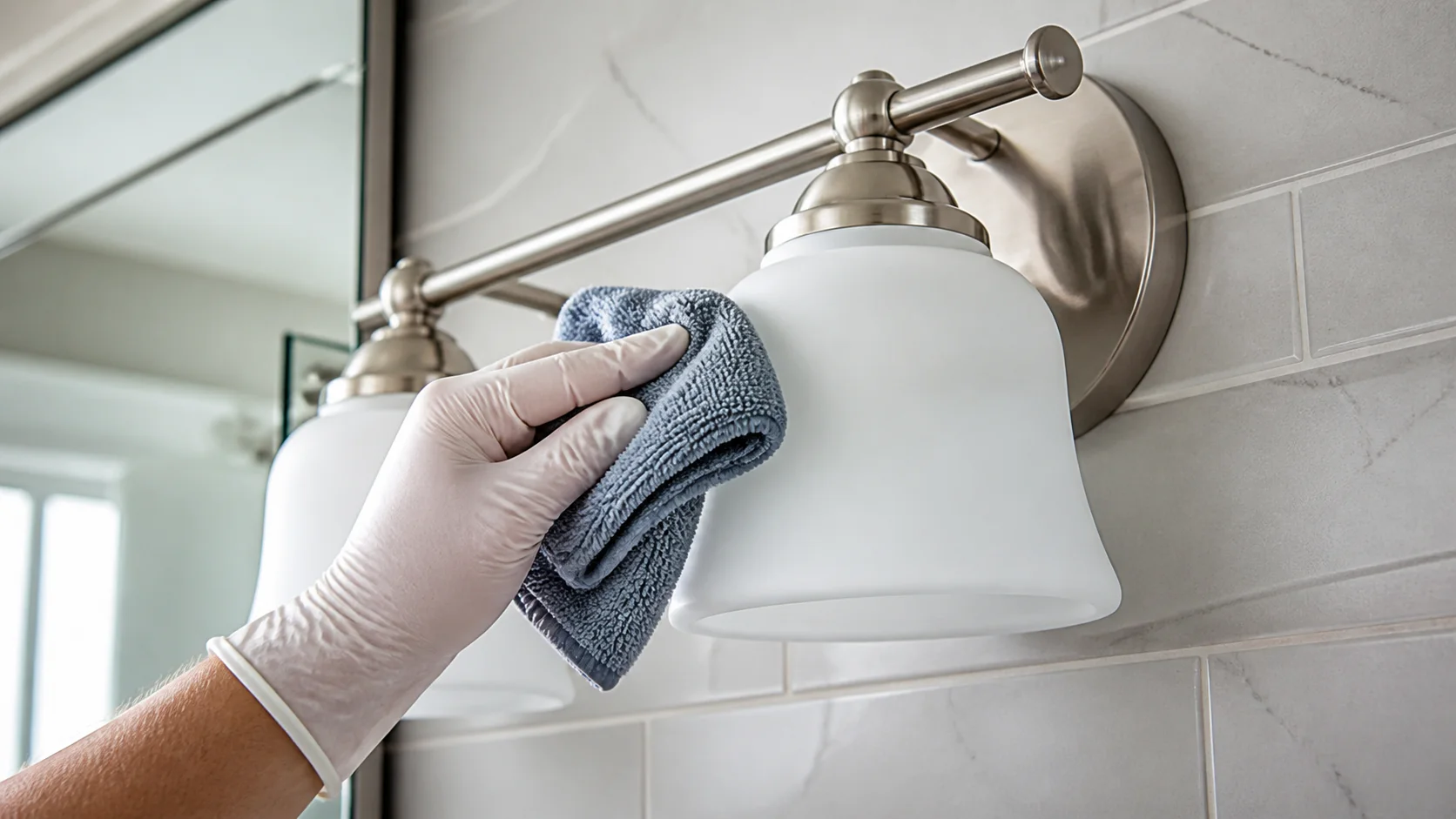
Treat cleaning compatibility as a sample question, not as an assumption. Wipe a production-intent finish with the customer's planned cleaner at the planned dilution. Check for visible residue, gloss change, color shift, coating lift, or trapped moisture around the holder. If the fixture will be installed in hotels, care homes, restaurants, or other high-turnover sites, include the maintenance team in the approval instead of asking only the designer to judge appearance.

A gloved hand wiping a frosted glass bathroom shade with a microfiber cloth beside a clean vanity fixture

日本の glass lamp shade edge finishing guide can help the buyer discuss fire-polished, ground, or other rim conditions. The correct edge depends on the holder and the intended contact. A visually smooth rim still needs to be checked for fit, chips, stress, and the way the retaining ring loads it.

Approve the sample on the real fixture

A bathroom shade sample should not be approved as a loose object on a white table. The same glass can look balanced in a hand and too bright when mounted beside a mirror. A ribbed pattern that looks subtle in daylight can create stripes under a point LED. A slight fitter variation that is invisible in a catalog image can make the gasket seal unevenly.

Build the approval around the actual fixture concept:

  1. Assemble the shade with the planned holder, gasket, retaining ring, bulb or LED, and trim.
  2. Inspect the unlit fixture for chips, scratches, seams, coating marks, and uneven color.
  3. Inspect it at the intended operating output from the normal user and installer viewpoints.
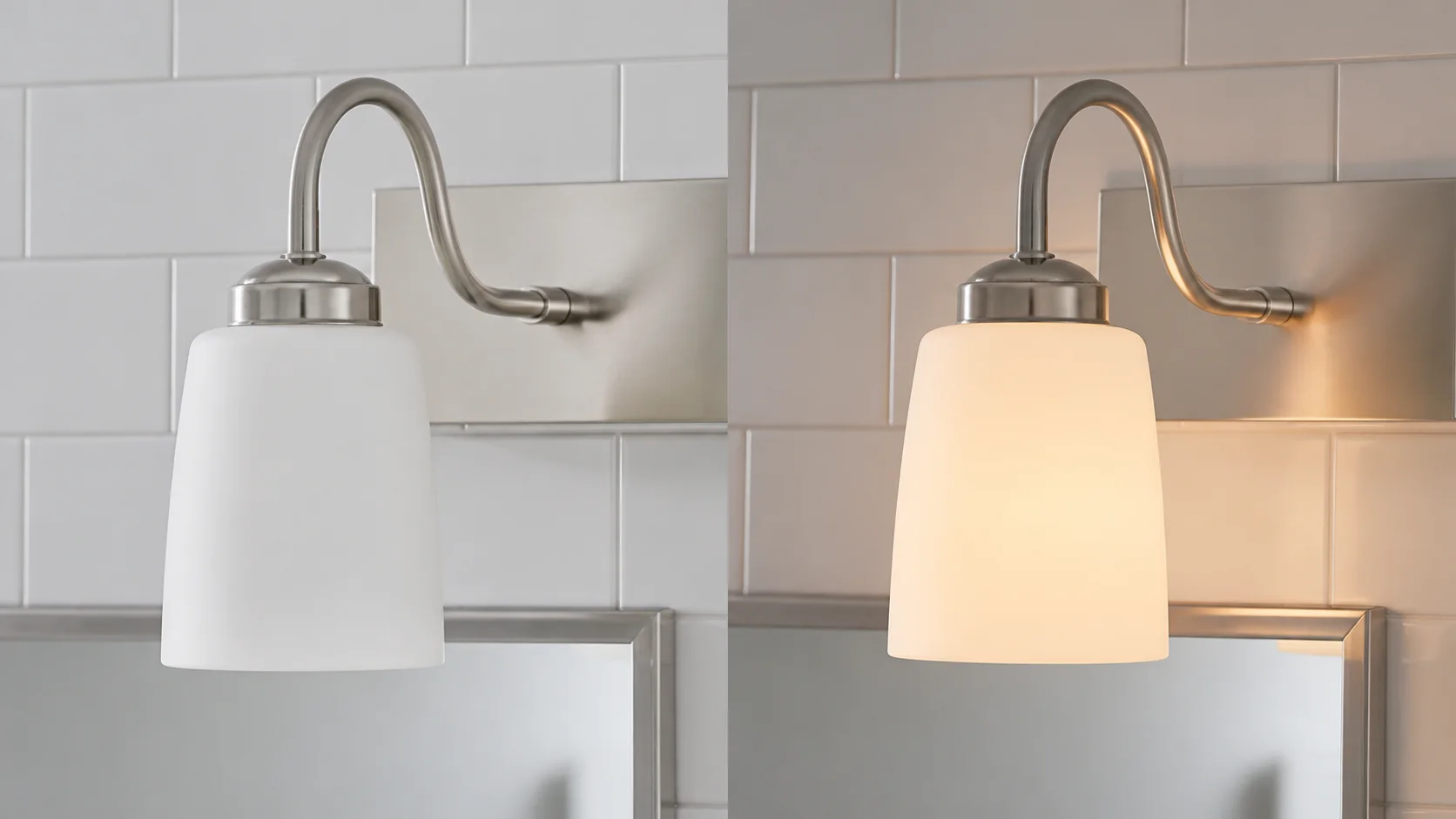
  4. Check the shade at full output and at the lowest planned dimming level if dimming is part of the product.
  5. Test the intended cleaning action on a production-intent surface.
  6. Record the shade orientation, light source, holder revision, and sample date in the approval file.

For a collection with several bathroom positions, approve a sample for each materially different geometry. Do not approve one small vanity globe and assume a larger ceiling dome will have the same optical appearance. Curvature, wall thickness, finish depth, and light source position can all change the result.

Several bathroom glass shade samples mounted on the same fixture base for side-by-side approval

The approval record should identify what is allowed to vary and what is not. Hand-finished work may need a visual range for color or texture. A fitter opening, retaining step, or gasket contact may need a measurable limit. If the buyer wants a particular color, finish, or pattern, keep a signed master sample or controlled reference image with the order documentation.

Opal glass bathroom vanity shade shown unlit and illuminated at two controlled brightness levels in the same fixture

Put the complete RFQ in one package

The fastest quote is not always the shortest email. A supplier can respond more accurately when the shade, fixture interface, finish, quantity, and destination are in one package. JX's custom glass lamp shade manufacturer page describes the broader OEM and ODM process. For a bathroom project, add the moisture-exposure and service information that a generic lighting brief may omit.

RFQ fieldWhat to sendWhat the supplier should confirm
Project useVanity, wall, ceiling, pendant, hotel, residential, or another positionProposed forming route and any design limits
InterfaceHolder drawing, old sample, fixture CAD, or controlled metal partFitter, contact face, retention, and clearance
Glass targetClear, frosted, opal, ribbed, colored, or a reference sampleMaterial and finish feasibility with the selected process
Light sourceBulb or LED type, wattage or output, color temperature, dimmingSample condition used for optical approval
ExposureRoom position, splash risk, cleaning method, and service frequencyInformation needed by the complete fixture engineer
QualityAppearance zones, dimensional controls, edge condition, and sample photosInspection method and master sample requirement
数量Sample count, pilot quantity, annual volume, and repeat-order planTooling, sample, production, and packaging assumptions
DeliveryDestination country, packing level, and required documentsExport packing and documentation route

Do not put "bathroom safe" in the glass-only line item without defining what it means. Use measurable or reviewable terms such as "frosted finish with no visible coating streaks at the approved viewing distance" or "neck opening to match the supplied holder drawing." Keep the complete fixture rating in the luminaire specification.

Quote-ready bathroom glass shade RFQ package with a fixture sample, dimensioned profile, finish swatches, and blank inspection sheet

Choose the production route after the interface is stable

The shape, quantity, finish, and required repeatability should drive the forming conversation. A repeated profile with a defined mold and stable seating surface may suit a pressed route. A smaller design-led run or a profile that needs a particular hand-finished character may call for a different process. The supplier should explain what the proposed process means for wall variation, pattern transfer, seam location, finish, and repeat orders.

Do not pay for tooling before the supplier confirms the glass-to-holder interface. A mold can reproduce the wrong opening very consistently. Ask for the proposed split, critical contact surfaces, and first-sample inspection points before production tooling is released.

If a coating, electroplated detail, frosting process, or decorative color is part of the design, approve it on the actual glass substrate and edge condition. The glass lamp shade holes and cutouts guide is relevant when a bathroom fixture uses through-holes or secondary openings. Those features can affect support, finishing sequence, and how the glass is retained.

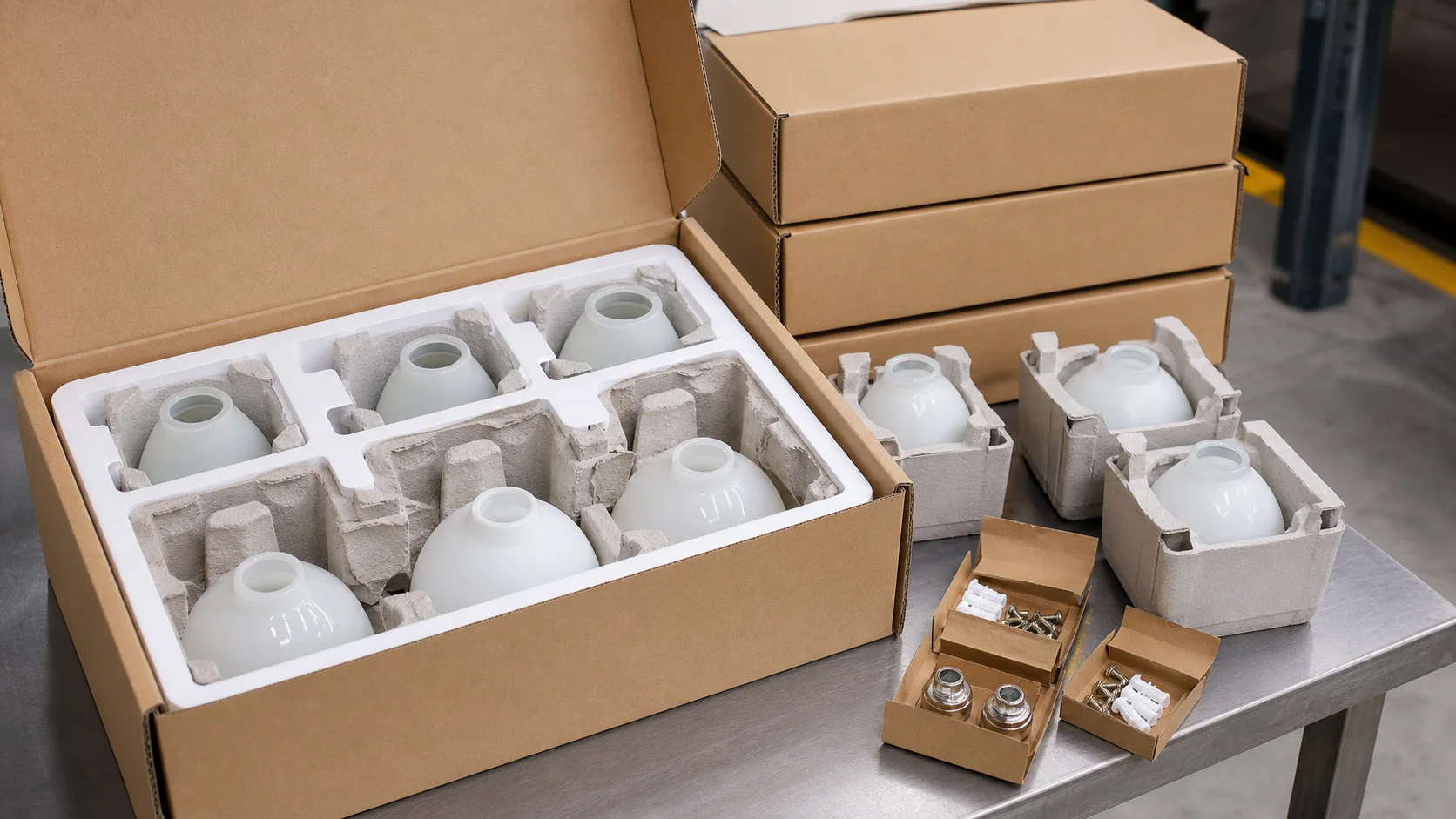
Export packaging for bathroom glass lamp shades with molded protective inserts and separated finished samples

Packaging also belongs in the first quote discussion. A bathroom collection may have several shapes that cannot share one insert. Separate the approved sample, production pieces, hardware, and spare parts in the packing plan. Ask how the supplier protects the fitter and finished rim, including the broadest part of the shade.

Avoid these sourcing mistakes

Treating a bare shade as a certified fixture

Glass can cover a bulb and help form a seal, but it does not certify the socket, wiring, driver, gasket, or installation. Keep the system boundary clear.

Using a nominal fitter size

Nominal sizes are not enough for a custom holder. Send the mating part or a controlled drawing, and identify the contact surface that controls the fit.

Approving the finish under one light

Inspect the sample in the actual fixture with the intended lamp, from the normal viewing position, and at the planned dimming range.

Forgetting maintenance

A deep texture, narrow neck, or inaccessible retaining ring may look good at launch and frustrate the team that cleans or services the fixture. Ask for a cleaning and removal check before mass production.

Mixing several positions under one approval

Vanity, ceiling, and pendant shades can have different geometry and light behavior. If the collection uses multiple parts, define which sample controls each part number.

Sending only a mood image

A reference image can show the design direction, but it cannot replace an interface drawing, finish sample, or inspection condition. Send both the visual reference and the engineering information.

Finished bathroom lighting collection with coordinated opal glass wall, ceiling, and pendant shades in one interior

A practical decision path for buyers

Use this order when developing a new bathroom glass shade:

  1. Classify the complete fixture position and exposure with the fixture engineer.
  2. Decide whether the project needs a replacement part or a new shade and holder.
  3. Freeze the fitter, retention, clearance, and orientation information.
  4. Select the glass finish from the required light behavior and cleaning routine.
  5. Send a drawing, reference sample, light source, quantity, and destination with the RFQ.
  6. Review the forming route and tool split before releasing tooling.
  7. Approve the shade on the actual fixture in lit and unlit conditions.
  8. Record the master sample, inspection points, packaging, and complete fixture documentation.

If you are preparing a new bathroom fixture, send the shade and holder details through the custom lampshade RFQ builder. Include the fixture position, opening dimensions, finish reference, light source, expected quantity, and destination market. A supplier can review a specific interface much faster than a description that only says "bathroom glass shade."

Supplier review table with a bathroom glass shade, metal holder, finish swatches, caliper, and approved sample folder

Frequently asked questions

Can a glass lamp shade be used in a bathroom?

はい、ガラスシェードは浴室用照明器具として開発することができますが、シェード単体では器具全体の適合性は決まりません。ホルダー、シール、電気部品、設置位置、および日本の規定を含めて、全体として確認する必要があります。.

Does a bathroom glass shade need an IP44 or IP65 rating?

IP等級は、関連するエンクロージャまたは完成した電気機器に適用され、単体のガラスシェードに自動的に適用されるものではありません。完成した照明器具および設置に必要な等級と試験証拠については、器具メーカーまたは責任ある適合エンジニアに確認してください。.

Which glass finish works best for a bathroom vanity light?

Opal and frosted finishes are common starting points when the goal is soft, even light. Clear, ribbed, and colored glass can work when the project wants a visible bulb or stronger pattern. Approve the finish on the actual fixture because output, dimming, curvature, and wall thickness change the appearance.

What dimensions should I send for a custom bathroom glass shade?

Send the maximum diameter, overall height, opening inside and outside diameters, neck length, contact face, retaining method, gasket space, bulb clearance, orientation, and the dimensions that control inspection. A holder drawing or physical interface sample is better than a nominal size alone.

Can a supplier match a bathroom shade to a new fixture design?

Yes. A supplier can review a drawing, CAD profile, fixture sample, or controlled reference and develop the glass around the interface. The buyer should still approve the first sample with the actual holder, light source, finish, and intended viewing conditions before releasing production.

How should the first sample be approved?

Inspect it assembled and unlit, then under the intended lamp or LED at the planned output and dimming range. Check fit, retention, edge condition, color, texture, glare, cleaning access, and any visible marks. Record the approved sample and the fixture conditions so a later batch has a clear reference.

Start with the complete fixture, then finalize the glass

The best bathroom glass lamp shade brief is specific about two boundaries. The supplier controls the glass geometry, finish, sample, inspection, and packing. The fixture team controls the complete luminaire rating, electrical safety, installation, and market documentation. When those boundaries are written into the RFQ, the project can move from a mood image to a part that fits, cleans, lights, and repeats as intended.

関連記事

共有する:
JXランプシェード技術チーム

JXランプシェード技術チーム

ガラスランプシェード技術エンジニア/技術コンテンツスペシャリスト

ガラスランプシェードプロジェクトのための技術的な内容サポート(ガラス素材の選定、成形プロセスの指導、表面処理の提案、耐熱性の考慮、品質検査のポイント、カスタム照明部品の応用を含む)。.

<?php return ob_get_clean(); }add_shortcode('jx_lampshade_engineer_card', 'jx_lampshade_engineer_card_shortcode');

関連記事:

よくある質問

塩城晶新ガラス製品株式会社は、専門的なガラスメーカーです 1999年に設立されました。自社の生産拠点とオフィスエリアは48,430平方フィート(約4,500平方メートル)以上あり、設計、製造、品質管理、輸出サービスを統合しています。.

幅広い種類の製品を製造しています。 オーダーメイドガラスランプシェード  吹きガラスランプシェード、機械プレスガラスランプシェード、ホウケイ酸ガラスランプシェード、遠心ガラスランプシェードなどを含みます。OEMおよびODM生産に対応しており、様々な用途や業界向けに提供しています。.

はい、当社は完全なOEMおよびODMカスタマイズサービスを提供しています 含まれる内容:

  • カスタム製品設計およびエンジニアリング
  • 社内金型開発
  • ロゴ印刷およびブランディング
  • 表面処理および仕上げ
  • カスタマイズされたパッケージングソリューション

はい、当社のデザインチームはお客様のコンセプトからカスタムガラス製品を開発できます。. お客様のアイデア、参考サンプル、または機能要件に基づき、専門的なデザインサービスを提供します。技術図面は不要です。.

当社のプロセスは量産前に品質を確保します。

お客様によるデザイン確認

自社施設での金型開発

承認用サンプルの製作

お客様によるテストとフィードバック

最終サンプル承認後のみ量産を開始します

私たちは提供します 安全な国際配送のための包括的なカスタムパッケージ:

  • 保護用の内側梱包材
  • 輸出用グレードの段ボール箱
  • カスタムカラーボックスと小売用パッケージ
  • ラベル印刷とブランディング
  • 国際配送基準に合わせて設計されたパッケージ
  • 各生産段階での検査
  • 科学的な品質管理手順
  • 各ロットの出荷前検査
  • 国際輸出基準への準拠
  • 認証された品質管理システム

私たちは運営しています 経験豊富な作業員による複数の生産ライン, これにより、あらゆる規模の注文に対して安定した大量生産が可能です。私たちの施設は、小ロットから大量注文まで、一貫した品質と信頼できる納期を保証します。.

リードタイムは複雑さや数量によって異なります:

  • サンプル生産:通常2~4週間
  • 量産:サンプル承認後にスケジュールされます
  • 具体的な納期はご注文内容に基づきご案内いたします

当社は日本を含む全世界120以上の国と地域に輸出しています, 例として:

  • 日本(日本国内)
  • ヨーロッパ(イギリス、ドイツ、フランスなど)
  • アジア太平洋市場
  • 中東
  • アフリカ
  • オセアニア(オーストラリア、ニュージーランド)

当社は包括的なグローバル流通ネットワークを維持しています。.

見積もり依頼 一緒に働く準備はできていますか?私たちとプロジェクトを作りましょう!

見積もり依頼
トップへスクロール
見積もり依頼