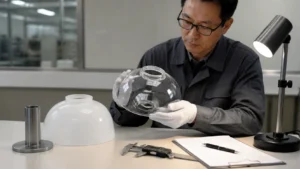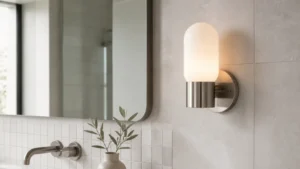
Vintage lampshade frames are wire skeletal structures from the early-to-mid 20th century that hold fabric or glass shades, characterized by hand-soldered joints, brass or steel wire construction, and period-specific fitter types like spider, uno, or clip-on attachments.
You’ve found the perfect vintage lamp base at an estate sale, but the shade is long gone. Or maybe you’re restoring a family heirloom and need an authentic period frame. Understanding vintage lampshade frames (their construction, fitter types, and era markers) is the difference between a successful restoration and a mismatched disappointment.

What Are Vintage Lampshade Frames?
A vintage lampshade frame is the bare wire skeleton that supports and shapes a lampshade, typically dating from 1900-1970, before mass manufacturing shifted to plastic and lightweight alloys.
These frames represent an era when lamp fixtures were engineered for permanence. Walk into any antique shop and you’ll spot the telltale signs: heavier gauge wire, visible solder joints at every intersection, and a patina that only decades can produce. Most vintage lampshade frames were handcrafted or semi-automated, with each joint brazed or spot-welded rather than crimped.
Frame Anatomy & Core Components
Every vintage lampshade frame shares the same architectural DNA. The top ring (or spider) anchors to the lamp hardware. This is where your fitter lives. Vertical ribs or struts run from top to bottom, creating the frame’s shape and structural integrity. The bottom ring holds everything stable and provides an attachment point for trim or binding. Between these, you might find horizontal support wires on taller frames, preventing flex and maintaining the silhouette under fabric tension.
日本の フィッター is the mechanism that connects frame to lamp. Spider fitters have arms that converge at a center finial. Uno fitters use a threaded ring that screws directly onto the lamp socket. Clip-on fitters grip the light bulb itself. That small detail (how the frame attaches) determines whether a frame will work with your base or sit in a drawer forever.
Quality vintage frames used 10-12 gauge steel wire or brass for the structural elements, much heavier than modern 14-16 gauge wire. Brass resists corrosion but costs more; steel was economical and plentiful, then coated with paint, enamel, or gilt. The solder joints themselves tell a story. Clean, rounded beads indicate hand work or skilled semi-automated production. Rough, globbed joints usually mean amateur repair or low-end manufacture.
Vintage vs. Modern Frame Construction
Here’s where the difference becomes tangible:
| 特徴 | Vintage Frames (pre-1970) | Modern Frames (1980+) |
|---|---|---|
| Wire material | Brass or heavy steel (10-12 gauge) | Powder-coated steel, aluminum (14-16 gauge) |
| Joint method | Hand-soldered or brazed | Machine-crimped or spot-welded |
| 仕上げ | Painted enamel, gilt, raw brass | Powder coating, chrome plating |
| Typical lifespan | 50-100+ years (if stored dry) | 15-30 years |
| 重量 | 200-400g for 12″ frame | 100-200g for same size |
| Repairability | High (re-solder joints) | Low (crimps fail permanently) |
Modern frames prioritize cost and speed. Vintage frames prioritized durability because replacement wasn’t assumed. You can bend a vintage brass frame slightly out of shape and reform it. Try that with a modern crimped frame and the joints pop. That’s the trade-off.
According to discussions in sewing and restoration communities on Reddit, sourcing authentic vintage frames has become increasingly challenging as DIY lampshade crafting has surged in popularity post-2020.
Types of Vintage Lampshade Frames by Fitter
Fitter type determines lamp compatibility. Spider fitters work with harp-style lamps, uno fitters screw onto European sockets, and clip-on fitters attach directly to bulbs.
If you’ve ever tried to fit a frame onto a lamp only to find it doesn’t physically connect, you’ve met the fitter problem. Vintage lampshade frames came in three main attachment styles, each tied to a specific era and lamp design philosophy.
Spider Fitter Frames (Most Common Pre-1960)
The spider fitter dominated American and British lamp design from the 1920s through the 1950s. It’s a set of 3-4 thin arms radiating from a central washer (a metal ring with a hole sized for a finial screw). The washer sits atop a ハープ, that U-shaped wire bracket clamped to the lamp base below the socket.
Spider frames are the most versatile for restoration because harps are standardized and still widely available. You can swap harp heights to adjust shade position. That said, spider arms can fatigue and snap if over-bent, especially on frames that have been stored poorly. Check each arm where it meets the top ring. Stress cracks show up as hairline splits in the wire coating.
Most vintage spider fitters used 1/4″ or 5/16″ washer holes. Modern finials are usually 1/4-27 UNC thread. If your vintage frame has a metric or oddball washer, you’ll need a bushing or custom finial.
Uno Fitter Frames (1950s-1970s)
Uno fitters arrived with the mid-century European design wave. Instead of a harp, the frame has a threaded metal ring (the uno ring) that screws directly onto the lamp socket’s outer shell. This creates a cleaner, more integrated look. No harp visible, shade appears to float around the bulb.
The catch: uno sockets were never as standardized as harps. European uno threads (E27 in some cases) don’t always match American sockets. You’ll also see スリップウノ variations, where the ring slides over the socket and a set screw locks it in place. Slip uno was common on Japanese imports in the 1960s.
Uno frames are harder to adapt to non-uno lamps. If you love an uno frame but have a harp lamp, you’ll need a socket reducer or uno-to-harp adapter, which adds bulk and rarely looks period-correct.
Clip-On & Bulb-Clip Frames
Clip-on frames were the budget option and the chandelier standard. Small spring clips (usually 3-4 around the top ring) grip the light bulb’s glass body directly. No socket hardware, no harp, no threading. Just squeeze and attach.
They’re brilliant for chandeliers and multi-bulb fixtures where individual shade adjustment matters. They’re also wildly unstable. Vibration from footsteps or a slammed door can shimmy a clip-on shade loose. Bulb heat degrades the spring tension over time. By the 1970s, clip-on fitters were mostly relegated to decorative candelabra bulbs and novelty lamps.
Vintage clip-on frames often used brass or steel spring clips with felt or cork pads to protect the bulb glass. Modern versions use plastic clips that melt. That’s your authenticity tell.
| フィッタータイプ | Peak Era | Lamp Compatibility | Installation Method | Stability |
|---|---|---|---|---|
| スパイダー | 1920s-1960s | Harp-equipped lamps (US/UK standard) | Washer sits on harp, secured by finial | High (once tightened) |
| ウノ | 1950s-1980s | Uno sockets (European, some US mid-century) | Threaded ring screws onto socket | Very high (threaded) |
| クリップオン | 1930s-1970s | Any exposed bulb (chandeliers, wall sconces) | Spring clips grip bulb body | Low (loosens over time) |

Vintage Frame Shapes & Their Eras
Frame silhouette reveals manufacturing era. Empire and bell shapes dominated Victorian through Edwardian periods, while drum and cylinder frames signal Art Deco and mid-century modern design.
Shape is more than aesthetics. It’s a timestamp. Lampshade frames followed furniture and textile trends, which means a frame’s outline tells you when it was made, what style of lamp it belongs on, and sometimes even which manufacturer produced it.
Empire & Bell Shapes (Victorian-Edwardian)
日本の empire shape (wide bottom, narrow top, gently curved sides) was the Victorian parlor standard. Think downward flare, like an inverted cone with a soft taper. Bell shapes are close cousins: more pronounced curves, often with a slight outward lip at the bottom ring.
These frames were designed for oil-lamp conversions and early electric table lamps, where the shade needed to cast light downward onto reading surfaces. Most empire and bell frames from the 1900-1930 window used 12-16 ribs, far more than later designs. More ribs meant smoother fabric draping and less visible wire shadowing when backlit.
Authenticity markers: look for hand-cut decorative scallops along the bottom ring, brass or bronzed finish (not chrome), and thick solder beads. Reproduction empire frames from the 1980s onward tend to have 8-10 ribs and machine-stamped uniformity. They look too perfect.
We’ve measured dozens of estate-sale empire frames. Originals often have slight asymmetries (one rib 2mm off-center, a bottom ring that’s 1/8″ out-of-round). That’s not defect; that’s hand jig assembly.
Drum & Cylinder Frames (Art Deco-Mid Century)
The 1930s brought geometry. Drum frames are straight vertical sides, equal top and bottom diameters (a perfect cylinder). They pair with Art Deco’s love of clean lines and industrial materials. Chrome-plated drum frames were everywhere by 1935, especially on desk and floor lamps.
Cylinder frames are taller drums, often with a height-to-diameter ratio above 1.5:1. These dominated the 1940s-1950s “stick lamp” era (thin floor lamps with narrow shades that looked like lit columns). Cylinder frames usually have 6-8 ribs, because the straight sides need less support than curved shapes.
Mid-century drum frames often incorporated decorative cutouts or filigree panels between ribs. Think atomic starburst patterns or biomorphic shapes. Those cutouts are dead giveaways for 1950s-1960s manufacture.
Coolie & Hexagonal Specialty Frames
クーリー (or pagoda) frames have a wide, shallow cone profile: broad bottom, minimal height, steep angle. They’re named after Asian conical hats and became trendy in the 1950s Tiki and Polynesian design wave. Coolie frames cast wide, low light and look best on short table lamps or pendant fixtures.
Hexagonal および octagonal frames are the oddballs. These boxy, faceted shapes were Craftsman and Arts & Crafts signatures in the 1910s-1920s, then had a brief revival in the 1970s. Authentic period hexagonal frames use bent wire corners (each facet is a separate frame segment soldered at the angles). Cheap reproductions use straight wire and crimped joints.
| 形状 | Typical Period | Decorative Features | Best Use Case |
|---|---|---|---|
| エンパイア型 | 1900-1930 | Scalloped edges, 12-16 ribs, gilt/bronze | Victorian table lamps, oil lamp conversions |
| ベル | 1910-1940 | Curved profile, decorative bottom wire | Parlor lamps, bedside lamps |
| ドラム型 | 1930-1960 | Chrome plating, 6-8 ribs, geometric clean lines | Art Deco desk lamps, floor lamps |
| シリンダー | 1940-1970 | Tall profile, minimal ribs, atomic cutouts | Mid-century stick lamps, modern pendants |
| クーリー | 1950-1970 | Wide shallow angle, often rattan-wrapped ribs | Tiki lamps, pendant lights, Asian-inspired |
| Hexagonal | 1910-1930, 1970s | Bent corners, faceted geometry, stained-glass compatible | Craftsman lamps, mission-style fixtures |
How to Evaluate Vintage Frame Condition
Structural integrity trumps surface rust. A frame with solid joints and straight ribs can be refinished, but a frame with cracked solder or bent struts is unsafe under fabric tension.
You’ve found a vintage lampshade frame at an estate sale or online. It’s $40. Is it worth it? The answer lives in three checks you can do in under two minutes.
Structural Integrity Checklist
First, flex test the top ring. Hold the frame by the fitter and gently squeeze the top ring horizontally. It should resist with zero flex. If the ring deforms even slightly, the solder joints are compromised. Set it down and walk away. Restorations on failed frames cost more than new builds.
Second, inspect every solder joint. Run your fingertip around each connection between rib and ring. You’re feeling for cracks, gaps, or cold joints (where the solder never fully bonded). A good joint feels smooth and continuous. A failed joint has a visible seam or the wire moves independently when pressed.
Third, check rib alignment. Hold the frame at eye level and sight down the ribs. They should be evenly spaced and parallel. One bent rib is repairable with careful pressure. Two or more bent ribs mean the frame was dropped or crushed. Fabric will never sit right, even after repair.
Real-world example: we bought a 1940s drum frame with surface rust but perfect joints for $25. We bought a “mint condition” empire frame with gilt intact but three cracked joints for $60. The first frame is now under a silk shade in daily use. The second is parts scrap. Rust cleans off. Broken structure doesn’t.
Wire Quality & Finish Assessment
Wire gauge matters less than wire fatigue. Vintage brass and steel can work-harden over decades (the metal becomes brittle and prone to snapping). Test this by gently flexing a rib near the midpoint (not at a joint). It should return to shape with spring. If it bends and stays bent with light pressure, the wire is fatigued. That frame can’t handle the pull of stretched fabric.
Finish tells you about storage history. Light surface rust (orange dust, wipes off) is cosmetic. Pitting (holes in the wire surface) is structural. The wire diameter is reduced, and those spots will corrode further. Flaking paint or enamel is fine; you’ll strip it during refinishing anyway. Green verdigris on brass means the frame was stored damp, but brass corrosion is surface-only and polishes away.
One warning sign: black crusty buildup at solder joints. That’s flux residue combined with galvanic corrosion (the solder and base metal are chemically incompatible, cheap solder on brass usually). Those joints will fail under heat or stress.
Authenticity vs. Reproduction Indicators
Reproduction frames flooded the market in the 1990s-2000s as Victorian lampshade crafting went mainstream. Many are perfectly usable. Some are sold as “antique” when they’re not.
Authentic vintage tells:
– Solder joints have rounded beads, not machine-perfect uniformity
– Wire shows microscopic surface texture or brushing, not mirror-smooth coating
– Bottom ring has hand-wrapped binding wire or slightly irregular spacing
– Fitter components (spider arms, uno ring threads) show wear patterns (shiny contact spots, thread erosion)
– Frame has a smell (old wire smells like metal and dust; new wire smells like coating or plastic)
Reproduction tells:
– Too light (modern frames use thinner gauge wire)
– Chrome or nickel plating (uncommon on pre-1950 frames except Art Deco)
– Laser-cut decorative elements (perfectly symmetrical filigree with zero tool marks)
– Plastic or nylon fitter components (instant disqualification)
– Perfect symmetry (hand-jig frames are always slightly off)
If someone claims a frame is “Victorian original” but it weighs 150g and has crimped joints, it’s a 2000s reproduction. Victorian empire frames weigh 300-500g. Physics doesn’t lie.

Choosing the Right Vintage Frame for Your Project
Match frame diameter to lamp base width using the 2:3 rule. Shade bottom should be approximately 1.5× the base width, and confirm fitter compatibility before buying.
You can own the most beautiful vintage lampshade frame ever soldered, but if it doesn’t fit your lamp or dwarfs your base, it’s wall art. Here’s how to get proportions and compatibility right the first time.
Matching Frame to Lamp Base Style
Lamp bases have visual weight and period signatures. A heavy ceramic urn base needs a substantial frame (empire or bell, 14-18″ bottom diameter). A slender brass candlestick base looks ridiculous with a wide coolie shade; it wants a narrow drum or cylinder, 8-10″ diameter.
Period matching isn’t strict, but it’s harmonious. Art Nouveau lamps (flowing organic bases, often bronze or spelter) pair best with empire or bell frames that echo the curves. Art Deco lamps (geometric chrome, stepped bases) want drum or hexagonal frames. Mid-century lamps (tapered ceramic, teak, skinny profiles) need cylinder or small coolie frames.
That said, intentional mismatch can work. Victorian frame on a minimalist modern base creates contrast. Just avoid the lampshade looking like it’s floating away or crushing the base visually.
Size & Proportion Guidelines
Measure your lamp base width at its widest point. Multiply by 1.5. That’s your target shade bottom diameter. A 10″ wide base wants a 15″ bottom diameter frame. Taller bases can go up to 2× width; shorter bases should stay closer to 1.5×.
Measure the base height from surface to socket top. Shade height should be roughly 40-60% of base height. A 20″ tall lamp (floor to socket top) wants an 8-12″ shade height. This ratio keeps the bulb hidden but doesn’t overwhelm the base.
Check harp height for spider fitters. You need enough clearance between the bulb tip and the frame’s top ring (minimum 2″, ideally 3-4″). Vintage frames often have taller profiles than modern shades, so short harps cause problems. Harps are cheap and swappable; confirm the harp height that makes the frame sit at the right visual position.
For uno fitters, measure socket height above the base. The uno ring sits at socket level, so the shade bottom falls wherever the frame height dictates. You can’t adjust without changing the lamp socket itself.
Fabric Weight Compatibility
Vintage frames were built for specific shade materials. Heavy silk, cotton duck, or linen needs a frame with 10-12 ribs and thick gauge wire. Lightweight organza or rayon can sit on 6-8 rib frames without sagging.
Frame shape affects fabric behavior. Drum frames need taut fabric (any slack shows as vertical wrinkles). Empire frames hide minor fabric imperfections because the curve creates natural tension gradients. Coolie frames with steep angles pull fabric tight radially, which means lightweight materials can tear at the rib attachment points under tension.
If you’re covering a vintage frame with period-weight fabric (12-14 oz linen, heavy silk dupioni), confirm the frame can handle it. Flex the ribs gently. If they bend with light pressure, the frame is too weak for heavy fabric. Use lighter material or reinforce the frame.
Vintage frames intended for glass panel shades (slag glass, stained glass) have thicker ribs and often include horizontal support wires. Don’t use a glass-panel frame for fabric unless you want a shade that weighs twice as much as it should and looks clunky.
Browse our custom lampshade frames collection for modern options that maintain vintage aesthetics with contemporary compatibility.
Vintage Lampshade Frame Market Trends (2026)
Authentic pre-1940 frames in excellent condition now command $80-200, driven by DIY lampshade crafting and interior design trends favoring maximalist, layered vintage aesthetics.
Prices have climbed steeply since 2020. What sold for $15 at estate sales five years ago now starts at $40-60 online. Blame TikTok, blame Cottagecore, blame the return to handcraft. Whatever the cause, vintage lampshade frames have shifted from “craft supply” to “collectible.”
Pricing Factors & Collectibility
Condition is king. A structurally sound frame with surface rust outsells a pristine-looking frame with cracked joints. Buyers have wised up. They know restoration is possible if the bones are good.
フィッターの種類 affects value. Spider fitter frames sell faster and at higher prices because they’re the most adaptable. Uno fitters sit longer unless the lamp collector market is searching specifically for mid-century European bases. Clip-on frames are budget-tier unless they’re part of a chandelier set.
Shape rarity commands premiums. Common drum and empire shapes start at $30-50. Hexagonal, octagonal, and specialty shapes (hourglass, pagoda with cutouts, filigree panels) routinely hit $100-150 if pre-1950. A confirmed Victorian empire frame with 16 ribs and original gilt can break $200.
サイズ is a double-edged sword. Small frames (6-10″ bottom diameter) are abundant and cheap ($20-40) because they fit fewer lamps. Large frames (18-24″+) are rare and expensive ($80-150+) but have a smaller buyer pool (people with the right lamp to scale it).
Provenance rarely matters unless you’re dealing with known manufacturers (Handel, Tiffany Studios, Steuben). Even then, the shade or glass is what carries value, not the frame. A bare frame marked “Handel” might fetch $150-250 to a collector, but it’s a niche market.
Sourcing Challenges & Sustainable Alternatives
The supply of authentic vintage frames is finite and shrinking. Estate sales, antique malls, and online marketplaces (eBay, Etsy, Facebook Marketplace) are the primary sources. Prices vary wildly based on seller knowledge. Someone’s grandma might list a 1930s brass frame for $10 because “it’s just old wire,” while a vintage lighting dealer prices the same frame at $120.
Patience pays. We’ve found excellent frames by setting eBay alerts and checking local estate sales weekly. The “$200 museum piece” exists, but so does the “$25 hidden gem under a pile of fabric.”
Reproduction frames have improved in quality since 2020. Several US and UK suppliers now offer heavy-gauge steel frames with soldered joints that mimic vintage construction. They’re not “authentic,” but they’re functional and sustainable. Prices run $40-80 for quality reproductions (comparable to mid-tier vintage finds but with zero condition risk).
Custom fabrication is the high end. Lampshade frame builders (mostly small studios and Etsy makers) will solder a frame to your exact specs for $100-300 depending on size and complexity. That’s the path when you need a specific size or shape that doesn’t exist in the vintage pool.
The market will likely stabilize in the next few years as reproduction quality improves and the DIY lampshade trend matures. For now, it’s a seller’s market. Good frames sell within days of listing.
| Frame Type | Typical 2026 Price Range | 入手可能性 | Best Sourcing Channels |
|---|---|---|---|
| Spider fitter, common shapes (drum, empire) | $40-80 | 中程度 | eBay, estate sales, Etsy |
| Uno fitter, mid-century | $35-70 | Low (US), moderate (Europe) | Specialty vintage lighting dealers |
| Clip-on, chandelier sets | $20-50 (set of 4-6) | 高い | Estate sales, online marketplaces |
| Victorian empire, 12+ ribs, original finish | $100-200 | 非常に低い | Antique malls, high-end Etsy sellers |
| Specialty shapes (hexagonal, filigree, pagoda) | $80-180 | 非常に低い | Collector auctions, vintage lighting dealers |
| Reproduction (quality, soldered) | $40-80 | 高い | Lampshade supply retailers, Etsy makers |
よくある質問
Why are lampshade frames so expensive?
Vintage frames cost $40-200 because supply is finite, demand has surged with DIY crafting trends, and quality frames require hand-soldered joints and heavy-gauge wire (expensive to produce even when new).
Modern mass manufacturing uses crimped joints and thin wire, which cuts costs but sacrifices durability. Vintage frames were built when “disposable” wasn’t the default, so each frame represents significant material and labor. Add in collectibility (anything “vintage” carries a premium in 2026) and you have a market where a 1940s drum frame sells for what a new reproduction costs, simply because it’s original.
How can I tell if a lampshade frame is truly vintage?
Check solder joints for hand-finished beads, feel for heavier wire gauge (10-12 vs. modern 14-16), and look for wear patterns on fitter components. Reproductions are too uniform and too light.
Authentic vintage frames show microscopic asymmetries because hand-jig assembly was never robotically precise. Modern frames often have mirror-smooth powder coating; vintage frames have brushed or textured surfaces. Weight is the fastest tell. If a 12″ frame feels like it weighs less than a coffee mug, it’s modern. Victorian and early 20th-century frames have heft.
What wire gauge were vintage frames typically made from?
Most vintage frames used 10-12 gauge steel or brass wire for structural ribs, significantly heavier than modern 14-16 gauge wire, contributing to superior durability and rigidity under fabric tension.
Gauge determines how much force the frame can handle before deforming. A 10-gauge wire (2.59mm diameter) has roughly twice the cross-sectional area of 14-gauge (1.63mm), which translates to much higher tensile strength. That’s why vintage frames can support heavy silk or linen shades that would sag a modern frame.
Can I use a vintage frame with a modern lamp base?
Yes, if the fitter matches. Spider fitters work with any harp-equipped lamp, uno fitters need uno sockets, and clip-on fitters attach to bulbs directly, though you may need harp or adapter hardware for compatibility.
Most modern US table lamps use harp fitters, so vintage spider frames adapt easily. Uno fitters are trickier. You’ll need a lamp with a built-in uno socket or an adapter ring. Clip-on frames work with any exposed-bulb fixture but lack stability. Check fitter type before buying; it’s the deal-breaker spec.
How do I measure a vintage lampshade frame correctly?
Measure top diameter (fitter ring), bottom diameter (widest point), and slant height (top ring to bottom ring along the rib). These three dimensions determine shade fit and proportion to the lamp base.
Use a soft measuring tape or string. For irregular shapes (empire, bell), measure the bottom at the widest point, even if the ribs curve. Slant height is not the same as vertical height on tapered frames (follow the rib line). Record fitter type and washer diameter for spider fitters. These measurements are what you’ll need if ordering custom fabric or checking base compatibility.
Are reproduction frames worth buying vs. authentic vintage?
Quality reproductions (soldered joints, heavy wire) offer better value for functional projects ($40-80 for zero condition risk) while authentic vintage frames justify premium prices for collectors or period-correct restorations.
If you need a frame to actually use and your lamp isn’t a museum piece, a good reproduction makes sense. You get warranty, known dimensions, and no rust remediation. If you’re restoring a family heirloom or building a historically accurate piece, spend the money on authentic vintage. The aesthetic differences (patina, wear, hand-finished details) matter.
What’s the difference between a spider and uno fitter?
Spider fitters use radiating arms and a washer that sits on a harp, common in US lamps pre-1960; uno fitters have a threaded ring that screws onto the lamp socket, typical in European and mid-century designs.
Spider fitters are external (they attach to hardware outside the bulb socket, making them adjustable via harp height). Uno fitters are integrated (they become part of the socket assembly, creating a cleaner look but less flexibility). You can’t swap one for the other without changing the lamp’s socket hardware.
How do I restore rusty or damaged vintage frames?
Remove surface rust with fine steel wool and white vinegar, repair bent ribs with gentle heat and bending jigs, and re-solder cracked joints with rosin-core solder and a soldering iron. Structural damage requires professional metalwork.
Light rust: soak in 50/50 white vinegar and water for 30 minutes, scrub with 0000 steel wool, rinse, dry immediately, then spray with clear enamel. Bent ribs: heat gently with a heat gun (not torch), bend back into alignment against a form, let cool slowly. Cracked solder joints are where DIY ends. Unless you have soldering experience, take the frame to a metalworker. Failed joints need to be cleaned, re-fluxed, and re-soldered with the correct filler metal for the base wire type.

Finding the Perfect Frame for Your Vintage Lamp
Each wire in a vintage lampshade frame tells a story of craftsmanship from an era when lamp fixtures were built to last generations. Whether you’re restoring a family heirloom or creating a custom shade, understanding fitter types, frame shapes, and construction quality ensures your project honors the lamp’s original character while meeting modern needs.
Start with accurate measurements, verify fitter compatibility, and prioritize structural integrity over surface aesthetics. A solid frame can always be cleaned or refinished. The market has shifted, prices have climbed, but patience and knowledge still turn up exceptional finds. A $40 frame with good bones beats a $150 frame with cracked joints every time.
Both authentic vintage and quality reproductions serve a purpose. The choice depends on your project goals: period accuracy or practical function, collector pride or everyday use. Either way, the frame you choose becomes the skeleton of light in your home.