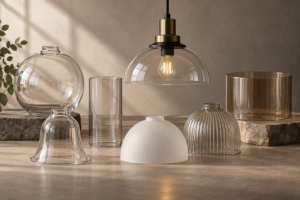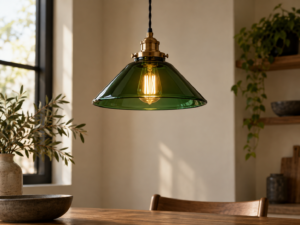
黒いテーブルランプシェードは、淡い色のものとは全く異なる方法で光を拡散します。光の透過性、つまり黒色そのものではなく、どれだけ光が生地やガラスを通して漏れるかは不透明度によって決まります。.
こんな経験があるかもしれません:黒いランプシェードは店頭では完璧に見え、温かみのある木製コンソールの上で彫刻的でムーディーな雰囲気を醸し出していました。家に持ち帰り、電球を取り付けてスイッチを入れると、部屋がほとんど明るくなりません。見た目で選んだシェードが、今度は機能面であなたと戦っています。.
シェードが写真で見える印象と実際に部屋を照らす様子のギャップは、黒いテーブルランプシェード購入者の最大の不満点であり、販売ページではほとんど触れられていません。販売店はシルエットだけを見せます。誰も、黒いコットンドラムと黒いガラスグローブが電球を点灯した時に全く異なる製品のように振る舞うことを説明しません。このガイドでは両方を扱います:黒いシェードの光拡散としての正直なトレードオフと、意図的に見せるためのスタイリングの決断についてです。.
黒いテーブルランプシェードとは?
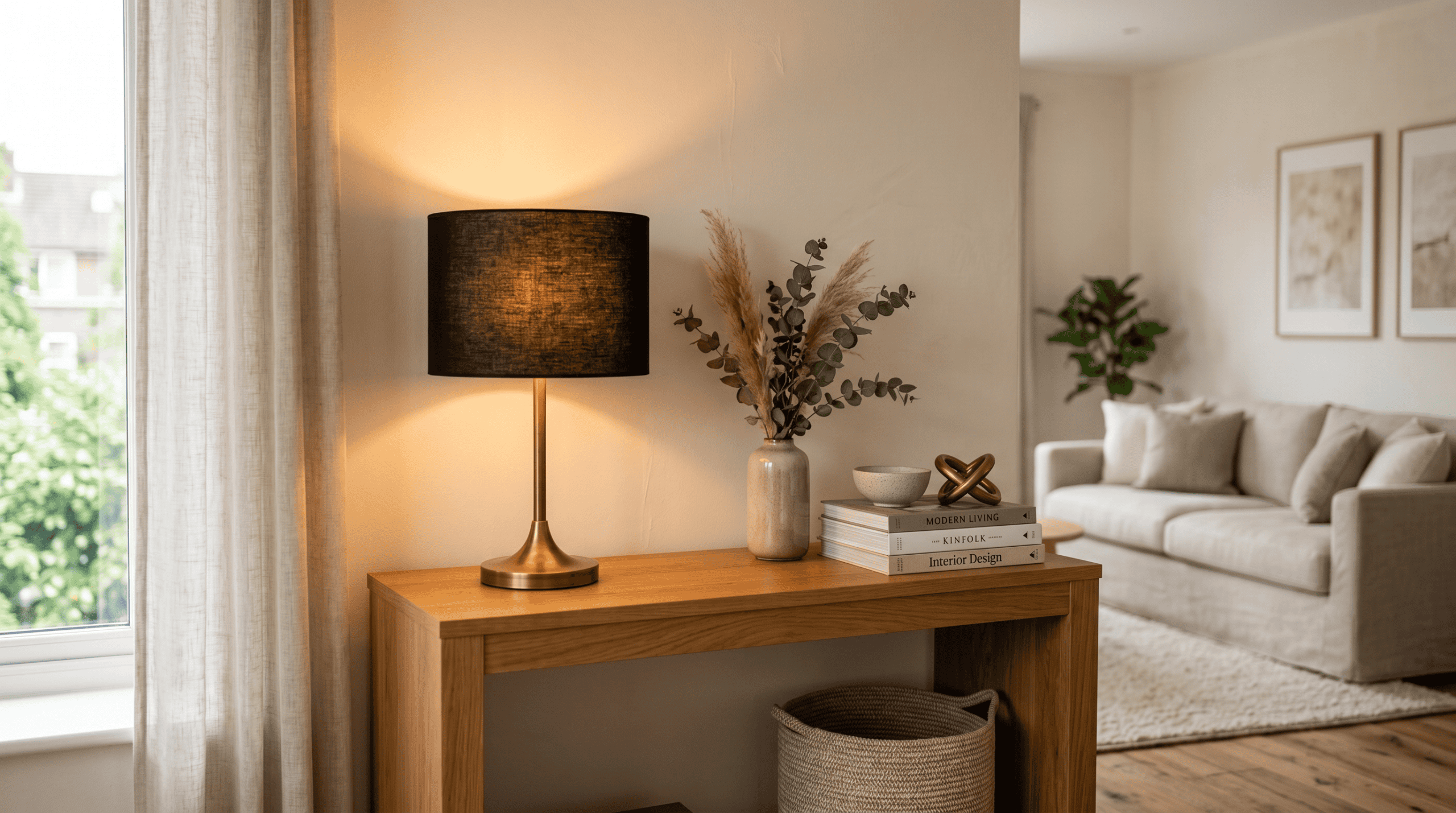
黒いテーブルランプシェードは、マットコットン、光沢ラミネート、ベルベット、黒ガラスなど、黒またはほぼ黒の仕上げのシェードをテーブルランプの台座に取り付けたものです。柔らかいチャコールブラックリネンから深いガラスのようなジェットブラックまで幅広く、選ぶ仕上げによって昼間のランプの見た目や夜間にどれだけ実用的な光を放つかが変わります。.
ランプシェード自体は、覆う光源に比べてかなり古い発明です。 ウィキペディアのランプシェードの概要 によると、シェードは白熱電球が十分に明るくなり、設計者がまぶしさを和らげて光の落ちる場所を調整する必要が出てきた時に広く採用されました。シェードの役割は決して装飾だけではなく、照明の問題を解決するためのものでした。黒いテーブルランプシェードはその本来の機能を最大限に押し広げています。光を最も積極的に方向転換させるシェードスタイルであり、だからこそ仕組みを理解することが、どんな使い方でも均一に輝く淡色シェードよりも重要なのです。.
黒いシェードが点灯時と消灯時で異なる見え方をする理由
これはほとんどの購入ガイドが省略する詳細ですが、実際に重要なポイントです。. 消灯時, 、黒いテーブルランプシェードはソリッドでグラフィックなシルエットとして映ります:まず装飾品として、次に光源として認識されます。. 点灯時, 、話は全く変わります:黒い顔料は光を透過せず吸収するため、シェードの生地壁を直接通る輝きはほとんどありません。その代わり、光は主に上部と下部の開口部から漏れ出るため、黒いシェードは天井やテーブルトップに強い光のプールを投げかけますが、部屋の側面にはほとんど拡散光を放ちません。.
これは、白やクリーム色のシェードが紙ランタンのように表面全体で均一に輝くのとは根本的に異なる挙動です。混乱を招くことに、ほとんどの商品写真はカタログ用に内部から点灯した状態で撮影され(全体が輝いて見える)、これは明るい電球と暗い部屋を使った演出であり、通常の昼間使用時の性能とは異なります。.
専門家のアドバイス: 黒いテーブルランプシェードを部屋の本格的な光源として使いたい場合、外側の生地よりも内側のライニングを先に確認してください。.
マット・光沢・テクスチャードブラック:仕上げの比較
黒いテーブルランプシェードとして販売されているほとんど全てをカバーする仕上げは3つのカテゴリに分かれ、性能も異なります:
- マットブラックコットンまたはリネン:最も一般的で、最も多くの光を吸収し、視覚的に最も柔らかい質感。静かで落ち着いた印象に最適。
- 光沢のある黒のラミネートまたはラッカー仕上げ:消灯時でも表面に部屋の光を反射し、よりフォーマルでシャープな印象を与え、マット生地よりもわずかに多くの光が継ぎ目から漏れる
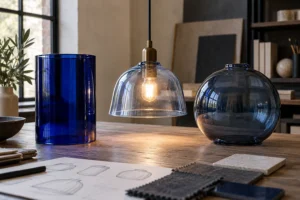
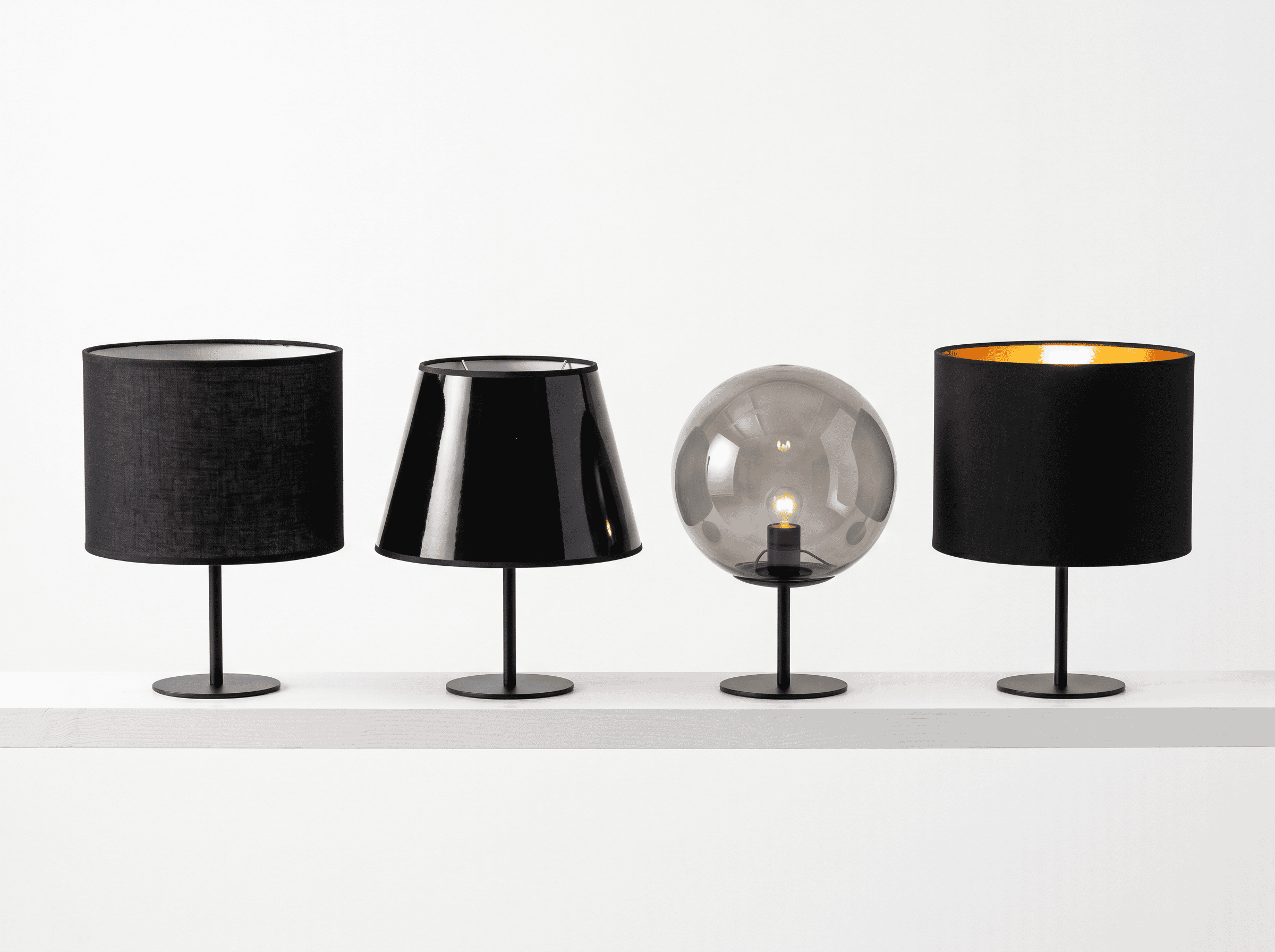
- 黒ガラス:ガラスは織物とは全く異なる素材カテゴリであり、ガラスは織物のようには振る舞いません。色の濃さによっては、黒やスモークガラスは薄い部分から意外なほど暖かい光を通しつつ、見た目は暗いままなので、メーカーはスモークや黒色ガラスシェードをドラマ性と実用的な明るさの妥協点として位置付けています。
| 仕上げ | 本体を通過する光 | 視覚的な重さ | 最適な組み合わせベース |
|---|---|---|---|
| マットブラックのコットン/リネン | 非常に低い | 柔らかく、落ち着いた印象 | 木材、真鍮、クリーム色のセラミック |
| 光沢のある黒のラミネート | 低めでわずかな表面反射 | シャープでフォーマル | クローム、黒金属、大理石 |
| 黒またはスモークガラス | 低〜中程度(色の濃さによる) | 宝石のような色合い、輝く縁 | 真鍮、ブロンズ、ダークウッド |
もし本当に暗く彫刻的なガラスをお探しなら、布ではなくJXの スモークと色付きガラスランプシェードコレクション 一見の価値あり。色の濃さは製造段階で調整されており、後から染色するのではないため、塗装ガラスの代替品よりも熱に強く、色が均一に保たれる理由の一つです。.
ブラックテーブルランプシェードの種類
形状と素材の組み合わせが、ブラックテーブルランプシェードの光の広がり方や見た目を決定し、どちらか一方だけでは全体を語れません。.
シェードの形状:ドラム、エンパイア、レクタングル、ベル
- ドラム型:直線的な円筒形で、どの形状よりも均一な光の広がりがあり、ほぼすべてのベーススタイルに適しています。
- エンパイア型:上部がベースよりも細く、下方向に多くの光を放ち、側面には少なめ。クラシックなベッドサイドランプのシルエットです。
- レクタングル:長方形や非対称のベースと最も相性が良く、コンソールランプやビュッフェランプによく使われ、長軸方向に光が広がります。
- ベル/クーリー:急な傾斜の側面があり、ほとんどの光を下方向に導くため、デスクや読書面での使用に適しています。
ブラックファブリック vs. ブラックガラス vs. ブラックメタル
ファブリックは量でカテゴリーを支配していますが、ガラスとメタルは異なる問題を解決します。メタルシェード(多くは穴あきやピアス加工)は劇的なピンホールパターンを生み出し、インダストリアルやミッドセンチュリーの雰囲気に合いますが、ファブリックよりも触れると熱くなりやすいです(この点は下記の安全性セクションで説明されています)。ガラスは仕上げが永久的に保たれ、再度カバーする必要がありません。これは、ファッションサイクルではなく、5年ごとにシェードを交換するホスピタリティバイヤーにとって重要です。.
コストと寿命も三者で異なります。ファブリックシェードは最も安価ですが、寿命は最も短いです。暖かい電球の近くにあるリネンやコットンのシェードは、通常数年以内に上部の縁に黄ばみや色あせが見られます。直射日光が当たる場合はさらに早くなります。メタルシェードは色あせに強いですが、へこみやすく、粉体塗装のブラック仕上げは長年の使用で縁が欠けることがあります。ガラスは反対側に位置し、単価は高いですが、色あせやへこみ、再カバーの必要がなく、メーカーが多数の部屋でシェードを交換する商業バイヤーに提案する理由となっています。.
ベッドサイドランプ用に単一のシェードを購入する場合、寿命の違いはほとんど気になりません。見た目が良い仕上げを選べば十分です。ホテルの客室に同じテーブルランプを40台指定する場合は決定的な要素となります。2~3年ごとに交換が必要なファブリックシェードは、ガラスシェードにはない定期的なコスト項目となるからです。.
ゴールドライナー vs. ホワイトライナー vs. ブラックオンブラック
内側のライニングは購入決定において最も影響力のある選択肢であり、ブラックテーブルランプシェードのリストでは最も言及されていない点です。.
- ゴールドまたは真鍮のライニング:光をフィッターを通して暖かい色味で反射し、雰囲気が良く映えるテーブルランプの定番選択肢です。
- ホワイトライニング:光をニュートラルで明るく、ゴールドよりやや冷たい色味で反射します。ランプが実用的なタスクライトとして機能する必要がある場合に最適です。
- ブラックオンブラック(反射ライニングなし):最も暗くムーディーな選択肢で、最も暗いです。反射して戻るはずの光がほぼ全て吸収されるためです。
| ライニング | 光出力 vs. ブラックオンブラック | 光の色味 | 最適な用途 |
|---|---|---|---|
| ゴールド/真鍮 | 特に高い | 暖かく、アンバー | リビングルーム、ベッドルームの雰囲気 |
| ホワイト | 最も高い | ニュートラル・ブライト | デスクランプ、読書コーナー |
| ブラック・オン・ブラック | 最も低い(ベースライン) | なし(完全な影) | アクセント/ムードランプのみ |
ブラックテーブルランプシェードが最適な場所
ブラックのテーブルランプシェードは、余分な光源があり、インテリアに落ち着いたダークなアクセントが必要な部屋でその価値を発揮します。すでに暗い部屋で唯一の光源として使うと、十分な効果を発揮しません。.
ホームスタイリング:真鍮、木材、大理石ベースとの組み合わせ
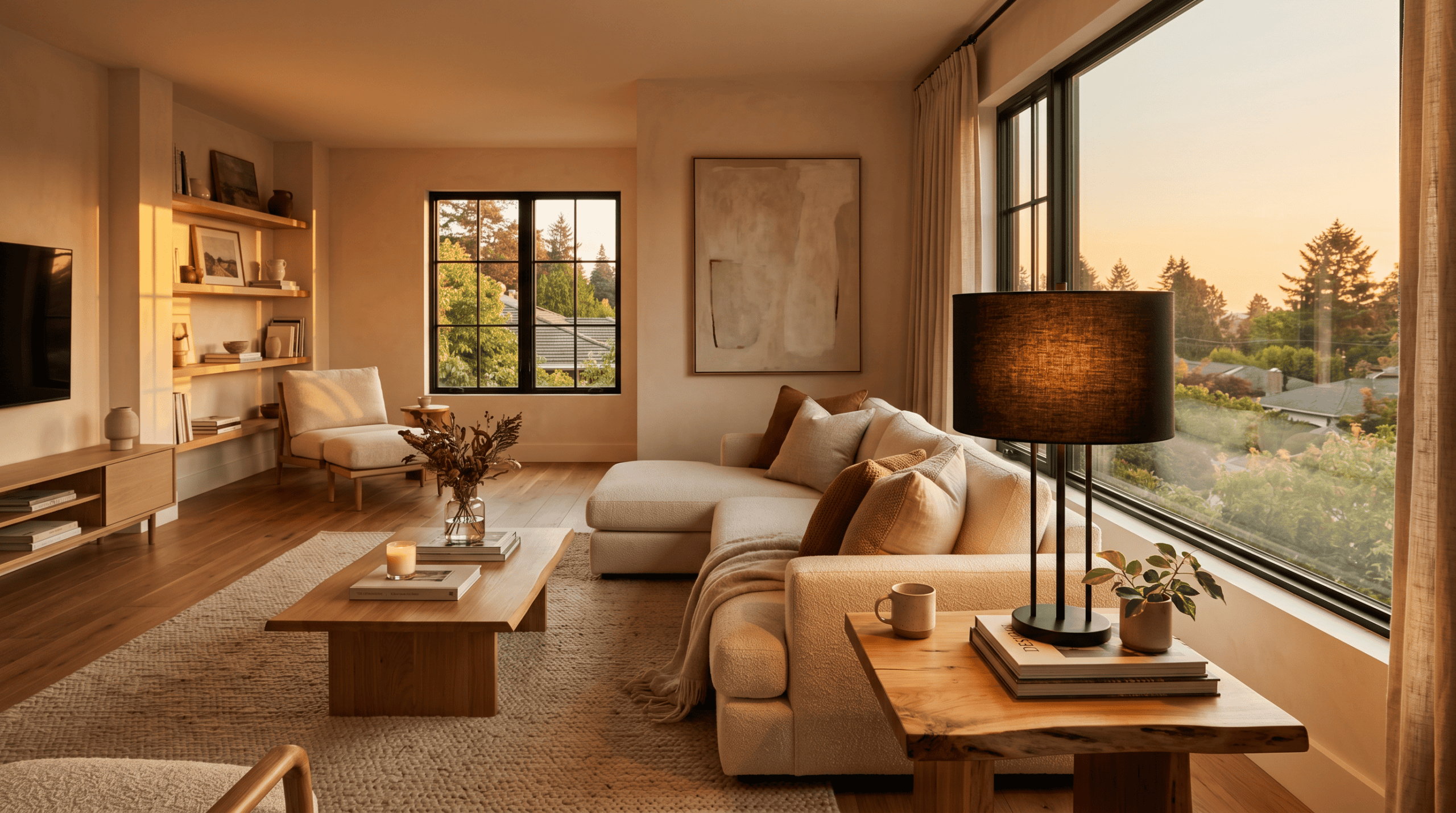
暖色系のベース(真鍮、ウォールナット、暖色系の真鍮と大理石の組み合わせ)は、ブラックシェードの視覚的な重さを和らげ、ランプ全体が強いシルエットに見えるのを防ぎます。. 実際に試してみると、淡い色や明るい木製のベースにブラックのテーブルランプシェードを合わせると写真映えはしますが、実際にはややバランスが悪く見えることがあります, なぜなら、目はランプの上下に視覚的な重さを期待するためで、上部だけではありません。クリーム色、暖色系の木材、またはエイジドブラスのベースは自動的にこのバランスを補正します。.
クールトーンの組み合わせ(クローム、ブラックメタル、ダークストーンにブラックシェード)は逆の方向性です:シャープでフォーマル、ややギャラリーのような印象。どちらの組み合わせも「正解」ではなく、部屋の他の仕上げが暖色系か寒色系かによります。.
ブラックが単に重い、または暗いだけでなく「落ち着き」を感じさせる理由があります。色と感情に関する研究は、査読付きの分析でまとめられており、 NCBI/PMC 照明の色温度が気分や視覚認識にどのように影響するかについて、暖色系の光源は寒色系の光源に比べて、部屋の快適さや視覚的な重さの感じ方を一貫して変化させることが分かりました。これは、暖白色の電球の下でブラックシェードが居心地よく意図的に感じられる理由と一致しますが、同じシェードでもクールホワイトや昼光色の電球の下では無機質またはクリニカルな印象になることがあります。シェードの色と電球の色温度は独立してではなく、一緒に同じデザインメッセージを伝えるため、シェードだけを先に選んで電球を後回しにするのではなく、ペアで選ぶ価値があります。.
ホスピタリティとレストランのムード照明
レストランやブティックホテルでは、家庭で見落とされがちな理由でブラックのテーブルランプシェードを意図的に使用しています: ブラックシェードは、照明器具自体が目立つのを抑えます, これはまさにダイニングテーブルで求められる雰囲気であり、光源が目立つのではなく、空間全体に柔らかく広がることが理想です。ダイニングルームやゲストスイート用のランプを選定する日本のホスピタリティバイヤーは、特にゴールドライナーのブラックシェードを好む傾向があります。なぜなら、温かみのある反射光が低照度でも肌や料理を美しく見せてくれるからです。同じ環境で白いライナーのシェードを使うと、多くのレストランが求める雰囲気には合わず、クリニカルな印象になってしまいます。施設のリフレッシュのために大量に調達する場合は、当社の ホテル・ホスピタリティ用ランプシェードガイド では、仕様書や施設全体でのフィッターの標準化についてさらに詳しく解説しています。.
また、家庭用購入者があまり考えない耐久性の観点も、ホスピタリティバイヤーにとっては無視できません。ゲストルームのテーブルランプは、家庭のリビングルームのランプよりもはるかに乱暴に扱われます。ぶつけられたり、調整されたり、隣に座られたり、時には飲み物をこぼされたりします。ブラックガラスシェードは、ファブリックシェードとは異なり、そうした扱いにも強く、すぐに拭き取れて、ホテルで何年も使われてもシミや臭いが染み込むことがありません。このメンテナンス性の高さが、ホスピタリティバイヤーがブラックを選ぶ決め手になることが多いのです。.
ブラックを完全に避けるべき場合
部屋の唯一の光源がランプである場合、部屋がすでに暗いまたは狭く感じられる場合、またはランプが細かい文字を読むなどの作業用である場合は、ブラックのテーブルランプシェードは避けてください。これらすべての場合において、ブラックファブリックの光を吸収する特性は目的に反します。.
選び方:サイズ、電球、購入時の注意点
ブラックのテーブルランプシェードを正しく選ぶには、次の3つの決定をこの順番で行うことが重要です。まずシェードのサイズをベースに合わせ、次にワット数と電球の色を選び、最後にライナーを選びます。.
ハープとフィッターのサイズ調整:プロポーションのルール
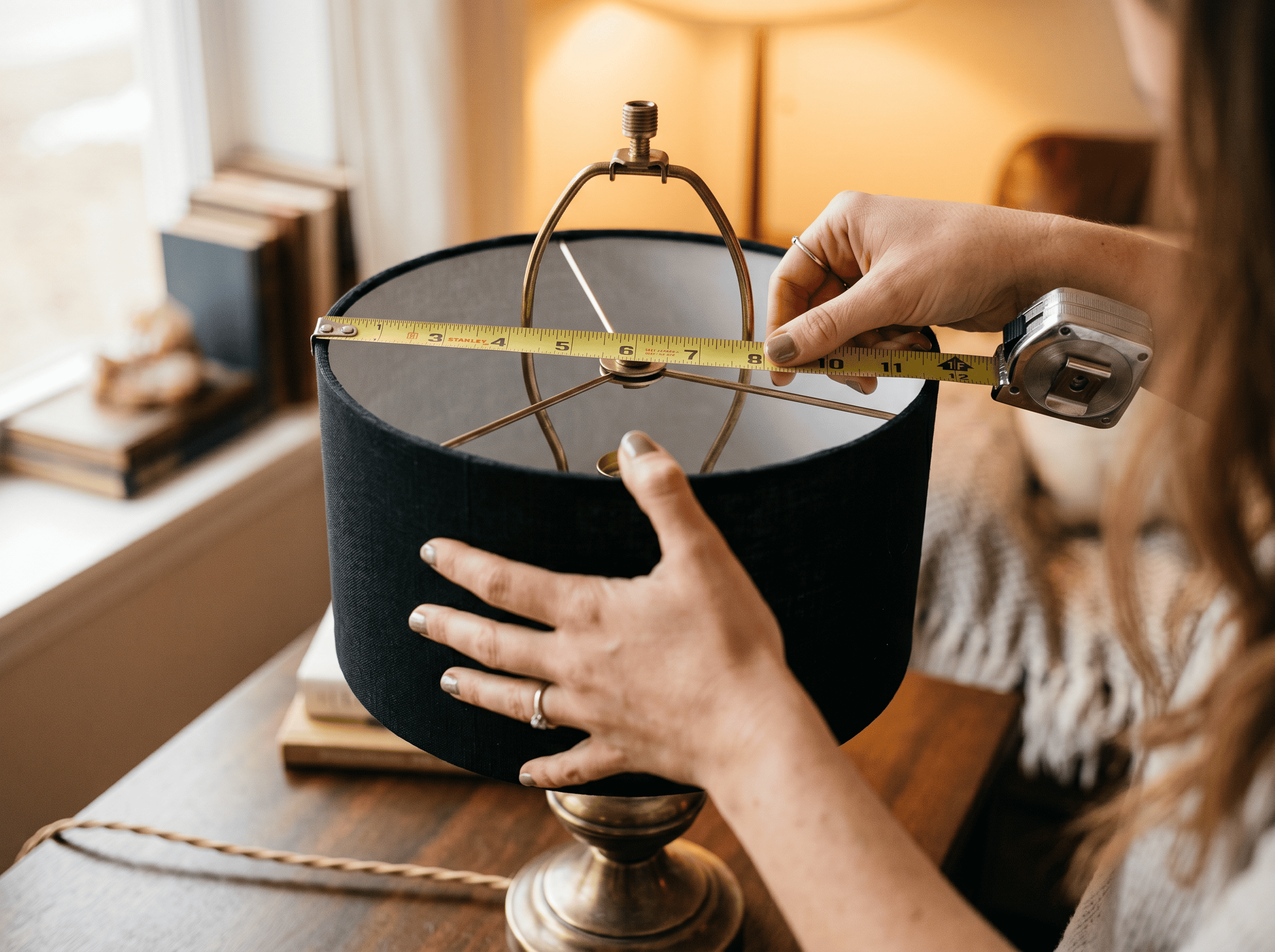
シェードの下部直径は、ランプベースの高さとほぼ同じになるようにし、ハープ(シェードを支えるワイヤーフレーム)は、シェードの下端がソケットと同じ高さか、やや下になるように十分な高さにします。これにより、立ったときに電球が見えなくなります。ブラックシェードは、明るい色のものよりもサイズが小さいと特に厳しくなります。ファブリックを通過する光が非常に少ないため、シェードが小さすぎると、漏れる光が狭く強いスポットになり、柔らかな光になりません。購入前にフィッターやハープの基本的な測り方を知りたい場合は、当社の ランプシェードフレームガイド ほとんどのリスティングページが省略する詳細なサイズ計算について説明します。.
フィッターの種類はサイズと同じくらい重要です。ほとんどのテーブルランプはスパイダーフィッター(ハープに取り付けるワイヤーのクロスフレーム)またはクリップオンフィッター(ハープ不要で直接電球を挟む)を使用します。黒いシェードはどちらのタイプも販売されており、間違えて購入することがよく返品理由になります。クリップオンシェードはスパイダーフィッター用のランプには正しく乗らず、その逆も同様です。直径だけでなく、注文前に既存のシェードやランプの説明でフィッターの種類を必ず確認してください。.
黒いシェード内のワット数と熱
暗く密に織られた生地は、淡く粗く織られたものよりも電球周りに多くの熱を閉じ込めます。これは、シェードの壁を通して可視光として逃げる赤外線エネルギーが少ないためです。これは小さな注記ではありません。 日本消費者製品安全委員会によるポータブル照明の調査 では、器具に対して過剰な電球ワット数が火災関連のランプ事故の有意な要因であることが判明し、さらに中程度のワット数のハロゲン電球でも同じワット数の標準白熱電球よりも表面温度が数倍高くなることが記録されています。黒いテーブルランプシェードの実用的なポイントは、ハープやソケットラベルに記載されたワット数以下に抑え、LED電球を選ぶことです。 日本エネルギー庁によると 同等の明るさの白熱電球やハロゲン電球に比べて表面温度が大幅に低く、シェードがすでに多くの熱を吸収している場合でも安全性が高まります。.
専門家のアドバイス: 黒いシェードが1時間使用後に触って暖かいと感じるのは、暖色系LED(白熱電球相当)の近くの布地では正常です。熱いと感じる場合は、ワット数を下げるかLEDに切り替えてください。我慢しないでください。.
光の出力に合わせたライニングカラーの選び方
ライニングは見た目だけでなく、ランプの役割に合わせて選びましょう。実用的な明かりが必要なランプ(玄関用のコンソールランプやデスクランプ)は、白またはライトゴールドのライニングが適しています。装飾目的のみのランプ(棚のアクセントや寝室のムードランプ)は、黒×黒でも機能的に問題ありません。なぜなら、機能性が目的ではないからです。.
避けるべき購入ミス
黒いテーブルランプシェードの購入でよくある失敗パターンがいくつかあります:
- シルエットだけで購入する:商品写真の点灯していない形だけで判断し、ライニングカラーを全く確認しないこと
- ハープの高さを無視する:直径が合っていても、ハープが短すぎると電球が露出し、シェードの意味がなくなります
- シェードの形とベースのスタイルが合っていない:大きくテーパーしたエンパイアシェードを幅広で低いセラミックベースに合わせると、上部が重く見えます。テーパーの向きをベースのシルエットに合わせましょう
- すべての「黒」生地が同じくらい不透明であると仮定する:粗く織られた黒いリネンは、同じ見た目の暗さでも、きつく織られた黒いコットンや裏地付きの黒い生地よりも明らかに多くの光を通します
- 裏地の有無の問題を完全に省略する:購入全体で最も影響の大きい決定であり、ほとんどの製品説明で言及されない点
今後のトレンド(2026年以降)
「ウォームブラック」へのシフト
2026年に向けたインテリアデザインの動向では、冷たく無機質なマットブラックから、より暖かく柔らかな黒褐色(エスプレッソ、チャコール、深いコーヒーブラック)への移行が一貫して指摘されています。特にテーブルランプシェードでは、「ブラック」として販売されているものに少量のブラウンやグレーの顔料を混ぜるブランドが増えており、純粋なフラットブラックは減少傾向です。暖色系LED照明の下ではその効果がより繊細に現れ、2020年代のマットブラックハードウェアの流行というよりも、考え抜かれた落ち着いたダークトーンとして映ります。.
これは、数年前にピークを迎えた強いコントラストの白黒パレットからの全体的な後退とも一致しています。現在のデザイナーは、純粋で冷たいブラックを主役ではなく、控えめかつ意図的に使う傾向です。テーブルランプシェードの場合、ブラックは部屋全体の色調ではなく、暖かみのある重層的な空間の中でアクセントとして選ばれることが増えています。クリーム色の壁や温かみのある木材に黒いランプシェードを合わせると今風に見えますが、全体が白黒で黒いシェードがさらにコントラストを強調する部屋は、やや時代遅れに感じられます。.
ダークシェード内の調色可能な電球
調色可能なホワイト電球やスマート電球が標準となることで、ダークシェードに関する古くからの不満が直接解消されます。従来のように固定色の電球が光を遮る生地と戦うのではなく、調色可能な電球なら、黒いテーブルランプシェードでも昼間の作業時にはより明るくクールに、夜の雰囲気作りには暖かく暗めに調整でき、ランプを2台買う必要がありません。.
市場の背景としても、このカテゴリーの成長が続くと見込まれています。ランプや照明器具の世界的な需要は今後も増加が予測されており、 Statistaの市場展望 によれば、この分野は安定した年間成長が見込まれ、特に装飾照明(黒いテーブルランプシェードが含まれるカテゴリー)は、独立系市場調査の推計で2031年まで年率数パーセントの成長を続ける数十億ドル規模の世界市場となっています。.
| トレンド | 変化していること | 購入者への意味 |
|---|---|---|
| 暖色系ブラック顔料 | フラットで冷たいブラックが減り、エスプレッソやチャコールのブレンドが増加 | 暖色系LEDの下でより柔らかい印象 |
| 調色可能な電球が標準に | スマート電球が固定色電球に取って代わる | 1つのランプでタスク照明とムード照明をカバー |
| ブラックガラスの在庫状況 | メーカーによる幅広い色合いの深さ範囲 | 染色された布よりも点灯・非点灯のコントロールがしやすい |
よくある質問
黒いテーブルランプシェードの購入前に買い手が最もよく尋ねる質問への迅速な回答。.
黒いランプシェードは光の出力を減らしますか?
はい、はっきりと減少します。黒いテーブルランプシェードは、布の壁を直接通過しようとする光のほとんどを吸収するため、光は主に上部と下部の開口部から漏れ、シェード全体が均一に光ることはありません。. 結論: 反射性のあるゴールドやホワイトの裏地と組み合わせない限り、均一な間接光ではなく、指向性のある光のプールを期待してください。.
黒いテーブルランプシェードに最適な電球は何ですか?
harp ラベルに印字されているワット数以下または同等のワット数で、暖白色(2700K〜3000K)のLED。. 結論: LED、暖白色、そして定格ワット数を超えないこと。.
金色の裏地と白色の裏地:どちらが良い?
金色の裏地はより暖かく、目に優しく見える印象を与え、白色より総輝度はやや低くなる;白色の裏地は最も明るく、最も中性的な光を提供する。. 結論: 雰囲気を重視する場合は金色を、機能性を重視する場合は白色を選ぶ(リビングルーム・寝室は金色、机・読書は白色)。.
2個セットの黒いランプシェードを買うべきですか?
ランプが互いに視界に入る場所にのみ、コンソールの両サイド、ソファの横、同じデザインのナイトスタンドに置く場合のみ。. 結論: ランプが視覚的にペアになっていると対称性は意図的に見える;別々の部屋にあると無駄になる。.
黒いガラスと黒い布、どちらが良いですか?
黒いガラスは永久的で均一な仕上がりを保ち、色あせはしないし再覆蓄えを必要としないが、着色の深さによって透過する光の範囲が狭くなる。黒い布は手頃で一般的で、後で取り替えやすい。. 結論: ガラスは恒久的なデザインの主張、布は柔軟性と初期費用の低さのために。.
黒いランプシェードは色あせたり変色したりしますか?
布製シェード、特に安価な染色綿は、長時間の直射日光や電球近くの熱 exposure により、わずかに茶色や灰色がかる色に退色することがある。黒いガラスは色あせない;その色は製造時に決定され、表面染料として付与されるものではない。. 結論: ランプが直射日光の当たる場所にある場合、ガラスまたは高品質のソリューション染織布は、安価な印刷綿よりも長く色を保つ。.
既存のランプシェードを新しいものを買う代わりに黒くペイントできますか?
技術的には布用スプレーペイントで可能ですが、ほとんど割に合いません。スプレー塗料は布を固くし、編み目を詰まらせて光の透過を予測不能なく変えることがあり、曲面で均一な仕上がりになることは稀です。. 結論: クイックなDIYのアクセント piece を超える用途なら、目的別に作られた黒いシェードを購入した方が、はるかに均一で予測可能な結果になります。.
どのくらいのサイズの黒いテーブルランプシェードが必要ですか?
ランプ本体の高さを測定し、その高さに近い底径のシェードを選びます(正確ではなく、概略的に比例)。高さ約20インチの本体には、直径14〜16インチのシェードが一般的に適しています。高さが短い14インチの本体には、直径10〜12インチ程度のものが適しています。. 結論: シェードの比率をまず本体の高さに合わせて決め、基本ラインの上に個人的な好みを加えて調整します。.
部屋に合う黒いテーブルランプシェードを選ぶポイント
私たちが最もよく見かける買い物のミスは、スタイルの話ではなく、黒いテーブルランプシェードを他のシェードと同じように扱い、部屋を照らす光が異なることに驚くことです。クリームリネンのシェードのように均一に光は放てませんし、それは欠陥ではなく、素材が不透明で光を吸収する特性の設計通りの挙動です。その点を前提に(本体への適合、ライニングをランプの実際の用途に合わせる、適切なワット数を保つ)、黒いシェードは購入者が求めるもの、すなわち部屋を地に足のついた落ち着きで支える役割を果たします。.
ランプが果たすべき役割から始めてください。実用的なタスク照明またはアンビエント照明であれば、金色または白のライニングと適切なサイズのハープを選びます。純粋に装飾的なアクセント(棚用ランプ、コンソールピース、読書用コーナーのムードランプ)であれば、ベースのラインと呼応する形状の黒いガラスまたは布のシェードが、部屋の見た目にはより効果的です。いずれにせよ、黒いテーブルランプシェードが写真映えするか、日常使用で真に役立つかは、色自体ではなく、数少ない決定によって決まります。.
ブラックを避ける理由は何もありません。開かれた目で買うべき理由です。そうすれば、黒いテーブルランプシェードは、取引の結果が一貫して予測可能であるため、ほとんどの他のシェードカラーよりも安定してその利点を発揮します。.