Direct answer: Pressed glass lamp shades are glass covers formed by pressing molten glass into a mold to create geometric or decorative patterns on the surface. They are the practical, cost-effective alternative to hand-cut glass — offering visually similar faceted effects at 30–70% lower cost. Quality pressed glass shades closely replicate the appearance of cut glass in normal residential use.
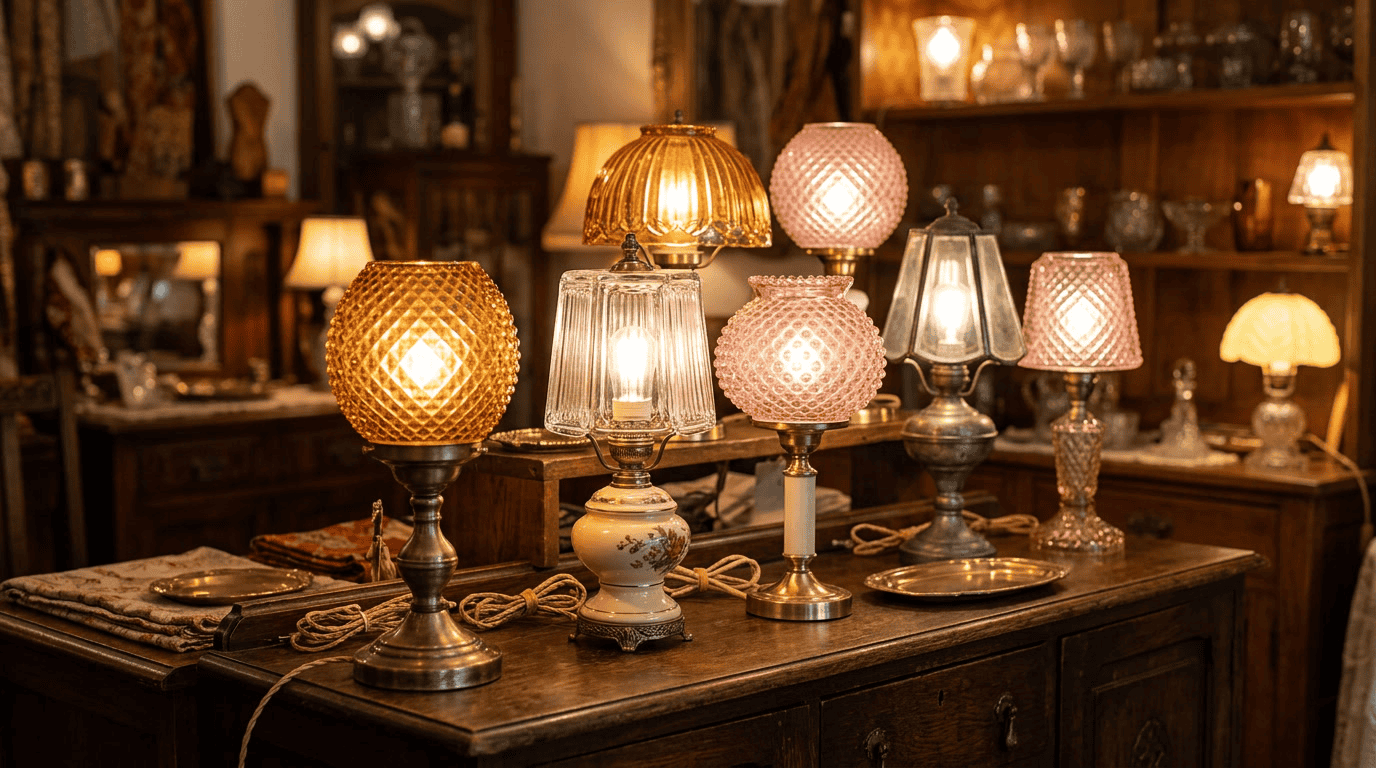
The majority of “cut glass style” lamp shades on the market today are not cut glass at all — they are pressed glass. The pattern is formed in a mold during the glass forming process rather than ground into the surface after forming. The result looks similar to cut glass from a distance, costs substantially less, and is available in far greater quantities and standardized sizes.
Understanding pressed glass is essential for anyone buying, replacing, or specifying lamp shades in this category. The distinctions between pressed and true cut glass affect price, quality, light output, and how to care for the shade correctly.
What Is Pressed Glass? The Manufacturing Process
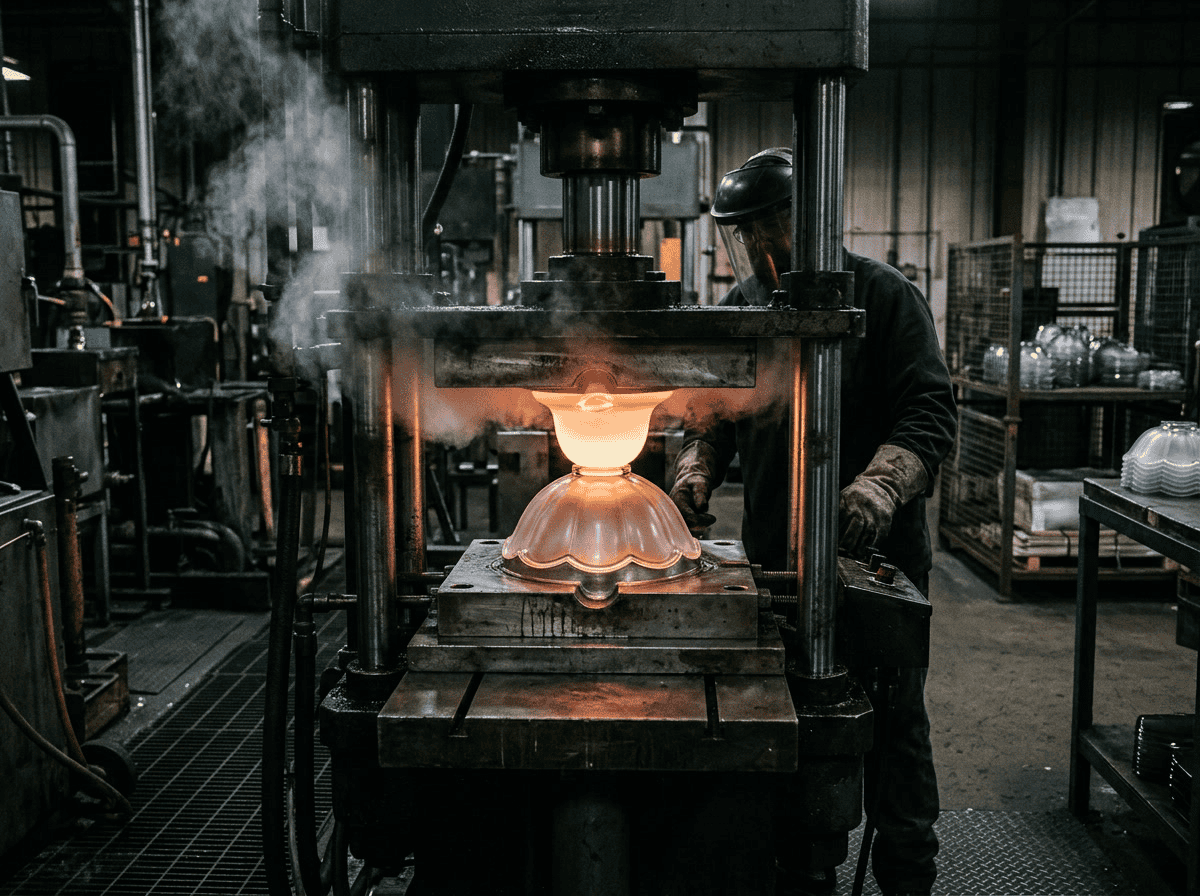
Pressed glass is formed by introducing a measured amount of molten glass (a “gather”) into a metal mold and pressing it with a plunger or die. The mold imparts the pattern to the exterior surface and the plunger forms the interior. When the glass cools and is released from the mold, the pattern is already formed — no cutting or polishing is required.
This process was industrialized in the United States in the 1820s, according to Wikipedia’s history of pressed glass, making decorative glass available to a mass market for the first time. Before pressed glass, decorative faceted glass required hand-cutting — a skilled artisan process that made cut glass a luxury material. Pressed glass democratized the decorative glass aesthetic.
For lamp shades specifically, the pressed glass process allows:
- Consistent dimensions across production runs — every shade of a given model is identical
- Complex patterns formed in a single operation
- High production volume at low per-unit cost
- Standardized fitter dimensions that match lamp hardware specifications
The trade-off: Pressed glass facets have softer, more rounded edges than true cut glass. The surface is formed by the mold surface quality, not by grinding and polishing. High-quality pressed glass with excellent mold finish can closely approximate the appearance of cut glass; lower-quality pressed glass with rough mold surfaces produces noticeably duller effects.
Pressed Glass vs. True Cut Glass: The Real Differences
| Feature | True cut glass | Pressed glass | Practical impact |
|---|---|---|---|
| Pattern formation | Ground and polished after forming | Molded in during formation | Cut glass sharper edges, higher brilliance |
| Facet edge sharpness | Very sharp — individually polished | Softer, rounded from mold | Cut glass produces finer prismatic projection |
| Surface texture | Highly polished, optically precise | Varies by mold quality — good to mediocre | Quality pressed glass is excellent; poor pressed glass is noticeably flat |
| Glass hardness | Harder cut surface (post-forming polish) | Mold surface — softer | Pressed glass scratches more easily on facets |
| Price | $80–500+ depending on size/complexity | $25–120 for equivalent size | Pressed glass 30–70% less expensive |
| Availability | Limited — specialty production | Widely available in standard sizes | Pressed glass much easier to source as replacement |
| Pattern consistency | Slight variations (handwork) | Very consistent across units | Pressed glass better for matching multiple units |
| Weight | Heavier (thicker walls typical in quality cut) | Lighter at equivalent size | Pressed glass easier to handle, less stress on hardware |
Common Pressed Glass Patterns
The pattern vocabulary of pressed glass lamp shades mirrors cut glass, because pressed glass was developed specifically to replicate cut glass aesthetics:
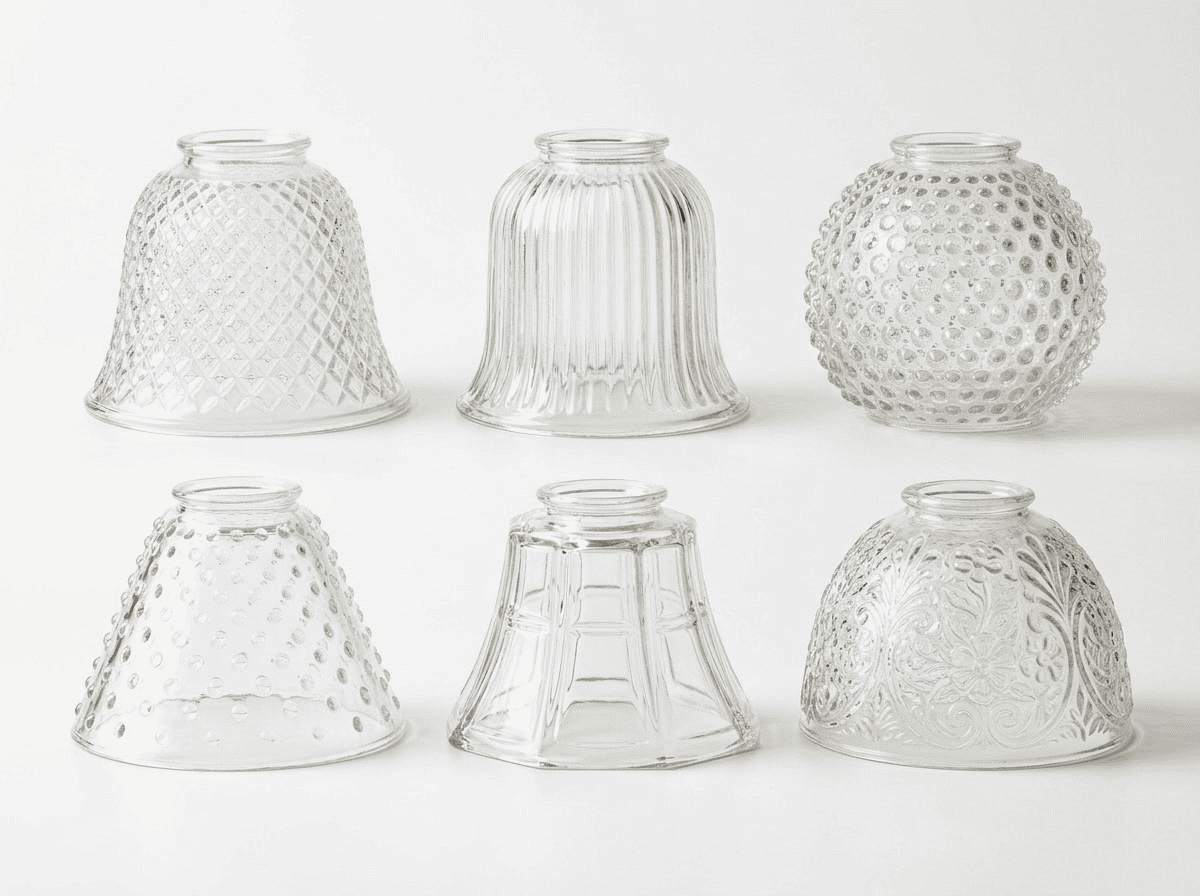
Diamond / diamond crosshatch: The most common pattern. Regular grid of V-shaped grooves creating a diamond texture across the entire shade surface. The diamond pattern at different scales (fine = many small diamonds; coarse = fewer large diamonds) is the most versatile and available in the widest range of sizes. Fine diamond pressed glass, at quality mold finish, is the pattern most difficult to distinguish from true cut glass by casual inspection.
Hobstar: Diamond crosshatch with a star cut at each diamond intersection. The hobstar multiplies prismatic reflections by adding extra polished surfaces at each grid intersection. Hobstar pressed glass shades have a richer, more complex light pattern than plain diamond. Requires higher mold precision — quality varies more across producers.
Fluted: Parallel vertical grooves running the full height of the shade. The simplest pressed pattern. Clean, architectural character. Produces vertical light columns rather than the all-over prismatic effect of diamond or hobstar. Appropriate for Arts & Crafts and Deco-adjacent interiors.
Honeycomb: Regular hexagonal cells covering the shade surface. Less common than diamond but producing a distinctly different visual character — softer, more organic than the hard lines of diamond crosshatch. More popular in European and Scandinavian market designs.
Swirl / optic rib: Molded-in spiral ribs running from fitter to base. Not strictly a “cut glass style” pattern — swirl is more associated with blown glass aesthetics — but executed in pressed glass it produces a graceful light-diffusing effect. Common in opalescent and colored pressed glass shades.
Raised boss / ball pattern: Repeating raised spherical or oval bosses on the exterior surface. Mid-century modern character. A very different aesthetic from faceted patterns — the bosses scatter rather than refract light.
Quality Tiers in Pressed Glass Production
Not all pressed glass is equal. The quality range is wider in pressed glass than in true cut glass, because the mold quality is the dominant variable:
| Tier | Glass quality | Mold quality | Price range | Market |
|---|---|---|---|---|
| Premium | High-clarity, consistent batch | Precision-machined fine pattern | $60–120 | Replacement, decorator, hospitality |
| Mid-range | Good clarity, minor bubbles acceptable | Good mold detail, some rounding | $30–60 | Residential, retail |
| Standard | Moderate clarity | Adequate pattern definition | $15–35 | Volume residential, hardware stores |
| Budget | Variable clarity, may show green/yellow tint | Rough mold, significant edge rounding | $8–20 | Mass-market, short service life |
How to assess quality in person or from photographs:
- Look at facet edge sharpness in a good light source — premium pressed glass has edges that are much closer to cut glass sharpness
- Look for optical clarity in the glass body — any green, yellow, or grey tint indicates lower-grade glass formulation
- Check pattern regularity around the full shade — consistent facets indicate good mold quality
- Look at the fitter rim finish — premium pressed glass has a ground and polished fitter rim; budget glass has a rough or unfinished rim
According to The Spruce’s guide to understanding glass types, the clarity of glass is primarily determined by the purity of the silica batch and the presence of trace minerals — which is why premium glass has a bright white or slight blue-white transmission versus the greenish tint of lower-grade glass with higher iron content.
Pressed Glass vs. Molded Opalescent Glass
Pressed glass lamp shades are often confused with molded opalescent glass — both are formed in molds, but they produce very different visual effects:
Pressed glass (clear/transparent): Geometric patterns on clear glass. Light passes through and refracts at the facets. Primary visual effect is prismatic light refraction and pattern projection. The glass is essentially transparent.
Opalescent pressed glass: The same forming process but using opalescent glass batch. The glass has a milky, light-diffusing quality — it transmits and scatters light rather than refracting it. Pattern is visible but produces a glow effect rather than prismatic projection. Victorian and Art Nouveau aesthetic. According to Wikipedia’s entry on opalescent glass, this type was perfected in the United States in the 1880s and became central to the Tiffany Studios aesthetic.
Both types are pressed glass by manufacturing method, but they serve different visual purposes. This guide focuses on clear/transparent pressed glass with faceted patterns; for the opalescent type, see the vintage glass lamp shades guide.
Pressed Glass Lamp Shade Applications
Replacement shades: The most common use case. When a cut glass shade breaks, quality pressed glass in the matching pattern and fitter dimension is usually the practical replacement. The visual difference is minimal in use; the cost difference is significant; the availability difference is substantial. For most residential replacement situations, quality pressed glass is the right answer.
Matching multiple units: Hotels, restaurants, and residential spaces that need 6–20+ matching shades consistently use pressed glass. True cut glass has small handwork variations between units; pressed glass from the same mold run is very consistent. Consistency matters when multiple shades are visible simultaneously.
Period reproduction interiors: For Victorian and Edwardian reproduction interiors on a reasonable budget, quality pressed diamond or hobstar shades are period-appropriate and visually convincing. The historical record shows that pressed glass was already displacing true cut glass in residential lamp shade applications by the 1890s — so pressed glass is actually more historically accurate than true cut glass for most period reproductions.
Commercial and hospitality: High-use environments where shades will be cleaned frequently, handled regularly, and need replacement from consistent stock. Pressed glass standardized production is ideal for these requirements.
For the full range of cut glass pattern options, including both true cut and quality pressed, our cut glass lamp shades guide covers the complete spectrum. For assessment of crystal-quality shades at the premium end, crystal cut glass lamp shades explains the distinctions that justify higher investment.
For care of pressed glass shades (the same fundamentals as cut glass), how to clean cut glass lamp shades covers appropriate technique.
According to Houzz’s lighting selection guide, the majority of decorative glass lamp shades purchased through interior designers for residential projects in the mid-range price tier are pressed glass — confirming that this material is the mainstream choice, not a compromise.
Buying Pressed Glass Lamp Shades: What to Specify
Pressed Glass Pattern Selection by Replacement Need
| Original shade type | Best pressed glass match | Visual match quality |
|---|---|---|
| Victorian cut diamond | Fine diamond pressed, clear | Excellent (near-identical at distance) |
| Hobstar cut original | Pressed hobstar, premium grade | Good (softer edges visible up close) |
| Fluted cut glass | Pressed fluted, medium wall | Excellent (simple geometry translates well) |
| American Brilliant period | Premium pressed with fire-polished rim | Good (period feel without collector value) |
When ordering pressed glass lamp shades — particularly as replacement for existing fixtures or for multi-unit hospitality specifications — provide these measurements:
Required specifications:
- Fitter type (uno, gallery ring + inner diameter, spider)
- Fitter opening inner diameter (in fractions of an inch or mm)
- Outer diameter of shade (maximum width)
- Height from fitter rim to base
Optional but useful:
- Pattern type (diamond, hobstar, fluted, etc.)
- Diamond scale (fine/small diamonds vs coarse/large diamonds)
- Wall thickness preference (standard ~4mm, heavy ~6mm)
- Glass color (clear, slight blue-white tint, amber tint)
For replacement of an existing shade, bringing the original or a photograph showing the fitter detail is the most reliable way to confirm compatibility.
For sizing guidance and how fitter dimensions relate to the lamp hardware, see the glass lamp shade fitter types guide — the same fitter standards apply to pressed glass and cut glass.
Frequently Asked Questions
Is pressed glass as good as cut glass for lamp shades?
It depends on the use case. Quality pressed glass is excellent for most residential, hospitality, and replacement applications — the visual difference from true cut glass is minimal in normal use, the cost is significantly lower, and consistency and availability are better. True cut glass has superior optical precision and is preferred for high-value focal pieces where the finest prismatic effects matter. For most buyers, premium pressed glass is the right choice.
How can I tell if a lamp shade is pressed glass or true cut glass?
Run a fingernail very lightly across a facet edge. True cut glass has a sharp, clearly felt edge — the transition between surfaces is precise. Pressed glass has a softer, more rounded edge. Also examine a facet surface closely: true cut glass has a mirror-polished surface with perfect flatness; pressed glass may have very slight surface texture or waviness from the mold contact.
Can I use pressed glass lamp shades as replacements for cut glass originals?
Yes in most cases. Match the fitter type, opening diameter, outer diameter, and height. If the pattern family is similar (diamond for diamond, hobstar for hobstar), the visual result in normal use is very close. For antique or collector-quality lamps where period accuracy matters, true cut glass reproduction may be preferred.
Do pressed glass shades produce the same prismatic light effects as cut glass?
Quality pressed glass produces excellent prismatic effects — close to, but not identical to, true cut glass. The slightly rounded facet edges in pressed glass produce softer prismatic projections with less sharp edge definition than true cut. From normal viewing distance in a lit room, the difference is minor. On close inspection or in side-by-side comparison, the precision difference is visible.
Are pressed glass lamp shades more durable than cut glass?
The glass itself is approximately equal in durability — both are standard soda-lime glass composition (unless the cut glass is lead crystal, which is softer). The key durability difference is the fitter rim: quality pressed glass with a fire-polished fitter rim is comparable to cut glass; budget pressed glass with a rough fitter rim is more prone to chipping at the fitter opening. Check fitter rim finish quality when assessing durability.
What’s the price range for pressed glass lamp shades?
Quality pressed glass lamp shades range from $25–120 depending on size, pattern complexity, and glass quality. Budget mass-market pressed glass shades start around $10–20. Premium precision-pressed glass (equivalent to entry-level true cut glass in appearance) runs $60–100. True cut glass shades of equivalent size start at $100–200 and can run substantially higher for complex patterns or crystal composition.
How long do pressed glass lamp shades last?
High-quality pressed glass lamp shades are indefinitely durable under normal residential use — there is no inherent degradation over time. Glass doesn’t age, crack, or degrade chemically under normal lamp conditions. The practical limitations are physical: breakage from impact, and chemical etching from repeated exposure to harsh cleaners. Properly maintained, a quality pressed glass shade should last the lifetime of the lamp.
Related Articles in This Series
Conclusion
Pressed glass lamp shades are the mainstream choice for faceted geometric glass lamp shades — widely available, cost-effective, consistent, and visually excellent at quality production tiers. The technique that makes them accessible is the same technique that democratized decorative glass for a mass market in the 19th century.
The key to buying well in this category is identifying the quality tier correctly: premium pressed glass at $60–100 is significantly better than budget pressed glass at $15–25, and the visual difference is apparent on inspection. For most residential and commercial applications, a quality pressed glass shade in the correct pattern and fitter dimension is the best-value choice in the cut glass style category.