Quick answer: A hobnail milk glass lamp shade combines a raised rounded-bump surface pattern with an opaque or softly translucent white glass body. Hobnail describes the texture; milk glass describes the body appearance. They are separate specifications. For a replacement or OEM glass shade, record the profile, fitter opening, seating surface, outside diameter, height, rim, bump pattern, light transmission and production method. A catalog name is only a starting point.
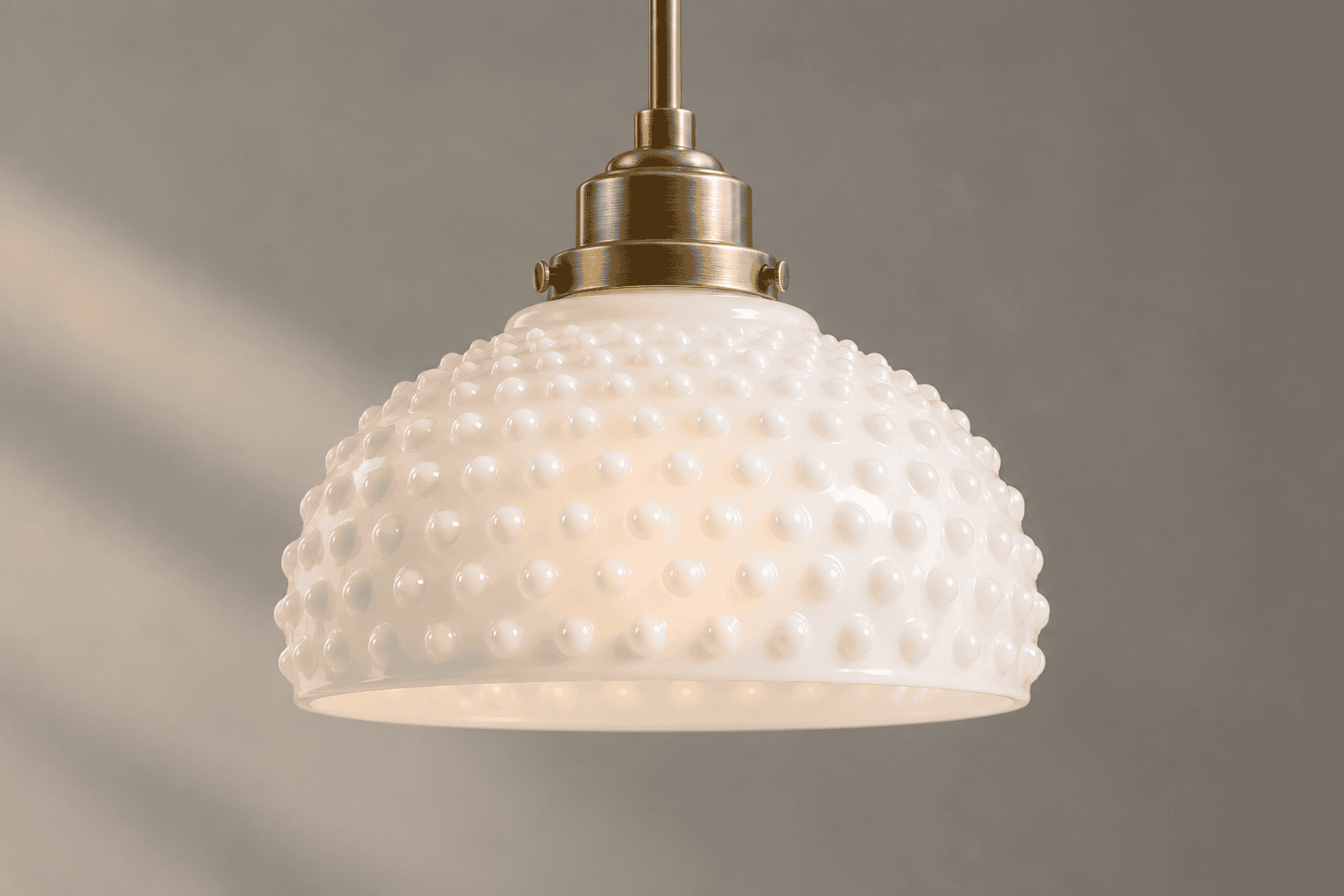
What is a hobnail milk glass lamp shade?
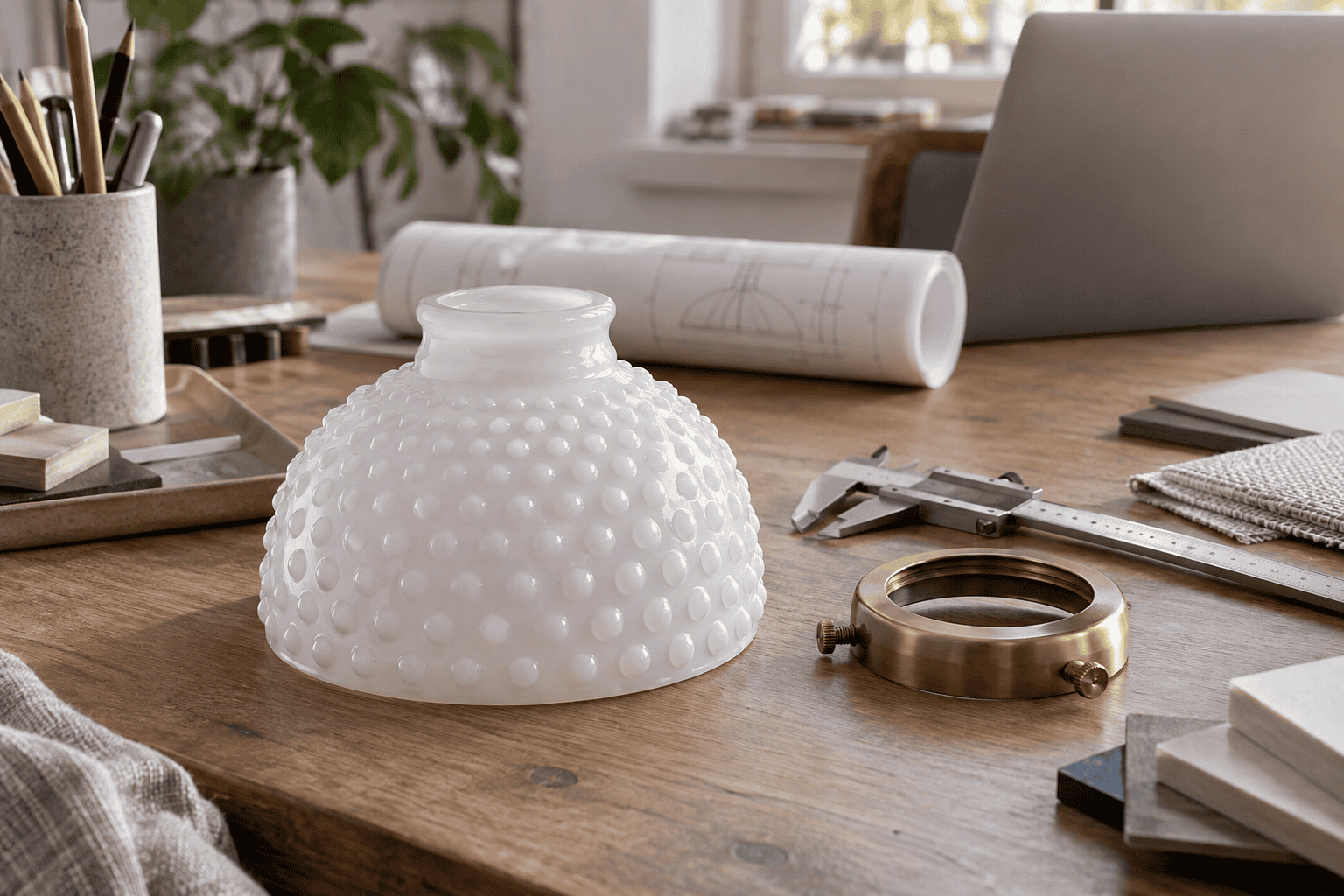
Hobnail glass carries repeated rounded projections. Milk glass has a white, ivory or softly opal body that limits direct view of the light source. The combined term names surface and appearance, not the fitter or glass formula.
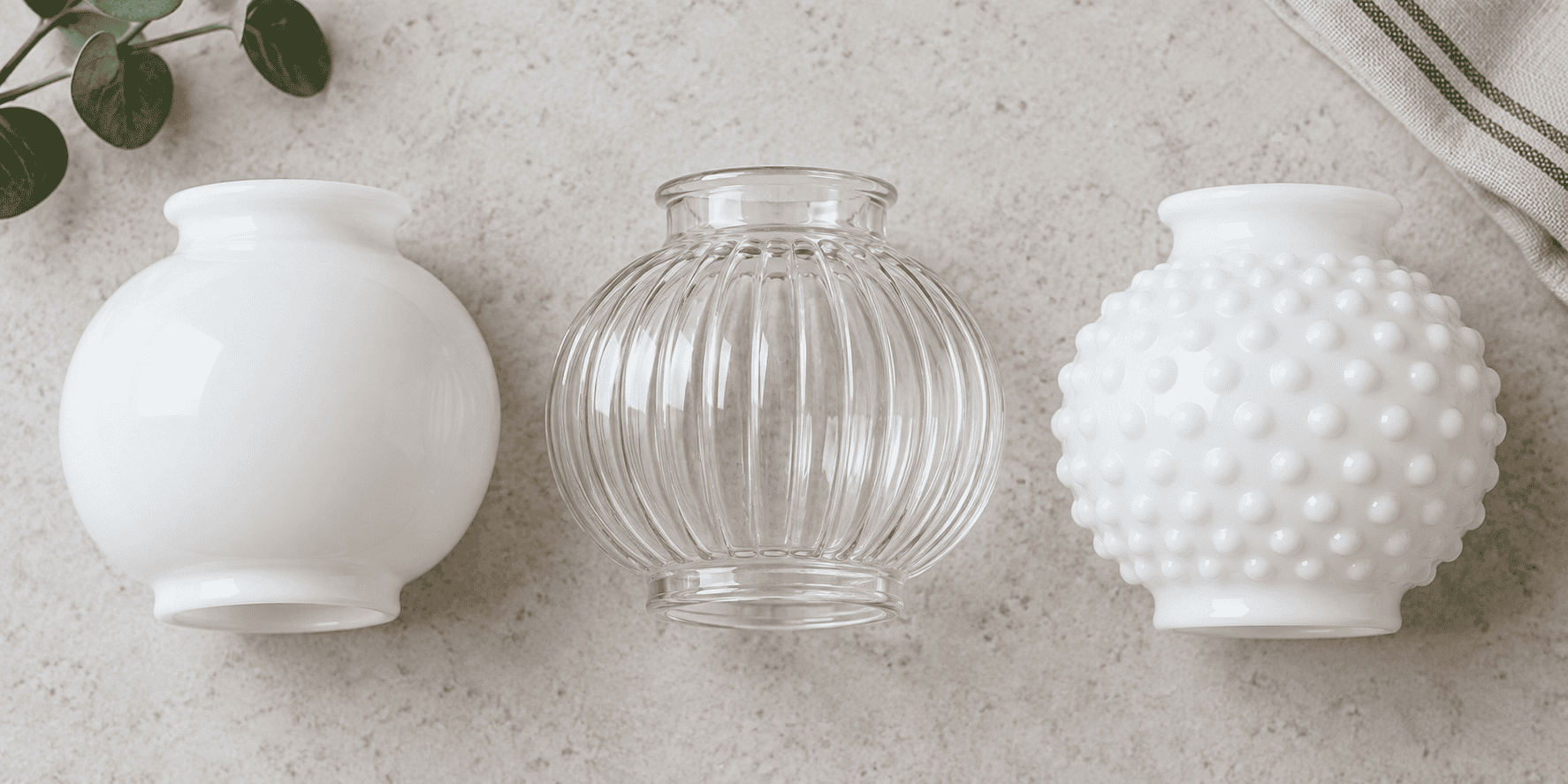
A smooth white globe, ribbed shade and rounded-bump shade may all be called milk glass, yet they need different hardware and create different highlights. Hobnail can also appear in clear, colored, cased or opalescent glass, so it is a surface family rather than a complete material description.
The Metropolitan Museum of Art describes a hobnail or opalescent dewdrop pattern on a pressed-glass lamp. The Corning Museum of Glass records a historical object with a hobnail base and a mold-blown shade. The examples show that a raised pattern does not force one forming method or one color.
| Attribute | What it describes | What a buyer still has to specify |
|---|---|---|
| Hobnail | Raised rounded projections on the glass surface | Bump diameter, height, pitch, row layout and pattern stop |
| Milk glass | White, cream or opal body appearance with limited transparency | Color target, opacity, transmission and whether the body is cased |
| Student shade | A common broad shade profile and application term | Actual opening, seating plane, retaining ring and overall profile |
| Fitter | The connection between shade and fixture | Measuring surface, hardware, clearance and nominal size |
| Replacement shade | A part intended to match an existing fixture or reference | Old sample, drawing, photographs, dimensions and condition notes |
How to identify a hobnail reference correctly
Start with the surface, check the body, then inspect the connection. This keeps a style name from taking over the specification.
Look for regular, rounded projections rather than sharp facets or long ribs. The bumps may cover the body, stop near the shoulder, continue onto a neck or appear on one band. In neutral daylight, record whether the center is white, cream, clear over white or tinted. A thin edge often transmits more light than the middle.
Turn the shade over and photograph the opening, lip and rim. A close view may reveal a straight neck, flared seat, rolled edge, ground rim or retaining groove. Also record mold seams, bubbles, uneven rows and wear at the contact surface. These clues help a manufacturer judge the forming route and decide which variation should be copied.
For an OEM program, use the historical name to find references, then replace it with measurable requirements. An unmarked shade still needs a material and engineering review.
| Inspection clue | Useful interpretation | Do not assume |
|---|---|---|
| Rounded raised bumps | The shade has a hobnail or dewdrop style surface | Every bump pattern has the same mold or pitch |
| White or opal body | The reference may be milk, opal or cased glass | The shade uses one universal recipe |
| Clear edge with opaque center | The wall may be thin at the edge or made with a layered body | The clear edge proves a clear-over-opal construction |
| Regular mold seam | A repeatable molded or pressed process may be involved | The seam location will match a new mold automatically |
| Soft irregular rows or bubbles | Hand forming, an older mold or process variation may be present | Every irregularity should be copied into mass production |
| Worn fitter or chipped rim | The interface may have changed through use | A damaged opening is the original nominal size |
Why the hobnail surface changes light and handling
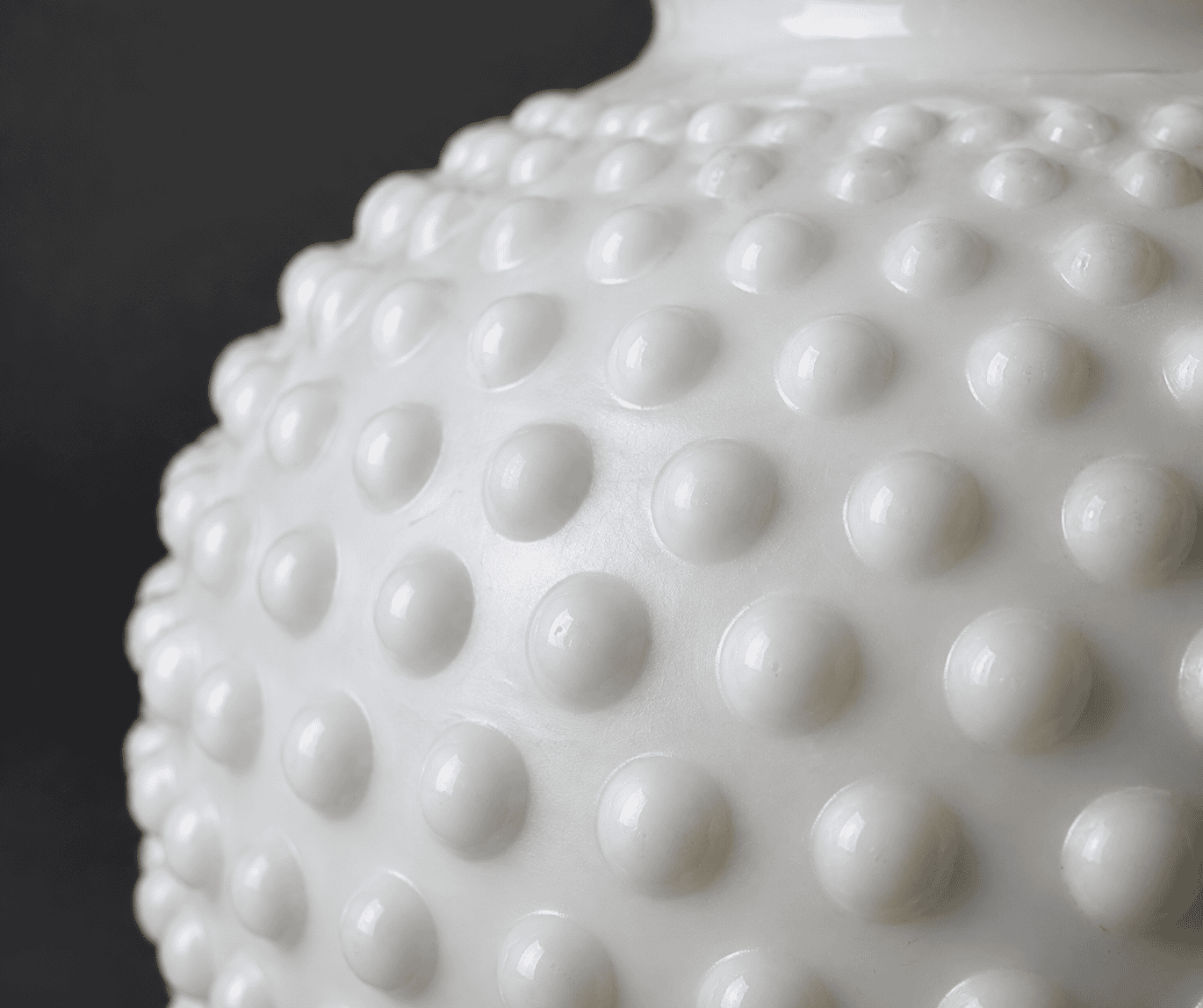
The raised pattern breaks up reflections that would look like a hard hotspot on a smooth surface. It does not create a measured diffuser performance by itself. Wall thickness, opacity, bulb position and fixture geometry still control the result. The projections catch highlights, soften the outline of the source and give the shade a tactile appearance when it is unlit.
For a lighting brand, the question is whether the texture supports the intended distribution. A more opaque body can hide the bulb and reduce visible glare, but it can also reduce room light. Cased white and clear-over-opal bodies change the edge and bump highlights. Approve those choices on samples, not from the word hobnail alone.
Applications and profile choices
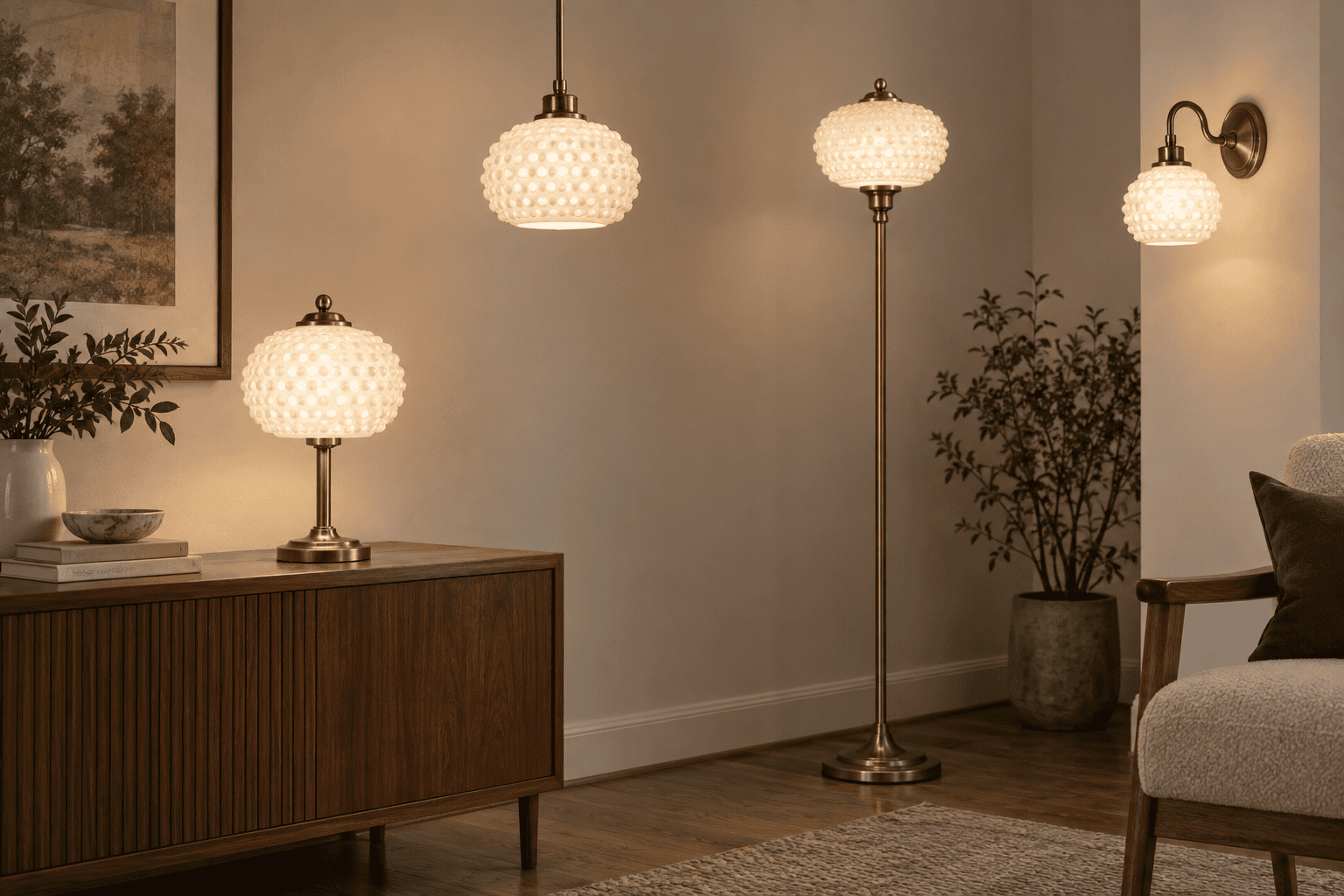
Hobnail milk glass lamp shades appear in restoration searches and new lighting ranges. The same surface can be used on different profiles, but the engineering checks change with the fixture.
| Application | Profile questions | First fit checks |
|---|---|---|
| Table lamp | Is the shade a straight-neck, globe, bell or short dome? | Opening, support ring, bulb clearance and base proportion |
| Floor lamp | Does the shade sit on a large gallery or a torchiere support? | Support span, weight, center of gravity and maximum diameter |
| Pendant | Does the glass hang from a gallery, socket ring or separate frame? | Top opening, cable path, retaining hardware and drop |
| Restoration part | Which visible details must match the old reference? | Existing hardware, sample condition, silhouette and color |
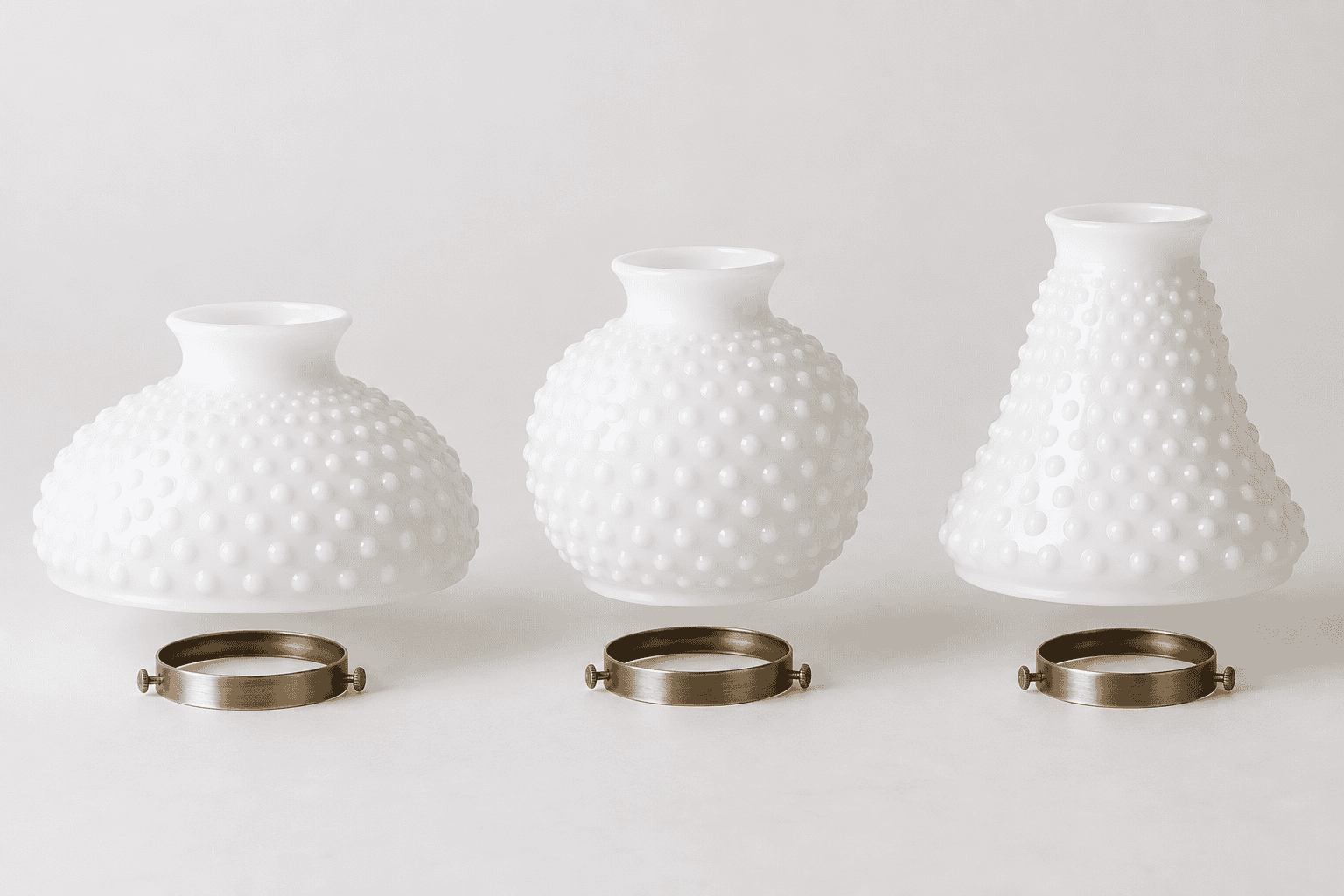
Retail terminology helps with discovery but does not replace a drawing. A product may be called a student shade because of its proportions while the fixture uses a straight neck and retaining ring. Choose the profile from photographs or an outline, and choose the interface from the hardware.
Fitter sizes and the interface buyers should measure
The fitter is the part most likely to cause an expensive mismatch. It may be the glass opening, the outside of a neck, a lip on a gallery or a hole for a separate holder. Suppliers do not always measure the same surface when they quote a nominal size.
Retail collections commonly group student-style shades by straight-neck references such as 6, 7 and 10 inches. Treat those as search language, not a universal standard. A 7 inch reference can describe a base or fitter diameter in one listing and another surface in a different listing. Ask for a drawing that names the measurement plane.
| Fitter reference | Metric conversion of the nominal value | What to verify before ordering |
|---|---|---|
| 2 1/4 to 4 inch reference | 57.2 to 101.6 mm | Opening or outside ring, seating depth and retaining method |
| 6 inch reference | 152.4 mm | Support span, shade weight, neck length and fixture clearance |
| 7 inch student reference | 177.8 mm | Whether the catalog size means base diameter, not a universal fitter standard |
| 10 inch student reference | 254.0 mm | Large support ring, shipping size and exact seating surface |
The JX glass lamp shade fitter types guide is a useful starting point for naming the opening, lip, neck and hardware connection. For a quotation, send the actual measurements even when the old listing gives a size.
How to measure a replacement hobnail milk glass shade
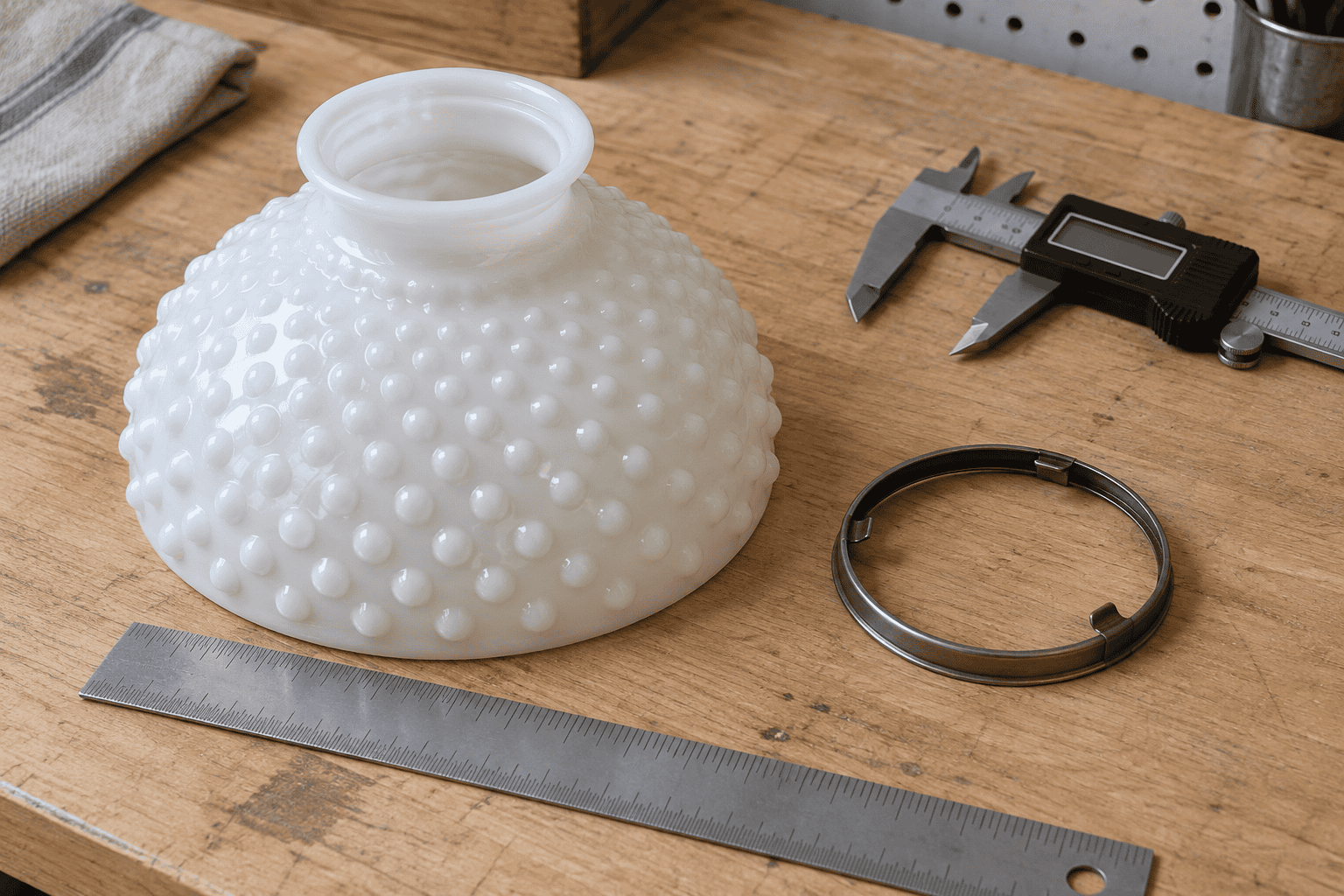
Remove the shade only after the fixture is switched off, cool and supported. Place the glass on a padded surface. Do not use a chipped rim as a hard stop for a caliper.
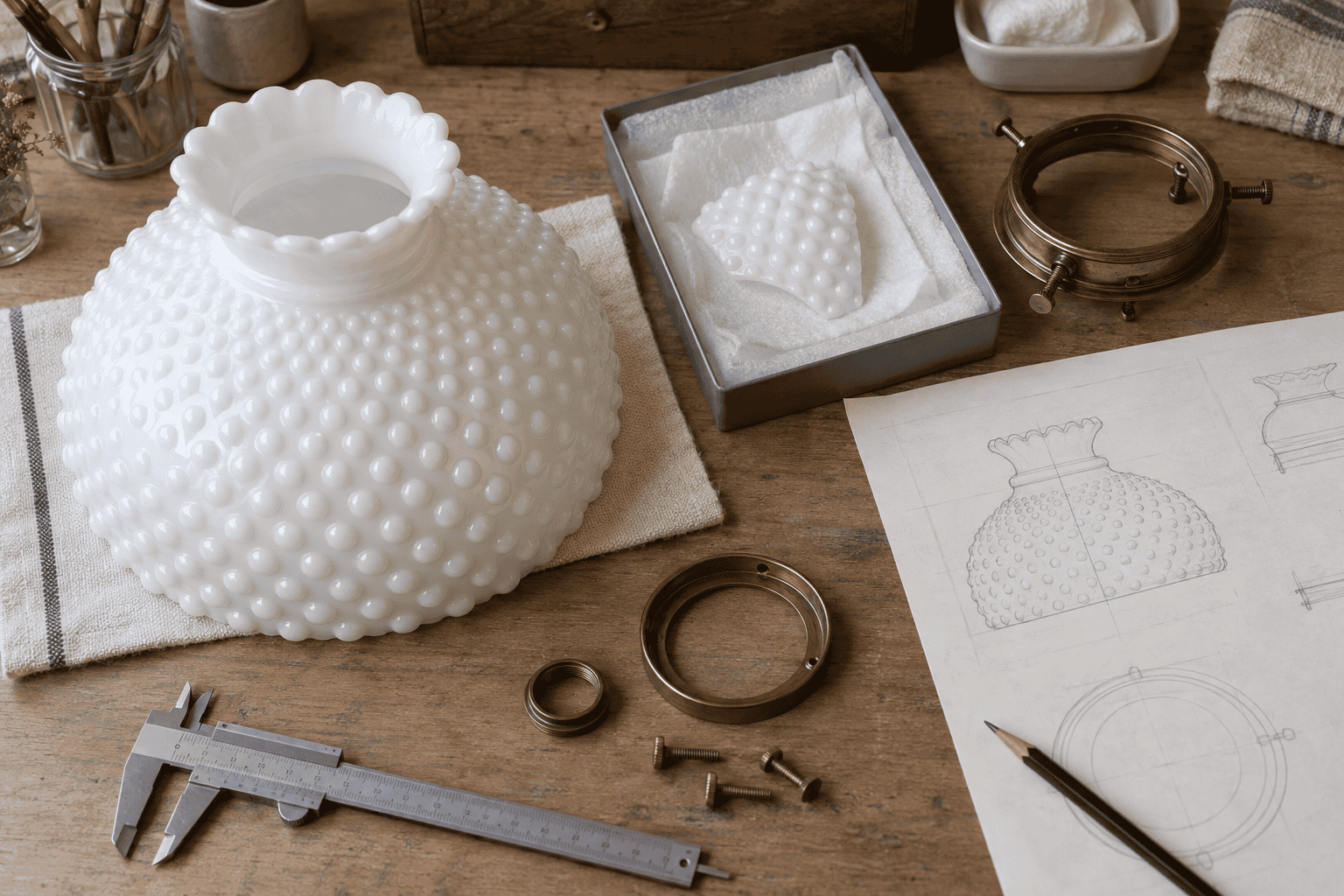
- Photograph the complete fixture and shade from the front, side and top. Include a ruler for scale.
- Measure the opening at the contact surface. Record inside diameter, outside diameter and seating width.
- Measure height from the seating plane to the bottom edge, plus the widest diameter and its height.
- Measure the neck, lip, groove or retaining feature. Note screws, clips, threads, springs and gaskets.
- Trace the side profile and mark the pattern area, smooth bands, top transition and bottom rim.
- Record body color, opacity, edge transmission and light source, then state which dimensions are measured or estimated.
| RFQ measurement | Why it matters | Evidence to send |
|---|---|---|
| Opening and seating diameter | Determines whether the shade can sit on the existing support | Caliper readings and a top photo |
| Total height | Controls bulb coverage, glare and visual proportion | Side measurement from the seating plane |
| Maximum diameter | Affects clearance, packing and fixture balance | Outline sketch or widest-point measurement |
| Rim and edge | Affects strength, appearance and contact with hardware | Close photo and notes about chips or grinding |
| Hobnail field | Controls mold design, visual density and cleaning | Front and oblique photos of the pattern |
| Fixture hardware | Determines how the glass is retained | Ring, gallery, screw, clip or socket photos |
The JX technical drawing checklist helps organize the information. A drawing does not need to be a polished CAD file at the first contact. It does need clear reference points and a statement of which dimensions are critical.
Milk, opal, cased and frosted options
The phrase milk glass often describes appearance, while a quotation needs a body, color target and light behavior. Review samples both unlit and illuminated on the intended fixture.
| Glass or finish reference | Visual and light behavior | Suitable buyer question |
|---|---|---|
| Solid milk or opal white | Soft body color and limited transparency; hides the bulb more strongly | Is the priority glare control or maximum brightness? |
| Cased white glass | A lighter outer layer can sit over an opal or colored body | Should the edge, bumps or rim show a second tone? |
| Clear over opal or cased | A second layer can make texture highlights and edge tone more visible | Does the sample match the desired off-state appearance? |
| Frosted or satin surface | Reduces sharp reflections and changes the touch of the glass | Is the finish inside, outside or both, and how will it be cleaned? |
| Tinted or colored body | Adds a color cast to transmitted light and changes the shade family | What color target applies in daylight and lamp light? |
| Clear glass with hobnail | Shows the pattern through transmission and gives a different visual weight | Is the buyer asking for hobnail texture or milk glass opacity? |
Do not use opal, milk, frosted and cased as interchangeable purchase-order terms. If the buyer needs a close color match, provide a physical reference or controlled sample review. Name the visible target and material decision separately.
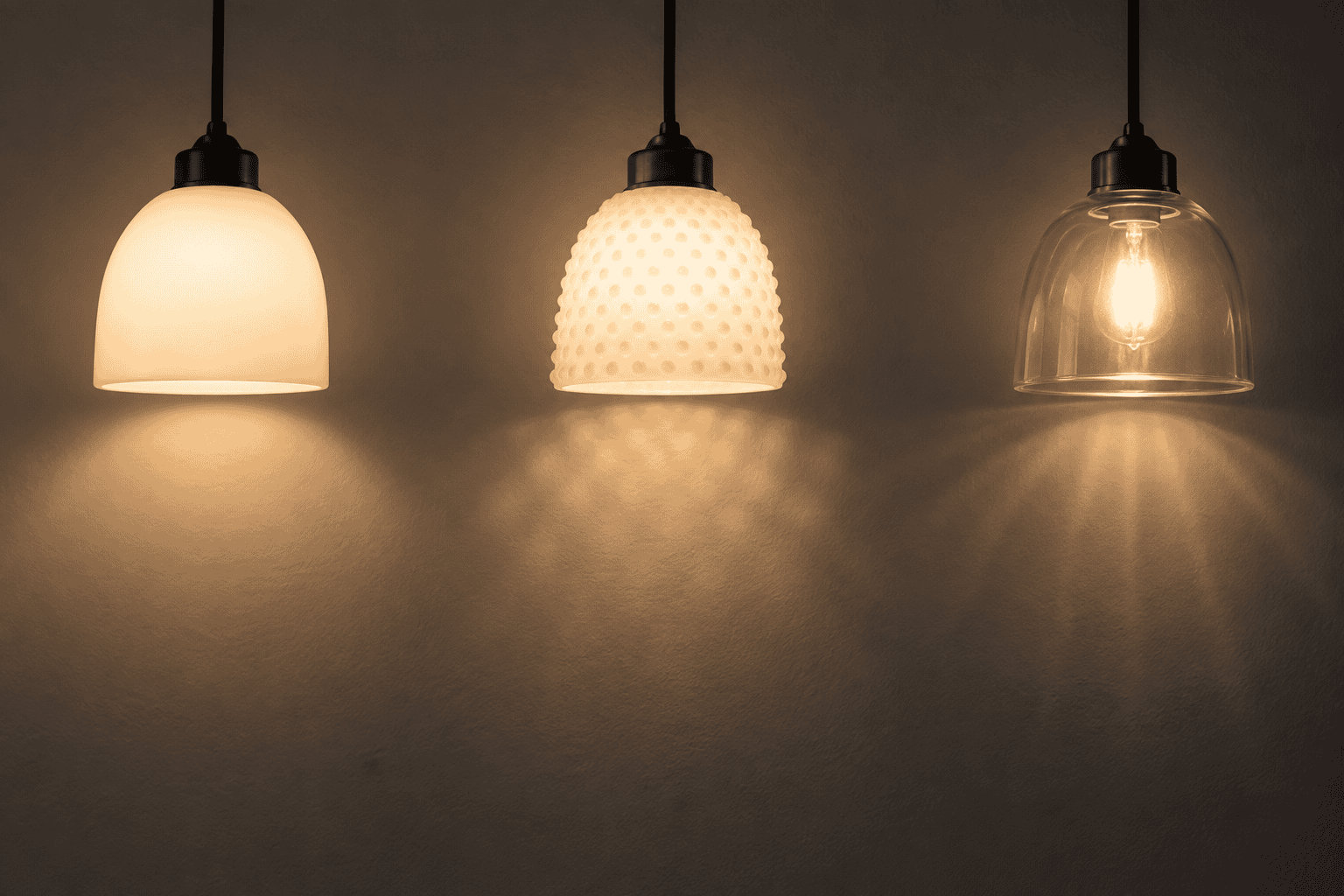
Pressed glass, mold-blown glass and hybrid routes
Hobnail patterns need repeatable cavities or a controlled forming approach. The choice depends on quantity, profile, pattern depth, glass body, rim geometry and acceptable variation.
Pressed glass uses a mold and mechanical pressure to move hot glass into defined cavities. It can suit repeated hobnail rows after the mold and process are qualified. A mold-blown route uses air pressure inside a mold and may suit selected hollow shapes. A hybrid project may form the body in one step and finish the rim or surface in another.
The Corning Museum record for a historical fairy lamp shows that pressed and mold-blown techniques can appear in different parts of one glass object. That is a useful reminder for buyers comparing photographs. A shade that looks pressed from the outside may still need a different review of the neck, rim or finish.
| Production route | Strength for hobnail work | Questions before sample approval |
|---|---|---|
| Machine-pressed | Repeatable cavity pattern and efficient repeat production after qualification | Is the mold line acceptable, and can the rim be finished as drawn? |
| Mold-blown | Useful for selected hollow profiles and a softer forming character | Can the bumps, wall thickness and opening stay consistent enough? |
| Hand-finished or hybrid | Allows a special rim, surface treatment or limited correction | Which steps are manual, and how will variation be inspected? |
| Existing mold adaptation | May reduce development work when the profile is close | Is the old mold actually compatible with the new drawing and glass body? |
Do not choose the process from the style name. Send the profile, pattern, target quantity, glass appearance, fitter and quality limits so the engineering team can recommend a route.

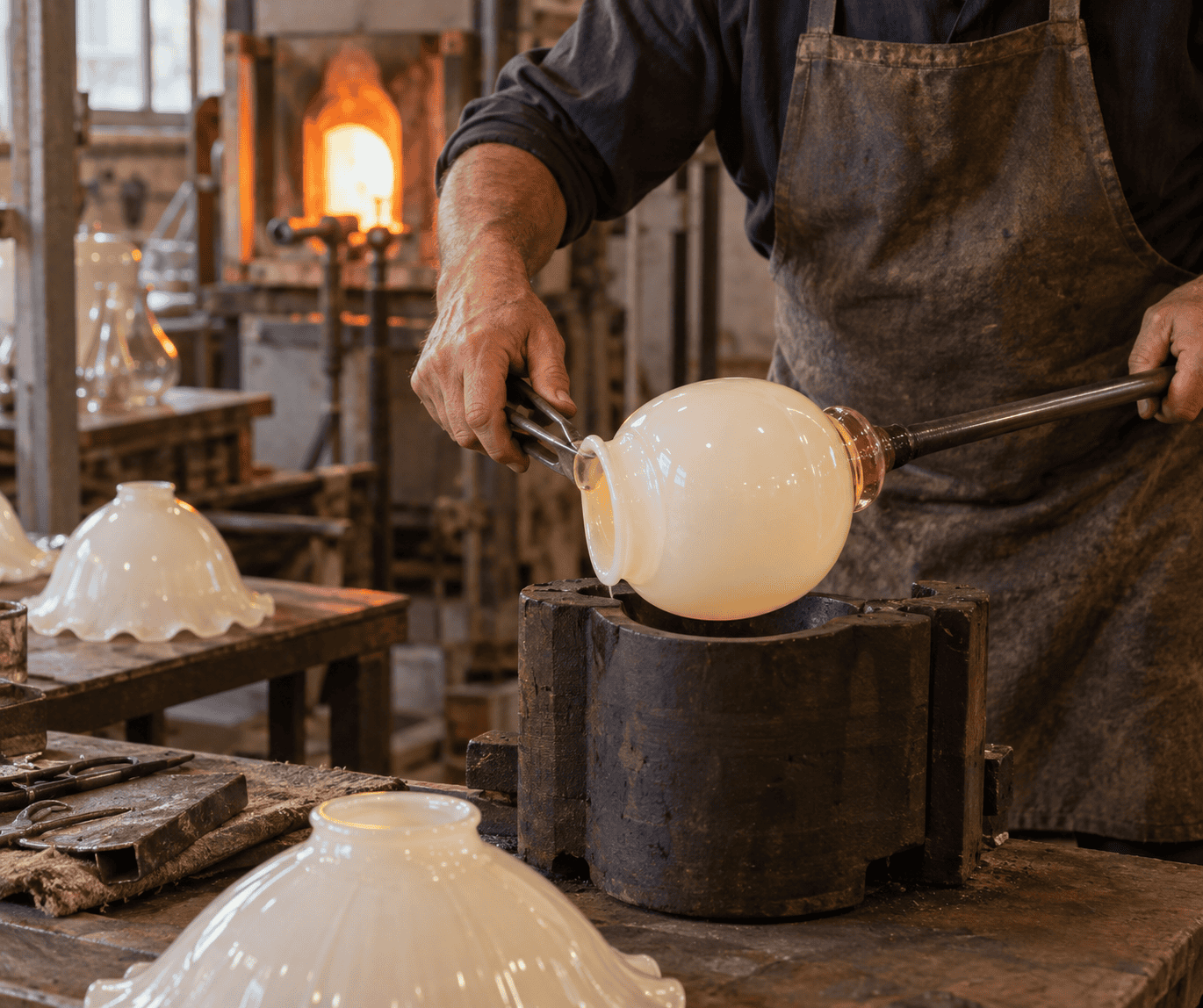
Custom mold development for a hobnail pattern
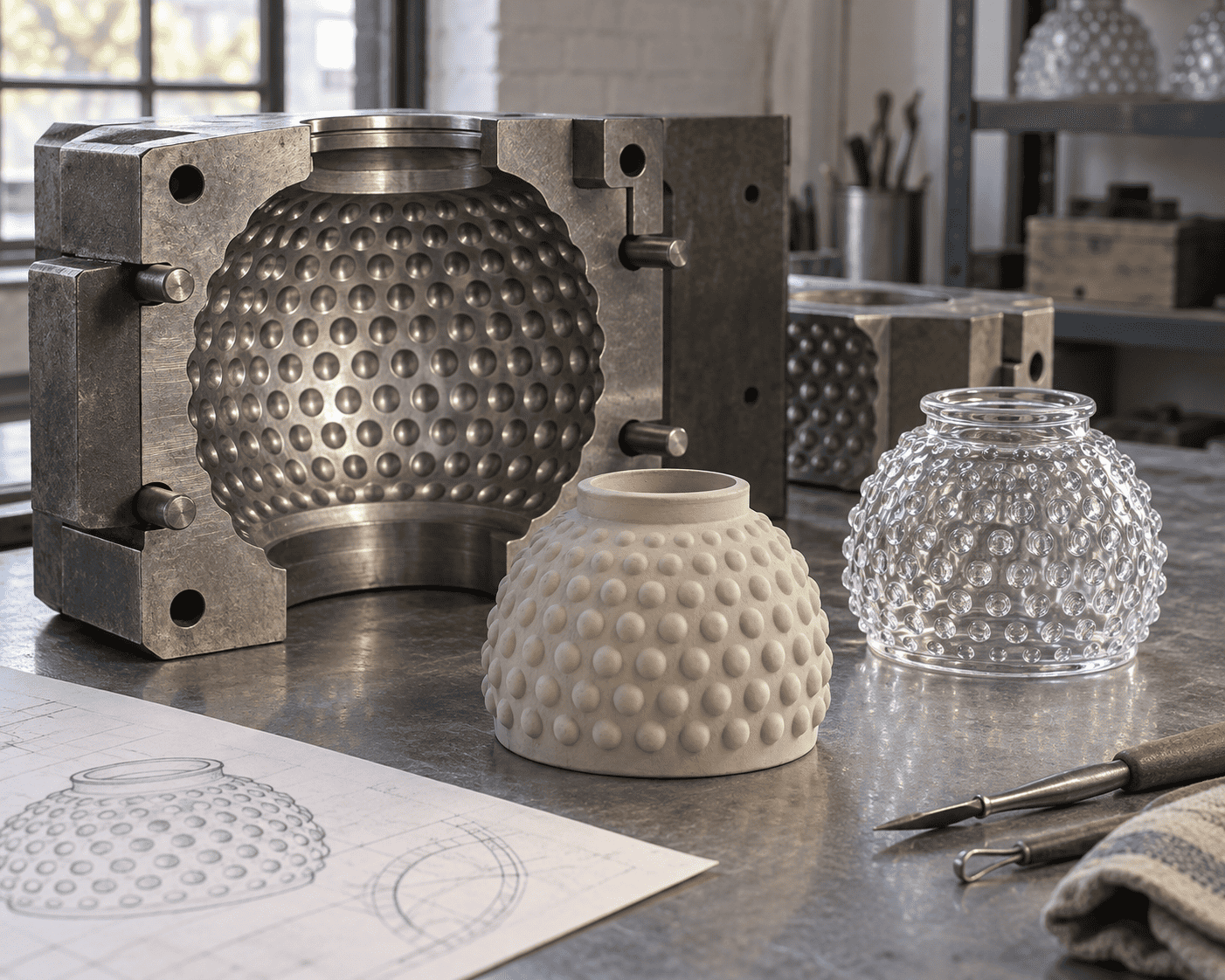
A hobnail mold is more than a negative image of the bumps. It must release the glass, support the profile, accommodate the opening and manage the transition between textured and smooth areas. A dense shoulder pattern can behave differently from the same pattern on a straight wall.
Before a tool is approved, mark the following on the drawing:
- Bump diameter, height, pitch and row alignment.
- Pattern coverage, stagger, smooth borders and the relationship to the mold seam.
- Fitter plane, neck, lip, rim and any ground or fire-polished area.
- Color, opacity, surface sheen and the dimensions that are critical for assembly.
| Mold review item | Buyer decision | Result to record |
|---|---|---|
| Bump pitch and height | How dense and tactile the surface appears and how it packs | Approved relief and inspection method |
| Pattern boundary | Where the textured field stops near the neck or rim | Drawing line and acceptable transition |
| Seam position | Whether a mold line falls in a visible or functional area | Seam location and cosmetic limit |
| Rim and fitter | How the pattern meets the contact surface | Interface section detail and finishing route |
| Revision control | Which sample and drawing are the approved reference | Revision number, date and retained sample |
Set dimensional tolerances and glass thickness on the approved drawing for the selected process. Our engineering team will confirm a project-specific range after reviewing the drawing, glass type and forming route. Do not copy a tolerance from another shade or treat a nominal fitter size as the complete glass part.
Quality inspection for replacement and OEM lots
Inspection should compare the production sample with the approved drawing and reference, not with a product title. Check the interface, appearance and function.
For the body, inspect color, opacity, bubbles, stones, scratches, mold marks and visible seams under agreed lighting. For the hobnail field, check missing bumps, damaged projections, row drift and the pattern boundary. For the fitter, check opening, seating surface, rim and contact with the intended hardware. Review bulb clearance on the actual fixture.
Quality limits depend on the customer drawing, glass type, finish, sample and application. A restoration buyer may prioritize visual matching to an old piece. A lighting brand may prioritize repeatability across a family of sizes. Those are different acceptance discussions.
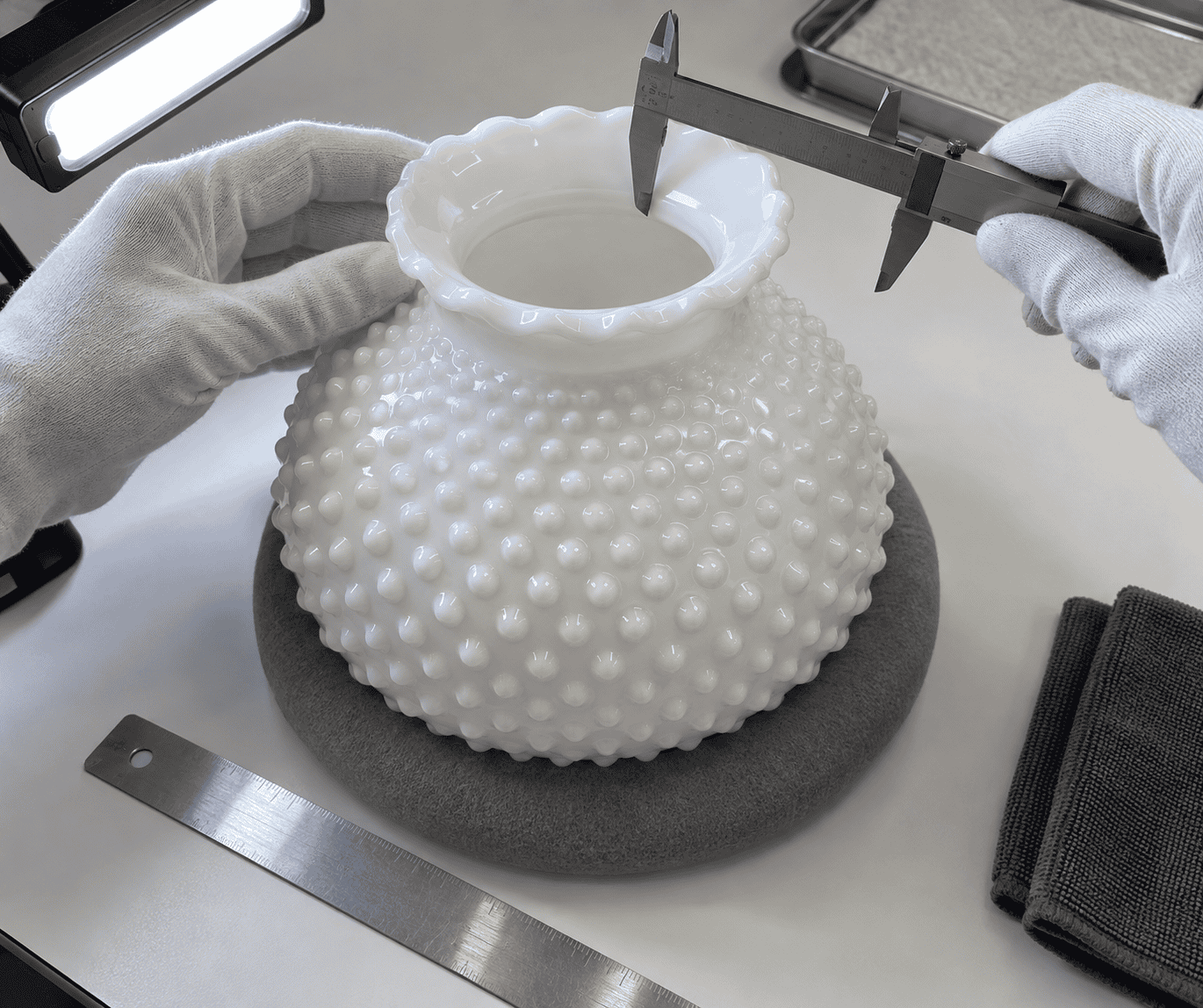
The JX glass lamp shade quality inspection checklist can help structure the conversation. Ask the supplier to identify which checks are visual, which are dimensional and which require the assembled fixture or approved sample.
Packaging and international shipping
Hobnail projections create more contact points than a smooth shade. A carton that protects the widest diameter may still let bumps rub against another part. Review separation, fitter support and pattern clearance together.
Before shipment, define the packing unit, inner protection, carton orientation, marking and inspection photos. A molded insert, divided carton or formed paper support may suit the shape, weight and route. Validate packing against the actual part and shipping method.
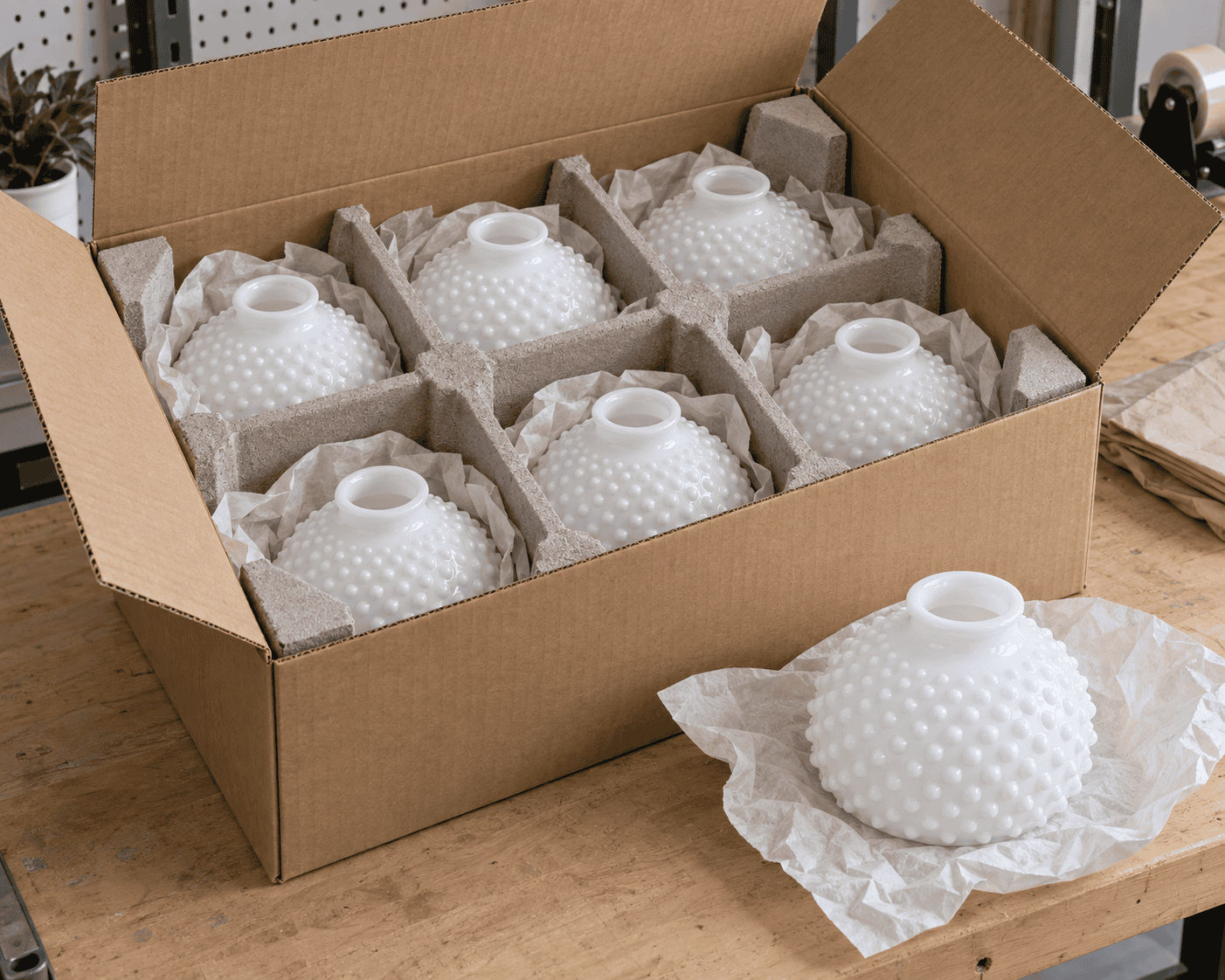
For a replacement program, ask how a small shipment will be packed differently from a pallet of repeat parts. For an OEM range, approve the pack-out at the same time as the sample because the inner protection can affect carton count, labor and freight volume. The JX manufacturing page is the right starting point for discussing the production and packing route; final packing recommendations remain project specific.
Replacement project versus new OEM project
Both projects may use the phrase hobnail milk glass lamp shade, but the evidence differs. A replacement buyer is recovering a known interface and appearance. An OEM buyer is defining a repeatable product for a fixture family and commercial handling.
| Project type | Main risk | Information that reduces the risk | Useful next step |
|---|---|---|---|
| One replacement or restoration match | The new shade looks close but will not seat on the old hardware | Old shade, fixture ring, measurements and side photographs | Confirm the interface before discussing finish |
| Replacement program | Small changes between batches create returns or mismatched sets | Approved master sample, drawing revision and inspection points | Agree the reference sample and repeat-order process |
| New lighting collection | The shade works alone but changes the fixture balance or light output | Fixture drawing, bulb, target appearance, quantity and pack-out | Sample the glass on the real or representative fixture |
| OEM family with several sizes | One pattern is scaled without checking bump and rim proportions | Size matrix, common design rules and size-specific drawings | Review each size, not only the largest sample |
MOQ, sample fees, tooling cost and lead time depend on the glass, mold, finish, quantity and packaging. Confirm them with the quotation team, along with tolerance and production capacity.
What to send for an OEM or replacement quotation
Use a short, complete package. A supplier can ask follow-up questions, but missing interface information usually delays the first useful answer.
| RFQ item | Minimum useful information |
|---|---|
| Product role | Table, floor, pendant, wall, restoration or new collection |
| Shade profile | Side photo, outline or dimensioned drawing |
| Fitter | Opening, seating plane, neck, lip, ring and retaining hardware |
| Main dimensions | Height, maximum diameter, base or top diameter and rim details |
| Hobnail pattern | Coverage, bump appearance, pitch reference and smooth bands |
| Glass appearance | Milk, opal, cased, clear-over-opal, frosted or tinted target |
| Light requirement | Bulb type, visible bulb concern and desired diffusion |
| Quantity | Sample quantity, first order estimate and repeat-order expectation |
| Quality | Cosmetic limits, dimensional checks and approved sample method |
| Packaging | Individual protection, carton preference, marking and destination |
| Commercial timing | Target sample date and project stage, without assuming a lead time |
Send files in one folder with clear filenames and identify measured versus estimated dimensions. The JX custom glass lamp shade manufacturer page outlines the project path. For a quotation, use the JX contact page and include the interface, photos or drawing, sample need and target quantity.
Buyer questions
Is hobnail glass the same as milk glass?
No. Hobnail describes a raised pattern; milk glass describes a white or opal body. Put the pattern and glass body on separate specification lines.
Are hobnail milk glass lamp shades always opaque?
No. Body, wall thickness, cased construction and finish change the transmission. Review a sample in daylight and on the intended fixture.
Does a hobnail pattern make a lamp shade brighter?
Not by itself. Texture changes reflections, while opacity, thickness, bulb output and fixture geometry control room light. Compare samples under the same source.
How do I measure a hobnail milk glass replacement shade?
Measure the seating surface, opening, neck or lip, height, maximum diameter and rim. Photograph the hardware and mark the measuring plane.
What is a student shade in a hobnail collection?
Student shade is a broad profile and application term. Catalogs may group it by base or fitter diameter. Confirm the opening, straight neck, support ring and retaining method before using a catalog size in an RFQ.
Can a hobnail pattern be made in different colors?
It can be combined with different glass appearances, but color, opacity and process must be reviewed together. Compare a white opal, cased or tinted sample on the fixture.
Is pressed glass the only way to make a hobnail shade?
No. Pressed, mold-blown and hybrid routes may suit different profiles. The choice depends on shape, pattern, glass body, quantity and repeatability.
Can an old hobnail shade be reproduced from photographs?
Photos can start a review when they show profile, opening, rim and scale. A sample or dimensioned drawing gives stronger evidence; engineering must confirm what can be reproduced.
What should I include in a hobnail glass shade RFQ?
Include the application, drawing or photos, fitter, dimensions, bump pattern, glass appearance, light source, quantity, quality limits, packaging and destination. Mark measured versus estimated data.
Approve the interface before the texture
The most useful hobnail milk glass lamp shade brief separates two questions: what surface and body appearance should the buyer see, and how must the glass connect to the fixture? Once clear, the supplier can review profile, mold, finish, inspection and packing as one production problem.
For a replacement, send the old shade or interface with measured photographs. For a new OEM project, send the drawing revision, size family, light source, target quantity and sample plan. Request a project-specific review of glass type, tolerance, MOQ, lead time and packaging rather than relying on a retail name.
From a hobnail reference to a production drawing
JX can review a hobnail glass shade concept for profile, fitter, glass appearance, sampling, production and export packing through the current custom glass shade process. Send the shade photo, drawing or interface, identify critical dimensions and state the desired light result. Request a custom glass shade quotation.