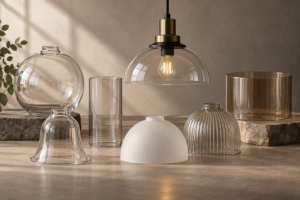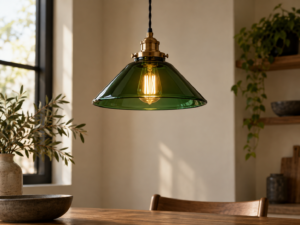
直接的な回答: ヴィンテージのガラスランプシェードは、テーブルランプ用の装飾的なガラスシェードで、ミルクガラス、アンバーケースガラス、手吹きオパールセント、リブ加工やエッチングなど、時代ごとのスタイルがあり、テーブルランプのフィッタータイプ(ウノ、スパイダー、クリップオン)に合わせて取り付けられます。適切なシェードを選ぶには、フィッター径、シェード径とベースの比率、ガラスの仕上げをランプの時代やインテリアスタイルに合わせる必要があります。.
どのアンティークマーケットに入っても、元のシェードが取り外されたテーブルランプを見つけることができます。真鍮製の灯油ランプ改造ランプは上部が何もなく、デプレッション時代の陶器ベースは蛍光灯の下で裸のまま置かれ、ヴィクトリア時代のパーラーランプはミルクガラスのグローブが何十年も前に消えています。ランプ本体は残りますが、シェードはほとんど残りません。.
テーブルランプ用のヴィンテージガラスシェードを交換したり探したりするのは、見た目以上に難しいものです。元のシェードは単なる目的だけでなく、光をフィルタリングし、時代のスタイルを伝え、ベースと部屋のスケール関係を設定し、夜に特有の温かみを生み出していました。現代のシェードではこの質感を再現することは稀です。これら4つすべてを同時に正しく選ぶには、マーケットプレイスのリストをスクロールするだけでは足りません。.
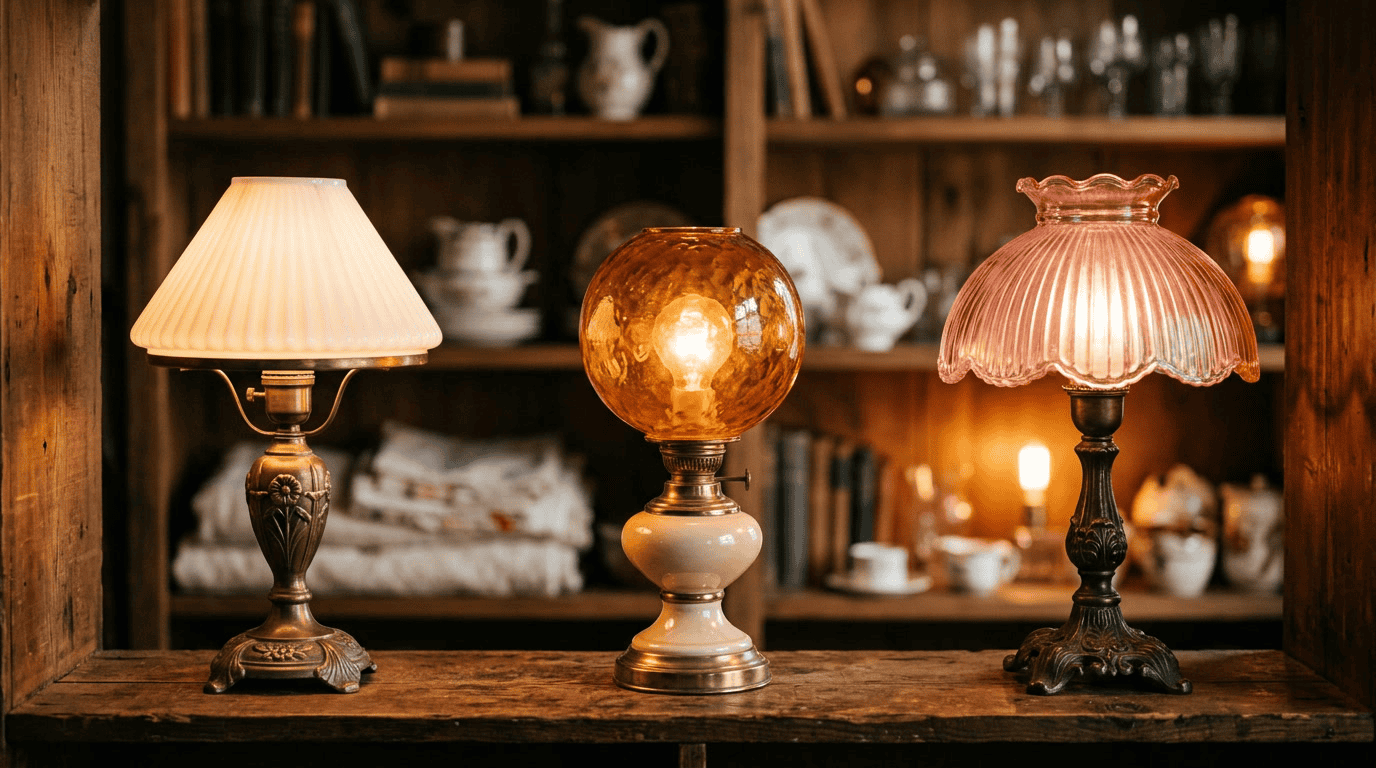
より広いヴィンテージガラスランプシェードのカテゴリーについては、こちらをご覧ください ヴィンテージガラスランプシェードのハブ.
ガラスランプシェード用語における「ヴィンテージ」の意味
テーブルランプシェードの文脈では、「ヴィンテージ」は約100年の範囲を指します。1890年代のガスランプから電気への転換期から、1960年代のチークやセラミックを用いたミッドセンチュリーモダン時代までです。その間に、5つの異なる製造時期があり、それぞれ特徴的な視覚的特徴を持つガラスシェードが生産されました。.
ヴィクトリアン・エドワーディアン(1880–1910): 手吹き オパールセントガラスは、フリルやクリンプ加工の形状で作られます。厚い壁、表面の不規則な質感、花柄の転写や装飾が頻繁に施されます。フィッター径は標準化されておらず、多くのシェードは三本アームのスパイダーサポートで支えられるか、リングの上に単に置かれていました。.
アーツ&クラフツ・アールヌーヴォー(1900–1920): リードガラスパネル、有機的な形状、アンバーやグリーンのトーンパレット。. ティファニー工房 高級品を定義し、多くの小規模ガラス工房が商業版を生産しました。このスタイルのテーブルランプシェードは、ほとんどが2¼インチまたは3¼インチのフィッターリングを使用します。.
デプレッションガラス時代(1920–1940): ピンク、グリーン、アンバー、クリアの大量生産された機械プレスガラス。よりシンプルな幾何学的形状—リブ加工のグローブ、プリーツコーン、ビーハイブ型。フィッターは徐々に標準化されました。この時代のシェードは、現在最も入手しやすいヴィンテージオリジナルです。.
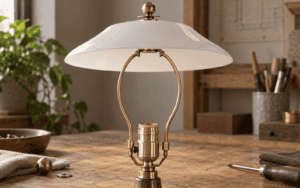
ミッドセンチュリーモダン(1945–1970): オパールホワイトガラスは、すっきりとしたコーンやドラム型で作られます。スカンジナビアの影響でガラスは純粋な幾何学へと進化しました。一部のシェードは実際に塗装されたミルクガラスで、他は二層構造のケースガラスです。ウノやスパイダー型フィッターが主流です。.
ハリウッドリージェンシー・後期ミッドセンチュリー(1955–1975): スモークガラス、アンバーガラス、クリアのクリスタルカットパターン。しばしば真鍮やゴールドのベースと組み合わされます。シェードはグローブ型やベル型が多いです。.
自分のランプがどの時代のものか(おおよそでも)理解することは、「すべてヴィンテージ風」から「特定の3~4種類のガラス」に絞り込む最速の方法です。“
テーブルランプ用ヴィンテージガラスシェードの5つの主要タイプ
ミルクガラスシェード
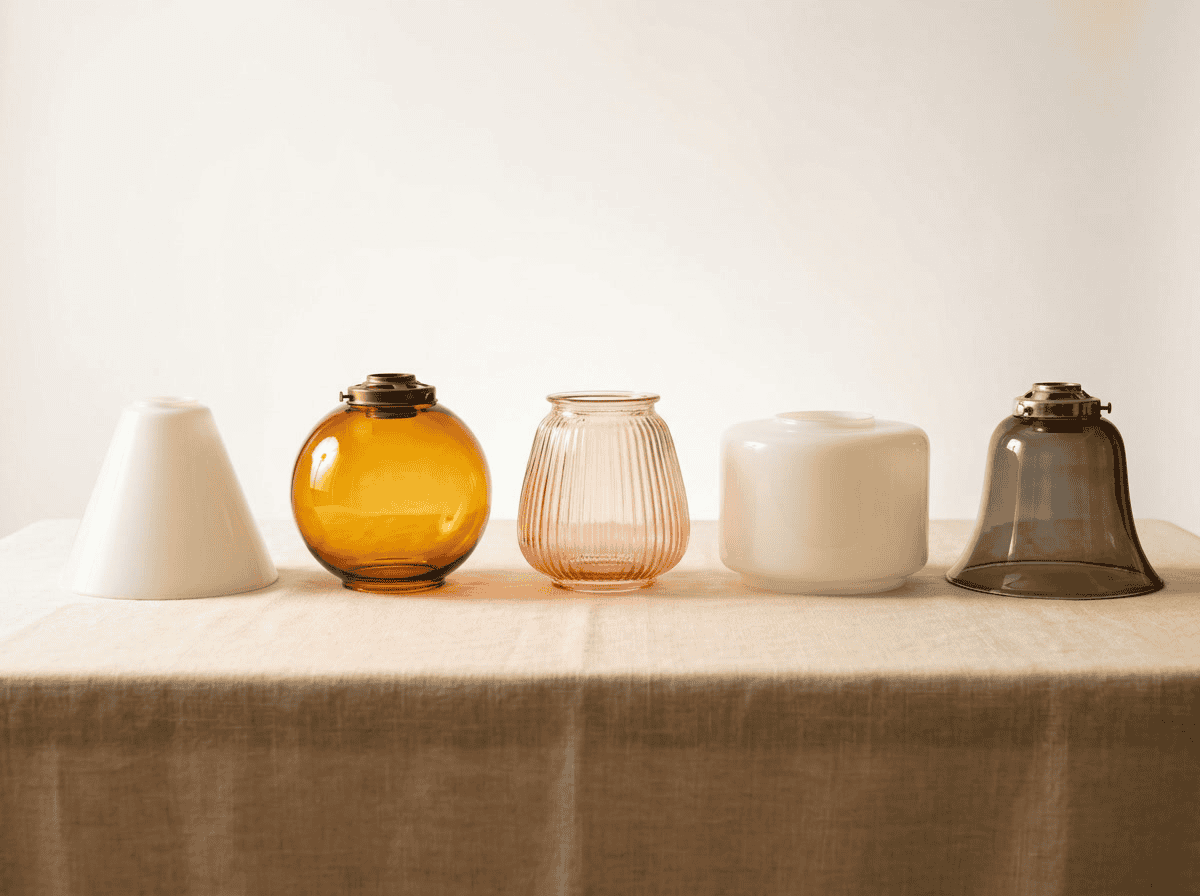
ミルクガラス — 不透明または半不透明の白色ガラス — は、セカンダリーマーケットや現在の復刻メーカーから最も一般的に入手できるヴィンテージシェードの種類です。不透明度は、フッ化物化合物や骨灰を溶融時に加えることで生み出され、ガラスに温かみのある白色を与え、柔らかく拡散した光を透過し、電球が見えません。.
オリジナルのミルクガラスシェードは、1950年代から1970年代にかけて、テーブルランプやフロアランプ用に大量生産されました。耐久性があり、美しく光を拡散し、ほとんどすべてのランプベース仕上げと組み合わせることができます。ミッドセンチュリーのテーブルランプでシェードが欠けている場合、適切な直径のミルクガラスシェードが最も迅速な解決策となることが多いです。.
復刻品も広く流通しており、十分に実用的です。オリジナルと復刻のミルクガラスの違いは、表面の質感(オリジナルにはしばしば金型の継ぎ目やわずかな表面の不規則さが見られる)、壁の厚みの分布(機械プレスのオリジナルは上部が薄く、下部が厚い)、ガラス色の特有の温かみ(オリジナルはやや温かみのある白、復刻品の中には冷たい色味のものもある)にあります。.
本格的な見た目の現行ミルクガラスシェードをお探しの場合、, ヴィンテージガラスランプシェードコレクション では、入手可能な形状やフィッターオプションの幅広いラインナップをご覧いただけます。ミルクガラスの詳細な解説—生産時期、オリジナルの見分け方、クリーニング方法—については、当社の ヴィンテージミルクガラスランプシェードガイド.
アンバー被せガラスシェード
アンバーガラスシェードには、単層の着色ガラス(安価で色が薄い)または二層の “「被せ」ガラス があり、アンバー色の内層を透明な外層で包んでいます。被せアンバーガラスは、より豊かで濃い色合いを持ち、どの角度から見ても一貫した色を保ちます。1960年代から1970年代にかけて、テーブルランプの装飾用シェードカラーとして主流でした。.
夜間、アンバーシェードは最も温かみのある光を生み出し、2700KのLED電球でさえ焚き火のような色味に変化させます。そのため、ベッドルームの読書灯やリビングのサイドテーブルなど、タスク照明よりも温かさが重視される場所に特に効果的です。.
重要な注意点として、アンバーシェードは光の出力を大幅に減少させます。一般的なアンバーシェードは入射光の約40〜55%しか透過せず、アンバーガラス越しの60W相当LED(800ルーメン)は、部屋に約350〜440ルーメンしか届けません。より明るい電球を選んで補いましょう。アンバーの形状やハードウェアの組み合わせの全ラインナップについては、当社の ヴィンテージアンバーガラスランプシェードガイド.
デプレッションガラスリブシェード
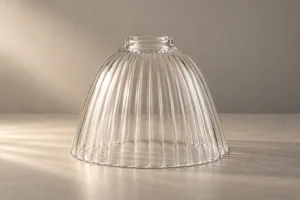
機械プレス 1920年代から1940年代のリブ付きガラスシェードは、現在入手可能なヴィンテージガラスの中で最も手頃な価格です。リブ加工は装飾だけでなく機能的な特徴でもあり、縦方向のフルーティングが電球の像を個別の縦ハイライトに拡散し、光の吸収を抑えて透過率を80%以上に保ちます。.
デプレッションガラスのシェードは、ピンク、グリーン、アンバー、クリアで製造されました。ピンクとグリーンは時代を象徴する色であり、クリアリブは現代のランプベースにも最も汎用性があります。これらのシェードは通常軽量(壁厚2~3mm)で、戦間期の時代を直接視覚的に感じさせます。.
実用的な重要ポイント:デプレッション時代のシェードは当時のフィッター規格で製造されており、現代の2¼インチ/1 5/8インチサイズとは必ずしも一致しません。多くのオリジナルリブシェードはやや非標準のフィッター直径を持っています。交換品を探す際は、現代のランプハードウェアに合うと仮定せず、実際の内側フィッター直径を必ず確認してください。.
オパールガラスおよびカセードガラスのミッドセンチュリーモダンシェード
ミッドセンチュリーモダンのテーブルランプシェード(オパールまたはカセードガラス)は、ヴィンテージタイプの中でも最もクリーンな印象です。シンプルな形状、純白またはほぼ白のガラス、完全な拡散。シンプルさゆえに、どの品質レベルでも製造しやすく、最も多く再生産されています。.
ミッドセンチュリースタイルのオパールシェードを評価する際は、光の挙動を確認してください。内部から照らされた二層または三層のカセードシェードは、どの角度から見ても電球の像が全く見えず、ガラス全体が均一に輝きます。安価な単層フロストシェードは、電球の後ろに明るいホットスポットが現れます。本格的なミッドセンチュリー拡散品質を求める場合は、カセード構造を指定してください。.
スモークガラスおよびクリスタルカットシェード
スモークガラスは1960年代後半から1970年代にかけてテーブルランプシェードの主流素材となり、ヘビーなブラッシュドブラスやクロームベースとハリウッドリージェンシースタイルで組み合わされました。スモークシェードはグレーからブラウンの色合いで、全体の光量を大幅に減少させ(30~50%透過)、独特のムーディーな雰囲気を生み出します。.
クリスタルカットガラスシェードは、ファセットや幾何学的なカットの外面を持ち、時には カーニバルガラス と同じ虹色加工が施されることもありました。この時代にも目立っていました。カットは隣接する光源からの光を捉えて屈折し、周囲の壁にプリズムのような輝きを生み出します。これらは本物の「カットクリスタル」(鉛クリスタル)ではなく、成形やプレスされたガラスに外面のカットパターンを研磨して施したものです。.
ヴィンテージシェードをテーブルランプベースに合わせるサイズ
ヴィンテージのテーブルランプシェードの購入ミスの大半はサイズに起因します — フィッターが物理的に合わないか、シェードが正しく取り付けられているのに比率が合っていないかのいずれかです。.
ステップ1:フィッタータイプを特定する
三つのフィッタータイプが、ヴィンテージのテーブルランプの大半をカバーします:
| フィッターの種類 | 識別 | よく使われるランプ |
| Uno (7/8″ / 22mm 著しい) | 電球ソケット本体へ直接ねじ込まれる | 大衆向けのテーブルランプ 1940年頃〜現在 |
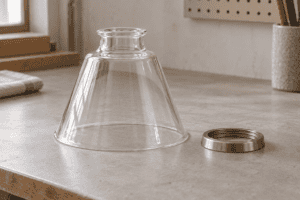
| スパイダー (1 5/8″ / 41mm サドル) | ワイヤー・ハープとフィニアル・ナット | 中〜上級のテーブルランプ、フロアランプ |
| クリップオン | 金属のスプリングクリップが電球の形状を挟み取る | 小型アクセントランプ、シャンデリアソケットのランプ |
| リングレスト(フィッターなし) | シェードを3本腕のリングスタンドに載せる | 1920年以前に改造されたガスランプ、一部はビクトリア朝様式 |
Measure the inner diameter of your existing shade’s opening — or the outer diameter of your lamp’s socket/harp saddle — before ordering any replacement.
フィッターサイズを詳しく照合するには、 当社のガラスランプシェード取付規格ガイド すべてのフィッタータイプを寸法図付きで解説しています。
ステップ2:比例に基づく直径を計算
テーブルランプの基本的な比例ルールは次のとおりです: シェード外径 ≈ ランプベースの高さ. A 14″ tall base wants a 14″ wide shade. This isn’t absolute — some base forms (very slender column bases, very wide urn bases) want different ratios — but it’s the right starting point.
Vintage lamp bases tend to be shorter and heavier than modern ones. A Depression-era ceramic base that stands 10″ to the socket typically wants a shade in the 10–12″ outer diameter range, which means a relatively wide, lower shade — a shape that looks odd to modern eyes but is period-correct.
| ランプベースの高さ | 目標とするシェード外径 | 適切なシェード形状 |
| 8–10″ | 10–12″ | 広口ベルまたは浅い円錐 |
| 11–14″ | 12〜16インチ | 標準ベルまたはドラム |
| 15–18″ | 14~18インチ | より高いベルまたはエンパイア |
| 19″+ | 16〜20インチ | フルエンパイアまたはドラム |
ステップ3:シェードの高さを設定
シェードの高さは、シェードの底部がランプの肩(基部の最も広い点)と同じ高さ、またはそれよりわずかに高い位置になるように設定します。 高すぎる位置にあるシェードはソケットのハードウェアを露出させ、低すぎるとベースのディテールを埋めてしまいます。 多くのヴィンテージ卓上 lamp の場合、シェードの高さは7″から10″の間です。.
完全な測定プロセス — 底部直径、上部フィッター直径、斜辺高さ、全高 — は〜に記録されています 交換用ガラスランプシェードの測り方.
ヴィンテージシェードスタイルとランプ時代を合わせる方法
非専門家向けの最速マッチングガイド:
ビクトリアン / エドワーディアン ランプベース (華美な鋳 metal、華麗な花模様またはゴシック細部、オイルまたは灯油ランプへ改造されたもの):
→ 手吹きオパールグローブ球体、縁はくるみまたはひだ状。アンバー、ピンク、または白。標準フィッターではない可能性が高く、カスタムリングサポートが必要になる場合があります。.
Arts & Crafts ランプベース (打ち出し銅、鍛鉄、単純な幾何学形状):
→ リードガラスパネルのシェード(複製)または同色アメバー/緑の単色ガラス。有機的または幾何学パターン。2¼インチのフィッター。.
Depression-era ランプベース (ピンク/グリーン/クリアのプレスガラスベース、陶器像、シンプルなクロム):
→ ベースと同色のリブ付きプレスガラスシェード、または汎用性の高いクリアリブ.
ミッドセンチュリーモダンのランプベース (チークまたはウォルナットの茎、抽象的な glaze の陶器、シンプルな円筒形のブラス):
→ 白いケース入りのオパールコーンまたはドラム型をクリーンな幾何学で。ウォルナットまたはブラスのフィニアルを備えたスパイダーフィッター。装飾なし。.
Hollywood Regency / 後期 MCM ベース (重厚な磨きブラスまたはクローム、幾何学的な壺形):
→ スモークガラスのベル、アンバーのグローブ、またはクリアのクリスタルカットシェード。直径の余裕を持つ(16–20″)。.
疑問がある場合は、ランプシェードの開口部が見えるベースを写真に撮り、ご注文前にガラスシェードサプライヤーに送ってください。信頼できるメーカーは適合を確認し、時代に適したスタイルについて助言します。.
新製品 vs. 本物のヴィンテージ:どちらを買うべきか?
これが多くの購入者が当惑する質問であり、直接的な回答に値します。.
本物のヴィンテージオリジナル には来歴、触感のある特徴、そして現行の商業的には入手困難となった時代のガラス配合から生まれる特定の色と表面品質があります。1950年代のピンクのデプレッショングラス製リブ付きシェードの色は、現代のピンクガラスでは正確に再現されることがほとんどありません。時代の正確さが重要であれば—専用のアンティークランプの修復、博物館級の内装、あるいは本物を手に入れたい理由がある場合—オリジナルを見つけて支払う価値があります。.
現在生産のヴィンテージ風シェード にはオリジナルには欠けがちな公差とフィッターの標準化があります。一定のバッチで入手可能です。正確なフィッター直径、正確なシェード高さ、ガラス仕上げを指定できます。典型的なインテリアにおける視覚的な結果は、実質的に本物の時代のシェードと区別がつきません。実用的な家庭用途—交換、装飾、アンティーク狩りをしないヴィンテージ美学—には現在生産が合理的な選択です。.
グレーゾーンは「ヴィンテージ風」マーケットプレイスのリストで、真のアンティークでもなく品質の再現でもない—時代の正確さやガラスの品質に配慮のない大量生産輸入品です。見分けのサインは通常、重量が軽すぎる、色がやや違う、表面の質感があまりにも完璧すぎる、または荒削りすぎることです。実際のシェードの内側から光を当てた写真を依頼してください。品質の高いシェードは特徴的な拡散を示します。安価なものは強いハイライトのホットスポットを示します。.
日本の Depression glassの概要はWikipediaに掲載されています, 、元の製造期間は1929年〜1939年で、マーケットプレイスのリストにある「Depression glass」 claimsを評価する際の有用な歴史的基準を提供します。.
ヴィンテージのテーブルランプシェードの電球互換性
元のヴィンテージのテーブルランプシェードは、40W〜60Wの白熱電球を前提に設計されていました。その電球が生み出す熱は実際にあり、シェードの選択に関連していました。現代のLEDは、白熱用に設計された任意のガラスシェードで安全に使用できます—LEDは同じルーメン出力で70〜90%の熱を発生します。.
実用的な考慮事項は熱ではなく、光の質です。ヴィンテージのガラスシェードは暖かい白熱光(約2700K)と組み合わせて設計されていました。次の組み合わせを推奨します:
| シェードタイプ | 電球の推奨 | なぜ |
| ミルクガラス | A19 LED、800 lm、2700K、CRiが高い | 拡散が電球を覆い隠す;暖色系は白いガラスと相性が良い |
| アンバーキャスト | A19 LED、1000〜1100 lm、2700K | アンバーは出力の45〜60%を吸収します;より高いルーメンが必要です |
| Depression型リブ | 装飾用フィラメントLED、400〜600 lm | リブがフィラメントをハイライトへ散乱させます |
| オパール MCM | A19 LED、800–1000 lm、2700K | オパールは約50%を吸収します。ルーメンをそれに合わせて調整してください。 |
| スモークガラス | A19 LED、1100 lm、調光可能、2700K | スモークド absorbs heavily; use dimmer for range |
日本の 米国エネルギー省のランプ効率ガイダンス, LEDランプは現在、ワットあたり100ルーメンを超える光量を供給しており、古いシェードのガラス吸収を補うために高輝度のLEDを使用することが実用的になっています。これは、過熱の問題なしに従来の白熱技術では不可能だったものです。.
ヴィンテージ風のガラスシェードの背後には、日光色温度の電球(5000K–6500K)を避けてください。青白い光の出力は暖色の時代のガラスと技術的に不一致に見え、シェードが作り出そうとした美観を損ないます。.
ビンテージグラスシェードの清掃と保存
ガラスは耐久性がありますが、壊れずにはいられません。時期的なガラスシェードには表面装飾が施されていることが多く、エナメル塗装、デカール転写、金縁などがあり、優しく扱う必要があります。.
プレーンミルクガラス、アンバー、またはクリアリブドシェードの場合:
- パッド入り表面(畳んだタオル)の上から外して清掃する
- 柔らかいマイクロファイバー布に dish soap を1滴入れた温水
- アンティークのシェードを決して水没させないでください — 取付金具は錆びることがあります
- 使用前に完全に自然乾燥させてから交換してください
塗装済みまたは装飾された時代風シェードの場合:
- 水を使わず、布だけで微妙に乾いた状態でほこりを拭き取ってください
- 清掃が必要な場合は、わずかに湿らせた(絞った)布で拭き、すぐに乾拭きしてください
- 塗装面の近くでガラス用クリーナー(アンモニア系)を決して使用しないでください。アンモニアはエナメルを侵します
オパレセントまたはケース入りガラスのシェードの場合:
- 内側と外側をほとんど湿っていない布で拭いてください
- ペンダント式シェードの内部表面は外部表面より埃を多く集めます。内外両方をきれいにしてください
- オパレセントガラスは熱サイクルによって髪の毛ほどの亀裂が生じることがあります。取り付けリングの周辺を毎年点検してください。
日本の スミソニアン博物館のガラス製品のお手入れガイド 真のアンティークに関する専門的なガイダンスを提供します。再現品および最新生産の陰影については、標準的なガラス清掃の方法で十分です。.
テーブルランプ用のヴィンテージガラスシェードを入手できる場所
アンティーク市場や遺品セール: 本物の時代物オリジナル向き、在庫の安定性と標準フィッターサイズの点で最悪。購入前に慎重に採寸することを想定してください。.
オンラインマーケットプレイス(Etsy、eBay、Chairish): 幅広いセレクションですが、「ビンテージ」表示が一貫していません。販売者に対して、正確な内側径フィッター径、外側径の影、内側から点灯した状態のシェードの写真を必ず尋ねてください。.
照明復旧の専門家: 厳選したオリジナルとレプリカ在庫を取り扱う。価格は高く、知識レベルも高く、返品ポリシーは通常より良い。.
ガラスシェードメーカーから直送です。 品質を一定に保ち、標準化されたフィッターとカスタム寸法を提供する最良の選択肢。 The コーニングガラス美術館 コレクションデータベースは、カスタムオーダーを行う前に、文書化された時代のアイテムと形状・仕上げを比較するのに役立つ参考資料です。最小注文は通常10~50点で、これは取引先の購買者、複数点を指定するデザイナー、または lamp コレクション全体のシェードを一新する人向けのルートです。.
ホスピタリティ プロジェクト、住宅デザイン、または卸売用にヴィンテージ スタイルのシェードを調達する B2B バイヤーの場合、 私たちのカットグラスとヴィンテージコレクション 現在の生産ヴィンテージ風オプションを、標準およびカスタムフィッター仕様とともに表示します。卓上ランプよりも床用ランプやペンダントを調達している場合は、私たちは ヴィンテージフロアランプ用ガラスシェードガイド および ヴィンテージガラスペンダントライトシェードガイド そのフィッタータイプと比率に対応しており、どの時代やガラスタイプを扱っているのかまだ確信がない場合でも、私たちは ヴィンテージガラスランプシェードの識別ガイド 診断手順をご覧ください。.
カスタムヴィンテージ風シェードの仕様化:メーカーが知っておくべきこと
メーカーにカスタムのヴィンテージ風シェードを依頼する際、結果があなたのビジョンと一致するかを決定する5つの仕様があります:
- フィッターの種類と内径 — 例:「Uno、7/8インチねじ込み開口」または「Spider、1 5/8インチサドル」“
- 外径 —シェード外部の最も広い点
- 高さ —フィッター上部からシェード下部まで
- ガラス種別と仕上げ — 例:「ミルクガラス(不透明な白)、二層着色」または「アンバー染め、一層、滑らかな外観」“
- 時代の参考 — 例:「1950年代のミッドセンチュリーモダン、コーン形、表面装飾なし」または「1960年代のハリウッド・ Regency、ベル形、垂直リブ」“
これらの5点を指定すれば、熟練のガラスシェードメーカーは量産前にサンプルを作成して承認を得ることができます。住宅用交換数量(1–10枚)の場合、ほとんどのメーカーは単価が若干高いサンプル注文を提供します。.
今後の方向性:2026年のヴィンテージ美学
2026年の現在のインテリアデザインの文脈は、ヴィンテージガラスシェードに強く有利です。3つの具体的な動向が活発です:
マキシマリスト/グランドミレニアル復興: パターン、色、時代のアンティークを組み合わせた密度の高い層状のインテリア。ミルクホワイト、アンバー、ディプレッション・ピンクのガラスシェードが、わざと古い美学を白から作り出す部屋の新規指定として用いられている。.
サステナブルな調達の関心: インテリアデザイナーは、最新の蛍光灯の生産よりも低い体現炭素量の選択肢として、ヴィンテージまたはヴィンテージ復刻アイテムをますます指定している。ガラス製ランプシェードの復刻は、完全な新規設計に比べて生産の複雑さが非常に低い。.
暖かさ重視のプレミアム: 高CRIの暖色LED技術により、家庭は2700Kで全体を照らすことが可能となり、アンバーとオパールガラスの後ろで以前よりもはるかに良く見えるようになった。ガラスはついに設計された光品質を得ており、より効率的な光源がそれを実現しているだけだ。.
| トレンド | ヴィンテージシェード需要への影響 |
| グランドミレニアル体現スタイル | ミルクガラス、アンバー、ディプレッション時代の形状の需要を喚起 |
| サステナブルな仕様 | 復刻品質の期待値を高める |
| 暖色系LEDの主流化 | アンバーとオパールガラスの性能がかつてないほど改善 |
よくある質問
最も一般的に入手可能なヴィンテージガラス製テーブルランプシェードタイプは何ですか?
bell または cone 形のミルクガラス。1950年代から1970年代にかけて大量生産され、それ以降も継続的に再生産されています。標準のフィッター径( Uno および Spider )は、ほとんどのランプシェード供給業者のミルクガラスで入手可能です。.
ビンテージ卓上ランプのフィッターサイズをどうやって調べるのですか?
電球ソケットのカラーを見てください。 Uno フィッターはソケットに直接ねじ込まれます — ソケットねじの外径を測定します(通常は7/8インチ)。 Spider フィッターはワイヤー・ハープの上に座ります;サドル開口部の外径を測定します(通常は1 5/8インチ)。不明な場合は、両方を測って、両方の数字を供給業者に伝えてください。.
再現品のビンテージガラスシェードはオリジナルと同等ですか?
実用的には、はい。現在生産されているビンテージ風のシェードは、フィッターのサイズの一貫性、ガラス品質の予測可能性、複数個での正確な色合わせといった点を提供します—これはオリジナルの骨董品が通常提供するものではありません。博物館品質の復元やコレクターの真正性を求める場合は、オリジナルを好むべきです。.
ビンテージのガラスシェードにLED電球を使えますか?
はい、そしてそれが正しい選択です。LEDは、昔のシェードが元々設計された白熱電球に比べてはるかに少ない熱を発生させ、熱的ストレスの懸念を排除します。期間の光質を保つために、暖白色LED(2700K)を選択してください。ガラスの吸収を補うために、シェードの元のワット数が示唆するよりもやや高いルーメン出力を選んでください。.
私のビンテージのミルクガラスシェードが黄ばんで見えるのはなぜですか?
古いミルクグラスの式は蛍光物質や骨 ashes の混入による不透明化剤を使用しており、何十年も経つと黄変することがあり、特に白熱電球の熱 exposure で黄変しやすい。今後はLEDの使用によりさらなる黄変を止める。パティーナは時代を映す authentic であり、受け入れるか対処するかは好みの問題。ひどい黄変には、希釈された過酸化水素浸漬(3%、室温、30分)が淡くすることができる。.
12インチのテーブルランプベースに合う外径シェードはどれですか?
古典的な比率の法則では、シェードの外径はランプベースの高さと同じになる。12インチのベースには通常12–14インチのシェード外径を求める。正確な適正サイズはシェードのシルエットにも依存し、外径が12インチの広いベル型は、同じ外径の狭いドラム型よりベースを覆う範囲が少ないため、実際には小さく見える。.
ガラスシェードのメーカーは、元のシェードに合わせたカスタムのヴィンテージ風シェードを作れますか?
はい。元のシェードの測定値(フィッタータイプと内径、外径、高さ、壁厚)と、日光下でのガラス色と表面テクスチャを示すクリアな写真をメーカーに提供してください。能力のあるガラスメーカーは、寸法を1–2ミリ程度合わせたサンプルを製作し、ガラスの仕上げも視覚的に一致させることができます。.
関連書籍
- ヴィンテージガラスランプシェード:完全購入ガイド
- ヴィンテージのフロアランプ用ガラスシェード:スタイル、サイズ、交換ガイド
- ヴィンテージ Amber Glass Lamp Shades: 温かな光、時代様式&購入ガイド
- ヴィンテージミルクガラスランプシェード:歴史・スタイル・購入ガイド
結論
テーブルランプ用の適切なヴィンテージガラスシェードを見つけるには、3つの次元を同時に合わせる作業です:機械的適合、視覚的比率、時代背景の正確さ。失敗の多くは、購入者が美観を優先してフィッターを事前に検証しなかったか、注文した「ヴィンテージ」リストに背後のエンジニアリングが全く無かったためです。.
解決策は、フィッターのタイプと直径から始めることです — それが機械的な絶対条件です — そこから直径と高さの比率へと広げ、次に時代風のフィルターを適用します。これら三つの決定を正しく行えば、電気を点灯する前にランプは機能します。.
複数のシェードを調達する場合や、プロジェクト全体で一貫した品質が必要な場合は、直接メーカーに連絡してください。直接の製造関係を通じて得られる価格設定、カスタマイズ、測定精度は、実用的な家庭用途にはアンティーク市場やマーケットプレース経由よりも大幅に上回ります。.