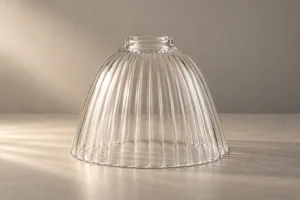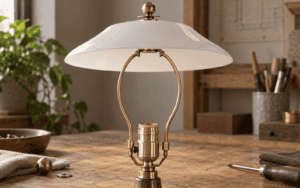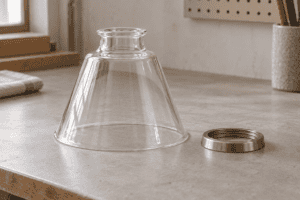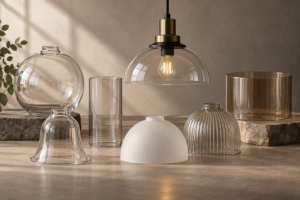
三つの寸法を測定します:フィッター直径(内側の開口部)、グローブの高さ(フィッターリップの基部から底縁まで)、最大幅。フィッター直径は、ランプのシェードホルダーリングのサイズと完全に一致する必要があります。.
あなたはランプを遺品セールで見つけました。無垢の真鍮製ベース、オリジナルのパティナ、明らかにヴィクトリア時代のものです。カットガラスのシェードは失われているか、二つのパネルに亀裂が入っています。写真と大まかなサイズ感をもとに「標準」交換品を注文します。到着すると、開口部がホルダーリングに座らせるには狭すぎるか、ぐらぐらと緩くなっています。カットガラスランプシェードの寸法を一度で正しく測るには、三つの具体的な数字を知り、どれが譲れない条件か理解することが重要です。.
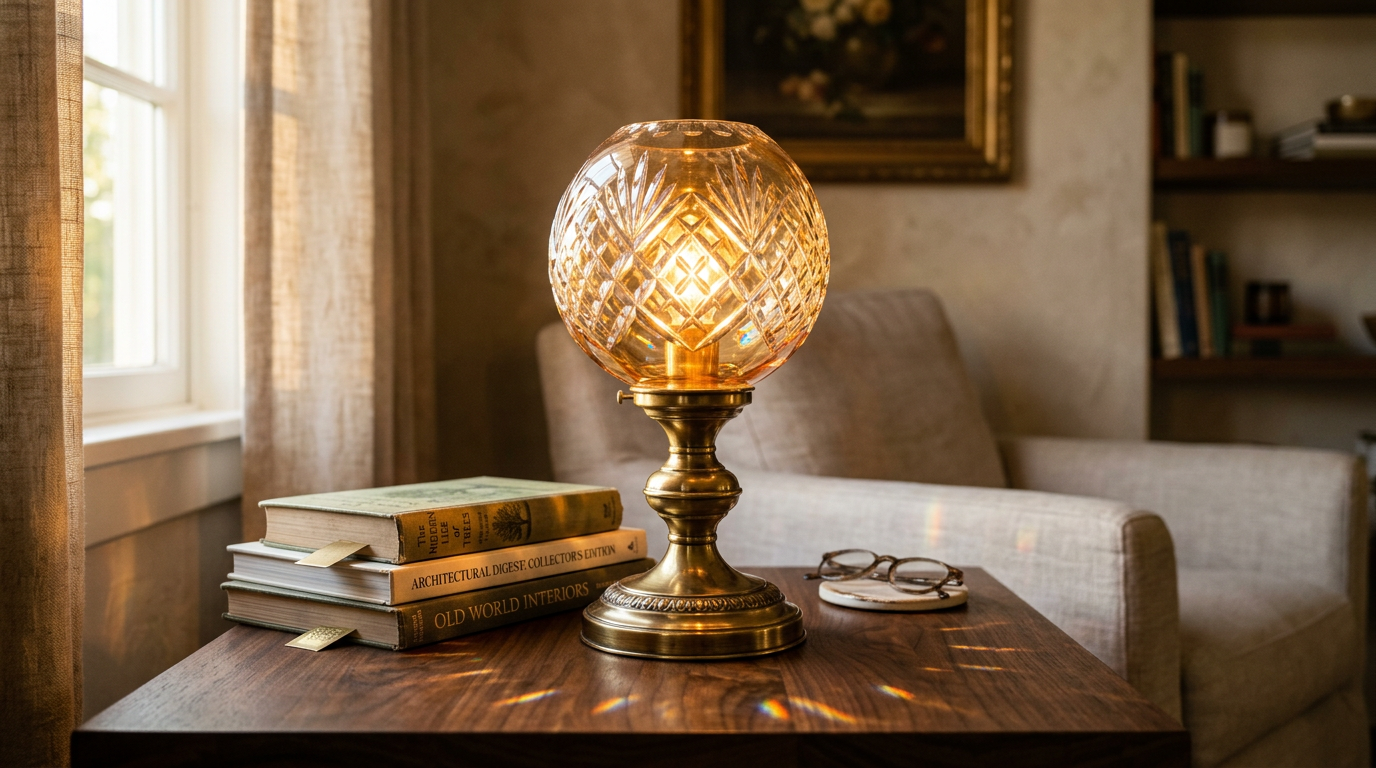
なぜフィッター直径だけが正確でなければならないのか
カットガラスランプシェードがランプに物理的に合うかどうかを決定する唯一の寸法はフィッター内径です。1/8インチでも間違えると、シェードはホルダーリングに座らないか、ぐらぐらと緩くなります。高さと幅はプロポーションに影響しますが、フィッター直径は厳格な条件です。.
フィッターリップ:内径と外径の違い
すべてのカットガラスランプシェードには、上部開口部にグラウンドまたは火で磨かれた縁があります。これを フィッターリップ. と呼びます。フィッターリップには内径(穴)とガラス壁を含む外径があります。適合に重要なのは 内径, 内径であり、サプライヤーが「2¼フィッター」や「3¼フィッター」と言うときに使う数字です。“
初めてカットガラスランプシェードを測る人の多くはリップの外径を測り、正しいフィッターサイズより¼~½インチ大きい数字を得てしまいます。キャリパーの爪は開口部の最も狭い内側に入れて測ります。それが注文すべき数字です。.
実際には、ヴィクトリア時代のプレスガラスシェードを測ると、外側リップ直径が2¾インチでも、正しい内径(フィッター仕様)は2¼インチでした。サプライヤーに問い合わせたりシェードのリストを確認する際は、必ず内径を指定してください。.
標準フィッターサイズとその時代
カットガラスシェードは、日本のブリリアント期のファセット加工品やジョージアン時代のプリズムパネルなど、限られたフィッター規格に合わせて作られていました。 コーニングガラス美術館 19世紀後半から20世紀初頭のガラスシェード製造は、業界標準のフィッターリングに集中しており、シェードがランプメーカー間で交換可能になるよう標準化されていました。その標準化は現在も参照システムとして使われています。.
| フィッター内径 | 一般的なランプ用途 | 主な時代 | 備考 |
|---|---|---|---|
| 1⅝インチ(約42mm) | フェアリーランプ、小型ブドワールランプ | 1880年代~1920年代 | 希少;慎重に測定してください |
| 2¼インチ(約57mm) | 標準テーブルランプ、学生用ランプ | 1890年代~1940年代 | 最も一般的なアンティークサイズ |
| 3¼インチ(約83mm) | 大型テーブルランプ、ホールランプ | 1900年代~1930年代 | よく煙突型と組み合わせて使用されます |
| 4インチ(約102mm) | フロアランプトーチエール、大型ホール照明器具 | 1910年代~1940年代 | ペンダント使用が一般的 |
| 6インチ(約152mm) | 天井ペンダント、ガス転換器具 | 1880年代~1920年代 | 通常は煙突型フィッター |
2¼インチフィッターは、アンティークテーブルランプの交換に最もよく必要とされるサイズです。弊社の カットガラスランプシェードコレクション, を閲覧する際は、まずフィッターサイズで絞り込んでください:高さや幅よりも先に確認すべき仕様です。.
三つの測定方法、ステップごとに
交換品を注文するには、3つの数値が必要です。フィッターの直径が適合を決定し、高さと幅がプロポーションと電球のクリアランスを決めます。この順番で測定してください。.
ステップ1:フィッター直径
デジタルノギスを内側ジョーモードに設定して使用します。内側ジョーをフィッター開口部の最も広い内側部分に当てて測定します。0.5mm単位(1/32インチ単位)で読み取ってください。これが重要な数値です。.
ノギスがない場合は、柔軟なメジャーで代用できます。フィッター開口部の内側にメジャーを一周させて円周を測り、その値を3.14159で割ると内径が求められます。2¼インチのフィッターの場合、内側の円周は約7⅛インチになるはずです。.
合わせるべきなのは、ランプのシェードホルダーリングの内径です。シェードホルダー(3本のアームに付いた小さな金属リング、またはソケット本体に取り付けられた全体のプレスリング)は特定の内径を持っています。シェードのフィッターリップは、落ちたり挟まったりせず、その上に乗る必要があります。そのためには、フィッターの内径がホルダーリングの内径から1/16インチ以内である必要があります。.
ステップ2:グローブの高さ
グローブの高さ(時には シェード高さ or 全高)は、フィッターリップの平らな底面から、開口部の上部ではなく、シェードの底縁の最も低い点まで測定します。.
測定開始位置が重要です。フィッターリップには、フィッターの壁がシェード本体に移行する小さな段差やショルダーがあります。ガラスの上縁ではなく、そこから測定を始めてください。多くのカットガラスシェードでは、この移行部分は壁の角度の変化としてはっきりと見えます。.
デプスロッドで測定する場合:シェードを平らな面に直立させ、ノギスのデプスロッドをリップのショルダーからシェード内部を通してテーブル面まで下ろして測定します。スチール定規の場合:シェードの外側プロファイルに沿ってリップの基部から下に垂直に当てて測ります。.
ステップ3:シェードの最大幅
シェードの最も広い直径を測定します。グローブ型の場合は赤道付近、ベル型やコーン型の場合は底の縁で測ります。これは円周ではなく直径です。.
カットガラスの場合:シェードに深いマイターカットやホブスター模様がある場合は、谷間ではなくカットの最も外側の頂点同士の間を測定します。最も外側のファセットの頂点が本当のシェード幅を示します。.
この測定値は見た目のバランスや電球のクリアランスに影響しますが、フィッターとの互換性には影響しません。目安として、最大シェード幅はランプベースの最も広い部分の直径の約2~3倍がバランスの良い見た目になります。.
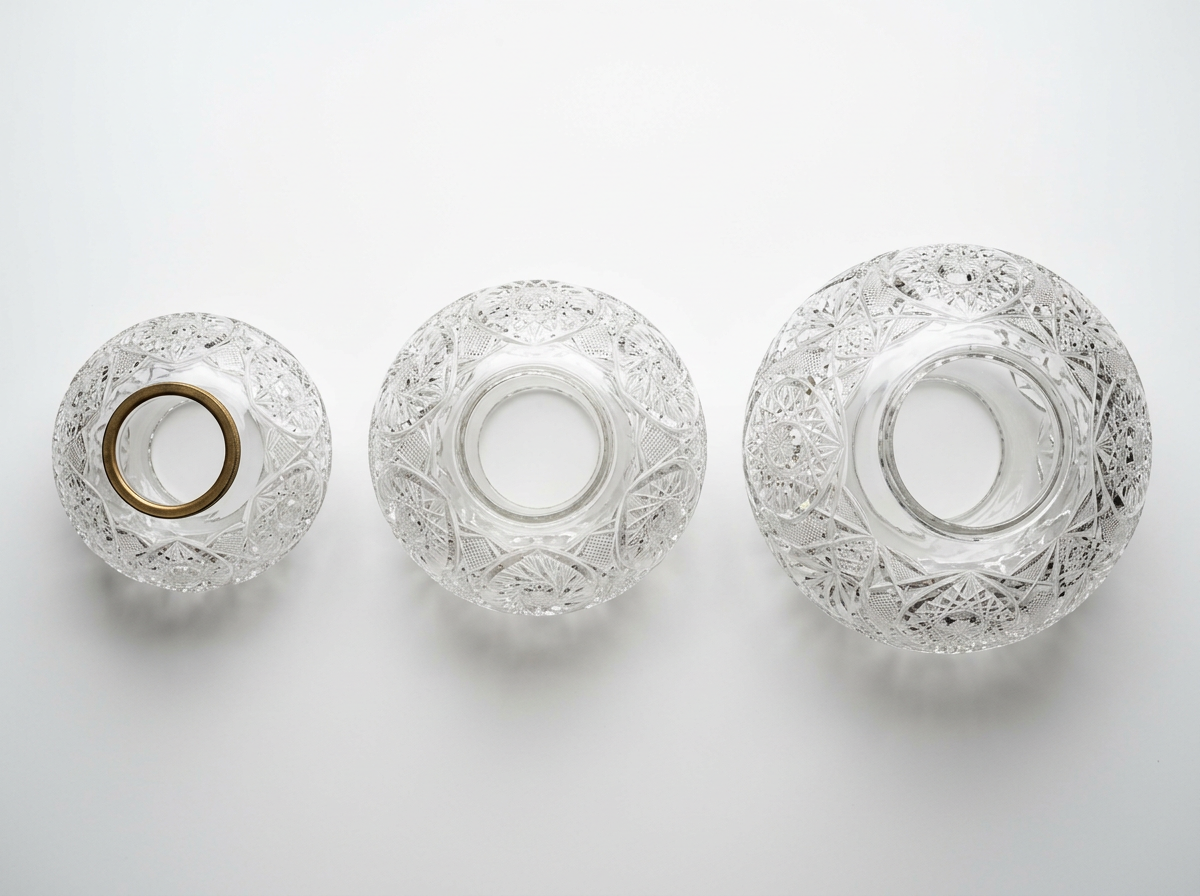
| フィッターサイズ | 一般的なグローブ高さ範囲 | 一般的な最大幅範囲 | 一般的なカットガラススタイル |
|---|---|---|---|
| 1⅝インチ” | 3インチ~4½インチ” | 4インチ~5½インチ” | 小型リブ付きグローブ、フェアリーランプスタイル |
| 2¼インチ” | 4インチ~7インチ | 5インチ~8インチ | 標準的なグローブ、ベル型、またはスチューデントシェード |
| 3¼インチ” | 6インチ~9インチ | 8インチ~12インチ | 大型グローブ、ヴィクトリアンフリル、煙突型 |
| 4″ | 8インチ~12インチ | 10インチ~16インチ | トーチエールドーム、大型ペンダントグローブ |
| 6″ | 約25〜46cm | 12インチ~20インチ | 煙突スタイル、ホールペンダント |
カットガラス特有の考慮事項
カットガラスシェードは、吹きガラスシェードとは構造的な違いがあり、測定や適合に影響します。主な問題は、厚いフィッターリップの壁とカラーリップの形状です。これらは、経験がないと分かりにくいものです。.
ファセットカットパネルがシェードの比率に与える影響
カットガラス, は、ジャパニーズブリリアント期(1876~1917)、ジョージアンファセットカット、またはミッドセンチュリーのボヘミアンなど、厚いガラス素地にプリズム状のファセットをカットし、光学的な透明度まで磨き上げて作られます。その結果、同等の吹きガラスよりも重く、壁が厚くなります。.
この壁の厚さはフィッター部分で重要です。内側フィッター直径が2¼インチのシェードは、外側フィッターリップ直径が2¾インチ以上になる場合があります。ブリリアントカットのガラスは、リップ部分で壁厚が¼インチ以上になることが多いです。ランプのシェードホルダーリング(シェードではなく)を測定する際は、リングがフィッターリップの外側を支えられる幅があるか確認してください。シェードが落ちないように。.
実際の確認方法:シェードをホルダーにセットした状態で、ガラスリップがリングの上に乗るべきです。リングの内側に挟まる場合は、フィッターリップの外径がそのホルダーにはやや大きいことになります。内径が少し大きいリングや、アームが広いホルダーが必要です。.
ヴィクトリアンおよびエドワーディアンのフィッタースタイル:煙突、リング、バルブクリップ
アンティークカットガラスシェードには3つの異なるフィッターメカニズムがあり、ランプの種類によって測定方法や注文するシェードの形状が変わります。.
リングフィッター(シェードホルダー)は、電気テーブルランプで最も一般的なタイプです。ソケット本体から伸びる3本または4本のアームにワイヤーや金属のリングが取り付けられ、リップでシェードを支えます。シェードは重力で乗ります。ここでは内側フィッター直径の測定値が重要です。.
煙突フィッターは、オイルランプの改造や初期の電気器具で使用されました。シェードは煙突チューブの上にスライドして装着します。シェード底部開口部の内径を測定し、煙突チューブに引っかからずに通る必要があります。煙突シェードの上部フィッター開口部は、通常同じ直径かやや小さいです。.
バルブクリップフィッター(スパイダーフィッター)は、バネ式クリップで直接バルブに挟み込み、ホルダーリングを完全に省略します。このシェードでは、フィッター開口部は特定のバルブ直径に合わせて設計されています。 ランプベース規格 エジソンスクリューやバヨネットサイズを定める規格は、バルブクリップシェード開口部寸法も、これらのバルブ形状に合わせて決定されました。.
どのタイプか分からない場合は、ソケット本体を確認してください:アーム付きリングはリングフィッター、突き出たチューブは煙突フィッター、ソケット付近のバネ組みはバルブクリップです。.
カラーリップフィッターとストレートエッジフィッターの違い
一部のカットガラスシェード、特に1895年から1910年頃の後期ヴィクトリアン作品には、 カラーリップ:上部にある短い円筒状の部分で、ホルダーリングの上に乗るのではなく、内側に落ち込む形になります。シェードのフレア(上部で最も広がっている部分)で襟リップシェードを測ると、実際の襟部分よりも大きな数値になります。.
襟リップシェードの場合、重要なフィッターの測定箇所は襟壁の外径です。これはホルダーリングの内側に収まる部分であり、その上のフレア部分ではありません。ここを間違えると、フレア部分で2¼インチと測ったシェードが、実際には襟部分が2⅛インチのため2¼インチのホルダーリングに収まらない、ということが起こります。逆に、フィッター部分が2¼インチでフレア部分が2⅝インチに広がる襟の場合、掲載写真では違うシェードのように見えることもあります。.
私たちの ヴィンテージガラスランプシェードの識別ガイド 時代や金具の種類を絞り込むための4段階の診断フレームワークを解説しており、注文前にシェードが襟リップ型かストレートエッジ型かを確認するのに役立ちます。.
元のシェードがない場合の測り方
カットガラスランプシェードの測り方を知りたい最も一般的な理由は、元のシェードがすでに失われていることです。ここでは、ランプの金具だけから測定する方法を説明します。.
シェードホルダーリングを直接測定する
シェードがない場合、シェードホルダーリングが主な基準となります。デジタルノギスでその内径を測定してください。これが注文すべきフィッターサイズとなります。ほとんどの場合、ホルダーリングの内径は正しいシェードフィッターの内径と1/16インチ以内で一致します。.
一般的なホルダーリングの内径と、それに合うフィッターシェード:
- 2¼”ホルダーリング:2¼”フィッター・シェードを注文
- 3¼”ホルダーリング:3¼”フィッター・シェードを注文
- 4″ホルダーリング:4″フィッター・シェードを注文
ホルダーリングが摩耗しているか、(古い鋼線リングでよくあるように)少し変形している場合は、2点または3点で測定し、読み値を平均します。.
ソケット位置とハードウェアのジオメトリからサイズを推定する
ホルダーリングが欠損している場合は、ソケット本体を見て手掛かりを探します。ねじ穴やはんだ痕は、ホルダーアームが取り付けられていた場所を示します。その取り付け半径がホルダーリングの概算外径を示します。一般的なアーム線の幅(約3/16″)を2回減じてリングの内径を得、そこからシェードのフィッターサイズを決定します。.
ソケットの上端からシェードの予想下端までの距離は、グローブの最低高さを示します。A19電球(全長約4.6″)を用いた標準の2¼”フィッターのテーブルランプでは、グローブの高さが5½”以上で電球を完全に囲みます。.
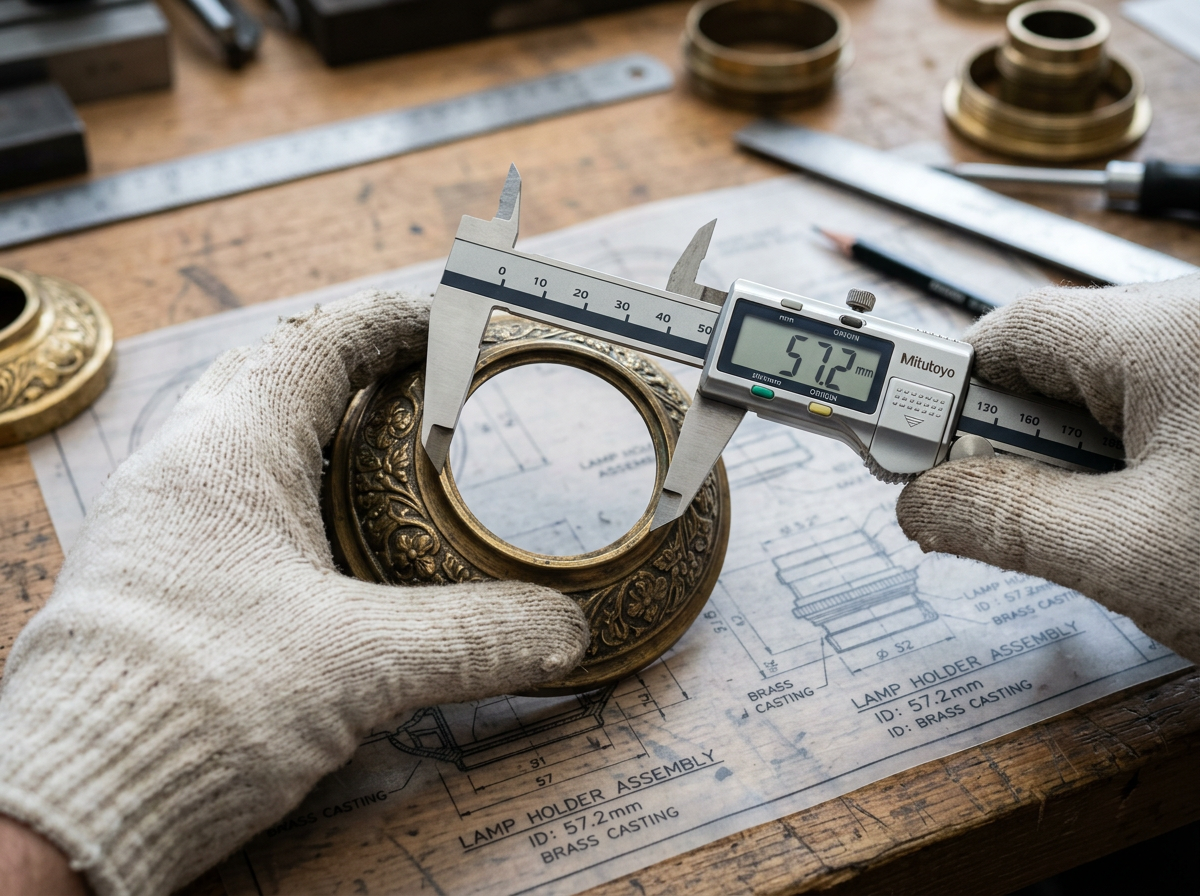
日本の アンティークガラス物の取り扱いに関するスミソニアンの指針 測定時には、ガラス片を下から支え、研磨されたカット面に素手で触れないことが推奨されています。時間とともに光学品質のファセットに微小エッチングを促進する皮脂成分があるためです。既存のカットグラスシェードを測定する際には布の手袋を使用する価値があります。.
製造者の刻印と特許日付の照合
多くのアメリカンブリリアント・パリオッド時代のカットグラスシェードには紙ラベル、酸蝕刻の刻印、またはモールド痕がフィッター内部にあります。メーカーを特定できれば(Libbey、Hawkes、Dorflinger、Pairpoint) 彼らの歴史的生産カタログを、 Corning Museum of Glassの研究図書館, が公開しており、特定パターンのフィッター仕様を一覧していることがあります。それが直接の測定結果と比較するための確認番号を提供します。.
割れて修復不能なカットグラスシェードが交換が必要な場合、私たちは アンティークガラスランプシェード交換ガイド 生殖オプションの全スペクトラム、材料検証、およびコラーレットリップ対リングフィッターのバリエーションがカスタム生産でどのように指定され得るかをカバーします。.
標準カットガラスシェイドサイズ参照
ランプシェードのサイズチャート、シェードサイズ計算機、2.25フィッター付きガラスシェード、4インチフィッター交換、全て同じ回答を求める: このシェードは私のランプに適合しますか?この表を出発点として使用しますが、注文前に必ず直接測定して確認してください。.
フィッターとランプタイプのペアリングガイド
| フィッターサイズ | ランプタイプ | 典型的なワット数時代 | カットガラス模様ノート |
|---|---|---|---|
| 1⅝インチ” | 妖精ランプ、小さなボードワ | 1920年以前 | 薄壁、繊細なカット; 市場では希少 |
| 2¼インチ” | 学生用ランプ、小型テーブルランプ | 25–60W相当. | ほとんどのカットガラス模様が利用可能 |
| 3¼インチ” | 中型テーブルランプ、ホールランプ | 60–100W相当. | 大型のホブスターヘッドとミターカット模様 |
| 4″ | 大きなテーブルランプ、フロアランプ | 100–150W相当. | トーチ型とペンダントグローブ形状 |
| 6″ | ペンダントホールライト、天井器具 | ガス/初期電気 | 通常は煙突スタイル; 深い幾何学的カット |
現代のLED電球は、置換する白熱電球の寸法と同等の寸法である。 エネルギー省エネルギー庁は LEDの置換がA19、G25、キャンドルサイズの電球と元の寸法エンベロープに一致する。60W A19のシェードは、フィッターの改造なしに等価なLEDに収まる。.
測定値が標準サイズの間にある場合
これは多くの買い手を困らせる。内径フィッターの測定は2⅜″と読み取れる。標準の2¼″と3¼″の間である。検討すべき三つの状況:
標準サイズの1/16″以内の場合: ホルダーリングはわずかに伸びているか、摩耗した点で測定した可能性がある。最も近い標準を試してみてください。2¼”のシェードは、内径約2⅜”までのホルダーリングにしっかり座り、緩くなる前には変化が感じられません。.
二つの標準の間の実際の中間: これは通常、標準外のヨーロッパ系フィッター(ドイツおよびチェコ・ボヘミアのランプで一般的)、改造されたホルダーリング、または損傷したフィッターリムを示します。これらの場合、 フィッターアダプターリング (一方の標準から別の標準へ段階的に移る真鍮製のインセット)であり、カスタムシェードではありません。正しい解決策です。.
生産のためのシェード指定: ガラス生産では、カスタムフィッター直径を指定できますが、最小注文数量でのみ可能です。単品のアンティーク代替には、標準フィッターサイズが実用的なルートです。.
道具と測定精度のヒント
正確な切断ガラスのランプシェードの測定は、各寸法に対して適切な道具を使用することに依存します。柔軟なテープメジャーと硬質鋼定規は異なるものを測定します。どちらかを間違った段階で使用すると、間違ったサイズの注文を招く誤差を生みます。.
キャリパー vs. 柔軟テープ:各寸法に対してどちらを使用すべきか
フィッター内径: 内径測定には内くちばし機能を備えたデジタルノギスを使用してください(小さな段付きジョー、外側の大きなジョーは避ける)。誤差±0.5mmで十分です。標準の150mm(6インチ)デジタルノギスは6インチまでの全フィッターサイズに対応します。200mm(8インチ)モデルは煙突の陰影に対応します。ノギスはフィッター開口部の内径を直接測定できる唯一の道具です。.
グローブの高さ: 剛性のある鋼製定規またはノギスの深さ棒を使用します。柔らかいテープは高さを測るには信頼性が低く、影の曲がりくねった形状に沿って真っ直ぐな寸法ではなくなるためです。シャドを平らな面に基部を下にして置き、定規を垂直に保ちます。.
最大幅: 柔軟な巻尺がよく機能します。赤道周囲を巻き付けて周長を読み取り、それを3.14159で割ります。あるいはシャドの widest point の両側に対して2本の鋼定規を垂直に立てて、その間を測定します。.
いずれの作業にも布製の縫い目テープは決して使わないでください。擦り切れた布テープの伸び誤差は¼インチ以上に達することがあり、それがフィッターサイズに影響します。.
カットグラスランプシェードの五つのよくある測定ミス
- 内径ではなく外径を測る。. 開口部の内側の顎を必ず測定してください。外径は10%–20% largerとなり、間違ったサイズへ導きます。.
- グラスの上端からの高さ。. 測定はフィッターリップ肩の基部から始まり、最上部のリムではありません。.
- 誤った位置での幅の測定。. ベルシェードでは最も広い点は下端リムにあります。グローブでは赤道です。円錐シェードでも下部が最も広いです。.
- フィッターサイズを小さく丸めます。. 測定値が56mm(2.2インチ)の場合、それは57mm(2¼インチ)に丸められ、42mm(1⅝)には丸められません。標準の最も近い値に丸めてください。.
- カラーリップの形状を無視します。. カラーリップ陰影では、フレアの近くの測定値はカラーより大きく出ます。カラーはフィッター寸法です。トップフレアのすぐ下に可視の円筒部があるシェードは、そこを測定してください。.
よくある質問
切子ガラスの lamp shade のフィッターサイズとは何ですか?
フィッターサイズはシェードのトップ開口部の内径であり、ランプのホルダリングに正しく座るかどうかを決定する測定値です。2¼インチのフィッター切子ガラスのランプシェードは内径が2¼インチ(57mm)です。フィッターサイズは lamp のシェードホルダーリングの内径に一致していなければなりません。高さと幅は異なる場合がありますが、フィッター直径は変えることはできません。.
アンティークの切子ガラスシェードで最も一般的なフィッターサイズは何ですか?
2¼インチ(57mm)のフィッターは、アンティークのアメリカ製およびヨーロッパ製の切子ガラスのテーブルシェードで最も一般的なサイズです。ほとんどの標準的なヴィクトリア朝・エドワーディアンのホルダーリングは内径2¼インチです。典型的なアンティークのテーブルランプのシェードを交換する場合で、元のものを測れない場合は、まず2¼-inchから始めてください。1890年から1940年の学生用ランプ、パーラーロー、狭いホールの設備の大半をカバーします。.
元のシェードが既に壊れている場合、切子ガラスのシェードをどのように測定しますか?
デジタルノギスを用いて直接シェードホルダーリングの内径を測定します。これが注文するフィッターサイズを示します。ホルダーリング自体が欠落している場合は、ソケット本体のねじ穴やはんだ跡を探して元のリング取り付け半径を示す痕跡を確認します。その半径を2倍しておおよそのホルダーリング直径を算出し、それが交換用シェードのフィッターサイズに対応します。.
フィッターアダプターはサイズ不一致を修正できますか?
はい、1段階の不一致には対応します。真鍮製フィッターアダプタリングは2¼インチから3¼インチへ、または3¼インチから2¼インチへ段階的に調整します。これらはホルダーリングの内径を変更し、実効内径を変えます。標準サイズを超える不一致がある場合、アダプターは bulky になりシェードを傾ける可能性があるため、適切なフィッターサイズを入手する方が良い解決策です。アダプターはまた座高を若干変えるため、シェード下部に見えるソケットの量にも影響します。.
チムニーシェードと切子ガラス球シェードの違いは何ですか?
チムニーシェードは、油ランプのチムニー管にはめ込む縦長の円筒形です。チムニーをクリアする内側の底径で測定します。ホルダーリングではなく、内径フィッター径で測定します。切子ガラスの球体シェードは球形またはほぼ球形で、フィッターリップでホルダリングに座り、内径フィッター径で測定します。どちらの形状も切子ガラスに見られますが、全く異なる金具と測定方法を使用します。チムニーシェードは油ランプの改造で一般的でしたが、球シェードは電気テーブルランプの標準です。チムニーランプに球体シェードを、またはその逆を注文するのは、直径に関係なく難解です。.
シェードの高さがランプに適しているかどうかはどう判断しますか?
シェードをホルダーに収めた状態で、電球は完全に囲まれており、シェードの下縁を下回って突き出てはいけません。標準のA19型LED電球(長さ約4.6インチ)の場合、最小のグローブ高を5インチ〜5½インチに保つと電球は内側に収まります。シェードの下縁がランプベースを少なくとも1インチ〜2インチ以上クリアすることも、視覚的な比率を保つために必要です。装飾的なソケット本体を見せたい場合は、意図的にシェードを短くしますが、フィッターの直径はホルダーリングと正確に一致する必要があります。.

結論
切子皿のランプシェードを正しく測る方法は、交渉不可能な1つの数字と、それを支える2つの数字に帰着します。フィッター直径(開口部の内径)はランプのシェードホルダーリングと正確に一致する必要があります。グローブの高さと最大幅は比率と電球のクリアランスを決定しますが、シェードが物理的に座るかどうかは決定しません。.
切子ガラスの場合 specifically: 襟の内径を、フレアの外径ではなく内径で測定します。外径を内径よりも顕著に大きくする分厚いフィッターリップの壁に注意します。標準のホルダーリングの寸法が適用されると想定する前に、フィッタータイプ(リング、チムニー、または電球クリップ)を確認します。元のシェードがない場合、内部径がホルダーリングの出発点です。さらに、それが欠けている場合は、ソケット幾何とハードウェアの痕跡が必要な数値を示します。.
検索 全切子ガラスランプシェードコレクション フィッターサイズで絞り込み。特定の器具に対して非標準のフィッタ径やコリリップのバリエーションが必要な場合は、仕様を明記したうえでカスタム生産が可能です。.