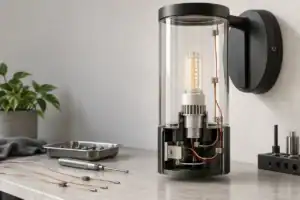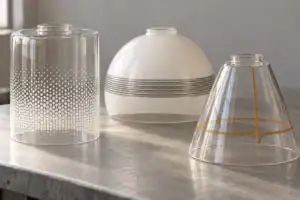
Direct answer: Antique glass lamp shade replacement means finding or producing a period-appropriate glass shade to replace one that is broken, lost, or missing on an antique lamp. Success requires identifying the lamp’s fitter type and diameter, the correct era-appropriate glass style, and choosing between a genuine period original or a current-production reproduction.
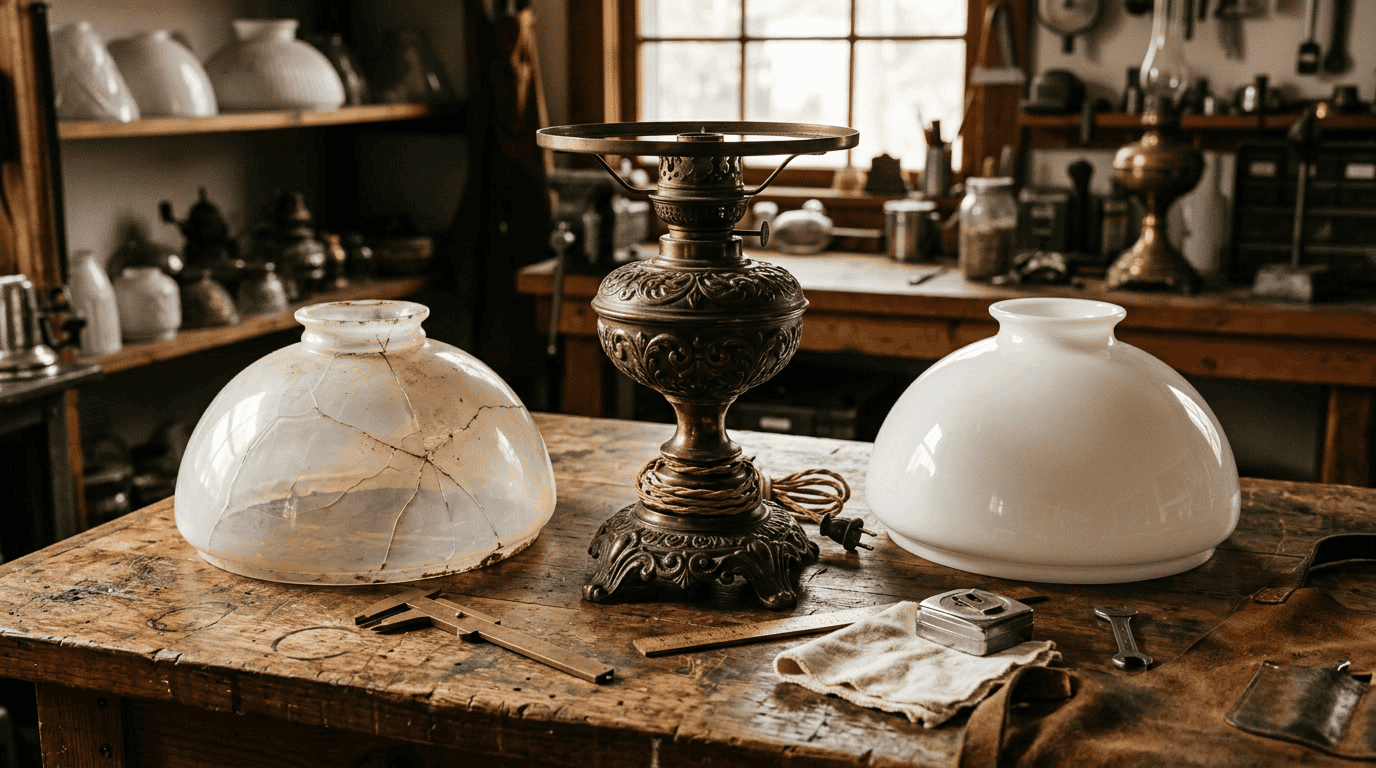
Every antique lamp without a shade is half a lamp. The base might be museum quality — a signed Art Nouveau bronze, a fine-turned Victorian oil conversion, an intact Depression-era pressed glass column — but without the right shade, it looks unfinished and produces light that nobody would want to sit next to.
The problem is that antique lamp shades break, get separated from their lamps at estate sales, or were simply never part of the lamp when it was passed down. Replacement sounds straightforward until you start: fitter sizes changed across eras, glass formulas were discontinued, and “vintage-looking” marketplace listings almost never specify whether the shade will actually fit your hardware.
This guide covers the full replacement process — from identifying what you need, to measuring correctly, to evaluating sources, to getting a reproduction made if no original can be found.
For the broader vintage glass lamp shade category, see our vintage glass lamp shades hub.
Why Antique Glass Shade Replacement Is Harder Than It Looks
Three things make antique shade replacement genuinely difficult:
Non-standard fitter dimensions. Before the 1940s, glass shade fitters were not standardized. A 19th-century oil lamp conversion might have a ring support that accepts only a shade with a 4″ outer fitter rim. A 1910 parlor lamp might have a three-arm spider that holds the shade by three interior contact points at a specific diameter. Neither matches any modern standard fitter.
Discontinued glass formulas. Depression-era pink, the specific opalescence of Fenton’s milk glass, the amber tone of 1920s cased glass — these were produced with glass formulas and colorant chemistry that is no longer commercially available. A reproduction can come close, but an exact match to an original period shade requires finding another original.
Era-accuracy vs. practical fit. Even when you find a shade that fits mechanically and looks roughly right visually, it may be the wrong era for the lamp. A 1970s smoked bell shade on a 1910 Arts & Crafts lamp base is visually wrong even if it physically fits.
None of these problems is insurmountable, but each requires a step that most “replacement shade” guides skip entirely.
Step 1: Identify the Lamp Era and Original Shade Type
Before you measure anything, determine when the lamp was made and what style of shade it would have originally carried. This narrows the search from “any glass shade” to a specific category.
The five key lamp eras and their correct shade types:
| Era | Lamp base characteristics | Original shade type |
| Victorian / Edwardian (1880–1910) | Ornate cast metal, converted oil or gas lamp, elaborate floral/gothic detail | Hand-blown opalescent globe, ruffled rim, painted or transfer-decorated |
| Arts & Crafts / Art Nouveau (1900–1920) | Hammered copper, wrought iron, simple organic form | Leaded glass panels, amber/green single-color glass, 2¼” fitter |
| Depression era (1920–1940) | Pressed glass base (pink, green, clear), simple ceramic figural, chrome column | Pressed glass ribbed or paneled in matching color — pink, green, amber, clear |
| Mid-century modern (1945–1970) | Teak or walnut stem, abstract ceramic glaze, simple cylindrical brass | Opal white glass cone or drum, spider fitter, no surface decoration |
| Hollywood Regency / late MCM (1955–1975) | Heavy brushed brass or chrome, geometric urn | Smoked bell, amber globe, or crystal-cut shade, 16–20″ diameter |
If you’re not certain of your lamp’s era, our guide to identifying vintage glass lamp shades covers a four-step framework for narrowing down era and glass type. Otherwise, look at three things: the base material, the socket type, and any maker’s marks. Gas-lamp conversions typically have a fill port or burner collar that was capped or removed. Electric lamps from before 1930 often have porcelain or bakelite socket bodies rather than brass. Mid-century lamps often have three-way sockets or inline dimmer switches.
Step 2: Measure the Fitter
The fitter is the mechanical interface between the shade and the lamp. If it doesn’t match, nothing else matters.
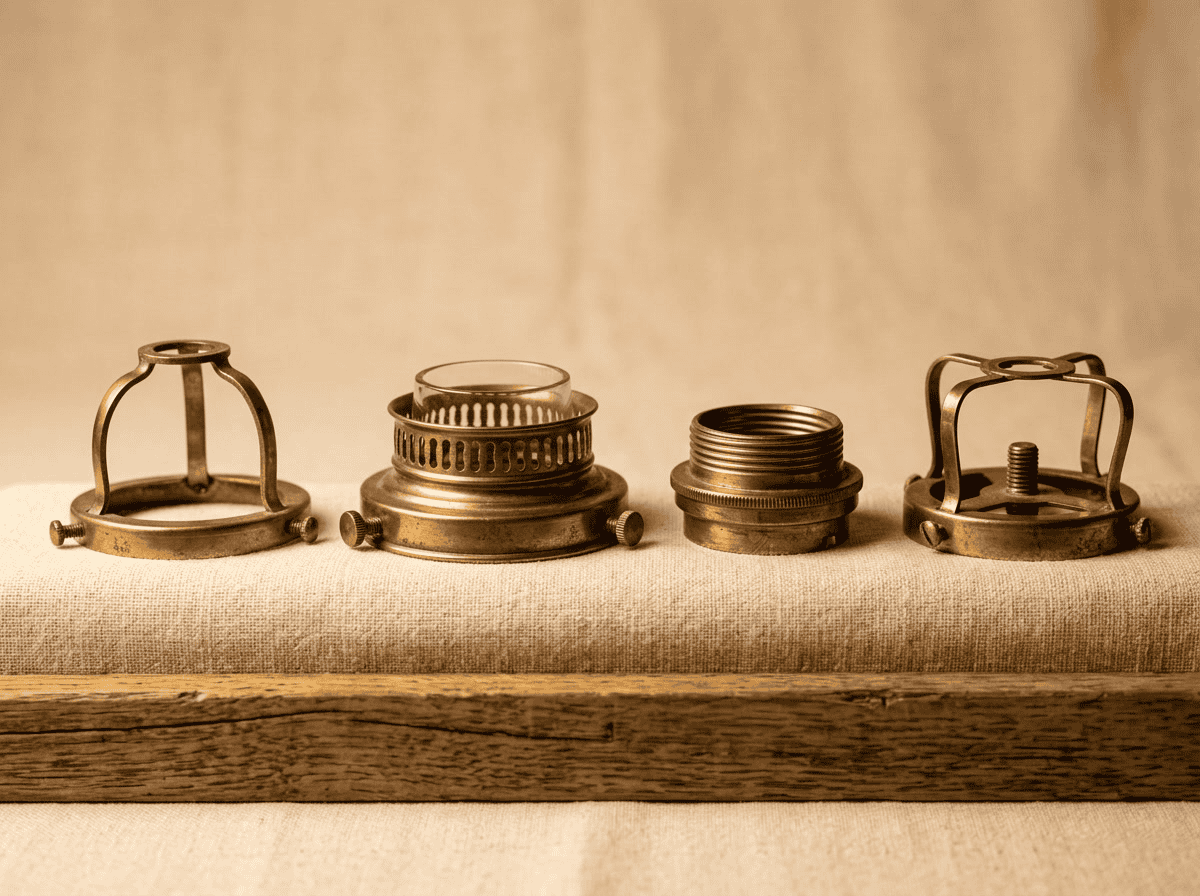
Common antique fitter types
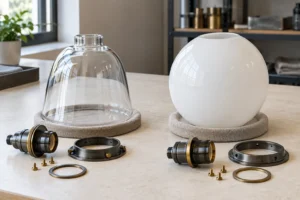
Three-arm ring support (pre-1920): Three bent metal arms extend from the lamp’s central column and cradle the shade. The shade rests in the ring with no mechanical lock. Measure the inner diameter of the ring where the shade rests (not the ring’s outer diameter). Common sizes: 3¼”, 4″, 5″.
Two and a quarter inch (2¼”) fitter: A standardized opening that became widespread in the 1910s–1930s. The shade has a circular fitter rim with an inner diameter of 2¼”. Very common on Arts & Crafts, early electric, and Depression-era lamps.
Uno fitter (7/8″ / 22mm thread): Threads directly onto the bulb socket body. Widespread from the 1930s onward. Very common on mid-century table lamps. Easy to replace because the fitter size is the bulb socket, which is standardized.
Spider fitter (1 5/8″ / 41mm saddle): A wire harp and finial assembly. The harp’s top wire saddle supports the shade. Common on better-quality mid-century and later lamps.
Gallery fitter: A wider ring assembly, typically 3¼” or 4″ inner diameter, used on torchiere floor lamps and some large table lamps. Less common but frequently found on Victorian and Edwardian fixtures.
How to measure
For ring-support and gallery fitter shades: remove the old (broken) shade and measure the inner diameter of the ring where the shade sat. This is the minimum inner diameter your replacement shade’s fitter rim must equal or slightly exceed.
For uno fitters: the shade’s opening has a short cylindrical neck that threads onto the socket. Measure the inner diameter of this threaded opening (should be close to 7/8″).
For spider fitters: no measurement on the shade side — the shade rests on a harp, and the harp is what varies. Confirm the harp height instead.
Full measurement guidance with diagrams is in how to measure a replacement glass lamp shade and the technical detail in glass lamp shade fitting standards: the complete technical guide.
Step 3: Determine the Shade Diameter and Height
Once the fitter dimension is confirmed, set the outer diameter.
For Victorian and Edwardian lamps: The shade outer diameter was typically 1.5–2× the lamp base diameter at its widest point. A parlor lamp with a 6″ diameter font (kerosene reservoir) typically carried a shade in the 10–14″ outer diameter range.
For Arts & Crafts lamps: Proportions were more architecturally disciplined. The shade diameter typically matched or slightly exceeded the lamp base height.
For Depression-era lamps: Smaller, simpler lamps. An 8″ base typically wants a 10–12″ shade outer diameter.
For MCM and later lamps: The classic rule — shade diameter ≈ base height — applies well.
Shade height is usually set so the lower edge of the shade falls just below the lamp’s “shoulder” (widest point of the base). This covers the socket hardware without hiding the base detail.
Step 4: Evaluate Your Source Options
Three categories of source, each with distinct tradeoffs:
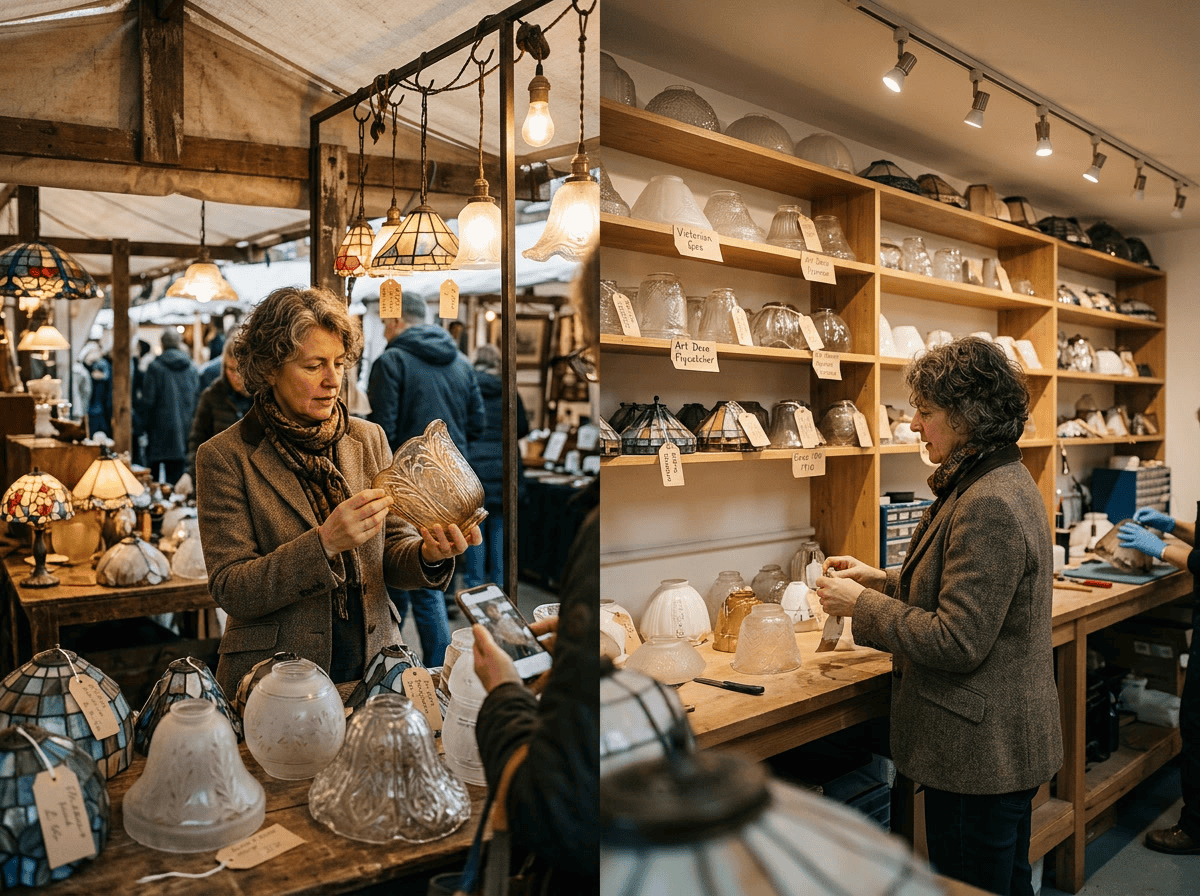
Antique markets and estate sales
Pros: Genuine period originals. Correct glass formula. Often excellent value relative to reproduction cost for common types (milk glass, Depression ribbed).
Cons: No guarantee of fitter match. “Fits” is subjective — sellers don’t know your lamp. No return policy. Can’t replicate if you find one example.
Best for: Common type replacements (milk glass bell, Depression pink ribbed) where you’re flexible on exact diameter and can measure in person.
What to check on-site: Fitter inner diameter (measure with a small ruler or bring a template), any chips or cracks (run your fingernail around the fitter rim — hairline cracks are invisible under fluorescent market lighting), and the shade’s behavior when held up to a light source (cloudy distribution is good; sharp hotspot means thin or undiffused glass).
Lighting restoration specialists
Pros: Curated stock matched to common lamp types. Staff who understand fitter sizes. Can often make recommendations based on your lamp photos.
Cons: Higher prices than antique markets. Limited selection on unusual sizes.
Best for: Fitter-specific replacements where you need a known-diameter shade. Victorian three-arm ring support shades. Unusual colored glass types.
Current production manufacturers
Pros: Consistent fitter dimensions. Exact diameter/height to specification. Can produce in quantity if needed (multiple matching shades for a pair of lamps, a set of bedroom lamps, or a hospitality project). Sample orders before commitment.
Cons: Not genuine antiques. Glass formulas approximate the original — close but not identical.
Best for: Any replacement where: (a) the lamp will be used daily (an original may be fragile), (b) you need more than one matching shade, (c) the fitter size is non-standard and no original is available, or (d) budget favors a quality reproduction over an original. The Corning Museum of Glass collection database is a useful reference for comparing forms against documented period pieces when briefing a manufacturer.
According to Wikipedia’s article on the Arts and Crafts movement, the aesthetic principles of honest craftsmanship and material quality — including hand-blown glass production — have seen renewed commercial interest since 2020 — which explains why current production of period-style glass shades is stronger now than at any point in the past 40 years.
For custom reproduction orders, our vintage glass lamp shades collection shows current production styles and we can produce samples to your exact fitter and diameter specification. For format-specific guidance, see our vintage glass lamp shades for table lamps guide, our vintage floor lamp glass shades guide, and our vintage glass pendant light shades guide.
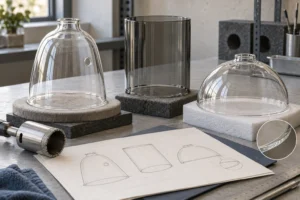
Step 5: Ordering a Reproduction — What to Specify
If no original can be found and you’re ordering a reproduction, these five specifications fully define what you need:
1. Fitter type and inner diameter
e.g., “2¼” gallery fitter” or “7/8″ uno thread” or “3¼” three-arm ring support — shade inner fitter rim diameter”
2. Outer diameter
The widest measurement across the outside of the shade.
3. Height
From the top of the fitter rim to the bottom edge of the shade.
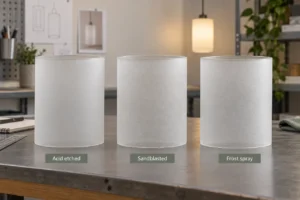
4. Glass type and finish
Examples:
- “Milk glass, fully opaque white, no surface decoration”
- “Amber cased glass, two-layer construction, smooth exterior”
- “Pink Depression-style pressed glass, vertical ribbing, 2–3mm wall”
- “Opal white, cone form, completely clear inner surface to outer diffuse layer”
5. Period reference (helps the manufacturer)
Brief description of what lamp this is replacing: “1920s table lamp base, Depression glass column” or “1905 oil lamp conversion, ornate brass font.”
With these five points in writing, any competent glass lamp shade manufacturer can produce a sample for approval before batch production. For one-off replacement orders, minimum order quantities at most manufacturers start at a single sample unit for a higher per-unit cost, then step down at 10, 25, and 50 units.
Material Considerations for Replacement Shades
Different antique lamp eras used glass formulas that behaved differently from each other. When ordering a reproduction, understanding which formula matters for your lamp:
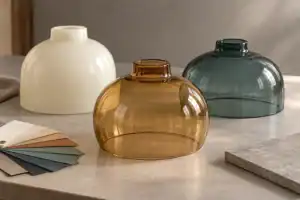
Opalescent glass (Victorian, early electric): Produced with fluorite or bone ash additions to the batch. Creates a milky, slightly translucent quality — not fully opaque like mid-century milk glass, but not clear either. The warm white has a faint yellowish tone that lit incandescent looked golden. Current opalescent reproductions approach this quality; exact match to a Victorian original requires seeing a sample.
Milk glass (1930s–1960s): Fully opaque or near-fully opaque white. Brighter and colder than Victorian opalescent. Widely reproduced; quality varies significantly. Two-layer cased milk glass is better than single-layer tinted.
Depression glass colors (1920s–1940s): The specific pink, green, and amber of original pressed glass was produced by adding selenium (pink), uranium or chromium (green), or iron/sulfur compounds (amber) to soda-lime glass. The selenium pink is particularly distinctive — slightly salmon rather than bubblegum — and the uranium green overlaps with the iridescent finishes seen on carnival glass of the same period. Modern reproductions come close; exact match requires side-by-side comparison. According to Wikipedia’s article on Depression glass, the original production period ran 1929–1939, useful context for authenticity assessment.
Amber cased glass: Higher-end period glass was two-layer — an amber inner gather covered by a clear outer gather — giving depth of color. Single-layer amber tints are cheaper and look thinner. For replacement shades on quality antique bases, specify two-layer cased amber. Our vintage amber glass lamp shades guide covers the full amber spectrum and hardware pairings, and our vintage milk glass lamp shades guide covers the milk glass formulas referenced above in more depth.
Smoked glass (1960s–1970s): Grey-to-brown neutral tint. Most straightforward to reproduce accurately.
Working With Broken Originals
If you have a broken original shade — cracked, chipped at the fitter, or partially intact — it’s still useful as a measurement reference.
From a cracked but intact shade: Even a cracked shade holds its shape. Measure fitter inner diameter, outer diameter, and height before disposal. These measurements are more reliable than measuring the lamp hardware alone.
From a broken fragment: A single large fragment (40% or more of the original shade) usually shows the curvature radius, wall thickness, glass color, and finish type. Send a photo of the fragment to a glass manufacturer — they can often identify the glass type and suggest the closest current production match.
From just the lamp hardware: Measure the lamp’s fitter hardware carefully and document the lamp’s era and style. A good manufacturer will work from these numbers with lamp-era context.
Thermal damage: Shades that have been through house fires or stored near heat sources may have clouded or pitted glass. This is irreversible in the original but shouldn’t affect your decision to replace — a quality reproduction will look better than a thermally damaged original.
Buying Checklist Before Committing to a Replacement
Before placing an order (original or reproduction), confirm:
- Fitter inner diameter matches your lamp hardware (measure twice)
- Outer diameter is proportional to base height (within ±15% of base-height match rule)
- Height places shade bottom at or just below lamp shoulder
- Glass type matches the lamp’s era and palette
- Transmission level is appropriate for intended use (opal = soft ambient; clear = feature/accent)
- Bulb compatibility — modern LED is fine; specify warm white (2700K)
- Surface decoration (painted, etched, plain) matches lamp base style
The U.S. Department of Energy’s lighting guidance confirms that modern LED bulbs are fully compatible with glass shades designed for any historical bulb type — reducing heat stress versus original incandescent use. The Smithsonian’s glass care guidance covers safe handling of fragile period originals during measurement and transport.
Frequently Asked Questions
How do I find the fitter size for my antique lamp?
Look at the lamp where the original shade attached. If there’s a ring support, measure its inner diameter. If there’s a socket collar, measure the socket outer diameter (uno fitter = 7/8″). If there’s a harp, it’s a spider fitter. Send photos to a glass shade supplier — they can usually identify the fitter type from an image.
Is it worth replacing an antique glass shade with a reproduction?
For daily-use antique lamps, yes. A quality reproduction protects the lamp base from the risk of further shade hunting, produces consistent light quality, and typically costs less than hunting for an original. Reserve originals for non-functional display pieces or museum-quality restorations.
Why don’t modern reproduction shades match the original color exactly?
Period glass formulas used colorants and opacifiers that are no longer commercially available (some were toxic, like lead or uranium compounds). Modern reproductions use safe substitute chemistry that approximates the original visual result. The match is usually excellent for practical use; side-by-side comparison may reveal slight tone differences.
Can I use a modern shade on an antique lamp if it fits?
Yes, if the fitter dimension matches. Whether it looks right is a separate question. A modern clean-lined shade on a Victorian ornate base usually looks incongruous even if it physically fits. Period-appropriate style matters as much as mechanical fit.
How much should a quality replacement antique glass shade cost?
Current production vintage-style glass shades range from $15–25 (simple ribbed or pressed forms, mass-produced) to $80–150 (hand-blown opalescent or cased glass reproductions, quality manufacturers). Genuine period originals at antique dealers range from $20 (common Depression glass ribbed) to several hundred dollars (signed Fenton, Tiffany Studios-adjacent, or unusual Victorian forms).
Can a manufacturer produce a single replacement shade to my specification?
Yes, most glass shade manufacturers accept sample orders — one unit at a higher per-unit cost. Provide fitter type and inner diameter, outer diameter, height, and glass finish. Sample lead times are typically 3–6 weeks from a Chinese or European manufacturer.
What if my antique lamp has a non-standard or unknown fitter?
Photograph the fitter hardware from directly above, with a ruler in the frame for scale. Send this to a glass shade manufacturer or restoration specialist. In most cases, a custom ring adapter can be fabricated to accept a standard replacement shade, or the manufacturer can produce a shade with a custom fitter opening to match.
Related Reading
- Vintage Glass Lamp Shades: Full Buying Guide
- How to Identify Vintage Glass Lamp Shades
- Vintage Glass Lamp Shades for Table Lamps
- Vintage Milk Glass Lamp Shades: History, Styles & Buying Guide
Conclusion
Replacing an antique glass lamp shade is a matching exercise — mechanical fit first, then visual accuracy, then source selection. Most failures happen because buyers start from the aesthetic (they see a shade that looks right) without confirming the fitter dimension.
The reliable sequence: identify the lamp era → measure the fitter → calculate proportional diameter and height → choose source (original, restoration specialist, or reproduction manufacturer) → specify in writing.
For vintage lamps that will be used daily, quality current production reproductions are the practical choice. The glass quality from a reputable manufacturer is high, the fitter dimensions are accurate, and you avoid the fragility risk of a genuine antique shade. For museum-quality restorations or display pieces, the hunt for an original is worth the effort — but budget the time and measurement precision it requires.