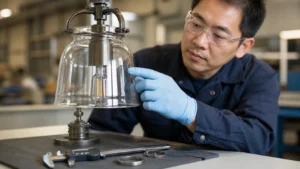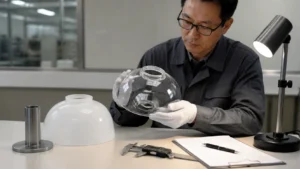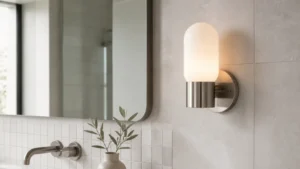
直接的な回答: カットガラスのランプシェードは、週に一度柔らかい天然毛のブラシでほこりを払い、月に一度はぬるま湯と中性食器用洗剤を一滴マイクロファイバークロスにつけて部分的に拭き掃除をしてください。徹底的に掃除する場合は、シェードを取り外し、やさしく手洗いし、蒸留水ですすいでから、タオルの上で逆さにして自然乾燥させます。絶対に浸け置きしないでください。研磨剤入りのクリーナーは使わないでください。カットガラスを食器洗い機に入れないでください。.
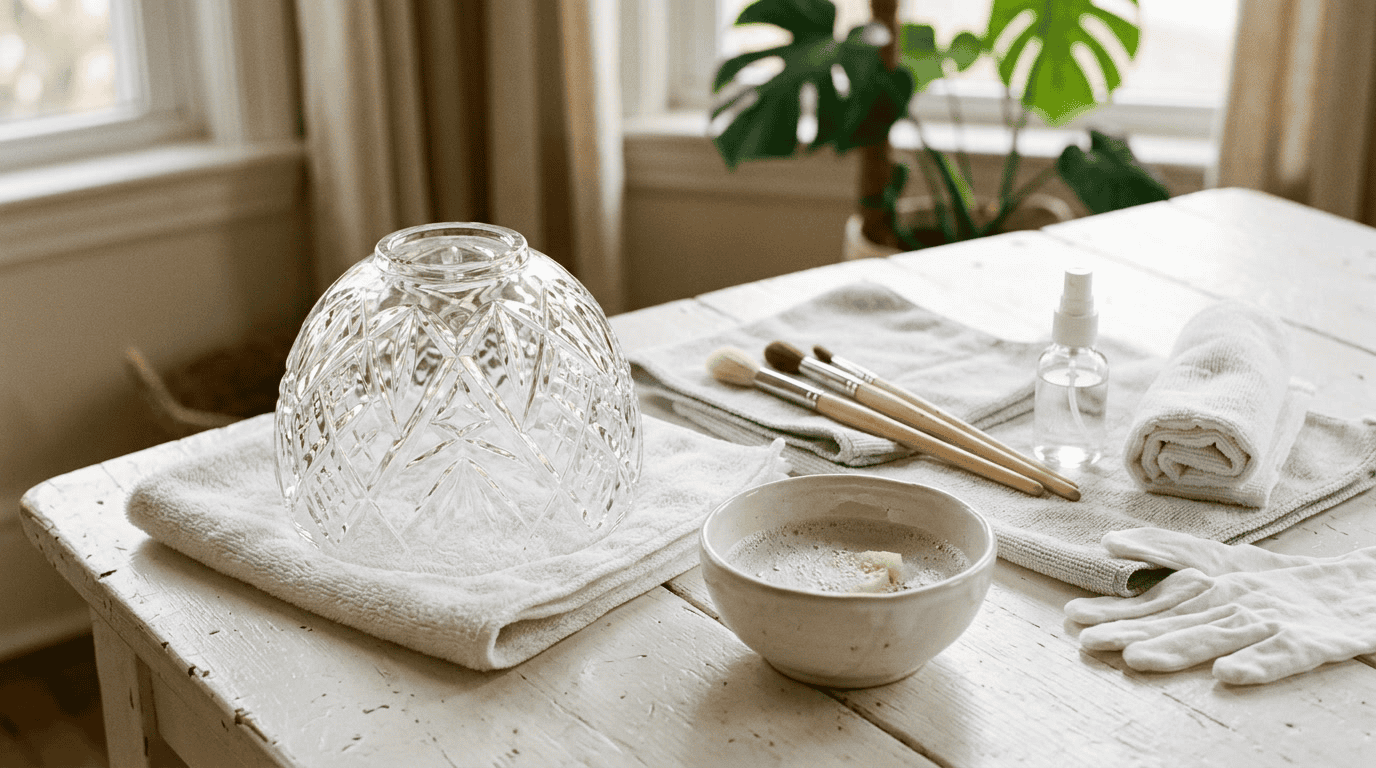
カットガラスのランプシェードは、適切なお手入れをすることで、何十年にもわたり鮮やかなプリズムの光を楽しめます。その視覚的な美しさを生み出す多面体の表面は、光を捉えて分光し、部屋中にスペクトル模様を投影しますが、同時にほこりがたまりやすい場所でもあります。手入れを怠ると、面と面の間のくぼみにほこり、調理時の油分、ろうそくや暖炉からの空気中の粒子が蓄積します。面が埋まると、光の出力は30〜40%低下し、特有の輝きが完全に失われます。.
朗報です:ほこりをかぶったカットガラスシェードの輝きを完全に取り戻すのに、通常10分もかかりません。掃除の手順は簡単ですが、正しい方法が必要です。多面体ガラス、磨かれたフィッターリム、金属パーツはそれぞれ異なるお手入れが求められます。.
カットガラスに定期的な掃除が重要な理由
カットガラス照明の物理的特性は、光学的に清潔な面の状態に依存します。ガラスに施された幾何学的な面はプリズムの役割を果たし、入射した光は磨かれた面で屈折し、スペクトルカラーに分散して周囲の壁や天井にプリズム模様を投影します。その表面にほこりや油膜が付着すると、屈折が妨げられ、プリズム効果が弱まり、温かみのある輝きが失われ、シェードはくすんで平坦に見えます。.
リビングルームでは、目に見えるほこりの蓄積は2〜4週間で発生します。キッチンやダイニングルームなど調理活動が近くにある場合は、1週間で面に目立つくもりが生じます。暖炉の近くでは、煙やすすがさらに早くガラスに付着します。.
鉛クリスタルは特別な注意が必要です。. 高品質なカットガラスシェードに使われる鉛クリスタルガラスは、屈折率が1.56〜1.61で、標準ガラス(1.52)よりも優れた輝きを生み出します。しかし、鉛クリスタルはより柔らかく、モース硬度で約5〜5.5です。 モース硬度スケール 一方、ソーダ石灰ガラスは5.5〜6です( コーニングガラス美術館. による)。このため、鉛クリスタルは傷がつきやすいのです。研磨剤入りのクリーナー、粗い布、または 硬水 のミネラル分が鉛クリスタルシェードの磨かれた面を永久的に傷つけることがあります。クリスタルにはやさしいお手入れが必須です。.
掃除用具:使うべきものと避けるべきもの
| 推奨 | 用途 | 使用してはいけないもの |
|---|---|---|
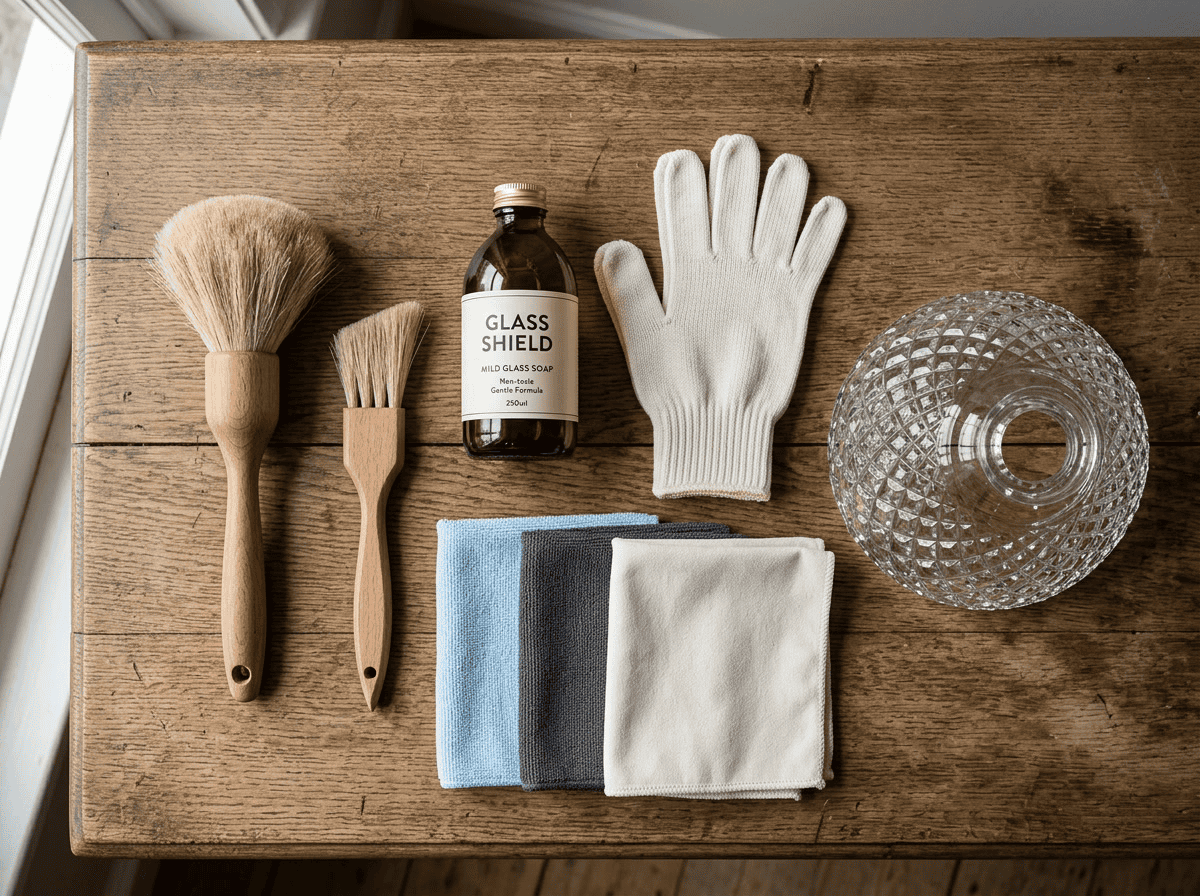
| 柔らかい天然毛ブラシ(幅2.5〜5cm) | 面やくぼみの乾拭き | 合成毛(傷がつく場合あり) |
| 糸くずの出ないマイクロファイバークロス × 3枚 | 洗う、すすぐ、乾かす | テリークロス、ペーパータオル(研磨性あり) |
| 中性食器用洗剤(2~3滴) | ガラス表面の油分除去 | 漂白剤、アンモニア系クリーナー、酢 |
| 蒸留水またはろ過水(最終すすぎ用) | ミネラルウォータースポットを除去 | 硬水(水垢が残る) |
| ゴムマットまたは折りたたんだバスタオル | 安全な作業面 | 硬いカウンタートップに直接置く |
| 白い綿手袋(任意) | 指紋を付けずに取り扱い | パウダー付き手袋(表面を汚染) |
絶対に使用しないでください: ウィンドウクリーナーや同様のアンモニア系ガラススプレー、酢や柑橘系酸性クリーナー(金属部品には不可)、研磨ペースト、重曹、市販の浴室タイルクリーナー。これらのいくつかは用途によって窓ガラスには安全ですが、繊細な金属金具や研磨面を持つカットガラスのランプシェードには不適切です。.
3つの掃除方法:適切な方法の選択
| 方法 | 時間 | 使用するタイミング | 除去できるもの |
|---|---|---|---|
| 乾拭き | 2〜5分 | 週次メンテナンス、軽いホコリ | ホコリや粒子 |
| 湿った部分拭き | 5〜10分 | 指紋、軽い油分、適度なホコリ | 表面の膜や汚れ |
| Full hand wash | 20–30 min | Heavy soiling, grease buildup, seasonal deep clean | All deposits including embedded grime |
| Ultrasonic cleaning | Professional | Extremely delicate antique pieces | Everything, but risk of stress fractures |
Use the lightest method that achieves a clean result. Weekly dry dusting prevents the buildup that makes deeper methods necessary.
Method 1: Dry Dusting (Weekly)
Dry dusting is the single most effective maintenance habit for cut glass — done consistently, it prevents the heavy buildup that requires wet cleaning.
Step 1 — Cool the shade completely. Turn off the lamp and wait at least 15 minutes. Never dust a warm or hot shade: thermal expansion makes glass slightly more vulnerable, and heat can cause dust to set more firmly into the facet surfaces.
Step 2 — Remove if possible. If the shade removes easily from the lamp hardware, take it off and set it on a folded towel on a flat surface. Working with the shade in your hands gives far better control and coverage than trying to dust it in place.
Step 3 — Work top to bottom, following the cuts. Using the soft natural-bristle brush, work methodically from the fitter rim down to the base. Move the brush strokes along the direction of the cut pattern (along the diamond diagonals, along the flutes, along the hobstar ridges) — not perpendicular to them. Brushing across the cut edges pushes debris into the recesses instead of out.
Step 4 — Pay attention to the recesses. The V-shaped recesses between facets accumulate the most dust. On deep-cut vintage shades, these recesses can hold significant deposits invisible from a normal viewing angle. Work the brush tip into each recess line.
Step 5 — Interior surface. Use the same top-to-bottom technique on the interior. On most cut glass table and floor lamp shades, the interior is smooth-polished glass — easier to dust than the exterior. On some heavily cut patterns, the cut extends through the full glass thickness and the interior is also faceted.
Step 6 — Final pass with microfiber. A very light, barely-contacting pass with a dry microfiber cloth picks up displaced particles. Don’t rub — one light pass is enough.
Method 2: Damp Spot-Cleaning (Monthly)
For fingerprints, light grease, and moderate dust that dry brushing doesn’t fully remove.
Prepare the solution: Mix two to three drops of pH-neutral dish soap into a bowl of lukewarm water. Lukewarm — not hot (thermal shock) and not cold (less effective on grease). Stir gently; the water should barely suds.
Work in sections: Dampen a microfiber cloth in the solution and wring it out well — the cloth should be damp, not wet. Wipe each section of the shade surface with the cloth moving in the direction of the cut pattern. Follow immediately with a second cloth dampened with plain distilled water, to rinse the soap residue. Then dry with a third dry microfiber cloth.
The fitter rim: Wipe the fitter rim and the first centimeter inside the fitter opening with the damp cloth. Dry immediately and thoroughly — residual moisture at the fitter-to-hardware interface causes corrosion.
After cleaning: Allow the shade to air dry in a well-ventilated spot for 15–20 minutes before reinstalling.
Method 3: Full Hand Wash (Seasonal)
For shades with accumulated cooking grease, smoke residue, or that haven’t been cleaned in years.
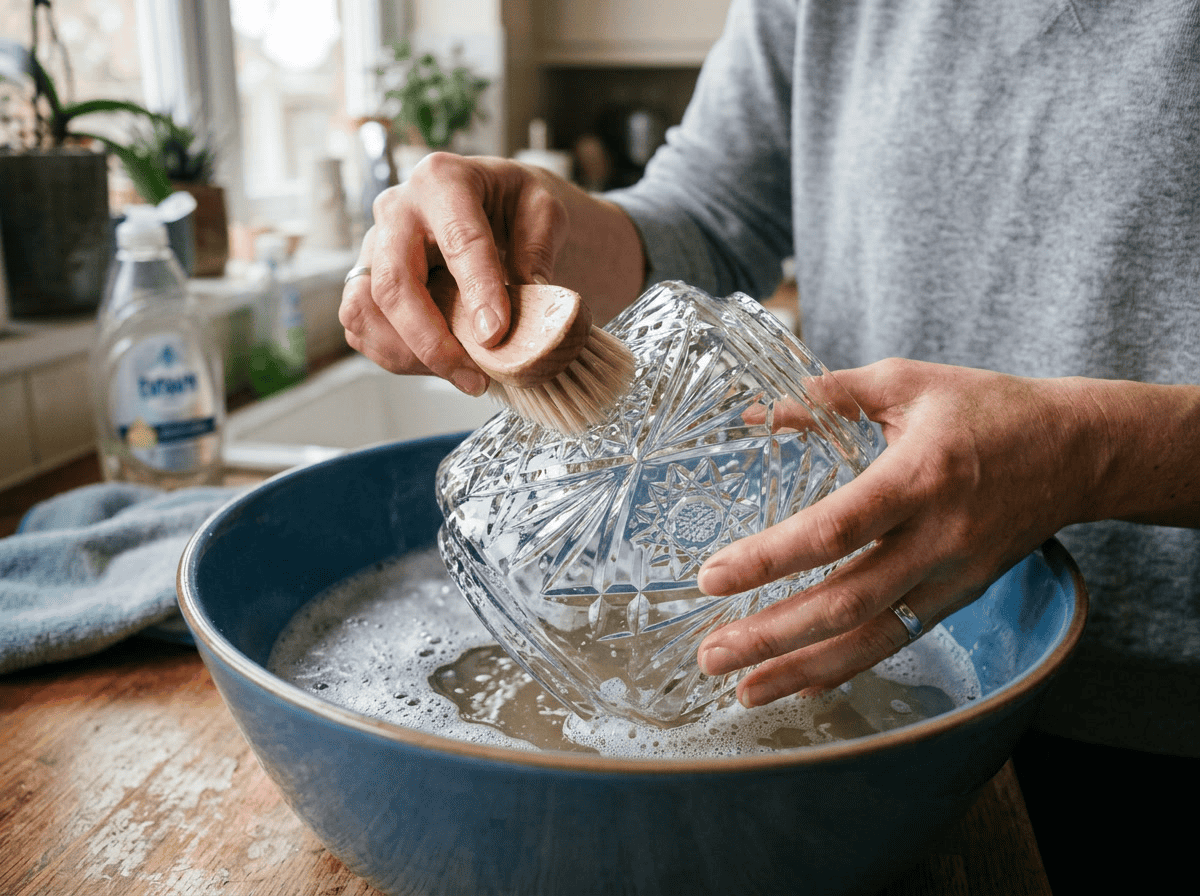
Prepare the workspace: Line a clean sink or large basin with a rubber mat or folded towel. Fill with lukewarm water and a modest amount of pH-neutral dish soap — enough to produce a light lather when you move your hand through the water.
Handle gently throughout: Lower the shade into the water. Do not submerge if the shade has any metal trim, solder joints (indicating multi-piece stained-glass construction), or applied decorative elements. For solid single-piece cut glass, submersion is fine.
Wash: Using clean fingers or a very soft natural-bristle brush, work the soapy water into all the facets and recesses. Be systematic — work around the shade in sections. Apply gentle pressure and let the soap do the work. For very dirty shades, a 2–3 minute soak before scrubbing allows the soap to soften grease deposits.
Rinse: Rinse under a gentle flow of lukewarm water, working the stream across all facets. Final rinse with distilled or filtered water eliminates mineral deposits from tap water.
Dry safely: Set the shade upside-down on a clean dry towel — never shake to remove water. Pat gently with a dry microfiber cloth to absorb surface water, then allow to air dry completely (1–2 hours) before reinstalling. The fitter area must be fully dry before the shade goes back on the lamp.
日本の The Spruce’s lamp care guide, the most frequent mistake with faceted glass washing is excessive water pressure during rinsing, which can force water behind metal trim and cause internal corrosion. A gentle stream always.
Cleaning Different Cut Glass Pattern Types
| Pattern type | Cleaning challenge | Specific technique |
|---|---|---|
| ダイヤモンドクロスハッチ | Dust accumulates in cross-points | Brush diagonally both ways across the grid |
| ホブスター | Complex multi-facet star centers trap debris | Use brush tip to work into star center facets |
| フルーテッド/垂直 | Vertical channels fill with dust | Brush vertically, top to bottom, in each channel |
| Fan / shell cut | Curved recesses hold grime | Follow the curve of each fan with brush strokes |
| Pressed diamond (mass-market) | Shallower recesses, easier to clean | Standard technique; less aggressive brushing needed |
| Lead crystal (any pattern) | More scratch-sensitive | Extra-soft brush, distilled water only for rinse |
Restoring Cloudy or Hazy Cut Glass
A shade that has been neglected for years — or removed from storage — may have persistent cloudiness that standard cleaning doesn’t remove. The cause determines the treatment:
Hard water mineral deposits (white or grey haze): Apply a solution of one part white vinegar to three parts distilled water to the exterior glass surface only — a cloth dampened with the solution, not poured on. Allow to sit 30–60 seconds, then wipe off and rinse thoroughly with distilled water. The mild acidity dissolves calcium carbonate deposits. Do not use on lead crystal, and keep away from all metal parts.
Polymerized grease film (sticky amber or brown film): Increase soap concentration and allow soapy water to sit on the surface for 3–5 minutes before scrubbing. A single drop of orange oil-based cleaner in the wash water helps with severe buildup on standard glass.
Smoke and nicotine film (yellow-brown overall tint): Requires multiple wash sessions. The polymerized film is layered and comes off in stages. Commercial ammonia-free glass cleaners can supplement the mild-soap method for this specific problem.
Devitrification (grey-white milky haze that doesn’t wipe off): This is a chemical change to the glass structure — partial crystallization caused by extreme heat or chemical exposure. It is not reversible by cleaning. A haze that does not respond at all to wet cleaning is likely devitrification.
For severe restoration cases where cleaning cannot recover the original appearance, カットガラスランプシェード交換 covers options for finding matching originals or specifying reproductions. For information on which cut glass types require the most careful maintenance, crystal cut glass lamp shades explains the distinctions between lead crystal, lead-free crystal, and standard pressed glass. For the full cut glass category overview, see カットガラスランプシェード.
日本の This Old House’s home maintenance guide, mineral haze on glass is best addressed with mild acidity before the deposits harden further — regular cleaning prevents this problem from developing.
のため how to choose the right replacement glass shade when a shade is beyond restoration, the fitter types guide covers all standard attachment dimensions.
よくある質問
Can I use Windex or spray glass cleaner on cut glass lamp shades?
Avoid standard Windex and most spray glass cleaners on cut glass shades. Most contain ammonia, which can damage metal hardware at the fitter and harm any lead crystal glass. For standard glass cleaning, pH-neutral dish soap in lukewarm water is safer and equally effective. If you prefer a spray cleaner, choose an ammonia-free formula and apply it to a cloth first — never spray directly onto the shade.
How do I clean cut glass lamp shades without removing them?
Turn off the lamp and allow it to cool completely. Use a dry soft brush for dusting, working top to bottom. For spot-cleaning, use a barely-damp microfiber cloth — wrung out so thoroughly that no drips fall. Never spray liquid directly onto a mounted shade. Keep all moisture away from the bulb socket area.
My cut glass shade has white spots that won’t wipe off. What are they?
Persistent white spots on glass are almost always hard water mineral deposits (calcium carbonate). Apply a cloth dampened with a mild solution of white vinegar and distilled water to the exterior glass surface only. Let it sit 30 seconds, wipe gently, then rinse thoroughly with distilled water. Do not use this on lead crystal shades, and keep the solution away from metal parts and solder joints.
Is it safe to put cut glass lamp shades in a dishwasher?
No. Dishwashers damage cut glass shades in three ways: high-pressure jets stress the glass at the fitter rim; dishwasher detergent is highly alkaline and etches both standard and crystal glass over time; and the heat cycle causes thermal stress. Hand-washing in lukewarm water is the only appropriate method.
How do I prevent water spots after washing?
Water spots come from minerals in tap water depositing on the glass as water evaporates. Do a final rinse with distilled or filtered water — negligible mineral content means no residue left behind. Then pat dry with a lint-free microfiber cloth rather than air-drying, which allows remaining minerals to deposit during evaporation.
How long should I wait after cleaning before turning the lamp back on?
Wait at least 30 minutes after damp cleaning, 1–2 hours after a full hand wash. The fitter area must be completely dry — moisture at the fitter-to-hardware interface combined with the heat of the lamp causes slow corrosion. When in doubt, wait longer.
Can I use rubbing alcohol on cut glass?
Isopropyl alcohol (70–91%) can be used for fingerprint removal on the exterior glass surface of standard pressed and cut glass shades — applied to a cloth, not directly to the shade. Avoid on lead crystal. Avoid on painted or coated hardware. Alcohol evaporates quickly and leaves no residue, making it effective for streak-free fingerprint removal.
How do I clean the interior of a narrow-necked cut glass shade?
For shades with small openings, use a long-handled natural-bristle brush (a baby bottle brush or flexible cleaning brush). Work from the fitter opening downward, with the shade inverted so debris falls out rather than deeper in. For heavily soiled interior surfaces, the full hand-wash method is the only reliable approach — interior spot-cleaning cannot reach the full interior surface effectively.
本シリーズの関連記事
結論
Cleaning cut glass lamp shades is a simple discipline with a significant impact on performance and longevity. Weekly dry dusting prevents the heavy buildup that requires deeper intervention. Monthly damp cleaning maintains full facet brilliance. Seasonal hand washing restores complete light transmission and prevents long-term surface damage from accumulated deposits.
The consistent rules: softest effective method, pH-neutral soap, distilled-water final rinse, complete drying before reinstallation. A cut glass shade properly maintained will perform as brilliantly in twenty years as it does today — the facets never lose their optical properties as long as the polished surfaces are protected.